.png)



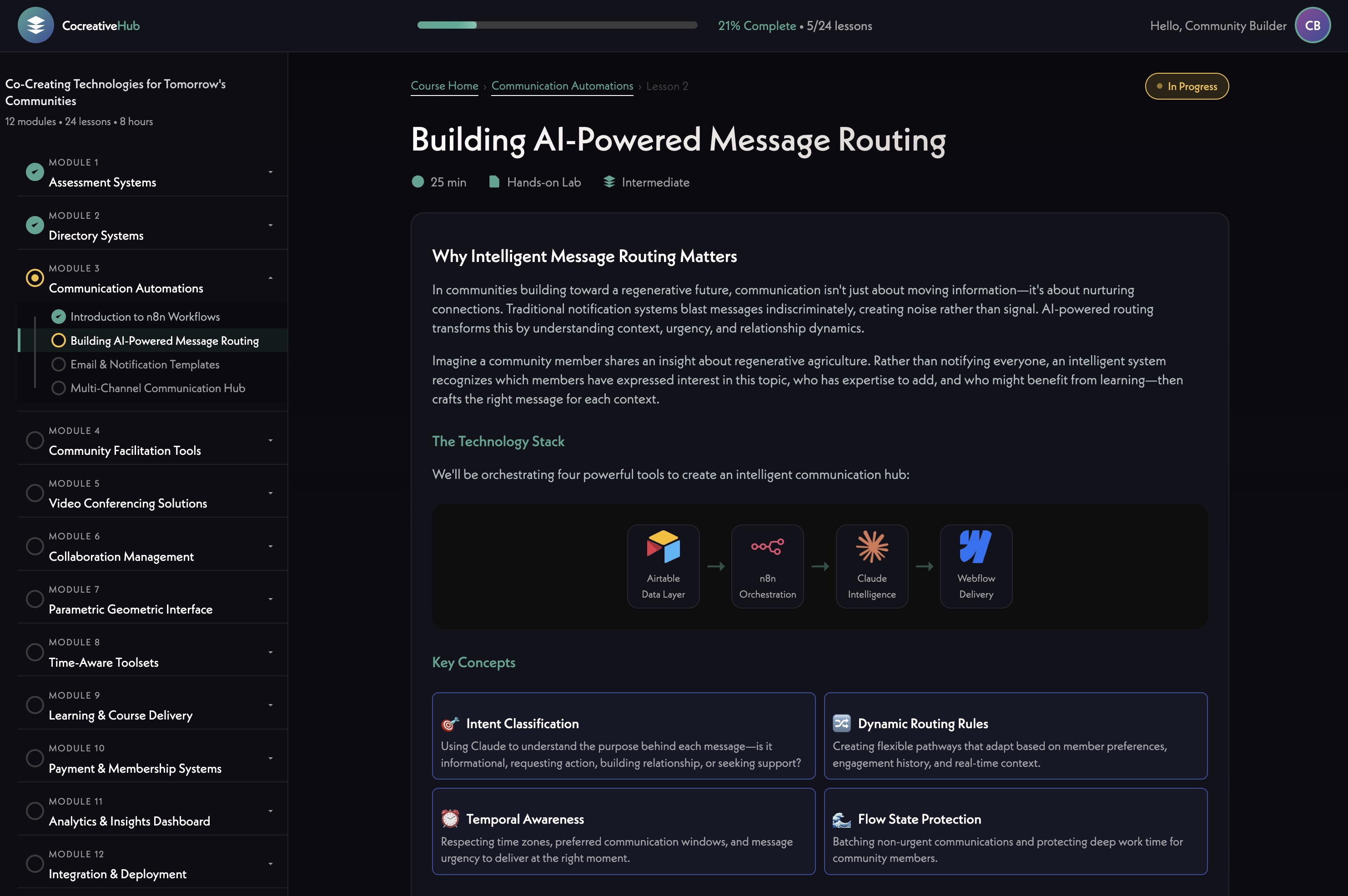
James Redenbaugh provided an update on the custom Learning Management System development, emphasizing significant backend progress (02:11). The team has successfully replicated membership login functionality and content gating using Supabase [tag="supabase"] as the relational database platform and Stripe [tag="stripe"] for payment processing. This shift away from platforms like WordPress, Memberstack, and Outsetta provides full control over user data, authentication flows, and membership logic. The backend infrastructure allows the team to determine access levels, track user behavior, and create custom experiences when members log in.
[technology="Custom Membership System"]
While the backend is operational, the front-end design and interface development remain pending. The team agreed to temporarily slow LMS front-end work to prioritize other critical systems, though James will continue development at a reduced pace to maintain momentum.
Mariko Pitts announced a strategic pivot in course planning (06:16). The team decided to postpone the Amendment course and prioritize the Choose Love Spoon Bending course in collaboration with Light Net Zinka and the Choose Love Movement. This experiential course, which teaches participants to bend silver spoons through consciousness techniques rather than force, has shown strong results with over 90% participant success rates in previous sessions.
The spoon bending course represents a significant opportunity because Choose Love operates in 120 countries, potentially expanding Holomovement's reach considerably. The course will likely feature a mix of pre-recorded and live elements to accommodate the experiential nature of the practice. The timeline shifted to late February or early March, providing more development time for the LMS and related infrastructure.
[technology="Online Learning Platforms"]
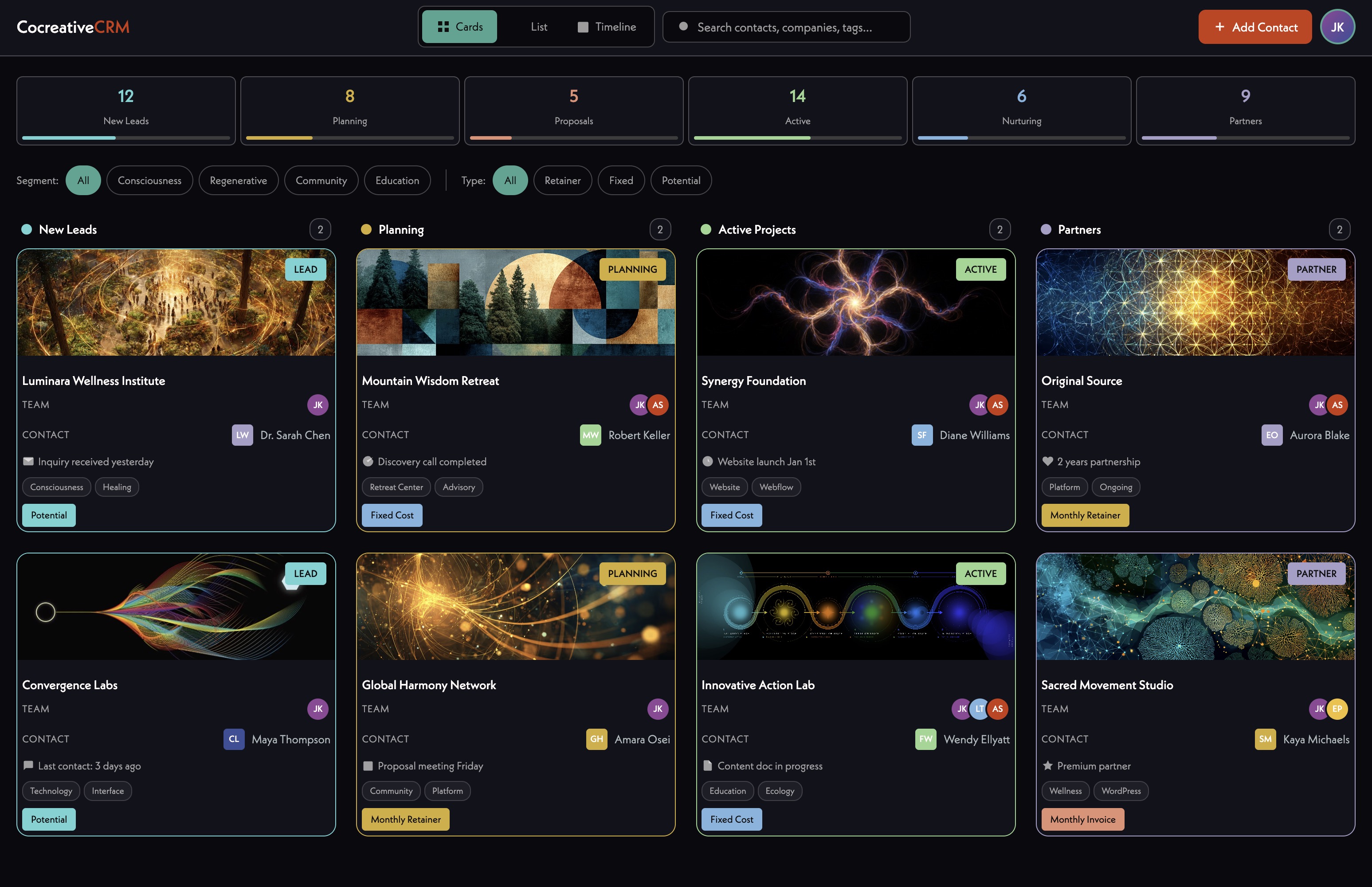
The conversation revealed a critical strategic decision to shift development focus from exclusively building out the LMS to strengthening the directory system and member engagement infrastructure (15:26). James proposed connecting the existing Synergist functionality with the new membership capabilities so people can log in and edit their profiles directly.
The team discussed several key features for the directory:
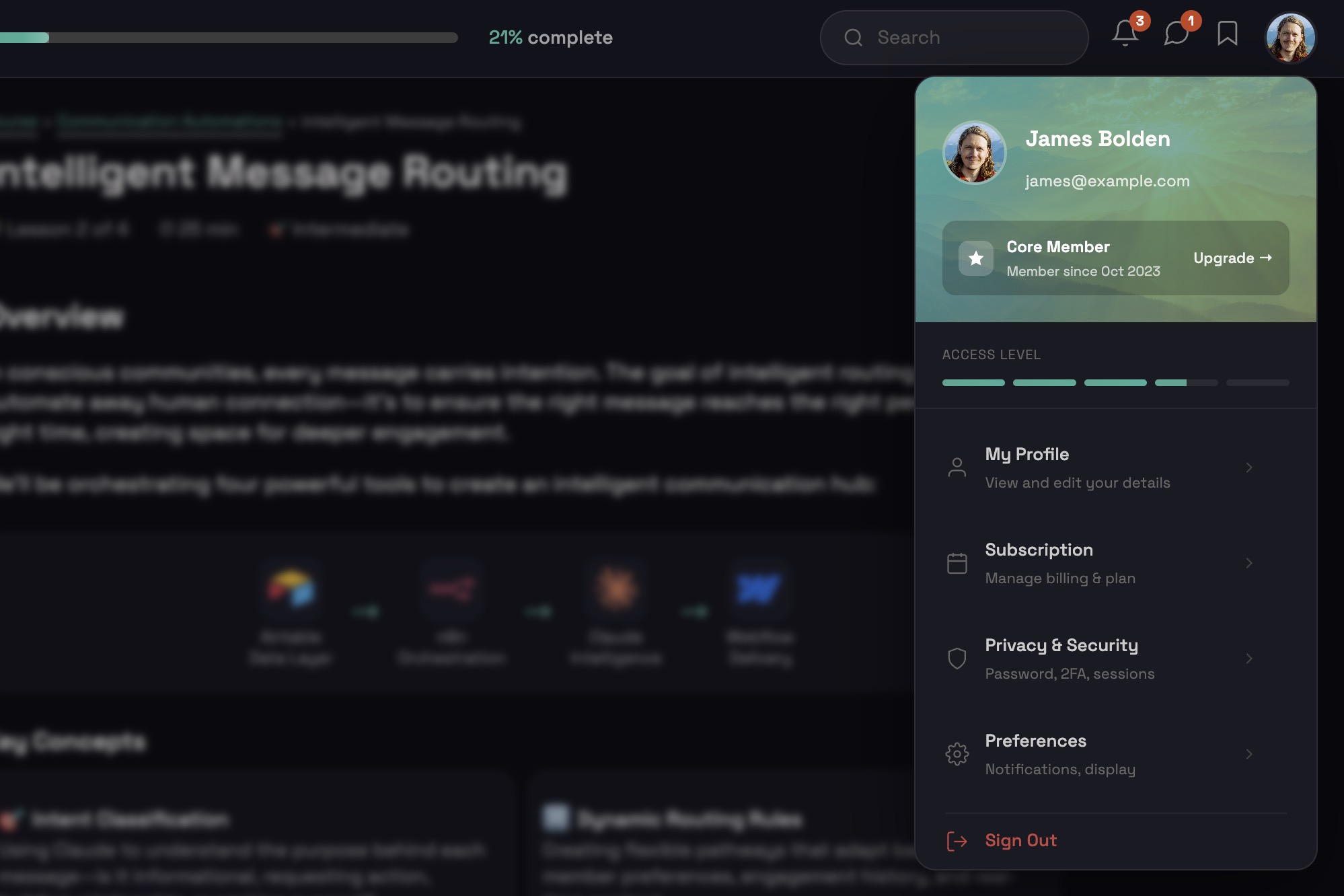
Profile Management: Members will be able to create and update their profiles, with information stored in Airtable [tag="airtable"] for flexible content management. This follows the pattern already established for podcast episodes, where content added to Airtable automatically appears on the site (10:54).
Assessment Integration: Rather than requiring all assessment questions upfront, the system will offer progressive engagement. Members can start with a basic five-minute profile setup (name, website, purpose statement, location), then complete more detailed assessments later. Each completed assessment adds elements to their profile and unlocks new features (26:23).
Gamification Elements: James proposed generating visual representations based on assessment results, such as AI-generated icons, tarot card archetypes, or numerology graphics that appear on profiles as users complete different assessments (24:26). This creates incentive for deeper engagement while making profiles more visually distinctive.
[technology="Assessment Systems"]
[technology="Directory Systems"]
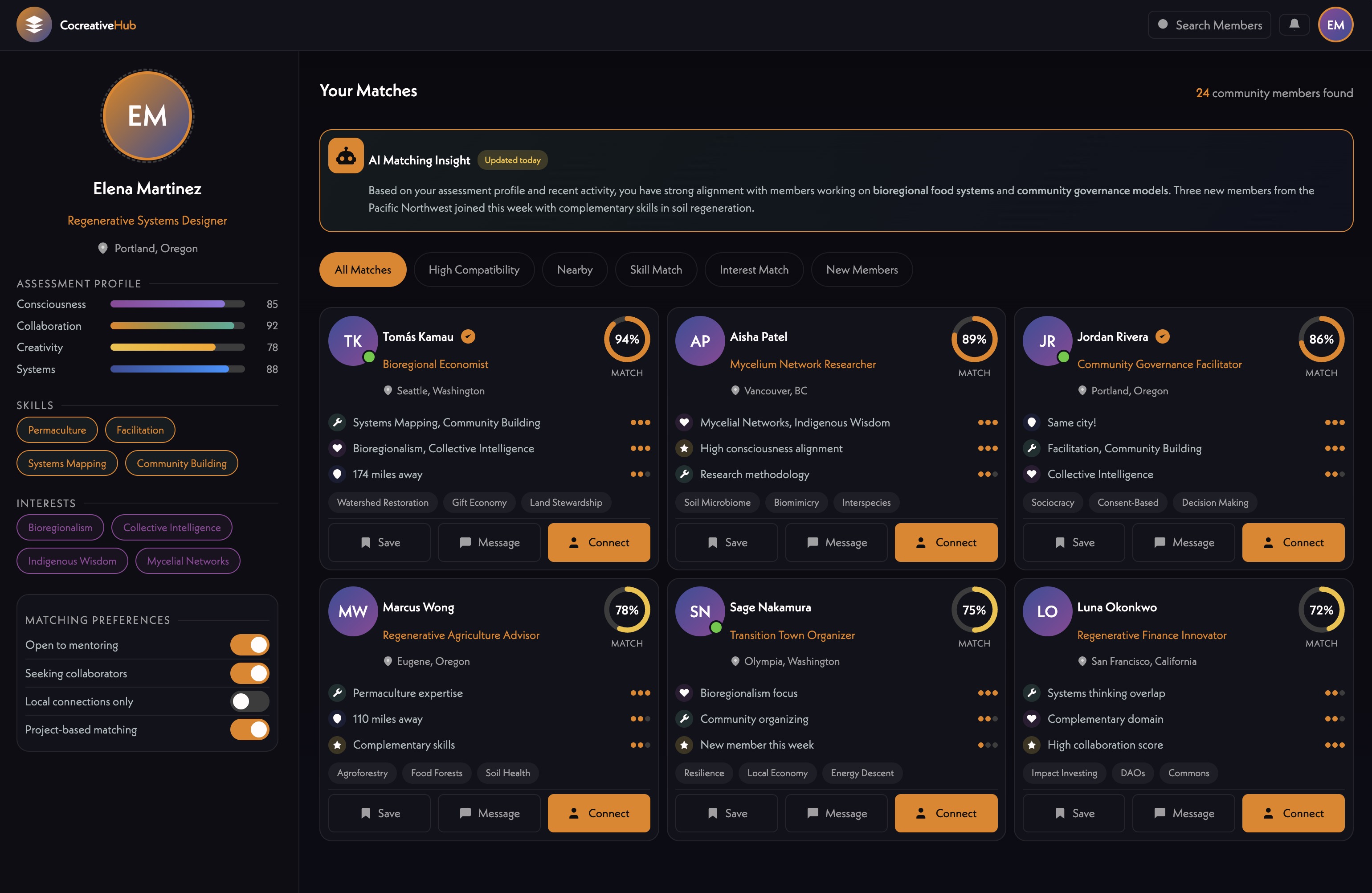
A significant portion of the discussion focused on using Claude [tag="claude"] AI and other language models to create intelligent matching capabilities within the network (28:52). As the platform accumulates assessment data from multiple sources (Holomovement assessment, numerology, IQ evaluations, and others), the system can enable sophisticated queries like "who in this network should I collaborate with on this specific project?" or "I need funding for this initiative—who should I contact?"
James explained that while basic queries might cost pennies per request, more complex transformations using multiple data points from various assessments would justify premium membership tiers. The key advantage is that only Holomovement members can query the collective intelligence of the entire network, creating significant value differentiation from general AI tools everyone can access.
The team envisions a future where users can interact with AI agents trained on the entire Holomovement ecosystem, receiving personalized recommendations for connections, opportunities, and resources based on the comprehensive data the platform collects (29:02).
[technology="Intelligent Matching Algorithms"]
Hera and James explored innovative community engagement features, including a weekly "feeling query" interface where users drag a point within a six-axis emotional space to indicate their current state across dimensions like excitement, nervousness, grief, and others (42:01). This data would aggregate into visual representations showing the emotional climate of the community over time, particularly around significant global events.
James referenced gratitude.org's candle-lighting interface as inspiration for simple but meaningful engagement tools (44:52). The team discussed creating visual representations of community activity that go beyond typical likes or subscribes, making visible the living, feeling nature of the network.
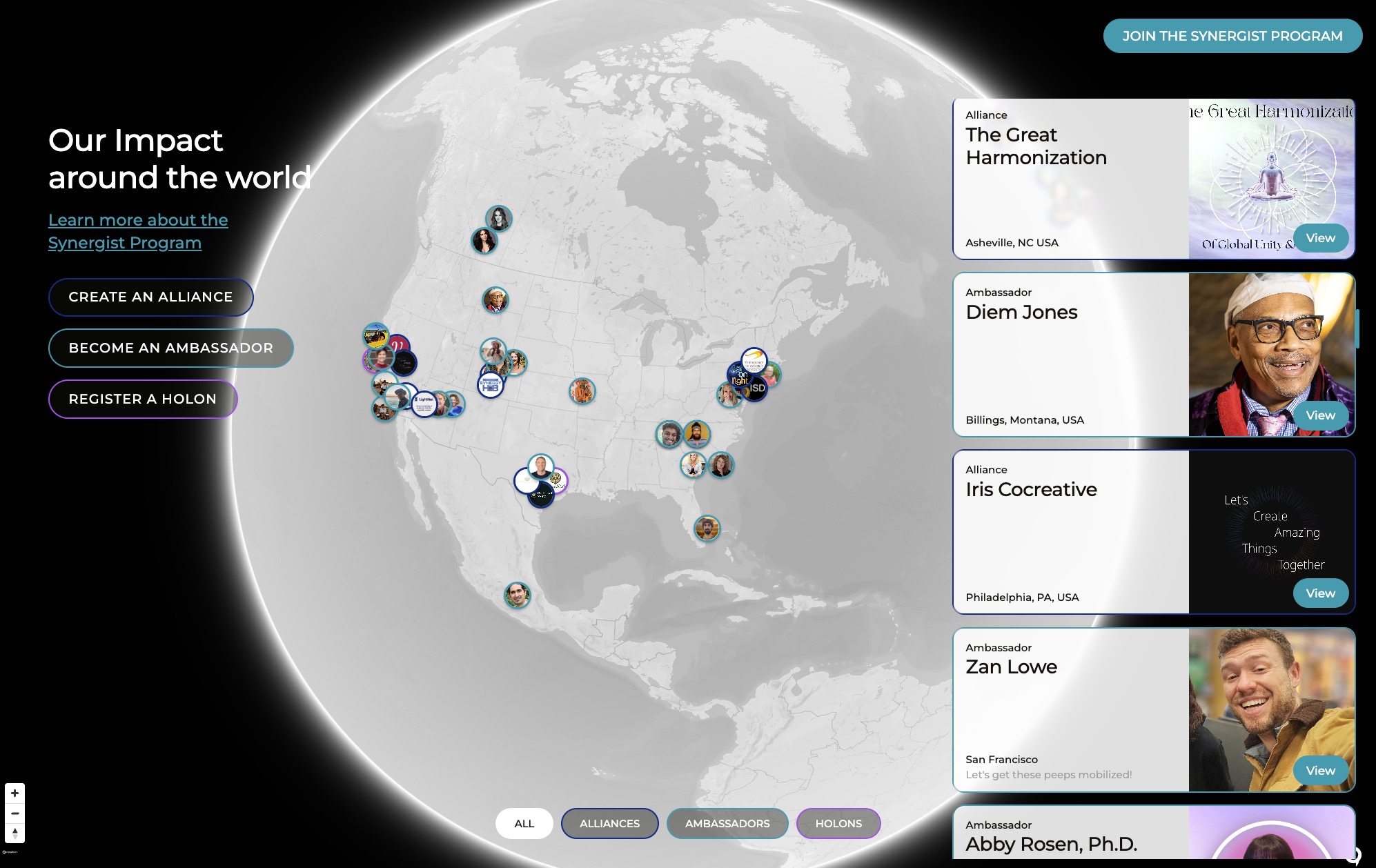
The conversation turned to reimagining the global map interface (52:04). Rather than continuing with the current 3D globe powered by MapBox [tag="mapbox"], James proposed a flat Earth projection using custom code similar to the Purpose Earth website. This approach would enable more sophisticated visualizations showing not just member locations but also funding flows, collaborative connections, project relationships, and other network dynamics.
The map would feature layered filtering, allowing users to view specific types of information (ambassadors, Holons, grants, connections) while maintaining a simplified default view for general users. More advanced users—those James jokingly referred to as "Arcturians" (56:10)—could access complex multi-layered views showing the full richness of network activity.
James drew parallels to strategy video games like Humankind, which offer multiple views of the same information tailored to different purposes (57:13). He argued that as digital natives become more prevalent, web interfaces can embrace more dynamic, game-like qualities without alienating users.
A particularly forward-looking discussion explored cross-platform interoperability (01:00:28). James described a future where different organizations running similar LMS and membership systems could share content and profiles seamlessly. A yoga community could run a course on their platform while making it available to Holomovement members, who would experience it as native to Holomovement while actually connecting with learners from both communities.
This architecture would apply to profiles as well, enabling a single user identity to exist across multiple platforms with relevant information sharing automatically while maintaining appropriate privacy boundaries. This represents a fundamental reimagining of how online communities and educational platforms could break down silos without centralizing control in a single hub like Facebook (01:04:42).
Hera introduced plans for collaboration with DJ Taz to curate diverse digital content including meditations, yoga classes, and playlists (09:53). Some content will be designed specifically to complement courses, while other material will exist independently. James recommended organizing this content in Airtable [tag="airtable"] immediately so it can connect directly to the CMS, with DJ Taz and others managing the Airtable database while changes appear automatically on the site.
Mariko outlined plans for the "Engine for Good" micro-grants program launching soon (46:43). This initiative will reward Holons demonstrating transformative action, with some grants awarded at the Wave event in Portugal. The directory system needs to support the grant application process, with applications linked to member profiles.
This creates a powerful incentive structure: members join the directory, complete assessments and profile information, apply for grants, and potentially receive funding at the Wave event. The beta testing period for the directory will essentially be bootstrapped by this grant program, driving engagement while collecting valuable usage data.
The program will continue beyond the Wave with quarterly grant cycles, funded partially by membership revenues. This creates a virtuous cycle where membership fees support transformative projects across the network, visible to all members through the platform.
Hera proposed an incremental assessment launch strategy rather than waiting until all systems are complete (30:27). The team could release assessments every week or ten days leading up to the Wave, using existing events like Ripple gatherings and Miracle Club to promote participation. This approach serves multiple purposes: testing assessment functionality, gathering initial data, promoting community members, and creating momentum building toward the Wave.
The team discussed partnering with experts to develop themed assessments, similar to podcast episodes. For example, Don Beck might consult on a Spiral Dynamics assessment, or a Vedic astrologer could collaborate on an astrology-based evaluation (34:06). Each assessment becomes a content asset and relationship-building opportunity while adding depth to member profiles.
Mariko expressed particular interest in partnering with the iOS Zone of Genius team to integrate their assessment, which received strong positive response during a previous retreat (01:09:00). Hera noted that the technical barrier that previously prevented iOS from offering it as software has been removed by current AI capabilities and the team's infrastructure.
The team established February 15 as the target launch date for the directory system MVP (01:06:28). This version will include login capability, profile editing, and integrated assessments where completed assessments populate user profiles with results visible to that user and potentially others in the network.
Following this MVP launch, the team will recruit beta testers to use the system, provide feedback, and help identify the next priority features. A feature backlog process will capture ongoing ideas as the team continues developing and using the platform themselves.
Recognizing the accelerated timeline and multiple parallel workstreams, the team committed to weekly Monday meetings (01:14:00). The first meeting will be Monday, January 20 at 10am Eastern, with subsequent meetings shifting to 2pm Eastern to better accommodate Mariko's schedule. Michael Sean will join these sessions as development progresses.
Hera offered to support project coordination by helping James track deliverables and identifying any blockers from the Holomovement team's side (01:08:03). James indicated he works best with his existing project management systems but welcomed Hera's support in ensuring smooth communication and rapid response to requests.
Mariko confirmed the Phase One budget remains solid for the planned work (21:11). The team agreed that shifting focus from LMS polish to directory development doesn't require budget adjustments, as both were included in the original scope. Additional invoicing will occur as needed when moving into Phase Two work or completing remaining Phase One deliverables.
Throughout the discussion, James emphasized the architectural benefits of the modular, interoperable system being built (01:00:00). Because components like assessments, content management, and user profiles are designed as discrete, pluggable elements, improvements to one part of the system can benefit all implementations. When a better AI model releases, the team can swap it into existing assessments, immediately improving results without rebuilding functionality.
This approach also facilitates the cross-organizational sharing vision, where different communities can run compatible systems that interoperate while maintaining their distinct identities and user bases.
[technology="Communication Automations"]
While front-end design awaits Munia's involvement, the team recognized the need to begin testing LMS functionality with actual content (20:00). This will help identify issues and refinements needed before the Choose Love course launches. The testing phase can proceed even with bare-bones design, focusing on ensuring backend systems work correctly.
James Redenbaugh
Mariko Pitts
Hera
Team
James Redenbaugh provided an update on the custom Learning Management System development, emphasizing significant backend progress (02:11). The team has successfully replicated membership login functionality and content gating using Supabase [tag="supabase"] as the relational database platform and Stripe [tag="stripe"] for payment processing. This shift away from platforms like WordPress, Memberstack, and Outsetta provides full control over user data, authentication flows, and membership logic. The backend infrastructure allows the team to determine access levels, track user behavior, and create custom experiences when members log in.
[technology="Custom Membership System"]
While the backend is operational, the front-end design and interface development remain pending. The team agreed to temporarily slow LMS front-end work to prioritize other critical systems, though James will continue development at a reduced pace to maintain momentum.
Mariko Pitts announced a strategic pivot in course planning (06:16). The team decided to postpone the Amendment course and prioritize the Choose Love Spoon Bending course in collaboration with Light Net Zinka and the Choose Love Movement. This experiential course, which teaches participants to bend silver spoons through consciousness techniques rather than force, has shown strong results with over 90% participant success rates in previous sessions.
The spoon bending course represents a significant opportunity because Choose Love operates in 120 countries, potentially expanding Holomovement's reach considerably. The course will likely feature a mix of pre-recorded and live elements to accommodate the experiential nature of the practice. The timeline shifted to late February or early March, providing more development time for the LMS and related infrastructure.
[technology="Online Learning Platforms"]
The conversation revealed a critical strategic decision to shift development focus from exclusively building out the LMS to strengthening the directory system and member engagement infrastructure (15:26). James proposed connecting the existing Synergist functionality with the new membership capabilities so people can log in and edit their profiles directly.
The team discussed several key features for the directory:
Profile Management: Members will be able to create and update their profiles, with information stored in Airtable [tag="airtable"] for flexible content management. This follows the pattern already established for podcast episodes, where content added to Airtable automatically appears on the site (10:54).
Assessment Integration: Rather than requiring all assessment questions upfront, the system will offer progressive engagement. Members can start with a basic five-minute profile setup (name, website, purpose statement, location), then complete more detailed assessments later. Each completed assessment adds elements to their profile and unlocks new features (26:23).
Gamification Elements: James proposed generating visual representations based on assessment results, such as AI-generated icons, tarot card archetypes, or numerology graphics that appear on profiles as users complete different assessments (24:26). This creates incentive for deeper engagement while making profiles more visually distinctive.
[technology="Assessment Systems"]
[technology="Directory Systems"]
A significant portion of the discussion focused on using Claude [tag="claude"] AI and other language models to create intelligent matching capabilities within the network (28:52). As the platform accumulates assessment data from multiple sources (Holomovement assessment, numerology, IQ evaluations, and others), the system can enable sophisticated queries like "who in this network should I collaborate with on this specific project?" or "I need funding for this initiative—who should I contact?"
James explained that while basic queries might cost pennies per request, more complex transformations using multiple data points from various assessments would justify premium membership tiers. The key advantage is that only Holomovement members can query the collective intelligence of the entire network, creating significant value differentiation from general AI tools everyone can access.
The team envisions a future where users can interact with AI agents trained on the entire Holomovement ecosystem, receiving personalized recommendations for connections, opportunities, and resources based on the comprehensive data the platform collects (29:02).
[technology="Intelligent Matching Algorithms"]
Hera and James explored innovative community engagement features, including a weekly "feeling query" interface where users drag a point within a six-axis emotional space to indicate their current state across dimensions like excitement, nervousness, grief, and others (42:01). This data would aggregate into visual representations showing the emotional climate of the community over time, particularly around significant global events.
James referenced gratitude.org's candle-lighting interface as inspiration for simple but meaningful engagement tools (44:52). The team discussed creating visual representations of community activity that go beyond typical likes or subscribes, making visible the living, feeling nature of the network.
The conversation turned to reimagining the global map interface (52:04). Rather than continuing with the current 3D globe powered by MapBox [tag="mapbox"], James proposed a flat Earth projection using custom code similar to the Purpose Earth website. This approach would enable more sophisticated visualizations showing not just member locations but also funding flows, collaborative connections, project relationships, and other network dynamics.
The map would feature layered filtering, allowing users to view specific types of information (ambassadors, Holons, grants, connections) while maintaining a simplified default view for general users. More advanced users—those James jokingly referred to as "Arcturians" (56:10)—could access complex multi-layered views showing the full richness of network activity.
James drew parallels to strategy video games like Humankind, which offer multiple views of the same information tailored to different purposes (57:13). He argued that as digital natives become more prevalent, web interfaces can embrace more dynamic, game-like qualities without alienating users.
A particularly forward-looking discussion explored cross-platform interoperability (01:00:28). James described a future where different organizations running similar LMS and membership systems could share content and profiles seamlessly. A yoga community could run a course on their platform while making it available to Holomovement members, who would experience it as native to Holomovement while actually connecting with learners from both communities.
This architecture would apply to profiles as well, enabling a single user identity to exist across multiple platforms with relevant information sharing automatically while maintaining appropriate privacy boundaries. This represents a fundamental reimagining of how online communities and educational platforms could break down silos without centralizing control in a single hub like Facebook (01:04:42).
Hera introduced plans for collaboration with DJ Taz to curate diverse digital content including meditations, yoga classes, and playlists (09:53). Some content will be designed specifically to complement courses, while other material will exist independently. James recommended organizing this content in Airtable [tag="airtable"] immediately so it can connect directly to the CMS, with DJ Taz and others managing the Airtable database while changes appear automatically on the site.
Mariko outlined plans for the "Engine for Good" micro-grants program launching soon (46:43). This initiative will reward Holons demonstrating transformative action, with some grants awarded at the Wave event in Portugal. The directory system needs to support the grant application process, with applications linked to member profiles.
This creates a powerful incentive structure: members join the directory, complete assessments and profile information, apply for grants, and potentially receive funding at the Wave event. The beta testing period for the directory will essentially be bootstrapped by this grant program, driving engagement while collecting valuable usage data.
The program will continue beyond the Wave with quarterly grant cycles, funded partially by membership revenues. This creates a virtuous cycle where membership fees support transformative projects across the network, visible to all members through the platform.
Hera proposed an incremental assessment launch strategy rather than waiting until all systems are complete (30:27). The team could release assessments every week or ten days leading up to the Wave, using existing events like Ripple gatherings and Miracle Club to promote participation. This approach serves multiple purposes: testing assessment functionality, gathering initial data, promoting community members, and creating momentum building toward the Wave.
The team discussed partnering with experts to develop themed assessments, similar to podcast episodes. For example, Don Beck might consult on a Spiral Dynamics assessment, or a Vedic astrologer could collaborate on an astrology-based evaluation (34:06). Each assessment becomes a content asset and relationship-building opportunity while adding depth to member profiles.
Mariko expressed particular interest in partnering with the iOS Zone of Genius team to integrate their assessment, which received strong positive response during a previous retreat (01:09:00). Hera noted that the technical barrier that previously prevented iOS from offering it as software has been removed by current AI capabilities and the team's infrastructure.
The team established February 15 as the target launch date for the directory system MVP (01:06:28). This version will include login capability, profile editing, and integrated assessments where completed assessments populate user profiles with results visible to that user and potentially others in the network.
Following this MVP launch, the team will recruit beta testers to use the system, provide feedback, and help identify the next priority features. A feature backlog process will capture ongoing ideas as the team continues developing and using the platform themselves.
Recognizing the accelerated timeline and multiple parallel workstreams, the team committed to weekly Monday meetings (01:14:00). The first meeting will be Monday, January 20 at 10am Eastern, with subsequent meetings shifting to 2pm Eastern to better accommodate Mariko's schedule. Michael Sean will join these sessions as development progresses.
Hera offered to support project coordination by helping James track deliverables and identifying any blockers from the Holomovement team's side (01:08:03). James indicated he works best with his existing project management systems but welcomed Hera's support in ensuring smooth communication and rapid response to requests.
Mariko confirmed the Phase One budget remains solid for the planned work (21:11). The team agreed that shifting focus from LMS polish to directory development doesn't require budget adjustments, as both were included in the original scope. Additional invoicing will occur as needed when moving into Phase Two work or completing remaining Phase One deliverables.
Throughout the discussion, James emphasized the architectural benefits of the modular, interoperable system being built (01:00:00). Because components like assessments, content management, and user profiles are designed as discrete, pluggable elements, improvements to one part of the system can benefit all implementations. When a better AI model releases, the team can swap it into existing assessments, immediately improving results without rebuilding functionality.
This approach also facilitates the cross-organizational sharing vision, where different communities can run compatible systems that interoperate while maintaining their distinct identities and user bases.
[technology="Communication Automations"]
While front-end design awaits Munia's involvement, the team recognized the need to begin testing LMS functionality with actual content (20:00). This will help identify issues and refinements needed before the Choose Love course launches. The testing phase can proceed even with bare-bones design, focusing on ensuring backend systems work correctly.
James Redenbaugh
Mariko Pitts
Hera
Team
Continue LMS backend development at reduced pace while prioritizing directory system
February 15, 2026
Maintain momentum on LMS backend while shifting primary focus to directory system enhancement. Backend infrastructure operational with Supabase and Stripe integration complete.
Connect Synergist functionality with membership capabilities for profile editing
February 10, 2026
Integrate existing Synergist directory features with new membership login system so members can edit their profiles directly. Part of directory system MVP.
Build assessment integration so completed assessments populate user profiles
February 10, 2026
Create system where assessment results automatically add elements to user profiles. Progressive engagement model where users complete assessments over time and see their profiles enhance with each completion.
Create automation for generating profile graphics based on assessment results
February 20, 2026
Develop system generating AI-created icons, tarot card archetypes, or numerology graphics that appear on profiles as users complete different assessments. Gamification element to incentivize deeper engagement.
Set up Airtable integration for DJ Taz digital content curation
January 25, 2026
Configure Airtable base for digital content management with direct CMS connection. Enable DJ Taz and others to manage database while changes appear automatically on site.
Implement feature backlog system for capturing ideas from beta testing
February 15, 2026
Create system for capturing and prioritizing feature requests and ideas generated during beta testing period following MVP launch. Process for tracking ongoing development priorities.
Complete directory system MVP by February 15 with login, profile editing, and assessment integration
February 15, 2026
Deliver minimum viable product including login capability, profile editing functionality, and integrated assessments where completed assessments populate user profiles. Results visible to user and potentially others in network.
Prepare to show LMS progress in future meeting
January 27, 2026
Prepare demonstration of LMS backend progress including Supabase and Stripe integration, membership login, and content gating functionality for upcoming team meeting.
Coordinate with Munia on front-end design for LMS and directory systems
January 25, 2026
Engage Munia (designer who worked on most of Holomovement site) for front-end design work on both LMS and directory system interfaces. Budget approved for additional design support.
Finalize short-form and long-form assessment question sets for directory profiles
February 1, 2026
Define questions for five-minute basic profile setup (name, website, purpose statement, location) and longer detailed assessments. Support progressive engagement model.
Contact iOS Zone of Genius team about partnership for assessment integration
January 31, 2026
Reach out to iOS Zone of Genius team regarding partnership to integrate their assessment into Holomovement platform. Assessment received strong positive response during previous retreat. Technical barriers previously preventing iOS from offering as software now removed by AI capabilities and current infrastructure.
Review and address website copy issues raised by Ali in Slack
January 20, 2026
Address copy issues or concerns Ali raised in Slack regarding website content. Requires review and response.
Organize thoughts on Engine for Good grant program details for Friday discussion
January 17, 2026
Prepare detailed thoughts and framework for Engine for Good grant program including application process, selection criteria, award structure, and integration with directory system for discussion with Hera on Friday.
Prepare detailed thoughts on Engine for Good integration for Friday call with Mariko
January 17, 2026
Develop framework for how Engine for Good grant program integrates with directory system, profile completion incentives, and beta testing strategy. Prepare for Friday discussion.
Share previous Holomovement app work with James to identify features for current build
January 25, 2026
Provide James with documentation, designs, or materials from previous Holomovement app development work to identify features and functionality that should be incorporated into current platform build.
Coordinate with James on project management support and blocking issue resolution
February 15, 2026
Support James by helping track deliverables and identifying any blockers from Holomovement team's side. Ensure smooth communication and rapid response to requests.
Send meeting invites for Monday weekly sessions
January 17, 2026
Send calendar invites for weekly Monday meetings. First meeting January 20 at 10am Eastern, subsequent meetings at 2pm Eastern to accommodate Mariko's schedule.
Review and provide raw data and prompts for Zone of Genius assessment if partnership proceeds
February 15, 2026
If iOS Zone of Genius partnership moves forward, provide raw assessment data and prompts to enable integration into Holomovement platform.

Begin using Airtable for organizing digital content with DJ Taz
February 1, 2026
Team should begin using Airtable for organizing DJ Taz digital content once structure is set up. Content management workflow to be established.
Develop incremental assessment launch schedule leading to Wave event
January 31, 2026
Create schedule releasing new assessments every week or ten days leading to Wave event. Use Ripple gatherings and Miracle Club to promote participation. Plan assessment topics and partnership opportunities.
Design weekly feeling query interface for emotional mapping
March 1, 2026
Create interface where users drag point within six-axis emotional space to indicate current state across dimensions like excitement, nervousness, grief, etc. Data aggregates into visual representations showing emotional climate of community over time.
Assessment system with AI-powered engagement features feeding automation workflows. Data from assessments, clicking patterns, lesson completion, and call attendance triggers personalized communication including immediate tailored emails, weekly progress updates, connection recommendations based on profile matching, and proactive check-in offers when engagement drops. Guatemala-specific assessment page created requiring customized copy. Current synergist directory demonstrates existing assessment capabilities: members complete form triggering automated n8n and Claude AI analysis of responses about purpose, projects, and ancestral wisdom influences. System generates personalized feedback and recommends connections to other synergists based on compatibility, facilitating introductions via email without exposing addresses. Also suggests relevant podcast episodes. No-login approach removes participation barriers while enabling intelligent matching and communication. Strategic shift to progressive engagement model: members start with basic five-minute profile setup (name, website, purpose statement, location), then complete more detailed assessments later. Each completed assessment adds elements to profile and unlocks new features. Gamification includes AI-generated icons, tarot card archetypes, or numerology graphics appearing on profiles as users complete different assessments. Incremental assessment launch strategy releasing new assessments every week or ten days leading to Wave event, using Ripple gatherings and Miracle Club to promote participation. Partnership opportunities with experts for themed assessments (Don Beck for Spiral Dynamics, Vedic astrologer for astrology, iOS Zone of Genius team for their assessment). Critical reassessment of assessment strategy prioritizing basic intake form capturing most important factors: development level, experience, life stage, purpose, and current needs as primary assessment for matching foundation. Systems like Gene Keys and numerology recognized as requiring belief in astrology/numerology to feel relevant, limiting universal applicability. Focus shifting to actionable, practical data enabling computational matching based on clear criteria rather than archetypal personality typing. When matching collaborators, users need to understand skills, experience, current needs, and project involvement rather than personality scores. AI-driven matching requires developmental stage, experience level, project involvement, and specific needs to avoid misaligned matches like pairing serial entrepreneurs with college freshmen. Meeting confirmed approach of using simple 1-to-10 scale assessments for numerical scoring and spider graphs but deferring complex compatibility scores for MVP. AI interpretation via Claude for free-text fields and nuanced alignment, direct computation for explicit matches like shared affiliations or complementary skill requests. Michael coordinating with Emmanuel on potential assessment questions to gauge user alignment. Team now planning 5-6 domain assessment (5 makes pentagram shape, 6 makes star shape) using simple multiple choice format outputting 1-10 scores per metric with spider graph visualization (37:24). Demonstrated working client assessment as reference - multi-screen flow with logic-based classification, no agentic analysis required. Key design principles: spectrum-based framing rather than qualitative scoring ('does this sound like you or not?' vs 'how good are you at this?'), questions should feel neutral and interesting to avoid test-taking bias (MMPI/Myers-Briggs problem of answering how you want to appear), completable in 10 minutes or less, more candidate questions per domain than needed for culling weak ones (40:52, 48:29). Mariko advocated for including at least one fun gift-like assessment (e.g. numerology mandala tool) people would do for the experience that enriches profile organically without feeling like data extraction (41:56). James floated longer-term vision of garden of assessments users can choose from with power to decide which assessments inform matching - astrological/numerological inputs become opt-in rather than default. New numerology mandala tool demonstrated building visual in real time as user types, team expressed integration interest (43:44). Michael Shaun starting shared document immediately with candidate domain names and draft questions for team review, holding internal review with Hera before broader socialization (40:52, 52:43). Working prototype built with five-domain assessment featuring slider-based positioning system across spectrums (22:37). Five domains: Holonic Worldview (separative/analytic to holistic/integrative), Purpose Orientation (exploring/emergent to directed/activated), Pro-Social Stance (deep one-on-one to community-wide/systemic), Collaborative Capacity (independent to collective), Time Horizon (near-term to long-arc/generational). Results render as nine-pointed spider graph and bar chart. Slider format keeps assessment accessible without overwhelming users (25:36). Community-level visualization capability floated - overlaying 100 profiles to reveal collective orientation of holons or comparing holons against each other (29:17). Next development step: adding archetype outputs (e.g., 'super connector') with brief descriptive text for each result profile. Assessment data feeds optionally into matching algorithm with users able to decide matching criteria when requesting analysis, though some default criteria apply automatically (36:00). Prototype ready for Holomovement team Thursday meeting demo (40:46). 03-31 meeting revealed spider graph assessment essentially unreadable without tutorial - 19 items across overlapping axes makes results incomprehensible (10:54). Team verdict: spider graph is good eye candy but doesn't deliver snapshot value. Simplified one-question assessment with triangulation output confirmed as right path forward, not using spider graph format (14:58). Working prototype committed for following day. Michael Shaun flagged standing to-do: writing one-page descriptive blurbs for each assessment area so AI can return robust grounded responses to user queries - Google Doc format for now (57:04). Mariko testing showed assessment accurate and trustworthy, validating credibility needed for matching layer to work for new users. Assessment confirms what users intuitively know about existing relationships, building trust for recommendations with unknown people (46:52). Beyond individual matching, assessments help working groups understand collective makeup - team strengths, shadows, support needs, leadership roles. Positions tools as ongoing collaboration infrastructure rather than just onboarding features (51:14). New triangular assessment visualization mentioned in meeting at 57:00 as co-designed by James. Assessment now functional with improved output format and ready for core team onboarding (meeting 05-04).
Custom membership system architecture for user authentication, progress tracking, and database management using Supabase for backend. Requirements include real database for user progress (not cookies), journal entry capture, API triggers for membership status and course purchases, and progress tracking across sessions. Decision made to build custom solution on Supabase rather than Member Stack. Includes Stripe integration for subscription management and automatic access revocation when subscriptions lapse. Multiple products may connect to same membership tier with bundled offerings granting multiple memberships from single purchase. Part of Phase One development with $16K-$29K budget. Requires hiring Supabase specialist for implementation. Timeline aligned with LMS development for February 10th launch. Authentication spike will establish foundation with Supabase login functionality on MAST template, implementing user profiles, password management, and session handling. System will sync membership status between Stripe and Supabase for automated access control. Backend successfully operational with membership login and content gating complete using Supabase and Stripe. Profile editing integration in progress to connect with directory system. Backend approximately 90% complete with primary goal to deliver working version on Holomovement site for team testing this week allowing account creation, login, and profile data editing. Front end minimal at this stage consisting mainly of login pages until profile pages developed. Profile creation flow now implemented as linear step-by-step process requiring profile completion before directory access. Sign-up flow includes friendly nudges for empty bios when hitting next, optional social profiles with language like 'you can always come back later' to reduce drop-off, loading screen during profile generation with engaging copy like 'making connections', AI-generated banner images based on user bios, and light/dark mode toggle inheriting system settings by default. System enforces profile completion to ensure data quality and prevent half-finished accounts cluttering database. Dark backgrounds use deep teal rather than pure black, light mode avoids stark white to maintain Holomovement brand feel. Simplified pill-style member modal implemented with collapsed/expanded states showing two lines by default, expanding on hover to reveal icons for messages, Holons, and light/dark mode toggle. Notifications aggregate into single indicator on Holon icon with changing number rather than multiple dots. Three profile image preview styles (circle, square, doorway/vertical) included in signup flow to ensure photos work across all use cases. In-app messaging system now live using custom-built architecture with no per-message cost, styled similar to iMessage with unread message counts, conversation threading, and future group chat capability. Email notifications handled via Resend - free up to 3,000 emails/month, then $20/month for up to 50,000. Holon management flow improved with clear delegation model between members and admins using invitation system rather than automatic adds. Location automation uses lightweight AI call to convert entered location into coordinates for near real-time map updates. Saving bug affecting profile updates, feedback, and location syncing identified and resolved during meeting. Community consent flow being added as pop-up on first messaging use with scrollable community agreements and required checkboxes covering non-partisanship, anti-spam, entity usage rules, and conduct standards. GDPR compliance considerations noted with Webflow plugin available for data erasure rights and cookie consent. Pay What You Want contribution system now under active development with slider UI allowing users to select suggested range ($15-$20/month) with secondary scholarship tier option for lower amounts. Two-screen approach framed as gift rather than discount with wave-based slider visual showing increasing amplitude. System includes familiar Stripe checkout supporting Link, Amazon Pay, and other methods. PayPal integration planned for better international accessibility. Working wave-amplitude slider prototype built with predefined moments shifting wavelength visually, translatable directly into payment UX. Prototype ready for core team testing within next couple days with front-end UI included. Thursday core team meeting target for showcase. Modal menu interface introduced featuring compact notification/settings control with light mode toggle - described as small detail that meaningfully elevates experience. Three developers now working on Webflow implementation: Sean (Ohio, senior), Siam (Pakistan, junior), with Ivan handling less bandwidth due to outside client work. Profile creation, editing, and regeneration flows confirmed working as of 03-31 meeting. Profile creation link added directly to member modal enabling re-run of full onboarding flow. Core team onboarding structured as daily feature drip starting with profile creation. 03-31 crash test revealed critical blocking issues preventing core team demo: n8n automation pipeline failing to complete profile data processing reliably, social links not saving due to LinkedIn field dependency, AI-generated cover image and tagline entering loop state without completing, JSON input error halting holon creation mid-flow, logout bug on holon detail page, light mode broadly non-functional requiring toggle to be hidden entirely, profile content fields not populating after form submission. Team consensus: crash test failed, reconvening following day to retest after critical fixes. Zero tolerance for processes locking up or halting before core team demo - visual imperfections acceptable but no mid-flow stoppage permitted. Hubcast partnership introduces potential single sign-on integration explored with developer Emilio Lopez enabling seamless profile creation handshake between broadcast access and Holomovement App reducing friction for new users discovering platform via livestream. Profile creation becomes the access ticket for global broadcast viewers immediately placing them inside ecosystem where they discover collaboration features. System now functional and operational with core team beginning onboarding process (meeting 05-04). Post-Wave deployment successful with members actively using platform. Critical gaps identified in 06-16 meeting: users cannot delete accounts (GDPR violation with European user base), users cannot remove themselves from Holons, stewards cannot remove members, automatic member addition on Holon creation needs approval workflow, privacy controls needed for Holon visibility, homepage globe displays names/locations without explicit opt-in requiring visibility toggle, cookie consent banner required for European compliance, Stripe webhook test-mode errors surfacing. Account deletion and member management now top cleanup priorities.
Strategic enhancement of directory system integrating with membership capabilities to enable member profile management, progressive assessment completion, and intelligent matching. Members can log in and edit their profiles directly with information stored in Supabase for flexible content management. Progressive engagement model starts with basic five-minute setup (name, website, purpose statement, location), then enables detailed assessments later. Each completed assessment adds profile elements and unlocks features including AI-generated visual representations (icons, tarot archetypes, numerology graphics). Integration with Claude AI enables sophisticated queries like 'who should I collaborate with on this project?' or 'who can provide funding?' across network assessment data. Advanced features include weekly emotional mapping interface with six-axis emotional space (excitement, nervousness, grief, etc.) aggregating into community climate visualizations. Reimagined map interface using flat Earth projection with layered filtering showing member locations, funding flows, collaborative connections, project relationships. Multiple view modes from simplified default to complex multi-layered 'Arcturian' views. Integration with Engine for Good grant program where applications link to member profiles, creating incentive structure for profile completion. Team pivoted to prioritize directory system over LMS development. Player card approach focuses on game-like profiles emphasizing what someone is doing (project/mission) and what help they need for AI-powered matching. System summarizes lengthy inputs into concise scannable formats. MVP launch target February 15 with login capability, profile editing, and integrated assessments. Beta testing program follows to identify next priority features. Critical development discussion revealed MapBox visualization provides initial visual interest but limited practical value beyond local connections - intelligent matching algorithms represent the true 'killer app' rather than map visualization. Profile data strategy shifting from personality assessments to actionable information: developmental stage, experience level, current project involvement, specific skills, and active needs. Visual consistency issues identified with user-uploaded images requiring standardization. Question emerged whether Holons function as independent entities or collections of individual members, requiring data architecture decisions. Simplified terminology 'members and groups' proposed over 'Holons' for newcomer clarity. Basic intake form planned capturing development level, experience, life stage, purpose, and current needs as primary assessment for matching foundation. Player card UI concept introduced featuring icons to symbolize key information, AI-generated summaries to condense lengthy responses, and achievement badges displaying completed courses, assessments, and accomplishments. Design iteration process planned where team scans test cards to validate information hierarchy. Sandbox database creation for core team to fill out profiles and review each other's player cards as real-world test. Prototype development progressing with profile creation, editing, viewing, and password resets functional in Supabase. Munia developing first draft UI designs. Team agreed to reduce text density, create more visual/scannable interfaces. Multiple views prototyped: alliance view, profile editing, directory search (list and map-based), member profiles, holon profiles. Core intake fields defined: name, date of birth, email, phone/SMS/WhatsApp, location, purpose/mission, gifts and requests, alliance affiliations, short bio (150 words max), photo. Matching deferred from numerical compatibility scores to simpler connection signals: complementary skills, matching needs/offers, alliance overlap, geographic proximity, shared purpose domains. AI interpretation via Claude for free-text fields, direct computation for explicit matches. App functionality to be hosted on separate subdomain (app.holomovement.net) with member-specific navigation, syncing public profile data to main site member globe. End of February target for core team interactive prototype. 3D globe navigation now live with lightweight custom rendering approach using continent outlines without full Mapbox tile loading for smooth performance (05:52). Globe features toggle for flat view, hover-activated profile cards, connection lines between members and holons. People appear as yellow dots, holons as teal hexagons algorithmically placed at center of members (01:22). Profile creation flow implemented as linear step-by-step process requiring profile completion before directory access (09:38). Photos strongly encouraged with friendly nudges if skipped, social profiles optional. AI-generated banner images based on user bios producing resonant results (15:47). Light/dark mode toggle available inheriting system settings by default (16:39). Dark backgrounds using deep teal rather than pure black, light mode avoiding stark white to maintain Holomovement brand feel (14:35). Vertical player cards chosen for directory view over horizontal layouts for gamified engaging presentation (37:52). Team seeding platform this week with core team members completing profiles Monday/Tuesday, creating holons Wednesday, reviewing experience Thursday core call (43:53). Polish focus prioritized over new features with delivery target Monday February 17 (41:20). New bento-style profile layout introduced with rounded corners, centered tagline, framed profile image, and subtle background color differentiation between sections (14:21). Rich text field with optional image upload added to represent projects or organizations more expressively beyond plain text (32:10). Testimonials system (potentially rebranded as 'Send Some Love' or 'Share the Love') enables mutual endorsements with reciprocal vouching mechanics (34:54). Field feature replacing 'wall' concept allows users to post updates and collaborative content with pinning capability (39:43). Long-term vision includes drag-and-drop section ordering for personalized profile storytelling. Assessment display framework showing sliders across domains added as visible badges on profiles. Seeking/Offering keywords auto-distilled from freeform text using AI summarization to aid readability and matching. On-demand match experience triggered by 'Match Me' button generates side-by-side comparison modal with numerical score (1-100, shown on hover), loading animation, and meaningful dimensions including complementary skills, needs/offers alignment, shared alliances, overlapping domains (26:00, 19:02). Match score and comparison view designed as sticky gamified feature incentivizing profile completion (24:35). Domain categories refined: 'Economics and New Systems' → 'Economics and Collaborative Commerce', 'Governance and Social Change' split into 'Collaborative Governance' and separate social change, 'Spiritual Activism and Inner Development' → 'Spirituality and Consciousness', additions include Ethics and Philosophy, Science, Leadership and Facilitation as 12th domain, potential Psychology embedded in community/relationships (43:00-48:22). Onboarding copy and tooltip language prioritized for clarity on unfamiliar terms with short hover descriptions (one sentence max). Implementation timeline: 7-10 day dev window for new design style, Field feature, preliminary matching functionality followed by internal testing with core four, then broader core team rollout (41:07, 40:08). First impressions prioritized with cautious rollout protocol to ensure solid initial experience. Messaging icon refined from email-style button to message icon to better reflect in-platform nature (13:29). Notifications aggregate into single indicator on Holon icon with changing number rather than multiple dots. Three profile image preview styles (circle, square, doorway/vertical) included in signup flow to ensure photos work across all use cases (07:44). In-app messaging system now live using custom-built architecture with no per-message cost, styled similar to iMessage with unread message counts, conversation threading, and future group chat capability (09:37). Email notifications handled via Resend - free up to 3,000 emails/month, then $20/month for up to 50,000 (23:56). Holon management flow improved with clear delegation model between members and admins using invitation system rather than automatic adds (04:08). Location automation uses lightweight AI call to convert entered location into coordinates for near real-time map updates (26:27). Saving bug affecting profile updates, feedback, and location syncing identified and resolved during meeting (26:27). Community consent flow being added as pop-up on first messaging use with scrollable community agreements and required checkboxes covering non-partisanship, anti-spam, entity usage rules, and conduct standards (18:00). GDPR compliance considerations noted with Webflow plugin available for data erasure rights and cookie consent (17:46). Pay What You Want contribution system now under active development with slider UI allowing users to select suggested range ($15-$20/month) with secondary scholarship tier option for lower amounts. Two-screen approach framed as gift rather than discount with wave-based slider visual showing increasing amplitude. System includes familiar Stripe checkout supporting Link, Amazon Pay, and other methods. PayPal integration planned for better international accessibility (18:35, 19:30). Working wave-amplitude slider prototype built with predefined moments shifting wavelength visually, translatable directly into payment UX (19:47). Prototype ready for core team testing within next couple days with front-end UI included (53:10). Thursday core team meeting target for showcase (54:22). Modal menu interface introduced featuring compact notification/settings control with light mode toggle - described as small detail that meaningfully elevates experience (38:05). Three developers now working on Webflow implementation: Sean (Ohio, senior), Siam (Pakistan, junior), with Ivan handling less bandwidth due to outside client work (34:00). Profile creation, editing, and regeneration flows confirmed working (04:14). Holon page active development with wheel of faces arc rendering, domain icons, and My Holons view improvements (04:14). Empty state for My Holons will show helpful message plus grid of all existing Holons to orient new users (21:50). Profile edit mode link navigation disabled to prevent losing unsaved changes (27:08). Profile image edit icon made more prominent (30:58). Banner image regeneration icon will get rollover tooltip explaining 'replace your banner' functionality (32:25). Skills rating feature demoed allowing users to rate themselves with visual bar indicators (44:04). Location map tooltip added showing actual location name on hover (23:11). Profile creation link added directly to member modal enabling logged-in users to re-run full onboarding flow (42:31). Test accounts and Holons being cleaned up before team-wide invite (06:47). Core team onboarding structured as daily feature drip: Day 1 profile creation, Day 2 assessment prototype, following days Holons/map/matching features one at a time (16:11). Homepage updates in progress including background color correction, animation circle restoration, scroll sequence improvements, auto-scroll implementation, mobile type scaling, icon-only logo, and updated CTA button (44:35). Dynamic map will become hero element of homepage with card preview leading to login/profile creation for non-members (52:57). Tag-based matchmaking architecture outlined: profiles generate seeking/offering/domain/focus tags, periodic comparison produces alignment scores, directory displays highest-alignment profiles larger and left-aligned (01:01:36). Sean actively working on matching grid view implementation (01:00:56). Wave event preparation targeting participants leaving activation day already inside at least one Holon using app as live tool (58:30). James confirmed ready to lead app presentations at wave event. One-to-two minute intro video of ecosystem planned for wave event (01:00:07). Platform designed as coordination layer - not an organization but a medium, connective tissue, energetic petri dish for collaboration to grow (20:30). Wave serves as on-ramp for Saturday-Monday - people get on the spaceship, then continue exploring projects, holons, and neighbors in platform Tuesday onward. 'We come together and create these big bonfires. We want ways to keep these campfires burning through the year' (55:30). Post-Wave system successfully operational with Portugal map section densely populated showing honeycomb patterns around Lisbon and Spain hubs. Meeting 06-16 identified map zoom scaling issue (13:53) - member dots need to proportionally shrink as users zoom in to maintain functionality at high-density locations. Profile image tooltip needed under editing icons since users don't know how to change pictures. Homepage globe visibility toggle required since names and locations display without explicit opt-in. Profile tab renamed from 'About' to 'Info' and repositioned as first tab for better UX.
Experiential course teaching participants to bend silver spoons through consciousness techniques rather than force, developed in collaboration with Light Net Zinka and Choose Love Movement. Course demonstrates over 90% participant success rates in previous sessions. Partnership with Choose Love provides access to network operating in 120 countries, potentially expanding Holomovement's reach considerably. Course structure will feature mix of pre-recorded and live elements to accommodate experiential nature of practice. All Wave attendees receive course for free. Launch timeline late February or early March 2026. Course serves as first major content implementation for custom LMS platform. Content development requires coordination with Light Net Zinka and Choose Love Movement for materials, methodology, and co-branding. Testing phase will use actual course content to validate LMS functionality before launch.
Collaboration with DJ Taz to curate diverse digital content including meditations, yoga classes, and playlists. Some content designed to complement courses while other material exists independently. Content organized in Airtable with direct CMS connection so DJ Taz and others can manage database while changes appear automatically on site. Content strategy includes both course-specific materials and standalone offerings available to members. Supports broader platform engagement beyond structured courses.
Micro-grants program rewarding Holons demonstrating transformative action. Grant range established at $1,500 to $5,000 per award with flexibility based on first Wave project budget and potential matching grants from partners like Kinship Earth. Strategic reframing positions these as angel grants to startups rather than just community project funding, opening possibilities for convertible notes or return mechanisms where successful projects could return 2x, 3x, or 5x the initial grant. Key principle is that generosity should feed the Engine for Good, creating sustainable funding cycle for ecosystem. Some grants awarded at Wave event in Portugal with program continuing beyond Wave with quarterly grant cycles. Directory system supports grant application process with applications linked to member profiles. Creates incentive structure: members join directory, complete assessments and profile information, apply for grants, potentially receive funding at Wave event. Beta testing for directory bootstrapped by grant program, driving engagement while collecting usage data. Program partially funded by membership revenues creating virtuous cycle where membership fees support transformative projects across network, visible to all members through platform. Initial strategy selects three exemplary model projects to set standards and ensure system tells good story while technical infrastructure develops. Integration with directory system and profile completion tracking required for application management. Micro-grants now being launched before Wave event, inviting deep involvement from all community members regardless of Monday Activation Day attendance (30:00). Grants serve as recognition mechanism for existing Holons demonstrating transformative action, not just new initiatives formed at the event.
Cross-platform interoperability vision enabling different organizations running similar LMS and membership systems to share content and profiles seamlessly. Architecture allows organizations to run courses on their platform while making them available to Holomovement members who experience content as native to Holomovement while connecting with learners from both communities. Single user identity exists across multiple platforms with relevant information sharing automatically while maintaining privacy boundaries. Modular, pluggable components (assessments, content management, user profiles) designed so improvements to one part benefit all implementations. When better AI models release, can swap into existing assessments immediately without rebuilding functionality. Represents fundamental reimagining of how online communities and educational platforms could break down silos without centralizing control.
Custom learning management system (LMS) development on Webflow enabling self-paced courses, video content, progress tracking, quizzes, and certifications. Strategic decision to build custom LMS rather than using Boldly or Thinkific to support live-to-evergreen content workflow and global product sales. System requirements include real database for user progress (not cookies), journal entry capture, API triggers for membership status and course purchases, and progress tracking across sessions. Decision made to build on Supabase backend rather than Member Stack for authentication and data management. Phase One budget $16K-$29K with commitment to higher end. Development timeline six weeks: weeks one-two for Supabase foundation and user dashboard connected to Webflow CMS, week three for Stripe integration and membership access control, weeks four-five for testing and email integrations, polish and testing complete by January 25th for February 10th launch. Three-tier collection structure: courses, modules, lessons. Content authoring process uses detailed scripts functioning as recipes specifying exact interactivity types (checkbox, multiple choice), interaction flows, and content sequencing aligning activities with content flow rather than separate homework sections. Format supports live-to-evergreen workflow ensuring technical structure supports global sales rather than just live delivery. Team using themselves as first test group to validate system with real-world use cases before broader deployment. Authentication spike establishes foundation with Supabase login functionality on MAST template implementing user profiles, password management, and session handling. Backend successfully operational with membership login and content gating complete. Profile editing integration in progress to connect with directory system. LMS moved back to active priority to support Choose Love course launch with Boldly course content as test videos for validation before committing to Choose Love timeline. Development continuing at reduced pace while directory system remains primary focus.
00:00:00
Hera: Were that we're gonna grace, I'm like, yeah.
00:00:03
Mariko Pitts: So you haven't taken a nap? What's up, James? Good to see you.
00:00:06
James Redenbaugh: Hey, guys. How you doing?
00:00:09
Mariko Pitts: Good. You look tired. What's going on? Sleepy? You've been up all night? Pulling some.
00:00:17
James Redenbaugh: I got six hours of sleep.
00:00:20
Mariko Pitts: Well, that's not bad. That's like fully engaging. Then, like.
00:00:29
James Redenbaugh: How are you guys doing? What time is it there, Hera?
00:00:32
Mariko Pitts: Oh, don't ask. It's 5pm oh, no.
00:00:37
Hera: And you were like, I don't know, like it's just the start of the year and like, I'm just looking at our calendars. Mars, I think, like, this is the craziest your calendar has been, right? And it's only January.
00:00:47
Mariko Pitts: I don't know. No, it goes away. Yeah. Goes in waves. Sometimes they get a little bit of space and listen, then there's times where I'm like, oh, it was an hour, I gotta go eat. That's it. Anyway, yeah. What's going on? I'm so glad we're able to connect. Did we see each other?
00:01:16
James Redenbaugh: We haven't met this year yet. Happy New Year. I don't know. This year's flying by.
00:01:30
Mariko Pitts: God, last year flew by. I still can't believe we're in 2026. I think I'm still signing 2025 on receipts and like that, you know, dates of things like that.
00:01:39
James Redenbaugh: I'm still signing things 2017, I just, I can't figure it out.
00:01:47
Mariko Pitts: Oh my God.
00:01:49
James Redenbaugh: I'm still in the 2017 mindset, so.
00:01:52
Mariko Pitts: Almost a decade away.
00:01:56
Hera: I'm moving onward. You were thinking we need to do weekly calls so that we could really like sprint through all of these things. But yeah, it's good to be able to have some down time at least.
00:02:05
Mariko Pitts: Downtime? Well, yes, over the holidays.
00:02:11
James Redenbaugh: Yeah, I had a day. I had a day or so. A little bit. Yeah. We've. We've been hard at work at this LMS and figuring out the technology behind looks really boring right now because there's no front end design to it, but the back end is awesome. We've been able to replicate the, the membership login and gate content and get users and it's so cool to start to see that work in an environment that we have full control over, you know, WordPress and member stack and Outsetta for years, where you're locked into whatever they're giving you. And to have the functionality at our fingertips now is, Is really cool because it just unlocks so much possibility to have full control over, you know, what do we want to do when people log in and what does it mean and what are we tracking and how are we tracking it and what do we do with that? And so we're, we're right on track with getting this, this LMS set up. It's good that we're meeting now because we should talk about, you know, content and what's gonna, what's gonna go in there and you know, how exactly do we. Do we want it to, to work and how are we thinking about courses and lessons and things like that? And how do we, how does it relate to the directory and the, and the synergist program and the, and the stuff that we already have? So.
00:04:08
Mariko Pitts: Well, that's, this is, this is fantastic. And just so I can get a little clarity. So it's been a while since we talked. So the lms, I mean, that's obviously where the course and all the meat of the work really kind of is. You also are mentioning something like logins and the membership part. Was there another. What else are we using? Kind of the front end for those members to kind of log in, then connects to lms. Right. So what did you have, what have you kind of, what did you choose actually? What did you, you know, from the membership portal perspective of how everything kind of plugs into it.
00:04:43
James Redenbaugh: Yeah, it's. I mean, basically it's our own thing now that.
00:04:47
Mariko Pitts: Our own thing.
00:04:49
James Redenbaugh: Our own thing.
00:04:50
Mariko Pitts: Okay.
00:04:51
James Redenbaugh: That we've, we've built. So I mean, we'll use Stripe for payment processing and subscriptions and credit cards and things like that. But the member portal, the login will have full control over. We're using Supabase, which is a, you know, a database, a relational database platform. So when somebody logs in or signs up, a record is created on Supabase. But we have full control over how those records are created and what that means for us. So we'll have a fully custom login experience and sign up experience and we can decide, is it a free membership, is it a paid membership? How do we give access to a paid membership? And then what, what happens when they log in? What do they get to see? What don't they get to see? How do they create a profile and how do those profiles show up on the site?
00:06:01
Mariko Pitts: Wow. Okay. Yeah, I'd like to kind of check it out. The other big thing is that Emmanuel was having some second thoughts on the whole amendment course. And so we're probably going to push it back.
00:06:16
James Redenbaugh: Okay.
00:06:17
Mariko Pitts: But we want to move forward. The Choose Love Spoon Bending course.
00:06:22
James Redenbaugh: Cool.
00:06:23
Mariko Pitts: So and that's with Light Net Zinka and collaboration with Lightning choose love and the whole movement. And so that one which will obviously be a lot even juicier because spoon bending will probably even do. There might be some elements of pre record or I'm not sure live because there's ways to do it digitally.
00:06:47
James Redenbaugh: I'm doing.
00:06:47
Mariko Pitts: To get to a silver spoon without forcing. Is that a silver. All silver?
00:06:53
James Redenbaugh: No.
00:06:53
Mariko Pitts: I hope and I didn't think so. Oh my God, it's. It's dope. I've done it online. I did a whole course with a. Well, it was like an hour call with Zenka and set us up. And my thing is this spinning. It's totally bent up and you have to get a silver spoon. It's so hard to bend silver. So you cannot force it. You can't force it. And then we did forks like you're bending like parts of it. It's. You're. You're doing it with a little bit but it's like no force. So as soon as you like you shift your thoughts and it's in a practice and then you get. Become one with the spoon. Do the whole meditation in Budo and then it's just like when you try to bend it, it's just like. It's as if it feels hotter, it gets hot or something and all of a sudden then you're able to do it. It's so. It's not like the movie where it's just like, you know, we're not doing that yet. But it's simply. You can definitely pretty crazy.
00:07:50
James Redenbaugh: I feel like we're not.
00:07:52
Mariko Pitts: Yeah, yeah, yeah. But it is. It is a thing. It's an actual thing. And I've. I've actually done it have my spoons and flag stuff. So. And she. We did it. We did it with a group of students. A big group of students over like 90 something percent of them did was like they were over the moon with it. So this is something that I think this course with this activity, experiential activity really is Hola movement. Like you know, really opens you up beyond the possibilities what you think you could do and all that. You. That and. And it's good for. For kids up. I mean adults can do it too. It's pretty exciting for all ages. But this. It could be a vast. This thing could be really big and move us into Choose Love Movements audience which is in 120 countries and things like that. So this is a bigger one than I think even the Hol movement app can really kind of hit. But we'll do the home and not Apple. The, the course only course. The course will come after the wait. I think we'll build on momentum from there and then we'll release the weight that. That all the piece and we'll do a different format. I think maybe it's three or four max course, you know, sessions, something like that. But I want, this is good because I want the LMS build. That's why I didn't say earlier. I was like, let's keep it building but then we can test it in the back end and really get it ready for the spoon bending thing that we're really working on now. So it's just moving one side, giving us a little bit more room. But we can, we can start to test it out and then you know, obviously building all the other things that we want in the whole membership portal anyway. You know, but we do want that up because that's a big lift. The LMS piece. Yeah. That we can start to build the course with that in mind with the functionality of it. You. If we need to develop anything else further out, we can, you know, to make it work. Sorry.
00:09:53
Hera: Another thing that we have upcoming is a conversation with DJ Taz where we're. Where we're curating different types of audio content and digital content. So from meditations to yoga classes to playlists and stuff, some of them will be designed. So the goal is for everything to elegantly mesh together. So we're thinking that for that collaboration we could design some of the content to match the course. So just want to share that so that you have, you have something, you have additional context in mind as to other like different types of content format that we may need to be. To include in the lms.
00:10:33
James Redenbaugh: Great. Yeah. I recommend, you know, starting now, organizing that in airtable so that we can connect that up to the CMS and it'll be right, right there. And then ongoingly, you know, DJ Taz and anyone can manage that air table and it'll go right up on the site.
00:10:54
Mariko Pitts: Oh, interesting. Okay. Okay. So airtable is linked to the, to the management of the content.
00:11:00
James Redenbaugh: Yeah, that's what we're doing, the podcast, so.
00:11:05
Mariko Pitts: Right.
00:11:05
James Redenbaugh: Puts the episodes in there and they go right on the site. Yeah. And I don't know if you guys heard, but I'm ambassador of the month next month. So yeah, I'm kind of a big deal.
00:11:25
Mariko Pitts: Okay. It's kind of a big deal. I didn't know that. I didn't know that.
00:11:30
James Redenbaugh: So basically you're basically talking to a celebrity, right?
00:11:35
Mariko Pitts: I mean that's pretty much what it is. They don't even know all about, you know, they don't even know half the time things that we know about you and all the octurian that can really come through here.
00:11:45
Hera: I think we need to do to have calls more often at this time because like. Yeah, like with my 5am brain and your like sleepy state. This is like such a good combination.
00:11:58
Mariko Pitts: Yeah, it's hilarious.
00:12:01
James Redenbaugh: I need to send Jill five things about myself. Has got to be one of them.
00:12:08
Mariko Pitts: Yeah, it's got to be one in there. I'll just totally giggle my way through that one.
00:12:15
James Redenbaugh: But also I can't let too many people know. I don't know.
00:12:18
Mariko Pitts: No, I was thinking that too.
00:12:19
James Redenbaugh: You know who's got beef with the Arcturians? I don't know.
00:12:22
Mariko Pitts: I know. Damn shape. That's funny.
00:12:29
James Redenbaugh: But yeah, sounds great. The, all the membership stuff we're doing right now is, you know, it's for the lms, but it's also for the, the directory and the synergist profiles.
00:12:42
Mariko Pitts: And why don't we look at that then start developing that out more too? Because I think that's obviously a big piece of it, the directory piece especially. Yeah, we're going to want to bring people in even if it's, you know, there are people who still want to or already are joining list the map and things like that. I think we need to really kind of get them more engaged and bring that forward a bit more too. I guess. I gotta look. I haven't looked at what Phase one in what we all have in Phase one anyway. I can't remember. So what we're all building.
00:13:19
Hera: We actually since Marco said that. Yeah. Maybe we could go through phase one, James. And let me know if. I mean I'd compare that to our timeline to see if we are still on track or if we need to like change some dates so that from my end, from a project development standpoint I could also like help support that.
00:13:41
Mariko Pitts: Process.
00:13:42
James Redenbaugh: Yeah. So we are on track but we planned to. Really focus on the LMS and the course and the membership login. But if the. When, when would the spoon bending course start?
00:14:11
Mariko Pitts: Not right away, that's for sure.
00:14:14
James Redenbaugh: February 10th.
00:14:15
Mariko Pitts: Yeah, I mean I think what it is is that we, we're going to have to move probably into some of the phase two stuff as we can start to build out and bring in, I don't know, maybe it's late February, early March when that other course will come, you know we have to. We're still planning that out and working all the details out, but I think once we have the curriculum drawn up, it'll be filming and I think most likely to be pre recorded so we can plug it in and still develop from there. But it's going to be a little bit more time than we thought with the whole course that was going to be live recorded and then kind of content plugged in and all that, you know, so. Yeah, I mean, I would be. I think it's fine to have, you know, really good MVP working for LMS or wherever you are with that. And then once we start putting more stuff in, we can start building it out further or finding it more. I don't know exactly where you're at, what the level is. Yeah, as you said, it's pretty bare now. Right. We just need. It needs stuff. Right. And front end design at that point.
00:15:25
James Redenbaugh: Yeah.
00:15:26
Hera: Should we. Okay, should we go through the, the, the roadmap and just see. So we just see which parts you want to prioritize now more, given the change in.
00:15:41
Mariko Pitts: Well, hold on a second. The lms, you've got pretty much the back end developed. It's already operational, right? For the most part, yeah. The front end design is where you need Munia. Is Munia already kind of designing anything yet?
00:15:56
James Redenbaugh: Not yet. Not yet.
00:15:57
Mariko Pitts: Okay. Okay, so then that's maybe where I think we might hold off and come back to that then.
00:16:03
James Redenbaugh: And, and front end development also, you know, actually building out the interfaces. But I'm saying if we're, I think that we could switch focus from polishing out the LMS to doing more in the directory system than we were planning on right now to make that super solid so that people can actually log in and update their profiles and then integrate the assessment system and like plug in the different pieces that we have already to make them more usable so people can, you know, maybe they have a profile but they haven't done the assessment. They can do the assessment and get results and then also get suggestions of who they should connect to. Then we can also think about like, oh, my battery died over there, I'm just going to switch my camera. We can think about who, you know, what other kinds of input could we be collecting from these people as they're engaging with the content, so. And the profiles. So if they're here, we are just gonna put you on my phone if there.
00:17:38
Mariko Pitts: Oh, no.
00:17:42
James Redenbaugh: All right, that'll do.
00:17:46
Mariko Pitts: There we go.
00:17:48
James Redenbaugh: Kind of a weird angle, but all right.
00:17:50
Mariko Pitts: Just looking up at your chin at this Point.
00:17:56
James Redenbaugh: If we make a suggestion like you should talk to this person about this, maybe we also want to invite a kind of rapport like what did you guys talk about? You know, have like actually have a meeting and make an artifact from it and share, you know, and put that into, into the space and we can think about, you know, can we, can we start to visualize connections between people these people met? And now I can. On the map, I can see a line between them. I don't know how possible that is, but I'm just kind of thinking, thinking out loud because we want to unsilo people and get them connected and get them doing things and you know, long term, we want labs, we want action, we want people supporting projects, we want people bringing projects, we want, you know, dope, creative stuff happening.
00:19:02
Mariko Pitts: Right.
00:19:03
James Redenbaugh: So what, you know, what's the low hanging fruit and the seeds of that that we can plant now.
00:19:09
Mariko Pitts: Yeah, exactly. All right, I, I like it. I think that's definitely where we want to pivot and start putting our focus in on that and then we'll save the rest. That needs to happen in the lms, which I think, I mean, how long do you think realistically, once we come back to that will take to finalize the LMS piece? I mean, I still think we should probably test it, just put some stuff in there, work it. I'm sure you're hammering at that anyway. Maybe someone of one of us tested it and just gonna experience it too. And then we'll just come back to that when we actually have some more, I guess when the first course starts to really ramp up into we're prepared, you know, really getting prepared here and.
00:19:49
James Redenbaugh: Yeah, well, we're going to keep developing it in anyway. I'll just put it on a slightly slower timeline.
00:19:56
Mariko Pitts: Right, right.
00:19:57
James Redenbaugh: I, you know, I want to, to keep moving that along anyway.
00:20:02
Mariko Pitts: Okay.
00:20:04
James Redenbaugh: But I was planning on like really throwing a bunch of my time at it in the second half of this month. But I can, I can shift more of my focus into this, into the directory and plugging in these systems.
00:20:20
Mariko Pitts: Okay, I think that's wise at this point. Just because we're not gonna, we're not gonna need the LMS until a little bit later than we needed we thought we needed it. Yeah, okay. All right. That sounds good. How'd you do with the budget anyway?
00:20:38
James Redenbaugh: So far with the budget, like for.
00:20:42
Mariko Pitts: Phase one budget stuff, was it kind of working itself out?
00:20:48
James Redenbaugh: You mean, what budget did we end up with? How much have I spent so far?
00:20:51
Mariko Pitts: I don't think Yeah, I mean it's more of like are we on track? Is there anything else that you saw that needs to come in or that we might have missed for the kind of cost wise? I'm not saying that. Just trying to see if there's anything we miss now that we're kind of in it already.
00:21:07
James Redenbaugh: You know, I think it's a good budget.
00:21:11
Mariko Pitts: Yeah.
00:21:12
James Redenbaugh: And yeah I think we. It's a solid budget for doing a, a whole lot over the next few weeks.
00:21:25
Mariko Pitts: Okay. So we can good to go to get at least going using the bit of what we've already got for phase one and then we'll just bring more money back in for. We need to invoice again for more phase one or phase two. I mean in part of finishing up phase one, I guess. Okay.
00:21:42
James Redenbaugh: And we're also doing that homepage stuff and then new about page things like that.
00:21:47
Mariko Pitts: Okay.
00:21:48
James Redenbaugh: Yeah.
00:21:49
Mariko Pitts: Okay.
00:21:51
James Redenbaugh: Yeah.
00:21:52
Mariko Pitts: What do we. Since we're shifting then what's our new. What do we need to do to prepare for the directory piece and all that?
00:22:02
James Redenbaugh: Good question. Well, I think we should definitely start having weekly meetings and because I want to you know, vibe with you guys around what, what features to focus on. How do we want to think about it. But right now it feels clear to me on next steps because we already have the synergist functionality, we're working on the, the membership capability so we need to connect those things. People can log in and edit their profiles.
00:22:39
Mariko Pitts: Right.
00:22:41
James Redenbaugh: And while we're. That's a big technical task while we're figuring that out over the next couple weeks we can also think about and design together of what it's going to look like on the inside when we, when somebody logs in and they see the other profiles. So of course we want to have the map but also do we want a big grid? Do we want to make it searchable? What information are we putting out if people are answering these assessment questions like do how much of that assessment do we put in their profile and we can get creative. Do we want to think about like archetypes or gamify this in some way where based on what I've answered we can build an automation that you know, Pixa for an example, a tarot card of my, you know, of my personality or what I'm doing in the world or even generates an icon for me. I just built an automation yesterday for the sources energy circles because we're redoing their website and the circles are kind of lame and I figured out how to just how to feed them into an automation and create an icon automatically for like 30 different ones in a similar style. And it's like that's pretty cool. That's great. You know, so we could do things like. Or the numerology thing. Do we want to make that available?
00:24:26
Mariko Pitts: I definitely think that's on there for sure. That that thing you created is awesome.
00:24:30
James Redenbaugh: Yeah. So yeah. And then, and then we want to get people in there using it. You know, beta testers, we should think about them as. And use it ourselves and start a backlog of features as well. So as we're using things as we're developing things and having new ideas, where are we registering those ideas so that we can put them in the pipeline?
00:25:03
Mariko Pitts: Okay. Okay. We also need kind of to update the assessment question for the directory, like the main questionnaire, like obviously an add on to what people have already developed. So that's not like white for example, like some of those questions. Right. Because then are you thinking like the people who have already created an account and it's already an airtable, we would kind of go back to them and say hey, update your profile basically. Right. Login, create your login, do this whole thing. And then it would be like they update their profile and then answer the remaining questions that they haven't kind of gotten to. Anybody new would just get the first. The brand new set of assessment questions. Right. Is that what you're thinking or.
00:25:49
James Redenbaugh: Yeah.
00:25:50
Mariko Pitts: How would you want to do that transition?
00:25:53
James Redenbaugh: Well, I'm thinking eventually we could actually have multiple assessments and different nodes in there where, you know, we, we want to make it easy for some people to log in and put some basic information. Hey, I'm in the movement. I've got five minutes. Here's my website, here's my purpose statement, here's where I am in the world. And later I'll do this assessment and when I do, you know, I'll get this graphic on my profile that where.
00:26:23
Mariko Pitts: People can get gamified that you're talking about. Yeah, that's another gamifying way.
00:26:27
James Redenbaugh: Yeah. And I, you know, I can do the hall movement assessment, I can do the numerology assessment, I can do the IQ or whatever else we have.
00:26:35
Mariko Pitts: And it all adds to your profile too. It adds more cool things to your profile as well. I like it. I like it.
00:26:43
James Redenbaugh: Yeah. And then the, the kinds of automations we run can get more and more intelligent where if we have a number of people in there with a number of assessments we can ask, enable them to ask more powerful questions of like who in this Network should I team up to do this very specific thing and how should we think about doing it? And you know, at that point we should be thinking about like that'd be a good paid feature, you know, if we have a membership platform that people are, are paying for. Because also the, the, the data load of, you know, of taking all. If somebody has four assessments of data in their profile and we're running that through an automation, it's, it's going to get expensive. If we have 100 people doing that. Not like crazy expensive. But right now if somebody fills out an assessment, maybe it's like one cent. But it's pretty simple questions down the road. Also as these models get more intelligent, I'm thinking about that we can take more data points into account and do more complicated transformation and that's a big value add. Also because we all have access to GPT and CLAUDE and we can ask them any kind of question. But only us or only people in this, you know, on the inside of this will have the ability to ask questions of the whole network, you know, source the intelligence of what's here and ask like oh, you know, I need a project manager, I need somebody to consult with me on this project that I'm building or I'm seeking funding or I have a bunch of funding and I'm trying to figure out what to do with it. We can make agents that they can talk to that can take the whole of our network and output here's, here's.
00:29:02
Mariko Pitts: So and so who's in our network. That is amazing and will be perfectly reach out to you based on that. That's next level.
00:29:09
James Redenbaugh: Yeah.
00:29:10
Mariko Pitts: So the AI just learns our entire ecosystem and knows everybody in it.
00:29:14
James Redenbaugh: Yeah.
00:29:16
Mariko Pitts: So it's like intelligent matching on steroids based off of your personalized question.
00:29:20
James Redenbaugh: Exactly, exactly.
00:29:22
Mariko Pitts: Well, we definitely want to do huge. Yeah, that's huge. That's a really powerful way of utilizing AI or your ecosystem.
00:29:35
Hera: One of the things that I'm thinking about given that we, the goal is to ship everything before the wave and it feels like we're starting a bit late on the other modules. I'm thinking, I'm looking at the. Yeah, that's what I was thinking. Maybe we need to change some of the, we need to revisit the roadmap and just see, just adjust the dates given where we are right now. But maybe like say for example assessments December 15th to January 15th. Yeah, but anyway the reason I'm asking that is because I'm thinking say for example the membership platform, the LMS and which I'm so excited about and the directory, I feel that they're relatively a heavier lift. Let me know, James, what you think about it. If, If I'm seeing it correctly.
00:30:26
Mariko Pitts: But.
00:30:27
Hera: But like, the thing that I'm excited about is the. Another thing. I mean, we're all excited about everything, right? But assessments, I feel could be like, I remember when you shipped the assessment, the, the initial numerology assessment and also the whole movement assessment. It feels like a, A, A quick, A quick, relatively quicker process. So I'm wondering whether we can do it in such a way that we're launching an assessment like every week or every 10 days as we're like, doing.
00:30:56
Mariko Pitts: Doing the bigger.
00:30:57
Hera: The bigger parts of the roadmap, like the bigger aspects.
00:31:01
Mariko Pitts: How many assessments do you think you want, though? Like.
00:31:08
Hera: No, because I'm. The reason I'm asking that is because about whether it's two or three. One of the, One of the things that we could do in the. In the weeks leading to the wave is start like putting out like testing these assessments but deciding it with. With While.
00:31:23
Mariko Pitts: Make.
00:31:23
Hera: While using it, as well as a way to gather data, initial data for the app. And also like promoting the way of promoting everybody, like members of the community, whether it's Scarlet Scores or DJ Test. And I think you could see how I'm like, trying to like, connect things in our previous meetings with like BJ Das, for example, and Scarlett. So the reason I'm asking this is because I also want to take into consideration linking at the back end because essentially it would be easier for us to build the main platform first before launching the assessments. But I'm wondering with the current setup right now if that's also not as difficult compared before. Well, oh, and lastly, lastly, because, like, say, for example, like, we have upcoming events like the Ripple events and the Miracle Club. And I'm like, thinking, oh, this could be a really good way to kind of remind people to update their profile and test this assessment. And as. As we're doing that, we're getting. We're gathering more data and by the time we have like the custom membership and like the directory already, like, we have a lot of data that we could plug into the system already. So when we test it, it feels more vibrant. But like, that's me, like, thinking out loud.
00:32:40
James Redenbaugh: Yeah, when are those events?
00:32:46
Hera: Hold on. But yeah, we have events every month. So we have like, yeah, more like three Ripple, Miracle Club and then the Meditations. We have three events every month at the.
00:32:59
Mariko Pitts: At the very least.
00:33:04
James Redenbaugh: Yeah. So I The, There's creating the assessments and then there's, you know, what we can do with the, the result.
00:33:21
Mariko Pitts: And right now there's. Yeah.
00:33:29
James Redenbaugh: They, I think they're going to become a lot more powerful when people can like browse the results of other people they know or other people.
00:33:39
Mariko Pitts: I think so. Yeah.
00:33:42
James Redenbaugh: And. But I like the idea of having a, an assessment publication schedule and meeting up with other people to, to create them. Like kind of like instead of a podcast episode, it's like this month's.
00:34:05
Mariko Pitts: Yeah.
00:34:06
James Redenbaugh: Assessment is with, you know, Don Beck who consulted on this spiral dynamics assessment or, or Richard Rohr. You know, it's, it's being keys in the context of the hollow movement and, or a Vedic astrologer and we use the Vedic astrology API and then you get, you know, on your profile your gene keys and your Vedic astrology and, and like it becomes another symbol in your, in your ecosystem.
00:34:41
Mariko Pitts: Yeah, I know, that's super cool.
00:34:44
Hera: You know, kind of like multiple launch campaigns leading to the, to the wave.
00:34:48
Mariko Pitts: It.
00:34:48
Hera: We're kind of like essentially doing that, but like from an app perspective. So excited guys.
00:34:57
James Redenbaugh: And then the big. I think the most important assessment before the wave will be what should I do at the wave? You know, how should I plan my time? Who should I meet at the wave?
00:35:12
Mariko Pitts: We need. Definitely need assessments for matching participants before they arrive.
00:35:19
James Redenbaugh: Yeah. And taking into account are you doing the preliminary stuff, you know, are you going to be there thereafter? And then it can be. It. We could get really specific. Like you should be in this breakout group with these five people.
00:35:34
Mariko Pitts: Or it can turn into hold ons.
00:35:37
James Redenbaugh: Yeah. You guys, you know, have this holon track and, and so let's start planning that now and like whiteboarding it.
00:35:49
Mariko Pitts: In.
00:35:50
James Redenbaugh: In parallel to your wave planning so we can think about what, you know, what technology will support the ultimate experience for people in Portugal.
00:36:07
Mariko Pitts: Okay. Yeah, absolutely. So let's see then. Let's. I guess we should look at really quickly then the Aaron, the rollout plan and what we're focusing on. Where is that? It's at the very bottom. No, I'm in. Yes, at the bottom.
00:36:28
James Redenbaugh: At the bottom. And this is kind of a high level sketch of pushes on these different systems. But you'll notice there's like V1 and you know, V2. And it doesn't mean we've actually started making some good progress on that assessment. Systems ending here doesn't mean that I'm done building systems. We need a V2 in here because they're, you know, or it should just Be like that because that'll continue.
00:37:04
Mariko Pitts: Okay. Okay. Yeah. So is there a specific timeline then that we want to kind of for the directory system, the initial kind of the assessments and the bigger. Should we kind of design it out a little bit what we initially want to start with like where is the kind of leading development here and then where it's going to go? Because I love the vision of what you're talking about. I think that's kind of, kind of like tuned into what my vision was too. Has been hoping really the. I mean it's down to the customization of like, you know, things that I've been seeing. Like that whole soul guy thing is like you asked the question and I'm like well would hope that it responds. It responded to something that was related to an actual something in our ecosystem that it learned it. Like it picked it up, you know, you fed it, it learned it. It was like more a GPT and could just immediately give you that information. But it looks like that's what we're leading heading to anyway. I love the gamified assessments. I think it's fantastic to really there's something rewarding at the other end. There's more for me as a the collective to learn about someone else. It not only the information that I give it feeds the whole, you know, if there's like, even if there ends up being, you know, the AI, like if I say hey, I don't have a job and I'm interested in this and use my profile to see if there's anyone seeking anything that's in alignment with what I'm interested, what I'm interested in and it can do that. You know, that's a hell of a really cool thing and a sell point to be in this type of community. Yeah, you know, that's very sticky, pretty sticky to be able to have access to that. And then people can put jobs in the job in forums and things like that. Things that we might have where they put that information. The more information that gets uploaded, you know, or events and things like that, the more that it's recommended to me based off of my questions or the things that I'm, you know, I'm seeking.
00:39:08
James Redenbaugh: Yeah.
00:39:09
Mariko Pitts: So there's a lot of incentive and stickiness to using getting inside of something like this. But it's also the stickier and the more customizable that in intuit or in tune to that person by all the assessments and the fun game of the way that we're doing this, the better it is for us to actually get funding also to continue building this out and the whole movement in general. So this is something we're utilizing AI and these tools in a way that I don't know has been utilized yet, but it's going to be a really great like MVP for other people to be looking at this like, like you guys are really on the leading edge of using these tools that are just released, but in a more conscious way to bring community together, belonging together in a different way, transparency together in a different way, in a more tailored way too. So I think this is quite fantastic, the end result of it. But where do we want to start? Reverse engineering? Like, what are the first couple things that we think besides logging in, you know, coming into your profile, changing those profiles, a few assessments to learn about each other. Obviously we need some kind of connection, being able to connect with the people that are there, reach out to them. I think that these are things where we can have meditations and all the things that we have developed that we're developing with TAs, like available. These can be lead magnets to get people to joining our, you know, membership. They can also be things that after you, maybe after you sign up, it's that first in a personal gift that comes to you in your email with your intelligent matching of like, hey, you should reach out to these people. Here's a podcast and you should watch and you know, here's, you know, something like that. You know, I also think we should probably tune into people, how people are feeling and provide something to them with that. And we can create. One of the things that we talk about with Taz is that we can create music. We can create a lot of different things that are vibrational, just tones specific to vibes that need or shifting energy. So if like I'm feeling very, I'm in grieved mode, I can actually say I'm, I'm grieving. And then we could, the AI can then recommend or give them an actual track, a music track or something, an audio or a meditation or something. Because there's a relation to what they just said.
00:41:41
James Redenbaugh: Yeah, we could even once we have enough regular users have like a weekly feeling query with like a six way node with six different emotions and you like drag the circle to represent where you're feeling.
00:42:01
Mariko Pitts: Yeah.
00:42:01
James Redenbaugh: And then that kind of creates a, like a data set for that that week. Yeah. And then over the, over time we could see visually feelings changing based on what's going on in the world and in the.
00:42:18
Mariko Pitts: I think that's fantastic. Yeah, it was like this, it's a cloud map. Essentially the illusions of what's happening in the field.
00:42:25
James Redenbaugh: Yeah. You just drag it. Like I'm feeling excited, you know, nervous grief.
00:42:31
Mariko Pitts: Yeah.
00:42:33
James Redenbaugh: And, and you know, maybe each one has a color and then when you put them all together, a really neat thing.
00:42:41
Mariko Pitts: We gotta make that. It's gotta be in there. That's so cool.
00:42:44
James Redenbaugh: Cool.
00:42:45
Mariko Pitts: That's a great visual, you know, thing where it's just like what's happening. Especially can you imagine people coming in after like the US election, you know, on like November 5th. What I would go into that and then put my feelings and just to see what happens. And see what happens. Exactly. Anything could be anything that's like, yeah, you know, oh, we're about to bomb Iran. Like what does that feel like for the collective? And see what, you know, people are, you know, experiencing.
00:43:16
James Redenbaugh: That could be a draw too.
00:43:18
Mariko Pitts: Like exactly.
00:43:19
James Redenbaugh: Are you feeling disconnected and overwhelmed by all the chaos in the world? Like come here and see that there are other people have in feeling bodies, you know, and it's not just a content website. But how can we see that people are, are here and leaving things and you know, interacting with it beyond just like a, like or a subscribe.
00:43:49
Mariko Pitts: That's something you can pretty easily create based on colors and feelings and dragging into kind of. What do you think?
00:43:59
James Redenbaugh: I see how, I see how it would, how it would be done. You know, we, we want to prioritize our. The pipeline, but it should be in there for sure.
00:44:09
Mariko Pitts: I think we need to add that in the pipeline. I like that a lot.
00:44:13
James Redenbaugh: Somebody just shared because I'm working on this, this always open video conference room and we want a live stream of a candle in there and somebody shared on grateful.com or gratitude.org, david Steinl Ross's website, he has like this light a candle thing where you can fill out a form and it lights a candle and then it like burns down over 48 hours. But you can see hundreds of people lighting these candles and it's a pretty basic dumb interface. But that alone is really cool. And it's so simple. But we can now we can do much cooler stuff than that.
00:44:59
Hera: Oh my God. I didn't know about that website. That's so cool.
00:45:02
Mariko Pitts: Yeah, that's really cool. Yeah.
00:45:09
James Redenbaugh: Like register. Register a feeling, drop a. Make a ripple.
00:45:16
Mariko Pitts: Oh my. Sorry.
00:45:17
Hera: You're saying my keywords. I need to, I need to show James what I'm like what I'm working on. Because I think a lot of this would be in the, in the whole movement App. You remember when I contacted you last year, James, about what, what I was working on? This is exactly.
00:45:32
James Redenbaugh: Yeah, it's tracking.
00:45:35
Mariko Pitts: It is part of that. Yeah.
00:45:36
Hera: Gratitude, prayers and miracles. So when you said that right now I'm like, oh, I need to talk to James.
00:45:43
James Redenbaugh: Awesome.
00:45:44
Mariko Pitts: Yeah. There are definitely some things that we should probably surface in your, you know what you come up with that can really play into because back then I.
00:45:53
Hera: Was like I put that together without plans for the whole movement app. Right. Like that was before we had conversations with James and now that we're working on it, even when I was like looking at it the other day, the other day I was like, oh, this has to be on the home. This, this, this feature has to be the whole movement. But I feel like the other things I, I also feel strongly about the engine for good as well. I feel like this could be good foundation for the engine of engine for good. But we could have another conversation about that.
00:46:25
Mariko Pitts: We can, we should probably talk about that next week though because as a point 90 bring it up because we are going to move forward with micro grants very soon and we want to announce some for people who are forming whole on soon. And I think that's also why we need to actually think about it directory because we're going to need to invite Holons getting on so that we can review those whole lawns. And in applications an application would be in the directory. You become a member, you do your application and then you're considered for grants. And also we need to know that if you're attending, you might even be able to make more money off of those grants because there's some select group that are rewarded at the event. So there's. That's a juicy incentive for people who are home on to get in, show us their transformative action to be operating. And part of that gamified way that they're using our system as part of the beta group actually leads them to actually a check at the end of the day at the wave. So something to keep in mind because that's actually going to help us build in the first beta group of the whole lawns that are going to be activated more active because they have incentive to be active that we can get a lot more data in that from them too.
00:47:36
James Redenbaugh: Awesome.
00:47:37
Hera: Do you want me to organize my thoughts around it for a call on Friday so that by the by, by the time we meet James next week we have some initial thoughts about other stuff that we could incorporate in the. And that.
00:47:50
Mariko Pitts: Yeah, I think so. Yeah. But Thinking, having James think about that too now because the membership portal obviously, yeah, we'll, you know, people can do monthly payments and join us and things like that. We'll figure out how that works for what comes with their membership. But, but opening the door even, maybe even prior to memberships. I don't know how this would work for. But it's the jump starting of that engine for good because a lot of the donations that are coming or donations and membership payments that are coming in are actually going into continual to fuel the grants and the whole movement and all these other projects and organizations that are doing good work too. So applications can continue at different segments, there are different quarters and the funds that are coming in that we're collecting through memberships actually are going into fueling more projects over time. So it's just an incentivized, you know, doing good, rewarding for doing good. And essentially even though I'm paying 15amonth, it's not, I see the benefit for myself. It's really benefiting the collective projects that are all in the whole, that I can see and connect with and dive deeper in, you know, and it'll be announced all those projects that are basically being rewarded every quarter or something. But we need to, we need to start. I think it's quite good that we start with the wave with the first initial grant program. So it can look differently for the initial one at the wave than it would ongoingly in a digital. You know how it would be announced every quarter or something. You know where we're open for accepting, accepting grant applications for a certain. While it's closed, they're awarded, they're open, flows are rewarded, you know, that sort of thing. That would be a typical flow, but this one is going to be more the initiatory launch. So there's more incentive, incentive for them to go to the wave. There's more incentive for them to operate and use our system because they would need to actually create their member profile for us to get more information about the whole lawn. Their application is linked to their profile which we would have access to. You know, we want them to do all the assessments that are possible and things like that. Yeah. And then from there we would see them at the wave and then basically do some rewarding at, at that time.
00:50:23
James Redenbaugh: Awesome.
00:50:25
Mariko Pitts: So yeah, that's something to think about because we're going to need to build that in now actually for the initial kind of design of over the next month or so. You know, if we do a month out or just really getting the directory up the initial assessments, making sure that membership loss system works, everybody logged in, what lives in there, the front end design of that, you know, all that aspects of that. And then also being ready to accept applications and, you know, new home loans are coming in, obviously new ambassadors, anybody who's in the synergy program will come in anyway. But we really are going to be, we're going to see more home lawns and groups coming in because we're going to be putting money out there, you know, so, you know, it's nothing like when you bottle it up or bundle it at the same time. When you need people in your system, there's no better time to say, hey, there's opportunity for money and you got to do. All you got to do really is use the system and show us what you're up to. Yeah, it's a lot easier to bring a lot more people in at that point. So.
00:51:30
James Redenbaugh: Yeah, very cool. Yeah, I'm. As you're saying this, I'm having a vision of like a new version of the map where, okay, the 3D globe is really cool that we can spin it and see people around it, but I feel like a, a map where we can see the whole Earth at once.
00:52:04
Mariko Pitts: Like more of a space profile. Like a space with the Earth kind of in there. And like what are you looking at?
00:52:10
James Redenbaugh: Like my bio regions map up there. Oh, more broken up, more just like flat projection like on the Purpose Earth website, you know.
00:52:20
Mariko Pitts: Okay. So flat. Okay.
00:52:22
James Redenbaugh: And then we can do more. If we did that custom, like Purpose Earth is just code. It's not using mapbox or anything. And latitude and longitude, we could start to not only see people, but we could see like where is funding come coming from and where's it going, who's supporting what, who's. And then who's connecting to whom and like what's happening on the planet now and over time and you know, what, what event? There could be different layers and it could be this big landscape or a big, you know, visualization that we can use to vision together about the world we want to create.
00:53:15
Mariko Pitts: I think that's pretty cool. What does that look like though, in the design? Is that some. Is that more difficult? Is it still using obviously mapbox within something else? Like what else is integrated into that for all that other stuff to be kind of connecting the dots and showing.
00:53:30
James Redenbaugh: Funding and yeah, I think instead of, you know, if instead of mapbox we used a coordinate system here. I was just trying to mock up something really quick. It's. I'm playing with these Animated paths, which, you know, right now are just moving in random directions, but they're following a mouse. But they could literally be flowing between people on the map or profiles or centers or, you know, in different colors, could represent different things and anything's possible.
00:54:11
Mariko Pitts: You know, it's kind of like a more customized. In real time kind of. Or not necessarily in real time, but more customized look at what's happening from, you know, those, those images of money moving across the world. Older people lit up on the globe and it's like communication is happening. It's just like, you know, something like that. But it's just more actually based off of data that we have in our system. It's actually data. So like, even though you're seeing something going from Morocco to like San Francisco and that line maybe indicates a grant, there's. That's an actual money line that's real. You know, it might not be happening real time, but it actually is real or something that we're actually seeing movement and impact. You're seeing impact.
00:55:00
James Redenbaugh: Yeah.
00:55:01
Mariko Pitts: I like that.
00:55:03
James Redenbaugh: Cool.
00:55:04
Mariko Pitts: I like that a lot. I can see how busy that though would get.
00:55:09
James Redenbaugh: It can get really busy. So we would want like filtering to look at, to look at like layers.
00:55:20
Hera: You know, what's crazy about this is we're never gonna run out of capabilities because of, because of AI and we're gonna go where I could imagine us getting crazy over the next couple of months.
00:55:37
Mariko Pitts: Yeah, I don't want to lose people on the map too. So we definitely need to have filtering so I can see. Oh, who are the bathrooms? Who are the whole lines? Oh yeah, let me see what the grants that have been made, where did they go? You know, And I like that as long as there's filters, I'm all for it.
00:55:56
James Redenbaugh: Yeah, yeah.
00:55:58
Hera: Like, like kind of. There always has to be a simpler layer, a way to simplify it for the non Arcturians.
00:56:05
James Redenbaugh: Uhhuh, exactly.
00:56:07
Mariko Pitts: They can't see the whole world like we can, but you know.
00:56:10
James Redenbaugh: Yeah, but then we, we want something for the Arcturians to like.
00:56:18
Hera: Yeah.
00:56:18
James Redenbaugh: And the thing is like not everything we we make needs to be used by everyone. And the. I think the main, like there's no single ideal user. If we had an ideal user, it would be a Holon, like a whole single group of people. And maybe one person in the group has a more big picture bird's eye view. They're the kind of person who's wanting to look at big complicated things and you know, maybe another person in the group is the, the Liaison or the administrator, you know, and we want them to be sharing data and inputting stuff and engaging in another way, and maybe another person in the group is doing something else, but we can think about that kind of thing.
00:57:13
Mariko Pitts: Okay.
00:57:15
James Redenbaugh: And a precedent I'm thinking of for this kind of thing. There's a game I like called Humankind, which is. There's a lot of similar games like this out there, but it's like a growing civilization over time, and it has all these different views where you can zoom out at the territory you've discovered and see what's happening in culture or religion or trade, you know, or. Or battle. And I feel like video games lead the edge of what's possible digitally. And as these technologies are evolving so fast, we need to start thinking about how can the interfaces we create embody more of what is common in video games. Because, you know, we don't want people that we, you know, we don't want to exclude boomers or people that we don't need. People want people to feel like they need to learn something in order to use a website. But I feel like we can make things more generally have more going on and more dynamic interfaces, especially as.
00:58:43
Mariko Pitts: You.
00:58:44
James Redenbaugh: Know, over time, more and more users will have been born into a digital age and find these kind of interfaces easier to understand.
00:59:01
Mariko Pitts: Yeah, I think the amazing thing is that because we're building us upon life, I guess, technology that can be updated and grow, it's something. It feels like it can grow with us because anything with AI and all that stuff, as long as it can just really quickly get outdated because everything is changing every week, you know, but it feels like in even like what you're talking about, like with maps and stuff, being on the leading edge and understanding these things and playing with these new tools that most people are still afraid of actually jumping into, is actually a really good thing for us. So really appreciative that you are already just one of those, already on the leading edge and playing with these things, because you're also identifying areas where they can grow and simplify. But, you know, grow is the biggest thing, you know.
00:59:53
James Redenbaugh: Yeah, yeah. And we're building everything to be interoperable so that when there's a new agent, for example, you know, the next Claude that's more intelligent, we can swap it out in the assessment. So the assessment still works. It's just more accurate, you know, gives better results.
01:00:17
Mariko Pitts: Exactly.
01:00:18
James Redenbaugh: Or a better image generator. We can use the same automations that we've built. It's just that what it generates Gets better.
01:00:28
Mariko Pitts: Gets better. Yeah.
01:00:31
James Redenbaugh: So that's, that's really cool. A lot of things will just be updated automatically basically. And parts can be swapped in and out. And. Now and in 2026 the only thing, the only things we're working on are things like we're talking about today. So it's like you're our biggest client right now. But also with all the other projects we have lined up for the rest of the year and other people we're working with, it's similar kinds of systems and. These different. We're building all these discrete parts to plug and play together really well so that as we improve one thing, it's easy to update it across the whole, the whole network. As we figure something out over here, we figure it out across the whole, you know, we can improve something over here. And then it also opens up more pathways for inter organizational sharing. So if you guys have a course running on your LMS that we've built for you and somebody else has a course running on their LMS that we've built for them, you can run the same courses on different platforms at the same time.
01:02:09
Mariko Pitts: So that's crazy. I love that.
01:02:12
James Redenbaugh: So somebody in a yoga community, they have all their yoga courses, but maybe they have one course that is, you know, would be really accessible for Hollow Movement. Hollow Movement wants that course on their platform. It's a matter of not only not even copying and pasting because the content can sync instantly. They run their course on their platform, but for your users, they're experiencing it as being on your platform. But all the people are connected together. Even though they're coming from different communities, they feel like they're in it together. And then they're also being exposed to the other community. Like, oh, there's a whole community of yoga learners over here and I'm going to get more into that. And they get exposed to Hollow Movement. I'm like, oh, there's a whole community of these crazy people doing cool things around the planet. I want to get exposed to that.
01:03:09
Mariko Pitts: Okay, this is fantastic.
01:03:11
James Redenbaugh: While we're talking about far out and end goal ideas, that's yeah. Big thing that I'm considering as well.
01:03:19
Mariko Pitts: No, I mean that's fantastic. I mean interoperability is huge. And I think that's the key to like getting out of these siloed things, especially organizational stuff. And we're just immediately it's like, oh, you want to partner or what does that even. It redefines how partnerships can even work now, you know, and I think that's. That's what we need to do. It's like, you know, right now we're still in that age where people are still talking and preaching about, you know, the need to break out of silos, but no one's created a system that can do that yet.
01:03:53
James Redenbaugh: You know, they're talking about it and then they're making a new silo.
01:03:58
Mariko Pitts: Oh my God. We gotta figure out to bring this all together. Exactly.
01:04:05
Hera: It's so.
01:04:06
Mariko Pitts: It.
01:04:06
Hera: I. I always have this like observation that it's most difficult to teach unity to people who are preaching unity, you know, like to people like, who preach it. Like, like. Yeah, yeah. Or like, for example, in communities. Right. Like we see all these conflicts and all these like. Yeah, but.
01:04:30
Mariko Pitts: Yeah, yeah, exciting.
01:04:34
James Redenbaugh: It. The what I just described for courses can also work. Work for profiles as well. So if I have a profile sharing.
01:04:42
Mariko Pitts: Profiles in different areas. Yeah, yeah, why not?
01:04:46
James Redenbaugh: Why not? Let's say we build a astrology community website and we have different assessments on there and questions that they're being asked that are similar to what we're asking on Hollow Movement. There could be a pathway between those things where you sign up for a membership and you're already in the ecosystem. All your profile information just moves over immediately. Or anything that's relevant, you know, maybe.
01:05:13
Mariko Pitts: Right.
01:05:13
James Redenbaugh: What's pertinent to this community stays there. But the basic info and my sun sign, you know, or whatever can come into Hollow Movement.
01:05:23
Hera: Yeah, kind of like a new digital ID card.
01:05:30
James Redenbaugh: Except you have full control over it.
01:05:32
Mariko Pitts: Yeah, exactly. It's funny.
01:05:40
James Redenbaugh: There'S no single hub either. There's no one like Facebook. It's not just like my Facebook profile showing up on different places. It's like.
01:05:49
Mariko Pitts: Right.
01:05:50
James Redenbaugh: You can start anywhere and end up anywhere.
01:05:55
Hera: My God. Yeah.
01:05:58
Mariko Pitts: Okay. All right, well, it looks like we've got a good vision of where this thing is probably going to end up and all things because I can see a lot of everything that we said. I can see a lot of people operating and using this, but it feels really real because I feel like we just tuned tune. We just tapped into a parallel reality of all the things where this is already in function. It's already happening. That's why we're just, we're just realizing it and seeing it and bringing it into this reality point. Because it's already happening elsewhere.
01:06:28
James Redenbaugh: Because we're Arcturian and that's.
01:06:30
Mariko Pitts: Yeah, that's what we do. I mean this is what it is. So this is what we're gonna do.
01:06:38
James Redenbaugh: I think one month from now, like February 15th we should aim to launch the next version of the, of the directory with login ability, profile editing and integrated assessments. So you fill out an assessment and your assessment is, is there and it, and it lives there, you know, and it's fed right back to you. So I think an MVP of that would be good to hash out over the next month. Then we can get users in there playing with it, testing it out, giving feedback and then we can, you know, build all of this on top of that.
01:07:27
Mariko Pitts: Yeah, and it'd be good to get Munia too soon and thinking what this is going to look like.
01:07:36
Hera: On the project, on the project management layer. I mean I could set up a board but I don't think we're going to do that because you guys already, you, I mean you already have our identity. You're the better when it comes to project management. So it's more about let me know how I could get in there. I mean specifically like how, how I could work with you and the team so that you could tag me for things that are needed from our end and I can make sure that I give that to you as soon as possible so that nothing is blocked by our side.
01:08:13
Mariko Pitts: Of the process.
01:08:14
Hera: So. And yeah, yeah, 3:15 is not long from now. It's not going to be far from now.
01:08:22
Mariko Pitts: So it'll be around the corner. We need to be rocking and rolling. And also if there's. We should probably collect any assessment questions for the profile we need. I think that basic one or I think you're right about what's the quick 5 minute version and then where is the 10 minute version that we should capture everything that we'd want from that initial profile and then all the assessments add more to it. Right. The assessments fill it in more. But what's that major assessment, the long form and then the short form assessment look like?
01:08:53
Hera: Yeah, for the long form. I love the element of surprise that we got and we were doing iOS, you know, when we were prompt and then we get that full report. I think James, James, you've, you've done that right? So it could be that we, maybe we could come up with something like that where people get a profile about to learn more about themselves and their purpose. But without, without copying that. Of course there's so many way, there's so many other ways we could, we could do that without doing the same and that could be basis for the order assessment. So like, like in my mind, like maybe we, we should reverse engineer it so that we could efficiently structure the questions or the shorter assessment so that it feeds the, the more complex assessment better.
01:09:44
Mariko Pitts: I still think I might get that Zone of Genius thing. Once we have a layout and a mock up of what we're building, I can share it with the iOS group and see. See if we could, you know, basically get user rights to it.
01:09:57
Hera: Actually, if, if we give James both the prompt and the, the. The notion with all of the raw. Raw data they're basing that prompt on.
01:10:07
Mariko Pitts: I. Open source. Yeah.
01:10:10
Hera: James could just put that. Put. Yeah. Create a tool based on that.
01:10:15
Mariko Pitts: Yeah, he totally could. I just want to make sure that it's a partnership. Yeah, yeah, yeah. So I would like to present it to them because I think Zone of Genius would be a nice assessment that would be added into. Yeah, people can use that, put it on their LinkedIn. They can use it for other things like immediately, you know. Yeah. For their resumes. All kind of stuff you can add yourself.
01:10:39
Hera: Because I think like for. From our end back then, the only thing that we were missing is the tech layer because they were promoting it as kind of like a software. But actually the genius is in the actual. Like that notion, like the raw basis.
01:10:52
Mariko Pitts: We could just bring it in with our own design.
01:10:55
Hera: Yeah, because the prompt is just a prom.
01:10:57
Mariko Pitts: Definitely.
01:10:58
Hera: Because they created that. We need to, we need to partner with them. And that was the, the only missing layer. Like a lot, a lot of us were very excited when we were using that and during the retreat.
01:11:11
Mariko Pitts: Yeah, exactly. It worked for a lot of people. And I think just that alone is great. We could bring it in.
01:11:16
Hera: Yeah. Actually, I'm actually thinking why they didn't even. Yeah, they haven't considered doing that with AI right now. Maybe they have. Maybe they've created a tool already because of all. No, I mean, like it, it made me wonder why they didn't just. They didn't go ahead and just create a tech layer based on all the AI tools before. Because they were already. They said they already have an AI, A tech team. Right.
01:11:43
Mariko Pitts: Yeah. But yeah, it's only thing is they already. They made an operating software. It's kind of like what we're making. We're actually making something so robust that it's just like the saying, let's make a whole MVP and deck around just a numerology assessment. But everything we're building has got five, six phases to it, you know, and that was the bigger end goal that they were focused on. Not one assessment. We were just excited about one small assessment within their entire operating system. Does that make sense? It's like it's just like the same thing as hooking into one little thing that James has created. And that's the be all end all. But you don't know anything else about what the whole operating system does and how it plugs into it. So that's why there's no reason to build that, because they were focused on the entire system, the operating system, building that out. Okay, yeah, yeah, yeah. So. But the prompt works. It's plugged into GPTs quad. Could probably pull it up. Any of them works. And we would create the output we want. We just. I just would like to talk to them and tell them, hey, we'd like to use it, you know, and we'll give you credit to it and. And bring you in as a bigger partner, I think, just because that's what the holomoon does, elevate their work, you know?
01:13:07
Hera: Yeah.
01:13:09
Mariko Pitts: All right, I gotta get out of here. I'm at. We working. It's closing time for me.
01:13:14
Hera: Oh my God.
01:13:15
Mariko Pitts: You've been on it all day.
01:13:19
Hera: Where are you on.
01:13:20
James Redenbaugh: All right, guys.
01:13:21
Mariko Pitts: I'm in Atlanta and Atlanta.
01:13:25
Hera: She's been sitting there for six hours straight, James.
01:13:28
James Redenbaugh: Oh my God.
01:13:29
Mariko Pitts: Yeah. Maybe more.
01:13:31
Hera: Oh yeah, because you were already there before. Oh my goodness. Oh, yeah, that's true. Because we. When we met, it was like 11, 11 something. And now it's 6 16.
01:13:44
Mariko Pitts: Oh yeah, something like that. 5, 5, 5 16. 5 16. It's all good, though.
01:13:51
Hera: Oh, my goodness.
01:13:52
Mariko Pitts: All right, why don't we. Is there anything you want to show us, James? Or anything like that around the lms or anything like that? Are we good and just wait till later?
01:14:03
James Redenbaugh: No, let's wait till later.
01:14:05
Mariko Pitts: Okay.
01:14:07
James Redenbaugh: Meet next week.
01:14:09
Mariko Pitts: Did we decide on a weekly day in time?
01:14:12
Hera: Yeah, I think we should. Monday, Tuesday.
01:14:14
Mariko Pitts: What would a.
01:14:15
Hera: Feels good for you, James?
01:14:18
James Redenbaugh: Monday is usually pretty good for me.
01:14:20
Mariko Pitts: Me too. Gentlemen, I suggested for March. Are you gonna be.
01:14:38
Hera: Are you gonna be still in the. Are you gonna. Gonna be in the east coast still are next week or are you gonna.
01:14:45
Mariko Pitts: East coast or Central? Okay, but the earliest I have is at 10am Eastern right now. At least for next Monday. Okay.
01:15:00
Hera: That weekly as well, if that's a good time for James.
01:15:05
Mariko Pitts: But it's only for next week. I can't. That'll be a 7am start for me every. Every Monday. And I can't do that. So it would change. But I think for next week I can do a 10am okay. Does that work for you, James?
01:15:19
James Redenbaugh: Y.
01:15:20
Mariko Pitts: Yes. All right, let's do that then. Could you send me invite Here on that one. Okay. Okay. And then I think moving forward. Graduate. Where is Moving forward? A 2pm Eastern on Mondays is actually really, I think, good for me.
01:15:42
Hera: Yeah.
01:15:43
Mariko Pitts: Said it's like 11am Pacific. Wait, is that right? Wait, what is it. 11:00pm. Actually, maybe. Is it two?
01:16:18
Hera: I just sent it.
01:16:35
Mariko Pitts: Okay.
01:16:38
Hera: I was talking with Ali and Claire on Slack a while ago because they had questions about it. You just feel free to check it out after the call.
01:16:51
Mariko Pitts: What is it?
01:16:53
Hera: Yeah, an edit that needs to be done in the website. Because Ali was like, why it. This wasn't here before. I don't know where the. This came from, but when I check the raw. The. The raw document, she was the one who added it to the document. So I'm not. So I'm now there's copy. There's. There's basically copy that she. She wanted. She was curious about in the website because it feels. Yeah, it feels like we needed. So basically there were. There were blanks, there were sections that were incomplete. And she said, I wonder what happened because this wasn't in the website before. And when I check right now, yeah, she added in November 12. So I was like, oh, it's. Let's just decide on what those numbers are so you can just get Ivan to implement it.
01:17:43
Mariko Pitts: I don't even know what page you're talking. What page? What where on the website.
01:17:49
Hera: You know the Google document where all the copy for the sponsorship deck is? So in the sponsorship website, Ali said it seems like we.
01:18:00
Mariko Pitts: We were. We did.
01:18:01
Hera: We noticed that there were blanks in the deck. So like blank million impressions, blank countries, like those kinds of things, which basically is a placeholder in our. In our draft. And then when I checked the document, I saw that she was the one who added it in that document.
01:18:24
Mariko Pitts: So it.
01:18:25
Hera: Maybe she just forgot that she was the one who added it. But yeah, I told her that. Let's just fix it. Because I told. I told them that when Ivan adds all those information, Ivan doesn't check. Check it for completeness. He just assumes that when we say add it to the website that we've reviewed it and we're good with the. With copy.
01:18:48
Mariko Pitts: Okay. All right. We'll. We'll talk to her about it and see what's going on. I have to look at it.
01:18:54
Hera: It's on Slack. She created a group between us.
01:18:57
Mariko Pitts: Oh, it's just copy. It's something I can change. It's not hard. Yeah, yeah, yeah. Okay. Sounds good.
01:19:07
Hera: All right.
01:19:07
Mariko Pitts: I just sent you guys a tentative meeting for 2pm Eastern after moving forward, not starting next week, but the week after. I think 2pm Eastern. That might be a doable weekly for me. And I also invited Michael, Sean, because he's going to need to start attending. So these two for the weeklies.
01:19:33
James Redenbaugh: Cool.
01:19:36
Hera: Okay.
01:19:36
James Redenbaugh: Sounds good.
01:19:38
Hera: More email to send. And then I'm. Yeah, No, I can't still go to bed because my daughter is about to wake up and she's about to go to school.
01:19:46
Mariko Pitts: All right. We're just gonna knock out after she goes to school. That's good.
01:19:49
Hera: I'll sleep it probably after an hour. But good night.
01:19:53
Mariko Pitts: Thank you. Very good.
01:19:58
James Redenbaugh: See you guys.
01:19:59
Mariko Pitts: By.







.svg%20(1).png)


.png)