
Wendy Ellyatt emphasized the critical timing of the website redesign, noting increasing interest from diverse partners including Montessori Europe (01:26). She's been invited to present in Latvia, describing it as a full-circle moment honoring the Montessori influence that originally inspired her work. The current website no longer adequately represents the evolved thinking behind the Flourish Project, and she's reluctant to direct potential partners to it in its current state.
The project has achieved significant grassroots reach, with the SDGs book now being used and independently translated across 35 countries (09:40). Schools have adopted the simple framework and adapted it to their own contexts, demonstrating the model's inherent flexibility and universal applicability.
James Redenbaugh presented two AI-generated website concepts. The first featured a simpler, darker blue aesthetic with clear structural hierarchy that Wendy immediately preferred (19:05). She appreciated the straightforward "Reimagining Wellbeing from the Roots Up" approach, noting the metaphorical richness of roots representing both children and spiritual/land connections.
The second mockup, while more visually elaborate with interactive elements and comprehensive features, felt too corporate and suggested a larger organization than currently exists (16:56). Wendy emphasized the importance of authenticity, being transparent about the prototyping stage while presenting the full vision. She's learned from working with AI tools that they tend to oversell scale, automatically generating case studies and organizational structures that don't yet exist.
The core challenge centers on representing the Flourish Model geometry: seven levels of human needs within four domains. Wendy explained that the four domains don't intersect as traditional Venn diagrams because they're nested (45:08). The natural world contains everything; human systems (cultural values, economic systems) sit within it; and human capacities and potential sit within those systems.
Previous attempts using complex circular diagrams felt too linear and difficult to explain simply (09:38). The team agreed that while a comprehensive multi-dimensional diagram has artistic value, users need the seven levels and four domains presented separately for clarity (44:20).
The seven levels represent consistent needs across all humans, from infancy through adulthood to community expression. As individuals grow, the labels shift slightly to reflect changing social contexts—from pure needs in children, to individual expression in adults, to service orientation in community roles (35:04). This progression represents a journey from the "untarnished spirit" of childhood toward wholeness through lived experience.
Wendy shared detailed charts showing optimized versus limited development at each level—what flourishing looks like when needs are met versus when they're constrained (39:28). However, she's cautious about using these as diagnostic tools, as they risk making people feel labeled or hopeless about past experiences. The value lies in showing policymakers and educators what to optimize and what to avoid, rather than individual assessment.
The four domains—human capacities and potential, cultural values and identity, economic and political systems, and the natural world—represent the spheres of influence affecting flourishing. Wendy clarified that these aren't separate realms but nested systems: individuals exist within cultural systems, which exist within economic structures, all embedded in the natural world (33:19).
Human capacities and potential specifically encompasses the seven levels. Cultural values and identity covers political and faith systems that impact or constrain human potential. The natural world isn't just context but kin—a loving, relational intelligence that nurtures wholeness from an indigenous worldview perspective (01:01:51).
[technology="Assessment Systems"]
Recent Worldviews Provocations with the Galileo Commission explored how personality and worldview develop as survival mechanisms rather than essential truth. Wendy recounted a remarkable session with indigenous leaders about kinship worldview, where technical chaos manifested as Hoyoka trickster energy—literally enacting the worldview disruption they were discussing (53:44).
The central message: "You are more than your story" (01:12:43). People accumulate character, personality, values, and worldviews to survive socially, but spirit underneath constantly moves toward integration and wholeness. The work aims to optimize development from the beginning while holding compassion for those whose survival required limiting patterns.
From an indigenous perspective, the natural world represents loving kin in constant relationship—plants, land, and other species as family that nurtures inherently (01:03:57). Wendy described losing this as "something really fundamental" in Western societies, where going outside means recreation rather than spending time with kin. The project seeks to heal this severed relationship with the "more than human" world.
James proposed using tree metaphors—sun, light, roots, water, nutrients, space, pollination, underground communication networks—as parallels to human needs (01:04:24). Unlike humans, other species naturally move toward flourishing without interference. Humans are unusual as a "keystone species" with choice-making capacity to either support or inhibit their own and others' flourishing.
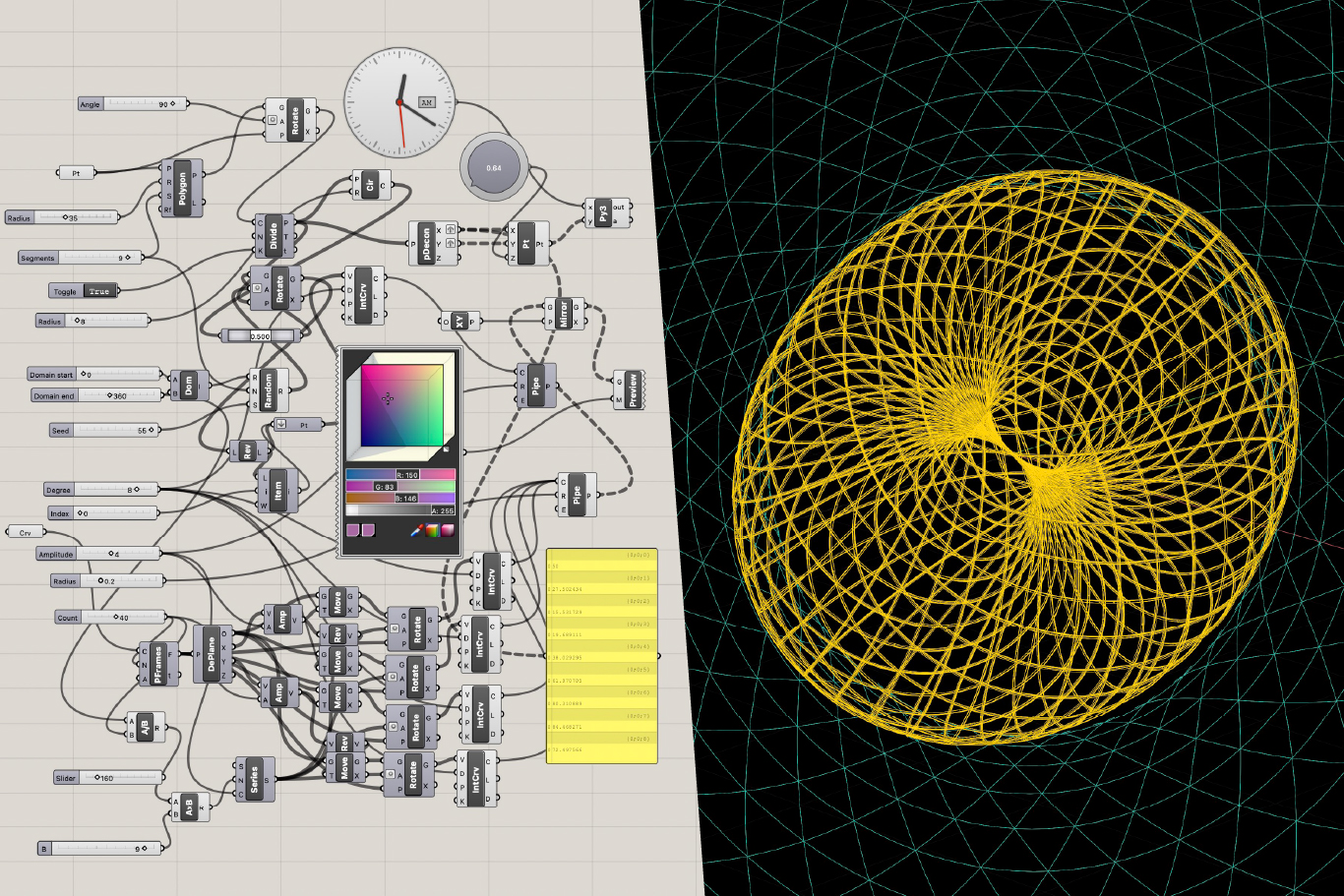
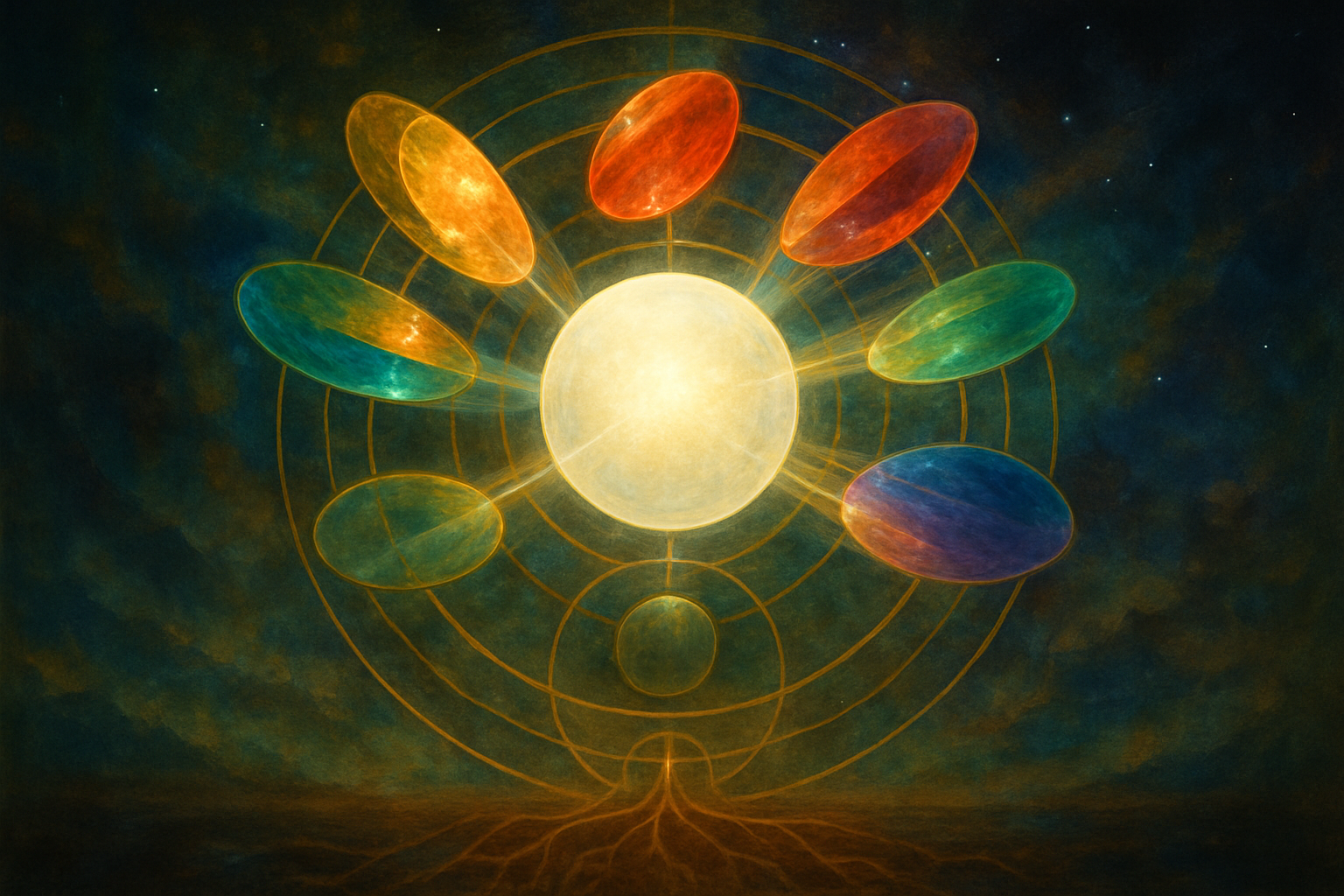
James envisioned a 3D animated sphere in space, viewed from above, with seven colored lenses rotating around a glowing white center (59:51). Light passes through these lenses, casting dynamic patterns on the sphere, representing how different perspectives illuminate human experience. The greater context—the four domains—would be suggested through additional spheres or geometric structures that light interacts with.
The animation would be both literal representation of the model and beautiful abstract art—color, light, reflection, and refraction welcoming visitors with "a complex mystical thing" (01:00:55). James described light as constantly trying to reach us while we build blocks or focus on wrong forms of survival. The work involves raising these lenses and developing capacity to hold all perspectives simultaneously, allowing cosmic presence to enter.
Wendy responded enthusiastically to this sacred framing of human experience while acknowledging that many people's lives are difficult (01:01:09). The imagery captures both the spiritual dimension and the practical barriers created by human systems that interfere with natural flourishing.
Wendy shared a comprehensive branding document consolidating visual elements, color palettes, and framework graphics created for grant applications. The materials include consistent imagery used throughout the project's evolution, though earlier complex circular diagrams have been largely set aside in favor of simpler representations (27:30).
Notable resources include the Little Book of Flourishing—a simple, charming introduction emphasizing universal human needs regardless of ethnicity or wealth. This could serve as inspiration for a short animated video once the geometric look is finalized (25:46). Wendy also maintains family values sheets and various tools applicable across audiences, reminding even national policymakers that they're human beings who might benefit from personal reflection tools.
The framework's power lies in consistent core principles applying equally to individuals, families, organizations, cities, and nations (01:11:41). Whether approaching as a parent, educator, city planner, or policymaker, the same fundamental questions about optimizing flourishing versus limiting it remain relevant. The website needs to capture this essence through profound yet accessible statements, then provide pathways to more nuanced, audience-specific resources.
Wendy is currently developing tailored content for different contexts—she mentioned sending city-specific work to partners and having extensive materials for educational settings. The challenge is organizing these without overwhelming visitors or misrepresenting the project's current prototyping stage and one-person core team reality.
This represents the first global project addressing flourishing and wellbeing from a truly ecosystemic perspective (01:09:41). It's also the first wellbeing framework positioning spirituality as fundamental rather than optional. These groundbreaking aspects don't require heavy-handed presentation—they can be conveyed through beautiful, intuitive design that touches people appropriately.
Wendy emphasized that diverse audiences—from the "techie side" of media partners to Montessori educators to indigenous leaders—are converging around similar systemic thinking. The website needs to honor this interdisciplinary interest while maintaining accessibility and authenticity about the project's developmental stage and resource needs.
The funding question remains open: how to craft invitations for philanthropists and funders while keeping resources freely available to avoid privileging only wealthy cities and schools. This tension between universal access and sustainability requires thoughtful messaging.
James articulated arriving at "simplicity on the other side of complexity" (01:13:08)—a combination of art, practical tools, poetry, and prose painting the picture from interconnected ecosystem to pragmatic individual steps. The site should provide clear pathways forward regardless of who visitors are, what system they're working in, or what domain concerns them most.
Wendy agreed that Montessori methodology might inform the design: presenting tools like objects on a shelf that visitors can pick up and use according to their own energy and needs (09:17). This honors the contextual, individualized nature of flourishing—different countries, communities, and people require different approaches, which is why the simple SDGs book succeeded across 35 countries.
Both agreed on avoiding overcomplification. The systemic aspects can be conveyed through beautiful imagery without elaborate explanation. Most people intuitively understand that they exist within larger systems embedded in the natural world; the challenge is visual representation, not conceptual grasp.
James
Wendy
Wendy Ellyatt emphasized the critical timing of the website redesign, noting increasing interest from diverse partners including Montessori Europe (01:26). She's been invited to present in Latvia, describing it as a full-circle moment honoring the Montessori influence that originally inspired her work. The current website no longer adequately represents the evolved thinking behind the Flourish Project, and she's reluctant to direct potential partners to it in its current state.
The project has achieved significant grassroots reach, with the SDGs book now being used and independently translated across 35 countries (09:40). Schools have adopted the simple framework and adapted it to their own contexts, demonstrating the model's inherent flexibility and universal applicability.
James Redenbaugh presented two AI-generated website concepts. The first featured a simpler, darker blue aesthetic with clear structural hierarchy that Wendy immediately preferred (19:05). She appreciated the straightforward "Reimagining Wellbeing from the Roots Up" approach, noting the metaphorical richness of roots representing both children and spiritual/land connections.
The second mockup, while more visually elaborate with interactive elements and comprehensive features, felt too corporate and suggested a larger organization than currently exists (16:56). Wendy emphasized the importance of authenticity, being transparent about the prototyping stage while presenting the full vision. She's learned from working with AI tools that they tend to oversell scale, automatically generating case studies and organizational structures that don't yet exist.
The core challenge centers on representing the Flourish Model geometry: seven levels of human needs within four domains. Wendy explained that the four domains don't intersect as traditional Venn diagrams because they're nested (45:08). The natural world contains everything; human systems (cultural values, economic systems) sit within it; and human capacities and potential sit within those systems.
Previous attempts using complex circular diagrams felt too linear and difficult to explain simply (09:38). The team agreed that while a comprehensive multi-dimensional diagram has artistic value, users need the seven levels and four domains presented separately for clarity (44:20).
The seven levels represent consistent needs across all humans, from infancy through adulthood to community expression. As individuals grow, the labels shift slightly to reflect changing social contexts—from pure needs in children, to individual expression in adults, to service orientation in community roles (35:04). This progression represents a journey from the "untarnished spirit" of childhood toward wholeness through lived experience.
Wendy shared detailed charts showing optimized versus limited development at each level—what flourishing looks like when needs are met versus when they're constrained (39:28). However, she's cautious about using these as diagnostic tools, as they risk making people feel labeled or hopeless about past experiences. The value lies in showing policymakers and educators what to optimize and what to avoid, rather than individual assessment.
The four domains—human capacities and potential, cultural values and identity, economic and political systems, and the natural world—represent the spheres of influence affecting flourishing. Wendy clarified that these aren't separate realms but nested systems: individuals exist within cultural systems, which exist within economic structures, all embedded in the natural world (33:19).
Human capacities and potential specifically encompasses the seven levels. Cultural values and identity covers political and faith systems that impact or constrain human potential. The natural world isn't just context but kin—a loving, relational intelligence that nurtures wholeness from an indigenous worldview perspective (01:01:51).
[technology="Assessment Systems"]
Recent Worldviews Provocations with the Galileo Commission explored how personality and worldview develop as survival mechanisms rather than essential truth. Wendy recounted a remarkable session with indigenous leaders about kinship worldview, where technical chaos manifested as Hoyoka trickster energy—literally enacting the worldview disruption they were discussing (53:44).
The central message: "You are more than your story" (01:12:43). People accumulate character, personality, values, and worldviews to survive socially, but spirit underneath constantly moves toward integration and wholeness. The work aims to optimize development from the beginning while holding compassion for those whose survival required limiting patterns.
From an indigenous perspective, the natural world represents loving kin in constant relationship—plants, land, and other species as family that nurtures inherently (01:03:57). Wendy described losing this as "something really fundamental" in Western societies, where going outside means recreation rather than spending time with kin. The project seeks to heal this severed relationship with the "more than human" world.
James proposed using tree metaphors—sun, light, roots, water, nutrients, space, pollination, underground communication networks—as parallels to human needs (01:04:24). Unlike humans, other species naturally move toward flourishing without interference. Humans are unusual as a "keystone species" with choice-making capacity to either support or inhibit their own and others' flourishing.
James envisioned a 3D animated sphere in space, viewed from above, with seven colored lenses rotating around a glowing white center (59:51). Light passes through these lenses, casting dynamic patterns on the sphere, representing how different perspectives illuminate human experience. The greater context—the four domains—would be suggested through additional spheres or geometric structures that light interacts with.
The animation would be both literal representation of the model and beautiful abstract art—color, light, reflection, and refraction welcoming visitors with "a complex mystical thing" (01:00:55). James described light as constantly trying to reach us while we build blocks or focus on wrong forms of survival. The work involves raising these lenses and developing capacity to hold all perspectives simultaneously, allowing cosmic presence to enter.
Wendy responded enthusiastically to this sacred framing of human experience while acknowledging that many people's lives are difficult (01:01:09). The imagery captures both the spiritual dimension and the practical barriers created by human systems that interfere with natural flourishing.
Wendy shared a comprehensive branding document consolidating visual elements, color palettes, and framework graphics created for grant applications. The materials include consistent imagery used throughout the project's evolution, though earlier complex circular diagrams have been largely set aside in favor of simpler representations (27:30).
Notable resources include the Little Book of Flourishing—a simple, charming introduction emphasizing universal human needs regardless of ethnicity or wealth. This could serve as inspiration for a short animated video once the geometric look is finalized (25:46). Wendy also maintains family values sheets and various tools applicable across audiences, reminding even national policymakers that they're human beings who might benefit from personal reflection tools.
The framework's power lies in consistent core principles applying equally to individuals, families, organizations, cities, and nations (01:11:41). Whether approaching as a parent, educator, city planner, or policymaker, the same fundamental questions about optimizing flourishing versus limiting it remain relevant. The website needs to capture this essence through profound yet accessible statements, then provide pathways to more nuanced, audience-specific resources.
Wendy is currently developing tailored content for different contexts—she mentioned sending city-specific work to partners and having extensive materials for educational settings. The challenge is organizing these without overwhelming visitors or misrepresenting the project's current prototyping stage and one-person core team reality.
This represents the first global project addressing flourishing and wellbeing from a truly ecosystemic perspective (01:09:41). It's also the first wellbeing framework positioning spirituality as fundamental rather than optional. These groundbreaking aspects don't require heavy-handed presentation—they can be conveyed through beautiful, intuitive design that touches people appropriately.
Wendy emphasized that diverse audiences—from the "techie side" of media partners to Montessori educators to indigenous leaders—are converging around similar systemic thinking. The website needs to honor this interdisciplinary interest while maintaining accessibility and authenticity about the project's developmental stage and resource needs.
The funding question remains open: how to craft invitations for philanthropists and funders while keeping resources freely available to avoid privileging only wealthy cities and schools. This tension between universal access and sustainability requires thoughtful messaging.
James articulated arriving at "simplicity on the other side of complexity" (01:13:08)—a combination of art, practical tools, poetry, and prose painting the picture from interconnected ecosystem to pragmatic individual steps. The site should provide clear pathways forward regardless of who visitors are, what system they're working in, or what domain concerns them most.
Wendy agreed that Montessori methodology might inform the design: presenting tools like objects on a shelf that visitors can pick up and use according to their own energy and needs (09:17). This honors the contextual, individualized nature of flourishing—different countries, communities, and people require different approaches, which is why the simple SDGs book succeeded across 35 countries.
Both agreed on avoiding overcomplification. The systemic aspects can be conveyed through beautiful imagery without elaborate explanation. Most people intuitively understand that they exist within larger systems embedded in the natural world; the challenge is visual representation, not conceptual grasp.
James
Wendy
Airtable setup for The Flourish Project including nine Innovation Labs with linked resources. Resource cataloging with AI-generated PDF summaries via Airtable's built-in AI agent. Airtable upgraded from free to team plan (~$288/year) to support continuous API syncing and extended customization features. Resources tagged with status designations including 'primary' for three featured handbooks displayed with images. Comprehensive academic papers and resources being added from Wendy's provided list. Simplified field visibility to hide unnecessary ID fields for clean user experience.
Website design and development for The Flourish Project upgraded to Mast framework. Site structure focuses on nine Innovation Labs with integrated Resources section. New drag-and-drop CMS capabilities. Dark mode aesthetic implementation now functional. Simplified resources approach with most labs showing contact page link for expressions of interest, except Learning Lab which gets specialized contact form capturing name, role, email, school/organization, website, city, country. Conscious Parenting Lab features actual resource grid. Resource page prominently features three core handbooks used by 30+ schools worldwide with Airtable AI-generated PDF summaries. CMS-driven team management system with unpublished profiles for Fabienne and Annie pending discussions. Framework page cleaned up removing duplicate entries, linked from homepage ESF Framework section. New Principles of Partnership page with fungi/mycelium imagery and expression of interest link. Contact page updated with calming nature image. Airtable upgraded to team plan for continuous syncing. Integration with Airtable for resource management with primary status tagging for featured handbooks. Site transfer to Wendy's Webflow workspace pending with domain connection instructions to follow. Target launch after final joint review.
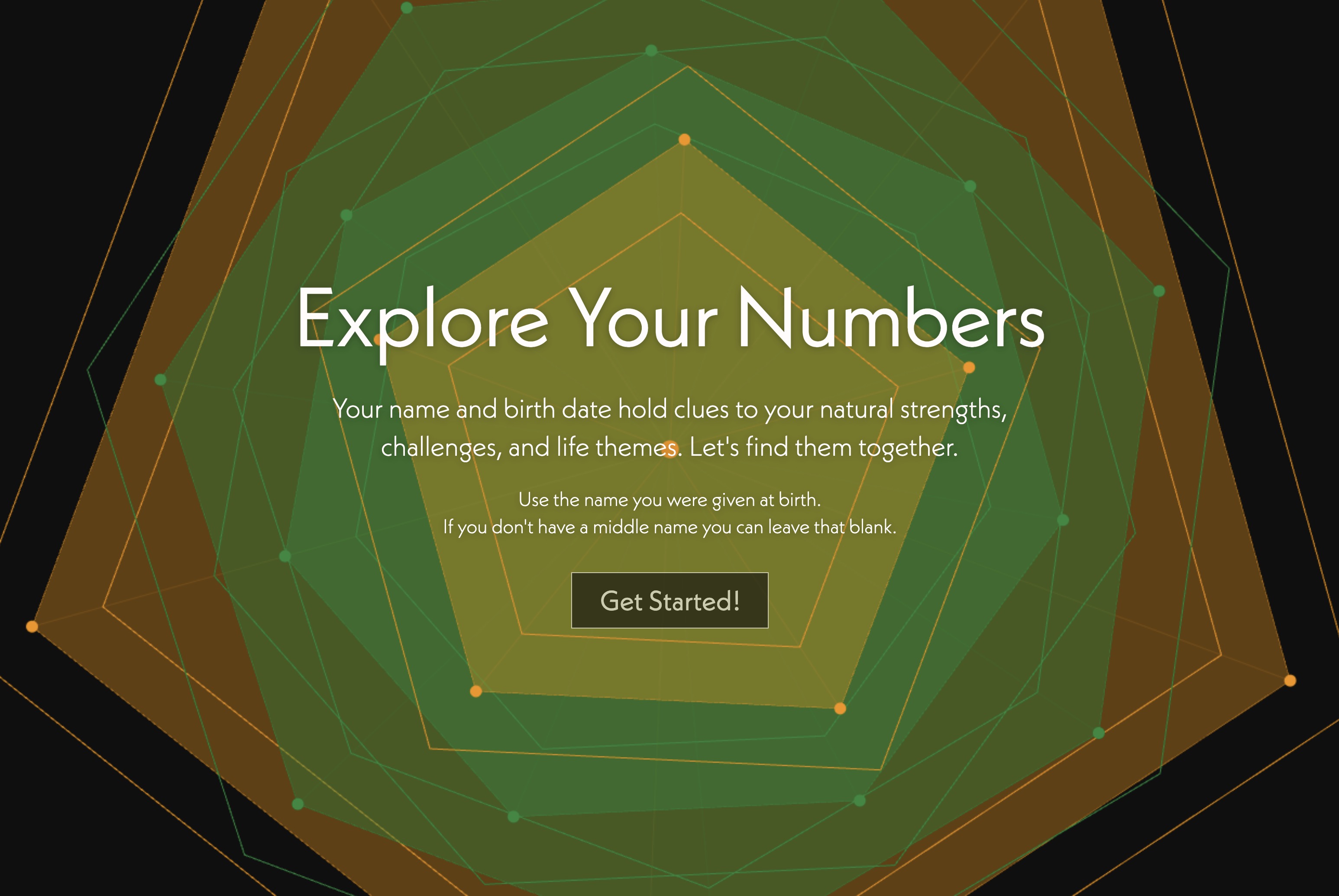
Website design for The Flourish Project focusing on nine Innovation Labs structure (Wisdom, Conscious Parenting, Nurture, Learning, Community, Cities, Peace, Legacy, Healing). Wisdom Lab positioned first as cross-cutting theme using vector equilibrium icon. Healing Lab added as ninth lab incorporating Global Healing Day initiative with Caduceus symbol. Visual identity emphasizing diverse, global representation with artistic collage-style hero image incorporating interbeing themes, multi-ethnic intergenerational communities, nature, ecology, and cosmic elements. Refined symbolic icons for each lab: rounded pentagons for Legacy Lab suggesting organic storytelling, compass for Leadership Lab, bioregion-inspired design for City Lab, growth progression for Conscious Parenting Lab. Video background exploration for hero section using Indigenous-themed content pending cultural sensitivity review. Team member bios with updated titles including new members James and Lana. Framework page using 'Ecosystemic Flourishing (ESF) Framework' heading. Dark mode aesthetic with improved typography. 'Ecology of Belonging' as prominent homepage feature. Shift from consumer to participant engagement model.
00:00:03
Wendy Ellyatt: This meeting is being recorded. Still can't hear you.
00:00:53
James Redenbaugh: Can you hear me now? Yeah, and I hear you.
00:00:57
Wendy Ellyatt: Yeah, it's really good. How are you?
00:00:59
James Redenbaugh: Great. I'm doing well. How are you?
00:01:02
Wendy Ellyatt: I'm doing well, too. Yeah. Lots of very interesting things going on. I mean, fascinating. At some point, I'm going to bring you into the media stuff because that's. It's still taking shape, but I've got. They've got you on the list. But there's one kind of. They're not a breakaway group. It's a different group that are. The more the techie side. And I think you'd In. You'd find very interesting.
00:01:34
James Redenbaugh: Wonderful.
00:01:35
Wendy Ellyatt: Oh, you've gone. Where have you gone? Oh, there you go.
00:01:37
James Redenbaugh: I'm just swapping the lenses too close.
00:01:41
Wendy Ellyatt: So you can see.
00:01:44
James Redenbaugh: Yes. Very busy. Not sleeping enough.
00:01:51
Wendy Ellyatt: That's not.
00:01:52
James Redenbaugh: I know. Our wedding is in like 50 days.
00:02:03
Wendy Ellyatt: You're counting down. Where is it you're going to get married.
00:02:08
James Redenbaugh: Getting married at an arboretum here in Zoe.
00:02:13
Wendy Ellyatt: Lovely.
00:02:14
James Redenbaugh: Yeah.
00:02:17
Wendy Ellyatt: Lots of guests.
00:02:20
James Redenbaugh: Yeah. About 150.
00:02:22
Wendy Ellyatt: Oh, that's big.
00:02:24
James Redenbaugh: Yeah, that's the max at the. At the venue.
00:02:28
Wendy Ellyatt: Yeah. We have friends. We're going to a wedding on Saturday and they really wanted it. It started at 15 and now it's 88. It was supposed to be a small, relaxed do, but. Yeah, it'll be relaxed. It's just grown. It gets really difficult when you're trying to decide who to. You know, you upset people if you.
00:02:48
James Redenbaugh: Yeah. I thought 150 would be a lot. But then when you get down to it, you know, everybody has a spouse and if you have all this family.
00:02:59
Wendy Ellyatt: And both sides of the family.
00:03:05
James Redenbaugh: Wish it was 300.
00:03:07
Wendy Ellyatt: Yeah. Our daughter's wedding was about the same. I think she was about 150. And even them, because that was the maximum the venue could take. Yeah. It's tricky.
00:03:17
James Redenbaugh: Yeah.
00:03:18
Wendy Ellyatt: Lovely, though.
00:03:20
James Redenbaugh: Yeah. I made a. I'll show you real quick. In case it inspires the Flourish project. I made our website and our. We designed our invitation together.
00:03:40
Wendy Ellyatt: Yeah. I'm assuming you'll have a wonderful invite and website and all the rest of it.
00:03:46
James Redenbaugh: It's very colorful.
00:03:47
Wendy Ellyatt: Oh, look at that.
00:03:53
James Redenbaugh: Yeah.
00:03:53
Wendy Ellyatt: How cute is that?
00:03:55
James Redenbaugh: Put in their name. And then this comes up. We have a. Like a rehearsal dinner celebration the day before.
00:04:07
Wendy Ellyatt: Yeah. That's very American. We don't do that.
00:04:13
James Redenbaugh: We figure, you know, everybody's going to come from around the country and the planet.
00:04:19
Wendy Ellyatt: Yeah.
00:04:21
James Redenbaugh: Got to do things for multiple days at least with some of them. So some. Some are invited to this, some aren't. And if they aren't, this won't show up.
00:04:29
Wendy Ellyatt: Such a lot of planning. Yep.
00:04:32
James Redenbaugh: Yeah. And I designed this whole custom RSVP interface, so when they fill this out, it automatically populates our air table so we can see.
00:04:45
Wendy Ellyatt: Oh, look at this. That's so cute.
00:04:53
James Redenbaugh: Oh.
00:04:58
Wendy Ellyatt: That'S a lovely thing to be able to do, huh?
00:05:01
James Redenbaugh: Yeah.
00:05:06
Wendy Ellyatt: Fantastic. How lovely. It's also lovely being able to do that. I mean, because you've got the skill set to do it. It's just a lovely thing because it adds a such a personal touch, you know, I'm excited now.
00:05:26
James Redenbaugh: Yeah. You want to come hop across the pond?
00:05:29
Wendy Ellyatt: That's a long way to go.
00:05:30
James Redenbaugh: Yeah. So what have you been busy with?
00:05:36
Wendy Ellyatt: I just got. I mean, I'm really glad we are actually doing the website because there's. I'm right at the point of having lots of people interested because I think I finally grounded the thinking behind the Flourish project side of stuff and all. There's multiple, potential very diverse partners. So when we've got the websites, I. I find myself reluctant to lead people to the current website. And of course. And then now I've realized I've given myself a huge amount of work to do. Because when I started to think it from your end, which is what I've been sending you, I then realized, oh, no, there's a load of kind of tools and resources that I'm going to have to develop in response to the way I'm going about it because of those feeds. So I'm giving myself a load of work. But the very fact I've started to think about how I would go about it from that side, you know, is really interesting. But. But loads of things like Monor Europe that I worked with that. So I'm going. They want me that I sent them the new work on the ESF framework and then the primary curriculum that I've been playing about with, because everything is prototype and I'm having to be really clear with people that it's just me. Even though it looks as though there's a team, it's really just me. And part of the skill set is telling them, everybody that this is prototype. So if they want, if we partner, we need to seek funds to. To do it. So I know I'm invited to Latvia to present to Monsoura Europe because it's a natural fit with what they've got, because I've got like a contemporary version of what Mansouri was so interested in and she would love What I'm doing. I mean she'd be. Because, you know, she kicked. Kicked it off for me. And I'd said to them it's lovely for me that I can go and be on a stage and say if I hadn't read that one book I'd have been like a wealthy management consultant. I would just not have packed in my career and then done this weird path to do what I'm doing now. That one book. And it's a wonderful story, isn't it? So I feel like it's gone full circle and I'm going onto a stage. It feels like I'm honoring everybody who's been part of my path to this moment seems to be popping up for me to honor that. Without them I wouldn't be doing it. So. And that's a kind of lovely thing. And I've got that going on across multiple places. They're very interesting.
00:08:35
James Redenbaugh: Amazing. I think that the. The Montessori framework methodology philosophy might want to inform the design of the site. I'm thinking so it can feel like here are these. Here are these tools. Here are these toys you can play with. Here they are on a nice shelf. You can pick them up and use them in what you're doing.
00:09:17
Wendy Ellyatt: You know that's kind of interesting. Like a practical shelf.
00:09:23
James Redenbaugh: Yeah.
00:09:23
Wendy Ellyatt: When you have. It's what it's. That's kind of an interesting. I know I've thought about that. That you know, one of the ways. One of the reasons it works in a Montessori school is you allow the energy of the individual to lead you to what it is you need. I think that's a really cute way of doing it and you trust because it's unique to the individual in the context. And part of what I'm so interested in is this must be contextual. So different countries different. Which is why the SDGs booked the little first book worked and now it's in like 35 countries. I've just got like more is because I didn't even in. They must have. They must be translating it themselves. I didn't. They can use that. It's so simple that they can use and adapt it in whatever way they want. It's a really. Was a really interesting. I never expected it to be taken up by so many schools. Of course I'm sitting on all those emails. So I'm. I'm thinking when we've got the website up and this toolbox some of which I'm going to have to refine and work on either go back to all those schools and say, you know, here's this next layer. I still need to think about how we position the invitation to fund. It's that you need to craft. We want to make this freely available to as many people as possible and then crafting that, you know, if you're a philanthropist or a funder, you know, this is what you can help support. I do not want this to be just the privileged cities and the privileged schools. But at the same time I've got to pay for stuff like this. You know, we've got to. I've got to have some kind of resource so that we can take it beyond me. So I've still got to think about the crafting of that. And I'm sure you're going to help with that because you're seeing how other people do it. Yeah.
00:11:38
James Redenbaugh: Wonderful. Well, you have printed this out over here. You have a ton of.
00:11:47
Wendy Ellyatt: Yeah, it's me thinking through stuff.
00:11:50
James Redenbaugh: Yeah. Really great thinking. Makes my job easy perhaps. And I wanted to go through that with you.
00:12:05
Wendy Ellyatt: Sure. And I'm happy to play. I mean, it's me just trying to bring it into a clearer step to help you and to help me, you know.
00:12:14
James Redenbaugh: Yeah. And it's awesome. And, and then also to help us see things come together, I've created some mock ups with the help of some AI friends and one is actually quite impressive. But I want to show you the less impressive one first in case it spurs any. Anything. So I asked Claude to make a website.
00:12:59
Wendy Ellyatt: Yep.
00:12:59
James Redenbaugh: And set it. The, the content and ideas and be it. That's interesting. I don't know about this purple color. I don't know what this, this pulsing circle is doing or this, this round table, but it's, it's colorful. It's helpful to, to see the.
00:13:27
Wendy Ellyatt: Yeah, yeah.
00:13:29
James Redenbaugh: To, to see the structure. I think the, the logic and the structure makes a lot of sense. I like to find, find your pathways.
00:13:40
Wendy Ellyatt: Yeah. This is kind of where we're going. Yeah, yeah, absolutely.
00:13:46
James Redenbaugh: Nice text here. Team footer.
00:13:52
Wendy Ellyatt: Yeah. Great.
00:13:54
James Redenbaugh: But then Figma has a new tool. Figma is what we use to design Sigma Figma with an F. We design all our websites in Figma and they've obviously been training on all the designers that they have using their app.
00:14:17
Wendy Ellyatt: Yes. Yeah.
00:14:19
James Redenbaugh: It's generated this, which feels great. I mean, I don't love the colors, but I'm really impressed with what it's able to do with a prompt and some, some vi. So this is interesting how this is building. Obviously it doesn't make complete sense, but I like the simplicity and the orbits and the colors and the. The little circles.
00:14:56
Wendy Ellyatt: And.
00:14:59
James Redenbaugh: And then it made its own model here. This is interesting as well. It's not completely accurate but I like the idea of this kind of thing being interactive and just right there. Maybe different layers that we could click on and explore. And I like that the whole thing feels like a canvas with tools and objects on top of it. The way that these are done with the different colors and icons is very nice. It's a little awkward having seven in a grid. So I would, I don't know, maybe do something. The seventh one. But that's a minor thing. Not word. Not sure where to start. Speak to our team Pathways assessment. Curious to talk about building possibilities for building an assessment. Transforming from. Transforming. Well. Well being from individual to systemic. It's always nice to see these kind of real world numbers. So it's not.
00:16:26
Wendy Ellyatt: So we haven't gotten it. Well, I suppose we have actually. I've probably got more than. Yeah. I actually have the trouble with doing that though. People then assume I'm much bigger than I am and that does not. It's not always helpful.
00:16:40
James Redenbaugh: Huh. True. I really like this little portal into the forest. Nice quote. Resources, some images, research inside. Yeah. Comprehensive footer. And now I think the whole like our site is going to be simpler than this. There's probably more here than it's needed. You know, especially with all of these.
00:17:24
Wendy Ellyatt: Yeah. You don't need all that at the bottom now.
00:17:27
James Redenbaugh: Huh. And it does feel like a much larger organization than it is. But my hope is that it's helpful to see these things in place and then we can move things around and evolve as we. So yeah. I'm curious what this inspires.
00:17:54
Wendy Ellyatt: Go back to the first one actually. Really like the simplicity of that first. Hit that with the darker blue. I think the geometry is the key to this. I mean I actually think I prefer the first one to the second one. But I think it's also. It's a merger of both. One of the troubles with AI is it always presents things as though you're a huge organization. As it does. If you ask it to produce anything it automatically. Because you know, I work with it all the time. It. Because it's coming from a western, particularly US based kind of database. It tends to assume that you're big and that you're working with certain kind of established setups. So it automatically puts it in. So I've learned now to be really careful to strip away things that oversell what actually isn't true. Yet it almost my work. I. I produced something and it said, you know, there's a whole list of case studies which didn't exist. It took all the papers that I'd written and then made them as though they were real. So I'm cautious about. I'm just cautious about the way it's presented because it is important that it both presents the full picture, but also this. That we are at the prototyping stage. We're looking for partners who are interested in this. But that. But I like this kind of very simple start. And I think that's what I had, wasn't it? I like that because I think that's straight, very simple.
00:20:02
James Redenbaugh: Great.
00:20:05
Wendy Ellyatt: I really don't like the middle thing. I say the challenge is how we capture in a. You know, the. How do we capture the geometry and the. The look of the spheres? How do we do the four domains and seven levels in a way that is simple but beautiful? And for me, that's kind of the most single, most important thing now is how do we do that in a way that's beautiful, but all this kind of structural side. Absolutely. I think that's the, you know, we can then build and build and build. I probably could take that. I hadn't thought about the fact that the seven. What we could do is get rid of the systems change one, which is the seventh, because if someone's exploring systems change, they would just come and talk to me anyway, whereas the others are, you know, that. That's kind of people who are interested in what I'm doing. The others are all people we're trying to reach. So if I was going to get rid of one, it would be that one.
00:21:26
James Redenbaugh: Yeah. Great. Let's pop in here. So I agree about the.
00:22:09
Wendy Ellyatt: I really like that first hit because I think that's a lovely simple. And that's essentially. That's just a very clear hit on what we're doing. Yeah. And I like the Roots up because it's from the land, it's kind of spiritual and it's practical. I. It's just got a nice thing, roots being children, but roots also being the land going into spirit, you know, so it says everything with it in a. In a kind of very open way.
00:22:51
James Redenbaugh: Yeah. There's not a video right now.
00:23:06
Wendy Ellyatt: No. And I didn't know. Is that something you can do? I put it in because it seemed like a nice idea, but I don't have one. And also we would have to align it with whatever picture, you know, geometry we come up with.
00:23:28
James Redenbaugh: Yeah. What are you Imagining in the ideal world in terms of a video.
00:23:34
Wendy Ellyatt: Just a very simple. The four domains and the seven levels of really, really simple introduction. But in a way, you know, I use those little figures to. I've got a whole load of those little animated figures that. That we used to. I used from the beginning because they did this lovely softening of very heavy documents and for schools we've. They've been hugely successful. We also did it because of multi ethnic. You know, we had to cover off everything. So we made our own little figures that we didn't have to worry about all of that. But I was. You know, there's no reason why we couldn't use some of them. It's a kind of a very cute. I could do the scripting of it, but a very cute introduction to the four domains and the seven levels. At an absolute basic level. You know why. Why these are important and how everybody on earth starts with the same these. That's rather lovely. I created the. I've got some little books. There's a little book of Flourishing that was one of my first resources. And that is that kind of very simple saying we all start same. You know that. That we all have the same needs. It's. It's very cute. Simple language and. And then a little animated video that just captured why these. We have these core elements that no matter where you live in the world, they're the ones that we need to look at. If we're looking at how you're flourishing, it doesn't matter what ethnicity you are, it doesn't matter how much money you've got or not. These are the same core elements that we need to look at. And I think that would be cute as a super simple intro that was charming. But actually talked about these very similar to the little book Flourishing actually which is on the publications part of the site.
00:25:46
James Redenbaugh: Yeah.
00:25:50
Wendy Ellyatt: So once we have the look of the geometry, then that will be a natural. We could probably do it with AI.
00:25:59
James Redenbaugh: Maybe. What's the document you currently have on the home page?
00:26:27
Wendy Ellyatt: I found. Let me just where I was. I found this little thing. I thought I'd done it. Can I share my screen?
00:26:40
James Redenbaugh: Yeah, please.
00:26:53
Wendy Ellyatt: I had done a. I did this for somebody else who rather. I was trying to consolidate all the aspects in order to catch up. Because I was thinking if I'm going for grant or anything, I need to start bringing all these things together. So these. We've got multiple little versions of these. You can see the color palette.
00:27:25
James Redenbaugh: Yeah.
00:27:30
Wendy Ellyatt: And this was before I worked on. Because this has now moved into the ESF framework which is more this. Which I've never been able to. I think that's a terrible graphic but it says it. It gets it over but actually I couldn't think of another way of. I'm trying to get over into being. Which is tricky. Huh. This is me just. So I, I put that together to try and get the kind of look and feel of the branding. I can send it to you. Chris.
00:28:15
James Redenbaugh: Yeah. There's a lot of good stuff. Can we look at that four circle Venn diagram guy in there?
00:28:30
Wendy Ellyatt: It.
00:29:18
James Redenbaugh: Yeah, that one. Oh yeah. I was thinking it was for. But then there's another.
00:29:27
Wendy Ellyatt: There's another colorway on that somewhere.
00:29:32
James Redenbaugh: Yeah.
00:29:32
Wendy Ellyatt: Just stuff I was playing with.
00:29:38
James Redenbaugh: And so global community, collective intelligence. A living universe to be.
00:29:49
Wendy Ellyatt: This is me more because I was. It's more about. I was talking to people about how we kind of connect up different groups and that some of some people working at the age some are like the pioneers, you know putting up their hands and actually having a really hard time and then those are in the old system and those that are moving. You know coming from the emergency it was me trying to kind of just get my head around something. But I'll send those to you. I say. I say we've been very consistent with the. The graphics all the way through. But then it was until the last year or so was both focused on the Flourish model which is the inner the seven aspect and now I've opened it out to the ESF framework which is the more than which is added in the four domains. So now we've got the whole picture. Whereas before it was the human element.
00:30:57
James Redenbaugh: Yeah.
00:31:09
Wendy Ellyatt: I'll email that to you now. Actually.
00:31:11
James Redenbaugh: Hold on.
00:31:21
Wendy Ellyatt: Whoa, thunder here. Gosh, it's the first time we've had rain for so long. I'll just take my laptop off.
00:32:06
James Redenbaugh: So there's the seven levels, the four domains but then there's child, adult and community. And those are separate from the four domains?
00:32:36
Wendy Ellyatt: No, they stitch within. It's the. It's the one minute. I'm just coming back to you. Every human being is inside those four domains and impacted by. It doesn't matter what age you are. So one of the four domains is human capacities and potential which is how do we optimize our well being but cultural values and identity. So it's the four aspects that we need to think about if we're thinking about flourishing. From our individual potential to our families to our communities and then to the economic and political and then to the natural World.
00:33:19
James Redenbaugh: Yeah.
00:33:20
Wendy Ellyatt: So the cultural values and identity really covers off political systems and you know, the faith systems, it's the systems that are impacting or constraining our human capacities and potential. We sit inside social systems and those social systems are impacted by the economic systems. And all of that is influenced by the natural world that everything's embedded in.
00:33:52
James Redenbaugh: And so it's seven levels, four domains in three possible focal points. There's like a third dimension here where we can.
00:34:15
Wendy Ellyatt: Say there were those circles on the original model was because the, the same needs were there, but the way they were expressed changed as you became adults. So the wording on those circle, the original circles, the reason I created the model was because the. I need to capture the seven needs that were consistent to babies and young children. Then as you grow, you'll see the labels slightly change because you're responding to the social circles. And then as you go out to community, the labels, it becomes more about service. So that was the difference, that slight shift in your needs and the way that you interacted with the social levels.
00:35:04
James Redenbaugh: Yeah. I'm just thinking the, you know, how we might represent the whole model. That's an important dimension of it for me in my understanding, seeing how putting the child at the center.
00:35:24
Wendy Ellyatt: Yeah. And the purity of the child. Which is spirit. Which is spirit. Sometimes I use spirit. But you're saying this is the untarnished. Well, we've got the karmic and the epigenetic stuff, but we've got this full of this, this is the closest we get to being whole at the beginning. And then we move through the lifespan and in, if we have supported and nurtured, we move back to wholeness through all these other aspects. So we, we grow and we learn and we have to live in social systems. And we have, we're exposed to natural systems and political and economic systems, but ultimately the yearning in us, the spirit in us wants to return to a sense of non separation. And that's the journey. So on the, the little chart you'll see so spirit, I've got physical, emotional, mental, but actually spiritual is looping. It's coming up and then returning. Yeah.
00:36:28
James Redenbaugh: Yes. So if I'm a new person engaging this model for the first time, I'm wondering what is the Flourish project? What is the Flourish model? It might be most helpful for me to see. Okay, here are these several seven levels.
00:36:51
Wendy Ellyatt: Quickest and easiest.
00:36:53
James Redenbaugh: Yeah.
00:36:53
Wendy Ellyatt: Because everybody gets it.
00:36:55
James Redenbaugh: Yeah. And I can go through each one and, and maybe at each one I can see here's how it's True for a child. But also here, here's how it is expressed. You know, here's how it's true for an adult, here's how it's true for a community. And then it's like, how do we create this in our world for ourselves, for our children? And the answer is these four domains. We have to look at these.
00:37:26
Wendy Ellyatt: We have to look at the influence of the four domains. And you'll see on the little graphic thing that I'll send you the. I spent a lot of time I. And I called it, which I always felt a little bit wasn't right. The wording natural and unnatural. So I looked at. Here is what this will look like on the seven levels if you are completely nurtured in that level. And you'll find it interesting when you look at it because it's so. It was. So what this will look like if you're really nurtured on every one of those levels is these particular. Let me, I'll show you. Let me, let me do the thing again. Hold on. It's the easiest way to do it. Show it again. I spent a long time looking at this. See that? Natural growth and unnatural. And I. It's just. I didn't like unnatural. I ended up changing it to optimized and limited or natural and limited. Unnatural didn't feel right. Yeah. Because some. That's too. The word wasn't right. But I spent a lot of time looking at. Okay, what does this look like? If we get everything right, this is what you're going to feel like. Yeah. And if we actually expose you to limiting aspects from all of those layers that we're talking about you instead to develop this particular personality or, or mindset. Yeah. Simply because you're having to survive in the world. So your expectations of the world are different, your needs are the same. But if they're not met, you will manifest it differently. So I spent quite a long time. I think I've got another chart somewhere. Yeah. There, here. That's when. That's me going, okay, I've changed the wording, I've developed it further. But actually this is actually a very useful chart because it's saying we always. We all start the same, but depending on the experiences you have, particularly in the way you're nurtured within families and schools in particular, this is the worldview and the values that you will develop. And that's quite clear. You can see everyone will relate to that. So my work has been about how do we optimize the left hand side and Limit the right hand side.
00:40:28
James Redenbaugh: Yeah. So if somebody is expressing a lot of qualities from the right hand side in a particular level, is the solution addressing that level or.
00:41:03
Wendy Ellyatt: Well, this is why I, it's not, I stopped using it because it's, it's actually really interesting. But it's a, it's not really a tool to use. It's simply a reflection on why people might have developed these things. Because the danger is in so many cases there's no point like showing if someone reads that and they go, well, that's me. Yeah, I've got all of the ones on the right. You just feel, well, what's the point? You know, and if, and what I didn't have, I don't have the solutions because the solutions are systemic. It's more about saying to policymakers and, and particularly educators that this is what we're trying to avoid. It's, it's helpful as a tool, as a piece of information to say this is the result if we get it wrong.
00:42:07
James Redenbaugh: Yeah.
00:42:08
Wendy Ellyatt: But it's not really at all to say, oh, see which level you're bad on. And then we'll try and fix it. Because you, there's, you may not be able to, you know, if you've had a childhood, it's just, and, and everybody's, you know, being horrible too. And you've never, you know, by the time you've reached 10, this is who you are. I mean, so the challenge for the community is how do you, and that's what community works about. How do we take children and young people in particular, but adults as well. And we know this is what manifests into mental health and disease. So it's. So we've got two things. One, how do you optimize the left hand side, which is kind of my work. And then, okay, the community work and the city work. And is to say, how do we hold and acknowledge and validate people who through no fault of their own, simply look at the world in a different way? So it was interesting. I mean it's part of my thinking everything through. It's still an interesting document.
00:43:30
James Redenbaugh: Right. I'm wondering, I think that there, there might be artistic value in creating comprehensive multi dimensional diagram of the model with the seven levels and the four domains. But I feel like it's going to be most helpful for the user to have them separate. Just be like, here are the, here are the seven levels and here are the four domains.
00:44:20
Wendy Ellyatt: Yeah. And that's how I've up till now. That's how I've. Because it's too. Because people understand that. I mean it's, it's not complicated really. I mean in terms of, you know, you've all got the same needs and these are the things that impact us.
00:44:39
James Redenbaugh: Yeah.
00:44:39
Wendy Ellyatt: And the seven. The seven levels fit within human capacities and potential is the seven levels really. That's where it sits.
00:44:55
James Redenbaugh: So do you ever draw the. The four domains as four intersecting circles or.
00:45:08
Wendy Ellyatt: Never known how to because they. The natural world has to be. The external holds everything so it can't intersect. It's. It. Everything is inside it. And the social world sits inside the cultural and the cultural sits inside the. Or merges with the economic. So they don't really. I say the natural world is the.
00:45:49
James Redenbaugh: Space everything else sits in and human capacities and potential.
00:45:54
Wendy Ellyatt: So all the three others are the human aspect, but the natural world is the more than. But the human capacities and set and potential sits inside the other two. So the closest I could get was my sphere. So we got the, the human world which starts with the individual and then the systems that that individual sits within and then the natural world that everything is inside.
00:46:29
James Redenbaugh: Mm, right. Well, I think that it can be helpful to show them in that, in that way and some kind of evolution of, of the sphere, the see being the ecosystem. But I also think it's fine to put them in a quadrant, you know, and give people the, the tools, the, the empower them to try on each one of these lenses without worrying about how they.
00:47:19
Wendy Ellyatt: Yeah, yes. And I, I mean if you clicked on the natural world because you can do a nice little paragraph to each one just saying, you know, the natural world is, you know, I could do a little paragraph for each one if I might go and do that. Which is just a. Which says that really simply. Part of the problem is people don't necessarily need to know.
00:47:47
James Redenbaugh: You know, they often together.
00:47:48
Wendy Ellyatt: No, I mean I. And I. As I say, the closest I've got is to doing things in spheres. But then I've got to the inter being bit and I even. I don't like that image. But I didn't know how else to do it. You know that I need to show that you're an individual, but actually you're sitting in this bigger yourself. We had that, remember that geometric image where you're just a center and you're in this huge. You're in a much more complex system. So you start with your center and then you're nested in this other set and then there's another set. Then you're inside this. The inter being space. The cosmic. Cosmic.
00:48:25
James Redenbaugh: Yeah.
00:48:28
Wendy Ellyatt: And that connection with all other species, you know, that. Which human flourishing is utterly dependent on the flourishing of other species in the natural world.
00:48:41
James Redenbaugh: Yeah. And so I think that the hero section can be some kind of artistic representation of that concept without needing to be literally an articulation of the model in two dimensions. Because.
00:49:07
Wendy Ellyatt: Yeah. And I don't think so because the. The detail is all there. If you. The academic stuff has got all the detail. You know, most people don't need that. They just need to get. They need to. To get it. That kind of visual hit of. I think it's very. The seven levels is super easy because people just get it. It's. And you just get that that's consistent across everybody. And that's a really great thing because it means we're all the same underneath, you know, great thing. And then everybody gets that we're sitting inside other systems and they all get that we're inside the natural world. So I'm. You know, we're probably. There's a. There's a potential to over. Over complicate something that actually most people will understand. It's just when you're visually trying to represent it, it's difficult.
00:50:02
James Redenbaugh: Yeah. Yeah. So I think the most. Sounds like the most important concepts to communicate in the beginning are the interconnection and general interconnection. That no individual or community is isolated. It's inextricable from its environment. And environment means physical world and cultural context and systems of influence of economies. And there are these notes in the scale. There's a pattern that runs through it that can be holistically improved, evolved.
00:51:25
Wendy Ellyatt: Like we're optimized. It might be an idea to put. You could do a couple of examples of. I mean, it could be that we. I revisit that little thing because it's actually really interesting to say someone. This is what, you know, if we want to optimize it. And this is what it looks like if it's not optimized because it is interesting because you. Then it's a reflection on. Whoa. Okay. Is it. Because you are literally talking about the development of the personality and the. You know that your world view and so much of my works about world views that this is where your world view comes from. And that whether you see the world as a dangerous place that you're not going to explore and you. You know that you're. You closed in. Or whether you see the world as an exciting place where you're prepared to fail and you don't feel judged.
00:52:27
James Redenbaugh: It.
00:52:27
Wendy Ellyatt: Could be that there's something that could be added in about that because it's such an important aspect also. But it's trying to say to people, the. The issue is, then it's not your fault because, you know, you have someone who comes at it, who's had the time, and so the. How to do that in a really loving and compassionate way so that you make people feel positive and supported rather than, oh, my God, you know. Well, I understand why I'm. I'm, you know, it's kind of, how do you do that in a really loving way? But there could be a very. Just a very gentle touch of, you know, have you thought about where the way your lens and the way you look at the world. Because I'm doing such interesting work. I just toasted a worldviews provocation. I'm doing provocations with the Galileo Commission because I want to blow the minds of all these mathematicians and physicists. So I've got. I've had two. I've had one guy called Rufus Pollock who runs life itself and Second Renaissance. You heard of him?
00:53:43
James Redenbaugh: Yeah, I know Rufus.
00:53:44
Wendy Ellyatt: Yeah. So he came and talked about the Four Noble Truths. And then on the day before yesterday, I had two indigenous leaders talking about the kinship worldview. And you know, the funniest thing that happened with that is we. We had just chaos around this event. And this. The Gallo Commission and the Safe Child, it's the scientific medical network run events all the time. They're running like three a week. And it was the cat shouting at me. No. And everything is really smooth. They. They like, they know what they're doing. They never have any problems. From the moment we set this event, one of them got the date wrong. The website didn't work. My details went on wrong. Even on the last day. The poor web guy didn't understand what. Because things were just shifting about the information. And I was laughing about it. I went inside with my husband and was upstairs in the bathroom laughing about it. I went because the. One of the indigenous elders said to me, this is Hoyoka in the Lakota tribe. This trickster energy is the energy you've invited in because you're. What you're saying is you. You want to turn upside down the worldviews of these Western people. And literally we had it going on on every level. And then I literally. Cleaning brush just snapped as I was talking to my husband. The brush. So we went into this whole. We actually went in talking about the fact that the Hoka energy. I said to the Web guy, don't worry about. Because it really wasn't you. My photo became somebody else. It was this playful trickster jump, putting everything out. And I said, really? We couldn't have come in with anything better. Because what we're saying is, you've got to understand that if we let go of who you think you are and what you think you know, and any sense of being an expert, everything you know is only your lens and your worldview. That is the way you've learned to see the world. But it isn't necessarily, isn't the truth, it's just your version of how you experience things. So it was rather lovely that we had a manifestation of turning upside down as part of the. The thing. So I really like the. The humility. This is what biologa does, you know, the humility to say to everybody that just because you see the world this. This way, it doesn't mean it's true, just means it's your interpretation. And I kind of love that. So, yeah, that's part of saying, well, we build up. We build up this picture of who we are and the world the way we think it is, but it. None of that's true. I mean, that's just our way of seeing it. Does that make any sense?
00:56:47
James Redenbaugh: Yeah, yeah.
00:56:48
Wendy Ellyatt: Really fascinating that it actually physically manifested.
00:56:54
James Redenbaugh: It makes sense.
00:56:55
Wendy Ellyatt: But I'm trying to explain to people at a really basic level that in a way, you are not the story that you've made about yourself and the character and the personality. You've accumulated your character and your personality and your world and your values and your world views in order to survive in the world successfully in a. In a social world of others. That's the reason we've created these characters. Yeah, but actually you are bigger than that. You are really just spirit before that all happened. Yeah, that spirit is always trying to integrate and bring you back to this the. To optimize the best of who you are. And that's really what the work is. And then how do we. How do we do it from the beginning so we don't. How do we avoid damage from the beginning? And then how do we nurture and support people who, through no fault of their own, have learned a particular way of being and surviving? Yeah, that's what compassion. That's why I have the three aspects of compassion on the side, which starts with self compassion to self compassion to others in the natural world. Is that kindness to say, whoa, I'm more than my personality.
00:58:17
James Redenbaugh: And an individual in their personality may be holding on to One of these seven levels, like a life raft. Like I am my independence. I'm all about my independence. I know I need this thing. I'm going to defend it or fulfillment.
00:58:37
Wendy Ellyatt: I'm just going to do what fulfills me. And I don't give a shit about anybody else.
00:58:42
James Redenbaugh: Yeah.
00:58:43
Wendy Ellyatt: So you never get contribution.
00:58:45
James Redenbaugh: And then it's at the cost of all these other things. And then it's ultimately you don't reach the end of fulfillment.
00:58:52
Wendy Ellyatt: Yeah. And you don't contribute and you never do growth because you never experience that more. You know, that give that this. There's a wealth beyond the wealth that comes from that kind of growth. And give back is more than any you couldn't buy.
00:59:11
James Redenbaugh: So now I'm seeing a version of this hero where there is a sphere, a little sphere in a space. And it's a 3D video rendering shot from above, top down. So there's a sphere, maybe it's glowing white. And then the seven levels are seven lenses, like seven colored circles that are kind of rotating around. Maybe they start kind of flattening.
00:59:51
Wendy Ellyatt: Yeah. Because it's dynamic. It's not linear alone.
00:59:55
James Redenbaugh: Yeah. And there. And then maybe the ways that light is coming in and passing through the lenses, maybe it's. It's casting light on the sphere in an interesting way. And then we have the greater context represented as well, either as more lenses or more spheres or some kind of beautiful geometry that the light is interacting with. And it's meant to be kind of a literal representation of the model, but also just a beautiful art of color and light and reflection and refraction that welcomes people to the site and says there's a complex mystical thing going on.
01:00:55
Wendy Ellyatt: Yeah. This being human is a. Is a, is a sacred. I'd say it's a sacred thing that has. But yeah, I mean, lots of people have a really miserable time. So, you know, it's kind of.
01:01:09
James Redenbaugh: Yeah. And I, I'm seeing this light as like the light is trying to get in all the time and we build blocks against it. We don't know how to receive it. Or we're focusing on the wrong survival. Yeah. But all we need to do is maybe raise up these lenses around us and develop an ability to hold all these perspectives at once. And then the, the cosmos is there, ready to come in.
01:01:51
Wendy Ellyatt: The cosmos is, is. I mean, it's more from an indigenous perspective. You know, it is. It is a loving presence that is, it is a relational intelligence that is. It is trying to move us towards wholeness. You know, it constantly in it from an indigenous perspective, you know, there wouldn't be any aspect of the natural world that wasn't. It's your kin that is your kin and they. And that's a loving relationship with the land and all other species. But it is a loving relationship that is nurturing, naturally nurturing to you. It's the human interference of these other systems that are to do with organizing human populations that have impacted our ability to. Well, and now in Western societies to even experience being held and nurtured by the natural world. Which is a terrible thing because I think we've been robbed of something hugely precious because you, then you never feel alone. You, you have a relationship with plants and other species that you know that you're always nurtured. And I think it's. It's to lose that is something really fundamental. We can't even explain that to people in the Western world because, you know, going outside means going out to play or going for a walk. It isn't. There isn't a relational aspect. It's a learning about nature or, you know, going for what. It isn't that spending time with your kin. It's a very different thing that's we're trying to heal that relationship. So. Which is always loving and always there. And then we've got these human systems.
01:03:57
James Redenbaugh: Yeah. A metaphor of a tree keeps coming into mind and I'm wondering if there's an overlay between seven levels or the human needs or community needs and what a tree needs in terms of sun, light.
01:04:23
Wendy Ellyatt: Yep.
01:04:24
James Redenbaugh: Roots, water, nutrients, space, a way to, you know, pollination, relationship with other trees.
01:04:38
Wendy Ellyatt: The interweb, you know, that communication at the root level.
01:04:44
James Redenbaugh: Safety and a means of, you know, its fulfillment is producing seeds that find their own soil.
01:04:57
Wendy Ellyatt: It's always every plant and every tree. The difference with all other species is they are just. They're moving towards wholeness and flourishing all the time because they don't know any other state. So we are a very unusual species because we are the only species that have this level of choice making. We can interfere with our own movement towards flourishing and we can also decide to inhibit our own flourishing for the good of others. So we are a very unusual keystone species. So it is a kind of test species because we can default our own natural flourishing for the good of others. Very unusual. I mean there are species, there are, there are plant species that will, will do that. But there's something about. I think we are a social species. And that was, is great to some degree and has become a problem.
01:06:12
James Redenbaugh: I've been working on this very complex website that explores this project in relation to our. On the scale of the site, but then also its relationship to community from the perspective of these different lenses. Energy, Earth.
01:06:41
Wendy Ellyatt: Yeah.
01:06:42
James Redenbaugh: Literally pull. Pull the site out of the earth so we can look at layers. Water, air, biological life.
01:06:56
Wendy Ellyatt: Yep.
01:06:58
James Redenbaugh: And water sources. Economic and cultural.
01:07:04
Wendy Ellyatt: Oh, there you go. I mean it's a similar. I say we're all kind of starting to look at the same things, aren't we? These. It's because it's all these interconnected systems. It's cool.
01:07:38
James Redenbaugh: So you think gets worse, me breaking into Blender and playing with some, some light, lenses, refraction, energy for this hero.
01:08:03
Wendy Ellyatt: I'm. I'm happy whatever you're you intuitively. Because you'll be seeing things in your head that I wouldn't think of. And then you can just throw stuff at me. I mean I'm.
01:08:13
James Redenbaugh: I'm.
01:08:15
Wendy Ellyatt: As we talk, you know, I, I guess I'm. We're at a stage now where I need you to feed me. I've sort of got the vaguely. A much better idea of what this might. That, that kind of stuff I've been sending you is me going, okay, how would we do this? But if you throw stuff back to me from what you're seeing, how we could do this in a really interesting way because it just feels like it doesn't need to be too complicated from the user end and there is this ability to just use beautiful imagery to convey the systemic aspect. But we don't have to like over complicate. I mean, I still, when I look at the circle, I don't like the old, the old kind of complicated circles because they. And I didn't really use them too much because I knew what I was trying to say. But it was so linear and you couldn't really explain it to people in an easy way. So having something that instead just says, you know, these are the things you need to think about when you're a human being or a human. We're sitting inside human systems and then there's this natural world that we're. We're trying to look after, but it is actually us. I mean, we're part of it.
01:09:38
James Redenbaugh: Yeah.
01:09:41
Wendy Ellyatt: So I'm happy with you just playing about with what, you know, your instincts on this. How do we do this in the. Ultimately, what, what we're trying to do is say the, the big. The challenge is that there are very diverse audiences, but I still think the basics are the same for everybody. It's a very. The thing about the framework and the Flourish project. It's the first project globally to talk about flourishing and wellbeing from the ecosystemic aspect. We're the first ones to do it. We're also the first well being framework to incorporate spirituality as fundamental. So there are. But. But we don't have to be like heavy with it. We can just show that in a really cute way. So we're kind of groundbreaking but at the same. And, and there is a lot of interest around this. So what would be lovely is just. Just to be able to have a website that captures the essence. Which is why I like the first, you know, reimagining well being from the roots up. Those just one line is these very short boxes that just say really profound things and then it's really capping the essence of what's true for everybody. And when they want the detail then I. We can then lead them to the resources that are more nuanced to individual. Like cities. I've just sent someone the work that I've been doing on. On cities. Let me just close that down. Hold on. You know, I've been playing about with loads of stuff I'm sitting on lots of stuff. There's part of what this process is doing is making me force me to. To refine it down. But ultimately the same principles are the same for every audience and there's great power in that. So we're trying to say how do we strip it back to the essence of what we're trying to say? No matter who the audience is, whether you're an individual or a nation, these things that we're showing you apply to you and your families and your grandchildren and your organizations and your nations. The same core principles apply. That's what we're trying to get to through the website, aren't we?
01:12:20
James Redenbaugh: Yeah.
01:12:22
Wendy Ellyatt: What optimizes flourishing and what limits flourishing and compassion. And maybe there should be more on compassion that. That you are more than your story. I like that line. That's another line fact we might add that in because I think that's really important just to that sense that you don't have to take forward the story that you've had to survive with. And I think there's great power in that.
01:13:08
James Redenbaugh: Yeah, wonderful. Well, there's a. I'm starting to get a deeper sense of simplicity on the other side of complexity that we want to arrive at. And I think it's a combination art, practical tools, poetry and prose to paint a picture of the breadth and depth of what's possible here from the interconnected Ecosystem to the pragmatic, practical steps one person can take. No matter where they find themselves in these different domains, who they are, what system they're working, clear path forward.
01:14:21
Wendy Ellyatt: And.
01:14:24
James Redenbaugh: Yeah, there's kind of a line to walk and, and a field to play in here.
01:14:31
Wendy Ellyatt: And the simple tools like that, like I have family values sheets, I've, I've got all sorts of things. Like I've got all sorts of. But for, you know, no matter who you are, there are some tools that if you, even if you come as a national policymaker, we might invite you to look at through your own. You know, there are tools that are consistent because you're a human being. And I think that's a lovely thing to remind everybody that yes, you're doing a job and you're coming at this with a particular thing, but you're still a human being. And by the way, if you did want to look at, you know, your individual kind of what nurtures you, we've got these little tools that can help with that too.
01:15:18
James Redenbaugh: Yeah, awesome. So I'm going to take this and play with some, some art concepts for that hero using some different animation techniques, maybe even make that interactive and then evolve the, the site map for the home page based on what I'm rocking now, the different pieces coming into place. I feel like I have a good sense of the blocks and so I can punch those, those things up and.
01:16:19
Wendy Ellyatt: You just throw stuff at me as and when and I'm telling people that, you know, there's a new website coming and, and it's just, it's very good timing I think James, because it's, it deserves to have something beautiful because what we're, this is very important work has potentially lots of kind of very interesting people looking at it or you know, and I, it needs to, it needs to have, it deserves to have the quality, the feel that, you know, this like that can lead people in the right way. It's got to touch people in the right way. This isn't just another well being framework and I think people are beginning to get that. But I don't think they'll, when they see the website that will really make that stand out. This is a way of thinking about your own life as well as the work that you're doing in the world.
01:17:20
James Redenbaugh: Yeah, awesome.
01:17:28
Wendy Ellyatt: So I'm, I'm cool with that. We're on the hour and a half anyway. Just throw stuff at me as and when or ask me if you, if there are things you want specific like cuts of small bits of information or whatever, then just throw that at me. I say I tend to work very quickly. Okay, good. All right.
01:17:48
James Redenbaugh: Sounds good.
01:17:49
Wendy Ellyatt: So, yeah, and I'm excited because it's. They've. And it's interesting to talk it through. It's good for me to have to talk it through with someone. So. Yeah. So I've sent you the. The graphics thing. So it was just another kind of thing that I'm sitting on. And we'll talk soon.
01:18:06
James Redenbaugh: Yeah, talk soon. All right, take care.








.svg%20(1).png)


.png)