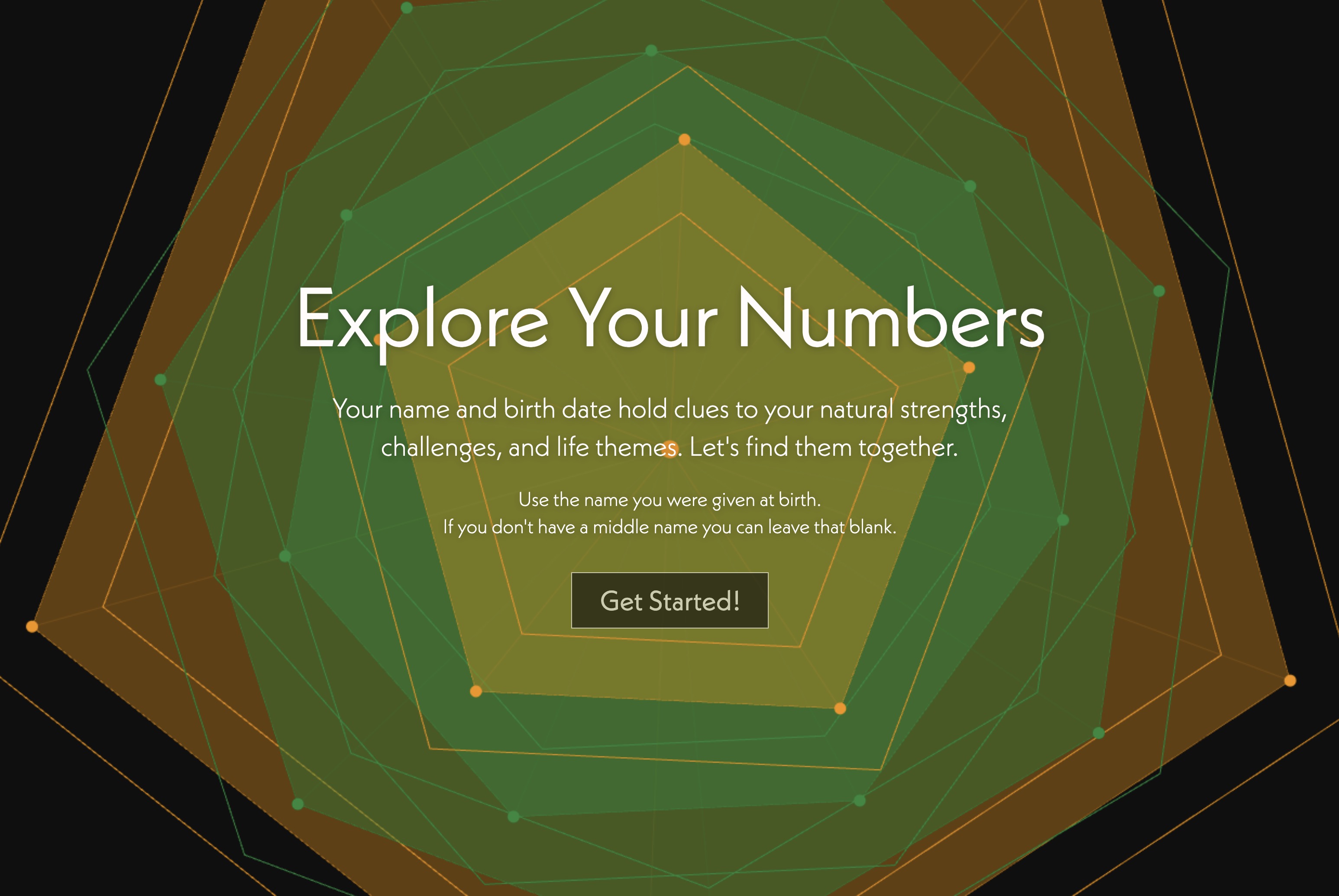

Wendy expressed strong appreciation for the depth of color in the current design and requested adding "Ecology of Belonging" as a prominent title, as she uses this phrase frequently in her work. The hero image needs refinement—while the concept is solid, it appears "plonked" on the site. Wendy referenced the magazine mockups they'd created previously, which featured more photographic, visually beautiful images that better captured the aesthetic direction (02:34).
The photographic elements showing nested human figures received positive feedback, but require critical attention to diversity and representation. Wendy emphasized the need for imagery that reflects global diversity and avoids Western-centric bias throughout the site. Specific requirements include adding baby and child imagery, as optimizing wellbeing at the beginning of life is central to the work, along with multi-ethnic representation and indigenous/rural community imagery (05:02). This attention to cultural inclusivity must be carefully balanced across all visual elements.
For section-specific imagery, the circular and regenerative economics section needs alternatives to Western farmers markets—perhaps rural markets from different parts of the world. The human capacities section currently features an Amish barn-raising, which Wendy suggested could be more impactful if showing indigenous communities building together (07:41).
The site's primary navigation has shifted from generic pathways to focus on seven distinct Innovation Labs, which represent the core organizational structure. James had inadvertently used outdated content; the correct lab structure is: Conscious Parenting Lab (newly added during the meeting), Nurture Lab, Learning Lab, Community Lab, Care Home Lab, Elder Lab, and Legacy Lab (15:16).
The Conscious Parenting Lab emerged as an important addition during the discussion. Wendy realized parents weren't adequately served by the existing structure—the Nurture Lab focuses on early years providers like Montessori schools and nurseries rather than parents directly. The Conscious Parenting Lab would come first in the sequence, emphasizing that parents are "the most important people really because you're looking after new life" (24:53). This lab could eventually include resources about lineage, values transmission, connection to natural world and food systems, and self-awareness for parents.
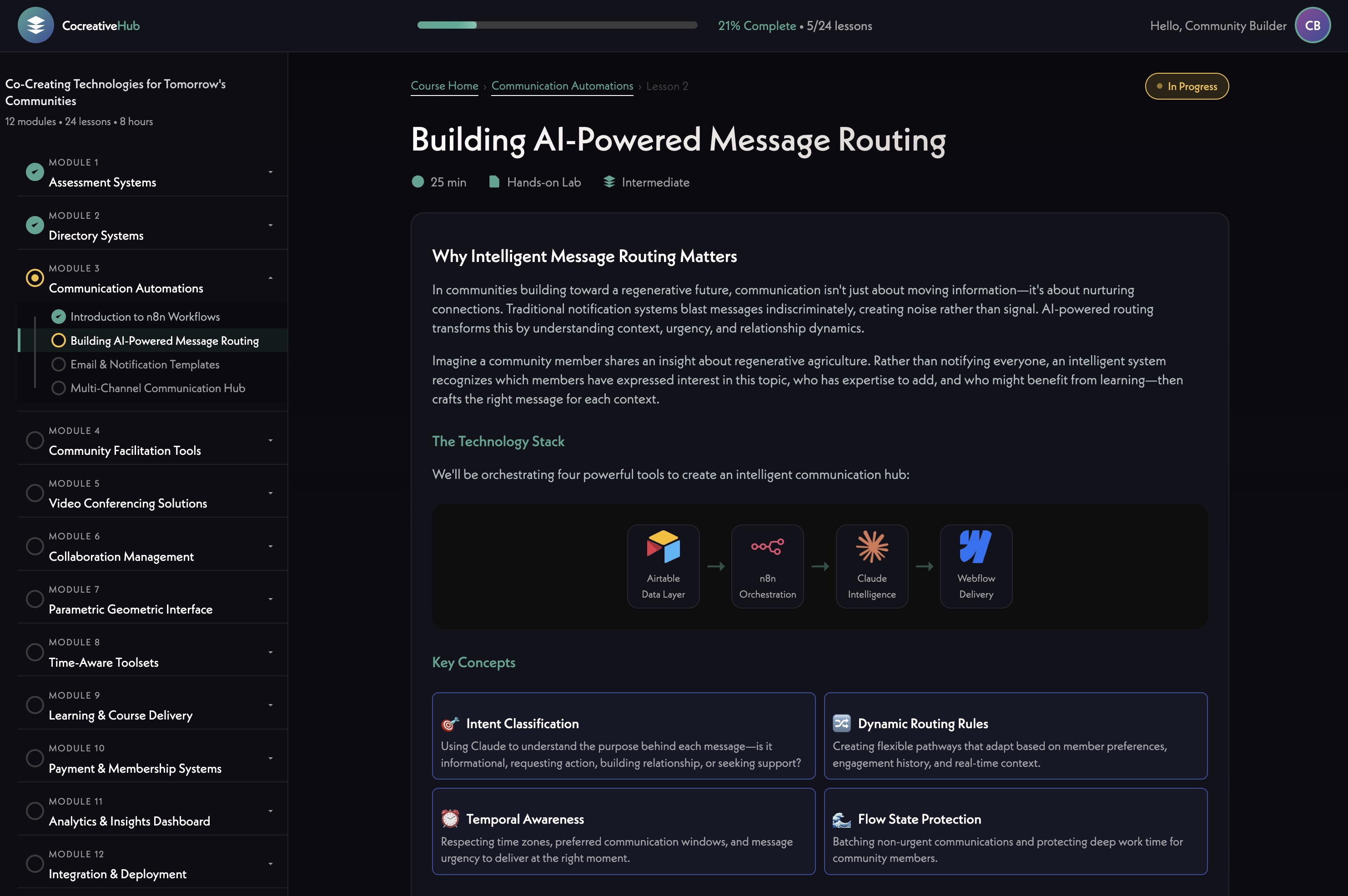
Each lab will have its own dedicated page with relevant resources. The Learning Lab is the most developed, with someone coming in specifically to oversee it. Lab content will be organized in Airtable with linked resources, allowing Wendy to connect appropriate materials to each lab through a simple interface (26:27).
[technology="Community Facilitation Tools"]
A critical insight emerged about transforming audience relationships—moving from consumers to participants. Wendy wants to invite people "into being participants in how we learn and think about things" rather than just selling products, describing this as "very Flourish project" and representing a shift toward co-learning (23:53).
James proposed creating a new post type for reflections/questions that could appear throughout the site, potentially as interactive forms where people can answer questions, provide their email, and submit responses (22:58). These thoughtful questions would become resources themselves, appearing on a dedicated Resources page alongside select materials available to everyone. The Resources page will explain that specific resources are being developed under each lab, but featured items address universal themes like "what makes life worth living."
Wendy is moving away from creating internal membership networks like Mighty Networks, which she's observed require constant facilitation and have exhausted participants across the movement. Instead, she's favoring emergent monthly global sessions that begin with silence, include minimal structure, and welcome whoever shows up. This approach trusts emergence over heavy facilitation: "whoever's in the space is in the space" (40:29). She mentioned Global Healing Day and the "Just 15 Minutes of Silence" practice—weekly sessions where people from around the world gather in heart-centered silence without needing to speak or identify themselves.
When people access resources through PDFs, an automatic invitation to join the community will be triggered. The site currently has engagement data from 37 countries that hasn't been properly leveraged (52:14).
[technology="Custom Membership System"]
James is organizing content in Airtable, where Wendy can add material through linked Google Docs. Resources are being cataloged with summaries, and labs can be connected to relevant materials through a simple interface. James will create proper lab entries in Airtable and hide unnecessary ID fields to simplify Wendy's workflow (26:09).
Team member bios are already in the system; Wendy will provide photos for everyone except Simon, the new team member. She's added historical context to the About section and will check all bios with team members for accuracy (37:38).
The website structure includes Innovation Labs in the main navigation, with Resources as a separate section. Commons appears in the top navigation alongside framework and resources (49:47).
A significant strategic opportunity emerged around the Templeton World Charity Foundation's call for big ideas, which previously invested $20 million in flourishing initiatives. Wendy proposed pursuing $10 million over five years ($2 million annually) to fund an entire ecosystem rather than individual organizations (44:46).
The proposal would position multiple established organizations—Evolutionary Leaders, Spirit of Humanity Foundation, Wellbeing Economy Alliance, Child for Compassion, and others—as an interconnected ecosystem where each organization maintains its distinct identity and purpose while being supported to excel in their specific role. Wendy described this as a "field of flowers" where every flower wants to be what it wants to be, rather than forcing organizations to join someone else's club (48:20).
This represents a fundamental shift from typical funding models that support single organizations. The pitch would emphasize that "we're literally in a moment in time where we can say" this is possible due to technological capabilities that didn't exist even a year ago (47:43). James would bring the technological framing, demonstrating how his toolset enables ecosystem connectivity across diverse organizations.
James is developing 12 modular tools that can be combined differently for different projects while sharing underlying principles and creating pathways between organizations. He's prototyping an AI-integrated project management tool that connects to calendars, helps plan days based on task lists, and coordinates team working sessions connected to their CMS and client projects (53:44). Within five years, James predicts all software and communication tools will be quite different as AI enables rapid iteration of custom solutions.
[technology="Collaboration Management Tools"]
Wendy's family background deeply informs her approach—her mother was a geologist, botanist, and historian; her grandfather was a horse whisperer. She sees herself as "taking forward the best of our lineage" with hundreds and thousands of people behind her work (00:43). This connection to lineage and intergenerational wisdom appears throughout the project philosophy.
The project explicitly challenges Western society's devaluation of elders. In the Elder Lab, the focus will be on celebrating that "you have value just because you are older," contrasting Western practices of forgetting retirees with other cultures where placing parents in care homes is unthinkable (32:46).
Wendy emphasized that "there is nothing that isn't" part of the natural world when discussing AI, framing it as inherently natural rather than artificial or unnatural (56:33). James expanded on this, describing AI as "waking us up to the intelligence that was already there" in nature and the collective, giving us access to intelligence we couldn't previously reach (56:02). They discussed a Russian paper on "Metaphoric Thinking" exploring the creative intelligence that emerges between humans and AI—a "divine intelligence" in the in-between space (54:54).
James is bringing the Sources Energy website into his system, with Evolutionary Leaders expected to follow. He's working with Brian Russo on the Hollows framework, which has significant overlap with James's thinking. Wendy knows Brian from their collaboration on the Unitage Co-Lab and through Evolutionary Leaders (48:44).
James has built a custom video conference tool and is rapidly prototyping collaboration tools. His studio can now create customized solutions by talking to an agent—something that wasn't possible two weeks ago with previous models (57:51).
The vision includes profiles that appear across multiple sites—updating once and propagating everywhere. An Evolutionary Leaders profile could be identical to someone's profile on their own website, and joining a learning lab elsewhere would allow bringing all collected data seamlessly (50:38).
Wendy expressed strong appreciation for the depth of color in the current design and requested adding "Ecology of Belonging" as a prominent title, as she uses this phrase frequently in her work. The hero image needs refinement—while the concept is solid, it appears "plonked" on the site. Wendy referenced the magazine mockups they'd created previously, which featured more photographic, visually beautiful images that better captured the aesthetic direction (02:34).
The photographic elements showing nested human figures received positive feedback, but require critical attention to diversity and representation. Wendy emphasized the need for imagery that reflects global diversity and avoids Western-centric bias throughout the site. Specific requirements include adding baby and child imagery, as optimizing wellbeing at the beginning of life is central to the work, along with multi-ethnic representation and indigenous/rural community imagery (05:02). This attention to cultural inclusivity must be carefully balanced across all visual elements.
For section-specific imagery, the circular and regenerative economics section needs alternatives to Western farmers markets—perhaps rural markets from different parts of the world. The human capacities section currently features an Amish barn-raising, which Wendy suggested could be more impactful if showing indigenous communities building together (07:41).
The site's primary navigation has shifted from generic pathways to focus on seven distinct Innovation Labs, which represent the core organizational structure. James had inadvertently used outdated content; the correct lab structure is: Conscious Parenting Lab (newly added during the meeting), Nurture Lab, Learning Lab, Community Lab, Care Home Lab, Elder Lab, and Legacy Lab (15:16).
The Conscious Parenting Lab emerged as an important addition during the discussion. Wendy realized parents weren't adequately served by the existing structure—the Nurture Lab focuses on early years providers like Montessori schools and nurseries rather than parents directly. The Conscious Parenting Lab would come first in the sequence, emphasizing that parents are "the most important people really because you're looking after new life" (24:53). This lab could eventually include resources about lineage, values transmission, connection to natural world and food systems, and self-awareness for parents.
Each lab will have its own dedicated page with relevant resources. The Learning Lab is the most developed, with someone coming in specifically to oversee it. Lab content will be organized in Airtable with linked resources, allowing Wendy to connect appropriate materials to each lab through a simple interface (26:27).
[technology="Community Facilitation Tools"]
A critical insight emerged about transforming audience relationships—moving from consumers to participants. Wendy wants to invite people "into being participants in how we learn and think about things" rather than just selling products, describing this as "very Flourish project" and representing a shift toward co-learning (23:53).
James proposed creating a new post type for reflections/questions that could appear throughout the site, potentially as interactive forms where people can answer questions, provide their email, and submit responses (22:58). These thoughtful questions would become resources themselves, appearing on a dedicated Resources page alongside select materials available to everyone. The Resources page will explain that specific resources are being developed under each lab, but featured items address universal themes like "what makes life worth living."
Wendy is moving away from creating internal membership networks like Mighty Networks, which she's observed require constant facilitation and have exhausted participants across the movement. Instead, she's favoring emergent monthly global sessions that begin with silence, include minimal structure, and welcome whoever shows up. This approach trusts emergence over heavy facilitation: "whoever's in the space is in the space" (40:29). She mentioned Global Healing Day and the "Just 15 Minutes of Silence" practice—weekly sessions where people from around the world gather in heart-centered silence without needing to speak or identify themselves.
When people access resources through PDFs, an automatic invitation to join the community will be triggered. The site currently has engagement data from 37 countries that hasn't been properly leveraged (52:14).
[technology="Custom Membership System"]
James is organizing content in Airtable, where Wendy can add material through linked Google Docs. Resources are being cataloged with summaries, and labs can be connected to relevant materials through a simple interface. James will create proper lab entries in Airtable and hide unnecessary ID fields to simplify Wendy's workflow (26:09).
Team member bios are already in the system; Wendy will provide photos for everyone except Simon, the new team member. She's added historical context to the About section and will check all bios with team members for accuracy (37:38).
The website structure includes Innovation Labs in the main navigation, with Resources as a separate section. Commons appears in the top navigation alongside framework and resources (49:47).
A significant strategic opportunity emerged around the Templeton World Charity Foundation's call for big ideas, which previously invested $20 million in flourishing initiatives. Wendy proposed pursuing $10 million over five years ($2 million annually) to fund an entire ecosystem rather than individual organizations (44:46).
The proposal would position multiple established organizations—Evolutionary Leaders, Spirit of Humanity Foundation, Wellbeing Economy Alliance, Child for Compassion, and others—as an interconnected ecosystem where each organization maintains its distinct identity and purpose while being supported to excel in their specific role. Wendy described this as a "field of flowers" where every flower wants to be what it wants to be, rather than forcing organizations to join someone else's club (48:20).
This represents a fundamental shift from typical funding models that support single organizations. The pitch would emphasize that "we're literally in a moment in time where we can say" this is possible due to technological capabilities that didn't exist even a year ago (47:43). James would bring the technological framing, demonstrating how his toolset enables ecosystem connectivity across diverse organizations.
James is developing 12 modular tools that can be combined differently for different projects while sharing underlying principles and creating pathways between organizations. He's prototyping an AI-integrated project management tool that connects to calendars, helps plan days based on task lists, and coordinates team working sessions connected to their CMS and client projects (53:44). Within five years, James predicts all software and communication tools will be quite different as AI enables rapid iteration of custom solutions.
[technology="Collaboration Management Tools"]
Wendy's family background deeply informs her approach—her mother was a geologist, botanist, and historian; her grandfather was a horse whisperer. She sees herself as "taking forward the best of our lineage" with hundreds and thousands of people behind her work (00:43). This connection to lineage and intergenerational wisdom appears throughout the project philosophy.
The project explicitly challenges Western society's devaluation of elders. In the Elder Lab, the focus will be on celebrating that "you have value just because you are older," contrasting Western practices of forgetting retirees with other cultures where placing parents in care homes is unthinkable (32:46).
Wendy emphasized that "there is nothing that isn't" part of the natural world when discussing AI, framing it as inherently natural rather than artificial or unnatural (56:33). James expanded on this, describing AI as "waking us up to the intelligence that was already there" in nature and the collective, giving us access to intelligence we couldn't previously reach (56:02). They discussed a Russian paper on "Metaphoric Thinking" exploring the creative intelligence that emerges between humans and AI—a "divine intelligence" in the in-between space (54:54).
James is bringing the Sources Energy website into his system, with Evolutionary Leaders expected to follow. He's working with Brian Russo on the Hollows framework, which has significant overlap with James's thinking. Wendy knows Brian from their collaboration on the Unitage Co-Lab and through Evolutionary Leaders (48:44).
James has built a custom video conference tool and is rapidly prototyping collaboration tools. His studio can now create customized solutions by talking to an agent—something that wasn't possible two weeks ago with previous models (57:51).
The vision includes profiles that appear across multiple sites—updating once and propagating everywhere. An Evolutionary Leaders profile could be identical to someone's profile on their own website, and joining a learning lab elsewhere would allow bringing all collected data seamlessly (50:38).
Add 'Ecology of Belonging' as prominent homepage title
December 24, 2025
Wendy uses this phrase frequently in her work and wants it featured prominently on the site (02:41)
Refine hero image with more photographic approach
December 26, 2025
Current hero image concept is solid but appears 'plonked' on the site. Reference magazine mockups with more photographic, visually beautiful images for aesthetic direction (02:34-03:04)
Source diverse global imagery for all site sections
December 27, 2025
Critical requirement for diversity and representation throughout site. Needs: babies/children of diverse ethnicities (optimizing wellbeing at beginning of life), multi-ethnic representation, indigenous/rural community imagery, non-Western farmers markets for circular economics section, indigenous communities building together for human capacities section. Must avoid Western-centric bias (05:02-07:41)
Update Innovation Labs structure to seven labs in correct sequence
December 23, 2025
Correct sequence: Conscious Parenting Lab (newly added), Nurture Lab, Learning Lab, Community Lab, Care Home Lab, Elder Lab, Legacy Lab. James had been using outdated content (15:16-18:34)

Create individual pages for each Innovation Lab
December 30, 2025
Seven lab pages needed: Conscious Parenting, Nurture, Learning, Community, Care Home, Elder, Legacy. Each will have linked resources from Airtable (19:01)
Add lab content from email to Airtable and connect resources
December 24, 2025
Create proper lab entries in Airtable and establish connection interface for linking resources to labs (24:38-26:27)
Create reflections/questions post type with interactive form functionality
January 10, 2026
New post type for thoughtful questions that can appear throughout site. Potential interactive form where people answer questions, provide email, and submit responses. These become resources themselves (22:58)
Update Resources page introduction text
December 26, 2025
Explain overall resource strategy: specific resources being developed under each lab, but featured items address universal themes like 'what makes life worth living' (10:37, 21:58)
Hide unnecessary ID fields in Airtable for cleaner user experience
December 23, 2025
Simplify Wendy's workflow by hiding technical ID fields she doesn't need to see (26:32)
Send Wendy the new model page
December 20, 2025
Send invoice for recent work
December 20, 2025
James to send invoice to Wendy (01:01:00)
Provide team member photos for website
December 27, 2025
Most photos available from existing website, need photo for Simon specifically. Send as files via email (37:11)
Add resource links to Innovation Labs in Airtable
January 5, 2026
Use the connection interface to link appropriate resources to each of the seven Innovation Labs (27:45)
Develop copy for Resources page explaining overall strategy
December 30, 2025
Write blurb explaining that specific resources are being developed under each lab, but featured items address universal themes (21:58)
Review and finalize team member bios with each person
January 3, 2026
Check all bios with team members for accuracy. Historical context already added to About section (37:38)
Send Russian paper on Metaphoric Thinking and AI to James
December 23, 2025
Paper explores creative intelligence emerging between humans and AI, 'divine intelligence' in the in-between space (54:54-55:18)
Send Global Healing Day project information to James
December 27, 2025
Information about Global Healing Day project for potential future web design work (34:12)
Add bios and images to website
December 27, 2025
Website design and development for The Flourish Project upgraded to Mast framework. Site structure focuses on nine Innovation Labs with integrated Resources section. New drag-and-drop CMS capabilities. Dark mode aesthetic implementation now functional. Simplified resources approach with most labs showing contact page link for expressions of interest, except Learning Lab which gets specialized contact form capturing name, role, email, school/organization, website, city, country. Conscious Parenting Lab features actual resource grid. Resource page prominently features three core handbooks used by 30+ schools worldwide with Airtable AI-generated PDF summaries. CMS-driven team management system with unpublished profiles for Fabienne and Annie pending discussions. Framework page cleaned up removing duplicate entries, linked from homepage ESF Framework section. New Principles of Partnership page with fungi/mycelium imagery and expression of interest link. Contact page updated with calming nature image. Airtable upgraded to team plan for continuous syncing. Integration with Airtable for resource management with primary status tagging for featured handbooks. Site transfer to Wendy's Webflow workspace pending with domain connection instructions to follow. Target launch after final joint review.
Development of community engagement strategy moving from consumer to participant model. Learning Lab launching as first community of practice with specialized contact form capturing name, role, email, school/organization, website, city, country - distinct from other labs which use standard contact page. Schools, academy trusts, and educational organizations become co-creators rather than passive consumers. Communication happening through WhatsApp groups rather than complex platform features. Tiered structure where well-resourced schools pay participation fees enabling commons-level access for schools globally. Resource page features three core handbooks used by 30+ schools worldwide as primary engagement tools with automatic PDF invitation system. Future AI-powered interactive tool envisioned using Claude to replicate Wendy's knowledge base, helping different user types get personalized guidance - ideal prototype within Learning Lab community. Moving away from heavy facilitation models toward emergent gathering approach. Leveraging engagement data from 37 countries.
Strategic initiative to position interconnected ecosystem for Templeton World Charity Foundation funding ($10M over 5 years, $2M annually). Connecting multiple established organizations (Evolutionary Leaders, Spirit of Humanity Foundation, Wellbeing Economy Alliance, Child for Compassion, Sources Energy, etc.) as 'field of flowers' where each maintains distinct identity while being supported to excel. Demonstrates technological enablement of ecosystem connectivity through James's 12 modular tools. Represents shift from single-organization funding to ecosystem support model. Includes integration of multiple websites into shared system with cross-project profile propagation.
Website design for The Flourish Project focusing on nine Innovation Labs structure (Wisdom, Conscious Parenting, Nurture, Learning, Community, Cities, Peace, Legacy, Healing). Wisdom Lab positioned first as cross-cutting theme using vector equilibrium icon. Healing Lab added as ninth lab incorporating Global Healing Day initiative with Caduceus symbol. Visual identity emphasizing diverse, global representation with artistic collage-style hero image incorporating interbeing themes, multi-ethnic intergenerational communities, nature, ecology, and cosmic elements. Refined symbolic icons for each lab: rounded pentagons for Legacy Lab suggesting organic storytelling, compass for Leadership Lab, bioregion-inspired design for City Lab, growth progression for Conscious Parenting Lab. Video background exploration for hero section using Indigenous-themed content pending cultural sensitivity review. Team member bios with updated titles including new members James and Lana. Framework page using 'Ecosystemic Flourishing (ESF) Framework' heading. Dark mode aesthetic with improved typography. 'Ecology of Belonging' as prominent homepage feature. Shift from consumer to participant engagement model.
Airtable setup for The Flourish Project including nine Innovation Labs with linked resources. Resource cataloging with AI-generated PDF summaries via Airtable's built-in AI agent. Airtable upgraded from free to team plan (~$288/year) to support continuous API syncing and extended customization features. Resources tagged with status designations including 'primary' for three featured handbooks displayed with images. Comprehensive academic papers and resources being added from Wendy's provided list. Simplified field visibility to hide unnecessary ID fields for clean user experience.
00:00:02
James Redenbaugh: How are you doing?
00:00:03
Wendy Ellyatt: Yeah, very good. I'm enjoying getting back into work properly.
00:00:08
James Redenbaugh: Oh, good.
00:00:09
Wendy Ellyatt: This meeting is being recorded.
00:00:12
James Redenbaugh: Sounds like you had a wonderful gathering.
00:00:15
Wendy Ellyatt: Oh, amazing. Really amazing. It also makes you kind of, you know, it's. It's, you know, that we. We're trying to take forward the best of our lineage, you know, and there's all these hundreds and thousands of people behind us. So it's a very interesting thing that, you know, that you're interested in the things you're interested in and there are aspects of your family that you're walking with. It's just a very. My mother would love all this. Yeah. She was a geologist and a botanist and. I mean, amazing historian. I can see where I get it from.
00:00:54
James Redenbaugh: Wonderful.
00:00:56
Wendy Ellyatt: My grandfather was a horse whisperer, so that. And my mother was a plant whisperer, so. Right. So I'm really keen to get going on this, so. And. And to work through the bits that you need to do and the bits that I need to do. How. How do you suggest we go about this? Just take the.
00:01:20
James Redenbaugh: Yeah. So I'd love to look at the site with you and look at what I did and get your take on it, see if there's changes that. That you want to make. And then we can also look at the organization of content and.
00:01:33
Wendy Ellyatt: Yeah.
00:01:34
James Redenbaugh: And resources.
00:01:35
Wendy Ellyatt: And I think it's quite straightforward. What. I can already see what. Structurally. What needs to be done. And I've started adding in some of the content.
00:01:51
James Redenbaugh: So. Yeah. Why don't we start here? I'll share my screen.
00:01:55
Wendy Ellyatt: Yeah.
00:02:06
James Redenbaugh: Publish the most recent version.
00:02:16
Wendy Ellyatt: So my suggestion on the first place, I love the color. I really like the depth of the color. I suggest we put. Because I use it a lot above the. What if we. Can we put the Ecology of Belonging?
00:02:32
James Redenbaugh: Totally.
00:02:34
Wendy Ellyatt: Because I use that and I think that as a title.
00:02:41
James Redenbaugh: Yeah. I'm going to leave that as a comment here for now.
00:02:50
Wendy Ellyatt: Ecology of Belonging. I'd like to see some options on that image. It looks a bit like stuck there. I know. We're just working it up. I really like the effect we had with the magazine.
00:03:04
James Redenbaugh: So.
00:03:04
Wendy Ellyatt: So. But it looks a bit plonked on the. On the site, so I'd like to kind of play around with that. Yeah.
00:03:16
James Redenbaugh: This one.
00:03:17
Wendy Ellyatt: Yeah. It be good to have some other options on it. And the ones we used in the magazine were more photographic. Not that I've. I haven't worked up the concept of the magazine yet, but if you remember. Shall I share my screen?
00:03:33
James Redenbaugh: Sure.
00:03:37
Wendy Ellyatt: Oh, you need to. Align. Give me A Allow me to do it.
00:03:43
James Redenbaugh: You. You should have it.
00:03:49
Wendy Ellyatt: See, because I was just looking at. Let me just grab it over. That's the kind of thing, that's what I was playing about with. I think that's what I sent to you. Move it. Can you see that? Which was slightly more photographic. This visually beautiful. Images. That's what we got the idea of using that from this first one. And I'm. I'm intending, I'm hoping I've got someone I'm still in, I'm still very interested in producing a magazine, an online magazine like this. And I like the feel of this. But. Yeah. So. If you want to share the thing again, it'd just be good to play about with that. So I like the concept, I like the idea when I first saw it, but I think we could do with like playing around with it and seeing. Maybe have slightly more photographic versions.
00:05:00
James Redenbaugh: Yeah, sure.
00:05:02
Wendy Ellyatt: On the main image going down below. I love the photographic elements. What I do think we need to do is. Ensure we've got. We need a baby in there somewhere. Because so much of this, that central self, everything comes from optimizing, well, being at the very beginning of life. And then ensuring we've got the kind of multi ethnic diversity, global diversity. Being really careful not to have a, you know, Western hit. But the child, we definitely need the baby and child aspect. And then, you know, some indigenous, you know, the kind of more rural. It's just to ensure that we're covering the whole gamut of what human beings are like or, you know, that sense.
00:06:08
James Redenbaugh: Yeah.
00:06:08
Wendy Ellyatt: And it starts with the baby, you know. Or more than one baby, you know, babies of different ethnicities. I don't know, you know, can play about with it. But I really like the photographic effect. And I like, I just like the whole way you've done that, the feel, you know, that you're embedded in nested systems.
00:06:26
James Redenbaugh: Yeah, right. This was really fun to work out. So yeah, I wasn't super sure what to do for circular and regenerative economics.
00:06:48
Wendy Ellyatt: Food systems.
00:06:51
James Redenbaugh: Food systems, yeah, that's always good.
00:06:54
Wendy Ellyatt: Like, you know, farmers markets.
00:06:58
James Redenbaugh: Yeah.
00:06:58
Wendy Ellyatt: I tried to find community. Community participation, farmers market stuff would be good, you know.
00:07:07
James Redenbaugh: Yeah. I mean this is a picture I took of a farmer's market and a girl in a circle.
00:07:12
Wendy Ellyatt: So the only thing is that looks very Western centric again. Yeah, I'm just, you know, I'm very aware of. We've got a, you know, that the huge criticism of much of the work that's happening at the moment is the Western Centric emphasis. So just to be mindful of it.
00:07:30
James Redenbaugh: Yeah. I think maybe rural farmers, a rural market and.
00:07:36
Wendy Ellyatt: Yeah.
00:07:37
James Redenbaugh: In a different part of the world.
00:07:39
Wendy Ellyatt: Yeah.
00:07:41
James Redenbaugh: And human capacities and potential. We've got the Amish here. I just thought it was cool to see so many people building something together. But. I think it would be even neater if it was like a indigenous tribe building a. Yeah.
00:08:01
Wendy Ellyatt: And again, you know, it's finding the balance, James. Because I'm, you know. You know, it's almost skewed too much the other way now. But I mean, in all it's why I developed. I don't. If you've seen the little tiny figures I use in lots of documents, the reason I developed them was to get out of this ethnic and thing right at the beginning we use little cartoon characters in a lot of like the SDGS books and I got my graphic designer to do that in order to get us out of the ethnic dilemmas. But with this, it's just making sure we've got a really. An obvious balance between, you know, rural communities in other parts of the world and human capacities and potential. Probably again. Need to think about. Need to play about with different options.
00:08:53
James Redenbaugh: And also feel free to suggest images if you find some of your own.
00:08:57
Wendy Ellyatt: Yeah.
00:09:00
James Redenbaugh: Some of these are pictures I've taken. Some I generated on mid journey. I think it's a great idea to have this. Be a child in the center.
00:09:09
Wendy Ellyatt: Yeah.
00:09:10
James Redenbaugh: Maybe.
00:09:13
Wendy Ellyatt: And even the child we've got the ethnic dilemma. You know. So I say it's interesting. Like it or not. We're going to have to ensure that. That we don't predominantly present as a Western.
00:09:27
James Redenbaugh: Yeah.
00:09:28
Wendy Ellyatt: Thing.
00:09:29
James Redenbaugh: Yeah.
00:09:29
Wendy Ellyatt: But I love how you've done it. Super, super pleasing.
00:09:35
James Redenbaugh: Great. Awesome.
00:09:39
Wendy Ellyatt: Like seven motivations. I've added some descriptions of that which are not these. I think I've added. It does. I mean, I like, I need to go through what you. What you've got there and what I've got.
00:09:52
James Redenbaugh: You know, you can click any of these. Maybe we can make that clearer to the user. But this is the. The content in the air table.
00:10:02
Wendy Ellyatt: Yeah.
00:10:04
James Redenbaugh: For all of these things.
00:10:06
Wendy Ellyatt: So. Yeah. Love all that.
00:10:08
James Redenbaugh: Cool.
00:10:11
Wendy Ellyatt: And then if we go down. I. I think we. We don't want that. We want the. To lead to the innovation labs.
00:10:26
James Redenbaugh: These are. This is the content from the innovation labs. I think I need to change the introduction text.
00:10:37
Wendy Ellyatt: But yeah. And they would need to start with that. Like the care home should be the last. Or should be. It should be in order of parents and families. Then schools. There should Be a logic. So Care Homes comes after community leaders and networks before cities and governments. Yeah.
00:10:55
James Redenbaugh: Okay. In order of.
00:10:58
Wendy Ellyatt: In fact, these aren't the labs because they're not the Nurture Lab. They aren't the names of the. The labs. They're the first ones we had. They're not the lab names.
00:11:14
James Redenbaugh: Yeah, I thought I put the lab names in here. I gotta see what happened to that.
00:11:19
Wendy Ellyatt: This is the original kind of thing that we were playing around with. But the labs start with Nurture Lab. Learning Lab. Yeah.
00:11:28
James Redenbaugh: Let me. Log out here. You want to meet my cat?
00:11:36
Wendy Ellyatt: Oh, I can always meet a cat.
00:11:39
James Redenbaugh: Journey.
00:11:40
Wendy Ellyatt: Oh, Jenny. Oh, how cute. Oh, baby. Oh, how cute are you? Oh, what a swatch. A sweetie. I've got 224-year-old Maine Coons.
00:11:54
James Redenbaugh: Oh, man.
00:11:54
Wendy Ellyatt: Who very often are in the office with me. Except it's pouring with rain outside, so they've decided to stay in the house at the end of the.
00:12:02
James Redenbaugh: Yeah, she's got two sisters too.
00:12:05
Wendy Ellyatt: Lovely.
00:12:06
James Redenbaugh: They're all different. Let me log into your air table account here. Sorry, it's forcing me to do this login Rigamarole.
00:13:22
Wendy Ellyatt: Such a pain, all these things. Even Zoom is getting more difficult.
00:13:28
James Redenbaugh: Yeah.
00:13:32
Wendy Ellyatt: I went through a whole meeting yesterday and in theory it was recording and then it didn't record it. The recording isn't anywhere, so.
00:13:39
James Redenbaugh: I hate that.
00:13:40
Wendy Ellyatt: Yeah, I hate that too. I've only been using the links that you sent.
00:14:03
James Redenbaugh: Yes, and. And you have your air Table, correct?
00:14:10
Wendy Ellyatt: Well, I had. I haven't used. I've only used the links that you sent and not. I haven't been adding anything outside of what you sent me in the last email.
00:14:24
James Redenbaugh: So in airtable, I put. I put these labs. And I might have.
00:14:38
Wendy Ellyatt: See, that's not the labs.
00:14:40
James Redenbaugh: Yeah. What did I do?
00:14:53
Wendy Ellyatt: Because the labs were that email that I sent you with the names of all the labs and then I had allocated all the team members, so the email that had the BIOS in was a direct link to the lab. So I did the two. So that I knew that. And that was two. They were in an email that I sent you.
00:15:12
James Redenbaugh: Yeah. Nurture Lab. Learning Lab.
00:15:16
Wendy Ellyatt: Yeah. That'S right.
00:15:19
James Redenbaugh: Legacy lab. Cool. Okay, that makes more sense. So. I must have been looking at an old document.
00:15:32
Wendy Ellyatt: Yeah, I think that was the very first way we. We were looking at what the paths might be. But now we've completely shifted that to a focus on the innovation labs, which is much better.
00:15:47
James Redenbaugh: So here. Oh, but you did send me that. The document with the entry questions.
00:15:52
Wendy Ellyatt: Yep. I can't remember where the questions did I allocate them to the labs? I can't remember.
00:16:12
James Redenbaugh: I thought so.
00:16:14
Wendy Ellyatt: Hold on, I'll have a look at myself. Innovation Labs. No, I haven't put the questions on the innovation labs, but I can do.
00:16:30
James Redenbaugh: Only if they're relevant.
00:16:32
Wendy Ellyatt: I can. I can relook at it.
00:16:35
James Redenbaugh: Okay.
00:16:35
Wendy Ellyatt: I mean, I think the. The. What I was trying to get to do was get the labs on the website. Because I have new team members. You know, I've got two people who are coming on, particularly one, and I really would like them to get access to the site, but I have. I need it to be at a point where I can explain to them the thinking behind it. So what we need on that first page of the site are the labs. And then we need. Under the. About, we need the team, which immediately tells you who's doing what in the lab. So then that will make sense.
00:17:17
James Redenbaugh: Cool. Okay. You don't have to watch me put this in, but I'll take this lab content and put it in the air table and that should replace that.
00:17:31
Wendy Ellyatt: So that should be Innovation Labs.
00:17:34
James Redenbaugh: Yeah, And I'll have it be in that. In that order as well.
00:17:38
Wendy Ellyatt: And then they. They won't lead to. What. Wait a minute, what have I got on there? Just have another look what I got. Yeah, it should literally be. They. There are prototype resources. Some are empty because we're still. And that's fine. So. On the lab side, some will just lead to the lab. I mean, we just need to decide. I think we need to lead to the labs and then you only see the resources when you get in the labs.
00:18:12
James Redenbaugh: Okay, that makes more sense. Yeah.
00:18:16
Wendy Ellyatt: And some have been built up and have quite a lot of resources, and some are still to be developed. But that way whoever is interested in specific things can be led to a lab and you will get an update on exactly what is going on. And the idea would be that they would be able to express interest in that lab.
00:18:37
James Redenbaugh: Great.
00:18:38
Wendy Ellyatt: So rather than learn more, you go. You go to the lab to. You immediately learn a bit more and then you have expressions of interest or.
00:18:44
James Redenbaugh: Yeah. Cool. And do you think that each lab should have its own page or that we should just put them.
00:18:53
Wendy Ellyatt: No, I think each one should have its own. Yes, I think each one should have its own page, actually.
00:19:01
James Redenbaugh: Okay.
00:19:01
Wendy Ellyatt: Especially because the learning lab is going to have quite a lot going on. That's the most developed, which is why I've got someone coming in to oversee it.
00:19:16
James Redenbaugh: Great.
00:19:18
Wendy Ellyatt: And then at the bottom of the page on the main site, we can lead to, because we've got all of that. We go down. We can have. This. We've. What we need to decide is I would like some kind of resources that are just available. Well, we need to think about where to put like the. There may be some resources that everybody could see, although logically they still. What we don't have. Thinking about it, if we go to the labs, what we don't have is anywhere for a parent. To immediately get access to things that they might be interested in. So that's the bit we're missing. We've got the labs. Although parents would be led to the Nurture Lab. So now it still does work because you'd be led to the Nurture Lab and then you'd have resources for parents. So it's whether or not we need anything there that's so generic that everyone could have access to it. And I'm not sure about that at the moment. I think it might, at this point, it might be better to just lead people. To the labs. And at the top. What's that top. What's the top navigation? We've got commons, haven't we?
00:20:47
James Redenbaugh: Now we've got innovation labs. We've got resources under that learning lab about framework and resources.
00:20:54
Wendy Ellyatt: So under resources. We could develop the resources page to be the. You know, some blurb about. Developing tools to give everyone access. And that's where we could put. We can say there are resources being developed under each of the labs, but. Here are some ones that we thought you might be interested in. You know. We also need to think about because we had some really good questions. We need to think about where to put those. They might go under the resources. Page. So you actually get those thoughtful. You know, here's some great resources, but. But part of the resources are the questions. Yeah, I kind of like that. Because you're. You've got a reflective aspect before you even access. You know. It'S where we can put the family values tree and we've got some cute stuff. But actually a series of questions is probably just as good a resource. You know, if. So I think let's. Let's work on the resources page for that. The questions and some. Some nice little resources that we have sitting here. Some of that and some blurb on, you know, specific resources are being developed under the labs. But here are some ones that are about, you know, what makes life worth living or. I don't know, I need to think about it. I'll do some blurb for that page.
00:22:34
James Redenbaugh: We could. I am just kind of thinking out loud here. But we could make a new post type for questions. And have reflections. Yeah, reflections, questions, whatever the term is. And then we can have them kind of throughout the site where appropriate.
00:22:58
Wendy Ellyatt: I think that would be good because resources. A lot of what we're doing is we're being provocative to people to make them think about their own lives. I think that would be good.
00:23:09
James Redenbaugh: And I could. They could actually be. A little form where people can answer the question and put in their email and give a response.
00:23:23
Wendy Ellyatt: Yeah. Let's think about that.
00:23:26
James Redenbaugh: Think about it.
00:23:28
Wendy Ellyatt: That's quite interesting because we've. I say I'm not used to being able to do that kind of. You know, we've. What we've got is an increasingly. We will have quite a big audience of people who are interested I think and then actually treating them as participants rather than consumers.
00:23:50
James Redenbaugh: Yeah.
00:23:50
Wendy Ellyatt: Is a really interesting thing.
00:23:52
James Redenbaugh: Mm.
00:23:53
Wendy Ellyatt: And so to invite them into being participants in how we learn and think about things. I think what might be. It's very flourish project. That, that getting away from we're just selling you a product to saying no, we're inviting you into a conversation.
00:24:11
James Redenbaugh: Yeah.
00:24:11
Wendy Ellyatt: And we're co learners in the conversation is much more the kind of place I'm coming from with this.
00:24:19
James Redenbaugh: Mm. Cool.
00:24:24
Wendy Ellyatt: Does that make sense?
00:24:26
James Redenbaugh: Yeah. Well, I'll pull out the questions that we have into a questions table over here.
00:24:32
Wendy Ellyatt: Yeah.
00:24:33
James Redenbaugh: I'll connect them to the. The labs.
00:24:39
Wendy Ellyatt: Yeah. It's just where do we put them? And then it's that sense of I know nothing about the site. I've just hit it. What's, what's the user experience? You know. I like the labs effect because we can, even with parents we can lead them to a nurture lab. And a bit of bump about, you know, actually you're the, you know, you're the most important people really because you're looking after new life, early life.
00:25:06
James Redenbaugh: Yeah. Yeah.
00:25:08
Wendy Ellyatt: And there's a whole very interesting kind of lead in which again is we're not just. We're not just giving you resources. We're. We're actually saying you are seriously important. Your well being. And sense of who you are and what your worldviews is really important. And we, you know, we could develop really interesting. Kind of ways of engaging with people.
00:25:34
James Redenbaugh: Totally. Yeah. Great. So. In the air table looks like you're adding. You've added content in here which is great. And. Under labs I'll put in the. The lab content that we have.
00:26:08
Wendy Ellyatt: Yep.
00:26:09
James Redenbaugh: And then you can. Err. I'll hide these. We Don't. You don't need to see these. ID fields. But. And I connected these to domains and motivations. But all the labs are probably connected to all the domains.
00:26:29
Wendy Ellyatt: All of them? Yeah. That's all in all of them?
00:26:32
James Redenbaugh: Yeah, yeah. So that's not really a helpful distinction. I'll just delete that. But we do want to link to the relevant resources and I've got that.
00:26:48
Wendy Ellyatt: Somewhere. It's just. That's my next big. Job. And I'm thinking, so it's. How do I add them? Or can I just send you. Do you want a link? Or.
00:27:04
James Redenbaugh: Yeah. So all the resources are here.
00:27:08
Wendy Ellyatt: Yeah.
00:27:09
James Redenbaugh: Or a bunch of the ones you've sent me are here and I've made summaries and. They have.
00:27:19
Wendy Ellyatt: What do you want added in the. The individual group? What do I put in there?
00:27:25
James Redenbaugh: In labs? You can just click that plus and then connect the relevant.
00:27:29
Wendy Ellyatt: Oh, right. Oh, that's great.
00:27:31
James Redenbaugh: Right there. Yeah.
00:27:32
Wendy Ellyatt: Right. So relevant resources. Let me. Because that's actually my next step. So.
00:27:45
James Redenbaugh: So, for example, put that city one there and then it shows up there and you can add as many as you want.
00:27:51
Wendy Ellyatt: Like the Nurture Lab would. The where are we Learning Lab. We'll put. So Learning Lab straight away would have the SDG handbook for schools, you know, and. And then it's thinking when you actually get to the site, how they're shown on the page. I guess this is where your expertise comes in, you know, because there's a lot of quite boring academic stuff, you know, important. But like. So we've got loads of stuff for schools, you know, we want to show the sexy kind of accessible stuff, but we also want to be able people to see that there's rigorous stuff behind it. So it's how we show that.
00:28:30
James Redenbaugh: Yeah.
00:28:31
Wendy Ellyatt: And it's the same with every single lab.
00:28:34
James Redenbaugh: Yeah.
00:28:35
Wendy Ellyatt: And the Nurture Lab is the early years. So it's kind of. I think it's the parents I'm probably. I need. And we need to think about the fact that parents are important market. The Nurture Lab is. Is really for early years providers because I've got a lot of like Mon Europe is a partner. You know, there's a lot of interest from nurseries and early years providers. Not quite the same as parents. So. So we need to think about if parents aren't a lab. It'S the one area that I think they don't particularly want to go into a Nurture Lab. Or do they? I mean, that's the one thing I'm not sure how to serve. Parents in this.
00:29:28
James Redenbaugh: Parents might want to be in a.
00:29:30
Wendy Ellyatt: Lab, but would it be the nurture lab. Or do we need the lurcher lab? Do we have one part for parents and one part for providers? Don't know. Or do we have a parent lab? Parenting lab? But it sounds. I don't know what you call it. You know.
00:29:53
James Redenbaugh: I think there's more and more interest in. In parenting as a concept and conscious parenting.
00:30:00
Wendy Ellyatt: And. Conscious parenting lab. Let's have that. Let's add it.
00:30:08
James Redenbaugh: Great.
00:30:10
Wendy Ellyatt: And that would be. Again, the order would be. That would come first.
00:30:16
James Redenbaugh: Okay.
00:30:18
Wendy Ellyatt: Because that's putting it in the priority. You know that the conscious. I think actually that fits, doesn't it? And that we could do so much in terms of. Talking to parents about. In fact, you know, there could be a conscious parenting app. You know, if. When there's funding and you know, the, the flourish kind of conscious parenting app where we're actually giving people access to really cute ideas about thinking about your. Like I was saying, the lineage. Thinking about the values of your grandparents and the things that they had. And within two generations our loss of connection to the natural world is shocking. And then involving parents in thinking about that. Just thinking about the fact that you don't know where your food systems come from. You don't know where your local water sources are. I mean it's very, very quick in human history that we've jumped to literally being reliant on the Internet and not even knowing if everything went down how we would resource ourselves. So I think we could do some very interesting stuff about empowerment and participation, but just how important it is in the lives of your children that you are self aware. So I think I like that because I felt it was. Something was missing. Yeah.
00:31:48
James Redenbaugh: Yeah. Great. Seven labs.
00:31:55
Wendy Ellyatt: Oh, that's a nice number too. But I immediately, I think conscious parenting lab, I could see it's a. It's a great thing because that means people will hit the site and then we're covering everybody.
00:32:09
James Redenbaugh: Mm.
00:32:14
Wendy Ellyatt: And as a potential father in the future, you can. It matters, doesn't it?
00:32:20
James Redenbaugh: Totally.
00:32:21
Wendy Ellyatt: You know, we as you know, even losing my mum, you. You reflect on you're only the way you are because of the way you've been brought up. And I, I was just super happy to come out of a farming background. You know, lovers of the land, simple people, laughed a lot, sang a lot, hugged a lot. And you're very lucky if you come out of that kind of background.
00:32:44
James Redenbaugh: Yeah.
00:32:46
Wendy Ellyatt: But we can. And in the elder lab that can be this celebrate again. It's it's saying you have value. Just because you are older. You know, we live in a society in the Western world that has just absolutely eroded the sense of value. You retire and then you're just, you know, forgotten. And that's not the same in other cultures. In other cultures, it's unthinkable that you put your parents in a care home.
00:33:14
James Redenbaugh: Yeah.
00:33:14
Wendy Ellyatt: So I. I love the fact that over time, those are all the conversations that we can. Openly build in and perhaps have, you know, over time we could have. I like the idea of building up a community where these things get discussed, you know, and that we have resources. I'm working with Global Healing Day and I say if I ever get some money around it, you can come and do that site because there's. That's some. So many interesting people involved in that. And that'll be next year. In fact, I really should think about getting you involved in the web design of that when we. As soon as we have money. The. We're already talking about launching a thing called just 15 minutes of silence. And I've been doing it through the Spirit of Humanity forum. Just once a week you go, you can meet on a Friday morning with people from all around the world. And it literally. You haven't got to be a meditator. You haven't got to have any kind of spiritual background. You come into a group where it's a kind of gentle honoring of. You know, that you're trying to. To walk the world in a particular way. You use. No need to say anything. You come into silence and it's kind of a heart space. But it invites you to like, walk the world knowing that you're not alone, if you like. And I'm. We're going to try and expand it on Global Healing Day to local communities so that anybody can set one up. And within their local community, there's 15 minutes where you come and you don't have to say anything. You don't. Nobody needs to know who you are and what you do. You're just coming in to be a human being sharing a space with other human beings. And I love that. It's simple, it's heart spaced it and it matters, you know, saying you're not alone. So we're trying to build in things like that.
00:35:17
James Redenbaugh: Wonderful. Awesome. Sounds great.
00:35:34
Wendy Ellyatt: And that's the kind of thing we would automatically add to the Flourish site. So, I mean, we can not only add our own resources, but things that we feel are hugely aligned in terms of supporting parents and communities we can share what the child for Compassion? Because I'm working with them. You know, we can, we can share other resources that were just there to support communities and you know, individuals. So the resources don't have to just be developed by us, they can be our partner resources which I really like.
00:36:18
James Redenbaugh: Great.
00:36:23
Wendy Ellyatt: You happy with that, James? Yeah. In terms of getting a sense of where we're both going.
00:36:29
James Redenbaugh: Yeah. Yep.
00:36:37
Wendy Ellyatt: And the team on the about page I've added a little tiny bit of history to the top section and then on the team side. You'Ve got all the bios which I will get everybody to check. And then it. Then it gives a sense of. You know, what, what they're involved in. And. I'll send you most of the photos. I'll send you all the photos of everybody. I think most are on this website. Just apart from Simon, the new guy.
00:37:11
James Redenbaugh: Yes. I mean I was going to ask for those photos.
00:37:15
Wendy Ellyatt: Yeah. So if I do photos and the resources. Photos for bios and I'll start adding the resources to the labs so that we're specifically picking up.
00:37:33
James Redenbaugh: Great.
00:37:38
Wendy Ellyatt: And for the first time, you know, I've was just. Because I didn't have the time, you know, I was just. I just put in a terribly simple way the handbooks onto the site and then people filled in a form which I've never had time to go back on. But so we're sitting on these 37 countries now it would be, you know, obviously now we've got the ability to. When they click on a resource. You know, it goes to a PDF and they have to fill in a little form. I never did that. One. I didn't know how to do it. And then. But I think then we can tidy up that so that whenever anybody clicks on something there's an automatic invite to be part of the community. And then I can think about how that's resourced because what I don't want. Only in that I've seen them just cause problems. It's part of the. You know, the whole mighty network idea that everyone was. And I have my own idea but you know the. Everyone's having problems with these self contained communities that they've created because they need too much facilitation and I think people are just exhausted being involved in different communities. So there's what. So I need to start thinking about. We obviously want people to feel that they're part of a community. And then what I do with that, you know, what we do with that next is got to be thought about because just creating a. Yet another internal Network that then has been resourced. It doesn't seem to be working.
00:39:24
James Redenbaugh: Yeah.
00:39:25
Wendy Ellyatt: Whereas it may be more that there's a literally and once a month open session which starts with quiet. And. And it's emergent that, you know, there may be a tiny bit structure, but whoever's in the room is in the room. Maybe some kind of presentation. It may be more. It's just a global community of people who care. That meet once a month in a much more emergent way. But I'm erring more on that with less of the. You know, creating yet another internal network.
00:40:04
James Redenbaugh: Yeah.
00:40:04
Wendy Ellyatt: So any ideas you have around that. It's just I've seen because I was so involved in the mapping and that side of things, like five years ago, and it's just fallen away. I mean, most people. And I mean. I mean, there's people like the Weaving. The Weaving Lab. But that need. You need someone permanently facilitating it. Otherwise people just don't engage.
00:40:29
James Redenbaugh: Yeah.
00:40:29
Wendy Ellyatt: I need to kind of think about. I want to engage people, but let it be emergent rather than a burden that you then have to constantly go after people. So I don't know what you're seeing with other groups, but.
00:40:46
James Redenbaugh: Well, I'm shifting the whole focus of my company to building a tool set for doing things like that where, yeah. Sometimes it's appropriate to have a more membership community login.
00:41:06
Wendy Ellyatt: Yeah.
00:41:07
James Redenbaugh: You know, online learning. And sometimes it's more about like a link that we go to and we can be in a room and see the same thing or see the same.
00:41:17
Wendy Ellyatt: And I'm much more moving towards the latter agent emergent, trusting in emergence. And whoever's in the space is in the space, but having minimal amount of structure and the minimal amount of facilitation.
00:41:31
James Redenbaugh: Yeah, exactly. And so we're building these 12 tools. That can be combined in different ways for different projects. But rely on the same underlying principles and then also create pathways between organizations and movements.
00:41:53
Wendy Ellyatt: Yeah.
00:41:54
James Redenbaugh: When appropriate to, you know, not only see what's happening in your community, but see what's happening across communities.
00:42:02
Wendy Ellyatt: I tell you what, James, I'm. I'm looking at. The Templeton World Charity foundation have just put out a call for big ideas and they. They put 20 million into their last $20 million to the flourishing thing. I think 10 million went to the Flourish Human flourishing program. I'm really, really interested. I'm connected in so many different organizations and I would be really interested in working with you to show. Because what I'm interested in doing is saying this is an ecosystem. How about you give us $10 million. To fund the ecosystem. Not to fund an individual organization, but to fund the, to fund the connection and collaboration. Letting everybody be their individual, you know, aspect. So not eroding. Everybody has a sense, a very clear sense of what's there's to do. And we shouldn't be eroding that. That's like a field of flowers. Every flower wants to be what it wants to be. But I would love to go to the Templeton foundation and say, look, we've got all this, we've got a list of organizations, everyone from the Evil Newtonry leaders in the Hollow movement down to local schools and communities where we have the ability to connect up all these districts to the first time. We could say this fund the ecosystem and we will. Explore what every single element needs to flourish in its own right. But we are looking at the fact that it is an ecosystem and it would be a first for the Templeton that I, you know, they want world changing kind of stuff. For me, it's kind of what I'm doing in a. It's what my work is doing. But everybody is still separate. I'm moving in and out of all these different groups. You know, the Flourish project is my own. And then I've got the evening lucids and then I'm going to the Spirit of Humanity Foundation. I'm on the strategy team for that. Then you've got the Wellbeing Economy Alliance. So you have all these very established, highly, very high level groups. But they're all working, they want, they see that they need to be ecosystemic and they want to collaborate. But people keep thinking you need to come and join us. You know, we will create this association and all the others can come under us. And I don't think that's it.
00:44:46
James Redenbaugh: No, I think it's.
00:44:47
Wendy Ellyatt: No. This is a bio region.
00:44:49
James Redenbaugh: Exactly.
00:44:50
Wendy Ellyatt: An ecosystem. And what we need to do is identify in the, in the system what, what everybody feels is theirs to do. And then to say, okay, if money is, is an energy, be really clear about what you would need to optimize over the next five years, your role in this. And then we can join all those pieces up and say to the Templeton foundation here, don't just fund one aspect, come with us and we can show you this is. If you want something that's world changing, this here you are. We, we're looking at how we can work ecosystemically and we'll learn from it. I'm really, really interested in that and use some of your technology for the pitch to say this is. Even from a digital perspective, we. We've now got the ability to do this in ways that we didn't have before.
00:45:47
James Redenbaugh: Yeah. Well, one way to frame it is like helping these bright organizations and movements adapt to and take advantage of the. The waves of technological change that are at our doorstep. Because none of them are going to be able on their own to. To stay on top of things.
00:46:15
Wendy Ellyatt: No, they won't. Most are not remotely technical either.
00:46:19
James Redenbaugh: No. You know, they've all proven that they failed to. To keep up with basic technologies.
00:46:25
Wendy Ellyatt: Yeah.
00:46:27
James Redenbaugh: You know, they're. They're not going to be able.
00:46:29
Wendy Ellyatt: Well, how about we. We work on it together?
00:46:32
James Redenbaugh: Sure.
00:46:33
Wendy Ellyatt: Because I am genuinely interested. I was in there. They did a presentation last week, and it was a call for big ideas. And I'm. I immediately. I have such a. When something's important, I literally. It won't leave me alone until I've kind of caught it. And I thought, I'm sure it's not by chance that this has happened now when we're literally at the moment, even a year ago, we couldn't have done this. We're literally in a moment in time where we can say. And I think they would love that if it was presented from a technological perspective. But we're actually saying we have the ability to now do this, to connect up all these diverse organizations that we're also saying each of the matters. The people who are just working in the consciousness level and talking to the consciousness audience are just as important as the people who are, you know, only talking to schools and educators. Everybody has their part to play. So we're not saying that anyone is any more important than the other. What we're saying is we need the whole ecosystem and we need to support people in being really great at their bit, but not ask them to join someone else's club. Yeah, I'd be really interested in that, particularly working with you, because I think we could present it in a way that would be unlike what anybody else's submission or idea would be about. And I think there's. And you know, that would be an extremely interesting kind of project to work on. So I'd love to do that with you if you're up for it. And obviously, you know, there will be a really major job if that all goes ahead and some serious money behind it.
00:48:18
James Redenbaugh: Yeah, I'm up for it. Do you know Brian, you know Brian Russo?
00:48:24
Wendy Ellyatt: Yeah.
00:48:27
James Redenbaugh: He has. There's a lot of overlap between how I'm thinking about things like this and how he's thinking about the Hollows framework.
00:48:37
Wendy Ellyatt: Yep.
00:48:39
James Redenbaugh: And I'm curious.
00:48:40
Wendy Ellyatt: Well he worked with me on the unit of age co lab.
00:48:44
James Redenbaugh: Awesome.
00:48:45
Wendy Ellyatt: So we, we know each other and he's part of the. Evolutionary leaders. I'm. I'm. I go in and out because sometimes the. I get frustrated because they. I mean the evolution is an example of someone. They think that they're going to save the world. You know I. I think that it's all of us. You know it's. The presentation is slightly I think fantastically good people and what I would love to do is create something where we can. Everybody's championed.
00:49:19
James Redenbaugh: Yeah.
00:49:20
Wendy Ellyatt: You know that everybody. There's a place for everybody and everybody is equally as important as everybody else. I think it would be a really. But yeah I know Brian so I'm sure it's not by chance is it all these connections and synergies.
00:49:34
James Redenbaugh: Yeah. And we're bringing the sources energy website into thank God system and I think the evolutionary leaders site is short to follow.
00:49:45
Wendy Ellyatt: Thank heavens I. That was my recommendation to them in their last big meeting.
00:49:50
James Redenbaugh: And then, and then we can show them like when they have. When each evolutionary leader has a. Has a profile on a webflow site. You know we can demonstrate the what's possible there. You know the bigger picture thing is that we can have profiles appear over. Multiple sites. We can have. Different entryways into the same living network. So if you have your profile on evolutionary leaders it could be the same as your profile on your website and you update one and it updates on on the other. And you want to join a learning lab somewhere else.
00:50:38
Wendy Ellyatt: Yeah.
00:50:38
James Redenbaugh: Just hop right in and you bring all of the data that you've collected, you know and that something else that.
00:50:47
Wendy Ellyatt: Move from you know having to go in and out of different groups put in your profile to each one in a separate way. We're just. Life is moving us away from that now. It's moving us into one humanity isn't it? And then we're saying if we're all. We're actually now spinning around a coherent narrative it makes much more sense to have. Emergent spaces where in your own country or perhaps some global ones you can just move into a space to be with others. And we all know that we are committed to this transformational shift. If you're in the room you know it doesn't really whatever you're doing that your heart is in this being a participant in this shift. And I think so that I think that's really exciting and. And it just. I. It's. I'LL send you what I ended up writing after being on the the pitch. They, at the moment they want just ideas rather than grant funding pitches. But my immediate thought was let's go big, you know, let's go for half the fund over five years, 2 million a year, which will be some serious money to fund lots of development across the system. And there can be, you know, a high level, you know, wisdom council or whatever that oversees the flow fund because it's essentially a big flow fund and you're, you're actually sensing into ensuring that the funds move to where they can be most efficient. It's very much of its time. It's, it's definitely where I'm at at the moment.
00:52:36
James Redenbaugh: Well, so much is possible now. It's really crazy. I'll send you this page and I'd love for you to just read through.
00:52:43
Wendy Ellyatt: Yeah.
00:52:44
James Redenbaugh: These 12 things that I've identified because they feel to me like crucial pieces and I'm curious.
00:52:50
Wendy Ellyatt: I'd love to look at that. Yeah.
00:52:51
James Redenbaugh: Like if you think anything's missing. And we're rapidly iterating tools in these domains. Like right now I'm working on a project management tool that has an agent built in and right now it's just running on my machine, but it's connected to my Google Calendar and I can say like schedule an event with me tomorrow between 6 and 7 and invite this person and, or plan my day based on my task list. And I'm, I'm kind of prototyping this for myself. But then I'm going to build it into. Our, the project management system I'm building for. My studio which has us. Kind of looking at time together as a team and creating these working sessions which connects to our. Our CMS and all our clients and everything project into the future and then over time we can see. Kind of what's happening when. And soon we'll have an agent that helps us plan everything and coordinate anything.
00:54:14
Wendy Ellyatt: It is mind blowing. I mean, to be in your field now. It's so exciting.
00:54:21
James Redenbaugh: Yeah.
00:54:21
Wendy Ellyatt: Because it's like it's moving so fast. I, I'm, I was. There's a very interesting paper that someone sent me yesterday called Metaphoric Thinking. And it was looking at the, the relationship between AI and human beings and the difference, the really interesting difference between when you are asking for structural responses and logic and then when you shift to a personal relationship with, you know, your, your personalized chat. And then it was the, the paper was about. There is, there seems to be an intelligence and I really agree with this, there is a space in between where something more and if, if there's one kind of you, like a divine intelligence, you're creating a space between the technology and the human and there is a creative intelligence in that. And I just thought that's so interesting because that's my experience.
00:55:17
James Redenbaugh: Totally.
00:55:18
Wendy Ellyatt: And, and, and it doesn't get talked about enough. So I'm interested in. I may do a paper on that myself because I just. I'll send it to you because I thought it was a very, very interesting. It's. It was Russian, translated from the Russian and someone sent it to me.
00:55:35
James Redenbaugh: Wow. I've been talking about it lately AI as. Waking us up to the intelligence that was already there. There's no such thing as artificial intelligence. We live in an intelligent cosmos. Nature is incredibly intelligent. The collective is intelligent. Incredibly intelligent. We just don't usually have access to that.
00:56:02
Wendy Ellyatt: Yeah.
00:56:04
James Redenbaugh: And AI is just giving us access to that intelligence that was already there and helping us evolve our own intelligences. And that's not to say that it won't be used against us and we, we shouldn't be smart and. Suspicious. But. I think it's, it's not inhuman, it's not unnatural.
00:56:31
Wendy Ellyatt: Well, it's part of the natural world.
00:56:33
James Redenbaugh: Yeah.
00:56:33
Wendy Ellyatt: Because there is nothing that isn't.
00:56:35
James Redenbaugh: Exactly. Yeah.
00:56:37
Wendy Ellyatt: Yeah. So I think I, I just think there's a. It's. It's going to be very interesting. There is life. Life is in those in between spaces. Life is trying to help this process. So, so and you get these just sense of. It's like when two people are together, you're more than the sum of the parts. It's exactly the same with AI. You're facilitating an intelligence that's shifting what you can't do either on your own. And suddenly you're enabling and intelligence come into play. Very, very interesting.
00:57:12
James Redenbaugh: Exactly. And I think within five years. All of the. The tools that we use, all the software, all the means of communication will be. Quite different from what we have now because the, the AIs will be able to iterate them so rapidly. We're already. And this wasn't true two weeks ago, but now it is with the latest models. Like I wanted a, a better project management tool and so I've been able to. To talk to an agent to create one that works better for me than any of the dozen amazing, isn't it.
00:57:59
Wendy Ellyatt: That I've tried in five years time we'll just. We will laugh about how clunky. Everything. And you, you'll just. You'll It'll be much more. You know, narrative. You'll just talk about something and ask for things and things will be there or. But it's going to be. I find it fascinating because I'm. I, I love, I love things that are. That throw things in the air and you know, that are provocative. So I, I love the whole process but. And so it's trying but then you know, it's. What's great for me is working with someone like you because you get to you. Otherwise you don't have a sense of what's possible.
00:58:47
James Redenbaugh: Yeah. And I think that there's, there's a, A real importance in coming together as labs now because none of us alone can have a sense of what's possible and what's coming. We need to see it from different perspectives at the same time.
00:59:07
Wendy Ellyatt: Yeah.
00:59:08
James Redenbaugh: And then we can. Help other groups do the same.
00:59:16
Wendy Ellyatt: I know a lot of people on that looking. I know those faces. That's even leaders. Is it.
00:59:21
James Redenbaugh: It's hollow movement. Yeah.
00:59:24
Wendy Ellyatt: But yeah, they're all the same people. Or lots of them. Yeah.
00:59:32
James Redenbaugh: Did I tell you we built a. Our own video conference tool?
00:59:37
Wendy Ellyatt: Yeah. I, I say I, I'm theory. I'm still a member. I just, I came out. It's just I, I struggle to be inside things any for more anyway my role is more understanding what everybody's doing and then join. Joining up the dots. So. Very exciting. So yeah. So I'll get on with my bits of what I have to do and I'll send you a couple of the interesting things that I've been.
01:00:05
James Redenbaugh: Great.
01:00:05
Wendy Ellyatt: I'll send you the Russian paper.
01:00:07
James Redenbaugh: Great. And. Any, any content that you can add to these Google Docs that are linked.
01:00:16
Wendy Ellyatt: I've added that little bit of history at the top.
01:00:18
James Redenbaugh: Great. And yeah. So I'll keep an eye out for changes there.
01:00:24
Wendy Ellyatt: Do I put the photos in the document or do you want them as.
01:00:29
James Redenbaugh: It's better if you just email them as files.
01:00:32
Wendy Ellyatt: All right.
01:00:33
James Redenbaugh: Pull them out of Google Docs and maintain them quality. So yeah. It's coming together. Gonna be.
01:00:43
Wendy Ellyatt: Yeah, it is. All right. So I'm happy if you're happy.
01:00:49
James Redenbaugh: Yeah.
01:00:49
Wendy Ellyatt: And then we can just. Whenever, whenever you are ready just give me a shout and then we'll do another run through. Yeah.
01:00:56
James Redenbaugh: Cool. Awesome. Oh and I still have to invoice you for that.
01:01:00
Wendy Ellyatt: That's fine. Yeah.
01:01:02
James Redenbaugh: Send that over today. I've been chronically behind on invoicing.
01:01:06
Wendy Ellyatt: It's all right. I'm a quick payer.
01:01:08
James Redenbaugh: Wonderful.
01:01:10
Wendy Ellyatt: All right. Great to be able to see James. Yeah. And then we'll talk next week.
01:01:13
James Redenbaugh: Yeah, sounds good.
01:01:15
Wendy Ellyatt: All right, take care. Bye.








.svg%20(1).png)


.png)