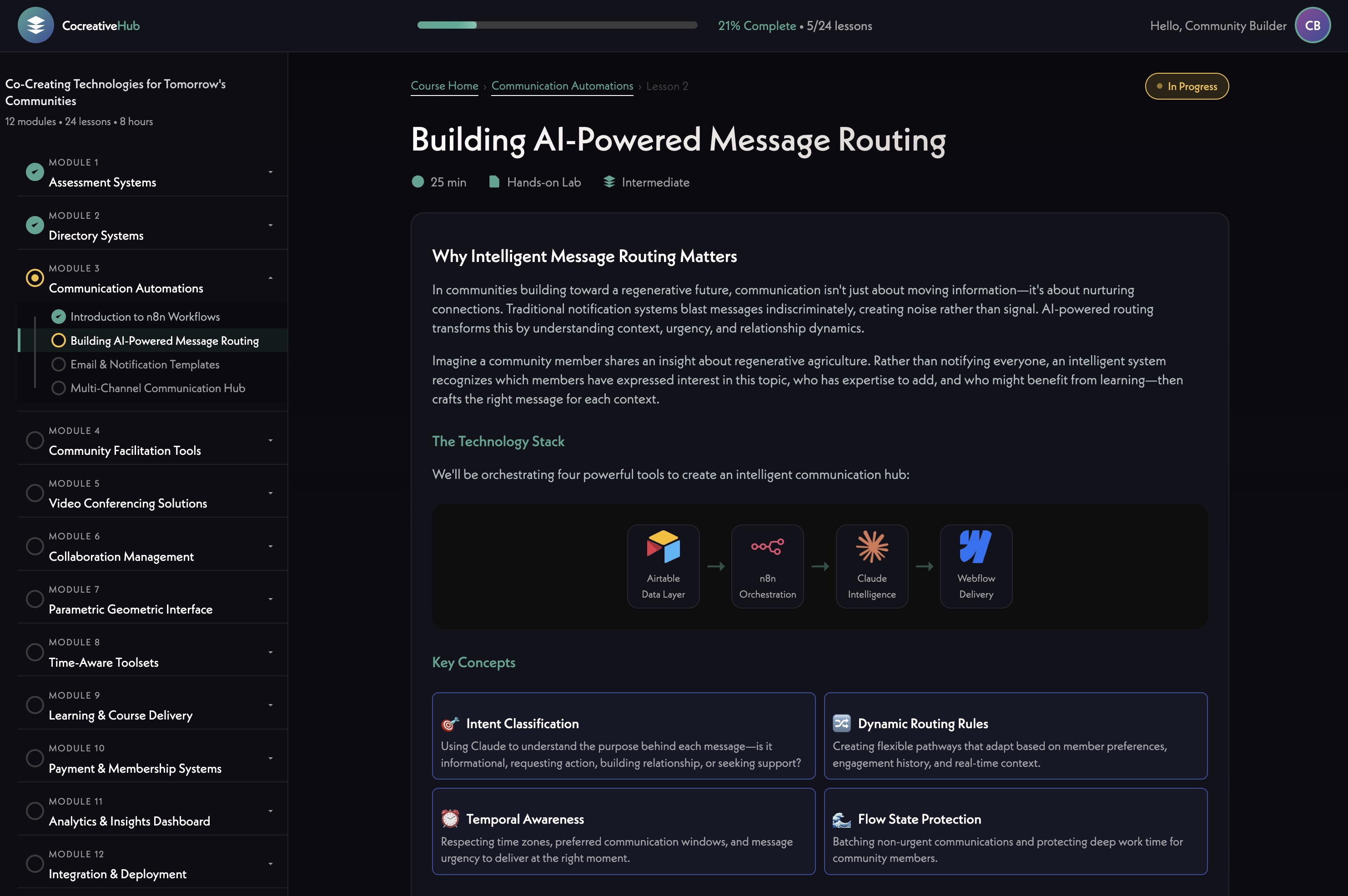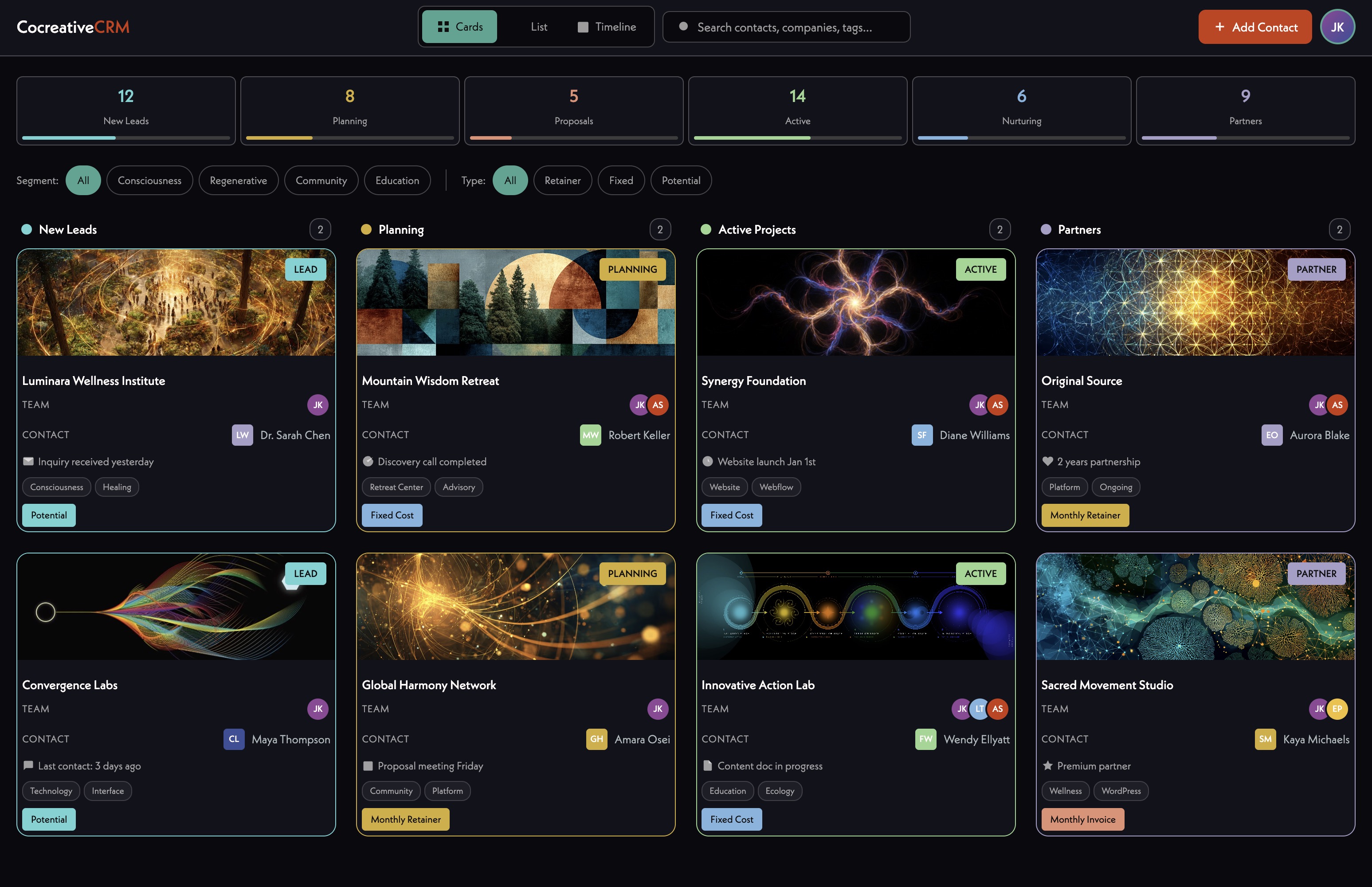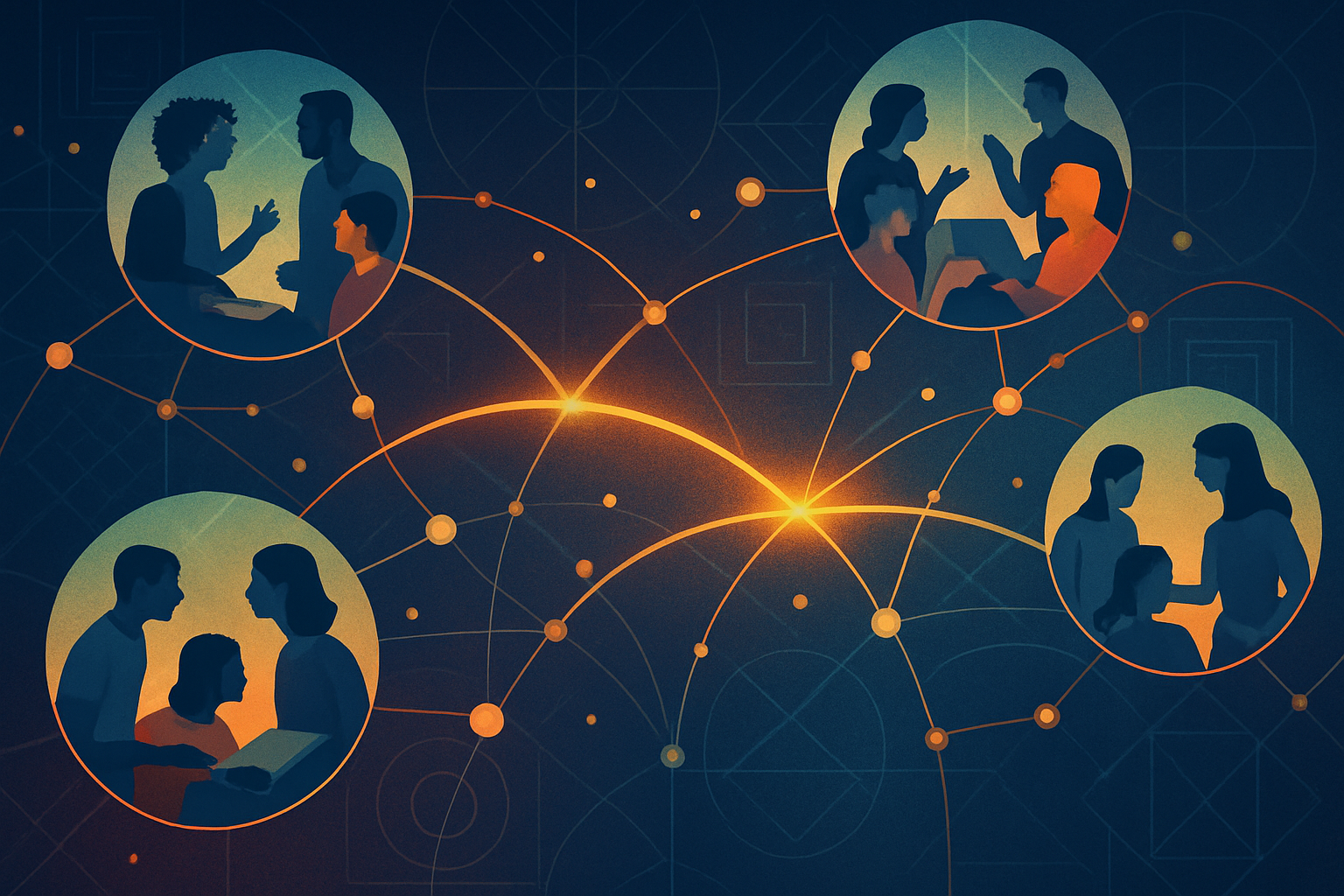

James outlined his primary focus for the coming year: building tools to facilitate collaboration across learning, doing, and transformation communities online (00:11). The vision extends beyond single-community platforms to create pathways for cross-pollination between different organizations and initiatives.
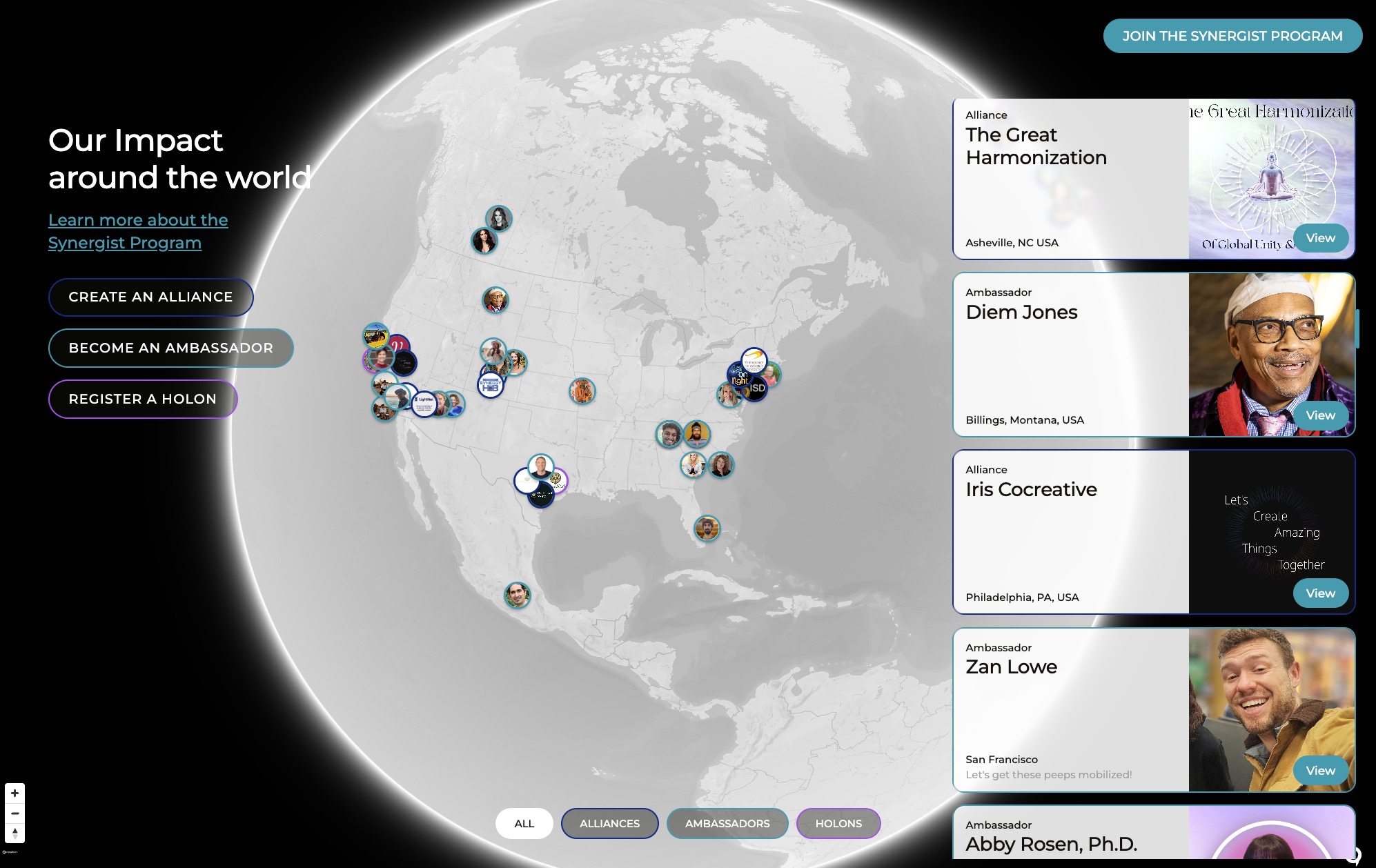
The architecture approach centers on unique front-end experiences for each community while utilizing similar backends that enable connection. This allows communities to maintain their distinct identity and member experience while sharing resources—courses from one platform can be exposed to learners in another, or lab outputs can automatically flow between connected communities (01:15). The Hollow Movement has committed to adopting this approach for their platform development.
[technology="Collaboration Management Tools"]
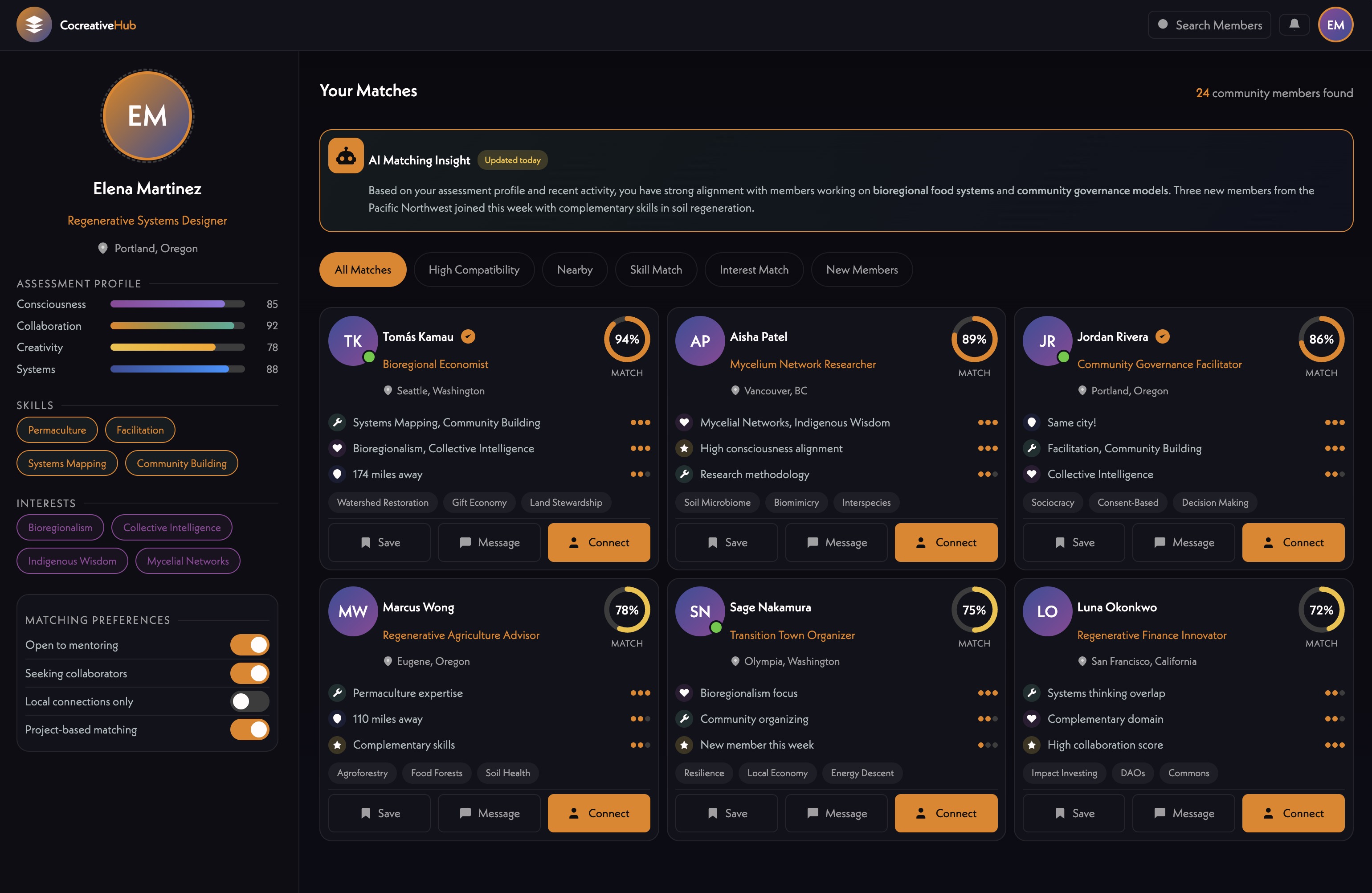
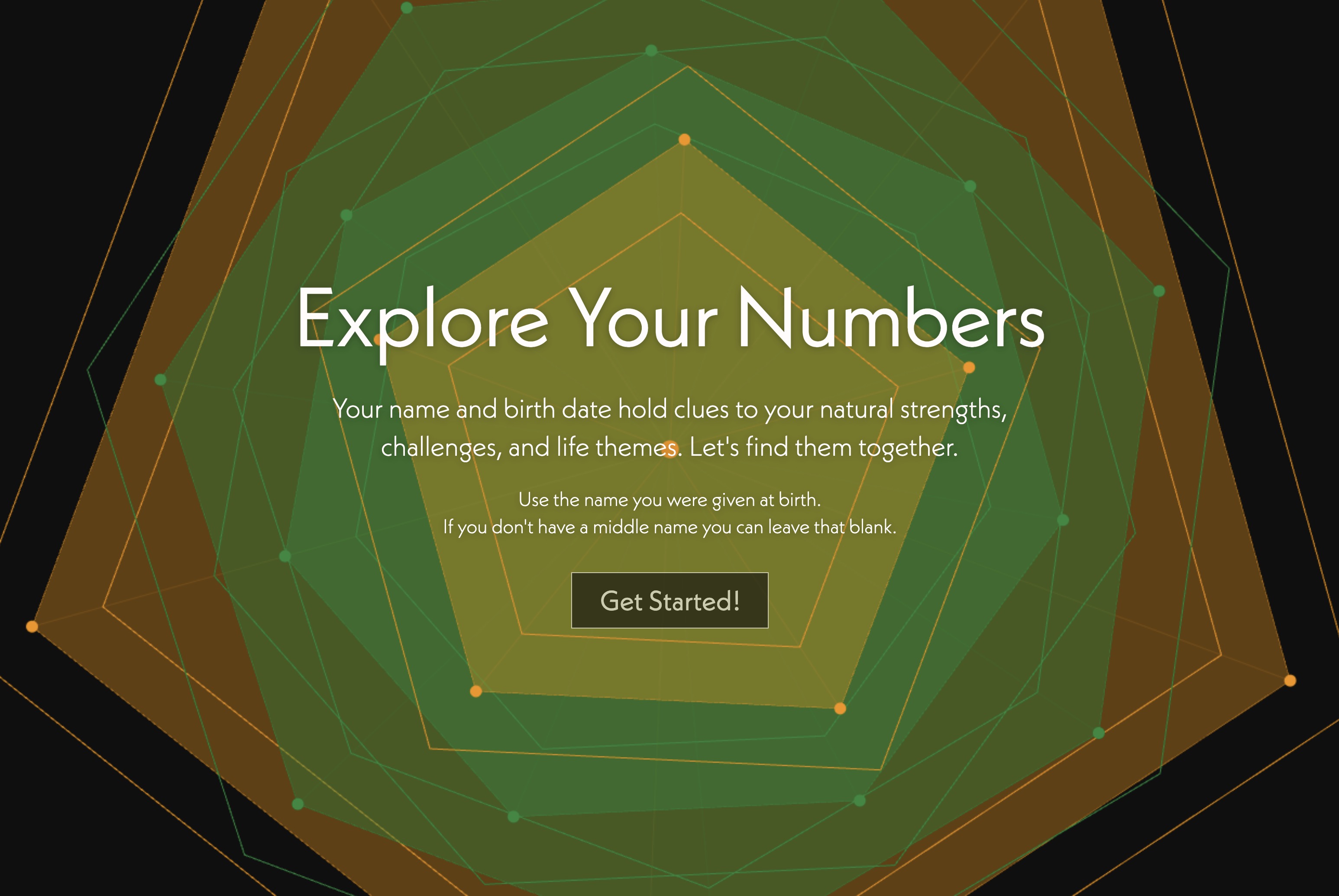
James demonstrated a prototype assessment tool built for the Hollow Movement using Webflow (03:47). The system collects user information including purpose, worldview, and values through a 10-20 minute questionnaire. Upon completion, users receive an email with personalized analysis of their responses, recommended connections within the network with explanations for each match, and curated podcast episode suggestions based on their answers.
A key feature allows users to initiate connections with a single click, automatically sending introduction emails to both parties without requiring login or profile creation (06:12). This removes friction from the connection process while maintaining intelligent matching.
[technology="Assessment Systems"]
[technology="Intelligent Matching Algorithms"]
Wendy identified an important challenge: different user demographics have varying engagement preferences (06:52). Younger users (20-60) tend to embrace comprehensive onboarding and connection tools, seeking to engage broadly and learn quickly. More senior participants often prefer streamlined access to strategic-level connections without extensive profile creation or unsolicited contact.
The assessment system's flexibility addresses this through multiple applications. For course enrollment, participants complete assessments beforehand to enable intelligent small-group matching based on work, age, or other relevant criteria (08:12). The upcoming Wave conference in Portugal will pilot this approach, using various input sources including pre-event questionnaires, existing speaker bios, website data, LinkedIn profiles, or even astrological charts calculated from birthdays.
Wendy cited the Conscious Food Systems Alliance (COFSA) retreat as an ideal use case—a week-long gathering of 35 world leaders including two ministers from Bhutan, organized by UNDP, where the extraordinary participant expertise went largely unharvested due to lack of strategic connection tools (09:35).
The conversation shifted to establishing a Flourish Project Innovation Lab focused on flourishing community tools and technologies (11:09). Wendy reported strong traction with the Innovation Lab concept and is building a volunteer team including two core members and several researchers.
The lab would address a fundamental challenge: numerous groups discussing similar topics in isolated bubbles. The goal is to create coherence across these disconnected conversations (12:17). The model could potentially involve founding partners like the Hollow Movement and ELS to trial collaborative technologies, though Wendy noted the ELS remains organizationally chaotic.
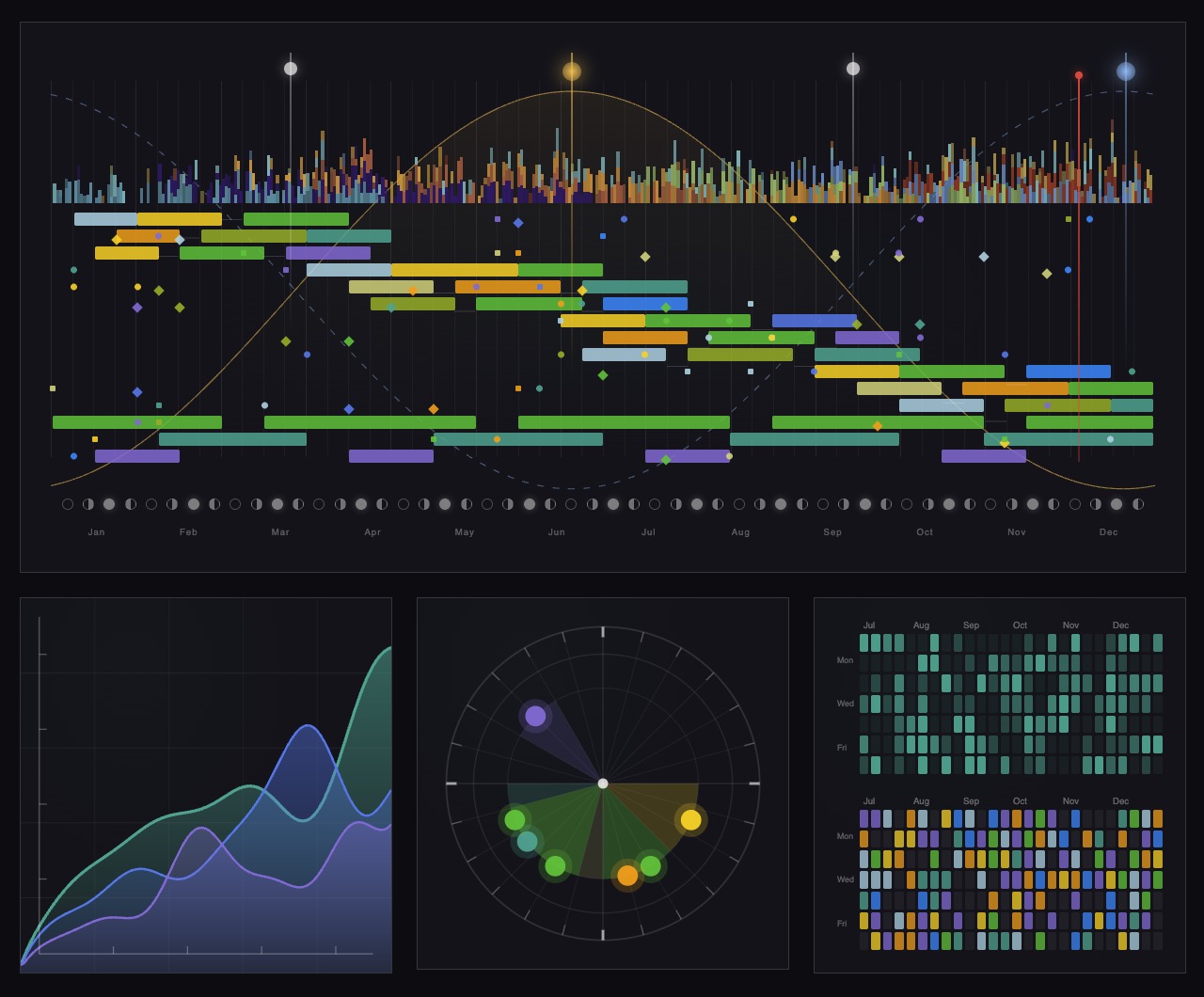
James shared a circular visualization tool created for a May gathering where participants answered questions displayed in a nonlinear, fire-circle format (13:29). This design intentionally breaks hierarchical patterns, evoking the biological memory of sitting in circle where no one holds more importance than others (14:05). The vision extends this to three phases: pre-event connection, in-person harvesting, and post-event sustained engagement.
[technology="Community Facilitation Tools"]
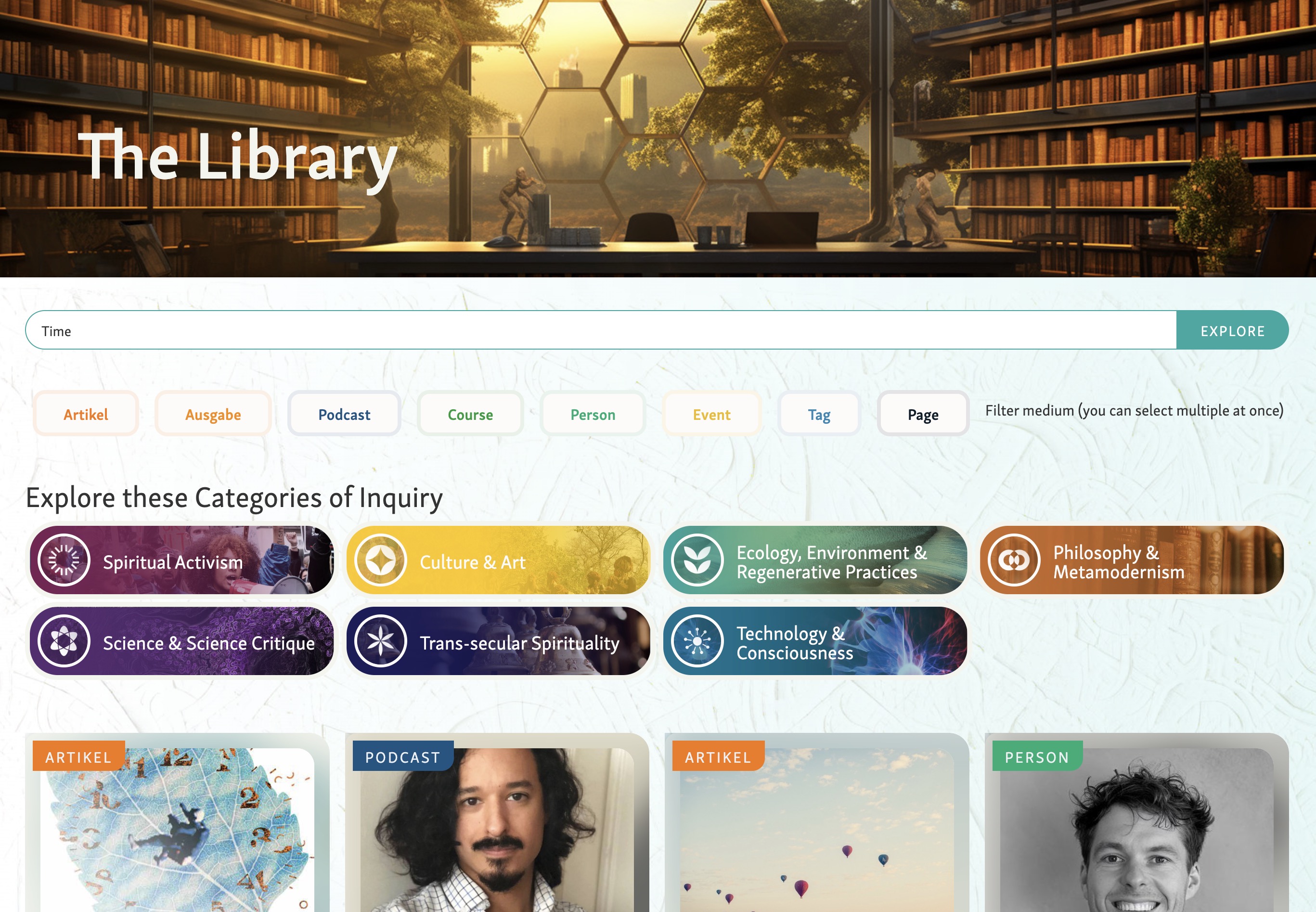
The Webflow site backend has been refined and structured, with work completed on the resource library integration, though content development remains limited (17:31). James offered to transfer the site to Wendy's own Webflow account to enable direct collaboration, allowing her to comment on pages asynchronously despite the steeper learning curve compared to Weebly.
James expressed hitting a wall on making the model clear to users without overwhelming them (18:36). The current approach uses an interactive visualization where hovering over domains and motivations triggers explanatory pop-ups, but the execution needs refinement.
Wendy identified being stuck on next steps due to lack of tangible elements to work with (19:04). She emphasized preference for the entry questions approach over simply presenting key resources, wanting users immediately led through reflections to expressions of interest rather than resource suites (19:38).
Wendy outlined a simplified top-level navigation (22:02):
Within the Innovation Lab, different audience pathways would be housed. The Learning Lab would sit inside the Innovation Lab rather than at top level, containing tools and resources. Other audience paths would feature reflective questions leading to expressions of interest, capturing participants during this development stage (22:32). Form submissions would flow to Mailchimp for ongoing engagement.
Wendy requested multiple hero image options and expressed preference for dark mode design, noting most appealing contemporary sites use dark backgrounds (23:57).
Wendy set a firm deadline of end of December for having a functional site live (26:47). She's holding Simon (new board director) from announcing his role on LinkedIn until the website includes his CV and full team information. Multiple visibility drivers are emerging: two invited talks in Europe next year, two book chapters, and three academic papers in publication.
The immediate need is a prototype Simon can evaluate from an educator perspective, specifically considering the City of London schools he works with (25:30). This feedback loop will validate whether the educator entry point functions effectively or requires adjustment.
Wendy emphasized the core design challenge: the four domains and seven levels framework works but typically requires verbal or written academic explanation. The website must fast-cut to simplicity while maintaining conceptual integrity (26:01).
James
Wendy
James outlined his primary focus for the coming year: building tools to facilitate collaboration across learning, doing, and transformation communities online (00:11). The vision extends beyond single-community platforms to create pathways for cross-pollination between different organizations and initiatives.
The architecture approach centers on unique front-end experiences for each community while utilizing similar backends that enable connection. This allows communities to maintain their distinct identity and member experience while sharing resources—courses from one platform can be exposed to learners in another, or lab outputs can automatically flow between connected communities (01:15). The Hollow Movement has committed to adopting this approach for their platform development.
[technology="Collaboration Management Tools"]
James demonstrated a prototype assessment tool built for the Hollow Movement using Webflow (03:47). The system collects user information including purpose, worldview, and values through a 10-20 minute questionnaire. Upon completion, users receive an email with personalized analysis of their responses, recommended connections within the network with explanations for each match, and curated podcast episode suggestions based on their answers.
A key feature allows users to initiate connections with a single click, automatically sending introduction emails to both parties without requiring login or profile creation (06:12). This removes friction from the connection process while maintaining intelligent matching.
[technology="Assessment Systems"]
[technology="Intelligent Matching Algorithms"]
Wendy identified an important challenge: different user demographics have varying engagement preferences (06:52). Younger users (20-60) tend to embrace comprehensive onboarding and connection tools, seeking to engage broadly and learn quickly. More senior participants often prefer streamlined access to strategic-level connections without extensive profile creation or unsolicited contact.
The assessment system's flexibility addresses this through multiple applications. For course enrollment, participants complete assessments beforehand to enable intelligent small-group matching based on work, age, or other relevant criteria (08:12). The upcoming Wave conference in Portugal will pilot this approach, using various input sources including pre-event questionnaires, existing speaker bios, website data, LinkedIn profiles, or even astrological charts calculated from birthdays.
Wendy cited the Conscious Food Systems Alliance (COFSA) retreat as an ideal use case—a week-long gathering of 35 world leaders including two ministers from Bhutan, organized by UNDP, where the extraordinary participant expertise went largely unharvested due to lack of strategic connection tools (09:35).
The conversation shifted to establishing a Flourish Project Innovation Lab focused on flourishing community tools and technologies (11:09). Wendy reported strong traction with the Innovation Lab concept and is building a volunteer team including two core members and several researchers.
The lab would address a fundamental challenge: numerous groups discussing similar topics in isolated bubbles. The goal is to create coherence across these disconnected conversations (12:17). The model could potentially involve founding partners like the Hollow Movement and ELS to trial collaborative technologies, though Wendy noted the ELS remains organizationally chaotic.
James shared a circular visualization tool created for a May gathering where participants answered questions displayed in a nonlinear, fire-circle format (13:29). This design intentionally breaks hierarchical patterns, evoking the biological memory of sitting in circle where no one holds more importance than others (14:05). The vision extends this to three phases: pre-event connection, in-person harvesting, and post-event sustained engagement.
[technology="Community Facilitation Tools"]
The Webflow site backend has been refined and structured, with work completed on the resource library integration, though content development remains limited (17:31). James offered to transfer the site to Wendy's own Webflow account to enable direct collaboration, allowing her to comment on pages asynchronously despite the steeper learning curve compared to Weebly.
James expressed hitting a wall on making the model clear to users without overwhelming them (18:36). The current approach uses an interactive visualization where hovering over domains and motivations triggers explanatory pop-ups, but the execution needs refinement.
Wendy identified being stuck on next steps due to lack of tangible elements to work with (19:04). She emphasized preference for the entry questions approach over simply presenting key resources, wanting users immediately led through reflections to expressions of interest rather than resource suites (19:38).
Wendy outlined a simplified top-level navigation (22:02):
Within the Innovation Lab, different audience pathways would be housed. The Learning Lab would sit inside the Innovation Lab rather than at top level, containing tools and resources. Other audience paths would feature reflective questions leading to expressions of interest, capturing participants during this development stage (22:32). Form submissions would flow to Mailchimp for ongoing engagement.
Wendy requested multiple hero image options and expressed preference for dark mode design, noting most appealing contemporary sites use dark backgrounds (23:57).
Wendy set a firm deadline of end of December for having a functional site live (26:47). She's holding Simon (new board director) from announcing his role on LinkedIn until the website includes his CV and full team information. Multiple visibility drivers are emerging: two invited talks in Europe next year, two book chapters, and three academic papers in publication.
The immediate need is a prototype Simon can evaluate from an educator perspective, specifically considering the City of London schools he works with (25:30). This feedback loop will validate whether the educator entry point functions effectively or requires adjustment.
Wendy emphasized the core design challenge: the four domains and seven levels framework works but typically requires verbal or written academic explanation. The website must fast-cut to simplicity while maintaining conceptual integrity (26:01).
James
Wendy
Website design and development for The Flourish Project upgraded to Mast framework. Site structure focuses on nine Innovation Labs with integrated Resources section. New drag-and-drop CMS capabilities. Dark mode aesthetic implementation now functional. Simplified resources approach with most labs showing contact page link for expressions of interest, except Learning Lab which gets specialized contact form capturing name, role, email, school/organization, website, city, country. Conscious Parenting Lab features actual resource grid. Resource page prominently features three core handbooks used by 30+ schools worldwide with Airtable AI-generated PDF summaries. CMS-driven team management system with unpublished profiles for Fabienne and Annie pending discussions. Framework page cleaned up removing duplicate entries, linked from homepage ESF Framework section. New Principles of Partnership page with fungi/mycelium imagery and expression of interest link. Contact page updated with calming nature image. Airtable upgraded to team plan for continuous syncing. Integration with Airtable for resource management with primary status tagging for featured handbooks. Site transfer to Wendy's Webflow workspace pending with domain connection instructions to follow. Target launch after final joint review.
Website design for The Flourish Project focusing on nine Innovation Labs structure (Wisdom, Conscious Parenting, Nurture, Learning, Community, Cities, Peace, Legacy, Healing). Wisdom Lab positioned first as cross-cutting theme using vector equilibrium icon. Healing Lab added as ninth lab incorporating Global Healing Day initiative with Caduceus symbol. Visual identity emphasizing diverse, global representation with artistic collage-style hero image incorporating interbeing themes, multi-ethnic intergenerational communities, nature, ecology, and cosmic elements. Refined symbolic icons for each lab: rounded pentagons for Legacy Lab suggesting organic storytelling, compass for Leadership Lab, bioregion-inspired design for City Lab, growth progression for Conscious Parenting Lab. Video background exploration for hero section using Indigenous-themed content pending cultural sensitivity review. Team member bios with updated titles including new members James and Lana. Framework page using 'Ecosystemic Flourishing (ESF) Framework' heading. Dark mode aesthetic with improved typography. 'Ecology of Belonging' as prominent homepage feature. Shift from consumer to participant engagement model.
00:00:00
Wendy Ellyatt: Yeah, all the conversation is going on, this meeting is being recorded of being part of some, this bigger conversation is going on that you're a hugely important part of.
00:00:11
James Redenbaugh: But yeah, yeah, yeah. So all I want to do next year is build tools to facilitate that kind of collaboration and you know, focusing a lot on creating, learning and doing and transformation communities online. But also tools for smaller groups like the 30 person lab you just mentioned. But then the next layer on top of that is while we're building these tool sets for communities like that, we also want to build pathways for them to cross pollinate. So if these different organizations and initiatives are on a similar platform, it's not the same front end. The front end can be as unique as you want. You log in, you have your community, your people there, but similar backends that can connect. Then you can expose people learning, doing things over here to over here. You know, you're teaching a course over here, you have a bunch of courses. You bring one course over here, expose that teaching to, to these people, or bring this lab and the output that's, that they're doing automatically into this world over here. Yeah. And the Hollow Movement is now fully on board with that idea as well. We're going to be.
00:01:45
Wendy Ellyatt: Oh well, I'm trying to get the Els. I'm, I'm, I'm trying to get the Els to, to come into the 21st century. So you might have another job at some point.
00:01:56
James Redenbaugh: They'll get there. We're starting with the Source of Synergy website. Just a simple.
00:02:01
Wendy Ellyatt: Oh, you are doing that, aren't you? Because I told them about you.
00:02:04
James Redenbaugh: Yeah, they've been wanting to, wanting to work with me for a while and we're just going to do a simple question like refresh that. But then the ELS need it, they need it bad.
00:02:18
Wendy Ellyatt: I'm inside it and I've literally just provided my kind of overview of what's. So we basically are saying the same thing, which is great. I'm sure it's why you're there, you know, for this moment of time that, because it. We need someone who understands that side of it. And the challenge too is, you know, the whole idea that people want to communicate on networks has been, there's been serious problems with things like mighty networks. You know, I was really into that or a load of us were into that like five years ago. And what became really clear was just because you have a network and you invite people on doesn't mean they're going to work together. And what if you don't have a facilitator constantly pushing. It just didn't work. So it's really saying everybody got exhausted putting up yet another profile, you know. Yeah, in another closed system.
00:03:08
James Redenbaugh: Yeah, yeah, exactly. And Hilo's the same way and circle or whatever it is. And so we're figuring out essentially how to do agentic facilitation where you can have smart automations that keep people engaged and respond to their inputs. Have I showed you this little demo I did for the Hollow Movement, the connection assessment?
00:03:45
Wendy Ellyatt: Don't think so.
00:03:47
James Redenbaugh: Let me see if I can find it real quick. So this is just a webflow, made it pretty. You put in your name and email and answer some questions about where you are, what you're doing, your purpose, your world view. Some are multiple response, you know, some are these kind of value based things. I can choose three and then you finish. We won't go through the whole thing, but you finish the question. It takes maybe 10 minutes, 10, 20 minutes if you're really answering it. And then you get an email and the same thing, you know, it. I could feed it back to the user on, on the website, but I was trying out the email. It gives you an analysis of your responses. So it, it describes your purpose in calling. This is for Alyssa. This was a test your consciousness and values along with a suggestion here. And you know, I designed all this. We could do anything. We could do spider graphs, we could do charts. But then it recommends connections in the Hollow Movement network and says why you should connect with them. So you know, Steven, you should connect with them. You should connect with this person. And then if I click this button, it will automatically send us both an email explaining why we should connect. Or I could view their website or once we, you know, build out the fuller system, I could view their, their profile on the Hollow Movement. I don't need to log in, I don't need to do anything. And then it's also recommending podcast episodes I should listen to.
00:06:12
Wendy Ellyatt: Yeah, that's clever.
00:06:14
James Redenbaugh: Based on the responses and so you can get a sense that like this is a little demo.
00:06:20
Wendy Ellyatt: It's clever. I mean, I think, I think one of the issues are that I've seen and I experienced myself. You've got people at very different levels in all these, in the big movements. So if you're the younger you are, the more excited you are about things like that because you, you're really interested in connecting, whatever the older you are, you immediately go, you know, for me, like filling in all that first bit is kind of I'm not, I'm not interested in then and then I. The idea of people healing. Emailing me would be a nightmare because I can't deal with what I've got already. So I think one of the challenges is it you really. We can't presume that everybody in a big movement in particular is going to have the same needs within that, because I think that's brilliant. I know from the, the watching so many of these, because it was really clever mapping stuff a few years ago and I think it just needs to address the. There needs to be something at the beginning that kind of shortcuts or. And I don't have the answer for it, but I know I would for me personally, that I just wouldn't bother doing all of that because it wouldn't. Because I need people to go to just give me the, the big picture strategic group.
00:07:52
James Redenbaugh: Yeah, yeah.
00:07:53
Wendy Ellyatt: There are issues within it, but it's. Exactly. But if you're, you know that if you're like any age between 20 and 60, you're probably. Well, the younger you are, the more interested you are in that because you're, you want to engage with as many people as possible and you want to learn fast.
00:08:12
James Redenbaugh: Well, it's, it was a simple proof of concept to show the kinds of connections we can make. So, for example, let's say we design something for people that are signed up for a course instead of like, here's the course, here's the start, here's the email, here's the breakout group you were assigned. You have everybody fill out an assessment beforehand and then it matches you up in a small group intelligently based on your responses, your work in the world, your age, whatever criteria. Yeah, exactly. So we're, we're doing it for the wave in anticipation of the wave in Portugal next year. So that before that we're going to do all kinds of things to understand who's going to be there. Yeah, that's intelligent suggestions. Like, you3 people need to have a conversation and here you're all. You're, you know, or here's the schedule that we're recommending for you based on, on what we know about you and your results and what we know about people can be from like, it can have multiple sources of input. You don't have to have everybody fill out the questionnaire. You can have the bios that they already have because they're a speaker or data from their website that they've shared online or their LinkedIn, you know, or their astrological chart that we calculate from Their birthday or whatever.
00:09:35
Wendy Ellyatt: Yeah, I think it's super interesting and there are a number of groups I have one immediately that comes to mind that once you've got that available. I mean I've just come out of a really fantastic. I was on a week long retreat with the Conscious Food Systems Alliance. It's a seriously good organization or UNDP and. And it was 30 like 35 world leaders like flew in. I mean including. We were with two ministers from Bhutan and part of the meeting was to talk about the Conscious. The coffs of summit will be held in Bhutan next year. Just like fascinating. But there's an example because they haven't optimized in any way the extraordinary people that were in the room. There's been no real follow up what you've. You know if we all had that as a lead up to coming together that would be super interesting and you could crack initial questions. It could be co crafted with the organization, couldn't it? So yeah the trouble with us is we go off talking on tangent nothing about the first project site. We need. We need like strategic visioning meetings where I can and then we need.
00:10:57
James Redenbaugh: We need a. Yeah we need to start a. A lab in the Flourish movement for flourishing community tools and I mean it may be the technologies.
00:11:09
Wendy Ellyatt: I tell you what, maybe we will do that. I mean there's no reason why we couldn't put it in. In the Flourish have a. Because I'm so the Innovation lab idea has really gone well so I'm completely sold on this now and I so I got. And I'm just starting now to build a team. I mean they're all giving their time for nothing at the moment. But all I've got two members of team and a few researchers. But the idea that this is all based on an Innovation Lab kind of concept. We're trialing and bouncing around like this is the perfect thing to sit under the Flourish project really because you're saying how do we make this ecosystemic. We've got everybody talking all these different groups wanting talking about the same things in their individual bubbles and what we're trying to do is bring people into a coherent. We're trying to cohere all these different things. So it might be that we could run something under the Flourish project.
00:12:17
James Redenbaugh: Awesome. Wonderful. And I could imagine that something could. Could be running under the Flourish project and simultaneously it's. It's under something else.
00:12:30
Wendy Ellyatt: Well we might. For example supposing we had the Hollow movement and the ELS as. Although the ELS are so chaotic. You Know as you could have, like founding partners to trial something.
00:12:47
James Redenbaugh: Yeah.
00:12:48
Wendy Ellyatt: That was, you know, the first project tech lab, you know, would actually be part of where things could be explored. Anyway.
00:12:59
James Redenbaugh: Anyway, did I ever show you this? Speaking of tools for groups to get them connected. So this is a group I gathered with in May and I built this little thing where everybody answered these questions and there's no agentic analysis, but it was just a nice way to see everybody's responses in a nonlinear format.
00:13:29
Wendy Ellyatt: Even that would have been fantastic for kofsa. That would have been the perfect thing.
00:13:34
James Redenbaugh: Yeah. And so the dream is to have. Have something like that to get people connected beforehand and then a kind of parallel tool for harvesting when we're together in. In person and putting everything together. And then use the same structure to keep everybody connected afterwards so folks can share into the circle and like, keep the fire.
00:13:56
Wendy Ellyatt: I love the. It has that circle feel. Isn't it funny? The moment you break it into a sphere, a circle, you feel different. Yeah.
00:14:05
James Redenbaugh: Yeah.
00:14:05
Wendy Ellyatt: You're sitting around a fire. There's something in our biology.
00:14:08
James Redenbaugh: Exactly.
00:14:09
Wendy Ellyatt: That makes you think, oh, we're all sitting here together and no, there's no linear. There's nobody more important than anybody else.
00:14:16
James Redenbaugh: Yeah. It. It. We have hundreds of thousands of years of that memory.
00:14:21
Wendy Ellyatt: Yeah. It's so genes.
00:14:24
James Redenbaugh: Yeah. So let's come back to the florist project. What. You've made some strides with this, with the labs idea, putting an education lab together. I'm curious what's. What's most alive for you?
00:14:46
Wendy Ellyatt: And I kind of. What I need is the basics of a site that I can play around with or show this. The other person that's come on board, he's really good. And so what we need is the basic structure so you can see. And I really liked when I was looking at the audience paths, it's what I really do need to see something because I'm. I need to see it visually in order to get a sense of where we could go, but make much more about. You're entering into a conversation, you know.
00:15:21
James Redenbaugh: Yeah.
00:15:22
Wendy Ellyatt: During capturing visually the. The framework.
00:15:31
James Redenbaugh: Would it be helpful and interesting to you since you're a woman of the web yourself? I could move the webflow site to an account of your own so you could start getting into the back end as well and. And playing with things in there. And now there's a. There's a learning curve for. For webflow. Of course it's not.
00:16:03
Wendy Ellyatt: Yeah. I don't know.
00:16:04
James Redenbaugh: Webflow, it's not going to be as Straightforward as Weebly. And by no means do you have to learn it, but just seeing the back end might be helpful. And you can do things like comment right on the page and say, you know, let's get a better image in here. Or like, you know, what if we had XYZ here and then Yvonne and I can, can see that and we can have a, you know, a asynchronous collaboration bringing things together here. How would you.
00:16:55
Wendy Ellyatt: I think it would be good to get some. Now let's see. Have you done any more than we had before?
00:17:08
James Redenbaugh: I've kind of perfect tweaked the structure and perfected the, the back end but I haven't done more content wise and I've done some to the, the resource library and connecting that to webflow.
00:17:31
Wendy Ellyatt: So can you give me a live link to webflow so I can get inside webflow and that's what you mean?
00:17:38
James Redenbaugh: Yeah, yeah, yeah.
00:17:39
Wendy Ellyatt: But is it, is it like Weebly, I don't need coding. I, I can't code.
00:17:42
James Redenbaugh: So you don't need to, you don't need to cut. Yeah, it, it's, it's not as.
00:17:52
Wendy Ellyatt: Intuitive.
00:17:55
James Redenbaugh: In intuitive because you don't see the structure. You only see the structure when you're hovering on things. But it's, you know, wysiwyg in terms of changing content, of course. If you wanted to roll down and.
00:18:10
Wendy Ellyatt: Where in terms of explaining the model on the website, how do you see that working?
00:18:23
James Redenbaugh: Well, I want to talk to you about that because I've kind of been hitting a wall because I wanted to, I want to make it clear to users without overwhelming them.
00:18:36
Wendy Ellyatt: Yeah, yeah.
00:18:39
James Redenbaugh: And so the idea was to make this interactive and then we could have different things kind of pop up as the user hovers on the domains and the motivations.
00:18:53
Wendy Ellyatt: Yeah. So you click on the, the first domain and then see a little thing comes up and with all the details of what that includes.
00:19:02
James Redenbaugh: Exactly.
00:19:04
Wendy Ellyatt: And that's the stuff that I need to start. I mean I, I'm a bit stuck because I don't know what next to do.
00:19:11
James Redenbaugh: Huh. Yeah.
00:19:15
Wendy Ellyatt: Whereas scroll down a bit to the pathways because I really like is. Have you taken that what I've just sent. I'm assuming no. So what we need to move away from is the key resources. I much prefer the, the kind of entry questions and then you're led somewhere. Which was the last document I sent to you.
00:19:38
James Redenbaugh: Yes.
00:19:39
Wendy Ellyatt: Yeah, I really like that because I think that's super simple. But then it was trying to get it away from the Resources to the reflections. And then, you know, expressions of interest rather than. You're not being led to a whole suite of resources.
00:19:57
James Redenbaugh: Yeah. So.
00:20:06
Wendy Ellyatt: These. Yeah, that's what I was looking at. Which could be those still those little boxes we're leading them to. We're leading them to the Innovation Lab aspect rather than.
00:20:29
James Redenbaugh: So are you imagining that we're literally asking these questions. Right. Right there. Help me understand this better.
00:20:37
Wendy Ellyatt: Well, I. I just. It's. It's just if I didn't know how you do it on the website, but it was the kind of thing. How do I get people to immediately think about what they're doing, why they're. You know, why they've come to the site and what they're. To give them a sense of the kind of thing we're looking at.
00:20:59
James Redenbaugh: Yeah, yeah.
00:21:01
Wendy Ellyatt: Straight away.
00:21:02
James Redenbaugh: Yeah.
00:21:05
Wendy Ellyatt: And then have some kind of call to action. So that leads them to the Innovation Lab aspect. And we have the Innovation Lab as the top navigation. And then within that would be the Learning Lab, which would be the big one. And then the. Whatever else we want to call it. I mean, so within the Innovation Lab we would have these different audiences. So on the top. See, I can hardly see that because it's so small on my screen.
00:21:49
James Redenbaugh: Yeah. And I'm sure. Sharing my screen.
00:21:53
Wendy Ellyatt: Yeah. Hold on.
00:21:53
James Redenbaugh: So makes it even smaller.
00:21:55
Wendy Ellyatt: But so. So we want the Learning Lab inside the Innovation Lab, I think rather than.
00:22:01
James Redenbaugh: Huh.
00:22:02
Wendy Ellyatt: And then we also kind of home. We need to show somewhere the team which I'll start re looking at and getting everyone to send me new BIOS framework is absolutely right at the top. Resources and contact. That's about it. At the top. Home. About Innovation Lab. And about is quick history. And then the team.
00:22:32
James Redenbaugh: Noel. Huh. Exactly.
00:22:41
Wendy Ellyatt: Then the audiences from that first page go straight to the Innovation Lab side. And inside the Innovation Lab there are each of those audiences. And then we can put in there. If you go to the Learning Lab, there are tools and resources in that. But in the other ones it could be just reflective questions leading to expressions of interest. Because we're at this development stage but we're capturing people and then having the expressions of interest go to the email. Mailchimp.
00:23:14
James Redenbaugh: Yeah.
00:23:20
Wendy Ellyatt: So I'm just. Because I haven't got anything physically to work on.
00:23:26
James Redenbaugh: Yes.
00:23:26
Wendy Ellyatt: I haven't been able to play with anything.
00:23:33
James Redenbaugh: I'm gonna start something over here. One sec.
00:23:39
Wendy Ellyatt: And I like that picture. But it'd be good to have like a couple of options.
00:23:43
James Redenbaugh: Totally. Yeah.
00:23:45
Wendy Ellyatt: And I like the dark background whenever I look at these Sites I really like dark background. I like that green.
00:23:57
James Redenbaugh: Yeah, me too. I've been doing sites recently where you can switch between like light mode and dark mode.
00:24:10
Wendy Ellyatt: Yeah.
00:24:11
James Redenbaugh: But I end up always just going to dark mode, so.
00:24:14
Wendy Ellyatt: Yeah, me too. And this, that most of the really lovely sites now are in dark, dark mode. Why? It's just very pleasing. Yeah. Because I want something that I can share with Simon, the new guy, because if he's coming in, I'd be really, really good to have. He's a school's education based person and I want him to be able to, to see the site from the perspective of like the city of London he's working with. And I really want him to say, actually yeah, this works or it doesn't work or you know, we need to work on. We need to change the entrance point for educators or M. So if you could take this. I mean what, what we need is the next step along so that I've at least got something I can, we can get all the bios done for the team. It's really understanding what, what else you need from me and then understanding the bits that you're stuck on, like the, the actual framework side of things.
00:25:30
James Redenbaugh: Yeah.
00:25:31
Wendy Ellyatt: And it's. I've got loads of stuff going out. I've got two chapters in books and three academic papers going out. So. And I mean I've been invited to give two talks next year in Europe. So there, all of a sudden we're going to have people really wanting to look at this. It's like it's trying to do it in a way that, that avoids the complexity that, that, that steps to the simplicity and I know that's what you're interested in.
00:25:59
James Redenbaugh: Yeah, exactly.
00:26:01
Wendy Ellyatt: Because we've the four domains and the seven levels work. But I normally have to explain it on the, in the, you know, in the academic papers. I give them a description.
00:26:13
James Redenbaugh: Yes.
00:26:14
Wendy Ellyatt: Need to fast cut to.
00:26:17
James Redenbaugh: Yeah, my doorbell just rang and I think it's the guy that's here to fix the furnace. Let me just make sure my wife.
00:26:25
Wendy Ellyatt: When I have to go as well because I've got another meeting. We can just another schedule another meeting and why don't you give me a list of questions or things that, that are very specific to what, to what you need from me and then my aim is that we get something up by the end of December.
00:26:46
James Redenbaugh: Yes.
00:26:47
Wendy Ellyatt: Because I've told Simon not to put anything on LinkedIn. He's confirmed as a board director, but I've told him I'm. I want to wait until the website's up with his cv, everything on it. So we can. I know we. I can work on the team, for example, because you'll be waiting on that. But if we can get this basic stuff done. Yeah, something. Because I don't think it's that complicated either way. If anything, we're trying to simplify it back rather than add stuff to it. You need to go to your doorbell.
00:27:17
James Redenbaugh: Yeah, yeah, I think she's sleeping. I'll. I'll follow up via email right after this with all of that. Okay, talk soon. Ciao.






.svg%20(1).png)


.png)