
The conversation began with Wendy Ellyatt and James Redenbaugh discovering significant alignment in their worldviews and approaches to technology, community, and systems thinking. James shared his practice of using Fireflies for transcription and processing recordings through Claude AI for various purposes (00:06), noting he's speaking at an upcoming conference about teaming up with AI to form holons that include digital intelligence as tools for facilitating human connectedness (00:23).
Wendy expressed deep resonance with this approach, describing her daily collaboration with AI in different modes depending on her work (00:50). She framed AI as part of nature itself, an extraordinary tool that accelerates learning and augments intelligence through active collaboration (01:51). Both agreed there's "magic in the collaboration" that many people fear but which offers tremendous potential.
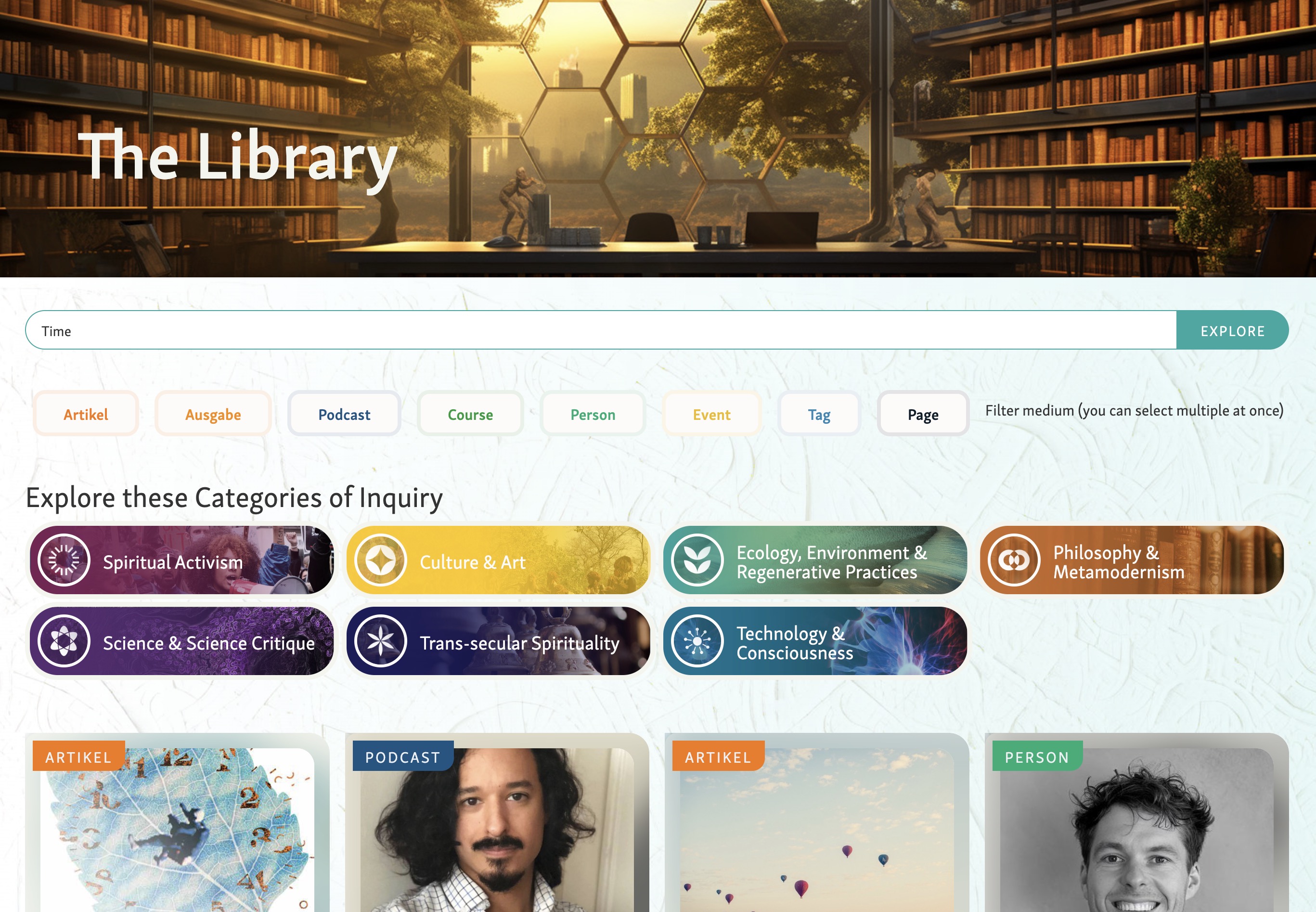
James introduced Marshall McLuhan's concept that "the medium is the message" (01:59), explaining how mediums themselves have greater impact on humanity than any particular message they carry. He drew parallels between historical media shifts and the current AI revolution, noting that while social media brought benefits, it has also proven "incredibly isolating and dulling and numbing" (03:01). He emphasized that AI as a medium is unprecedented and requires deeper examination of its possibilities and downstream effects.
Wendy agreed enthusiastically about the importance of understanding storytelling and narrative, particularly "how quickly we believe a consistent story that other people believe in" and the potential for both manipulation and positive influence (05:35). She expressed fascination with how fundamental aspects of narrative shape human activity across disciplines.
James articulated a key thesis for his upcoming talk: we're approaching an inevitable point where technology ecosystems will become too complex for any individual to understand (06:09). He argued that the antidote is "learning to be better together" through councils, holons, and teams that can understand collectively what no individual can grasp alone (06:10). This requires upgrading individual capacities into group capacities that can see from multiple perspectives across generations, geographies, and languages.
Wendy confirmed they were "so much on the same page" (07:23), demonstrating deep alignment on this fundamental principle.
Wendy described the Flourish Project's origins in her career transition from strategic management consulting to becoming an expert in early human development and wellbeing (07:40). After nearly two decades working to influence government policy in the UK with little positive change, she went global about six years ago (26:23).
She developed the Flourish model because no existing wellbeing model worldwide put the child at the center (26:23). The framework has evolved into an ecosystemic approach that doesn't center human beings but rather understands flourishing as integral across all life (27:12). Her work emphasizes restoring what indigenous peoples have always known: we are fundamentally life itself, reflecting the same principles as everything else in nature.
Wendy released two handbooks for schools as gifts on her website, which have now reached 30 countries including China, Mongolia, and Nepal—places she never attempted to reach directly (27:12). This organic spread validated her instinct to gift resources rather than restrict access. She now sits on steering groups and advisory boards of major networks across economics, education, and spirituality, including the Wellbeing Economy Forum, the Spirit of Humanity Forum, and the Galileo Commission (28:58).
Her recent work has included exploring whether Iceland could become a prototype nation demonstrating integrated wellbeing principles from the presidential level down to schoolchildren (28:58). She also just took over running National Children's Day through the Flourish Project (29:43).
Wendy emphasized the importance of sensual, relational communication with life itself, describing herself as coming from a lineage of "plant whisperers" and "horse whisperers" (21:20). She facilitated a session where she reminded participants that even individually, we are "trillions of organisms, all of which experience themselves as a center" (34:25), and that relationship happens through the water we drink and air we breathe, not just standing in a forest.
Both speakers discussed the unnaturalness of contemporary isolated living—"sitting in boxes and looking at boxes" (26:03)—and the deliberate narratives that promoted nuclear family isolation and demonized words like "communal" and "collective" (26:28). James shared his craving for living around fires in community, which Wendy resonated with deeply, suggesting she's "had many lives doing that" (27:13).
[technology="Community Facilitation Tools"]
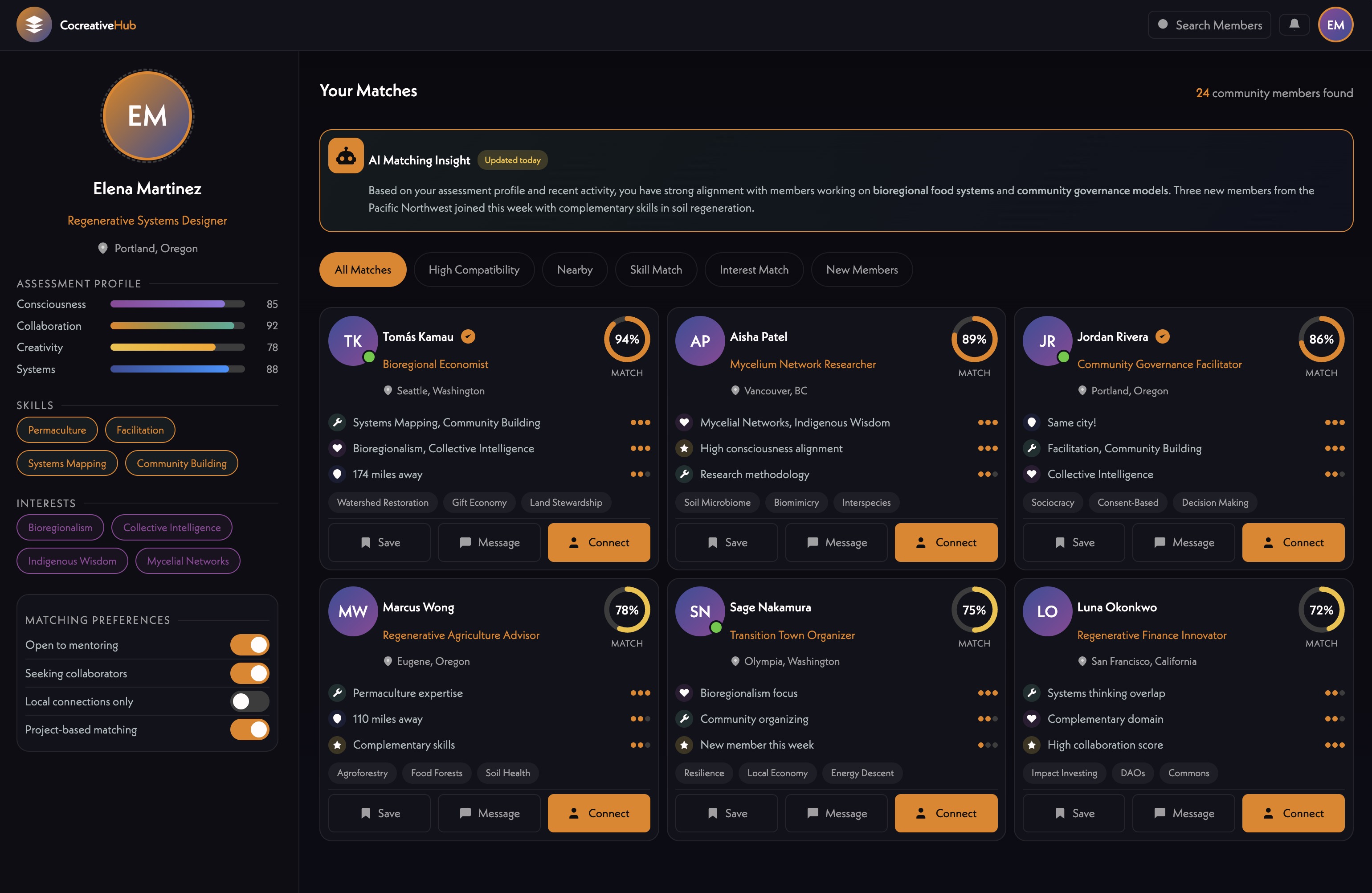
James shared a breakthrough realization: virtually all digital spaces—WhatsApp, Facebook, Instagram, even progressive platforms like Hilo—present information in grids and lists that we scroll or swipe (28:00). This medium inevitably impacts how we relate, putting people "in boxes" and expecting online communities to flourish even as energy fades after gatherings (28:38).
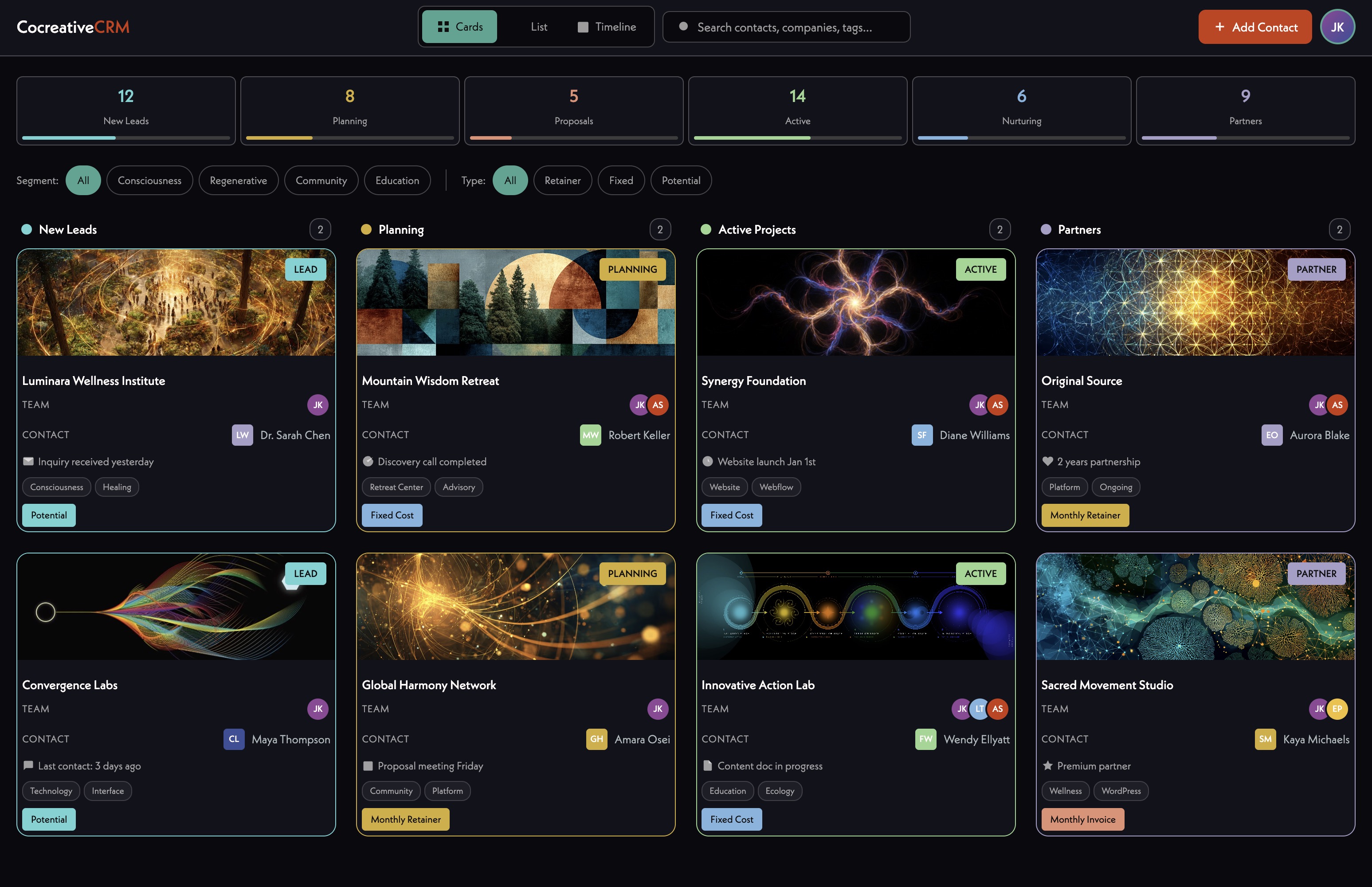
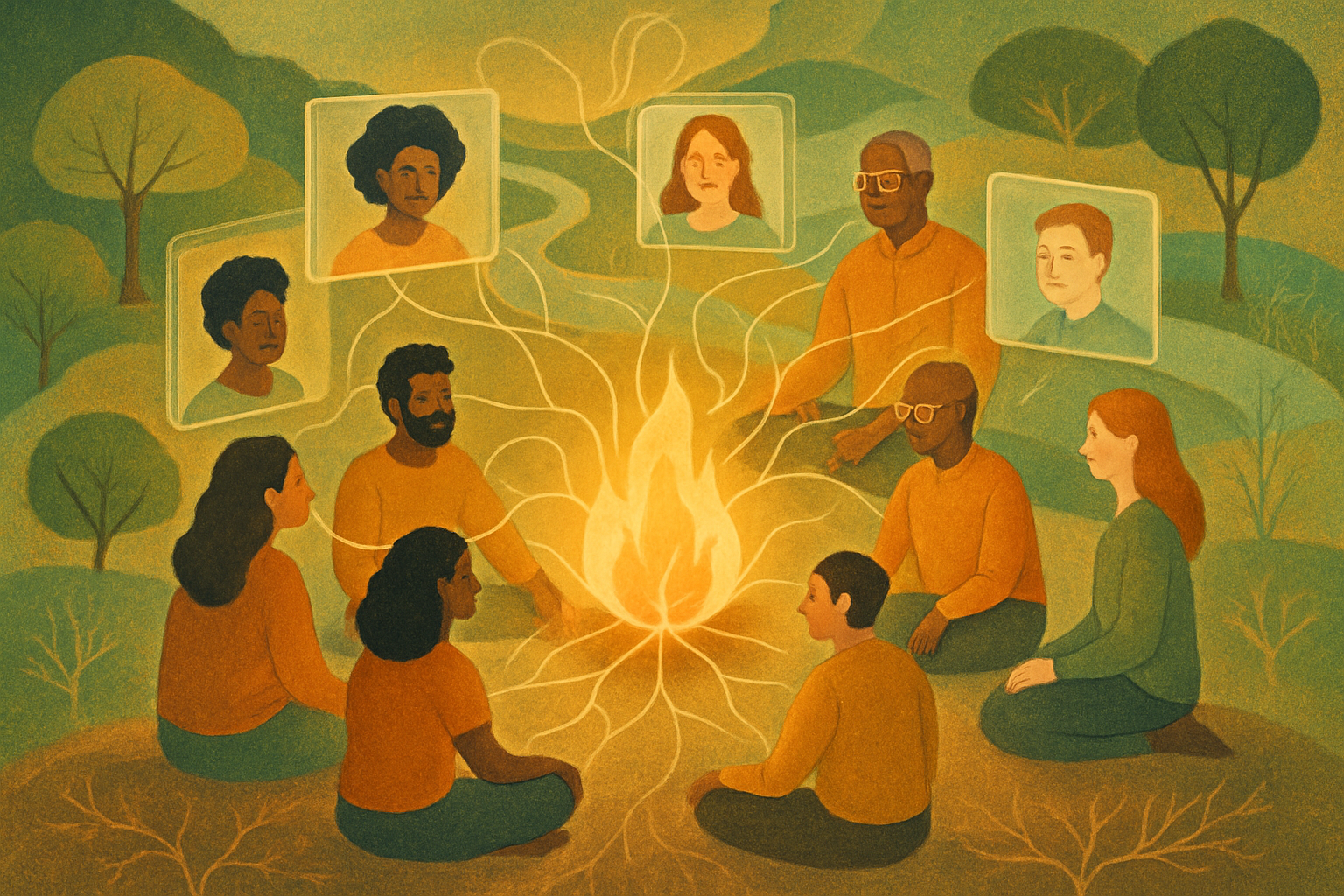
He's now developing a radial interface toolset that arranges people and information in circles rather than linear grids (29:02). For an upcoming gathering at Hollyhock Retreat Center with a group called Trifora, participants filled out forms that automatically populate into a radial interface, allowing viewers to see everyone together and click on questions to see where their eyes are naturally drawn rather than reading responses one at a time (29:17).
The innovation extends beyond static displays: James has developed functionality where participant photos become live video feeds, creating a circular video conferencing interface (31:26). The system automatically rearranges participants around the screen based on how many people show up. Additionally, he's filming fires during gatherings to include as the central element, allowing groups to "stay around the fire forever" and maintain circle integrity in ongoing digital meetings (31:19).
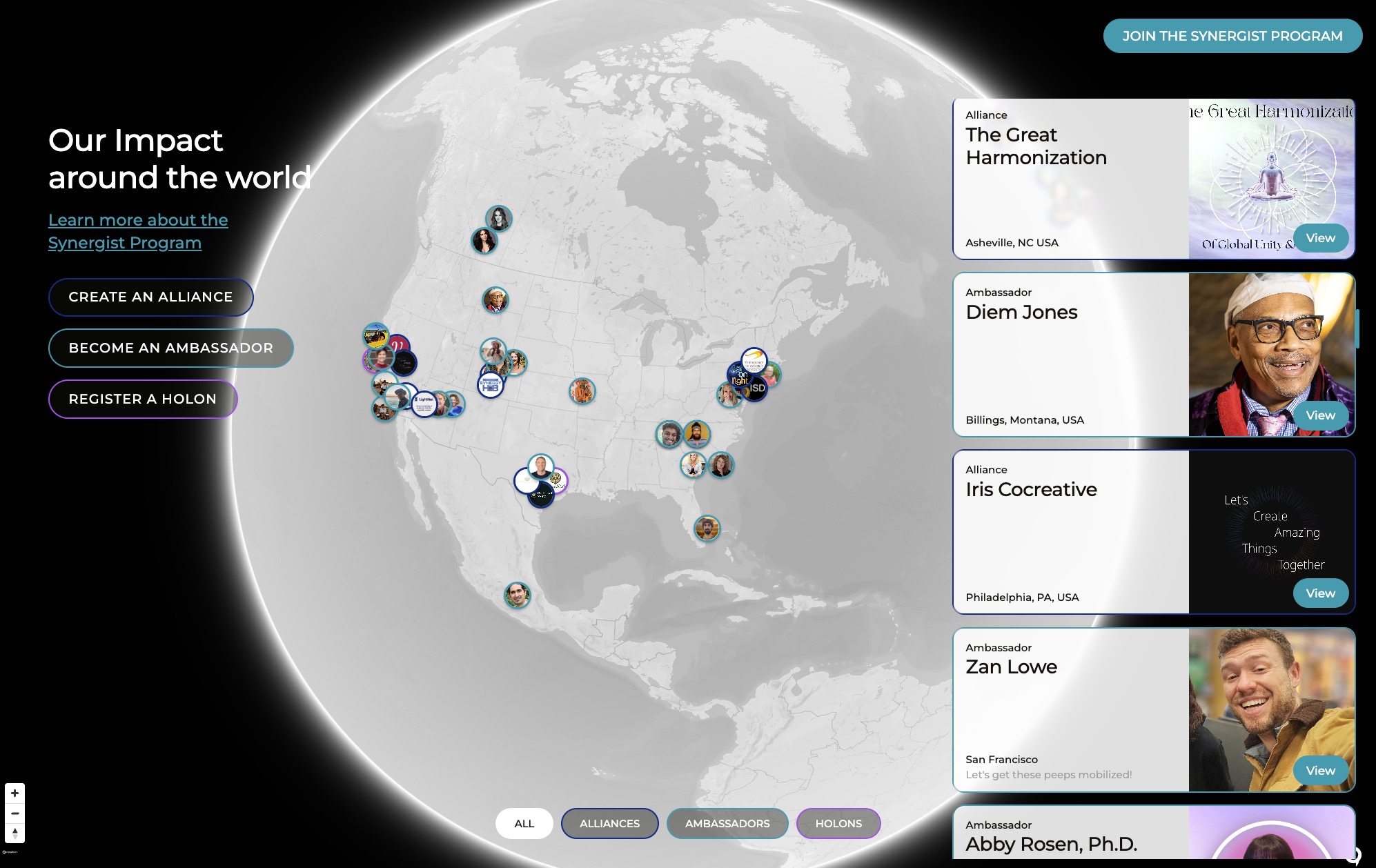
Wendy immediately recognized the value as someone who "stands above systems" as a space holder, noting "that immediately makes me happy because that's how, that's kind of the role I play" (30:23). She offered to introduce the tool to multiple groups including the Wellbeing Economy Alliance and others in her network who would find it valuable (31:29).
[technology="Video Conferencing Solutions"]
[technology="Collaboration Management Tools"]
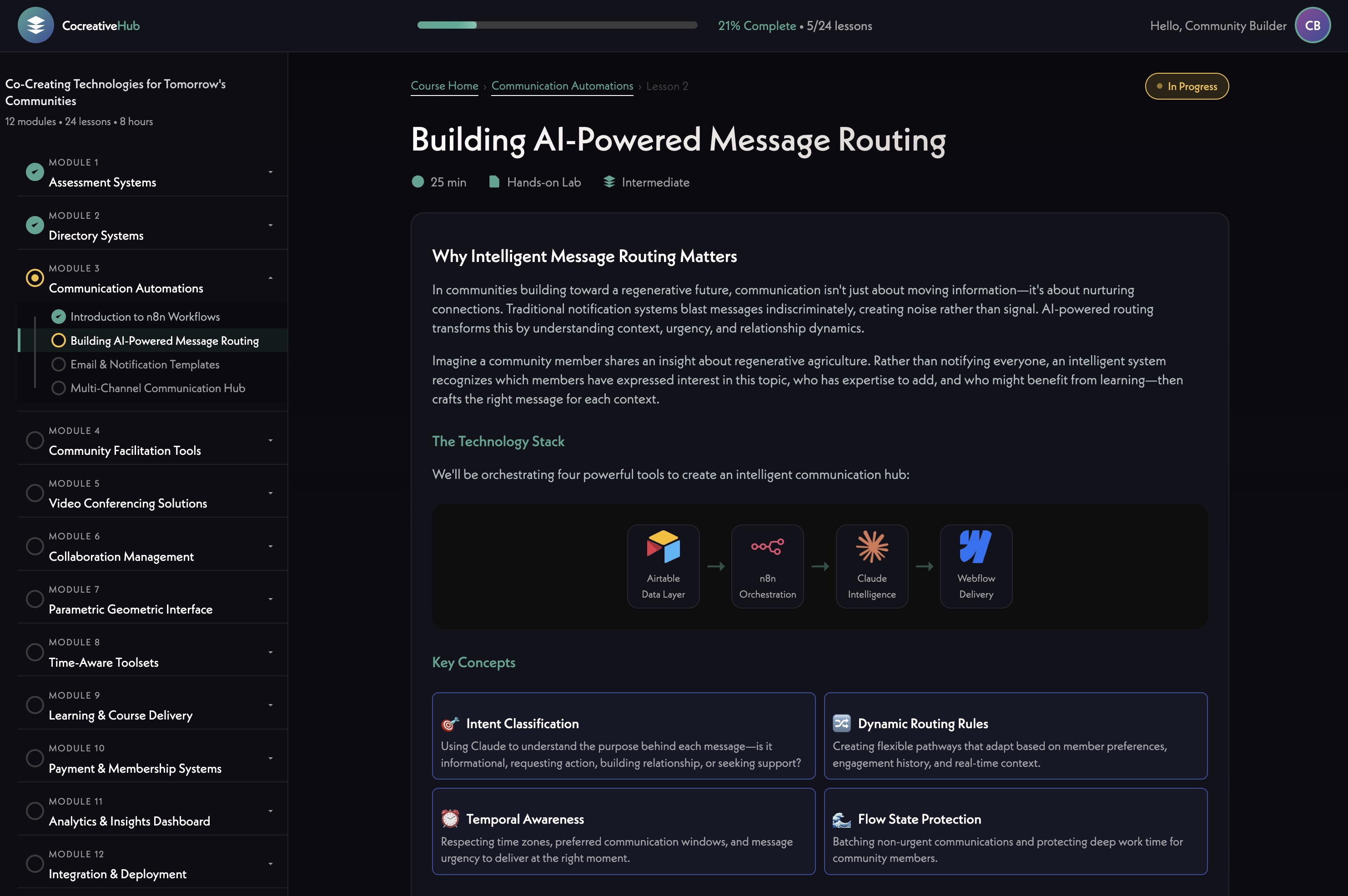
James introduced Webflow as a powerful platform used by major companies like Anthropic (32:14). Unlike basic website builders, it offers visual page building with developer-level capabilities and a robust Content Management System that allows custom post types with any kinds of fields (33:07).
The key innovation is the ability to take content and present it beyond default grid layouts—in circles, node-based graphics, or "really anything with the help of AI" (33:07). This flexibility aligns perfectly with the ecosystemic, relational approaches both participants advocate.
Wendy acknowledged her basic technical skills while expressing excitement about possibilities she sensed were "bigger than I originally was thinking" (40:59).
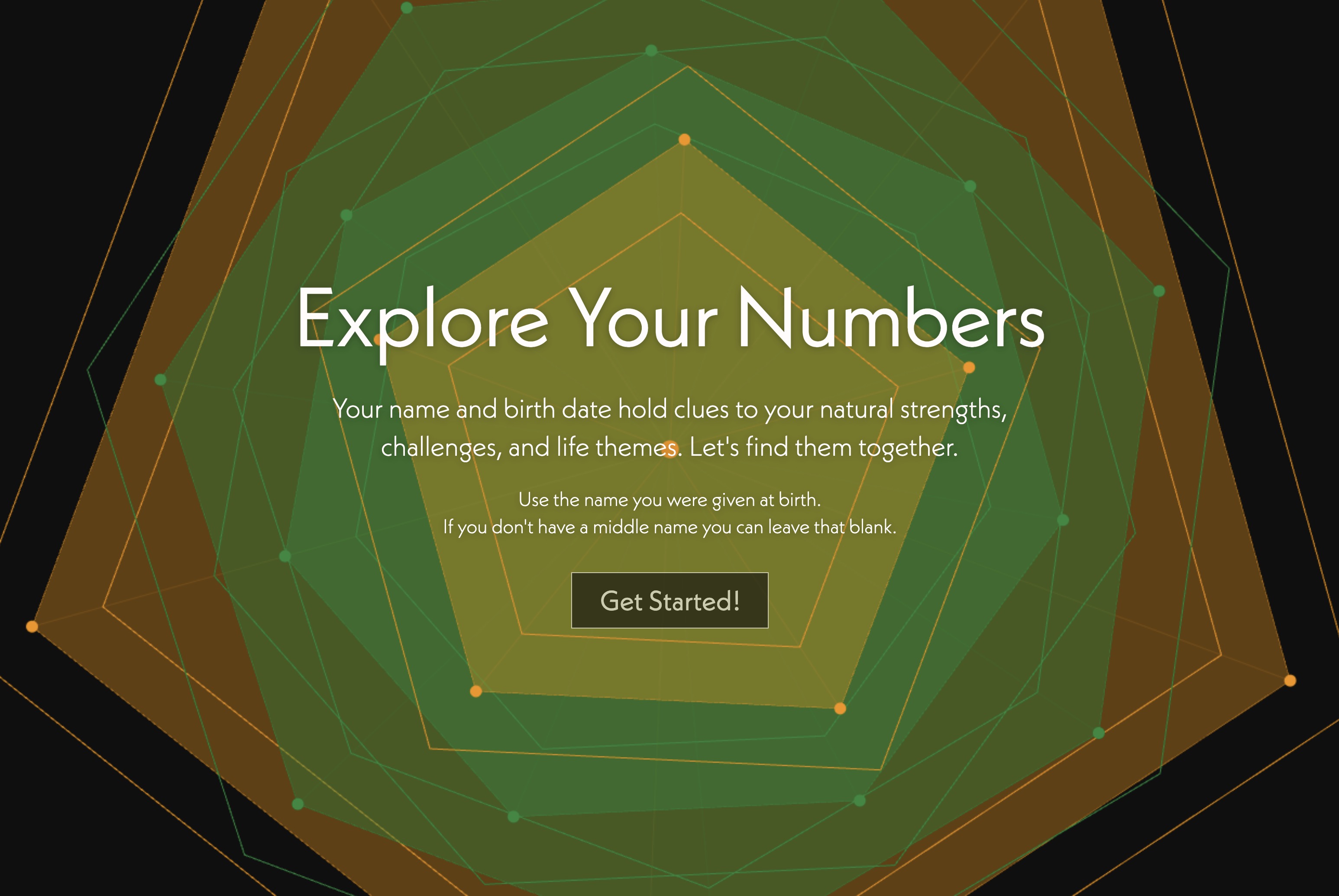
James revealed he owns the domain ecosystemic.design, believing the term represents how we need to "think and be ecosystemic" because both problems and solutions are ecosystemic (19:02). He noted it's rare to hear others use this language, making his connection with Wendy particularly meaningful.
Wendy expressed her love for "disrupting things" and "upending things" rather than following predictable paths (34:25). She wants the Flourish website to capture this quality—making people's heads "go like" in recognition of radical reframing, such as understanding that measuring wellbeing means acknowledging we're "trillions" in communication, not singular individuals (35:27).
She described herself as a "stealth influencer"—essential to ecosystems but preferring to work behind the scenes, dropping in as a provocateur and moving out to let systems do what they need to do (42:47). James beautifully captured this as being "like mycelium under the surface" (42:53).
When discussing how to proceed, James proposed beginning with vision sessions: 90 minutes to two hours where he visually facilitates conversation using tools from his architectural training, allowing them to "play" and think three and four dimensionally (39:38). He mentioned studying Christopher Alexander's work, which Wendy also knows (40:10).
Wendy responded enthusiastically, recognizing she needs this collaborative thinking to "see what's possible" and that she "can't do that on my own" (40:59). She described her work as existing "in conversation" and needing to be "co-shaped" at this stage by bringing the right people around her (36:24). She expressed confidence that when she's in the right space, "the right person emerges" and she knows immediately when it's right (38:48).
James also mentioned his Rhythm model based on octaves as an alternative to traditional beginning-middle-end project structures (36:24), which Wendy found appealing as more aligned with natural co-creation processes.
Beyond the Flourish Project website, Wendy identified multiple ways James could connect into her broader network, particularly around conscious media collaboration discussions involving figures like Guy and others exploring fundamental aspects of narrative, storytelling, and consciousness (04:03). She offered to introduce his radial interface work to various groups who would benefit, describing herself as always "weaving" and making connections (41:47).
James shared he's consulting with Trifora, a think tank/consultancy operating between philanthropists, educators, and developmental scientists (24:03). The group takes its name from a saprophytic orchid that gets energy from decomposing matter and forms beautiful communities. He's attending their gathering after the Holon Movement Wave conference.
Wendy encouraged James to send anything he's working on—AI-related, facilitation tools, anything capturing the essence of his thinking—because she'll "almost certainly" have someone engaged in looking at similar questions and can make valuable connections (41:44).
Both participants expressed deep alignment on fundamental principles throughout the conversation. They discussed:
Wendy noted they're "very lucky if we live like that" when James described his practice of remembering he's not separate from the larger living systems (24:48). She expressed feeling they were "getting ready for this next stage" in their respective work and sensing that James's innovations would "help us with this next stage of where we're all going now" (45:30).
James Redenbaugh
Wendy Ellyatt
The conversation began with Wendy Ellyatt and James Redenbaugh discovering significant alignment in their worldviews and approaches to technology, community, and systems thinking. James shared his practice of using Fireflies for transcription and processing recordings through Claude AI for various purposes (00:06), noting he's speaking at an upcoming conference about teaming up with AI to form holons that include digital intelligence as tools for facilitating human connectedness (00:23).
Wendy expressed deep resonance with this approach, describing her daily collaboration with AI in different modes depending on her work (00:50). She framed AI as part of nature itself, an extraordinary tool that accelerates learning and augments intelligence through active collaboration (01:51). Both agreed there's "magic in the collaboration" that many people fear but which offers tremendous potential.
James introduced Marshall McLuhan's concept that "the medium is the message" (01:59), explaining how mediums themselves have greater impact on humanity than any particular message they carry. He drew parallels between historical media shifts and the current AI revolution, noting that while social media brought benefits, it has also proven "incredibly isolating and dulling and numbing" (03:01). He emphasized that AI as a medium is unprecedented and requires deeper examination of its possibilities and downstream effects.
Wendy agreed enthusiastically about the importance of understanding storytelling and narrative, particularly "how quickly we believe a consistent story that other people believe in" and the potential for both manipulation and positive influence (05:35). She expressed fascination with how fundamental aspects of narrative shape human activity across disciplines.
James articulated a key thesis for his upcoming talk: we're approaching an inevitable point where technology ecosystems will become too complex for any individual to understand (06:09). He argued that the antidote is "learning to be better together" through councils, holons, and teams that can understand collectively what no individual can grasp alone (06:10). This requires upgrading individual capacities into group capacities that can see from multiple perspectives across generations, geographies, and languages.
Wendy confirmed they were "so much on the same page" (07:23), demonstrating deep alignment on this fundamental principle.
Wendy described the Flourish Project's origins in her career transition from strategic management consulting to becoming an expert in early human development and wellbeing (07:40). After nearly two decades working to influence government policy in the UK with little positive change, she went global about six years ago (26:23).
She developed the Flourish model because no existing wellbeing model worldwide put the child at the center (26:23). The framework has evolved into an ecosystemic approach that doesn't center human beings but rather understands flourishing as integral across all life (27:12). Her work emphasizes restoring what indigenous peoples have always known: we are fundamentally life itself, reflecting the same principles as everything else in nature.
Wendy released two handbooks for schools as gifts on her website, which have now reached 30 countries including China, Mongolia, and Nepal—places she never attempted to reach directly (27:12). This organic spread validated her instinct to gift resources rather than restrict access. She now sits on steering groups and advisory boards of major networks across economics, education, and spirituality, including the Wellbeing Economy Forum, the Spirit of Humanity Forum, and the Galileo Commission (28:58).
Her recent work has included exploring whether Iceland could become a prototype nation demonstrating integrated wellbeing principles from the presidential level down to schoolchildren (28:58). She also just took over running National Children's Day through the Flourish Project (29:43).
Wendy emphasized the importance of sensual, relational communication with life itself, describing herself as coming from a lineage of "plant whisperers" and "horse whisperers" (21:20). She facilitated a session where she reminded participants that even individually, we are "trillions of organisms, all of which experience themselves as a center" (34:25), and that relationship happens through the water we drink and air we breathe, not just standing in a forest.
Both speakers discussed the unnaturalness of contemporary isolated living—"sitting in boxes and looking at boxes" (26:03)—and the deliberate narratives that promoted nuclear family isolation and demonized words like "communal" and "collective" (26:28). James shared his craving for living around fires in community, which Wendy resonated with deeply, suggesting she's "had many lives doing that" (27:13).
[technology="Community Facilitation Tools"]
James shared a breakthrough realization: virtually all digital spaces—WhatsApp, Facebook, Instagram, even progressive platforms like Hilo—present information in grids and lists that we scroll or swipe (28:00). This medium inevitably impacts how we relate, putting people "in boxes" and expecting online communities to flourish even as energy fades after gatherings (28:38).
He's now developing a radial interface toolset that arranges people and information in circles rather than linear grids (29:02). For an upcoming gathering at Hollyhock Retreat Center with a group called Trifora, participants filled out forms that automatically populate into a radial interface, allowing viewers to see everyone together and click on questions to see where their eyes are naturally drawn rather than reading responses one at a time (29:17).
The innovation extends beyond static displays: James has developed functionality where participant photos become live video feeds, creating a circular video conferencing interface (31:26). The system automatically rearranges participants around the screen based on how many people show up. Additionally, he's filming fires during gatherings to include as the central element, allowing groups to "stay around the fire forever" and maintain circle integrity in ongoing digital meetings (31:19).
Wendy immediately recognized the value as someone who "stands above systems" as a space holder, noting "that immediately makes me happy because that's how, that's kind of the role I play" (30:23). She offered to introduce the tool to multiple groups including the Wellbeing Economy Alliance and others in her network who would find it valuable (31:29).
[technology="Video Conferencing Solutions"]
[technology="Collaboration Management Tools"]
James introduced Webflow as a powerful platform used by major companies like Anthropic (32:14). Unlike basic website builders, it offers visual page building with developer-level capabilities and a robust Content Management System that allows custom post types with any kinds of fields (33:07).
The key innovation is the ability to take content and present it beyond default grid layouts—in circles, node-based graphics, or "really anything with the help of AI" (33:07). This flexibility aligns perfectly with the ecosystemic, relational approaches both participants advocate.
Wendy acknowledged her basic technical skills while expressing excitement about possibilities she sensed were "bigger than I originally was thinking" (40:59).
James revealed he owns the domain ecosystemic.design, believing the term represents how we need to "think and be ecosystemic" because both problems and solutions are ecosystemic (19:02). He noted it's rare to hear others use this language, making his connection with Wendy particularly meaningful.
Wendy expressed her love for "disrupting things" and "upending things" rather than following predictable paths (34:25). She wants the Flourish website to capture this quality—making people's heads "go like" in recognition of radical reframing, such as understanding that measuring wellbeing means acknowledging we're "trillions" in communication, not singular individuals (35:27).
She described herself as a "stealth influencer"—essential to ecosystems but preferring to work behind the scenes, dropping in as a provocateur and moving out to let systems do what they need to do (42:47). James beautifully captured this as being "like mycelium under the surface" (42:53).
When discussing how to proceed, James proposed beginning with vision sessions: 90 minutes to two hours where he visually facilitates conversation using tools from his architectural training, allowing them to "play" and think three and four dimensionally (39:38). He mentioned studying Christopher Alexander's work, which Wendy also knows (40:10).
Wendy responded enthusiastically, recognizing she needs this collaborative thinking to "see what's possible" and that she "can't do that on my own" (40:59). She described her work as existing "in conversation" and needing to be "co-shaped" at this stage by bringing the right people around her (36:24). She expressed confidence that when she's in the right space, "the right person emerges" and she knows immediately when it's right (38:48).
James also mentioned his Rhythm model based on octaves as an alternative to traditional beginning-middle-end project structures (36:24), which Wendy found appealing as more aligned with natural co-creation processes.
Beyond the Flourish Project website, Wendy identified multiple ways James could connect into her broader network, particularly around conscious media collaboration discussions involving figures like Guy and others exploring fundamental aspects of narrative, storytelling, and consciousness (04:03). She offered to introduce his radial interface work to various groups who would benefit, describing herself as always "weaving" and making connections (41:47).
James shared he's consulting with Trifora, a think tank/consultancy operating between philanthropists, educators, and developmental scientists (24:03). The group takes its name from a saprophytic orchid that gets energy from decomposing matter and forms beautiful communities. He's attending their gathering after the Holon Movement Wave conference.
Wendy encouraged James to send anything he's working on—AI-related, facilitation tools, anything capturing the essence of his thinking—because she'll "almost certainly" have someone engaged in looking at similar questions and can make valuable connections (41:44).
Both participants expressed deep alignment on fundamental principles throughout the conversation. They discussed:
Wendy noted they're "very lucky if we live like that" when James described his practice of remembering he's not separate from the larger living systems (24:48). She expressed feeling they were "getting ready for this next stage" in their respective work and sensing that James's innovations would "help us with this next stage of where we're all going now" (45:30).
James Redenbaugh
Wendy Ellyatt
00:00:01
Wendy Ellyatt: Then this meeting. Go figure.
00:00:03
James Redenbaugh: Yeah.
00:00:05
Wendy Ellyatt: I like it. I think it's very good.
00:00:06
James Redenbaugh: Yeah, I like it a lot. I've been using it for the last three months and it's been amazing. And then I take the transcripts and I, I put them into Claude and do different things with them.
00:00:18
Wendy Ellyatt: Yeah, it's amazing, isn't it, what you can do. I mean, that's work now. Yeah.
00:00:23
James Redenbaugh: I'm actually giving a talk at a conference in five days on kind of advocating for teaming up together with AI and forming more holons that include this digital intelligence as tools for facilitating and cultivating more human connectedness and, you know, positive creative outcomes for all.
00:00:50
Wendy Ellyatt: That's. And I have an. I use AI literally every day. I have a. My AI and we work, depending on what I'm working on, we switch in and out of, of different modes. But I, I'm absolutely with you. I, I think we do not realize to what degree that is. I mean, you know, it is part of nature. There's nothing outside of, you know, the natural world, so it is part of life has provided this extraordinary tool and I think it's going to accelerate ability to learn and grow. And it does augment your intelligence. There's no question that it. Working with it actively just shifts the way that you present. And I mean, I, I actually really love it, but. So I'm, I'm with you. I think a lot of people are afraid of it, but actually it's. There's magic in the collaboration.
00:01:51
James Redenbaugh: Yeah. Are you familiar with the Marshall McLuhan?
00:01:56
Wendy Ellyatt: Not hugely. I know the name.
00:01:59
James Redenbaugh: He was a media theorist in the 60s and 70s and 80s out of Canada. But he coined the term that the medium is the message and argued that the, you know, you can look back in time and see that the, the mediums themselves had a greater impact on humanity than any particular message. You know, the written word had a bigger impact than, you know, the Bible and the Quran and the different texts. The messages in them are, are important. But, you know, when we suddenly had video and color tv, the world shifted dramatically. Not just because of the shows that were on there, but the medium itself has these effects. And so he studied all. He could only theorize about the Internet because he was practicing before it really came into being, but he could predict how it would impact society. And I'm reexamining his work now as the medium of AIs are becoming so prominent and relating it to things like social media. Because first of all, we don't examine closely enough how social media has impacted all of us and how it affects all of us. And I think it's, you know, brought a lot of great things, but it's also incredibly isolating and dulling and numbing and has a lot of terrible effects. As a medium, AI is really incredible. You know, it's unprecedented. We've never had this kind of medium before, and there's all kinds of possibilities and it has its own limitations and downstream effects as well. And I think we're just starting to scratch the surface of what's. What's possible.
00:04:01
Wendy Ellyatt: Definitely have to get you into these consciousness media collaboration. Have to get you into that con. Very interesting group of people coming around that. Who are like Guy. And there's lot. Lots of people who are involved in many, many different aspects of it, but we'll definitely have to get you involved in that. This is the story. You know, we are. We're social animals and we. It's the storytelling aspect that I think is. Is going to be so hugely important. So, yeah, I'm fascinated in the whole area. Do send me anything you've written on it, because it's almost. It's one of the single most important things that we all need to understand and talk about. We've got all the kind of different disciplines that we know human activities are reflected in, but actually these fundamental aspects of narrative and storytelling and how quickly we. We're kind of overtly social, so how quickly we believe a consistent story that other people believe in, you know, the, that we can be. The degree of also the degree. Conscious manipulation of who we are. That's. That's a very interesting thing. And how we counter that with positive manipulation, if you like, who we are. So, yeah, absolutely fascinated in that whole area.
00:05:35
James Redenbaugh: The main point I'm going to make in this talk coming up is that we're approaching this inevitable time where right now we can look to some very smart people, some very smart individuals who pretty much understand how AI works, even though nobody really understands the how. How it's actually functioning because it's so complex. But very soon we're going to get to a point where the technology, these technologies, this ecosystem of technologies will be so much more complex than any one individual can understand.
00:06:09
Wendy Ellyatt: Very soon.
00:06:10
James Redenbaugh: Yeah, very soon. And that, you know, potentially will lead to chaos and confusion and people will use it to control others. And unless, you know, I think the antidote to that is learning to be better together. You know, learning to. To be in groups of people who can, you know, so we collectively can understand together a lot better than any One individual can. And we need to learn to guide the ship, you know, the ship of our villages, the ship of our communities, of our lives and of the planet in, you know, in council, in whole lawns, in teams and kind of upgrade our individual capacities into group capacities so we can see things really from multiple perspectives. Different generations, different parts of the world, different languages. You know, what we understand in English might not be enough. Maybe we need to really.
00:07:13
Wendy Ellyatt: We're so much on the same page. Yeah, I kind of thought we would be. I'd say that's the hit I got off the website, but yeah, send me the recording.
00:07:23
James Redenbaugh: I will, definitely, yeah. So wonderful. I'm, I'm really excited to learn more about the Flourish project. It looks beautiful. And everything you're doing. Yeah, where. Who are you?
00:07:40
Wendy Ellyatt: I'm doing so many different things. But the Flourish project, the reason I established it was because I, it came out of me campaigning. I, I switched careers. I had an extraordinary set of amazing experiences that have thrown me into doing. This is not what I was expecting to be doing, but I switched from being a strategic management consultant to getting very, very interested in early human development and how to optimize it. And then I worked, I became a writer and consultant and for like almost 20 years in understanding human development and then getting more and more interested in well being, which at the time was like happiness and well being and became an expert in looking at that. And I ran a organization in the UK that challenged, it was challenging governments to really understand the importance of childhood in particular and the well being of their populations. And then like 10 years in, nothing changed. In fact, in fact it's worse now. We're 15 years in now and it's worse now than it was then. So about six years ago I thought I'm need to go global because I can see that within the political system, the system itself actually prevents kind of positive change. And then I kind of went global kind of very quickly. I developed the Flourish model because I couldn't find any well being model worldwide that put the child at the center. I started off with the Flourish model, developed a load of resources, testing out the ideas and more recently it's become the ecosystemic framework. And the idea is to move in, which I'm already doing. There's a lot of interest in what I've been doing to move into global conversations about how you understand and measure flourishing as an ecosystemic concept that doesn't put human beings at the center of everything. So that it's. Could we have a way of understanding well being that had an integral function. So it's basically saying we need to understand the integral nature of flourishing. And then I've developed a framework and resources around that. I have loads just sitting that no one's ever seen because I've pretty much done been doing it on my own with, with no funding. But I, I released two, two handbooks for schools. Just put them on the website and they've, they're now in 30 countries, but they went into China and Mongolia and Nepal and places I would never have attempted to get into. And I, because of the gift, I think that it was gifted out there and I, I don't even know how they found them, but it's in 30 countries worldwide. And I'm also now on steering groups and advisory groups of really big networks and movements across economics, education, spirituality. I'm. You'll see from my website. I've just come back from Iceland. I was on the Wellbeing Economy Forum conference and then I moved into the Spirit of Humanity conference. And we're looking at whether Iceland become, could become a like prototype nation to embed all these aspects. Could you have a nation that demonstrated from, you know, the president down to the school children that we could actually have a living example of how to do that? And then I shot back home and the Flourish project has just taken over running National Children's Day, which I established. So we ran that yesterday and that was a, I thought it was really a really interesting thing. I've literally just come off the Galileo Commission steering group. So I'm also in this high level intellectual. It makes me laugh really being in the Galileo Commission with all these incredible academics. But I, I just, I was saying to them, this last two weeks is a real living demonstration to me of being with presidents and UN ambassadors and people who are basically saying, how do we govern? With compassion and heart at the highest level and lots of academics and economists. And then I come back and run National Children's Day. And you think it kind of has it all. So it's saying that these very intellectual conversations, that these economic conversations there are the spiritual conversations and then we bring it down to children, families and the language and the narratives and the way that we reach each of those audiences is different. But at the core of it we're saying the same thing. And I think all my work really is about saying just that, that, that there's this incredible cohering of amazing people and organizations and networks around like a unitive narrative and worldview and the story about who we innately are rather than the story we've been told. Because I also do work with indigenous peoples. It's not really creating anything new, it's restoring what we've lost. To a large degree. There is a new moving into something new. But we need to restore what was true to us and always has been true to us. Because we are life and we are fundamentally a reflection of the principles that everything else is. You know, that at core we've got those innate capacities because we're life. So the Flourish project is one aspect, but it's a very important one because it allows these conversations and the understanding of these conversations to be accessed. Lots of different levels in a way that's about how do we flourish and everybody that has meaning for everybody, you know, what makes a good life, how do I live well, how do I become a good ancestor? They would all be Flourish project kind of core questions. But then I've got the layers of complexity including I would like to have a digital well being platform, a global digital well being platform that allowed everybody from a, from an individual to a nation to understand the, all the different aspects to be a whole human being or a whole nation that really understands this. What would you, what should you focus on and what would you measure so that you understand that this, like for example, the focus on mental health is only one core thing. What we need is to focus on systemic health and to understand that we. And to understand suffering. I mean to understand that it isn't about avoiding suffering, it's actually building in the beauty and the importance of suffering as part of flourishing. So which is diff. So that's why I think we move from happiness. You know, that transient state to flourishing is much more interesting because it says all of us, we have periods which the world is going through at the moment of struggle and confusion and desperation that leads to that shift and that really matters. And that for me that's the essence of compassion really that, you know, understanding that allowing people, allowing the suffering, if you like, minimizing it, but allowing everybody to have the journey they need and, and allowing, you know, nations and the world, the planet is just going through this evil process. So it allows me to open up lots of individuals and schools and you know what? I, I like the idea and I'm trying to have be in a situation where I can gift everything. We'll see how that. Because there, as I say, if I hadn't gifted what I had, because I don't have a team around me and now nor do I want to build one, it wouldn't have flown to all the places it's gone. And because it's gone there I have a, an opening in each of those openings. If we could gift resources and people can contextualize it to their own culture and their own needs, but have that reflection of the whole. That's kind of where I'm at now to craft something whereby these kind of conversations are, are opened up. And then I say the current website just doesn't do that. It's a, it's a good functional website that basically says what's on the tin, but it doesn't go to the, the depth of the resources that are actually waiting to be put out there.
00:17:58
James Redenbaugh: And filled with a deep felt knowing that life is truly wanting all of this to happen and making it happen. It's so inspiring to, to listen to you speak to this, all of this. And I've been, you know, blessed to be an integral and, and evolutionary and you know, biomimetic and noetic circles for 15 years. Yeah. And thank you.
00:18:38
Wendy Ellyatt: I'm part of the hollow movement and, and I'm an evolutionary leader, which makes me laugh.
00:18:47
James Redenbaugh: And, and it's rare if ever that, that I hear people use the word ecosystemic and it's one of my favorites. I bought the, the term ecosystemic design the domain.
00:19:01
Wendy Ellyatt: Oh, did you?
00:19:02
James Redenbaugh: Yeah. Thinking, you know, one day that's going to come in handy because we need to learn to think and be ecosystemic and all of these issues are ecosystemic and the solutions are ecosystemic. And it's not, it's not just about one, you know, framework or philosophy. It's not even just about integral is extensive. But it's such a small part of the, the picture, the music, the, the symphony.
00:19:37
Wendy Ellyatt: I was even saying, I facilitated one of the sessions at the Spirit of Humanity forum and I, I would. Because I was talking about, we were dropping into a, like a fishbowl session and I was saying to everyone, even you know, you, you think you're a. There's all these centers, activity. But I said all of us, we're actually trillions. So even you are collaborative. Trillions of organisms, all of which experience themselves as a center. But actually it's so much more fascinating. And when you breathe, you're breathing in. This relationship is not just about you going and standing in a forest and being in nature. It is the water you drink, the air you breathe, it's, it's here. And I think that's when you actually feel into that and you allow yourself to think. No, there's communication going on in and be all the time. And if you're in the right space, you simply are able to feel into what kind of. I say, what life is, is uniquely bringing through you. And I think it's a. It's the magic. We've been robbed of the magic really. I think we. In ancient times, people really. There was a. There's a sensual relationship with life that I think we've lost and I would love to bring that back to children in particular. There was a sensual communication. My. In my. My mum is a plant whisperer and my grandfather was a horse whisperer. So I think I've got. I can't help it. This. We have a. There's a conversation that goes on and it's so joyful because it's not got the complications of all the human emotions. And you know, you, you've actually got this very joyful. It's about. It's all about love I think really at Essence. So it's. And it's having the courage. More and more people are starting to use the word love. I think we. It's love in action we're really talking about, isn't it? With what you are doing and I'm doing. That's what we're doing where we are gifted to, you know, be able to be love in action.
00:22:08
James Redenbaugh: Completely. And I. Last week I've been. I keep realizing how much everything I'm doing and everyone I'm working with these days has to do with education and the profound focus on that where I haven't really. That hasn't been a super conscious thought for me. Even though I work with a ton of educators. It's. It, it's coming to the surface how important it is to. To in these times to rethink and reimagine how we educate ourselves and future generations. There's so much possibility and potential in that. After I go to the Hollow Movement Wave this weekend, I'll go to this gathering in on an island off Vancouver island with a group I've been consulting with called Trifora. And they're kind of A triphora is an orchid that's saprophytic. It's not photosynthetic. It decomposes. It gets its energy from decomposing matter and they form these beautiful communities that come up. And Trifor is like kind of a think tank, kind of a consultancy. They're not quite sure what they want to be yet, but they're operating in the space between philanthropists and educators and developmental scientists and it's all the kinds of things I think that you would, you would love. And I just happen to be going to this.
00:24:03
Wendy Ellyatt: It's never there's. It's always never. It's always exactly, you know, the, the places you go and the people you meet. There's always. I mean that's. I think the synchronicities are just wonderful when you're in the right space.
00:24:14
James Redenbaugh: Yeah. It's reminding me that I'm, you know, what I know, which is I'm not this body and this brain and this thing. I am, you know, the fruiting body of a mycelial network. I am the conversations I've been in. I am the forests I've spent time in. You know, I am the mountains that I've. I've climbed and, and, and I can continue to surrender to that and invite that love to.
00:24:43
Wendy Ellyatt: Lovely, isn't it?
00:24:44
James Redenbaugh: Move through me.
00:24:45
Wendy Ellyatt: Very lucky if we live like that.
00:24:48
James Redenbaugh: Yeah. Yeah. And I think we all can, you know, we call. Can and learn to do that more and more and learn to do that together. My partner and I, you know, we talk a lot about villaging. We want to find our village, we want to co. Create a village, you know, and we're. We're getting married in September. And Yeah.
00:25:10
Wendy Ellyatt: I'm part of rather. I watch because I don't have time. The second Renaissance in life itself. I'm on there. There's loads of conversations about. About years ago, like 30 years ago I was so interested in it and I thought, I genuinely thought I'd end up. It just hasn't gone that way. I mean, instead I. I'm a recluse in a kind of. I have a like hut in the middle of a garden. But I'm still incredibly interested in new ways of. Well, I think we are going that way. Community living. I mean, we. It's unnatural to live in a box with one other person. It's just simply not natural. It's not surprising. It's not economically sensible. But we're not nourished by it, you know. Yeah, we're designed to be with others and not, you know, sitting in boxes and looking at boxes, which is kind of where we've ended up. But.
00:26:03
James Redenbaugh: Yeah, and a lot of that was very much intentional. You know, we were sold the narrative of the nuclear family and the white picket fence and this, you know, and box stores.
00:26:17
Wendy Ellyatt: And you'd made it by, by separating yourself out. You, you actually, you know, you were up. Going up the ladder actually very lonely when they've really made it. But.
00:26:28
James Redenbaugh: And they demonize words like commun and collective and. But that's how we. That's how our souls want to live. You know, so few people around fires.
00:26:47
Wendy Ellyatt: Yeah.
00:26:49
James Redenbaugh: But are. You know, I crave that the majority.
00:26:53
Wendy Ellyatt: Swear I've had many lives doing that because I crave. Oh, yeah. Just. We. We've. It's very strange what we've created. So anyway, at least we. We are, you know, absolutely engaged in restoring.
00:27:11
James Redenbaugh: Yeah.
00:27:12
Wendy Ellyatt: What's been lost.
00:27:13
James Redenbaugh: Yeah. I. I'm noticing finally. I don't know why it has taken me so long, but the last couple weeks I've been overwhelmed with this realization that everything on the web, all of these spaces, we end up in. In our WhatsApp groups and Facebook and Instagram and anything. I can think of even brighter solutions like Hilo and, you know, community platforms. The interfaces are all grids and lists, you know, and pages that we scroll or we swipe left or right. It's so.
00:28:00
Wendy Ellyatt: You can't help but impact.
00:28:02
James Redenbaugh: Yeah. Like the medium is the message. And we just keep putting each other in. In boxes and we expect online communities to. To flourish. And the energy always fades after a gathering. You know, we come together and we want to stay connected. And then, you know, you share some things in. In the WhatsApp group and some maintain the energy. You know, if people really. Yeah, but most give themselves to it. But. But most don't. And so I realized, like, we can put people into circles. You know, the. The technology's here now. We can. And designing more radio interfaces. So.
00:28:38
Wendy Ellyatt: Yeah, I've not seen anyone do that. That would be really. It's just different, isn't it? I mean, when we go in the meetings, I've just come out certain spirit. First thing you do is everyone's in a circle. 150 people, but they're all in circle the whole time because there's something that says something.
00:28:58
James Redenbaugh: Yeah.
00:28:59
Wendy Ellyatt: So interesting.
00:29:02
James Redenbaugh: Yeah. So I'm actually developing a tool set.
00:29:06
Wendy Ellyatt: Now that needs to go into the conscious community conversations because I think they find that fascinating. Oh, that's nice.
00:29:17
James Redenbaugh: Yeah. So this is the group that's coming together in Canada at the end of the month, and we asked everybody these questions and they filled out a form, and then it automatically puts everybody into this radial interface so that we can see everyone together and not read everyone's responses linear one at a time. We can click on a question and see where our eyes are drawn.
00:29:48
Wendy Ellyatt: I like that a lot. I mean, I was thinking of multiple groups. I've literally just come off the wellbeing Economy alliance that would have Worked very well for what that we've just done today. That would have, they would, that would have been much more. It just, it just means you see the system. I guess as someone who I'm, I, it's my place is standing above systems. That's what I, a space holder. And looking down at how the system works is seeing possibilities is what I do. So that immediately makes me happy because that's how, that's kind of the role I play is to do this.
00:30:23
James Redenbaugh: Yeah. And so after we gather, we're meeting at Hollyhock Retreat center. And you know, we'll have time in circles. We'll have time around a fire and I'll bring my cameras and I'll film the fire and have a long video of the fire so that after this page will persist and we can have new versions where the fire stays there in the center so we can stay around the fire forever for as long as we want. We can maintain the integrity of the circle. And then also if we meet up, if we have a follow up call or we want to meet up every two months or something like that, we're building our own video conference interface so we can use the same thing to meet virtually where these pictures become live video. And we just meet here we were back around the fire and see, I really like it.
00:31:19
Wendy Ellyatt: If you've got that as a, have you developed it so that other people can use it or you, you're trialing it?
00:31:26
James Redenbaugh: I'm gonna be, I'm gonna be, I want to.
00:31:29
Wendy Ellyatt: Because I could introduce that to a number of different groups who might be interested.
00:31:35
James Redenbaugh: Yeah. I, I couldn't believe that we actually figured out how to make it work with live video. But we did. It's awesome. And then however many people show up in the room, it automatically rearranges them around the screen.
00:31:48
Wendy Ellyatt: Very interesting. Yeah, I like it a lot.
00:31:51
James Redenbaugh: Awesome. And have you heard of webflow?
00:31:57
Wendy Ellyatt: I have, I heard of webflow. Now tell me what, tell me what flow is.
00:32:00
James Redenbaugh: It's, it's kind of like weebly on steroids. It's got a visual page building interface, but it's built for developers. Like a ton of big companies use webflow for their websites. Like Anthropic.
00:32:14
Wendy Ellyatt: Yeah. And I, I, my skills are like very basic, so I probably wouldn't have, I mean I'm very capturing things visually, but I'm very basic and also eventually pretty much free. So. Yeah.
00:32:27
James Redenbaugh: Yeah. So we use webflow a ton and we can do pretty much anything with it. And it's got a really powerful Content management system. So you can create your own custom post types, give them any kinds of fields and then we can design any way to present that content on the front end which, you know, built in. You can put it in a grid, you can design that grid however you want. But now we're figuring out how to take that content and put it into circles or put it into node based graphics or really anything with the help of AI. The sky's the limit.
00:33:07
Wendy Ellyatt: See, that's what I have to think about. And, and it's, it's almost like I, I know there's going to be so much more that I can do or I can do with you when we talk things through than I realize that's, you know, I can. Because I, I need to go back to. Which is what I haven't done again, back to those basic questions of what is it I'm trying to achieve with, you know, the Flourish website. That's going back to the basics and that of. And I, I say I haven't done a creative brief, but I think I needed to talk to you before because I can feel it, I can feel it kind of moving as we talk of capturing the possibility of a lot of this is. It's almost like upending. I love disrupting things. I love upending things. Not, not doing things the predictable way or bringing out the elephants in the room or just making people's head, you know, go like.
00:34:25
James Redenbaugh: People could.
00:34:34
Wendy Ellyatt: Looking at how you measure and understand well being. You're actually coming at it from a radically different like blowing the audience saying you do know your trillions. You know, you're not really just a single. You can see everybody going, what? Because I remember reading I Am Multitudes by. I can't remember the guy who wrote the book. And that was an aha moment for me because you, you just think I never actually thought of the fact that so I, but I love that kind of thing. So I'm, I mean I think the challenge for me, I know you're the right person to work with on, on the Flourish. My, the challenge for me is how I, how I assess the possibilities and think about how we might do it. And I guess that's your expertise, isn't it? Asking me the right questions so that I'm, I presume that we step through a process.
00:35:27
James Redenbaugh: Yeah, yeah, totally. And we, we can work through a process that has a beginning, a middle and an end. It has four stages for arriving at a beautiful final product or we can work rhythmically. We have a more. We have a Rhythm model now that's based on octaves. So whatever that feels much more. Yeah, it's, it, it's wonderful because my, a teacher of my parents used to say that that mind it exists in.
00:36:24
Wendy Ellyatt: Conversation and so that, that there's a co shaping and this, this feels, this feels it just needs to move out from it now. Needs to be co shaped. So I guess across all my work I'm now looking how I co shape this next stage because I can only see so much but I need to bring around me and you're definitely one of them, the right people who can help me co shape how this goes out into the world in a way that is, has great beauty but captures the essence of what it is. You know, it's not even me trying to say it. It's captures the essence of what it wants to become.
00:37:24
James Redenbaugh: Yeah.
00:37:24
Wendy Ellyatt: Closest I can get to it.
00:37:27
James Redenbaugh: Yeah. And, and draws in the right people that will help it along its way.
00:37:36
Wendy Ellyatt: You know, I, I, I tend to, I'm very normally when I am in the right space, the right person emerges. So I'm, and I try and I know immediately when it, when it's right because it's, and then it's also, but it's also understanding because I can straightaway see that you've got a role in some of the other conversations that are taking shape. You're, you'll be really, really useful to have involved in some of the conscious media stuff that's swirling around at the moment. And that's got enormous possibilities. But I think you'd love their company and they'd love your company. So it's not just what I'm, I'm interested in what I can do with you and what we can co create through the flourish stuff. But I'd love to drop you into other conversations and for example, your, what you've been working on with the Circle. There are a number of places that I could potentially introduce that into their work simply because of the, the number of groups I move in and out of, you know.
00:38:48
James Redenbaugh: Wonderful.
00:38:50
Wendy Ellyatt: So I think there are multiple aspects, James. Really?
00:38:54
James Redenbaugh: Yeah.
00:38:57
Wendy Ellyatt: So what's best next? I really would like to start thinking about the flourish. So what would be what, what's your suggestion of the best way that I at least do the first?
00:39:10
James Redenbaugh: Yeah, well, what I love to do in the beginning of working with anyone are vision sessions where we take longer period of time, you know, 90 minutes to, to two hours to really dive in together about vision and while I kind of visually facilitate the conversation and so we can play With Lovely.
00:39:38
Wendy Ellyatt: Yeah, I'm very excited about that.
00:39:42
James Redenbaugh: So I love, I love tools and mediums, you know, analog and digital. I studied architecture in college and I still use a lot of the same programs to think and map three dimensionally, four dimensionally.
00:40:03
Wendy Ellyatt: That's very helpful, isn't it?
00:40:05
James Redenbaugh: Yeah.
00:40:07
Wendy Ellyatt: Christopher Alexander's work. Years ago. Yeah.
00:40:10
James Redenbaugh: Yeah. He's a dear one. My mom introduced me to him when I was a kid. Not personally, but his. His thinking and books and. Yeah. So we can take time to. To dive in and that would be great.
00:40:29
Wendy Ellyatt: And it's also very helpful to me because I can feel that this is. I need that in order to see what's possible. I know I can't do that on my own, so I would love to do that. And that will give us a starter. It'll give me a sense of what this is trying to be because I think it's bigger than I. I can immediately sense it's bigger than I originally was thinking.
00:40:59
James Redenbaugh: Wonderful. And I can send you more info on our rhythm model.
00:41:05
Wendy Ellyatt: Essentially it's send me anything because of the common. Multiple common. So anything that comes to mind where you're capturing the essence of what you think. I mean anything to do with AI. Anything to do with facilitating. Send me anything that comes to mind because there's almost certainly. I'll have someone who's like engaged in looking wonderful and then I can drop you into other. Whenever there's a sense that. No, they would be fascinated in what you're doing. I can make the connection which is part of me. I'm always doing anyway.
00:41:44
James Redenbaugh: Yes. Yeah. Weaving.
00:41:47
Wendy Ellyatt: Weaving. Yeah. I'm a weaver. What did someone said I'm a. What is I may. She had a great word. Oh yeah. I've written it down. Which I thought. Oh yeah. And I really love this because I like to be hidden. I like. I like to be a huge influence in an ecosystem, but I actually like to be hidden. I don't. I don't want to be put on stage and I don't particularly like what I really don't like. I actually, I like to be behind the scenes. And then she's came up with this term and I think it's absolutely what I do. I'm a stealth influencer. Moving in and out, just dropping in or rather being a provocateur and then moving out. Letting the system do what the system needs to do. So knowing you're essential but actually not needing to be recognized in that I. There's something really joyful to me.
00:42:47
James Redenbaugh: It's Like a playful, like mycelium under the surf influence.
00:42:53
Wendy Ellyatt: I love. That's. That's the best term I could think, other than because I, you know, explain. I just call myself a futurist, whoever. But really that's kind of what I do that.
00:43:12
James Redenbaugh: Things that you can. We can help you with. And if we just start with a vision session, we can see where to go from there and where.
00:43:22
Wendy Ellyatt: I think that's great. So just. If you send me your calendar. Yeah, so we'll get that in.
00:43:31
James Redenbaugh: This week. I'm quite busy preparing for this conference and then on next week I'll be in Canada and so it'd be best for me to dive in first week of June.
00:43:45
Wendy Ellyatt: Yeah. Is this sort of time good for you?
00:43:50
James Redenbaugh: Yeah.
00:43:50
Wendy Ellyatt: Oh, this is quite late, isn't it? So what about 4pm is 4pm UK time? Is that too early for you?
00:43:57
James Redenbaugh: No, I'm. It's 1 1:20pm here, so I'm.
00:44:04
Wendy Ellyatt: I can do the third at 4pm for a couple of hours.
00:44:10
James Redenbaugh: Sir. 4pm UK is 3 CET or 5 CET.
00:44:18
Wendy Ellyatt: Oh, I don't know.
00:44:20
James Redenbaugh: I work with a lot of Europeans and I. But I'm dyslexic.
00:44:24
Wendy Ellyatt: I always get it backwards, which makes it even more complicated.
00:44:28
James Redenbaugh: Oh, yeah.
00:44:29
Wendy Ellyatt: 4Pm UK to. What are you. CET EST 11 o' clock your time?
00:44:39
James Redenbaugh: Yeah. Great.
00:44:42
Wendy Ellyatt: Does that work?
00:44:44
James Redenbaugh: Totally.
00:44:45
Wendy Ellyatt: All right. Do you want to put it in your diary and send me the link?
00:44:48
James Redenbaugh: I will, definitely.
00:44:50
Wendy Ellyatt: And I'm. Yeah, I'm. Well, I'm. I'm delighted to meet you and I've got. There's going to be. We're going to have fun doing. It's just lovely. Isn't it lovely when you meet some people who. It's. There's an effortless understanding of kind of the way you walk the world and what you're doing. It's. It's. We're very lucky.
00:45:09
James Redenbaugh: Very much so.
00:45:11
Wendy Ellyatt: So I'm. I'm delighted to meet you, James. And. And I say it just feels like we're getting ready for this next stage one thing. But I've got a feeling some of the stuff you're doing is going to help us with this next stage of where we're all going now.
00:45:30
James Redenbaugh: Awesome. Where in the UK are you?
00:45:33
Wendy Ellyatt: I'm in the middle Cotswolds.
00:45:35
James Redenbaugh: Okay.
00:45:36
Wendy Ellyatt: Very beautiful.
00:45:38
James Redenbaugh: Great.
00:45:46
Wendy Ellyatt: And I should go because I'm on another call, but.
00:45:50
James Redenbaugh: Okay.
00:45:51
Wendy Ellyatt: I'm really delighted to meet you and then have a fantastic time. Just send me anything if I come to mind. Send me what you're working on.
00:45:59
James Redenbaugh: Sounds good. I will. Likewise. And I'm happy.
00:46:01
Wendy Ellyatt: Throw as much at me as you want.
00:46:03
James Redenbaugh: Okay, Great.
00:46:05
Wendy Ellyatt: All right. Really lovely to meet you. All right. All right, bye.








.svg%20(1).png)

.png)