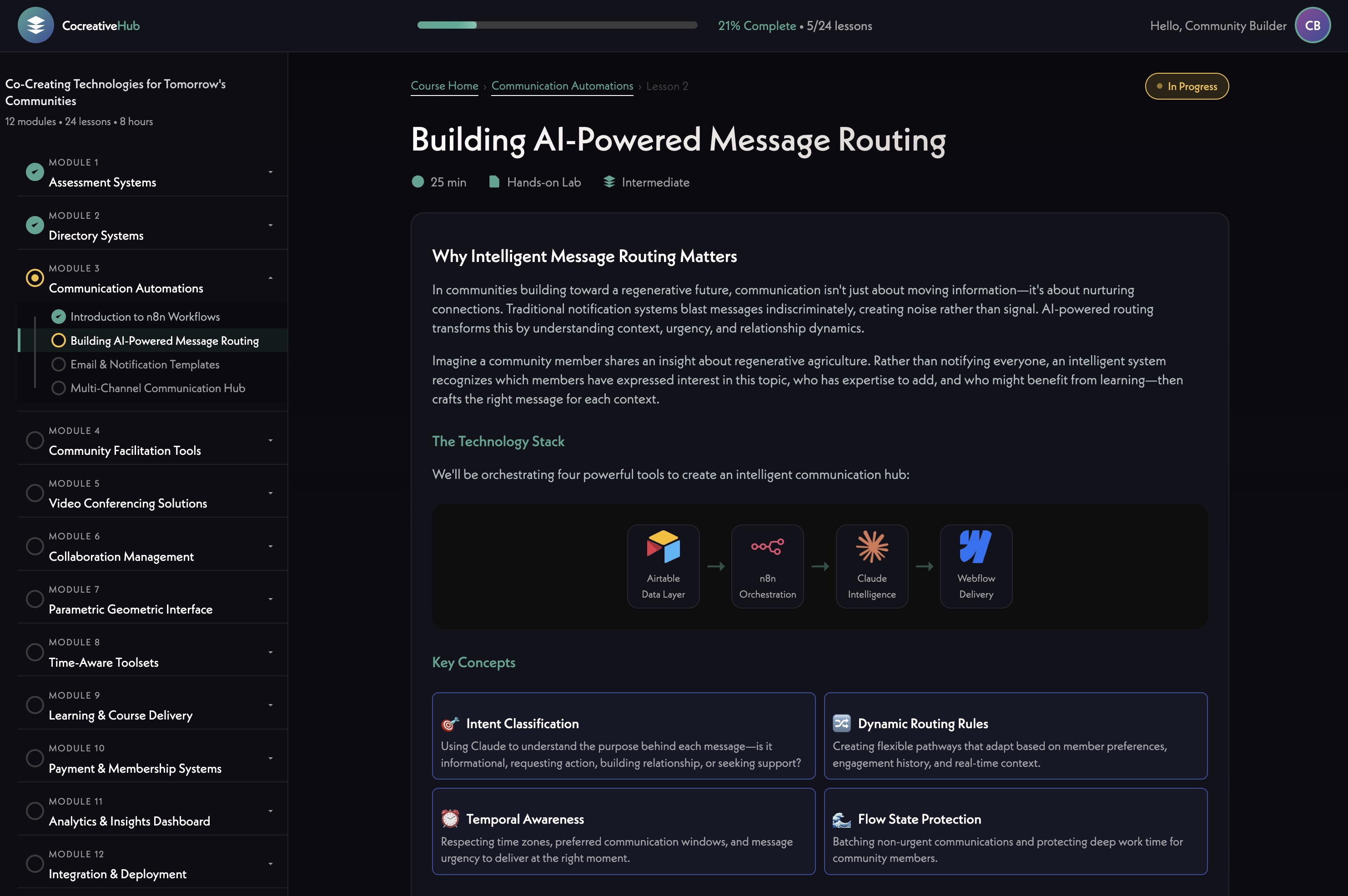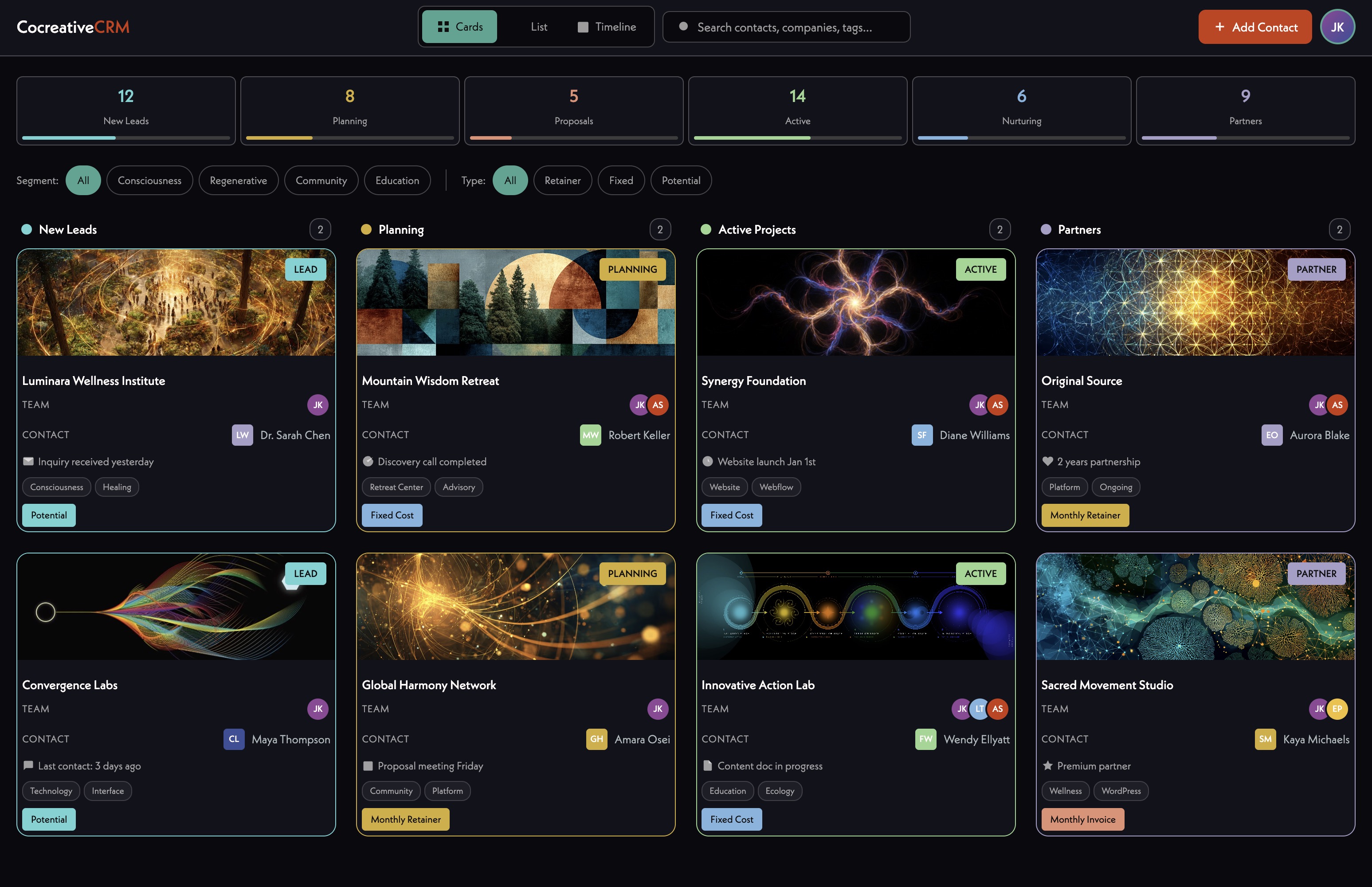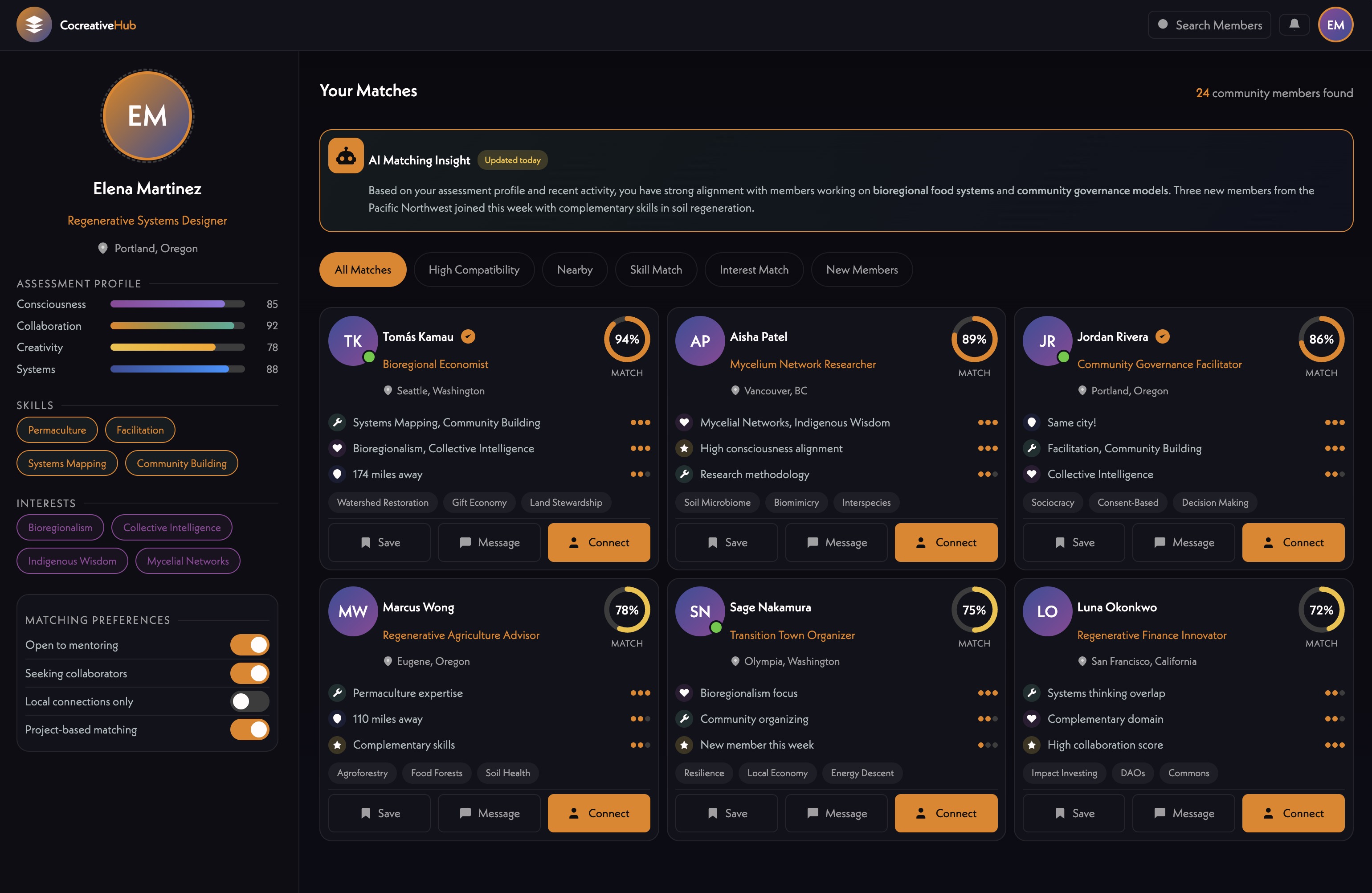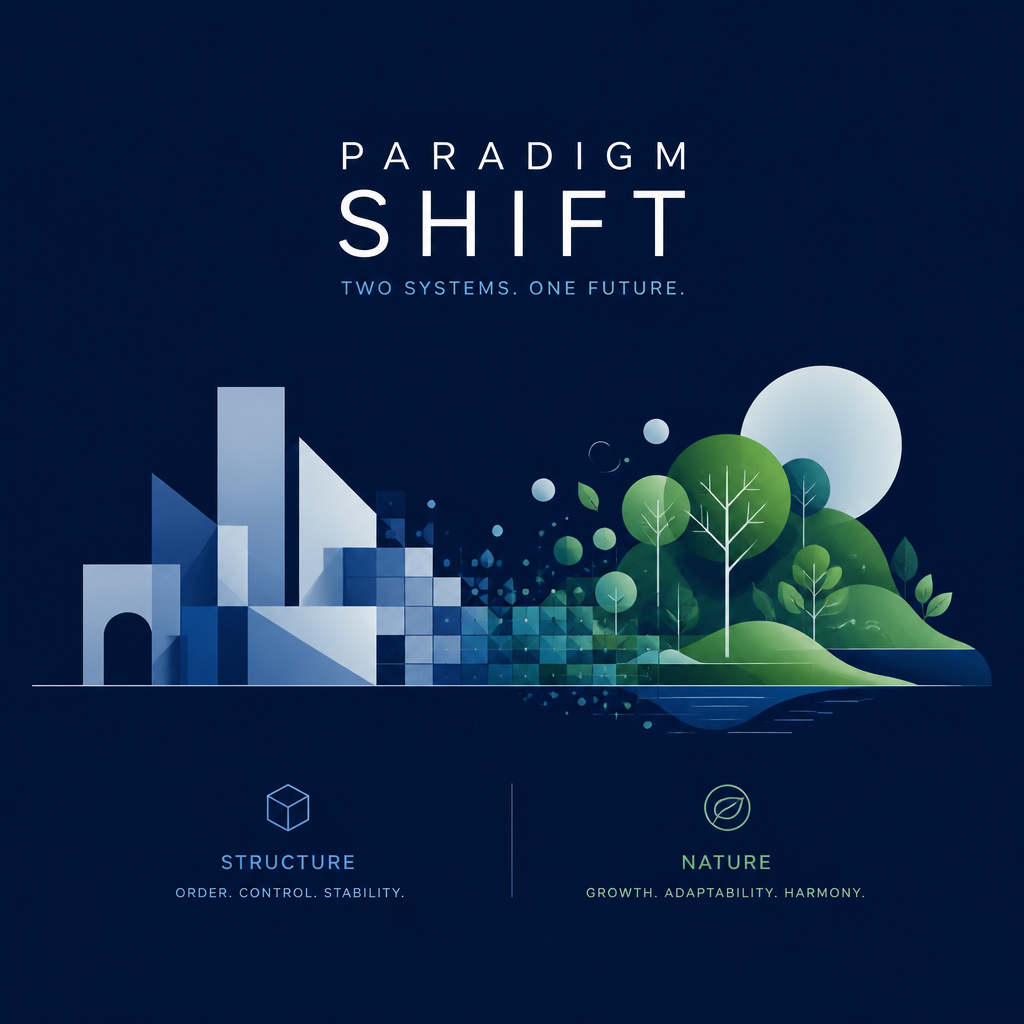


Jan opened the review affirming the shift toward a stronger, darker blue background and bolder typography that Munia introduced (02:30). The palette draws inspiration from Google without feeling derivative, and Jan appreciated the added clarity and weight. More color is expected to emerge naturally as the diagrams get elaborated.
The current figures placed next to concepts like performance and relational aren't reading clearly - viewers can't immediately tell they represent forest, trees, and earth (03:05). Jan emphasized that clarity is the north star: "you look at it and you should immediately see what it is about." James confirmed these are placeholders and that the more dynamic transitions between old and new paradigms (discussed in earlier meetings) are still planned - he'll finesse these while Jan travels.
The guiding principle: less content, more space, more clarity. Nothing should feel too small or crowded.
A key strategic decision emerged around whether to have a logo at all (19:07). Jan reflected that the initiative isn't an organization or non-profit - it's a movement and a resource. A traditional logo could create the wrong impression by implying institutional structure. James agreed enthusiastically, noting this approach brings more attention to the work and the words themselves. The visual figures Munia has been developing may instead become icons or background graphics used throughout the site.
The team walked through the sitemap and agreed on a clearer left-to-right reading logic (11:47):
James swapped the positions of Education and Research & Resources during the call to reflect this logic (14:39).
Rather than a dedicated People page, contributors will appear at the bottom of the Home page (06:47). Jan will supply names from a recent follow-up funding application to be listed as general contributors, with roles and theoretical foundations filled in when he returns.
James raised the challenge of accommodating many nav items with long names (17:15). He'll explore consolidating labels or using expandable menus for smaller screens while keeping the full navigation visible on larger displays.
The new Education page will eventually host short explanatory videos, but the near-term focus is providing PowerPoint materials that any educator can immediately use to teach the paradigm (10:34). Jan will send James his current teaching slides, and James will format them to integrate with the website's visual language.
Jan shared a follow-up funding application (📄 practitioner-oriented, more applied than the original research proposal) during the call (07:13). Key resources for content population:
Jan also flagged a terminology refinement: the Curam paper frames the pro-social market economy as a cultural evolution - useful language to weave into the site copy.
Jan articulated the core communication challenge (23:01): social theories are performative, unlike natural science where a phenomenon exists independent of its explanation. The paradigm shift isn't "we work this way now, we'll work that way later" - both old and new paradigms are happening simultaneously, and the theory we use shapes the decisions we make.
James reflected that some new-paradigm imagery evokes something like Apple Park's donut campus - beautiful and integrated - though he acknowledged Apple still operates largely in old-paradigm ways, so the metaphor needs care (23:01). Jan noted the "old paradigm" illustration currently reads almost like North Korean regimentation, which is too extreme - the old paradigm should feel realistically present, not caricatured, since both paradigms coexist today.
The individual / group / organization framing will be hinted at on the Home page and explored more deeply on Explore the Paradigm.
James proposed adding a text-to-speech widget he's been developing (28:04). Motivated by thinking of his father, who is blind and uses screen readers, the widget provides natural-sounding audio playback of page content - benefiting both accessibility users and those who prefer listening. Jan welcomed the addition, especially given the anticipated text density.
Multilingual support isn't planned for launch, but James noted that if it were near-term he'd make different back-end structural decisions (28:04). The door remains open for future expansion.
James walked Jan through how the academic side of the site is now more integrated with the main experience rather than living as a visually separate track (26:41). Shared fonts and design language make everything feel like one cohesive project while still putting scholarly content forward clearly.
Jan Pfister
James Redenbaugh
Jan opened the review affirming the shift toward a stronger, darker blue background and bolder typography that Munia introduced (02:30). The palette draws inspiration from Google without feeling derivative, and Jan appreciated the added clarity and weight. More color is expected to emerge naturally as the diagrams get elaborated.
The current figures placed next to concepts like performance and relational aren't reading clearly - viewers can't immediately tell they represent forest, trees, and earth (03:05). Jan emphasized that clarity is the north star: "you look at it and you should immediately see what it is about." James confirmed these are placeholders and that the more dynamic transitions between old and new paradigms (discussed in earlier meetings) are still planned - he'll finesse these while Jan travels.
The guiding principle: less content, more space, more clarity. Nothing should feel too small or crowded.
A key strategic decision emerged around whether to have a logo at all (19:07). Jan reflected that the initiative isn't an organization or non-profit - it's a movement and a resource. A traditional logo could create the wrong impression by implying institutional structure. James agreed enthusiastically, noting this approach brings more attention to the work and the words themselves. The visual figures Munia has been developing may instead become icons or background graphics used throughout the site.
The team walked through the sitemap and agreed on a clearer left-to-right reading logic (11:47):
James swapped the positions of Education and Research & Resources during the call to reflect this logic (14:39).
Rather than a dedicated People page, contributors will appear at the bottom of the Home page (06:47). Jan will supply names from a recent follow-up funding application to be listed as general contributors, with roles and theoretical foundations filled in when he returns.
James raised the challenge of accommodating many nav items with long names (17:15). He'll explore consolidating labels or using expandable menus for smaller screens while keeping the full navigation visible on larger displays.
The new Education page will eventually host short explanatory videos, but the near-term focus is providing PowerPoint materials that any educator can immediately use to teach the paradigm (10:34). Jan will send James his current teaching slides, and James will format them to integrate with the website's visual language.
Jan shared a follow-up funding application (📄 practitioner-oriented, more applied than the original research proposal) during the call (07:13). Key resources for content population:
Jan also flagged a terminology refinement: the Curam paper frames the pro-social market economy as a cultural evolution - useful language to weave into the site copy.
Jan articulated the core communication challenge (23:01): social theories are performative, unlike natural science where a phenomenon exists independent of its explanation. The paradigm shift isn't "we work this way now, we'll work that way later" - both old and new paradigms are happening simultaneously, and the theory we use shapes the decisions we make.
James reflected that some new-paradigm imagery evokes something like Apple Park's donut campus - beautiful and integrated - though he acknowledged Apple still operates largely in old-paradigm ways, so the metaphor needs care (23:01). Jan noted the "old paradigm" illustration currently reads almost like North Korean regimentation, which is too extreme - the old paradigm should feel realistically present, not caricatured, since both paradigms coexist today.
The individual / group / organization framing will be hinted at on the Home page and explored more deeply on Explore the Paradigm.
James proposed adding a text-to-speech widget he's been developing (28:04). Motivated by thinking of his father, who is blind and uses screen readers, the widget provides natural-sounding audio playback of page content - benefiting both accessibility users and those who prefer listening. Jan welcomed the addition, especially given the anticipated text density.
Multilingual support isn't planned for launch, but James noted that if it were near-term he'd make different back-end structural decisions (28:04). The door remains open for future expansion.
James walked Jan through how the academic side of the site is now more integrated with the main experience rather than living as a visually separate track (26:41). Shared fonts and design language make everything feel like one cohesive project while still putting scholarly content forward clearly.
Jan Pfister
James Redenbaugh
00:00:06
James Redenbaugh: This meeting is being recorded.
00:00:39
Jan Pfister: Hey, can't hear you.
00:01:03
James Redenbaugh: One sec, sorry.
00:01:04
Jan Pfister: Yeah. Now. Yep.
00:01:08
James Redenbaugh: Hi. Sorry I'm so late.
00:01:11
Jan Pfister: Hello.
00:01:15
James Redenbaugh: How are you today? About to take off on your trip. Yeah.
00:01:21
Jan Pfister: Yes, very good. Just two more things left. But yeah, I went also this morning through everything bit and then I was thinking to write, but then I thought actually if we talk. Anyway, now I, you know, give you the feedback like this.
00:01:41
James Redenbaugh: Great.
00:01:44
Jan Pfister: Yeah. And one thing. Yeah. So I guess there's the site map, the structure of it and the contents. I guess that's one thing. And the design. And then also question about the logo and the figures. So. Yeah. What do you think? Maybe first with the color and these things they are easier. What do you think about. I mean, the difference between. With this stronger blue.
00:02:30
James Redenbaugh: Yeah. I think that I really like the darker blue background. I like the color palette that. That Munia's chosen here inspired from Google. But I don't think it feels too googly. I think that maybe some more. Some colors can come in more. I think that they will in the. In the diagrams as we elaborate those.
00:03:01
Jan Pfister: Yeah.
00:03:05
James Redenbaugh: And I think that the. I'm liking the bolder. The bolder fonts. And the color choices. But. But what do you think?
00:03:21
Jan Pfister: Yeah, no, I think it's. I like it better. Well, so it's a bit stronger and I like the blue. The darker similarly. So this is really good. I think my general point, I think with everything is just that there is this clarity. And one thing I've been thinking was with these figures, so, you know, the figure that is next to performance is relational. I was thinking, and I was also looking at it with somebody kind of. It's very difficult to see what this is. Right. So there's forest, trees, earth, so it's not clear. And. And I think then it's even better to have it white just. And bring it in somewhere else. But I think, I mean, I know. I think I do not exactly know actually what you are aiming to do with the different levels. I guess there's a. Kind of planned to put them together and then put them apart. But yeah, it feels. Wrote it also there kind of. You look at it and you should kind of I think immediately see what it is about. And I think for that we had kind of these early recordings like two, three meetings ago, four meetings. I don't know where we discussed, you know, the kind of how to shift from one side to the other.
00:04:51
James Redenbaugh: Yeah, yeah, I'm definitely still planning on doing that. This is more placeholder in my mind.
00:04:57
Jan Pfister: Okay. Yes.
00:05:00
James Redenbaugh: And that's gonna take time to finesse and play with while you're gone.
00:05:08
Jan Pfister: Okay. Yeah, so just that kind of the. That the mindset is always a bit less and with maybe more space and clarity so that you always choke. You see it immediately and too small. I think that's kind of key. And then another feedback was maybe I go still now to the contents because here on this page is then tailored entry points across for audiences. And I think it's quite small for whom this is. So. So if I'm a practitioner I don't see quite soon where is my access point here so that this is clear. But then we have below the site map with the home. And then at the moment there is the explore the paradigm. And I think this is good. So the home first does whatever it does so that one really understands the shift in the paradigm which I do see in, in my work and with research and how others react to it. This is so key because many people just don't get it. So it means it's not communicated well enough. So therefore that that's really needs a lot of attention I think to have the start very clear. And then there is also people behind the initiative that point. And then there is below section with people. And I think we can actually take the people and maybe put them also on the home at the very bottom.
00:06:47
James Redenbaugh: Yeah, there's a section for the people. Yeah.
00:06:50
Jan Pfister: So that this home, this people section there is not in that sense needed. And what I thought is about the people. I have recently written a funding application for a follow up proof of concept. Application and I can share that with you.
00:07:13
James Redenbaugh: Cool.
00:07:16
Jan Pfister: And there are names in it and I think these names could be used maybe you know, per. They could be called general contributors.
00:07:28
James Redenbaugh: And.
00:07:28
Jan Pfister: Then just basically name rank. And then I can later then when I come back I can say, you know what, what they're. What they do basically theoretical foundations or something like that. And let me just send this immediately.
00:07:47
James Redenbaugh: So you have it in your email.
00:07:54
Jan Pfister: Contents for web page. So and this is a follow up application. So it's very. It's more practitioner oriented than research oriented. So it's just a bit of more content but it's probably useful. Might be something useful in it for the practitioner page. So yeah, then that's the home page with the people as contributors photo and yeah, just like that with the thing. And then explore the paradigm is really good to have that page where then everything is listed and explained and then the next one is here. I'm kind of not yet sure whether There should be the page research and resources first or whether it should be practice and policy first. Probably we probably the logic is that it will be practice and policy should actually be first and then would be research and resources or practice and policy. And then I think there needs to be a new one that is education and then research and resources. So yeah, that one there and then the people one can be removed and it becomes education. And I think yeah, education would go between practice and policy and research resources. But the order might change again later. But I guess that's an easy one to change. And then I thought, you know, for the education what I really would like to have there is at some point maybe video, short videos that kind of explain it. But for now also just a few PowerPoints with educational material in it that anybody can. That wants to teach. This has immediately the materials available. And then I was thinking is that something you could do that you. That if I send you like some slides so that I present at the moment that we could format those in the same style as the homepage.
00:10:34
James Redenbaugh: Send them through. Let me see what I can do.
00:10:36
Jan Pfister: Yeah, I mean just kind of, you know that they are integrated in some. In some way of. With the design.
00:10:42
James Redenbaugh: Yeah, I think I should be able to do that.
00:10:46
Jan Pfister: And the slides, of course. Yeah, I will just send you some basic that I use and then can also update this more afterwards and then news and events. This is something that is probably a placeholder. I mean we can build it here, but not yet making it open because I think for that it needs to. We need to work more on getting this running. But I guess it is good to have something like this already developed that then could go online later. And then the. Get involved is good. And get involved there was this idea of having kind of some block.
00:11:32
James Redenbaugh: Or.
00:11:33
Jan Pfister: Where people can share what experiences, cases where they see this happening. But that's also something that of course needs to be developed over time.
00:11:46
James Redenbaugh: Yeah.
00:11:47
Jan Pfister: Then evaluation and tools. This is something that in principle should be parts of the practice and policy. There will be tools if. And then there would also be in the education, you know, some short videos and slide slides that could be having there. And then for research there will be resources. So not sure. Did we have that in our. Yeah, we had that like this. Okay.
00:12:27
James Redenbaugh: Yeah. So this should actually be over here, right?
00:12:36
Jan Pfister: Yeah, I mean. I mean it should be education basically.
00:12:45
James Redenbaugh: Yeah.
00:12:46
Jan Pfister: And then it needs to be adapted to. So education, not evaluation.
00:12:59
James Redenbaugh: Oh, oh, yeah. My eyes haven't started working yet today.
00:13:14
Jan Pfister: Yeah. And then this. So in the. In this section there will basically be how to teach this pro social paradigm. Yeah. Then of course, from the logic, I guess all the materials will be in the research and resources page. So if you kind of literally read the page from the left to the right. Then. So anyway, there is, on the very left there is the page that explains it, right? Yeah, so it's introduced there and then we can see what it means for practice and policy. And then I guess it's still better to go to the research and resources because that's a lot of material. And then it would be. Education, which then tells more how to teach this.
00:14:24
James Redenbaugh: Cool.
00:14:26
Jan Pfister: So yeah, if you can then swap, actually now see the research, resources and education in the others.
00:14:37
James Redenbaugh: Swap these two.
00:14:39
Jan Pfister: Yeah.
00:14:46
James Redenbaugh: Cool.
00:14:47
Jan Pfister: Good. And did I now send it or not? Yeah, you received the funding application.
00:15:01
James Redenbaugh: Cool.
00:15:04
Jan Pfister: I mean, did you, did you receive it in your email? Just to check.
00:15:08
James Redenbaugh: Let me check.
00:15:10
Jan Pfister: Because we can just briefly have a look into it. What could be useful? What could be used for the page? I mean, You received research utilization plan. Yes. You open that?
00:15:36
James Redenbaugh: Yep.
00:15:42
Jan Pfister: So there was the original project. With some members and that's how the follow up project. I, I think I will send you the original as well.
00:16:03
James Redenbaugh: Okay.
00:16:04
Jan Pfister: But yeah, no, actually because the, the paper basically has all that, all of that information. So yeah, here is kind of quite a bit of information that can be used I think for Munia or whoever works on this to you know, bring in into the page. I mean it gives some idea. And then there is also the team members that are current, so those can be brought in. Yeah. So that is information.
00:16:44
James Redenbaugh: Great.
00:16:44
Jan Pfister: And then, yeah, and then I think when I come back I can do more details. But I guess you have information to. And you know, you know what it is all about. We talked about it. So yes, you, you know how to set this up?
00:17:02
James Redenbaugh: Yeah.
00:17:03
Jan Pfister: And then on the right side you had this article. So this is the article. Right. So there is more detailed information.
00:17:15
James Redenbaugh: Yes. So this is just kind of elaborating the site map and looking at the content that we have. But first of all, I just wanted to know on the, on the site map, in the navigation I'm going to find ways to. Make these as small as possible because they're. There's a lot of nav items and they all have long names and so on big screens maybe we can have everything, but on smaller screens we might need to consolidate the words or put them in a kind of a menu that, that expands. Yeah, but I can play with that.
00:18:09
Jan Pfister: So I guess these are just kind of contents because there's parts of. This is kind of the article that is written. Right. It's kind of one to one. So that's basically input. Is that right?
00:18:22
James Redenbaugh: Yeah, yeah.
00:18:23
Jan Pfister: And. And I think what would be good also is in this curum paper that we everywhere have. I think the end of that paper has implications for research practice, policy and education. And if you would, you know, that's a source where it's quite well written as well that might be useful to use in. And, and the other one is for example pro social market economy. In the Quran paper we also write it is a cultural evolution towards the new kind of changing the thing. I just saw it's kind of different.
00:19:07
James Redenbaugh: Cool.
00:19:07
Jan Pfister: But yeah, that's some of this. And yeah. And I have been thinking again because I'm struggling a bit what this page in the end is sounds bit weird, but it is because it's not an organization. It is something, whatever it is. And I guess it is a movement and it is a source. It provides basically resources so that people can engage with it. That made me then think, you know, is it good to have a logo or not? And I'm kind of thinking maybe it's good to not have a logo because a logo looks like it's an organization. It's kind of, you know, an organization or a non profit or something like that. But this is at this stage it is a kind of a research initiative and the movement. So maybe it might create the wrong impression when there is a local.
00:20:16
James Redenbaugh: Yeah, yep. Yeah, I get that. Yeah. And it brings more attention to the work and, and the words. Yeah, I think it's a good idea. I. And maybe some of these become icons that we use elsewhere.
00:20:48
Jan Pfister: Yeah.
00:20:48
James Redenbaugh: On the site or even background graphics. Because I like what. What Munia is getting at and I like the. How she's using it in the background here. But yeah, I think that's the right impulse. Yeah. Just. Just the text.
00:21:17
Jan Pfister: Yeah. And. And yeah. And then the other one was. And I made here the comment that I think you reacted already to it. So with this here, I mean this looks really cool. It's just then here I was thinking, you know, the old paradigm should be. Should be still so. So kind of. It should kind of illustrate what it is today. You know, when I looked at the organization and I thought wow, this looks kind of almost like North Korea. Right. So kind of know dictatorship and everybody in line. But I mean it should kind of. The old is still quite realistic what's now happening. And the new is also happening at the same time. But we have to decide whether we create more of the new or more of the old.
00:22:15
James Redenbaugh: Yeah.
00:22:16
Jan Pfister: Because it's a paradigm. It's anyway happening all the time. It explains how we, how things happen and there are different explanations and depending on them, you act differently.
00:22:29
James Redenbaugh: Yeah.
00:22:30
Jan Pfister: So it's kind of. I mean, I think this is such a, this is so. This is so tough to convey to people because it's not like here is how we work now and now we're going to work like this very. It is like we work already to some extent like this better because we think that we should work the other way. Yeah. Makes it.
00:23:01
James Redenbaugh: Yeah. In my mind, some of the images of the, the new organization look like Apple park. You know, the, the big donut that they have and the beautiful campus. And I know that a lot of the ways that Apple works is still the old way. So it's. We don't want to communicate, like make your campuses more beautiful and it'll just happen. But, but we want to find a good metaphor to illustrate what you're talking about.
00:23:47
Jan Pfister: Yeah, yeah. And I mean it is really this, the, the, the point here is that theory, social theories are performative. That's why it's not like natural science where you just have a phenomena, you have a theory, but the phenomena doesn't change. And I think this is the tricky thing to explain here, that we have a theory to explain a phenomenon, let's say how we perform and based on that we make decisions. But if that theory is not actually the best explanation for how we perform, then we make constantly wrong decisions for the best performance. It's this performativity of theories that really comes here in the play that it's not just. Yeah. That's the phenomena and the theory,.
00:24:42
James Redenbaugh: Of.
00:24:42
Jan Pfister: Course, need to break it all down to make it simple.
00:24:45
James Redenbaugh: Yeah, yeah. Well, I'll, I'll be playing with these things and, and further digesting the content that you've sent me. And I'll make it as clear as I can and then we can review and bring it home.
00:25:11
Jan Pfister: Yeah, cool. Yeah. And the other, the other thing is. Yeah, no, I said that already about how to combine it. And just so this individual, the group, the organization, that's something you want to bring in, where it's explained right on that page kind of. Or somewhere or.
00:25:35
James Redenbaugh: Yeah. I think hinting at it on the home page. And then we'll get deeper into it on. Explore the paradigm. Yeah, yeah, yeah. Cool.
00:25:54
Jan Pfister: Yeah. And then I saw you had there also this page with the article. On The.
00:26:07
James Redenbaugh: Which one?
00:26:10
Jan Pfister: So there's this, the home pages, and then there is this, the scholarly foundations on the left side in the recent. I don't know when you. If you see.
00:26:22
James Redenbaugh: Yeah, yeah,.
00:26:27
Jan Pfister: Yeah. And I guess this is now a different format. Right. So from.
00:26:32
James Redenbaugh: Well, this is. This is an earlier version that we brought in.
00:26:39
Jan Pfister: Okay. It's just the.
00:26:41
James Redenbaugh: The latest is over here to the right.
00:26:44
Jan Pfister: No.
00:26:47
James Redenbaugh: So like we talked about, the academic side is now much more integrated with the business side. I think it's. Less illustrative. It's more putting the content forward. But I think it does work better with having similar fonts, making everything feel like it's part of one thing.
00:27:25
Jan Pfister: Yeah.
00:27:27
James Redenbaugh: Cool.
00:27:29
Jan Pfister: Is that enough input for you?
00:27:32
James Redenbaugh: Yeah, I think we have a lot to work with here. I'm really excited to see it coming together. And. Yeah, I. Also. I had a question. Will the site eventually be in different languages?
00:28:04
Jan Pfister: That's not planned at this point. I think it is English, but. Yeah, of course. I mean, it is. Could be. Yeah. What would that change?
00:28:24
James Redenbaugh: It's. It's totally doable down the line, but if we, you know, if we were going to do it more in the near term, there's decisions I would make about how the content is organized on the back end, but we don't need to worry too much about it. But I did have an idea. To see if you might be curious about this. I was playing with this on a site of my own, And I'm thinking of adding it to new websites as an accessibility feature for. I think of my dad, who's blind and uses screen readers. And screen readers are. They've gotten a lot better, but they're kind of robotic. And so I'm starting to add these buttons that allow people to listen to the content of a page and it'll go through and read the page. It. You can't hear it because it's playing in my headphones right now. But the voice, it sounds really good. And then it's also not just for the. The site challenged. But, you know, I often like to. I spend so much time staring at screens, I like to listen to things as well or have things read to me. So it's nice to have a little button that can do that.
00:30:31
Jan Pfister: Yeah, of course. If that can be easily integrated. That good? Yeah.
00:30:37
James Redenbaugh: Cool.
00:30:38
Jan Pfister: Yeah.
00:30:39
James Redenbaugh: Yeah. Just a little widget that I'm making. It makes it easier on the back end.
00:30:44
Jan Pfister: Yeah. Especially given there might be quite a bit of text at some point. And I mean, the. Otherwise, the idea of this page is I guess to have now this basic and then see how it goes from there. Then build it up.
00:31:02
James Redenbaugh: Yeah. Cool. Good.
00:31:06
Jan Pfister: Okie doke. Well, Yeah, I think that was all that I had.
00:31:14
James Redenbaugh: Great. Yep. That's all that I wanted to check in about. I hope you have a wonderful vacation and a great time on your travels. I'll share if we need feedback from you as. As we go along. Yeah, I'll message you on. On WhatsApp. But I think that we have a really good sense of the direction that we want to move in. And when we come back with you, if we need to. To tweak things, I'm sure we will. Of course we'll be able to do that. But yeah, I'm excited. I'm really excited to play more with these. These graphics and animations and get my hands dirty more in that, because I think that'll really help communicate the concepts.
00:32:15
Jan Pfister: Yeah.
00:32:15
James Redenbaugh: And make it clear to people.
00:32:19
Jan Pfister: Yeah. And I guess that really kind of this. You open it, you see immediately kind of this kind of design that it doesn't. That you don't get lost in a way that it's.
00:32:30
James Redenbaugh: Yeah, yeah.
00:32:32
Jan Pfister: Cool. Good. Yeah. Then very exciting to go on holiday, and then something happens in the meantime. So. Very good.
00:32:41
James Redenbaugh: Yeah, yeah, yeah. Awesome. Good.
00:32:45
Jan Pfister: So I will schedule something in the first week when I'm back.
00:32:49
James Redenbaugh: Sure, yeah, sounds good. Okay, Jan, take care.
00:32:55
Jan Pfister: Yeah, you too.
00:32:57
James Redenbaugh: Ciao.







.svg%20(1).png)


.png)