James opened by sharing the latest logo exploration — a wooden oval sign mockup for Grayton Station — which landed well with the team (08:20). Tori noted the organic quality of the signage felt immediately resonant, appreciating how the oval shape evoked a sense of being "held" by the form. Matt observed the oval unexpectedly echoes the wine barrel aesthetic of the region — as if the sign could be mistaken for a repurposed cask — giving it a grounded, place-rooted quality.
James walked through an expanded color ecology for the brand (11:11). The team converged on terracotta as the primary brand color, a choice that's been consistent since early conversations about how to gesture toward the firehouse heritage without landing on a literal firehouse red. Kathy (interior designer) also flagged terracotta as her favorite. The working palette pairs it with oat milk as a standard companion and black as a grounding neutral, with blues and yellows available as seasonal or contextual accents.
Tori raised a useful question about optimal palette size for brand cohesion — James clarified there's no magic number, but recommended anchoring around three primaries while maintaining a "full box of crayons" for events, seasonal offerings, and merch (13:34). The concept of limited-edition colorways for future merchandise resonated strongly.
The conversation explored how the oval and vertical rectangle lockups each serve different contexts (18:25). James noted that slight variations are appropriate — a more circular crop for Instagram profile images, the wordmark alone for favicons, and the full lockup for signage and print. Tori and Matt both expressed a preference for the standalone graphic mark, noting it holds up beautifully on its own — imagining it on the back of a T-shirt with Grayton Station on the front pocket.
The team also discussed adding more hills to the logo — a four-hill version versus the current two — with James noting that more hills can help the mark feel like a cohesive whole rather than discrete elements (23:32). He'll explore this in Illustrator, as the hills require a different kind of shape work than what's currently in the file.
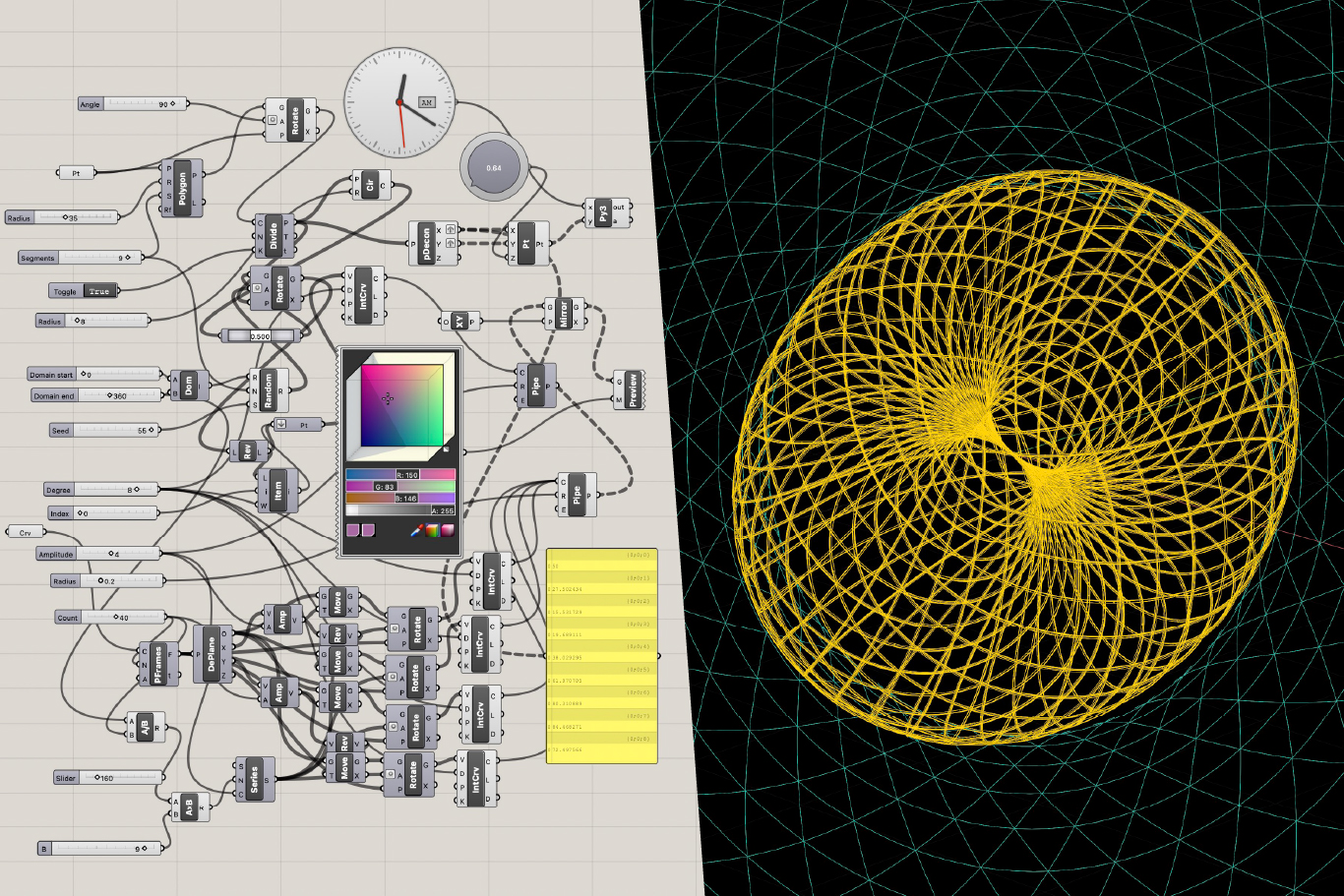
[technology="Parametric Geometric Interfaces"]
---
James redirected the conversation toward site structure, asking where the team stood on page architecture and what experience they wanted people to have the moment they land (25:22). Rather than locking in a sitemap first, he suggested prioritizing the felt experience of the homepage hero — what the site is inviting people into before anything else.
From the brand questionnaire and prior discussions, the working page set includes: main landing page, Our Work, Grayton Station Cafe & Preservatory, Events/Get Involved, About, and Donate (32:03). The team is weighing whether Events and a broader "action page" should be combined or treated separately — Tori sees value in a dedicated page that holds upcoming volunteer opportunities, funding asks, and various invitations to participate.
Matt articulated two primary flows the homepage needs to serve (33:36):
Tori added a third consideration: the person who arrives with a seed of information and needs the site to confirm and expand what they already sense is happening here (37:36). The goal is that within the first 20–60 seconds on the homepage, someone can grasp that this is bigger than one thing, unified by a coherent guiding principle — and still easily navigate to wherever they specifically belong.
Matt noted a meaningful evolution in his own thinking since the original site was built (38:24). The first version leaned heavily into the philosophical framing — seven generations, interdependence, relationship — and in retrospect it reads somewhat like a white paper or manifesto. With so much now existing to show people — the cafe, the town square, the events — the instinct is to lead with the tangible reality of the work and let the philosophy emerge through depth rather than front-loading it. The deeper visionary framing belongs on a triple-clicked About or Philosophy page, not the hero.
---
Tori flagged that the current photography library reflects an earlier, scrappier season of the project and may not be ready to carry a polished new site (40:08). There's room to commission a photographer with a deliberate shot list. Matt noted that some stills might be extractable from existing professional video content with help from the videographers (Spencer or Nico), though raw YouTube exports won't be high quality. The approach is to identify the shot list first, then assess what exists versus what needs to be commissioned — balancing budget for now versus later.
---
James led the team through a deeper articulation of the philosophical terrain the site needs to hold — not for the homepage hero text necessarily, but as the frequency that should resonate through every design decision (42:40).
The core framing that emerged: moving from cultural individualism back into choiceful relationship — rebuilding the conditions for genuine community, belonging, interdependence, and place-based connection. This encompasses not just what Revillage is doing in Green Valley, but the replicable model and the pathways they want to create for others.
Matt returned to the official vision statement — "joyfully remembering our interdependence with each other and the living earth" — unpacking its layers (45:50):
Tori added the dimension of true participatory place-making as a differentiator (48:34) — not revitalization happening to a community, but something where many people's hands are genuinely on it and it couldn't have happened any other way. A barn-raising ethos etched into the DNA of the project, with the long hope that two generations from now, people won't leave because the fabric was built by the people who belonged to it.
When James asked what the world could look like in 50 years with maximal influence (51:07), both Tori and Matt landed in similar territory: not the solar punk tech-utopia, but something more quietly radical — people who are healthy, housed in ways that support vitality, not overburdened to pay for it, able to offer their gifts, connected to place. Walkable, vibrant, living communities that feel coherent from the inside. Matt described it as turning a corner and finding a hamlet that's just thriving — down-regulated, participatory, food growing, people present — the way Christiania sits inside Copenhagen. Not uniformly distributed across the planet in 50 years, but enough seedlings of coherence visible that people know where to put their energy next (56:28).
---
James shared a range of visual references in FigJam — AI-generated images, photographs, and graphic patterns — inviting intuitive responses to help calibrate the design direction (01:01:07).
Key resonances and aversions that emerged:
From the session, a clear direction is forming: hand-feeling imperfection, curvilinearity, weaving and winding forms, earth tones, less stark contrast, imagery of earth and people in relationship, cultural and place markings, fractal but grounded rather than digitally trippy. The more sci-fi/solar-punk references may find a home deep in the site for the audience that's already subscribed to that frequency — but the entry experience should feel approachable and real.
---
James clarified that exact sign dimensions don't need to be locked in before engaging sign makers — the vector scales to whatever they need (01:32:35). His suggested fabrication approach: build the wooden form, project the vector, trace it in paint, and use a jigsaw to cut the organic oval shape. A CNC approach is also valid — cut the shape, paint the interior, sand to finish. The team will reach out to a couple of sign makers to explore methods and timelines.
---
James Redenbaugh
Matt Jorgensen
Matt Jorgensen + Tori Immel
James opened by sharing the latest logo exploration — a wooden oval sign mockup for Grayton Station — which landed well with the team (08:20). Tori noted the organic quality of the signage felt immediately resonant, appreciating how the oval shape evoked a sense of being "held" by the form. Matt observed the oval unexpectedly echoes the wine barrel aesthetic of the region — as if the sign could be mistaken for a repurposed cask — giving it a grounded, place-rooted quality.
James walked through an expanded color ecology for the brand (11:11). The team converged on terracotta as the primary brand color, a choice that's been consistent since early conversations about how to gesture toward the firehouse heritage without landing on a literal firehouse red. Kathy (interior designer) also flagged terracotta as her favorite. The working palette pairs it with oat milk as a standard companion and black as a grounding neutral, with blues and yellows available as seasonal or contextual accents.
Tori raised a useful question about optimal palette size for brand cohesion — James clarified there's no magic number, but recommended anchoring around three primaries while maintaining a "full box of crayons" for events, seasonal offerings, and merch (13:34). The concept of limited-edition colorways for future merchandise resonated strongly.
The conversation explored how the oval and vertical rectangle lockups each serve different contexts (18:25). James noted that slight variations are appropriate — a more circular crop for Instagram profile images, the wordmark alone for favicons, and the full lockup for signage and print. Tori and Matt both expressed a preference for the standalone graphic mark, noting it holds up beautifully on its own — imagining it on the back of a T-shirt with Grayton Station on the front pocket.
The team also discussed adding more hills to the logo — a four-hill version versus the current two — with James noting that more hills can help the mark feel like a cohesive whole rather than discrete elements (23:32). He'll explore this in Illustrator, as the hills require a different kind of shape work than what's currently in the file.
[technology="Parametric Geometric Interfaces"]
---
James redirected the conversation toward site structure, asking where the team stood on page architecture and what experience they wanted people to have the moment they land (25:22). Rather than locking in a sitemap first, he suggested prioritizing the felt experience of the homepage hero — what the site is inviting people into before anything else.
From the brand questionnaire and prior discussions, the working page set includes: main landing page, Our Work, Grayton Station Cafe & Preservatory, Events/Get Involved, About, and Donate (32:03). The team is weighing whether Events and a broader "action page" should be combined or treated separately — Tori sees value in a dedicated page that holds upcoming volunteer opportunities, funding asks, and various invitations to participate.
Matt articulated two primary flows the homepage needs to serve (33:36):
Tori added a third consideration: the person who arrives with a seed of information and needs the site to confirm and expand what they already sense is happening here (37:36). The goal is that within the first 20–60 seconds on the homepage, someone can grasp that this is bigger than one thing, unified by a coherent guiding principle — and still easily navigate to wherever they specifically belong.
Matt noted a meaningful evolution in his own thinking since the original site was built (38:24). The first version leaned heavily into the philosophical framing — seven generations, interdependence, relationship — and in retrospect it reads somewhat like a white paper or manifesto. With so much now existing to show people — the cafe, the town square, the events — the instinct is to lead with the tangible reality of the work and let the philosophy emerge through depth rather than front-loading it. The deeper visionary framing belongs on a triple-clicked About or Philosophy page, not the hero.
---
Tori flagged that the current photography library reflects an earlier, scrappier season of the project and may not be ready to carry a polished new site (40:08). There's room to commission a photographer with a deliberate shot list. Matt noted that some stills might be extractable from existing professional video content with help from the videographers (Spencer or Nico), though raw YouTube exports won't be high quality. The approach is to identify the shot list first, then assess what exists versus what needs to be commissioned — balancing budget for now versus later.
---
James led the team through a deeper articulation of the philosophical terrain the site needs to hold — not for the homepage hero text necessarily, but as the frequency that should resonate through every design decision (42:40).
The core framing that emerged: moving from cultural individualism back into choiceful relationship — rebuilding the conditions for genuine community, belonging, interdependence, and place-based connection. This encompasses not just what Revillage is doing in Green Valley, but the replicable model and the pathways they want to create for others.
Matt returned to the official vision statement — "joyfully remembering our interdependence with each other and the living earth" — unpacking its layers (45:50):
Tori added the dimension of true participatory place-making as a differentiator (48:34) — not revitalization happening to a community, but something where many people's hands are genuinely on it and it couldn't have happened any other way. A barn-raising ethos etched into the DNA of the project, with the long hope that two generations from now, people won't leave because the fabric was built by the people who belonged to it.
When James asked what the world could look like in 50 years with maximal influence (51:07), both Tori and Matt landed in similar territory: not the solar punk tech-utopia, but something more quietly radical — people who are healthy, housed in ways that support vitality, not overburdened to pay for it, able to offer their gifts, connected to place. Walkable, vibrant, living communities that feel coherent from the inside. Matt described it as turning a corner and finding a hamlet that's just thriving — down-regulated, participatory, food growing, people present — the way Christiania sits inside Copenhagen. Not uniformly distributed across the planet in 50 years, but enough seedlings of coherence visible that people know where to put their energy next (56:28).
---
James shared a range of visual references in FigJam — AI-generated images, photographs, and graphic patterns — inviting intuitive responses to help calibrate the design direction (01:01:07).
Key resonances and aversions that emerged:
From the session, a clear direction is forming: hand-feeling imperfection, curvilinearity, weaving and winding forms, earth tones, less stark contrast, imagery of earth and people in relationship, cultural and place markings, fractal but grounded rather than digitally trippy. The more sci-fi/solar-punk references may find a home deep in the site for the audience that's already subscribed to that frequency — but the entry experience should feel approachable and real.
---
James clarified that exact sign dimensions don't need to be locked in before engaging sign makers — the vector scales to whatever they need (01:32:35). His suggested fabrication approach: build the wooden form, project the vector, trace it in paint, and use a jigsaw to cut the organic oval shape. A CNC approach is also valid — cut the shape, paint the interior, sand to finish. The team will reach out to a couple of sign makers to explore methods and timelines.
---
James Redenbaugh
Matt Jorgensen
Matt Jorgensen + Tori Immel
Explore four-hill version of logo mark in Illustrator and share iteration with team
Explore adding more hills to the logo — a four-hill version versus the current two — to help the mark feel like a cohesive whole rather than discrete elements. James noted this requires different shape work in Illustrator than what's currently in the file. Referenced at (21:04) and discussed at (23:32).
Develop hand-drawn sketches distilling brand ecology of visions, values, and visual language into early concepts
Begin hand-drawn sketching to develop visual and verbal ideas from this session — distilling the brand ecology of visions, values, and visual language into early concepts. Draws from the visual exploration session including curvilinearity, weaving forms, earth tones, portal framing, and cultural glyphs discussed at (01:01:07)–(01:27:00). Referenced at (01:28:47).
Prepare design review materials for meeting next Thursday or Friday
Prepare materials for design review next Thursday or Friday. Likely includes logo iterations, visual language explorations, and early sketch concepts from the brand ecology session. Referenced at (01:34:59).
Gather logo feedback from Adrian Farrell and Kathy and consolidate requests before next session
Gather feedback on the latest logo from key stakeholders, especially Adrian Farrell and Kathy (interior designer). Consolidate any requests or preferences before the next design session with James. Referenced at (09:17). Adrian Farrell and Kathy are not in the people lists so only Matt is assigned.
Begin conversations with sign makers to explore production methods and availability for Grayton Station signage
Reach out to a couple of sign makers to explore fabrication methods (hand-painted wood or CNC approach) and timelines for the oval Grayton Station sign. James clarified exact dimensions don't need to be locked in before engaging sign makers as the vector scales. Final vector file to be passed once ready. Referenced at (01:33:03).
Schedule next design review meeting with James via booking link for Thursday or Friday of next week
Schedule next meeting with James via booking link for Thursday or Friday of next week. Referenced at (01:34:59).
Develop photography shot list based on emerging site architecture and assess existing video assets vs. new commissions needed
Develop a photography shot list based on emerging site architecture — assess what can be extracted from existing professional video content (via Spencer or Nico) vs. what needs to be commissioned. Current photography library reflects an earlier, scrappier season and may not carry the polished new site. Balance budget for now versus later. Tori Immel is co-assigned but not in the people list. Referenced at (41:45) and (40:08). Tori Immel is not in the people list so only Matt is assigned.
Consolidate and refine participatory place-making narrative and core messaging for homepage copy and brand guidelines
Consolidate and refine the participatory place-making narrative and core messaging for use in homepage copy and brand guidelines. This includes the vision statement layers ('joyfully remembering our interdependence with each other and the living earth'), the barn-raising ethos, the 50-year vision framing, and the shift from manifesto-heavy copy to showing tangible reality of the work. Tori Immel is co-assigned but not in the people list. Referenced at (45:40) and discussed extensively from (42:40)–(56:28).
Design and build a new Webflow website for Revillage Foundation to replace existing Squarespace site. Inspired by Shorefast model with clean structural clarity combined with The Ecology Center's vibrancy and approachability. Building a versatile backbone that can support connected but distinct sub-sites over time - an ecology of brands approach.
Core page architecture restructured (25:11) to center dual-entity clarity: Foundation and Development pulled up to top-line navigation as distinct pages, Mission and About consolidated into single About page, dedicated Projects page showcasing flagship initiatives like Grayton Town Square and cafe. Homepage serves two primary user flows: (1) action-oriented visitors arriving via QR codes who need quick navigation to specific destinations, and (2) inspired newcomers with no context who need enough signal about the larger vision to feel drawn deeper.
Homepage features portal/doorway shape hero section evoking Christopher Alexander pattern language. Terracotta color confirmed at hex #B55633 (10:07) - represents bridge between Earth and human, ties to Grayton Station, provides warmth and hand-of-maker texture feeling. First section after hero helps visitors orient: why are they here, what do they want, what depth are they looking for.
Watershed topography illustration identified as one of three critical signature graphics (36:46) - will be expanded to include subtle human infrastructure elements layering human activity into ecological reading. Three-dimensional horizon visualization to show layered timeline: café (present), town square (near future), future projects as shapes on horizon. Foundation × Development relationship diagram makes business/nonprofit relationship instantly legible. Progressive disclosure approach inspired by Naia Trust investments page precedent.
Projects page uses flexible tile-based grid (44:00) where some tiles link to internal subpages, some link to standalone project sites (e.g., Grayton Station), some are static coming-soon placeholders. Tile sizes can vary within grid to give landmark projects more real estate.
Rounded corner aesthetic across cards affirmed (37:20) - professional but friendly, good nervous system feeling. Light background color accents on cards to help text pop while preserving soft, image-forward feel. Mission language organized around six core convictions as potential website pillars with icons: (1) Joyful by Nature, (2) Rooted in Place, (3) Layered by Design, (4) Tangible Before Theoretical, (5) Bridging Worlds, (6) New and Ancient Coherence. Key through-line: 'Joyful by nature, participatory by design.'
Design approach shifted from philosophical manifesto to tangible-first - lead with visible reality of work (cafe, town square, events) and let deeper philosophy emerge through exploration. Visual language: terracotta primary brand color (#B55633), oat milk companion, black grounding neutral, blues/yellows as seasonal accents. Portal/threshold framing devices, curvilinear patterns, earth-from-above imagery, hand-feeling imperfection aesthetic. Integrating geodesic/organic architecture references and cultural glyphs - grounded solarpunk aesthetic.
Typography: Primary typeface I am Fel DW Pika (Google Font) for headlines and body (05:07). Secondary pairings: Baskerville, Montserrat, Open Sans, or Inter for menus and supporting assets.
Future projects (housing, farming, wholesale processing, sauna club) presented with progressive disclosure - balancing transparency for solarpunk philanthropists while respecting community input process. Partner section shows both local Sonoma County relationships and global organizational connections. Bilingual accessibility through Webflow Locales feature.
Donate/Contribute/Support page features sliding scale contribution interface with Stripe integration - drag slider to choose amount, paid once/monthly/annually (18:43). Page encompasses donations, investment conversations, gifts of land/assets, legacy bequests, and volunteering time. Slider shows what each tier enables. Integration with GiveButter for foreseeable future, including upcoming Friends of Grayton Public Spaces monthly-giving campaign.
Get Involved surfaces: attending events, volunteering/co-creating, deeper commitment pathways. Events linked to existing platforms (Eventbrite/Partiful) initially, with option for custom event CMS later. Participatory-by-design meta-treatment being added - small sticky-note function inviting visitors to share skills, giveaways, or things that would light them up to offer in service of community (22:30).
Process shift (28:32): Moving into Webflow build earlier rather than perfecting copy in Google Docs first. Team will workshop copy directly in Webflow, leaving comments on design elements needing adjustment. This allows testing sentence length, rhythm, and visual fit against live site rather than switching between docs and prototype.
Design philosophy guided by Christopher Alexander's pattern language (13:28) - lean into generosity, move away from pressured CTAs, create entryways and approaches that invite landing, honestly display who team is and what's alive. Also weaving in Fernando Flores's action language (45:40) - designing for deeper, slower actions (sitting with, witnessing, communing, transforming) beyond typical click/scroll/share patterns. Measuring against Alexander's 'quality without a name' as design principle (39:50).
Timeline pressure driven by crowdfund launch this week and community nonprofit fundraising festival in two weeks (34:00). Recent community town hall surfaced questions about who Revillage is and how moving parts relate - making basic site (especially homepage and foundation/development pages) genuinely time-sensitive. Target launch: May 27th, before James departs for Portugal.
Finalize Grayton Station botanical logo mark and comprehensive brand identity system. Square logo version with finer leaf linework and updated mountain fill confirmed as primary direction (11:43). Team needs PNG and SVG exports across all color variants except sage (which is still being workshopped), with versions both with and without paper texture overlay (04:48). Isolated icon exports and star favicon asset required (13:24).
Horizontal monument sign for physical site needs refinement (14:18) - rebalance proportions to make 'Coffee Culture Kitchen' more prominent for distance legibility (15:29). James prefers oval treatment over literal rotation of vertical lockup, with thinner and more rounded linework for signage application (19:21). Sign builder quotes being sourced by Nika (17:17).
Typography system finalized: Primary typeface I am Fel DW Pika (Google Font) works for both headlines and body copy (05:07). Secondary font pairings for menus and supporting assets: Baskerville (versatile serif), Montserrat (modern sans-serif, Tori's favorite), Open Sans or Inter (clean readable alternatives).
Comprehensive brand color palette: Terracotta confirmed as primary brand color at hex #B55633 (10:07) - consistent since early firehouse heritage conversations, represents bridge between Earth and human. Paired with oat milk as standard companion and black as grounding neutral. Blues and yellows available as seasonal/contextual accents. Concept of limited-edition colorways for future merchandise.
Distinctive visual language and brand guidelines covering: curvilinear/flowing forms, hand-feeling imperfection, earth tones with less stark contrast, geodesic/organic architecture references, earth-from-above imagery, cultural glyphs and ancient markings integration, fractal but grounded (not digitally trippy) aesthetic. Working aesthetic anchor: 'grounded solarpunk'. Portal/doorway shapes emerging as compelling visual device.
Guidelines must address multi-generationally aspirational positioning while maintaining tangible rooted-in-now expression - speaking to spectrum from local community members to solarpunk funders. Avoiding spiritual bypass/Mexico City boutique hotel aesthetic in favor of lived-in, rooted feeling.
Using hand-drawn sketching to develop visual and verbal ideas, distilling brand ecology into early website concepts. Logo finalization critical for sign fabrication (wooden form with vector projection, jigsaw cut or CNC approach). Complete brand purpose questionnaire analysis to extract alignment threads. FigJam board with website precedents, mood board images, and inspiration informing direction.
Design and develop participation pathways and community listening infrastructure for Revillage website. Create intake system where community members can share what makes them most alive, their gifts, and how they want to contribute. Build smart matching capability using AI to connect volunteers to opportunities behind the scenes based on their expressed interests and capacities.
Explore interfaces for submitting dreams and ideas with collective visualization - potentially using generative collage, honeycomb patterns, or other organic forms that reflect the participatory place-making ethos. Core philosophical framing: moving from cultural individualism back into choiceful relationship - rebuilding conditions for genuine community, belonging, interdependence, and place-based connection. System should embody the vision of 'joyfully remembering our interdependence with each other and the living earth' where joy is primary, remembering (not inventing) is the mode, and human-to-human and human-to-place relationships are co-equal.
Consider physical touchpoint (tablet in shipping container at Town Square or Grayton Station) for non-digitally native community members to ensure broad accessibility. Potentially refresh and digitize 2023 community design survey data (150 resident responses) as foundation for understanding existing community voice.
System serves as ongoing listening device for the village, making participation invitations feel special and matched to individual gifts rather than generic volunteer asks. Supports true participatory place-making where many people's hands are genuinely on the work - a barn-raising ethos where the project couldn't have happened any other way. Long-term hope is that two generations from now, people won't leave because the fabric was built by the people who belonged to it.
Listening identified as underrepresented theme in current mission language - this system embodies that commitment to genuine responsiveness rather than projection. Tied to 'Rooted in Place' conviction and the three-layered engagement model: core stewards (dozens), co-creators/volunteers (hundreds), event participants/local commerce (thousands). Even outermost ring should feel genuine intimacy and invitation, not a sense of being sorted into tiers.
Commission professional photography to support new website launch. Current photography library reflects earlier, scrappier season of project and may not carry the polished new site effectively. Develop comprehensive shot list based on emerging site architecture and design direction.
Explore extracting high-quality stills from existing professional video content with help from videographers Spencer and Nico - though raw YouTube exports won't meet quality standards. Assessment needed: what exists and can be repurposed versus what needs fresh commissioning.
Shot list should reflect finalized aesthetic vocabulary: hand-feeling imperfection, earth tones, imagery of earth and people in relationship, cultural and place markings, lived-in and rooted feeling. Priority on showing the tangible reality of the work - the cafe, town square, events, community in action - rather than aspirational or overly polished aesthetic. Balance budget considerations between commissioning now versus later phases.
00:00:02
Matt Jorgensen: This meeting is being recorded. We don't hear you yet.
00:00:26
James Redenbaugh: Instant. Can you hear me now?
00:00:51
Matt Jorgensen: Yes.
00:00:52
James Redenbaugh: Hey, sorry about that. Having technical difficulties today and my camera is not focusing either. Hey guys. From the van.
00:01:11
Matt Jorgensen: From the van. Yeah. Super stoked. This is in Mendocino right now and. Yeah, baby sleeping dogs here. Did we. Did we tell you that we. That Tori and I are splitting this van? Yeah, like, yeah. So it's like a. I mean my. My family and Tori's family. Yeah, it's really sweet. So this is our first. This is our first trip in it and Tori gets it on Sunday for her two weeks. Pretty epic. How's your week been other than the technical difficulties?
00:02:00
James Redenbaugh: Other than that, pretty good. I've had terrible tooth extravaganza.
00:02:07
Matt Jorgensen: Yeah. Still.
00:02:10
James Redenbaugh: It's a result. I. I got the permanent crown put on on Tuesday and it's been improving dramatically since then. But it was ordeal. Intense pain like I've never had before.
00:02:27
Tori Immel: Oh my gosh.
00:02:28
James Redenbaugh: Yeah.
00:02:29
Matt Jorgensen: It's a very specific type of pain, isn't it? Tooth pain. It's like that's like in your brain almost.
00:02:35
James Redenbaugh: It's like in your brain and it's like this constant rhythm of like pulsing. Like it'll almost disappear and then come back and then just non stop and. And then completely disappear for a few hours and then come back when you at least want it in the middle of the night. But yeah, grateful that it is resolving and other than that, pretty good. Heading to Knoxville, Tennessee tomorrow.
00:03:14
Matt Jorgensen: Nice for a bachelor party, I bet.
00:03:18
James Redenbaugh: No, just no. A cousin is in a play down there.
00:03:24
Matt Jorgensen: Cool.
00:03:26
Tori Immel: That's amazing. To go down for a play for a cousin. You must have a tight family. It's epic.
00:03:31
James Redenbaugh: I. I haven't seen him in a long time, but my aunt and uncle invited us and I've been wanting to check out Tennessee for a long time. So we're gonna go check it out with my mom.
00:03:47
Matt Jorgensen: Cool. Awesome.
00:03:51
James Redenbaugh: How are you guys doing? What's so. What's so live for you and in your worlds and re villaging?
00:04:00
Tori Immel: Well, having just gone to the dentist yesterday and finding out I have three cavities. I'm feeling for you. Not nearly as bad, but yeah, I think it just took on a special color of like. Oh yeah, I'm really, really vibing on just that whole process of trying to get in and the fluorescent lighting and pain mixed throughout it. So just holding space for you in that. And yeah, we're starting at the cafe. We're doing a friends and family weekend this weekend and starting to plan Our, like, coffee cart soft launch next weekend. So thinking through just how to make that feel really vibrant and inviting and kick it off in a really good feeling way. Yeah. And then I got some festivals over on the nonprofit side too, coming up in the next two months. So. Yeah, it's been full and beautiful. And how about you, Matt? Matt's. Matt's in the Ultimate Beauty, but tell us more.
00:05:03
Matt Jorgensen: Yeah, I've had. We've had a great. We've had a great travel week and it's like always a little bit challenging and interesting way to be. To like, do the. I don't know what you call it, digital nomad thing, because there's such a pull of nature to just like, slow down that then it's like, odd. I've been waking up at like 5am before the family wakes up and working for a few hours and then like, also working in the evening. But I'm also. I'm like noticing the contraction in my body of like, just the pacing of digital and. And work communications. And it's just an interesting. It's an interesting process in my system and I'm very grateful to be able to do it. It's like, pretty amazing to be able to have these experiences and.
00:06:09
James Redenbaugh: And where.
00:06:09
Matt Jorgensen: Where we live, to just get in the car and get up to Shasta and one day and like, spend a few nights, like swimming in rivers and walking in snow and visiting sacred sites. And then we. We like drove down into the Avenue of the Giants and like, camped in the Humboldt Redwoods and the Trinity Alps. And then last night, the last two nights, we've been on the Mendocino coast and it's just epic. So it's like, not complaining at all. Very grateful. But that's also just interesting to notice the different frequencies of experience and. And how it's actually sometimes hard for them to coexist for me. And it inspires me to just like, want to find slowness in the rapidity of the day to day, which I don't really. Not even literal slowness, but just spaciousness. And how can I move back into these spaces fluidly without that, like, just immediate adrenal reaction, you know?
00:07:29
James Redenbaugh: Yeah. Jealous. So much.
00:07:33
Matt Jorgensen: Yeah.
00:07:35
James Redenbaugh: We can. We can drive an hour and be Newark, Delaware or Baltimore or New Jersey. Yeah. I was just talking today with somebody about missing the beauty of California. Being able to just walk out and experience nature and see a sunset. You guys haven't. You're lucky out there. I'll just say that.
00:08:20
Matt Jorgensen: Yeah, life is good. Life is really good. And really full, and it's really exciting to be opening the coffee cart this week and super grateful on the logo work. It feels like it's really landing. And seeing it. Seeing it mocked up on the big wood oval was, like, dang, so cool. We haven't. I haven't debriefed it yet with the whole team, but, yeah, it's funny how, like, seeing it in a rendering makes it that much more striking and. Yeah, just really, really, really grateful for everything on that front. And I think we're close.
00:09:10
James Redenbaugh: Great. Should we take some time to talk about that a little bit?
00:09:17
Matt Jorgensen: I don't know, Corey. You probably didn't talk about it on the last call with Adrian Farrell, did you? I haven't talked about it with everyone yet.
00:09:26
Tori Immel: Are we talking about the. This. The wooden sign?
00:09:30
Matt Jorgensen: Just the. The latest logo email that James sent back.
00:09:35
Tori Immel: I might have missed that. Let's see. I feel like I'm not to speed either. Change. Oh, great. Okay, cool. Just seen this. Wow. Epic. Incredible. I'd. I'd love some time, maybe than more than 30 seconds to kind of sink in, but from a first glance, I love the organicness of that. That signage. That's really beautiful. Wow. Thank you so much for putting these together.
00:10:37
James Redenbaugh: Sure. Yeah. Once you guys and your team have a chance to review that. Happy to. Do whatever's needed to move this over the line. We also have these colors that I was exploring for the brand.
00:11:11
Matt Jorgensen: Yeah, I'm really into it. The color maximalism. I feel like there might be tweaks on some of them, but overall, I personally love having a big range and maybe leaning into a few of them as the regulars. I feel like we've been so far more in the terracotta Sonoma mud and sage, probably as a triumvirate, but having, like, a blue and a yellow that we could use as accents in different seasons or in different contexts is really exciting. So there might be a. I know Kathy has some thoughts on color that might make some tweaks on some of these that then can tie with, like, very specific colors that we use in the space.
00:12:19
James Redenbaugh: Um, but.
00:12:23
Matt Jorgensen: Overall palette feels really good to me and aligned.
00:12:29
James Redenbaugh: Right?
00:12:29
Tori Immel: Yeah, I'd love to. Yeah. I. I like the. The vibrancy and totally agree. Like, there's. I especially imagine in, like, merch or, you know, different ways down the line, the way that. Ways that, like, a full rainbow of colors can come in and feel really, like, special and limited edition. I mean, I would love to hear your thoughts, James, of just, like. I feel like my not Expert in understanding at this point is like, for brand kids, sometimes it's nice to have, you know, I don't know what the optimal number of colors that you want in a brand kit is to, like, help people really stay anchored in their recognition of the brand. Like, is that like three to four? If you start getting over six, do people really lose the. Lose the thread? Like, and like, how to think about pairing it in the main logo, like, if that's a thing as well.
00:13:34
James Redenbaugh: Yeah. There's no magic number. And the colors are. Aren't uniform either. Like here we're seeing them all kind of equally. But you'll have. I. I think it's good to have like three primary colors. You need a, a black, a white, and a brand color. And then I like having a whole ecology of colors. This one is pretty simple. Here. We can look at another brand guidelines real quick. This brand, we use a lot of different colors in this blue, green spectrum. And then we have just one accent color over here. Other projects will have more of a full rainbow spectrum of colors and possibilities. For you guys, I think it'd be great to have a single, you know, primary brand color. I'm leaning towards this terracotta.
00:15:17
Matt Jorgensen: Yes.
00:15:20
James Redenbaugh: Maybe it's something else. And then you can have another. A number of colors, even possibly more than these eight in the spectrum of possibilities for you guys. As you do different events through the year, as you have seasonal offerings, as you have different things. It's nice to have a full box of crayons to play with.
00:15:50
Matt Jorgensen: I love it. I know. I heard from Kathy, I haven't heard from others, but I heard from Kathy that she liked the terracotta the best color wise. And I do feel like it. We've been talking kind of since the beginning about how to gesture towards the firehouse without doing firehouse red. And so I love the. I love the terracotta with like, you know, maybe the oat milk as like a standard pairing or, you know, we also have the black and then we can play with the other ones in different contexts.
00:16:26
James Redenbaugh: But.
00:16:30
Matt Jorgensen: It's awesome.
00:16:32
James Redenbaugh: Oh, super cool.
00:16:35
Matt Jorgensen: What is this app that you're in?
00:16:39
James Redenbaugh: This is Figma.
00:16:41
Matt Jorgensen: This is Figma.
00:16:42
James Redenbaugh: Oh, yeah. And then FigJam is where we have these things. Yeah, FigJam's kind of a watered down version of Figma. Yeah, Figma is kind of a watered down version of Illustrator.
00:16:57
Matt Jorgensen: Right.
00:17:00
Tori Immel: Super.
00:17:00
James Redenbaugh: But we use it for a lot of. A lot of things.
00:17:06
Tori Immel: So. Good. I'm super amped on this. I'm stoked to get team Thoughts. And just from looking at some of those brand kits that you just shared, I also kind of like the idea of maybe like a few different shades within like a smaller number of colors and then like maybe like less pop colors but down to get everyone's thoughts. And I love the vibrancy as kind of this like entrance into more of like a earth tones interior design feeling like with really vibrant, rooted food. So just feels like it's all working together really well. Love the logo. Super excited. Tell Monya huge. Thanks.
00:17:50
Matt Jorgensen: Yeah, I hadn't thought about a oval shape for the actual sign, but that's really interesting and I feel like could be. It could be really eye catching for people to kind of like evoke. It evokes the like wine barrel like vibe in this area too a little bit. You feel like you might be looking at something that's like actual actually like repurposed cask or something, even if it's not actually related at all.
00:18:25
Tori Immel: Yeah. Kind of similarly on that same riff, like we were talking about the signage out front and also James, curious, like how you think about the logo lockup options like as this more vertical rectangle or oval shape. Like do you find that that works really well in like web form and you know, like kind of the icons on Instagram or like, you know the website like tabs on Chrome. Like just. I think it's, you know, all of. I've been hearing, I think most or all of our favorites so far, like purely just like choosing how it looks but just wanted to get a take from you on like are there any considerations as we think about all the ways that that's going to be digitally and in print in the world?
00:19:16
James Redenbaugh: Yeah. And you can have slightly different variations on this. Like maybe the Instagram version is a little more circular, for example, just to fit in the. In the circle. So you know, it could be more like this and that's still on brand and maybe the favicon for the cab is. It's just that or just this. I think that'd be best actually.
00:19:58
Tori Immel: Cool.
00:20:00
James Redenbaugh: Totally valid. And in other places you might use just. Just that.
00:20:11
Matt Jorgensen: Or There you go, Tori.
00:20:13
Tori Immel: There you go. I've been wanting.
00:20:15
Matt Jorgensen: You have been wanting to see it by itself without everything around it.
00:20:19
Tori Immel: I want that like Marconi look. I love it. I feel like it holds up really well.
00:20:24
Matt Jorgensen: I think it holds up really well by itself. Like right there.
00:20:27
Tori Immel: Yeah. I mean just imagine that on like the back of a T shirt and then just like Grayton Station on the front pocket. Like it's so good.
00:20:37
Matt Jorgensen: Kind of. Kind of random. James. But we have a three, we have a two hill and a four hill version. And I guess some of us were leaning towards more hills. The more hills thing, I don't know if that works in the. In the oval, or maybe it created too much busyness or something.
00:21:04
James Redenbaugh: We could only afford two hills in there.
00:21:10
Matt Jorgensen: That's what you get for pro bono.
00:21:12
James Redenbaugh: Yeah.
00:21:15
Tori Immel: I feel like there's nothing James and Monet can't do. The sky is the limit.
00:21:24
James Redenbaugh: Yeah, great. I. I agree. It's a little lacking of the hills. Let's play with that real quick. I'm just gonna move these guys up a little bit, make some more space for some hills, and then. Let's see. How would I do this? Actually, I'm gonna have to spend some time in Illustrator. Because these are a different kind of shape, but basically, yes, we can. We can do more hills in the same language. Like, kind of like that, but more lines. Or the hills in the background could be more negative space kind of like this, as if they're in shadow. But, yeah, we can definitely. We could definitely play with that.
00:22:48
Tori Immel: Amazing. It's interesting. My brain didn't even pick up that the. In this color palette, that the rectangle hills are the version with more hills, but the negative space, like you're saying, and then the ovals are the double hill. It works so well in both. It's so interesting.
00:23:08
Matt Jorgensen: Yeah. And. And if it's. If it's too. If it ends up being complicated or not working, it looks great. Is kind of the. Is kind of the downbeat. But that four. The four hills just has kind of.
00:23:25
James Redenbaugh: A.
00:23:29
Matt Jorgensen: Neat feel to it.
00:23:32
James Redenbaugh: I think it's a valid. Yeah, it's a valid impulse, and it could work well. I think it could. Result in it feeling more of a cohesive whole than discrete elements.
00:24:02
Matt Jorgensen: Yeah. There's something about actually the rectangle maybe because of that, and I was also thinking maybe because of the crop, but that makes it feel some. Somehow a little bit more cohesive.
00:24:20
Tori Immel: I'm missing this. I'm not really tracking what you guys are saying here. I missed a word that James said.
00:24:28
James Redenbaugh: Having more hills can have it feel more like a cohesive whole.
00:24:33
Tori Immel: Cohesive whole. Okay, cool. Yeah. I mean, I also agree, like, I think part of what I love about the rectangle so much is the craft cropping of it. Like, it makes it feel like you're, like, being hugged by the. Like, the logo. You're, like, in the. In a group hug with the logo. Like, there's like arms around it.
00:24:58
James Redenbaugh: Yeah.
00:24:59
Tori Immel: And then I also like the, the oval and the ones that you did down at the bottom of your screen. Share. So I just feel like no wrong turns at this point.
00:25:08
James Redenbaugh: Cool, Great. Well, should we talk about re. Villagers. Zoom out to that.
00:25:22
Matt Jorgensen: Yes.
00:25:25
James Redenbaugh: Great. So first I want to check in about site structure. And creating an outline for that. Do. Where, where are you guys at with that presently? What, what's our kind of starting place and how much help do you need on that? Do you have a sense of what, what pages we're actually going to need? Do we have drafts of those? I feel like I should, I should know this, but I don't.
00:26:22
Matt Jorgensen: Yeah, yeah, I, I, we haven't really sat down and done another, like a fresh site map slash. Like when I, when I made the first version. Let me see if I can find it. Of the website, I created like an outline of all the content and I think I might have asked you if that would be helpful and you were like, yeah, it would be, but I need to see where this is. Here it is. I'm not sure if this was the version that I ended up using, but yeah, like, should I recreate this as the starting point? I think I like your, your process felt in some ways more visual first. And so I was like, oh, maybe, maybe I'll actually like, craft this content based on an emerging vision of like an architecture of like, you know, how much is, how much is actually going on a landing page versus how much do we want it to be a nested architecture, et cetera. But if this feels, if this version of things feels like the starting point, this is how I built the first version of the website on Squarespace. This is like all the, all the content that's on there, everything on here is exactly what's on the website. And um, and then some of the stuff further down is like what's nested on separate pages. Um, so I think, yeah, part of it, as I just haven't done it, was wanting the forcing function of our process to kind of direct this in the most useful way. Um, and part of it was just curiosity about is this actually the most helpful way to approach it or does, you know, the, the function of the text specifically want to follow the form of the website and artistry a little bit more this time around?
00:29:19
James Redenbaugh: Yeah, I think it's a both and situation where we want to start thinking about the structure. And you know, on one hand it would be helpful to have all the structure and the content. On another hand it's, it's it's helpful for it to be. It's helpful for you, for it to emerge from a. From the process and from starting to see some things in context. So we could begin with what you already have there and. Start to see that in. In context, or we could. Let it emerge. I think what I mostly want to get to is a shared sense of what. What are the actual pages that, that we're talking about. But almost even more important than that, I think, is the experience that we want people to have when they first land on. On the site, on the homepage, on the top of the homepage and, and what we're inviting them into. So. I almost want to say, forget everything I just said and let's talk about that for a little bit.
00:31:05
Matt Jorgensen: Okay. Yeah, that. That sounds good. I was trying to look for your. In the questionnaire you gave us, the list of pages that you kind of mentioned was, Was pretty good. I'm only seeing the. Seeing the like, transcribed version here, which is not the full questionnaire that you gave us. So.
00:31:44
Tori Immel: What are you. Which part are you talking about for that meant like the list on there.
00:31:55
Matt Jorgensen: He asked us what pages we wanted to see and he said now.
00:32:00
James Redenbaugh: Yeah,.
00:32:03
Matt Jorgensen: Main landing page, our work, Greaton Station Cafe and Preservatory events. About donate. Yeah, I mean like those. Those are largely the most important ones with a couple of call outs that we both added where like events is. Maybe it's. Maybe it's a separate page. Maybe it's one page with the kind of get involved. It's sort of like. It's basically like where the action page in a way. And I think Tori's suggesting that as a separate page, like with upcoming volunteer work and projects we're trying to get funded and different invitations. Yeah, I think that could maybe be related to an events thing too or like some sort of like action page being one core feature. Um, but yeah, I think. I think if people land on the website, there's two really important flows. One is like how quickly can they navigate towards. Yeah, James, I. I don't know if you saw the link in the chat, but the brand questionnaire you gave us, only Tori filled out. I filled out mine on paper. And so I think. Did you see my responses? And like Tori consolidated them so they're both in that other doc.
00:33:36
James Redenbaugh: Yeah.
00:33:39
Matt Jorgensen: Yeah. So to me the most important flows are like the sort of drill down or the get inspired. So it's like people land on the page. How quickly can they, like just feel really grounded and like I can navigate to Sign up for an event and get a ticket or, you know, get information about the coffee shop or the particular project that I'm interested in. That's kind of like one flow which is sort of just how clearly can you get people to their action point without getting lost in the sauce? And then the other piece is that you. Even for those people, there should be a little bit of a clue into the inspirational kind of meta side of the expression. And if that's what you're interested in, the other core pathway is people being able to then deepen into that inspiration and move that towards a donation or a press or a partnership invitation.
00:34:55
James Redenbaugh: Great.
00:34:56
Tori Immel: Oh, wonder if we lost Matt. Well, I can keep building on that. I totally agree. Oh, you're back. Matt, do you want to finish? I was just going to riff.
00:35:06
Matt Jorgensen: James, did you lose me or was Tori's Internet that paused?
00:35:12
James Redenbaugh: I. I thought you were done speaking.
00:35:14
Matt Jorgensen: Yeah, I thought I stopped talking.
00:35:16
Tori Immel: Okay.
00:35:16
James Redenbaugh: Weird.
00:35:17
Tori Immel: You went like dark over on my side. Just your screen mat. That was odd. Yeah, I was just gonna say I. I totally agree with. With all of that. And yeah, I like similarly to kind of that website that you showed us that kind of like the very first screen was like a quick parallax of basically just their mission to. So that people just like before they got into anything, you know, had a very high level and intimate sense of, you know, what the whole thing was about. Something that's coming forward for me is like, given that we are holding the aspirational, but it is so deeply informing and holds like a. If not exact. I mean, actually so far the mission statement is the exact same like from re Village Development to re Village 501C3 and Creighton Station. We're still, you know, actively developing that and obviously it's more directly tied to the food perspectives. But so there will probably be some nuance there. But like, I think that's a question I'm holding is what is the entrance experience that people basically can get a felt sense of. Wow, this is really broad and it holds a lot of possibilities in this way. And it's really moving through the world with that strong compass. And also how inspiring that there's this going on currently and this is a possibility in the future, but not overwhelming people in that. Like to try and distill that a bit more. I think what I'm really curious about is like, how can people in the first 20 seconds of arriving on the site, or first minute, how can they grasp that this is like bigger than just one thing, but Also it's a unifying principle that's guiding the many and not feel overwhelmed in that. So that they can quickly be like, great, I actually only am here because I care about volunteering at the town square. That's where I'm headed. And be able to like easily navigate.
00:37:35
James Redenbaugh: Yeah.
00:37:36
Tori Immel: And also one more kind of thread on that. Like I think also tending to the person who's coming in because they have a seed of information. Like they went to a town square event and like took a photo of the QR code and now they're at revillage Earth. Or someone who has zero context, knows nothing about what we're doing, stumbles across the website via like a quick post and like a community chat. You know, it's like on both sides. How do they come out the other side of that first minute on the website feeling like, oh great, this is these things.
00:38:19
James Redenbaugh: Awesome, wonderful.
00:38:24
Matt Jorgensen: So I think, I think that the current, just to add the current website expression, I feel like, I feel like I've changed in approach a little bit since this, which is a year and a half ago. And largely that evolution has just been like wanting to just be like maybe a little bit less heli about all this stuff, you know, seven generations vision, relationship. Like it feels a little bit like a white paper or a manifesto.
00:39:06
Tori Immel: And.
00:39:09
Matt Jorgensen: I just like don't necessarily. In a way this is before anything existed to show people and now so much exists to show people that I just want to show people and not tell them, you know, and so that's probably like this. There was an aspect of it down here. I mean, yeah, stuff already existed for sure, but I think now I'm even more interested in showing, showing this kind of the reality of these things in a. In a maybe somewhat subtler way or if you are going to experience this kind of like philosophical, spiritual stuff. It's like because you've double clicked or triple clicked into like an about page or a philosophy page or something, you know.
00:40:06
James Redenbaugh: Okay,.
00:40:08
Tori Immel: Yeah, yeah. And underscoring that, it would also be amazing as we get further into the architecture pieces. Like you asked about professional photography and videography. I personally feel like we probably have some good room to grow in more professional photography of like stills that will be like really useful to you for the website. So kind of just like tracking that as like a parallel timeline. Like the sooner we can get closer to what exactly that shot list might want to be, we can probably hire a photographer and do some of that work. Matt. Yeah, unless you're feeling like we have just looking at Some of the photos that are down at the bottom, I'm like, this feels like year one of like an epic roots coming to life, which was perfect for where it was. And if we're going to have this like swaggy, sexy website, it'd be epic to have some really vibrant, well done photos too for sure.
00:41:05
James Redenbaugh: Yeah.
00:41:06
Matt Jorgensen: We do also have, we do have professional at least video content that it is, you know, that's like you can see some of the stills and we, I think with a little bit of time we could also extract rather than commission some of it. There might be some shots that we haven't gotten yet, but.
00:41:30
Tori Immel: I guess I don't know enough about that possibility. But yeah, if that's possible. I feel like whenever I try and capture like a still from a video it's never like quite as high quality. It's just like a standalone photo. But I'm certainly not on the back end getting techie with what's.
00:41:45
Matt Jorgensen: Well, we might, we might need, we, we might need Spencer or Nico the video maker to help us out but I think they'd be willing to do that. Like exporting a frame from the YouTube is not necessarily going to be high quality anyway. We can explore what the shot list is and then see kind of like what our various possibilities are and what's. What's in budget for now versus later.
00:42:19
James Redenbaugh: Cool. So I'm going to share my screen. I just like to zoom out a little bit and. You guys can even close your eyes if you want if that feels helpful or look at the shapes that I'll be playing with over here. Even if we aren't getting too philosophical on the homepage, I think it's important that there's a, a background of the philosophy or the terrain that were talking about. When people land on the page. And I want to deepen into that with you guys. So you talked about this choiceful relationship. Moving from cultural individualism back into choiceful relationship and rebuilding the conditions for genuine community, belonging, interdependence, this place based feeling. It's not just about what you guys are doing in Green Valley and the projects and those things. Although they're important and we want to put them forward. It's also about the model that you want to co create that will be replicatable and the pathways that you want to create, create for people back into community and back into relationship with, with the earth and you know, ways for them to contribute and interact and, and, and join. And I want the, the hero section on the homepage to be all of that while also being grounded and simple and. And clean. So maybe we can talk more about that. That mission and the. And the big vision for you guys and see what, what images might come out of that. Cool. So is. Am I characterizing this correctly about the cultural individualism back towards choice for relationship and rebuilding conditions for genuine community? Is that primary?
00:45:24
Tori Immel: Yeah, that to me feels like a really beautiful summation.
00:45:28
James Redenbaugh: Mm. And what else? What else is primary? Well, the.
00:45:50
Matt Jorgensen: The vision. The vision statement.
00:45:54
James Redenbaugh: Of.
00:45:56
Matt Jorgensen: Joyfully remembering our interdependence with each other and the living earth kind of speaks to what you just shared and. And does go a little bit further. It has the. It has the joy piece in there as primary. It has the remembering piece in there as primary, which is sort of like the new and ancient, new and old ways that a lot of people are speaking of in this time, but this recognition that we're, yes, creating and innovating, but largely remembering things that are already known, have already been known, and might just need to be uncovered again or freshly in this time. And then it has the like with each other and the living earth as co. Equal aspects of our human experience. You know, there's the human to human interaction and then there's the interactions that are specific to place and a animate relationship with place that involves, you know, lots of different modes of communing and attuning beyond the human verbal or visual realm. So yeah, and I think like some of the probably and I do like that vision statement because I think it can be. People can clue into a lot of different aspects of it. And I think the expression that you just brought forward is an example of something that in a way might read more approachable. So for some of the explanatory texts, like the way that you just kind of described, that might be a bit more approachable than seven generations and these different things that maybe are a little bit more culturally coded.
00:48:31
James Redenbaugh: Yeah.
00:48:34
Tori Immel: And one more. One more pin to add to all that beauty is. Maybe it's not quite a circle one as like the joyful remembering, but it is kind of an extension that I've continued to feel into with this work, which is like true participatory element to it. I think when we think place making, sometimes there's this feeling that comes forward of like, oh, I live in Philadelphia or Detroit and the place is getting revitalized around me and I'm just a person in the urban soup. And then suddenly there's more murals and more art and more third places and know things happening. And I think something that does feel like a real differentiator and in how I've seen it unfold and the possibility of it being in a, you know, a 2,000 person town in like a more rurally accessible and approachable community is like. It just has this feeling of like many people's hands are actually on it and it like couldn't actually have happened any other way. Like a real barn raiser sentiment to it. So yeah, I think within that there's a, it's just an opportunity to like almost have that be etched as like a, within the DNA of a thing. Like how can two generations from now people not leak out of this place? Because two generations before people actually with their hands and hearts and minds, built a fabric that like caught the future generations to land in and keep nurturing the place with their own hands. Whereas right now I think we're kind of at the beginning of that arc and a lot of people are, you know, landing up here from the city or they've moved from other places and kids who grew up here in this generation have left and gone to bigger places.
00:51:07
James Redenbaugh: What, what could the world look like 50 years from now if, if you and your group had maximal influence for the better? What could that look and feel like?
00:51:48
Tori Immel: I mean, one possible future that feels really radical to me is just like also radical. And it's in its basicness, like people are healthy and have places to live that support their vitality both in like physical home and nourishment to their bodies and not being overly burdened to be able to pay for those things. And you know, ways to weave into the place around them in, in, in a manner that allows their gifts to come forward and be offered. I don't know, it's, it's a bit of a riff of like, you know, like living in a walkable city. Like that's kind of solar punk and kind of vibrant, but not quite solar punk in the tech orientation that isn't opposed to that either. You know, to me actually it's really interesting to answer that question because there's so much that I feel like is burgeoning right right now in this like remembering physicality and like marrying what's like living into our phones and our computers and ways that we interact with each other. So yeah, to me like health and safety actually and resilience, not just for people, but also for place and for like all life within that place feels like a cornerstone. But there is a bit of a mystery of exactly how that will manifest.
00:54:02
James Redenbaugh: About. For you, Matt,.
00:54:07
Matt Jorgensen: I think similar,.
00:54:17
Tori Immel: The.
00:54:17
Matt Jorgensen: Expressions are going to, to the, to the extent that the work we're doing sends, you know, reverberations outward and to the extent that there's convergent evolution and parallel processing and similar impulses arising in many different forms across the planet right now, I think it just looks like more places that have a basic coherence to them, you know. And to Tori's point, it's like not, it's not as sexy as we think it is from a like geodesic dome, solar punk, futurism perspective. But it is, I mean it is just that sexy at like a lived experience level. And it kind of makes me think of like, for whatever reason, what's coming forward a little bit is the, is the kind of darkness of 50 years from now as a possible future and just this feeling of like, you know, you're, you're driving around through an environment that's hitting failing points in a variety of different ways, or you're walking around through an environment that is hitting failure points in a lot of different ways and it's like you turn a corner onto, into like a hamlet, like gray and, or onto a, a block like you know, Christiania in the middle of Copenhagen and all of a sudden it's just like, it's like this thriving. It's just like, it's just coherent, you know, like Tori's saying people are like healthy, they're participating, there's food growing, there's a basic like down regulation of the nervous system and that, that could look and feel super differently in an urban environment versus a Sonoma county versus, you know, town and in Nigeria or Australia or whatever, you know. But I, I think that there's like, there is, it's almost like these, it's the not, not tech bro version of like the little autonomous zones where it's just like there are these seedlings of coherence that you're encountering across the planet that provide some semblance of possibility for what's next after this current death and initiatory process that we're experiencing. And personally I don't think that's going.
00:57:23
James Redenbaugh: To be over or.
00:57:28
Matt Jorgensen: Uniformly distributed by any means in 50 years. I think this is really seven generations feels like the right timeline to talk about this type of process in. But 50 years and one full generation might be enough time to see some sprouts of some of these seeds that have enough life to them that people know where to put their energy next.
00:58:05
James Redenbaugh: Yeah, hopefully. Awesome. I'm getting a deeper sense of things. And after this call, before the next, I want to do some more sketching around bringing these ideas together into visuals, but also continuing to kind of distill and articulate the ideas as statements from what you've shared here and the brand guidelines, because there's a kind of ecology of visions and values and. And possibilities that comprise this project. And I want to work with you guys to make those things explicit. And then they can become the. The brand palette, they can become symbols that we use as icons. They can inform our design decisions so that everything on the site resonates at the frequency of this higher vision. And so we're talking a lot about the. The story of it and the words. And I thought next we could look at some visuals together. And I'll be curious to know from an intuitive standpoint, you know, based on this project and what we're talking about, what things here resonate what. What resonates more and what resonates less. And so I'm just going to drag a few more things into this. Into this fake board real quick. Instead of just looking at interest. Just give me one second to do that.
01:00:42
Matt Jorgensen: Your. Your process is really inspired. Really. It's like how I imagine we would run a website design process if we were doing it. Maybe I should have expected it, but I wasn't expecting it. It's really moving.
01:01:07
James Redenbaugh: Great. Awesome. That's the idea. So let me share this here and actually, let's just do. I'm already sharing the screen down here. I'm going to drag some things onto the canvas in rapid succession, and. We will kind of move them around and place them based on what. What feels more and less resonant. So. And they'll kind of be all over the place. And if nothing, if the images don't conjure anything for you, that is a totally valid response as well. Some of these things I think we've already looked at, and others. So first of all, either of these images do anything for you?
01:02:39
Matt Jorgensen: Yeah. I mean, I fucking love geodesic domes. I know this isn't exactly one, but I love. I mean, that's really beautiful to me, in the right context.
01:02:54
Tori Immel: I feel like I'm at the optometrist and I'm like, number two, number two, this image, for me, I don't know if this is really the process you're looking for, but I'm just going to go for it. It made me just realize, because I saw the dome and I was like, yes. And then I saw the sky and I was like, yes. And one of our art stewards hosted A very intimate fire with tea and celebration of life of her mother at the town square. And when I saw this photo, I just had this wash of the realness and intimacy. We've hosted a lot of events there and this photo made me realize, I think that actually has been my favorite event that has happened there that I've been a part of so far. It was so human in such a place and time and the lighting and something about this dome feels like it holds the magic of. Real holding, you know, and it's not in isolation. It's like very touching. The land and the sky and people that come into it.
01:04:04
James Redenbaugh: Awesome. Yeah. I like the non uniformity of the shapes that make it up. It's definitely an AI generated thing. AI is not very good at geodesic domes, but I like the perfection of the sphere and imperfection of the. The pieces and the Voronoi nature of things.
01:04:39
Matt Jorgensen: I also love, I've hive. You know, I like, I love hive metaphor personally. Like I, I feel from a frequency perspective, bees are really poor for me in my just like personal life. And so I think it can be a little bit. It can be a little bit buzzy as a metaphor. But like this example kind of does it for me in a way that feels rooted. So.
01:05:12
James Redenbaugh: Okay, cool. How about these two guys? Permit them. To harvester tower.
01:05:35
Matt Jorgensen: We have to alternate. Who goes first? Tori.
01:05:38
Tori Immel: Oh, okay. I'm sorry. I'm just zooming and really absorbing the bio. Harvester tower. Yeah, I aesthetically feel more drawn to the one on the left. Kind of reminds me of second home in Los Angeles. This like epic outdoor co working cultural gathering space. And also it feels very like Mexico City urban for this as an architectural template of the larger revillage narrative it feels super aligned. Like the movement and the fluidity of how places don't have to be separate from nature, but rather can be platforms for them to be inspiration and create mutual thriving. This exact architecture in great and I think might not land as well, but yeah, the one on the right, I like the mysticism of it. And the utopian dome in the center is cool. I think vibe wise it's not like striking as strong of a chord for me. But yeah, the metaphor is beautiful.
01:07:01
James Redenbaugh: Aesthetically too cartoony.
01:07:06
Tori Immel: Yeah, like cartoony and like busy. And I think my brain had to like take a beat and be like wait, what am I looking at?
01:07:14
James Redenbaugh: Well, thanks. Human squirrels.
01:07:23
Tori Immel: Yeah, they're squirrels.
01:07:28
James Redenbaugh: Cool.
01:07:30
Matt Jorgensen: Yeah, I agree. Very similar. I think, I think the, it's a really. I think the edge that we're playing with, right, is this kind of visionary futurism. That future feels somehow not too sexy for its own skin. So in a way, the right one kind of does that in a funky way. But it's like a little bit, it is a little bit too, like,.
01:07:59
James Redenbaugh: I.
01:07:59
Matt Jorgensen: Don't know, pinky in the Brain or something. It's like, I just get like, like weird late night Nickelodeon vibe from it. But, you know, so the one on the left, aesthetically, I feel drawn to. But similar comment to Tori, which is like, as, as an overall aesthetic, I think, you know, I, I, I actually one thing I'll just share is like, I, I, when I first moved up here, I, I helped start this cafe meditation, like, healing space called Soft Medicine Sanctuary that was like, I think it just aspired to something that was like, maybe a little bit too sexy in some ways. And I've been part of a lot of projects that have chased that kind of aesthetic. And after that kind of imploded for me, I was just like, I want to work on things that are less sexy, and it's not that they're less aspirational or radical, you know, but I think, I think you hear what we're saying. There's something about that, like, Mexico City tourist hotel vibe to a lot of the futurism that's happening that feels like a spiritual bypass.
01:09:12
James Redenbaugh: Yeah, yeah,.
01:09:16
Tori Immel: Yeah, I, I would plus one that because, like, I feel like also when you get to those little boutique hotels, like, nine times out of ten you're like, oh, there's like a little like plastic feeling to like, the design details within that, you know, like how cohesively they take it from the architecture and vision down to like, people's experiences there. Like, instead of it feel like. Yeah, I'm feeling exactly what Matt's saying of like, the design piece also lives so much into, like, how it feels once people are there. And like that being like a big chunk of the feeling as.
01:10:02
James Redenbaugh: Cool. These guys, these graphics, black on white as patterns. Which of these feels most resonant? I know there's a lot here, and they're pretty similar.
01:10:30
Matt Jorgensen: Middle left with the swirlies is the easiest for me.
01:10:36
James Redenbaugh: Up above this here or up here?
01:10:40
Matt Jorgensen: Yeah, the top one. And they all feel a little bit like, too mushroomy for me. Not too much for me, but like, all of them I could get lost in in a way that's like, I'm like, I trip out a little bit just looking at them. And somehow that one that you've got highlighted is probably the easiest for me, in that dimension.
01:11:11
Tori Immel: That's hilarious. This is the. That's the exact one that I was drawn to too. And I think I enjoyed it because it made my eye feel like it was like going down a lazy river. Like it was bringing me back to the room that we talked about. Yeah. Some of the other ones, like, it's funny, this is hilarious. But the ones on the right, I was like, just like very, like, close your eyes, like, iboga feeling. And then the one right below, the one that we're enjoying, that's highlighted in green now. And the one far left, the biggest tapestry. These two both kind of give a little of that, like, denizens community vibe, which I don't know if you're familiar with, but it's like the like regenerative tech, like Web3, like, how do we use what we have in front of us to make this, like, future? That's very nodal and very, you know, Nexus and networky. Like, Yeah. There's something about putting on the nose via design the scalability of our work that I think I've found so far. Matt maybe has more experience being a bit more deep within the bioregionalism and the fundraising arc of Revillage to date. I found that people, it feels like, connect more with the tangible first and then are able to launchpad out into the network effect rather than the other way in. So if we're trying to associate that visually here, something about the river feels like it captures both in a more fluid, like, flowing way.
01:12:58
James Redenbaugh: Cool, Great. That's helpful.
01:13:06
Matt Jorgensen: We're both part of the denizen community, but it's definitely like, I just shared a couple links. You'll find it resonant too, but it's just like, it's just exactly what, what Tori's saying. There's. There's this, like. I actually think I saw someone in a. In a Slack or, sorry, in a WhatsApp community recently. Like, and I couldn't tell if it was a joke, but they were like, they were like, who wants to start a club for like everyone whose work is fractal or something like that? They were like starting like a, like a fractal working group and I was just like, yep, this is it. So, yeah, it's like, it's true, right? It's true. And the river as you actually have there, like, if you zoom out on the river into the landscape, like, and you get Yellowstone, Earth from above vibe, it's like also a fractal and it's. It's just a little Bit. It's a little bit less on the nose. I love that image on the right. Oh, sorry, sorry. I was supposed to. That looks like. There's a book called Earth from Above that I love and. Yeah, it's just. It's just amazing photos of all of these things. And so many of them are. Are fractal, but also just. Yeah, they take you out of your body in a way that feels so. In your body.
01:14:47
Tori Immel: Yeah, it's well said. It's like the feeling I get sometimes when I like wake up on a plane and look out the window and I'm like, what is going on? We're just humans in clouds looking down at like unbelievable terrain. It's like the alien ness of being human in some ways. Sometimes. This is a whole riff, but you're asking. So the one on the right I also enjoy because something about it and something about Matt. You're starting to speak to him.
01:15:22
James Redenbaugh: It.
01:15:24
Tori Immel: I love being involved in projects that are like, vibrant in a really lived in way. When you walk in a really well designed space and you're like, someone thought really hard about this, but not all at once. And right at the beginning, it being this true evolution and labor of love and something about the image on the right. Right, felt like something that eventually could be like a coffee table book of a montage of villaging around the world. Something that. Blends permaculture and human design and living systems and food sheds and you know, isn't trying too hard to do all of those things, but also is like, look at this apple pie. Some like steamy, real down, homey tangibleness within it too.
01:16:32
Matt Jorgensen: The one on the left is cool too. Really cool too. And it has more of the human hand in it, which I like also, as I kind of looked closer at it, sort of this like. It's almost like the average of that river thing on the right and those. Those like very microscopic images or very like digitized images. Above is this one that you're zooming in on that feels like this kind of reminder that the Earth has been stewarded by humans for tens of thousands of years in partnership, you know. And there's something that one also kind of reminded me of pattern language, you know, which Christopher Alexander's work and a sort of like body of work that I've just been gobbling up over the last few years and just kind of speaks also to Tori's participatory keynote, which is just like, basically the theory of pattern language is like something that's just revision over time, over A thousand years. Just like revising the. In this case, the contours of terracing for agriculture. That maximizes yield for humans and for environment. And I get some of that with the image on the left in a way that feels very cool.
01:18:08
James Redenbaugh: Yeah, it reminds me of this. Think it's a. I don't know if it's real or not, but could be of a orchard or something on a. On a terrain. Feels like fingerprints on the landscape, which speaks to that, you know, seeing the hands on the earth. I don't know what's going on here. I don't know if that's real or not either.
01:18:46
Tori Immel: This is such a trippy photo.
01:18:50
Matt Jorgensen: It's like. It's like the keynote for this generation. I don't know if that's.
01:18:55
Tori Immel: Is that.
01:18:59
James Redenbaugh: The. I don't know if it was this year or last year, but the Miriam Webster dictionary word of the year is slop.
01:19:08
Matt Jorgensen: Slop. Yeah, slop. AI slop.
01:19:12
James Redenbaugh: Slop the slope. So I'm feeling, you know, in terms of graphics, logos, more hand feeling imperfection, less perfect geometry, trippy, more curvilinearity, weaving, winding, less stark contrast, more images of Earth people I presume as well kind of nature interacting with humanity. We probably won't get all sci fi on the website itself even if we like these solar punk images again.
01:20:21
Matt Jorgensen: Maybe on like a triple click. Right. Like I. I had a bunch of those in my re. Village Essence like thought piece that was like you like triple clicked in about page philosophy. Like all these things will evolve. But yeah, there's some. There's some depth at which a certain type of curiosity and hunger I think will be fed by some of this stuff that we do resonate with, you know, but just. Yeah, might also feel a little bit too future forward for. For people that want to trust what we're doing is for them now.
01:20:57
Tori Immel: And I think there's a big subsective audience and community that like that is something they wish was already happening and they're fully subscribed in the unfolding of it with us. So such a diverse demographic that I feel like we are in touch with and are serving and also are collaborating with as a dance we found.
01:21:27
James Redenbaugh: Cool. Awesome. I want to share this Pinterest board to see if there's anything else that kind of jumps out at you guys as resonant. These are all kind of vibrant. Earth from Earth from above, little two AI. But yeah, up here especially the. The more graphic possibilities. If there's something that jumps out as really resonant, let me know.
01:22:24
Tori Immel: Well, maybe a piece of this process. One thing I think that I am craving a bit and I saw one photo maybe when you first opened the screen. It was like stone carvings of faces almost Aztec tech era. Sort of see if we can find that. Yeah, I think down a bit. Yeah, right there.
01:22:59
James Redenbaugh: Yeah.
01:23:00
Tori Immel: Cool. Yeah, like something of the. To the arc of like ancient newness. Like you know, remembering the old. Like just how culture is. So a piece of this like the. Yeah. Not like it needs to necessarily look like, you know, a half broken anthropological like arrowhead coming up, you know, but like just like the cultural markings of where we've been and where we are and where we're going kind of as another piece of fruit in the cornucopia of this beautiful landscape forward kind of like Nat Geo organic aliveness.
01:24:01
James Redenbaugh: Why does so much of this AI crap show up when I search ancient village from above?
01:24:08
Tori Immel: So interesting.
01:24:11
James Redenbaugh: This is what I'm looking for.
01:24:20
Matt Jorgensen: Can I share my screen for a second?
01:24:22
James Redenbaugh: Yeah, please.
01:24:25
Matt Jorgensen: I just wanted to show this language link that I put some links in the chat, but the kind of glyphs that Christopher Alexander really picked up on and then just kind of like the ways that they show up in these places. So this is in a way in ancient down from above. But yeah, there's something at this kind of intersection of the glyphs and the sacred geometries, the glyphs, the fractal patterns and these very tangible grounding images of space and place that are just like doors that I think can maybe marry the two. And one of the curiosities I was having even in the original thing was like that My first attempt at this was like the. The hero thing rather than this isn't. This is an actual image that I found of Sonoma county of like west county hills in the fog, not too far from where we are. But I was having a curiosity about like using like a viewport that had like almost like you were looking through a door at a village that was. It was showing great in. But somehow being framed. Being framed by a door like this kind of gives it this like majestic quality. And so I almost. I'm not 100% sure about whether or not we would want to use the specificity of Grayton, but maybe you know, or the specificity of Green Valley, but maybe. And I think that there's something in this. Like we are speaking to something that we really do believe has implications in many places. But we're speaking to it from the specificity of this place. And I'm almost wondering if there might be some interplay between. Yeah, like, I don't know if. I don't. I don't know that we want to get into like, manipulating photos or creating. Creating like a fake door around a view of Grayton, for example. But I'm just like, what if you were looking at our work in actual place, but through. Through the kind of like optic of one of these. One of these frames or portals, what would that do for your eye? Yeah, so I don't know, but just. I think mostly just wanting to speak to this interplay that I think you. You're tuned up to. But the pattern language thing is, is a really. Is a really nice, grounded and like, humble way of. Of bridging in a way between the. The aspirational and the. The ancient.
01:27:43
James Redenbaugh: Yeah, great. I like it. That portal could also be a frame that we use to show different images. You know, instead of a rectangle, we can bring intention to the shape that we use to define different things. But yeah, lots of possibilities. I'm excited to get into more sketching and, And bringing these pieces together and seeing what emerges. So I think that we should stay loose. I'm almost tempted to just like, start hand drawn, which I haven't done enough of in the last few years, but when I return to. So that we can kind of stay. Stay loose and see what are the visual ideas that can condense into the. This before we worry about it feeling polished and nice and so, yeah, I'll. I'm going to sit with this stuff and, and the words that you've shared and, and start on those and then we could review that at some point next week if that works for you guys.
01:29:16
Matt Jorgensen: That sounds really great.
01:29:18
Tori Immel: Agree. Thank you so much. I feel very, like, zenned out. It's kind of grumpy before I got on this call, so I'm really appreciative. So much better.
01:29:33
James Redenbaugh: Listen.
01:29:34
Matt Jorgensen: Yeah, thank you, James. Really appreciating your process.
01:29:38
James Redenbaugh: No problem. My pleasure. And let me know about the grain station logo and we'll get that polished out.
01:29:49
Matt Jorgensen: Yeah. Thank you. Do you have a sense of, like, does it matter? Like, should we. Should we decide on exact dimensions of like a sign? I guess. Will that even impact the. I'm just kind of wondering what the. I really like your wood mocks. Right. And we'll see if other people have feedback or if Kathy, our designer does. But our interior designer. But I think. And by the way, I've asked Kathy for, like, her honest feedback. I think in general, like, we. Adrian Farrell, Tori and I are the co founders and like, core decision makers on this. So it's more sort of seeing. And Kathy is a. Is a very good designer, but tends towards more like very Scandinavian clean aesthetic. Like, it's a little bit too polished, I think, for us a lot of the time. So we're kind of have. We're with Kathy. She's. She's. She's always on one side, and we're kind of like, there's like a permaculture, organic, whimsical direction, and so we'll see if she provides any feedback. But she. She's always tugging in that other direction of like, ah, it's too whimsical, you know, and we're like, it's us though, you know? So that said, if just. Just say we, like, say we don't have major asks other than maybe like seeing an iteration of the multiple hills, and we just want to run with it. Like, what is the next step in polishing or exporting to a level that we could use it for, like, getting someone to build, make a sign? Not much. Right. Like, you kind of already have it there.
01:31:52
James Redenbaugh: Yeah. Honestly, if I was making the side, I would use a projector. I, you know, I. I'd make a wooden rectangle, use a projector, and trace the vector in paint onto the sign, and trace a line where I use a jigsaw to cut it out because it's. It's not a perfect oval. It's kind of. It's kind of organic. Organic. It's a little. I wouldn't call it whimsical, but it's definitely more rustic than Scandinavian.
01:32:24
Matt Jorgensen: Yeah.
01:32:26
James Redenbaugh: And so whoever's making that should be able to do that pretty easily, I think.
01:32:32
Matt Jorgensen: Yeah. Cool. Yeah.
01:32:35
James Redenbaugh: The exact dimension doesn't matter. They would just scale the vector up to what they're doing. And it depends on the sign maker too. Maybe they have a CAD painting, CNC thing that they use, but that shouldn't matter either. Or. Or they. Or you want to CNC it out and then, you know, paint the inside and sand it. Nice. That. That can work as well.
01:33:03
Matt Jorgensen: Yeah, that. That might be cool. Yeah. Cool. Okay, well, we'll start talking to a couple sign makers, but yeah, feels.
01:33:16
James Redenbaugh: So.
01:33:19
Matt Jorgensen: We'll let you know. I'll. I'll kind of do the rounds and see if there's any other feedback or requests from the team and. Thank you.
01:33:29
James Redenbaugh: Cool. Yeah. And you can start talking to sign makers now and say, here's what we're thinking. Here's what we need. Do you have time, and then we can have a minute to get them a final file. Cool. Yeah. Yeah.
01:33:43
Tori Immel: Thank you so much. So excited.
01:33:47
James Redenbaugh: Across all the friends, I've been. I've been doing a lot of woodwork in here in my breaks too.
01:33:52
Matt Jorgensen: Oh, awesome.
01:33:54
James Redenbaugh: I got this portal that I built at least with these 12 different exotic woods behind our wedding ceremony, and it's been in pieces, and so I'm putting it back together.
01:34:07
Tori Immel: Oh, my God.
01:34:09
James Redenbaugh: Putting these tenons in there and sanding it up, and it's becoming an art piece on our wall. Oh, that is awesome.
01:34:17
Matt Jorgensen: Send a picture, please.
01:34:22
James Redenbaugh: I think you guys like it.
01:34:27
Tori Immel: Love it. Okay.
01:34:29
James Redenbaugh: Okay, guys, well, enjoy life out there and I'll be in touch.
01:34:36
Matt Jorgensen: Do you. Yeah. Do you want to. Do you want to reach back out when you're ready for a follow up or should we schedule it now or. Or like, should I go ahead and go to your link and schedule. What. What's your preference?
01:34:51
James Redenbaugh: Yeah, go ahead and schedule it and then that will give me impetus to make sure I get things done. Okay.
01:34:59
Matt Jorgensen: Starting like mid next week. Good.
01:35:02
James Redenbaugh: Or yeah, I'm going away tomorrow until Monday, so like, Thursday or Friday next week would be best.
01:35:10
Matt Jorgensen: You got it. Awesome.
01:35:12
James Redenbaugh: Cool.
01:35:13
Matt Jorgensen: Thank you, James. Okay, guys, have a great rest of your day.
01:35:17
Tori Immel: Ciao.
01:35:17
Matt Jorgensen: Ciao. Take care. Bye.
01:35:18
James Redenbaugh: Ciao.







.svg%20(1).png)

.png)