

James and Ashle met to walk through Ashle's notes on the operational strategy document and define what a strategic partnership between her and IRIS Cocreative [tag="iris"] could look like. The conversation flowed between platform updates, business structure, creative philosophy, and concrete next steps for a trial engagement.
James opened with progress on the Hollow Movement platform, which is being prepared for activation day at the upcoming wave (01:30). Core features — sign-up, profiles, assessments, and matching — are nearly online, and the platform currently lives at a temporary domain without an official name.
[technology="Custom Membership System"]
Ashle proposed turning the naming process into a collaborative activation moment (04:14), letting early users contribute name ideas during the launch session. This would relieve pressure from the core team, deepen community ownership, and stay on-brand for Hollow Movement's participatory ethos. The team has been jokingly calling it "Jeff" (or the European spelling, "Goeff") in the meantime.
[technology="Assessment Systems"]
Ashle's first orienting questions were practical: how is IRIS Cocreative formed, and what accounting system is in use? (07:14). James confirmed IRIS operates as a sole-proprietor LLC and uses Bonsai to manage clients, expenses, and project-level profit/loss, with a spreadsheet backup for the past year.
Ashle emphasized the value of treating IRIS as its own ecosystem for budgeting and resourcing purposes, even within the sole-proprietor structure. While historical projection is difficult given how rapidly the team, processes, and AI tooling are evolving, James shared that the studio has already exceeded last year's full-year profit, largely thanks to last year's investments in tooling and team refinement (12:00).
A recurring theme was how to bring more team members into client work without exponentiating costs (20:45). Several clients — including Hermit of Hermitage World and Tess (Gaia Warriors) — are moving slowly through onboarding tasks like brand questionnaires and Airtable [tag="airtable"] population because the work feels technical or overwhelming.
[technology="Directory Systems"]
Ashle proposed engaging team members like Lauren as a lower-cost technical/admin support presence for working sessions. This approach would:
James affirmed the desire for more collaborative and cross-project check-ins internally, while honoring that team members like Munia (Bali) prefer asynchronous involvement and stay connected through shared meeting recordings.
[technology="Collaboration Management Tools"]
A long stretch of the conversation revealed deep alignment in backgrounds (25:11). Ashle shared her path through fine arts, an art space in Memphis, two master's degrees (including cognition and culture), research at the University of Oxford, work alongside David Sloan Wilson, and a recently completed PhD on collaborative photography practices with victims and survivors groups in Northern Ireland.
James shared his own arc through architecture and sculpture, Being Design in Philadelphia, Montaya (the messier, more sprawling predecessor to IRIS), and the four-year evolution of IRIS Cocreative [tag="iris"] alongside the WordPress-to-Webflow [tag="webflow"] transition. He also shared that his wife is moving into art therapy, and Ashle offered to connect him with Amand, a former intern doing ecological activism through improvisational drama.
Ashle named a useful pattern from her work with Jeff: she's comfortable playing the "bad cop" role on overdue invoices and accountability nudges so James can preserve warm client relationships (35:30).
James introduced two frameworks shaping his thinking:
Inspired by Christopher Alexander's architectural pattern language, James is articulating a digital pattern language that maps generative and anti-patterns across scales — ecosystem, platform, product, space, component, interaction, micro-moment (45:00). Anti-patterns include endless scrolls, manipulative urgency, and what Alexander called "deadness." James wants this to live as a collaborative library, not a solo project.
Drawing from Fernando Flores's action language (which is also how James's parents met), James described a fractal action process that runs from idea → exploration → commitment → execution → completion → integration (50:10). He emphasized that successful projects move cleanly through portals of completion and coordination, while unsuccessful ones lose sight of the whole and either over-complete or never fully define done.
Ashle affirmed these frameworks are foundational and should be interwoven into IRIS's internal operations and client engagements, not treated as side rabbit holes.
Ashle pushed back gently on framing the PM tool [tag="airtable"] as a binary "keep or kill" decision (58:30). Her recommendation:
James demonstrated a personal task app he built for himself in a day, noting that what the team and clients need is likely simpler than the current Airtable build but could be reached with relatively low effort given existing data structures. Engagements, clients, meeting artifacts, initiatives, and tasks are all already tracked.
[technology="CRM System Templates"]
Ashle identified two immediate gaps:
She offered to own contract drafting and scope-of-work creation, with James reviewing on a light-touch approval cycle.
The two aligned on a part-time contractor trial:
Ashle is also navigating a move and her husband finishing his PhD, so the 10-hour cap holds firm in the near term.
Ashle Bailey-Gilreath
James Redenbaugh
James and Ashle met to walk through Ashle's notes on the operational strategy document and define what a strategic partnership between her and IRIS Cocreative [tag="iris"] could look like. The conversation flowed between platform updates, business structure, creative philosophy, and concrete next steps for a trial engagement.
James opened with progress on the Hollow Movement platform, which is being prepared for activation day at the upcoming wave (01:30). Core features — sign-up, profiles, assessments, and matching — are nearly online, and the platform currently lives at a temporary domain without an official name.
[technology="Custom Membership System"]
Ashle proposed turning the naming process into a collaborative activation moment (04:14), letting early users contribute name ideas during the launch session. This would relieve pressure from the core team, deepen community ownership, and stay on-brand for Hollow Movement's participatory ethos. The team has been jokingly calling it "Jeff" (or the European spelling, "Goeff") in the meantime.
[technology="Assessment Systems"]
Ashle's first orienting questions were practical: how is IRIS Cocreative formed, and what accounting system is in use? (07:14). James confirmed IRIS operates as a sole-proprietor LLC and uses Bonsai to manage clients, expenses, and project-level profit/loss, with a spreadsheet backup for the past year.
Ashle emphasized the value of treating IRIS as its own ecosystem for budgeting and resourcing purposes, even within the sole-proprietor structure. While historical projection is difficult given how rapidly the team, processes, and AI tooling are evolving, James shared that the studio has already exceeded last year's full-year profit, largely thanks to last year's investments in tooling and team refinement (12:00).
A recurring theme was how to bring more team members into client work without exponentiating costs (20:45). Several clients — including Hermit of Hermitage World and Tess (Gaia Warriors) — are moving slowly through onboarding tasks like brand questionnaires and Airtable [tag="airtable"] population because the work feels technical or overwhelming.
[technology="Directory Systems"]
Ashle proposed engaging team members like Lauren as a lower-cost technical/admin support presence for working sessions. This approach would:
James affirmed the desire for more collaborative and cross-project check-ins internally, while honoring that team members like Munia (Bali) prefer asynchronous involvement and stay connected through shared meeting recordings.
[technology="Collaboration Management Tools"]
A long stretch of the conversation revealed deep alignment in backgrounds (25:11). Ashle shared her path through fine arts, an art space in Memphis, two master's degrees (including cognition and culture), research at the University of Oxford, work alongside David Sloan Wilson, and a recently completed PhD on collaborative photography practices with victims and survivors groups in Northern Ireland.
James shared his own arc through architecture and sculpture, Being Design in Philadelphia, Montaya (the messier, more sprawling predecessor to IRIS), and the four-year evolution of IRIS Cocreative [tag="iris"] alongside the WordPress-to-Webflow [tag="webflow"] transition. He also shared that his wife is moving into art therapy, and Ashle offered to connect him with Amand, a former intern doing ecological activism through improvisational drama.
Ashle named a useful pattern from her work with Jeff: she's comfortable playing the "bad cop" role on overdue invoices and accountability nudges so James can preserve warm client relationships (35:30).
James introduced two frameworks shaping his thinking:
Inspired by Christopher Alexander's architectural pattern language, James is articulating a digital pattern language that maps generative and anti-patterns across scales — ecosystem, platform, product, space, component, interaction, micro-moment (45:00). Anti-patterns include endless scrolls, manipulative urgency, and what Alexander called "deadness." James wants this to live as a collaborative library, not a solo project.
Drawing from Fernando Flores's action language (which is also how James's parents met), James described a fractal action process that runs from idea → exploration → commitment → execution → completion → integration (50:10). He emphasized that successful projects move cleanly through portals of completion and coordination, while unsuccessful ones lose sight of the whole and either over-complete or never fully define done.
Ashle affirmed these frameworks are foundational and should be interwoven into IRIS's internal operations and client engagements, not treated as side rabbit holes.
Ashle pushed back gently on framing the PM tool [tag="airtable"] as a binary "keep or kill" decision (58:30). Her recommendation:
James demonstrated a personal task app he built for himself in a day, noting that what the team and clients need is likely simpler than the current Airtable build but could be reached with relatively low effort given existing data structures. Engagements, clients, meeting artifacts, initiatives, and tasks are all already tracked.
[technology="CRM System Templates"]
Ashle identified two immediate gaps:
She offered to own contract drafting and scope-of-work creation, with James reviewing on a light-touch approval cycle.
The two aligned on a part-time contractor trial:
Ashle is also navigating a move and her husband finishing his PhD, so the 10-hour cap holds firm in the near term.
Ashle Bailey-Gilreath
James Redenbaugh
Draft contract, scope of work, and articulated role description for Ashle's engagement with Iris
Ashle to draft the contract, scope of work, and articulated role description based on discussed domains of value. Referenced at 1:09:50. Covers the trial engagement terms of 10 hours/week at $70-75/hour.
Frame up roles and responsibilities document for James's review
Ashle to frame up a roles and responsibilities document outlining her domains of value at Iris for James's review. Referenced at 1:09:30.
Begin onboarding excavation by sending targeted questions to James about Iris operations
Ashle to begin onboarding excavation through targeted questions to James to deepen understanding of Iris operations. Referenced at 1:08:30.
Explore engaging Lauren for client-facing technical and admin support sessions and portfolio hygiene
Ashle to explore engaging Lauren (or similar team member) as a lower-cost technical/admin support presence for client working sessions and portfolio hygiene tasks. Referenced at 58:30. Intended to free James from being sole point person and help slow-moving clients like Hermit of Hermitage World and Tess (Gaia Warriors).
Share Obsidian folder on digital pattern language with Ashle
James to share his Obsidian folder containing work on the digital pattern language inspired by Christopher Alexander with Ashle. Referenced at 48:50.
Share action process documentation with Ashle
James to share documentation on the fractal action process framework drawn from Fernando Flores's action language (idea → exploration → commitment → execution → completion → integration) with Ashle. Referenced at 50:10.
Send Amand's profile to Ashle for art therapy and improvisational drama connection
James to send Amand's profile to Ashle for potential connection with James's wife who is moving into art therapy. Amand is a former intern doing ecological activism through improvisational drama. Referenced at 33:50.
Follow up with Hermit of Hermitage World on stalled onboarding tasks
James to follow up with Hermit of Hermitage World client who has stalled on onboarding tasks like brand questionnaires and Airtable population because the work feels technical or overwhelming. Referenced at 16:50.
Answer outstanding questions in Ashle's strategy document asynchronously
James to asynchronously answer the outstanding questions Ashle raised in her operational strategy document review. Referenced at 15:50.
Review draft contract and scope of work from Ashle and provide timely feedback
James to review the draft contract and scope of work that Ashle will prepare and provide timely feedback on a light-touch approval cycle. Referenced at 1:10:30.
Evaluate parking current Airtable PM tool development for six months and identify simpler near-term plateau
James to consider Ashle's recommendation to park current Airtable PM tool development for approximately 6 months while focusing on low-hanging fruit, and identify a simpler plateau the team can actually use day-to-day. Referenced at 1:00:00. Existing data structures for engagements, clients, meeting artifacts, initiatives, and tasks are already tracked and should not be abandoned.
Development of operational infrastructure to support Iris's transition from mission-first to sustainable business model. Includes: project costing and financial projections modeling different engagement types by hours and rates (37:28), hour tracking frameworks that provide data without surveillance burden (43:20), internal procedures and delegation structure to reduce James as bottleneck (06:47), pricing strategy review to improve profit margins while maintaining mission alignment (37:28), scenario planning for different growth paths including freelancer model, scale, nonprofit structure, and funding options (40:50). Exploration of 501(c)(3) nonprofit registration possibility to enable tax-deductible donations and grant access for open-source tools and public goods development. Led by Ashle Bailey-Gilreath who brings 15 years operations and general management experience across financial projections, project management, people management, contracts, and internal procedures primarily in nonprofit sector (13:05). Critical foundation for supporting James's personal timeline including marriage and family planning requiring greater financial stability and breathing room (34:37). NEW DEVELOPMENTS: Pricing calibration focus on tracking real project costs including hidden time costs like email, Claude iteration, and team coordination to establish accurate pricing baseline (01:05:39-01:13:00). Vision for 70% of projects priced sustainably with 30% capacity for passion/sliding-scale work. Investigation of retainer model reframed as 'continued support' structure for post-launch maintenance (29:30-40:36). Target revenue increase to $250K+ to support family planning and studio sustainability (01:28:10). HOSTING PROFITABILITY GAP: Significant discovery that current hosting/maintenance business profitability is unknown (51:54). Model originated with WordPress shared hosting allowing margin through aggregated subscriptions, but with service price increases every six months and inconsistent record updates, actual profitability unclear. Ashle to cross-reference card statements against services list, identify shared expenses (Claude plan, iStock) that should be built into estimates, update pricing and prepare Bonsai invoicing workflows. TRACKING METHODOLOGY: Ashle recommended both detailed task tracking (to validate pricing bands and create templates) AND monthly scale forecasting for capacity planning (39:50). James likely undercharges relative to actual hours - time tracking will surface gap. JULY 2026 UPDATE: Financial workflow handoff actively progressing. James blocking Wednesday and Thursday this week for deep dive on hosting clients, accounting, and Bonsai setup (20:56). Ashle ready to take on contractor invoice management (Sean and others), will input into Bonsai and organize contracts in Google Drive for 1099 filing (24:54). Client invoicing coordination established - James continues sending invoices (Re:Village Earth, Uncommon Partners, Cloud Medical) and copies Ashle to build pattern learning and eventual handoff capability (23:43).
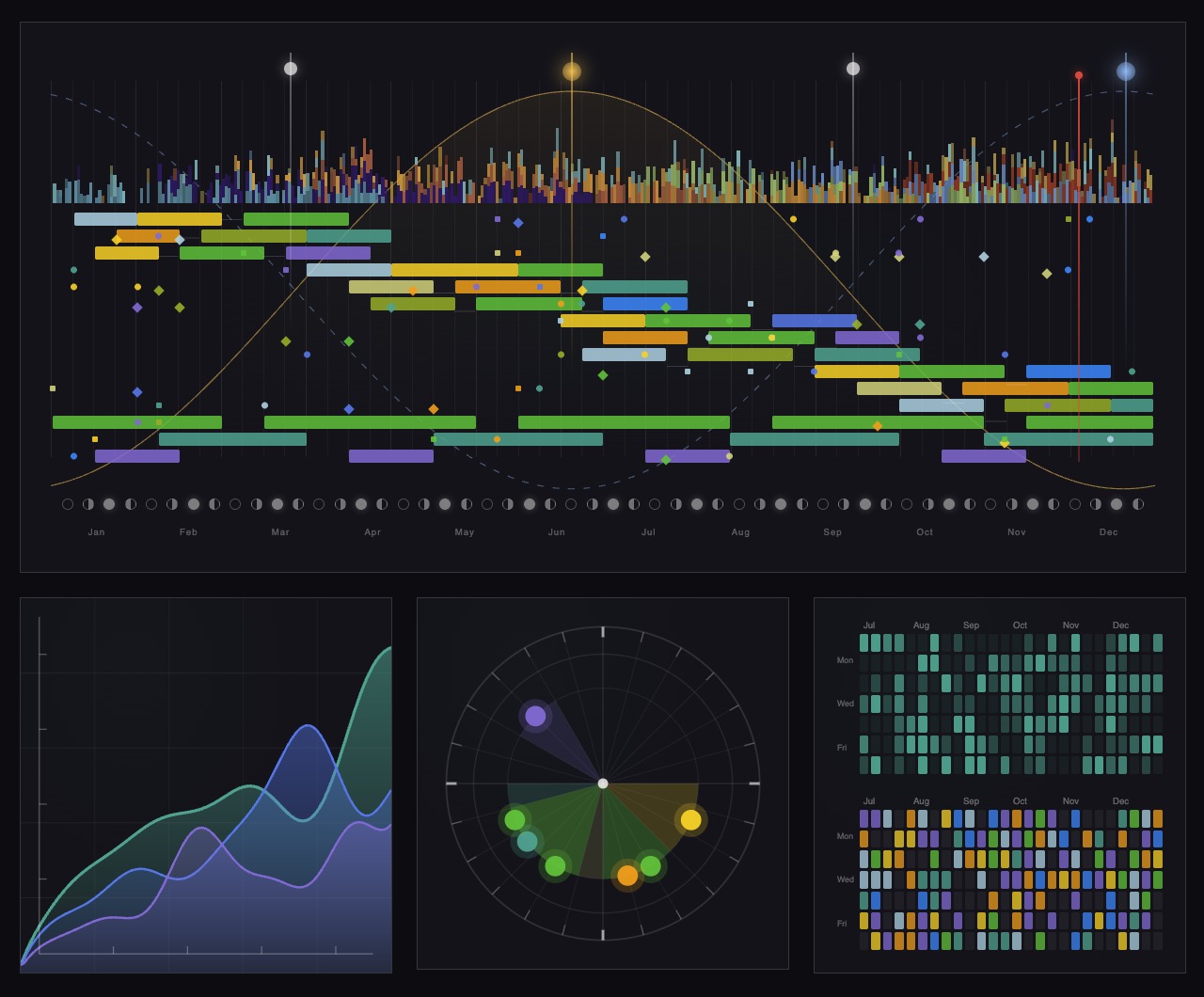
Custom project management system built from the ground up to support collaborative energies of projects. Features dynamic timeline visualization from past meetings, automated meeting artifact creation with summaries and action items, live editing capabilities, and organization by project phases. Single CMS collection architecture circumventing Webflow's nested collection limitations with JavaScript-powered status-based color coding, urgency indicators, and project timeline visualization. Real-time webhook integration enabling front-end CMS item creation without authentication. Designed to be more engaging and supportive than existing stale project management tools. Currently evaluating React architecture as alternative to Webflow-based approach given extensive custom JavaScript requirements - considering whether Webflow serves primarily as UI generator or if full React app would provide better integration. Decision made at 58:30-1:00:00 to park further development for ~6 months and identify simpler near-term plateau that team can actually use, while maintaining existing data structures (engagements, clients, meeting artifacts, initiatives, tasks). NEW DEVELOPMENTS: James prototyping 'James Today' personal workflow tool as interim solution - combines day/week views, time tracking, project urgency sorting, daylight visualization for team time zones, and Vedic astrology context (01:41:12). Key design principles: unified temporal views, quantitative and qualitative time awareness, drag-and-drop scheduling with auto-status updates, data capture for Claude retrospective analysis. Vision evolved to include dashboard representing engagements as organism showing energetic and temporal space each project holds (01:53:30), enabling forecasting, retrospective analysis, and team visibility. Move from request-only to offer-based model where team members can proactively propose involvement (01:55:37). STRATEGIC SHIFT: May 2026 - Decision to reactivate ClickUp as interim PM system while Iris OS vision continues development. Using 'caravan during house construction' metaphor (01:01:36) - ClickUp provides functional base while learning what's essential for dream system. Iris OS vision document shared with Ashle, expanding Phase One to incorporate administrative essentials alongside foundational vision elements (35:03). Core design principle clarified: base unit should be the asset (what we're building), not the task, with tasks serving milestones that serve assets. Client-facing should be simple with important assets surfacing; internal should provide journey map with clear stages. Meeting artifacts to be defined upfront per project. James acknowledged being 'designated bottleneck' with resistance to systematizing (01:02:35), goal is moving from triage mode to system he can step away from. JULY 2026 UPDATE: ClickUp now fully synced with custom Collaboration OS app (08:30). Tasks flow bidirectionally on scheduled cadence - ClickUp updates pull into app every 15 minutes, task updates sync back every 30 minutes. Today's focus (07/07/2026) is reworking artifact automation to create posts directly on website and tasks straight into ClickUp, consolidating everything into one place rather than generating separate Airtable artifacts. Strategic design advantage: custom interface enables calmness, spaciousness, and clarity over ClickUp's high information density (10:58). Vision includes simple milestone timeline views helping clients see what they need to do rather than parsing long compiled task lists. App to be published to Vercel for team collaboration. Ashle will be able to log in, update tasks, and comment directly. James merging earlier Iris OS phase one document with current Collaboration OS plan - currently on phase three of app development (29:09). Key question to revisit: what do we lean on the interface for, and what systems need to be strong independent of the technology?
Development of interconnected, reusable platform modules that can be deployed across multiple client sites. Goal is creating an ecosystem where components built for one client (assessments, directories, matching algorithms, LMS) can be rapidly deployed for others with minimal rework (21:45). More ambitiously, envisions profiles and content that travel across client platforms - so a user on Hollow Movement could bring their profile into Pro Social environment or access a course running simultaneously across multiple sites. Uses Webflow as foundation with significant custom code. Hollow Movement app serves as first proof of concept, launching at The Wave event at 01:30. Platform includes: AI-assisted profile generation with auto-generated tags and categories, global directory and map systems, holon (group/organization) profiles with wall-sharing, member-to-member messaging, assessment systems with archetype graphs, intelligent matching with compatibility analysis, sliding-scale membership payments, and planned learning management system. Community naming process proposed at 04:14 to turn naming into collaborative activation moment during launch, letting early users contribute ideas and deepening community ownership. Platform currently at temporary domain, team jokingly calling it 'Jeff' or 'Goeff'. This represents Iris's strategic direction toward productized, scalable solutions while maintaining customization for each client's mission. NEW DEVELOPMENTS: Hollow Movement identified as ideal test case for continued support pricing model with tapering structure (40:36). Similar directory system being designed for Gaia Warriors with upgrades flowing between projects. Codebase organized with replication in mind. James considering dedicating more time to platform evolution with potential for fewer outside projects. App reaching stable beta state by end of week for launch (27:44, 57:44). TESTING & COMPLIANCE: Ashle conducting cross-device and mobile testing with focus on mobile responsiveness (01:39:47). Bug discovered: phantom auto-generated purpose text appearing in profiles when field left as 'test' - needs investigation (01:42:02). GDPR compliance gap identified: need Data Processing Agreement with Anthropic and 'delete my profile' self-service option on account page (01:33:32, 01:36:10). Purpose field UX friction noted - only ~7% of people have clear purpose, proposal to add purpose assessment alongside existing assessment. API credits need top-up to restore profile generation (01:35:04). JUNE 2026 UPDATE: Holos app now has hundreds of active users post-Wave launch with strong positive feedback from Monday team meeting. Core features stabilized including profiles, holons, messaging, and assessments. ClickUp task organization implemented across domains: bug tracking, messaging, privacy & analytics, design system migration, staging & deployment. Privacy infrastructure being strengthened with user-controlled map visibility settings at column-movement.net (20:11). AGENTIC VISION: Platform evolving toward intelligent matchmaking and agentic toolsets - users should be able to query network with questions like 'I'm exploring this domain, who should I talk to?' or 'What blind spots might our holon have?' (50:23). Requires privacy-preserving architecture using sub-agents and intelligent layers rather than exposing all user data to models. Long-term vision includes MCP server exposure so users' personal agents can query Holos database with privacy-aware modes. Design philosophy: build for future agent-to-agent collaboration on behalf of humans in addition to human users. Next major build area: online learning, courses, and resource library creation to give users reason to return regularly and round out platform. JULY 2026 UPDATE: Native iPhone app development progressing - Iván has real native iOS demo working, meaningful step beyond web app version (21:19). Opens real app-building capacity for IRIS Cocreative. Ashle's multi-device household (Mac, PC, Android, iPad) available as natural testing ground (35:55). User pattern noted: older male academics in their orbit often browse on iPads - worth remembering for responsive testing.
Development of collaborative digital pattern language inspired by Christopher Alexander's architectural pattern language. Maps generative and anti-patterns across scales: ecosystem, platform, product, space, component, interaction, and micro-moment. Anti-patterns include endless scrolls, manipulative urgency, and what Alexander called 'deadness.' Framework introduced at 45:00 and discussed through 48:50. Intended to live as collaborative library rather than solo project, and should be interwoven into IRIS's internal operations and client engagements as foundational work. Currently exists in Obsidian folder to be shared with team.
Documentation and implementation of fractal action process framework drawn from Fernando Flores's action language. Process runs through stages: idea → exploration → commitment → execution → completion → integration. Emphasizes that successful projects move cleanly through portals of completion and coordination, while unsuccessful ones lose sight of the whole and either over-complete or never fully define done. Discussed at 50:10. Framework should be interwoven into IRIS's internal operations and client engagements as foundational methodology. Will inform how initiatives move through status lifecycle and how team coordinates around commitments.
Development of standardized contract and scope-of-work templates for IRIS operations. Addresses identified gaps at 1:06:00 including inconsistent client contract deployment (strong template exists but not always used) and complete absence of subcontractor contracts. Ashle offered to own contract drafting and scope-of-work creation with James on light-touch approval cycle. Includes: client contract template refinement (currently in InDesign, needs more editable format per 01:51:36), subcontractor agreement creation, scope-of-work frameworks, roles & responsibilities documentation. First deliverable is contract and scope for Ashle's own trial engagement at 1:09:50. Existing client agreement template to be shared from InDesign for Ashle's review and standardization (01:51:07).
Development of systems and processes to engage more team members in client work without exponentiating costs. Addresses pattern at 20:45 where clients like Hermit of Hermitage World and Tess (Gaia Warriors) are moving slowly through onboarding tasks (brand questionnaires, Airtable population) because work feels technical or overwhelming. Proposed solution: engage team members like Lauren as lower-cost technical/admin support presence for working sessions. Benefits include: freeing James from being sole point person, helping clients feel supported by team rather than individual, introducing more perspectives into client relationships, keeping portfolio hygiene and onboarding tasks moving. Also includes establishing more collaborative and cross-project check-ins internally while honoring asynchronous preferences of remote team members like Munia. NEW DEVELOPMENTS: Ashle to be copied on client communications initially to learn patterns and support invoicing/subscription follow-ups (52:38). Coordination needed with Munia on project management workflows and Figma access issues (01:15:40). Focus on offer-based engagement model where team members can proactively propose involvement and follow creative interests rather than only responding to requests (01:55:37). JULY 2026 UPDATE: Ashle actively taking on financial coordination and client invoice management, ready to scale but currently bottlenecked waiting on James for deep dive into hosting clients, accounting, and Bonsai (23:43). Plan established: James blocking Wednesday and Thursday for financial systems handoff, will forward all contractor invoices and contracts to Ashle for Bonsai input and Google Drive organization. Ashle will handle contractor invoice tracking for 1099 filing. James will continue sending client invoices (Re:Village Earth, Uncommon Partners, Cloud Medical) and copy Ashle to build pattern learning. ClickUp task organization conventions established per James's preferences: grouped by domain (accounting, operations, admin as separate lists), client invoices as task with subtasks per client, due dates aligned to his Thursday accounting focus blocks, priority flags for time-sensitive items (26:41). Ashle restructuring tasks accordingly with Thursday-dated accounting items.
00:00:04
James Redenbaugh: This meeting is being recorded.
00:00:40
Ashle Bailey-Gilreath: Ethan. Oh, can't hear you. We can see you speaking. Yeah. Oh, there.
00:00:54
James Redenbaugh: Can you hear me now?
00:00:55
Ashle Bailey-Gilreath: Yeah.
00:00:55
James Redenbaugh: Yes. Hi, Ashley.
00:00:58
Ashle Bailey-Gilreath: Hey, how are you?
00:01:00
James Redenbaugh: I'm doing well. Let's start off a call with the Hollow movement. How are you doing?
00:01:07
Ashle Bailey-Gilreath: I'm doing good. Doing good. We got a puppy. I think I told you that. So she barks, which is a new thing for us because our dog that we had previously for over 14 years did not ever bark. So if you hear her every once in a while, it's because something happened, like someone closed their car door or someone walked by our window. Hopefully she'll learn to not do it so much, but doing good. How was your meeting?
00:01:41
James Redenbaugh: It was good. We were meeting about the activation day at the wave, the last day of the wave, where we'll integrate the experience and do a lot with this platform. We've been building onboarding folks into that, getting people set up, and. Yeah, it's exciting. It's coming together.
00:02:06
Ashle Bailey-Gilreath: Do you feel comfortable with your timeline to. To get it done?
00:02:17
James Redenbaugh: I think as comfortable as I ever am with timelines.
00:02:21
Ashle Bailey-Gilreath: Okay.
00:02:24
James Redenbaugh: It feels like it's. There's a lot to do, but we've come a long way. If the wave was tomorrow, it wouldn't be the end of the world, which is great. And we have a month, so. So that feels good. And there's a lot more that I would like to have in place before the wave.
00:02:46
Ashle Bailey-Gilreath: Okay. Yep. Well, it's great to be able to, like, tease some of those other features, and then people want to hang out and use it and see those things roll out. You can always think about it that way.
00:03:00
James Redenbaugh: Yeah. I mean, it was. It's always the, you know, a beta leading up into the wave, and then the real development kind of begins when people are actually on the platform and using it and we can respond to their. Their needs and feedback. And so we've always known that, you know, we want to have these core features in place. We want people to be able to sign up and create profiles and whatnot. But after the wave, and then they're planning on the 2027 wave to be, like, okay, really big and much bigger. And there's lots of things that they want to do throughout the year. So I think it will. It will really evolve through the course of the year. But already it's really cool what we can do with it. We still have to pick a name. We're talking about, like, what are we even calling it? And it's just at a temporary domain Right now. But you know, you can log in, create a profile, fill out assessments. Matching is almost online. Join a whole on.
00:04:14
Ashle Bailey-Gilreath: I wonder if you could make the name creation part of the activation day where basically like that group of people feel like a part of that. And while they're. While they're like listening to you and maybe using it and stuff, you could get. You all could like give some space to let people submit ideas for names and then maybe an interesting collaborative.
00:04:44
James Redenbaugh: Yeah.
00:04:44
Ashle Bailey-Gilreath: Next step in it. So basically you can launch it without a name because you intentionally wanted other people to support you. That stuff. It's like it would be an easy way to get by with not having a name.
00:04:58
James Redenbaugh: Yeah. You know, a lot of the best things are named after you can see them and experience them.
00:05:12
Ashle Bailey-Gilreath: Kids and dogs.
00:05:14
James Redenbaugh: Yeah.
00:05:15
Ashle Bailey-Gilreath: I mean it's great to pick out names, but then you're like, you're not. You're not at all a Richard, you know.
00:05:26
James Redenbaugh: Yeah, exactly. That's a great idea. We can call it the Hollow Movement app for now.
00:05:31
Ashle Bailey-Gilreath: Yeah. I mean obviously run it by them, but it might be a way to kind of like not have that be a sticking point and not have. If there's other things you need that team to be thinking about a lot of people as someone on the other side of being a client for these things. A lot of people obsess about those little bit of details like the name or like a collar. And instead you really need them to be supporting the process elsewhere. So that might could be a way to like get that off their minds and have them helping with anything else that you need. But it also is very, very on brand for what you do for the Hollow Movement for all of that. And I think there might be a cool name that comes forward or there might not be and it's okay, but it bought everybody some time to think of something so.
00:06:26
James Redenbaugh: Cool. We've been jokingly calling it Jeff for lack of a better name.
00:06:37
Ashle Bailey-Gilreath: I think that sounds good. You could do the George or G O, E F F spelling. The European spelling.
00:06:49
James Redenbaugh: Yeah. So I saw your notes. I had a. A few minutes to read through them in the doc. Thank you for, for reading all of.
00:07:03
Ashle Bailey-Gilreath: This and thanks for putting it together.
00:07:07
James Redenbaugh: And responding and where do you think we should start?
00:07:14
Ashle Bailey-Gilreath: So first, I am totally on board with your ideas of what this looks like semi. Structurally. I love that idea. I don't know if you want to like. I don't know if you want to go through it. Some of it are just comments and we can just skip over those. Some of them are questions. So I wrote these comments in real time as I was reading it. So some of them maybe were a little bit more clear to me as I got through the end of the document. I think two questions that I had that are very boring but very essential are, how is IRIS co created? How is that formed as an entity? Like, are you a sole proprietor? Are you. Is it.
00:08:11
James Redenbaugh: Yeah, I'm just a sole proprietor of an llc.
00:08:15
Ashle Bailey-Gilreath: Okay. Okay. And like, do you have any kind of accounting system at all?
00:08:22
James Redenbaugh: Yes.
00:08:22
Ashle Bailey-Gilreath: Okay. I mean, I know that you have a way to invoice because we've. You. We've been on the receiving end of that, but I just didn't know how you go about that aspect of it. And since you are a sole proprietor, I don't know, I guess I just have questions about thinking about budgeting and all of that. And if you want to. Even though you are registered as a sole proprietor, if you want to think about this as its own business, business entity, like its own ecosystem basically, and resourcing that whole ecosystem, and then that might naturally lead into, well, maybe it would make more sense for you to be a 501C3 or this or that. But those were the things that I was curious about. Like, thank you for all of the structures and tools and platforms that you all use. But then like, from an operational financial standpoint, I was curious about your registration and then. And your accounting system, just how you keep records of that stuff. Like, and I have a feeling a lot of it's in your head, but.
00:09:41
James Redenbaugh: A lot of it is. And you know, some of it has to, like, we just did our taxes and I had to find all our expenses. And we use this app called Bonsai.
00:09:53
Ashle Bailey-Gilreath: Okay.
00:09:53
James Redenbaugh: Which is actually a really cool app that's kind of built for studios. It feels like it makes it easy to manage clients. And I can, I can put everything into the app and it will, you know, show us profit and loss on a project by project basis and. And different things. I didn't do that last year for some reason. Reason I think just because I was so. I was so busy and instead I have a big spreadsheet.
00:10:31
Ashle Bailey-Gilreath: That's fine. I mean, I. I love spreadsheets. Like, that's a big joke actually, with everyone that I work with. I love spreadsheets. I would organize everything in spreadsheets if I could. Like sometimes you. I mean, we talked. Well, you mentioned. And I wholeheartedly agree that like, the UI for airtable is awful. So sometimes I just get so frustrated that I'M like, you know, it would be a lot easier if I just put this up to a spreadsheet. And so even though I know technically it's also supposed to be spreadsheets, it's just, but, but I mean whatever work, however, whatever works for you. I just was curious when thinking about like costing and all that and obviously thinking about the direction that you want to take everything like being able to have that kind of an overview of what that looks like and like building scenarios, like any kind of archival information is helpful but then also because you are a sole proprietor, I don't know how much of that information you would want to share with someone. So. But it's hard, it's hard to kind of be able to give projected options without some historical information.
00:11:53
James Redenbaugh: Yeah. But I think it's also going to be hard to project. Regardless because there's so many, there's so many variables and so many new things. So we have new team members, we have new processes and we have new technologies and this year already looks very different from the last. We're like, you know, I did a rough spreadsheet of our projects and stuff this year and, and we've like, we've made like twice as we've already made way more than we made all of last year. Profit wise things are a lot more efficient. I think that the, the tools I spent a lot of time researching and developing last year are paying off now to make things a lot more efficient. And everybody we're working with right now is creating, creating profit. Last year we had some, some hires that didn't pan out and ended up being costly.
00:13:17
Ashle Bailey-Gilreath: Yeah.
00:13:19
James Redenbaugh: So that's looking good and I think that it will, things will continue to change. Also with the technology, it's just evolving so rapidly. GPT image 2 just came out like 4 days ago and already it's having me rethink our initial like mood boarding and everything and our initial prototyping process. You know, what used to take weeks I can do in a day and right now we're still building. You know, most of the time is taken up building the webflow website, but a year from now we might have AI do all of the building.
00:14:14
Ashle Bailey-Gilreath: Yeah.
00:14:16
James Redenbaugh: So but yeah, there's lots of things that we can, we can look at things that I can pull together.
00:14:24
Ashle Bailey-Gilreath: Well, probably what will end up just happening is I'll just have specific questions for you and then you can fill in that blank with an answer or number and we'll just move forward. Maybe one of the most helpful things would be to know. Would be like mistakes. So, I mean, you mentioned. I don't know, I guess mistakes may not be the best word, but. Well, I'll see. I'll see once I get into it, like, because I may not. Actually, I think I'm. I'm. Like I said, I like too much information because I usually have a lot of questions. But I'll just wait until I get to that point and we'll see where we go from there. But that's, that's those. I just wanted to. That helps me kind of orient. Answering those two questions helps me orient in general when thinking about all your other stuff. But I don't know if you want to go through the document with the questions or comments that I made.
00:15:37
James Redenbaugh: Yeah, I think we can.
00:15:40
Ashle Bailey-Gilreath: I mean, we don't obviously have to go through every single one, but some of them may be helpful.
00:15:50
James Redenbaugh: Yeah, I think a few stuck out for me and then I can take more time to answer all the questions in here.
00:15:58
Ashle Bailey-Gilreath: Okay.
00:16:00
James Redenbaugh: Asynchronously.
00:16:02
Ashle Bailey-Gilreath: Okay.
00:16:03
James Redenbaugh: I think that there's a question of, like, what. What could you help us with for clients and what could you help us internally? And I think that those things could be symbiotic as well. I think it would be really helpful for you to experience the client relationships and see what it's actually like in. In different meetings. And I think it would be really helpful to have your hands on a few different things. So. Yeah, so like with Hermit of Hermitage World, they've been radio silent, which is kind of weird. They were, like, really excited to start. I gave them this detailed branding questionnaire. I set up a FIGMA space for them and they're like, oh, this is a lot. This is a lot to do. And I'm like, yeah, great, take your time with it. You know, schedule our next session with me here thinking, like, usually the next week they'll have a session scheduled with me.
00:17:11
Ashle Bailey-Gilreath: Yeah.
00:17:12
James Redenbaugh: And I followed up and I got no response. But I see them, like, filling in the brand questionnaire slowly and adding things to the figma. So I know something's happening and I need to follow up again. And I'm not pushing it because we have plenty of else. Plenty else to do.
00:17:29
Ashle Bailey-Gilreath: I just didn't know if, like, I wonder if within the stewardship that you provide, like, if some clients might need, like a little bit of help, like a support person maybe for those things and it doesn't have to be you, but like, literally it's like a technical support person a little bit that has some good communication skills and stuff. So that if there is, if they need a little bit of a working session, it can be at a cheaper rate because it's with someone that's not you and then it at least gets the work done to get back to you to like progress the project. But that was an idea that I had of thinking forward for that because some of those things might be really intimidating for some people.
00:18:19
James Redenbaugh: Yeah, yeah. And you know, usually I'm, you know, I'm playing that role. I'm happy to have a working session with them and walk them through stuff like Tess and Gaia warriors is another example. I set up this airtable for her to start populating because she came to us wanting to build this directory and she has all these context and things that she wants to bring in. So I'm like, great, you know, I'll set up this environment so you can organize this information in here and then, you know, we can build the directory based on that. And it's, I think she's busy with a lot of things but it's, it's a slow process for her because she's not a technical person.
00:19:07
Ashle Bailey-Gilreath: Yeah.
00:19:09
James Redenbaugh: And I think that's a similar thing where she, she kind of needs somebody to hold her hand and, and I'm, I'm doing that, but having somebody else, it would be helpful, but it's also helpful just to, for the client to feel supported by a team and not just a person.
00:19:29
Ashle Bailey-Gilreath: Yeah.
00:19:30
James Redenbaugh: And to get different perspectives on things as well.
00:19:33
Ashle Bailey-Gilreath: Yeah. But yeah, I noticed like with a couple of them, I wonder if there's someone like maybe you mentioned Lauren on your team. She has really good like community based communication skills and admin support. I wonder if she might be a good person and presence for those types of sessions where like she's familiar with the tools, she has a good way of communicating. She's fine with supporting administrative type tasks and so this way she can help during that little bit and then they know they're going to connect back up with you. But, but it's like is your time cost a lot for you to help populate an airtable? Do you know what I mean? So it might be a way to like and, and also just to use like incorporate other people from your team in different stages. So everybody feels a little bit more involved, even the client. So that was the thought I had when seeing a couple of those.
00:20:31
James Redenbaugh: Yeah. Yeah. And that's another intention I'm holding or question I'm holding is how can we incorporate more of the team more of the time without, you know, Exponentiating our, our costs because.
00:20:52
Ashle Bailey-Gilreath: Yeah.
00:20:52
James Redenbaugh: You know, part of the reason why I'm the main point person is because the team members usually collaborating serially on a project. We don't have the designer and the developer and the copywriter in the initial meeting because the. They don't really need to be there. But I do want to find ways for things to be more collaborative and I want to also have more. Entertain meetings where we can just check in and talk about multiple projects.
00:21:37
Ashle Bailey-Gilreath: Yeah.
00:21:38
James Redenbaugh: And get in sync on things. It's hard working across so many time zones.
00:21:44
Ashle Bailey-Gilreath: Yeah. The Bali one sticks out a little bit, but from proposed social worlds. Experience oddly. Well. We have people a little bit more across us, but so 9pm my time, which is really late for your people in Europe, it'll be 10pm and then it's like 6am in Australia and it's a wonderful midday time for people in the United States of Canada. But. But I mean, there's a couple of. Maybe there's sort of like two time zone type meetings that can happen. But yes, I totally understand that struggle there. But. But yeah, I mean, I'm. I'm happy to support wherever, obviously with. For you specifically, like, and strategically and then operationalizing stuff for the team. But then also if it makes sense to support clients in certain steps in the process, they do do that too.
00:22:52
James Redenbaugh: Awesome. I built this World Clock app to make it easier to see where there's overlap. There's very little. Bali does make it hard.
00:23:05
Ashle Bailey-Gilreath: Bali makes it hard.
00:23:06
James Redenbaugh: I have Thailand on here because my sister's there and my dad was just there for three months.
00:23:11
Ashle Bailey-Gilreath: Okay.
00:23:15
James Redenbaugh: And. And Munia has a frustratingly consistent and stable work schedule. She's very. She has very normal hours in Bali, which is very good for her. I'm proud of her, but she's not like me, where I could. I could take a meeting at 2am yeah. But, you know, also she's. She's somebody who doesn't. She doesn't like a lot of meetings. She likes to feel connected. I've worked with her for maybe seven, eight years now. She's awesome. And I feel like she feels. I share recordings with her of the meetings and video recordings, and she'll watch the whole thing and see the analysis. And she feels connected that way. And if she has questions, she'll ask them. And so it's. It's not always necessary that we meet asynchronously. And part of the platform that I want to build for, you know, for our clients, but also for ourselves is to Give our team members more ways to connect and share and be involved asynchronously without needing to be live.
00:24:37
Ashle Bailey-Gilreath: Okay, good. Well, that's good. I'm glad that she feels that way and. But yeah, we can figure out what that looks like and maybe I can talk through whatever channels to some of your team members and see what kind of feedback they have and thoughts that they have and so put all that into something and figure out what that might can look like to improve communication and stuff for the project itself. And then just in general.
00:25:11
James Redenbaugh: Awesome. I have a question. I'm not sure it's kind of off topic, but I was just looking at your LinkedIn and I'm really excited by your different experiences and your education and. Yeah, I just, I did.
00:25:38
Ashle Bailey-Gilreath: I didn't really bring that up part, but yeah, so I have a background. I have a bachelor's in fine arts. It's mainly photography and art history. I ran an art space, a community art space in Memphis. But then I realized it was like in and over my head with the administrative management and funding side of things. And so my, well, my husband now, but my boyfriend at the time had thought wouldn't. Well and I had been talking about this for a while, but we were both were like, wouldn't it be cool to. I knew I wanted to do a master's so that I could fulfill being able to do community based arts management and opportunities. I ended up going down a different road, but still pro social and very pro social. So we moved over here because we. I found a program and I did a master's but then I ended up doing a second master's because I started to get really interested in evolutionary science and sort of the evolutionary backgrounds of like art making processes and like cognition and humans and like the role that that's played in our evolution. And so then I did a second master's in cognition and culture and that's how I linked up with David because I was really passionate about accessible science communication. And at the time that was around when David published this view of life, this book or evolution for everyone. And so that's how I linked up with David. And then I was a part of that world for a while and then that's. But then I had a management background. I also worked at University of Oxford in their research department as a research assistant on a bunch of really cool projects and all of that kind of came together and I did a PhD that I finished recently and it is on collaborative arts practices with photography. So looking at collective trauma in Northern Ireland because of the troubles here. So working with victims and survivors groups and having them work on collaborative photography projects to explore what active trauma looks like. I just finished that. So yeah, I have a really varied background.
00:28:17
James Redenbaugh: Congratulations.
00:28:18
Ashle Bailey-Gilreath: I don't know if that answered your question while I gave that summary, but yeah, no, definitely.
00:28:24
James Redenbaugh: And what does collaborative photography look like?
00:28:28
Ashle Bailey-Gilreath: So it's like participatory. So basically you. So I worked as a facilitator. I didn't take any of the images because it wasn't my story to tell. Basically, I facilitated workshops and shared spaces for people to work with. Image making, photography, you can use other art mediums so that they can talk amongst themselves and explore themes or ideas or thoughts or experiences that they've had using photography and then finding ways to support each other in that they can co create images together and then see how that looks from a narrative perspective of telling the story. In this instance of a collective, like of. Of a whole. So being able to share multiple sides of an experience. So in all collectives, it's made up of individual experiences, but a lot of those are shared or they overlap. So basically I facilitated workshop sessions that spanned months and months and months and months and months and people would explore image making. So we would look at artists or other examples of participatory collaborative photography and then they would go and explore. They would go through like archival information that they had or newspaper clippings, or they would go and take their own images. Some of them made really cool collages with their images and they would all give each other ideas and then also share really personal stories of experiences that they had had. Some wrote poems, some wrote letters, and it was a really cool process to be a part of and to help support that. So yeah, it's a very.
00:30:22
James Redenbaugh: That's awesome.
00:30:24
Ashle Bailey-Gilreath: Yeah, it's. It was really cool. So it overlaps a lot with the work that I ended up being a part of anyways in my professional life. And I've been working on that PhD since 2019, since before COVID So finally finished it. But. But yeah, so it overlaps a lot. So I have an arts background, so I'm aesthetically driven, as Jeff puts it. And. But. But I very much always find myself in a collaborative or like facilitative or supportive role in it. So like basically providing the architecture and like foundation to give people the space to be able to explore those things and not be prescriptive about what art is and isn't, but just give people space to be collaborative. And that sort of started all the way back in Memphis before we moved over here. And I did. But it was an arts space for basically people who didn't have representation. And because all of the arts galleries in Memphis were very sort of uppity and exclusive and it was really hard for people who were making artwork to even get the experience of what it's like to. On an exhibition. And so I decided to make a space for what that looks like. But it was really hard to figure out funding for it and everything. So who knows, maybe decades from now I'll be back there. But in the meantime, I like the journey I'm on right now.
00:32:06
James Redenbaugh: Awesome. My wife and I met in a. Integral facilitator training.
00:32:14
Ashle Bailey-Gilreath: Okay.
00:32:15
James Redenbaugh: And she used to be a playwright in New York and did improv comedy there for eight years. But the last few years she's been working remotely for a tech company in, in New York City and figuring out what, what she wants to do next. And just recently she's decided to go back to school for art therapy.
00:32:48
Ashle Bailey-Gilreath: Hey, that's great.
00:32:49
James Redenbaugh: Yeah. And she's really excited about it. And now she's taking all these art. She's in like eight studio art classes.
00:32:57
Ashle Bailey-Gilreath: Yeah. It's awesome.
00:32:59
James Redenbaugh: And getting really excited about something at the intersection of art and facilitation and therapy and healing and.
00:33:11
Ashle Bailey-Gilreath: Yeah.
00:33:12
James Redenbaugh: And these things. And you know, she, she has the drama background, but she's also an awesome visual artist and there's just so much potential in that space. And it's one domain that's not going to be replaced by AI anytime soon.
00:33:29
Ashle Bailey-Gilreath: Yes. Thankfully. Although I will say from the photography side of it, AI is getting really good at hands. So pretty soon at least commercial photographers may be out of jobs. But that's really neat. There is a guy who interned for us, his name is Amand and he is in, I think it's Sweden. But he has a really interesting background with improvisational like drama and arts activism. So I can send his profile over to you, you can share it with her. But it's it. They do a lot of sort of like ecological activism through like drama based theatrical, like live installations. And it's very aligned with this whole world that we're in of pro social and hologram, like sort of culturally conscious people, but they have their own. And dance. And dance. Dance is a big part of it. But it's just a really cool thing that they're doing. And I gave her some ideas.
00:34:42
James Redenbaugh: Very cool. Yeah, yeah, definitely. So yeah, I was just curious about that because it's very exciting to Know your background.
00:34:52
Ashle Bailey-Gilreath: Yeah, that's. That is real. It's a very strange put together piece together background, but so a lot of people who I work with professionally, they don't realize I have that background at all because of the world I play and usually like sort of how direct and business minded I am. So behind there. I promise there's a wonderfully like collaborative human.
00:35:18
James Redenbaugh: I believe it. I believe it. And those things are important for collaboration. You know, it's. We need different, different kinds of people playing different roles.
00:35:29
Ashle Bailey-Gilreath: Yeah. I definitely hold one end of it and I think I even mentioned it in a comment in the document. And like one way that I've ended up working and a lot of the places I've been at, but one way that Jeff and I have worked with me very strategically is that I'm sometimes the bad cop, so he can stay the good cop. And I don't mind playing. So what I meant was sometimes you need to have someone come in and say, hi, your invoice is overdue, or whatever, you know what I mean? And then you can still continue to have that role that you have and relationship that you have with the client and absolutely don't mind being that person.
00:36:14
James Redenbaugh: I'm bad at bad cop.
00:36:17
Ashle Bailey-Gilreath: That's okay. I'm. I'm naturally pretty good at it, so. But I don't, I don't mind it, so. And it's good. It kind of like, you know, it's like two ends of a spectrum. It's like polls that you kind of need to kind of keep that. But that is, I'm. It's available for your service if it helps.
00:36:41
James Redenbaugh: Cool. Awesome. And I feel like we can design better guardrails for projects so we can more quickly see when things are going off track and more easily see when things are going well so that we can do more of that. And already in just the process of creating this doc, I feel like there's. An articulation forming of what we're actually doing that's going to be really helpful. I have, you know, structured things like this in, in the past and also, you know, previous iterations of this business. Iris is about 4, 4 years old,.
00:37:50
Ashle Bailey-Gilreath: But before we only. Okay, I was gonna say. Wow. I mean, yeah,.
00:37:56
James Redenbaugh: Before that we were Montaya, which.
00:37:59
Ashle Bailey-Gilreath: Okay,.
00:38:02
James Redenbaugh: Was similar. I was doing similar work with, with clients running a studio, but the studio was also one organ in a larger thing that, that initially was a, was a directory app that we were building that I, I branded and then joined. But then we were also doing co living Retreats and community facilitation and events and all kinds of things. And it was a beautiful mess. As much as things are messy in Iris now, it was 10 times worse in Montaya and it wasn't my fault because I was, you know, coming into it and, and we had an awesome community and, and so many friends and traveled the world and. And it was also pretty hippie and out there and disorganized and doomed to fail. I mean, it's still, there's still co living retreats happening, there's still space in California for it. But I was happy to simplify into Iris. And it was also the point at which we switched from WordPress to Webflow. Webflow as you know, is, is very different and comes with new opportunities and, and new challenges. And just to give you some history, before Montaya, there was a, a company I started with a friend called Being Design here in Philadelphia, a friend from college. And I was back here for a time and, and he just finished grad school and moved back and we started being designed together. And being designed was more like what Iris is now, but WordPress focused, similar kind of clientele, but running it with my buddy John, who's very similar to me, but also very Catholic. And I mean, Catholic might be the only difference, but that, well, that there's.
00:40:34
Ashle Bailey-Gilreath: A lot of cultural things there. I was raised Catholic, Both my parents are from. My dad was from New York, New Jersey, my mom's from Michigan. So that sort of Northeastern type of Catholic is a whole culture in and of itself. So I get it.
00:40:49
James Redenbaugh: Yeah. And you know, we're still dear friends and he's got four kids now and, and so we were serving like. Yeah, he's one of 12. Yeah, we were serving like integral evolutionary clients and like Catholic churches and stuff at the same time. But.
00:41:10
Ashle Bailey-Gilreath: That's, you know, ahead of your time.
00:41:12
James Redenbaugh: Yeah, I ended up moving back to California and sold him my half of the company for, for a dollar. And he's still running it and doing really well with it and it's awesome supporting his, his family of four with it and. But even before that I was in California right after college working for myself and briefly a part of another group we called Revive Holistic Design that was also doing physical space design and architecture and I studied architecture and sculpture. And not so much last year, but the year before I started doing architecture projects again. And that was very exciting, especially sacred space design. But I've kind of, I haven't really been pursuing those opportunities, even though I would love to do more of that again, just because it was hard to split my focus between the digital and the physical. And I couldn't really delegate, you know, architecture to my team. But there is a desire to kind of one day return to that. But also for what we build in IRIS to be applicable to collaborative and creative processes irregardless of the medium. So we're building brands and websites, but I like to think of it as spaces.
00:43:12
Ashle Bailey-Gilreath: Yeah, technically. I mean it's still, there's still spaces, it's still landscapes, it's still building. I mean it's just. We just have. It's in a different kind of reality or realm. So I mean it still is architecture to a degree with similar principles.
00:43:32
James Redenbaugh: Yeah. And have you heard of Christopher Alexander perchance?
00:43:40
Ashle Bailey-Gilreath: I don't know. Those two names combined sound like it could be anybody.
00:43:45
James Redenbaugh: Yeah, generic white guy names. He was. A architectural writer. He must be passed now. But I grew up with his books and he would write about place making and a relationship to the earth. And he has this beautiful framework and theory on, you know, how to build is more harmony with nature and think at multiple scales at once. It's very pro social.
00:44:24
Ashle Bailey-Gilreath: Yeah.
00:44:26
James Redenbaugh: And I've been getting back into his work lately and realizing that there's a need for a kind of digital pattern language and nothing really exists like that right now. And so I'm just starting to get into articulating a framework for this and it's, it's pretty exciting. A lot is coming out. It's also connecting to a lot of other research that I've already done and realizing that there's lots of things that can be named and articulated. And what's cool about a pattern language is it's like a big part of it is this library of patterns and this bigger context like about scales. So in architecture it's like ecosystem, region, town block, building, space, feature. And in the digital world it's ecosystem, platform, product, space, component, interaction, micro moment. And there are generative patterns that we could name and find and articulate and create a library of. And there's also anti patterns that are all too prevalent that are, that create. Christopher Alexander would call it like deadness. They're like, okay, they're dead. They disconnect us. And they're like, you know, manipulating people's emotions or the endless scroll or the, the artificial urgency. Sign up for this. Webinar now. You have five minutes to do it. And it's 5, 5, 5, 5, 5,. Whatever.
00:46:42
Ashle Bailey-Gilreath: Yeah, yeah. God, yeah. The co opting of the angel number thing is getting to be pretty extreme.
00:46:52
James Redenbaugh: Yeah.
00:46:52
Ashle Bailey-Gilreath: There's a whole. I mean, I think that's a really interesting sort of philosophical, like, framework that supports a movement that I'm seeing in general, like, just for social design spaces and movements. And, like, there's new public, which is. It's a new organization. It's a couple years old. I think they got some seed funding and they're looking at, like, basically creating online, like, sort of digital third spaces, like, basically social media convenings, bots that are not the way that all social media is right now. And there's the pro social tech collab, which is sort of like trying to be this space where all of these people interested in these things can hang out and share ideas and stuff. So I've been in conversation with Julia, who runs that with some other people, and they're all kind of coming out of UC Berkeley area. But I think what you're just. What you're talking about actually, like, creates this, like, theoretical kind of underpinning of, like, these things that people are the patterns and people that are recognizing it. But you need that. Right. Like, you need that part of it in order to create some sort of, like, reasoning for systemic, like, design for it to be, like, replicable. So that's really cool. I'm really interested in stuff like that.
00:48:40
James Redenbaugh: Awesome. Yeah.
00:48:41
Ashle Bailey-Gilreath: And I. I thank you for sharing that with me. That's really cool.
00:48:44
James Redenbaugh: Sure. I can. I can share more of a Deep Obsidian folder on it now.
00:48:51
Ashle Bailey-Gilreath: Okay.
00:48:53
James Redenbaugh: And I want to start. I don't know when I'll make time for it, but I would love for it to be a collaborative space that people can easily access online and contribute to. To make it collaborative and not just me seeing these things.
00:49:19
Ashle Bailey-Gilreath: Yeah. It's like a Wikipedia page, but in process because it's actually quite hard to contribute to Wikipedia pages. It's hard to even get it published. I've done a few of them and they're pretty strict guidelines, but yeah, I think that's a really cool way to be able to invite that collaboration and knowledge sharing.
00:49:45
James Redenbaugh: Mm. And so that's pattern language. And then I also mentioned in the doc, our action process, which comes out of a. I mean, it's largely inspired by action language. Are you familiar with Fernando Flores, per chance?
00:50:10
Ashle Bailey-Gilreath: Yes.
00:50:13
James Redenbaugh: He was a management. Is a management philosopher who was at Stanford for a long time, did a lot of writing on collaboration and coordination. And he's actually how my parents met.
00:50:35
Ashle Bailey-Gilreath: Okay.
00:50:37
James Redenbaugh: My mom was working for him and my dad was taking his courses and they met through him and My dad ended up teaching with him.
00:50:45
Ashle Bailey-Gilreath: And I didn't realize how much UC Berkeley was about to happen within this conversation today.
00:50:52
James Redenbaugh: Yeah. And so I grew up with this, with his, like, action language, which is a lot about, like, our requests and offers and moods and conversations for action, conversations for possibility on ontology, plurality, and, you know, and then got into my own things. A lot of integral theory, a lot of spiral dynamics, different things. But this, I can send this to you as well, is kind of my evolving articulation of our action process, which is also similar to the pattern language, is also fractal because there's different scales of action. There's the whole project, there's the parts of the project, we call them initiatives. There's a task, there's a micro moment. And from my perspective, from what I can see is everything that comes into reality goes through some form of this process or another. Where it starts as an idea. It becomes more tangible when we hold the idea together. There's this exploration, planning stage. It becomes more real when it's committed into action. You know, if we're just talking about starting a food truck, it's more real than when I was just dreaming about it. But when we're like, okay, you know, next week we're going to go talk to the bank or, or talk to the food truck dealer, it's. It's closer to reality. You know, it could almost be measured. And then when we're, you know, we have the food truck and we're painting it and we're designing the logo, it's in process. You know, it's. It's on its way, but it's. There's a point at which it's really here. There's a point at which we can say we have the food truck and maybe that's the point at which the menu goes out, or we sell the first sandwich or book the first gig or something. But it's like this finite gate, and then it becomes really real when it's integrated into a bigger whole. Like when we put the, the food truck on Google Maps. I don't know if food trucks go on Google Maps or whatever. We join the food truckers union. I don't know why I'm using the food truck example, but you get what I mean.
00:53:41
Ashle Bailey-Gilreath: Yeah.
00:53:42
James Redenbaugh: And like, these are kind of obvious things, but what I notice in just kind of naming the stages over the years, I've developed more of an understanding of these things. And they have different qualities. And there are these, like, finite gates, you know, three of these points are more like portals and three of them are more spaces. And I think that the success of a project or the part of any project is about going through those portals. Well, and in between those portals in the creative space, it's like anything can happen. Like, yeah, we can bring any idea into it. You know, there can also be tangential patterns where you can have an idea while you're in the completion stage. That's perfectly valid. But we have to get everything through these completion points and coordination points or it's not going to happen. And when a project is really unsuccessful, it's because we don't maintain a view of the whole process. And we have all, you know, we or the client have all these ideas of things we could do and other things that get started and. And we treat the deadline as a thing that's always on the horizon or we don't get. Get done. Then the things that are required for completion or we didn't define completion well enough in the beginning. So when we get there, we're like, how do we do it? And then we end up over completing and do do more than we really needed to to get it done.
00:55:43
Ashle Bailey-Gilreath: Yep, yep.
00:55:44
James Redenbaugh: So that's another domain of obviousness that I'm trying to map for a long time as well.
00:55:58
Ashle Bailey-Gilreath: Okay, I love that. Thank you. Yeah, send all that stuff because it helps. Because I mean, if these are things that you're working on and I mean, they're basically like the underpinnings of your work and the way that you think about and want to operate in this space. And so they should be interwoven into your internal operations and also just the way in which you go about your work with clients as well. So they're important. They're important. It's not just sort of like, you know, rabbit holes or anything. They're really important to like make sure. For me anyways, it's important for me to make sure that those things are represented in anything that we create so that it feels supportive to you and natural to you and everybody else, but mainly to you. So that it's something that builds a really nice foundation and direction that you feel proud of and comfortable with.
00:57:07
James Redenbaugh: Awesome. And just realizing It's. It's 11 here already. Originally we had half an hour scheduled. Do you have.
00:57:20
Ashle Bailey-Gilreath: I don't have.
00:57:20
James Redenbaugh: Else you need to run to?
00:57:22
Ashle Bailey-Gilreath: I don't, but I do. Oh, but I do just need to turn an alarm off on my phone. One second.
00:57:29
James Redenbaugh: Okay.
00:57:30
Ashle Bailey-Gilreath: But no, I don't have another meeting, so. But just one second.
00:57:32
James Redenbaugh: For me.
00:57:36
Ashle Bailey-Gilreath: It. Okay, thank you. Well, I will. I can manage our time better in the future. If you want to look through this document whenever you have time and make comments to some other things. Some of them are just comments. You don't have to respond to them. Some of them are questions. There's a little bit of like a theme to my questions. I realized as I was going through it for the domains of adding value. I wholeheartedly agree with all those things. I did wonder, not that I'm not against supporting any of this, but the portfolio hygiene. Yes, definitely. Like, I would love to oversee that, but I wonder if there's a way to engage someone who you've had experience with administrative support, like Lauren, to also do that as well.
00:59:13
James Redenbaugh: Yeah, that's a great idea and.
00:59:20
Ashle Bailey-Gilreath: But I'm very happy to help with all those things. And just with some of the information that I was able to get from your PM tool that you sent over, I had some similar ideas and comments. I do want to say that I don't think that your decision on your PM is like a hell yes or a hell no. I do think like in the short term you need to make a decision just to say, like, I'm gonna not work on this for the next six months while I work on all these other things. But I do think it's a little bit more nuanced. So, yeah, it's prioritizing. Yeah, I don't think it's. I do think that it might be overly complicated and not that that is. It's a bad thing, obviously for a user experience and you need your team to use it for efficiency reasons. But I think that what's happening is you have all these like fantastic ideas and you're working them into there because there's not currently a client or project that needs them. And so I think that's kind of like where that stuff gets funneled and I think it can all be usable and really helpful. But I just wonder at this point in the year, given your position and all the stuff that you are having a little bit of an existential crisis about, if the decision is not a forever decision, if it's just something to sort of decide for the next six months, it will hang out there and that's okay. It's not dormant. It's just on our task management for later in the year. Yeah, I don't, I don't think you should abandoned it, abandon it completely. I just don't know when we can think about it and talk about it more. But I just don't know if maybe right now is the best time to put more resources into it, especially if it's something that your team is finding it difficult to use. And so it might be easier to go for like low hanging fruit for right now, just to kind of like get that momentum going and making, getting everybody like within a rhythm of something and then slowly integrating that over into this other thing as you build onto it. But no, I don't think you should just abandon it. And I also don't think that you should just put everything you possibly can into it right now either.
01:02:06
James Redenbaugh: Yeah. And maybe there's a, a low hanging fruit plateau. We can arrive with it with relatively low effort because there's, there's so much work that I've done on it. And we have. I'll show you the, the back end real quick. This is something else. I'll show you that in a sec. We have all our engagements and clients and individual people and all these meeting artifacts and initiatives tracked. And this is just some of them. There's so many. And tasks, working sessions is something we haven't really utilized yet. But it's like there's all this data and content already in Airtable and then you've seen the artifacts and I showed you a preview of the engagement pages and they're just not, you know, it's a, it's a little too complicated on the front end and there's some features that it doesn't have and then I'll end up doing things like for my own tasks. I built this app just for myself and it's manual, just to have a little more simplicity and some features that I wanted for my own.
01:04:08
Ashle Bailey-Gilreath: I love that you feel this is simpler.
01:04:13
James Redenbaugh: It is, because it's like I just have my.
01:04:16
Ashle Bailey-Gilreath: Well, you made it so it works.
01:04:19
James Redenbaugh: Yeah, it works for me and my brain and I wouldn't expect the team to use it, but it's actually an app. I log into it. You could create an account and use it, but it helps me see my week and I like that. I can have a simple view here, but everything is there. I can track time. I can drag this over here to see how much time I have. I can drag things on a vertical axis even though it doesn't have any tangible reason. But it helps me just like think about my day and what I need to get done and track simple things here and track my habits and everything in one place. And so like that's helpful for me. But it's not connected to this and it's not connected to my calendar. But it could be. But I feel like what the team needs, a team member needs and what a client needs would be simpler than this.
01:05:18
Ashle Bailey-Gilreath: But definitely the. Yeah, yeah.
01:05:21
James Redenbaugh: I made this in like a day and I could make. Make something simple and usable relatively quickly. But anyway, something to think about there. I'm. I'm curious about how we can move towards like an articulation of. Of your role and I'm curious what. What you need from me and if we can afford for you even, and, and things like that. So how do we. How do we think about that?
01:06:13
Ashle Bailey-Gilreath: Okay, so. Well, one thing I noticed in your thing is that you don't always have contracts. Do you have contracts with the people that you work with, but you don't always have contracts with the clients?
01:06:26
James Redenbaugh: We don't always have con either. We have a great contract.
01:06:35
Ashle Bailey-Gilreath: Perfect.
01:06:37
James Redenbaugh: It needs.
01:06:38
Ashle Bailey-Gilreath: That's okay.
01:06:39
James Redenbaugh: I added it for each client and yeah, I don't always get around to it.
01:06:44
Ashle Bailey-Gilreath: That's okay. Well, I can help with that. That's what I do. That's what I do. And then I say, hey, James, this is done. Can you look at real quick, make sure I didn't totally miss something? And then you're like, good to go. And if I don't hear from you in a certain number of days, I'm gonna just assume I have your blessing and we're gonna get assigned. But do you have confidence? Do you have contracts with your subcontractors right now?
01:07:11
James Redenbaugh: No.
01:07:12
Ashle Bailey-Gilreath: Okay.
01:07:13
James Redenbaugh: No, we need to make those.
01:07:16
Ashle Bailey-Gilreath: Okay. So for. So right now I feel like I can only really give maybe 10 hours a week. So it's definitely part time. How does that feel for you? It might, it might change. But for right now we're. I'm finishing. I always, I always like to have other projects that I work on in addition to. I think I'm just gotten used to like always working full time and finishing like degrees and stuff. So I'm just really used to. I just like to have stuff to do great. And I'm moving literally down the street so in May, But I feel like I can do 10 hours a week for right now. Obviously, if some weeks required more and then some weeks probably less, but 10 hours a week for an amount because this is contractor based, not employment based and I have to pay bazillion dollars in taxes in the UK. I was thinking 70 to 75 an hour, we can talk about that. But that would align with the sort of stewardship and strategic partnership you've had there. And I'm trying to be conscientious of what your financial position may be. We can always trial it if you want like for a month and see what that looks like. We can always set like sort of short term actionable things and like reconvene and see if it's working. Because you had said before that in the past you've hired people, I think more for a project manager role and it didn't really work out for you and I don't. So this way you only got a month in for it and that month would be like, we'll figure out some very actionable things for me to do so that at least at the end of it you'll have some, some, some tangible benefit. Even if like we feel like it doesn't, it's not going to work out. But also I will say during that month it will require like me doing a little bit of like an excavation and asking questions so that I can feel properly onboarded to be able to do more stuff. And I love the things that you've outlined. I'm on board for those. If you want, I can sit there and try to make them look even more roles and responsibilities like, and basically frame up a contract and like a scope of work if you want me to do that, since you don't have a template that you use. But I can also just leave that information with you and you can think about it and get back to me.
01:10:21
James Redenbaugh: Yeah, that'd be great if you could articulate what that can look like. I'm definitely open to all of this and yeah, let's see what, what we could make possible. And, and I Wanna, I think 10 hours a week is fine to start.
01:10:47
Ashle Bailey-Gilreath: Like I said, it can, it. We can see how things go and it could go up to 20, but for right now, 10 is my max just for the next few months until I figure out, well, I just have to. We're uprooting our life and then settling back down. So just so we can kind of. And catch our breath because I just finished my PhD and my husband's about to finish his, so.
01:11:12
James Redenbaugh: Cool.
01:11:13
Ashle Bailey-Gilreath: Yeah. So, yeah, so 10 hours definitely for the next few months and then we can see if, if everything's going well. If you need more than that, we can see what that looks like. But I'm very on board with the part time.
01:11:29
James Redenbaugh: Awesome. Sounds good.
01:11:31
Ashle Bailey-Gilreath: Okay.
01:11:33
James Redenbaugh: I've got to hop on with Ivan in the uk. Okay. New Ivan, thank you so much for your time today. This is really exciting. Yeah. And really appreciate it and excited to see where this goes.
01:11:52
Ashle Bailey-Gilreath: Okay, cool. Thanks very much. I'll get something together for you and you can have a look.
01:11:58
James Redenbaugh: Great.
01:11:59
Ashle Bailey-Gilreath: All right, thanks.
01:12:00
James Redenbaugh: Thank you, Ashley.
01:12:00
Ashle Bailey-Gilreath: Bye.
01:12:01
James Redenbaugh: Have a great rest of your day.
01:12:02
Ashle Bailey-Gilreath: You too.
01:12:03
James Redenbaugh: Bye.







.svg%20(1).png)


.png)