

Ivan and James opened the session reconnecting after extended time away — Ivan returning from a meditation retreat in Colorado where he received the bodhisattva name Vadria, Clarity of the Living Dharma Flame, and James returning from a slower-paced trip through the Azores with Emily. The conversation drifted naturally into a shared exploration of parkour as embodied cognition — James describing it less as a sport and more as "awakening to the reality that our world is a playground," with implications for creativity, nervous system health, and innovative thinking.
Both noted the challenge of re-entering deep work after a break, with James reflecting on previously juggling 18 terminal windows and now relearning how to focus. Ivan shared a useful heuristic: four parallel processes is his maximum before decision fatigue sets in.
James floated a compelling workflow idea (13:33): instead of idly waiting while Claude [tag="claude"] processes long tasks, agents could assign him parallel work — research, design tasks, or prompt drafting — and reconvene at checkpoints, mirroring how human collaborators naturally split and synthesize work.
The Holos team had a strong Monday meeting with positive feedback flowing in from a few hundred active users. James onboarded Ivan into ClickUp, which is now the central task hub across projects, organized around top-level domains:
ClickUp statuses flow from Idea → Scheduled → Underway → Done → Integrated (the latter reserved for tested, published, and retrospected work). James noted he wants to revisit how to synthesize the list structure post-Wave without overwhelming contributors.
A central focus was scoping a native iOS app for Holos, with Android as a downstream benefit through the same codebase.
Ivan confirmed that Expo + React Native [tag="js"] is the right path, leveraging his prior experience with the framework. Key architectural points:
Ivan proposed running a spike to estimate MVP timeline and surface setup friction (deployment to the App Store being the main historical pain point, though likely smoother now).
James proposed starting with a focused subset:
[technology="Custom Membership System"]
The Webflow site's design system currently exists as code embedded on a single page. Sean is leading migration to robust Webflow components [tag="webflow"] — covering tags, cards, onboarding flows, editable fields, and more.
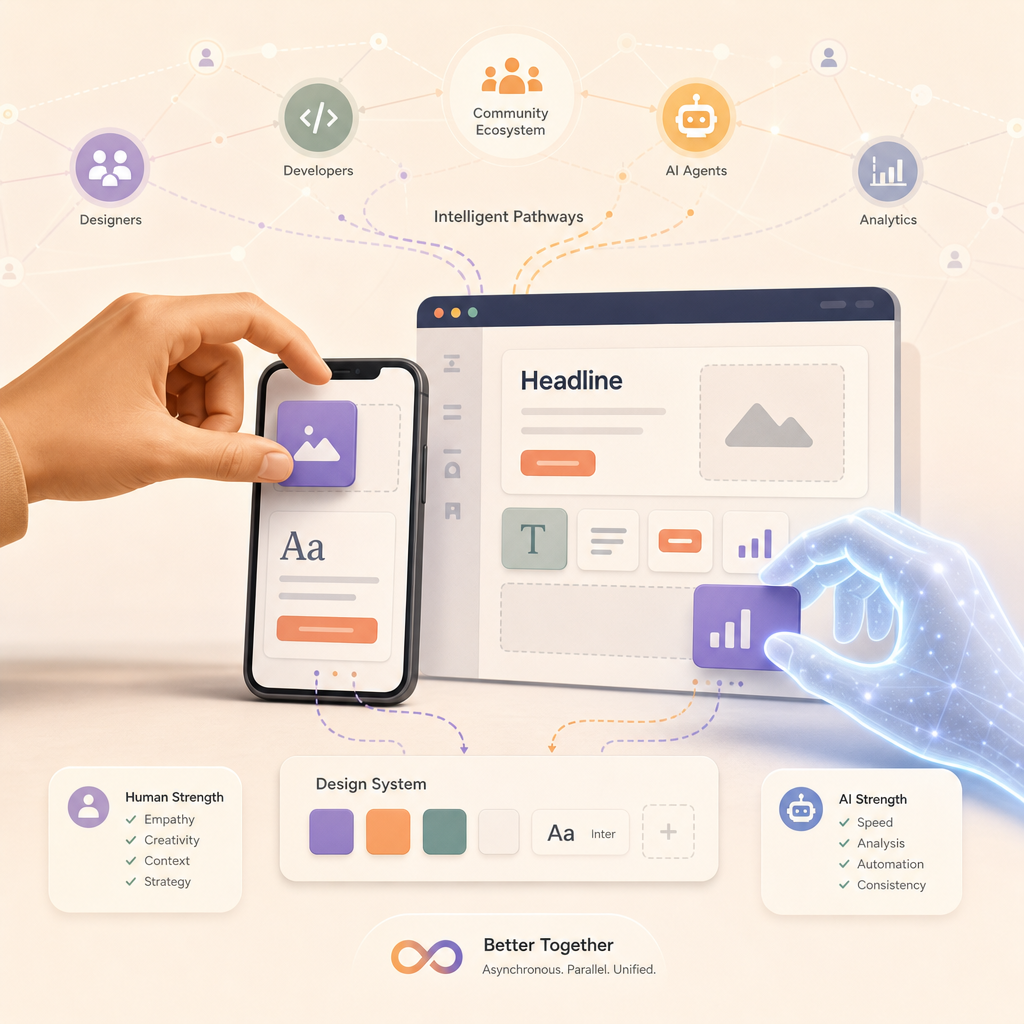
The strategic insight: this design system migration directly de-risks the mobile build. By formalizing components in Webflow and tracking corresponding React components on the design system page, the team can keep web and mobile in sync as features evolve. James and Ivan envisioned a workflow where features are built in tandem across platforms once the foundation is laid.
A meaningful coordination gap was identified across the stack. Current state:
lab.iriscocreative.com, served via GitHub Pages [tag="github"]James flagged this as time-sensitive: "We should figure that out if we're going to change it sooner rather than later." Each layer — Webflow, Supabase [tag="supabase"], n8n [tag="n8n"], and GitHub — needs its own staging consideration.
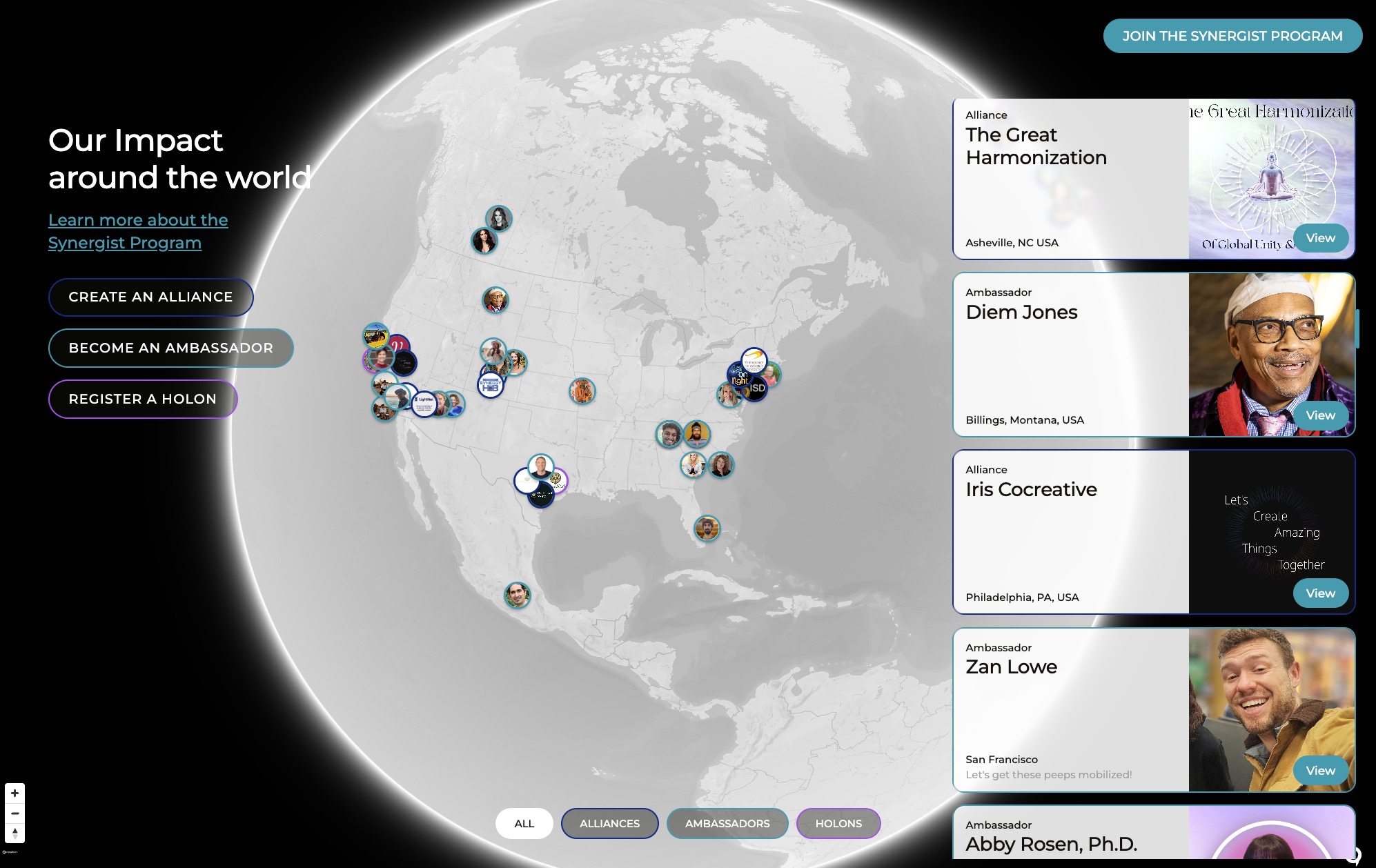
With hundreds of users now active, James outlined the need to strengthen privacy infrastructure and build deeper analytics to understand usage patterns. Users should be able to control granular settings — including whether they appear on the public map at column-movement.net.
The most expansive part of the conversation centered on Holos as "a transparent space for sharing, learning, and action." With real teams sharing resources, completing assessments, and connecting through holons, James sees the platform evolving toward agentic tool sets that let users query the entire network with questions like:
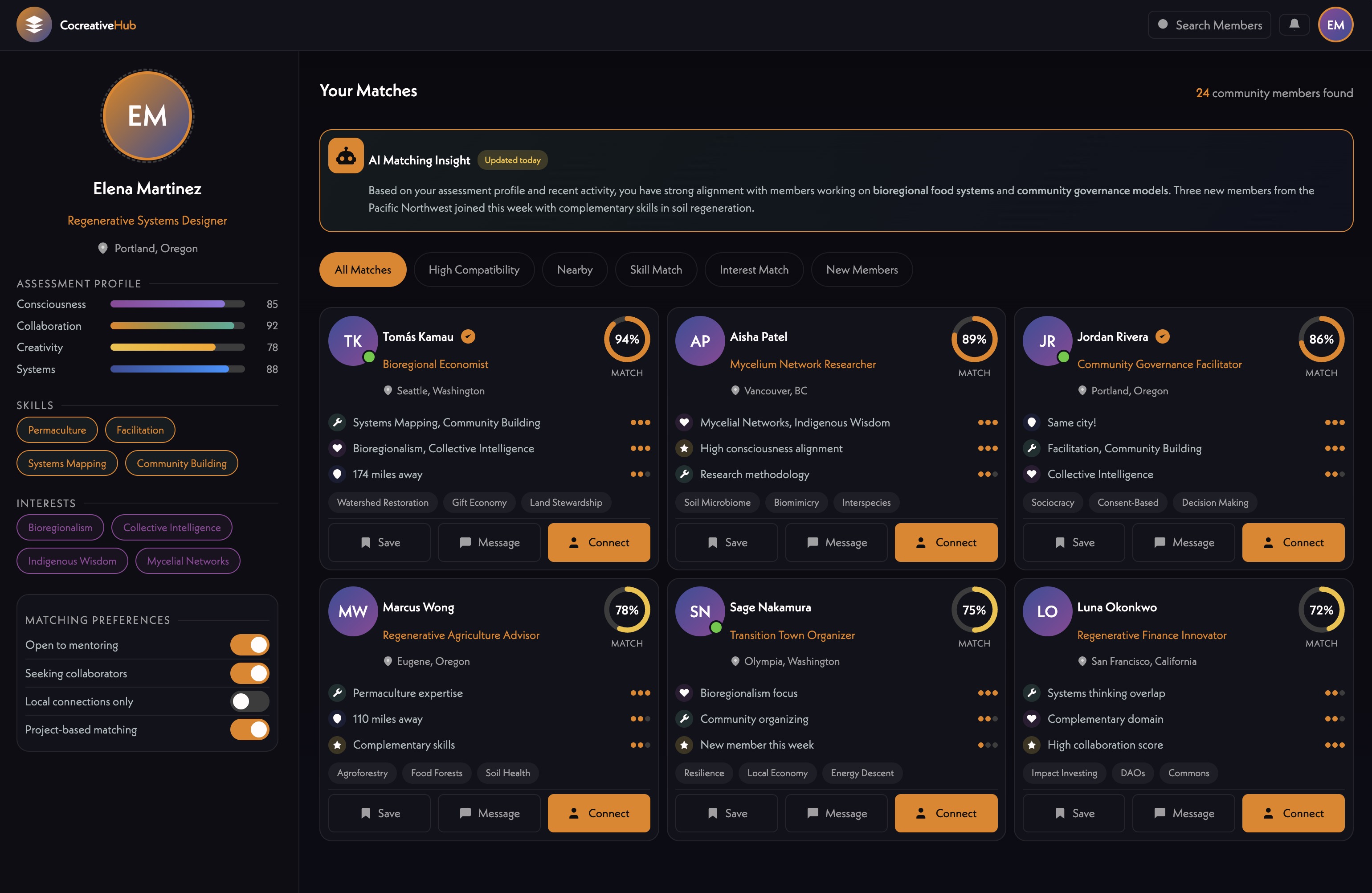
[technology="Intelligent Matching Algorithms"]
This requires solving hard architectural problems:
James floated the idea of eventually exposing an MCP server so users' personal agents can query the Holos database — with privacy-aware modes (e.g., returning only user IDs unless the requesting user is a member). Ivan resonated strongly, noting he already wishes in his daily work that "our agents could just talk through this and get back to us."
The strategic frame: design Holos for future agent users in addition to human users, recognizing that agent-to-agent collaboration on behalf of humans is inevitable.
[technology="Community Facilitation Tools"]
James previewed that the next major build area is online learning, courses, and resource library creation — directly leveraging Ivan's experience in those domains. This is seen as the missing piece that gives users a reason to return regularly and rounds out the platform.
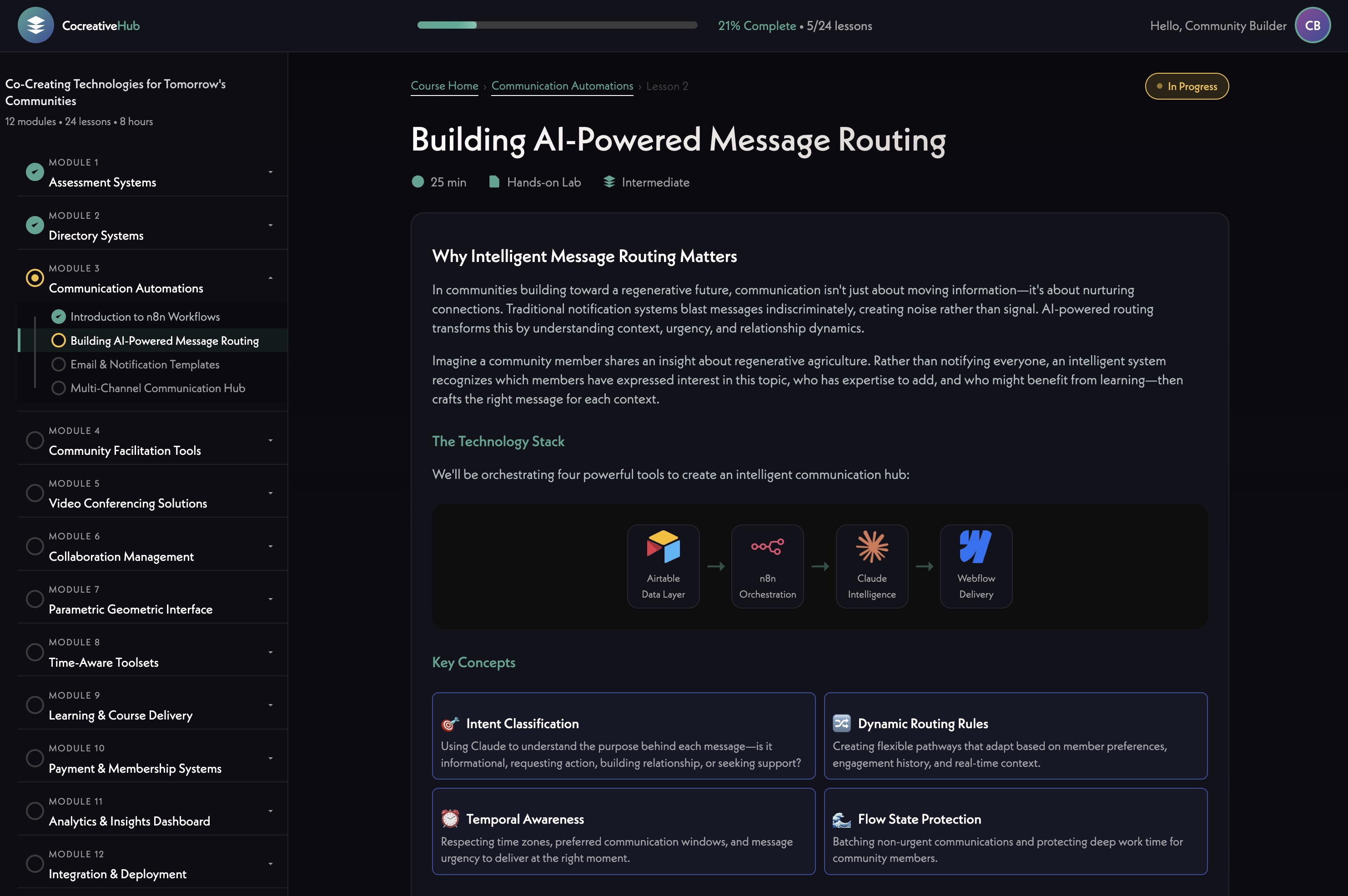
[technology="Online Learning Platforms"]
Ivan Gonzalez
James Redenbaugh
Ivan and James opened the session reconnecting after extended time away — Ivan returning from a meditation retreat in Colorado where he received the bodhisattva name Vadria, Clarity of the Living Dharma Flame, and James returning from a slower-paced trip through the Azores with Emily. The conversation drifted naturally into a shared exploration of parkour as embodied cognition — James describing it less as a sport and more as "awakening to the reality that our world is a playground," with implications for creativity, nervous system health, and innovative thinking.
Both noted the challenge of re-entering deep work after a break, with James reflecting on previously juggling 18 terminal windows and now relearning how to focus. Ivan shared a useful heuristic: four parallel processes is his maximum before decision fatigue sets in.
James floated a compelling workflow idea (13:33): instead of idly waiting while Claude [tag="claude"] processes long tasks, agents could assign him parallel work — research, design tasks, or prompt drafting — and reconvene at checkpoints, mirroring how human collaborators naturally split and synthesize work.
The Holos team had a strong Monday meeting with positive feedback flowing in from a few hundred active users. James onboarded Ivan into ClickUp, which is now the central task hub across projects, organized around top-level domains:
ClickUp statuses flow from Idea → Scheduled → Underway → Done → Integrated (the latter reserved for tested, published, and retrospected work). James noted he wants to revisit how to synthesize the list structure post-Wave without overwhelming contributors.
A central focus was scoping a native iOS app for Holos, with Android as a downstream benefit through the same codebase.
Ivan confirmed that Expo + React Native [tag="js"] is the right path, leveraging his prior experience with the framework. Key architectural points:
Ivan proposed running a spike to estimate MVP timeline and surface setup friction (deployment to the App Store being the main historical pain point, though likely smoother now).
James proposed starting with a focused subset:
[technology="Custom Membership System"]
The Webflow site's design system currently exists as code embedded on a single page. Sean is leading migration to robust Webflow components [tag="webflow"] — covering tags, cards, onboarding flows, editable fields, and more.
The strategic insight: this design system migration directly de-risks the mobile build. By formalizing components in Webflow and tracking corresponding React components on the design system page, the team can keep web and mobile in sync as features evolve. James and Ivan envisioned a workflow where features are built in tandem across platforms once the foundation is laid.
A meaningful coordination gap was identified across the stack. Current state:
lab.iriscocreative.com, served via GitHub Pages [tag="github"]James flagged this as time-sensitive: "We should figure that out if we're going to change it sooner rather than later." Each layer — Webflow, Supabase [tag="supabase"], n8n [tag="n8n"], and GitHub — needs its own staging consideration.
With hundreds of users now active, James outlined the need to strengthen privacy infrastructure and build deeper analytics to understand usage patterns. Users should be able to control granular settings — including whether they appear on the public map at column-movement.net.
The most expansive part of the conversation centered on Holos as "a transparent space for sharing, learning, and action." With real teams sharing resources, completing assessments, and connecting through holons, James sees the platform evolving toward agentic tool sets that let users query the entire network with questions like:
[technology="Intelligent Matching Algorithms"]
This requires solving hard architectural problems:
James floated the idea of eventually exposing an MCP server so users' personal agents can query the Holos database — with privacy-aware modes (e.g., returning only user IDs unless the requesting user is a member). Ivan resonated strongly, noting he already wishes in his daily work that "our agents could just talk through this and get back to us."
The strategic frame: design Holos for future agent users in addition to human users, recognizing that agent-to-agent collaboration on behalf of humans is inevitable.
[technology="Community Facilitation Tools"]
James previewed that the next major build area is online learning, courses, and resource library creation — directly leveraging Ivan's experience in those domains. This is seen as the missing piece that gives users a reason to return regularly and rounds out the platform.
[technology="Online Learning Platforms"]
Ivan Gonzalez
James Redenbaugh
Accept ClickUp invitation, set up profile, and familiarize with workflows and time tracking
Ivan to accept ClickUp invitation, set up his profile, and familiarize himself with workflows and time tracking across the domain-organized task lists. Referenced at 32:21.
Run spike on Expo-based iOS MVP for Holos covering profile management, holon viewing, and messaging — draft scope and hours estimate in ClickUp
Ivan to run a spike using Expo + React Native to estimate MVP timeline and surface setup friction (particularly App Store deployment). Scope covers profile creation/editing, viewing holons, and messaging as core interactions. Draft scope and hours estimate in ClickUp. Referenced at 33:37.
Contribute to staging setup discussion including review of current GitHub-based delivery and Cloudflare migration path
Ivan to contribute to the staging and deployment discussion, reviewing the current GitHub Pages delivery architecture and evaluating the proposed Cloudflare migration path. Referenced at 43:43.
Investigate how Cloudflare could enable environment-specific JavaScript serving for staging
Ivan to investigate the technical feasibility of using Cloudflare to serve environment-specific JavaScript, enabling a true staging environment distinct from production. Referenced at 43:43.
Onboard Ivan to ClickUp and organize task lists across domains including bug tracking, messaging, privacy, analytics, design system, and staging
James to complete Ivan's ClickUp onboarding and ensure task lists are organized across the key domains: bug tracking, messaging, privacy & analytics, design system migration, and staging & deployment. Referenced at 32:21.
Coordinate with Sean on Webflow design system migration and track corresponding React component mapping for future mobile parity
James to coordinate with Sean on migrating the design system from embedded code to robust Webflow components (tags, cards, onboarding flows, editable fields), and establish a process for tracking corresponding React Native components to maintain web/mobile parity. Referenced at 21:26.
Investigate current GitHub Pages delivery architecture and plan Cloudflare migration
James to investigate the current architecture where Webflow scripts point to lab.iriscocreative.com served via GitHub Pages, and plan the migration to Cloudflare for improved staging and rollback capabilities. Referenced at 44:26.
Lead privacy policy improvements and analytics enhancements including user-controlled map visibility settings
James to lead privacy infrastructure improvements and deeper analytics capabilities for Holos now serving hundreds of active users. Includes giving users granular control over settings such as whether they appear on the public map at column-movement.net. Referenced at 20:11.
Continue conceptual development on agentic matchmaking, MCP server possibilities, and privacy-preserving model interactions for Holos
James to continue developing the agentic vision for Holos — including intelligent matchmaking across the network, exposing an MCP server for personal agent queries, and solving architectural challenges around stripping/reattaching personal data so models work on anonymized information. Referenced at 50:23.
Synthesize ClickUp list structure post-Wave to reduce contributor overwhelm while maintaining domain clarity
James to revisit and synthesize the ClickUp list structure following the current development wave to ensure it remains navigable and doesn't overwhelm contributors as the team grows beyond Ivan and Sean. Referenced in meeting context around ClickUp onboarding discussion.
Scope and plan online learning, courses, and resource library feature for Holos platform
James and Ivan to begin scoping the next major build area for Holos — online learning, courses, and resource libraries — leveraging Ivan's prior experience in those domains. Identified as the missing piece that gives users a reason to return regularly. Referenced in the Upcoming Focus section of meeting notes.
Development of interconnected, reusable platform modules that can be deployed across multiple client sites. Goal is creating an ecosystem where components built for one client (assessments, directories, matching algorithms, LMS) can be rapidly deployed for others with minimal rework (21:45). More ambitiously, envisions profiles and content that travel across client platforms - so a user on Hollow Movement could bring their profile into Pro Social environment or access a course running simultaneously across multiple sites. Uses Webflow as foundation with significant custom code. Hollow Movement app serves as first proof of concept, launching at The Wave event at 01:30. Platform includes: AI-assisted profile generation with auto-generated tags and categories, global directory and map systems, holon (group/organization) profiles with wall-sharing, member-to-member messaging, assessment systems with archetype graphs, intelligent matching with compatibility analysis, sliding-scale membership payments, and planned learning management system. Community naming process proposed at 04:14 to turn naming into collaborative activation moment during launch, letting early users contribute ideas and deepening community ownership. Platform currently at temporary domain, team jokingly calling it 'Jeff' or 'Goeff'. This represents Iris's strategic direction toward productized, scalable solutions while maintaining customization for each client's mission. NEW DEVELOPMENTS: Hollow Movement identified as ideal test case for continued support pricing model with tapering structure (40:36). Similar directory system being designed for Gaia Warriors with upgrades flowing between projects. Codebase organized with replication in mind. James considering dedicating more time to platform evolution with potential for fewer outside projects. App reaching stable beta state by end of week for launch (27:44, 57:44). TESTING & COMPLIANCE: Ashle conducting cross-device and mobile testing with focus on mobile responsiveness (01:39:47). Bug discovered: phantom auto-generated purpose text appearing in profiles when field left as 'test' - needs investigation (01:42:02). GDPR compliance gap identified: need Data Processing Agreement with Anthropic and 'delete my profile' self-service option on account page (01:33:32, 01:36:10). Purpose field UX friction noted - only ~7% of people have clear purpose, proposal to add purpose assessment alongside existing assessment. API credits need top-up to restore profile generation (01:35:04). JUNE 2026 UPDATE: Holos app now has hundreds of active users post-Wave launch with strong positive feedback from Monday team meeting. Core features stabilized including profiles, holons, messaging, and assessments. ClickUp task organization implemented across domains: bug tracking, messaging, privacy & analytics, design system migration, staging & deployment. Privacy infrastructure being strengthened with user-controlled map visibility settings at column-movement.net (20:11). AGENTIC VISION: Platform evolving toward intelligent matchmaking and agentic toolsets - users should be able to query network with questions like 'I'm exploring this domain, who should I talk to?' or 'What blind spots might our holon have?' (50:23). Requires privacy-preserving architecture using sub-agents and intelligent layers rather than exposing all user data to models. Long-term vision includes MCP server exposure so users' personal agents can query Holos database with privacy-aware modes. Design philosophy: build for future agent-to-agent collaboration on behalf of humans in addition to human users. Next major build area: online learning, courses, and resource library creation to give users reason to return regularly and round out platform. JULY 2026 UPDATE: Native iPhone app development progressing - Iván has real native iOS demo working, meaningful step beyond web app version (21:19). Opens real app-building capacity for IRIS Cocreative. Ashle's multi-device household (Mac, PC, Android, iPad) available as natural testing ground (35:55). User pattern noted: older male academics in their orbit often browse on iPads - worth remembering for responsive testing.
Development of comprehensive design system for IRIS including UI/UX standards: padding and margins, color palette strategies, navigation elements, button styles, and overall style guides. Creating reusable templates and visual cohesion across all platform interfaces. Foundation for rapidly building new client projects while maintaining quality and consistency. Exploring integration with Mast Framework's advanced component system including custom props, nested components, Phosphor icon library, CSS variables, and clamp-based responsive typography with mathematical ratio scaling (1.25 min, 1.41 max based on √2). JUNE 2026 UPDATE: Sean leading migration to robust Webflow components covering tags, cards, onboarding flows, editable fields, and more (21:26). Strategic insight: this design system migration directly de-risks the mobile build by formalizing components in Webflow and tracking corresponding React components on design system page, enabling web and mobile to stay in sync as features evolve. Design system serves as bridge between Webflow HTML/CSS (which cannot be directly ported to React Native) and native mobile components - each Webflow component will eventually have mirrored React component. Team envisioning workflow where features are built in tandem across platforms once foundation is laid.
Development of native mobile application for Holos platform using Expo + React Native framework, targeting iOS with Android as downstream benefit through same codebase. Technical architecture reuses existing Supabase backend fully across web and mobile. Frontend requires translation from Webflow HTML/CSS to React Native (CSS-like subset) - cannot be directly ported. Strategy: robust design system serves as bridge, with each Webflow component eventually mirrored by corresponding React component tracked on design system page. MVP feature scope (33:37): profile creation and editing, viewing holons user is part of, messaging as core interaction. Development approach: Run initial spike to estimate MVP timeline and surface setup friction (App Store deployment being main historical pain point). Claude Code expected to accelerate by analyzing web components, design, and workflow to generate near-equivalent native implementations. Long-term vision: features built in tandem across web and mobile platforms once foundation is laid. Architectural considerations: staging environment needs, environment-specific code delivery, and rollback strategies affect both platforms.
Development of comprehensive staging, deployment, and rollback strategy across the technology stack. Current state: scripts on Webflow point to lab.iriscocreative.com served via GitHub Pages with no clean staging path (publishing one thing at a time isn't possible) and no graceful rollback strategy (43:43). Proposed direction: code continues living on GitHub but gets served via Cloudflare instead of GitHub Pages, with Cloudflare potentially serving environment-specific JavaScript to enable true staging (44:26). Webflow staging needs collective process - likely duplicating pages or building non-public test pages with clear protocols before adding more developers beyond Ivan and Sean. Each layer requires staging consideration: Webflow, Supabase, n8n, and GitHub. James flagged as time-sensitive: 'We should figure that out if we're going to change it sooner rather than later.' Affects web and mobile development workflows, particularly as team scales with multiple developers. Investigation needed on Cloudflare's environment-specific serving capabilities and integration with current GitHub-based architecture.
Enhancement of privacy infrastructure and analytics capabilities for Holos platform now serving hundreds of active users. Privacy scope: users should control granular settings including whether they appear on public map at column-movement.net (20:11), implementation of user-controlled visibility preferences, and privacy policy improvements. Analytics scope: build deeper analytics to understand usage patterns across profiles, holons, messaging, and assessments. Architectural challenge: leverage AI models for intelligence and matchmaking without sending all user data to third parties - requires solving how to strip and reattach personal information so models work on anonymized data (50:23). Use sub-agents and intelligent layers rather than dumping entire platform into context windows. Integration with existing GDPR compliance work (DPA with Anthropic, self-service profile deletion). Foundation for future agentic features where users query network with questions about connections, skills, and collaboration opportunities while maintaining privacy-preserving architecture.
Development of online learning, courses, and resource library creation for Holos platform. Identified as next major build area that gives users reason to return regularly and rounds out the platform offering (end of meeting). Leverages Ivan's experience in learning and resource library domains. Scope to be defined but connects to broader IRIS Online Learning Platforms technology module. Strategic importance: completes the platform feature set alongside existing profiles, holons, messaging, and assessments. Will integrate with existing platform architecture including Webflow frontend, Supabase backend, and community facilitation tools.
00:00:02
James Redenbaugh: Hey, Ivan. I hear you.
00:00:12
Ivan: Is that me or is that you?
00:00:14
James Redenbaugh: Hello? Oh, hello. Hello.
00:00:17
Ivan: I can hear you now.
00:00:19
James Redenbaugh: Hey. Good to see you.
00:00:21
Ivan: You too.
00:00:22
James Redenbaugh: How are you?
00:00:24
Ivan: I'm good. Back slowly settling back into London after a couple of weeks off, which was pretty nice.
00:00:33
James Redenbaugh: Nice. Awesome. How was your retreat?
00:00:37
Ivan: Yeah, it was really. It was really good. It was really fun to meet everyone, connect with everyone that I've been kind of seen on, like Zulu squares for, like, last two years. And we did a. We got bodhisattva names, which was quite cute. I did enjoy that as a ceremony.
00:00:59
James Redenbaugh: What's your name?
00:01:01
Ivan: My name is Vadria. Clarity of the living Dharma Flame.
00:01:08
James Redenbaugh: Wow. Vadria is the first.
00:01:12
Ivan: Yeah, like the first bit of Adriana.
00:01:19
James Redenbaugh: Do I have to use your full name now?
00:01:21
Ivan: You don't have to use it at all.
00:01:23
James Redenbaugh: I tell.
00:01:26
Ivan: I think I'd be embarrassed if you use it, actually. But it does also feel good. And, you know, it's like they chose it. Like the people in my small group who I've been interacting with, and I've never had that. Like a kind of someone. A group of people choosing a name for you and. Yeah, I think it makes sense why it's such a nice kind of ceremonial kind of rite of passage.
00:01:55
James Redenbaugh: Awesome. Beautiful. How many people were on this retreat?
00:01:58
Ivan: I think there was like 80.
00:02:01
James Redenbaugh: Cool. And it was 10 days.
00:02:03
Ivan: It was more like a festival than a. Than retreat, I would say. Yeah. I think we weren't just meditating the whole time. There was a lot of relational things going going on. It was. I was there in Colorado for eight days in total. Yep.
00:02:23
James Redenbaugh: And you got to meet Spencer. Yeah, that was fun.
00:02:27
Ivan: Yeah, that was. He's great. He. He ran one of my favorite kind of. We had open space kind of situation where people could run their. Their offerings, whatever they had to offer. And he did kind of like a play fighting one, and it was really fun.
00:02:48
James Redenbaugh: Cool. Yeah, he's good at that.
00:02:51
Ivan: Yeah, he is really good at that. It was really good. And he. He told me some interesting information about you, which I didn't know about Parkour. Is that true?
00:03:04
James Redenbaugh: Yeah. Yeah.
00:03:06
Ivan: I need to see some videos of that.
00:03:09
James Redenbaugh: Oh, it's been. It's been some time since I've done some real parkour. I need to get back into it, but I'm. I'm actually going to go to this Evolve Move Play retreat festival with Spencer in September, I think it is, or October.
00:03:29
Ivan: Oh, that's cool.
00:03:29
James Redenbaugh: What is that? This guy, Rafe Kelly, he does like it's. Like kind of like conscious relational parkour in the forest. I've always wanted to. I've been aware of his stuff for a long time, and I've always wanted to do it. And Spencer told me he's gone, so I'm like, oh, now I have to go.
00:03:49
Ivan: Those sound like a pretty good. I love it when they miss the mix. The buzzwords. Relational parkour. Excellent.
00:04:00
James Redenbaugh: Yeah. Yeah. Do you do any parkour?
00:04:03
Ivan: I. I don't. No. No, no, no. I'm very. I feel like I have had this theme of turning the city into a playground, into a gym, and so I feel like that would really fit in.
00:04:14
James Redenbaugh: But that's parkour.
00:04:17
Ivan: It's true. I'm kind of scared of heights, to be honest with you.
00:04:20
James Redenbaugh: That's okay. Parkour is just awakening to the reality that our world is a place playground. And.
00:04:26
Ivan: Yeah, it takes you, Right?
00:04:27
James Redenbaugh: Yeah. And everybody. Nobody cannot. There's nobody that can't play on a playground. It's just 90% of people choose not to. 99.9 Of adults choose not to. And. But anyone can do it. You know, there's no. There's no rules. It's just a playground. So parkour can be like, I don't know, crawling on your hands and knees. It can be doing a somersault. It can be going down a fire pole. It can be like sitting and playing, you know, and. And rolling dice, you know, or whatever. I. And maybe I need a better name for it, but I. I used to teach it, and I would teach, you know, people of all ages and all body types, and it would just be about, like, getting in touch with your body and the environment and becoming aware of what, you know, your body can do. And be aware of how your body is choosing to interact in the environment and then moving those edges a little bit. So if you're walking upstairs, can you be aware of everything that's happening in your body as you're walking up those stairs? And can you choose to walk up them a little differently? You know, and then once you do that, like, make another choice, do it even more different, you know, and then just keep pushing that edge every day. If you, you know, if you're walking upstairs on your commute, on your way to class or whatever every day, like,.
00:05:59
Ivan: Crawl up the stairs.
00:06:01
James Redenbaugh: Yeah. Do it differently, you know, climb up the r. Climb up the railing, you know, skip up, only use one leg. You know, use one hand and one leg.
00:06:10
Ivan: Oh, let's love it. I love it. It's creative.
00:06:13
James Redenbaugh: Yeah. So it's not about what it looks like, it's about what it feels like to the person doing it. And that's why I love the sport. And then like, there's people that, that, you know, there's competitions and stuff, but in general, compared to like skateboarding or other extreme sports and stuff like that, it's less about competing and flashy moves and more about supporting each other to. To play.
00:06:40
Ivan: That sounds great. That sounds amazing. It must have been fun to teach that.
00:06:44
James Redenbaugh: Yeah, it was really. It was really fun. I taught it to kids too, at a gymnastics gym and that was, oh, usually fun.
00:06:53
Ivan: High potential. High potential audience there.
00:06:56
James Redenbaugh: Yeah, they love.
00:06:58
Ivan: I can imagine that. I could imagine. No, that sounds super cool. As I said, it's like, I feel like I just. I love cities. I've always been in a big city, but more and more I'm realizing how out of the animal that gets you. And so I've been trying to incorporate more animal in the city and. Yeah, sounds like very similar to what you're speaking about.
00:07:22
James Redenbaugh: Yeah, yeah. I gotta find a gang to run with here in Philly because.
00:07:28
Ivan: Oh, you need a wolf pack.
00:07:29
James Redenbaugh: A wolf pack? Yeah, I'm. I'm using the city like a normie. I'm just walking around sometimes skateboarding maybe, but if I had like one or two other people that would be weird with me. I would be all over the railings and ledges and climbing trees and stuff.
00:07:52
Ivan: This looks like fun.
00:07:54
James Redenbaugh: Yeah, you need other humans to give you permission to really.
00:07:57
Ivan: It's true, it's true, it's true. You're inspiring me though. All these trees that I could be climbing that I haven't been climbing.
00:08:05
James Redenbaugh: Yeah, trees are my favorite kind of parkour because no two are alike and they're built for us, you know, and we were built for true. For trees. It's like they. We evolved to climb trees and, you know, trees have co. Evolved with us to be climbed by animals, you know, if not humans, primates. And so there's things that we can get in touch with when we're up in a tree that we don't. Otherwise. I hear that chance to get.
00:08:36
Ivan: And we are primates, you know, it's all in there.
00:08:39
James Redenbaugh: Yeah, we're totally primates. And when like our, our brain and our nervous system is not separate from our body, and when all we do is walk, stand and climb stairs every day, then we're only exercising those parts of our brain. And when we climb in a tree and you have to do these odd angles and use our whole body, your Whole brain comes online and you can think new thoughts, and you can be more creative and innovative and happy.
00:09:11
Ivan: Embodied cognition.
00:09:12
James Redenbaugh: Yeah. Yeah, exactly. Awesome.
00:09:20
Ivan: How about you? How was your time in Europe?
00:09:23
James Redenbaugh: It was so good. It was great. I can't remember a time where I've had that much time off of my laptop, so that was really good and really good for Emily and I. I feel like we're so much closer and just having happier and more in love, having that time together and getting to do our favorite things, which is like, exploring and having new experiences and just hanging out and being cozy and not worrying about timelines and schedules and stuff like that, so. And the Aers are beautiful. The first island where we were on Tercera is just, like, really idyllic. We rented a motorcycle and we were buzzing around, filling in caves and really beautiful heights. This. This really cool, historic town that's just, like, randomly on this island in the middle of nowhere. But it feels like, I don't know, an old. An old Irish village or French town with the, you know, the little. Little tiny streets that go in and out and cobblestones and. That was really sweet. And then Sao Miguel is, like, more built up and more touristy, but there's some really beautiful nature spots there and lots of yummy food and. Yeah, it's just really, really good to have that time. Maybe a little, like, it's a slower trip than we normally plan. We like to, like, see as much stuff as we possibly can when we go somewhere. So by the end of it, we were like, we're ready to go home and see our cats. You know, we fit another island in or something. But it was really good to have that downtime. And now I'm, like, trying to figure out how to. How to work and how to claw.
00:11:43
Ivan: Oh, my God. Oh, my God. I've been doing the same this week. It's been hard.
00:11:47
James Redenbaugh: Used to be so easy. And then I'm like, I should ask Claude how to. How to. Claude, how do I get back? Like, before I left, I was having, like, 18 different terminal windows open and doing all kinds of stuff. Oh. And then I'm like, how do I get one thing done?
00:12:09
Ivan: I hear you. I've been the same until today, actually. And then today it clicked again.
00:12:14
James Redenbaugh: Nice.
00:12:14
Ivan: Which am I happy about? I'm kind of happy about, but it definitely drags me in. I'm sure you. You can sympathize with that. But one thing that I've been noticing is that I. I think four is my max in terms of parallel processes. Running at the same time and beyond that, I think it's not good for me.
00:12:37
James Redenbaugh: Yeah, yeah, that's. That seems healthy. That's four is a lot to be honest.
00:12:45
Ivan: Because if you think about it then it's just decision after decision after decision and like that's like decision fatigue. The headache click for me because I was ended up at the end of a session just like, oh, what just happened? Yeah, yeah. And I. That's something I've been trying to be better at. To not have so many.
00:13:06
James Redenbaugh: Yeah. If it was faster, if it was like immediate. Yeah, yeah. I could just be in one thing. Yeah. But it's like while it's cooking, what am I gonna do? Yeah. Sit here and twiddle my thumb.
00:13:17
Ivan: Well, that's what I've been doing like one or a couple of main like build threads and then admin in the, in the waiting times. Because admin is very easy to drop and pick back up and I want to be able to drop it to get back on the main thing.
00:13:33
James Redenbaugh: Yeah. Easily. Yeah. I wonder if I could get my agents to like put me to work while they're working. If they're like, great, I'm going to work on this. It'll take me about 15 minutes. While I'm doing this, you do this design thing, you know, you research these things and then we'll come back together in 15 and confer.
00:13:56
Ivan: I love that. I love that. I'm going to experiment with that. That sounds cool. Cuz yeah, I've noticed as well that what one thing I can do in the waiting time is look at what the next task is and then start just writing the prompt for it. That. And that's, that's been quite good as well.
00:14:13
James Redenbaugh: Yeah. Yeah. But sometimes I have these like convoluted threads with Claude where I'm responding to something that it said like three messages ago and you know, then I'm bringing it back and then it's like not. Probably not the most efficient way to, to get things done. And if I think about like, if I'm co. Working with a human and we're like working on different things, there's never a point where like, you know, we're mid conversation and I'm just like gonna quietly, silently work on something for 15 minutes and then come back, we'll like, let's confer and you know, okay, you work on this, I'll work on that, then we'll come.
00:15:05
Ivan: Yeah, yeah, no, I like that. I'm looking forward to hearing how your experiments with that go. I might Even try that myself. That sounds really cool.
00:15:14
James Redenbaugh: I've been, I haven't really done much yet, but I've been thinking about getting into Codex and. Or Cursor spent time on those platforms.
00:15:25
Ivan: I used to use Cursor and I have used Codex. But lately I'm thinking that I'm just gonna Claude code it just, just to reduce. Maybe it's even along this theme of just reducing the number of parallel even apps that I'm using. But I did, I did like Codex a lot. I do feel like that the wrapper around the model is better like then, then Claude code. But. But I'm curious about how come you're curious about exploring.
00:16:00
James Redenbaugh: Yeah, I've seen that Cursor's pushed a lot of improvements lately and I like the idea that it can use any model, including local models. And I like the idea of having agents that can use local models when appropriate and more expensive models when appropriate. Even on like, you know, I'm thinking about making some kind of screen aware situation where so my agent can see everything that I'm doing. But I'd rather not send that like all of that off to Cloud. I can have a simple agent analyzing that on my machine but like helping me, you know, just do what I need to do and keep me on track or also learn from me. So if I'm doing things that I want the agent to do, I can just, you know, that could become a lot easier.
00:17:07
Ivan: Yep.
00:17:09
James Redenbaugh: And I've been hearing lots of good things about codecs and you know, the, the open AI models. But I'm. I don't know, open AI just puts a bad taste in my mouth.
00:17:23
Ivan: It does. And I guess then it's just like the subscription just because I imagine you got the. Claude the code.
00:17:29
James Redenbaugh: Yeah, I've got the cloud max.
00:17:32
Ivan: Yeah. So I don't know if that, I mean, I guess you could pay for two, but.
00:17:35
James Redenbaugh: Yeah. And that's the thing about Cursor. You can use Claude, but I think you can't use your description. You have to use API API.
00:17:48
Ivan: And I think I have heard that like if, like what you used in AP in by using Claude code in the subscription, if that was transferred to like API tokens and priced accordingly, it would be a lot more expensive than the subscription.
00:18:04
James Redenbaugh: Yeah. I have in the terminal a, a status line plugin that shows me how many tokens I've used and my context percent and then also the cost if it were API tokens just so that I can understand like, and it's more, it's Definitely more. Yeah, it adds up. Like it's easy to have a session that'll be like 20 bucks.
00:18:32
Ivan: Okay.
00:18:34
James Redenbaugh: In one session. So that's, that's interesting to see. I got on the, the $200 plan before the Wave because I was hitting the limit for the first time, but I just downgraded back to $100.
00:18:49
Ivan: That's what I'm on. You must have been using that a lot.
00:18:52
James Redenbaugh: I was. I was cooking. I was.
00:18:55
Ivan: You did say you were cooking.
00:19:01
James Redenbaugh: Yeah. Cool beans. Cool. So, yeah, we had a good meeting. We've had a ton of great feedback on the app. We had a good meeting about it as a holos team on Monday.
00:19:15
Ivan: Nice.
00:19:20
James Redenbaugh: Have I onboarded you into ClickUp yet?
00:19:23
Ivan: No.
00:19:26
James Redenbaugh: So we're using ClickUp again to manage tasks and things. And I want to add you in there so you can.
00:19:43
Ivan: Sounds good.
00:19:44
James Redenbaugh: See a high level of the different things that we're working on across the app and also just manage your tasks more easily and see what we're working on. So. Yeah, I think.
00:20:11
Ivan: Where.
00:20:12
James Redenbaugh: What should we get into? There's like. Oh, first of all. Yeah, so high level. The lists in here represent the different domains that we're now focusing on in the app. So there's like bug tracking, messaging, privacy and analytics. We want to build a lot more analytics into the site so we can see how people are using it and then respond to that. But we also need to improve our, our privacy policy and functions because it's lacking right now and now we have a few hundred users in there, so we should get on that. Okay. But I want to make it so that users can control their privacy settings, including like we now have the, the map show up on the public column movement.net website whether they want to be.
00:21:26
Ivan: Shown on there or not.
00:21:27
James Redenbaugh: Yeah. Things like that. So we're going to be adding a number of things in there and I'll all love to have your. Your take on those things at any point. Sean's working on a design system migration. So we have our design system that exists like just as code embedded on one. One page and we're making that more robust as webflow components on the site. So that'll be convenient as we're as some things still exist fully as custom code and we'll be migrating them.
00:22:10
Ivan: Yeah.
00:22:11
James Redenbaugh: Into webflow components that might be useful.
00:22:14
Ivan: We haven't gone to this yet, but from the quick look ahead of around iOS. Yeah, that could be useful for that as well.
00:22:21
James Redenbaugh: Yeah. So I'm curious to have your take on, you know, what that could involve and what that would look like building it as a mobile app.
00:22:35
Ivan: Yeah, I mean I had a quick look today and I think it could be relatively straightforward with one thing I was thinking that would be useful to have for it would be the. Yeah, the design system. But I think because the backend is all on Supabase, we can just reuse most of that. And then as I said, I did work with Expo like a few years ago. Know it's pretty straightforward. I was just like writing React components which I'm pretty sure FL code could like just smash out the water right now and. Yeah, and I feel like I, I guess I could do a spike. That was the first thing I was thinking of to see how quickly it would be to get something up and running. But again, according to my investigations expert makes that pretty easy. When I used it there was like some friction around deploying to the app store, but I. That was three years ago. I'm guessing it's a lot smoother now.
00:23:44
James Redenbaugh: Cool.
00:23:50
Ivan: And the good thing about Expo is that then it can also be made into Android from the same code base.
00:23:58
James Redenbaugh: Great.
00:24:13
Ivan: Yeah. And especially if it's just like a subset like I think you said connection. I'm imagining that means the messages, coordination, some notifications. Yeah, it seems like a kind of small enough chunk to take a bite out of so.
00:24:40
James Redenbaugh: So the code base in GitHub is that we have is a lot of JavaScript and it's using a lot of HTML and CSS in webflow.
00:24:57
Ivan: Yeah.
00:24:59
James Redenbaugh: And then I guess what's the difference between the JavaScript that we're using, which I guess is a lot of TypeScript and HTML and CSS and the languages that mobile apps require, which I guess would Expo would use React. Maybe you can just fill in my understanding.
00:25:33
Ivan: Expo uses React and then I guess it does something underneath the hood to make it iOS compatible and Android compatible from the same code base. I don't think we'd be able to reuse the HTML and CSS and JavaScript. I think basically the front end would have to be separate but, but, but that that's why it being based off the same design system, I think it could speed things up. Maybe even some of the components that we use in it would just be kind of like there would be a React component for the mobile applications and the same component for webflow. That might take some setting up though. But yeah, the front end would have to be different. The back end we could reuse.
00:26:26
James Redenbaugh: Cool. So yeah, design system will be really key and. I guess Because I know nothing about React practically. Let's say we have a button in webflow that you know is obviously HTML and CSS as classes. What would that look like in React?
00:27:05
Ivan: So again, you would have a component in React and the component would be a button, and then the app is built out of just different components and then the css. So, okay, if I remember correctly, you write css, but it's a subset of css. So that, that's how Expo makes sure it's compatible with how native apps are laid out. And so there would be, I think, some ability to port a lot of it over, particularly with Claude code doing like that leg work. But they would have to be kind of a translation because it's not css. It looks like CSS to make it easier for developers, but it's not actually under the hood css. And so it's a subset of it and some properties aren't included.
00:28:05
James Redenbaugh: Cool. So I think in general we should have a really robust design system. Which will also serve our, our continued development in the web app. And we should. Make clear how we're handling different things. So like, how do certain tags show up around the site, how do cards show up around the site, how. How are we handling onboarding flows, how are we handling editable fields and things like that. And then we could have a webflow component for each of those, and then over time create corresponding React component for those and maybe on the design system page in webflow, track or link to the corresponding React component so that if we update something in webflow at some point, we'll know that we're going to have to update the corresponding component in React once we have that mobile app working. And. Then new features and pages will use a lot of those components in webflow. And then I imagine, you know, we'll have to build those new features and pages in the app if they're going to live on there, but they could use the same components. So yeah, it would definitely. And I imagine it's more time consuming to build a new feature on the app than a new feature on our web app right now, is that right?
00:30:36
Ivan: I would imagine so. But I feel like once we have it set up, could be quite straightforward, I would say. And even if you don't know any React, I think you'd be able to do stuff yourself because of code. I think it's the initial setup that's like the, the kind of tricky bit that needs thinking about. And especially how, yes, you say, like to like parallelize things or to make sure. They're kept in sync, but I feel like after that's done I could see a workflow where like features are built in tandem, to be honest with you.
00:31:19
James Redenbaugh: Yeah, yeah. And I imagine once we figure out how it works in the web app and prototype it and test it out and get it working, it'll be a lot easier to build build on mobile from the working thing. We're not starting from scratch over there.
00:31:44
Ivan: Yeah, I would imagine, I would imagine like that things like Claude code could do. We just like open like a page on the browser, check out what components is using, check out the design, maybe even click around like analyze the workflow and then make a plan for how it's going to like replicate that same thing in native environment in an iOS environment.
00:32:10
James Redenbaugh: Cool, great. I'm going to invite you to click up right now.
00:32:21
Ivan: Okay, cool. Can you do. Sorry, I'm trying to transfer my emails to a Gmail one. I start one like evangelonzalez. Hello gmail.com. I'm also just kind of curious about how easy this will be to do because custom apps for my phone. I think I could have a lot of fun with that.
00:33:07
James Redenbaugh: Yeah, yeah. There's a million apps I want.
00:33:10
Ivan: Exactly.
00:33:21
James Redenbaugh: I'll make you a member. Why not? I've invited you and assigned you. Look at that.
00:33:36
Ivan: Great.
00:33:37
James Redenbaugh: You can add a picture and profile info. I'll do that. And yeah, it'd be great if you could draft like an, an initial scope of you know what it might look like hours wise to. To get a working MVP version of the Holos app as an, as an IO iOS app with. I think we probably want people to be able to create and edit their profiles. And maybe not create holons, but see, see the holons that they're a part of and then definitely messaging. So. But maybe you could start with one feature set so we could get a sense of that.
00:34:51
Ivan: Yeah.
00:34:54
James Redenbaugh: And.
00:34:59
Ivan: Great. So I can like maybe write something up and then I can just add it in here in ClickUp. Yep, seems easy. That's cool.
00:35:09
James Redenbaugh: Yep. Cool. So I use idea as like ideas that we're having, planning our things that we're actively discussing about and moving towards if something is scheduled, for lack of a better word, it doesn't necessarily have a due date, but it probably should. But it's like these things are ready to be worked on now. If they don't have a due date, it's like we can, we can make progress on them and then if they're actively being worked on, they're underway. And. If they're done, then they're done. But we have a second done status which is integrated. And that's if like that's when it's really done. That's when things are like tested and published and you know, if we needed to do a retrospective on it or something like that, that then, then it goes into integrated.
00:36:13
Ivan: Cool, that makes sense.
00:36:18
James Redenbaugh: And you can edit your views and click up according to what's most helpful for you and use.
00:36:29
Ivan: Yeah, I think I'll have to find my way around, but it looks similar to notion, which I'm very familiar with. So that should be okay.
00:36:41
James Redenbaugh: Cool. Great, great. Awesome. Paw some. There's also time tracking tools and stuff in here if you want to use those.
00:36:53
Ivan: Oh, that's cool.
00:36:55
James Redenbaugh: That's perfect. What else?
00:37:05
Ivan: There was another thing on my radar we chatted about before our breaks, which was a staging setup.
00:37:15
James Redenbaugh: Oh yeah.
00:37:18
Ivan: Is that still.
00:37:20
James Redenbaugh: Yeah, yeah. Good. Design system migration. I'm going to call this list, I'm going to call it Design and Development System Systems because our, our design system and our holon system is important to that.
00:38:06
Ivan: Great. And so what's this like further breakdown on the like sidebar? So you got hollow movement and then these things are like tags for each.
00:38:18
James Redenbaugh: These are different lists. Different lists, yeah. So I can go to the holomovement folder and I can see everything if I want, but these would be just different domains to categorize them.
00:38:34
Ivan: And is that like a property on the database that then filters it out for each list or how does it get into each list?
00:38:45
James Redenbaugh: How does work get into each list?
00:38:47
Ivan: Like the tickets for a specific list?
00:38:53
James Redenbaugh: Well, there's no ticket system right now. Or the, the, the feature requests area on the site isn't connected to this.
00:39:04
Ivan: Okay.
00:39:05
James Redenbaugh: And the, the app map list isn't connected to this either. So I think that we're gonna just migrate from using this. For now just because we're using it across all projects. Even though I like the. App map here, I don't know. This is a good, this is a good point because there's still a lot of stuff that lives here. And. This is organized around the feature sets of the site. But we're using ClickUp across lots of projects. So I'm putting things into there and it's easier to like see notifications and stuff. Maybe I'll build something that can connect this to ClickUp.
00:40:40
Ivan: Maybe uses ClickUp as a database or something. But. Okay, so yeah, I think I get it. So it's like different lists for different kind of domains.
00:40:54
James Redenbaugh: Yes. Yeah. So in ClickUp post Wave now, we just identified these. These top level domains. But now that I'm looking at this again, I want to have a think on how to synthesize these lists without making things completely overwhelming. So yeah, in staging we had. Or where was that living? I guess I can search. It's not there yet. Thought it was here.
00:42:06
Ivan: I imagine also an advantage of ClickUp is that a client can be on there.
00:42:10
James Redenbaugh: Yep. Yeah. Yeah. Maybe it's not on here. Because search is working. That's good. Yeah, I like this. There's things I like about this more than ClickUp. Anyway, I'll. I'll find the parts of the staging. Okay, cool conversation and put it in ClickUp for now.
00:43:03
Ivan: Perfect. I've tagged myself with the one that you just made.
00:43:07
James Redenbaugh: Great. Awesome. Because I know we need to consider webflow, supabase, nadam.
00:43:19
Ivan: Oh, nice.
00:43:20
James Redenbaugh: GitHub in how we handle staging because they're each going to be a little different. Yeah. And then I'll also put, I guess, CDN consideration. CDN question mark. Cloudflare.
00:43:43
Ivan: Oh yeah, you mentioned that. I do remember that.
00:43:51
James Redenbaugh: I think that there's not. The way that we're using GitHub right now is probably an ideal. We should probably be using Cloudflare or something like that to deliver what we're delivering from GitHub.
00:44:17
Ivan: Okay. So also look at that, how that setup is working at the moment.
00:44:20
James Redenbaugh: Yeah, yeah.
00:44:23
Ivan: Find what the next iteration is.
00:44:26
James Redenbaugh: Exactly. Because we should figure that out if we're going to change it sooner rather than later.
00:44:31
Ivan: Yeah, that makes sense.
00:44:35
James Redenbaugh: Instead of. So I imagine that the code would still live on GitHub but then it would get served to Cloudflare instead of GitHub pages. Because right now all the scripts on Webflow point to lab.iriscocreative.com and. Maybe we don't want to do that.
00:45:06
Ivan: Yep. And then like I imagine CAD Flare might even help us with the staging setup. I assume serving different JavaScript based on the environment.
00:45:18
James Redenbaugh: Yep, yep. So these things are definitely related. And. I know you're less familiar with Web flow. Yeah, I can assign myself on that. And that's basically. Just deciding collectively how we'll handle updates on webflow. Because essentially if we're testing out a new feature, we're just going to have to duplicate a page or build a non public page and test things out on there. We can publish to this just the staging domain, but then it's not easy to like revert those changes. And then if we want to make Another change. There's no way to publish only one thing.
00:46:31
Ivan: So we just need to kind of come up with a process around all of this.
00:46:34
James Redenbaugh: Yeah. Especially if we add more devs to this project than Union. Sean.
00:46:41
Ivan: Yeah. We need better coordination. Okay, cool.
00:46:48
James Redenbaugh: Exactly. Cool. Cool beans. We're going to be focusing a lot on online learning and courses and resource library creation next. So it'll be exciting to get your take on that. So now you have experience in those domains.
00:47:16
Ivan: That sounds like fun.
00:47:18
James Redenbaugh: Yeah. And I think that'll really round out the platform and get more people actually using it. They have something to do on there. And long term we're really thinking about holos as. Like a transparent space for sharing, learning and action. So if we have like real teams sharing resources and connecting in Hollands and we have people learning and we have people sharing and messaging and completing assessments, then we can build agentic tool sets that allow users and teams to query the whole, the whole of Hollows to answer questions like, you know, here's, here's a domain of work that I'm thinking of getting into. Who should I talk to about that? Or I have these skills and who could use them. Or I need somebody to help me with this question. Who in the community could help me answer that? Or you know, here's our holon and what we're, what are our potential blind spots and you know, what other hole on in the network should we talk to about how to solve this problem that we're facing, Things like that. And so to make that happen we're going to need solid like privacy and like make decisions around how are we processing what data and how do we make it usable but also anonymized when it needs to be. How can we leverage models for their, you know, intelligence and matchmaking without sending everybody's data to that? Or if we do, do we send it in a way that's stripped of their personal information and then when it comes back their personal information gets back in so that it's useful to the user that their data's secure. And also how do we set it up in a way where we're not like sending a billion tokens to the model and say here, look at our whole platform. But we have like sub agents and intelligent layers to make those kind of queries more possible. So that's a long term conversation but something fun to think about. And we're, we're definitely going to need all minds on deck for that.
00:50:23
Ivan: That sounds great. That sounds cool. Yeah, I think this was like the original maybe A picture that you painted with and UFOs talking about it like this, like reducing friction to connection in the network and like increasing serendipity. Sounds like cool problems to tackle.
00:50:46
James Redenbaugh: Exactly. And maybe we even make an MCP for this at some point so people's agents can use our database. To do fun stuff, you know, and maybe people want to make themselves fully public and you know, and then, and then maybe that data can be used by the NPC with their personal info or their, their name. Or maybe there's a way to, to use the MPC where it like it returns. It can only see user IDs, but then the user can see the people if they're a member. I don't know. I don't know. I know there's lots of, lots of possibilities and that feels like the frontier for me in terms of the kind of tools that are going to be possible to build and are going to be most useful. So I want to stay in the question around those things.
00:51:54
Ivan: Yeah, no, it's definitely good. It's definitely like a juicy thing to just think through. I do feel like personal agents interacting with each other feels like it could be very productive.
00:52:10
James Redenbaugh: Yeah, yeah.
00:52:12
Ivan: Already I feel sometimes in interactions with people at work, but maybe in other places it's like, can we just have our agents talk through this and get back to us? Yeah. So yeah, I already see it emerging in my own day to day life. So yeah, definitely worth exploring.
00:52:33
James Redenbaugh: Yeah. And it'll definitely be inevitable that, you know, agents will be a lot more in touch with each other on behalf of their humans. So I want to, as this platform grows, I want to think about the, the future agent users in addition to the human users.
00:52:59
Ivan: Yep.
00:53:02
James Redenbaugh: The humans are dead.
00:53:07
Ivan: What is that? What is that song?
00:53:08
James Redenbaugh: Part of the Concords.
00:53:09
Ivan: Oh yeah.
00:53:11
James Redenbaugh: He poison their asses with poisonous gases.
00:53:18
Ivan: I love it. You remember all the lyrics? I'm very impressed by that.
00:53:28
James Redenbaugh: Cool.
00:53:29
Ivan: Great.
00:53:30
James Redenbaugh: Okie dokie.
00:53:32
Ivan: Okay, well, hope you remember how to use Claude again sometime soon.
00:53:37
James Redenbaugh: Thanks. You too. Good luck with reintegration and we'll be in touch. I'll see you soon.
00:53:46
Ivan: Sounds good.
00:53:48
James Redenbaugh: Take care.
00:53:48
Ivan: You too. Ciao.







.svg%20(1).png)


.png)