
This session between James Redenbaugh and Ashle Bailey-Gilreath focused on establishing the operational scaffolding for their working relationship — covering communication channels, tool access, pricing strategy, project management systems, and the broader vision for how Iris Cocreative [tag="iris"] sustains itself while pursuing meaningful work. The conversation moved fluidly between tactical setup decisions and deeper strategic questions about Iris's business model and James's capacity.
James decided to set Ashle up with an Iris Gmail address [tag="gmail"] so she could operate from within the Iris ecosystem rather than as an external collaborator (17:47). After thinking through the trade-offs, James leaned back into Slack as the primary internal communication channel, recognizing its advantages for automation — including potential notifications for meeting summaries, proposal opens, new leads, and inter-team coordination with Munia and Sean (20:12). Most client communication will continue on WhatsApp or email.
Google Drive access will come automatically through the new Gmail account. James will share his Airtable [tag="airtable"] login directly (since adding paid users isn't worth the cost) and will eventually grant Bonsai access for invoicing support. ClickUp access was also flagged for setup.
James walked Ashle through last year's Rhythm/Prism/Flow retainer model — a system built on doubling scales of engagement frequency rather than hours (29:30). While that model was set aside in favor of project-based work, Ashle reframed it as potentially valuable for post-launch continued support, where the main deliverable is complete but clients still want ongoing care and iteration. This reframe resonated strongly with James.
Hollow Movement emerged as the ideal test case: a large app build that will require ongoing maintenance, iteration, and eventual handoff to team members like Sean as primary point of contact (40:36). The structure Ashle proposed:
Ashle raised concern that James may be undervaluing his work, particularly in the $5–8K website tier (01:05:39). The plan is to track real project cost data over the next month — including hidden time costs like email, Claude [tag="claude"] iteration, and team coordination — to calibrate accurate pricing. James floated a vision of a near-fully-automated lower-tier offer where Claude generates initial sites from branding questionnaires and meeting transcripts, with Munia and Sean adding custom design and Webflow [tag="webflow"] builds.
Ashle emphasized that any automation investment requires accounting for the upfront build time, which can be subsidized by properly-valued larger projects. The goal: a model where 70% of projects are priced sustainably, leaving 30% capacity for passion projects, sliding-scale work, or in-kind contributions.
[technology="Communication Automations"]
James shared that Hollow Movement represents the kind of work he wants to do more of — emblematic of a broader ecosystem of interoperable technologies (44:55). The app integrates the 12 technologies James identified last year as his focus areas, and the codebase is being organized with replication in mind. A similar directory system is being designed for Gaia Warriors, and upgrades will flow between projects.
[technology="Directory Systems"]
James envisions a future where he potentially takes on fewer outside projects to dedicate more time to evolving the Hollow Movement platform, with the possibility of cross-platform connections exposing users across communities. He'll be speaking on the main stage at this year's wave about the app.
The app will be in a good enough state for beta launch by end of week, allowing James to step away during his upcoming travel (27th onwards).
James demoed his custom "James Today" prototype — a workflow tool combining day/week views, time tracking, project urgency sorting, daylight visualization for team time zones, and even Vedic astrology context (01:41:12). Key qualities he values:
He's intentionally prototyping it on himself before scaling to the team — recognizing that if he doesn't use a tool, no one else will.
[technology="Collaboration Management Tools"]
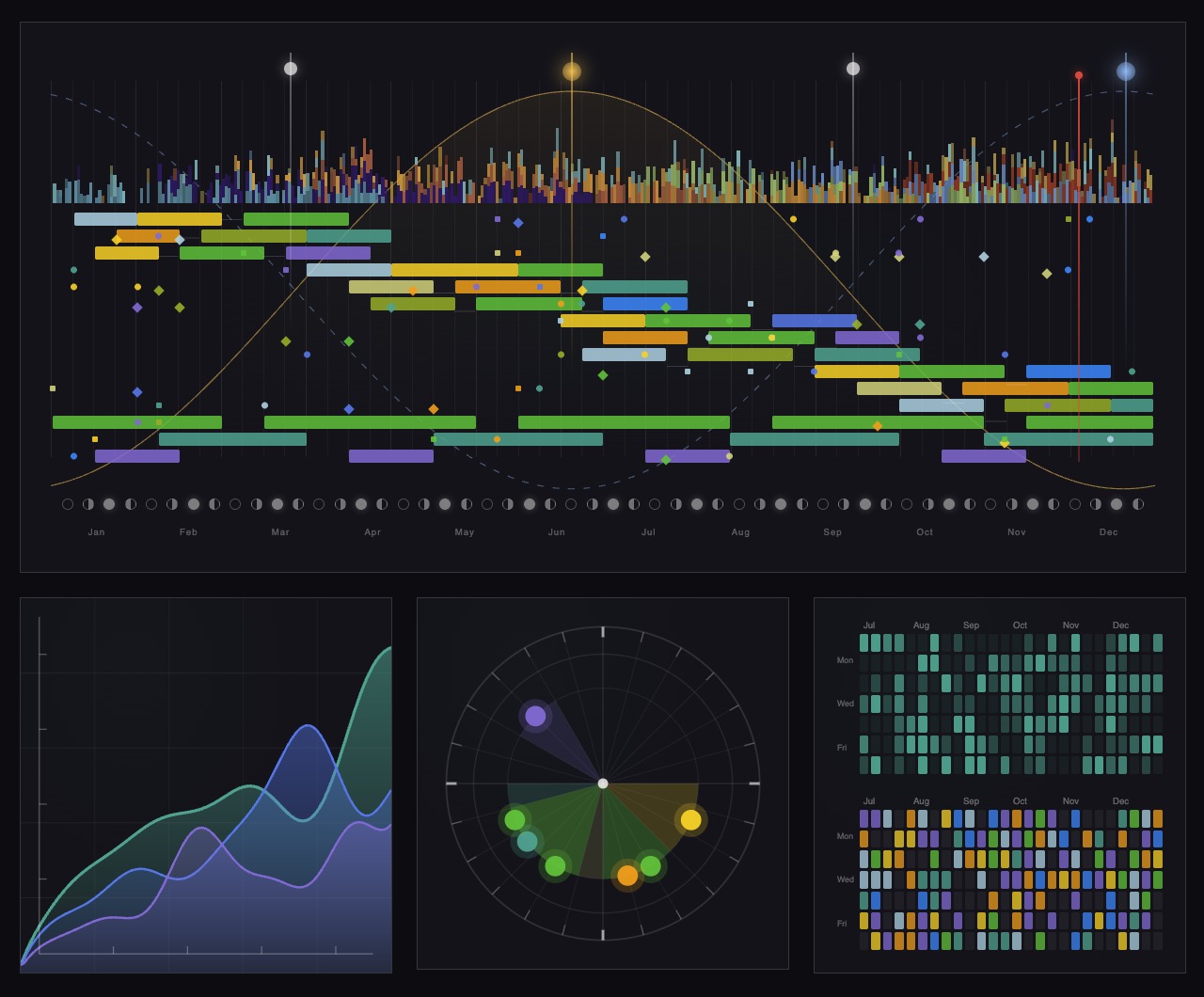
Beyond project management, James articulated a longer-term vision for an Iris dashboard that represents engagements as an organism — showing not just task lists but the energetic and temporal space each project holds, even when active hours are low (01:53:30). This would enable:
[technology="Time-Aware Toolsets"]
A key conceptual shift: James wants Iris to move from a request-only model (clients ask, team responds) to one that also surfaces offers — both from Iris to clients (proactively identifying needs) and from team members to projects (following their bliss, proposing involvement, suggesting features) (01:55:37). Munia in particular is hardest to coordinate with due to time zones but easiest in terms of trust and creative autonomy.
James was candid about the pressure point: with family planning underway and his wife Emily having scaled back from a $150K virtual assistant role, James recognizes he needs to be making significantly more than he currently is — ideally $250K+ given the value Iris delivers (01:28:10). He's weighing scaling Iris up versus pursuing a salaried role elsewhere.
Ashle offered a reframe: this isn't about becoming a profit-driven capitalist venture, but about sustainability — enough to support James's family, keep the studio running, and preserve intentional space for projects that don't pay well but matter. She floated the nonprofit model as a possible long-term structural fit given Iris's values, while noting it doesn't need to be decided now.
James reflected on last year's investments that didn't pay off as hoped — particularly an agency in Kosovo whose quality dropped after engagement scaled up, and a consultant whose final deliverable was a "50-page mostly AI-generated document" disconnected from studio operations (01:21:11). These were costly lessons, but James feels this year is on more solid ground and that Ashle's involvement represents the right kind of investment now.
James shared he's experimenting with the "three things" technique — limiting daily commitments to three priorities to combat overwhelm from longer lists (01:36:31). He works more than 8 hours most days, often late at night, with efficiency varying widely. The goal is to track time more rigorously to understand actual productivity patterns.
Ashle Bailey-Gilreath
James Redenbaugh
Both
This session between James Redenbaugh and Ashle Bailey-Gilreath focused on establishing the operational scaffolding for their working relationship — covering communication channels, tool access, pricing strategy, project management systems, and the broader vision for how Iris Cocreative [tag="iris"] sustains itself while pursuing meaningful work. The conversation moved fluidly between tactical setup decisions and deeper strategic questions about Iris's business model and James's capacity.
James decided to set Ashle up with an Iris Gmail address [tag="gmail"] so she could operate from within the Iris ecosystem rather than as an external collaborator (17:47). After thinking through the trade-offs, James leaned back into Slack as the primary internal communication channel, recognizing its advantages for automation — including potential notifications for meeting summaries, proposal opens, new leads, and inter-team coordination with Munia and Sean (20:12). Most client communication will continue on WhatsApp or email.
Google Drive access will come automatically through the new Gmail account. James will share his Airtable [tag="airtable"] login directly (since adding paid users isn't worth the cost) and will eventually grant Bonsai access for invoicing support. ClickUp access was also flagged for setup.
James walked Ashle through last year's Rhythm/Prism/Flow retainer model — a system built on doubling scales of engagement frequency rather than hours (29:30). While that model was set aside in favor of project-based work, Ashle reframed it as potentially valuable for post-launch continued support, where the main deliverable is complete but clients still want ongoing care and iteration. This reframe resonated strongly with James.
Hollow Movement emerged as the ideal test case: a large app build that will require ongoing maintenance, iteration, and eventual handoff to team members like Sean as primary point of contact (40:36). The structure Ashle proposed:
Ashle raised concern that James may be undervaluing his work, particularly in the $5–8K website tier (01:05:39). The plan is to track real project cost data over the next month — including hidden time costs like email, Claude [tag="claude"] iteration, and team coordination — to calibrate accurate pricing. James floated a vision of a near-fully-automated lower-tier offer where Claude generates initial sites from branding questionnaires and meeting transcripts, with Munia and Sean adding custom design and Webflow [tag="webflow"] builds.
Ashle emphasized that any automation investment requires accounting for the upfront build time, which can be subsidized by properly-valued larger projects. The goal: a model where 70% of projects are priced sustainably, leaving 30% capacity for passion projects, sliding-scale work, or in-kind contributions.
[technology="Communication Automations"]
James shared that Hollow Movement represents the kind of work he wants to do more of — emblematic of a broader ecosystem of interoperable technologies (44:55). The app integrates the 12 technologies James identified last year as his focus areas, and the codebase is being organized with replication in mind. A similar directory system is being designed for Gaia Warriors, and upgrades will flow between projects.
[technology="Directory Systems"]
James envisions a future where he potentially takes on fewer outside projects to dedicate more time to evolving the Hollow Movement platform, with the possibility of cross-platform connections exposing users across communities. He'll be speaking on the main stage at this year's wave about the app.
The app will be in a good enough state for beta launch by end of week, allowing James to step away during his upcoming travel (27th onwards).
James demoed his custom "James Today" prototype — a workflow tool combining day/week views, time tracking, project urgency sorting, daylight visualization for team time zones, and even Vedic astrology context (01:41:12). Key qualities he values:
He's intentionally prototyping it on himself before scaling to the team — recognizing that if he doesn't use a tool, no one else will.
[technology="Collaboration Management Tools"]
Beyond project management, James articulated a longer-term vision for an Iris dashboard that represents engagements as an organism — showing not just task lists but the energetic and temporal space each project holds, even when active hours are low (01:53:30). This would enable:
[technology="Time-Aware Toolsets"]
A key conceptual shift: James wants Iris to move from a request-only model (clients ask, team responds) to one that also surfaces offers — both from Iris to clients (proactively identifying needs) and from team members to projects (following their bliss, proposing involvement, suggesting features) (01:55:37). Munia in particular is hardest to coordinate with due to time zones but easiest in terms of trust and creative autonomy.
James was candid about the pressure point: with family planning underway and his wife Emily having scaled back from a $150K virtual assistant role, James recognizes he needs to be making significantly more than he currently is — ideally $250K+ given the value Iris delivers (01:28:10). He's weighing scaling Iris up versus pursuing a salaried role elsewhere.
Ashle offered a reframe: this isn't about becoming a profit-driven capitalist venture, but about sustainability — enough to support James's family, keep the studio running, and preserve intentional space for projects that don't pay well but matter. She floated the nonprofit model as a possible long-term structural fit given Iris's values, while noting it doesn't need to be decided now.
James reflected on last year's investments that didn't pay off as hoped — particularly an agency in Kosovo whose quality dropped after engagement scaled up, and a consultant whose final deliverable was a "50-page mostly AI-generated document" disconnected from studio operations (01:21:11). These were costly lessons, but James feels this year is on more solid ground and that Ashle's involvement represents the right kind of investment now.
James shared he's experimenting with the "three things" technique — limiting daily commitments to three priorities to combat overwhelm from longer lists (01:36:31). He works more than 8 hours most days, often late at night, with efficiency varying widely. The goal is to track time more rigorously to understand actual productivity patterns.
Ashle Bailey-Gilreath
James Redenbaugh
Both
Set up Ashle's Iris Gmail account and add her to Slack workspace
James to set up Ashle's Iris Gmail account and add her to the Iris Slack workspace. Gmail will grant automatic Google Drive access. Referenced at 17:47.
Share Airtable login and grant Google Drive access to Ashle via new Gmail
James to share Airtable login credentials directly with Ashle and confirm Google Drive access flows through new Iris Gmail account. Referenced at 24:16.
Share InDesign client agreement template with Ashle for review
James to share the existing InDesign client agreement template with Ashle so she can review and propose a more editable, standardized format. Referenced at 1:51:07.
Update project tracking spreadsheet with proposal links, total budgets, and progress estimates per project
James to update the project tracking spreadsheet with proposal links, total budgets, and progress estimates for each active project. Referenced at 1:59:22.
Advance Hollow Movement app to stable beta state by end of week
James to bring the Hollow Movement app to a good enough state for beta launch by end of week, allowing him to step away during upcoming travel starting the 27th. Referenced at 57:44.
Continue prototyping personal workflow tool ('James Today') with eye toward eventual team adoption
James to continue developing the 'James Today' personal workflow prototype — combining day/week views, time tracking, urgency sorting, and daylight visualization — before scaling to team. Referenced at 1:39:00.
Apply 'three things' daily focus method during high-intensity pre-travel period
James to deliberately apply the three-things daily prioritization technique during the busy period before his travel on the 27th to manage overwhelm. Referenced at 1:36:31.
Share studio context generously with Ashle as it arises during onboarding
James to proactively share studio context, background, and institutional knowledge with Ashle as it comes up naturally during their working relationship. Referenced at 1:58:37.
Observe Iris systems, take strategic notes, and co-sketch evolving project management vision with James
Ashle to observe Iris systems in use, continue asking strategic questions, and collaboratively sketch the evolving project management and dashboard vision with James. Referenced at 1:52:05.
Draft contractor agreement template using Ashle's own engagement as test case
Ashle to draft a standardized contractor agreement template, using her own engagement with Iris as the pilot test case. Referenced at 1:50:47. Related to but distinct from recQHGeKBOcRGP2A1 which covers the full contract/SOW/role description; this specifically focuses on the contractor agreement template for broader use.
Review existing client agreement template and propose more editable standardized format
Ashle to review the InDesign client agreement template James will share and propose a more editable, standardized format suitable for consistent deployment. Referenced at 1:51:36.
Support invoicing and client subscription follow-ups copied on James's communications
Ashle to be copied on James's invoicing and client subscription follow-up communications initially, to learn the process and provide support. Referenced at 52:38.
Coordinate with Munia on project management workflows and resolve Figma access issues
Ashle to coordinate with Munia (Moenja Schijven) on project management workflows and help resolve her Figma access issues. Referenced at 1:15:40.
Add 'proposal links' column to project tracking spreadsheet
Ashle to add a proposal links column to the existing project tracking spreadsheet. Referenced at 1:59:35.
Develop real cost and pricing data for one to two representative project types over next month
Ashle to begin developing real cost and pricing data for 1–2 representative Iris project types over the next month, including hidden time costs like email, Claude iteration, and team coordination. Referenced at 1:13:00.
Meet again next Wednesday to continue alignment before James's travel
Both James and Ashle to meet again next Wednesday at the same time to continue alignment before James's travel starting the 27th. Referenced at 1:48:55. Note: existing tasks recAZNCLC6yWvHv25 (James scheduling) and recrsVRuutVo8zSWF (Ashle booking) cover the scheduling mechanics; this task captures the meeting itself as a deliverable.
Development of operational infrastructure to support Iris's transition from mission-first to sustainable business model. Includes: project costing and financial projections modeling different engagement types by hours and rates (37:28), hour tracking frameworks that provide data without surveillance burden (43:20), internal procedures and delegation structure to reduce James as bottleneck (06:47), pricing strategy review to improve profit margins while maintaining mission alignment (37:28), scenario planning for different growth paths including freelancer model, scale, nonprofit structure, and funding options (40:50). Exploration of 501(c)(3) nonprofit registration possibility to enable tax-deductible donations and grant access for open-source tools and public goods development. Led by Ashle Bailey-Gilreath who brings 15 years operations and general management experience across financial projections, project management, people management, contracts, and internal procedures primarily in nonprofit sector (13:05). Critical foundation for supporting James's personal timeline including marriage and family planning requiring greater financial stability and breathing room (34:37). NEW DEVELOPMENTS: Pricing calibration focus on tracking real project costs including hidden time costs like email, Claude iteration, and team coordination to establish accurate pricing baseline (01:05:39-01:13:00). Vision for 70% of projects priced sustainably with 30% capacity for passion/sliding-scale work. Investigation of retainer model reframed as 'continued support' structure for post-launch maintenance (29:30-40:36). Target revenue increase to $250K+ to support family planning and studio sustainability (01:28:10). HOSTING PROFITABILITY GAP: Significant discovery that current hosting/maintenance business profitability is unknown (51:54). Model originated with WordPress shared hosting allowing margin through aggregated subscriptions, but with service price increases every six months and inconsistent record updates, actual profitability unclear. Ashle to cross-reference card statements against services list, identify shared expenses (Claude plan, iStock) that should be built into estimates, update pricing and prepare Bonsai invoicing workflows. TRACKING METHODOLOGY: Ashle recommended both detailed task tracking (to validate pricing bands and create templates) AND monthly scale forecasting for capacity planning (39:50). James likely undercharges relative to actual hours - time tracking will surface gap. JULY 2026 UPDATE: Financial workflow handoff actively progressing. James blocking Wednesday and Thursday this week for deep dive on hosting clients, accounting, and Bonsai setup (20:56). Ashle ready to take on contractor invoice management (Sean and others), will input into Bonsai and organize contracts in Google Drive for 1099 filing (24:54). Client invoicing coordination established - James continues sending invoices (Re:Village Earth, Uncommon Partners, Cloud Medical) and copies Ashle to build pattern learning and eventual handoff capability (23:43).
Development of standardized contract and scope-of-work templates for IRIS operations. Addresses identified gaps at 1:06:00 including inconsistent client contract deployment (strong template exists but not always used) and complete absence of subcontractor contracts. Ashle offered to own contract drafting and scope-of-work creation with James on light-touch approval cycle. Includes: client contract template refinement (currently in InDesign, needs more editable format per 01:51:36), subcontractor agreement creation, scope-of-work frameworks, roles & responsibilities documentation. First deliverable is contract and scope for Ashle's own trial engagement at 1:09:50. Existing client agreement template to be shared from InDesign for Ashle's review and standardization (01:51:07).
Development of systems and processes to engage more team members in client work without exponentiating costs. Addresses pattern at 20:45 where clients like Hermit of Hermitage World and Tess (Gaia Warriors) are moving slowly through onboarding tasks (brand questionnaires, Airtable population) because work feels technical or overwhelming. Proposed solution: engage team members like Lauren as lower-cost technical/admin support presence for working sessions. Benefits include: freeing James from being sole point person, helping clients feel supported by team rather than individual, introducing more perspectives into client relationships, keeping portfolio hygiene and onboarding tasks moving. Also includes establishing more collaborative and cross-project check-ins internally while honoring asynchronous preferences of remote team members like Munia. NEW DEVELOPMENTS: Ashle to be copied on client communications initially to learn patterns and support invoicing/subscription follow-ups (52:38). Coordination needed with Munia on project management workflows and Figma access issues (01:15:40). Focus on offer-based engagement model where team members can proactively propose involvement and follow creative interests rather than only responding to requests (01:55:37). JULY 2026 UPDATE: Ashle actively taking on financial coordination and client invoice management, ready to scale but currently bottlenecked waiting on James for deep dive into hosting clients, accounting, and Bonsai (23:43). Plan established: James blocking Wednesday and Thursday for financial systems handoff, will forward all contractor invoices and contracts to Ashle for Bonsai input and Google Drive organization. Ashle will handle contractor invoice tracking for 1099 filing. James will continue sending client invoices (Re:Village Earth, Uncommon Partners, Cloud Medical) and copy Ashle to build pattern learning. ClickUp task organization conventions established per James's preferences: grouped by domain (accounting, operations, admin as separate lists), client invoices as task with subtasks per client, due dates aligned to his Thursday accounting focus blocks, priority flags for time-sensitive items (26:41). Ashle restructuring tasks accordingly with Thursday-dated accounting items.
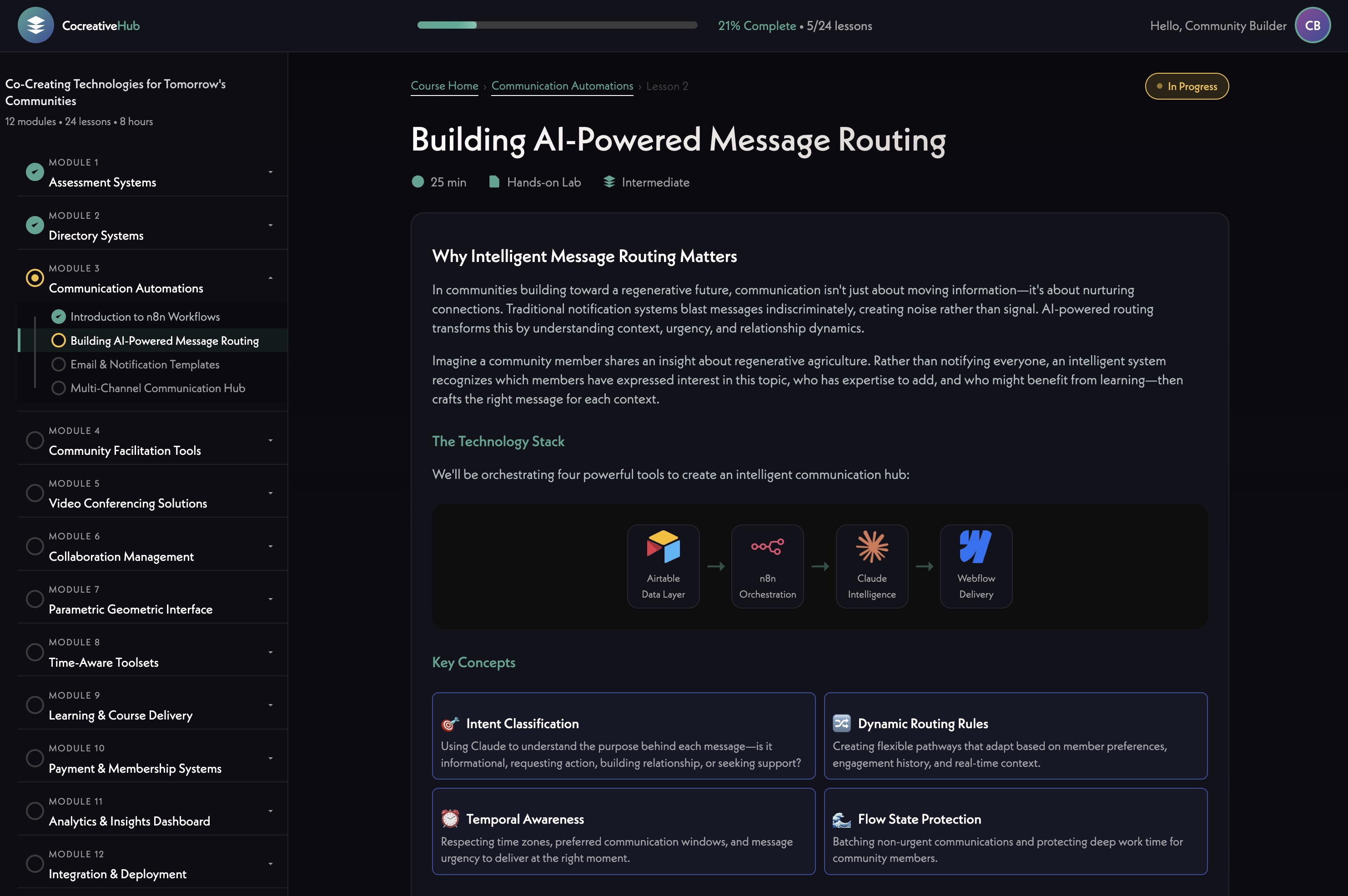
Custom project management system built from the ground up to support collaborative energies of projects. Features dynamic timeline visualization from past meetings, automated meeting artifact creation with summaries and action items, live editing capabilities, and organization by project phases. Single CMS collection architecture circumventing Webflow's nested collection limitations with JavaScript-powered status-based color coding, urgency indicators, and project timeline visualization. Real-time webhook integration enabling front-end CMS item creation without authentication. Designed to be more engaging and supportive than existing stale project management tools. Currently evaluating React architecture as alternative to Webflow-based approach given extensive custom JavaScript requirements - considering whether Webflow serves primarily as UI generator or if full React app would provide better integration. Decision made at 58:30-1:00:00 to park further development for ~6 months and identify simpler near-term plateau that team can actually use, while maintaining existing data structures (engagements, clients, meeting artifacts, initiatives, tasks). NEW DEVELOPMENTS: James prototyping 'James Today' personal workflow tool as interim solution - combines day/week views, time tracking, project urgency sorting, daylight visualization for team time zones, and Vedic astrology context (01:41:12). Key design principles: unified temporal views, quantitative and qualitative time awareness, drag-and-drop scheduling with auto-status updates, data capture for Claude retrospective analysis. Vision evolved to include dashboard representing engagements as organism showing energetic and temporal space each project holds (01:53:30), enabling forecasting, retrospective analysis, and team visibility. Move from request-only to offer-based model where team members can proactively propose involvement (01:55:37). STRATEGIC SHIFT: May 2026 - Decision to reactivate ClickUp as interim PM system while Iris OS vision continues development. Using 'caravan during house construction' metaphor (01:01:36) - ClickUp provides functional base while learning what's essential for dream system. Iris OS vision document shared with Ashle, expanding Phase One to incorporate administrative essentials alongside foundational vision elements (35:03). Core design principle clarified: base unit should be the asset (what we're building), not the task, with tasks serving milestones that serve assets. Client-facing should be simple with important assets surfacing; internal should provide journey map with clear stages. Meeting artifacts to be defined upfront per project. James acknowledged being 'designated bottleneck' with resistance to systematizing (01:02:35), goal is moving from triage mode to system he can step away from. JULY 2026 UPDATE: ClickUp now fully synced with custom Collaboration OS app (08:30). Tasks flow bidirectionally on scheduled cadence - ClickUp updates pull into app every 15 minutes, task updates sync back every 30 minutes. Today's focus (07/07/2026) is reworking artifact automation to create posts directly on website and tasks straight into ClickUp, consolidating everything into one place rather than generating separate Airtable artifacts. Strategic design advantage: custom interface enables calmness, spaciousness, and clarity over ClickUp's high information density (10:58). Vision includes simple milestone timeline views helping clients see what they need to do rather than parsing long compiled task lists. App to be published to Vercel for team collaboration. Ashle will be able to log in, update tasks, and comment directly. James merging earlier Iris OS phase one document with current Collaboration OS plan - currently on phase three of app development (29:09). Key question to revisit: what do we lean on the interface for, and what systems need to be strong independent of the technology?
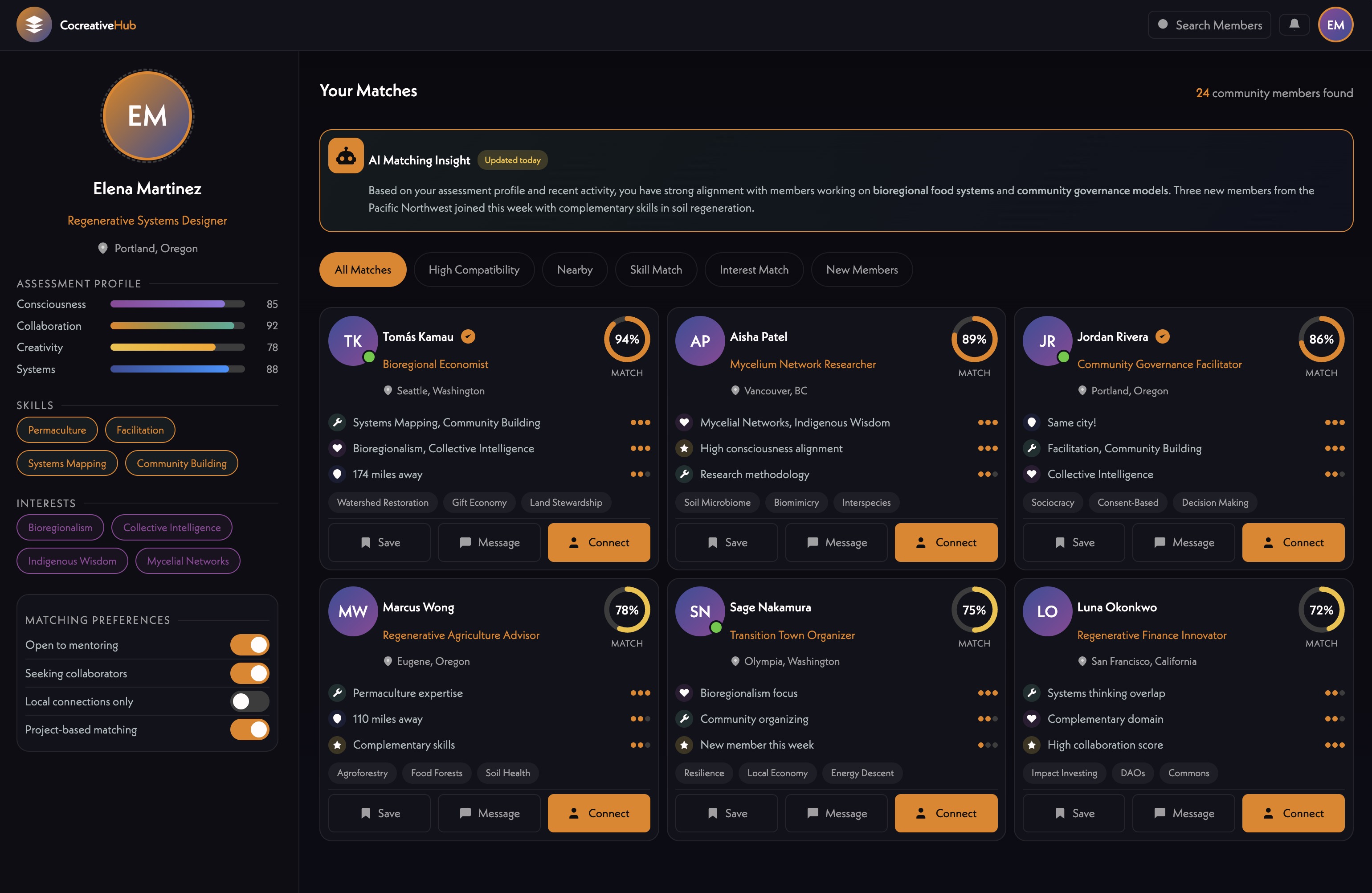
Development of interconnected, reusable platform modules that can be deployed across multiple client sites. Goal is creating an ecosystem where components built for one client (assessments, directories, matching algorithms, LMS) can be rapidly deployed for others with minimal rework (21:45). More ambitiously, envisions profiles and content that travel across client platforms - so a user on Hollow Movement could bring their profile into Pro Social environment or access a course running simultaneously across multiple sites. Uses Webflow as foundation with significant custom code. Hollow Movement app serves as first proof of concept, launching at The Wave event at 01:30. Platform includes: AI-assisted profile generation with auto-generated tags and categories, global directory and map systems, holon (group/organization) profiles with wall-sharing, member-to-member messaging, assessment systems with archetype graphs, intelligent matching with compatibility analysis, sliding-scale membership payments, and planned learning management system. Community naming process proposed at 04:14 to turn naming into collaborative activation moment during launch, letting early users contribute ideas and deepening community ownership. Platform currently at temporary domain, team jokingly calling it 'Jeff' or 'Goeff'. This represents Iris's strategic direction toward productized, scalable solutions while maintaining customization for each client's mission. NEW DEVELOPMENTS: Hollow Movement identified as ideal test case for continued support pricing model with tapering structure (40:36). Similar directory system being designed for Gaia Warriors with upgrades flowing between projects. Codebase organized with replication in mind. James considering dedicating more time to platform evolution with potential for fewer outside projects. App reaching stable beta state by end of week for launch (27:44, 57:44). TESTING & COMPLIANCE: Ashle conducting cross-device and mobile testing with focus on mobile responsiveness (01:39:47). Bug discovered: phantom auto-generated purpose text appearing in profiles when field left as 'test' - needs investigation (01:42:02). GDPR compliance gap identified: need Data Processing Agreement with Anthropic and 'delete my profile' self-service option on account page (01:33:32, 01:36:10). Purpose field UX friction noted - only ~7% of people have clear purpose, proposal to add purpose assessment alongside existing assessment. API credits need top-up to restore profile generation (01:35:04). JUNE 2026 UPDATE: Holos app now has hundreds of active users post-Wave launch with strong positive feedback from Monday team meeting. Core features stabilized including profiles, holons, messaging, and assessments. ClickUp task organization implemented across domains: bug tracking, messaging, privacy & analytics, design system migration, staging & deployment. Privacy infrastructure being strengthened with user-controlled map visibility settings at column-movement.net (20:11). AGENTIC VISION: Platform evolving toward intelligent matchmaking and agentic toolsets - users should be able to query network with questions like 'I'm exploring this domain, who should I talk to?' or 'What blind spots might our holon have?' (50:23). Requires privacy-preserving architecture using sub-agents and intelligent layers rather than exposing all user data to models. Long-term vision includes MCP server exposure so users' personal agents can query Holos database with privacy-aware modes. Design philosophy: build for future agent-to-agent collaboration on behalf of humans in addition to human users. Next major build area: online learning, courses, and resource library creation to give users reason to return regularly and round out platform. JULY 2026 UPDATE: Native iPhone app development progressing - Iván has real native iOS demo working, meaningful step beyond web app version (21:19). Opens real app-building capacity for IRIS Cocreative. Ashle's multi-device household (Mac, PC, Android, iPad) available as natural testing ground (35:55). User pattern noted: older male academics in their orbit often browse on iPads - worth remembering for responsive testing.
Development of structured continued support offering for post-launch client relationships. Reframes previous retainer model (Rhythm/Prism/Flow) as ongoing care and iteration support after main deliverable completion (29:30-40:36). Structure includes: tapering pricing over time (e.g., 3 months at $4K then $1K/month maintenance), building support 'tail' into projects from inception, transitioning primary point of contact to team members like Sean while preserving client relationships. Hollow Movement serves as pilot implementation - large app build requiring ongoing maintenance, iteration, and eventual handoff (40:36). Model designed to free James's time for new project onboarding while maintaining high-quality client care. Supports sustainability goal of 70% projects priced appropriately with 30% capacity for passion work. Includes development of proposal language, pricing tiers, transition protocols, and team training for taking on continued support roles.
Development of near-fully-automated lower-tier website offering where Claude generates initial sites from branding questionnaires and meeting transcripts, with Munia and Sean adding custom design and Webflow builds (01:08:00-01:13:00). Vision includes: structured input collection via questionnaires, Claude analysis and site generation, automated first-draft creation, human design refinement by team, Webflow implementation. Designed to create sustainable lower-price-point offering while freeing James for higher-value work. Requires accounting for upfront automation build time, subsidized by properly-valued larger projects. Part of broader pricing strategy to establish multiple service tiers with appropriate margins. Technology stack: Claude for generation, n8n for orchestration, Airtable for data, Webflow for deployment.
Setup and configuration of internal team communication systems and access protocols. Includes: Gmail account creation for team members (Iris domain addresses for ecosystem integration per 17:47), Slack workspace setup with automation integrations for meeting summaries, proposal notifications, and team coordination (20:12), Airtable access provisioning via shared login, Google Drive access through Gmail accounts, Bonsai access for invoicing support, ClickUp access configuration. Establishes communication norms: Slack for internal team coordination, WhatsApp/email for client communication, asynchronous-first approach respecting distributed team time zones. Immediate priority: Ashle's Gmail and Slack setup for operational work. Foundation for scaling team collaboration without adding significant tool costs.
Development of comprehensive project tracking system to capture real cost data and improve forecasting accuracy. Includes: tracking spreadsheet enhancement with proposal links, total budgets, and progress estimates (01:59:22-01:59:35), hidden time cost capture for email, Claude iteration, and coordination overhead (01:05:39-01:13:00), time tracking implementation that provides data without surveillance burden (using 'three things' method and focused work sessions per 01:36:31), retrospective analysis enabling Claude-powered pattern recognition, data feeding into pricing calibration and capacity planning. Goal is establishing baseline cost data for 1-2 representative project types over next month to inform sustainable pricing strategy. Supports financial projections, team capacity visualization, and proposal accuracy. Integration points with existing Airtable CRM and potential dashboard development.
00:12:46
Ashle Bailey-Gilreath: Sa. James.
00:13:43
James Redenbaugh: Hi, Ashley.
00:13:45
Ashle Bailey-Gilreath: How are you?
00:13:47
James Redenbaugh: I'm doing pretty good. Straighten my camera here. How are you doing?
00:13:58
Ashle Bailey-Gilreath: Doing fine. I have. I'm getting over a little bit of bronchitis, so I'm sorry if I cough. Oh, no conversation here. So just wanted to give you a heads up. Hopefully it won't be too bad.
00:14:13
James Redenbaugh: That's not fun.
00:14:17
Ashle Bailey-Gilreath: It's been moving and all of that, so it's okay. It's not contagious, thankfully, the kind I have, so I don't have to worry about getting anybody else sick.
00:14:33
James Redenbaugh: Oh, good. I was worried I was sick.
00:14:36
Ashle Bailey-Gilreath: Yeah, I know. But. Yeah, mainly because I was like, oh, no, but I didn't want to get my husband sick. And I was like, but I'm good. But yes. Also I have to protect anybody else I come in contact with.
00:14:53
James Redenbaugh: Yeah.
00:14:56
Ashle Bailey-Gilreath: Okay. So are you happy with the agenda? Did you want to add anything? Is it okay if we jump in? Is that.
00:15:05
James Redenbaugh: Sure.
00:15:06
Ashle Bailey-Gilreath: Okay.
00:15:06
James Redenbaugh: Yeah.
00:15:11
Ashle Bailey-Gilreath: Or if there's a different order you want to go in? I was. It's mainly just me putting down a bunch of my thoughts.
00:15:18
James Redenbaugh: No, I think your. Your agenda is great.
00:15:22
Ashle Bailey-Gilreath: Okay. And thanks for spending some time with the stuff I sent over. That was really helpful. The shrimp farm comment made me laugh.
00:15:35
James Redenbaugh: I've been getting served Instagram ads for, like. Have you been thinking of starting your own shrimp farm? For years.
00:15:42
Ashle Bailey-Gilreath: Really?
00:15:43
James Redenbaugh: Yeah. I have no idea. Not because I made that comment, but just recently for no reason.
00:15:53
Ashle Bailey-Gilreath: Wow, that's great. I wish I got that kind of stuff. Instead, I just get, like, rugs and stuff. Oh, wow. I wonder if there's anyone out there who has just been really seriously contemplating that.
00:16:07
James Redenbaugh: Apparently there are.
00:16:11
Ashle Bailey-Gilreath: Oh, man, that's hilarious. Okay, well, there you go. I'll add it to your list of possibilities for your future.
00:16:19
James Redenbaugh: Yeah.
00:16:23
Ashle Bailey-Gilreath: Okay. So the first set of stuff was like, super just admin, easy things. Like, how would you like me to access things? And then what things would you. Would you like me to access? How do you want to. What's the best, like, channel to communicate on? Because I don't know if you use Slack, if that's an. I feel like. I feel like something you said before, like, Slack isn't a natural place for you to go, but I would, like, I want to work with whatever within. Whatever is going to be the easiest on you. Like we, our team uses Slack. And then that's how we started to connect through, because the website and everything, but so those are the main things is like, how would you. Do you. To access your stuff? Do you have like, do you want me to have an internal email address? Like, I don't know how you want to go about like the security and accessibility of everything. This is stuff that I think about with my role at the other places I've worked. So it might be too much for what we're doing right now. But. And then like what would you like me to access and how do you want to talk between each other?
00:17:47
James Redenbaugh: I should go ahead and set you up with the Iris email address. We'll use Gmail.
00:17:54
Ashle Bailey-Gilreath: Okay, cool.
00:17:55
James Redenbaugh: And you can set up forwarding if you. However you want. If you want. So you don't have to worry about checking it all the time, but however you want to manage that. And I'm of two minds about Slack. On one hand, we haven't been using it very much. I pretty much these days I'm just using it to communicate with you and Munia and I mean I was using it with Yvonne before he left. We've used it in the past. We've been Slack maximalist at different points where we've had channels for each project and channels for different things and made everybody use it and had clients use it and for one reason or another, most client conversations happen on WhatsApp now.
00:19:03
Ashle Bailey-Gilreath: Okay, that's fine. I have that. I mean I use that as well. I think it's gaining popularity in the States, but it's been pretty popular in over here in the UK and Europe. Most people use it as like, so they don't actually have to buy data like for texting. You can just use WhatsApp instead. So whatever works for you. Like I don't want if you're only using it to talk. I mean, I know you and Munya have a different relationship and it's a lot longer, but I don't if that feels like unnatural for you and it adds an extra step like cognitively and like actually within your productivity to have to go there. Like we're trying to fix those things so we don't have we. I'm not married to Slack. I didn't know what your preference is.
00:20:00
James Redenbaugh: Yeah,.
00:20:04
Ashle Bailey-Gilreath: I mean I, I, I can also just email you, but I don't know if that's like oh, if we're that old yet.
00:20:12
James Redenbaugh: So I hope not. I hope not. There's a lot of things I like about Slack and. It's easier than WhatsApp to set up automations. If we wanted to set up things like if we have the meeting summaries fully automated after, after a call, we could do Slack notifications so we get a notification before it gets sent out to the client so that we can kind of check it and analyze it and then confirm or things like that. You know, any automation we have, we could have a Slack notification that, you know, client has opened the proposal or asked a question or we got a new lead on our form, things like that. It could be advantageous to, to have that. And, and it could be helpful for more inter team communication to have Yvonne and Sean use Slack. I'm sure they use Slack for other things and to have things more in one place, even if clients are on WhatsApp or email or something else, to have some consistency.
00:22:14
Ashle Bailey-Gilreath: Okay, so do you want to.
00:22:15
James Redenbaugh: I'm kind of leaning, I'm talking myself into using Slack more.
00:22:19
Ashle Bailey-Gilreath: Okay, that's fine. So then would you like for you and I's communications then to be through Slack still?
00:22:28
James Redenbaugh: Yeah. Yeah. And then I'm thinking we can also have multiple channels where we can talk about different things and keep those conversations organized instead of endless what's up thread.
00:22:46
Ashle Bailey-Gilreath: Yeah. Do you want to then like once you get the email set up for me, do you want to add me as a user through that email onto your Slack?
00:22:57
James Redenbaugh: Yeah.
00:22:58
Ashle Bailey-Gilreath: And so that this way it's within the Iris ecosystem then what we have now, which is kind of like an. Sort of it. Well, for me it's an. Well and for you it's kind of technically external.
00:23:17
James Redenbaugh: Yeah, definitely.
00:23:23
Ashle Bailey-Gilreath: So then I will explore Slack some more with the problem solving around, just project management in general.
00:23:35
James Redenbaugh: Cool.
00:23:47
Ashle Bailey-Gilreath: Okay. And then do you want to just decide what other tools you want me to have access to and you can just add me, add the email address to those and I'll just know that that's what you want me to have access to based on checking the email.
00:24:16
James Redenbaugh: Yes. Google Drive will be automatic because you'll be on Gmail, the PM system right now the password is 123 4. And you don't need an email that's to the front end, the back end. In airtable, I pay for airtable Pro because of the API. So I could just send you my airtable login. Otherwise I'd have to make a paid user for you and it's not really worth it.
00:24:57
Ashle Bailey-Gilreath: No. And it can get really expensive.
00:24:59
James Redenbaugh: Yeah.
00:25:00
Ashle Bailey-Gilreath: Dead for a little while. And it was.
00:25:05
James Redenbaugh: Exactly. And at some point I should give you bonsai access, but I also don't want to overwhelm you.
00:25:20
Ashle Bailey-Gilreath: Well, we'll talk about. Because one of the things. Well, one we'll talk about if we, we want to have another one of these beings before you're off. But then also like, what are actionable things that I can do to support you and like move things ahead while you're away? And one of those things might be invoicing. And so if that's the case, then I'd want to use a system that you use. But we can figure that out as we talk today.
00:25:52
James Redenbaugh: Great. Cool.
00:26:03
Ashle Bailey-Gilreath: Okay. And then, and then we solve the. How should I handle any client facing communications? Because you'll set me up with nine hours email.
00:26:15
James Redenbaugh: Yeah.
00:26:16
Ashle Bailey-Gilreath: Okay. Okay. So would you. So the stuff that I sent you, so the questions and then the spreadsheet. I think mainly the spreadsheet. Do you feel like there's anything on there that I got. I got wrong? Like the way that I set it up. Do you feel like it was this one? One thing that we'll try to figure out as we work together is what's the best format for working together. So like I love super organized spreadsheets, but that doesn't mean everybody does. Um, and so I didn't know if like one of the areas is like the monthly revenue estimate. That feels like. When I was looking at it today to get ready to talk to you, I was thinking, well, that actually may not be very helpful for it to be monthly because it's project based and maybe it should just be project based there because otherwise not like, if I understand correctly, mostly everything is project basics if you do have some rolling clients, but they're very small and it's usually hosting related things. So I didn't know if any of this was weird for you. Like it didn't align with the way that you think about stuff and, or if there's anything like, and very specific things like that. Like I think I probably should have changed the monthly to project.
00:27:48
James Redenbaugh: No, I think it actually can be helpful to think about that. And also I shared this with you, Which is actually why I shared this because we stopped, I stopped pushing monthly retainers. So I haven't really been using this page. Even though last year I put so much time and energy into designing this offer and thinking about it and, and building this page. And then it ended up making, you know, being, making much more sense focusing on like project based work and scoping things out. And every project is different and every client budget is different. So we've moved away from this, these different scales. But. And to give you a basic overview, the thinking was to move more into a retainer model ship to have predefined scales that are each a A doubling of the previous so that we could more easily plan our work and our time. I called it a rhythm model because each scale was kind of a frequency and each was at a different octave. So if we were on the rhythm scale, maybe we would have a meeting twice a month and some work in between. And that's how the engagement would be defined, by the number of meetings and kind of a rough sense of what we can do. Instead of saying like, oh, you know, 10 hours a month, you know, across different team members, or like 10 hours. But you could use more of this person's time, but less of this person's time. I thought for a long time how to create containers that are structurable and make sense for us and the client, but aren't overly complicated. And if they wanted to move up to Prism, then we would do four meetings a month and kind of twice as much. Or flow would be more. And then as you get higher, it's like we could bring in more team members working simultaneously. And I'm kind of in my mind returning to a version of this, although I think that this is a bit too complicated and still. And also a bit. I think purely basing it on the rhythm of interaction isn't the best way to go. But if we think about team availability in a similar way of like, I'm thinking blocks or Legos or train cars or train tracks or something like that, then even when we take on projects that have a fixed budget and are multiple months, and maybe they start mid month or something like that, if we had a way of fitting them into these blocks or a spreadsheet as a better example, like hollow movement, for example, it's a big budget. It's a big. It's a range budget. It's not. It's not determined. We're not like, oh, we're going to do this much work every month. But I could have sketched out when we kicked off, like, yeah, this is going to require this percentage of my time every month for, you know, this percentage this month, and then it's going to dip next month and then we're going to need to kick it off the month after that. And. And similarly for team members, we could have planned. Plan that out more where right now it's. We don't have a. A clean way of gauging that. And so the numbers I put in here are kind of my estimates of how much we're making in May for each project.
00:33:07
Ashle Bailey-Gilreath: Okay. Okay.
00:33:08
James Redenbaugh: Roughly. And so I think that I can also give you the total Budget and an estimate of like how much, how far through the budget we are.
00:33:26
Ashle Bailey-Gilreath: Okay.
00:33:29
James Redenbaugh: But even that's all to say that even with project based stuff, I think it's helpful to think about and even create a system for. A monthly view of that project where a two month engagement that's $5,000 could be viewed as a, as a monthly engagement that lasts two months at $2,500. And then that can also. Build in a mechanism for, if we go over time, if the client keeps asking for more and we're like, you know, yeah, we can roll this into the next month and if you want to stay at this level of engagement, it's going to be another $2,500 or we can roll it into the next month and we can kind of do half as much or we only have capacity, we have other stuff starting. We could do half as much for another month and that'll be you know, 1500 or whatever.
00:34:46
Ashle Bailey-Gilreath: Yeah, no, I think that would be really helpful one. It helps you. So if you can break it down by months, it can help you like you personally see like cash flow. And, and it can also be used as like a time management tool or I mean not management as in like a constricting type sense, but just to keep an eye on like are we accidentally over promising or overextending ourselves so we can kind of map what this looks like over a period of time. And then I really like the page that you showed me that I think it might be something that would maybe be more helpful for once the main project or deliverables are complete. Like do you need continued support or do you need to continue this or extend the project in any way? So like those levels make a lot of sense for stuff like that.
00:35:48
James Redenbaugh: Yeah.
00:35:49
Ashle Bailey-Gilreath: Versus like the way that you thought of it and that you said now feels like it doesn't feel very intuitive where like instead of pricing entire projects that way, it feels like a really good thing to be able to offer people who might still want or need support and, and you can give it. And then it makes sense to kind of. Because you've gotten sort of the main stuff done and then it makes sense to think about it in the rhythm in which like how often you'll interact because that is one that involves your time, which is the most valuable time. And then hopefully it won't always require your time. But, but, and then you can see what that looks like and you can look and see like capacity like what is our team got going on over the next few months? So I Don't think that. I think the work you did here is really, really good. And you can work from it, like you can repurpose it. I think maybe it makes sense to happen after like some of the main engagements or deliverables have been completed. Because I know from like a user, like a client experience, right. If we got some of the main things done. But then I would notice like, oh, but then we, you know, we've got this and that and wouldn't it be graded? And then of course you have team members who are trying to figure out. And then it's like, hold on just a minute. And then I could have gone back to you and said, hey, James, we've identified, we love the site. Thank you so much. This is great. We've identified this, this, this and this. And then you can go and say, let me check and see our availability and all that. And then you can say, yeah, we can extend that. And it would be this much. And you kind of, it's like low hanging fruit because then you've already built that relationship and you've already pretty much delivered like the main event. Um, and, but also you've already pretty much priced up what that stuff looks like. So it doesn't require loads of administrative time or even just random, just guessing of cost because you've kind of already worked out what that looks like, that model. So. And that might help you a lot and it might be where you're. But that is something for you to sit with and kind of consider strategically. Like, are you open to offering continued support or do you want to work only on project based work? Because then it, it does change things just a little bit.
00:38:28
James Redenbaugh: Yeah. So from a client perspective we, we definitely want to offer continued support.
00:38:38
Ashle Bailey-Gilreath: Okay.
00:38:40
James Redenbaugh: From a me perspective, it's, it's really hard to prioritize it right now. Smaller, smaller projects, smaller engagements are much more likely to get swept under the rug. But I want it. I feel like if we had a, A model in a way of really seeing our commitments in this way, it could be easier to prioritize because if we like, if we have a large project, a big build, it shouldn't have a hard, like a, the service shouldn't just go off a cliff and be like, we're done. You should build a tail from the beginning to know, yeah, we're going to support this for three months after and see how users feel and, and be available to fix things and, and things like that. And that might be, you know, a low level of support, a low income, but I Know, it's a valuable, it's important for us to make time for that, not only for that little engagement, but to maintain the relationship with the client, make sure they're happy and make sure what we delivered for them is working really well for them. We wouldn't make those levels of support available to new clients who come in and they're like, yeah, you know, we want to do like $250 of work a month.
00:40:36
Ashle Bailey-Gilreath: You know, it would be, yeah, it would be the continued care of the. Already, like, I'm, I'm thinking a lot about what you've done for the Hollow movement. And I know it was a big budget, well, bigger budget, but that's going to require maintenance. It's totally going to require iteration. Do you know what I mean? And like, I can see that being a really good like use case or example for you to test it out with so that you can tell them, you know, like have a conversation with Emmanuel and Laura or whoever else is on that team and say like, you know, what do you feel like you need still? And it can taper like, you know, you could say three months at $4,000 or whatever and then it will get to a point there where we can be a thousand dollars a month or something. And so this way they know, they have dedicated support for this very cool thing that they've made. And they know that you don't just go away and you technically don't ever just go away. What happens instead is that you do help when things happen and you do have conversations, but then you don't bill people for that. And then you do like really nice James stuff, but then you don't get paid for it and then you get overburdened and then you have like projects you need to work on, but you're also still helping. So this way we can factor it all in. It's not just about money. Money is just the easiest way to categorize it. But like with that amount of money it also lets us be able to do time management and, and that's also a really good time to be able to hand off projects. Like once it gets to that kind of maintenance phase, like you're still there, but it's a great way to say, and Sean is going to be your main point of contact. Do you know what I mean? And so it's a great way at that point to be able for you to be like, okay, I just need to know like high level stuff that's going on here. And then I can free up My time to onboard this new big project or whatever it is.
00:42:55
James Redenbaugh: Yeah, actually last year as we were prototyping this model, Hollow Movement was the main client that was prototyping it with us.
00:43:07
Ashle Bailey-Gilreath: Oh, okay, okay.
00:43:10
James Redenbaugh: And they. For the first like six or eight months of the year, we were at either Prism or flow level with them every month doing different things before we even started building this app. And it worked well for everybody. And I had somebody managing it and being their main point of contact, and it was actually working really well with this one client. And then the app build has been a whole nother level. And then I imagine actually after the wave, not only are we going to be supporting this app, but it's kind of just the beginning. We're going to probably start an even bigger build up to next year's wave, which is going to be even bigger and crazier. And it's still a beta launch of the app. You know, it's still just, just the beginning. So.
00:44:31
Ashle Bailey-Gilreath: Do you see this as sort of like your main project or priority? I mean, obviously right now in the immediate future it is, but like even beyond that, does it feel like the main thing to sort of factor in like time and availability and everything around specifically for you right now?
00:44:55
James Redenbaugh: Especially because it's emblematic of the kind of projects I want to do a lot more of. And there's. As we do those other projects and do other similar app builds, it becomes more about supporting this ecosystem of technologies than one project at a time. Because, like we're, we're building a similar thing. We haven't started development yet, but, but we're designing as a directory system for this client, Gaia warriors, and it's going to use a lot of the same technologies. And as we innovate things for that client, it's going to be easy to bring that back into Hollow Movement and integrate those upgrades into that app. And they could foresee a future where we have 10 iterations of this kind of system and upgrades that we're managing across all of them. And at that point we would definitely need to have more, more support, more people understanding and maintaining the system. But it's. That would be a lot different than maintaining 10 websites that need a little update once in a while. It would big, you know, big platforms that have potentially each thousands of users on them. And then there's also the, the exciting potential of building connections between those platforms to cross expose people to different things. So Hollow Movement feels like the, the beginning of that. And they're, they're big fans of Me too. And have always. I've. I've been working with them now for. Actually I started working with Emanuel in 2024. So like 12 years ago I did okay. The Summit brand and Cool. And I've done his personal website and.
00:47:54
Ashle Bailey-Gilreath: Okay.
00:47:56
James Redenbaugh: And lots of things for. For them. And now I work with Mariko. She's great. And Inhera and Michael. Sean and spoke at the conference last year and they'll put me on the main stage this year talking about the app and they've given me lots of freedom with it to. To bring in my own ideas. And you know, it's not. It's not like they had a spec for it. It's like I've been in more of a partnership with them.
00:48:31
Ashle Bailey-Gilreath: Well that's. I mean that works perfectly for your. How you like to work and engage anyway. So.
00:48:39
James Redenbaugh: Yeah. So. I could also see a world where if their app really took off and lots of people start using it and leveraging it, I could see a world where I take on less projects outside of that and dedicate more, more time to this. To this one app because it has the. Like last year I identified these 12 technologies that I wanted to focus on building and they wanted all of them. Like they saw my articulation of. Of these 12 things and they were like, yeah, we want, we want all of that in one thing. So I've been like, great. And we're building it now.
00:49:44
Ashle Bailey-Gilreath: Cool. That's very cool.
00:49:46
James Redenbaugh: Yeah. And I am excited about the other. Other clients using a similar thing and, and what can happen there. Instead of saying, you know, having other clients come into this thing that's not necessarily aligned with their. Their brand. Because technically, when it's fully built out, if they want to run a course, have a bunch of courses, they could do it on the Holly Movement app.
00:50:28
Ashle Bailey-Gilreath: Yeah.
00:50:31
James Redenbaugh: They're sitting there in the Hollow Movement universe and that. That might not work for their existing communities. Vibe wise, it.
00:50:41
Ashle Bailey-Gilreath: When it's fully built out, is it replicable? Like could you replicate the infrastructure for. And it be branded for another.
00:50:53
James Redenbaugh: Mm.
00:50:54
Ashle Bailey-Gilreath: Okay.
00:50:55
James Redenbaugh: Yep. And even if it's not copy pasted.
00:51:02
Ashle Bailey-Gilreath: Yeah.
00:51:07
James Redenbaugh: I now know how to do all these things. Like if I were to rebuild this now from the ground up, it would take me a tenth, a tenth of the time. But there's so much that's. That we figured out now that we have code for that's interoperable with other kinds of projects.
00:51:34
Ashle Bailey-Gilreath: Okay.
00:51:37
James Redenbaugh: And it's. I've been organizing it and documenting it along the way with that in mind.
00:51:45
Ashle Bailey-Gilreath: Okay, that's good. That's really neat. That's exciting.
00:51:50
James Redenbaugh: Yeah.
00:51:55
Ashle Bailey-Gilreath: Let me see here. Or I guess we can go through some of the questions you wrote answers to. So I guess I'll need access to ClickUp. I'll put that on here. And do you need me to. Is there. How can I help with tracking, like the small hosting projects and invoicing and stuff? Is that something you'd want me to help with in the next couple weeks?
00:52:38
James Redenbaugh: Yeah, I think so. I'll have to go through and see where we're at with different clients and check on their subscriptions and then I'm. I'm sure I'm going to have to reach out to someone. I'll just copy your email on those emails so you could see those communications and follow up with needed.
00:53:07
Ashle Bailey-Gilreath: Yeah, no, that's great. I'll do that. And then if it gets to a point where you just need from me to take over communicating.
00:53:17
James Redenbaugh: Yeah. Like they might respond and say we need this thing and you know, or we had this problem or something like that and you could help field those.
00:53:28
Ashle Bailey-Gilreath: Okay.
00:53:29
James Redenbaugh: Questions.
00:53:31
Ashle Bailey-Gilreath: I can do that. The. Are there any engagements that feel problematic right now? Is that. Is that you. Do you feel like there isn't. So you didn't answer it or did you just not want to put it in words?
00:53:48
James Redenbaugh: There's no engagements that are like majorly problematic right now? There's some. Where. Where was this question? Oh, first one now, I mean, the source of synergy I think was the most problematic because it started as a really low project and then they had. They would come back to me with like 17 pages in a word doc of really poorly organized requests and changes for the website. And they're like, but we'll pay you for it. And I'm like, but I have no time.
00:54:30
Ashle Bailey-Gilreath: Yeah.
00:54:32
James Redenbaugh: And it wasn't the kind of thing I could easily delegate.
00:54:37
Ashle Bailey-Gilreath: Is that project finished?
00:54:39
James Redenbaugh: It's finished now, finally.
00:54:40
Ashle Bailey-Gilreath: Okay. Okay. Is it invoiced and everything?
00:54:43
James Redenbaugh: I need to invoice them.
00:54:45
Ashle Bailey-Gilreath: Okay. Love that.
00:54:48
James Redenbaugh: But they, you know, that was annoying and frustrating, but they were grateful and happy.
00:54:54
Ashle Bailey-Gilreath: Okay.
00:54:56
James Redenbaugh: And they made me a. An evolutionary leader as well.
00:55:04
Ashle Bailey-Gilreath: Oh, okay. Well, there you go.
00:55:08
James Redenbaugh: Yeah. And there's a few right now that are taking longer than expected, but the clients are pretty happy. There's just a lot to do right now. A lot on the plate.
00:55:32
Ashle Bailey-Gilreath: Yeah. Do you think it's. It'll get better? Is it mainly because of the hollow movement thing?
00:55:41
James Redenbaugh: Yeah, because that's been taking up so much of my time. And. I also conveniently, like, planned to have a lot of things done before I take off for the Hollow Movement and take this time inconveniently. So there's lots of things I'm trying to finish up it at once or get to a. Get to a good place. So the next two and a half weeks are going to be pretty very, very busy.
00:56:22
Ashle Bailey-Gilreath: Stuff that can be delegated or organized or. Can anyone help you with it? Or is it all, like, here? Because it's like, I'm bound.
00:56:32
James Redenbaugh: Yeah. And, you know, I'm delegating to Sean and Munya and they're. They're all projects that they can help a lot with and they're. So, you know, I'll probably use as much time as they have available the next. The next weeks. And. I also get. When I have big deadlines like this, like, I'm gonna get on a plane on the 27th and I know that I'm not gonna be continuing these projects, you know, then it's easier for me to just kind of lock in and get a bunch done. And.
00:57:22
Ashle Bailey-Gilreath: Yeah.
00:57:25
James Redenbaugh: And the Hollow Movement app is in a. A good enough place right now, or if I didn't work on it for the next two and a half weeks, it would be. Okay.
00:57:37
Ashle Bailey-Gilreath: So it's pretty much good enough for the launch of the wave for betas.
00:57:43
James Redenbaugh: Yeah.
00:57:44
Ashle Bailey-Gilreath: Okay. Okay.
00:57:45
James Redenbaugh: Or at the end of this week, I think it will be.
00:57:48
Ashle Bailey-Gilreath: Okay.
00:57:49
James Redenbaugh: That's pretty.
00:57:50
Ashle Bailey-Gilreath: I mean, that's good at least. I mean, it's very annoying that you have all these other projects that. But like, to have this really massive one, you then have to go give to the world or that Their world, at least. Okay. Is there anything I can do to help in the next couple weeks or is that.
00:58:12
James Redenbaugh: I'm sure there will be. Yeah.
00:58:16
Ashle Bailey-Gilreath: Okay.
00:58:16
James Redenbaugh: And just talking to you right now is helpful.
00:58:19
Ashle Bailey-Gilreath: Okay.
00:58:23
James Redenbaugh: Yeah. And having a spreadsheet, I think, and I can articulate some of the different. Different goals and add. Add some col. Some columns here to.
00:58:38
Ashle Bailey-Gilreath: Okay.
00:58:40
James Redenbaugh: Give you a clear sense of what I'm working on.
00:58:42
Ashle Bailey-Gilreath: Okay. Added a project revenue. I'm gonna be called something else, but.
00:58:51
James Redenbaugh: Cool. Yeah.
00:58:54
Ashle Bailey-Gilreath: But. But just so I can remember to do that and. And then I can also put in something that's not. My God. Dog was trying to jump up on the. She was like a little ottoman in the window. She was trying to bring a toy from my husband over to the window. And she didn't. She didn't make it. So I can see out of the corner of my eye this, like, oh gosh. I guess we also would be helpful on this would be. Probably project deeds. Yeah, very much.
01:00:04
James Redenbaugh: The, the project rate isn't really.
01:00:12
Ashle Bailey-Gilreath: Yes, that's going to be different.
01:00:13
James Redenbaugh: We do because we never, we never really bill hourly.
01:00:20
Ashle Bailey-Gilreath: I think eventually something that would be helpful is. And then this up here is 17k. Were you trying to put that somewhere?
01:00:28
James Redenbaugh: I don't know where that came from.
01:00:30
Ashle Bailey-Gilreath: Okay, okay.
01:00:33
James Redenbaugh: I have no idea.
01:00:35
Ashle Bailey-Gilreath: That's fine. And I think eventually it would be helpful to kind of get an idea of rates like for a contractor and stuff so that we can start to see like are like not forever but I think I talked about this but like tracking people's time and then also like is the. So like I feel like you have a really good like intuitive sense of like how much something's going to cost. But then you've also mentioned that sometimes your more of your time ends up like you spend more time on projects than you anticipated. And so obviously then, now that means that whatever you put the project cost at is now you're exceeding what they're going to pay you. So it would be maybe good just to like track some of these variables just for a couple of months or like a couple of projects. And then we're like, okay, cool, now we know what this looks like based on like real data and then we can. So like the different levels of projects that you had put like the main engagements, I mean some of them are very big ranges. But like your standard website build, like we should make sure that 5 to 8k really is covering what that is for you.
01:02:14
James Redenbaugh: Yeah.
01:02:15
Ashle Bailey-Gilreath: And then to make sure that your ranges are like you're not like it may need to be higher as you may accidentally be undervaluing your work just because of like the values that you hold and you just want to be able to do something and I don't want as a. I think, I think probably that might have. Might be happening. But yeah, and that's okay. And we just learn from it and we build stuff from there.
01:02:50
James Redenbaugh: I think it needs to be higher and or. The lower level offering just becomes something different because so many clients come in and they're like, I have $5,000 to spend on a website. And the sense I'm getting now is that what I can do for them is I can say great, let's meet for, let's set up five meetings over five weeks. And you know, I'll meet with you, I'll send your brand guidelines questionnaire, I'll get into vision and purpose and you know, coach you in those meetings or whatever we need to do. We'll get into structure. You know, I can. I can draw some things up and I know I'll spend, let's say, one to two hours between those meetings. So that's like 10 to 15 hours of my time total. And at the end of that, I can have a fully generated website that looks pretty good that I have, you know, Claude create. And then I iterate based on their branding, questionnaire, whatever content document they get to me, the summaries and transcripts of our meetings. And these sites are pretty good, and they have all the content and they have the structure. And then I can take that, and I can take a brief that's generated from those meetings and send it to Munia and say, spend five, eight hours on this. Spend a day on this and make a style guide and a mock up of the homepage that's, you know, special and unique. And then we could send that to Sean and say, spend two days on this to build it out in. In webflow. Or we create a design system in custom code and have Claude implement that system and we're delivering a custom code website built in collaboration with AI. And I haven't punched. Punched the numbers on that, but.
01:05:39
Ashle Bailey-Gilreath: I think you're go. I think you're. I think. I think it's gonna be more than five to 8,000.
01:05:46
James Redenbaugh: Yeah. Even for that.
01:05:48
Ashle Bailey-Gilreath: Yeah. I mean, unless for some reason you're valuing your hourly rate at like a hundred dollars. It's really more than that, right?
01:05:58
James Redenbaugh: Mm.
01:06:00
Ashle Bailey-Gilreath: Because then also adding in, like, the very annoying things of your time, like send, like emailing, you know what I mean? Like email communications and stuff. So figuring out everybody's rates would be helpful. So, like, if you say, like, hey, mania, spend eight hours on this, then I can be like, all right, that's what this looks like. And I create you spreadsheets so that you can actually go in and like, fudge the numbers a little, but you can mess with the numbers a little bit so that you can figure out, like, what is the cheapest that we could do this for. Like, and. And then that would mean James can only spend 10 hours, and then you would just have to hold yourself to it. But I think maybe it's a little bit more than that. Mainly because I think that the biggest thing is what are you. How much, how are you evaluating your time? And then also the, like, hidden things that you're doing that you're maybe not factoring in, like having to email Nuneo or Having to mess with Claude for a minute or having to email the client, having to scan like the cloud summary of the conversation that you have, like all that stuff adds up. And you can, if you want to value your time at different rates depending on the task you're doing, like admin or something, because eventually you might can offboard some of that to someone else. But otherwise. So that's something that we can do. And it was one of the things that I put in my monthly, my one month thing was to get you like at least one or two of your projects like costed out to what it looks like. So we don't have to solve that today. But it's something that I think, like, I think the stuff that you do is worth a lot more and I know you want to be accessible and we can figure that part out. And like I said before, you can always make sure that you get paid what you're supposed to get paid on, you know, 70% of your projects to allow for 30% of them to be at a kind of a sliding scale that you keep so you can take on a project if you really love it or you really want to support whatever it is. If their budget is only $5,000, like you can look where you're at and say actually I can afford to do that. Like I can't afford to give some of my time basically in kind to get this project because I really feel connected with it because I know I got all this other stuff price trained.
01:08:57
James Redenbaugh: Yeah.
01:08:57
Ashle Bailey-Gilreath: So you could still have room for those things. Like you don't have to say no and you don't have to be like this massive capitalist thing. But I don't want, I don't want you to not have to not have the work that you do. Be value that lesson. I think it is.
01:09:25
James Redenbaugh: Yeah.
01:09:26
Ashle Bailey-Gilreath: And it's uncle. It's. It's uncomfortable. It's about money. It's about. It's like having to write a cover letter for yourself. Right. Like, it's all these things where you're like, I'm really cool and I'm really good at what I do. And then you also have to attach dollar figure to it and it's all really uncomfortable. But I think we can look at it more as like data gathering and then being able for you to see that. And it's just, it is what it is, it's what the numbers are. But still like create a plan, like a bit like a plan for Iris so that you always have space for projects that might come through that Aren't, aren't going to bring in like the sustainable big bucks, but are definitely like things that speak to you that you want to support.
01:10:16
James Redenbaugh: Yeah. I could also have a fully automated offer that where I just have a few meetings with the client and then literally everything is automated.
01:10:44
Ashle Bailey-Gilreath: But you'll have to build in all the time it's going to take you to automate it. So like the pre work work so you can get to that point and then just make sure that somehow you're making up for that time that you spent on that somewhere. It can be anywhere, you know what I mean? Like that's where like bigger projects. So then you can like, it's basically like you're like almost. Because that's a form of capital. Right. If you were to build this thing that is fully automated to allow there to be that accessible path going forward. But you have to think about all the time that you took to make it work in advance.
01:11:23
James Redenbaugh: Yeah.
01:11:24
Ashle Bailey-Gilreath: So like, so those are the things that I think that's like my process when I think about things. I think all of these things are awesome and I want to make them all happen for you. And it's like, well, let's just. How do we, how do we like pay for your time while you built that? And, and so it might be that some of these other things, like the app builds and the bigger custom things, like we make sure that they're valued. Right. And then that gives you space to be able to work on this other stuff that you're really passionate about.
01:12:01
James Redenbaugh: Yeah.
01:12:05
Ashle Bailey-Gilreath: And the monthly thing will help too. So you can see like where, like where you might have a little bit of a lull of James time and like you can put energy into that automated thing because you know, like financially you're good on these months. Like you've got the padding there and then also time wise you've got.
01:12:26
James Redenbaugh: Yeah. So I can see like, okay, July, I'm going to have this much time. I'm going to.
01:12:33
Ashle Bailey-Gilreath: Maybe I'll work on this project that I have in my mind.
01:12:38
James Redenbaugh: I'll store my ideas.
01:12:40
Ashle Bailey-Gilreath: Maybe I, or maybe I take a break and I get some sleep.
01:12:45
James Redenbaugh: Yeah.
01:12:49
Ashle Bailey-Gilreath: Okay, good. We can work on that. And while over the next month we'll work, we'll get one or two of the things that you do. We'll just get it down like in numbers so that you can just see what that looks like and then create like a template that you can use just to make sure before you. And then what will usually happen because I think that you have a good feel for what something costs, but it might just be like that mental hurdle of making sure that you're assigning the right value to your time that like, then I think you'll just be able to say, I bet this will be about $50,000. And if I was say, let me check and I just mess with the spreadsheet and I'm like, you're, you're spot on. And then you can go back to like being intuitive about what you're doing and then just maybe like I. Every six months or something, just double check. Like, is this still fitting within that? And so it doesn't have to constantly be like this rigorous checking and number calculations every single time.
01:13:53
James Redenbaugh: Yeah. Cool.
01:14:05
Ashle Bailey-Gilreath: Oh, for. I didn't know. I wanted to know how you felt about this. I'm just looking through the questions I'd sent you. Would you like for me to talk with any of the people on your team about the project management system? So do you want to create a project management system and flow and just in general, like operational flow, that works best for you, that you onboard people too. Like, I know you have a handful of people that have been with you for a little while, but then you also have new people. Do you want to make sure that it always works for you and you ask them to fit within that system, or do you want to create something at this moment that has input from others? Both, I think.
01:15:08
James Redenbaugh: Yeah.
01:15:09
Ashle Bailey-Gilreath: So we want to prioritize so that you feel like you, you feel like you've got a hold on everything and also check in and say, is this working for everyone and what are some of the things that you'd like? And seeing if there's like themes and stuff or someone might have a great idea that you didn't even think about. Okay.
01:15:31
James Redenbaugh: Yeah.
01:15:32
Ashle Bailey-Gilreath: Okay. Okay, great. We can figure out when you might like me to reach out to them.
01:15:40
James Redenbaugh: Yeah. I think Munia especially because she's been around the longest and.
01:15:44
Ashle Bailey-Gilreath: Yeah.
01:15:48
James Redenbaugh: And she's also the hardest to coordinate with because of her time zone.
01:15:54
Ashle Bailey-Gilreath: Yeah.
01:15:57
James Redenbaugh: I mean, in another way, she's easiest because I don't have to explain much to her. I can say, hey, design this and just send sender stuff and she'll know what to do. But the time zone is a, is a hurdle.
01:16:15
Ashle Bailey-Gilreath: Yep, I can do that.
01:16:21
James Redenbaugh: And, And I know she doesn't always have what she needs. So like I sent her something, I sent her a mock up and. A, An artifact from a last meeting. But then she was like, oh, and can I, can you start a FIGMA page for me because I forgot I need to make a FIGMA page in my account.
01:16:58
Ashle Bailey-Gilreath: Okay.
01:16:59
James Redenbaugh: So that. And. And I gave it to her, but then. Or we already had one and I had forgotten and I shared that with her. But then she didn't have the right edit access to that. So, You know, so she can start on it a day, a day or so after. Just because I didn't give her the right access to the right thing. And if we had like a checklist or some way to prevent that in the future, that could save us time and energy. Yeah. Like if all the project stuff lived in. In one place. And it's like, here's the figma and here's who. Who has access to it. And. And if doesn't have access, she should just have my FIGMA password and username and log in and give herself access.
01:18:06
Ashle Bailey-Gilreath: So yeah, might be able to. I mean, also I'm. Well, like, my location is a little bit halfway between both of you, so it may work to where it won't be as big of a delay, like if she needs something. But I think you work really weird hours or at least you send me stuff a weird hours, so.
01:18:30
James Redenbaugh: I do sometimes. Yeah.
01:18:33
Ashle Bailey-Gilreath: Do you like the hours that you work or is it just.
01:18:37
James Redenbaugh: Sometimes? I really like working at night. I would like to work until like 1.
01:18:44
Ashle Bailey-Gilreath: Okay.
01:18:45
James Redenbaugh: 2.
01:18:46
Ashle Bailey-Gilreath: Okay.
01:18:48
James Redenbaugh: Last night, Emily and I went to Iron and Wine concert, which is cool, unusual for us, but I had these tickets and they were like, okay, will go. But I still had things I needed to do when I got back, so I was working late.
01:19:04
Ashle Bailey-Gilreath: Okay. Okay.
01:19:07
James Redenbaugh: But not efficiently. When I'm up really late, it's.
01:19:10
Ashle Bailey-Gilreath: Yeah.
01:19:11
James Redenbaugh: Diminishing returns.
01:19:12
Ashle Bailey-Gilreath: Yeah. Yep. Okay. Well, I can work on that with her. And. Oh, I had a question usually. So when I was asking about what's most profitable, what's most profitable and what hasn't been. I know that you said that you haven't really kept like record or track of things in the past. Projects in the past, but. And then you respond to that. Usually the larger ones, but not always. How do you know if a project is profitable or not?
01:19:57
James Redenbaugh: Good question. So generally I can. I can see what I spent on it from my contractor invoices where they almost always break down what they were working on. Yvonne was the one exception where I'd pay him monthly and just have him. But he was a relatively low cost and I would just kind of estimate things and then I can, you know, if I, If I track my. My time, I can put a value on that or estimate my time. And you know, rarely we've had projects that I, I've done a lot of work on and they end up costing me more because I have to pay contractors. But usually something major has gone wrong on that. Like I was trying out somebody and they didn't really work out, but I pay them anyway and I have to hire somebody else.
01:21:11
Ashle Bailey-Gilreath: Okay.
01:21:12
James Redenbaugh: To do the job. And. Yeah, and last year we, We were less profitable as a, as a studio because profit margins weren't high enough on projects. But also I was like, I contracted a team that we were working with to build a lot of, in internal things, some of which we use, some of which we didn't, you know, and that's just like all, all loss. And I hired. A guy to. He was managing a number of projects. He, that worked out okay, at least with the Hollow Movement. He was spearheading coordination with them. But most of his time went into building a system with us and working with me on the retainer model and thinking through lots of possibilities with that. And he had agency experience and, and that was very helpful. But ultimately what he delivered was, was like a big 50 page document that I could tell was mostly AI generated. And I looked at it and I was like, wait, this is useless and pretty, pretty disconnected from the actual work at the studio. So that was a big, a big loss and disappointment at the end of that journey. It was helpful. Some health things came out of it, but I feel like I, I invested more in the business last year than I have before and most of that didn't pay off directly, but. But I feel like things are much more profitable and in a much better place this year. I probably indirectly, because a lot of that. I thought it would be because we're using the systems that we built last year, but we're not. And, but I think that it will be much easier now to get to the systems that we really need. And there are efficiencies that we have now that are really helpful and AI is helping a lot more than ever to get things done.
01:24:36
Ashle Bailey-Gilreath: Okay, cool. Thank you for that. When. What it. What, what's your thought process around. Whenever you think I'm about investing in the studio, like do you see a need for it or do you know, like, do you also know that you have some like money available to do it or how do you make those decisions?
01:25:09
James Redenbaugh: Last year I felt a need to take things to the next level and. I think I invested in the wrong, the wrong person and the wrong team. This agency we were working with in Kosovo was really helpful for like two months. They were really efficient. They did a ton of things that I would pass to them. And then I think we got shifted to like their B team or their C team or something because it. We leveled up our engagement with them, and then the quality and the reliability just like went off a cliff. That was unfortunate. And so to answer your question now, I feel similarly like we need to level, level it up. And. I have some cash that we can invest. And. I don't think it. It, but I don't, you know, I. Your time is an investment for sure. And I think that's important for us. And if we determine that, we should also, I don't know, hire a marketing team or something else, have somebody build something for us. And I'm open to that. Whatever it takes. Right now it's kind of make or break. Like, I could, if I was by myself, I could just continue this. But as we're planning our family and moving into the next phase of life, I'm like, oh, crap, I need to make a lot, a lot more money than I've ever made.
01:28:01
Ashle Bailey-Gilreath: Do you have an idea of how. I mean, you know how to tell me this, but do you have an idea of what that number looks like?
01:28:10
James Redenbaugh: Yeah. So, like, Emily, my wife, was making like 1:50 a year as a virtual assistant, working remotely for her for the CEO of a tech company in New York City and. Working like half the time that I work while I'm paying myself, like, I don't know, a third or a fifth or a tenth of whatever she's making. And I'm like, wait a minute, I. I'm doing something wrong here. And she went back, she had a big medical things she needed to focus on and went down to part time. And now she's considering going back to school. And I feel like I need to make at least that, especially if I'm, You know, working so much more than her. And I don't think I'll. I don't think I'll do that this year. It's possible. I mean, we're kind of on track for that, but. There's no. For what we are delivering and what I know that we can deliver in the quality, I feel like I could be making 250 or more. And if I also look at job boards and the roles that I'm qualified for in certain companies, those salaries are enticing. And I don't know if I could actually get those roles or what, you know, what it would entail and what the trade offs would be, but it's like, that's what's got me considering, like scaling things down and pursuing a different role. Or just finally figuring it out. And it's, it's never been a profit driven venture and I don't, I don't want to overcharge people and I don't want to be, I only want to bring money in that's reflective of the value that we're delivering.
01:31:14
Ashle Bailey-Gilreath: Yeah, you just want to be sustainable, like as a person who has a family and as a studio. So being sustainable isn't like being ridiculously rich capitalist. Yeah, it's just, you know, I mean, you just, you need enough to be able to do more cool things with more cool people. And like I said, you can create a business model where you always have a certain thought or of time basically set aside where you can give in kind. So you can still do the type of projects that speak to you that don't have a bunch of money. But if we get the other stuff sorted, so like the people who can pay it are paying what you're worth and that's great. And then you can check the box on. I'm, I can, I'm taking care of my family. I've got enough in the studio to be able to keep it going. And I can dedicate this amount of time this year on projects that, you know, speak to me that I want to support. And they don't have to pay a ton of money. So you can set, set, set it up to where you're, you can do, you can do all of it. I mean, that's why I just floated it and we can still talk about it, but I floated the idea of the nonprofit thing because basically nonprofits are, well, to be fair, 90, 90 or maybe 95% of nonprofits in the US have no employees at all. They're all just run by volunteers. And traditionally nonprofit salaries are terrible. But I feel like the values that you hold and everything, it makes sense, but it also creates the same kind of business model where it's just about sustainability. So nonprofits essentially are just bringing in enough to be able to make an impact on what it is that they do. And that includes supporting their team and then their community or whoever it is that they're reaching out to and supporting and like having that public interest or public offering. And so I feel like. And then also you can give in kind. So I'm not saying go that route immediately, but I feel like there's a way to at least know that you Tried it in this way without just selling your soul and going working for a huge tech company. And yes, you absolutely can afford to support your family, but you're really bummed out for eight hours a day, so.
01:34:12
James Redenbaugh: Or 12.
01:34:13
Ashle Bailey-Gilreath: Or 12. Yeah. Well, I would hope if you're working somewhere like that, maybe they keep an eye on your hours. I guess it depends on least days.
01:34:22
James Redenbaugh: Yeah. There's less of a grind.
01:34:26
Ashle Bailey-Gilreath: But you are on salary, so it could be. How many hours a day do you think you work now on average? I know right now is a little bit different because you're. You've got hollow movement marathon, but.
01:34:47
James Redenbaugh: More than eight.
01:34:48
Ashle Bailey-Gilreath: Okay.
01:34:50
James Redenbaugh: And my efficiency can vary a lot.
01:35:00
Ashle Bailey-Gilreath: If it's a. I mean, everybody does. We're humans. It's just.
01:35:05
James Redenbaugh: Yeah. So, you know, my time, my time in the office in front of the computer tends to be a lot more than my billable hours. I think that that's probably going to be true for everybody. And I'm. I'm trying to track more of my. More of my time. Now ideally, I think I'd track all of it, even wasted time, just to see. Some. Some days I feel like I work 10 hours and I've gotten a week worth of. Worth of work done. And some days I feel like I work 14 hours and I've gotten an hours of work done.
01:35:59
Ashle Bailey-Gilreath: Yeah, no, I mean, I go through the same thing. I can be like amazingly efficient and I'm like, look at me. And then I can be what I was yesterday and I only checked off like three things off my list because it just was like words were hard and.
01:36:17
James Redenbaugh: And you were sick.
01:36:20
Ashle Bailey-Gilreath: I am trying, I'm trying to not be so. Okay.
01:36:31
James Redenbaugh: I'm trying to do the three. The three thing technique of like not giving myself more than three things to do in a day because I tend to have like a list of 12 things.
01:36:43
Ashle Bailey-Gilreath: Like, yeah, I have a massive list and I just keep adding to it.
01:36:47
James Redenbaugh: And I'm probably. Sometimes the longer my list is, the harder it is to do any of it. So I'm trying to just spread them out over the days and say, these are my three things that I have to get done. And then if I get those done, then I can move on to other things. And so even if there's things that feel really urgent, I have to do it today. I'll just focus on the three things first and then. And then see what happens.
01:37:31
Ashle Bailey-Gilreath: Yeah, I think that's good. It gives you like small wins too because you're like, I did it. I did the three things and then you like get the second wind and like you have some momentum and then you got. And you're like, I did five things today and you feel great about it.
01:37:43
James Redenbaugh: Yeah.
01:37:45
Ashle Bailey-Gilreath: Um, I think I probably have to. I'll probably need to use that. Cause instead it's just a massive list. I did get to a point where I would make to do lists and I'd put things on there that were really obvious. I knew I would do. At least I could check them off. Try to give myself a little bit of. Yeah. Try to get my like trick myself into like you did it. That didn't work out very well. But. Okay, we'll get there. Let's see what else do we have? So your workflow. So you showed me your cold James thought today thing when we talked last time. And. And is that. That is just for you. Right. That's not necessarily something that you would want everyone to use.
01:38:44
James Redenbaugh: Right now. It's just for me it can become something that everybody uses. But I'm kind of prototyping it to see what actually works for me.
01:39:00
Ashle Bailey-Gilreath: Okay.
01:39:04
James Redenbaugh: Because I'll. I'll create tools like this and I'll think like I, oh this is really cool. And then I end up not using it and it's like, oh, if even I'm not using it then how can I expect other people to use it?
01:39:18
Ashle Bailey-Gilreath: Yeah.
01:39:21
James Redenbaugh: And so this is. Has become a lot more usable for me. But. I think it needs to. It needs to evolve if other people are going to use it and probably become simpler. It's also doing things for me that I don't think I would need it to do for. For other people. Like it's my habit tracker.
01:40:03
Ashle Bailey-Gilreath: Okay.
01:40:05
James Redenbaugh: It has this time zone display and things like that. But there's.
01:40:16
Ashle Bailey-Gilreath: Are there qualities about it that you like aren't like specific to the in like it itself but that you would want in something else.
01:40:30
James Redenbaugh: I know.
01:40:31
Ashle Bailey-Gilreath: Well, I guess I'm trying to figure out some options to present to you for interim project management things until. And then you and I can work on what building out the AM system that you started to create. Like what that looks like in a timeline for that but in the interim just have something so we get. Everybody feels like they can see what they're doing and so like low hanging fruit basically while we work on the other page.
01:41:12
James Redenbaugh: Yeah.
01:41:12
Ashle Bailey-Gilreath: If there are certain qualities that you really like on this one, I'll be good to try to.
01:41:19
James Redenbaugh: What I like about this is. Shows me my day and my week at this like together. I can Drop stuff on here and plan things out. I can also just start a timer. This is super simple right now and I don't really use it, but that, that will be nice to have. It feels quantitative and qualitative. I can, I can turn this on and I can see this little pie chart of how much time I have left in the day and, and what's already passed. And if I'm trying not to work in the evening, like how much time do I have until 6 o'. Clock. That's, that's helpful. I can see the daylight. For some reason it's not showing me the time zones right now, but it will show me the daylight of all the people I work with. And I have all my projects here organized by urgency that I can just quickly change. I can also change the relative size of things over here based on like how much attention I should be giving them. And I can expand these to see the tasks and the different statuses and it's like all in one place. It's quick, it's easy. It tells me the Vedic astrology significance of the day up here, which I've just been trying to pay attention to. The weekly cycles.
01:43:21
Ashle Bailey-Gilreath: Okay. Yeah, yeah. Daily would feel tricky. I would feel like, I'd feel overwhelmed, like wait. But then what should my three things be?
01:43:31
James Redenbaugh: So and so my three things for each day should go in, in here and I can just drag, drag them. So like today I need to do the sign up flow for hollow movement and so I'll drag that end of my day there.
01:43:58
Ashle Bailey-Gilreath: Okay.
01:43:58
James Redenbaugh: And it's, I'm using my action process statuses. I like that things that aren't done are open and things that are being worked on or done are be, are solid. And if I drag them into the day it automatically changes it to scheduled.
01:44:19
Ashle Bailey-Gilreath: Okay.
01:44:20
James Redenbaugh: And these things stay connected. So if I'm working on this over here, it, it updates over there.
01:44:28
Ashle Bailey-Gilreath: Okay.
01:44:32
James Redenbaugh: So I like that, that there's this intelligence to it. And then I also like that all the, everything that I input into this, all my tasks and the time sessions that I track in the day. So like here's my day yesterday I tracked most of the day, what I was doing. I could probably remember what, what was I doing here and input that.
01:45:06
Ashle Bailey-Gilreath: Did you send the invoice?
01:45:09
James Redenbaugh: I haven't sent it yet, but I got a ton of work done on it. A big, it's a big thing. I can show you that in a sec. And so it's helpful for me to see that and then I can over time Use that data however I like. So I could feed that into Claude and say how can I make my weeks more efficient? Or what did we get done this month on? Or give me a breakdown of, you know, how I spent my time across different projects, things like that.
01:45:48
Ashle Bailey-Gilreath: Yeah, I mean you, because if you keep track of your time that way, whatever works for you and so does everyone else, if they can like, if everybody can like give an output of that at first, we can just then be able to like track it against the project or use it as like an artifact to gain knowledge about pricing. But then maybe we can eventually figure out some sort of automation where two weeks or every month it just all gets fed into something and something can say it looks like you're on track for this or it looks like you're going a little bit over. And so, and, and so that would be. Or look like it looks like James worked 70 hour weeks too many times in a row. And then that would mean that like we're not doing well and with operations because you're still working at beyond capacity and that's what we're trying to fix here along with a bunch of other things. So that's really helpful. Okay, cool. Thank you for showing me the stuff that you like about it. I, I hope we can find. Well, I know we will find something. It may not be as beautiful as that is, but in the meantime, at least, at least it can get some things moving along and organized and it can be fed into whatever the long term solution is.
01:47:23
James Redenbaugh: Cool, great. So I think.
01:47:30
Ashle Bailey-Gilreath: The, a couple of like quick things that are on my mind is that I want to make sure that I have one, do you want to meet one more time before you're away? And then two, if not, then I want to make sure that. Well actually I want to. I would love to have a few things that I take away from our meeting that I can go and do for you and then if we're going to have another meeting, that'd be great to figure that out. And if we won't have another meeting, then things I can go and do for you may be a longer list or might be more complex.
01:48:14
James Redenbaugh: Cool. I think we should definitely have another meeting if you can.
01:48:18
Ashle Bailey-Gilreath: Yeah, I can. I just wanted to check and see what your your your was like.
01:48:26
James Redenbaugh: So yeah, right now like next week is very flexible.
01:48:32
Ashle Bailey-Gilreath: Okay, let's see. Is this time a good time start for you?
01:48:49
James Redenbaugh: Huh?
01:48:50
Ashle Bailey-Gilreath: Okay. Do you want to do the same time but on Wednesday that be okay?
01:48:55
James Redenbaugh: Sure.
01:48:58
Ashle Bailey-Gilreath: We could do it on Monday, but I thought,.
01:49:03
James Redenbaugh: Let's do Wednesday.
01:49:04
Ashle Bailey-Gilreath: Okay.
01:49:08
James Redenbaugh: I've been getting, like, spam calendar invites. Do you ever get that?
01:49:13
Ashle Bailey-Gilreath: No. That's great.
01:49:15
James Redenbaugh: It's like, stop letting busy work kill profits to go discover the six delegation systems, and it just, like, ends up on my calendar. It's like, who put this?
01:49:24
Ashle Bailey-Gilreath: Oh, okay.
01:49:27
James Redenbaugh: But then I'm also, like, kind of curious, like, what are these six delegation systems? It's like, too many.
01:49:36
Ashle Bailey-Gilreath: That's how they get you.
01:49:37
James Redenbaugh: Huh.
01:49:39
Ashle Bailey-Gilreath: Okay, I will set. I could set up. And then. So between now and then, what are some things that I can help you with? Like, once you can get me set up within your ecosystem, do you want to me to help with invoicing, tracking? Do you want me to go ahead and get started on, like, I talked about, just a contractor agreement template. So you just have it and exists, and we can use me as a test case for it and something that just feels, like, natural for you but still protects you legally from things. And it's always good to have something to refer back to in the event that you end up in a situation where there's maybe a misunderstanding with the person that you hired to help you with something. I don't know if that feels like. I don't know if there's more urgent things that you want me to help with over the next week.
01:50:47
James Redenbaugh: Yeah, I think the contractor agreement is great. I don't think it's urgent, but I think it's important and something to do. I can also share the I will share our client agreement template with you. I'd love to get your take on that.
01:51:07
Ashle Bailey-Gilreath: Okay.
01:51:10
James Redenbaugh: And we can standardize that also. It's like, it's currently an indesign file, which. Interesting, because I wanted it to look nice, of course, but it means when I need to duplicate it and make it for another client, it takes. It takes longer than it should and. Okay, let me see if I can.
01:51:36
Ashle Bailey-Gilreath: Find a workaround for that. So we can, like, keep your. The body of it, but you can edit the text easier or anyone can edit the text easier. So, like, if you have administrative support, they can.
01:51:50
James Redenbaugh: I'm sure there's a better solution.
01:51:52
Ashle Bailey-Gilreath: Okay. Okay.
01:51:54
James Redenbaugh: I like that.
01:51:55
Ashle Bailey-Gilreath: I've never seen that before. Okay.
01:51:58
James Redenbaugh: Yeah. Because I like. I don't get to do print design a lot.
01:52:04
Ashle Bailey-Gilreath: Oh, okay. Yeah.
01:52:05
James Redenbaugh: But when I do, I used to design books. There's something cathartic about it to just make everything marked. And. Yeah. Plug it into the. Into the systems. I think the main, you know, your main task right now should be, like, Witnessing, observing, maybe taking notes. Yeah, your questions are super helpful. Continuing to ask questions.
01:52:36
Ashle Bailey-Gilreath: Okay.
01:52:39
James Redenbaugh: Sketching. Sketching and sketching with me, the. The system that we want to move towards. So I think that there's some different pieces of that that we're discussing, and I think we're both building an image of it. And, you know, the project management system is a big part of it. But I think also, like, eventually I'd love to have an IRIS dashboard, an internal home base where we can see not just a list of engagements, but like, what does this thing look like? What is this organism? And then also our view of time. You know, we talked about that in the beginning of this conversation. How can we action that and create a shared understanding of time so we can do actual forecasting of projects and team availability and better retrospective. Not just seeing the time that we spend, which is helpful and important, and we can do more tracking of that, but also the. They're like holding time. You know, having these five clients this month, I might be working, you know, five, six, seven, eight hours on, on any of them. But there's also. It's also helpful to see that they're holding this kind of energetic space in. In Iris and in my awareness, so ways to. To represent that and also make things more visible to the team so that it's easier to. To delegate and more possible for them to make offers as well. And see, like, oh, I see this project. I'm actually interested in that I could do this. I have this time, things like that.
01:55:12
Ashle Bailey-Gilreath: Okay, so is that something that rather than you. So do you want to have. You want to have the opportunity to not only approach your team and say, can you help me with this? But you would also like for them to be able to see, like, oh, hey, James, I can help with that.
01:55:37
James Redenbaugh: Yeah, ideally.
01:55:38
Ashle Bailey-Gilreath: Okay.
01:55:39
James Redenbaugh: Okay. Offers and requests are the two kinds of promises in action language. And generally we make requests and we respond to requests of clients. But offers are really important as well. I want us to make more offers to clients and not just me seeing the. A client needs something. But I'd love to move towards a world where our team can see our clients and see what they're building and see, like, oh, this client could really use this, this thing, this page in their brand guidelines for this. Okay, this feature, like, what if we did that? I've been working on this idea. What could I bring this to. To them? So it's not just we're waiting for clients to ask us to do something, but yeah, we're offering to Them and for team members to offer stuff on existing projects where we have things that we need to get done that we want to ask them to do, but also they could. You know, I want them to follow their. Their bliss and their interest and. See, you know, this isn't my, you know, my major skill set, but I've been wanting to get more into copywriting. Could I actually draft this and, like, charge half my rate? Like, that's my offer or things like that?
01:57:23
Ashle Bailey-Gilreath: Yeah.
01:57:26
James Redenbaugh: Yeah.
01:57:26
Ashle Bailey-Gilreath: Okay. So a way to also organize those things as well, like open offers or something. Okay, I like that. Okay, well, I will just look for stuff to get started on a nurse email account and just CC me on whatever you want and I'll work on this stuff and we can meet next week on Wednesday. And are you feeling about everything?
01:58:06
James Redenbaugh: I feel good. I feel optimistic. I'm really grateful for your support in this time and excited to continue.
01:58:17
Ashle Bailey-Gilreath: Okay. I'm glad you're feeling good. I don't want to be whoever that guy was that you dealt with last year.
01:58:24
James Redenbaugh: Roark. No, you're definitely not.
01:58:27
Ashle Bailey-Gilreath: Okay.
01:58:28
James Redenbaugh: There were. There were red flags I should have seen.
01:58:32
Ashle Bailey-Gilreath: Okay. That's okay. We learned from them.
01:58:36
James Redenbaugh: Yeah.
01:58:37
Ashle Bailey-Gilreath: Very good. Well, if anything pops into your head that you would want me to do or look at or take on or whatever, just like you had said before that sometimes you feel like you share too much information. For me, you can't ever share too much information. All of it is really, really, really helpful. It helps me either orientate myself to where your, like, mind is strategically or also just gives me, like, actual tangible information about what's going on at Iris and how I can piece it together or help it stop. So if you're working on something and you're like, maybe Ashley might like to see this, to share it, awesome, I will. Okay.
01:59:22
James Redenbaugh: Yeah. I'll also input more info into this spreadsheet and I'll share the proposals for each of these projects, which would be helpful for you.
01:59:34
Ashle Bailey-Gilreath: I can put.
01:59:35
James Redenbaugh: What are we actually offering?
01:59:37
Ashle Bailey-Gilreath: Yeah, I'll put a column or something for proposal links.
01:59:42
James Redenbaugh: Cool.
01:59:43
Ashle Bailey-Gilreath: And then you can pop it into there. I'm assuming that they're.
01:59:48
James Redenbaugh: Yeah, yeah, they're all links.
01:59:49
Ashle Bailey-Gilreath: Okay,.
01:59:52
James Redenbaugh: Great.
01:59:53
Ashle Bailey-Gilreath: Okay, cool. Thank you so much, James. I'm looking forward to this.
01:59:58
James Redenbaugh: Awesome. Well, continue feeling better. Thank you. Have a great rest of your day and I'll talk to you soon.
02:00:05
Ashle Bailey-Gilreath: Okay, thanks. You, too.
02:00:06
James Redenbaugh: Ciao.







.svg%20(1).png)


.png)