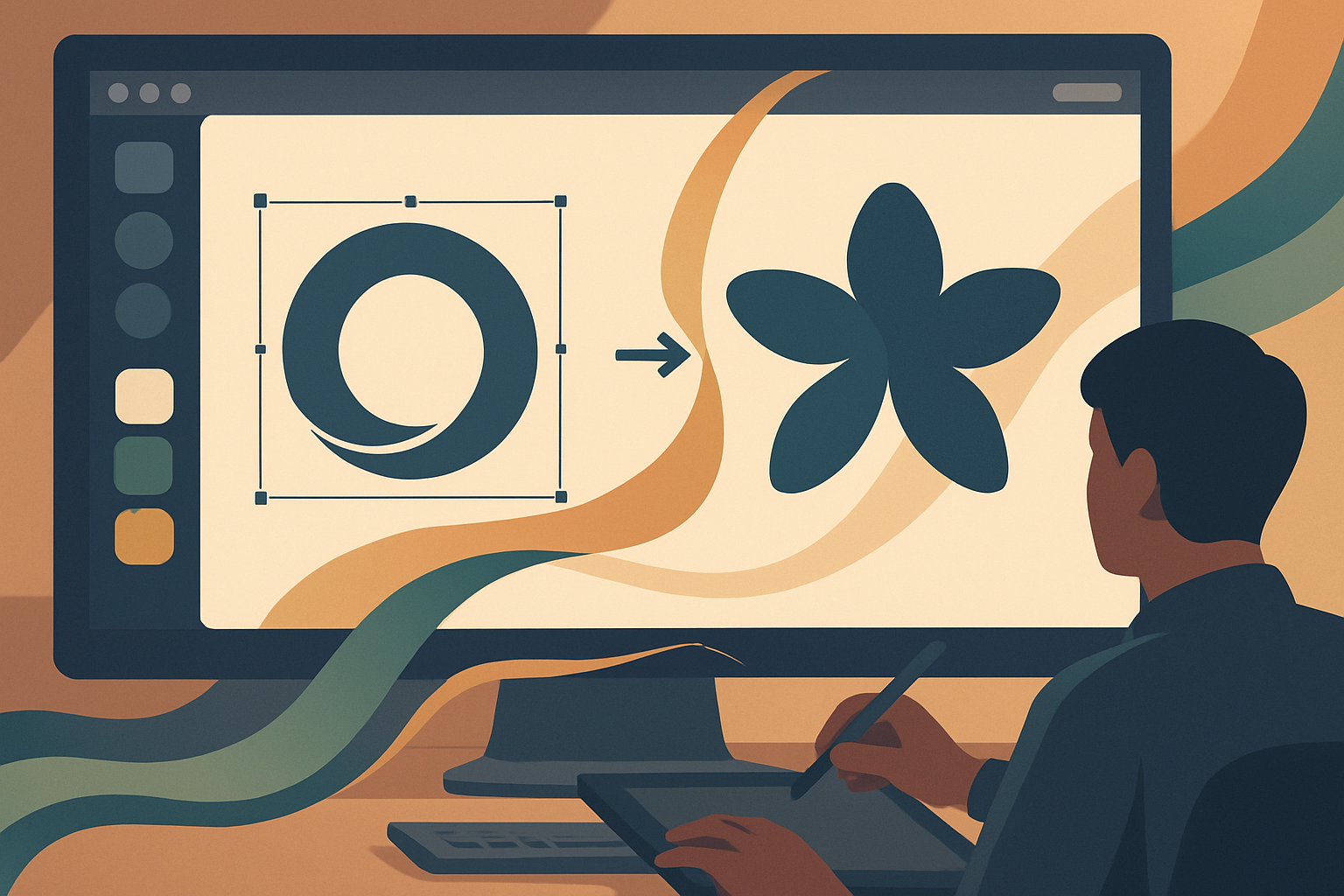


James Redenbaugh presented initial design concepts in Figma [tag="figma"], showcasing a refreshed brand direction that moves away from the previous Enzo circle logo (04:35). The new approach features a modern geometric logo with organic, flowing shapes designed to feel dimensional and in motion even when static. Munya, the designer collaborating on the project, developed a sophisticated color palette featuring deep slate blue instead of black, earthy green tones, and brown elements that ground the brand while maintaining elegance.
David Liebnau initially questioned the departure from the gold accents and Enzo circle, seeking rationale for these changes (09:21). James explained that the Enzo circle has become overused and lacks the precision and dimensionality needed for a 2026 brand refresh. The new logo's geometry offers superior animation potential and creates a sense of movement that aligns better with concepts of radiance, resonance, and connection (10:00).
The typography selection of HK Grotesque provides a clean, modern foundation for the brand. The color strategy maintains flexibility with both gold and monochromatic versions available for different contexts—gold for hero sections and website elements, simpler versions for social media to keep focus on content (17:13).
David proposed evolving the logo into a five-pointed shape reminiscent of a pentagon or organic hand form, reflecting his brand's emphasis on five core factors (12:40). This concept aligns with his numerology, where five represents life-giving energy, human connection, and community. The team spent ten minutes exploring this direction, with James creating quick prototypes in Figma [tag="figma"] that incorporated organic, asymmetric five-point geometries rather than rigid pentagons (18:09).
James noted that the five-pointed design also implies a sixth point in the center, connecting to the numerology of six—representing the unseen hive mind, crystalline innovation, and evolutionary impulse (28:38). This layered symbolism resonated with David's vision for the brand. The team agreed to continue developing three logo options asynchronously, with James providing variations featuring different gold gradients for David and his partner Julie to review (28:32).
The presentation included multiple social media template concepts with varying gradient treatments and background colors (38:06). David expressed concern about too much beige appearing boring or overly feminine, particularly given the prevalence of beige in coaching and senior demographics. James clarified the distinction between subtle warmth in off-whites versus prominent beige tones, demonstrating how different gradient combinations could maintain sophistication without feeling monotonous (34:09).
The templates showcase flexibility with dark marine blue backgrounds for bold, elegant posts and lighter gradients for more approachable content. David requested integration points for his Instagram photos and videos, which feature portrait-style and "cowboy shot" framing (42:35). James will incorporate image overlays and develop templates that accommodate both still photos and video content while maintaining brand consistency.
David shared a comprehensive 14-page briefing document outlining the vision for two initial landing pages (53:27). The strategy has shifted from fully bilingual content to prioritizing German-language delivery during the proof-of-concept phase, with only the first landing page and quiz available in both German and English.
Landing Page 1 serves as the initial touchpoint for audiences discovering David through social media or podcasts. It provides context about David's background while specifically targeting founders building trustful relationships with investors (56:10). The page leads directly to quiz participation, bridging awareness and engagement without excessive self-promotion.
Landing Page 2 delivers quiz results and introduces the email course (01:03:25). This page requires data visualization capabilities to display results across 15 assessment items grouped into five core factors. David emphasized that the visualization design for this marketing quiz should align with a similar assessment he's developing for the Notion operating system, ensuring visual consistency despite different item counts (01:29:39).
The quiz itself contains detailed questions and scoring logic, with complete documentation uploaded to the shared Google Drive project folder (01:01:21). After completing the quiz and email course, users receive access to a condensed 10-page field guide—dramatically shortened from the previous 50-page version. This field guide will require professional PDF design to maximize its impact as a lead generation tool before users book one-on-one discovery calls.
David introduced a second assessment tool designed for the Notion operating system [tag="notion"] that paying customers will use to track progress across 11 factors (01:15:59). This creates a distinction between the marketing quiz for lead generation and the ongoing assessment for customer service and progress tracking.
The challenge involves integrating dynamic assessment capabilities within Notion, including automated micro-shift recommendations based on individual scoring patterns. For example, someone struggling with "obsession" factors would receive recommendations for micro-shifts 1-3, while someone weak in "scalable logic" would focus on micro-shifts 13-15 (01:21:46).
James recommended using n8n [tag="n8n"] for automation rather than Zapier, citing his extensive experience with both platforms. He explained that n8n [tag="n8n"] offers superior customization capabilities, better reliability, and ultimately proves easier to work with once the learning curve is overcome (01:31:51). The automation would capture form responses, process data through Claude AI [tag="claude"] for intelligent recommendations, and create customized Notion pages with results and progress tracking.
[technology="Communication Automations"]
[technology="Assessment Systems"]
To facilitate implementation, James offered to provide technical guidance for Marlene, David's team member who has coding skills and is learning development. Rather than allocating James's time to implementation—which would reduce focus on sales and customer acquisition—the team agreed to establish a WhatsApp group connecting James, David, and Marlene for asynchronous collaboration (01:33:27). James will create instructional materials showing how to set up the n8n [tag="n8n"] workflows, connect API keys, create webhooks, and implement the data visualization components.
The team established clear protocols for asynchronous collaboration using Figma [tag="figma"] for design iteration and Google Drive for documentation. David moved the briefing document into the shared project folder during the call, ensuring James has editing access for comments and questions (01:09:05).
James will create a Loom video tutorial providing a "house tour" of the Figma [tag="figma"] workspace, enabling David's assistant Hannah and future team members to work with templates independently (51:25). This knowledge transfer approach ensures David doesn't become a bottleneck while maintaining quality control through template systems.
David emphasized his strategic preference for James to focus primarily on sales and customer acquisition deliverables rather than customer service implementation (01:27:35). This boundary clarification keeps resources aligned with David's primary constraint—needing clients—rather than delivery capabilities where he already excels.
The design review process will proceed with James providing labeled options (A, B, C) via screenshots in WhatsApp for David and Julie's feedback. This asynchronous workflow allows for thoughtful evaluation without scheduling constraints, while the WhatsApp channel ensures quick turnaround on decisions.
James Redenbaugh
David Liebnau
James Redenbaugh presented initial design concepts in Figma [tag="figma"], showcasing a refreshed brand direction that moves away from the previous Enzo circle logo (04:35). The new approach features a modern geometric logo with organic, flowing shapes designed to feel dimensional and in motion even when static. Munya, the designer collaborating on the project, developed a sophisticated color palette featuring deep slate blue instead of black, earthy green tones, and brown elements that ground the brand while maintaining elegance.
David Liebnau initially questioned the departure from the gold accents and Enzo circle, seeking rationale for these changes (09:21). James explained that the Enzo circle has become overused and lacks the precision and dimensionality needed for a 2026 brand refresh. The new logo's geometry offers superior animation potential and creates a sense of movement that aligns better with concepts of radiance, resonance, and connection (10:00).
The typography selection of HK Grotesque provides a clean, modern foundation for the brand. The color strategy maintains flexibility with both gold and monochromatic versions available for different contexts—gold for hero sections and website elements, simpler versions for social media to keep focus on content (17:13).
David proposed evolving the logo into a five-pointed shape reminiscent of a pentagon or organic hand form, reflecting his brand's emphasis on five core factors (12:40). This concept aligns with his numerology, where five represents life-giving energy, human connection, and community. The team spent ten minutes exploring this direction, with James creating quick prototypes in Figma [tag="figma"] that incorporated organic, asymmetric five-point geometries rather than rigid pentagons (18:09).
James noted that the five-pointed design also implies a sixth point in the center, connecting to the numerology of six—representing the unseen hive mind, crystalline innovation, and evolutionary impulse (28:38). This layered symbolism resonated with David's vision for the brand. The team agreed to continue developing three logo options asynchronously, with James providing variations featuring different gold gradients for David and his partner Julie to review (28:32).
The presentation included multiple social media template concepts with varying gradient treatments and background colors (38:06). David expressed concern about too much beige appearing boring or overly feminine, particularly given the prevalence of beige in coaching and senior demographics. James clarified the distinction between subtle warmth in off-whites versus prominent beige tones, demonstrating how different gradient combinations could maintain sophistication without feeling monotonous (34:09).
The templates showcase flexibility with dark marine blue backgrounds for bold, elegant posts and lighter gradients for more approachable content. David requested integration points for his Instagram photos and videos, which feature portrait-style and "cowboy shot" framing (42:35). James will incorporate image overlays and develop templates that accommodate both still photos and video content while maintaining brand consistency.
David shared a comprehensive 14-page briefing document outlining the vision for two initial landing pages (53:27). The strategy has shifted from fully bilingual content to prioritizing German-language delivery during the proof-of-concept phase, with only the first landing page and quiz available in both German and English.
Landing Page 1 serves as the initial touchpoint for audiences discovering David through social media or podcasts. It provides context about David's background while specifically targeting founders building trustful relationships with investors (56:10). The page leads directly to quiz participation, bridging awareness and engagement without excessive self-promotion.
Landing Page 2 delivers quiz results and introduces the email course (01:03:25). This page requires data visualization capabilities to display results across 15 assessment items grouped into five core factors. David emphasized that the visualization design for this marketing quiz should align with a similar assessment he's developing for the Notion operating system, ensuring visual consistency despite different item counts (01:29:39).
The quiz itself contains detailed questions and scoring logic, with complete documentation uploaded to the shared Google Drive project folder (01:01:21). After completing the quiz and email course, users receive access to a condensed 10-page field guide—dramatically shortened from the previous 50-page version. This field guide will require professional PDF design to maximize its impact as a lead generation tool before users book one-on-one discovery calls.
David introduced a second assessment tool designed for the Notion operating system [tag="notion"] that paying customers will use to track progress across 11 factors (01:15:59). This creates a distinction between the marketing quiz for lead generation and the ongoing assessment for customer service and progress tracking.
The challenge involves integrating dynamic assessment capabilities within Notion, including automated micro-shift recommendations based on individual scoring patterns. For example, someone struggling with "obsession" factors would receive recommendations for micro-shifts 1-3, while someone weak in "scalable logic" would focus on micro-shifts 13-15 (01:21:46).
James recommended using n8n [tag="n8n"] for automation rather than Zapier, citing his extensive experience with both platforms. He explained that n8n [tag="n8n"] offers superior customization capabilities, better reliability, and ultimately proves easier to work with once the learning curve is overcome (01:31:51). The automation would capture form responses, process data through Claude AI [tag="claude"] for intelligent recommendations, and create customized Notion pages with results and progress tracking.
[technology="Communication Automations"]
[technology="Assessment Systems"]
To facilitate implementation, James offered to provide technical guidance for Marlene, David's team member who has coding skills and is learning development. Rather than allocating James's time to implementation—which would reduce focus on sales and customer acquisition—the team agreed to establish a WhatsApp group connecting James, David, and Marlene for asynchronous collaboration (01:33:27). James will create instructional materials showing how to set up the n8n [tag="n8n"] workflows, connect API keys, create webhooks, and implement the data visualization components.
The team established clear protocols for asynchronous collaboration using Figma [tag="figma"] for design iteration and Google Drive for documentation. David moved the briefing document into the shared project folder during the call, ensuring James has editing access for comments and questions (01:09:05).
James will create a Loom video tutorial providing a "house tour" of the Figma [tag="figma"] workspace, enabling David's assistant Hannah and future team members to work with templates independently (51:25). This knowledge transfer approach ensures David doesn't become a bottleneck while maintaining quality control through template systems.
David emphasized his strategic preference for James to focus primarily on sales and customer acquisition deliverables rather than customer service implementation (01:27:35). This boundary clarification keeps resources aligned with David's primary constraint—needing clients—rather than delivery capabilities where he already excels.
The design review process will proceed with James providing labeled options (A, B, C) via screenshots in WhatsApp for David and Julie's feedback. This asynchronous workflow allows for thoughtful evaluation without scheduling constraints, while the WhatsApp channel ensures quick turnaround on decisions.
James Redenbaugh
David Liebnau
Develop three logo shape options with organic five-point geometry and gold gradient variations
January 17, 2026
Create logo variations featuring organic, asymmetric five-point geometries (not rigid pentagons) that reflect David's numerology of five core factors. Include different gold gradient treatments. Provide labeled options (A, B, C) for David and Julie's review. Five-pointed design should imply sixth point in center connecting to numerology of six (hive mind, crystalline innovation).
Create refined social media templates in Figma incorporating Instagram photo/video formats
January 20, 2026
Develop social media templates accommodating portrait-style and 'cowboy shot' Instagram photos and videos. Include image overlays and maintain brand consistency. Provide labeled options with varying gradient treatments and background colors (dark marine blue for bold/elegant, lighter gradients for approachable). Ensure distinction between subtle warmth in off-whites versus prominent beige tones.
Record Loom video tutorial providing Figma workspace orientation for team members
January 22, 2026
Create 'house tour' of Figma workspace showing template structure and usage. Enable Hannah (David's assistant) and future team members to work with templates independently without making David a bottleneck. Cover navigation, template usage, and editing guidelines.
Mock up Landing Page 1 prototype based on briefing document specifications
January 24, 2026
Create Figma prototype for initial touchpoint landing page targeting founders building relationships with investors. Page should provide context about David's background and lead directly to quiz participation. Follow specifications from 14-page briefing document in shared Google Drive. German-primary content during proof-of-concept phase.
Build quiz prototype with webhook integration points for n8n automation
January 27, 2026
Develop quiz prototype containing detailed questions and scoring logic (documentation in Google Drive). Include webhook integration points for n8n to capture responses. Quiz has 15 assessment items grouped into five core factors. Will feed into Landing Page 2 for results display and email course introduction.
Prepare written and video guidance on n8n setup, API configuration, and Notion integration
January 31, 2026
Create instructional materials for Marlene showing: n8n setup process, API key connections, webhook creation, Claude AI integration for recommendations, and data visualization components. Materials should enable Marlene (who has coding skills and is learning development) to implement automation connecting quiz responses to Notion operating system with customized page creation and progress tracking.
Design data visualization concepts for quiz results compatible with both assessments
January 29, 2026
Create visualization design for quiz results display on Landing Page 2. Must work for both marketing quiz (15 items, 5 factors) and Notion operating system assessment (11 factors) to ensure visual consistency. Visualization should align with overall Light Creators brand identity and sacred geometry principles where appropriate.
Share logo and template options with Julie for design feedback
January 20, 2026
Review logo shape variations (A, B, C) and social media template options with partner Julie. Provide feedback to James via WhatsApp on preferred directions for both logo geometry and template styles.
Create WhatsApp group with James and Marlene for Notion automation collaboration
January 15, 2026
Establish WhatsApp communication channel connecting James, David, and Marlene to facilitate asynchronous collaboration on n8n automation setup and Notion integration. This enables knowledge transfer without scheduling constraints.
Review and finalize text content for landing pages and quiz
January 22, 2026
Complete content review and finalization for Landing Page 1, Landing Page 2, and quiz questions. Ensure messaging aligns with 'leadership from presence, not pressure' positioning and targets conscious founders at transformational thresholds. Coordinate with James on any copy refinements needed.
Provide direction to Marlene on implementing n8n automation based on James's guidance
February 5, 2026
After receiving instructional materials from James, coordinate with Marlene on implementing the n8n automation workflow. Ensure she has access to necessary API keys, Notion workspace, and project documentation. Use WhatsApp group for technical questions to James.
Coordinate with Richard on animation needs for social media if required
January 31, 2026
If social media strategy requires animated content beyond static templates, coordinate with Richard (daughter's boyfriend) on animation production. Determine scope, timeline, and integration with brand templates.
Schedule next one-on-one session for late next week or early following week
January 27, 2026
Coordinate calendars to schedule follow-up session for late week of January 20 or early week of January 27 based on progress with logo options, templates, landing page prototypes, and quiz development.
Homepage drafts blending copy with preliminary graphics established. Hero messaging focuses on 'leadership from presence, not pressure' targeting conscious founders at transformational thresholds. Visual system developing around vertical/horizontal lines with circles symbolizing presence and leadership. Integration of mountain imagery as grounding metaphor to balance cosmic spaciousness with earth connection. Black and white compositions with natural (non-AI) qualities preferred. Standout image discovered: natural landscape with circle, vertical horizon, and horizontal line in Dao/yin-yang configuration. 6-8 core page designs in development with integrated copywriting approach. German-primary content strategy during proof-of-concept phase. Landing Page architecture refined: LP1 serves as initial touchpoint from social/podcast discovery; LP2 delivers quiz results with data visualization and introduces email course (now identical for English and German with both getting email course access). LP3 copy due Friday. Seven customized LP2 variations based on quiz results (logical visionary, quiet powerhouse, etc.) with same structure but personalized content (53:30). lightcreators.com functions as focused conversion funnel (quiz-centric), davidliebnau.com as broader personal brand site (49:52). Mallorca photo suite available for incorporation (57:50). March 1st launch deadline established (47:31). Copy development substantially advanced: LP1 (one-on-one offer) English & German complete except testimonials; LP2 (email course) complete; LP3 (group offer 'The Threshold') English & German complete; Resonance offer complete; davidliebnau.com homepage ready; podcast page nearly complete by Thursday; webinar waitlist page complete and in production (26:42-35:27). Design drafts now shared as Webflow preview links via WhatsApp for asynchronous review (46:09). davidliebnau.com homepage structure finalized: sections include How I Work, About David (incorporating Vision Quest), Experience, Testimonials, and Take Action CTA. 'Who is this for?' section removed as redundant for personal brand context (40:15). Navigation to function as anchor-link quick-orientation tool; Podcast nav item routes to dedicated page rather than homepage anchor (41:00, 44:31). Photo integration work underway: hero image background rework to unify David with concentric ring design (10:06); specific photos mapped to Discovery Call page sections — 'I See You' as hero, 'Feedbacking' for feedback section, 'Q&A Call' for details section (13:06); retouching planned for eye area freshening and photographer reflection removal (14:20, 28:27). Product naming update: 'Solo' is now 'Shift'; 'Notion Operating System' is now 'Solo' — requires update across all design materials (46:23). davidliebnau.com personal site hero section receives positive feedback with 'the update that makes all other updates possible' tagline (01:39). Social proof placement discussed: HR Excellence Award logo requires SYNC Group attribution (02:05); Proven Expert logo (4.98 rating) available only in German and behind upgrade paywall (06:01). Classical antique-flavored iconography appreciated but concern raised about communicating cutting-edge positioning; agreement to bring modern/technical icons higher on page for earlier contrast (12:31-15:18). New section planned: Truth/Presence/Connection three principles between five pillars and 'Leadership begins within' using vertical/horizontal circle visuals from earlier Figma work (19:33-23:54). Testimonial portrait photos to be sourced from LinkedIn and uploaded to Google Drive (33:46). HR Excellence Award logo to be added near SYNC Group reference (28:11). Podcast page cover art and hero imagery under discussion; speaking-action shot questioned for similarity to main hero and mid-word capture; alternatives to be marked up (35:02-41:00). Entrepreneur/Manager/Expert iconography to be replicated on podcast page (42:30). Photography strategy: shuffle 'solo hero' image to Solo page hero, use 'reserved smile' portrait as closing image on davidliebnau.com (48:09). Publishing decision: suboptimal landing page online beats no landing page; domain connection and publish targeted for Monday after weekend (49:44-53:07). Project significantly delayed from mid-February timeline, now incomplete as of late May (07:30). Scope evolved from cohesive single website to discrete, refined landing pages with multiple iteration arcs (10:10).
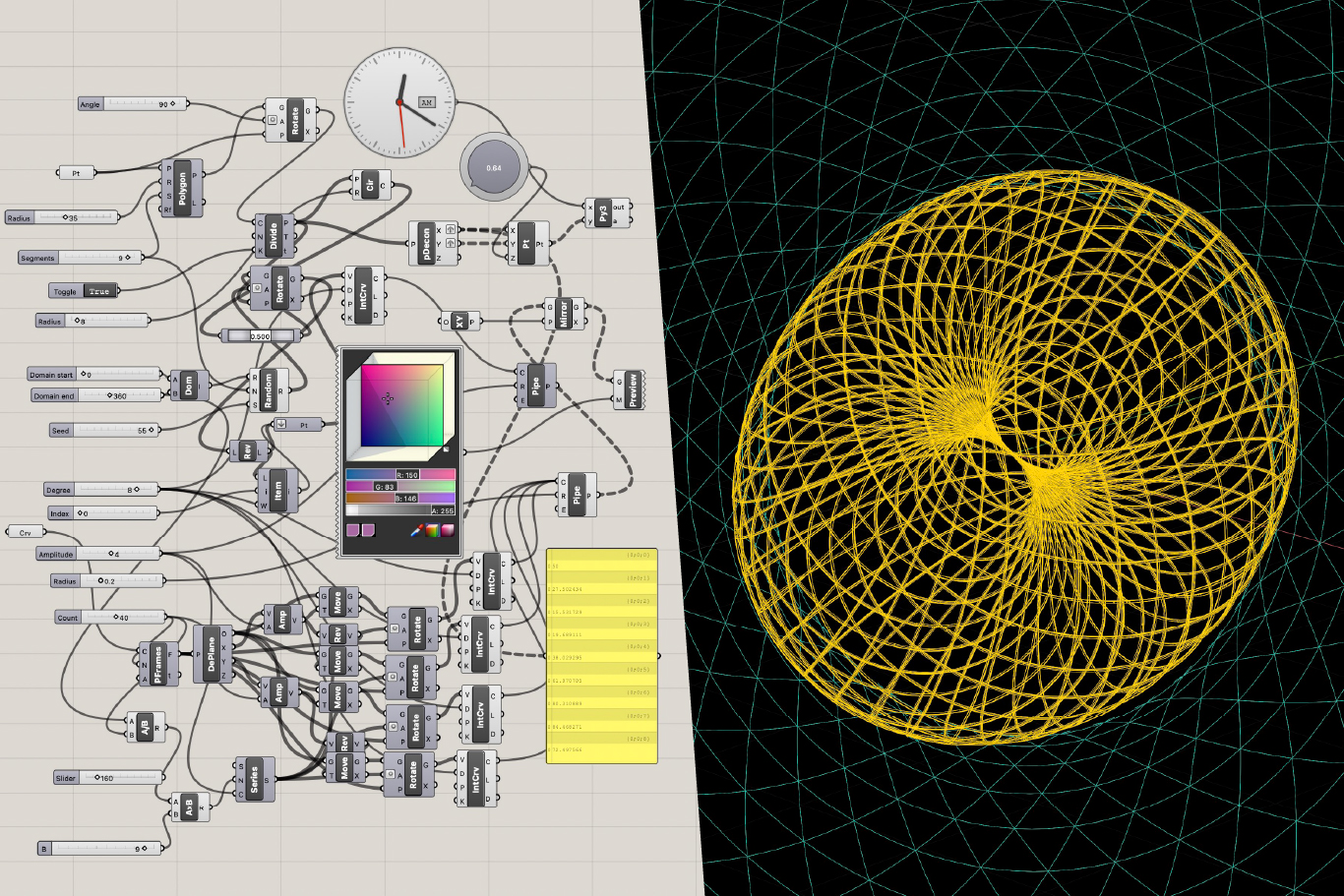
Visual identity development session focused on establishing brand direction for conscious leadership positioning. Key elements include balancing cosmic/spiritual imagery with grounded, embodied leadership metaphors. Mountain imagery identified as primary grounding symbol. Pinterest mood board exploration initiated. Interactive Grasshopper geometry tool introduced for co-creative design iteration. Strong preferences identified: 5, 7, 9, 12 circle configurations; gold and white color schemes. Critical brand constraint: accessible to performance-oriented leaders while maintaining spiritual depth without common esoteric clichés.
Brand evolution phase complete. New direction features modern geometric logo with organic flowing shapes designed for dimensional motion. Deep slate blue replaces black, earthy green and brown elements ground the brand. HK Grotesque typography selected. Five-pointed logo geometry explored reflecting David's numerology (five core factors, life-giving energy) with implied sixth point in center (hive mind, crystalline innovation). Gold gradient variations in development. Color palette maintains flexibility for hero sections (gold) vs social media (monochromatic). Social media templates created with dark marine blue and lighter gradient options, accommodating Instagram portrait/cowboy shot formats.
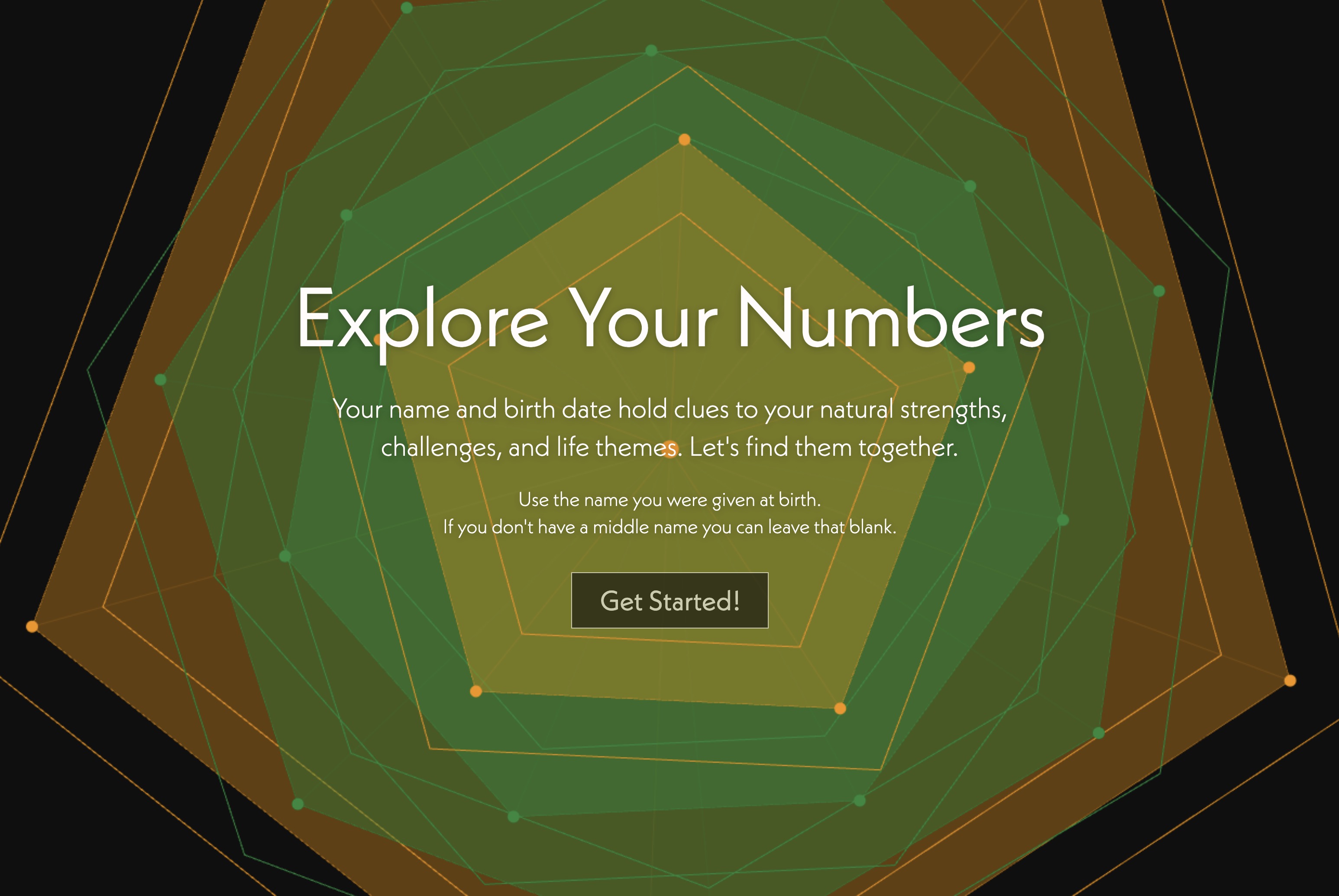
Development of two assessment tools: (1) Marketing quiz for lead generation with 15 assessment items grouped into five core factors, displayed on Landing Page 2 with data visualization and seven customized result variations (logical visionary, quiet powerhouse, etc.) with same structure but personalized content (53:30); (2) Notion operating system assessment with 11 factors for paying customers to track progress. Marketing quiz leads to email course (now available to both English and German audiences on LP2) and diagnostic call booking option (48:09). Field guide removed from funnel (48:09). Notion assessment provides automated micro-shift recommendations based on individual scoring patterns (e.g., obsession factors → micro-shifts 1-3, scalable logic → micro-shifts 13-15). Quiz documentation and scoring logic complete, uploaded to Google Drive. Requires webhook integration for n8n automation, Claude AI processing for recommendations, data visualization design consistent across both assessments. Quiz interaction features subtle animated background movement that intensifies as users progress (57:00). Results display redesigned to show dynamic spider/radar graph: full-extension 'potential' silhouette (5/5 across all factors) rendered in background as soft low-contrast shape, user's actual results overlaid in stronger brand colors showing gap between current state and full potential, entire graph pulses/animates dynamically responding to user scores with higher-scoring dimensions visually expanding outward (01:00:26-01:04:10). Results shown immediately without mandatory email capture (57:26). Custom icon set for five core factors in development. Quiz result pages have mixed German/English language issue identified — single line 'Dyn development lever' mixing languages mid-sentence (48:42). Dynamic script controlling result page content needs update and republish; full due-diligence pass across all factor pages required (49:56). Product naming update affects quiz result content: 'Solo' is now 'Shift', 'Notion Operating System' is now 'Solo' (46:23).
Technical guidance and knowledge transfer for implementing n8n automation connecting quiz responses to Notion operating system. Automation captures form responses, processes through Claude AI for intelligent micro-shift recommendations based on scoring patterns, creates customized Notion pages with results and progress tracking. James providing instructional materials (written/video) showing n8n setup, API configuration, webhook creation, and data visualization components. Marlene (David's team member with coding skills) will handle implementation with James's guidance via WhatsApp collaboration group. Decision to use n8n over Zapier for superior customization and reliability. Focus on enabling customer service automation while keeping James focused on sales/acquisition deliverables.
Professional PDF design for condensed 10-page field guide (reduced from 50 pages). This lead generation tool is delivered after quiz completion and email course, before discovery call bookings. Requires sophisticated design to maximize impact and conversion. Design should align with overall Light Creators brand identity including color palette, typography (HK Grotesque), and geometric visual system.
00:00:00
David Liebnau: Oh, hello Kitty.
00:00:02
James Redenbaugh: My kitten has come to say hello.
00:00:05
David Liebnau: Hello. What's her name?
00:00:07
James Redenbaugh: This one is Willow.
00:00:09
David Liebnau: You have like two, right, Willa, you said Willow. Willow, yeah.
00:00:17
James Redenbaugh: They're all named after trees. And this one is Maple.
00:00:21
David Liebnau: Okay. Hello Maple.
00:00:24
James Redenbaugh: And we have Juniper running around somewhere as well.
00:00:28
David Liebnau: So three. You have three. All right, all right.
00:00:32
James Redenbaugh: This meeting is being recorded. Yeah.
00:00:36
David Liebnau: Yeah. I only have, I hear I only have this plant. I call it Ifalia. And then of course I'm an adopted father of a little poodle mix dog. I don't know. Yeah, next time when, when she's around. She's now with her like main mother of care, so to speak. My partner on Mallorca already, so I can't show her around, but next time I will do so.
00:01:10
James Redenbaugh: Wonderful.
00:01:12
David Liebnau: Yeah, James, let's. Let's get down to business, so to speak. Sure. I, I'm. I mean number one, I'm of course curious what, what you've been whatever thinking of working on before. I then want to talk with you about my like social media framework and or templates so to you know, get going there and then I want to make sure you understand well the, the briefing document I've put together today for you for creating the first two sites or landing pages. Yeah. So that's what make this call valuable for me today.
00:02:07
James Redenbaugh: Wonderful. Great. Yeah. I want to hear from you, from the horse's mouth, so to speak, what's been brewing for you. You've been sharing some ideas in WhatsApp, but excited to hear what's most present in this new year and very excited to show you some things we've been working on and playing with. Sitting with the content of our previous meetings and starting to play with design things and a logo concept and some social media templates already. So cool.
00:02:56
David Liebnau: Yeah. Let's start with this exciting aspect. So I, because I know already what what I know about, but I don't know what, what you've been working on. So before I introduce you to my newness, I like to learn about your newness because. Because then I think we can best like co create our collective newness.
00:03:22
James Redenbaugh: Great. Sounds good. I'm going to double record my Fireflies only records audio so I'm going to record this video so we can see what we're looking at and I can share this Figma file with you as well that you can dive into later. But this is a, a visual starting place. Playing with some, some visual ideas, ways to lay out information on these landing pages and playing with typographies, colors, textures, Backgrounds as well as language light. Munia, the designer I'm working with on this, is incredible at colors, and I really love the colors that she's picked out here.
00:04:35
David Liebnau: Yeah, I find that interesting indeed, because obviously this is a new color portfolio, but since last time I've mentioned, I want to make sure it's, like, grounded. Right. And thus connected with the earth. I. I'm not surprised to see brown hair, although I never said, you know, please bring in brown, but interesting. And. And I like what I see. So. But tell me a little more. I mean, you are basically suggesting this type of color update here and.
00:05:16
James Redenbaugh: Yeah, yeah, this, this color, you know, instead of black, this deep slate blue instead of white, this. This earthy green we could call it. And I really love this logo that, that Munya's created with the circle implied in the center, but then the more organic shape around it would be really fun to animate as well.
00:05:45
David Liebnau: So that is the logo. Okay, okay, I see, I see. So then, I mean, what. What do I. Where. Where do you need my feedback? My, like. Yeah. Decision, probably. What options do you have here? Tell me a little more.
00:06:05
James Redenbaugh: Yeah, great question. So this is a starting place. I want to get your initial feedback and impulses, understand what resonates, what doesn't, what. What you might like to see more of. And then we can, you know, branch from here, create different iterations if you don't need to know exactly what. What.
00:06:32
David Liebnau: What is actually the difference or the main difference between section three to five.
00:06:40
James Redenbaugh: I think that it's just subtle, very subtle differences right now in the social media layouts. So just different gradients. It's the same. The same logo, but slightly different colors and. And gradients here.
00:07:01
David Liebnau: Right. And I mean, we, we. There's no purple anymore in it. Right. That has been deleted and instead brought in the brown thing. Right?
00:07:16
James Redenbaugh: Yes.
00:07:18
David Liebnau: And I mean, the logo is at, like. I mean. So, I mean, let's start here because that is, of course, like a very core change. Is. Is that the. This is the update kind of statement? Or. Or do I have some options to. Yeah, evaluate.
00:07:50
James Redenbaugh: Yeah, this is a proposal. And then we can make more options.
00:07:55
David Liebnau: I see, I see.
00:07:57
James Redenbaugh: And possibilities. Let me pop over here. And you can see Munia's process and some, you know, these are possibilities as. As well.
00:08:15
David Liebnau: But hang on here, hang on here for a moment. So it's. It's the. And right now the, like, the preferred one was the second row, second column.
00:08:29
James Redenbaugh: Yeah. This one here.
00:08:31
David Liebnau: This one, this one. All right. And I mean that. I mean, The. The typo. I. I like. What. What type of typo is that?
00:08:45
James Redenbaugh: Yeah, so this is called HK Gro Grotesque.
00:08:49
David Liebnau: Okay.
00:08:50
James Redenbaugh: Yeah, it's.
00:08:53
David Liebnau: Yeah. So. Yeah, but we don't have to talk more. I mean, I like that. Tell me a little more about. Oh, and hang on. Okay. Yeah, right. Because. So two questions. Why not gold anymore? And instead of just one color, like white? Ish.
00:09:21
James Redenbaugh: And.
00:09:24
David Liebnau: What. What was wrong with my Enzo circle? Why did it have to go.
00:09:30
James Redenbaugh: Good question. Let me bring up your Enzo real quick. There's nothing wrong with it. I'm gonna drop this in here for reference. This is the Enzo you're referring to.
00:09:52
David Liebnau: Right, right, right.
00:09:55
James Redenbaugh: So. It's. It's definitely okay if you're, you know, you're set on it and you want to maintain that. That brand. But I'm thinking, you know, it. It's 20, 26. We're up, leveling everything. To me, this feels a little. A little overused. I see a lot of Enzo circles, a lot of brushstrokes, and it's. It's less precise. You know, it has a nice energy and flow to it. And so we want something that has flow and movement and circularity. But this geometry, you know, I feel, has a dimensionality. It's highly animatable. It's. Even the static version feels like it's in motion.
00:11:00
David Liebnau: And show me the other. The other version. I mean, I do like it as well. And you, like, convinced me with the explanation of why the Enzo had to go. I needed some verbalization here, so I'm okay to let go of it. Yeah. I also like the.
00:11:23
James Redenbaugh: New.
00:11:25
David Liebnau: Line symbol here because it, in a new way, somehow symbolizes radiance or resonance or connection as well. I'm not yet sure about the actual shape of that symbol. I may have another idea for a third type of the shape, but I first want to know why you preferred the right and not the left type of shape.
00:12:02
James Redenbaugh: Yeah, good question. So I think that the left. This is nice as well. This is just a bit more complex. It has, you know, four points. This one kind of has three, two and a half. But I think it would. Either way, it would work really well on your website and even in social media assets. Also, when we can do video and.
00:12:32
David Liebnau: Let me. Let me share with you my, like, maybe new idea. Maybe.
00:12:39
James Redenbaugh: Yeah, please.
00:12:40
David Liebnau: So if. How about if we would reshape this shape into a form with sort of five points, like a pentagram or a five finger hand. So since we've been, you know, talking about this five fact, I Mean, you know, my concept currently relies on five factors. Formerly I had on my old website as you know, this high five concept. And we are considering or at least having a conversation about a later a graph which illustrates the assessment of the quiz. So if all of that would somehow be reflected in that shape, you know, wouldn't that make sense? Or could that be an idea? Or is that too well known? You know, this five point star, everyone saw it and so I.
00:13:50
James Redenbaugh: No, yeah. Do you want to play with that right now? I could, I could mock that up for you maybe.
00:13:59
David Liebnau: Maybe. I mean, let me know what you think about it. I mean.
00:14:06
James Redenbaugh: I'm, I'm with you. I, I, as a geometrician, I think the, the geometries and things like these are really important.
00:14:17
David Liebnau: And.
00:14:20
James Redenbaugh: We, you know, we were looking at your numerology as well and five is very alive for you. I think that, I think that it could, it could work well here. And, and I like the idea of it being organic. You know, we don't want it to just be a simple pentagon or pentagram. But.
00:14:40
David Liebnau: Right, right.
00:14:42
James Redenbaugh: You know, a, a kind of, you know, similar to this. But, but five points. My, my concern would be, I don't want it to be too complex, but we should definitely play with it.
00:15:02
David Liebnau: I would, I would. In terms of the process since we have a few more pressing things to talk about. I mean not pressing because of course that, that needs to be clarified, sorted out before we can use anything else. So, But I'm tempted to say, well work, work on that on your own and then provide me some like options and I give you feedback, even asynchronous. So, so asynchronous. Like you could share with me your next edition of it and I let you know. But if you say, well, no, no, no, I want you to be with this right away, then we do it together. But before we start playing on the. Hang on, hang on. Stay there, stay there. Stop, stop. Before we work on the shape. Yeah. I like to talk with you about the gold versus silver color. Sure. Because I mean, as you know, I've choose on purpose the gold for the form and I, I'm not ready to let go of it without a little bit of a conversation with you about it. So yeah. Your suggestion was to go with a two color, not three color version.
00:16:28
James Redenbaugh: Right, Right.
00:16:29
David Liebnau: So the, the middle or lower lines. Why did you suggest that and not the golden?
00:16:40
James Redenbaugh: Good question. And, but to be honest, it will totally depend on context. So sometimes I think we will want golden. I like the golden. It just Depends where we're using it. Okay, I'll show you an example of another brand. Like the whole of the brand is every use case. Sometimes we want color, sometimes we want black and white. And you'll have different versions to use in different places.
00:17:12
David Liebnau: Okay.
00:17:13
James Redenbaugh: Yeah, so I, I like the gold. I think you know if we're. If it's on your website in the hero. Yeah, I like gold and social media posts. You know, we want to bring people's attention to the content and so we might want a simple, simpler, monochromatic version of the logo there.
00:17:34
David Liebnau: Okay, got it. All right then let's spend 10 minutes to play a little with the further development of the shape.
00:17:43
James Redenbaugh: Sure. Great.
00:17:48
David Liebnau: Is that sufficient for a first like trial or do you need more time?
00:17:55
James Redenbaugh: No, let's see how far we get in 10 minutes.
00:17:57
David Liebnau: Because I want us to also work on the other topics as well. And I guess otherwise we could easily spend an hour and just play with this shapes.
00:18:09
James Redenbaugh: Oh yeah, yeah, definitely. Let me just export this really quick as a vector. Bring it in.
00:18:53
David Liebnau: So if, like to start. If you, if you look at my hand here. Right. If. And I mean not like how to say that photographic, but as a, as a rough starting point. Yeah. How. How would then this shape develop?
00:19:18
James Redenbaugh: Yeah. Let me drop a hand in here. Let's use your hand. Actually, can you hold up the. Perfect. It.
00:20:26
David Liebnau: You still need my hand?
00:20:28
James Redenbaugh: Oh no, you're good. I got it.
00:20:29
David Liebnau: Okay.
00:20:56
James Redenbaugh: Okay. I'm just recreating the base geometry that one you had over here. And then I can. Oh, you're not seeing my screen anymore. One sec. So. If we literally take the hand like this, it's actually more.
00:22:00
David Liebnau: Six pointer yet with, with a dent you brought in at the, at the wrist, you created like two additional points. I would rather make that a square. Yeah, yeah, like that. And I, I don't know whether that, that is a good idea. I'm just playing here. Yeah.
00:22:25
James Redenbaugh: Huh. Yeah. So we'll use that as one possibility.
00:22:33
David Liebnau: Yeah, let's. Let's see how that. Hang on. No, I mean, no, but I need, I mean it. Yeah, like that. Yeah, exactly.
00:22:46
James Redenbaugh: Yeah. But I was thinking more of like a pentagon as a starting place.
00:23:02
David Liebnau: And.
00:23:04
James Redenbaugh: Let'S play with. Profit. It.
00:24:21
David Liebnau: Maybe the, the points shouldn't be that pointy.
00:24:27
James Redenbaugh: Yeah, yeah, I gotta round them out. I could roughen.
00:24:54
David Liebnau: But of course it will change anyway if you bring in this line type structure.
00:25:11
James Redenbaugh: Just gonna do a quick sketch on here.
00:25:17
David Liebnau: Yeah, should be more organic. Like. It's of course very like symmetrical and that's a bit more boring, isn't it?
00:26:03
James Redenbaugh: Yeah. And, you know, we're. We're being very quick here to see what. What might work. Of course we'll want to refine and, you know.
00:26:17
David Liebnau: Yeah.
00:26:18
James Redenbaugh: Take more time in the final.
00:26:19
David Liebnau: Exactly. But I think that actually is. Is. Is the most promising approach, don't you think? I mean, I. If you go back to the, like, overview, which allows me to look at all three, Like. Yeah, I think I'll prefer the last.
00:26:51
James Redenbaugh: Yeah.
00:26:52
David Liebnau: Not finally.
00:26:55
James Redenbaugh: Me too. I don't want it to feel like a starfish, but I think that you're totally right that the 5. The 5 energy is. Is for you.
00:27:09
David Liebnau: Yeah. What is. From a numerology standpoint, what. What does the 5 stands for again? I. I forgot.
00:27:18
James Redenbaugh: 5 is. I say 5 is alive. 5 is very life giving. It's human, you know, it's. It's also plants and animals. It's growing up from the earth. The earth is four and so five is connection. Human touch has a lot to do with community. 5 and 6 are very. Community Beautiful.
00:27:44
David Liebnau: All right, sold. Sold. Let's work on this. And I'd like to invite you to, I don't know, maybe produce either three options or one preferred one, and just share it with me via email and then I'll let you know. Asynchronous, you know, through email. Sorry, web. No, WhatsApp. I. I would also, you know, circle Julie in so she can have a say about that too. You know, I like her evaluation as well. And. Yeah, and from a time perspective. Let's. Let's move on for now.
00:28:32
James Redenbaugh: Great. That was 10 minutes. Perfect timing.
00:28:36
David Liebnau: Yes.
00:28:38
James Redenbaugh: One other thing I'll say about this is that the five in this way also implies the sixth. So we have the six in here as well. Really cool.
00:28:50
David Liebnau: Ooh, and. And. And the six stands for again. What. What's that?
00:28:57
James Redenbaugh: Six is. I have a six right here. I'm a big six fan. Six is the unseen hive mind. It's crystalline. It's what humans create and strive towards. And I see it as the evolutionary impulse of what brings us into the unknown. It's like innovation and creativity and passion.
00:29:30
David Liebnau: Like this soul. This. The calling of the soul.
00:29:34
James Redenbaugh: Yeah, in a way.
00:29:36
David Liebnau: Okay, cool. Yeah, we want to have that too. That's good.
00:29:39
James Redenbaugh: Yeah, that's great.
00:29:42
David Liebnau: And what else should I, I don't know, review give you, like, feedback on any. Any decisions to be made?
00:29:51
James Redenbaugh: Yeah, let's go back to this figma real quick.
00:29:58
David Liebnau: And why. Yeah, tell me again why. Why did purple had to go Or I think I, I even, I think it, it was already in the briefing, wasn't it? I think you just, or I don't know if, if I need to let go of other things like purple, let me know why. Or.
00:30:18
James Redenbaugh: Yeah, good question. I, it's not gone for me. It's, it's just kind of more background where the brown we have here is very much in the purple spectrum and I can feel the purple in the gradients here. And we can bring it forth more. We can, we can do some but iterations.
00:30:44
David Liebnau: Don't worry when I, I answer myself because I, I, I do remember when, when you've been, or when I've been producing all the answers to your briefing document. I was in conversation with the AI, which helped me with that about purple and we were considering like this esoteric allergy type pattern and thus said, okay, let's, let's avoid it for that purpose. Yeah. And, but in this color code, especially with a logo, as it shows up now, I am missing this like shiny gold. Isn't that, shouldn't that also be part of the portfolio of colors and not just this beige, earthy colors?
00:31:48
James Redenbaugh: Yeah, I, I think so. And we can play with that more. So we can have a solid gold like that, but we can also have, you know, what you're calling a shiny gold can be created by a gradient between these two.
00:32:11
David Liebnau: Yeah. That also looks. And the background is a marine blue. Right?
00:32:17
James Redenbaugh: It's like a dark marine blue. Yeah.
00:32:19
David Liebnau: That's cool. Yeah, that looks very elegant, I think. And pricey.
00:32:27
James Redenbaugh: Yeah.
00:32:28
David Liebnau: Or valuable, let's put it this way, with a gradient of blue and dark blue and gold. I think that's also very cool. I, you know, I'm a bit hesitant when it comes to this. Too much of the beige because number one, I see so much senior people only wearing beige. And a lot of female pages are also lots of sand and beige type colors. I mean, I, I do understand, as I said last already last time, like Earth is required here and I bring a lot of like earthing quality, grounding quality. But I don't want it to be boring at the same time and, or too female as well. Yeah.
00:33:28
James Redenbaugh: And you know, there's a thousand different beiges, but just to bring some options in here, this is pure white. And you know, of course on Instagram and, and LinkedIn and whatnot, we're not going to get away from pure white. We don't have the choice. Yeah. So that's a part of everybody's brand. But when we do have the choice, I, you know, I like to warm things up. It doesn't have to be this dramatic. Here's a subtler version where I wouldn't even call this a beige, but it's not white.
00:34:09
David Liebnau: Yeah, yeah, no, I, I don't mind. I don't mind this, like broken white or however you want to put it, like caramel, ish. Like a little pinch of, of beige into the white. I'm, I don't mind. I'm more in questioning the, like, the, the main beige types you've been putting up above. I don't see them anymore, but I saw them before. Right here we have brown. We have like middle beige, and then light beige. And again, Maybe the question is, could we replace one out of these existing three brownish type colors with the shiny gold?
00:35:04
James Redenbaugh: Yeah, yeah, definitely.
00:35:07
David Liebnau: Or I mean, do we have to limit the portfolio onto no more than whatever. I mean, we have quite a few colors there. Right. Isn't it getting too much at some point? Too many.
00:35:24
James Redenbaugh: There are no rules. I don't think it's too many.
00:35:30
David Liebnau: Okay.
00:35:33
James Redenbaugh: Yeah. I think this is, this is good because it's in a spectrum. You know, everything's working together. Yeah.
00:35:47
David Liebnau: Gold gradient.
00:35:49
James Redenbaugh: Yeah.
00:36:02
David Liebnau: And then if, I mean, going back to the logo, what, what gold type would be the color for. For the logo? And wouldn't that also need to be part of that portfolio?
00:36:20
James Redenbaugh: Huh. Why don't we play with some more gradients and possibilities here? So, like, this is a simple, A simple one here. I applied a gradient to the, the strokes. It can. It could definitely add a depth here. I'm gonna swap.
00:37:12
David Liebnau: It's amazing how cool this looks. I mean. Yeah, I like that already. I mean, the way how it's placed and I like that.
00:37:27
James Redenbaugh: Great. So in the iterations that will do with the other geometry. I'll also give some different options around gradients.
00:37:39
David Liebnau: Okay.
00:37:41
James Redenbaugh: And then we'll probably end up with, you know, a full gradient color version, a solid color version, and a black and a white version.
00:37:58
David Liebnau: Okay.
00:37:58
James Redenbaugh: And we want all of them to look good. Slogo is pretty. Pretty crazy.
00:38:06
David Liebnau: And okay, so. And then the below, these are like frameworks or templates I could use for. Then Instagram or LinkedIn or YouTube things. Right. Posts. Is that right?
00:38:27
James Redenbaugh: Exactly. Yep, yep.
00:38:32
David Liebnau: Yeah. And. And are there different options which I need to choose from? Or is that already like that? That would be the portfolio I. We could combine or no.
00:38:49
James Redenbaugh: Or.
00:38:50
David Liebnau: Yeah. Tell me a little more about these things.
00:38:54
James Redenbaugh: Yeah. So this is, you know, these are all generally in the same direction that we Feel is most powerful and they can be elaborated on. But if you like this. This direction and aesthetic, then we can give you like, lots of versions of these gradients to use and. And play with in. In Canva or wherever you're creating your.
00:39:33
David Liebnau: Yeah, maybe. Let me specify a question now, here, for example, we see like, we see of course, the gradient version which can be applied or where I can imagine a lot of variety, of course being feasible but still being like, comparable or consistent. So you recognize, okay, that's one brand always type of gray ends in a particular set of colors. Same applies to the white, but the other, the dark background. Whether it's this, what is a turquoise or. Or what is the color olive green type versus black.
00:40:21
James Redenbaugh: That is.
00:40:22
David Liebnau: Is that like too much variation? And wouldn't we need to narrow the options to be con. Consistently perceived as, ah, this. This is a light cr.
00:40:39
James Redenbaugh: Not necessarily. I think that, yes, we want to pick a direction and see. You know, do we generally want to make posts that are more like this, which I think feels more academic, professional, or more like this, which is deeper, bolder. But you don't want every one of your posts to feel too similar. You want some variety and you also want to leverage images and play with images, you know, and your own images to.
00:41:21
David Liebnau: Let me, Let me ask you another, like, format type. I'm also, of course planning to, yeah. Work with pictures as well as videos. How could they be integrated into, you know, this type of templates?
00:41:44
James Redenbaugh: Yeah. So if you could share some examples of the kind of images you want to play with, I could mock up examples.
00:41:55
David Liebnau: I mean, just if you look at my Instagram account, you'll. You'll see what, what I'm talking about. I mean, this where. Where not yet designed, but I mean, there you see pictures of me and videos of me basically with a portrait type or half. What do you say? Cowboy style. I don't know how to call that. But have a look at my Instagram account and you know what I mean?
00:42:35
James Redenbaugh: One sec. What's your Instagram handle?
00:42:44
David Liebnau: David Leap. Now, I can also share with you the.
00:42:54
James Redenbaugh: Yeah.
00:42:55
David Liebnau: Oh, you got it, huh? Okay. Yeah, I mean, hang on, hang on. Scroll up again. So let me illustrate a little. What. Further up, further up. Stop, stop, stop, stop. So here you see like a few typical formats I intend to use. You see like top right, a picture only, plus caption. You'll see a video plus caption. And yeah, here you see something which, like the boyfriend of my daughter who's a media designer, produced as well, like this Animated. Yeah. Thing here. Right. Selling my, my podcast. I, I'm not saying I'll need, I'll definitely want to continue that, but. I, I could also ask Richard is his name to produce the animation. Yeah. Because his work is, is way cheaper than yours. So I'm, I'm just. Want to give you an example or like the overview of what, what I've been using and potentially want to reuse again.
00:44:46
James Redenbaugh: Cool, great. Yeah, some overlays down there could go a long way. And then when you do create the, these, these stills, how are, where are you putting the text on the image?
00:45:14
David Liebnau: Ah, okay, so I mean stills. What do you mean stills? Videos or the, or pictures?
00:45:23
James Redenbaugh: When I see these, I see the, you know, they're videos but, and you have the captions here, but in, in the grid we see the text on top of the image. I'm just curious where. How are you putting that text on the image?
00:45:40
David Liebnau: Right. I, I mean I played with different processes. I played with PowerPoint and then copied into PDF files, downloaded, uploaded. I played with Canva. I delegated it to my daughter who was then on a mobile device doing it directly out of Instagram. And the top middle version I tried myself with Lovable as a kai AI generated one. So I, I had no consistent process here applied yet.
00:46:37
James Redenbaugh: Okay, cool.
00:46:39
David Liebnau: I'm just thinking top left was done by a graphic designer for me.
00:46:50
James Redenbaugh: Cool. I'm just thinking about what, what fonts you'll have available to use in these. In these cases. Canva tends to work well for people, but the, you know, the, the choices we have there are limited.
00:47:09
David Liebnau: Yeah, I'm, I, I would rec. Appreciate like recommendations for, for, for the process or. I mean, you know, the idea in, in like my desired future state is that I create or I get from you some templates which I can share with Hannah, my, my like assistant, so that she can easily work with them and put together these templates with copy text or videos plus pictures or videos, as I said, and then post it basically.
00:47:59
James Redenbaugh: Yep. Cool.
00:48:04
David Liebnau: I, what are we now?
00:48:08
James Redenbaugh: Figma. So Figma is what we use to design and collaborate on designs. And I think that, you know, having only one project, you could probably get away with a free plan, but if you need to upgrade to a professional plan, it's pretty reasonable. There's a bit of a learning curve because it is a professional program, but it's, it's so easy to collaborate with people in, in Figma, and the basics are very easy and you know, you'll have everything that we've made for you in Figma and as well. So you know, we're designing these templates in figma. If you want to use figma, you can, you know, use all these assets. Yeah, yeah, yeah. And anybody working with you can easily, you know, hop in here and.
00:49:19
David Liebnau: Yeah.
00:49:20
James Redenbaugh: Change things as well.
00:49:21
David Liebnau: Yeah, yeah, yeah. So all good. So let's, let's do that. James. And can you maybe. And maybe we can do that already for the. Like how about the following.
00:49:36
James Redenbaugh: You.
00:49:36
David Liebnau: You fine tune this logo variations and if, if you also want to further carve out or. Or design this social media template selection, including here, you could include a picture or video or so and maybe name it option. If I then need to decide anything, let me know. This is A B C or C B or so. And then either you make screenshots of this and share it with me via email via WhatsApp or you. And maybe, maybe that makes sense. But then at a future state I also would appreciate if you could like give me a little bit of a house tour in Figma. Like you could. There's a particular video or maybe one of your tools can do that as well so that you produce a little house tour which I then on a video which I then can share with Hannah because I want her to work on this or with other future collaborative collaborators as well so that I can use that as a like introduction into the work with Figma for future team members. Because I don't want to do that myself in an ideal world. Yeah, I want to empower other people doing that for me.
00:51:25
James Redenbaugh: Yeah, yeah, totally. When I do that, I'll do that in Loom, which makes it very easy to share and jump around.
00:51:36
David Liebnau: Exactly. And so you can just record it at any point it is convenient for you and then we can make multiplied use of it. But I like what I see here already and yeah, I like the color in this things. But as I said, I also want to share it also with my partner Julie. She has a much better taste than I have. And, and so if you have questions, please ask them. Maybe let's do it in the following way. So number one is you just provide screenshots. Yeah, screenshots with questions so I can respond to and share with Julia or Julie. And then when we have designed all what we need, then you create a Loom video as an introduction into the template so that my future team members can review that as well. I can of course watch it and then yeah, we will always have that information accessible. How to work with your templates. Is that an efficient and good process for you as well.
00:53:05
James Redenbaugh: Yep, excellent. No problem. Cool.
00:53:12
David Liebnau: So shall we then talk about the briefing document I've shared with you?
00:53:19
James Redenbaugh: Yeah, let's talk about it. I have it over here.
00:53:27
David Liebnau: So. Yeah, what I will also. That's like the next artifact I, I will create is an overview of the, like, adapted or up to date type of funnel. Yeah. Including the next steps of landing pages. But I, with this briefing, I only wanted to focus on the first two landing pages. So you, you, you can get started on, on, on the development. All right. And yeah, maybe why don't you scan? I mean, have you read it already or you haven't let me know?
00:54:26
James Redenbaugh: I have just browsed it. I haven't read all 14 pages.
00:54:30
David Liebnau: Yeah. So what will you. Would you like to read it more carefully and then ask me questions or shall I like, verbalize that?
00:54:46
James Redenbaugh: Yeah, why don't you verbalize the overview and give me the high level of what you're, what you're thinking here.
00:54:57
David Liebnau: Okay. So. Although of course, that's always tricky, you know, when, when, when you start to. But it's good practice because of course my brain can also get lazy. And then I rely on my AI assistants to do the work for me. But okay, so number one, yeah. Starting with the language here we. I mean, in the past I've said I want everything in German and English. Right. I now realized actually at this point in time where I'm still in the like, proof of concept phase, it is more efficient to wait with a full English delivery. Yeah. And I'm talking about not just the landing pages here, but lead magnets, a field guide, an email course.
00:56:07
James Redenbaugh: Mm.
00:56:08
David Liebnau: Yeah.
00:56:10
James Redenbaugh: Yep.
00:56:11
David Liebnau: So that will simplify the work for you because you don't have to produce. Or, or maybe it will mainly simplify my work because I don't have to provide an English email course in an English field guide. But what we need is, of course, a landing page. Now the first landing page, which leads to the quiz and is the first touch point for people who've been seeing me on social media or listen to me in the web in the podcast. So. And that very first landing page, yeah, combines a little bit of a who is David Leap now? Type of homepage without being too lengthy in the explanation of me, but gives a bit background and then leads to the participation of the quiz and is already very much specifically targeting or tailoring the founder who wants to build trustful relationships with investors. Segment. Yeah, so that's module A. And, and this is still in English and German. And you find quite comprehensive description of what my AI assistants consider is helpful here. Feel free to challenge any, any design. Aspects or demands if they don't match with your professional perception or, or judgment. Yeah. So I, I value your ability to design landing pages higher than this description, but it gives you hopefully an helpful starting point or some guidance to play with in addition to all the other sources of information and expertise you, you can use. Yeah.
00:59:03
James Redenbaugh: Cool.
00:59:04
David Liebnau: So, and then from there you need, or we, we need to set up this quiz. Right. So if you scroll down to module B. Yeah, here. Quiz. So I've prepared the quiz. I have all the questions and here's a detailed description on the quiz and yeah, I don't know whether you need to know anything more about it at this point in time. Let me know. I, I also have again a detailed page or a document. I can share it with you if you want, which gives you the actual items, not just the overview.
01:00:07
James Redenbaugh: Yeah, the question, the questions.
01:00:09
David Liebnau: Yeah, the questions. Shall I, shall I share that with you?
01:00:15
James Redenbaugh: Yeah.
01:00:17
David Liebnau: Okay, so I'll share that as an additional document in our. Can I just share it in the, in the WhatsApp or shall I share it in this Google Drive folder you, you set up for us? Probably in the folder, right? It's more.
01:00:38
James Redenbaugh: Yeah, go ahead and drop it in.
01:00:40
David Liebnau: Easier, isn't it? Hang on. All right, let me find it again.
01:00:57
James Redenbaugh: Okay.
01:00:59
David Liebnau: I don't, I need a. Hang on, I need to find this first. Did I already mark your.
01:01:16
James Redenbaugh: Right, okay, got it.
01:01:21
David Liebnau: So website. Hang on, hang on. Project folder. Project folder. And then you want by to have it inserted into David's documents, I guess. Right?
01:01:39
James Redenbaugh: Yep.
01:01:46
David Liebnau: Okay. Okay. Yeah. I, I, I delete the old quiz document we have there because that is outdated. Okay. And instead I upload a new one. Okay. It's a. TXT document. I hope you don't mind.
01:02:46
James Redenbaugh: That's fine.
01:02:47
David Liebnau: Yeah. Okay. Okay. Yeah, that's this one. Marketing quiz complete is it called. And I've uploaded it in the document and yeah, and then after the quiz comes of course the result page of the quiz and the introduction into the email course.
01:03:25
James Redenbaugh: And.
01:03:30
David Liebnau: Out of the email course. Then comes the link to the. Field guide. And I'm not sure whether we need.
01:03:49
James Redenbaugh: A.
01:03:51
David Liebnau: Another website for the field guide. Maybe we don't. It should be just somehow automated. I need to look at that how to share the, then the field guide with the people. Clarify that in this overall document I'm, I still need to create this updated architecture. But the field guide now came back. I've been designing it already. As a very bulky document, plus 50 pages that need to be changed and dramatically shortened to 10 pages only. And, and then that field guide might indeed be something I also want you to work on. So it looks nice. Yeah. Because after they've participated in the email course and the field received the field guide, then they hopefully develop that urge to speak with me and you know, book a one on one course, call with me or request one. Yeah. So. So that field guide as a PDF file now becomes relevant again. In the meantime, I thought I don't need it because I work with opinion notion operating system. But the notion operating system aspect of my content will be only available to clients or customers who've paid for it. Yeah. And that's the next step. Then afterwards, I'm, I'm working on that.
01:05:49
James Redenbaugh: Cool. Okay, Let's let me publish something here real quick.
01:06:19
David Liebnau: And the text, of course is not final, but I wanted to share it with you so you know how much space to consider in the layout, etc.
01:06:39
James Redenbaugh: Cool.
01:06:40
David Liebnau: And it might be the final one, but I'm. Yeah, yeah, I'm, I haven't finalized it yet. Or carefully reviewed it. Oh.
01:07:05
James Redenbaugh: One second. This is publishing.
01:07:07
David Liebnau: Shall I upload that, put that, that briefing as well in this folder? Or are you. Have you done that already? Because I, I mean, the briefing, I shared it with you only as a link and it might actually be a good thing to share links as well. How do we, how do we do that?
01:07:38
James Redenbaugh: Yeah, you could move it to the, the Google Drive folder.
01:07:44
David Liebnau: Moving it.
01:07:47
James Redenbaugh: It's a Google Doc, right?
01:07:50
David Liebnau: Yeah. Let me share my, my screen with you. Yeah. To. And then you can guide me. Okay.
01:07:57
James Redenbaugh: Huh.
01:07:59
David Liebnau: Let me. May I ask for sharing?
01:08:04
James Redenbaugh: Yeah, go for it.
01:08:06
David Liebnau: All right, cool. Okay, so here, now you see the drive, right? And here you see like my drive and the document. How do I bring the document on that level to the drive you want me to use?
01:08:31
James Redenbaugh: Go to Data.
01:08:34
David Liebnau: Right? And.
01:08:39
James Redenbaugh: I think it's verse ver schleben.
01:08:42
David Liebnau: Yeah, Move. Right.
01:08:44
James Redenbaugh: Yes.
01:08:45
David Liebnau: Okay. Yeah. Right.
01:08:49
James Redenbaugh: And then.
01:08:50
David Liebnau: Yeah, there you go. Documents, right? No, we don't want that. I mean, I want you to work with this. I think that should be good.
01:09:05
James Redenbaugh: So. Okay. Okay, so here we have it.
01:09:13
David Liebnau: Yay. Now let's open it here and double check that. You can.
01:09:21
James Redenbaugh: Work on it. Right?
01:09:29
David Liebnau: So you, you can work on it already. Is that sufficient or we need to integrate anyone else into this?
01:09:38
James Redenbaugh: No, that's good.
01:09:40
David Liebnau: Okay, cool. All right, good. So we have that included.
01:09:44
James Redenbaugh: That's good.
01:09:47
David Liebnau: Any questions here or anything you need from me to proceed? No, I.
01:09:59
James Redenbaugh: I think I have what I need to make a draft of this and I've got your markdown questions.
01:10:09
David Liebnau: And what do you think about that? Does that I don't know resonate with you? Does it make sense? Is. Is the type of briefing helpful for you? Give me some. Some response please.
01:10:26
James Redenbaugh: Yeah, let's. Why is my GitHub is taking forever to.
01:10:35
David Liebnau: Maybe you would need some more overview. I guess it's a bit detailed and hard to grasp. Yeah. Is that I. I could imagine here.
01:10:46
James Redenbaugh: I can share this. One sec. So we'll have a landing page something like this. With some context and content and calls to action. Getting people to.
01:11:15
David Liebnau: One One call to action.
01:11:17
James Redenbaugh: One call to action. Start the founder alert check and let's look at the question. One sec. Why isn't this coming out? So I just put this in my markdown editor so I can see things.
01:12:12
David Liebnau: Oh and and then speaking of the quiz, I like to share with you something else and tap into your brain here because I've been now I or I decided to work with or I'll need two types of quiz. The one I shared with you already and I'm going to share with you another one and I upload this right away in our cool new folder so you have that as well. Hang on. And that is the. Notion assessment. Yeah, so that is another type of quiz. Again, the file related to that with further input is uploaded in the folder now and is called Notion Assessment. And I'm. I just realized it is at this point in time in German only. Apologies. No, it is in English as well. Although. Yeah, it is in English as well. Just for your own sake because I decided today that we won't create an English operating system at this point in time, but start with the German first. But I would appreciate your help or advice how to set this up in Notion as I shared with you via WhatsApp. So the idea of this second assessment within the Notion operating system is to track progress from my customers so that they can on a regular basis revisit this measure their score or their strategic resonance or their allure strength in with 11 factors. So not 15 factors or questions items, but 11. And the question is him. How could that be integrated into Notion? What tool would help? What whatever technical function should we use or again tool should we use? How to get this integrated into Notion basically is the question and I. I don't want or need you necessarily to do this. Yeah but if you have any idea how my Notion assistant could integrate that and any guidance you could create, which I could share with him so that he could get it done. That would be helpful. But if, if you say, well, no, this is too advanced or out of scope and I have no idea what, how to do that, that's also a valid answer. Yeah, just let me know honestly. What, what's your take on that?
01:15:59
James Redenbaugh: So you want people to fill out a form and then receive a tailored notion document with their responses.
01:16:16
David Liebnau: Okay, so let me, let me introduce you, I'll share again my screen with you and give you a little bit of a house tour to my current notion status. Yeah. So here we have the live creator space and so that's like the template for the notion operating system. I'm going to share with my customers. Yeah. And they have a welcome page where it is. Oh, but here he has no text in it. That needs to be done. Here is a. Which is also missing how to use this theme. And then we have, I mean this is already existing for each of the five factors we have micro shifts. We have a little bit of a introduction progress tracking here as well, but more in a, in a writing narrative type of tracking. And then we have more text and some again, micro shift. So stuff to do here. And what I'm now talking about is this sequence here. So I'm envisioning a sequence. I call it here, it's currently called Dashboard, but could also be like lure strength assessment for the sake of giving it another name. And in this sequence I'm envisioning that people could do this assessment and get immediate access to the results and maybe even a progress tracking as it is mapped out in. Where is it now? It's gone. Oh, I somehow I missed. Yeah, I missed the access to the folder. Why? Let's go back. So.
01:19:07
James Redenbaugh: Hang on. Hello.
01:19:18
David Liebnau: Open up.
01:19:22
James Redenbaugh: Okay.
01:19:26
David Liebnau: So the new document I've shared with you or uploaded it and I'm going to introduce it to now. So here, I mean, very straightforward, the items and answer types and then at the bottom some ideas for visualizing the results and as well as the progress. So this is the status of my thinking so far, Including. And that of course is now it's getting fancy automated microshift recommendations best based on the scoring. Like since I have 17 micro shifts in an ideal version of that, we could link the like. I mean like okay, for example, someone is struggling with obsession and then we say okay here based on that result, start with microshift 1, 2 and 3. But if another one recognizes. Oh, scalable logic is my weak point. Then work on micro shift 13, 14 and 15. And that is somehow automated into this sequence. So, I mean, yeah, that's, but I have, I have no idea how difficult this is to, to get, get done. Yeah, but. Yeah, that's, that's my, the status quo and the question I have for you.
01:21:46
James Redenbaugh: Cool. So this is all automatable. Using N8N. Can be very involved to do that. It's the kind of thing we're doing a lot of these days.
01:22:10
David Liebnau: Okay.
01:22:13
James Redenbaugh: And we can take, We can take a, a form response and then create a new page in notion based on their answers, do any kind of processing in between. And. We can even automate updates based on further input if there's another form or another step in the process. And I'll show you what N8N looks like.
01:23:05
David Liebnau: N8N. Yeah, I heard, I heard about that tool. That's like an automation customization tool, right?
01:23:19
James Redenbaugh: Yeah. So, yeah, yeah, yeah, there's an initial input and then we run that data through different processes. Sometimes it's cool code that, you know, converts things manually. Maybe it creates a graph or.
01:23:42
David Liebnau: Yeah, yeah, yeah, yeah, yeah, I got it. I, I, I understand enough to wonder about, of course, like our initial agreement and the best allocation of, of resources because again, I have this Marlene in my team who is an individual who is on the path of learning to code and has some initial skills already, coding skills. So with maybe a little, little guidance, I think, think he could create that himself. I would also be happy to challenge him and say, you know, here on N88. N8N. You set this up.
01:24:43
James Redenbaugh: Yeah.
01:24:47
David Liebnau: And only if he struggles, then maybe I want to have a conversation with you about you doing that. Because I mean, I, and I, I'm saying all that based on the assumption that that would be out of scope or then I would. Get less of you for the actual, like inbound work or mainly, you know, because this is, this is like an area now it's like customer servicing. Right. So after they paid for me. Right. Then they get good work. Of course. But my main bottleneck is not delivering good work. I can do that already, but I need clients. Right. So if we distinguish the type of tasks being customer development and customer service. Right. Development is like acquisition sales basically, and delivery. Maybe that would be an easier way of defining the difference. I want you to mainly focus on my sales strength. Yeah. And, and not get too much dragged into delivery. Yeah. But since I'm, I, I mean, as you said, you, you do that, you can do it. But of course your work has, has value and you are Feeling a greater you generate more value for me with the sales aspect. Yeah. Like the development of a field guide design. Yeah. And of course those landing pages. So everything we agreed on already. I don't want to sneak another deliverable into our scope. Yeah, I want to be clear about that and honor your boundaries. So. But, but of course I also want to, you know, enable Marlene to get this going. So should I just tell him then make, make that happen by using N8N or what would you suggest?
01:27:35
James Redenbaugh: I think. I could give him instructions on how to set that up because there's a lot of nuance to it. So I could record a. And, and a quick video and then he should. Anyway, you know, you should have your own N8N account and then you're going to want, you're probably going to want to use a Claude agentic model. So he'll need to create a, an API key for, for Claude and connect it to your notion and things like that. But we're going to make the form, I assume, so we'll make the web hook part and so maybe we could set up a simple form for him to start building and testing and then you can give us access to your N8N and we can help things work from there. And there's lots of little tricks that I've figured out to make this kind of thing work. So if we, if we have a graph or a kind of visual. I'm, I'm pretty good at turning data into individuals now, so you probably want.
01:29:13
David Liebnau: To, I mean, here. Yeah, and, and here we have of course, a potential overlap of the two because the, when we talk about landing page two, the result. Visualization. Right. And the entrance into the email course, we also need some sort of data visualization.
01:29:39
James Redenbaugh: Right.
01:29:39
David Liebnau: I mean, here we have 15 items, but still we give a feedback on the five factors.
01:29:47
James Redenbaugh: Right.
01:29:48
David Liebnau: So we have basically the same core factors, I mean, different items, but enough of an overlap, I think, to justify a comparable design of the results. So in other words, the design of the results you use for. On the landing page 2 we should also use for the Outlook, the notion operating system, at least to the extent it is feasible, giving the fact that we have 15 factors or items and not 10, but still five core like pillars, the, the five factors for the allure concept.
01:30:37
James Redenbaugh: Yeah.
01:30:39
David Liebnau: Okay, that's great. That's very helpful. Thank you for that. One question though, because I've learned at some point, speaking of like automated tools, I heard about N8N that it is best for like real customization and like real Deep work. And Zapier as an alternative, being a bit more kiss, a bit more easy. I'm just wondering, could you also imagine to accomplish that task by using zapier instead of n8a n8n or is that. I mean, since you are an n8n difficult word expert already, you. You wouldn't want to work with another tool anyway.
01:31:38
James Redenbaugh: I've used Zapier for years and I don't. I don't recommend it to anyone. It's got too many problems. I don't think it's easier at all. I think it's harder and less capable.
01:31:51
David Liebnau: Okay, all right. Thanks for that clarity.
01:31:54
James Redenbaugh: At first glance it looks similar, but once you wrap your head around N8N, it's like so much better.
01:32:02
David Liebnau: Okay, cool. All right. All right, great. Then I. Yeah, I would be very grateful if you can provide some sort of either written or recorded or whatever type of briefing you could provide or loom video, whatever makes your life easy. And of course Marilyn's work, hopefully successful to get him going a bit without demanding too much of your time.
01:32:33
James Redenbaugh: Yeah, if you want to connect us via email or WhatsApp, I can.
01:32:38
David Liebnau: No, I mean just. I think I'm happy to serve as the like connector. I mean to. Maybe So I guess that's. That that's better for. Because some of his questions I. I all need to answer anyway, so. So how about you. You put something together, share it with me and I share it with him. Isn't that easier?
01:33:08
James Redenbaugh: Yeah, I'm sure he'll have questions though when he gets into it and I'll be happy.
01:33:12
David Liebnau: I see.
01:33:13
James Redenbaugh: Happy to answer.
01:33:14
David Liebnau: Okay, then I will share and I mainly call communicate with him via WhatsApp. So.
01:33:23
James Redenbaugh: Cool. Yeah, you could.
01:33:26
David Liebnau: I. I share.
01:33:27
James Redenbaugh: Start a group with the three of us if you want.
01:33:30
David Liebnau: Ah, yeah, good idea. I'll do that.
01:33:34
James Redenbaugh: Great. Awesome. I love collaboration. So more of the merit.
01:33:42
David Liebnau: Beautiful, beautiful. I will do. I will set up a group in. In. In WhatsApp calling notion operating system or something like that and then. Yeah, that's cool. Excellent. James, how do you feel about today's call?
01:34:03
James Redenbaugh: Feel great. We covered a ton. Lots of different domains. So I think we have clear next steps and lots to do.
01:34:13
David Liebnau: Beautiful, beautiful. And what would you suggest as next steps to follow up on today?
01:34:23
James Redenbaugh: We're going to iterate those logos and share updates there asynchronously as well as continue to elaborate on social media templates using some of your photos from Instagram and. And then mocking up the landing page one and starting to play with a prototype of the quiz. And as soon as we get the. The quiz working, we'll have. We'll just output that to a web hook that we can plug into your N8N account and then from there anything's possible. With Merlin the Magician.
01:35:22
David Liebnau: Sounds great. Although of course with Merlin the Magician, I mean he's currently working on the notion. So if you could provide some guidance for how to set up this assessment within notion beforehand, that would help me get him going in the meantime. Continuously as well. Which I would appreciate. But apart from that, from the sales steps you've mentioned. I love what you say and. Yeah, love it. Thanks. Thanks so much. Any suggestions in terms of when to schedule another one on one call? When? I mean, shall we agree on this on a date already or shall we see how things evolve and then agree on a date what would help you proceed?
01:36:27
James Redenbaugh: Yeah, I'm pretty flexible. So I think we should see how things evolve and aim for either later next week or early the week after and we can communicate asynchronously in the meantime.
01:36:45
David Liebnau: Okay, sounds cool. And let's do it this way. Beautiful. Great. Thank you, Jason.
01:36:51
James Redenbaugh: Okay, David, no problem.
01:36:53
David Liebnau: It's getting like getting real or starting to. It's like, you know, you go to a. I don't know. No, no, you're probably inviting currently or. I. I don't know. So I'm speaking of giving birth to a human. Yeah. And. And once your. Your wife is pregnant, then you see you. You do that type of infra. Shall know that reading. And then you see the little. Little sprout of life pulsing. Right. So that's how. How today's session felt a little to me. Yeah. Yeah.
01:37:43
James Redenbaugh: There's a heartbeat.
01:37:45
David Liebnau: Yeah, exactly. That's a heartbeat beat. That's beautiful. Cool. All right then. Thanks. Thanks so much for that heartbeat. Looking forward. How to. Yeah. It continues to unfold and I love already us in. Yeah. Co creating that evolutionary spark which wants to come to life through us. Thanks for that.
01:38:16
James Redenbaugh: Awesome. Wonderful. Me too. We'll have a great rest of your weekend. I'll talk to you soon, David. Bye.
01:38:23
David Liebnau: Bye.
01:38:23
James Redenbaugh: Ciao.







.svg%20(1).png)


.png)