

Peter returned from three significant trips that profoundly affirmed his core approach to accompaniment work (07:07). India with his daughter, the Mount Madonna retreat center collaboration retreat, and Alabama with the indigenous land rematriation project each deepened different aspects of his understanding and practice.
The India experience introduced pranayama as a foundational concept for understanding Peter's work (08:05). A teacher described prana as life energy and yama/ayama as resistance or form—not resistance against flow, but the structure that gives it shape, like rocks channeling water through a stream.
This insight crystallized Peter's offering: helping people identify how to use life energy that wants to flow through them with tactics of structure (10:17). The work isn't giving clients ideas but creating pathways for expression of their own power and dharma.
India also awakened awareness of color, vibrancy, and joy as missing elements in Peter's aesthetic (35:17). The brightness and aliveness of Hinduism—nightly arti ceremonies with 50 kids praying to Krishna, blowing conches, creating joyful chaos—contrasted sharply with the austere Zen Buddhism Peter chose 35 years ago in undergrad.
The red, orange, and vibrant colors of India made Peter question whether he's made enough space for joy and playfulness in his life and brand identity (37:08).
Friends at the retreat center collaboration retreat reflected that Peter was "really freestyling" and felt completely at home in his leadership role (11:20). One colleague who'd worked with Peter for 10 years noticed he was authentically being himself, funny and relaxed rather than performing.
Peter served as programmatic host in a servant leadership role at Mount Madonna (which is also a client), introducing speakers and holding space without needing to prove anything or be front and center (12:59). This experience affirmed that his dharmic path involves moving away from Enneagram 3 performance patterns toward confident, bold authenticity without the show (22:15).
Multiple potential clients from the retreat are waiting for proposals that Peter hasn't sent yet—demonstrating both strong organic business development and his commitment to pacing aligned with authentic flow rather than pushing (14:34).
Peter joined his indigenous clients in Alabama for land negotiations despite having completed the contracted business plan work (15:34). When they invited him to be present with the team during a major 1,200-acre land offer, he went without a day rate simply because "I'm with them"—believing more business will come from authentic relationship than transactional contracts.
The experience included ceremony, prayer, and singing with a Trump-voting white Republican lawyer landowner—"what a fucking land of contrasts" Peter observed (17:03). Though the offer was ultimately declined, the experience reinforced Peter's commitment to accompaniment that transcends typical consultant boundaries.
Peter shared a transformative insight from a Zen graduate course that continues shaping his work decades later (29:50): "Freedom only exists within structure." This countered his younger self's belief that freedom meant unlimited openness.
This principle now defines his practice: believing deeply in clients' inherent brilliance while holding rigorous structure for that brilliance to radiate through (29:50). Peter emphasized this repeatedly with specific examples:
The yama (resistance/structure) isn't control, it's the container that allows prana (life energy) to find form and expression (31:54). This distinction became central to understanding Peter's unique positioning.
James proposed creating a visual language beyond words that potential clients would feel more than think when arriving at the website (26:00). He envisions the site functioning like a retreat center gate—creating conditions where the right people sense transformation is possible before even entering.
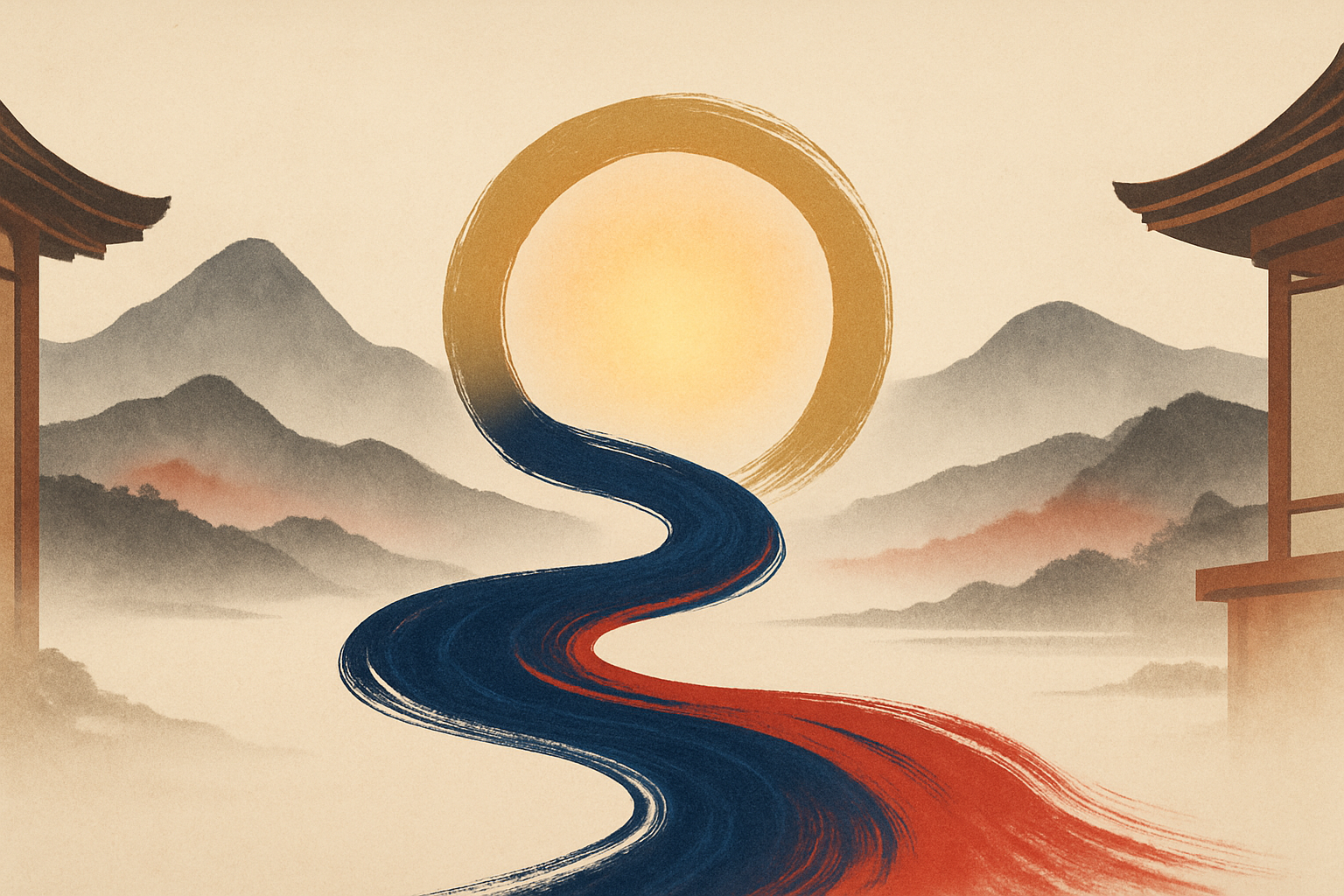
James felt two symbols emerging from Peter's descriptions: the Enso circle representing space, and a river/brushstroke representing movement through time and process (25:14). He asked Gemini to generate river brushstrokes with enso elements to explore this territory.
The goal is creating a doorway or portal that communicates possibility to those meant to work with Peter, similar to how arriving at certain retreat centers immediately signals whether profound experience awaits (27:00).
Peter identified red as an important accent color against austere grays and blacks (37:08). He referenced Stranger Things intro colors—black, white, red—as his "revolution colors" connecting to early career advocacy work and Soviet-influenced aesthetic.
However, India challenged the purely austere approach (38:48). Peter noted that in Asian Buddhism, only Japanese Zen became extremely austere, while Chinese Buddhism remained colorful. The red in Japanese temples provides the one splash against minimalism.
Ellen connected this to the Mount Madonna feedback about fun and joy (38:48). She noted friends asking what fun things she had planned, realizing she had beauty and hiking but needed actual fun—leading to planning a San Francisco drag show. This resonated with Peter's recognition that Buddhism has occasionally been "a place to hide" in the austere rather than embracing vibrant aliveness (40:40).
A woman at a Hollyhock retreat once provocatively asked activists: "What do y'all do for fun?" and was met with crickets (40:40). When people answered with running and hiking, she insisted those weren't fun—pushing for real joy. Peter sees this as what India awakened: making space for the vibrant, alive quality of Hinduism rather than hiding in gray practice.
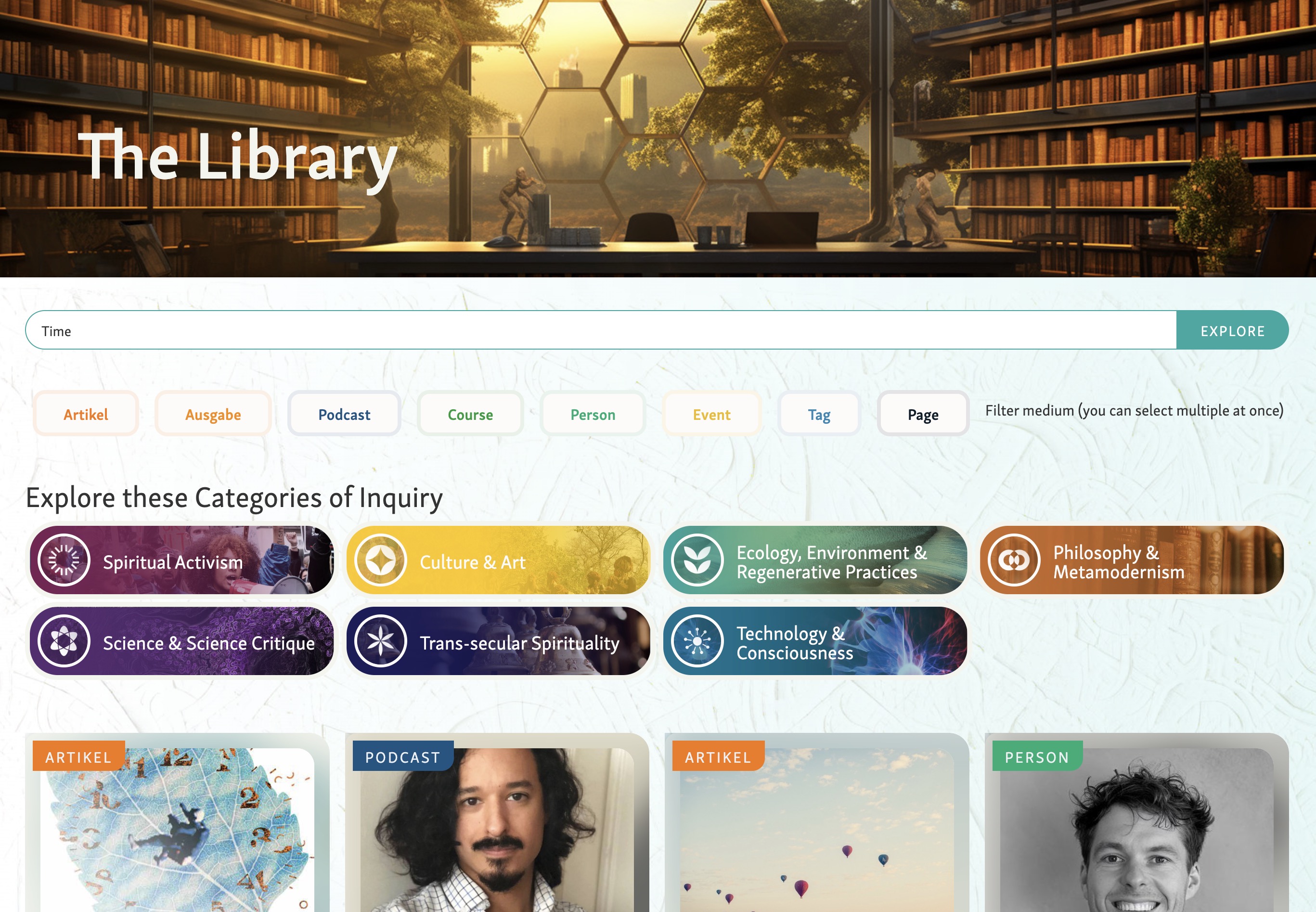
James shared precedent examples featuring clean boxed layouts with intentional corner details (33:14). He showed sites with boxes around edges, clean lines forming right angles, color-changing backgrounds, and subtle interactive elements like reticle cursors and cut corners.
The vision: a language of details that guides users while framing conversation without overwhelming with images or content (34:17). Simple brush strokes, photographs, or small paragraphs contained within structured elements—proving nothing, just offering clear pathways.
James emphasized the Ledger brand guidelines with subtle corner arrows and intentional cuts as inspiration for creating Peter's own detail language (34:17).
Peter committed to populating draft website pages by end of December using Claude AI to compile content from past conversations (20:09). He noted that Claude has become significantly better at writing in his voice over recent months.
Ellen supported this timeline enthusiastically (45:20), noting the current moment offers perfect ground for creative expression informed by Peter's recent experiences. She acknowledged the challenge of knowing when to push clients versus allowing natural timing—recognizing Peter's big trip made earlier pressure inappropriate but now everything aligns.
Peter wants minimal text without anything to prove (22:15). Moving away from Enneagram 3 performance patterns means not introducing himself with schools attended (as his Hollyhock hiring manager did) or requiring extensive credentials display.
The content should reflect confident boldness about the offering without performance or show (23:37). As James noted, Peter performs his job excellently but it's not a performance, and the website should perform well without putting on a show.
James created a timeline framework mapping phases through early February launch (46:37):
The team agreed this timeline provides breathing room for holiday season constraints while maintaining momentum (50:19). If progress accelerates naturally, that's welcome, but no pressure to compress beyond this comfortable pace.
James committed to adding detailed milestones and proposing specific meeting times to ensure accountability and clear checkpoints (49:44).
Peter uses Claude AI extensively through custom projects containing all his work context (20:09). He asked Claude to write all pages based on every past conversation, producing initial drafts he hasn't reviewed yet. This technology dramatically speeds content generation while requiring human refinement for tone and authenticity.
Ellen and James will coordinate directly on style guide development approach and timing, then communicate plans to Peter (51:18). This allows the creative leads to establish optimal workflow before pulling Peter in at strategic moments.
The team values iterative exploration balanced with deadlines (50:19). December's weird holiday energy won't derail progress, but everyone acknowledges the need for both structure and flexibility—mirroring Peter's own philosophy about freedom within containers.
Peter
James
Ellen
Peter returned from three significant trips that profoundly affirmed his core approach to accompaniment work (07:07). India with his daughter, the Mount Madonna retreat center collaboration retreat, and Alabama with the indigenous land rematriation project each deepened different aspects of his understanding and practice.
The India experience introduced pranayama as a foundational concept for understanding Peter's work (08:05). A teacher described prana as life energy and yama/ayama as resistance or form—not resistance against flow, but the structure that gives it shape, like rocks channeling water through a stream.
This insight crystallized Peter's offering: helping people identify how to use life energy that wants to flow through them with tactics of structure (10:17). The work isn't giving clients ideas but creating pathways for expression of their own power and dharma.
India also awakened awareness of color, vibrancy, and joy as missing elements in Peter's aesthetic (35:17). The brightness and aliveness of Hinduism—nightly arti ceremonies with 50 kids praying to Krishna, blowing conches, creating joyful chaos—contrasted sharply with the austere Zen Buddhism Peter chose 35 years ago in undergrad.
The red, orange, and vibrant colors of India made Peter question whether he's made enough space for joy and playfulness in his life and brand identity (37:08).
Friends at the retreat center collaboration retreat reflected that Peter was "really freestyling" and felt completely at home in his leadership role (11:20). One colleague who'd worked with Peter for 10 years noticed he was authentically being himself, funny and relaxed rather than performing.
Peter served as programmatic host in a servant leadership role at Mount Madonna (which is also a client), introducing speakers and holding space without needing to prove anything or be front and center (12:59). This experience affirmed that his dharmic path involves moving away from Enneagram 3 performance patterns toward confident, bold authenticity without the show (22:15).
Multiple potential clients from the retreat are waiting for proposals that Peter hasn't sent yet—demonstrating both strong organic business development and his commitment to pacing aligned with authentic flow rather than pushing (14:34).
Peter joined his indigenous clients in Alabama for land negotiations despite having completed the contracted business plan work (15:34). When they invited him to be present with the team during a major 1,200-acre land offer, he went without a day rate simply because "I'm with them"—believing more business will come from authentic relationship than transactional contracts.
The experience included ceremony, prayer, and singing with a Trump-voting white Republican lawyer landowner—"what a fucking land of contrasts" Peter observed (17:03). Though the offer was ultimately declined, the experience reinforced Peter's commitment to accompaniment that transcends typical consultant boundaries.
Peter shared a transformative insight from a Zen graduate course that continues shaping his work decades later (29:50): "Freedom only exists within structure." This countered his younger self's belief that freedom meant unlimited openness.
This principle now defines his practice: believing deeply in clients' inherent brilliance while holding rigorous structure for that brilliance to radiate through (29:50). Peter emphasized this repeatedly with specific examples:
The yama (resistance/structure) isn't control, it's the container that allows prana (life energy) to find form and expression (31:54). This distinction became central to understanding Peter's unique positioning.
James proposed creating a visual language beyond words that potential clients would feel more than think when arriving at the website (26:00). He envisions the site functioning like a retreat center gate—creating conditions where the right people sense transformation is possible before even entering.
James felt two symbols emerging from Peter's descriptions: the Enso circle representing space, and a river/brushstroke representing movement through time and process (25:14). He asked Gemini to generate river brushstrokes with enso elements to explore this territory.
The goal is creating a doorway or portal that communicates possibility to those meant to work with Peter, similar to how arriving at certain retreat centers immediately signals whether profound experience awaits (27:00).
Peter identified red as an important accent color against austere grays and blacks (37:08). He referenced Stranger Things intro colors—black, white, red—as his "revolution colors" connecting to early career advocacy work and Soviet-influenced aesthetic.
However, India challenged the purely austere approach (38:48). Peter noted that in Asian Buddhism, only Japanese Zen became extremely austere, while Chinese Buddhism remained colorful. The red in Japanese temples provides the one splash against minimalism.
Ellen connected this to the Mount Madonna feedback about fun and joy (38:48). She noted friends asking what fun things she had planned, realizing she had beauty and hiking but needed actual fun—leading to planning a San Francisco drag show. This resonated with Peter's recognition that Buddhism has occasionally been "a place to hide" in the austere rather than embracing vibrant aliveness (40:40).
A woman at a Hollyhock retreat once provocatively asked activists: "What do y'all do for fun?" and was met with crickets (40:40). When people answered with running and hiking, she insisted those weren't fun—pushing for real joy. Peter sees this as what India awakened: making space for the vibrant, alive quality of Hinduism rather than hiding in gray practice.
James shared precedent examples featuring clean boxed layouts with intentional corner details (33:14). He showed sites with boxes around edges, clean lines forming right angles, color-changing backgrounds, and subtle interactive elements like reticle cursors and cut corners.
The vision: a language of details that guides users while framing conversation without overwhelming with images or content (34:17). Simple brush strokes, photographs, or small paragraphs contained within structured elements—proving nothing, just offering clear pathways.
James emphasized the Ledger brand guidelines with subtle corner arrows and intentional cuts as inspiration for creating Peter's own detail language (34:17).
Peter committed to populating draft website pages by end of December using Claude AI to compile content from past conversations (20:09). He noted that Claude has become significantly better at writing in his voice over recent months.
Ellen supported this timeline enthusiastically (45:20), noting the current moment offers perfect ground for creative expression informed by Peter's recent experiences. She acknowledged the challenge of knowing when to push clients versus allowing natural timing—recognizing Peter's big trip made earlier pressure inappropriate but now everything aligns.
Peter wants minimal text without anything to prove (22:15). Moving away from Enneagram 3 performance patterns means not introducing himself with schools attended (as his Hollyhock hiring manager did) or requiring extensive credentials display.
The content should reflect confident boldness about the offering without performance or show (23:37). As James noted, Peter performs his job excellently but it's not a performance, and the website should perform well without putting on a show.
James created a timeline framework mapping phases through early February launch (46:37):
The team agreed this timeline provides breathing room for holiday season constraints while maintaining momentum (50:19). If progress accelerates naturally, that's welcome, but no pressure to compress beyond this comfortable pace.
James committed to adding detailed milestones and proposing specific meeting times to ensure accountability and clear checkpoints (49:44).
Peter uses Claude AI extensively through custom projects containing all his work context (20:09). He asked Claude to write all pages based on every past conversation, producing initial drafts he hasn't reviewed yet. This technology dramatically speeds content generation while requiring human refinement for tone and authenticity.
Ellen and James will coordinate directly on style guide development approach and timing, then communicate plans to Peter (51:18). This allows the creative leads to establish optimal workflow before pulling Peter in at strategic moments.
The team values iterative exploration balanced with deadlines (50:19). December's weird holiday energy won't derail progress, but everyone acknowledges the need for both structure and flexibility—mirroring Peter's own philosophy about freedom within containers.
Peter
James
Ellen
Draft website page content using Claude AI based on past conversations
December 31, 2025
Use Claude AI projects containing all work context to compile content from past conversations. Initial drafts to be reviewed and refined for tone and authenticity. Content should reflect minimal text philosophy without anything to prove, moving away from performance patterns toward confident boldness.
Create detailed project timeline with milestones for all phases
December 23, 2025
Develop comprehensive timeline mapping content drafting (through Dec 31), brand guidelines/visual language (Dec 31), content finalization (mid-Jan), design completion (end Jan), and website launch (first two weeks Feb). Include specific meeting times and accountability checkpoints. Provide breathing room for holiday season while maintaining momentum.
Develop brand guidelines and visual language draft
December 31, 2025
Create brand guidelines incorporating themes of freedom within structure, joy/vibrancy balanced with austere elements, prana/yama philosophy. Explore enso circles (representing space) and river/brushstrokes (representing movement through time). Develop color palette with red accents against grays/blacks (Stranger Things aesthetic). Reference Ledger brand guidelines for intentional corner details and structural language. Coordinate with Ellen on approach and timing.
Explore boxed layout design language with intentional details
January 15, 2026
Develop structural design language featuring clean boxed layouts with intentional corner details, color-changing backgrounds, subtle interactive elements (like reticle cursors), and cut corners. Create language of details that guides users while framing conversation without overwhelming. Simple brush strokes, photographs, or small paragraphs contained within structured elements. Reference precedent examples shared during meeting.
Experiment with enso and river/brushstroke visual combinations
December 31, 2025
Explore visual language combining enso circles (representing space/containers) with river/brushstrokes (representing movement through time and process). Generate variations using AI tools as starting point, then refine based on feedback. Goal is creating doorway/portal that communicates possibility to those meant to work with Peter, similar to retreat center gates.
Coordinate with James on style guide development approach and timing
December 27, 2025
Circle with James to determine optimal approach and timing for style guide development before pulling Peter in at strategic moments. Allow creative leads to establish workflow then communicate plans to Peter. Support content drafting process with feedback and refinement.
Collaborate on brand guidelines incorporating joy, vibrancy, and structure themes
December 31, 2025
Support brand guidelines development that balances austere elements with vibrant joy (inspired by India experience). Incorporate Mount Madonna feedback about fun and authenticity. Work with James on color palette featuring red accents, enso/river symbolism, and structural design language. Ensure guidelines reflect freedom within structure philosophy.
Provide feedback on brand guidelines and visual language draft
January 7, 2026
Review brand guidelines draft by December 31 and provide feedback on visual language, color palette (particularly red accent integration), enso/river symbolism, and overall aesthetic direction. Ensure alignment with philosophy of freedom within structure and authentic expression without performance.
Phase 2 website development for Peter's Ubiquity Community accompaniment practice. Core concept centers on 'accompaniment' - a relationship-centered approach distinct from traditional consulting, built on care and generosity rather than transactional boundaries. Visual direction has evolved to center on the circle as core metaphor - representing full-service partnership, mystery, beauty, and relationship at center. Circle should function as background element, sometimes in fullness, sometimes as partial brushstroke (20:33-25:31). Content focus shifting from defining Peter's role to highlighting: the client, the spaces they serve, the times we're in, and the transformation Peter catalyzes. Peter is positioned as bridge between worlds - bringing experience across many retreat centers plus fluency in platforms/languages outside them, working specifically with leaders wanting to change levels or change worlds (37:38-43:58). Design direction: not fully austere, color remains important building on previous palette (earth tones: slate black, blue accents, dark forest green, moss green, brown, off-white), clean typography, dynamic textural imagery showing movement and interconnectedness. User experience intention: help leaders come up above it all, see terrain, find space to unpack their world (53:22). Timeline updated: V1 launch target end of May, weekly cadence meetings to refine content and let design emerge from it. Content Status Update (05/02/26): All website content complete except hero statement (03:20). Current placeholder 'uncommon partnership for leaders doing big things' is close but 'big things' still feels generic. Peter using Claude extensively to synthesize recent proposals for clarity (05:43). Site purpose clarified as social proofing for word-of-mouth business, not lead generation (08:59). Hero's job is recognition moment where right reader sees themselves and their need. Imagery strategy defined: collage approach for Peter/Pamela photos mixing professional with textured/artifact shots (25:01), candid action shots during May 11-14 LA visit (21:21), selective stock imagery acceptable for nature/abstract but not corporate scenes (28:09). Special moments/interactions being considered for prospective client pathways (42:37).
Visual design phase implementing the circle as central background metaphor for UC website. Circle should appear sometimes in fullness, sometimes as partial brushstroke - mysterious, not fully resolved (21:47-25:31). Design will build on existing color palette (earth tones) while exploring homepage hero treatments that give leaders sense of rising above their terrain (53:22). Focus on letting design emerge from refined content rather than leading with visual direction. Will integrate dynamic textural imagery showing movement and interconnectedness without chaos. Design Direction Update (05/02/26): James shared Claude-generated prototype mockup (31:07). Strengths: spacious white space, clean fonts, circle motif, beautiful green footer, good 'Trusted by' logo placement. Critique: reads as AI-generated and stark, needs aliveness and attitude (38:01). Qualities to embody: unhurried, present, spacious - sitting between sales funnel and artistic thinker space. James developing digital pattern language framework drawing from Christopher Alexander's 'quality without a name' (alive, whole, eternal, free, exact, egoless, comfortable) synthesized with McLuhan, Fuller, Wright, Critchlow (34:10). Digital qualities include: alive, present, dignified, spacious, honest, gift, unhurried. Hero treatment exploring horizon-oriented imagery where underline beneath 'uncommon partnership' matches horizon line to ground spaciousness (42:37). Collage approach for imagery mixing professional portraits with textured artifacts creating pathways into Peter (25:01). Moving toward deeper second iteration incorporating pattern language research before Webflow build.
Webflow development and implementation for V1 launch of UC website. Build will be relatively straightforward as existing simple site architecture from earlier work with Ellen can largely stand. Focus on implementing circle as background element with technical execution of visual treatments. Target: live site by end of May. Technical Scope Update (05/02/26): Will implement approved design direction including circle motif as background element (fullness and partial brushstroke variations), horizon-oriented hero treatment with underline matching horizon line, collage-style imagery integration, dynamic textural imagery showing movement/interconnectedness. Build begins once Phase 3 prototype direction confirmed (44:00). Site to be pushed to domain and launched live upon completion. Weekly check-ins maintaining rhythm toward May 31 launch target.
00:02:05
James Redenbaugh: Hi, Peter.
00:02:06
Peter Wrinch: Hey. How's it going?
00:02:08
Ellen S: Pretty good. How are you?
00:02:12
Peter Wrinch: Pretty good. Pretty good. It's been a while.
00:02:16
Ellen S: I know. I heard you've been busy.
00:02:18
Peter Wrinch: Yeah, I've kind of been, like. I've been a bit all over the place, so I'm. I'm, like, actually really glad to, like, not being all over the place for the next little while, so. And I'm also, like, happy to be back in this conversation.
00:02:33
Ellen S: Yeah. Good. How was India?
00:02:41
Peter Wrinch: It was. It was super good. Hey, James.
00:02:46
James Redenbaugh: Hey, guys. It.
00:02:50
Peter Wrinch: Ellen just asked me how India was. It was. It was very cool to be there with my daughter. She's 11. There were a couple moments, like, in the first couple days where, like, she was so, like, she got really freaked by, like, how busy it is in Delhi, and I was like, oh, did I make, like, the wrong decision? But once we got to where were going, which was this, like, orphanage ashram that's part of Mount Madonna, which is in Santa Cruz, which I'm working with, it was a lot better. Although she never really got over the markets or anything like that. She was like, this is insane. But, yeah, I mean, it was. It was so many. So many, like, so many things. It was. But it was, all in all, like, a very fun and interesting and enlightening time.
00:03:44
James Redenbaugh: Yeah.
00:03:45
Ellen S: Nice. Thanks for sharing.
00:03:48
Peter Wrinch: What have y' all been up to?
00:03:55
Ellen S: Well, I moved since I've seen you last into a new spot, and I'm in Occidental, which I just, like, love. I'm in the woods. Well, actually above the woods, but I have this amazing deck where I just look at the forest. And I'm very happy to be here for the next few months while I figure out what's next. So. Yeah, that's my biggest move, literal, since we talked last.
00:04:18
Peter Wrinch: Yeah, Occidental. So that's, like, closer to the coast, right?
00:04:22
Ellen S: Yes, yeah, as the crow flies. But it's still. Because all the roads are, you know, curvy, and it's just as far, but it's.
00:04:30
Peter Wrinch: Yeah.
00:04:32
Ellen S: Hypothetically, closer. Geographically closer.
00:04:35
Peter Wrinch: Yeah, totally.
00:04:41
James Redenbaugh: I got married into marriage.
00:04:53
Ellen S: You're kind of quiet there, James. It's a little.
00:04:55
Peter Wrinch: Yeah, it's, like, hard to hear you. It feels like your mic's up here or something.
00:04:59
James Redenbaugh: Yeah, yeah.
00:05:01
Peter Wrinch: We can, like, hear every fourth word. I definitely heard marriage.
00:05:05
James Redenbaugh: Is that better?
00:05:06
Ellen S: That's way better.
00:05:08
James Redenbaugh: Cool. Yeah, I did a marriage. Happily married, and that was wonderful. We were really happy with how it went. Happy to be done with the chaos of it as well. So much planning and preparations and then we adopted three kittens. So we've had our hands full with a bunch of cats and really love them and then, yeah, just digging into to lots of fun things, making lots of technical strides, rethinking what's possible with webflow and developing some fun tools and stuff. And happy to be back in this conversation. It's been a while.
00:06:03
Peter Wrinch: Yeah, I was just saying that too, James. I, I feel like I kind of have this like, as I kept saying to people, like, robust travel schedule that now has ended. And I'm kind of glad for that. Although, like every one of those trips was really interesting. My last one was to Alabama, but I'm here for a while and I'm like pretty keen to. To work on this.
00:06:28
James Redenbaugh: Yeah, awesome. Wonderful. So how should we get back into things? Peter, I'm curious what's been present for you with your travels in your relationship to your brand? What might have been percolating and wondering if you have ideas about what would be most helpful to get back into a creative flow with us and not only pick up where we left off, but maybe dive into some new dimensions.
00:07:07
Peter Wrinch: Yeah, for sure. I super appreciate the question because obviously it has been a couple months of experience for me and it definitely has, I would say, more than changed anything. It's actually hyper affirmed what I feel like were talking about a couple months ago. So the part that I feel very affirmed in is this like accompaniment that I've been talking about. So the three trips I was on was India, which we talked about briefly, which, you know, like was more of a vacation than anything else. I mean, I would never call it vacation, but it was like not a work trip, so to speak. Although I was going to like a client's ashram, I think when I was there, I, I'm not really like, I, I haven't done a lot of like. So in my life for the last 20 years, yoga has always been present, but it's not like something I like was all that attracted to mostly because like, the postures hurt so much and I'm so inflexible and I like. But when I was there and were doing this yoga program, there was a lot of philosophy and I realized the philosophy really landed with me in an easy way. And one of the things I've been thinking about a lot, one of the teachers was talking about pranayama, which of course I'd heard this word before, but I didn't really like fully. Anyways, the way she described it is like, prana as this, like, life energy, and yama or ayama as, like, resistance. And I think for me, these two forces have been really, like, really powerful concepts in my. My life. And this work is like, there's all this life energy, whatever you want to call it, like, prana, qi dao, you know, Christ consciousness. There's, like, all this stuff, and it's, like, flowing in the world, and yet there's this, like, other force that is, like, control. Or, like, resistance is another word. Like, control is another word. And I think that, like, what I'm. What I'm, like, thinking about, like, the sort of insight I had from that time india was like, oh, right. Like, my work in this accompaniment is really about helping people, like, identify how to use that, like, prana life energy that wants to flow through with, like, tactics of resistance. Or, like, the way, like, when I say resistance, what I actually mean is, like. Like, not resistance like this, but more like resistance. Like.
00:10:16
James Redenbaugh: Friction.
00:10:17
Peter Wrinch: Yeah, friction. Or, like, if you imagine water going down a stream, it's like the rocks give it form. It's like, form more than anything else. Does that make sense, folks? And so I've been really thinking about that is like, often what I'm doing is helping people, like, realize their own power. So their own, like, whatever, Dharma, if you want, but with tools that direct it. Like, it's not just like, hey, you're powerful, like, Ellen, go do your thing. Great peace. It's like, here's the tap. Here's some. Direction. I really feel this way right now with my clients. There's. It's a lot of, like, I'm not. Like, I'm not the expert. Like, I'm not giving you the idea, but I am definitely helping you create pathways for the expression of your idea.
00:11:20
James Redenbaugh: Yeah.
00:11:21
Peter Wrinch: So that was kind of my chief insight india around this. And then the second trip I went on was to Mount Madonna for this retreat center collaboration retreat. Reiko is James. And. And I just, like, was really aware of a couple things when I was aware of, like, how fun it was and, like, how joyful it really was. And a lot of people kind of reflected to me, like, people I've known for a while, they say, like, my friend who facilitated it, I've worked with him for 10 years, he's like, wow, man. Like, you're really. The word he used is you're really freestyling. Like, you're really, like. And I just heard him saying, like, you're. You're like, authentically being you. And another person said, to me, another person who I've known for a while, she was like, wow. Like, the. Like, we talked a week after, and she's like, I just want to. Before we start, I just want to say, like, how at home you felt in that retreat. Like, you just felt like you were, like, at the. The right place. And I was like, oh, okay, this is good. Like, because that's kind of how it felt to me, too. And again, like, in that room, I wasn't the expert. I mean, of course, like, some of that's implied, but I'm like. I'm like more like the holder, you know? Yeah.
00:12:54
Ellen S: So you were. I'm sorry, were you facilitating that workshop? I understand Mount Madonna is your client.
00:12:59
Peter Wrinch: Okay, so great question, Ellen. It's a little convoluted. So I was there in my role as, like, retreat center collaboration program director. So that's, like, my largest client. Right. And they gave me this title. Personally, I look at it as just another client, but they, like, needed to be. I have a program director, so the program director. So in that way, I was kind of the host of the retreat. Programmatically, it was at Mount Madonna, which is one of my clients. So they were the, like, physical host, but I was the programmatic host. And then my friend K was facilitating it. And so my role was, like. Almost like it was because Mount Madonna was there. It wasn't like. Wasn't like they were in my house, but it was like I was sort of. I don't know. Like, I was. Yeah, it was kind of holding the space, even though Mount Madonna was holding the physical space. And I would, like, at times, like, I introduced the speakers, or I would, like, I would jump in and say, oh, and this, or something like that. Like, I was in a leadership role, but it was a very, like. Like, servant leadership, but also just behind us. Like, I wasn't front and center. Got you, if that makes sense.
00:14:28
James Redenbaugh: Yeah.
00:14:28
Ellen S: So when your friend said you felt at home in that role, like, holding that. That.
00:14:34
Peter Wrinch: Yeah. Like, it's weird. It's like, just for me and, like, dharmic path. It's like I had nothing to prove. I was just like. And I think that's what my other friend meant by, like, oh, you're really freestyling. Like, it felt really authentic. It was just kind of like you're just. You're just like. You're just being you in the best ways, you know? And a lot of my clients were in the room. A lot of potential clients were in the room. I Think that like, if I really like cranked on business development, I could generate a bunch of clients from that. Like, I have people who are like waiting for me to send them proposals and I'm just kind of like. Like I'm just not doing it yet. Yeah.
00:15:31
James Redenbaugh: Yeah.
00:15:34
Peter Wrinch: And then the last trip was to Alabama and it's so this indigenous group that I'm working with who buying back their traditional land and James and I worked on this business plan with them and they again, like, I kind of finished my contract with them, but I was like, I'm with you. Like, I'm not gonna like bail just because, like we finished the business plan and like you have the business plan now. They were like, oh, can you come down and just like be with the team? And I was just like, yeah, like they paid for me to go down and all of that. But other than that, I just like when no day rate, like, I'm just with them, you know. And part of that is because, like, I just don't think it's like often that like I would get invited to something so amazing. But at the same time it's like I'm also like with them. Like, I'm not. And I, and like from business perspective, I actually believe more business will come out of it. But had I been like, well, okay, like I actually finished that contract's done, I need to write a new contract. Like, I just would never do that. It's like it feels so antith, you know, the antithesis of what I'm trying to do. And so, yeah, and just like one note about that is like were long story and I won't get into details, but we're making an offer on a piece of land, 12,000 acres.
00:17:01
James Redenbaugh: And.
00:17:03
Peter Wrinch: It was just the most insane thing I'd ever been a part of. Like we'd been meeting with this guy, touring his land and then where the. Then the people were like, oh, let's go to his house and let's make an offer. And I was like, okay. And I was kind of like going to white person mind. Like, I was like, okay, like we're gonna do this and do this. And we just showed up and they like brought out the sage. They started singing like praying all this stuff. And it's this like Trump voting, like white middle aged lawyer, you know, who's. Who's like obviously agrees with them. Like he, you know, he's engaged it. But I was just like, what a fucking land of contrasts. Like, you know, anyways, it was very cool.
00:17:50
Ellen S: Did he take the offer?
00:17:51
Peter Wrinch: He didn't, unfortunately, yeah. We just found out. So that night we did all this ceremony and he was like super touched. He was like, he's like, he's not a Trumper. He's like a Republican, but not Trumper. You know, Hunter, lawyer, really interesting, nice guy, Alabama. And he was very moved and he said, look, I'm gonna talk to my people, talk to my family, I'm gonna pray. And he came back a few days later and he said, I'm really sorry, but we've decided not to sell the place. We'll continue to be the best neighbors possible. Yeah, so it was a bit of a setback for them, but. And that was literally just last Wednesday.
00:18:38
James Redenbaugh: So they have some land, but they wanted.
00:18:44
Peter Wrinch: So they have 10,000 acres and they have this like, they have this whole plan, like this huge map of all the traditional land they're buying back. And this land, I said 12,000 is actually 1200 acres. But for the business plan of building a retreat center, it would allow us to have a total head start because there's a beautiful house already on it that the guy used, hosts hunting parties at. And so we could repurpose that into a retreat center while we build the other retreat center. And so I was really into it because it would give us this head start without a huge capital outlay of risk and yeah, didn't go through. So. So that land is in their land rematriation prop, like plan. But it's not. They're. They like very long term thinkers. So they're not worried about whether they'll get the land ever. It's more just like they wanted to have the leap start, the jump start with the retreat center.
00:19:51
James Redenbaugh: Cool.
00:19:52
Peter Wrinch: Yeah.
00:19:53
James Redenbaugh: Wonderful. So what are these experiences forming in you visually? What does it, what does it look like? I'm getting hits. But what's.
00:20:09
Peter Wrinch: Yeah, well, I think the other. To answer your other question before is like you were like, what could. Let's. What's a good way into it? And like Ellen, I had your email. Like the way I structure my email is like I have response required and you've been sitting in my response required. I've been like this, like. And, and so a couple days ago I just took like, you know, I use cloud and I. And cloud like has all these projects for my work. And I basically just said, here's this thing that Ellen gave me. Can you write all these pages based on every chat we've ever had? Cloud and so it popped out. It populated all those pages. I haven't looked at it yet, but I actually think, like, if we set, like, a goal by the end of this month to have, like, those written, which I think won't actually be that hard because I think Cloud has gotten much better at writing me in the last few months.
00:21:08
James Redenbaugh: Yeah, mine too. It's insane. I love it.
00:21:12
Peter Wrinch: There's some stuff. I'll send you both a response Cloud gave me that I was just like.
00:21:21
James Redenbaugh: Yeah. It's also a really good Vedic astrologer, if you ever want to go down that rabbit hole.
00:21:29
Peter Wrinch: Oh, my God.
00:21:30
James Redenbaugh: Surprisingly good.
00:21:31
Peter Wrinch: So I think that, like, populating those pages is really good, like, as a start. So I didn't answer your question, James, about visually, but I think that populating those pages is a really good start. I think one of the, like, one of the things that I've been thinking about and I don't quite know, like, it doesn't quite answer your question about visuals, but it's like, one of the things I'm very aware of is I like both. Like, I'm like, okay, dharmic path. Like, authentic freestyling, being yourself. It's like, I don't want there to be tons of text. You know what I mean? Like, I. I want it, like, it's not to say that I want it to be, like, minimalist, but I. I definitely want to. I don't want to have anything to prove, you know? Like, I don't. I don't want it to be like, I. You know, I use Enneagram, Right? So, like, I'm an enneagram3. So I'm very aware of the, like, performance, you know, Like, I. I have definitely, like, was talking to someone yesterday, and I was like, oh, yeah. Like, when I was young, there was a lot of performance, and I feel like part of the dharmic path is to, like, move away from the performance, to just be, like, confident and bold about what the offer is without the performance. Does that make sense?
00:23:21
James Redenbaugh: Yeah. And there's, like, several connotations of the word performance, where I feel like you are performing your job very well, but it's not a performance.
00:23:37
Peter Wrinch: Yeah.
00:23:38
James Redenbaugh: And we want the website to perform, but we're not putting on a show.
00:23:43
Peter Wrinch: Yeah, there's no show. I'll just share a moment. So remember when I first got the job at Hollyhock, the person who hired me, I didn't know him that well, but I considered him a mentor. The first time he ever introduced me was so weird to me. It was so marked. So this would have been 2017, so I would have graduated grad school 15 years in the past. Like, I'd never think about grad school or where I went to school. And he introduced me by the schools I went to. And I remember, like, to me, that's. That's. That's. That's what I mean by performance. Like, I don't, you know, like, I'm proud of the schools I went to. You know, I want my son to go to schools that welcome, meet interesting people, but I don't need to tell people something I did 25 years ago. You know, it doesn't feel, but it. But I know that it has, like, a stamp. You know that. That's kind of what I mean by performance.
00:24:56
James Redenbaugh: Yeah. When you were first describing the. The. The river and the rocks and the container and the accompaniment, I felt these two kind of symbols that have been bouncing around in my head as you've shared everything else you did. And I feel like I'm getting a. A sense of the vehicle you've created and you're creating that. That you bring clients into and that they move through. And I feel like the Enzo circle you've been using as your logo is a part of it, but then it also feels like there's this other part of it that has more to do with time and process. And it's like Enzo is the space, and the other thing is maybe space and time. And I'm not saying that these have to be a part of the logo or even that it's. That it becomes visual. You know, I asked Gemini to do a river brushstroke with the enso, and it feels like it's opening up something for me where I'd love to see on the. I'd love for potential clients on the website to feel more than they. To feel more than they think when they arrive and to have this sense that there's a space there where they can be received and they can be accompanied on a journey.
00:26:56
Peter Wrinch: Yeah.
00:27:00
James Redenbaugh: And I think we're going to create that more with visuals than words. The words are going to be really important, but I think the. The image is going to be even more important and. And we can refine it, but the ones who are really meant to work with you, I feel, will. Will get it when they see it. Yeah. Almost like a. Like a doorway or a portal. You know, when you arrive at a retreat center, that. That you will end up having a transformative experience at. You know, I'm sure you've been to many. And you've had, you know, I'm sure there's some you've had transformative experiences at and there's some that you haven't. I kind of feel like I can, I have a sense of what it's going to be like when I'm there at the gate, you know, and before I'm even in the building. I can have a sense of what's possible, you know, and sometimes I'll be surprised and sometimes I'll be let down. But the gate, the journey there, even before you get there, you know, begins on the pilgrimage of going there. And if you're going to have a really profound experience, like part of you knows when you step out the door. And I want to create the conditions for that with the people that you're meant to work with when they land on the site. Yeah, yeah, that's not a tangible yet or technically helpful.
00:28:59
Peter Wrinch: Yeah, totally. There's a couple things that are coming up for me, James, as you're saying that. And I definitely appreciate the feeling into this because I think that it's important to me to. And I also know that we're on timelines and we can't feel into it forever, but I'm really into this because. So one of the like, biggest realizations like I probably ever had in my life was In like a senior grad course on Zen. Like this is a very long time ago and I think I was kind of like in my 20s and like, you know, I like rolled with a lot of people who like believed like freedom was just like, you know, like you just did these things. Like you just like, it was just like this, it was super open ended. And like what this Zen master in this grad course taught was that actually freedom only exists within the structure. That all freedom can only exist within a structure. And that was like, it like blew my mind forever, you know, like, it like. I can't understate the impact that had on me. And so when you were talking about the river and the rocks, like what I wrote down was actually what I was talking about with the Yama is actually structure. It's not resistance, it's not control, it's structure. And why that plays so well into what I'm doing right now is that it's like the counterpoint to my believing in the person. Like, it's like, you know, I'm working with a woman named Prabha and I'm like, prabha, like you have everything. Like there's Nothing I'm going to give you. There's no, there's no diamond insight I'm gonna give you, but it's like I'm just gonna hold the structure for your brilliance to like radiate through. And it's the same with like, I, I'm just looking at all of my clients. It's like that is the same throughout. You know, I like, right before this call, I texted a client. I'm like, hey, did you, did you text that person you wanted 30 grand from that she promised to do yesterday? And it's like, that is so the right approach for me. It's like, I'm not asking for the 30 grand. I'm not being a hassle. I'm just helping you find the structure to your brilliant, your prana. So that's the first thing that was coming up for me.
00:31:53
James Redenbaugh: Maybe.
00:31:54
Peter Wrinch: Actually, I'll stop there. That's actually what's coming up for me.
00:32:07
James Redenbaugh: That does feel like a great. That gives me access to. I feel the next steps in the design. Focusing on the structure of the website and the practical and the technical. You know, I think we should start putting those pieces together and. Not worry about the esoterics. But practically, what do we need to say? What needs to be on here? What, what, where does a contact form go? What questions are we asking people? And I think that the details can go a long way and then we can play in the space between the structure. But I think that we could really. Do some nice things with boxes, especially around the edges. I want to share a couple precedents here. This site is pretty funky. It's also kind of minimal, but I really like how we put the whole thing in a box around the edge and then we have these really clean lines. Yeah, this one's more open. Yeah, it's a pretty, you know, different kind offering.
00:33:54
Peter Wrinch: Yeah.
00:33:55
James Redenbaugh: And different kind of website. But we have a nice, some nice lines here and you know, and then they form a right angle as you scroll and background changes color. Yeah, this is sci fi and wild. I didn't, I didn't make this, but I found this the other day and I was pretty blown away. Yeah, this is brand guidelines for ledger and. But the little details that they do of the, you know, instead of a mouse, we have a reticle here and there are these little arrows and in corners and you know, these aren't just rounded, but they're kind of cut up there in an intentional way. Yeah, I Feel like there's some. We could make a little language of details that guide the user to what they need, but also frames the conversation. And then if an image is just a, you know, a brush stroke or a simple photograph or a small paragraph of text, that can be all that's. Need it. Without needing to prove anything to. To the user. Overwhelm them with images or. Yeah. Content.
00:35:17
Peter Wrinch: Yeah. Yeah. Something coming up for me, just there. One. One realization I had india, too, was literally, like, 35 years ago, I took a course, my first year of undergrad called Hinduism and Buddhism, and I literally just chose Buddhism. Like, I was just like, yep, that. And. And all of a sudden, I'm like, india, and it's just full Hinduism, like, everything. And. And it's so bright, and it's so, like, vibrant and. And really alive, you know, And I. I realize, like, Buddhism, for me, the thing that I am, like, attracts me to it is. Is its austerity. But it's also like, I. I think I'm also, like, wondering about that. You know? Like, I. I'm just a bit like. Even, like, what we're talking about, right. Is like the. And the Enzo circle is, like, very, like, Zen, Japanese austere aesthetic. Right. Which, like, totally works for my life. But I was starting, like, india. I was definitely like, oh. Like, I. I just. Actually just started thinking about it. That's all. That's all I could say. Like, I didn't have any conclusion, but, like, it's just all the colors of India, like, the reds and the, like, oranges. I was just like, oh, yeah. Like, I haven't really made a lot of space for that in my life, So I just throw that in.
00:37:08
Ellen S: Yeah.
00:37:09
James Redenbaugh: Do you want to make more in space? Yeah. What's that, Ellen?
00:37:14
Ellen S: Oh, let's start with that question. Then I have, like, a small reflection on that. Yeah. Do you want to make more space? Is a good question.
00:37:22
Peter Wrinch: Really interesting. Are you all watching Stranger Things?
00:37:25
Ellen S: I'm terrified of Stranger Things.
00:37:27
Peter Wrinch: Oh, my God.
00:37:28
James Redenbaugh: Okay.
00:37:29
Peter Wrinch: So I've been watching it with my family, and I never skip the intro. I just, like, love the colors coming across and, like, the music, and it's like. It's like kind of my three, like, revolution colors. It's like black, white, red, and, like, I think that if you take, like. If you take, like, the austerity of Buddhism that I'm mostly talking about, which is like a, you know, sort of a Theravadan, like, very austere, but not Chinese Buddhism, that's like, you Know, very colorful. And then it's like, it moves to Japan, where it becomes, like, austere in. In that way. The only other color they ever use is red. You know, and one of the things I thought about India was like, well, there's a lot of red, like, from. You know, and the red is, like, a bright red. So I think, to answer your question, Ellen, like, I think that red is a color for me that I like as splashes, you know, that pulls away the, like, grays and blacks of. Of, like, austere. Zen.
00:38:48
Ellen S: Yeah. Well, that makes me. You made a. You made a comment something about, like, from your time at Mount Madonna or friends reflecting to you. Like, the words that came up were, like, the fun and joy and. And this you feeling like you're, like, at home in that setting. And. And so it's an interesting way that James started this with asking, like, what's evolved and changed in the past two months as you've gone deeper with your practice?
00:39:15
James Redenbaugh: And it.
00:39:16
Ellen S: It could be that different things are emerging or that as you settle more into it, that the last year might feel, like, too. Too minimal or. I don't know. I just. I. I. It's been something I've been, like, reflecting on, too, because I had a conversation with a friend the other day, and he was like, what are you. Like, what fun thing do you have planned? And I was like, I'm gonna have to get back to you on that. Like, I don't actually know. Like, I have so much beauty, and I'm hiking and, like, I'm doing. But I was like, man, I need some fun, you know? And, you know, now I'm gonna go to a drag show in San Francisco with some friends, and it's gonna be super fun. You know, it's. I don't know. I just. There's. Yeah, maybe it's just, like, an energy that's in the world right now or something where it's.
00:40:04
Peter Wrinch: Yeah. Like, you're kind of getting at it, Ellen. For me, I feel like you both are, like, you're, like, in your 30s and 40s, right? Somewhere around there.
00:40:13
Ellen S: Late 40s, yeah.
00:40:14
Peter Wrinch: Okay. So, Ellen, are you a Gen Xer?
00:40:17
Ellen S: I think, like, very edge.
00:40:18
Peter Wrinch: Edge.
00:40:19
Ellen S: Like, almost. Yeah.
00:40:20
Peter Wrinch: I'm 50, and I definitely, like, wonder about what you just said. Like, we. I think. I don't know if I told you this, but, like, a few years ago, we had a retreat at Hollyhock, and this woman, this, like, total powerhouse, like, woman from the south, black woman, she stood up and she was like, what Do y' all do for fun? And it was like, crickets. Like, I swear to you, it was all these, like, political activists. It was crickets. Like, you could hear a pin drop. And she's like, I wasn't fucking kidding. What do you do for fun? And it was so provocative because everyone said those things. Like, I even said. I was like, well, I go for runs, and I. I go hiking. You know, Like, I started doing this, and. And she's like, those aren't fun. That's not fun. What do you do for joy? And I think this is kind of what, like, I think on your right, like, this is what I'm trying to express about. What I kind of noticed india was, like, the vibrant, like. And I think that, like, Buddhism, for me has occasionally been a place to hide. You know, hide in the austere, hide in the practice, hide in the grays. And, like, Hinduism is not that. Like, we would go every night, me and my daughter, to the. What was called arty. And it was like, these 50 kids praying to Krishna and, like, blowing conches and, like, just doing all sorts of weird things, like farting and, like, just fighting. And, like, I was just like, oh, my God. Like, you know, that does not happen in Japanese temples. Like, you know, that happens. The bamboo cane comes out, you know, like, and it was just a totally different thing. And I was like, oh, wow, this is so alive, you know? And I think that, like, part of my work for sure. What they were reflecting at the RCC retreat was like. Like, especially my friend Kari, who's been with me for 10 years. He was like, whoa, dude. Like, you're, like. You're, like, funny. You're, like, saying funny things, like.
00:42:23
James Redenbaugh: Yeah.
00:42:25
Peter Wrinch: So I definitely. I think, like, I definitely want to make sure some of that joy is coming through in the visual so that it's not just this, like, austere, serious, like, you know.
00:42:40
James Redenbaugh: Yeah. I think we need a little more than just red.
00:42:45
Peter Wrinch: Bear.
00:42:46
James Redenbaugh: Fair.
00:42:46
Peter Wrinch: Fair.
00:42:47
James Redenbaugh: Red is a nice accent. We actually designed a website recently that's just red, white, and black. And I didn't. I didn't do the design. I wasn't super involved in it, and I think it works for the client, but I don't. I don't love it. It's.
00:43:09
Peter Wrinch: Yeah.
00:43:12
James Redenbaugh: They have Chinese kung fu background, and it's very Chinese aesthetic. Very, very different from Zen. Yeah. Fun stuff, you know, a lot of fun things. So much content.
00:43:27
Peter Wrinch: That's very cool.
00:43:32
James Redenbaugh: But.
00:43:35
Peter Wrinch: Yeah, like, austere. Right? Austere. Like, even. Even though it's playful with the kung fu stuff. It's, it's. It's like, I think, you know, my early, like, career, there's a lot of revolution stuff, right? Like, and those are the colors too. I think that's why they appeal to me. It's like, it's like advocacy and hard hitting and, you know, red, black, white, like, it's, you know, it's very Soviet, like, which is also, like, really in me. But I think, like, India kind of shook that for me a little bit. I'll send you both some videos of I took india, like, where, like, the person who was guiding us was like, oh, we're gonna go to the place where Vishnu stood on the Ganges. And we go there and there's like, literally 10, 000 people. And, like, and they're like light and fires. Like, everyone's like, got a fighter. I'm just like, what the hell? You know? Like, it's just so alive. And that's part of what my daughter, like, was wigging out about, right? It's like there was a guy with no tort, like, with no legs, like, asking her for money. Like, she never seen that before. She's like, grew up on an island, you know, like. But the guy with the nubs is just, like, living his life. Like, it's just alive. It's just life, you know, So.
00:45:00
James Redenbaugh: Right.
00:45:01
Peter Wrinch: Does it work from a perspective of me to, like, populate the language as, like, a draft by the end of the month? Does that feel. By the end of December? Does that feel reasonable?
00:45:16
James Redenbaugh: Ellen, what do you think?
00:45:20
Ellen S: Yeah, it sounds like there's lots of other things that you and I can keep doing. Like, sounds like. And I agree with that. We have so much information and story and these conversations. Like, all of those things, the things you've said, your previous writing that I think can inform, like, the style guide and can. That's my sense is that we can be working on that. And yeah, I think it's. I hope it wasn't being, like, too much before you left. I deal with this with, like, clients where I'm like, trying to figure out, like, what the tension is with pushing them. And then, like, you know, and as we're having this conversation, I'm like, oh, it's the perfect time, you know, like, this is where, like, so it's all fine.
00:46:03
Peter Wrinch: No, it's great. It's great. Like, it, you know, like, it's like anything, right? It's like, oh, I don't want to. You know, I. I gotta do the thing but, like, you know, it's all.
00:46:14
Ellen S: Well, there's a right time for it. Like, you left for a big trip, you know, and so it's like. And now you have all this other stuff that I feel like is kind of coming into potentially the experience of your expression. So I find that to be exciting.
00:46:28
James Redenbaugh: And.
00:46:28
Ellen S: Yeah, it's December. It's like, such a weird month. Right? Like, there's so many. So if that's okay with you, James, that's fine with me.
00:46:37
James Redenbaugh: Yeah. My camera died here. But let's look at this timeline here. So content would go until the end of December? Yeah. Do you think that we would be doing, like, refinement? Yeah, I would say of that, yeah. Cool. Maybe go into mid January, finalizing the content and the structure. Do we think that. And I'm just going to extend this guy and we'll just use that for branding. Do we think that we could finish a, a brand guidelines by the end of this month and, Like, a solid visual language.
00:47:52
Ellen S: That feels doable on my end.
00:47:53
Peter Wrinch: Yeah, it feels doable on my end too. I think, like, I would just, like. Yeah, I just need some, like, guidance, like, just to work together on that. But, like, I. I feel like, yeah, we could do that there. You know, of course it's iterative and there would be questions like, of course. But I think to, like, have like a draft style guide.
00:48:12
James Redenbaugh: Yeah. Cool. And I just messed up my dates by changing the date range. And then once we have the content and brand heading into January, how. How quickly do we think we can move on diving into site design and then building it? I mean, I can tell you how long it'll take to build it, but do we think that we can. Be 100% on design by the end of January?
00:49:06
Peter Wrinch: Yes.
00:49:08
James Redenbaugh: Cool.
00:49:08
Ellen S: Yep.
00:49:10
James Redenbaugh: Great. Then I think that we can begin development while we're still finalizing design. It's good for those to overlap a little bit. And then we could aim on. Aim to launch the first couple weeks of February. Does that sound good?
00:49:37
Peter Wrinch: Yes.
00:49:40
James Redenbaugh: Cool.
00:49:40
Peter Wrinch: Exciting.
00:49:44
James Redenbaugh: Okay, great. Then I will take this and add a bit more detail and propose meeting times and milestones along this time frame so that we know exactly what we need to do by when and then we can get it done.
00:50:13
Peter Wrinch: Great. Nice.
00:50:15
Ellen S: Sounds good.
00:50:19
James Redenbaugh: Cool. I feel like this gives us a lot of breathing room, you know, and if we can, if we end up moving a little faster, that's great. And I'm sure we all have a lot going on this month and holidays and stuff, so that's. That's fine too. And yeah. Excited to put this together. Yeah.
00:50:46
Peter Wrinch: Yeah, thanks, y'.
00:50:47
James Redenbaugh: All.
00:50:47
Peter Wrinch: I. I super appreciate it. Like, I'm like, wow, you, like, have to listen to all my, like, weird insights, so I appreciate it.
00:50:56
James Redenbaugh: Love your insights.
00:50:57
Ellen S: Yep, totally. 100 get a lot out of your insights. Thank you.
00:51:03
Peter Wrinch: All right, well, yeah, thanks both. And I'll look for some times. And Ellen, do we want to, like, set up some times to do style guide or what do you. How are you thinking about that?
00:51:18
Ellen S: I'll circle with James to see how he's thinking about that and then we'll figure it out.
00:51:23
Peter Wrinch: Yeah, just let me know.
00:51:24
Ellen S: Yeah, sounds good.
00:51:26
Peter Wrinch: Cool, cool.
00:51:27
Ellen S: Okay. All right.
00:51:28
Peter Wrinch: See ya.
00:51:29
James Redenbaugh: Great.
00:51:29
Peter Wrinch: Thank you.
00:51:30
James Redenbaugh: Bye.
00:51:31
Peter Wrinch: Bye.
00:51:31
James Redenbaugh: See you guys. Ciao.







.svg%20(1).png)


.png)