

Reiko, Gabi, Amanda, and James reconnected after a stretch of independent creative incubation, sharing updates on personal practice, conference experiences, and ecosystem developments. James mentioned the recent launch of Hollis (00:03:24), a new platform built by his team that's currently in beta with around 300 users and slated to host a learning management system. He extended an invitation to integrate ILALI into Hollis for visibility, and floated his interest in co-stewarding a digital pattern language loosely inspired by Christopher Alexander's work — a framework for building ethically and beautifully online.
Reiko shared that his creative process has shifted from struggle into flow, with significant clarity arriving in recent weeks about how the ILALI story wants to be told visually. This meeting served as a vision-setting conversation to align on direction before formal proposal and scoping.
The central strategic decision: Kinship Blooms will serve as the design template and fractal starting point for the broader ILALI website ecosystem (13:48). Rather than redesigning the full ILALI site immediately — given that elements like ANA, the Revitalization Council, and the Folk School are still emerging — the team will direct creative energy into Kinship Blooms as a living expression of the whole.
Reiko noted his gut sense that this requires more than swapping images on the existing Kinship Blooms structure. The current linearity feels limiting, and there's openness to starting fresh where it serves the vision. The Kinship Blooms site will hold the stewardship team bios, the advisors, the eight living practice communities, the field collective, and the intertribal council that convenes at Landwell.
The current ILALI one-pager site [tag="webflow"] will receive light but meaningful updates to bridge the gap:
Amanda confirmed that the Webflow [tag="webflow"] reroute issue from Kinsta/WordPress has been resolved with their external IT team.
Amanda named a key design tension (34:23): most websites enforce linear scroll-based directionality, but the work calls for something that grows organically — branching, weaving, and connecting in ways that mirror seeds, soil, and worlding. The team wants to break the construction of typical web architecture so the site feels native to land rather than imposed upon it.
James reflected that the design challenge is creating interfaces that dynamically illustrate entities, organizations, and the connections between them — accessible, evolvable, and feeling like an architectural space people can enter and feel at home in (33:30).
[technology="Directory Systems"]
Reiko shared a forthcoming paper, Ontology for Worlding 📄, that introduces dimensions including:
This framework offers a more grounded, earthed alternative to abstract holonic models that have historically over-privileged transcendence at the expense of place-based participation. Reiko is sitting with whether this resolves as eight dimensions (echoing the ILALI logo) or nine (the additional emergent dimension), with the potential to use the ninth as a "black hole / womb" center of the toroidal form.
James offered a rich aside on numerology in sacred design (44:42): eights carry a solar, radiant, cardinal-direction quality, while nines carry a more lunar, feminine, generative quality. Both create fertile ground for sacred architecture, and importantly, any number of things implies the next — the nine is already alive within the eight whether or not it's named.
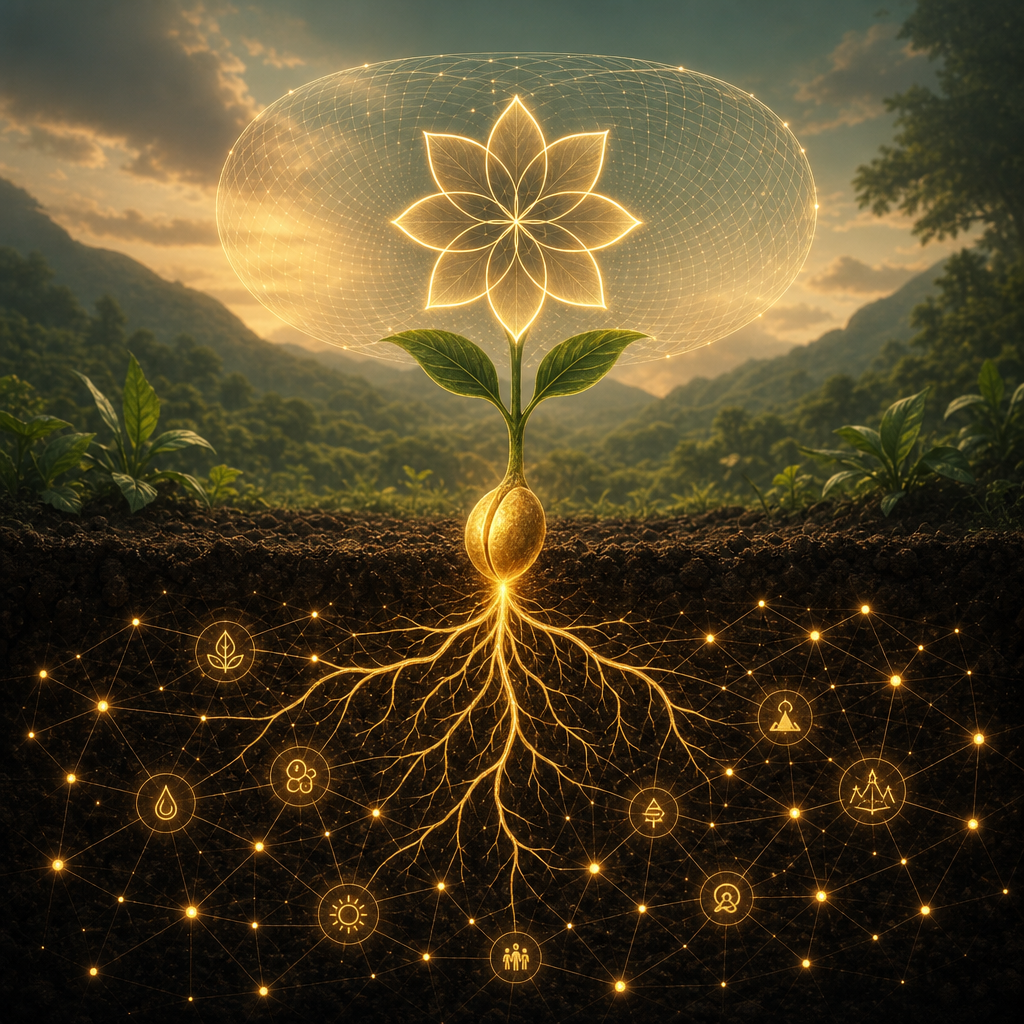
Reiko shared the emerging Heartseed mythic expression 📄: a toroidal practice carried at the heart, holding four offerings (narrative, transformative practice, worldviews, enactment), held by the wild. This connects to the three-star meditation — heart of self, heart of earth, heart of cosmos — which Reiko frames as a toroidal "we-place" practice (not just we-space), integrating land-based intelligences that integral communities have historically marginalized.
Reiko invited the design process to draw inspiration from the actual flowers, trees, soils, and waters at Landwell (41:31) — letting place-based ritual and relationship inform (and potentially be rendered into) the visual language.
[technology="Parametric Geometric Interfaces"]
A philosophical thread ran through the meeting on the ethics of building with AI [tag="claude"]. James offered the term "digital intelligence" as a more honest framing than "artificial intelligence," noting that intelligence lives in the space between us — in trees, rocks, weather, gatherings, and built environments. He's invested in running powerful models locally on his own machine (potentially solar-powered) to maintain sovereignty, measure energy use, and have resilient tools for his village regardless of what happens with cloud providers.
Reiko affirmed the importance of resourcing the work ritually and sacredly, not just financially — divining and checking in with the non-human and greater-than-human intelligences participating in what's being created. James named that his deepest concern isn't data center carbon (though real) but the ethics being seeded into rapidly accelerating models. A future joint conversation on integrative technology with Turquoise, Gail, and Adam Leonard was floated, with James welcomed in.
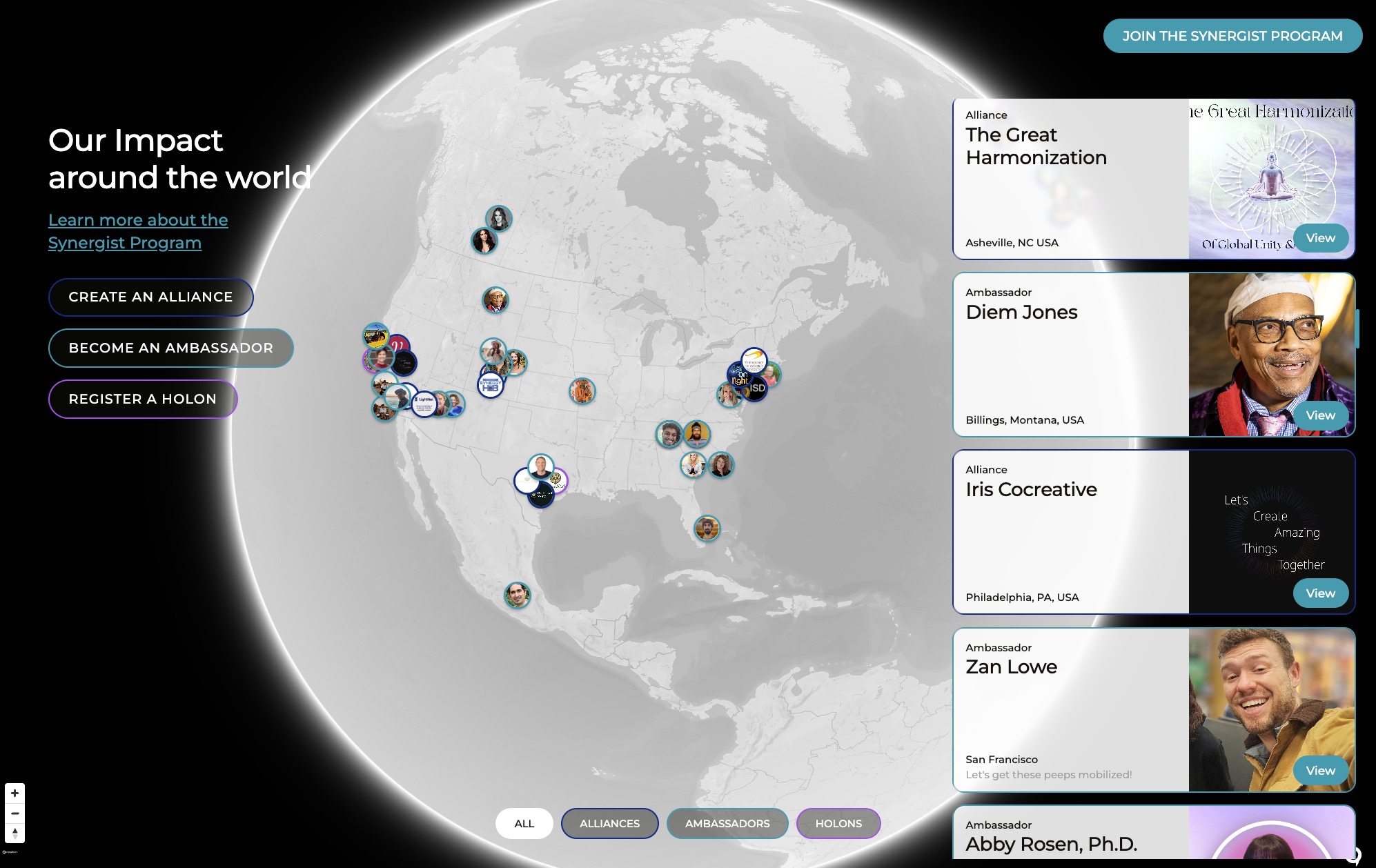
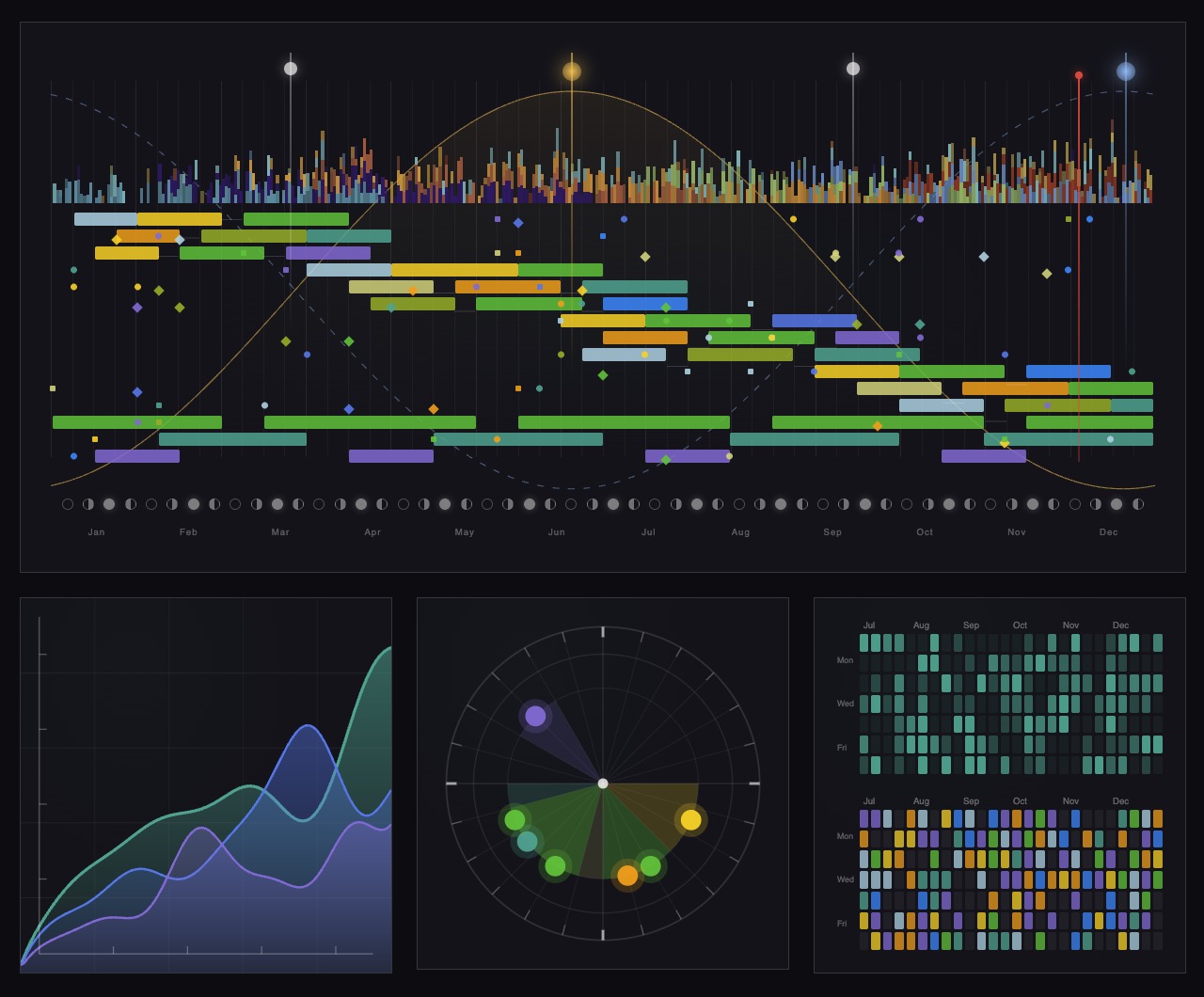
James demoed a recent experiment — a global, interactive map of conscious millennial artists, musicians, and writers built in a weekend (54:07). Not necessarily a template, but a demonstration of the kind of dynamic, expandable, network-illustrating interfaces now possible — relevant to how Kinship Blooms might map projects, people, and relationships in a way people can be invited into.
James shared that his team has shifted from junior to senior collaborators (at $80–$100/hr), which has dramatically increased speed and quality. With Hollis recently launched and a few projects wrapping, the next few weeks are a good window to begin Kinship Blooms. He'll prepare a proposal painting a picture of options so the team can identify a strong starting point. Reiko confirmed readiness to invest and move quickly.
James Redenbaugh
Gabi Jubran
Reiko
Amanda Nagai
Reiko, Gabi, Amanda, and James reconnected after a stretch of independent creative incubation, sharing updates on personal practice, conference experiences, and ecosystem developments. James mentioned the recent launch of Hollis (00:03:24), a new platform built by his team that's currently in beta with around 300 users and slated to host a learning management system. He extended an invitation to integrate ILALI into Hollis for visibility, and floated his interest in co-stewarding a digital pattern language loosely inspired by Christopher Alexander's work — a framework for building ethically and beautifully online.
Reiko shared that his creative process has shifted from struggle into flow, with significant clarity arriving in recent weeks about how the ILALI story wants to be told visually. This meeting served as a vision-setting conversation to align on direction before formal proposal and scoping.
The central strategic decision: Kinship Blooms will serve as the design template and fractal starting point for the broader ILALI website ecosystem (13:48). Rather than redesigning the full ILALI site immediately — given that elements like ANA, the Revitalization Council, and the Folk School are still emerging — the team will direct creative energy into Kinship Blooms as a living expression of the whole.
Reiko noted his gut sense that this requires more than swapping images on the existing Kinship Blooms structure. The current linearity feels limiting, and there's openness to starting fresh where it serves the vision. The Kinship Blooms site will hold the stewardship team bios, the advisors, the eight living practice communities, the field collective, and the intertribal council that convenes at Landwell.
The current ILALI one-pager site [tag="webflow"] will receive light but meaningful updates to bridge the gap:
Amanda confirmed that the Webflow [tag="webflow"] reroute issue from Kinsta/WordPress has been resolved with their external IT team.
Amanda named a key design tension (34:23): most websites enforce linear scroll-based directionality, but the work calls for something that grows organically — branching, weaving, and connecting in ways that mirror seeds, soil, and worlding. The team wants to break the construction of typical web architecture so the site feels native to land rather than imposed upon it.
James reflected that the design challenge is creating interfaces that dynamically illustrate entities, organizations, and the connections between them — accessible, evolvable, and feeling like an architectural space people can enter and feel at home in (33:30).
[technology="Directory Systems"]
Reiko shared a forthcoming paper, Ontology for Worlding 📄, that introduces dimensions including:
This framework offers a more grounded, earthed alternative to abstract holonic models that have historically over-privileged transcendence at the expense of place-based participation. Reiko is sitting with whether this resolves as eight dimensions (echoing the ILALI logo) or nine (the additional emergent dimension), with the potential to use the ninth as a "black hole / womb" center of the toroidal form.
James offered a rich aside on numerology in sacred design (44:42): eights carry a solar, radiant, cardinal-direction quality, while nines carry a more lunar, feminine, generative quality. Both create fertile ground for sacred architecture, and importantly, any number of things implies the next — the nine is already alive within the eight whether or not it's named.
Reiko shared the emerging Heartseed mythic expression 📄: a toroidal practice carried at the heart, holding four offerings (narrative, transformative practice, worldviews, enactment), held by the wild. This connects to the three-star meditation — heart of self, heart of earth, heart of cosmos — which Reiko frames as a toroidal "we-place" practice (not just we-space), integrating land-based intelligences that integral communities have historically marginalized.
Reiko invited the design process to draw inspiration from the actual flowers, trees, soils, and waters at Landwell (41:31) — letting place-based ritual and relationship inform (and potentially be rendered into) the visual language.
[technology="Parametric Geometric Interfaces"]
A philosophical thread ran through the meeting on the ethics of building with AI [tag="claude"]. James offered the term "digital intelligence" as a more honest framing than "artificial intelligence," noting that intelligence lives in the space between us — in trees, rocks, weather, gatherings, and built environments. He's invested in running powerful models locally on his own machine (potentially solar-powered) to maintain sovereignty, measure energy use, and have resilient tools for his village regardless of what happens with cloud providers.
Reiko affirmed the importance of resourcing the work ritually and sacredly, not just financially — divining and checking in with the non-human and greater-than-human intelligences participating in what's being created. James named that his deepest concern isn't data center carbon (though real) but the ethics being seeded into rapidly accelerating models. A future joint conversation on integrative technology with Turquoise, Gail, and Adam Leonard was floated, with James welcomed in.
James demoed a recent experiment — a global, interactive map of conscious millennial artists, musicians, and writers built in a weekend (54:07). Not necessarily a template, but a demonstration of the kind of dynamic, expandable, network-illustrating interfaces now possible — relevant to how Kinship Blooms might map projects, people, and relationships in a way people can be invited into.
James shared that his team has shifted from junior to senior collaborators (at $80–$100/hr), which has dramatically increased speed and quality. With Hollis recently launched and a few projects wrapping, the next few weeks are a good window to begin Kinship Blooms. He'll prepare a proposal painting a picture of options so the team can identify a strong starting point. Reiko confirmed readiness to invest and move quickly.
James Redenbaugh
Gabi Jubran
Reiko
Amanda Nagai
Prepare and send proposal for Kinship Blooms website redesign with budget options, timeline, and design approach
Prepare and send proposal for Kinship Blooms website redesign painting a picture of options so the team can identify a strong starting point. Include budget options, timeline, and design approach based on the vision-setting conversation. Discussed at 01:05:53.
Fix uneditable last slide on current ILALI one-pager and apply requested content updates once received
Fix the uneditable last slide on the current ILALI one-pager site. Once content is received from Gabi (stewardship team names, roles, updated text, and Novella video link), apply all requested updates including: email newsletter signup form, five stewardship team members with names and titles, embedded five-minute Lolly Land Novella video, and refreshed text. Discussed at 19:31.
Send James Google Doc with stewardship team names, roles, updated text edits, and Novella video link for ILALI one-pager
Compile and send James a Google Doc containing the five stewardship team member names and roles, updated text edits for the one-pager, and a link to the five-minute Lolly Land Novella video for embedding. Discussed at 01:11:11.

Share Ontology for Worlding paper with James when ready
Reiko to share the forthcoming Ontology for Worlding paper with James once it is ready. The paper introduces dimensions including Seeds, Soil, Weathers, Temporal Rhythms, Orientation, Bearing Witness, Sky, Earth, and Cultivation — relevant to the visual and conceptual language for the Kinship Blooms and ILALI site design. Discussed at 38:46.
Loop James into upcoming integrative technology conversation with Turquoise, Gail Hochachka, and Adam Leonard
Reiko to include James Redenbaugh in the upcoming joint conversation on integrative technology with Turquoise, Gail Hochachka, and Adam Leonard. The conversation will explore ethics of building with digital intelligence and sacred technology. Discussed at 01:05:30.
Send Reiko follow-up message with relocation criteria and budget for West County living opportunities
James to send Reiko a follow-up message sharing his relocation criteria and budget in case relevant West County living opportunities arise. Discussed at 01:10:31. Personal/logistical item that emerged in closing conversation.
Support Webflow access and migration or editing coordination for ILALI one-pager updates
Amanda Nagai to support Webflow access and any migration or editing coordination needed as one-pager updates are applied. Webflow reroute issue from Kinsta/WordPress has already been resolved with external IT team. Discussed at 19:54.
Complete redesign and rebuild of ILALI website on Webflow platform. Project has established visual direction with finalized logo, typography, and brand guidelines. Current single-page site doesn't communicate full scope of offerings. Site will feature four core initiatives plus emerging 'folk school' component as part of Nolla. Will incorporate content and media from November 1-2 Novella Bioregional Gathering. Using collaborative copywriting process where Gabi takes first pass, then team refines through read-aloud sessions. Fresh Figma board consolidates all current brand assets. Site currently hosted on WordPress/Webflow hybrid setup through Common Wheel fiscal sponsorship. Strategic decision made to prioritize Kinship Blooms as the design fractal and template for broader ILALI ecosystem (13:48). Main ILALI one-pager will receive light updates as interim solution: reduce gap between header video and text (desktop and mobile), rework overlapping graphic into offset boxes/stepping stones, move newsletter signup to bottom of page, add Max's photo (the Fern), and update text as needed (43:53-46:39). Design philosophy shifting from linear scroll-based architecture to ecological, place-based interfaces that feel native to land rather than imposed (34:23). James exploring Christopher Alexander's pattern language applied to digital design as philosophical framework. Team ready to move forward with Kinship Blooms first, then return to full ILALI site after that foundation is established.
Development of custom CRM and ecosystem directory system using Airtable backend with Webflow frontend. Will feature form for community members to create profiles, with flexible display options including grids, radial circles, and interactive maps. System designed to capture multidimensionality of relational work — relationships to people, places, and organizations simultaneously. Three main categories: people, projects, and places, tracking multiple land projects, community spaces, and initiatives including Nolla, Wayfinders, Landwell, and Kinship Blooms. System leverages Airtable's relational database capabilities with bidirectional linking, lookup fields, and rollup functions. Team has confirmed Airtable as the CRM foundation going forward — fully adopting it for forms and CRM, replacing Google Forms workflows with Airtable forms. Supabase identified as a future upgrade path if more complex functionality is needed; Airtable data can be exported without lock-in. Claude via MCP can be used to populate research entries, generate descriptions, and apply tags at scale — demonstrated with a conscious artists directory (28:35, 54:07). Future development includes custom frontend interfaces and 3D visualization capabilities. Design approach shifting toward dynamic, network-illustrating interfaces that show entities, organizations, and connections in architectural spaces people can enter (33:30). James demoed global interactive map example showing type of expandable, relationship-mapping interfaces now possible.
Refinement and finalization of core brand assets including ILALI logo with typography adjustments, ecosystem diagram showing living practice communities positioned using geometric principles, and wayfinding method diagram. Logo work includes semi-bold font weight matching, spacing refinements using phi ratio, and white versions for dark backgrounds. Ecosystem diagram uses precise geometric control with golden ratio spacing, positioning communities (Inhabited Learning, Transformative Practice, Sacred Architecture, Wisdom Economies) around central logo with outer ring for initiatives (Land Well, Wayfinders, Novella Center, Kinship Blooms). Assets prepared in Figma with Illustrator refinement for geometric precision. Brand assets now consolidated and ready for use in website redesign work. Team has moved past struggle into creative flow with significant clarity on how ILALI story wants to be told visually (03:24).
Complete redesign of Kinship Blooms website to serve as the design fractal and template for the broader ILALI ecosystem (13:48). Strategic decision to direct creative energy into Kinship Blooms first rather than redesigning full ILALI site. Current linear structure feels limiting; team open to starting fresh where it serves the vision. Site will hold stewardship team bios, advisors, eight living practice communities, field collective, and intertribal council that convenes at Landwell. Design philosophy moving away from linear scroll-based architecture toward ecological, place-based interfaces that feel native to land (34:23). Will incorporate Ontology for Worlding framework with dimensions including Seeds (worldviews), Soil (life conditions), Weathers (states), Temporal Rhythms, Orientation, Bearing Witness, Sky (non-dual), Earth (participation), and Cultivation (transformative practice). Design to draw inspiration from actual flowers, trees, soils, and waters at Landwell (41:31). Integrating Heartseed mythology and toroidal practice framework. Visual language exploring eight-nine interplay in sacred geometry (44:42). Team considering dynamic, network-illustrating interfaces that show relationships between people, projects, and places in ways people can be invited into. Design north star is calmness — creating sense of calm amid information overwhelm, then building with subtle details that reward attention without demanding it (40:02). Consistent fonts and structure as foundation with selective, meaningful interactive moments. Will include accessibility features like audio/read-aloud widgets. Now ready for active creation with contract and payment being set up Monday (28:29). Wayfinders program launches August 10th and stakeholder/funder gathering in late August creates urgency. Source content (worlding writing, land photos/videos) to be provided by Sunday/Monday (41:55).
Integration of ILALI into Hollis platform for visibility and network connection (00:03:24). Hollis is a new platform built by Iris Cocreative team, currently in beta with around 300 users, slated to host learning management system features. James extended invitation to integrate ILALI for ecosystem visibility. Potential opportunity to connect with broader conscious community network and leverage Hollis's emerging LMS capabilities. Exploratory conversation only at this stage; requires further discussion on scope, timeline, and strategic fit.
Development of digital pattern language framework inspired by Christopher Alexander's work, focusing on building ethically and beautifully online (00:03:24). James expressed interest in co-stewarding this as a philosophical layer for digital design work. Framework would emphasize equity, harmony, generativity, honesty, beauty, and effectiveness in digital spaces. This represents a broader research and development initiative exploring how sacred design principles and architectural pattern languages can inform web development and digital experience creation. Could inform ILALI website work and serve as foundational framework for future projects. Collaborative exploration with potential to document and share learnings with broader community.
00:00:00
James Redenbaugh: Yeah, Waiting.
00:00:03
Gabi Jubran (HeHim): That's all good. I. I figured, you know, sometimes. Well, sometimes there's just days where I'm like, perpetually a few minutes behind with things. And Amanda, I think, was in the waiting room, if I'm not mistaken.
00:00:19
Amanda Nagai: Yeah, I was. I was in the waiting room, but I was. I went. Walked away to get a snack and I'm back.
00:00:25
Gabi Jubran (HeHim): Okay, cool.
00:00:27
Rako: James.
00:00:28
James Redenbaugh: Hey, Reiko. Good to see you.
00:00:29
Rako: How you doing, man? Really good to see you.
00:00:32
James Redenbaugh: I'm doing great.
00:00:34
Rako: Ran into Spencer in Boulder and so odd to see him there. And of course, we talked about you a bit.
00:00:40
James Redenbaugh: Oh, cool. Were you at the planetary Dharma retreat or were you just there?
00:00:44
Rako: I went there. Yeah. I went to meet with James. Not James, John. We're weaving them. We're going to be weaving his work in through a lolly, which we're excited about. And. And yeah, I went to Icon.
00:00:57
James Redenbaugh: Love it. Yeah, yeah, love it. I'm. I'm getting into his work.
00:01:03
Rako: Yeah, he's powerful.
00:01:05
James Redenbaugh: Yeah, I love it.
00:01:07
Rako: What do you think about it compared to Dustin's teachings?
00:01:11
James Redenbaugh: I love Dustin and I. It's easy for me to feel like, I don't know, I want more. I, you know, I'm. I could talk for a long time about it. That's.
00:01:30
Rako: That's fair.
00:01:31
James Redenbaugh: Yeah. I mean, I love the path and the way that Dustin is bringing Dan's work further. And it really excites me. The. It feels like a more, I don't know, wild, cosmic planetary context that John's bringing and including. Like, what are we going to do here on the planet? We should all awaken and transcend everything, but also make some crazy stuff.
00:02:04
Rako: We got to participate and cultivate.
00:02:06
James Redenbaugh: Yeah, yeah, yeah.
00:02:08
Rako: Well, I mean, just. And this is the last thing I'll say. And we can, you know. Hi, Amanda. Clearly happy to see James. I haven't seen James in a while and we can totally nerd out on so many things as all of us can.
00:02:21
Amanda Nagai: I'm happy to be a fly on the wall for that conversation.
00:02:26
Rako: But you know what I like about Dustin because we hung out recently and he's like, hey, I'm really. I said, what's your edge now in terms of teaching? And he says is, I'm really leaning into ethics and conduct and justice, you know, because of what's going on in the world. And I really appreciated that, you know, because he's here. Like, a lot of integrals have had the transcendence. Oh, you know, perhaps over privileged. Overvalued. Definitely over privileged and overvalued. And it's nice to see the participatory come in more.
00:02:58
James Redenbaugh: Yeah, awesome, awesome. And I ran into your friend Kelsey.
00:03:05
Rako: Oh, you did?
00:03:06
Gabi Jubran (HeHim): Oh, Kelsey Moss.
00:03:07
James Redenbaugh: Yeah. Because you were in Portugal.
00:03:08
Gabi Jubran (HeHim): That's right.
00:03:08
James Redenbaugh: Yeah. She was at the Hollow Movement.
00:03:12
Rako: Oh, that's right.
00:03:14
James Redenbaugh: She's great. And she, she found me, sought me out. So great to connect with her.
00:03:24
Rako: Yeah.
00:03:27
James Redenbaugh: And one, we launched this platform Hollis, that you guys should, should check out to see the kind of things that we can build now. And also I'd love to integrate a lolly in, in that and make it visible on there for people to find. We're just. It's at a beta stage but we already have like 300 users on there and we're going to start building the learning management system and doing some cool stuff. So we launched that at the, at the conference and I think I mentioned this at our last call. I have this strong desire to co steward. I'm hoping to find other collaborators to do it with me. But to create a digital pattern language loosely inspired by Christopher Alexander's pattern language and timeless way of building for building ethically and a lively and holistically online in all the things that we do. Because there's. There's so much junk out there and there's so much beauty and brightness out there and all the things that we're building and our agents are building, we need a better way to, to feed them the, the goodness and the ethically aligned practices.
00:05:00
Gabi Jubran (HeHim): Yeah.
00:05:01
Rako: Yeah, I'm curious about that. And at some point I'm curious about the way you're the, the reciprocity or the protocols or the ceremony or the rituals that you do around engaging AI and the coenactment of that. Especially because of your. I don't, I don't know many designers or web designers like you, if at all, because who has like a deep orientation to the sacred, the spiritual, who's done so much in terms of built environment creativity, but also sacred architecture work. And so I'm curious on how you're engaging in Konak in that way. Yeah, so that's a, that's a whole another conversation.
00:05:41
James Redenbaugh: But yeah, yeah, there's countless facets including if we're using these tools, what's the real cost and how do we account for that? How do we make that visible? Yeah. How do we protect people's data and how do we keep it balanced and sacred?
00:06:03
Rako: Yeah, we're teasing and dreaming up like, like what's a, what's a, what's a green regenerative data center? That's spiritually informed that we can grow right next in, in West County.
00:06:14
James Redenbaugh: Yeah. Yeah, I just, just kidding.
00:06:18
Rako: Amanda's like juking at that idea, but kind of kidding but also curious around like what could the, what could a green regenerative data center be? Because I mean obviously somebody has, somebody's already starting to build that or knows how to design that. You know, it's like, you know, that's kind of the next, next, next move. I think for those of us who are really trying to co create with things, you know, like we're not going to escape it.
00:06:44
James Redenbaugh: Yeah.
00:06:44
Rako: Unless everything blows up.
00:06:46
James Redenbaugh: You know, somebody told me at the Hollow Movement conference and I want to find the data on this. But it sounded like he knows he was what he was talking about. He was one of the people that, that started the SDGs with the UN and he says that there's currently more money in regenerative development projects than in non regenerative projects or in sustainable development projects.
00:07:17
Rako: Really.
00:07:17
Gabi Jubran (HeHim): That it's already new projects starting, like new developments.
00:07:21
James Redenbaugh: Yeah. Like the regenerative development industry globally is already bigger than traditional and sustainable.
00:07:32
Rako: I'd be curious, be curious what that is and how much of that is in name only. But, but like what's the metrics for understanding that?
00:07:38
James Redenbaugh: Yeah, like sustainable.
00:07:41
Rako: Right, right, right. Exactly, exactly, exactly. Green sustainable, you know, impact invested, you know, like, you know, it's, it's. They all get co opted. But that's, that's curious. Yeah. To ask you one more question because you're, because I, I know that you've been big part of so many different consciousness websites and, and because you're, you know, because of this new project with Holo. I never got a great sense of like Holo, Holo movement and I always just felt like that was out of Emanuel's, you know, thing and there's a bunch of baby boomers who are trying to like stay relevant, which is not to say they're not relevant, but I mean like, but like really I was like this feels really like, like money. Money meets human potential meets integral, you know, from a niche market. And, and it just seems so expansive and, and same story to me. But, but because you're working on it, I'm curious what your take is to the degree that you could be honest and you know, not betray or you know. But I, but I, but it's something I've been tracking since the beginning when I got invited into it, you know, 15 however long ago when Dustin was a part of it. And I, you know, I Went to a little bit of it and I was like, you know, I don't know.
00:08:54
James Redenbaugh: Yeah, yeah, you know, it's like the global or the global purpose movement stuff. That was my assessment too in the beginning. And I was like, yeah, I'm happy to. I, you know, a lot of my clients are boomers, evolutionary boomers, trying to do cool stuff. But you should meet Mariko, who's the director of Hollow Movement, because she has been amazing. She's a millennial. She's a person of color, she's incredibly dynamic and conscious and she's brought a bunch of cool stuff and energy together. And Emanuel and Laura, you know, got it going. They got the ball rolling. Homage is given to them for sure, but it seems like he's loosened control over it and allowed it to become its own thing, which is a non entity. It's really cool that it's not an LLC or a non profit or anything. It's a loosely affiliated group of organizations. So it's become incredibly emergent and, and participatory. And the last couple waves, the median age is, is a lot younger than a lot of conferences I've been to, like ions and bienniums even and things like that. It's a ton of young people, ton of innovation, a ton of action orientation and you know, a lot of the shadow that these, these efforts often have of high aspiration and lower, lower follow through. But yeah, something's happening there. I've got a lot of hope for it.
00:10:39
Rako: And man, that says something to me because you've been part of it for a long time and, and you're, you're pretty, you seem pretty discerning to me. So I'm curious. I'm more curious now.
00:10:48
James Redenbaugh: I would, I would love to, I would jump to be honest. Don't tell them, but not that I'm fully on their boat, but if there was a, a version of something like that that took place on land and not in a hotel and ideally like some place that's getting where, where people live and where building happens that's permanent and not a new hotel every year in some part of the world, I'd be 100 more stoked on that.
00:11:26
Rako: That's a good segue, James.
00:11:29
James Redenbaugh: Do you know any place that has like land and you know, does cool conscious stuff?
00:11:36
Rako: Yeah, yeah. Are you, are you on the East Coast? When are you going to come back home? I know home is the east coast for you, but like really, like what do you really know?
00:11:46
James Redenbaugh: What are you doing there at heart? Yeah, our lease is up in March, and we're. We're. We're seeing where we want to. Where we want to land.
00:11:58
Amanda Nagai: You know, I hear West County's attracting some really good folks right now.
00:12:02
James Redenbaugh: Oh, yeah. Interesting, Interesting.
00:12:07
Gabi Jubran (HeHim): Yeah.
00:12:07
James Redenbaugh: I hear good things about Grayton, California, as well.
00:12:11
Rako: Yeah, that's your best buddy. Your best buddy is there. Your best buddy is there.
00:12:14
James Redenbaugh: So, yeah, and we've been working with re Village Earth. We just built a site for them.
00:12:20
Rako: Of course, of course, of course. Of course. Wonderful.
00:12:23
James Redenbaugh: Thanks to you guys. You recommended us.
00:12:26
Rako: Good. Oh, that's right. That's right. That's good. See, man, we bring you business, dude. Not that you need any help. You definitely don't need any help. I know that. Well, I appreciate that Gabby and Amanda have been in contact and moving things ahead. And, you know, my creative process, as you know, has been what it is, and it's been. And it's been hard, but it's. It's not hard anymore. Now it's like it's kind of just coming through. And I know I'm excited, and I know Gabby and Amanda are learning more and more about what's coming through, and some of it's been as recent as a couple of days, and definitely in the last month and a half is what's. There's another clarity in terms of how the story visually, I believe, wants to be told. And so in addition to you, I don't know if you know Mari Chibojos, who's also an artist, a visual artist, and Merylus is also me doing some visual work with us, but I also am curious how that might be rendered and designed through your media and work and your team's media and work. And we were just talking about it yesterday, and Gabby and Amanda were like, hey, what do we want to call Hone in on. And we had discussed things, you know, a month ago, like, this is what we need to focus on getting a deck or, you know, getting the deck so that we can edit it for fundraising and then kinship looms and then some updates to the site. But I want to stay with that. But I really. I think there's more ideas that I want to offer you. And also, Gavin, Amanda, that feels more. Even more clear today to me is, yes, I want the. Yes, I think. Is it Monja?
00:14:16
James Redenbaugh: Is that her name.
00:14:19
Rako: Has given us what we're needing in terms of the deck and those assets to create our own, to create the other ones that we need for our funders, potential funders. Oh, my gosh. That's beautiful.
00:14:31
Gabi Jubran (HeHim): You have a Visitor.
00:14:33
Rako: Yeah. Met with the island, with the institute, and there's a deer that just ran across the yard, just prodded. And the bunnies here, man, they're all like babies. I got baby. Baby ears are so cute. I mean, you know, I want, I want Kinship Bloom site and you know, I want that to be kind of the, the way to, way to explore what the Ilali site could be. My sense is, my gut is, is that there's, there's a good amount of, of redo. I love the logo, you know, and you know, but like, I think there's something that's, that's looking at Kinship Looms as the kind of the, the starting point to figure out the design of a fuller Olali site. Makes a lot of sense to me. I think the temporary site that we've had for a while, for a lolly is fine. I think we need to change a little bit of the text a little bit more, but I think that works and we'll attach the new deck to it shortly. But I really wanted to use Kinship Blooms as the site to kind of figure out what the bigger site looks like, the fractal of it, of kind of ecosystemic approach to doing this. So that's what's coming to mind. I don't know if Amanda and Gabby and again, I know this is, you know, I feel, I've been feeling for them because so much has been so revelatory, you know, in terms of omni, what I call omni loads, not just downloads. It's coming from all kinds of directions. And you know, Gabby and Amanda have, you know, been holding it down in so many different ways and so engaging the ideas especially that still emergent is a lot. Even though they looked at some of the writings, it's still, it's still a lot. And so that's kind of my sense. But I want to open up in terms of like, does that sound okay with you all or does that sound, you know, you're curious about or, you know, and I can give pretty clear examples. But just generally does that sound all right?
00:16:51
Gabi Jubran (HeHim): Yeah, that sounds fine to me. I think the only things for the one pager website that we currently have for Alali is adding an email newsletter sign up form to that and then maybe adding like our team and bios onto that as well. But other than that, I'm definitely interested in moving in the direction of. Let's use Kinship Blooms redesign as a kind of template for what we can do with the like, bigger, more fleshed out version of the Olali Website, given that there are still some pieces that are still emerging on the larger scale Olali side of things, like, you know, ANA and the revitalization Council and where that's nesting within our ecosystem. And the folk school still hasn't totally taken shape or emerged yet. So it's. It feels like directing energy towards kinship blooms can be a good, good place to start.
00:17:51
James Redenbaugh: Yeah.
00:17:52
Gabi Jubran (HeHim): I mean, it's not really starting, but yeah.
00:17:55
James Redenbaugh: Yeah.
00:17:56
Rako: And I think, yeah, the web, the practical things, simple things for the. For existing site, I think even it's just, you know, five var names, you know, in terms of the stewardship team and our titles, it doesn't have to be more than that. We don't have pictures so that there's a There there. And I think having the stewardship team be part of the kinship bloom site is where I think we could have everybody's beautiful pictures and more fleshed out bios as kinship plums, as there's a lawyer's living learning and living commons that. That holds things. So, Mana, what do you think?
00:18:42
Amanda Nagai: Yeah, no, I think that's great. I heard you yesterday on putting like the bios and the team more on kinship blooms, but I didn't hear that part about putting like little just like markers for it on the one pager. That makes sense too, to have it both places, but to really flesh it out in kinship blooms. The one thing in addition to what Gabby said, which is really small on the current Alali one pager, but because I helped migrate it all to webflow and have been trying to edit it for us, we got all of the content edited except for that last slide and I realized you can't really even fully read it and I can't really click into it. So something needs to happen with that, that last piece because we're not able to really edit it. So that's just a minor thing for that current web page, one pager. But it's important to highlight because. Well, I'm sure we're going to want to change it.
00:19:29
James Redenbaugh: Yeah.
00:19:31
Rako: And, yeah, I didn't know that. I think Gabby's suggestion of having our bios on that, on the temporary page makes sense. I wasn't thinking about that. So it totally makes sense because that can be easily done to have the five of us. Five of us?
00:19:45
James Redenbaugh: Yeah, five of us. I can fix that, make that easier to edit. Sounds easy.
00:19:54
Amanda Nagai: And do you have our. You have our webflow login? Yes. Or how do you access it?
00:20:00
James Redenbaugh: Yes, you do?
00:20:01
Amanda Nagai: Okay, great. Perfect.
00:20:05
James Redenbaugh: I think.
00:20:06
Amanda Nagai: Well, if not, contact me because it.
00:20:08
James Redenbaugh: Can help you get in.
00:20:10
Gabi Jubran (HeHim): As of a few weeks ago, though, it is no longer rerouting to Kinsta, which is built on WordPress or, you know, whatever the was happening.
00:20:22
Amanda Nagai: It was a minute to figure that out, but we got to date external IT team and I finally got them on a phone and we did it together and it's all good now.
00:20:30
James Redenbaugh: Thank you. Cool.
00:20:34
Rako: James, can I show you a couple of things just kind of to get a kind of concept of the Lola ecosystem?
00:20:43
James Redenbaugh: Yeah, sure.
00:20:45
Rako: Yeah.
00:20:45
Gabi Jubran (HeHim): Let me.
00:20:59
Rako: And when you see all these numbers for fundraising, just know that it's not. We haven't raised that money. This is kind of aspirational.
00:21:06
James Redenbaugh: So.
00:21:08
Gabi Jubran (HeHim): And that it's.
00:21:10
Rako: When you see when you $28 million, you're like, oh, okay, you gotta build it.
00:21:17
Amanda Nagai: You got to build it for people to come.
00:21:20
Gabi Jubran (HeHim): That's right.
00:21:21
Rako: Well, and people are coming too. So that's the good thing.
00:21:24
Gabi Jubran (HeHim): That's true.
00:21:25
Rako: You know. Okay. You see it.
00:21:28
James Redenbaugh: All right.
00:21:29
Rako: Yeah, yeah. So I think for the kinship Loom site, like this, this kind of the big round area, the pinkish area is what's a part of it. So if it's the living learning common and it's powered by our particular orientation or practice or what we call the methodology or wayfinding methodology for. But it's a learning and living commons. It has our team. Obviously our team isn't just part of Kinship Bloom that's out of it as well. But we want to have it there. Advisors, our living practice communities, the ones that we have the eight months, the basically people who are consultants or field collective. And then we have an inter tribal council that is now part of Kinship Blooms that it. That convenes at Landwell, you know, and they're doing like a lot of revitalization, decolonization work. And so this is. This is kind of what Kinship Blooms is. And you know, there's text on it, but just wanted to kind of get a, you know, see how it relates to the other aspects or initiatives of the lolli. Because I know that we've had different renderings of that, but this is what it is now that's been emerging.
00:22:53
James Redenbaugh: Oh, clear to me.
00:22:55
Rako: Yeah. And I guess. I guess it would be easy or relatively easy if we use the existing structure and just change some of the images of Tenship Loom's site as it is. But I'm wondering if that feels now too linear. And that's why I'm wondering, like, okay, maybe we just need to like, just start the whole thing, you know, over or you know, and. And just have. Especially if we're wanting. If we are. If we go the route, you know, this is a fractal of, you know, of an expression and, you know, of what the lolly ecosystem can look like.
00:23:32
James Redenbaugh: And.
00:23:32
Rako: And we just. You know, we just start over to the degree which we need, to. Which I would. You know, you have that expertise to understand and design. And I think right now I'm just like, okay, I'm ready to. You know, we need to invest into. Into this. What? Feels no right to invest into this.
00:23:50
James Redenbaugh: Yeah. So kinship blooms. Is this coral color? I see the label commons. Something commons under it. Yeah.
00:24:03
Rako: Yeah. Let me find it again.
00:24:07
James Redenbaugh: Yeah,.
00:24:12
Rako: Man, they just changed this all over.
00:24:14
James Redenbaugh: I don't.
00:24:17
Amanda Nagai: Or did you screenshot it?
00:24:20
Rako: Yeah, I'm trying to. I'm trying to save it again, but I'm trying to share it again, but for whatever reason.
00:24:26
James Redenbaugh: I see it.
00:24:33
Rako: Talk about fractals.
00:24:37
James Redenbaugh: Oh, man.
00:24:38
Gabi Jubran (HeHim): Errors.
00:24:39
Rako: Sometimes tech man, I'm like, you know, why can't I just do what I did before? And it's not doing it. Let's just drive me crazy.
00:24:47
James Redenbaugh: You already did it. Those synapses fire now. I need to recharge.
00:24:52
Rako: I don't know how to do it. I'm trying to share my screen like it should be the simplest thing to do. And it just.
00:24:58
James Redenbaugh: Well, you can just.
00:24:59
Gabi Jubran (HeHim): Oh, there it is.
00:25:00
Rako: I found it.
00:25:01
James Redenbaugh: Sorry. Okay. Yeah. The learning and living comments. This is kinship Earth. So kinship. Sorry, kinship blooms is kind of the meta entity between these different initiatives. Well, yeah,.
00:25:27
Rako: Yeah, it's. No, yeah. Lolly is the whole. The only thing that is not a lolly proper is living lands Trust, landlord, housing cooperative. The ones that are, like, circled by a dashed line.
00:25:39
James Redenbaugh: Yeah.
00:25:39
Rako: I would say even an aune is its own sovereign entity, you know, but they're. That they are nested and in. And then they're sovereign, but they're. They're part of us, you know, but we don't. We don't determine what they do. Yeah, another. I mean, just for another four, maybe this might be more helpful. This is an earlier iteration, but it's still.
00:26:06
James Redenbaugh: Man, There you go.
00:26:16
Rako: This. You see this?
00:26:21
Gabi Jubran (HeHim): Yeah.
00:26:21
Rako: This is kind of how it works. I mean, ish at the center is the. Is the particular orientation of practice, and that's. If we do it. If we do it holonically or we do it nested. Nested holons. It's heart seed, then living practice and then that, you know, living practice as. As part of kinship blooms. And then the initiatives landwell Wayfinders, Novella out, you know, Toro Italy, you know, but that's kind of it, you know, but I don't want, you know, I want a more ecological sensibility. You know, it's nice to be able to. And this is the, this is the design challenge potentially, you know, that, you know, in my head, maybe not a challenge to you at all is, Is, you know, how do we bring in the sacred architecture or the, or the toroidal, if that is part of what we're wanting to do with the ecological, you know, so it's not something that's just holons that are in space, spears that are in space. Because I mean, I'm just like, you know, tired of that. And I feel like we like, to your point, like, not only just like interpersonally but, but like graphically represent representation. We need to be grounded, you know, we need to be earthed, you know, or planeted, so to speak.
00:27:44
James Redenbaugh: Yeah. Awesome. So I'm curious how, what, what dreams have you about the Commons and how it should function online in the near and long term?
00:28:08
Rako: Yeah, that's, that's, that's a great question. You know, I haven't thought about it too much, you know, and, and I. Maybe this, this is something that, that comes along that's talked about in the same way that Gabby wasn't thinking of the, the airtable and the CRM and some of this stuff before is like, you know, I have no idea. You know, I don't know. That's not my, you know, I don't know. I don't know. You know, I mean, I can imagine, but I don't, you know, it's. For right now, it holds. It's a visual. It's a visual representation of a map and relationships, you know, and then that it transmits a particular energetic of place making and ecology and movement. So the aesthetics and energetic and transmission of your design as it meets these ideas and concepts that are connected to place and connected to people is what's primary in my mind and functionality wise, I'm open to learning from Amanda and Gabby and you in terms of what it could be. Because I don't know, you know, my. I'm not up to date on terms of that shit, you know.
00:29:21
Amanda Nagai: Yeah, it feels like so far our discussions have been about, I mean, how are we projecting these messages, our message, how are we findable? And in that energetic, specifically that Reiko has mentioned, there was a little bit of desire at our last in person retreat for Novella Partners to have some sort of way of connecting and visualizing the network. So it's possible that we'd want to go that way as well. But I think right now we are really focused on just like, how do people understand or begin to understand what.
00:30:01
Rako: It is we're up to and who we are. And who we are.
00:30:08
James Redenbaugh: Cool. Reiko, let's look at your shirt real quick.
00:30:12
Rako: Yeah, man.
00:30:13
James Redenbaugh: Oh, nice.
00:30:16
Rako: Point. Exactly. You know what's funny? You know what's funny? When Jordan and I created Kinship Blooms as a. As a consultancy a long time ago, I bought this shirt from him. And for me, as a kinship bloom shirt, I didn't even know I was wearing this. And I gave it to them. Gave it to him when we went to the Guild of Future Architects and we're supporting it, like, and to the first. Our first Commonwealth fall gathering where Kinship Blooms was the. The organization that we're doing, you know, before we wove it into a lolly. So that's how. How timely. You know, we wanted. Again, we wanted to be cosmic but also organic.
00:30:53
James Redenbaugh: Love it. Love it. Awesome.
00:30:55
Rako: That's so funny.
00:30:57
James Redenbaugh: Also, where are you right now? I love your ceiling texture.
00:31:01
Rako: Oh, I'm sorry.
00:31:02
James Redenbaugh: That's PI as above, so below.
00:31:07
Rako: That's right. Turtles all the way up, tunnels all the way down. I'm in the commons. Interesting enough again. Wow. I'm in the commons. We talked about commons at the Whitby Institute. It's the newest building that they created.
00:31:25
James Redenbaugh: Beautiful.
00:31:26
Rako: And we were actually the first group that used it for Wayfinders. Anita Steubenrock, who used to work for Apple, did her workshop in here. And you know, and so. Yeah. And this is. This was a con. This is a controversial piece. Yeah. I don't know. I think it. You know, the designer loved it, but I think it might. Might be due too distracting. It works when you look at it online, but when you're in person, it's so big.
00:32:01
Gabi Jubran (HeHim): Yeah.
00:32:01
Rako: I don't know how.
00:32:03
James Redenbaugh: Yeah.
00:32:03
Rako: Scale wise.
00:32:04
Gabi Jubran (HeHim): Yeah.
00:32:05
Rako: But. Yeah, this is the. This is the commons kitchen.
00:32:07
James Redenbaugh: And then the woven.
00:32:09
Gabi Jubran (HeHim): Yeah, I like the roof. Like. Like James.
00:32:11
Rako: Oh, yeah. I'll show you a little bit more as we're talking. Yeah, this is.
00:32:18
Gabi Jubran (HeHim): Steps in on the call. Nice. Oh.
00:32:26
Amanda Nagai: Oh, Frozen.
00:32:29
James Redenbaugh: Oh, well, not enough WI fi.
00:32:34
Amanda Nagai: Need to be inside.
00:32:35
Gabi Jubran (HeHim): Maybe a blessing. Yeah, maybe a blessing there.
00:32:44
James Redenbaugh: Well, while Reiko comes back, it's very fitting to be looking at this architecture because I'm seeing the. The commons as. As I'm sensing you're talking about it as being a space that you're creating, but then I'M also curious about it as a. In its participatory function, even if the digital output is curated by you guys, I'm curious how it can, how it can grow over time and not just be a fixed.
00:33:30
Gabi Jubran (HeHim): Thing.
00:33:30
James Redenbaugh: But a question I'm in these days often is how to create interfaces that, that represent organizations, entities, individuals in the space and connections between them. And it seems like that's a task at hand here to, to dynamically illustrate those things in an accessible way and an evolvable way as well, while it also feeling like a welcome space, an architectural space that, that people can enter and, and feel at home in.
00:34:19
Gabi Jubran (HeHim): Reiko, once you started moving again, you, you, you started cutting out.
00:34:23
Amanda Nagai: Yeah. There's something, what I really like about Rick, what was Reiko saying earlier about the linearity? And this is non linear. Right. So in most web pages, just from.
00:34:32
Rako: Going back in because it's getting too far from it.
00:34:35
Amanda Nagai: Yeah. Just the fact that you're having to scroll up and down. You're already in sort of a linear directionality. But is there like how could it be organized, as you said, to make space for it to grow and connect and link and all of that? When Reiko sent us the document around seeds and worlding and there's a whole metaphor there very deep in soil and environment, I was sort of visualizing the it growing sort of in different directions as you scrolled maybe and not looking like you were going linearly. I don't know. Yeah. From a design standpoint, what makes most sense. But I like the idea of trying to break that construction a little bit and trying to see how we can make it feel a little more organic and more natural to land than average websites do. And maybe that, that framing could allow us for more growth over time as more of these things need to weave in.
00:35:40
James Redenbaugh: Yeah.
00:35:41
Rako: I think, James, I need to show you one more thing to that point, to Amanda's point as I'm heating up my piece.
00:35:55
James Redenbaugh: Oh.
00:36:00
Rako: And I, you know, so I just, I'm going to ask you at some point if you want to read this paper. I'm writing because it's, it feels like a significant piece of writing. I've shared it with Sean Hargens and John and Layman and others and they're, they're, they're giving me really good feedback and encouraged me to share it and to publish it, but essentially kind of a. I call it ecology. Ecology for worlding. And what I'm wanting are here's some of the elements of worlding that I wanted to Share and have this to what Amanda's saying. Be part of that. Can you see? So think of. And I'm just going to translate. It's not a true translation, but seeds in terms of worldviews, soil in terms of life conditions, weather's in terms of states. And I have temporal rhythms and horizons for different worlds. Orientation. Think of Dustin's vantage points, but not quite. And then what I call bearing witness. Bearing with this in terms of perspective taking, seeking coordination at different. Within different worlds that moves us to unity, all the way towards unity, so to speak. Even though it's not a growth to goodness model sky, non dual earth participation, conscious and unconscious participation, cultivation, transformative practice. So these are kind of the elements or dimensions of oncology for worlding that I write about. And when I. And when I just did an AI sketch version, you know, something kind of. I'm not suggesting this as a design at all. I'm just. I just wanted to have a visual for. For everybody to see, especially, you know, to get, you know, something to consider that's not on here, you know, and maybe, you know, and maybe it's eight, you know, maybe we have this as part of the logo, you know, it's not. It's not nine. And because the last one I had bearing witness, you know, could be the one that has holds or dependence. All of it can be. You know what I mean? It can be. We can fool around with it. Or maybe it's not the logo. Maybe that's just too neat. But just to kind of get a sense of the groundedness and earthing, you know, of things that most developmentalists or evolutionary thinkers lack. A type of anatological pluralism, quite honestly. And humility.
00:38:46
Gabi Jubran (HeHim): Yeah.
00:38:47
Rako: Groundedness ground, essentially. Groundedness.
00:38:51
James Redenbaugh: Yeah.
00:38:56
Rako: So this, conceptually. I just hope this is helpful, you know. You know, or at least helping out the ideas. Not necessarily. This is what I'm wanting to see in terms of a design, but that's to give a better sense of the elements for you and for also Gabby and Amanda.
00:39:14
James Redenbaugh: Yeah, this feels really good. Sign me up for this religion.
00:39:20
Rako: Well, you know, I mean, not that it's a religion, but there, There's. There's a coherence that is happening. And I.
00:39:25
James Redenbaugh: And I'm.
00:39:25
Rako: And I'm speaking humbly and kind of like it's just there's. There's things that are emerging that feel not insignificant. It seems like there's a. There's a. There's a there, there. And not just amongst our team or Landwell, but in terms of networks and funders and, and other thinkers. Some who you know, you know like turquoise and others, but like some who you don't know who are also just phenomenal practitioners and embodied, embodied thought leaders, if you want to call it that. Yeah, yeah.
00:40:02
James Redenbaugh: That feels like a beautifully complete model and I'd love to make it more tangible. Like even the AI, I love the colors and the drawing and it's super cute. But these things are all. They feel like non distinct entities. They're all interwoven and you know, aspects of this ecosystem, ecosystem of action. Each of those things.
00:40:39
Gabi Jubran (HeHim): Are,.
00:40:42
James Redenbaugh: Are active and alive and living. They're non, non static and they're not. There's not separation between the, the humans interaction and the nature, which is really nice. So I'd love to, to like build a design language around that and look at what. How does orientation come in and sky awareness and the, the soil. Like how can we create a visceral feeling of the nutrients in soil and then use that appropriately? And also what's the image where they're all overlaid together in a artistic way and then also in a more didactic way that's used to explain.
00:41:27
Rako: That's right, that's right, that's right.
00:41:31
James Redenbaugh: So very cool.
00:41:31
Rako: And I was thinking of Gabby and Amanda or especially Amanda around. This is like, you know, wondering if might even be useful with you know, picture pictures or, or naming the particular flowers, trees, elements, soils, you know, things that are actually waters that are at lamb. Well, you know, and having that at least inform, you know, or inspire the, you know what you're talking about because it really, you know, you know, we're connecting, we're doing, continuing to do ritual and connection and deepening our relationship with the, the, the gross and subtle expressions of the place, among others. But it might be nice to at least have that more directly inform the process. At least if not. And not what is not necessarily, but potentially what is rendered. Yeah. And just to let you know, like this, this, this AI sketch thing, it was you know, like a 30 second hey sketch out some. You know, I want to see a sketch, a colorful sketch of these dimensions. That's like I'm not, I'm not tired of. I mean it's like I just want to. Something to show you other than. And also Gabby and Amanda like other than just.
00:42:44
James Redenbaugh: Yeah, yeah, yeah. And there's nine. Nine items. Right.
00:42:53
Rako: I mean if we want to, if we want to have it. In my, my gut now is to have it eight because of our logo. Because I just added. I just Started writing about bear witness and bearing with this, you know, as a way to get at the, at the different types of perspectives if we want to use, you know, whoever's model, you know, stages model or Fallon's model, like, you know, all the way from third all the way up to ninth, you know, but, but, but to witnessing our unity is like we're witnessing and we have different capacities to witness or perspectives at. In different worlds, you know, and so I don't know if that necessarily needs to be, you know, maybe that's what, what is more subtle or woven across. I don't know. There's something about it that, that, you know, I don't know. And honestly, I don't know. You know, but so something about the elegance of the eight and our logo, you know, and the eight axis communities, that, that seems pretty sweet. And, you know, it doesn't have to be, you know, ninth can be this. That's emergent. You know what I mean? Who knows?
00:43:57
James Redenbaugh: Yeah, I think actually if you're gonna have a whole religion, you want to have an interplay between the eight and the nine.
00:44:08
Rako: Come on, man.
00:44:09
James Redenbaugh: I'm sorry. No. You start this cult, you gotta. You need to indoctrinate.
00:44:22
Amanda Nagai: Being captured on AI right now.
00:44:25
Rako: Ow, man.
00:44:26
Gabi Jubran (HeHim): Ow.
00:44:27
James Redenbaugh: I'm kidding.
00:44:28
Rako: You're hurting me in my heart, Seed.
00:44:30
James Redenbaugh: No, I know. No, no, no, I mean it in the best, in the best way possible. Yeah, yeah. Nobody, nobody wants to talk about the.
00:44:39
Gabi Jubran (HeHim): Interplay between the eight and the nine. What were you saying?
00:44:41
Rako: Yes, yes.
00:44:42
James Redenbaugh: So I'm. I love sets and numbers and I collect them. You know, eights, twelves, sixes. I've got hexagons tattooed on me and other shapes. Each of them are, are avenues of possibilities. If you have eight of something, it, it. No matter what the thing is, there's an eightness quality to it. There's things that you can do with those eight things that's different from what you can do with seven. And if you have seven, they have a sevenness to them. And the eight of a lally, I've always felt to be beautiful because it's, it's got the orientation, it's got the cardinal directions, it's dynamic, it's toroidal in the, in the triangles. The way it's put together, it's radiating. But eight is. You know, countless cultures use eight as a sun symbol for their sun deity, which is often this kind of paternal, radiant, omnipotent presence. And nine is more rare. And I feel a great counterbalance to the eight. It feels Very kind of lunar, but not in a way that's like necessarily smaller than the sun. It's like even a little, a little bigger because it's nine and not eight. But it's more feminine, it's more dynamic. There's more possibilities. You know, enneagram. It divides into, you know, it's three threes. It divides in all sorts of ways. It's a very balanced number. Very similar to 8, which are both very different from the numbers on the other side. You know, 7 and 10 are very different from 8 and 9. And to have the 8 of a lolly and other eights and a 9 tax 9 based taxonomy, it just makes fertile ground for just a diversity of, of energies and possibilities and sacred architecture.
00:47:03
Rako: I had an inspiration, having inspiration and, and we don't have to do anything with it. What if, what if the ninth is, is the, is the black hole of this, of the Torah and we had this in the older symbol, you know, the spot in the middle. It's the black hole. It is the womb, you know, for using means work around toroidal. It's actually, it is actually the center and the whole of the womb of the cosmos which everything comes through, including the moon. And it's the, it's the feminine principle of, of that and that. And that's the entry point. And if you think about it in terms of toroid and the recursive learning and movement of things, that's where it comes out. You know, that's. So that maybe is where nine is. That's where the night might be. And in terms of bearing witness and bearing with this at the. That being at the center and then learning how to do that recursively in these different domains or expressions. Yeah, that's just an idea.
00:48:07
James Redenbaugh: And I'll tell you a secret. You can't have any number without another. So you can't have six without seven, ironically, because any number of things also creates whole, which is the next thing. If you have 12 things, it very much implies a 13th.
00:48:29
Rako: Interesting.
00:48:29
James Redenbaugh: So the, the nine is automatically there in, in the eighth, even if the ninth thing is never named very much.
00:48:38
Rako: You can't have pie with the ice cream. Yeah, the pie informs or, or expression of the ice cream to emerge.
00:48:46
James Redenbaugh: Exactly. Exactly.
00:48:52
Amanda Nagai: What I hear is Ranko's integrating your, your current teachings, James. Very well.
00:48:58
James Redenbaugh: That's very clear. Awesome. Okay, so are these nine things kinship blooms? Is this the, the terrain of, of kinship bloom?
00:49:16
Rako: Well, I think, I mean, I think, you know, because kinship blooms, part of kinship blooms is the practice communities which there's eight of them, you know what I mean? And at the center of them is what we're calling the heart seed, or what I've been calling the heart seed. We haven't been calling it that yet because it's not. We're not talking about it other than me saying that. So in writing about it, the pies.
00:49:38
Gabi Jubran (HeHim): Are fully baked, Right?
00:49:41
Rako: Can I show you one more thing that to this. To this point, you have to go.
00:49:46
James Redenbaugh: Yeah.
00:49:47
Rako: All right, let me see. Can you see this? Okay.
00:50:02
Amanda Nagai: Yeah.
00:50:06
Rako: So this was. This is. This is kind of a mythic take on our. In our. On our Heartseed. How I've been, you know, heartseed practice, you know, and that. That we carry it around our neck as a. As a bundle of offering, you know, and each. Each, you know, heart chamber or seed or offering. These are offerings. And the first one is around narrative, and the next one's around practice, transformative practice. Next one's around worlds or worldviews, and last ones around essentially enactment or. Or, you know, what it is. Is ours to do. And it's held by, you know, held by the wild. And we carry it around our hearts, you know, as. As. And that the heart seed in itself is toroidal, you know, and you have these three spots, right? And these are the practice communities. So the practice.
00:50:58
James Redenbaugh: The.
00:50:58
Rako: The heart seed method or practice orientation is informing the living practice communities. Or I could say it's informing these dimensions of a world. In ecology, I guess we can use both, but just as a way to say there's a mythology that's been coming through as well, or mythic expression of this.
00:51:26
James Redenbaugh: This is so cool. Great, great use of AI.
00:51:34
Rako: Just. Just for an idea, just to just ideate on it. Go.
00:51:37
Gabi Jubran (HeHim): What are the three dots on the heartseat pouch?
00:51:40
James Redenbaugh: Yeah, I was gonna ask the three.
00:51:41
Rako: Dots or were what's been coming. James, you know, you've been part of the. The. The practice, living practice or. Or we practice stuff, you know, for a long time. And. And I've actually been calling. I've been. And I brought this to icon into. Into John. I was like, it's not just we space, it's we place.
00:52:00
Gabi Jubran (HeHim): You know what I mean?
00:52:00
Rako: Because it's not self. It's not self others space. You know, because if it's an inner subjective practice and you're wanting to be informed by, you know, what it's coming through, we have to consider from a more kind of Earth or shamanic perspective the energies and. The energies and entities and beings that are coming from place and land that that's involving or needs to involve or participate in the intersubjective realization or omni load that comes through the us, the awakened we, you know, and this is again another. Another example of the. Of the transcendent privileging of these types of integral communities that have ignored or marginalized the earth based, you know, participation, participatory move, you know, in that regard. And John was like, oh, wow. We place. So during a lot of these intersubjective practices over the last decade, what's been coming through lately, probably the last four years, is what's. What I call a heart seed toroidal meditation that I've been guided to teach a little bit here and there, you know, and it's basically the heart. The heart at the heart, our hearts. And it's not. It's not new. It's not new, you know, and connecting with the heart of the earth. Connecting with the heart, you know, the heart or the star, you know, that is either your star or the star of your constellation or the star or the heart or the center of the cosmos, so to speak, from the vantage point or your cosmic address of which you live. And that. And that is a way to bring heaven and earth through the. Through the embodied, you know, heart that is not just me, but we. So it's a toroidal we practice that connects heaven and earth. And sometimes I call it the three Star Meditation.
00:53:40
James Redenbaugh: Awesome. Yeah, awesome.
00:53:42
Rako: But it's really the toroid. It's the realest.
00:53:44
James Redenbaugh: I knew it was a religion.
00:53:46
Rako: I knew always this. This to your point? Always say, this is a story and a narrative. This is not big T truth. You're invited in. We're invited to co create. It is not. It is not big T truth.
00:53:59
James Redenbaugh: Religion just means reconnection. In Latin.
00:54:02
Rako: It's religari. Means that which binds reconnects. Yes.
00:54:07
James Redenbaugh: Yeah, I don't speak that. You. You called my bluff. But I do speak the place between us. You do. And I. I want to share this. It lives at the place between us. And I made this in a weekend as a experiment because I've always wanted to have a collection of cool conscious artists around the world and see, like, what. What creators are making around the whole planet that I might not have been exposed to otherwise. So I built this tool where you can search musicians and visual artists and writers, and they're mostly millennial and they're super diverse, and I put them on this planet and you can expand it or you can make it a gallery and the, you know, Things pop out in a nice way and, and it's a great little demo of what's possible now with, with AI. Like this would have taken me months in the past and I think I spent 30 hours on it total, including sourcing a lot of the, the people to find all the images and proof them. But I put an agent on finding things that I, I didn't already know a lot of them. I did. And then people can add their own into this library as well. So yeah, something to think about. Not that the, you know, what you'll have on your site necessarily needs to, to be a global map, but it can be a different, any kind of map of the space. You know, your, your, your map of the different projects and their relationships can live in, in a really dynamic way in a place that you can invite people into.
00:56:22
Rako: Oh, I'm glad, I'm glad that you're somebody who's working with these different types of technologies on the way that you are. You know, because you know, it's, it's Wild west and you know, and I mean that deliberately in terms of where that's come from in terms of US and Western expansionism, you know, like it's the Wild west and participating in it and whatever the right way is. Who knows what the right way is. But like trying to, you know, really, really trying to from the vantage point what you're holding is important and to that point I think it's something, I think what feels important now is as we kind of enter this next expression of this work together and not just only resource it financially but to actually have it resourced ritually in terms of the sacred and place based energies and architecture that are informing what it is that you and we are creating. Feels really important to that point especially, especially because of the engagement with the different types of, you know, non human and perhaps greater human intelligences that include, but go beyond, you know, artificial intelligence, so to speak. Yeah, really ritualize it and check in and divine on it.
00:57:40
James Redenbaugh: I think personally, now we're getting philosophical, but AI feels very human to me. It's just a, you know, a layer of our human intelligence that's been accelerated and it illuminates to us the. That intelligence is much more than what lives in a human brain. But it's very much alive in the space between us. And things like trees and rocks and weather patterns have intelligence as do the ways that we gather and the ways that we build has in intelligence. It's not just bytes and bits and there's much, you know, many Bigger forms of dimensional intelligence that we can, you know, barely understand and should be in, in relationship with and in reverence to, no matter what we're building, what we're building with. So I love that, that the calling for ritual and ritual currency.
00:58:49
Rako: How would you, how would you. In that, how would you, how would you account. Sorry, brother. What should the name be in your, in your estimation instead of artificial intelligence given us? What you said and how, how might that, and how might you. So whoever that we are in terms of conscious participate participators or coen actors, account for the extractive nature, you know, and violence that's happening and the data, you know, all the data centers, you know, the things that we know are happening in the gross realm online time. Like how do, how you, how are you navigating that, you know, and what should that intelligence be called if it's not artificial? Because I agree with you and I think it's, it's not many people I would talk to about this like this.
00:59:40
James Redenbaugh: Yeah, I call it digital intelligence, of which there are many forms and. There are evolutionary trajectories that we should track to see how it changes for. Because what we have right now is mind blowing, but it's not going to compare to what we'll have four years from now. You know, it will be new kinds of things other than generative AI and LLMs. And I'm consuming way too much information around all of it. My main pastime, other than creating stuff, is so many podcasts and videos about what's happening in the space because it's changing so fast. And I, you know, it's something I've intuited since I was a kid that this would come and now it's here. So it's, I'm, I'm very excited and I'm very nervous and it's going to be really crazy. And, and it's also nothing new. It's like the powers. There's always been giant powers at war with each other in competition to destroy the earth as fast as possible. And that's, that's nothing new. They're just getting amplified. But so is the, the counter revolution. And I think that we all need to be in the constant question of. Who's striving for the good and who's trying to counteract that, because it's not always clear and it can change. But I know that there are good conscious people in all of these organizations that truly want the best for humanity. And, and I, and I'm not sure if there are people that are truly just consciously trying to destroy the planet. But there are definitely people that are operating out of fear and greed and reactivity that may destroy us. But, and the data center issue is, is real and important and terrible sign of the times, but it's not the thing I'm most concerned about. What I'm most concerned about is the, the ethics being seated into the machine that is growing exponentially more powerful every minute. And if it's seated with intention and means of control, that's bad news for all of us. And if it's seated with, you know, ethics and generosity and alignment, then that's great, great news for all of us. And for the sake of the, the, the planet and also for the sake of our own sovereignty and ability to continue using these powerful tools, I've invested in my own machine that I, you know, I can't, I can't run cloud, I can't run open AI, but I can run powerful models that can do powerful things on my own computer and I can measure the power consumption and I could run it on solar if I want. And so it's making tangible for me like yes, there was a, you know, a big, a big carbon cost of training these models, but I can have something that can live on my machine that I could have forever to, to serve me and my village no matter what happens in the world. In the same way that I'm personally, you know, know I have food, I have water in case who knows what happens in the world. I'm trying to also have technology because I don't want to be without it. And it helps me gro and measure like how much energy am I using when I ask Claude a question. And I think I'm personally in, in carbon debt. I'm sure I'm, I sure I am with all my flights and everything I've used, but also all my work and all my energy goes to serving projects that are trying to make the world a better place. So how do I balance that? And yeah, that's a. Yeah, that's how I'd answer that.
01:04:38
Rako: Thank you. Appreciate that, Appreciate that.
01:04:42
James Redenbaugh: I, I think it's all too big for any one of us to, to understand and grok no matter how much we're watching. So we need to be seeing it together from our different perspectives and conferring on what we're seeing and checking in with each other about where should we, where should we put our energy. Like I'm, I tend, I use Claude a lot but than open AI because it feels more ethical to Me, but maybe there's not some. There's something I'm not seeing about Claude or open AI and yeah, there's definitely lots of. Lots of ethical considerations.
01:05:30
Amanda Nagai: Yeah.
01:05:30
James Redenbaugh: Cool.
01:05:31
Rako: Thank you. Yeah. I'm just curious. I think it's when we have our. Our integrative technology conversation with Turquoise and others and Gail, you know, Adam Leonard, we be part of that.
01:05:45
James Redenbaugh: Awesome. Please. Yeah. Yeah.
01:05:50
Rako: Where do we go from here, man?
01:05:53
James Redenbaugh: Great question. So. I guess we should form some kind of budget and timeline around kinship build. Do you have a sense of what you can allocate that. Allocate for that? Both like budget and time and energy wise,.
01:06:17
Rako: How are you and your team in terms of your time and energy now to work on it?
01:06:21
James Redenbaugh: You have time more than before this conference because the holos has been our biggest build, but we have time. I've got an awesome team now. I've stopped working with junior people and started working with senior people. And I pay them like 80, 100 bucks an hour, but they're so worth it because they're super competent. And so we. We're busy. But I'd love to make. Make space for this. Yeah. In our next few weeks. And we're finishing a few projects right now, so it's a good time.
01:06:56
Rako: Okay. Yeah, I like to get started right away, budget wise. You tell me. You tell us what you think. You know. You know, I mean, like, I want to invest in it. You know, I don't know what something. What we're describing would cost for starting with kinship blooms, but, you know, if you give me a sense that would help, you know, I mean, there's not a specific budget that we have like line item. It's more like, okay, what is it that we're needing to make this happen in a way that feels right where we're at and just allocating that.
01:07:37
James Redenbaugh: Cool. Yeah. I'll paint a picture for you and see if we can identify a good starting place.
01:07:48
Rako: Okay.
01:07:50
James Redenbaugh: Where I've increased our prices because we're gonna have a. Try to have a kid soon, and Emily's gone back to school and I'm like, oh, I need to make adult money now. Shoot.
01:08:03
Rako: Okay.
01:08:04
James Redenbaugh: But because I was chronically undercharging most of my. Most of my career, but the amount of like, it's easier than. We can do so much more now faster. So I think. I think we can put some great options together. Sweet, sweet, sweet.
01:08:25
Rako: And then the updates to the one page site, we can just like the bios and the email list and updates on a little Bit of the text. We can just send that to you. Is that what it is?
01:08:41
James Redenbaugh: Easy peasy? Yeah, yeah. Easiest for me if you put it in a little Google Doc or something and then I'll just. It'll probably take me a few minutes and I can just cross it. Cross it through.
01:08:57
Rako: Okay, great, great. I might include a link to, to our. Have you seen our Lolly video or the. The five minute Lolly Land novella video or Bioregal a bit.
01:09:07
James Redenbaugh: Oh no, I'd love to.
01:09:09
Rako: Yeah, I'll send that to you. Maybe there's a link or somewhere where it easily fits if it makes sense.
01:09:15
Gabi Jubran (HeHim): I think it makes sense to just like have that video nested on the one pager website also just to give people a little bit more extra.
01:09:26
James Redenbaugh: Yeah, cool.
01:09:27
Rako: Sweet. Sounds cool, man. Well, like, you know, I, and we are keen to get, to get this, get this done, you know, to get to explore it and even more excited now after this conversation.
01:09:42
James Redenbaugh: I haven't raised my desk in a while and everything's falling off it.
01:09:47
Gabi Jubran (HeHim): And their support on Rinko's side.
01:09:52
James Redenbaugh: Awesome. Awesome. I'm really, it feels very timely to be in conversation with you guys about this. I'm really excited about it and I got to come out to California soon.
01:10:02
Gabi Jubran (HeHim): Yeah, please come in.
01:10:03
Rako: Yeah, definitely. Definitely. You know, I, we're going to talk about when John and the Metam Modern crew are going to come sometime in the next few months. So you know, or if you come earlier, you know, you can come early and stay but, but it might be nice for you and John's here and your best, your bestie is here and you know, you have all the modern kids and what I call Metam Modern kids.
01:10:28
James Redenbaugh: Cool.
01:10:29
Rako: You know, coming, coming out to play. You know.
01:10:31
James Redenbaugh: Awesome. And also I, Emily and I should figure out our, our, our budget. We'd love to buy a house at some point in the next couple years, but in, you know, we want to move probably west in March, probably start renting. But I'll, I'll send you a message about some like our criterion budget in case you are aware of any cool living opportunities anywhere near there. Could be great.
01:11:03
Rako: Wonderful. Wonderful. All right, man. Well more soon and always good to see you.
01:11:11
Gabi Jubran (HeHim): Yeah. Yeah. And so just so I'm clear, we're going to send you a Google Doc with names and roles and, and we're going to put the Lolly five minute video in there and then you're going to put together kind of a proposal for the Kinship Blooms site based on what we discussed in this call. Is that right?
01:11:32
Rako: Cool.
01:11:32
James Redenbaugh: Yep.
01:11:33
Gabi Jubran (HeHim): Just making sure I didn't have any more agenda or, like, task items on my end.
01:11:39
James Redenbaugh: Exactly.
01:11:40
Gabi Jubran (HeHim): Yeah.
01:11:40
Rako: All right, cool.
01:11:42
Gabi Jubran (HeHim): Thank you, James.
01:11:44
James Redenbaugh: All right, no problem.
01:11:45
Rako: Hey, Gabby, you want to chat for a bit? And Amanda, you want to talk about 315 instead of. Or 320?
01:11:52
James Redenbaugh: Yeah.
01:11:53
Rako: Does that work?
01:11:54
James Redenbaugh: Okay, you guys, ciao.







.svg%20(1).png)


.png)