

.jpeg)
James Redenbaugh and Gabi Jubran reconnected on the ILALI website project after several months of pause (01:40). The project has established clear visual direction with finalized logo, typography, and brand guidelines, along with substantial diagram work completed in Illustrator (12:08). The team agreed to target completion before the end of the year, with an ambitious goal to potentially launch by the end of November if momentum builds (14:57).
Gabi, who officially joined as core steward for social ecosystem and story since August 1st, emphasized the importance of getting a functional foundation live quickly rather than pursuing perfection (44:53). The current single-page website doesn't communicate the full scope of what ILALI offers, and establishing a proper web presence has become a keystone priority for other initiatives to materialize (16:15).
The previous website structure featured four core initiatives, but the Living Praxis Communities component wasn't explicitly represented. Amanda Nagai, the enactment ecosystem lead now working three-quarter time, will help envision how all the offerings connect visually (07:01).
[technology="Custom Membership System"]
The immediate team priority is the Novella Bioregional Gathering at Landwell on November 1st and 2nd (15:01). This event focuses on the Laguna de Santa Rosa watershed and Green Valley river watershed in Western Sonoma County, while inviting partners from across Salmon Nation. Key partners include Salmon Returns (Donna Morton and Cheryl Chen) and North Bay Organizing Project, a coalition of 20+ organizations working on everything from labor organizing to prescribed burns and land rehydration (17:34).
The first day features a walking tour, meal, and evening Heart Sprung Tongues event (a curated open mic and local artists showcase). The second day focuses on strategic planning with partners developing the Novella bioregional proposal (18:44). The gathering will generate important content for the website, including professional videography, and help clarify partner relationships that should be highlighted in the site design (34:25).
James shared an outline document created in May that maps site structure: initiatives, impact, join the movement, and connect sections with preliminary content ideas (21:12). Gabi's approach involves taking an initial pass at copywriting, then reading content aloud in group sessions to sense what lands emotionally and refining from there (26:41). This collaborative process will leverage James's deep institutional knowledge from years of working with Reiko while bringing fresh perspective.
Reiko Fabionar acknowledged his perfectionism and difficulty stepping back from the textual and visual work, despite comfort with oral storytelling (36:12). He expressed relief that Gabi and the team can drive the project forward with more consistent momentum. The curse of knowledge makes it challenging for him to distill years of thinking into accessible entry points (05:34).
The team will start with a fresh Figma board consolidating all current brand assets, icons, and approved designs in one organized location to eliminate confusion about what's current (46:49).
The website will be built on Webflow, which James described as superior to WordPress for requiring no ongoing plugin updates—once built, it persists indefinitely like a drip irrigation system rather than a farm animal requiring constant feeding (10:07). This stability is crucial for a small team with limited technical resources.
[technology="Directory Systems"]
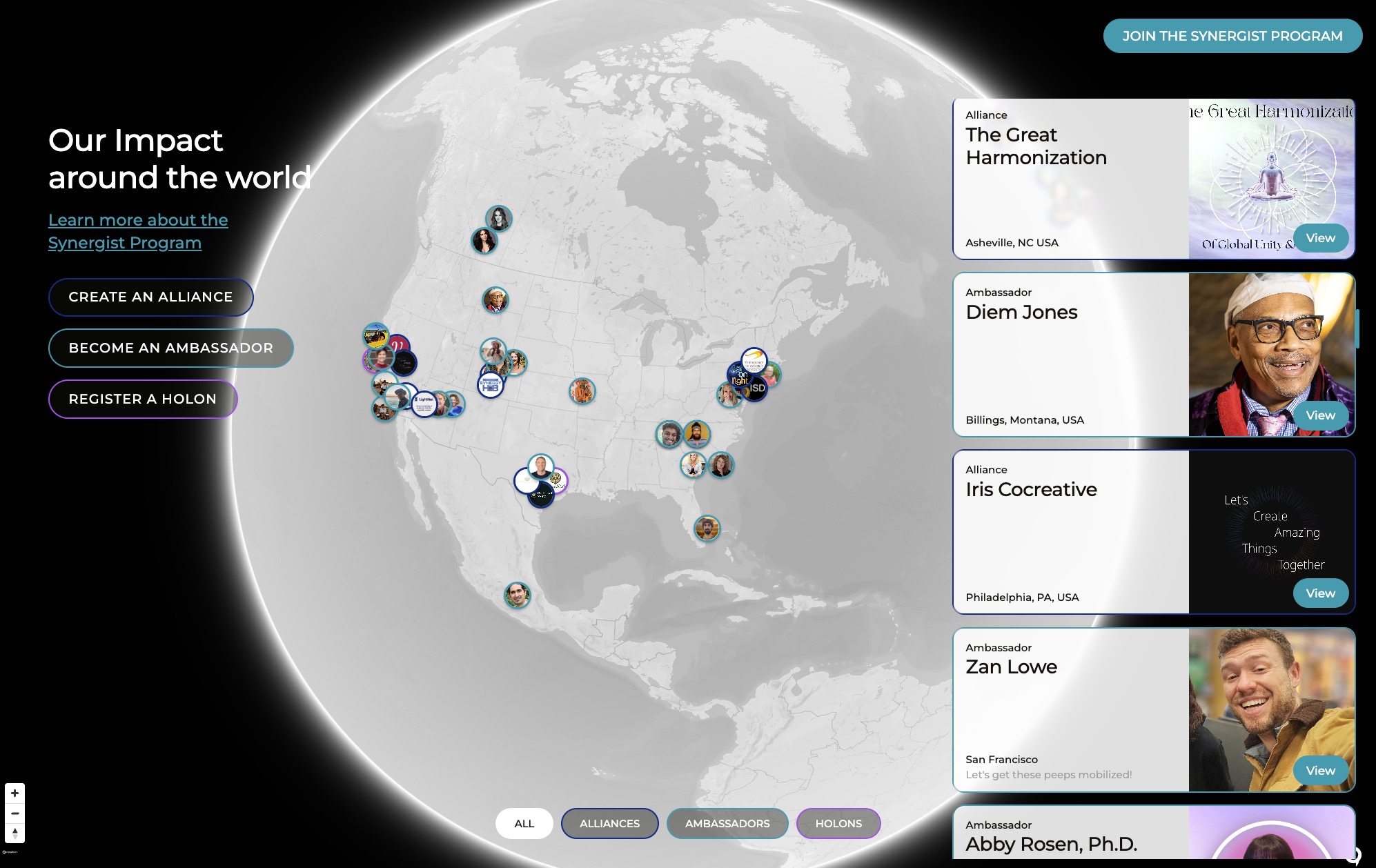
For the ILALI ecosystem directory, James proposed using Airtable as the backend database with a form for community members to create profiles (52:00). This content can then flow into Webflow and be displayed however needed—as grids, radial circles, or interactive maps. James demonstrated two examples: a circular interface for a Hollyhock gathering where participants could explore each other's responses to questions and audio introductions (54:13), and a 3D globe showing different types of organizational profiles for alliances, ambassadors, and whole lounges (55:33).
This approach offers maximum flexibility without requiring a complex custom platform. Gabi expressed frustration with existing CRMs failing to capture the multidimensionality of relational work—relationships to people, places, and organizations simultaneously (56:55). James shared he's designing his own CRM system that treats people, ideas, projects, places, trips, and practices as interconnected post types, currently prototyping it with Airtable and Webflow (01:00:01).
Beyond the core website, several other design needs emerged. Reiko mentioned the Landwell philanthropic deck created with James and Peter, which exists in Figma but needs accessibility improvements and minor updates to reflect current funding status (48:26).
Social media templates were discussed, with questions about whether design assets could be made accessible in Canva for "design mortals" on the team to use while maintaining visual consistency (49:25).
Reiko also expressed interest in developing a worldview assessment tool—a simple, elegant interface for people to explore their developmental perspectives informed by Spiral Dynamics and other frameworks (01:02:23). James confirmed this would be straightforward to build, noting he'd recently created a Vedic astrology app for teams in a single day that analyzes group astrological patterns (01:03:12).
[technology="Assessment Systems"]
Gabi's role centers on cultivating relationships and ensuring ILALI's story creates space for others to see themselves participating (04:33). He also manages a nonprofit and understands the challenge of having so much knowledge to share that it becomes difficult to give people just enough to want more.
The team is implementing Holospirit as their operating system, informing both their digital collaboration and in-person gathering practices (01:12:24). Reiko emphasized the importance of deepening their practice, noting that a recent Roots to Rise program at Hollyhock powerfully reinforced their approach to worldview literacy and healing work. A Hollyhock board member called it "gold that every leader should go through" and wants to implement it for their board (01:11:07).
The Sacred Architecture team (including Kelsey and Brenda) held a powerful session working with Toltec chakra systems and animal spirits, performing energetic clearing not just for individuals but for ILALI as an entity (01:08:34). This holistic approach to organizational development reflects the depth of practice informing the team's work.
Gabi shares caregiving responsibilities for his mother with his two brothers in Menlo Park, which shapes his current life focus and devotional practice (03:24).
James shared that his company has spent a year redesigning their own project management system, driven by a vision of treating projects as art and sacred spaces rather than just lists, grids, and folders (37:23). The goal is creating beautiful, artful interfaces that facilitate creative conversations without overwhelming people with unnecessary features. The prototype uses Airtable backend connected to custom Webflow frontend, allowing any kind of visualization and interaction pattern (39:38).
This perfectionism resonates with Reiko's own creative process, and both acknowledged the challenge of balancing vision with practical delivery (37:25). The team philosophy emphasizes getting functional foundations in place and evolving from there rather than waiting for perfection.
Gabi Jubran
James Redenbaugh
Reiko Fabionar
Amanda Nagai
Team
James Redenbaugh and Gabi Jubran reconnected on the ILALI website project after several months of pause (01:40). The project has established clear visual direction with finalized logo, typography, and brand guidelines, along with substantial diagram work completed in Illustrator (12:08). The team agreed to target completion before the end of the year, with an ambitious goal to potentially launch by the end of November if momentum builds (14:57).
Gabi, who officially joined as core steward for social ecosystem and story since August 1st, emphasized the importance of getting a functional foundation live quickly rather than pursuing perfection (44:53). The current single-page website doesn't communicate the full scope of what ILALI offers, and establishing a proper web presence has become a keystone priority for other initiatives to materialize (16:15).
The previous website structure featured four core initiatives, but the Living Praxis Communities component wasn't explicitly represented. Amanda Nagai, the enactment ecosystem lead now working three-quarter time, will help envision how all the offerings connect visually (07:01).
[technology="Custom Membership System"]
The immediate team priority is the Novella Bioregional Gathering at Landwell on November 1st and 2nd (15:01). This event focuses on the Laguna de Santa Rosa watershed and Green Valley river watershed in Western Sonoma County, while inviting partners from across Salmon Nation. Key partners include Salmon Returns (Donna Morton and Cheryl Chen) and North Bay Organizing Project, a coalition of 20+ organizations working on everything from labor organizing to prescribed burns and land rehydration (17:34).
The first day features a walking tour, meal, and evening Heart Sprung Tongues event (a curated open mic and local artists showcase). The second day focuses on strategic planning with partners developing the Novella bioregional proposal (18:44). The gathering will generate important content for the website, including professional videography, and help clarify partner relationships that should be highlighted in the site design (34:25).
James shared an outline document created in May that maps site structure: initiatives, impact, join the movement, and connect sections with preliminary content ideas (21:12). Gabi's approach involves taking an initial pass at copywriting, then reading content aloud in group sessions to sense what lands emotionally and refining from there (26:41). This collaborative process will leverage James's deep institutional knowledge from years of working with Reiko while bringing fresh perspective.
Reiko Fabionar acknowledged his perfectionism and difficulty stepping back from the textual and visual work, despite comfort with oral storytelling (36:12). He expressed relief that Gabi and the team can drive the project forward with more consistent momentum. The curse of knowledge makes it challenging for him to distill years of thinking into accessible entry points (05:34).
The team will start with a fresh Figma board consolidating all current brand assets, icons, and approved designs in one organized location to eliminate confusion about what's current (46:49).
The website will be built on Webflow, which James described as superior to WordPress for requiring no ongoing plugin updates—once built, it persists indefinitely like a drip irrigation system rather than a farm animal requiring constant feeding (10:07). This stability is crucial for a small team with limited technical resources.
[technology="Directory Systems"]
For the ILALI ecosystem directory, James proposed using Airtable as the backend database with a form for community members to create profiles (52:00). This content can then flow into Webflow and be displayed however needed—as grids, radial circles, or interactive maps. James demonstrated two examples: a circular interface for a Hollyhock gathering where participants could explore each other's responses to questions and audio introductions (54:13), and a 3D globe showing different types of organizational profiles for alliances, ambassadors, and whole lounges (55:33).
This approach offers maximum flexibility without requiring a complex custom platform. Gabi expressed frustration with existing CRMs failing to capture the multidimensionality of relational work—relationships to people, places, and organizations simultaneously (56:55). James shared he's designing his own CRM system that treats people, ideas, projects, places, trips, and practices as interconnected post types, currently prototyping it with Airtable and Webflow (01:00:01).
Beyond the core website, several other design needs emerged. Reiko mentioned the Landwell philanthropic deck created with James and Peter, which exists in Figma but needs accessibility improvements and minor updates to reflect current funding status (48:26).
Social media templates were discussed, with questions about whether design assets could be made accessible in Canva for "design mortals" on the team to use while maintaining visual consistency (49:25).
Reiko also expressed interest in developing a worldview assessment tool—a simple, elegant interface for people to explore their developmental perspectives informed by Spiral Dynamics and other frameworks (01:02:23). James confirmed this would be straightforward to build, noting he'd recently created a Vedic astrology app for teams in a single day that analyzes group astrological patterns (01:03:12).
[technology="Assessment Systems"]
Gabi's role centers on cultivating relationships and ensuring ILALI's story creates space for others to see themselves participating (04:33). He also manages a nonprofit and understands the challenge of having so much knowledge to share that it becomes difficult to give people just enough to want more.
The team is implementing Holospirit as their operating system, informing both their digital collaboration and in-person gathering practices (01:12:24). Reiko emphasized the importance of deepening their practice, noting that a recent Roots to Rise program at Hollyhock powerfully reinforced their approach to worldview literacy and healing work. A Hollyhock board member called it "gold that every leader should go through" and wants to implement it for their board (01:11:07).
The Sacred Architecture team (including Kelsey and Brenda) held a powerful session working with Toltec chakra systems and animal spirits, performing energetic clearing not just for individuals but for ILALI as an entity (01:08:34). This holistic approach to organizational development reflects the depth of practice informing the team's work.
Gabi shares caregiving responsibilities for his mother with his two brothers in Menlo Park, which shapes his current life focus and devotional practice (03:24).
James shared that his company has spent a year redesigning their own project management system, driven by a vision of treating projects as art and sacred spaces rather than just lists, grids, and folders (37:23). The goal is creating beautiful, artful interfaces that facilitate creative conversations without overwhelming people with unnecessary features. The prototype uses Airtable backend connected to custom Webflow frontend, allowing any kind of visualization and interaction pattern (39:38).
This perfectionism resonates with Reiko's own creative process, and both acknowledged the challenge of balancing vision with practical delivery (37:25). The team philosophy emphasizes getting functional foundations in place and evolving from there rather than waiting for perfection.
Gabi Jubran
James Redenbaugh
Reiko Fabionar
Amanda Nagai
Team
Create fresh Figma board consolidating all current brand assets
October 28, 2025
Consolidate all current brand assets, icons, and finalized designs into one organized Figma board to eliminate confusion about what's current. This will serve as the single source of truth for the website design work.
Take first pass at website copywriting using outline document
November 10, 2025
After November 2nd Novella gathering, use the outline document from May to draft initial website copy. Will then organize read-aloud review sessions with James and Reiko to refine content through verbal feedback process.
Organize copywriting review sessions with read-aloud feedback
November 20, 2025
Schedule and facilitate collaborative sessions with James and Reiko to review website copy drafts. Use read-aloud method to sense what lands emotionally and refine content through group process.
Share Airtable examples and templates for directory and CRM
October 30, 2025
Share Airtable templates and form examples that could be used for ecosystem mapping and directory development. Include examples of circular Hollyhock interface and 3D globe organizational profiles demonstrated in meeting.
Step back from detailed copywriting to enable fresh perspectives
November 30, 2025
Consciously step back from line-by-line copywriting work to allow Gabi and team to bring fresh perspective. Remain available for refinement and feedback but resist perfectionist tendencies to control every detail. Trust the collaborative process.
Coordinate with Landwell team about website needs and resources
November 5, 2025
Follow up with Landwell team to understand their website needs and available resources. Clarify relationship between ILALI and Landwell web presences and determine scope of coordination needed.
Access and update philanthropic deck in Figma
November 5, 2025
Follow up on accessing the Landwell philanthropic deck in Figma. Review current version and identify specific accessibility improvements needed and funding status updates required.
Support operations and coordination for Novella Bioregional Gathering
November 2, 2025
Support operations and coordination for November 1-2 gathering at Landwell focused on Laguna de Santa Rosa watershed and Green Valley river watershed. Event includes walking tour, Heart Sprung Tongues evening showcase, and strategic planning day. Coordinate with partners including Salmon Returns and North Bay Organizing Project. Ensure professional videography is arranged to capture content for website.
Collaboratively revisit site structure outline document
November 8, 2025
Team review of the outline document created in May that maps site structure: initiatives, impact, join the movement, and connect sections. Finalize content strategy and architecture before copywriting begins. Ensure Living Praxis Communities component is properly represented alongside other four core initiatives.
Complete redesign and rebuild of ILALI website on Webflow platform. Project has established visual direction with finalized logo, typography, and brand guidelines. Current single-page site doesn't communicate full scope of offerings. Site will feature four core initiatives plus emerging 'folk school' component as part of Nolla. Will incorporate content and media from November 1-2 Novella Bioregional Gathering. Using collaborative copywriting process where Gabi takes first pass, then team refines through read-aloud sessions. Fresh Figma board consolidates all current brand assets. Site currently hosted on WordPress/Webflow hybrid setup through Common Wheel fiscal sponsorship. Strategic decision made to prioritize Kinship Blooms as the design fractal and template for broader ILALI ecosystem (13:48). Main ILALI one-pager will receive light updates as interim solution: reduce gap between header video and text (desktop and mobile), rework overlapping graphic into offset boxes/stepping stones, move newsletter signup to bottom of page, add Max's photo (the Fern), and update text as needed (43:53-46:39). Design philosophy shifting from linear scroll-based architecture to ecological, place-based interfaces that feel native to land rather than imposed (34:23). James exploring Christopher Alexander's pattern language applied to digital design as philosophical framework. Team ready to move forward with Kinship Blooms first, then return to full ILALI site after that foundation is established.
Design updates and improvements to the Landwell philanthropic pitch deck originally created with James and Peter. Exists in Figma but needs accessibility improvements and minor updates to reflect current funding status.
Development of custom CRM and ecosystem directory system using Airtable backend with Webflow frontend. Will feature form for community members to create profiles, with flexible display options including grids, radial circles, and interactive maps. System designed to capture multidimensionality of relational work — relationships to people, places, and organizations simultaneously. Three main categories: people, projects, and places, tracking multiple land projects, community spaces, and initiatives including Nolla, Wayfinders, Landwell, and Kinship Blooms. System leverages Airtable's relational database capabilities with bidirectional linking, lookup fields, and rollup functions. Team has confirmed Airtable as the CRM foundation going forward — fully adopting it for forms and CRM, replacing Google Forms workflows with Airtable forms. Supabase identified as a future upgrade path if more complex functionality is needed; Airtable data can be exported without lock-in. Claude via MCP can be used to populate research entries, generate descriptions, and apply tags at scale — demonstrated with a conscious artists directory (28:35, 54:07). Future development includes custom frontend interfaces and 3D visualization capabilities. Design approach shifting toward dynamic, network-illustrating interfaces that show entities, organizations, and connections in architectural spaces people can enter (33:30). James demoed global interactive map example showing type of expandable, relationship-mapping interfaces now possible.
Development of social media templates and design assets accessible for team members to use while maintaining visual consistency. Exploration of making assets available in Canva for 'design mortals' on the team to create content independently while adhering to brand guidelines.
Development of simple, elegant interface for people to explore their developmental perspectives informed by Spiral Dynamics and other frameworks. Interactive assessment tool that helps users understand their worldview orientation. Reiko expressed interest in creating accessible entry point to worldview literacy concepts that ILALI teaches in their Roots to Rise program. Assessment development will integrate with user profiles and can feed into matching algorithms for connecting people. Complexity and cost depend on desired sophistication—simple 1-10 scoring on 20 questions is straightforward, while nuanced graphical outputs require more work but create more engaging experiences. Development process includes beautiful step-by-step interface, automations processing responses computationally and using AI agents, and formatted outputs deliverable immediately, via email, or integrated into user profiles. Potential integration with Hollow Movement's monthly guest assessment platform. Once sufficient data collected, results can be visualized globally or show individuals where they fit within community.
00:00:07
James Redenbaugh: This meeting is being recorded.
00:01:40
M. Rako Fabionar: Hey, James.
00:01:43
James Redenbaugh: I'm.
00:01:43
Gabi Jubran (HeHim): I'm doing well. I think you said, how are you? And it cut out a little bit, but I just. Did it.
00:01:49
M. Rako Fabionar: Yeah.
00:01:50
Gabi Jubran (HeHim): Something.
00:01:51
James Redenbaugh: Yeah. Yeah.
00:01:53
M. Rako Fabionar: Cool.
00:01:55
Gabi Jubran (HeHim): First off, congratulations on getting married.
00:01:59
James Redenbaugh: Thank you. Yeah, thanks so much.
00:02:02
Gabi Jubran (HeHim): Big deal.
00:02:04
James Redenbaugh: Yeah.
00:02:06
Gabi Jubran (HeHim): Yeah. I. How does it feel like, Is it a relief to kind of have come to the end of that whole process?
00:02:15
James Redenbaugh: It is. Yeah. It's quite a process. Oh, my God. And we're very happy with how it went. Happy to be on the other side of things and still kind of catching up on work and catching up on sleep, but making my way through.
00:02:35
Gabi Jubran (HeHim): Right on.
00:02:37
James Redenbaugh: Are you married?
00:02:38
Gabi Jubran (HeHim): I am not. I am single. And I mean, not specifically looking for a beloved in this moment. I wouldn't be. I wouldn't be upset if they showed.
00:02:52
James Redenbaugh: Up.
00:02:55
Gabi Jubran (HeHim): But, yeah, I live. I live in the bay, in the peninsula of the bay.
00:02:59
James Redenbaugh: And.
00:02:59
Gabi Jubran (HeHim): And what's keeping me here in Menlo park specifically is I'm. Me and my two brothers take care of my mother, so we all live together and take care of her. And so she's kind of like my main devotional relationship, relationship practice at this moment. Um, and then, yeah, all the work that I'm investing my life into, this being part of it. So.
00:03:24
James Redenbaugh: Yeah. So tell me about that. What's your involvement in. In a lolly and how's it going?
00:03:34
Gabi Jubran (HeHim): Yeah, so I guess I'm now officially on the team for. Since August 1st, but Reiko and I have been in conversation and in collaboration and intending to bring me on in some capacity once their grant came through in August. So, yeah, my role within a lolly is I am a core steward, so I'm on the leadership team, and I'm responsible for the social ecosystem and story. So lots of cultivating and tending of relationships and making sure those are being fed. And. Yeah, part of the reason why I'm on this call with you is. Yeah. How do we tell the story of a lolly, and how do we make sure that we're offering a frame that other people can see themselves participating in? So.
00:04:33
James Redenbaugh: Yeah. And.
00:04:36
Gabi Jubran (HeHim): Yeah, I mean, Reiko's been so close to this for so long that I think it's hard for him to get out of, you know, his own way with it a little bit or, you know, it can. It can become a little heady or. Yeah, he's. It's like the curse of knowledge, where you have so much that you want to share and that, you know, I experience in the nonprofit that I run. And so it's like yeah, how do I distill this or how do I give people enough of a taste so that they want more sort of thing. Yeah. So yeah, he's really wanting me to connect with you at some level to help with the, the copywriting and how that you know, where, how are we talking about the different offerings and where is that going placement wise?
00:05:34
James Redenbaugh: Great. So how are you thinking about the different offerings? Last time we were making progress we were talking about these four core initiatives.
00:05:56
M. Rako Fabionar: Yeah.
00:05:59
James Redenbaugh: And we have more than what's currently on this landing page. But curious what where things stand and in your mind and what's coming together for them and what's going to be most important.
00:06:19
Gabi Jubran (HeHim): Yeah. My current sense and you know, it'll be helpful when Reiko jumps on it too or five for you is I think where y' all got to with like the kind of one pager version of the website is good for the time being because yeah, the, the previous website, while nice looking, really wasn't communicating the full scope of what this is. And yeah, I mean the only thing that isn't explicitly kind of communicated through that website, the current website is the living Praxis communities. I know that you had maybe drawn up some like graphics to show like you have like the living practices communities kind of centrally here and then like offshoots of that or like, or it kind of like nests in or is related to all of the other programs and offerings and I think there's still some visioning and, and after our call together, me, Reiko and Amanda who's kind of like the enactment ecosystem lead. So she's kind of like the head of operations, chief of staff type person who's now on board in like a three quarter time capacity which is a major blessing. Will maybe spend a little bit of time because I know she had some ideas around how to visually maybe show how they're all connected. So yeah, I, Reiko sent me the figma like I don't know like a day ago and so I haven't had a ton of time to go super deep into it. But I have seen some of the designs before. I mean y', all, y' all have done like some, you've done a lot of design work. Bless you. That's, that's beautiful. Yeah, I love your style and I, I, I didn't realize I was a fan of your work previous to this, but I, I really appreciated the new stories website y' all did.
00:08:48
James Redenbaugh: Oh yeah, yeah, yeah. That was a long, that was a long time ago.
00:08:53
Gabi Jubran (HeHim): Yeah, well it's maybe like a. A year old now, Something like that?
00:09:03
James Redenbaugh: No, we didn't do the new, new stories.
00:09:06
Gabi Jubran (HeHim): Okay. I remember seeing both and liking both, but you have not done the new, new one.
00:09:13
James Redenbaugh: No, we did the. We did the old news stories. We don't do. We don't do WordPress stuff anymore.
00:09:22
Gabi Jubran (HeHim): Got it. What do you build on Webflow? Webflow. Okay. I've heard great things about it.
00:09:29
James Redenbaugh: Yeah, we love it. It's just faster to. Faster to build. We can do more with it. And you don't need to update any plugins or themes or things like that. You know what, what you build is what you get. And it will persist indefinitely if you don't touch it. Unlike WordPress, which seems to be like a farm animal that you need to keep fed and take constant care of if it's going to stay alive.
00:10:07
Gabi Jubran (HeHim): Yeah.
00:10:08
James Redenbaugh: And then eventually it dies anyway, no matter what you do.
00:10:13
Gabi Jubran (HeHim): Yeah. So webflow is kind of like a drip irrigation system sort of thing.
00:10:18
James Redenbaugh: Yeah. It's all. It's easy to integrate with all kinds of things and once it's running, runs. As long as you keep posting it.
00:10:29
Gabi Jubran (HeHim): Yeah. Cool. Yeah, I'm just like, I'm scouring through. Where did you leave off with Reiko in terms of your last conversation? Like, did you feel like you were approaching clarity on it Sounds like the logos been selected. I don't know if the actual font has been selected.
00:11:05
James Redenbaugh: Yeah, I think we got clear on the logo and the font and I think we picked this one up here in pink as a final expression on that. We did a lot of work on these diagrams down here. I've done some more work on these in. In Illustrator. We were focusing on that last time we talked. Okay. And I've been wanting to get back to like site structure and pages and content so that we can finish actually designing the website and getting that built.
00:12:08
Gabi Jubran (HeHim): Yeah, that's. That would be great. Yeah. And having it functional. And just in the context of like starting to build out our email list and like, you know, there's so few systems in place right now, so I'm just like. There's like things kind of haphazardly and notes in different places and whether it's like Apple Notes or like a Google Doc or like a notion page and it's like, you know, anyway, so having a website will be an important anchor for this. Is there like a particular timeline that you had talked about doing this with Reiko? I know things have shifted around. Or is. Is there an ideal timeline in which you would like, to get this done so that, like, I can kind of orient to working on it in that way.
00:13:05
James Redenbaugh: Yeah, I mean, I've been kind of waiting to. To get back into it. We had an original timeline, and then I guess Reiko's been busy with other things, and I think if we can put some momentum behind it, I'd love to move quick, quickly. Mun is the designer. We've been working on this, and she has time available. So I mean, I'd love to definitely get. Get this up before the end of the year. Okay. And I think even it's up to you guys and your needs and goals, but my intuition is to. To get a working version up as quickly as possible and then we can evolve it from there as needed and, you know, add. Add additional parts. But I think that we have a. A clear sense of the pieces and there's just putting them together left to do. And then, of course, you know, designing and flushing out the pages and building them in webflow. And so, you know, I think we could hustle and get something up by the end of November if we want for or take a bit more time. It's up to you guys.
00:14:57
Gabi Jubran (HeHim): Okay. I feel, at the very least, good at getting it done before the end of the year. So in a couple weeks, which is kind of what we're focused on for the next couple weeks, is the Nolla Bioregional Gathering at Landwell, which is on November 1st and 2nd. So I'm sure some of the copy that is going into the invitation and part of. Yeah, the overall design and flow of the gathering will help inform some of the writing for that. But yeah, I think that's going to be our main focus. But as soon as we come out on the other side of that, we don't really have any, like a lolly specific events happening for the rest of the year. So. Yeah, and we'll see, like, maybe we get in a good rhythm and momentum and we are able to get it turned around by November. I mean, this is. It's definitely, at least in terms of my role here, one of my top priorities, because it feels like a kind of a keystone for other things to start materializing. So.
00:16:15
James Redenbaugh: Yeah. Yeah. What's this gathering gonna look like?
00:16:24
Gabi Jubran (HeHim): So it's gonna be. The first day is like, somewhat more open to the public. We're for this project kind of focused on the Laguna de Santa Rosa watershed and the Green Valley river watershed in Western county, but we're also inviting people from across Salmon Nation. So the. The larger bioregional Context, we exist in who we're going to be partnering with. So I don't know if you know the folks, folks at Salmon Returns, which is like Donna Morton and Cheryl Chen, they were part of Salmon Nation Trust and that whole thing. Yeah, going to be working with North Bay Organizing Project, which is like a coalition of 20 plus organizations that are doing various work, like aspects of work from like labor and migrant worker organizing to, yeah, prescribed burns and rehydrating the earth and so on, so on.
00:17:32
M. Rako Fabionar: And.
00:17:34
Gabi Jubran (HeHim): Yeah, the. So the first portion of it is kind of just like a walking tour and meal and kind of showing what exists on the land, but also where are we envisioning building more infrastructure on the land to support with educational offerings. And then in the evening on the first day we're gonna do a. I don't know if Reiko shared this with you. Heart Sprung Tongues, which is kind of like a open mic and local artists curated event. And then the second day is kind of more focused and more strategic with the people who are going to be partnering with us on the novella proposal for the bio region that we're in. And it's. The design is still pretty loose and you know, we're going to jump on a call right after this to do some more work on that. It's like, okay, it's time we got to really start organizing. Reiko was just in BC at Hollyhock facilitating.
00:18:44
M. Rako Fabionar: A.
00:18:49
Gabi Jubran (HeHim): What was it? I think it was like the. The Roots. Roots to Rise program.
00:18:55
James Redenbaugh: Oh, you are frozen over there.
00:18:57
Gabi Jubran (HeHim): Oh, okay. I. You're frozen on my screen. But now you're back. Can you hear me?
00:19:02
James Redenbaugh: Okay, back. Yeah.
00:19:06
Gabi Jubran (HeHim): But yeah. Anyway, Reiko was out for a couple of weeks and so he's just now kind of getting back into the swing of things. And so now it's kind of like, okay, we have two weeks to kind of design and structure this gathering and make sure all the parts are in place. And then after that I think things will kind of clear up a little bit. And Amanda, who's the enactment lead and I will have more time to focus on some of these other priorities.
00:19:34
James Redenbaugh: Cool. Exciting.
00:19:37
Gabi Jubran (HeHim): Yeah, Lots happening. Lots happening for sure.
00:19:41
James Redenbaugh: Yeah. Nice. So, yeah, what were you gonna say?
00:19:49
Gabi Jubran (HeHim): I was just gonna say, yeah, in terms of where y' all left off and because I remember, yeah, you shared a little bit about where you left off. But yeah, in terms of like the next. Next steps, where could my energy be of highest and best use for moving this process along?
00:20:29
James Redenbaugh: I think one important thing is going to be to have a high Level content and structure conversation. And let's see, I created this document. Have you seen it?
00:21:05
Gabi Jubran (HeHim): No, I've not yet. Just now.
00:21:12
James Redenbaugh: So I made this back in May and it has a simple site map about initiatives, impact, join the movement, connect, and then ideas for sections within that and then just like bullet points about what, what to include here. I, I intended this as like a starting place or a conversation. Collaborative conversation about what to put on the website, how to structure the content and give you guys what you need to write that content. We are happy to like facilitate content creation and you know, work with, work with words, but it's always better when folks are writing their own stuff rather than having having us do it for them.
00:22:27
M. Rako Fabionar: Yeah.
00:22:29
James Redenbaugh: And so yeah, I think what's, what's next would be to either revisit this or go back to the drawing board, whatever makes sense and sketch out what are the major elements of the site, what content is going to be needed, what are the pieces that need to be put in place to make this work. And we also have in the Figma, we have a very start of a wireframe for the homepage here. And then so kind of in parallel to some Google docking, we could be wireframing out the rest of the site and let me see if I have another wireframe document around this. One sec.
00:23:33
Gabi Jubran (HeHim): Yeah. Would you mind also sharing that outline?
00:23:38
James Redenbaugh: Of course.
00:23:39
Gabi Jubran (HeHim): Together with me.
00:23:40
James Redenbaugh: Yeah.
00:23:42
Gabi Jubran (HeHim): Put my email in the chat. My new lolly. Email it.
00:24:38
James Redenbaugh: Thank you. No problem.
00:24:43
Gabi Jubran (HeHim): I zoomed out on the Figma. Where, where again specifically is the homepage design that you put there on wireframes? Oh, okay. I don't know if I see now I'm there.
00:25:01
James Redenbaugh: Cool. Yeah, yeah. Particularly over here where we've started putting things together. So this is just to start, but gives you a sense of the kind of building blocks we can use to, to build things out.
00:25:31
M. Rako Fabionar: Yeah.
00:25:36
James Redenbaugh: And yeah, so basically if once we have content to be using, we can run with design and development. I think we've got a ton of brand assets and great visual language. We just need to know more about what, what stories we're going to be trying to tell on these pages. And, and there's a number of ways we can help with that. I don't know how you like to work on those kind of things, but.
00:26:24
Gabi Jubran (HeHim): Yeah, my, my general orientation is.
00:26:29
James Redenbaugh: Once.
00:26:30
Gabi Jubran (HeHim): I have like some direction, just kind of taking a crack at it and.
00:26:37
James Redenbaugh: Then.
00:26:41
Gabi Jubran (HeHim): Actually I really appreciate like a group call to kind of still what's, what's landing what isn't like reading it aloud and seeing how it lands in your body and taking notes from there because, I mean, you're somewhat into. You're like probably one of the most intimately connected with this work people that there is, funny enough, like in the whole world. And so you have like some level of institutional knowledge and you're like operating from a, like a point of like the type of conversation that you were having with Reiko six months ago.
00:27:28
James Redenbaugh: So.
00:27:32
Gabi Jubran (HeHim): Yeah, I think it's helpful to be able to bounce certain things off of you if that's something you're open to. And, and I also, I'll talk to Reiko. I think Reiko just needs to like, step away for a little bit just to see what other people can do and then he can kind of come in and help refine as well. I've heard this called Vuja Day. Like when you've been staring at something for so long and then you like, take time away and you look at it and you see it with new eyes. Supposed to do.
00:28:09
James Redenbaugh: Yeah. Interesting.
00:28:11
M. Rako Fabionar: Yeah.
00:28:13
James Redenbaugh: Cool. Yeah. You know, my philosophy on these, these kinds of things is they, they very much exist as beings in the space between us. Yeah. And when you're a steward of it, like Reiko is he. He obviously knows it the most well. Like a mother knows their child and when the child is 16 and they go off to camp and, you know, and, and they're met by new people, there's ways that those people will see that. That child that the mother can't see.
00:28:59
M. Rako Fabionar: Yeah.
00:29:00
James Redenbaugh: Even though she's been with him every day. And so often I think of it like, like that in, you know, in many different ways also. These, these beings grow and evolve over time. And when you're intimately involved in their, in their growth, it can be hard to see the, to. To see it from the outside, see what's actually, you know, what personality is it taking? What parts does it have? How do we characterize those. Those parts? Right. And yeah, I imagine that with some, some digging and some perspective taking, we can get a clear, clear sense of it and move towards verbal and visual articulation. That's going to make a lot of sense. And then. And then, of course, Reiko can refine as needed.
00:30:02
Gabi Jubran (HeHim): Yeah, that makes sense. Yeah. Speaking of, he should be joining us shortly so we can kind of get the ball rolling on that front maybe.
00:30:18
James Redenbaugh: Great.
00:30:33
Gabi Jubran (HeHim): See if he's still intending to come, if we sent a message or anything.
00:31:15
James Redenbaugh: Cool.
00:31:15
Gabi Jubran (HeHim): I just sent him a message just to remind him I know his days are jam packed. Yeah. I mean, so it looks like, there is some in the wireframes. There's some copy here that was pulled from the current Landwell website or the growing kinship website, and then that was kind of, like, mapped on a page just to see what that could look like. I'm curious. Oh, this is great. Yeah, I mean, I haven't had time to, like, really be with this. I'm, like, I'm seeing this with very fresh eyes. But was. Did he kind of communicate that y' all would be working on a new Landwell website as well, or is this potentially looking to get incorporated into the Olali website? When you talked about it?
00:32:41
James Redenbaugh: Yeah. That this would replace the Olali website and. And the Landwell website.
00:32:49
Gabi Jubran (HeHim): Entirely. Both of them. So all of this content would exist under Landwell as a root initiative of Ali?
00:33:02
James Redenbaugh: I believe so.
00:33:04
Gabi Jubran (HeHim): Okay.
00:33:06
James Redenbaugh: But I'm not sure. Yeah, it's been. It's been some time now.
00:33:11
Gabi Jubran (HeHim): Yeah. So you also worked on the.
00:33:27
M. Rako Fabionar: Pitch.
00:33:27
Gabi Jubran (HeHim): Decks for Landwell when they were doing the fundraising process. Got it.
00:33:33
James Redenbaugh: Yeah, we built those.
00:33:36
Gabi Jubran (HeHim): What'd you build it in? Slides.
00:33:37
James Redenbaugh: Just Google Slides in figma. They're in figma as well. Okay, you can see them.
00:33:47
Gabi Jubran (HeHim): Yeah, I see. Landwell deck process. Yeah, I didn't see some of these slides, so maybe not all of them made it into the short deck. Reiko said he'll be here in one minute.
00:34:12
James Redenbaugh: Cool.
00:34:25
Gabi Jubran (HeHim): Yeah. I think another reason that it will be helpful to dive more fully into this after the bioregional gathering is we'll have a better sense of, like, who is committed in terms of partners for that project. So we'll be able to kind of highlight more of those different partners.
00:34:48
James Redenbaugh: Hey. Hey.
00:34:50
M. Rako Fabionar: Hey, fellas.
00:34:52
James Redenbaugh: Hey, Reiko.
00:34:53
M. Rako Fabionar: Good to see you, man. You look different. Look like you're right. Look like you're a new we.
00:34:59
James Redenbaugh: I feel like a new we.
00:35:02
M. Rako Fabionar: Congratulations.
00:35:04
James Redenbaugh: Thank you.
00:35:05
M. Rako Fabionar: Yeah.
00:35:06
James Redenbaugh: Yeah.
00:35:07
M. Rako Fabionar: So it was lovely to get that picture of you and your bride and. And of course, Spencer, which, you know, gotta have Spencer in the picture. Oh, yeah, for sure.
00:35:18
James Redenbaugh: Yeah. How are you?
00:35:21
M. Rako Fabionar: I'm doing pretty well. Yeah, I'm doing pretty well. I just got back from B.C. and for a couple of weeks and having some mobility issues the last few months, but overall, I'm doing well. Yeah. Grateful and yet grateful again for your understanding around perfectionism and. And timing. And this is why. Why, why Gabby? I was like, gabby, I need you to take a stab at some of this, man. Because just. This is too. Things are so many things are too precious, and just I get frozen a.
00:35:55
Gabi Jubran (HeHim): Little bit, so I get It. Yeah, because when it comes to the nonprofit that I run, like, when it's my baby, I have serious perfectionism issues. But when it's other people's, it's like, oh, yeah, let's just like, see what.
00:36:08
James Redenbaugh: We can get into.
00:36:08
Gabi Jubran (HeHim): You know, let's around and find out.
00:36:12
M. Rako Fabionar: Well, this is the difference between the orality of storytelling, you know what I mean? Like, I can just, you know, totally flex, flow and feel really comfortable. But when it comes to the. The textual and. And the visual representations of things, it's, you know, and all the different layers and the energetics of it. The energetics of it is it's. I think part of it is I'm just super sensitive. Not in. Beyond the preciousness of things. It's like, yeah, it's just. It's a lot for me. And so poor James has had several years of this with me, and I'm like, one of these times he's just going to come over and shoot me.
00:36:49
James Redenbaugh: Yeah.
00:36:49
M. Rako Fabionar: We're all.
00:36:50
James Redenbaugh: We're all in my company, have been redesigning our project management system for a year because I want it to be perfect. And I have all these ideas of what it. What it can become, and I'm not willing to compromise on it. Meanwhile, we don't really have a project management system, so I, like, don't take on much work. But when it's. When it's done, it's going to be. It's going to blow your socks off.
00:37:23
Gabi Jubran (HeHim): I believe it.
00:37:24
M. Rako Fabionar: And.
00:37:25
Gabi Jubran (HeHim): Yeah. And it, you know, is maybe like, forms into its own business, which is probably at some level how you're thinking about it as well.
00:37:33
James Redenbaugh: It is now I've invested so much into it. I need to think of it as its own thing. It's like thinking about. There's so many project management. Not to sidetrack us too much, but in case you're curious, there's so many project management tools out there and systems and preferences, and they're all great and they all have their strengths, but none of them really hold projects or creative work as art or as sacred spaces. It puts everything into a list or a grid or a folder or a file. And that's helpful for organizing things, but it's not helpful for facilitating creative conversations and collaboration. And so we kind of started with the premise of, like, how can you know, what would a beautiful, artful project management system look like? And that brought us into kind of reconceptualizing our view of time and relationship. And then it's become like a whole operating system. That we've custom built on our website and. Yeah, and a language of action. So it's going to be pretty cool, hopefully, if it comes together. We want it to be a way for anybody working on creative projects to have easy, simple, but advanced access to the important pieces that everybody's contributing without anything you don't need, without a thousand features and needing to be onboarded into a whole new system. But just like, oh, here's the project and it's beautiful. Here are the people and here's what they're doing and here's what we met about last week and here's our timeline and it's adapting as things, as things change.
00:39:38
M. Rako Fabionar: So anyway, I'll be excited when that's. Yeah, I'll be excited. Closest I got to that was Iowa, you know, which does, you know, some things, but it's, you know, your. And I know your work is just. Your work is beautiful. So.
00:39:51
James Redenbaugh: Yeah. What's ioa? I haven't heard of that.
00:39:55
M. Rako Fabionar: It's a. It's a project management platform that, that, that you can do, you know, more kind of, you know, circle here. I'll just.
00:40:05
James Redenbaugh: It's.
00:40:06
M. Rako Fabionar: It's.
00:40:06
James Redenbaugh: It. They.
00:40:06
M. Rako Fabionar: They frame it as things for neurodivergent, you know, people as well, so. Meaning, you know, multiple. I really like the radio. The radio, you could toggle back and forth from a Gantt chart to a. To kind of like, you know, whatever list to something that's, you know, more radio. Radio, you know, circular and. Here, I'll put it in. You can take a look at it sometime. Yeah.
00:40:36
James Redenbaugh: I'm always like, you know, if there's just something that can work, I will, I will use it. But it's. I keep finding that it just doesn't exists. But anyway.
00:40:58
M. Rako Fabionar: You and your team, I mean, annoying you and, and how you approach things. So.
00:41:02
James Redenbaugh: Yeah, thank you. Thanks.
00:41:08
Gabi Jubran (HeHim): Maybe just give a little bit of context. James and I just kind of connected and he shared with me the outline that he put together a number of months ago. I hadn't seen that yet. And then I've been kind of poking around in the FIGMA that you sent to me, Reiko, and we were just kind of getting a sense of where y' all left off. And yeah, it seems like it's really a matter of digging back into the outline and either making comments and seeing if we feel good about how that's generally structured and then starting to write copy or those sections in terms of timeline. James is kind of ready to move when, when we are. And we agree that It'd be good to get it done before the end of the year.
00:42:01
M. Rako Fabionar: That'd be wonderful. Yeah.
00:42:04
Gabi Jubran (HeHim): And, yeah, I basically said that, you know, we're focused on this bioregional gathering until the beginning of November, but after that, like, this is kind of my. One of my top priorities with. With Lolly. So. Yeah, that's kind of what we talked about.
00:42:26
M. Rako Fabionar: Great. No, that sounds right. You know, I. I think. I think I remember leaving off with more. More kind of the updates that you and your team made on some of the assets and. And the visuals, and then. And then you laying out, like, an outline for, you know, this is where the content. You know, how to create the. The content, meaning the. The text for this. And then that's when I, you know, kind of went offline with it all. And so, you know, I told Gabby, it's like, I really want you to start working on, you know, taking a stab at language. You know, I mean, obviously not running. Running too far away from, you know, what it is that we've been talking about. And then there's certain things that we need to keep, but also just, you know, more, you know, more. More accessible or. Or whatever. Whatever. What. How. Gabby's a great storyteller, you know, so wanting to. Just to see him take a stab at this and. And go from there. There might be a couple of. Of. Of smaller updates to some of the visuals, you know, but. But for the most part, I think. I think we're liking them so far, and. And I know that we need to go through. There's. There's more pictures and video clips and things that we might be able. That will be able to draw from, and there'll be even more after. After the 1st and 2nd of November, because we have a filmmaker who's going to be filming our bioregional committee. So that's. That's something that will. That we'll be able to start looking at and working with in terms of that and the visual storytelling through our. Our photos and videos, but really just. Just wanting and needing Abby to move. Move forward this in ways that I can right now, you know? Yeah, yeah, yeah.
00:44:25
Gabi Jubran (HeHim): I was just gonna say James said something simple, which I appreciate, which is just get to a place where we have kind of a solid foundation and all the things that are incorporated into this larger vision are represented in some form, and then kind of evolve it and grow it from there and not get too bogged down and, like, making sure that everything is communicated perfectly.
00:44:53
M. Rako Fabionar: Yeah, yeah, yeah.
00:44:55
Gabi Jubran (HeHim): So. Which feels good. Yeah. Especially knowing that because you're working in webflow, you don't really have to constantly work through updates of plugins, as James was saying, and other stuff. Like once the website is set, it's set and then we can dream into what other ways that we want to improve upon it. Yeah, anything Reiko that you wanna, you wanna add here in terms of.
00:45:32
M. Rako Fabionar: I think, I think. I don't know if this is possible, James, on, on Figma, because I know there's Figma and Notion and, and, and I think both of those weren't super. Notion was, was, was. Both weren't super easy for me to navigate, but maybe it's on Figma or somewhere else or you put it. What is, what are the ones that, what are the, the pages that you've outlined looking like? And, and what are the assets all in one place? Because there's a lot in, in, in Figma that I get lost trying to find what, what's up to date and, and some of that is, you know, because, you know, it's been, it's been a bit for me, but some of it's just, it's just. There's just a lot of, of ideation on there and, and I know that we honed in on a lot of what it is and I'm wondering if it can just be in one fresh board or one specific spot, you know, the things that we're working with and.
00:46:33
James Redenbaugh: Yeah, why don't we do a cleanup of the latest? Because I think we also have some things that aren't in Figma Fresh board with brand guidelines, assets, icons, everything that we have.
00:46:48
M. Rako Fabionar: Yeah, that'd be great.
00:46:49
James Redenbaugh: And then of course, we can add to that over time as well.
00:46:52
M. Rako Fabionar: Yeah, that would be great. Yeah, I think that's, that's, that's, that's what I got right now, you know, is, is a starting point in knowing that, that, you know, Gabby can really help drive this with you and be more reliable.
00:47:10
Gabi Jubran (HeHim): I am very responsive in my communication.
00:47:13
M. Rako Fabionar: Yeah, yeah, yeah, definitely. Yeah.
00:47:16
Gabi Jubran (HeHim): Um, at least I try to be. Um. Yeah, I think I like the idea of just like kind of starting with a fresh board. It's. Yeah. Because I, I have no orientation to this beyond the little bit that I've seen today and when Reiko sent this to me. Aside from the website, Reiko, is there any like stretch goals or other things that you want us to work on and get into?
00:47:55
M. Rako Fabionar: Well, you know, I know that, I know that James and his team worked on a deck for the Landwell fundraising, which I can't find I don't know where it is. And that was. And. And we worked pretty hard. This is the one you did with Peter James. That's. I would love to be able to know where that is. And yeah, that.
00:48:26
James Redenbaugh: That's in Figma also.
00:48:28
Gabi Jubran (HeHim): Okay, I see. I see a Landwell philanthropic deck tab. Is that the one?
00:48:34
M. Rako Fabionar: That's probably it. Yeah.
00:48:35
James Redenbaugh: Yeah. I think D2 is probably the latest fundraising. And then there's the philanthropic one up here.
00:48:42
Gabi Jubran (HeHim): Okay. Okay, there's. I scrolled down. I saw there was more.
00:48:46
M. Rako Fabionar: Yeah, I think I'm. I'm. I think I'm gonna. Yeah, I just want to know where those lived and how to access it and if there needs to be some. A couple of tweaks to language or just mostly just in terms of the money that. That came up and you're talking stretch. You're talking stretch goals, Gabby. So I'm just kind of naming.
00:49:08
Gabi Jubran (HeHim): Yeah, no, I. I was primarily curious about decks. I mean, it seemed like there was some other design work that had already been done around, like. Yeah, like social media templates and. And things like that. Like.
00:49:25
M. Rako Fabionar: Oh, yeah, that was. That was the conversation, you know, because I think it was you, James, or somebody that said it was hard to put these in the Canva and something like that. Or maybe that there's. I guess it would be great to be able to work with these assets and backgrounds in a way that mirror design mortals can do if we need to tweak something. Or like, for instance, we have Novella and there's something that's really coming through around Novella, around potential funders and storytelling. And there's a lot of the kind of elements of these that I would want to be able to use. But, you know, that's how to do that and when we can do that and if it's even transferable to canvas are the questions I guess I have. Otherwise I'll get lost in the rabbit hole of design. That looks good to me, but not necessarily as good as you as would do it. And I think the last thing is the question around Landwell site in terms of stretch. And I think there was a type of board that you put on that can be like a member board or a particular plugin app around. This is two separate things. One was the Landwell site and I needed, you know, we need to check with land. Well, in terms of what they're wanting to do and the resources to do that. I know we'll have something in the lolly side about land. Well, but. And then at one time, you Talked about. I forget what the plugin or the platform is, you know, where you can have. I think it was in the context of having a lolly. A lolly ecosystem map out with people's pictures and names that can be shared. But it was, it was. It was a. It was a specific platform that you're working with that you're using. I don't remember. Anyways, that's. Those are the things that I'm saying right now coming out of my mouth.
00:51:45
Gabi Jubran (HeHim): Yeah, go ahead, James.
00:51:48
James Redenbaugh: Yeah, I'm just trying to recall we talked about a. A way for people to create kind of profiles in the Olali ecosystem.
00:52:00
M. Rako Fabionar: Yeah.
00:52:01
James Redenbaugh: And like a database kind of thing.
00:52:03
M. Rako Fabionar: Yeah, yeah, yeah, yeah, yeah, yeah.
00:52:06
James Redenbaugh: I think the. The simplest and most versatile way to do that is going to be creating an airtable.
00:52:17
M. Rako Fabionar: That's what it was.
00:52:20
James Redenbaugh: And an airtable form.
00:52:22
M. Rako Fabionar: Yeah.
00:52:22
James Redenbaugh: And, you know, and then you can start collecting those whenever and then as long as they're an airtable, we can connect that to webflow and then do whatever we want with that content. So if people add an image and a link in the description or whatever information you want to let them share, then we can decide how to present that on the front end. Yeah, that's actually how we're building the prototype of this project management system. It's like a very complicated version of that. That's right. The back end is all in airtable because you can, you know, manage all this content easily and give people easy access to it. And.
00:53:08
Gabi Jubran (HeHim): Very cool.
00:53:08
James Redenbaugh: Have any kind of feature fields and then on the front end it becomes a webflow post with corresponding fields. And so then we can present that however we want. If we want to do it as a grid or. I like putting things into circles lately radially or. Or give people multiple different ways to engage with what's there and see the ecosystem, see the people.
00:53:37
M. Rako Fabionar: Yeah.
00:53:38
Gabi Jubran (HeHim): I'm curious if there's any living examples of that, just so I can get a visual idea.
00:53:46
James Redenbaugh: Yeah, yeah, I'll show you one real quick. So this was for gathering at. At Hollyhock, actually, that I participated in.
00:54:11
M. Rako Fabionar: I was just there a couple days ago.
00:54:13
James Redenbaugh: Yeah, we mentioned. I was there a couple months ago. And with these lovely people and to kind of prepare for the gathering, we each filled out a airtable form and shared some different information. And then I created this interface to put everybody in a circle and we can kind of select the questions and see people's responses to them. And we even had these audio questions so you can hear their responses here and things like that, but that's, you know, that's one example that we did. And then this here is the same thing, actually. It's an airtable backend. People can fill out a form and submit profile and then either an alliance, an ambassador, or a whole lounge. So there's different types of cool profiles in the same system and then they are placed on this 3D globe and we can interact with things in that way. Nice.
00:55:33
Gabi Jubran (HeHim): That's really cool. Yeah, it's just. It's helpful for me to know what's even possible.
00:55:39
James Redenbaugh: Yeah. Yeah. So, I mean, these days, almost anything is possible. It's great.
00:55:46
Gabi Jubran (HeHim): I mean, because on my end, like, one thing that I'm having a hard time, it's like, it's like one of these things where you're describing where it's like, okay, the. The perfect tool doesn't exist for what I'm trying to do or how I want it to be presented. And I'm like someone who's cultivating and tending lots of relationships. I'm like, I haven't found a single CRM that I feel like can capture the multi dimensionality of the relational work because it's not just relationship to people, it's relationship to places, it's relationship to how different organizations are connected to each other. And anyway, I just. That's something that I'm. If you, if you've come across a CRM tool that you think can look at things a little bit more holistically, I'm. I'm very open right now. I'm using Clay as like a personal CRM and I'm just starting to play around with that.
00:56:55
James Redenbaugh: But, yeah, what is, what is Clay?
00:57:03
Gabi Jubran (HeHim): Yeah, Clay Earth. It's basically just pulls in all of your contacts from whatever you choose to plug into it. WhatsApp, text message, your contacts in general, Facebook, Instagram, LinkedIn. And then it basically creates like a home dashboard with, with like people's birthdays and who to maybe check back in with and whatever kind of notes you know, that you've taken and people to reply to. And then there's also like a feature called Nexus, which is essentially like a LLM that pulls in all the data from your contacts that you can query and be like, who do I know that lives in Portland or whatever it might be? So I can see it being very helpful. I still have to put a lot more work into getting it to a place where it can be more helpful because, like, you know, I'm like de duping contacts which, you know, they. They pick up some of Them, but not all of them. And there's like, contacts. I'm like, where I don't even need this person in here. So I'm just like, gradually whittling it down into like a more useful contact base.
00:58:18
James Redenbaugh: Yeah, yeah. I mean, these days I. I find myself using airtable for everything. Yeah, we. We used it for our wedding planning, for our guest list, because it's just. It's so simple and versatile. And then with Webflow, we can make any front end that we want. So when guests got their invitation, they put in their name and then it automatically made a page with their information and, you know, and they just had to fill out a form and, you know, register right there. And then that populated the air table.
00:59:04
Gabi Jubran (HeHim): Okay. I mean, that's helpful.
00:59:06
James Redenbaugh: Yeah. But I'm sure you are. You're familiar with Kumu.
00:59:10
Gabi Jubran (HeHim): I am familiar with kumu. Yeah.
00:59:12
James Redenbaugh: I would love, like, I would love a thing that, that did everything that Kumu, Airtable and Webflow does, like all together in one thing. That's easy to use, but that's a. That's a big ask.
00:59:26
Gabi Jubran (HeHim): Big ask. Yeah, exactly.
00:59:28
James Redenbaugh: Yeah. I'll ask AI to do that in a couple years.
00:59:32
Gabi Jubran (HeHim): Exactly.
00:59:34
James Redenbaugh: Yeah. But I'm actually designing my own CRM. Who knows when I'll have time to build it. But that basically does what you're saying, where there's a. Essentially a post type for people, but then also ideas and projects and places and trips and practices, and then they all interrelate.
01:00:01
Gabi Jubran (HeHim): Yeah.
01:00:02
James Redenbaugh: So, you know, but they don't. They also don't have to interrelate. So if a person is connected to an idea and a place, you know, then I see those things when I'm looking at the person, or if I'm looking, I'm going to a place or planning a trip, then I see what's connected to that and it's all there. That's exactly doing it with Airtable and Webflow.
01:00:28
M. Rako Fabionar: Yeah.
01:00:29
Gabi Jubran (HeHim): Well, if you have any useful airtable templates that I could look at, I would welcome that. Whether it's for helping build out, like, the Alali social ecosystem list or like forms that you've used to gather information from folks that you think are useful, like. Yeah, I welcome seeing more of that. So we can. We don't have to reinvent the wheel potentially.
01:01:01
M. Rako Fabionar: I know we gotta. I know that Gabby and I have to go, but James, there's something else that just popped in my head.
01:01:09
Gabi Jubran (HeHim): I think we're on the same zoom, so Amanda's just going to pop on here.
01:01:13
James Redenbaugh: Okay.
01:01:13
M. Rako Fabionar: Okay. Something else is a stretch is because I've been working with different people, including AI. It's interesting how I included AI as people, different entities and beings around creating an assessment tool for worldviews, a simple one. And so I'm curious about the art and what is possible around that. So, you know, language wise, I think it's easy to. I mean, you know, especially with the support of AI and what I know from spiral dynamics and other developmental models around how to. How to create an assessment around it, but just the artist, the art, the art and the elegance of taking it. I know that Nick Blanking, our last name, who does worldview explorations, who used to be married to Nick Hudland, has her own assessment tool. But I think there's a. This is something that I would like. Something to Presence.
01:02:23
James Redenbaugh: Cool. Yeah. So much is possible these days and from the collection to the analysis and there's so much potential for visualization and it's easier than ever. The other day I should have been doing other stuff, but I created a Vedic astrology app for teams in a day where teams can analyze their group Vedic astrology in a single interface. Made this whole visual thing where you can see everybody's thing and hover over different things and figure out what it means.
01:03:12
M. Rako Fabionar: Well, if you're able to do Vedic. Hey, Amanda. If you're able to do Vedic astrology app for teams in a day, I don't think you have a hard time doing a worldview assessment.
01:03:25
James Redenbaugh: Yeah, yeah, yeah.
01:03:26
M. Rako Fabionar: That would practice pretty easy.
01:03:29
James Redenbaugh: Super easy. Okay, well, I'll let you guys go.
01:03:32
M. Rako Fabionar: Okay.
01:03:33
James Redenbaugh: Good to be with you both.
01:03:37
M. Rako Fabionar: Amanda's is also a powerful co. Steward and, and helping out with so many things and operations wise and otherwise, you know, with the lolly. And James has been putting up with me for several years now. You know, both persons, genius designer and community builder and mystic.
01:04:00
Amanda Nagai (sheher): Good to meet you briefly, James.
01:04:02
James Redenbaugh: Yeah, you too.
01:04:04
M. Rako Fabionar: Yeah.
01:04:06
James Redenbaugh: Take care, guys.
01:04:07
M. Rako Fabionar: All right.
01:04:08
James Redenbaugh: Thanks, James.
01:04:08
Gabi Jubran (HeHim): Thank you, James. Yeah. You have a note taker. So you have the follow up items, right?
01:04:14
James Redenbaugh: Yep.
01:04:15
Gabi Jubran (HeHim): Cool.
01:04:16
James Redenbaugh: It has it. I'll consult with him.
01:04:21
Gabi Jubran (HeHim): All right, James, appreciate you. Bye.
01:04:24
James Redenbaugh: Bye.
01:04:28
Gabi Jubran (HeHim): Well, that's great.
01:04:29
M. Rako Fabionar: Yeah, yeah.
01:04:31
Amanda Nagai (sheher): Website stuff.
01:04:32
M. Rako Fabionar: Yeah, yeah, yeah. He's. He's. He's one of the more gifted designers I know. And, and he's so in tune with a lot what's unfolding in terms of consciousness and sacred geometry and in mysticism. But he's also, he's just one of these left brain, right brain people. Like you. Like both of you actually. Yeah, yeah.
01:04:55
Amanda Nagai (sheher): Gabby's face. No, I agree.
01:04:57
M. Rako Fabionar: Yeah. Yeah. It's good to be here with you all. I'm. I'm. I mentioned this to both of you via text or, you know, conversations. Like, it's. It was rough. I mean, it was rough being away for two weeks and, like, having no access or very, very little access or delayed access. You know, I was getting texts that were, like, you know, sent a day before and not knowing that, you know, but not hearing from Carmen, going, wondering if it's wrong, and then things will show up. And, you know, it really knocked me off the rhythm that we're starting to establish, and so I'm glad to re. Establish that. And as always, you'll hear me say this, and hopefully I won't have to say it too often anymore. It's like, thank you for your patience, you know, in. In this. In this emergent time. God, my hair looks like a helmet right now. I don't know what's going on. More importantly, you know, my. My vanity. But. How are you doing, Amanda? How are you doing, Gabby?
01:06:04
Amanda Nagai (sheher): I'm doing okay. I have a little bit of a headache. I was just at acupuncture, and the chair was, like, not good for my neck, but I'm arriving.
01:06:14
James Redenbaugh: Okay.
01:06:15
M. Rako Fabionar: How about you, Gabby?
01:06:16
Amanda Nagai (sheher): How are you doing after recovering from everything and giving care?
01:06:21
Gabi Jubran (HeHim): Yeah, I mean, I've been flushing my liver all day today, and I'm feeling pretty good. I feel a little physically tired, but I feel pretty sharp. And I. I had my first. You know, I fasted for about 26 hours or something like that, so I'm starting to. I just had my first meal before the call. I was on with James, so I'm feeling like I'm coming back to life again.
01:06:50
Amanda Nagai (sheher): Wait, you fasted again after the dance?
01:06:53
James Redenbaugh: I didn't.
01:06:54
Gabi Jubran (HeHim): I didn't really. I didn't really fast for the dance.
01:06:56
M. Rako Fabionar: Oh, okay.
01:06:57
Gabi Jubran (HeHim): I was just awake the whole day.
01:07:00
M. Rako Fabionar: Okay.
01:07:01
Gabi Jubran (HeHim): Reiko. I ended up taking a nap at landwell for, like, 30 minutes, and then I was.
01:07:05
M. Rako Fabionar: I was concerned. Yeah.
01:07:07
Gabi Jubran (HeHim): Yeah, I was tired. Yeah. I took a nap and then woke up and drove home.
01:07:12
M. Rako Fabionar: Good. Yeah. Yeah, I was concerned because you were. Yeah.
01:07:16
James Redenbaugh: Gab.
01:07:16
M. Rako Fabionar: Gabby. Gabby came by. Came by after you guys made it rain. Helped make it rain, man.
01:07:21
James Redenbaugh: And he.
01:07:22
M. Rako Fabionar: You know, he was tired because. Yeah, I know you're all up all night, and. And so he came in, and I'm laying up, and so he came into my office. I'm laying on my bed, you know, because again, my knee busted up, and then my ankle Busted up. And it had nothing to do with gout. It just has to do with, know, going back and forth and ping ponging, like, oh, this is overcompensating. And now this is overcompensating. And so finally I'm. I'm walking a little bit with some brand new HOKA shoes, but still, you know, still recovering, but he was looking pretty tired, but still sharp, per usual. And then Max came and so we. It felt like a total dorm experience.
01:07:59
Gabi Jubran (HeHim): It was, it was so fun, actually.
01:08:01
M. Rako Fabionar: Yeah, it was a total, you know.
01:08:02
Amanda Nagai (sheher): And oh, man, I missed dorm experience.
01:08:04
M. Rako Fabionar: Were just missing like Bob Marley in a bong, you know, and I was like, oh, Amanda should be here. That would have been fun. Yeah. And no, I, yeah, I'm doing, I'm doing. I'm doing better today. And just had a, like a powerful, powerful session with the Sacred Architecture team. Oh my God.
01:08:26
Amanda Nagai (sheher): Oh, nice.
01:08:27
M. Rako Fabionar: Yeah. So Kelsey led a process last month and then Brenda led one around.
01:08:34
James Redenbaugh: The.
01:08:34
M. Rako Fabionar: Toltec versions of chakra systems where you're working with animal spirits for each chakra animal and one plant spirit. And, and the way that she held it was, you know, it was clearing for all of our systems, but also doing it for Alali. Alali is an entity as well. And, and then, and then putting in, putting into place the, the energies and animals that would support our system and Alali as a whole, which was very, very, very humbling. Nice, man. Throughout the most of the thing, I was just purging through the whole thing. It was super intense and beautiful.
01:09:09
Gabi Jubran (HeHim): Whoa.
01:09:10
James Redenbaugh: Yeah.
01:09:10
M. Rako Fabionar: Super intense for all, for, for all of us, actually. But it was good. It was good and, and very humbled by it to, to actually have Ali, you know, be. Be supported by this.
01:09:23
Amanda Nagai (sheher): That's so great.
01:09:24
James Redenbaugh: Yeah.
01:09:28
M. Rako Fabionar: So we got things to talk about, huh?
01:09:30
Gabi Jubran (HeHim): We got some things.
01:09:31
M. Rako Fabionar: Yeah. Yeah, I know. I'm looking forward to, to, to connecting us all in person. And even with the, even with these meetings, like, you know, dropping in a little bit more, you know, and kind.
01:09:44
James Redenbaugh: Of like.
01:09:48
M. Rako Fabionar: Starting from that standpoint or vantage point and maybe for right now we can just take three breaths.
01:09:56
James Redenbaugh: And.
01:09:56
M. Rako Fabionar: I'm going to do it lying down a little bit. Let's take a deep breath in.
01:10:02
James Redenbaugh: Exhaling out.
01:10:09
M. Rako Fabionar: Exhaling out. Inhaling in. Exhaling out. Thank you. It was beautiful to be able to. To do these, both the micro practices and then build upon them over the course of five days with this group in hollyhock and, and have that inform a really deep, deeper dive, deep initial dive into the worldview literacy Stuff among other things that. That. That Nadia brought into play. And it was. It was really, really, really powerful in terms of healing and different capacities that came online. And one Hollyhock board member who attended it said, this is gold that every leader should go through this and I want to work with this for our board at Hollyhock.
01:11:07
Amanda Nagai (sheher): Beautiful.
01:11:09
M. Rako Fabionar: And. And so there were a couple of other things that had happened, but why I'm mentioning it is because, you know, I want us to be. I want us to deepen in this, you know. You know, deepen in the practice of it. Have not lost. Absolutely have not lost this kind of this. These different ecosystems that we've talked about that we're going to touch into and you know, and especially now that we have, you know, we're moving on holo spirit and in our operating system that's not just online, but how it informs what we do in our we space, both non. Locally, but also when we're together. It's really important to me because I know that we are still incoming information and I know a lot of it has been not as coherent in part because of my energy and my rhythms, but also because we are still setting things up and this is a new way of doing. This is a new way of doing things. Things, you know, and I'm not losing the North Star and I just want to presence that. Because we haven't talked about that in a while and to have it reinforced again, you know, in. In a. In a. In a deeper container.
01:12:24
Amanda Nagai (sheher): Yeah.
01:12:24
M. Rako Fabionar: People who have no. Had no familiarity with any of this to have such a pretty profound experience with it. So just wanted to presence that as like this is, you know, not only intending, but we're, you know, we're already doing it and continue to do it in a deeper away.
01:12:41
Amanda Nagai (sheher): Great. Thanks, Rico.
01:12:42
M. Rako Fabionar: Yeah.
01:12:43
James Redenbaugh: Yeah.
01:12:43
M. Rako Fabionar: Because that's. It's important. So I know that I'm excited about Cora.
01:12:54
Gabi Jubran (HeHim): Cora.
01:12:55
M. Rako Fabionar: Cora. And. And we talked about it at a small, small Landwell meeting yesterday, last night and, and you know, Max, you know, Max, you know, Max reported on everything and, and great. Gave a lot, lot of love to Happy and to. To you, Gabby and, and Amanda and everybody about how things are coming and, and also his learning and his own healing around this time. And so it feels really good and timely and just, you know, I know that Alali is part of it, you know, and, and. And then Happy is driving it with Max. I only want to say land well, but it's like he's driving it with Max. Thanks for all.
01:13:41
Gabi Jubran (HeHim): Yeah, Raquel's been really showing up lately.
01:13:43
M. Rako Fabionar: That's good to know. Yeah.
01:13:44
James Redenbaugh: Yeah.
01:13:46
M. Rako Fabionar: And so that feels like, you know, and I know that Mark is coming here. Not him, not here already.
01:13:51
Amanda Nagai (sheher): He's coming tomorrow.
01:13:52
Gabi Jubran (HeHim): He's coming tomorrow now. Yeah.
01:13:54
James Redenbaugh: All right.
01:13:56
M. Rako Fabionar: So, yeah, that feels, that feels really good. And yeah, I know that. I want to talk about the convening a little bit and I want to talk about the yurt a little bit and a little bit about the website and the sacred architecture group, if we have time to do that. What? I mean, those are big buckets. But I mean, but, but before, you know, maybe it's useful to start with. What are the things that you guys, you all want to presence in terms of needs or tensions in relation to the work. And then we'll fill out the things, you know, these kind of bigger areas because I'm sure they're connected to some degree, if not a lot.
01:14:49
Gabi Jubran (HeHim): Well, one little quick thing I'm noticing. My bad. Amanda is the, the note taker and recording of this call is still.
01:15:02
M. Rako Fabionar: Oh, yeah, yeah. James is a. Let me just say that.
01:15:08
Gabi Jubran (HeHim): Yeah, he is. That's the first thing that I picked up energetically.
01:15:12
M. Rako Fabionar: Kidding. James, let's see what we can do here.
01:15:20
Gabi Jubran (HeHim): I can remove it, but I don't want that to like, cancel.
01:15:24
Amanda Nagai (sheher): I don't think that'll cancel it. I don't think it's gonna like, delete what it already recorded. Do you? Do you?
01:15:31
Gabi Jubran (HeHim): I don't know. And I think it's important that we have the notes from that call. I don't want to like, risk that.
01:15:41
M. Rako Fabionar: Well, let's see. Maybe.
01:15:45
Gabi Jubran (HeHim): I can put it in the waiting room. I can remove it.
01:15:51
M. Rako Fabionar: How weird. Yeah, and a bit disconcerting. I, I, I leave it also.
01:16:00
Gabi Jubran (HeHim): Just let it record this meeting that we're having.
01:16:07
M. Rako Fabionar: Well, then we would need to access it. You know, tell James.
01:16:09
Gabi Jubran (HeHim): Yeah, yeah, yeah, that's true. Yeah, I can, I can bring my note taker on as well.
01:16:18
Amanda Nagai (sheher): I would. Let's just put it in the waiting room. I think that that's not going to stop it from what it already already recorded. I'm trying to look at it right now online because if you sign off a zoom call, that closes the call too. Does it? I guess it's not the same.







.svg%20(1).png)


.png)