

Kaya and Michael are exploring merging their professional digital presences under an umbrella brand while maintaining their individual identities (04:12). The conversation centered on whether to publicly "get married" professionally and what value that would bring to their practices. Kaya teaches courses and cohorts focused on yoga and Vedic wisdom, while Michael primarily conducts one-on-one Vedic astrology sessions (06:29). Despite their different approaches, they collaborate extensively behind the scenes, with Michael's astrological expertise informing much of Kaya's teaching content.
The proposed umbrella brand would be Sarva Rasa Institute, which translates to "all nectar" and creates the acronym SRI, meaning "the lustrous Divine Feminine mother of all" (21:12). This name already appears on some of Kaya's training certifications. The institute structure would allow each practitioner to maintain their individual offerings—Yoga with Kaya and Vedic Astrology with Michael—while presenting their collaborative work and shared philosophy.
Kaya noted that her students get very excited when they see the couple together, with Instagram posts featuring both of them generating significant engagement (43:46). Students often ask if Michael will appear in courses, and many express interest in what makes their partnership unique. This enthusiasm suggests untapped potential in highlighting their collaborative relationship more publicly.
Michael's website at jotishresolutions.com desperately needs updating, appearing dated despite having a solid client base (05:42). He uses Acuity [tag="acuity"] scheduling for appointments and has been with the platform since its early days, paying very little due to being an early adopter (25:48). His site currently displays as "Vedic Astrology with Michael" rather than the domain name (20:55). Despite the outdated appearance, Michael maintains a thriving practice with approximately 50-75 new clients annually and around 150-200 total client interactions per year, including returning clients (24:48).
Kaya's site, built on WordPress [tag="wordpress"], is more polished but also needs evolution to support growing offerings and improved user pathways (45:56). She manually curates course recommendations at the end of each program, suggesting 3-5 next steps for graduates, but recognizes this process could be automated and personalized (48:11).
The team discussed priority sequencing: Michael's site needs the most urgent refresh since Kaya is actively directing students there after completing programs on Vedic astrology topics (49:30). However, Kaya's site has the larger user base and higher immediate ROI potential (47:48). James suggested considering the umbrella site as the foundation, with individual sites evolving from that shared infrastructure rather than building separately.
One significant opportunity lies in merging their email lists and client databases (09:05). Michael rarely sends communications to his clients—perhaps a "Happy New Year" message occasionally—while Kaya maintains regular contact with her student base. A unified system would allow both practitioners to reach their combined audience at least twice annually with relevant updates.
James proposed centralizing administration through one CRM system, one enrollment process, and unified client pipelines (22:38). This would allow them to see their entire ecosystem: who's taking courses, who's booking sessions, and how people engage with both offerings. Currently, Kaya can track which students have taken multiple courses but has no visibility into who has also worked with Michael (24:22).
[technology="CRM System Templates"]
The merged system would give clients a single accounts page showing their complete journey—past sessions with Michael, courses completed with Kaya, and suggested next steps (23:47). This holistic view would help both practitioners make better recommendations and identify opportunities for deeper engagement.
A key initiative discussed was developing an intelligent quiz or assessment system to guide people to appropriate offerings (05:37). Kaya expressed enthusiasm for this, noting she just completed a two-part program and manually suggested next steps, wishing she could offer a personalized quiz to route students toward the most relevant of five potential courses (48:11).
[technology="Assessment Systems"]
James explained this could be implemented ethically without problematic AI applications (14:46). Rather than feeding charts to large language models for open-ended predictions, they could create precise algorithms that use Vedic astrology data to recommend specific courses. For example, the system could generate someone's chart using a Vedic astrology API, then recommend one of seven courses based on their predominant planet or one of twelve offerings based on their sun sign's house position (14:46).
Kaya emphasized the importance of maintaining human touch and authentic practice (13:53). She's hesitant to use AI for anything predictive or teaching-based, comparing it to eating healthy, organic food and avoiding chemicals. While she appreciates AI for practical functions like James's work, she wants to keep their spiritual and astrological guidance pure. James assured her that AI exists on a spectrum—it doesn't have to be agentic or involve unpredictable models. A simple algorithm acting like a "secretary at the front door" differs fundamentally from a guide advising on deep trauma (15:14).
Kaya is even contemplating being explicit on the website about how they don't use AI for certain functions, making it clear where they draw boundaries (16:26).
[technology="Intelligent Matching Algorithms"]
James proposed building the three sites—umbrella, Kaya's, and Michael's—as one integrated system even if they have multiple domains and brands (46:35). This would use similar structure across all three with a shared backend, making it easier to have courses appear simultaneously on different platforms in different ways.
For example, courses more appropriate for Michael's clientele could appear on his website with different framing than on Kaya's site, but draw from the same content and include students from both audiences (29:50). This addresses Kaya's concern about not alienating Michael's more mainstream clients—CEOs, chefs, actors, pilots—who might not identify with yoga culture but are interested in Vedic astrology (28:50). Michael is cautious about making his website look "too Indian" or limiting his appeal to yoga teachers, wanting to maintain accessibility to high-paying professionals from diverse backgrounds.
James discussed the automation systems his team is building, including post-meeting artifacts that generate transcripts, summaries, task lists, and visualizations (34:10). He demonstrated his weekly planner based on Vedic astrology and his personal chart, with each day having a different template and information about the corresponding planet (01:42). This circular, analog tool balances his linear computer workspace—a tangible example of integrating Vedic wisdom with practical tools.
[technology="Communication Automations"]
After client sessions, James suggested creating automated artifacts including transcripts, recordings, summaries, visualizations, and charts that could be emailed automatically and viewable on client profiles (37:38). Kaya shared an example from a client with a PhD in pathology who used Nano Banana to generate a visual map from her reading notes, finding it helpful to see information represented visually (32:27). James confirmed his system already uses Nano Banana to create post-meeting infographics that often exceed expectations (34:10).
Michael's clients often contact him years later saying something he predicted completely happened, but they had forgotten the specific prediction until it occurred (36:41). Kaya had a similar experience with her own astrologer who told her she'd marry a Vedic astrologer—she didn't remember this prediction until ten years later when it had come true (36:56). This highlights the value of creating visual maps, reminders, or key date notifications that help clients maintain connection with their readings over time (29:03).
James proposed building systems that create personalized artifacts after initial sessions to serve clients throughout the year, reducing the need for frequent follow-up sessions while maintaining engagement (28:17). These could include visual chart representations in personalized styles, key date reminders based on planetary transits, or synthesized insights from their readings presented in accessible formats.
Kaya has already begun gathering testimonials from 10-15 highly committed students who work consistently with both practitioners, asking them to write about the value of that dual engagement (44:57). Several responses have already arrived, which will provide insight for both the team and potential testimonial content for the new sites.
The conversation touched on balancing individual brand identities with collaborative presentation. Kaya's brand "Yoga with Kaya" parallels nicely with "Vedic Astrology with Michael" (21:07), creating symmetry while maintaining distinct focuses. The domain jotishresolutions.com reflects Michael's conceptual approach—the idea of "resolution" is central to his practice and something he constantly returns to in conversations with clients (20:31).
James suggested conducting a brand process around the umbrella identity, including naming exploration, though Sarva Rasa Institute provides a strong starting point (22:11). The "institute" framing allows each practice to function like colleges within a larger educational institution, giving structure and credibility while preserving autonomy.
What makes their partnership rare and valuable is that they're engaged in similar work from different perspectives, actively informing each other's practice (09:36). Kaya described it as almost hiding this unique dynamic, questioning why they wouldn't highlight it more publicly. The vision of sending an announcement saying "we're getting married" would certainly capture attention and communicate their professional union in memorable terms (10:01).
Kaya expressed the primary concern about not ostracizing or confusing Michael's clients who exist outside yoga and Vedic tradition circles (28:50). At least a third of his clients have no connection to yoga—they're professionals who received a recommendation for a Jyotish reading. The umbrella site needs to welcome these audiences while still honoring the deeper spiritual context of the work.
Investment concerns also arose around prioritizing where to allocate resources for maximum value (45:31). The quiz functionality seems valuable and could potentially live on the umbrella site, making that a logical starting point (46:06). However, the immediate need to refresh Michael's site before sending more students there from Kaya's programs suggests starting with his redesign (49:30).
James acknowledged needing time to reflect on the various puzzle pieces and optimal sequencing (48:11). The team will need to balance quick wins against longer-term infrastructure building, immediate revenue opportunities against strategic positioning, and individual brand evolution against collaborative identity development.
James will develop a proposal with multiple options exploring the umbrella brand concept and how it integrates with individual site redesigns (41:41). He's excited about the timing, as his team is building relevant technologies and has recently onboarded team members who would be well-suited to this project (52:09).
The conversation revealed enthusiasm for developing course recommendation systems that could work both for new visitors and as "what's next" guidance after program completion (48:11). Long-term, these could automatically account for what clients have already completed, making increasingly sophisticated suggestions without requiring manual question answering (49:58).
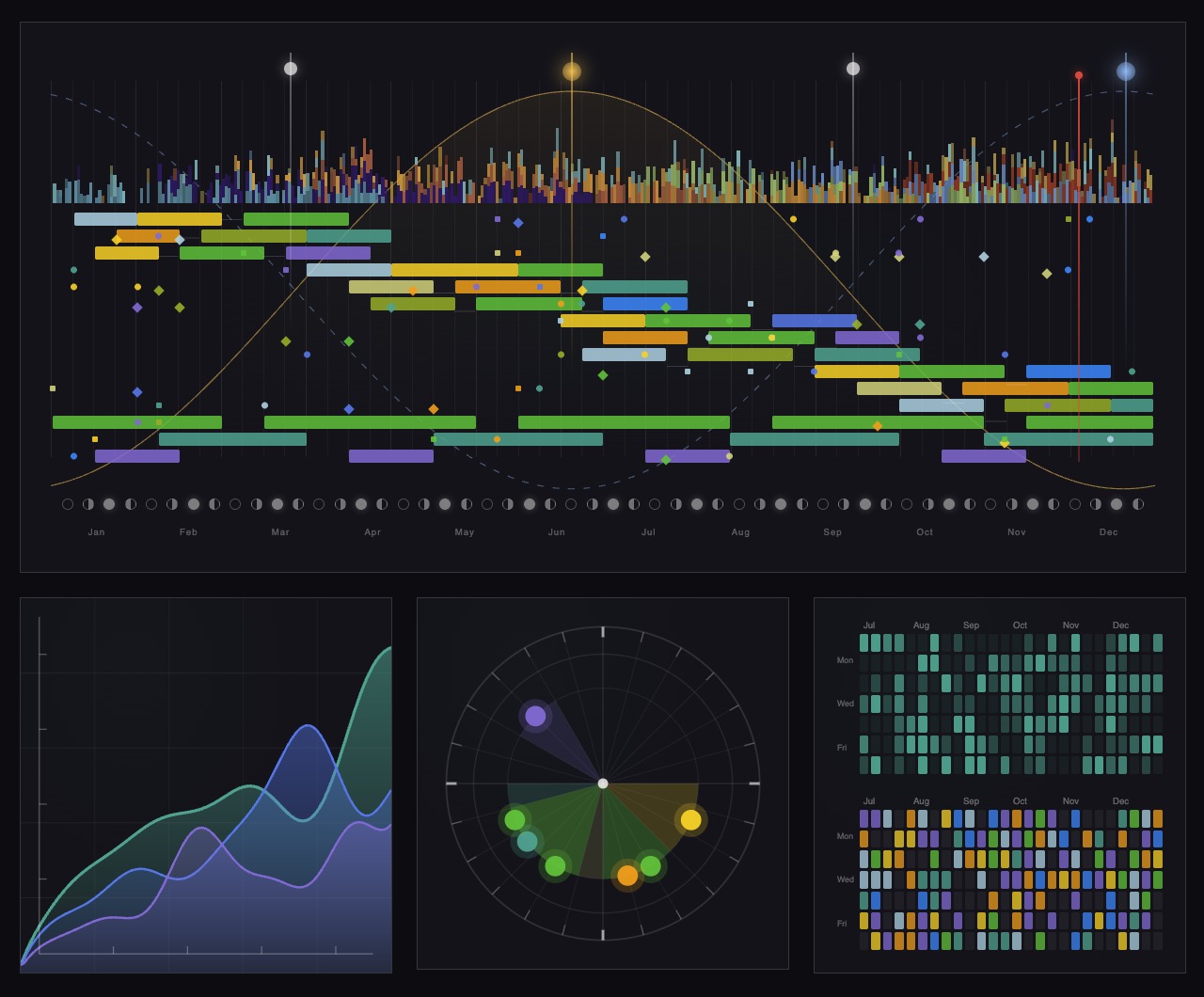
James also mentioned building data visualization tools that will launch this year, allowing practitioners to see their client ecosystem visually—understanding yearly patterns, client engagement levels, median versus highly committed participant behavior, and how these metrics change over time (26:01).
[technology="Collaboration Management Tools"]
The vision extends beyond immediate website needs to imagine how the practice might expand, potentially including guest teachers or assistants in specific areas of expertise (11:09). While not immediately planned, having infrastructure that could accommodate growth positions them well for future evolution. For now, the focus remains on better serving their combined client base and making their rare collaborative dynamic more visible and accessible.
James Redenbaugh
Kaya Mindlin
Michael
Kaya and Michael are exploring merging their professional digital presences under an umbrella brand while maintaining their individual identities (04:12). The conversation centered on whether to publicly "get married" professionally and what value that would bring to their practices. Kaya teaches courses and cohorts focused on yoga and Vedic wisdom, while Michael primarily conducts one-on-one Vedic astrology sessions (06:29). Despite their different approaches, they collaborate extensively behind the scenes, with Michael's astrological expertise informing much of Kaya's teaching content.
The proposed umbrella brand would be Sarva Rasa Institute, which translates to "all nectar" and creates the acronym SRI, meaning "the lustrous Divine Feminine mother of all" (21:12). This name already appears on some of Kaya's training certifications. The institute structure would allow each practitioner to maintain their individual offerings—Yoga with Kaya and Vedic Astrology with Michael—while presenting their collaborative work and shared philosophy.
Kaya noted that her students get very excited when they see the couple together, with Instagram posts featuring both of them generating significant engagement (43:46). Students often ask if Michael will appear in courses, and many express interest in what makes their partnership unique. This enthusiasm suggests untapped potential in highlighting their collaborative relationship more publicly.
Michael's website at jotishresolutions.com desperately needs updating, appearing dated despite having a solid client base (05:42). He uses Acuity [tag="acuity"] scheduling for appointments and has been with the platform since its early days, paying very little due to being an early adopter (25:48). His site currently displays as "Vedic Astrology with Michael" rather than the domain name (20:55). Despite the outdated appearance, Michael maintains a thriving practice with approximately 50-75 new clients annually and around 150-200 total client interactions per year, including returning clients (24:48).
Kaya's site, built on WordPress [tag="wordpress"], is more polished but also needs evolution to support growing offerings and improved user pathways (45:56). She manually curates course recommendations at the end of each program, suggesting 3-5 next steps for graduates, but recognizes this process could be automated and personalized (48:11).
The team discussed priority sequencing: Michael's site needs the most urgent refresh since Kaya is actively directing students there after completing programs on Vedic astrology topics (49:30). However, Kaya's site has the larger user base and higher immediate ROI potential (47:48). James suggested considering the umbrella site as the foundation, with individual sites evolving from that shared infrastructure rather than building separately.
One significant opportunity lies in merging their email lists and client databases (09:05). Michael rarely sends communications to his clients—perhaps a "Happy New Year" message occasionally—while Kaya maintains regular contact with her student base. A unified system would allow both practitioners to reach their combined audience at least twice annually with relevant updates.
James proposed centralizing administration through one CRM system, one enrollment process, and unified client pipelines (22:38). This would allow them to see their entire ecosystem: who's taking courses, who's booking sessions, and how people engage with both offerings. Currently, Kaya can track which students have taken multiple courses but has no visibility into who has also worked with Michael (24:22).
[technology="CRM System Templates"]
The merged system would give clients a single accounts page showing their complete journey—past sessions with Michael, courses completed with Kaya, and suggested next steps (23:47). This holistic view would help both practitioners make better recommendations and identify opportunities for deeper engagement.
A key initiative discussed was developing an intelligent quiz or assessment system to guide people to appropriate offerings (05:37). Kaya expressed enthusiasm for this, noting she just completed a two-part program and manually suggested next steps, wishing she could offer a personalized quiz to route students toward the most relevant of five potential courses (48:11).
[technology="Assessment Systems"]
James explained this could be implemented ethically without problematic AI applications (14:46). Rather than feeding charts to large language models for open-ended predictions, they could create precise algorithms that use Vedic astrology data to recommend specific courses. For example, the system could generate someone's chart using a Vedic astrology API, then recommend one of seven courses based on their predominant planet or one of twelve offerings based on their sun sign's house position (14:46).
Kaya emphasized the importance of maintaining human touch and authentic practice (13:53). She's hesitant to use AI for anything predictive or teaching-based, comparing it to eating healthy, organic food and avoiding chemicals. While she appreciates AI for practical functions like James's work, she wants to keep their spiritual and astrological guidance pure. James assured her that AI exists on a spectrum—it doesn't have to be agentic or involve unpredictable models. A simple algorithm acting like a "secretary at the front door" differs fundamentally from a guide advising on deep trauma (15:14).
Kaya is even contemplating being explicit on the website about how they don't use AI for certain functions, making it clear where they draw boundaries (16:26).
[technology="Intelligent Matching Algorithms"]
James proposed building the three sites—umbrella, Kaya's, and Michael's—as one integrated system even if they have multiple domains and brands (46:35). This would use similar structure across all three with a shared backend, making it easier to have courses appear simultaneously on different platforms in different ways.
For example, courses more appropriate for Michael's clientele could appear on his website with different framing than on Kaya's site, but draw from the same content and include students from both audiences (29:50). This addresses Kaya's concern about not alienating Michael's more mainstream clients—CEOs, chefs, actors, pilots—who might not identify with yoga culture but are interested in Vedic astrology (28:50). Michael is cautious about making his website look "too Indian" or limiting his appeal to yoga teachers, wanting to maintain accessibility to high-paying professionals from diverse backgrounds.
James discussed the automation systems his team is building, including post-meeting artifacts that generate transcripts, summaries, task lists, and visualizations (34:10). He demonstrated his weekly planner based on Vedic astrology and his personal chart, with each day having a different template and information about the corresponding planet (01:42). This circular, analog tool balances his linear computer workspace—a tangible example of integrating Vedic wisdom with practical tools.
[technology="Communication Automations"]
After client sessions, James suggested creating automated artifacts including transcripts, recordings, summaries, visualizations, and charts that could be emailed automatically and viewable on client profiles (37:38). Kaya shared an example from a client with a PhD in pathology who used Nano Banana to generate a visual map from her reading notes, finding it helpful to see information represented visually (32:27). James confirmed his system already uses Nano Banana to create post-meeting infographics that often exceed expectations (34:10).
Michael's clients often contact him years later saying something he predicted completely happened, but they had forgotten the specific prediction until it occurred (36:41). Kaya had a similar experience with her own astrologer who told her she'd marry a Vedic astrologer—she didn't remember this prediction until ten years later when it had come true (36:56). This highlights the value of creating visual maps, reminders, or key date notifications that help clients maintain connection with their readings over time (29:03).
James proposed building systems that create personalized artifacts after initial sessions to serve clients throughout the year, reducing the need for frequent follow-up sessions while maintaining engagement (28:17). These could include visual chart representations in personalized styles, key date reminders based on planetary transits, or synthesized insights from their readings presented in accessible formats.
Kaya has already begun gathering testimonials from 10-15 highly committed students who work consistently with both practitioners, asking them to write about the value of that dual engagement (44:57). Several responses have already arrived, which will provide insight for both the team and potential testimonial content for the new sites.
The conversation touched on balancing individual brand identities with collaborative presentation. Kaya's brand "Yoga with Kaya" parallels nicely with "Vedic Astrology with Michael" (21:07), creating symmetry while maintaining distinct focuses. The domain jotishresolutions.com reflects Michael's conceptual approach—the idea of "resolution" is central to his practice and something he constantly returns to in conversations with clients (20:31).
James suggested conducting a brand process around the umbrella identity, including naming exploration, though Sarva Rasa Institute provides a strong starting point (22:11). The "institute" framing allows each practice to function like colleges within a larger educational institution, giving structure and credibility while preserving autonomy.
What makes their partnership rare and valuable is that they're engaged in similar work from different perspectives, actively informing each other's practice (09:36). Kaya described it as almost hiding this unique dynamic, questioning why they wouldn't highlight it more publicly. The vision of sending an announcement saying "we're getting married" would certainly capture attention and communicate their professional union in memorable terms (10:01).
Kaya expressed the primary concern about not ostracizing or confusing Michael's clients who exist outside yoga and Vedic tradition circles (28:50). At least a third of his clients have no connection to yoga—they're professionals who received a recommendation for a Jyotish reading. The umbrella site needs to welcome these audiences while still honoring the deeper spiritual context of the work.
Investment concerns also arose around prioritizing where to allocate resources for maximum value (45:31). The quiz functionality seems valuable and could potentially live on the umbrella site, making that a logical starting point (46:06). However, the immediate need to refresh Michael's site before sending more students there from Kaya's programs suggests starting with his redesign (49:30).
James acknowledged needing time to reflect on the various puzzle pieces and optimal sequencing (48:11). The team will need to balance quick wins against longer-term infrastructure building, immediate revenue opportunities against strategic positioning, and individual brand evolution against collaborative identity development.
James will develop a proposal with multiple options exploring the umbrella brand concept and how it integrates with individual site redesigns (41:41). He's excited about the timing, as his team is building relevant technologies and has recently onboarded team members who would be well-suited to this project (52:09).
The conversation revealed enthusiasm for developing course recommendation systems that could work both for new visitors and as "what's next" guidance after program completion (48:11). Long-term, these could automatically account for what clients have already completed, making increasingly sophisticated suggestions without requiring manual question answering (49:58).
James also mentioned building data visualization tools that will launch this year, allowing practitioners to see their client ecosystem visually—understanding yearly patterns, client engagement levels, median versus highly committed participant behavior, and how these metrics change over time (26:01).
[technology="Collaboration Management Tools"]
The vision extends beyond immediate website needs to imagine how the practice might expand, potentially including guest teachers or assistants in specific areas of expertise (11:09). While not immediately planned, having infrastructure that could accommodate growth positions them well for future evolution. For now, the focus remains on better serving their combined client base and making their rare collaborative dynamic more visible and accessible.
James Redenbaugh
Kaya Mindlin
Michael
Create proposal with multiple options for umbrella brand and website integration strategy
February 7, 2026
Develop comprehensive proposal exploring Sarva Rasa Institute umbrella brand concept and how it integrates with individual site redesigns (Michael's jotishresolutions.com and Kaya's existing site). Include multiple options balancing quick wins against longer-term infrastructure building, immediate revenue opportunities against strategic positioning, individual brand evolution against collaborative identity development. Consider sequencing of umbrella site, Michael's site, and Kaya's site. Discussed at 41:41 and 48:11.
Develop prototype quiz system for course recommendations and client pathway guidance
February 28, 2026
Build prototype intelligent quiz/assessment system to guide people to appropriate offerings. Should work for both new visitors and as 'what's next' guidance after program completion. Use ethical AI implementation with precise algorithms based on Vedic astrology data (chart generation via API, recommendations based on predominant planets or house positions of 5-12 course options). System should act as 'secretary at the front door' without problematic predictive AI. Could potentially live on umbrella site. Reference Kaya's manual process of suggesting 3-5 next steps after program completion. Discussed at 05:37, 14:46, 45:31, 48:11.
Build data visualization tools for client ecosystem tracking and engagement analysis
June 15, 2026
Develop visualization dashboard showing client ecosystem patterns - yearly trends, engagement levels, median versus highly committed participants, metric changes over time. Should provide insights for both Michael's astrology practice (50-75 new clients/year, 150-200 total interactions) and Kaya's course platform. Help identify opportunities for deeper engagement and improved recommendations. Mentioned at 26:01 as launching this year.
Continue gathering testimonials from joint clients about value of working with both practitioners
February 15, 2026
Compile testimonials from 10-15 highly committed students who work consistently with both Kaya and Michael. Ask them to write about the value of that dual engagement. Several responses have already arrived. Will provide insight for team and potential testimonial content for new sites. Discussed at 44:57.
Review and provide feedback on quiz prototype concepts
March 7, 2026
Review prototype quiz/assessment system concepts from James. Provide feedback based on manual course recommendation experience - currently suggesting 3-5 next steps after program completion. Consider how system could automatically account for what clients have already completed and make increasingly sophisticated suggestions. Ensure ethical AI boundaries are maintained per conversation about keeping spiritual/astrological guidance pure (13:53). Discussed at 45:31 and 48:11.
Share examples of current manual course recommendation process for automation reference
February 21, 2026
Document and share current manual process for suggesting course pathways after program completion. Include examples of the 3-5 next steps typically recommended to graduates and the reasoning behind suggestions. This will inform the automated recommendation system design. Reference wish expressed at 48:11 for personalized quiz to route students toward most relevant of five potential courses after completing two-part program.
Complete migration from WordPress to Webflow with Airtable backend and WhaleSync integration. Consolidates 20-30 WordPress plugins into native functionality. Includes: Webflow demo build demonstrating course/lesson/topic structure, course content audit (66 courses), project documentation hub, three-tier content structure (course/lesson/topic), intelligent content relationships, status-based archival system, unified CRM tracking, and membership billing transition strategy ensuring existing MemberPress/Stripe subscriptions continue uninterrupted while new subscriptions use Webflow system. Foundation for integrated three-site system (umbrella, Kaya's, Michael's) with shared backend architecture.
AI-powered questionnaire and recommendation system for personalized course recommendations based on completed courses and user profiles, intelligent study buddy matching, personalized journey maps for 'what should I do next' guidance, and strategic content promotion. Uses ethical AI implementation with precise algorithms based on Vedic astrology data (chart generation via API, recommendations based on predominant planets or house positions) rather than unpredictable generative models. System acts as 'secretary at the front door' routing users to appropriate offerings from 5-12 course options. Could potentially live on umbrella site and serve all three platforms. Technologies: Claude AI, n8n automation, Airtable.
Develop umbrella brand identity and digital presence for Sarva Rasa Institute (SRI - 'all nectar' / 'lustrous Divine Feminine mother of all') integrating Yoga with Kaya and Vedic Astrology with Michael under unified professional presence. Includes: brand identity development and naming exploration, umbrella website architecture serving as foundation for individual sites, unified CRM system for merged client databases and email lists, single enrollment process and client pipelines, integrated accounts page showing complete client journey across both practices, data visualization dashboard for combined ecosystem tracking. Maintains individual brand identities while highlighting rare collaborative dynamic where both practitioners actively inform each other's work. Balances accessibility for Michael's mainstream professional clients (CEOs, chefs, actors, pilots) with deeper spiritual context. Discussed extensively 04:12-22:38.
Redesign jotishresolutions.com (Vedic Astrology with Michael) from outdated current state to modern, professional presence that maintains accessibility to diverse client base including high-paying professionals outside yoga/Vedic tradition circles. Current site displays as 'Vedic Astrology with Michael' rather than domain name. Serves 50-75 new clients annually plus 150-200 total interactions. Integrates with Acuity scheduling system (early adopter account). Will be built as part of integrated three-site system with shared backend infrastructure while maintaining distinct brand identity. Priority driven by immediate need before Kaya directs more students to Michael's site after completing Vedic astrology programs. Discussed 05:42, 20:31-25:48, 28:50, 49:30.
Automated post-session artifact generation system creating personalized materials for long-term client engagement. Generates transcripts, recordings, summaries, visual chart representations using Nano Banana, key date reminders based on planetary transits, and synthesized insights in accessible formats. Addresses pattern where clients contact years later about forgotten predictions that came true (discussed 36:41). Materials automatically emailed and viewable on client profile pages. Serves clients throughout the year reducing need for frequent follow-up sessions while maintaining engagement. Builds on existing meeting artifact automation James demonstrated at 34:10. Technologies: n8n, Nano Banana, Airtable, Webflow.
Merge email lists and client databases from Kaya's and Michael's separate practices into unified system allowing visibility across entire ecosystem. Centralizes administration through one CRM system, one enrollment process, unified client pipelines. Tracks who's taking courses, who's booking sessions, how people engage with both offerings. Creates single accounts page showing complete client journey - past sessions with Michael, courses completed with Kaya, suggested next steps. Enables twice-annual communications to combined audience. Currently Kaya can track students across her courses but has no visibility into who also works with Michael (discussed 24:22). Technologies: Airtable, Whalesync, n8n.
Build data visualization tools allowing practitioners to see client ecosystem visually - yearly patterns, client engagement levels, median versus highly committed participant behavior, how metrics change over time. Provides insights for both Michael's astrology practice and Kaya's course platform. Helps identify opportunities for deeper engagement and better recommendations. Part of broader collaboration management tools being developed by team. Mentioned at 26:01 as launching this year.
00:00:01
James Redenbaugh: How are you?
00:00:03
Kaya Mindlin: Pretty good.
00:00:05
James Redenbaugh: I've.
00:00:06
Kaya Mindlin: This meeting is being recorded.
00:00:09
James Redenbaugh: I've got two computers now, and I realize my camera's over here, but my screen is over here, so you got.
00:00:15
Kaya Mindlin: To put them next to each other.
00:00:17
James Redenbaugh: Yeah.
00:00:19
Kaya Mindlin: Well, you can move the camera. Is it a. Is it a non attack. Is it a non attached camera?
00:00:25
James Redenbaugh: It is. Yeah.
00:00:26
Kaya Mindlin: That's.
00:00:28
James Redenbaugh: It's just like a clip.
00:00:31
Kaya Mindlin: Like, does it clip to your.
00:00:33
James Redenbaugh: No, it's a big, mirrorless slr.
00:00:37
Kaya Mindlin: Michael's gonna join us, too. He's just making some tea. Great.
00:00:43
James Redenbaugh: Put this here.
00:00:46
Kaya Mindlin: Join. Yo.
00:00:52
James Redenbaugh: Hey.
00:00:53
Kaya Mindlin: How's it going?
00:00:54
James Redenbaugh: Long time no see. Now we have the opposite problem.
00:00:57
Kaya Mindlin: Earphone commercial or something? Or headphones.
00:01:00
James Redenbaugh: Yeah.
00:01:05
Kaya Mindlin: Is this your beloved in the background?
00:01:08
James Redenbaugh: Yeah. There she is. Blurry. Blurry as can be.
00:01:12
Kaya Mindlin: Very blurry.
00:01:15
James Redenbaugh: Good to see you guys. How's your year going so far?
00:01:21
Kaya Mindlin: Going good. Yeah. Mellow and busy. Yeah. Yeah, we're mellow. Life is busy. Yeah.
00:01:27
James Redenbaugh: Awesome. Awesome. Check this out. Last week, I built something I've been envisioning for a while. My camera's over here, so I can point to it.
00:01:40
Kaya Mindlin: Whoa. What is this?
00:01:42
James Redenbaugh: On my flywheel, I designed a. A weekly planner based on Vedic astrology and my chart. And so each day has a different template and some information about the significance of the day and the corresponding planet. And I can just rotate through my week, get reminded of different things.
00:02:14
Kaya Mindlin: Amazing.
00:02:15
James Redenbaugh: And stay aligned. Yeah.
00:02:19
Kaya Mindlin: And is it specific to you? Like, it's based on your chart?
00:02:24
James Redenbaugh: Yep. Well, supposed to be. Well, it's like, you know, I've learned, thanks to somebody on this call, about the significance of each day and the corresponding planets. And so there's some. Some universal stuff, but then there's stuff for my own chart and. And eight sheets fit perfectly on this flywheel that I have over here.
00:02:53
Kaya Mindlin: So I have Lazy. We need, like, a Sanskrit name instead of Susan. A. Lazy.
00:02:57
James Redenbaugh: Yeah, Lazy. Priyanka.
00:03:03
Kaya Mindlin: Priyanka.
00:03:04
James Redenbaugh: Yeah.
00:03:04
Kaya Mindlin: Because it's a chakra. It's around.
00:03:07
James Redenbaugh: And so the. The eighth sheet is Moksha, or like the north and South Node or the non planet. So it's helping me get back in line. And it's like half my desk is long, linear, and full of computer screens and multiple computers. And so it balances out because the other side is circular and analog. And.
00:03:36
Kaya Mindlin: Yeah, you definitely need to get, like, a feminine name. You have to give it a female name.
00:03:41
James Redenbaugh: Yeah. Yeah.
00:03:47
Kaya Mindlin: Nice.
00:03:49
James Redenbaugh: So, yeah, I. I just. I felt inspired last week and built that and printed those out. Now I have to get in the habit of actually using them, looking at it. So what brings us here today? I presume you guys want to talk about what you shared in your email.
00:04:12
Kaya Mindlin: Yeah. So one, the notion of like should we get married professionally in a public, in a public way like that joins us and, and really like what would be the value? Like I'm kind of on the fence. I had this vision of doing it and then I was sort of like, well, what would be the value of it? Is it worth the investment? Like why, why do that? So I'm not actually like maybe we could have that conversation with you and potentially tied to that. I still really love. I mean there's the bigger picture of maybe my website needs to change and move and all of that, which is like a huge ordeal in my mind anyway. But also like little bits like I love, I still love that idea of the quiz for people when they land on my site or if we marry. Yeah, that goes there. Because then it could also include, I mean it would either way but like that it would even include maybe what you really want is a Joe Touch consult right now. Yeah. So the quiz and the, the concept and the value of the concept of us having like one website that maybe then splits off into our separate websites but is kind of a landing pad.
00:05:36
James Redenbaugh: Awesome. Wonderful.
00:05:37
Kaya Mindlin: Whatever idea you have around the concept.
00:05:42
James Redenbaugh: I think it's a great idea to join forces. Michael, I've felt for a long time like your digital presence could, could do with some evolution. But you, you, I mean, you seem to be fully booked all the time regardless.
00:06:01
Kaya Mindlin: You're like. My Vedic astrologer. Who isn't Michael, because we're married. I have worked with him for 24 years or something. I don't even know what he looks like. He doesn't have a website. He doesn't.
00:06:16
James Redenbaugh: Oh my God.
00:06:17
Kaya Mindlin: I have, I've talked to him for my whole adult life pretty much and I have no idea even what he looks like. It's so funny. And he's super booked. He's so old school.
00:06:27
James Redenbaugh: Awesome.
00:06:29
Kaya Mindlin: Michael needs a, he needs a little facelift in the online presence for sure. Either way.
00:06:34
James Redenbaugh: Yeah. And you know, from what I understand, Kaya, your, your main offering are these, these courses and committed cohorts and teachings that you're putting online. And Michael, your, your main offering is sessions and one on one teaching and you know, chart crafting. And are you looking to do more courses as well or other kinds of content? Is that an idea in the field?
00:07:14
Kaya Mindlin: Possibly. Yeah, yeah, that's an option, I think. Yeah. Also with kind of the us because we already are. I mean, united. But there's a lot behind the scenes that goes into our work, that we're. Collaborating a lot behind the scenes. She's just. She's the face. So, like, I'm even teaching Jyotish stuff. But we're collaborating behind the scenes to put that content together. Doing Jotish forecast. But it's basically him, like, downloading his brain into mine and then I move it out through my own. So, yeah. And the students of those programs know that he's behind the scenes. I now have his, like, photo and bio on my website. And in those courses, I have, like, a note from both of us. And. And I recommend sessions with him in those programs. And so they know that there's crossover, but it's also kind of. It's kind of more once they're in the gate, that they know that. And then Michael's clients. He has many clients that have no idea what I do, which is fine. But some of them would maybe benefit from the karma course or the. The monthly Josh forecast, or, you know, there could be more. The other.
00:08:37
James Redenbaugh: What?
00:08:37
Kaya Mindlin: Part of what made me think of it is that Michael never sends emails out, obviously, because you would be on the list. Like, he used to be like, happy New Year. Like, he has zero communication. And I was like, it would be nice if we had one site and then could merge our email list as well. And then maybe at least like twice a year they could hear from both of us. Like, it is nice to hear something from your Vedic astrologer from time to time.
00:09:05
James Redenbaugh: Yeah. Yeah. Wonderful. And it's. I feel more. More power and value coming from the space between you both than either of you alone, because you're such an awesome power couple and you're engaged in such similar work, but also coming to it from different perspectives and obviously informing each other.
00:09:36
Kaya Mindlin: Yeah. I mean, that's the other thing. I think what. It's. What we have going on here is so rare. It's sort of like we're hiding it. Like, it's kind of like, why? Why not? And I had this vision of. I told Michael. I had this vision of, like, sending out an email that says, like, we're getting married. And then people scratching their head, like, what?
00:10:01
James Redenbaugh: Yeah, yeah, that's a great. It'll get people's attention.
00:10:04
Kaya Mindlin: Totally.
00:10:07
James Redenbaugh: Yeah. When you started this call with that, it's like, oh, I'm a marriage consultant now.
00:10:11
Kaya Mindlin: I know, totally. Maybe the background.
00:10:13
James Redenbaugh: You were married.
00:10:14
Kaya Mindlin: Like, you getting married. Because I was all kind of like, yeah, yeah, yeah.
00:10:19
James Redenbaugh: Oh, awesome. And I think if we did create a merged presence, there's also still plenty of opportunity for each of you to have your own pillar, you know, and. And personal brands. And have you also thought about down the road, do you see this work expanding beyond yourselves or even like, what. What will happen when you retire? And I hope you guys aren't close to that. But, like, what have you thought about that?
00:11:09
Kaya Mindlin: I haven't personally. I mean, from time to time I'm like. I mean, I do have in one of my programs, like, some of my students that will come in as like a guest teacher who have an area of expertise that's like, related. And from time to time I've been like. And I've trained some people in little aspects of what I do. And obviously Michael, like, teaches some people Jotish. But yeah, we're not at the. I mean, there's maybe a potential where it would be like. And if there's no room in Michael's calendar. But, like, it's like, we don't rec. There's hardly. I can't recommend anyone else for Joe Tush. Like, there's a lot of bad Joe just out there. So, yeah, we're not there yet, but maybe it could have some wings that include other people. But yeah, not for now. That's not in the near future.
00:12:00
James Redenbaugh: Michael, we gotta start doing lessons again. I've been meaning to get a lot of requests.
00:12:07
Kaya Mindlin: Gets a lot of people asking him to teach and then he's like, should he used to do small courses from time to time and just hasn't in a long time. Yeah, yeah, let's do it. Let's go.
00:12:19
James Redenbaugh: Awesome. And in the space between your work, there's also opportunities. You know, speaking about the. The quizzes and the assessments, if we can bring Joytush into that in some way, we can even automate recommendations based on people's charts or life stages and tailor messaging to, you know, where they are in any particular cycle that makes sense to. To look at and not only make manual suggestions with people you're working with directly. Oh, you should really look at this course that Kaya's doing. But even let people answer questions about their life or even input their charts and get recommendations based on that.
00:13:25
Kaya Mindlin: I mean, I think we're maybe I'm speaking for, but we're definitely, like, hesitant to do anything that's like, use AI to do anything that's like, predictive or teaching based at this point. We know it's out there, but like, just like, we don't eat Junk food. We're trying to like, I appreciate it for what you do, but for what we do, we're trying to keep it pure.
00:13:53
James Redenbaugh: Yeah.
00:13:54
Kaya Mindlin: But definitely I'm, you know, open to the value of like using an AI based system them to like automate suggestions for people and pathways for people. But then we really still want that. We want to retain that human touch for anything.
00:14:10
James Redenbaugh: Yeah.
00:14:11
Kaya Mindlin: Or predicting or advising. Yeah.
00:14:16
James Redenbaugh: It doesn't. AI is a spectrum, you know, and it doesn't have to be agentic, it doesn't have to involve a model at all. We could create a system, for example, that uses a Vedic astrology API to generate somebody's chart and then recommend one of seven courses based on their predominant planet.
00:14:45
Kaya Mindlin: Interesting.
00:14:46
James Redenbaugh: Or something like that. One of 12 things based on the house of their sun sign or something like that and say that. So it's not like just feeding a chart to Claude and saying like, hey, what do you recommend for this person? And then getting back who knows what, but actually having precise control over what's getting recommended.
00:15:10
Kaya Mindlin: Very excited about that. Like, oh, they're using my chart to tell me which course to take. That's cool. Yeah, I can see people being super about that idea.
00:15:19
James Redenbaugh: Yeah, yeah. And then, You know, it's, it's like we want to eat healthy organic food and we want to cut out chemicals and sometimes chemicals are helpful if it's the right, you know, if we understand the chemical and, and what it is. And so there's ways to like a simple quiz form can use a simple algorithm that has some agentic response that's pre programmed with a set of courses so people can ask a question and get a response back. That's just like a secretary at the front door that they can interact with, not a guide who's going to advise them on their deepest trauma.
00:16:14
Kaya Mindlin: That's why I'm even open to it at all. Like as long as we're clear about what we're willing to use it for and what we're not.
00:16:22
James Redenbaugh: Yeah.
00:16:22
Kaya Mindlin: I actually have really been contemplating.
00:16:26
James Redenbaugh: Being.
00:16:26
Kaya Mindlin: More forthcoming even like on the website itself about how we don't use AI for certain things, like kind of openly saying we're not doing that, just clear because there's so much of it out there. But I am willing to use it for like these kind of practical based, functional. Yeah. Things where they want to.
00:16:52
James Redenbaugh: Yeah, awesome, awesome. Yeah. We're developing our own ethos too of how we use it as a team because it's a very helpful and powerful tool and there's some Things we don't want to do. Like I don't want to generate images of nature using AI because it's like that's really messed up. It's so much beautiful nature. But I'm happy using AI to generate like some futuristic architectural image or some human thing because it's a human, a human tool.
00:17:33
Kaya Mindlin: Yeah, yeah, totally.
00:17:38
James Redenbaugh: So things like that. Yeah, we want to find ways to be ethical with it. And there's also certain companies will, will use, you know, their models and others we don't. And I'm even doing experiments running local models on my own machine so I can really see what are the inputs and outputs and how much energy is it using and you know, what's actually happening behind the scenes.
00:18:02
Kaya Mindlin: Yeah.
00:18:04
James Redenbaugh: But yeah, coming back to the, the global intention of your marriage, I think that there's a lot of, a lot of potential there and I think it could coincide well with the upgrades we've been talking about making on the Yoga with Kaya site. If we migrate that to a more future ready platform would be really easy to have that exist symbiotically with an umbrella identity. And people can continue to interface with yoga with Kaya, but also have this, this bigger context. And then you know, you'll prototype it and you'll get beta testers and get feedback and see like maybe it'll make sense to expand the brand identity altogether or to maintain your individual identities that can reveal itself over time.
00:19:22
Kaya Mindlin: Okay.
00:19:30
James Redenbaugh: Michael, remind me what, what your brand name is even.
00:19:40
Kaya Mindlin: It's Jyotish Resolution.
00:19:44
James Redenbaugh: That's right.
00:19:45
Kaya Mindlin: That's name actually.
00:19:50
James Redenbaugh: And so, and how are you feeling about that, that brand in general?
00:19:57
Kaya Mindlin: Good question. I mean it's not broken. Definitely could use a new website. But like what do you think about the name? Oh the name, it's cumbersome for sure. But it's the concept of it is I think is just such a. I mean I, I literally, I mean talking to people like I kind of return. To it constantly, the notion of resolution in general.
00:20:31
James Redenbaugh: Yeah.
00:20:34
Kaya Mindlin: Was it Jotish with Michael before? I feel like the first website was Jotish with Michael or maybe like your email. No, I think it was Joe. I think we always used Joe Dish.
00:20:46
James Redenbaugh: Well, if you go to the website jotishresolutions.com is the URL, but you don't actually see that on the site. It's Vedic astrology with Michael.
00:20:55
Kaya Mindlin: That's true. Oh, that's what it was. That's what it was.
00:21:02
James Redenbaugh: Which is a nice balance between Yoga with Kaya, Vedic astrology with Michael.
00:21:07
Kaya Mindlin: Totally.
00:21:08
James Redenbaugh: And have you thought about what an umbrella brand could be called?
00:21:12
Kaya Mindlin: Well, we have. We do have like a incorporation. We have a business name already together. I couldn't really get an ideal. It's umbersome as a URL. The name of the business is Sarva Rasa Institute, which means like all nectar and sri, when you put out the initials, SRI means like the lustrous Divine Feminine mother of all. So Sarvarasa Institute is the. And on some of my certifications that I give to students who graduate, like training programs, they will get. It comes from Sarvarasa Institute, actually.
00:22:02
James Redenbaugh: Yeah.
00:22:03
Kaya Mindlin: So maybe something related to that. I don't know. We're open.
00:22:11
James Redenbaugh: Interesting. Yeah. I mean, I'd love to do a brand process around it, including the name to see what. What could make the most sense for you guys. I love the idea of it being and institute and each of your personal practices teachings could be like colleges in that.
00:22:38
Kaya Mindlin: Right. Institute and like yoga with Kaya and Vedic astrology with Michael within. Yeah, totally. Yeah.
00:22:47
James Redenbaugh: And practically it could be helpful to centralize administration so you have kind of one CRM, one enrollment process, one pipeline, even with people coming into it from different places.
00:23:15
Kaya Mindlin: Right.
00:23:16
James Redenbaugh: In different ways. So you could see everybody in your ecosystem and what are they doing and what could they benefit from, whether they're doing Vedic astrology or yoga or both.
00:23:34
Kaya Mindlin: Yeah.
00:23:35
James Redenbaugh: And yeah, signing up for. For sessions could be handled in the same system as signing up for courses.
00:23:47
Kaya Mindlin: Yeah.
00:23:49
James Redenbaugh: And they could have one. Accounts page where they can see what, you know, what have they signed up for? When was my last session with Michael, you know, what courses did I do over these years?
00:24:06
Kaya Mindlin: And we can see that's very useful for me on the back end. I was just doing it, like how many people in this course have just studied with me for the first time? How many people are. Have also done this program? Like, it's nice on the back end to see. Yeah. People are doing.
00:24:22
James Redenbaugh: Yeah.
00:24:24
Kaya Mindlin: And I can't say how much of them have had sessions with Michael.
00:24:27
James Redenbaugh: Yeah, no, yeah, but that would be helpful too.
00:24:31
Kaya Mindlin: That would be cool. Totally.
00:24:32
James Redenbaugh: Out for the half. Michael, about how many, how many different people do you work with a year? Let's say year.
00:24:48
Kaya Mindlin: Maybe. How many new clients do you see a week? Anywhere a week? 150, I would guess 200. There's. There's a 100% difference because I would. Say you have like at least 50 new clients a year, probably 75. And then maybe. And then a lot of people that are coming like a couple times a year. Yeah. So, yeah.
00:25:21
James Redenbaugh: Yeah. And I'm sure some people that, like, don't even see every year, but see you once in a. Once in a while and.
00:25:30
Kaya Mindlin: Yeah.
00:25:31
James Redenbaugh: Do you have a CRM with all your contacts? I'm sure you have a newsletter list.
00:25:39
Kaya Mindlin: Oh, the CRM would be in your scheduler system. Yeah, yeah.
00:25:46
James Redenbaugh: And what, what system is that?
00:25:48
Kaya Mindlin: Acuity, like the first one.
00:25:53
James Redenbaugh: Classic.
00:25:54
Kaya Mindlin: The classic. We pay so little. We pay like nothing for it because we were like early adopters.
00:26:01
James Redenbaugh: Yeah.
00:26:03
Kaya Mindlin: Yeah.
00:26:05
James Redenbaugh: Excellent. Yeah. It'd be great to like, look at those numbers, put them up on the board, see, see what they're like. We're building more and more tools for all of these things that we're talking about, including data visualization is going to come online this year to take your CRM and make it visual for you to see. What does my year look like? You know, what is, what do my clients look like? How are they coming in and out of the system? You know, what am I, my most committed people look like visually? How are they engaging? And what does the median kind of average person engagement look like? And then how can that change over time? Things like that? And I think there's a lot of opportunity between, you know, even though obviously Kaya is working with a lot more people, you're working a lot, generally a lot more deeply with them and really getting, getting to know them. So you have the, the breadth and the depth. And when all the students can benefit from each of your teachings, you know, the committed yoga practitioners, you know, I'm sure lots of them end up doing sessions, but if, if a lot more could do it, that would, that would be great. We have to figure out how to clone you to, to, to make more time.
00:27:52
Kaya Mindlin: Yeah, that's the thing with one on one work. Yeah, yeah, yeah.
00:28:00
James Redenbaugh: But I'd love to also help you. You know, also, I'm still so curious to be learning for myself about these systems. And I've kept doing my own research, but there's so much to learn and what kind of things.
00:28:17
Kaya Mindlin: Sorry, go ahead, go ahead.
00:28:18
James Redenbaugh: I was just gonna say I'd love to have longer conversations about what kind of things could be made for a client after an initial session that could serve them throughout the year. So it's less important to have like.
00:28:33
Kaya Mindlin: Reminders or like key dates. I had to show you this thing one second. While he's doing that. The one thing to like, keep in mind is like, I never want to like ostracize or confuse Michael's clients who are way out. I mean, they're not that outside because they're getting a Jewish reading. But like, he certainly has, I don't know, at least a third of his clients that are like nothing to do with yoga or the vedic tradition. They're CEOs or chefs or actors or you know, pilots. But someone recommended that they get a jota. Sh reading or they recommend, you know, so that's one sort of like hesitation is like Michael's actually pretty cautious about not making his website look too Indian or too, you know, he doesn't want to like turn off people that are like regular people, often with high paying careers. Like, you know, you don't want all your clientele to be like poor yoga teachers. All those conversations. You don't want to talk to yoga teachers all the time, that's for sure. Anyway, it's just one like thing to note.
00:29:50
James Redenbaugh: Yeah. Well, another possibility with our system is courses and content can appear simultaneously on different platforms in different ways. So there might be a set of courses that are more appropriate for Michael's clientele that we can put on his website that you're also running on yours. But on Michael's site they look, they look different. It can be the same content but like the way it's framed. And then, you know, for them, they're experiencing it on Michael's site, but they're with students that are, that are coming, you know, that are also experiencing it through yoga with Kaya. And that could be a nice way in, you know. And over time, as you get more interest, you can tailor courses specifically for that clientele and it'll be easier for Michael to make recommendations about, about what people should, should sign up for, you know, live courses. But also, you know, I think the, the evergreen stuff is going to be helpful for those kind of people to integrate what they, what they learn in the, in the readings. And if they're, if they're coming to you, there's some little door that's opening. So what, you know, what can be fed to them to help them go a little, a little deeper once, I mean, one step at a time.
00:31:32
Kaya Mindlin: To him, I'm like, they are getting a Vedic astrology reading. You can have an Indian painting on your website right there like Vedic. Oh, I, I have this client who's, she's, she's been working, I mean she's a, she has a PhD in pathology and such, but she's been kind of going deep like studying AI and trying to work AI models to kind of go into companies with speech pathology. And I did a reading for Her. And she did this really cool. She took her notes and she fed it into called Nano Banana. I don't know if you heard that model before, but it's so cool if you can see it. But it's like all the notes. Let me see if I can I get it to focus.
00:32:27
James Redenbaugh: Let me change the speaker view. Sorry. Huh?
00:32:31
Kaya Mindlin: Oh, yeah, yeah, it is focusing. You just keep moving it right before. Right.
00:32:38
James Redenbaugh: No, you can sit. You can text it to me.
00:32:41
Kaya Mindlin: Oh, wait, there it is.
00:32:42
James Redenbaugh: Oh, no, there it is. Yeah, yeah, yeah.
00:32:44
Kaya Mindlin: Took her notes and then fed it in her notes from her reading and then generated a visual.
00:32:50
James Redenbaugh: Yeah.
00:32:50
Kaya Mindlin: And she's like, it's so helpful to just kind of see that.
00:32:54
James Redenbaugh: Which.
00:32:55
Kaya Mindlin: That could be something that, like, you know, like. Yeah. If you have like a visual map. Like right now, because there's. There's notes. Like the. Hey, Fireflies thing. If it could say, like, if it could produce down the. Oh, it.
00:33:08
James Redenbaugh: It's responding to you. Sorry, never mind. Fireflies. I didn't even. I didn't even realize that it did that.
00:33:18
Kaya Mindlin: That could be something that gets sent to people.
00:33:20
James Redenbaugh: I'm here and ready to help. What can I do for you with this meeting? All right, never mind. That's okay. Fireflies. Sorry, Michael, I'm. Yeah, I'm one step ahead of you. Actually, after this call, you'll get a. An artifact. I. I just have to push one button and I have this automation that will take the transcript from this meeting. And among other things, it uses Nano Banana to create an image based on the meeting. And they. They blow me away. Like, I was using some other image models before that to do it. But the Nano Banana ones are amazing. Like, it'll make these infographics after a meeting that end up being really helpful.
00:34:09
Kaya Mindlin: Yeah.
00:34:10
James Redenbaugh: So, yeah, we can build that into. Into all kinds of things.
00:34:14
Kaya Mindlin: Yeah.
00:34:15
James Redenbaugh: And it's.
00:34:16
Kaya Mindlin: It.
00:34:16
James Redenbaugh: They're just getting more powerful too. It's pretty crazy.
00:34:20
Kaya Mindlin: Yeah.
00:34:21
James Redenbaugh: But yeah, now our system, after these meetings, these artifacts are generated. It will generate a task list. It'll create initiatives. It'll update existing initiatives. And then we also have these global engagement pages where we can look at all past meetings and timelines of things that we're working on. And it's pretty cool. It's getting smarter and smarter. So I'll share that with you. The call.
00:34:50
Kaya Mindlin: Yeah, that's cool. Yeah. But I just. I see that she's like, this is something I was playing with and I fed in our reading, and this is what it's spit out. Like, it's Pretty amazing.
00:35:03
James Redenbaugh: Yeah. And we could even build a system that will take a chart and can even use existing images that we feed in if we want it to match a particular style. And we can say, take this SVG of this chart and recreate it in this style, you know, with these images based on this person. And they can have a beautiful personalized representation of their. Of their chart and see their planets and everything.
00:35:41
Kaya Mindlin: Yeah, that's neat.
00:35:45
James Redenbaugh: Mine is. I didn't. I didn't do this with AI, but I could. It's pretty. Is pretty light, but I have my chart in there with the planets in their positions. Nice.
00:36:01
Kaya Mindlin: Just for, like, maintaining people's, like, their relationship with them and sustaining them by having something that's, like, visual in nature. Michael also gets a lot of, like. It'll be like, you know, he'll hear from someone years later, and they'll be like, that thing that you said was going to happen totally happened. He's like, oh, that would have been nice to. It's like people forget after a reading if they don't have notes or a map or something. Told them something, and then it completely happens. And then at some point they're like, oh. I mean, it even happened to me that my Vedic astrologer told me that my husband was going to be a Vedic astrologer. And I didn't until, like, 10 years later. I was like, wait a minute.
00:36:56
James Redenbaugh: Maybe. Maybe he was just hitting on you.
00:37:01
Kaya Mindlin: We were already together. He was like. He was like, Michael, specifically, it's going to be.
00:37:14
James Redenbaugh: Yeah. We could even create for you this system that I have where after your sessions, these artifacts are automatically created with a transcript of the call and the recording and the summary and a visualization and their chart. You know, anything. And it's. It can be automatically emailed to them and viewable on their profile. If they log in, they can see their past sessions.
00:37:38
Kaya Mindlin: Wow, that's cool.
00:37:39
James Redenbaugh: Yeah. And, you know, I don't know if you want to support that or not, but they can take it the URL and bring that to their chatbot that they like to talk to and ask questions about, you know, can you help me integrate this, you know, or whatever?
00:37:59
Kaya Mindlin: Yeah.
00:38:00
James Redenbaugh: Or we can prevent that for it to not be read by AI.
00:38:07
Kaya Mindlin: Right, right, right. That's kind of cool.
00:38:08
James Redenbaugh: I like that. Yeah.
00:38:13
Kaya Mindlin: A little rebellious. Come on.
00:38:15
James Redenbaugh: Yeah, yeah, yeah, yeah.
00:38:21
Kaya Mindlin: So I don't see any of the kittens. I guess, like, we want to see the babies.
00:38:28
James Redenbaugh: I'll get one.
00:38:39
Kaya Mindlin: It'd be kind of cool to have, like, a Generated, like, reminders or map. Some, like, takeaway. Yeah. I almost think you could, like. Oh, my God, look at that. They're, like, sleepy. Hello.
00:38:56
James Redenbaugh: They're so cute. I just here disrupted their slumber.
00:39:00
Kaya Mindlin: Yeah, they're just like little, like worms right now. Floppy worms.
00:39:06
James Redenbaugh: They're. They're four months old. This is Juniper Ray. She's so pretty. And that's Willow.
00:39:16
Kaya Mindlin: We have J babies. And what's this one?
00:39:18
James Redenbaugh: Willow. And we've got Maple running around somewhere. They're all trees. They're all.
00:39:27
Kaya Mindlin: That's cool. Yeah, that's right.
00:39:29
James Redenbaugh: Yeah. And they follow Emily around all day when they do Mommy. Yeah. She's their favorite. We love them so much. They're our whole world now.
00:39:44
Kaya Mindlin: So cute.
00:39:45
James Redenbaugh: Yeah.
00:39:48
Kaya Mindlin: So having kittens is it. Has it been harder to get out of town like you guys normally.
00:39:53
James Redenbaugh: Yeah.
00:39:54
Kaya Mindlin: You both like to travel?
00:39:55
James Redenbaugh: Yeah, we're definitely becoming more, you know, grounded in one place. We have to get a cat sitter.
00:40:02
Kaya Mindlin: Marriage will do that too.
00:40:04
James Redenbaugh: Yeah. Yeah, it's. It's good for us too. It's helping us prepare for kids also and, you know, get used to being parents.
00:40:17
Kaya Mindlin: Let's do it.
00:40:19
James Redenbaugh: Yeah. They have their first vet appointment tomorrow and we're very excited. Yeah. So was it.
00:40:35
Kaya Mindlin: Was it. I'm sorry, Was it a lot of work in the beginning with all three kittens?
00:40:42
James Redenbaugh: Yeah, I mean, I. It's. They eat so much food. We feed them so much, and it's a lot of poop scooping. Because they're cats.
00:40:51
Kaya Mindlin: Yeah.
00:40:53
James Redenbaugh: But we love them so much. It's. It's worth it. Yeah. They're growing into very sweet cats. They're lucky. They're pretty well behaved. They don't cost too many. Too many problems around the house. So. Yeah, I can. I can put some kind of a proposal together for you guys to explore different options. What's. Or, you know what. What would you like me to do as a. As a next step?
00:41:41
Kaya Mindlin: Well, kind of the umbrella concept, like, kind of developing that, but obviously don't want to create umbrella. And then Kai's website's so nice, and then mine is like, you're going down into the 90s. Garbage pail.
00:42:02
James Redenbaugh: Yeah.
00:42:02
Kaya Mindlin: You're going to the Nine Welcome Retro website. Welcome to the early 2000s. Mine's not. I mean, mine is nice because you built it, but it's also getting like. Yeah, that's a good point. Like, I guess, what's the priority list? Like, Michael's website, my website, umbrella website, and quiz quizzes could potentially, like, put more. Give More influx into both sites. So maybe that's the last thing. But it also kind of feels like building the quiz would give us a lot of. Or whatever you call it, building that model for guiding people and what they should do or what they should do next. Could give us a lot of good intel for websites. Just. Yeah. Kind of like reverse engineering it or something.
00:43:01
James Redenbaugh: Yeah.
00:43:03
Kaya Mindlin: Because then, I mean, even for me, like I forget about programs that I have available. Like, oh yeah, I totally forgot I taught that. And yeah, I guess also kind of like an overview of ideas about what would it look like to have this sort of umbrella fit face. I know that my clients get very excited to see us together. They're like, is Michael gonna come? Well, do you think Michael will ever give a talk in this course? Or like, if I. The very rare times that I post a photo of the two of us on Instagram, it's like people go crazy. Really? Oh yeah.
00:43:46
James Redenbaugh: I don't know that.
00:43:50
Kaya Mindlin: And they're like, does he have a brother? I'm single. Are there more Michaels out there? We want what you have. Like, get ready to be poor for a few years. Anyway. Yeah. Like, what would it look like to maintain that individuality but also have an umbrella that is like highlighting this. The kind of like shakti of the fact that we're a couple that this together and it's collaborative and that's rare. Yeah. And I did also start getting. And that might give us some good insight. I haven't even read them, but I emailed like maybe 10 or 15, like highly committed students who work with both of us consistently for them to just do like a write up about the value of working with both of us. And I thought that would be helpful to you get some insight and also testimonials. So I've already, I think like five have come in or something like that.
00:44:57
James Redenbaugh: Great.
00:45:00
Kaya Mindlin: So yeah, our separate sites and an umbrella. Like what would the umbrella even be? I mean there's only so much we can invest at any given time. So like also we need to see like priority based on value. Like what would having that umbrella, the two of us as a face really do for us? The quiz I think is like for sure valuable. And updating Michael's website is for sure.
00:45:31
James Redenbaugh: Yeah. Awesome. So there's a few different ways we could do it. We could definitely start with a quiz prototype. I mean the quiz interface would work a lot better on a new system, but we could figure out how to have it work with your existing WordPress content on WordPress.
00:45:56
Kaya Mindlin: I mean, actually That's a good motivator to have an umbrella site because that could be the place where that lives. That would be the place where that lives.
00:46:06
James Redenbaugh: Yeah. And then I would think about the site, the umbrella site, and a new version of the Kaya site and the new Michael site as one big site. Even if there's multiple domains and multiple brands, I would use a similar structure across the three and a shared back end across the three.
00:46:35
Kaya Mindlin: So in that sense, like logistically and functionally, does it make sense to start with an umbrella site and then build out or does it not matter?
00:46:49
James Redenbaugh: Yeah, no, I, that probably makes the most sense and I just think I have to think about it because it's, it could also be possible if we're like triaging to design Michael's site first with the understanding that it will evolve into the site with these other three parts.
00:47:12
Kaya Mindlin: Triage. I get it now.
00:47:14
James Redenbaugh: Yeah, yeah. Or, you know, or I mean we, we should look at it because it, it could make more sense to do your site first, Kaya, because there may be more immediate ROI on improving that because you already have so much. So such a big user base and so much flow improving. You know, Michael doesn't have a ton of room to expand right now.
00:47:48
Kaya Mindlin: Right.
00:47:49
James Redenbaugh: But we can always sell more courses on your site, so it might even make more sense to upgrade that first and then do the umbrella. But I want to reflect on it a bit and look at possibilities and think about things because there's a lot of different pieces of the puzzle that we're talking about here.
00:48:11
Kaya Mindlin: And yeah, and I mean I really, I'm definitely like super stoked on the idea of like a Pathways process quiz thing for my. Because just now I wrapped a two part course and I'm like manually being like, here's my suggestions for the top. What to do next. Well, I, I started with three because I didn't want to overwhelm. Like, here's three suggestions for like companion courses for what's next, which I do at the end of every program. I just manually curate and do like little promos for just a handful. But as I was doing, I was like, oh, but these other two courses, depending on the person would. But I don't want to give like a, you know, it would be so cool not just on the front end, but at the end of a course for the what's next for me to be like, okay, I think these five, like fall into this category. So let's do like a micro quiz to flow them towards one of those. I'm like, like I was doing that this morning. I'm like, I'm ready for this quiz.
00:49:18
James Redenbaugh: Yeah. Awesome. Well that, you know, there's a pretty simple prototype in there that we can develop pretty rapidly and then the, the long, the longer term, fuller expression of that would be after a course an assessment that automatically takes to. It takes into account what have people, what have people already done and make suggestions on that. So they don't even necessarily have to answer a question or they can answer a question but also take into account what they've done and it can be like, well, you did this, this and that. You should totally do this now. Yeah.
00:49:58
Kaya Mindlin: Yeah. Amazing. And actually on that note, it kind of makes sense if Michael wants to do it. We have to talk but like do his site first because one of the things that that would generate is sending people to Michael because that was also on my list because it was a geodes program. It was teaching about the planets. So you might want this class or this class or you might want to get a one on one session. And then I'm looping them over to Michael's website. So I'm like sending them back to the, the early 2000s.
00:50:30
James Redenbaugh: Go back in time.
00:50:31
Kaya Mindlin: Better if I, if the site looks a little freshened up.
00:50:37
James Redenbaugh: Yeah, yeah.
00:50:39
Kaya Mindlin: Before I send people. I mean I'm already sending people there and they're fine. They want good geotician, they trust me so it's fine.
00:50:46
James Redenbaugh: But yeah.
00:50:48
Kaya Mindlin: Do you get compliments? They're like, I love your website. That's because they're from the 90s. Cozy. Looking at your website.
00:51:03
James Redenbaugh: It's not bad. You know, there's a lot of great things about it that we would want to maintain but it.
00:51:12
Kaya Mindlin: Tired it.
00:51:13
James Redenbaugh: It will also be the easiest to create because it's so. It's so simple. We don't need to, you know, do a whole branding process and there's, you know, lots of room for improvement. So. Yeah.
00:51:35
Kaya Mindlin: Yeah.
00:51:37
James Redenbaugh: Well, cool.
00:51:37
Kaya Mindlin: I'll.
00:51:38
James Redenbaugh: I'll have a think and generate some, some options here but I'd love to, love to jump into some creative processes with you guys and it's perfect timing because of what the technologies we're building out. But I've also been onboarding new team members that are really awesome and would totally get down with this stuff. So. Yeah, I'm excited.
00:52:09
Kaya Mindlin: Cool. Us too. Yeah. Thanks James. Yeah, great.
00:52:15
James Redenbaugh: Well, any, any other questions or things we should talk about while we're here? Cool. Well, great to see you both. Have a beautiful now and I'll talk to you soon, okay? Okay, bye. Ciao.







.svg%20(1).png)


.png)