

Kaya outlined her multi-year evolution: continuing live teaching focus through 2026, then gradually shifting toward self-paced content starting in 2027 (01:08:05). She'll still teach live, but wants to rebalance toward more automated, nurturing systems for self-paced students while maintaining the four core pillars of her work:
This timeline makes infrastructure decisions now critical - whatever system gets built needs to support this strategic shift.
[tag="webflow"]
The current WordPress setup uses 30+ plugins creating a fragile "Frankenstein" system prone to breakdowns. James proposed migrating to Webflow, which would:
Membership continuity is non-negotiable (01:00:02). With ~500 active subscribers between two membership tiers, any migration must preserve existing subscriptions without forcing re-enrollment.
James's proposed solution (01:06:53):
Still needs confirmation: Whether Stripe/PayPal subscriptions can truly transfer without interruption. This must be resolved before committing to migration.
Test with the Nectar of the Nakshatras course launching January 2025 (01:08:05):
[tag="airtable"]
James demonstrated using Airtable as an intermediary database between content management and website display (00:47:40).
Benefits:
[technology="CRM System Templates"]
For Course Cleanup:
Kaya and Charis can use Airtable to systematically review all 66 courses, tagging outdated content (like the 2022 Bhagavad Gita program) as "archived" rather than deleting it (00:42:51). This removes it from the site while preserving records.
For Membership Management:
Every student gets an Airtable record showing what they've purchased, subscription status, payment history, and access rights. When issues arise, fix them directly in Airtable rather than wrestling with MemberPress.
[tag="claude"]
James demoed a connection assessment tool built for another client that Kaya immediately recognized as valuable (00:23:00).
What it does:
[technology="Intelligent Matching Algorithms"]
Why Kaya loves this: (00:27:09)
Currently using clunky Mighty Networks for community features. Students value connecting with each other but the platform has poor engagement, confusing login, and limited matching capabilities. An integrated, intelligent system would:
Technical approach: (01:15:43)
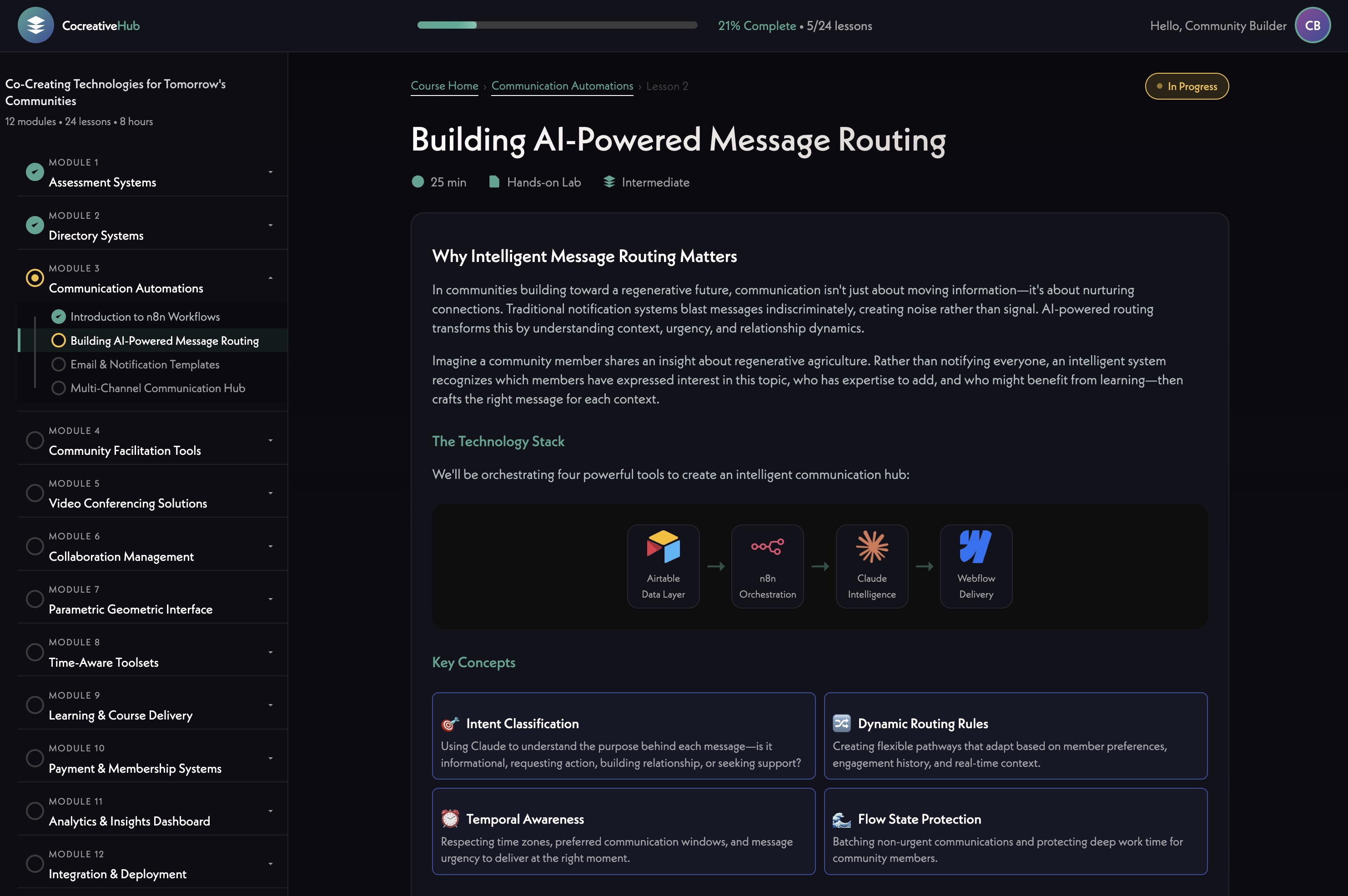
Built using N8N automation framework connecting forms, AI agents (Claude/GPT), and databases. Could analyze completed courses, progress rates, and preferences to make ongoing recommendations - not just one-time assessment. [tag="n8n"]
Next step: Separate meeting to design Kaya's version of this system (01:15:55).
[tag="activecampaign"]
Rob emphasized huge untapped potential in ActiveCampaign (00:12:32)
Current gap:
Students join self-paced courses but receive minimal automated nurturing. Kaya often doesn't know when someone enrolls in self-paced content unless they reach out. No systematic completion reminders or strategic upsell sequences.
Opportunity:
[technology="Communication Automations"]
This directly supports the 2027 strategic shift toward more automated self-paced systems while maintaining relationship quality.
James building custom Webflow based project hub with:
[technology="Collaboration Management Tools"]
Kaya needs to maintain Netflix-style hierarchy: (00:37:19)
Must support multiple content types per page: practice video, supplemental technique video, Q&A recording, related course promos - all accessible without clicking away and losing place. James confirmed this is straightforward in Webflow. (00:39:10)
[technology="Online Learning Platforms"]
Current system doesn't support bundling - students can only purchase one thing at a time. New system should enable multi-course packages with discounts. (00:59:18)
[technology="Custom Membership System"]
Spam/Bot Signups: (00:10:10)
Receiving ~6 suspicious emails daily - gibberish text versions of legitimate signups. Needs investigation.
Member Dashboard Bug: (00:04:04)
Courses periodically disappear from student dashboards. Temporary fix: edit any text on the page and republish, which makes courses reappear. Rob hasn't investigated root cause yet but this recurring issue points to deeper MemberPress/shortcode problems.
Nectar of Time Membership Issues: (00:43:56)
Glitchy Frankenstein structure with recurring cancellation problems. Fresh rebuild could resolve persistent issues.
James:
[technology="Assessment Systems"]
Kaya & Charis:
Rob:
James described building a "meta-network" connecting multiple conscious teachers and course creators (01:13:42):
This aligns with Kaya's interest in reaching new students through partnerships rather than just her own marketing efforts.
Kaya outlined her multi-year evolution: continuing live teaching focus through 2026, then gradually shifting toward self-paced content starting in 2027 (01:08:05). She'll still teach live, but wants to rebalance toward more automated, nurturing systems for self-paced students while maintaining the four core pillars of her work:
This timeline makes infrastructure decisions now critical - whatever system gets built needs to support this strategic shift.
[tag="webflow"]
The current WordPress setup uses 30+ plugins creating a fragile "Frankenstein" system prone to breakdowns. James proposed migrating to Webflow, which would:
Membership continuity is non-negotiable (01:00:02). With ~500 active subscribers between two membership tiers, any migration must preserve existing subscriptions without forcing re-enrollment.
James's proposed solution (01:06:53):
Still needs confirmation: Whether Stripe/PayPal subscriptions can truly transfer without interruption. This must be resolved before committing to migration.
Test with the Nectar of the Nakshatras course launching January 2025 (01:08:05):
[tag="airtable"]
James demonstrated using Airtable as an intermediary database between content management and website display (00:47:40).
Benefits:
[technology="CRM System Templates"]
For Course Cleanup:
Kaya and Charis can use Airtable to systematically review all 66 courses, tagging outdated content (like the 2022 Bhagavad Gita program) as "archived" rather than deleting it (00:42:51). This removes it from the site while preserving records.
For Membership Management:
Every student gets an Airtable record showing what they've purchased, subscription status, payment history, and access rights. When issues arise, fix them directly in Airtable rather than wrestling with MemberPress.
[tag="claude"]
James demoed a connection assessment tool built for another client that Kaya immediately recognized as valuable (00:23:00).
What it does:
[technology="Intelligent Matching Algorithms"]
Why Kaya loves this: (00:27:09)
Currently using clunky Mighty Networks for community features. Students value connecting with each other but the platform has poor engagement, confusing login, and limited matching capabilities. An integrated, intelligent system would:
Technical approach: (01:15:43)
Built using N8N automation framework connecting forms, AI agents (Claude/GPT), and databases. Could analyze completed courses, progress rates, and preferences to make ongoing recommendations - not just one-time assessment. [tag="n8n"]
Next step: Separate meeting to design Kaya's version of this system (01:15:55).
[tag="activecampaign"]
Rob emphasized huge untapped potential in ActiveCampaign (00:12:32)
Current gap:
Students join self-paced courses but receive minimal automated nurturing. Kaya often doesn't know when someone enrolls in self-paced content unless they reach out. No systematic completion reminders or strategic upsell sequences.
Opportunity:
[technology="Communication Automations"]
This directly supports the 2027 strategic shift toward more automated self-paced systems while maintaining relationship quality.
James building custom Webflow based project hub with:
[technology="Collaboration Management Tools"]
Kaya needs to maintain Netflix-style hierarchy: (00:37:19)
Must support multiple content types per page: practice video, supplemental technique video, Q&A recording, related course promos - all accessible without clicking away and losing place. James confirmed this is straightforward in Webflow. (00:39:10)
[technology="Online Learning Platforms"]
Current system doesn't support bundling - students can only purchase one thing at a time. New system should enable multi-course packages with discounts. (00:59:18)
[technology="Custom Membership System"]
Spam/Bot Signups: (00:10:10)
Receiving ~6 suspicious emails daily - gibberish text versions of legitimate signups. Needs investigation.
Member Dashboard Bug: (00:04:04)
Courses periodically disappear from student dashboards. Temporary fix: edit any text on the page and republish, which makes courses reappear. Rob hasn't investigated root cause yet but this recurring issue points to deeper MemberPress/shortcode problems.
Nectar of Time Membership Issues: (00:43:56)
Glitchy Frankenstein structure with recurring cancellation problems. Fresh rebuild could resolve persistent issues.
James:
[technology="Assessment Systems"]
Kaya & Charis:
Rob:
James described building a "meta-network" connecting multiple conscious teachers and course creators (01:13:42):
This aligns with Kaya's interest in reaching new students through partnerships rather than just her own marketing efforts.
Kaya Bug Fixing
November 17, 2025
Fix
Strategic utilization of ActiveCampaign for automated welcome sequences for self-paced students, course completion follow-ups with recommendations, personalized nurture sequences based on progress, and self-paced course promotion to existing students. Creating high-touch experiences with low-touch effort. Addressing current gap where self-paced students join without Kaya receiving notifications or initiating contact.
CONSOLIDATED into 'YwK - Content & SEO Strategy'
CONSOLIDATED into 'YwK - Content & SEO Strategy'
CONSOLIDATED into 'YwK - Content & SEO Strategy'
General WordPress support, maintenance, and improvements. Peter (Germany-based) handling day-to-day fixes with advantage of working overnight for US time zones. Will phase out as Webflow migration completes.
00:00:04
James Redenbaugh: Our note taker. Maybe there's a more robust way to handle this kind of thing because we're using these member press short codes to dynamically display this content. And it is, you know, a feature of this app that we pay for and it should work, but it's not the core thing that it's meant for. So maybe there's a better way to do it. I'm not sure. But part of what I want to talk to you about today is like taking a bigger step back on the website and looking at the field and what opportunities there might be to introduce some newer technology and bring value across the whole thing. Because we've been making strides in what we've been building for other clients and figuring out all kinds of new cool things that we can do. I've shared some with Rob and even just in the last couple weeks, I've had these huge breakthroughs figuring out how to build in, you know, AI agents into automations and deliver dynamic content and create membership sites in new ways and create assessment profiles and all kinds of things. It's very cool. And it's not limited to the webflow sites that we're mainly focused on now. There's things that we're building that can still work on WordPress. But yeah, I really just want to restart the conversation about the big picture. We still have an updated style guide, we still have some design changes that we could make. Things that we've talked about, like the questionnaire for users about where do I start or what's good for me to do right now that's now more possible than ever, easier to do than ever, and I think could be a nice way to increase conversion and get more of this teaching to more people in more helpful ways.
00:02:48
Kaya Mindlin: Hold on. I'm just writing down a couple things. Okay.
00:02:58
James Redenbaugh: Yeah. And then I, I also want to just touch on the transition from Rob into the other guys that we can bring in, and that includes Peter, who can handle like bugs and breakdowns, in addition to myself, who will continue to be available. And then also this team that we've been working with who's also in Germany, who I want to use to hopefully do some deeper refreshes and design updates.
00:03:38
Kaya Mindlin: Okay. Okay. Yeah, we definitely need a bug guy.
00:03:48
James Redenbaugh: Exterminator.
00:03:53
Rob Hurwich: Yeah, Peter's a good bug guy. And yeah, I don't. Yeah, I'm not sure if we, I mean, I did set this up. Yeah. A little while back, but I've you know, I, I have a whole, I set up kind of a whole, you know, handoff, you know, document of kind of like everything, you know, the summarizing. Okay. Everything we've done, the issues that were happening, you know, what we've set up, what we can do, you know, for in the future. So I, you know, that's already done and created. And so I think that, you know, that's, you know, already in the hands of Iris, so I can get, you know, get passed along to you all as well.
00:04:44
Kaya Mindlin: Okay.
00:04:45
Charis Alura: So has Peter been kind of brought up to speed already?
00:04:54
James Redenbaugh: Somewhat. I want to. I'm also creating a kind of home base for us where we can have that document the other documents I've created with SOPs and things like that. Basic access questions. But Peter's mostly up to speed and he's already familiar with the tool set that we're using on this website and he's excited to be of service here.
00:05:27
Kaya Mindlin: Is he in Germany?
00:05:29
James Redenbaugh: He's in Germany, yeah.
00:05:31
Kaya Mindlin: Okay.
00:05:33
James Redenbaugh: Yeah. So the advantage of that is it's easy for him to do things overnight.
00:05:42
Kaya Mindlin: Yeah.
00:05:43
James Redenbaugh: Yeah. The disadvantages, he might not be reachable during the day. but I'm here and we'll have other people on these time zones if I'm hard to find.
00:06:02
Kaya Mindlin: Okay. I'm also asking because, James, I sent you that separate message about someone possibly to be like a VA for you. And she speaks German. She lives in the uk but she's German born. And. What a funny like omen.
00:06:22
James Redenbaugh: Yeah, a ton of our clients are German as well for some reason. So about. I mean a huge percentage of our sites are in English and German and I don't speak any German.
00:06:34
Kaya Mindlin: Astrocartography. I have a really strong line going through Berlin, which I've never had an interest in living in, but I have like some karmic. Like I have a line in Germany, so that's pretty funny. Okay.
00:06:45
James Redenbaugh: Yeah, me too. And I, I love Berlin. I've. I used to say that's it was my second home because I would live in the mountains and then go there once a year.
00:06:56
Kaya Mindlin: You can do it for me because I've never been attracted.
00:07:00
James Redenbaugh: Yeah. I think my Berlin days might be. Might be over. I'm more drawn to the mountains now.
00:07:10
Charis Alura: You might want to try Berlin. I, I didn't want to move to Atlanta when I saw my stuff, my son in Mars line going through, but I'm just like, I gotta try it. And, and now I Love it.
00:07:21
Kaya Mindlin: So, I mean, who knows?
00:07:22
Charis Alura: You never know.
00:07:27
James Redenbaugh: Very cool. So, yeah, where should we start? What's, what's top of mind for you? What are your major concerns right now? What's. That's exciting.
00:07:45
Kaya Mindlin: Okay. Well, I definitely, you know, I'm cautiously up for some renewal on the site. I think we built this, it, you know, this in like 20. 20. 2019. 2020, end of 2019. And you know, it's definitely been. I'm, I'm cautiously open to like a refresh and cautiously because as you know, my website is such a beast. 66 courses, I don't know, like a thousand students, you know, who are using stuff daily. So I'm always very hesitant to rock the boat. But I also recognize that like it can't stay stagnant. I never want to lose the humanity. So I'm open to AI, you know, on the back end, utilization. And I'm also like no AI is ever going to be producing content for me that I can imagine, you know, that type of thing. So I'm like, you know, cautious about that but also recognizing it has utility for sure. And yeah, I'm definitely seeing lately just like a couple notes here. I have so much self paced content and no real way to kind of like regularly promote it in a way that feels strategic and alive and other than me doing that. So the idea that we've been talking about for a couple years now of sort of providing a kind of a journey map for people that land on the site or people who are already students who are like, oh, what do I do now? Which I get that question a lot. That would be really amazing because I'm definitely leaving money on the table, as they say, with all this amazing content that's sitting there that's self paced that so far requires me to be there saying like, hey, this exists. You might want to, if you like this, do that type of thing. And then yeah, there's like glitches to deal with. We've got three planets retrograde right now, so that we've seen in them. One we haven't mentioned is that we suddenly have this huge uptick in like, I don't know, what do we call this terrace? Like random.
00:10:10
Charis Alura: They're like spam emails. I afforded one. Yeah, I forwarded one to James. But yeah, we get about six a day. And it's interesting because, yeah, it's interesting because we get one that had. That just looks like somebody added themselves to our email list. And then a duplicate that shows the Same email, but then a bunch of gibberish like the one I forwarded to you.
00:10:38
Kaya Mindlin: Yeah. So we're getting these weird, spammy, cyber attacky feeling messages all day long. That's a bit of a red flag, but also sort of like, okay, pay attention to this website. Yeah, so I mean, I don't really know where to start. There's like the micro, like glitchy things that we have to deal with, as you said, and then the macro and then, you know, Rob is here, you're leaving us. So I also like, if there's something that we need to address that's like really Rob related and we want to work front load this meeting with that a little bit. And Rob, you don't have to stick her. I don't know how you want to handle that, but. Yeah, I don't know if those are some random thoughts.
00:11:24
James Redenbaugh: Yeah, great. Yeah. Rob, you're welcome to stay through the whole meeting or we can front load stuff. Totally up to you. How are you feeling? How's your timing today?
00:11:42
Rob Hurwich: Yeah, I'm fine. On time? Yeah, I'm fine. I mean, it's interesting, right? Like these are interesting projects and of course I'm not able to be involved just because of my capacity as a human in this bodily form. As far as like in the project, I will say that if there's anything that comes up that I could be, that's specifically a place where I could be of help, where I come in and in the design phase and say, okay, hey, we're trying to do this, I'm happy to come in and just do a consult and if I could be of guidance. And I know one place we've talked about is activecampaign and trying to utilize that.
00:12:32
Kaya Mindlin: That's a huge gap in my business model right now. Yeah, totally.
00:12:38
Rob Hurwich: Yeah. And that's one place where, you know, you can of course, strategically, you know, promote, you know, the self paced courses to folks who are already, you know, in your ecosystem in some way.
00:12:53
Kaya Mindlin: And, and increase the feeling of like high touch where it's otherwise low touch as a self paced course. And just like I do have people that are randomly joining programs that are self paced and there's no real, like, I'm not, I don't know that it's happening. And so there's not any interaction with them unless they take the initiative to reach out to me. So also just like a relational feeling for people, like an outreach to people that could be taking self paced programs and then that relational sustainability gaining for people that are in self paced courses and yeah, I agree activecampaign. We could massively utilize more in that regard. Yeah, that would be huge.
00:13:37
Rob Hurwich: Yeah. Yeah. So that was, yeah, that is one thing to mention. Yeah. And so right. It's not like I'm falling off the face of the planet. Not, not quite yet. And otherwise, yeah I'll, you know, I'm happy to stick on and Right. So that way I can, you know, if things come in that would be helpful for me to bring information about. I can, I can do.
00:14:03
James Redenbaugh: Yeah.
00:14:03
Kaya Mindlin: So yeah. And also Rob and James, I'm really open to, you know, I'm not an expert in websites and tech so I'm open if you're like, you've been in my site, you've been, you know, faced on the face of it, the back end. If you're like, oh my God, this is so stupid, she should be doing this completely other way. I'm very open to that. Like I'm not, I'm attached to not losing content or you know, up user, you know, attachments of students and all that. But I am also open to like there's this whole other way you could be doing this that would be so much better because I don't, I'm not going to know my own blind spots in this and I'm not like taking business courses and you know, I like you both know I just do these things organically and have some good sensibility here but it's not my expertise. So you can totally just say like this way you're doing this is dumb. Do it this other way.
00:15:08
Rob Hurwich: Okay, permission received.
00:15:13
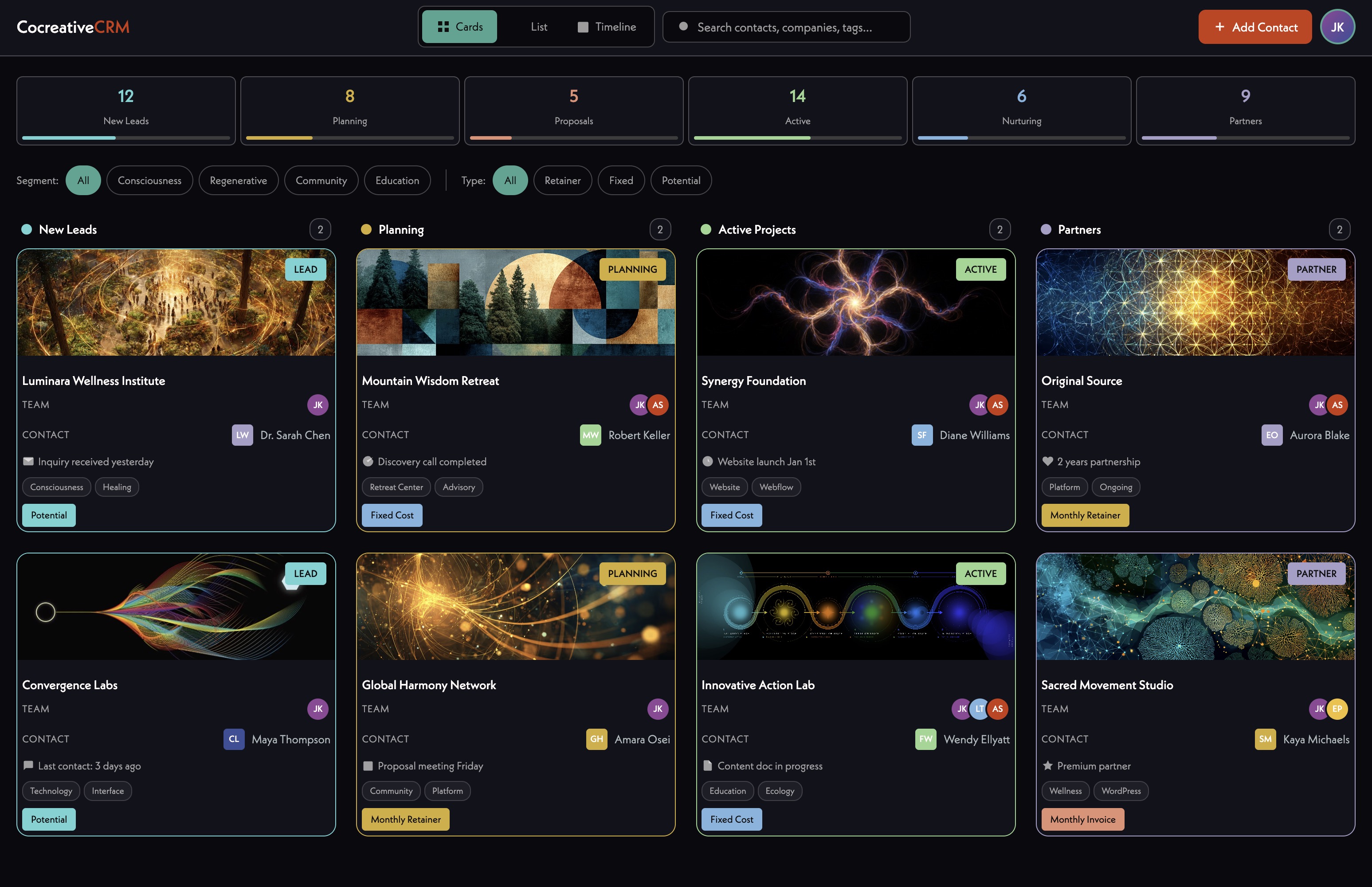
James Redenbaugh: And Rob, great to know that you're up for, for being a consultant from time to time. I know your perspective is really valuable both in the skill set that you have and the awareness that you already have of Kaya's offerings and the ecosystem. And I've been working on how to create better home bases for projects like this so that we can all more easily see what's active. What are we working on, what can we do, what can we be thinking about in the future? Where's the low hanging fruit right now that we can collect? You know what kind of automations and processes could be improved to lead to more conversion, retention, sales, customer satisfaction and it's complex because there are a lot of courses, there are a lot of systems, there's a lot of different things and there's new opportunities all the time and new things that we can start building. And so I think it's. It's more important than ever to have a. A home base that we can come back to. And this is the start of it. You can share, but this will have links to any key meetings that we have with the recording and the summary of those meetings. Our different initiatives. When I give these initiatives start and end dates, I'll show you really quick just to give you a sense of things because this is neat. They are going to end up on a timeline so we can see things in time. We can see who's working on what and what's needed for what. Here we go. These are already coming in. And this is a little glitchy right now because I'm just building this. But we'll also have links to key documents and the website and different things. And then we can start to analyze for ourselves where we should be putting our attention and delivering value. Then we can test that value and come back to it and see how we did. So I think that there's opportunities in a few domains. One is just kind of high level design improvements to the brand guidelines on the site and the look and feel and functionality of the different pages. So I think that's more general and can just help with having everything feel. Oh, I fixed this by the way. It. It just needed the. An edit. A little edit to the page, made it come back.
00:18:59
Kaya Mindlin: I don't know why that's like every time. Yeah, that's like still not really fixed.
00:19:03
James Redenbaugh: Yeah, yeah, yeah. So I'm gonna.
00:19:07
Kaya Mindlin: I don't know if Charis knows this, but James and I figured out that if you go to edit the page and like change. Like I went and added this. Can't see your courses below. And then I did that and when I published it, all the courses came back. So we've kind of figured out like this loophole in the glitch where if you go edit the page and then republish it, everything reappears.
00:19:26
Charis Alura: Okay. Interesting.
00:19:28
Kaya Mindlin: I don't know if that gives us a clue, Rob, to what the hell's going on. Like why would that change it? But.
00:19:35
Charis Alura: Yeah, yeah, we don't know it's breaking down yet. Right?
00:19:40
James Redenbaugh: Yeah.
00:19:42
Kaya Mindlin: Very weird.
00:19:44
Rob Hurwich: Yeah. I have to. To look. I would have to look a little more to what. What the. What the issue is, because I haven't been following this one.
00:19:52
Kaya Mindlin: Yeah.
00:19:53
James Redenbaugh: Yeah. Well, at least not on.
00:19:55
Kaya Mindlin: On board. You're not on the team. I get it.
00:20:02
James Redenbaugh: Don't. Don't worry about it too much, Rob. But yeah, so the design improvements. But then we can look also at campaigns and you know, what happens with, when somebody signs up, what happens when they are going through a self paced course? How, how likely are they to complete it? You know, are there reminders or helpful emails along the way that get sent out automatically? What happens when they do complete it? Are they, are they being communicated with in ways that are optimal given what they've done and what they haven't?
00:20:55
Kaya Mindlin: Yeah.
00:20:55
James Redenbaugh: You know, what kind of automations can we build in that look at the whole student body and market particular things to particular students. And there's a lot that can be done in activecampaign and then there's a lot that can be done using some of the new tool sets that we have.
00:21:16
Kaya Mindlin: Okay.
00:21:18
James Redenbaugh: And I, I'd love to show you a little demo of some of those new tools.
00:21:24
Kaya Mindlin: Okay.
00:21:24
James Redenbaugh: If you'd like.
00:21:25
Kaya Mindlin: Yeah.
00:21:28
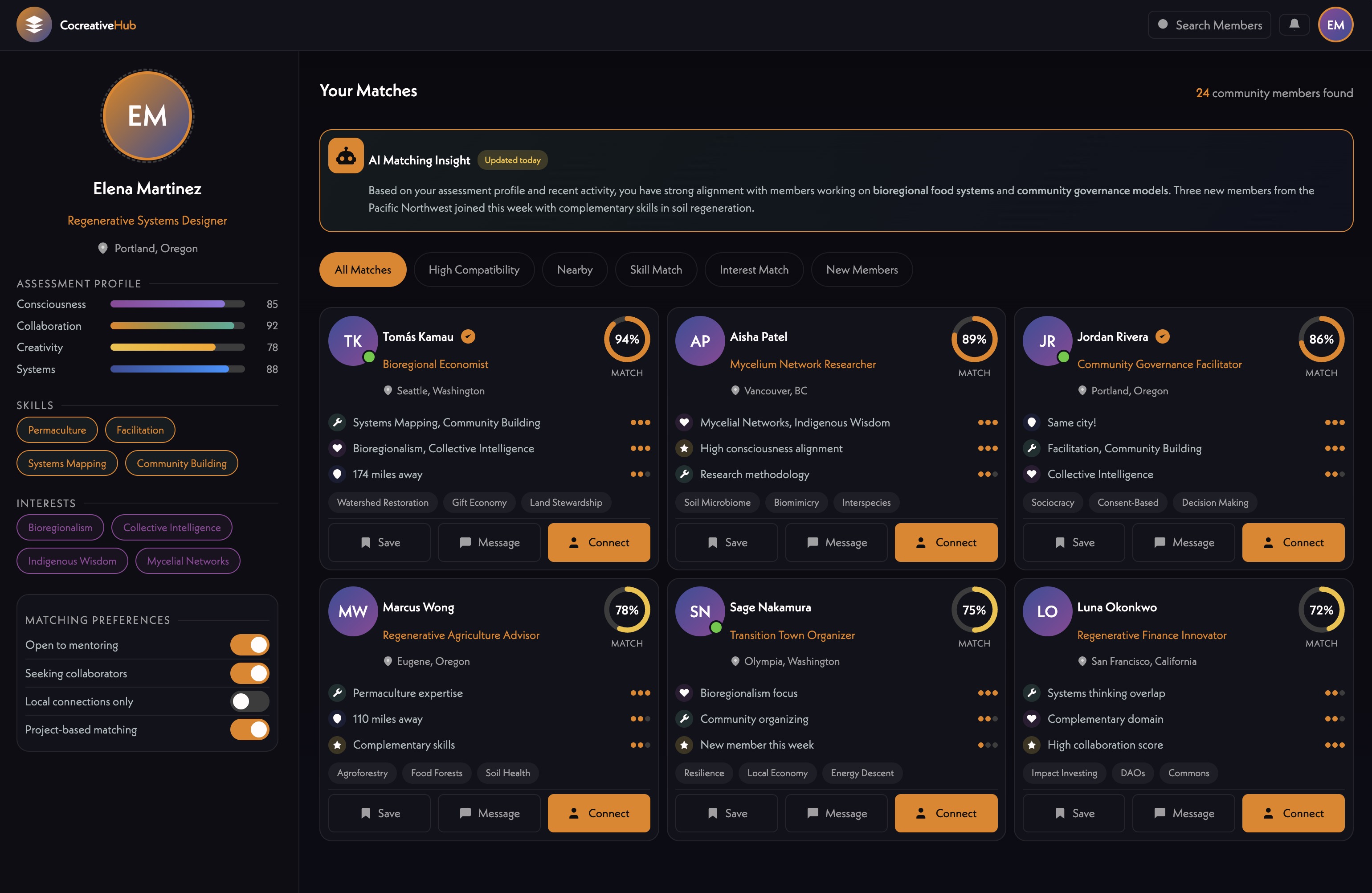
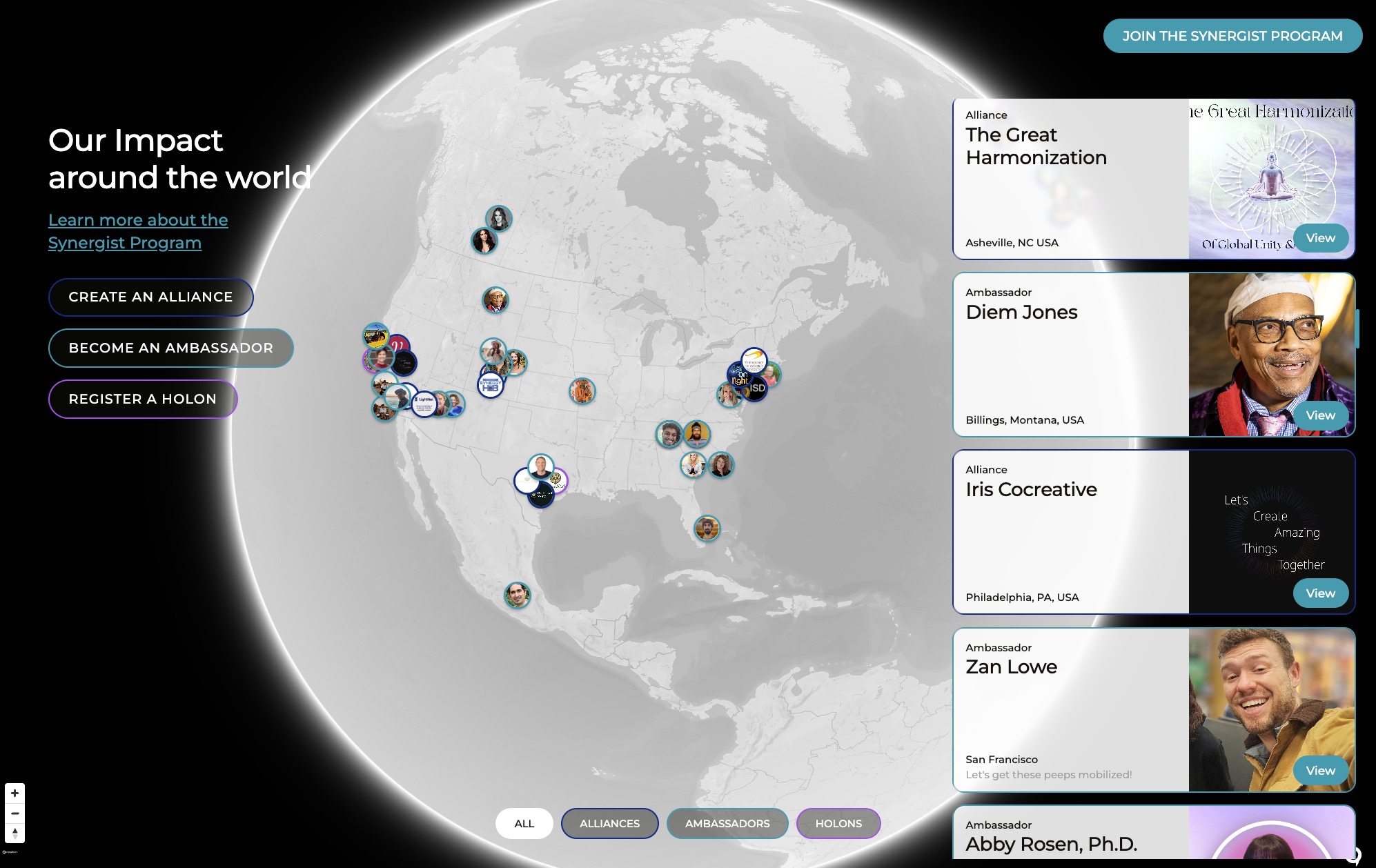
James Redenbaugh: So a couple of weeks ago I made this, we call it a connection assessment for a client that has a community of people around the world. And some of them have filled out these. Synergist profiles which basically gives them a little profile on the website. They can see each other on this map. And this was just an airtable form that populates a CMS and we can see different people and projects just to give you a background. And then I built this questionnaire where people can answer these questions about their purpose and their calling. And there's some multiple choice and different things. It's kind of in depth, but it was a, a little demo, nice little brand. And then just to show you, once they fill out that assessment, they get an email. And it looks like this, it does a detailed kind of analysis of their questions. I don't think you need something like that. This is technically AI generated content, but what's most interesting is it analyzes the database of people in the directory and then makes tailored suggestions to them and explains why it's suggesting that to them. So you know, this person should connect with this person and they also might like these podcast episodes and they can click this button and listen right here or they can click this button and they'll, you know, these two people will both receive an email connecting them and it just shows you the kinds of things that we could build now. So, you know, instead of other people, this could be lessons or courses or opportunities for them. And the input doesn't have to be a questionnaire. It could be, it could be a simple questionnaire, it could be a more in depth one, but the input could also be like what courses have they taken and then the out could be automatic recommendations so we don't have to decide, okay, every person that's taken this course, that course and another course will get recommended. This third course we can build in a more intelligent system that analyzes what have they done, even how much have they completed in those courses and then makes key recommendations to them based on that. That's completely personalized.
00:24:50
Kaya Mindlin: I love, love this, James. This is actually. This is great, right? Chairs for my community. They love a questionnaire. They love to feel like we are getting to know them and they love connecting with each other. So right now I use Mighty Network or my. Like, are you familiar with it?
00:25:08
James Redenbaugh: Yeah, definitely.
00:25:09
Kaya Mindlin: So I, I'm using it because it was at the time, you know, the alternative to having Facebook. And I wanted them to connect with each other and have. So right now we do matchmaking. Either I make or we say like find a buddy, like a study buddy or whatever in different courses. And we have different groups, four different programs so that even if someone's doing something self paced they automatically, you know, get invited to that unique group within the Mighty Network. And there are people that like talk weekly for the LA for years now and like know about each other's personal lives or like get together. We sometimes I'm like make a watch group. There's someone right now, weirdly I feel like she's in Germany. This is so weird. But she's trying to create a watch group for my weekly yoga class with other people that are, you know, in the European time zone. So. But it's clunky because it's not. I love this element of like managing it because I can only help so much as I know only some of the students that are there. And then yeah, I take initiative.
00:26:19
Charis Alura: I, I agree that Mighty Network isn't an ideal solution. It is a little bit confusing. The login isn't flawless and people don't engage as much as I think they like. And I don't know if that's because of the structure or what. But yeah, I don't think Mighty Network is an ideal solution.
00:26:36
Kaya Mindlin: No, I think that what they the ones that do use it value about that is that the conversation threads, you know. But as far as this piece, that's much more elegant in terms of recommending programs and recommending partnerships within the community. That's huge. It's. I mean that really is huge actually in terms of the mission of my work. Those components are a big piece. So yeah, I'm really into that idea.
00:27:09
James Redenbaugh: Awesome. That really excites me. And I didn't even realize you were using Mighty Networks and had those community features.
00:27:15
Kaya Mindlin: Yeah. So I mean, actually if I can kind of like take a moment to kind of say on the, you know, the background hum of like the work that I do is there's essentially four pillars. One is the knowledge itself is the direct relationship with the teacher, student relationship. Which is why even if they're doing something self paced, I want them to be able to like, you know, send in questions or, you know, whatever, or like have kind of like a feedback loop with, that's automated with activecampaign but still feels alive. So relationship with the knowledge, relationship with teacher, relationship within the community between students and then time. In other words, they continue for a long period of time because this isn't transactional. So knowledge and time, relationship with me and relationship with each other are essentially the pillars. So what you just showed us really helps with the relationship with each other and it helps with the knowledge and the timepiece because it will, you know, suggesting courses extends the time frame and is giving them knowledge. And it actually helps, I think, with the relationship with teacher piece because psychologically I think when they're filling out a questionnaire for me, they feel like I'm gonna see it all even if I don't. So I love it.
00:28:42
James Redenbaugh: Totally amazing. I've got goosebumps. Because what is becoming clearer and clearer to me over time in IRIS is, has entirely to do with making tools that serve those things specifically, like iris. IRIS stands for intuitive, relational and intersubjective. Intersubjective meaning the we space, the community, the space between people, you know, not only relational connection, but also what are we building together, what are the bigger things that we're a part of? The sangha. And so we've been, and all of our clients are in these domains in one way or another. And we've been building tools to serve those things for a long time. But what's been getting clearer and clearer to me in the last year is how critical it is that we build new ways to think about time and work in time and see time and manage our time. And so like, one thing I'm working on right now is a tool for me to manage my own time and for my team to manage their time better. Because I've never been satisfied with the different project management tools because they're either like ugly and boring or too complicated. And so finally, you know, I've just been building my own and it's plugged into our CRM and it's built in webflow and so we have full control over it. And so here I am in the design service meeting. I have a little timer going. I can stop it, but I can see like, here's my week, here's what I'm working on. And then what I'm really excited about is this timeline up here. Because the more I, I use it, if I use it and I get the whole team using it, then we can see like, where's our time actually going and what's the landscape of time and how does it change throughout the year? And this is just the beginning, but were able to, I was able to fully build this in webflow using these new automation tools and all of this. Right now it's fully interactive. I can make a new session, I can make a new initiative, I can make changes here. I can change the status of things. I can drag and drop things to a new day. And I don't even need to log into this. I could send you this URL and you could mess with my calendar and interact with.
00:31:46
Kaya Mindlin: Logging in is a waste of time, man.
00:31:50
James Redenbaugh: It's a total waste of time. And, and that doesn't mean that like, we need to let your students just mess with your stuff, you know, and there's not a purpose for gates. I'm going to build a gate in into this so that, you know, our stuff doesn't get messed up. But it's really neat that we can build these kinds of things without needing a complicated membership system. Or we can put a simple one where it's like, put in your email and it's like, yeah, if your email's in the system you're in, you know, maybe you get a link and you click it and go there or whatever. But then you can, you know, we can build things now where people can create their own events and manage their events or create their own groups or, you know, post content or edit that content or edit a profile. And then we can build in those kind of intelligent automations that help us facilitate the community and the relationship that we want to be in. So if somebody's in a course, we can automate processes to analyze the people in that course and then break them up into groups intelligently. You know, whether it's a live course or a do it your own pace kind of course. If it's a. At your own pace, you know, we could build in a system where you sign up for the course, you fill out a profile and then like at the end of the week or after enough people have signed up, it'll then take all of those and analyze them and then pair you up with a buddy and craft an email that says, you know, here's Kaya, here's Charis, here's where you are in the world. Here's a bit about your both. This is your buddy, this is the timeline, here's when you can meet. You guys are both free on, you know, on Wednesday mornings. And so it works out for you. It, it does get a bit creepy, but you can decide the parameters.
00:34:18
Kaya Mindlin: I'm like, nobody's allowed to know what my free time is.
00:34:21
James Redenbaugh: Exactly, exactly. It just uses the inputs that you give it, you know, but you'd be amazed what it can do with those.
00:34:34
Kaya Mindlin: Yeah, I mean it's an interest. As long as we're using technology to increase humanity and connection, then I'm, you know, all for it. So.
00:34:45
James Redenbaugh: Yeah, exactly. It's not, it's not going to be the guru could, but it can be an awesome receptionist.
00:35:03
Kaya Mindlin: Yeah, yeah. That then helps people like. Yeah. Have their actual human connection and. Yeah, beautiful. I'm into it.
00:35:11
James Redenbaugh: Cool.
00:35:12
Kaya Mindlin: Okay. So, yeah, I mean, so we're talking big design possibility shifts, we're talking micro bug fixing, we're talking dealing with self paced, better connection between students.
00:35:33
James Redenbaugh: Yeah. And now that I'm understanding more about the community features that you have and the community features that you want.
00:35:45
Kaya Mindlin: I.
00:35:45
James Redenbaugh: Think it is worth revisiting the conversation about migrating everything to Webflow because a lot is possible on WordPress, but a lot more is possible on Webflow and you don't get the same kind of bugs that we have in WordPress and the same kind of maintenance and breakdowns. It's a much more.
00:36:19
Kaya Mindlin: Every time we look at an alternative, we see that there's probably less bug risk, less breakdowns because of the Frankenstein nature of WordPress. We see that it's easier on the back end. But then I have yet to find an LMS system that allows me to have the look and feel that I'm able to accomplish with learndash. As clunky and glitchy as learndash can be, every right terrace, every time we've looked at like an alternative lms, we're like, this isn't, this does not do what we needed to do.
00:37:00
Charis Alura: The main issue, yeah, the main issue is the tiers. We've noticed there's a limitation in the tiers. So like Kaya and Sri. She has the initial how is it in learndash? It's the course, the lesson and the topic.
00:37:19
Kaya Mindlin: Topic, yeah. Which is, I always say to every design, every other designer that's like, I've talked to you about looking at another LMS alternative. I try to say, like, this is. I want. It's like Netflix. Netflix is the course and then the lessons is like the show, and then the topics is the episodes. And I. We have had a hard time finding that. And then the other piece that most every other LMS system we've looked at doesn't allow you to have more than one piece of content on a page. So you can have like one video and then it's like click to the next thing. And the problem is, like, actually the one that we just did is a really good example. The class that just went out today to everybody, they have their practice with a description. And then in the video, in their practice video, it says, pause this if you're, if you've never done this, pose before. Pause and watch the video below because it shows the like, propping and the alternatives and blah, blah. And then they finish the practice. So I don't want them to go to another page to do that and click where was I? And go back and forth. And then they can scroll down and they can, you know, see a special video that's related to that practice. And then they can see the Q A conversation that we had, you know, with me and the students after that practice. And then, and then they can click to the next thing. Or I can also have a promo on that page. If you liked this class, you'll really like the Subtle Body Theory course. Go there and every other thing we've looked at. Yeah, you can have a video and written content, but you can't have more than one video because that's considered a different. That's goes on in the next page. It's so linear, I guess, is what I'm trying to say.
00:39:00
James Redenbaugh: Yeah. So, yeah. Well, let me tell you all of that Easy peasy in webflow.
00:39:09
Kaya Mindlin: Okay.
00:39:10
James Redenbaugh: We can't, you know, if we wanted to, we could create exactly what you have in WordPress in webflow pretty easily. But let me tell you, when you're in, in webflow, when you see what we can do in there, learndash is going to feel very linear and limited. So we can totally build that structure. You can put whatever you want on a course, topic and lesson. But also the ways in which all of those things can interrelate is Unlimited. So topics can easily be reused across lessons. We can build an automatic recommendation systems as well and all kinds of components.
00:40:13
Kaya Mindlin: So share with me, it doesn't have to be now. Could be in another meeting where you walk me through it. Or you could send me and Cheris a link or something like another, like a, a sample where I can be like a user clicking around in someone else's program that you've, you know, done webflow for.
00:40:32
James Redenbaugh: Yeah, or I could mock up a course structure for you in webflow based one of your courses. So you can see how easy it is to do exactly what we're talking about.
00:40:49
Kaya Mindlin: So if you want to do that, James, if you want to do like in terms of the nesting dolls here within the shri core like SRI course, the Divine within series, which is the SO course that's the lesson and then the topics are the practices. That's one that we're doing right now. So we just published lesson three or topic three. Because that I would say, don't you think Charis at the SRI studio is the most complicated layout?
00:41:18
Charis Alura: See, I was thinking Nectar of Time because you know, we've got the lifestyles, we got all the different things. But yeah, they're probably similar in complications.
00:41:31
Kaya Mindlin: Is like because you need to be able to stay within your show and move through the episodes sequentially. Whereas Nectar of Time, it's a little bit more open to like bouncing around. But anyway, yeah, if you want to do a mock up for like one course lesson topic, I would be interested to see that.
00:41:56
Charis Alura: Or even just however you think James would, you know, like go crazy. James, show us what you can do.
00:42:04
Kaya Mindlin: No, James, you're just gonna verify your name. Don't, don't give James permission to go.
00:42:11
Rob Hurwich: Crazy over complicate go mad scientists on it.
00:42:17
Kaya Mindlin: And we've got cycles within cycles and temples within temples. Go a little crazy.
00:42:27
James Redenbaugh: Okay, great. Yeah, yeah. Because it would be a big task to move everything over, but it could really liberate things where you have the structure that you're used to, but then it can really evolve from there.
00:42:51
Kaya Mindlin: James and Charis and we could put this on James's go on your task list, but it could be something that Charis and I navigate. On our end is with all these retrograde planets to clean up the courses. Because when I look at those 66 courses, Charis, I think we could actually remove old iterations and we could really like. I think it would be wise to simplify what we currently have and delete stuff that's old and stale and we're not reusing and it's not living as a self paced course, et cetera. And then we'll really see what we have before we do a redesign or move things or whatever. Does that make sense? Yeah.
00:43:31
Charis Alura: Well, and also, I like the idea of building a new structure because we're still having some issues with the memberships not canceling and the nectar of time thing just kind of became this Frankenstein structure that's never quite worked flawlessly. So yeah, if we could build a new structure and then fix all the membership glitches in the process, that would be amazing.
00:43:56
Kaya Mindlin: And then here's a question, James. Would it be feasible, doable, Would it make any sense if were like. If I was like, okay, I love this webflow idea. Does it make sense to slowly move everything over and then launch it, or does it make sense to do a beta test on like the new, like, so I have this new course that's going to be a year January to December. Would it make sense? And would we even have time to do it by January to do that, say, in webflow, or would it feel like my, like, how would it feel to the users? Are they like, oh, I'm in this whole other realm or could we make it seamless where they're like, in my world, but when they go into the course, they're using webflow and then that would be like our beta. And then like even partway through that, if we're liking it, we could be slowly moving everything over and renewing. Does that make sense?
00:44:55
James Redenbaugh: Yeah. Yeah. I think it's a great idea to have a beta. And if it's one course we're talking about for January, well, it's.
00:45:14
Kaya Mindlin: A standalone course and it starts in January. Although it's kind of like a slow drip, like the, it's kind of like introductory content for the first three months and then we really get going by like, I think it's March, April, a little bit of wiggle room there in terms of a timeline. But it's the reason I'm suggesting it is because it's kind of its own standalone thing. It doesn't need to link up with any other course that's in learndash. Anyway. Just a thought.
00:45:45
James Redenbaugh: Yeah. Then I think it's a great opportunity to beta test a new system and we can make it so that the style and feel is seamless. It's just on a new domain, but then we can get user feedback and add new features really quickly to see what they like, what they respond well to and what they find most valuable and then over time move everything to the new system. But it doesn't have to be done manually. We can export everything from WordPress and import it into Webflow. And I'd recommend using Airtable as an intermediary because Airtable is a very usable database management system where you can see, you know, all your content in a very easy to edit interface. And so you can see you know all your courses at once, hop into them, make changes, make improvements, see all your topics, see all your lessons, see everything there, filter things, sort things, update things, tag things, and then it would be live synced with the website. So right now in WordPress, when you change a lesson, you go in the back end, you find the lesson, you go into it, and each click you have to wait for the page to load in your browser. In airtable, it's all there immediately, like a big spreadsheet, but a big dynamic, intelligent spreadsheet that allows you to use.
00:47:40
Kaya Mindlin: Airtable to move things over and then to manage things once they're moved over. Would Air Table be something that we would also potentially use to clean up the current.
00:47:55
James Redenbaugh: I'd recommend it, yeah, because you can. I'll show you real quick what my air table looks like. So here's your initiatives.
00:48:18
Kaya Mindlin: Teeny tiny fonts.
00:48:20
James Redenbaugh: Yeah, yeah, sorry, I can make the windows smaller, but here I'm viewing the initiatives as a gallery. I can view them as a list, I can view all initiatives across different projects, I can view all engagements, different clients we've had past and present their colors, their different statuses. And then on the front end or in webflow it all syncs immediately. So I can see those same engagements here. And if I make a change here, it updates airtable. If I make a change in Air Table, it updates here. But here I can present that information however I want. And so were just seeing your engagement page. We have the initiatives from airtable over here, but only now I have them showing up on a timeline that I have full control over. So I can see that, or I can build any kind of interface to view that content right here. So you could imagine a similar thing with courses where instead of initiatives and engagements, you have courses and lessons. But editing in airtable is just going to be much easier. Here's the yoga with Kaya Engagement. I can pop this open, change different things, and I don't even have to click save. I could add text in there and close it and it's changed on the website immediately.
00:50:41
Kaya Mindlin: So like in terms of Learn Dash Yoga with Kaya, with the courses, the lessons and the topics. Charis, if went in and were like, we don't need the Bhagavad Gita program from 2022. Delete.
00:51:00
James Redenbaugh: You could delete it or I would just like add a tag of archive or change the status to archive.
00:51:07
Kaya Mindlin: Okay.
00:51:08
James Redenbaugh: You know, and then it would still be in your air table, but it would be taken offline and we would.
00:51:12
Kaya Mindlin: Do, we could do that in air table. Then it would reflect in terms of. It would reflect on the website.
00:51:21
Rob Hurwich: Yep.
00:51:22
Kaya Mindlin: And does that air table, does that need to be like built?
00:51:28
James Redenbaugh: Yeah, I mean everything needs to be built, but it's like, I mean, I.
00:51:32
Kaya Mindlin: Know airtable exists, but then do you need to like, then build it out to do what we need it to do for the Learn Dash system at Yoga with Kaya?
00:51:40
James Redenbaugh: Yes, but it's very simple. So we just decide what fields and taxonomies we need in airtable. We can even, you know, if I export everything from WordPress and import it into Airtable, it. It will suggest what fields to use and put all the content in there.
00:51:59
Kaya Mindlin: Okay.
00:52:01
James Redenbaugh: And then I use an app called Whale Sync which syncs that content to the parallel CMS structure in webflow. And so there's no like zapier or kind of hoping that this webhook, you know, lines up there if there's a one to one relationship to everything in both places. But you don't need to recreate that every time you make a new course or something.
00:52:30
Kaya Mindlin: It's all automatic interface to clean up our act and we could use that interface to move things over to another system.
00:52:43
James Redenbaugh: Yeah.
00:52:44
Kaya Mindlin: Is there something else I'm missing? Is there anything else we would be using it for?
00:52:47
Rob Hurwich: Well, are you, James, it looks like another piece you're saying there is that when the new system would be up and running that you can actually edit course content from there, especially like text or even maybe even video. Right. Rather than having to go into the actual web page in Elementor and you know, create a new paragraph and then have a funky font and things like that. That's. That's what I'm hearing.
00:53:15
James Redenbaugh: Yes. Yeah. So the content for the courses can all be edited in airtable, but also more special interfaces for like the Yoga of Time and the SRI Studio and other things. Those don't have to be simple CMS items. Those could be fully custom pages where we can do whatever we want and Then we could also use airtable to manage the members as well. So instead of something like MemberPress, we use Member Stack for memberships in Webflow. We could have a simpler membership sign up where you have products in webflow, ecommerce and subscriptions, and then we sync those subscriptions to airtable, which we would also use as a CRM. So every student would have a record in airtable that shows what courses they have, what they're signed up for, what their status is, what they've paid, and then that also controls the access that they have. And so if there ever is an issue or somebody isn't seeing something that they should be seeing, you can pop into airtable, see their record and make changes accordingly, which we can do with member press.
00:55:01
Kaya Mindlin: Right?
00:55:02
James Redenbaugh: Yeah.
00:55:05
Kaya Mindlin: I had a question. Oh, okay. I have two questions. One is, so you're saying, okay, with webflow we use Member, whatever you called it. Is this also a Frankenstein situation? Is this also like, okay, so we have webflow and then for payments we use this system and for memberships we use that system. Like is it still Frankenstein or is that within the Webflow ecosystem?
00:55:33
James Redenbaugh: It's mostly all within the Webflow ecosystem. So you know, we have about 30, 20, 30 plugins on the WordPress site to do different things. You know, the page builder, the learning management, the membership, the analytics, the, you know, the special grids, the forms. Each one requires its own plugin. We don't need any of those in webflow. All of those things we can build into webflow. You know, the most complicated bit is the membership access. And webflow does have built in membership capability, but it's kind of limited and it's not super supported. And so we often use something called Member Stack, which is kind of, it's basically a plugin for webflow.
00:56:31
Kaya Mindlin: They're getting billed monthly or annually. I mean in terms of like the billing as opposed to like a one time payment or a payment plan, the.
00:56:39
James Redenbaugh: Billing and then also the access to the content.
00:56:45
Kaya Mindlin: But what I'm saying, pretty major part, not that WordPress does it elegantly, but that's. I think we have what, like almost 500 members between the two memberships right now. That's pretty, that's significant.
00:57:01
James Redenbaugh: Yeah, it's the most crucial thing. And so Member Stack is a robust system that works really well for just this and it's pretty similar to MemberPress, but it actually works on both WordPress and Webflow. So.
00:57:19
Kaya Mindlin: Okay, I have a separate question. So you go ahead and finish your.
00:57:27
James Redenbaugh: But lately we've been figuring out how to do memberships without member stack using the. The webflow E commerce functionality. So built in, webflow has E commerce capability where you can create products and subscription products. So you can sell one off products right in webflow, one off product subscriptions. And then we figured out how to create our own access system that connects with that using airtable and the kind of automations that I've been talking about. So when somebody subscribes, that's handled by Webflow and Stripe as the payment processor or PayPal and you can do, you know, coupons and promotions and, you know, different levels or whatever, all of that. And then airtable will show you know, whether or not that subscription is active and then determine what access that user has on the website accordingly.
00:58:50
Kaya Mindlin: Okay, I have two questions. One is pretty simple. I think like with whatever payment system we would be switching to, like, in terms of the interface, can you bundle? Because that's something we cannot currently do, like bundle programs like, oh, if you buy these two, you get a discount or buy these two at the same. Right now they can only purchase one thing at a time, right. Charis, that's like a limitation.
00:59:18
Charis Alura: I'm not exactly sure.
00:59:19
Kaya Mindlin: It's just the way we looked at like an alternative payment system. Yeah, the Thrive card, it was appealing. Yeah, it was ThriveCart. And one of the things that was appealing was that you could bundle. So we may not have the answer to that. So that's one question. And then the other bigger question is if I move folks over, are we gonna have to have them have. Get a new. You have a new password now or we have to start your billing over for the subscriptions? Because then we lose people. Like, what's.
00:59:54
James Redenbaugh: Good question.
00:59:55
Kaya Mindlin: Particularly for the memberships. Right? What happens to those 500 people?
01:00:02
James Redenbaugh: Yeah, good question. So I don't want to give a definitive answer on that because we want.
01:00:11
Kaya Mindlin: Yeah, I need a transition. I need to know about the transition.
01:00:13
James Redenbaugh: Yeah, yeah, but that's a core aspect. Best case scenario is those subscriptions exist right now not only in member press, but also in Substance, stripe and. Or PayPal.
01:00:34
Kaya Mindlin: Right.
01:00:36
James Redenbaugh: And ideally those can carry over into a new system. So even though we have a new software for handling memberships, if somebody already has an existing subscription that doesn't get canceled because we have a new website. And so then in reality, that might mean. I'm not sure, it might mean that we have to keep the old website online for a while, even if it's not used, even after everybody is moved.
01:01:18
Kaya Mindlin: Over as like Essentially as like a.
01:01:23
James Redenbaugh: As like a record and you know, keeping member press members member fied.
01:01:34
Kaya Mindlin: Yeah, that was like a big concern when we looked at doing this before was like we got partway through deciding like, oh yeah, maybe we should switch to this lms. And then it was like, oh, you're going to lose, you're going to drop everyone and then they have to re up their memberships. And that was like, absolutely not. So. Yeah, because you know, if somebody's like, hey, you've been paying 40 bucks a month now you have to like restart that. You might be like, I'm not really using it that much. Never mind.
01:02:03
James Redenbaugh: Yeah, yeah, totally. And, and so we definitely, we want to avoid that and there's multiple approaches that we can take to make that as seamless as possible.
01:02:21
Kaya Mindlin: Okay.
01:02:22
James Redenbaugh: But that's another advantage.
01:02:24
Kaya Mindlin: Need to know for sure before moving forward with anything like that at all. Before moving. That's like the deal breaker. But in the meantime, like, I still want to do the cleanup of courses either way because I just think it's a big burden on the court, on the website and it's just not, it's just dead weight kind of.
01:02:45
Charis Alura: Yeah, yeah, I see that as a deal breaker in some ways, but also I see a deal breaker in a system that keeps breaking down.
01:02:54
Kaya Mindlin: Yeah.
01:02:55
Charis Alura: So any move is going to be painful no matter what it is. It's going to be a bump in the road. But the sooner we do it and the sooner we get into a system that's reliably functioning so that your reputation is no longer being affected by breakdowns, I think that it's going to be a win.
01:03:14
James Redenbaugh: Yeah.
01:03:15
Rob Hurwich: There's also, there's also as like a sales aspect that could be, you know, put in, you know, no matter, you know, how easy or hard. Right. To say, hey, we're transitioning over to this new system and it's going to be like, it's going to have, you know, all these new features and functions that are going to be great for you. So it's like you're gonna be paying the same amount and get a bunch of more.
01:03:36
Kaya Mindlin: Yeah.
01:03:36
Rob Hurwich: So they're, you know, there's, but I.
01:03:38
Kaya Mindlin: I definitely like, you know, like I'm supporting my family with these memberships. So I like, you know, long term it might better if it means that it like is bet easier to like have people doing self paced content and have more members in the long run. But it's definitely like, I want to know ahead I don't want to be like in the middle of the move and then realize like, oh, you're gonna like lose a bunch of memberships.
01:04:03
James Redenbaugh: I want to know.
01:04:03
Kaya Mindlin: But I want to make an informed decision before any move. And that's like a definite big piece that I need to know ahead of time. And then do it elegantly or like when you move over you get this little bonus thing from Kaya or they're gonna get yeah, like yeah, just do it elegantly if it's an issue and if it's a non issue, then that's all the more reason for me to say like, yeah, let's do it.
01:04:25
James Redenbaugh: Yeah. Awesome. Totally. One thing I know is much easier that's also important is anything that people have already purchased that they have access to from a one off purchase that will all transfer over and we can make, you know, re sign up for those people super easy. So they can't have the same password because we don't see their passwords. Uhhuh. But it can just be like, you know, put in your email and click this link to set a new password and then all the courses that you already pay for are right here.
01:05:09
Kaya Mindlin: Yeah. And transition would mean password change. And then we want to find out does transition mean for memberships that they need to start a new payment process? I mean I would feel like not. Because if it's Stripe and PayPal there and it's Stripe and PayPal there, I don't really know what. But Rob.
01:05:30
James Redenbaugh: Exactly. I think worst case scenario is like at a certain point new memberships are happening in the new system.
01:05:39
Kaya Mindlin: Right.
01:05:39
James Redenbaugh: But active subscriptions can stay active using Member Press. And for those profiles we have links for them in their new portal to, you know, manage and see those subscriptions. And all we would have to do is build an automation between Stripe and those active subscriptions or Member Press and the airtable. In the same way we're building an automation between webflow subscriptions in the new system and airtable. So for the member when they're accessing their content, what's controlling that access would be the data that's in airtable. So it doesn't matter where that data came from, whether it's manually input or it's dynamically from Member Press or it's dynamically from Web Flow. So two members could have the same access and the same experience on the front end, even though one is subscribed using the new account and the other is subscribed using the old account.
01:06:53
Kaya Mindlin: Okay.
01:06:55
James Redenbaugh: And you know, that could Go on as long as you want it. I think you would still need to pay for some level of member press, but after a year or so, hopefully everybody's. Everybody's moved over.
01:07:19
Kaya Mindlin: Right. Okay. Okay, that's helpful. Alrighty. Well, so I don't know next steps is like the beta. Talk about a cleanup. You let us know whether you guys want to do the airtable piece for us and what that entails. You do a mock up. James. For like a sample of webflow and then maybe James, we could talk about the possibility of whether we could get like a beta off the ground for this. You'll want to take this course, the Nectar of the Nakshatras. Actually, James, that's an astrology. It's a, it's a Jyotish course.
01:08:05
James Redenbaugh: Cool.
01:08:08
Kaya Mindlin: And that's one class a month basically for 12 months. So it's not like a huge load, you know, I would think to do as like a. It's not like a weekly class for a year or something like that. It's one a month anyway. Or something else. Could be a beta in the future. And just as like an aside for your time planning, I'm like focusing on live teaching for another like two years. Charis doesn't even know this. Not that I'm going to stop live teaching but I want to downshift that starting in like 2027 and uptick the self paced like stuff so I have time. But I also have do have this timeline where that is going to be a little bit more of the focus. I'm going to pull back a little bit from new live stuff or as much new live stuff that year. Charis, you're not going anywhere. I still need you. Don't leave me. But, but we would like orient a little bit more towards managing and promoting like self paced and supporting students in self paced content potentially then.
01:09:18
James Redenbaugh: Cool. Awesome.
01:09:20
Kaya Mindlin: So it's priority but it's not like an immediate like I have, I feel like I have time to like nurture that part of this. Yeah.
01:09:30
James Redenbaugh: Great. Very cool.
01:09:34
Rob Hurwich: That's interesting.
01:09:35
Kaya Mindlin: Yeah, I mean are you impressed with my long term planning?
01:09:39
Rob Hurwich: Yeah, I am. I'm impressed with your long term planning. But also, you know, it's interesting that you're saying that and then you know, talking about it's good to think about the future. Right. As far as like infrastructure and from you know, basic standpoint, I mean I think that's what we're talking about here is like what is your infrastructure that's holding everything.
01:09:59
Kaya Mindlin: Yeah.
01:09:59
Rob Hurwich: And so yeah, obviously you know, there's, you know, there's the investment to do that. But then, you know, do you know, are you standing on solid infrastructure that's, you know, that will hold, you know. Yeah, more of that. Self paced.
01:10:14
Kaya Mindlin: Yeah. I mean all the more reason why having this conversation now about what the potential we could be doing with self paced and activecampaign and nurturing students that are doing courses and cultivating their relationships like it's a very, it's very compelling to me because I know that's, it's not what I'm going to do forever but I'm going to have a little period where I, you know, want that to be. Yeah.
01:10:37
Charis Alura: So you want to make it low touch basically. And that's, I want to make it.
01:10:41
Kaya Mindlin: Low touch but feel high touch. Low touch for me.
01:10:45
Rob Hurwich: Yeah, yeah. And then concentrate, you know, concentrate resources on, you know, like bringing in new folks. Right. Because there's, you know, we've talked about this before. There's you know, plenty you can do with bringing in new folks like you know, affiliate program, SEO, you know, boosting there, I don't know what other you know, channels you have, you know, funneling new folks in. And then, you know, then then also concentrating more efforts. Right on nurturing the folks and.
01:11:17
Kaya Mindlin: The engagement and there's a lot we don't do. We haven't done SEO. We, our affiliate thing is shitty and actually I might need you more when I downshift my own like, you know.
01:11:29
Rob Hurwich: I mean if you have, yeah. If you have, you know, a bunch of those, you know, systems working for you, good SEO and affiliate, I mean then yeah, you can get, you know, a lot more I think business just by having the, having that working for you.
01:11:50
James Redenbaugh: Awesome. It. Speaking of my long term plans, I'm, we're building next year I think we're going to build a handful of these systems that I'm describing using webflow and Airtable for online course creators who want dynamic membership features and intelligent automation. But then the long term goal is also to create a kind of meta network in the space between them to create more connections between learning communities and opportunities to cross pollinate so that things aren't just siloed into their own mighty network. My video died, my camera died. But when everything's in airtable, that also unlocks different kinds of possibilities. So technically you could have 10 different websites that use the same lessons and the same CRM presented in different ways. But that also Means that there could be a meta kind of university between conscious teachers and the line course creators, where folks can see what else is out there and affiliate with each other more dynamically. So there's all kinds of possibilities in that. In that realm as well.
01:13:42
Kaya Mindlin: Okay.
01:13:43
James Redenbaugh: Like, one of your courses could appear on somebody else's site as a guest teacher, and then they. They're like, oh, what's over here? And then, oh, this whole world. And then new students can come in that way.
01:13:57
Charis Alura: That sounds awesome.
01:13:58
Kaya Mindlin: Yeah, I love opa. Other people's audiences.
01:14:05
Rob Hurwich: Yes.
01:14:06
Kaya Mindlin: Like, go on podcast. Okay, can you tell me before we go, James, what was the name of that system that you showed us where there's like the questionnaire and then you can connect them to each other? And what is that?
01:14:19
James Redenbaugh: That's just something I built.
01:14:21
Kaya Mindlin: Oh, you built.
01:14:22
James Redenbaugh: Okay, I built it. Yeah, I can. I can send you the.
01:14:26
Kaya Mindlin: Because, I mean, I would love to look at doing something with that.
01:14:32
James Redenbaugh: Yeah, I'm really excited about doing more of those. I'll send you a cool one I did with Numerology as well, where you just put in your. Your birth date and name and it makes a whole profile for you in this animation. But yeah, that's an automation I built using. It's called N8N, which is basically a framework for just building different data automations. So I use a form, gets sent to N8N, and then I do different JavaScript transformations, and then I can plug in AI agents. So we could use Claude, or GPT, or Gemini to do different things, but to create predictable outcomes. So you prompt it in a way where it's like, look at this database and suggest these things and say, why? You know, in this tone, in this manner. And then output the format in this structure so that we can put it in an email or we can put it back on the website or whatever.
01:15:43
Kaya Mindlin: Okay. So, yeah, maybe James, you and I could have like a separate meeting and plan something. Like, send me a sample and then we could meet about designing something for. For me using that.
01:15:53
James Redenbaugh: Totally. Yeah.
01:15:55
Kaya Mindlin: Cool.
01:15:56
James Redenbaugh: Super fun. And that would be really powerful. Again, if everything's in airtable, that kind of system can see all your courses and topics. We could even put the transcripts of the videos in there, even if they're not visible on the front end. And then stay, you know, and then a system could intelligently identify, you know, the specific topic that a person needs right now as a little taste of a course that they should sign up for.
01:16:29
Kaya Mindlin: So crazy.
01:16:31
James Redenbaugh: Yeah.
01:16:33
Kaya Mindlin: Well, okay then, James, then we can write my AI book out of my courses.
01:16:39
James Redenbaugh: Totally. Totally.
01:16:43
Kaya Mindlin: All right.
01:16:44
James Redenbaugh: Okay, guys. Awesome.
01:16:48
Kaya Mindlin: Thank you. Thank you, Rob, for being here, even though you're doing other things now.
01:16:54
Rob Hurwich: Yeah, you're welcome. No, it's great to hear. I mean, this is all very interesting to me. This is, you know, this is the. This is the interesting stuff, you know? Yeah. Not actually going in and, you know, fixing random glitches.
01:17:09
Kaya Mindlin: You're not really a soft guy. I know that.
01:17:11
Rob Hurwich: Yeah. Yeah.
01:17:13
Charis Alura: So it's.
01:17:14
Rob Hurwich: It's great to hear, and I just, you know, and follow what's. You know, what's going on and the path and the possibilities.
01:17:22
Kaya Mindlin: Yeah.
01:17:22
James Redenbaugh: Wonderful.
01:17:25
Charis Alura: Thank you. You guys appreciate taking the time to do this for us.
01:17:29
James Redenbaugh: Yeah, no problem. Very exciting. I'm excited to work on this little demo, and we'll see what we can do.
01:17:37
Kaya Mindlin: All right, Sounds great. Thank you, James. Thanks, everyone.
01:17:41
Rob Hurwich: Yeah, thanks.
01:17:41
James Redenbaugh: Take care.
01:17:43
Kaya Mindlin: Bye, all you East Coasters. Bye.







.svg%20(1).png)


.png)