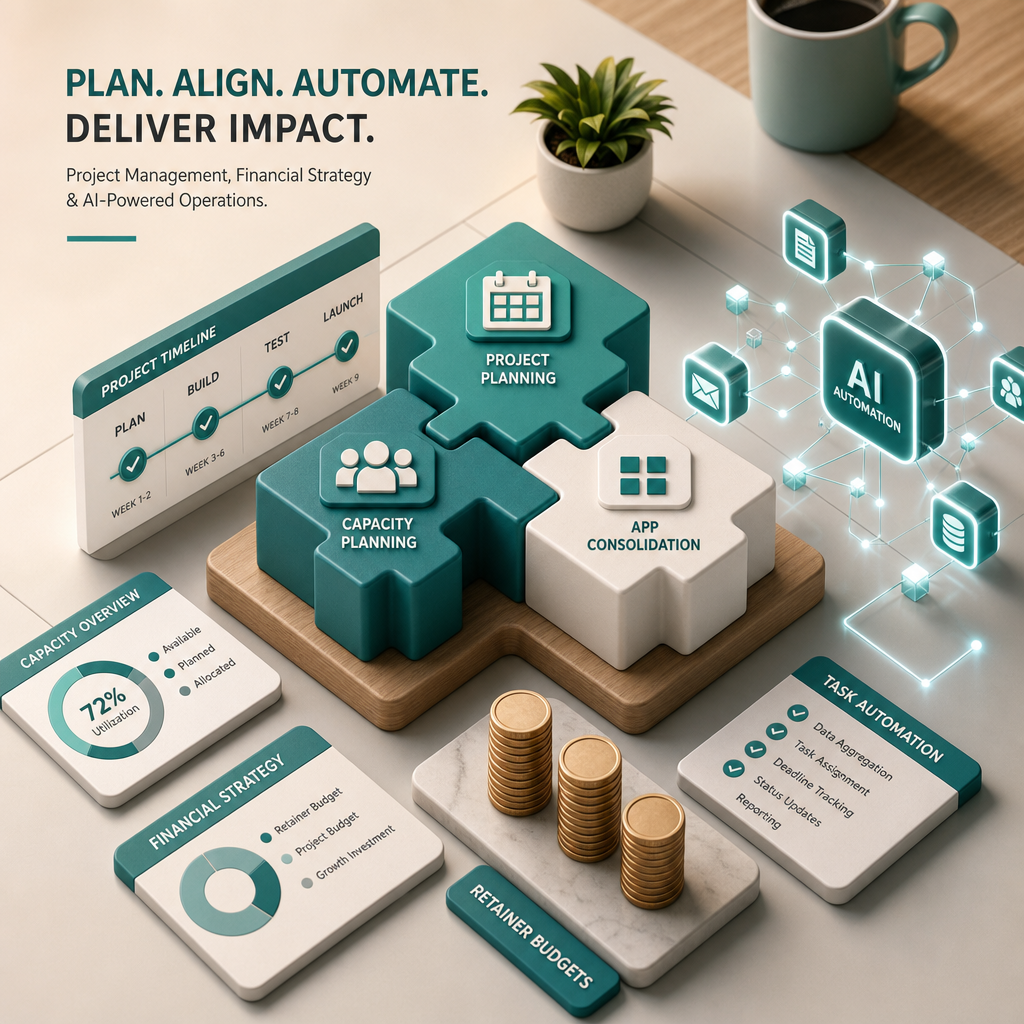


**James** and **Ashle** reconnected after James's honeymoon, with James noting it's been challenging to get back into the flow of building and using cloud code. He was pleased that things continued smoothly during his absence and that the team accomplished a lot. **Ashle** shared updates on her new house and adjusting to a heat wave without air conditioning.
The team needs to present a refined budget and timeline to Holos Movement, with **Emmanuel** and **Laura** returning from a week off (07:01). There's been no clear request for a finite budget, but the Holos team has asked for a general timeline and scope of possibilities across discussed features.
A core challenge: **ClickUp** and the **app map in Holos** currently serve as two different sources of truth (08:19). James wants to reconcile them — ideally syncing them, or recreating the app-organized structure in ClickUp and archiving the original. The Holos team has access to the app map but doesn't actively use it, so consolidation is viable.
Rather than presenting a large lump-sum budget, James proposed shifting to a **suitable monthly scale of support** that meets Holos's development goals while helping Iris plan team capacity (15:03). This would allow clear allocation of percentages of James's, Sean's, Ivan's, and Munia's time across projects.
**Ashle** suggested building an internal **ClickUp dashboard/calendar** to visualize workload across the team — helping forecast capacity, determine whether Sean can take on additional clients, plan trips, or identify hiring needs (12:43).
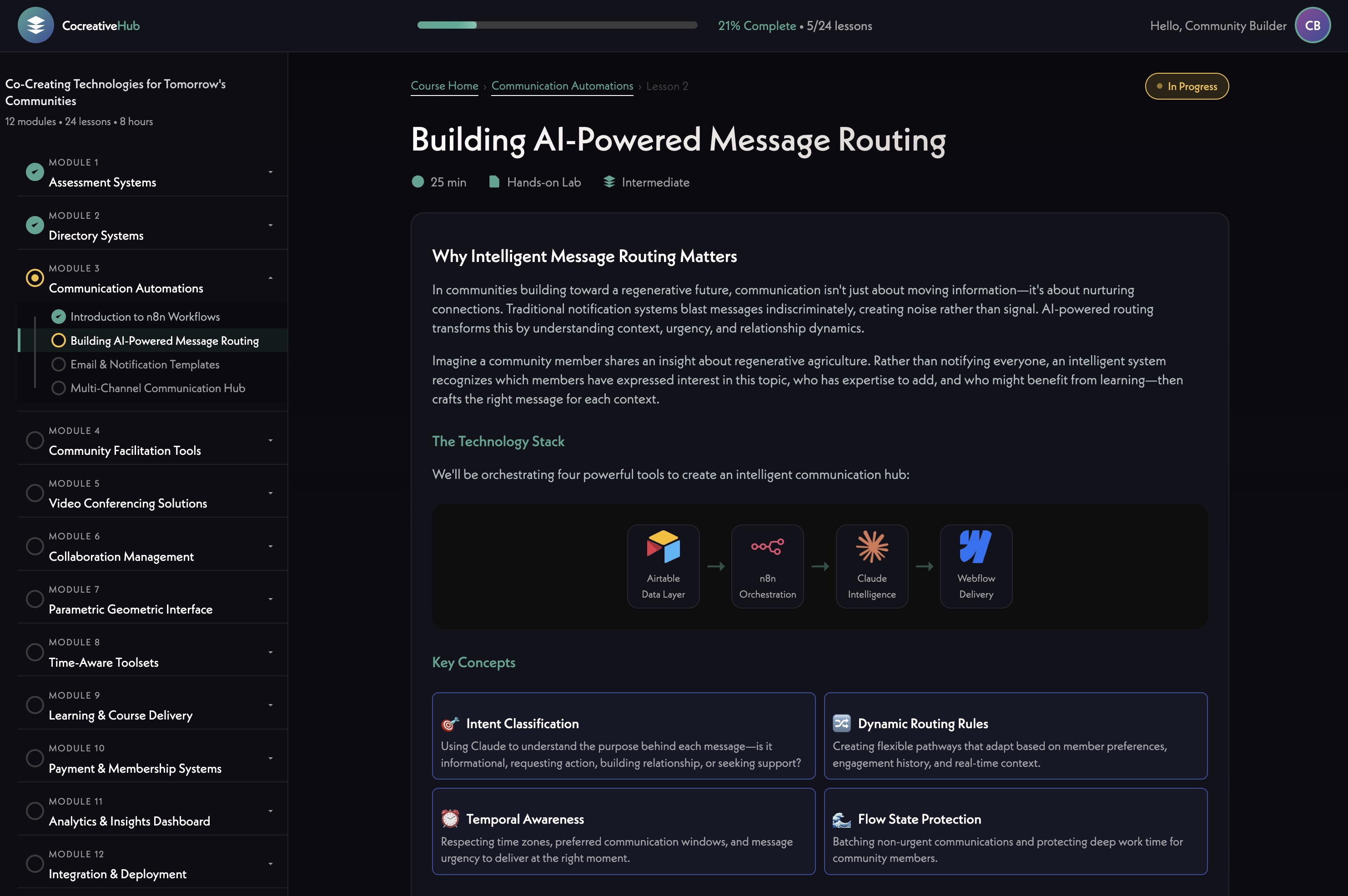
[technology="Collaboration Management Tools"]
James will generate a simplified high-level view from the existing detailed plan, similar to the four-phase timeline used in the initial proposal. The goal is to produce **two levels of information** from the same data:
- An external timeline + budget for the Holos team
- An internal view showing profit margins, team allocation, and buffer space at project end
James walked through the current effective rates:
- **James:** $150/hr (with ~290 hours on Holos to date)
- **Sean:** $125–$150/hr billed; effective contractor cost $49/hr in May, ~$77/hr in June on retainer
- **Ivan:** $90/hr cost
- **Munia:** ~$80/hr cost
Iris is currently making profit on all team hours, with administrative costs built into client-quoted rates (26:20).
**Ashle** strongly recommended James increase his own rate — suggesting it should be at least twice Sean's, given the strategic, conceptual, and architectural work he contributes (20:30). She proposed a **three-tiered external rate system** modeled on Pro Social's approach:
- Tier 1: Standard market rate
- Tier 2: Financially capable but mission-aligned clients
- Tier 3: Partners, Global South, or early-stage organizations
This replaces ad-hoc "friends and family discounts" with a structured, sustainable framework. Existing Holos rates wouldn't change, but new client engagements should reflect higher valuation of James's time.
James wants to start paying himself a **regular $10,000/month salary** (48:11). Open questions remain on contractor vs. employee setup, tax implications (15.2% self-employment tax), home office deductions, and health insurance routing. **Ashle** offered to help process payroll and set up the structure when ready.
**Ashle** met with **Wendy**, who had been considering finding another developer due to slow response times. After a productive conversation, immediate needs were resolved (split between Sean and Ashle), and upcoming work includes a new resource page and potential team page redesign to accommodate research advisors.
Wendy expressed interest in building a **community platform** — she had been evaluating **Circle** but is open to alternatives.
James clarified the strategic framing: rather than "replicating Holos," the goal is to create a **templateable online membership community** that can be easily duplicated and tailored per client (01:03:18). This same approach applies to **Gaia Warriors** and **The Hermitage Project**.
The offering would include:
- Membership capabilities
- Online learning
- Messaging
- Resource sharing
Pricing model: setup cost comparable to ~3 years of Circle, with significantly lower ongoing costs. Ashle will continue managing Wendy's smaller tasks and revisit the community platform conversation when timing aligns (likely early next year).
[technology="Custom Membership System"]
[technology="Online Learning Platforms"]
James acknowledged the project is moving slowly as he works to wrap his head around what pro-social market economy actually means conceptually (56:51). After last week's call, a clearer homepage direction emerged. James plans to mock something up personally before bringing **Munia** in to accelerate execution. He expects meaningful progress within a few weeks. The project remains within scope and budget.
The follow-up email was sent last week with no response yet — James will send a gentle follow-up if he doesn't hear back soon. The meeting went very well and the team is excited about the potential engagement.
James demonstrated using **Claude** [tag="claude"] with **ClickUp** connectors to auto-generate tasks from meeting artifacts. The system identifies workstreams, creates folders, generates subtasks, and assigns ownership — significantly reducing manual entry time.
Until full automation is built into the artifact pipeline, **Ashle** will manually shepherd tasks into ClickUp using Claude as an assistant. James will share relevant context exports so Ashle's Claude instance has the same grounding.
To streamline meeting artifact handling:
- James will forward new client meeting invites/emails to Ashle in advance
- Ashle will pre-populate people and photos in **Airtable** [tag="airtable"]
- James will always send generated artifacts to Ashle
- A new **global artifact page on Iris** will centralize visibility across all engagements
[technology="Communication Automations"]
**Ashle** raised concerns about reliance on Claude given likely future price increases. James explained his mitigation strategy: everything is built on **GitHub** [tag="github"] and can be managed by any LLM, including local models. He recently purchased a PC to test running powerful models locally — referencing AMD's new ~$1,500 desktop unit capable of running Claude-comparable models.
For automations using **n8n** [tag="n8n"], James is architecting workflows so personal data is removed before sending to LLMs, ensuring vendor swap-ability if needed (42:25).
On **GDPR/data protection**: Ashle confirmed Anthropic's data protection terms are now automatically incorporated into their terms of service, removing the need for a separate DPA for standard data processing.
James reflected that timelines often shift as reality sets in — usually because clients take more time than expected, and Iris doesn't maintain enough top-level awareness. The goal: **hold deadlines to a higher internal standard than clients do**, communicate shifts proactively, and use a centralized ClickUp overview board for major launches.
No centralized location currently exists for W9/W8 forms. **Ashle** will set up a secure **Google Drive** folder structure and collect forms for **Sean**, **Ivan**, **Munia**, and **Andy** going forward.
James needs to review hosting invoices for hosting-only clients to determine who needs to be invoiced and whether costs need updating.
### Action Items
**James Redenbaugh**
- Hone in on Holos budget and timeline details next week after Emmanuel and Laura return (07:01)
- Reconcile ClickUp and Holos app map, ideally syncing or migrating to single source of truth (08:19)
- Generate simplified high-level timeline view of Holos workstreams for client + internal use (10:13)
- Send Ashle detailed breakdown of historical hours by person and project for budget analysis (33:42)
- Grant Ashle access to ClickUp and Bonsai (52:53)
- Build global artifact page on Iris to centralize visibility across engagements (01:23:30)
- Forward new client meeting invites/emails to Ashle proactively (01:24:45)
- Send all generated meeting artifacts to Ashle automatically (01:23:15)
- Look into contractor vs. employee setup for $10k/month salary, including home office deductions (50:01)
- Review hosting invoices for hosting-only clients to update costs and billing (01:26:08)
- Follow up with Community Solutions if no response received (53:14)
- Mock up A Lolly homepage direction before bringing Munia in (56:51)
**Ashle Bailey-Gilreath**
- Research internal ClickUp dashboard/calendar options for team workload visualization (12:43)
- Compile historical time tracking and invoicing data for Holos budget framework (16:53)
- Continue managing Wendy's smaller tasks; coordinate with Sean for resource page and team page updates (01:06:35)
- Revisit community platform conversation with Wendy when timing aligns (01:07:05)
- Manually enter tasks from artifacts into ClickUp using Claude until automation is built (01:18:24)
- Set up secure Google Drive folder structure for contractor W9/W8 forms (01:27:53)
- Collect W9/W8 forms from Sean, Ivan, Munia, and Andy (01:28:19)
- Monitor James's calendar for new client engagements and artifact coordination (01:25:00)
- Set up recurring weekly Tuesday 11am sync (01:33:42)
**James** and **Ashle** reconnected after James's honeymoon, with James noting it's been challenging to get back into the flow of building and using cloud code. He was pleased that things continued smoothly during his absence and that the team accomplished a lot. **Ashle** shared updates on her new house and adjusting to a heat wave without air conditioning.
The team needs to present a refined budget and timeline to Holos Movement, with **Emmanuel** and **Laura** returning from a week off (07:01). There's been no clear request for a finite budget, but the Holos team has asked for a general timeline and scope of possibilities across discussed features.
A core challenge: **ClickUp** and the **app map in Holos** currently serve as two different sources of truth (08:19). James wants to reconcile them — ideally syncing them, or recreating the app-organized structure in ClickUp and archiving the original. The Holos team has access to the app map but doesn't actively use it, so consolidation is viable.
Rather than presenting a large lump-sum budget, James proposed shifting to a **suitable monthly scale of support** that meets Holos's development goals while helping Iris plan team capacity (15:03). This would allow clear allocation of percentages of James's, Sean's, Ivan's, and Munia's time across projects.
**Ashle** suggested building an internal **ClickUp dashboard/calendar** to visualize workload across the team — helping forecast capacity, determine whether Sean can take on additional clients, plan trips, or identify hiring needs (12:43).
[technology="Collaboration Management Tools"]
James will generate a simplified high-level view from the existing detailed plan, similar to the four-phase timeline used in the initial proposal. The goal is to produce **two levels of information** from the same data:
- An external timeline + budget for the Holos team
- An internal view showing profit margins, team allocation, and buffer space at project end
James walked through the current effective rates:
- **James:** $150/hr (with ~290 hours on Holos to date)
- **Sean:** $125–$150/hr billed; effective contractor cost $49/hr in May, ~$77/hr in June on retainer
- **Ivan:** $90/hr cost
- **Munia:** ~$80/hr cost
Iris is currently making profit on all team hours, with administrative costs built into client-quoted rates (26:20).
**Ashle** strongly recommended James increase his own rate — suggesting it should be at least twice Sean's, given the strategic, conceptual, and architectural work he contributes (20:30). She proposed a **three-tiered external rate system** modeled on Pro Social's approach:
- Tier 1: Standard market rate
- Tier 2: Financially capable but mission-aligned clients
- Tier 3: Partners, Global South, or early-stage organizations
This replaces ad-hoc "friends and family discounts" with a structured, sustainable framework. Existing Holos rates wouldn't change, but new client engagements should reflect higher valuation of James's time.
James wants to start paying himself a **regular $10,000/month salary** (48:11). Open questions remain on contractor vs. employee setup, tax implications (15.2% self-employment tax), home office deductions, and health insurance routing. **Ashle** offered to help process payroll and set up the structure when ready.
**Ashle** met with **Wendy**, who had been considering finding another developer due to slow response times. After a productive conversation, immediate needs were resolved (split between Sean and Ashle), and upcoming work includes a new resource page and potential team page redesign to accommodate research advisors.
Wendy expressed interest in building a **community platform** — she had been evaluating **Circle** but is open to alternatives.
James clarified the strategic framing: rather than "replicating Holos," the goal is to create a **templateable online membership community** that can be easily duplicated and tailored per client (01:03:18). This same approach applies to **Gaia Warriors** and **The Hermitage Project**.
The offering would include:
- Membership capabilities
- Online learning
- Messaging
- Resource sharing
Pricing model: setup cost comparable to ~3 years of Circle, with significantly lower ongoing costs. Ashle will continue managing Wendy's smaller tasks and revisit the community platform conversation when timing aligns (likely early next year).
[technology="Custom Membership System"]
[technology="Online Learning Platforms"]
James acknowledged the project is moving slowly as he works to wrap his head around what pro-social market economy actually means conceptually (56:51). After last week's call, a clearer homepage direction emerged. James plans to mock something up personally before bringing **Munia** in to accelerate execution. He expects meaningful progress within a few weeks. The project remains within scope and budget.
The follow-up email was sent last week with no response yet — James will send a gentle follow-up if he doesn't hear back soon. The meeting went very well and the team is excited about the potential engagement.
James demonstrated using **Claude** [tag="claude"] with **ClickUp** connectors to auto-generate tasks from meeting artifacts. The system identifies workstreams, creates folders, generates subtasks, and assigns ownership — significantly reducing manual entry time.
Until full automation is built into the artifact pipeline, **Ashle** will manually shepherd tasks into ClickUp using Claude as an assistant. James will share relevant context exports so Ashle's Claude instance has the same grounding.
To streamline meeting artifact handling:
- James will forward new client meeting invites/emails to Ashle in advance
- Ashle will pre-populate people and photos in **Airtable** [tag="airtable"]
- James will always send generated artifacts to Ashle
- A new **global artifact page on Iris** will centralize visibility across all engagements
[technology="Communication Automations"]
**Ashle** raised concerns about reliance on Claude given likely future price increases. James explained his mitigation strategy: everything is built on **GitHub** [tag="github"] and can be managed by any LLM, including local models. He recently purchased a PC to test running powerful models locally — referencing AMD's new ~$1,500 desktop unit capable of running Claude-comparable models.
For automations using **n8n** [tag="n8n"], James is architecting workflows so personal data is removed before sending to LLMs, ensuring vendor swap-ability if needed (42:25).
On **GDPR/data protection**: Ashle confirmed Anthropic's data protection terms are now automatically incorporated into their terms of service, removing the need for a separate DPA for standard data processing.
James reflected that timelines often shift as reality sets in — usually because clients take more time than expected, and Iris doesn't maintain enough top-level awareness. The goal: **hold deadlines to a higher internal standard than clients do**, communicate shifts proactively, and use a centralized ClickUp overview board for major launches.
No centralized location currently exists for W9/W8 forms. **Ashle** will set up a secure **Google Drive** folder structure and collect forms for **Sean**, **Ivan**, **Munia**, and **Andy** going forward.
James needs to review hosting invoices for hosting-only clients to determine who needs to be invoiced and whether costs need updating.
### Action Items
**James Redenbaugh**
- Hone in on Holos budget and timeline details next week after Emmanuel and Laura return (07:01)
- Reconcile ClickUp and Holos app map, ideally syncing or migrating to single source of truth (08:19)
- Generate simplified high-level timeline view of Holos workstreams for client + internal use (10:13)
- Send Ashle detailed breakdown of historical hours by person and project for budget analysis (33:42)
- Grant Ashle access to ClickUp and Bonsai (52:53)
- Build global artifact page on Iris to centralize visibility across engagements (01:23:30)
- Forward new client meeting invites/emails to Ashle proactively (01:24:45)
- Send all generated meeting artifacts to Ashle automatically (01:23:15)
- Look into contractor vs. employee setup for $10k/month salary, including home office deductions (50:01)
- Review hosting invoices for hosting-only clients to update costs and billing (01:26:08)
- Follow up with Community Solutions if no response received (53:14)
- Mock up A Lolly homepage direction before bringing Munia in (56:51)
**Ashle Bailey-Gilreath**
- Research internal ClickUp dashboard/calendar options for team workload visualization (12:43)
- Compile historical time tracking and invoicing data for Holos budget framework (16:53)
- Continue managing Wendy's smaller tasks; coordinate with Sean for resource page and team page updates (01:06:35)
- Revisit community platform conversation with Wendy when timing aligns (01:07:05)
- Manually enter tasks from artifacts into ClickUp using Claude until automation is built (01:18:24)
- Set up secure Google Drive folder structure for contractor W9/W8 forms (01:27:53)
- Collect W9/W8 forms from Sean, Ivan, Munia, and Andy (01:28:19)
- Monitor James's calendar for new client engagements and artifact coordination (01:25:00)
- Set up recurring weekly Tuesday 11am sync (01:33:42)
Hone in on Holos budget and timeline details after Emmanuel and Laura return
July 7, 2026
Refine Holos Movement budget and timeline after Emmanuel and Laura return from their week off. Present scope of possibilities across discussed features. Referenced at 07:01.
Reconcile ClickUp and Holos app map into single source of truth
July 7, 2026
ClickUp and the Holos app map currently serve as two different sources of truth. Reconcile by syncing them or migrating app-organized structure into ClickUp and archiving the original. Holos team has access to app map but doesn't actively use it, making consolidation viable. Referenced at 08:19.
Generate simplified high-level timeline view of Holos workstreams for client and internal use
July 7, 2026
Produce two levels of information from the same data: an external timeline and budget for the Holos team, and an internal view showing profit margins, team allocation, and buffer space at project end. Similar to the four-phase timeline used in initial proposal. Referenced at 10:13.
Research internal ClickUp dashboard and calendar options for team workload visualization
July 10, 2026
Build internal ClickUp dashboard and calendar to visualize workload across the team. Helps forecast capacity, determine whether Sean can take on additional clients, plan trips, or identify hiring needs. Referenced at 12:43.
Send Ashle detailed breakdown of historical hours by person and project for budget analysis
July 3, 2026
Share historical hours breakdown by person and project so Ashle can compile data for Holos budget framework analysis. Referenced at 33:42.
Compile historical time tracking and invoicing data for Holos budget framework
July 10, 2026
Compile historical time tracking and invoicing data to support Holos budget framework development. Will inform the monthly retainer model and team allocation percentages. Referenced at 16:53.
Grant Ashle access to ClickUp and Bonsai
July 3, 2026
Provide Ashle with access to ClickUp for task management and Bonsai for project/invoicing visibility. Referenced at 52:53.
Build global artifact page on Iris website to centralize visibility across all engagements
July 18, 2026
Create a new global artifact page on the Iris website that centralizes visibility of all meeting artifacts across all engagements. Referenced at 01:23:30.
Forward new client meeting invites and emails to Ashle proactively for artifact coordination
July 3, 2026
Establish workflow of forwarding new client meeting invites and emails to Ashle in advance so she can pre-populate people and photos in Airtable before meetings occur. Referenced at 01:24:45.
Send all generated meeting artifacts to Ashle automatically
July 3, 2026
Establish process of sending all generated meeting artifacts to Ashle so she can manually shepherd tasks into ClickUp using Claude as an assistant until full automation is built. Referenced at 01:23:15.
Manually enter tasks from meeting artifacts into ClickUp using Claude until automation is built
July 10, 2026
Ashle will manually shepherd tasks into ClickUp using Claude as an assistant after receiving meeting artifacts from James. James will share relevant context exports so Ashle's Claude instance has the same grounding. Referenced at 01:18:24.
Research contractor vs employee setup for $10k per month salary including home office deductions and health insurance
July 18, 2026
Investigate contractor vs. employee setup for James paying himself a regular $10,000/month salary. Open questions include tax implications (15.2% self-employment tax), home office deductions, and health insurance routing. Ashle offered to help process payroll and set up structure when ready. Referenced at 50:01.
Review hosting invoices for hosting-only clients to update costs and determine billing needs
July 10, 2026
Review all hosting invoices for hosting-only clients to determine who needs to be invoiced and whether costs need updating. Referenced at 01:26:08.
Send follow-up email to Community Solutions if no response received
July 3, 2026
A follow-up email was sent last week with no response. Send a gentle follow-up to Community Solutions if no response is received soon. The initial meeting went very well and the team is excited about the potential engagement. Referenced at 53:14.
Mock up ILALI homepage direction before bringing Munia in to accelerate execution
July 18, 2026
Continue managing Wendy's smaller tasks and coordinate with Sean for resource page and team page updates
July 18, 2026
Ashle to continue managing Wendy's smaller tasks. Upcoming work includes a new resource page and potential team page redesign to accommodate research advisors. Coordinate with Sean for these updates. Referenced at 01:06:35.
Revisit community platform conversation with Wendy when timing aligns
September 1, 2026
Wendy expressed interest in building a community platform and had been evaluating Circle but is open to alternatives. Ashle will revisit the community platform conversation when timing aligns, likely early next year. The templateable membership community offering includes membership capabilities, online learning, messaging, and resource sharing. Referenced at 01:07:05.
Set up secure Google Drive folder structure for contractor W9 and W8 forms
July 10, 2026
No centralized location currently exists for W9/W8 forms. Set up a secure Google Drive folder structure to store contractor tax documents. Referenced at 01:27:53.
Collect W9 and W8 forms from Sean, Ivan, Munia, and Andy
July 18, 2026
Collect W9/W8 tax forms from contractors Sean, Ivan, Munia, and Andy after Google Drive folder structure is set up. Referenced at 01:28:19.
Monitor James's calendar for new client engagements to support artifact coordination
July 3, 2026
Ashle will monitor James's calendar for new client engagements and pre-populate people and photos in Airtable in advance of meetings to streamline artifact coordination workflow. Referenced at 01:25:00.
Set up recurring weekly Tuesday 11am sync between James and Ashle
July 2, 2026
Share context exports with Ashle so her Claude instance has same grounding for task entry
July 3, 2026
James will share relevant context exports so Ashle's Claude instance has the same grounding when she uses Claude to manually shepherd tasks into ClickUp from meeting artifacts. Referenced at 01:18:24.
Define tiered external rate structure to replace ad-hoc discount model for new client engagements
July 18, 2026
Ashle recommended a three-tiered external rate system modeled on Pro Social's approach: Tier 1 standard market rate, Tier 2 financially capable but mission-aligned clients, Tier 3 partners and Global South organizations. Replaces ad-hoc friends and family discounts with a structured sustainable framework. James's rate should be at least twice Sean's given strategic and architectural contributions. Existing Holos rates unchanged but new engagements should reflect higher valuation. Referenced at 20:30.
Development of collaborative access and workflow integration for new talent partners. Includes providing Webflow site access, GitHub repository access, and n8n automation access for collaborative development. Features starter project identification with Loom instruction videos, profile editing implementation with Supabase authentication, and integration into IRIS development workflows.
Development of comprehensive design system for IRIS including UI/UX standards: padding and margins, color palette strategies, navigation elements, button styles, and overall style guides. Creating reusable templates and visual cohesion across all platform interfaces. Foundation for rapidly building new client projects while maintaining quality and consistency. Exploring integration with Mast Framework's advanced component system including custom props, nested components, Phosphor icon library, CSS variables, and clamp-based responsive typography with mathematical ratio scaling (1.25 min, 1.41 max based on √2). JUNE 2026 UPDATE: Sean leading migration to robust Webflow components covering tags, cards, onboarding flows, editable fields, and more (21:26). Strategic insight: this design system migration directly de-risks the mobile build by formalizing components in Webflow and tracking corresponding React components on design system page, enabling web and mobile to stay in sync as features evolve. Design system serves as bridge between Webflow HTML/CSS (which cannot be directly ported to React Native) and native mobile components - each Webflow component will eventually have mirrored React component. Team envisioning workflow where features are built in tandem across platforms once foundation is laid.
Strategic shift in business model moving away from custom one-off solutions toward developing perpetually evolving toolsets that benefit all clients indefinitely. When improvements are made to core technologies, all clients using those modules receive updates automatically. This approach enhances client relationships through ongoing value delivery, improves scalability, creates recurring revenue opportunities, and builds compounding institutional knowledge. Focus on leveraging AI capabilities to provide sophisticated functionality while combining human design sensibility with emerging AI tools. Transition from website studio to web app development model with emphasis on 'beautiful business' serving purpose beyond profit maximization. Aspirational collective ownership model for team members where contributors share in long-term value creation. New retainer collaboration model where contributors maintain independent client relationships while working with IRIS, creating symbiotic learning environment. Team members work on backlog of client and internal projects, ensuring consistent work availability and reducing organizational bottlenecks. NEW: Structured three-tiered external rate system replacing ad-hoc discounts: Tier 1 (standard market rate), Tier 2 (financially capable mission-aligned clients), Tier 3 (partners/Global South/early-stage). James rate increased to at least 2x Sean's reflecting strategic and architectural value (20:30). Monthly retainer model for clients enabling clear team capacity allocation and planning (15:03). James implementing regular $10,000/month salary with research needed on contractor vs employee structure (48:11).
Centralized resource hub serving as home base for team and new members. Organizes information by categories like development and design, covering style guides, class naming conventions, tool selection, project organization, and time tracking procedures. Long-term vision includes an AI bot with access to full resource library for conversational Q&&A interface, transforming traditional FAQ model into intelligent assistance. NEW: Secure Google Drive folder structure for contractor documentation (W9/W8 forms) being implemented (01:27:53). Historical time tracking and invoicing data compilation to support budget frameworks and capacity planning (16:53).
Fully automated N8N workflow system processing Zoom transcripts to generate comprehensive meeting artifacts. AI-powered features include speaker-highlighted transcripts, contextual summaries, technical system tags, and intelligent action item creation with context awareness of existing initiatives. Bidirectional Airtable-Webflow sync enables faster updates and advanced automations. Editable action items with assignment tracking across all project meetings. System demonstrates advanced integration between multiple platforms to create seamless documentation workflow. Workflow architecture includes artifact creator that runs manually after meetings pulling from Fireflies, finding people and clients in CMS, retrieving past artifacts for context, formatting everything through prompts with tags and tools lists. Separate agents find initiatives and create images before creating Airtable records. Additional automation updates initiatives and creates action items. Same pipeline automatically generates photorealistic images for client CMS posts without images using Gemini models. NEW: Global artifact page on Iris site to centralize visibility across all engagements (01:23:30). Proactive coordination workflow where James forwards meeting invites to Ashle who pre-populates people/photos in Airtable (01:24:45). Claude-assisted task generation from artifacts into ClickUp until full automation complete (01:18:24).
Internal ClickUp dashboard and calendar system to visualize workload and capacity across the entire Iris team. Enables forecasting capacity, determining whether Sean or others can take on additional clients, planning trips and time off, and identifying hiring needs. Helps hold deadlines to higher internal standards and communicate shifts proactively. Supports monthly retainer model by showing clear allocation of team percentages across projects. Includes centralized overview board for major client launches and milestone tracking.
Development of templateable online membership community platform that can be easily duplicated and tailored per client. Offering includes membership capabilities, online learning (LMS), messaging, and resource sharing. Designed as alternative to Circle and similar platforms with comparable setup cost to ~3 years of Circle subscription but significantly lower ongoing costs. Target clients include Wendy's project, Gaia Warriors, and The Hermitage Project. Templates leverage existing modular platform technologies (Custom Membership System, Online Learning Platforms, Community Facilitation Tools) in repeatable configuration. Vision is to create a standardized offering that can be rapidly deployed with client-specific customization while maintaining all benefits of modular architecture where improvements benefit all instances.
Technical architecture strategy to mitigate risks from AI vendor dependence (particularly Claude/Anthropic price increases). Implementation approach: all automations built on GitHub enabling management by any LLM including local models. N8N workflows architected to remove personal data before sending to LLMs ensuring vendor swap-ability. Testing local model deployment using AMD desktop hardware (~$1,500) capable of running Claude-comparable models locally. GDPR/data protection compliance confirmed through Anthropic's automatic DPA incorporation in terms of service. Strategy ensures Iris can pivot to alternative LLMs (including self-hosted) without rebuilding core automation infrastructure.
00:00:02
**James Redenbaugh**: Hi, Ashley.
00:00:04
**Ashle Bailey-Gilreath**: How are you?
00:00:06
**James Redenbaugh**: I'm good. I'm out of focus. How are you?
00:00:10
**Ashle Bailey-Gilreath**: See that? You have great artwork on your walls.
00:00:15
**James Redenbaugh**: Thanks. Something's wrong with my camera. One sec. Oh, maybe it's fake. Oh, something's definitely wrong. This meeting is being recorded. There we go. Strange metaphor for how I've been lately. Unfocused and in a haze.
00:00:59
**Ashle Bailey-Gilreath**: Yeah, well, you're like, mind got the taste of what it's like to be a regular person with downtime, quality time.
00:01:09
**James Redenbaugh**: And it's like, no, don't go back. Don't go back.
00:01:14
**Ashle Bailey-Gilreath**: Yeah.
00:01:17
**James Redenbaugh**: Yeah. It's been so hard to learn to like, remember how to do things, build things, use cloud code. I'm like, I know I was doing this right before I left, but how do I. How do I do it?
00:01:34
**Ashle Bailey-Gilreath**: Yeah.
00:01:39
**James Redenbaugh**: Finally yesterday I feel like I got it working again and got in the flow on some hollows updates and got. Got a bunch of important stuff done last week. A lot of good meetings. But I feel like. I'm definitely feel like I'm still catching up now, but was really happy with how things continued while I was gone and everybody got a ton of things done and nothing, nothing exploded and went terribly wrong.
00:02:19
**Ashle Bailey-Gilreath**: Everything's all right, as far as I know.
00:02:22
**James Redenbaugh**: Yeah. How are you doing?
00:02:25
**Ashle Bailey-Gilreath**: I'm okay. I'm doing all right. It's really hot here. We're about to be in a heat wave. So that's a weird experience because we don't have air conditioning. But it happens every year. There's like two or three weeks where it's like unbearable. So like mentally preparing for that because I don't really like the heat, which is why we. One of the great things about moving over where we moved over to is we thought we got away from it, but climate change and stuff, it's been wild to see things. It's changed, like, because we've been here almost 14 years. So like the way it was when we first got here to the way it is now is like drastically different. Yeah. So I'm doing fine besides that. Just hot and comfortable.
00:03:16
**James Redenbaugh**: How's the new house?
00:03:18
**Ashle Bailey-Gilreath**: It's going okay. It's. It's hot so the. We don't have any shade. It's kind of like a totally remodeled. It's not really our style, but let's stay in the village and that was important. And it's not. It's not bad. It's just very like modern, you know, and totally renovated and it's fairly new and. And it's just got one of those back garden areas, that's just like a square of grass. Like there's no, there's nothing. There's like no shade anywhere. So like where we lived before, we had a lot of shade and you could kind of get away from the heat. But so. And like when you go out in the garden, there's a community like, walking trail throughout the entire village and. And like a bunch of picnic tables. And it's like right outside her garden. And like, our fence is low so we could see the water. But then like when you go outside, like, everyone can see you too. So like, I mean it's not tons of people, but definitely have to like, be prepared for that. That friends and people that we know in the village or whatever are just gonna like see me in my pajamas sometimes in the morning, my love. So. But I mean it's. It's fine. It's not. We're getting there. We still have boxes and stuff to unpack, but I feel like nobody ever really totally unpacks, no matter what.
00:04:54
**James Redenbaugh**: Yeah.
00:04:55
**Ashle Bailey-Gilreath**: You realize you didn't need all that stuff and then you're like, well, I'll just leave it in this box. And then you just move the boxes with you then at the next place. So.
00:05:03
**James Redenbaugh**: Yeah, you gotta move them along.
00:05:05
**Ashle Bailey-Gilreath**: Yeah. It's like the wires, like the boxes of wires are like. You're like, I don't know, we might need these ones. We mean, we may.
00:05:14
**James Redenbaugh**: You might.
00:05:15
**Ashle Bailey-Gilreath**: And then every once in a while you do and then you're like, See?
00:05:19
**James Redenbaugh**: Yeah, 90s.
00:05:20
**Ashle Bailey-Gilreath**: Yeah. Or the boxes that all the electronics came in.
00:05:24
**James Redenbaugh**: Huh? Yeah. Yeah, we're gonna need those at some point. I've gotta say that.
00:05:31
**Ashle Bailey-Gilreath**: And you resell it.
00:05:34
**James Redenbaugh**: Yeah. We still have art to hang. We moved in like two and a half years ago.
00:05:39
**Ashle Bailey-Gilreath**: Yeah. We were at the other place for almost three years and we still had art to hang. So vowing to try to get. Cut that down to maybe six months here. Yep.
00:05:52
**James Redenbaugh**: Yep.
00:05:53
**Ashle Bailey-Gilreath**: But then it just kind of lives like, like in this eclectic way on the ground against the. Leaned up against the walls and you're like, that's nice there. Like that.
00:06:04
**James Redenbaugh**: Yeah.
00:06:06
**Ashle Bailey-Gilreath**: Yeah.
00:06:08
**James Redenbaugh**: Awesome. So great agenda. I had to look at it yesterday. I didn't have anything to add. Just bring it up over here. Here we go. So. Yeah. Where should we. Where should we start? Hollows.
00:06:50
**Ashle Bailey-Gilreath**: Sure.
00:06:51
**James Redenbaugh**: Cool. So.
00:07:01
**Ashle Bailey-Gilreath**: Yeah.
00:07:02
**James Redenbaugh**: Yeah. Budget framework, deadline to present to them. So right now Emmanuel and Laura are taking a week off. So I know they wouldn't look at anything until next week, but next week would be A good point to. Kind of hone in on that. There's been no clear request from anyone at Hollow Movement to get a finite budget. But they have asked that timer's still running. They have asked for like a general kind of timeline and scope of possibilities on the, the. The different features that we've been discussing. And I've put everything that we've talked about, talked with them about as a team into here and assigned a bunch of things to Sean and some things to Ivan.
00:08:16
**Ashle Bailey-Gilreath**: And.
00:08:19
**James Redenbaugh**: Sean's been doing a great job of using this and getting stuff done. One issue we have right now is I'm just going to share this whole screen for a sec. Click up and our app map over here are two different sources of truth right now. And I want to reconcile them because. There's things that we've been planning on building over here for a while that are still in the pipeline. There's things that we haven't really discussed in a while but should stay as ideas and there's things over here that, that aren't over here. And the reason I don't want to just completely jump ship to ClickUp is because with all of these things in Holos is because this is all organized around the pages and the features. And so. I. In a perfect world, these would be synced and I want to see if I can sync them somehow or, or just create this structure over here in ClickUp and archive this.
00:10:13
**Ashle Bailey-Gilreath**: Because is it just like IRIS team members that have access to the.
00:10:21
**James Redenbaugh**: The Holos team also has access to. To this, but they don't really use it that much.
00:10:32
**Ashle Bailey-Gilreath**: Okay. I didn't know if there is something like specific or necessary about them having access and like transparency and stuff, or if it's just. It was a good idea at the time, but no one's really using it, so it's okay if.
00:10:53
**James Redenbaugh**: Yeah, it's okay. This is something. I volunteered to keep things organized. Would be, you know, I don't. It would be fine with them if they don't see it and it's not public on the site in any way. So.
00:11:16
**Ashle Bailey-Gilreath**: Okay.
00:11:20
**James Redenbaugh**: But if I could get it synced somehow, that would be cool, but it's not necessary. But anyway, I can spend some time on this and then. Generate a high level view of everything that's a little more simplified so we can see on a time horizon the, The important domains of development similar to what I did in the initial proposal here. Here we had these four phases, but I also had this, this timeline where we were mapping out the particular things we didn't exactly follow this timeline.
00:12:31
**Ashle Bailey-Gilreath**: Yeah.
00:12:32
**James Redenbaugh**: And it changed as we went along. But I think it'll be good to have a simple, a simple version of this.
00:12:43
**Ashle Bailey-Gilreath**: Okay. Is it mainly. So one of the things this touches on one of the other items on the list that I made. But so providing the Hollows team with a timeline makes sense obviously. But then also one of the things that Sean and I talked about was to be able to create a general idea and you and I have talked about this too like some sort of general overarching like dashboard that has a calendar so we can kind of see like where there's too many projects like that are being promised at a certain time. So like that means like so if you're assigning stuff to Sean, but Sean also works on his, on his own stuff like is he, you know, can he take on an extra client in August? He doesn't know. Do you know what I mean?
00:13:45
**James Redenbaugh**: Yeah.
00:13:46
**Ashle Bailey-Gilreath**: And then like can you plan a trip?
00:13:50
**James Redenbaugh**: Yeah, why?
00:13:51
**Ashle Bailey-Gilreath**: Don't know. You know what I mean? Stuff like that. So.
00:13:54
**James Redenbaugh**: Yeah. Or do I need to hire another person?
00:13:57
**Ashle Bailey-Gilreath**: Yeah.
00:13:58
**James Redenbaugh**: Yeah.
00:14:00
**Ashle Bailey-Gilreath**: So. So like totally understand the high level timeline and overview and everything for the team like the client. But then internally it would be good and I can try to spend some time looking into it if there's an easy way in ClickUp to be able to create that kind of a dashboard. Just because for right now it would be good to primarily utilize one space for project management just so nothing falls through the cracks and then we can have stuff like that happen like be able to project out like the load of work and stuff. But. So I didn't know how you felt about that but it was something that Sean and I talked about when we met. I think that's a great idea because it overlaps with what you were talking about as well.
00:15:03
**James Redenbaugh**: Yeah, totally. Yes. So I think maybe with Hollow Movement it would be good to instead of a, a new large budget, we find. A suitable monthly scale of support that will help us meet their development goals and help us plan our time around that so I can know like, you know, I should, I should have this much percentage of my time every month on this project and this much percentage of Sean's time. And I think Yvonne, right now he's only working on this so that that can fluctuate and Munia sometimes needed for this and sometimes not. And we want a system where we can. Make sure Sean and I don't get overloaded but also make sure like Munia has enough work and things to do which is mostly going to be. Smaller projects than Holos.
00:16:49
**Ashle Bailey-Gilreath**: Okay.
00:16:53
**James Redenbaugh**: And so I think that we can start with just like a spreadsheet where we can have a. A column for each week and look at kind of high level time allocation on different projects and. And then look at each of our projects and space them out so that we get everything done and forecast into the future as much as possible.
00:17:38
**Ashle Bailey-Gilreath**: Okay. One of the things that would be really helpful would be if you did you track your time when you worked on the Hollows app or the website?
00:17:54
**James Redenbaugh**: I have a rough. Yeah. A rough accounting of my time on.
00:18:00
**Ashle Bailey-Gilreath**: On holiday because I had. Sean said that he had and so he sent me for that project because I thought the best thing to do is to base this on evidence. And so just to be able to see not only like it's not only like around time management and then projecting those. That time commitment, But also just seeing like even though they are your biggest client, are you actually charging the right amount?
00:18:41
**James Redenbaugh**: Mm, good question. So. Let's see. Where is this? Oh, I just gave them a total. The total hours we spent across.
00:19:14
**Ashle Bailey-Gilreath**: Okay.
00:19:18
**James Redenbaugh**: Different aspects and in the invoice. The last invoice I sent them goes until May 1st. I still have to invoice for what we've done before May. I mean after May.
00:19:41
**Ashle Bailey-Gilreath**: Okay.
00:19:44
**James Redenbaugh**: And we can see that.
00:19:49
**Ashle Bailey-Gilreath**: Okay.
00:19:51
**James Redenbaugh**: By far my hours are.
00:19:54
**Ashle Bailey-Gilreath**: Yeah.
00:19:56
**James Redenbaugh**: The bulk of the.
00:19:57
**Ashle Bailey-Gilreath**: Is your rate only 150. James?
00:20:05
**James Redenbaugh**: Well, I'm also not in. Well, what do you think it should be.
00:20:15
**Ashle Bailey-Gilreath**: At least twice of Sean's.
00:20:30
**James Redenbaugh**: Yeah,.
00:20:32
**Ashle Bailey-Gilreath**: Probably a higher but I mean probably twice that to be fair. As I understand that within that 290 hours some of it may have been basic things that you were doing, but another huge bulk of it is like overarching like development and strategy and like brainstorming and like concept building. Do you know what I mean? Like things wouldn't have. Things within the app wouldn't exist had you not used your time on them. Does that make sense?
00:21:09
**James Redenbaugh**: Yeah, definitely. And May and maybe I could have multiple rates. But also it's tricky with Holos because. A lot of what we've spent time on we can reuse for future projects.
00:21:26
**Ashle Bailey-Gilreath**: Yeah. Maybe what might be helpful is we can set a three tiered. We do this at Pro Social. A three tiered rate for external, like external rates. So basically if you have. We have. If we're going to work with a partner and we know that they're like in the global south or they deserve just starting out. We, we do tier three like, the lowest that we possibly can while still being sustainable. And then tier two would be for, you know, people who we know are financially all right, but not, you know, and then tier three would be like, if it was a court for a partnership or somebody's just, you know, so we could maybe do tears for your rates and so. And you can pick what level of. Based on.
00:22:23
**James Redenbaugh**: Yeah.
00:22:24
**Ashle Bailey-Gilreath**: What you see there. Like, so, you know, like, the flourishing project probably be the lower tier just because they don't have very much money and all that. So instead of, like, friends and family discount kind of things, you've already got tiered rates, like, set tier. Know what I mean? And obviously, you can decide if you want to give your time some things. But, yeah, your rate should definitely be higher. I was going to ask you before you went on your honeymoon, and you. I had asked, like, what was Sean's rate? You said 125 to 150. And I was wondering, whenever you quote that amount, do you add on, like, an administrative fee? Does that make sense? So, like, I'm. But I know now that Sean's on a retainer. But I just didn't know, like, it. When I communicated with Wendy, I said 150 because that was the higher end of it, but because Sean's working through you. And then there's like. I mean, there's administrative aspects to, like, working with Sean or any of the contractors that you have.
00:23:41
**James Redenbaugh**: Yeah.
00:23:42
**Ashle Bailey-Gilreath**: Like, when you say 150, is it. Is it actually 150? I did. I obviously did not ask Sean.
00:23:52
**James Redenbaugh**: Yeah.
00:23:54
**Ashle Bailey-Gilreath**: But I was just wondering.
00:24:00
**James Redenbaugh**: Let's see. It's May. So in May, it worked out. You know, he asked me for 3,500 for unlimited hours, but he ended up working a lot more than he thought. So we ended up with an effective rate of $49 an hour for him.
00:24:30
**Ashle Bailey-Gilreath**: Yeah.
00:24:31
**James Redenbaugh**: And then.
00:24:36
**Ashle Bailey-Gilreath**: He.
00:24:39
**James Redenbaugh**: He came back to me for June, and he was like, initially it was like 8k for unlimited. And I was like, that. That seems a little high. And so he came down to 5,800 for unlimited, which is really, you know, I'd be happy if it ends up being like 20 hours a week. And then his effective rate is 77.
00:25:07
**Ashle Bailey-Gilreath**: Okay. Okay. And so that's. That's. That's helpful. I'm glad that it's like that. So, like, when I communicate to a client and I say, like, for little things, like, for Wendy, I said 150. And I said 150 because it was the higher end of it. And I was like, Is there company costs sort of built into what I'm communicating to Wendy, or did I just tell her the.
00:25:30
**James Redenbaugh**: Yes.
00:25:31
**Ashle Bailey-Gilreath**: You know, like, I was like, this is really important. But at least it was Wendy, and there's a different kind of relationship there. And it was just a few things she needed, but I was like, so I'm glad to see that it. What I have quoted to her is effectively double because, like, I spent a lot of time with her and I did a lot of stuff instead of sending it to Sean because I could. Because it was like super basic webflow stuff. And because I didn't know and I didn't want for him to spend more of his time because his time per hour is more than mine. And so that's why I went ahead and did some things. But I'm glad to see that it is like that because I just wanted to make sure it was. It was factored into the amount that you told me.
00:26:20
**James Redenbaugh**: Yeah, yeah, okay. Exactly. And so 150 is a good. A good rate for Sean. And if it's 125, we're still making profit. And what we end up invoicing isn't always what we end up paying. So. So if, like.
00:26:36
**Ashle Bailey-Gilreath**: Sure.
00:26:36
**James Redenbaugh**: If Sean's really taking more time than I think he should on. On a task, we have legal room, so I might pay him for 15 hours, but we only bill for 12. And then we could still make a profit. Okay. Got like that. Okay. And Yvonne. Avon's at 90.
00:27:04
**Ashle Bailey-Gilreath**: Okay.
00:27:07
**James Redenbaugh**: And so we're. We're still making a profit on those hours. Okay. But I just kept him at the same rate as Sean because he's. He's doing more, but it's harder to see what he's doing. He's spending more hours, but he also needs less administration. You know, I kind of put him to work on something large. He does it. And Munia's cost, I think, is about 80 an hour. Okay. So we're. Yeah, we're making profit on all of them. Okay.
00:27:50
**Ashle Bailey-Gilreath**: I was just making. I was mainly when I communicated to Wendy because she kind of balked at the price. And then I was like, sh. It. I really hope that there's admin built into this.
00:28:00
**James Redenbaugh**: Yeah.
00:28:01
**Ashle Bailey-Gilreath**: So. But I'm really glad to see that. I assumed so, but I wasn't sure because that's. That's good to know.
00:28:11
**James Redenbaugh**: Yeah.
00:28:12
**Ashle Bailey-Gilreath**: Well, this is helpful, I think. Can you. I take screenshot of it. I was gonna say, can you send me this? But I'll take screenshot of it. And then that'll help me kind of figure out. I still don't know based on like, overall, like task and milestones and stuff, what the breakdown is. But I'm just trying to get some previous evidence to inform your future decisions so that you can see if your intuition is accurate. Because it, I know for yourself, like, working as an individual person, that. But also the whole goal is hopefully for me to help Iris get to a point where you're just making bank and you guys can have babies and she doesn't need to work. And so, and see, so what I'm trying to see is like, is it like, is your profit margin good enough? And are there possibilities, like creating a tiered system where you have a structure to be able to charge? Basically, it's a not pay what you can. But you're identifying, like, I'm pretty sure that there's this here or like with the app, I mean, you can potentially reuse it or repurpose part of it. So I get that. Um, so. And that might bring you more business. But so anyways, I, it would just help to get any kind of record of like, hours and time and stuff. And I figured the app is, is the most massive thing. So Sean sent me his toggle report for the website and the app. So I've got like, literally, like, like broken, like a lot more information than I needed, but that's okay. So that'll help because it'll show what he invoiced for versus what we charged for and then where that margin is.
00:30:29
**James Redenbaugh**: Yeah, yeah. And also I can show you. I don't know, It's not anywhere. One sec. Yeah, so, but essentially I think it's, it's not good enough yet, but it's a lot better than last year. And I think profit margin wise and billing wise, hollow movement is kind of in the middle of where we should target. You know, I've been working with them for a long time. I, I, I'm hesitant to charge them too much. I know they don't have unlimited funds. I know it's all.
00:31:41
**Ashle Bailey-Gilreath**: Well, I wouldn't change, I guess when I said about your training. Yeah. Definitely wouldn't change your rates because you've been invoicing them at that and that would be awful to change that now. I just was thinking is that the rate that you charge in general, that you put to yourself, because I think that your time is valid, the valuation of your time should be higher.
00:32:03
**James Redenbaugh**: I think you're right. And I'm just articulating with, with new clients, we should definitely Price it higher.
00:32:16
**Ashle Bailey-Gilreath**: Okay. And if you want to keep that rate for, you know, certain things that come through that, you know, the budget's limited and you really want to spend your time on it, then you at least have a lower rate.
00:32:35
**James Redenbaugh**: But. Yeah, and if I'm actually invoicing for all my hours, like, I'm happy with that.
00:32:41
**Ashle Bailey-Gilreath**: Yeah.
00:32:41
**James Redenbaugh**: Right. You know, I've had much lower effective rates than that.
00:32:49
**Ashle Bailey-Gilreath**: Oh, geez. Okay.
00:32:54
**James Redenbaugh**: But I think in. In. In general, we want to spend, you know, figure out how to get more of my time on the higher ticket items and get more team time on things as well. And also for this project, I'm spending a ton of my time on it myself. But if we were to do this again.
00:33:18
**Ashle Bailey-Gilreath**: Yeah.
00:33:18
**James Redenbaugh**: These numbers would be reversed where, like, I would spend much fewer of my hours and then I should charge a lot more for those hours. But there's a lot more that I could delegate because we already figured all this stuff out. Yep. Let me. I don't know if I'll be able to find this. It's okay. I have a more detailed breakdown of hours that shows. It broken down by person and what I'm charging, and I'll try to find that and send that to you.
00:34:04
**Ashle Bailey-Gilreath**: Okay. That's awesome. Thank you. So for the budget for them, it sounds like it's not just a budget, but it's also a timeline. And so you need. You want a high level to send to them budget and timeline. And then. But also internally, we need. Internally, you should know what that looks like budget wise, like profit margin. But then for the whole team, what the timeline looks like there. So they can. So we can not only look at what other projects are ongoing with IRIS or like new ones, like Community Solutions, maybe. I hope that works out. And. And then just so that we can kind of keep track of what percentage of your time and like when are. When is there, like when do you need for there to be break in your time so you can go and be a human or like all those kinds of things. So I think two levels of information, I guess, of the same thing would be really helpful and it might help make the client timelines slightly more accurate. Yeah, obviously they. It stuff moves, but I know, for instance, Sean worked with. His name. Matthew.
00:35:39
**James Redenbaugh**: Peter and Matt.
00:35:41
**Ashle Bailey-Gilreath**: Matt from Village.
00:35:46
**James Redenbaugh**: Villagers.
00:35:48
**Ashle Bailey-Gilreath**: Yes. And that we missed the deadline there, and that was a little bit stressful for him. So this way maybe we can try to give some buffer space at the end of projects, just in case.
00:36:06
**James Redenbaugh**: Yeah, yeah, definitely. And that. That project, you know, I was happy to do for them. I really like supporting them, but it's definitely too, too small a budget for what we were trying to do.
00:36:33
**Ashle Bailey-Gilreath**: Yeah.
00:36:36
**James Redenbaugh**: I think moving forward, if we're going to do a 5k website, it should be. Fully vibe coded. Like this one for this woman in the Bay Area is made entirely with Claude and it was really easy and it's really easy to edit and I'll hand it off to her and when she needs to edit, she can use Claude and it still looks good. And I made the logo for her, know, in a couple hours. And it's not like a, you know, a crazy site to write home about,.
00:37:22
**Ashle Bailey-Gilreath**: But yeah,.
00:37:26
**James Redenbaugh**: We can do these really fast.
00:37:28
**Ashle Bailey-Gilreath**: Okay.
00:37:30
**James Redenbaugh**: Where re Village Earth simply because we're building it in webflow. It's going to be five times one more difficult and we have five times more control and we can do more interesting things with it and it's more robust. But.
00:37:58
**Ashle Bailey-Gilreath**: Do you worry about like the reliance on Claude or some of this stuff that you have? Because most likely what will happen probably in the next year is they're going to raise their prices like significantly. Everything. They've already been like testing this in sort of unethical ways. And then people call on the mode and then they kind of recalibrate. But most AI companies are not charging what it actually costs for them to run these things.
00:38:36
**James Redenbaugh**: Yeah. And so everything that I'm building with LLMs and hosting on GitHub can be managed by Claude, but could also be managed by other models, including models that could be run on a local device. And that's easier and easier to do and cheaper and cheaper.
00:38:59
**Ashle Bailey-Gilreath**: Yeah. Yeah.
00:39:02
**James Redenbaugh**: So. Yeah. So even If Cloud and OpenAI get really expensive, we're going to be able to run models on our phones that can edit a website. They might not build apps, they might not like solve genetic disease problems, but. But they can edit and update a website at no cost.
00:39:28
**Ashle Bailey-Gilreath**: Okay, that's good. Yeah, you're thinking about it because it's just makes me nervous.
00:39:37
**James Redenbaugh**: Yeah, it's part of why I bought a PC so I can run those models on my machine and see exactly how much energy are they using and how much compute is needed.
00:39:52
**Ashle Bailey-Gilreath**: Yeah. I hope you bought storage before like the last year.
00:39:57
**James Redenbaugh**: Yeah.
00:40:00
**Ashle Bailey-Gilreath**: Really bad.
00:40:01
**James Redenbaugh**: Yeah, it's gotten, it's gotten really expensive. But I think costs. Oh, thank you, honey. Costs for local compute are gonna come down dramatically. Like AMD just released this, this little box that sits on your desk. I think it's like 1500 bucks.
00:40:25
**Ashle Bailey-Gilreath**: Okay.
00:40:26
**James Redenbaugh**: And it can run Incredibly powerful models that are similar to Claude.
00:40:35
**Ashle Bailey-Gilreath**: Yeah, I know a lot of people are modifying Mac Minis or trying to find them with bit more storage because they're also like. Okay, cool. Well I was just wondering about that because I wonder about it with Pro Social too because we have a research tool that we. That Beth kind of vibe coded herself and then. But every time it runs a report for somebody who uses it, we use tokens and I was just afraid that we were going to end up spending an absolute fortune and being reliant on it. So we're looking at running it on a local device eventually. But. But then I was thinking about how often you're using pod like even just in automations and stuff that you have and like for the artifacts and everything so.
00:41:30
**James Redenbaugh**: Exactly. So. Everything that we're running through Claude in N8N if Claude gets crazy expensive and I don't think will for API, I think that the cost of the cutting edge models will be higher. But the models that we've built into the applications we're using, I don't see the cost per token of those things going up and significantly. But if they did or if they weren't usable at some point there's a million competitors and even models in China.
00:42:25
**Ashle Bailey-Gilreath**: Oh yeah, yeah.
00:42:26
**James Redenbaugh**: And open source stuff that, that can be leveraged and so I'm trying to build the systems in a way where all personal data and context is removed before we send it to the LLM. So I trust, you know, I trust anthropic more than OpenAI right now.
00:42:48
**Ashle Bailey-Gilreath**: Yeah, yeah, yeah.
00:42:50
**James Redenbaugh**: But if we did need to swap out something less trustworthy, you know, and we're already not sending personal data to Claude, we're building that in into N8N so that it's manageable.
00:43:10
**Ashle Bailey-Gilreath**: Okay, yeah. I looked into the data protection agreement and it's automatically incorporated for Anthropic. It's automatically incorporated in the terms of service that you. A while back they made it to where your data protection like as an individual, if you're using it and feeding it data like the GDPR and all that, you had to go and kind of do a couple of things to get a data protection agreement with them. But it's now just immediate, it's just automatically within the terms and services that you accept and you use it unless you can ask for a modified one and contact Anthropic. But like you're like that, you're just processing like standard data. It's not like medical records and you know, stuff like that. So you don't need. You're covered technically, whatever third party site. So that's just back to you again is ultimately responsible for it. And so like I think I saw on the to do list from the Artifact for the Hollows thing like to look into GPR and all that. So but, but I had to do some digging over the last week about the DPA thing because I was confused why it wasn't a physical like a separate entity now. And it's because they incorporated it. So that's not much for you to worry about.
00:44:49
**James Redenbaugh**: Cool. Right. I'm just. While I was in here I was like, oh, we can run these emails, but only some of them sent. Error, bad request. I'll look into that later. I built a way to monitor Hollows to see who has. Unread. Messages in the app. And then once a day this process will run and email people and say hey, you have unread messages. Go.
00:45:45
**Ashle Bailey-Gilreath**: Oh, okay.
00:45:46
**James Redenbaugh**: Check it out.
00:45:47
**Ashle Bailey-Gilreath**: Yeah,.
00:45:49
**James Redenbaugh**: And it's working. But only five at a time apparently. Cool, cool, cool, cool. Anyway, that's good, good stuff. Anything else? We should talk about hull movement while we're in here.
00:46:15
**Ashle Bailey-Gilreath**: No, I think it was mainly just how I can help with the budget. So I'll get some like historical data together for you and then, but at a. We can create a spreadsheet. I don't know if you want to first see what the overall amount would be and then if you, if you see what that looks like and if it makes sense to do a monthly retainer. I don't know if you want to also track like milestones sort of so you can see what that looks like. Because I don't know if at. If you do monthly retainers, if you're like, if your cash flow is going to be weird. So let's say you do monthly retainers. You could, you have them $8,000 or something a month for the next six months. But like you know for the months of like August and September that you're going to have everybody working like a lot more. And I mean I know you have Sean on retainer but like basically will you end up having to pay out more before you get the next monthly retainer? And like I don't know what your cash position is. So like, is that an issue? So I don't know if that's something you want to forecast or.
00:47:39
**James Redenbaugh**: Yeah, good. Shouldn't. Shouldn't be an issue. And if we did a retainer model, we could have them pay at the beginning of the month, But yeah, should be fine. Oh, I I want to start paying myself a regular salary and then working to like make sure we have enough to do that. And so I want to, if I can start paying myself 10k a month.
00:48:23
**Ashle Bailey-Gilreath**: Do you want to pay yourself as a contractor or do you want to set up, do you want to be an employee so you don't have to pay 15.2% tax on it? I mean obviously you are. Do you see what I mean? But like, yeah, you want federal withholdings to happen instead of having to do estimated taxes every year or every three months.
00:49:01
**James Redenbaugh**: I don't know. I don't know. Maybe I'll ask Claude what makes the most sense because I think I, I end up paying the tax either way.
00:49:15
**Ashle Bailey-Gilreath**: You do? Yeah. I just didn't know if it's. So. You do, you just don't have to pay as much. Well, it just depends on what you like. Like I hated having to pay estimated taxes when I was purely a contractor and that's it. But if you have a generalized. If, like if you're going to set a specific rate, like 10,000amonth and you can already know what that's going to be. But I didn't know if there's prayer. I don't know if there's any reason at all for you to be listed as an employee, if there's any benefit for any reason around that.
00:50:01
**James Redenbaugh**: Yeah, I'm not sure. Maybe if I was doing health insurance through the company somehow and then maybe I could deduct that. Yeah, I don't know. I should, I should look into that.
00:50:22
**Ashle Bailey-Gilreath**: But if you do, then like I have experience with processing payroll and also all that other stuff. If you want to get to that point, I can help get that part set up for you.
00:50:34
**James Redenbaugh**: Yeah. And I want to make sure like if I'm paying myself as a contractor or an owner, that I can still deduct like a portion of my rent and expenses for my home office and things like that. Because that adds up.
00:50:56
**Ashle Bailey-Gilreath**: Have you ever paid yourself before.
00:51:01
**James Redenbaugh**: As a employee contractor?
00:51:04
**Ashle Bailey-Gilreath**: Yeah. No. As a contractor through iris or is it just.
00:51:09
**James Redenbaugh**: I paid myself as an owner.
00:51:11
**Ashle Bailey-Gilreath**: Okay.
00:51:12
**James Redenbaugh**: Okay. And it's an llc, so.
00:51:18
**Ashle Bailey-Gilreath**: Okay.
00:51:20
**James Redenbaugh**: It's a, what you might call it non something entity.
00:51:37
**Ashle Bailey-Gilreath**: I mean if you, if you do, if you were to pay yourself as an employee, then you can't deduct as a person those expenses like home office and all that. But I don't know if you do that already when you file your taxes for your IRS as an entity.
00:51:58
**James Redenbaugh**: Yeah. I don't know. Open question okay.
00:52:04
**Ashle Bailey-Gilreath**: Do you want me involved in your process of paying you 10,000amonth so there's like a separation of duties or does that matter? Being in a nonprofit, I have to think about these things a lot more than your situation, so. Or if you just want me to keep track of the fact that you're going to pay that much out every month and just see what cash flow looks like, then that's fine. And that's easy too.
00:52:33
**James Redenbaugh**: Yeah. I mean, eventually it'd be great if all invoices are delegated, whether you're handling it or somebody else.
00:52:45
**Ashle Bailey-Gilreath**: Yeah, I'm happy to do that. It's just whenever you would like me to. And then want to give me access to stuff.
00:52:53
**James Redenbaugh**: Yeah. Oh, I still have to give you access to click up. I can do that. I mean, Bonsai.
00:53:01
**Ashle Bailey-Gilreath**: Yep. It's in your task list.
00:53:05
**James Redenbaugh**: Cool.
00:53:06
**Ashle Bailey-Gilreath**: Okay, that sounds good.
00:53:14
**James Redenbaugh**: And cool. Let's move on to our SO Community Solutions. I sent them that email last week. I haven't heard back from them yet. The meeting seemed to go very well and then they wanted to bring in this AI guy. If I don't hear back from them in the next day or so, I'll. I'll send a follow up. Okay. But they're very cool people. It'd be really fun to work with them.
00:53:45
**Ashle Bailey-Gilreath**: Yeah. Yeah. It's a really cool project.
00:53:50
**James Redenbaugh**: Yeah. Alali. Yeah, I'd love to get your eyes on it. I'm gonna ask Claude to make a first draft of it. And based on the. On what it already knows about Iris and the context with the client.
00:54:22
**Ashle Bailey-Gilreath**: And.
00:54:26
**James Redenbaugh**: It's a recreation, starting with a recreation of this site which we built years ago on. WordPress.
00:54:42
**Ashle Bailey-Gilreath**: And.
00:54:45
**James Redenbaugh**: It's definitely going to be worth doing a deeper rethink of it, but it's a pretty simple site so I'll give them some options. As a webflow build. They're kind of AI hesitant, so I don't think I'll give them the. The vibe coated possibility. But we want to make sure to have budget for a lot of Munia's time. She's done really great stuff with them and the various projects, so it'll be fun for her and a good thing to put her on. So I'm gonna. Great prioritize that today. Psme. It's definitely still within scope and budget. Okay. It's.
00:55:53
**Ashle Bailey-Gilreath**: Is it just kind of slow going?
00:55:56
**James Redenbaugh**: It's. Yeah, it's slow going. I think it's been hard for me to. Hone in on an aesthetic direction with them and so I'VE been before. We invest a whole lot of time into one direction. I've been trying lots of things out, and they. Jan really likes the ideas that are coming up, but the examples that I've shown him just aren't. Aren't there yet. But after our call last week, we had a really clear idea for the homepage, and I'm wanting to. Mock something up for that myself. I'm gonna do that today because I'm meeting with him tomorrow. Essentially, I think I've been, like, wrapping my head around what pro social market economy actually is, because it's really complicated and.
00:57:16
**Ashle Bailey-Gilreath**: Yeah.
00:57:19
**James Redenbaugh**: And I think after the call last week, it's gotten a lot clearer for me. And once it's clear for me and I can be sure that Jan and I are really on the same page, then I can put Munya to work on it and. Start getting a lot more done there. So I think we can start moving, moving more quickly on that. And get it done within a few weeks now.
00:57:59
**Ashle Bailey-Gilreath**: Oh, okay. That's great.
00:58:07
**James Redenbaugh**: Update on the project.
00:58:11
**Ashle Bailey-Gilreath**: So Wendy. I met with Wendy and she was maybe gonna try to find someone else to do the site because of the lack of response. So I had a really good conversation with her. I let her know that I was here to help with things and, you know, apologize for the delay. And she knows I'm at Pro Social, and so I understand what it's like to be also a client and a user of webflow. And that it does seem counterintuitive sometimes, especially when you've worked for other. Worked with other sites. So I get. I get that part of it. So she had a few immediate needs that were easy enough and Sean did those and I did some of them. The other things that are, like, not urgent and aren't going to be hard will be another resource page. And they're going. She maybe wants to do a little bit of a redesign of their team page because they are going to have research advisors, but she doesn't know how many of them. And so I talked about maybe redesigning the page a little bit, but then just having it link out to a separate page because if they end up having like 50 advisors, that's. That would look crazy on one page along with your board and your team. And so I have these in ClickUp as future needs, but I haven't assigned anyone to them. Okay. And the other thing was. And then. So the addition was page. The other thing was she's interested in trying to create some sort of community platform and she was looking at Circle and I told her that what we might could do but I would need to have a conversation with you would be to repurpose the Holos app infrastructure maybe, but she would want it to just. She doesn't want to be a whole on within the Holos app. She basically would like to replicate it and it. And probably simplify it for their site. So essentially creating their own online community. So I let her know I talked to you about that. That would be something that wouldn't happen until probably the beginning of next year. So. But in the meantime it may take some. She found the. Well, well, Wendy just really wants everything to be just simple. She doesn't want to do a whole lot like she doesn't want to answer a million questions and click a bunch of buttons and she just wants stuff to be fixed. So. So she felt like the onboarding process for the Hollow SAP was a lot more than she would want for people within the community that she would form. And so I told her I'd have a conversation with you about that and I. She sent me some information to read, but I didn't know if you would like for me to take the lead on coordinating with Wendy and then whenever she's ready to really have a conversation about the community platform part of it then obviously that's. That's for you. But for these other smaller things because she's. She's definitely looking for responsive since we're in the same time zone, it makes it easy. I was even able just to text her on WhatsApp and stuff. So it was. But anyways, I just wanted you to know that she was getting a bit miffed about the time.
01:02:24
**James Redenbaugh**: Right.
01:02:25
**Ashle Bailey-Gilreath**: And. But I think think I fixed it and she felt that Sean was a little bit expensive. But I told him he's great, he's responsive and he's going to get everything you need done in the next couple of days. I checked with Sean before I said that and. And that was fine. So we at least were able to two things over there, but I don't know if that is. But do I understand correctly that that is a possibility that you could take what you felt? I mean, I don't want to make sure I didn't misunderstand you and we've met before, that you could essentially take the infrastructure of the Hollow SAP and replicate it for other clients potentially.
01:03:09
**James Redenbaugh**: Yes, definitely. But I would speak about it more as. Essentially what I want to do is create a templateable or a replicatable template of an online membership community that can be easily duplicated. Using what we've learned and pieces of what we built for holos.
01:03:50
**Ashle Bailey-Gilreath**: Yes.
01:03:50
**James Redenbaugh**: So it's not replicating holos, but. And I hope to have that.
01:04:01
**Ashle Bailey-Gilreath**: She doesn't. She wouldn't want it to. The idea of it she likes, but she wouldn't want it to actually replicate exactly. As a shoot. Like a simpler version.
01:04:10
**James Redenbaugh**: Yeah, yeah.
01:04:11
**Ashle Bailey-Gilreath**: And so if I understood you when we talked before that basically the skeleton would still exist there and it would be able to be packaged as something, but it would not be.
01:04:22
**James Redenbaugh**: Exactly. Okay, exactly. And we're doing something similar for Gaia warriors and. And we will do something similar for the Hermitage project. And essentially the. Like, the membership capabilities, the online learning and the messaging we want to.
01:04:53
**Ashle Bailey-Gilreath**: Like resource sharing. I guess that wouldn't be a problem with. Because that would fall under similar.
01:04:59
**James Redenbaugh**: Yeah.
01:04:59
**Ashle Bailey-Gilreath**: As the online learning.
01:05:01
**James Redenbaugh**: Yeah. Well, I'd love to have something that's. Comparable to Circle, essentially.
01:05:26
**Ashle Bailey-Gilreath**: Yeah.
01:05:27
**James Redenbaugh**: That we can spin up easily and tailor to the client without a huge upfront cost.
01:05:39
**Ashle Bailey-Gilreath**: Okay.
01:05:39
**James Redenbaugh**: You know, maybe the upfront cost rebranding a bit. Yeah. I think it's always going to take some. Some setup and some programming and. And some work. But maybe the. And then the ongoing costs are going to be pretty low to keep it running compared to Circle or Mighty Networks. So maybe the setup is like a similar price point to like three years of Circle or something like that. And then as like a base rate for a setup and simple customizations. And then if the client wants more, you know, features and custom stuff, of course it can go up from there.
01:06:35
**Ashle Bailey-Gilreath**: Okay, that sounds good. All right. I just wanted to make sure that I communicated that correctly to her, and I did. But would you like me to continue to work with Wendy on little things that she needs?
01:06:46
**James Redenbaugh**: That'd be great.
01:06:47
**Ashle Bailey-Gilreath**: And just having Sean do them, like the team page and the resource page. And then I'll have another conversation with her at some point about the community platform just to make sure. Because our conversation was mainly focused on the immediate needs that she like, because she couldn't access the site and all this stuff. She. I don't. There wasn't anything wrong with the access. I was afraid that there was, like, something, but there's no problem. So I'll keep talking with her and I'll have another conversation about the community platform and make sure that it's fully aligned. Like what she's looking for is what you're able to do. And then if it's not, then that's fine and she can find another platform that fits her Needs more. But I think it. I'm pretty positive it does fit her needs. So yeah, I'll keep working with her.
01:07:48
**James Redenbaugh**: Sounds good.
01:07:50
**Ashle Bailey-Gilreath**: Okay. The other things are. So that's just a replication from before. Do you. So you had said you noticed some friction and I know you want to find a way to automate the artifacts. Well, the population of. Oh wait, that's another one. But this question here is. So whenever you have these artifacts that are generated, there's always to do list. Do you want me to then put those on ClickUp or do you have a way that that already happens? Like so for the Hollows one, you know there's like a. You have like 17 tasks. Do you. Is there a way that they end up on ClickUp or do you. Would you like me to add them or do you feel like you have to add them because sometimes the language isn't 100% accurate?
01:09:01
**James Redenbaugh**: Yeah, good question. So first of all, I'm curious. So the Hollow swans are added into ClickUp because I. Gave Claude those artifacts and had it end my notes from the meeting and had it review everything and then it actually made most of these lists and tasks on its own and assigned them and then I went through and checked them and updated them. But it's pretty. Pretty. Is pretty helpful because gives a little description for each one and gives context. I could even have it reference the artifact and the timestamp that it's related to. So it's not worth manually doing it. But I'm curious about how you're using Claude in general these days, if at all.
01:10:26
**Ashle Bailey-Gilreath**: I do use it. Yeah like I used it this morning because I needed to amend this agreement, contractor agreement and I was having a very hard time with words and so I was. But it was because it's legalese based basically and I needed to update it so that. So I know what I needed for it to be. I needed it to be that this is a rolling month to month basis and that basically the confirmation of the next month's continued agreement would be within writing through email correspondence. And so but like to get it to match the same language as all other language. And so I use it. I also use it a lot for marketing because I do the marketing for both social world. And I have used it some for strategic thinking. Most of the time it's that Claude will say things and I'll be like well that's terrible. So I know that's a bad idea but I don't use it for any sort of automation. So I haven't. I Haven't attempted to do that.
01:11:39
**James Redenbaugh**: Cool.
01:11:40
**Ashle Bailey-Gilreath**: So I'm. I'm usually using it as like a research assistant or a second brain if I'm feeling like why can I not say this the way that I need to? Why does this sound terrible? So. But I haven't. Haven't used it for any sort of automations. I've only ever looked at the stuff that's been designed for our research tool which was through Claude and basically and created like prompt kits and stuff for it because the language was inaccessible and everything. So. Yeah. Or to summarize a significant amount of data. I have it do that for me as well sometimes.
01:12:27
**James Redenbaugh**: Yeah. So cool. Maybe I can show you what it can do with connectors. So right now my cloud's connected to our ClickUp. Okay. And I've just gone into the same chat where it was creating hollow movement tasks and I can share this artifact and say can you create organized tasks in my folder based on this. Artifact? And then I'll share that and it will probably ask me some questions about how to organize them. I'm going to say allow. And it sees that there's one in active clients and one in ongoing. And so I'm going to see what's in ongoing and okay, so that's some. Some older stuff. And I'll say create it in new folder for now. And it's identified these different work streams. A lolli one pager, kinship, loose website ecosystem directory action items. And so it's like seeing that the clients aren't members and ClickUp. And I'll say so create a new folder and create the tasks. Pertain to me and my team. Let's have a list for kinship looms website redesign and a list for. A lolly general.
01:16:09
**Ashle Bailey-Gilreath**: So I will say. And the time has taken for you to do this. I definitely could have written like the five that are on here, but when there's long ones I could.
01:16:22
**James Redenbaugh**: Yeah, yeah, very true. So the artifact as these. Ideally these things will be connected and I can build into the artifact automation, task creation and click up.
01:17:00
**Ashle Bailey-Gilreath**: Okay. But in the meantime you feel like that they are. In the meantime, do you want me to use quad to get these in there or.
01:17:20
**James Redenbaugh**: Yeah, I mean if it's. If it's easier for you and faster. Okay.
01:17:28
**Ashle Bailey-Gilreath**: Or I mean, I guess get them in there somehow. I think I mainly wanted to make sure that you felt that the artifacts were accurate enough so that if the tasks were put in there either by me copying and pasting them in there manually or using some kind of A connection that you would know what the heck they mean obviously with slide because it can read the whole artifact and maybe it can create. Put some kind of connotation or a reference point around what it means. But I didn't know if you wanted help with this. This part here, it just. So we can start to like we don't miss task or anything. And then this way they're put until you automate it. They're immediately put into.
01:18:24
**James Redenbaugh**: Yeah, that'd be great.
01:18:25
**Ashle Bailey-Gilreath**: Okay.
01:18:27
**James Redenbaugh**: Yeah. And I like using Claude because it. My Claude knows me and has context. I can export the relevant context so that you could do this as well.
01:18:55
**Ashle Bailey-Gilreath**: Okay.
01:19:00
**James Redenbaugh**: And just looking at these. So it's putting them all in as idea. I could have it give them a status, but I'll probably have to explain how we think about statuses. Okay. And. And it's assigned me everything. So I'm gonna have to go through this and. Check on things. But it's helpful this way.
01:19:46
**Ashle Bailey-Gilreath**: It's one less step because then you just know that in ClickUp you were assigned a whole bunch of stuff. So then you can just look at it and remove what does it make sense? Or assign it. Yeah, to someone else. So it cuts that. I'm just trying to find ways to cut down the step for you so that it can like be delegated. I mean I won't be able. Eventually I will learn what can should be delegated. But for right now I don't know. But as I keep working with you and kind of see a pattern, then I can. Yeah, I would do that.
01:20:26
**James Redenbaugh**: Cool. So this is helpful. It's made subtasks for the one pager which the artifact creator doesn't do. It's got the proposal here and then some smaller reminders. For me, this can stay an idea. I'm not going to assign it for now. These things can stay ideas in here, But it's helpful to have. And then the kinship loom website redesign, that's planning. Planning. Yeah, Ontology for worlding.
01:21:46
**Ashle Bailey-Gilreath**: For the. So. So that I can get the artifacts. Do you either want to. Well, so I had proposed for right now until you get an automation set up that I can add people and photos if you just let me know like the day beforehand that you're gonna have a meeting. If you could just do like a screen capture like short video and airtable how you add them. I've seen you do it once before, but that would be super helpful. And then I can add them for you. But then I guess the other thing would be how Do I know when you're getting pals, a meeting and. And then all. Once the artifact is generated, you know, you want to automatically set it up so it's sent to people, but right now you manually send it. Do you want to just CC me in the email so then I. I have the artifact, or do you want to just add me as a team member? I don't know if that. But that still doesn't let me know. Yeah, it exists. So that I can then get it into ClickUp.
01:23:08
**James Redenbaugh**: Huh. I will just. I'll always send them to you.
01:23:15
**Ashle Bailey-Gilreath**: Okay.
01:23:18
**James Redenbaugh**: Once I generate them.
01:23:19
**Ashle Bailey-Gilreath**: Okay, that sounds good. Then if there's like a stuff space, I can keep a lookout for them, but they all have their own unique thing, so.
01:23:30
**James Redenbaugh**: Yeah, I should make a global artifact page on Iris.
01:23:42
**Ashle Bailey-Gilreath**: Okay.
01:23:43
**James Redenbaugh**: That shows all of them, which could also be helpful to just keep them in my mind. Where right now they. They each only exist in the individual engagements. And there's no way to see that there's an update. But I could make a grid like this.
01:24:10
**Ashle Bailey-Gilreath**: Okay.
01:24:10
**James Redenbaugh**: That is global.
01:24:13
**Ashle Bailey-Gilreath**: Okay. How do you want. How can I know that you have, like, a meeting upcoming with some people that you don't have there? They're not set up in airtable yet.
01:24:34
**James Redenbaugh**: Do you have access to my calendar?
01:24:38
**Ashle Bailey-Gilreath**: I think if I look at your calendar. Well, like, if I go on,.
01:24:45
**James Redenbaugh**: I.
01:24:45
**Ashle Bailey-Gilreath**: Think it just shows me that you're busy. I don't know what it is.
01:24:49
**James Redenbaugh**: Yeah, if I have a meeting scheduled with a new. A new client, I'll let you know.
01:25:00
**Ashle Bailey-Gilreath**: Because if you want to just even like, forward their email, like if you were. If it's the. An email correspondence or like if they've registered or something. If you want to forward that this way, I have their names. Like, I can already have their information.
01:25:16
**James Redenbaugh**: Yep.
01:25:17
**Ashle Bailey-Gilreath**: And know when you're going to meet them.
01:25:20
**James Redenbaugh**: Yeah.
01:25:20
**Ashle Bailey-Gilreath**: And, yeah, I mean, I can. I. I can't actually see what's going on. Oh, wait, yes, I can. Yeah, I can see. Great. Okay. So I'll just keep an eye on. On these and see which ones are new people.
01:25:50
**James Redenbaugh**: Cool. Okay. Okay.
01:26:08
**Ashle Bailey-Gilreath**: Oh, this is just for whenever you. Whenever you have free time going through the invoices for. Or what you pay for different hosting, like for the clients that we. That you just have for hosting clients. So we can see one, like, who needs to be invoiced and then two, do you the costs need to be updated?
01:26:30
**James Redenbaugh**: Yeah, put that down here. Okay.
01:26:46
**Ashle Bailey-Gilreath**: Oh, yeah. So do you ever collect W9s, W8s from anybody?
01:26:55
**James Redenbaugh**: I do.
01:27:05
**Ashle Bailey-Gilreath**: I Don't know if it should be in ClickUp just because it's got people's personal information on it. It might should live in like Google Drive.
01:27:14
**James Redenbaugh**: Okay.
01:27:16
**Ashle Bailey-Gilreath**: But yeah, I didn't know if there was like a single place for this. I can start to organize something in Google Drive so this way you can have control over who can see it. Just because it can include folders for all contractors with their. With contracts and invoices and their W9s or W8s. I do this anyways. I've done that forever, like 20 years. But I said no. If you already were collecting these and if they lived anywhere.
01:27:53
**James Redenbaugh**: Yeah. W9s for Americans. Yes. I don't think I've collected W8s.
01:28:09
**Ashle Bailey-Gilreath**: Okay.
01:28:10
**James Redenbaugh**: For internationals, which is most. Most of the people. But we should, we should do that for Andy, Yvonne, Lunia and Sean.
01:28:19
**Ashle Bailey-Gilreath**: Okay. We can do it going forward. It's good just to have on file and I have a whole like script written out to explain what the hell it is. And then I usually will find an example of one filled out for the country that they live in. Because the W8's are really confusing and people don't realize that nothing is reported to the federal government. But you. Iris has to keep it in file just in case.
01:28:44
**James Redenbaugh**: Yeah.
01:28:45
**Ashle Bailey-Gilreath**: The government ever asked for it. So it's something that's pretty annoying. But I have lots of experience of helping people fill them out and all that kind of stuff, so I can do that. I said no. If there was a. Is there a like single source of truth, these things hidden anywhere?
01:29:05
**James Redenbaugh**: Not. Not for our current people right now. So.
01:29:08
**Ashle Bailey-Gilreath**: Okay.
01:29:08
**James Redenbaugh**: Yeah, it'd be great if you want to.
01:29:10
**Ashle Bailey-Gilreath**: Okay.
01:29:10
**James Redenbaugh**: You can handle that?
01:29:12
**Ashle Bailey-Gilreath**: Yep.
01:29:13
**James Redenbaugh**: Great.
01:29:14
**Ashle Bailey-Gilreath**: And we already talked about this. And then this is a hopeful thing to create an overview board in ClickUp. We talked about that as well. And then I didn't know if you missed deadlines often or is it pretty rare? Like. Well, I should say. I know deadlines like, obviously within projects, but like launches. I should say something that would be more significant. Like a launch would be more significant.
01:29:48
**James Redenbaugh**: Yeah, It's. I'll say it. It's often that timelines get shifted for one reason or another. You know, when you. Before you start a project, everyone tends to be pretty idealistic. And then as we get into it, reality sets in and so every. Everything is unique. I would love to get to a place where we hold. Deadlines at a higher standard than our clients and if we need to shift them, then we will. But I would like it to like not be because we didn't plan our time or we didn't get things done. And that way we can. It'll be easier to hold our clients accountable to what we need from them. Where often what happens is clients take more time to get us what they need or they want to sit with things for longer. And we let that that happen without maintaining a high level view of our project deadline. And then either we're kind of rushing at the end of the project to try to keep things on track and keep the initial deadline, or it ends up sliding and. Taking longer than we expected. And the clients usually fine with that because they recognize their participation in that. So I think generally things can get a lot tighter. And I'd like that single overview place and ClickUp where we can see our major deadlines and launch dates.
01:32:08
**Ashle Bailey-Gilreath**: Okay.
01:32:10
**James Redenbaugh**: And maintain awareness of them as they're approaching and then communicate really proactively if things need to. Need to change.
01:32:20
**Ashle Bailey-Gilreath**: Okay. Yeah, sounds good. Even just like a nudge and. Or just to let them know like if you do need to take more time with this then just, you know, like then this is what the new timeline will look like. So they just know well in advance. You want to sit with it for an extra three weeks, that's fine. This is what the new timeline looks like because for that.
01:32:44
**James Redenbaugh**: Yeah. So.
01:32:48
**Ashle Bailey-Gilreath**: Just kind of giving them information and then it's up to them. But it's not like you didn't let them know. So. Okay.
01:33:01
**James Redenbaugh**: Yeah, exactly.
01:33:04
**Ashle Bailey-Gilreath**: Okay, good. All right. Well this is good. How often would you like to. How regularly would you like to meet?
01:33:13
**James Redenbaugh**: You and me? Yep. I think right now it'd be good to get on a weekly rhythm. It doesn't have to be for this long.
01:33:24
**Ashle Bailey-Gilreath**: But this was just because catch up a lot.
01:33:28
**James Redenbaugh**: Yeah. We should meet again next week.
01:33:31
**Ashle Bailey-Gilreath**: Okay. Do you want. It is around 11am on Tuesday. Is it usually all right for you?
01:33:39
**James Redenbaugh**: Yeah, yeah, that's a good.
01:33:42
**Ashle Bailey-Gilreath**: We can set something up recurring. Okay, I'll get that set up. Cool. Okay, well thanks. And I like a lot of things in purple that are for me to do and I'll get to work on some stuff and then as you are able to check stuff off your list, I'll get to work on other things.
01:34:08
**James Redenbaugh**: Cool.
01:34:10
**Ashle Bailey-Gilreath**: Okay, sounds good.
01:34:12
**James Redenbaugh**: Thank you so much, Ashley.
01:34:14
**Ashle Bailey-Gilreath**: Yeah, thank you. Have a good rest of your day.
01:34:17
**James Redenbaugh**: You too. Talk to you soon. Bye.







.svg%20(1).png)


.png)