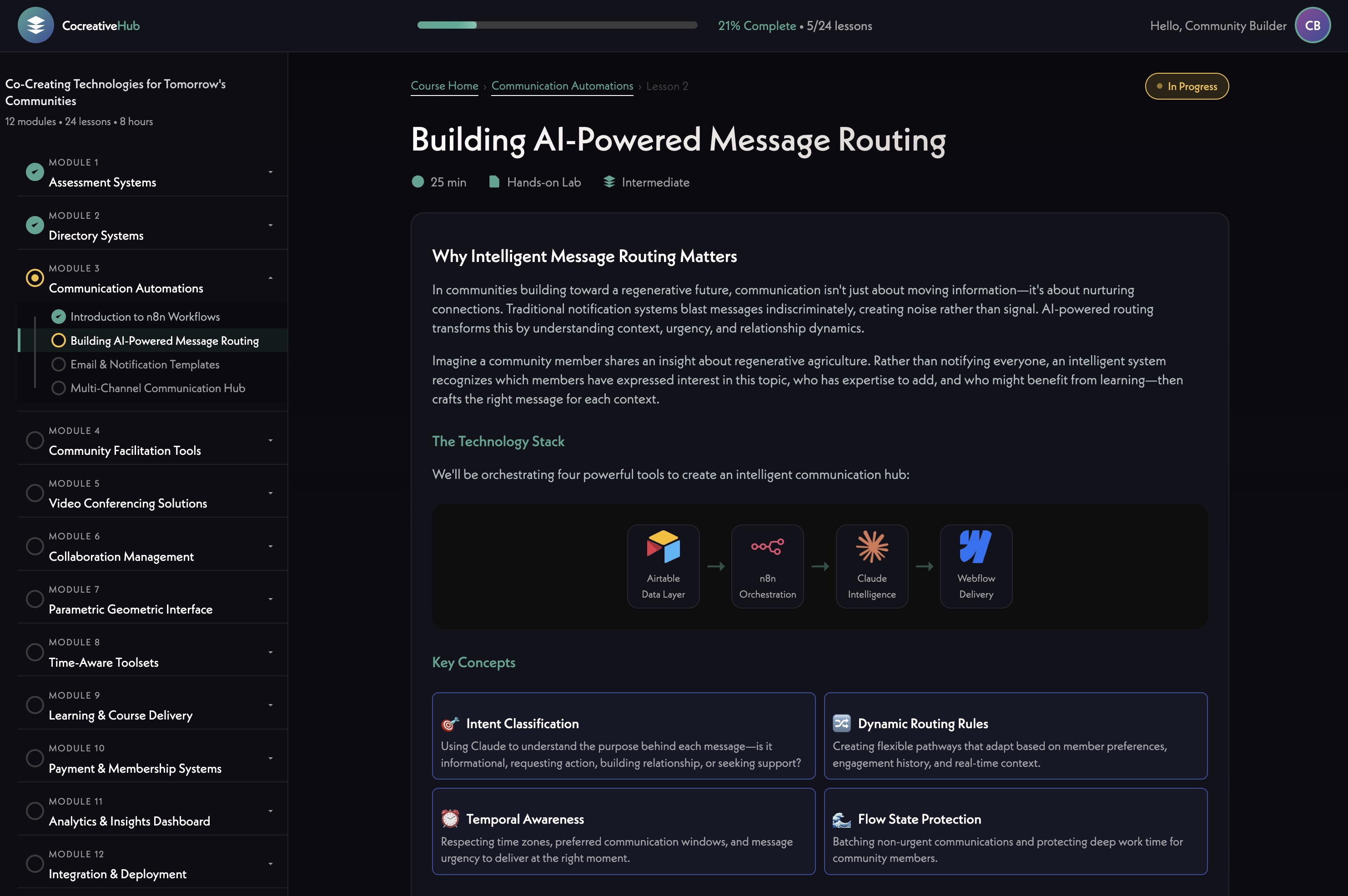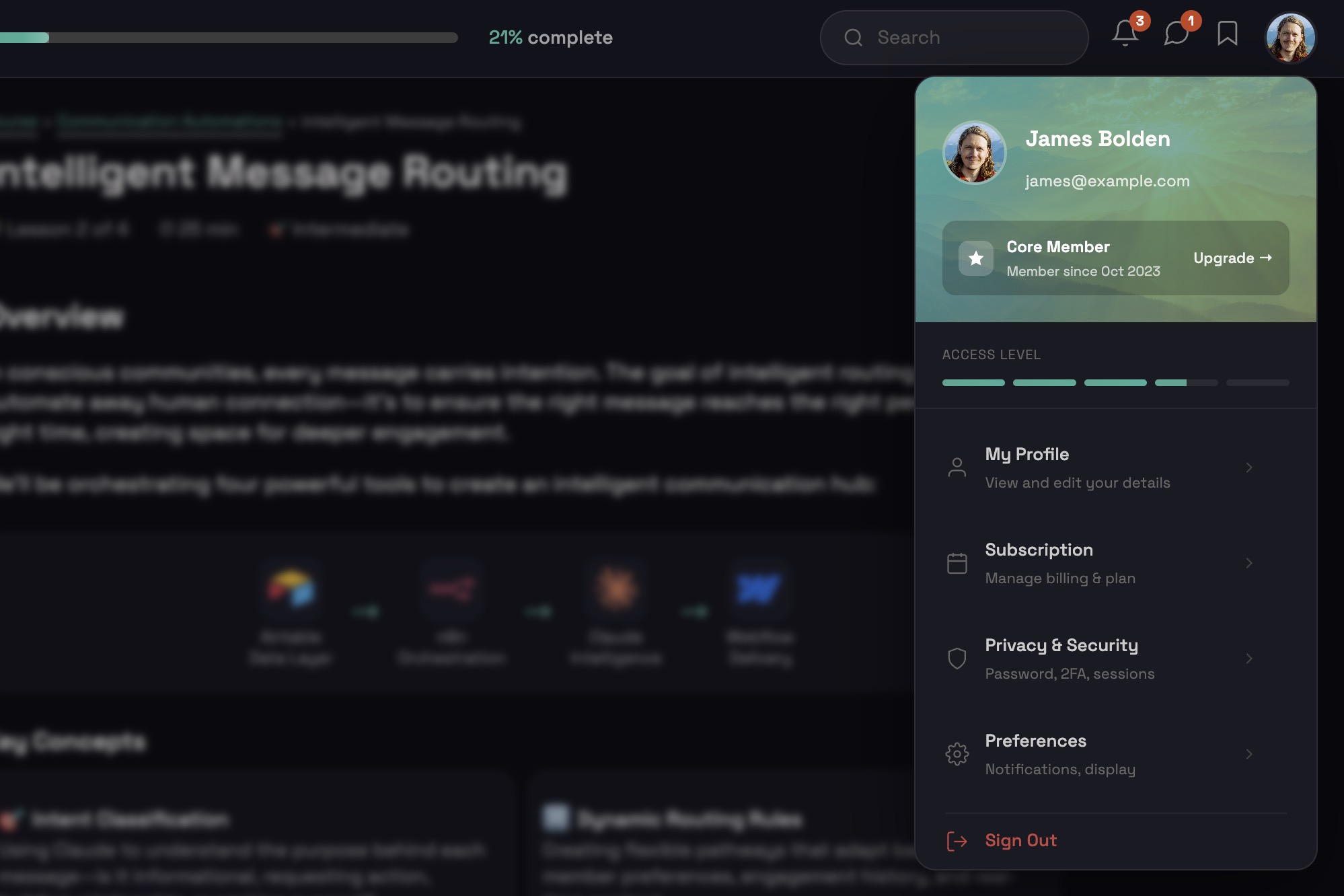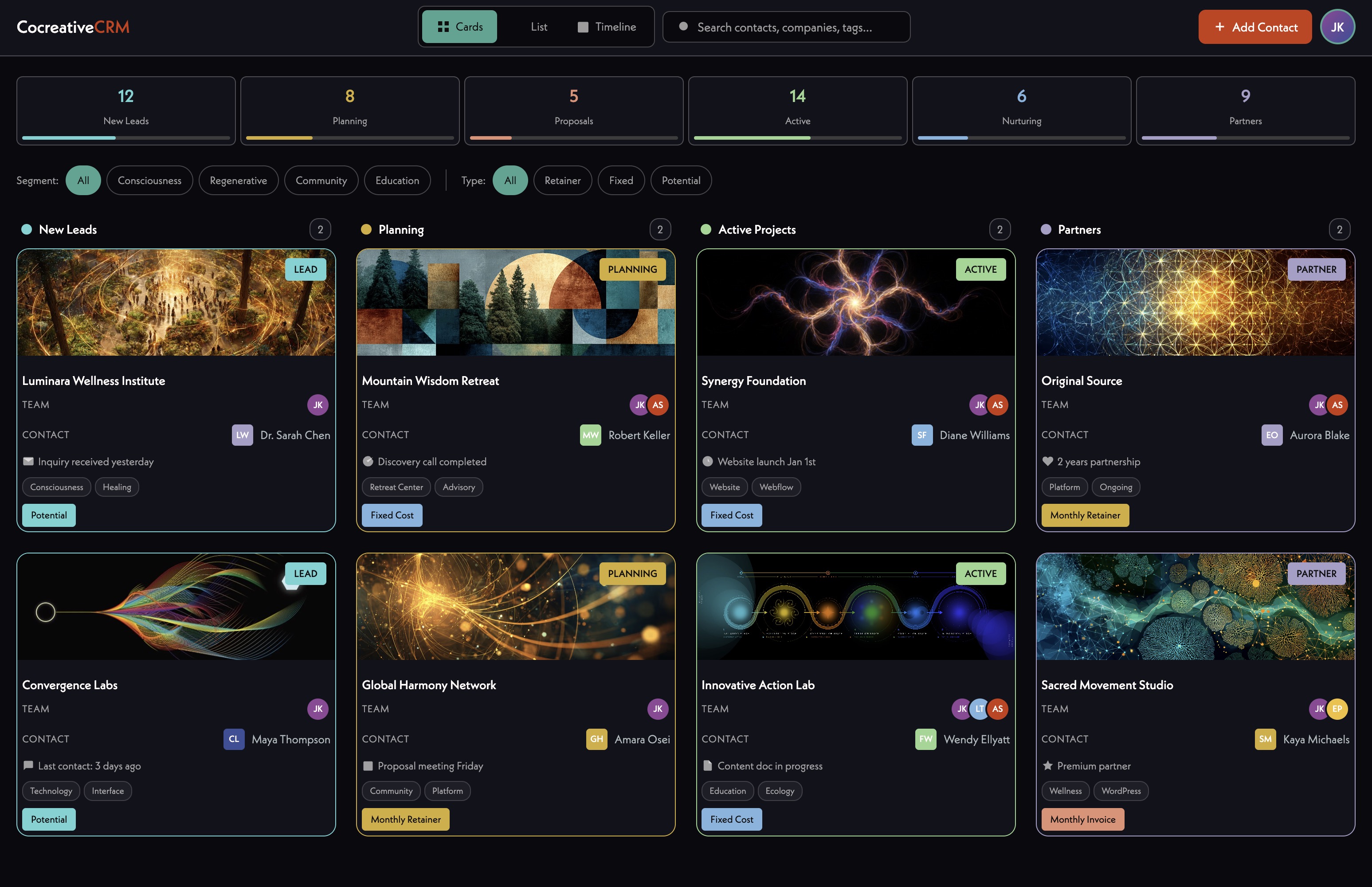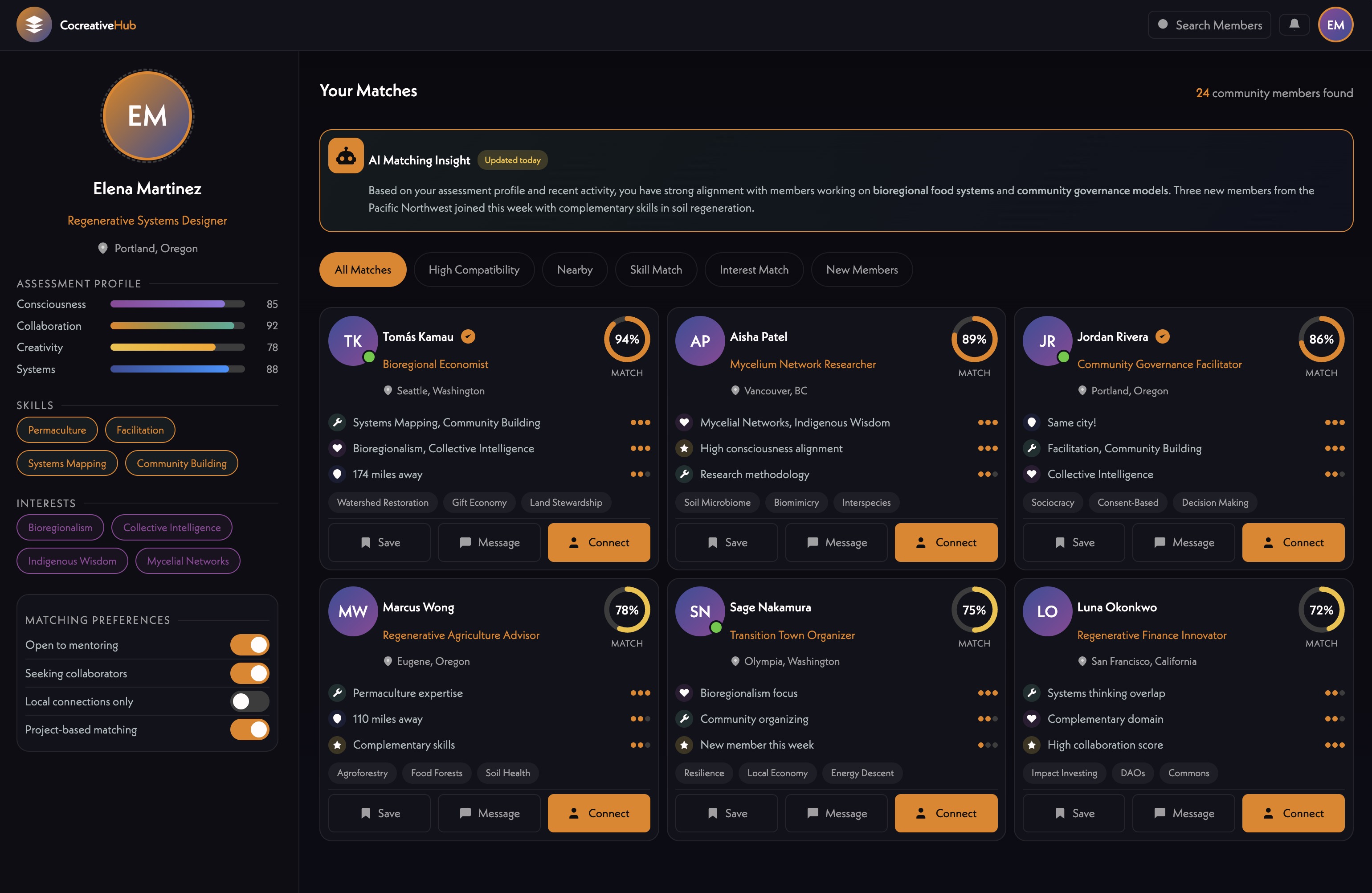

After James returned from his honeymoon in the Azores, the team reconnected to assess project momentum and map out priorities for Hollow Movement's next phase. Sean shared that recent projects wrapped up smoothly during James's absence, including Uncommon Partners and Re Village, with Matt potentially reaching out for additional features. Sean also supported Wendy's project (Mailchimp newsletter setup, content updates) and collaborated with Ashley on ClickUp organization (08:16).
The Webflow [tag="webflow"] marketing sites have required minimal maintenance, leaving capacity for deeper Hollow Movement work as the post-launch wave settles (10:39).
With the launch wave complete, James plans to zoom out and repropose the next phase to the Hollow Movement team. The client relationship is unusually open — they trust IRIS Cocreative [tag="iris"] to drive direction without rigid KPIs or fixed timelines, which has allowed the platform's true value to reveal itself organically: the people, the Holons, and the connections between them (54:41).
James framed the strategic question going forward: "How do we design this to be in service to that? How do we get out of the way of the people finding each other and building?"
James outlined the major domains that will structure upcoming work:
Building an LMS into Hollow Movement is a major undertaking. James has designed a clean LMS interface that can be ported into Webflow [tag="webflow"] components, integrated with the existing Supabase [tag="supabase"] backend (12:36). Some course/lesson/topic infrastructure already exists in Supabase, but a full strategy session is needed to scope what's there versus what needs to be built.
[technology="Online Learning Platforms"]
Several elements are currently fully custom code (the surface on Holons, the Wave page, chat components). The team will progressively rebuild these using Webflow [tag="webflow"] elements so they can evolve alongside the rest of the site's design system. Sean will incrementally transform the design system style guide from a custom code page into proper Webflow components as he updates messaging and other features (35:20).
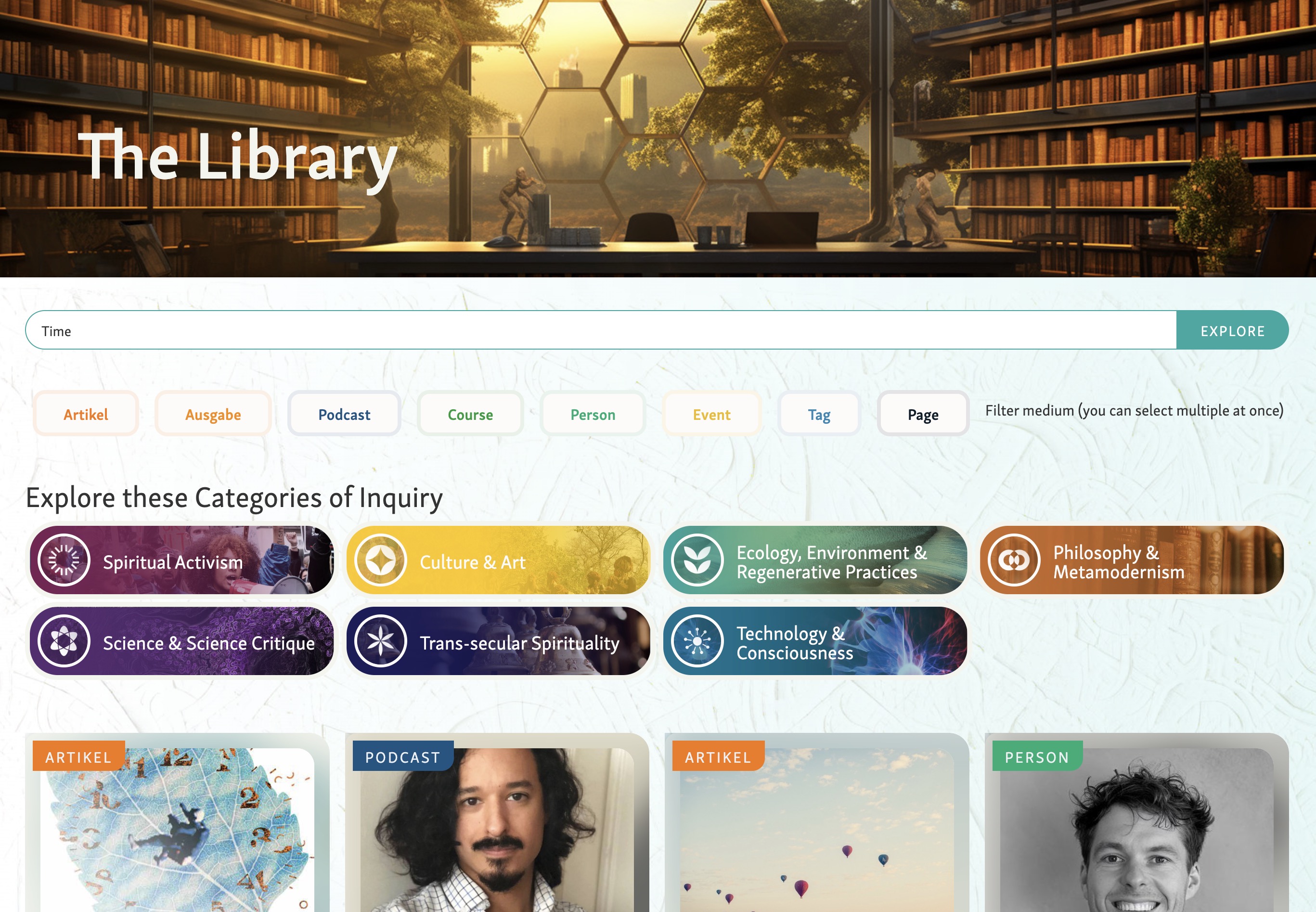
James wants the resource library to be more than a grid of posts — something node-based and dynamic, inspired by Obsidian, where connections between resources are visible (19:00). It should be searchable, agent-accessible, and viewable in multiple ways. This pattern will likely extend across IRIS projects, potentially connecting resource libraries across sites like Iris and Hollow Movement.
[technology="Community Facilitation Tools"]
This week James will focus on building a robust email notification system using n8n [tag="n8n"] so members get notified about unread messages, Holon updates, and other activity. Currently only Holon email invitations exist. James will handle this himself given his familiarity with the existing infrastructure (21:15).
[technology="Communication Automations"]
The team is exploring how to turn Hollow Movement into a true app — primarily to enable push notifications, which is the missing piece for replacing tools like WhatsApp for groups. The app version would be a simplified subset focused on messaging and course content, while the platform itself remains desktop-first since it's designed for collaboration and meaningful work (23:22).
James loves the current top navigation but suspects users aren't discovering features — analytics will confirm this. The team is considering a sidebar nav in addition to the top bar, possibly with dropdowns or a mega menu (17:46). Sean offered to lead this in Figma, drawing on his enterprise app design experience to consolidate the two navigation sections thoughtfully (56:29).
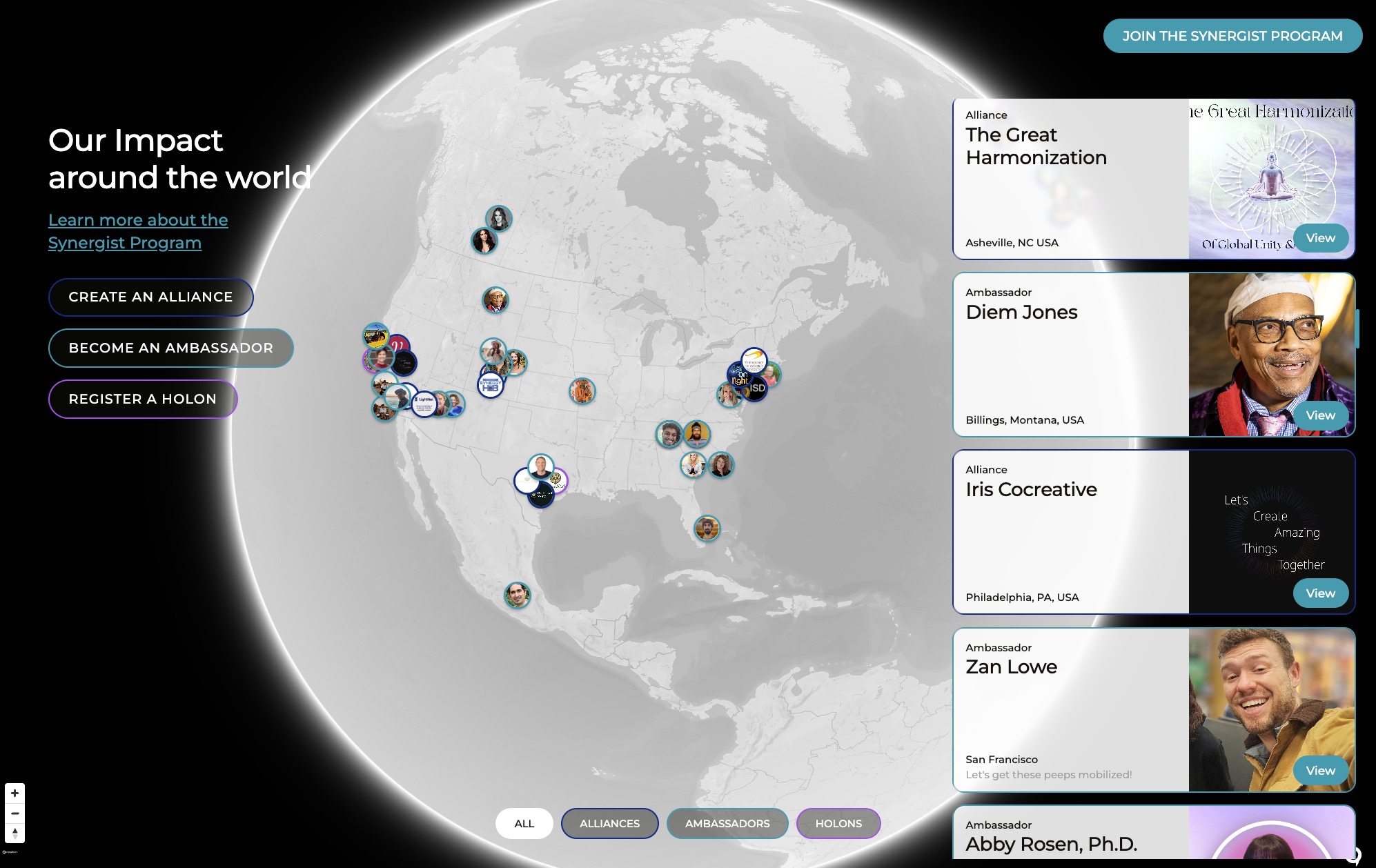
As user count grows (~300 members), the map needs evolution. Ideas explored:
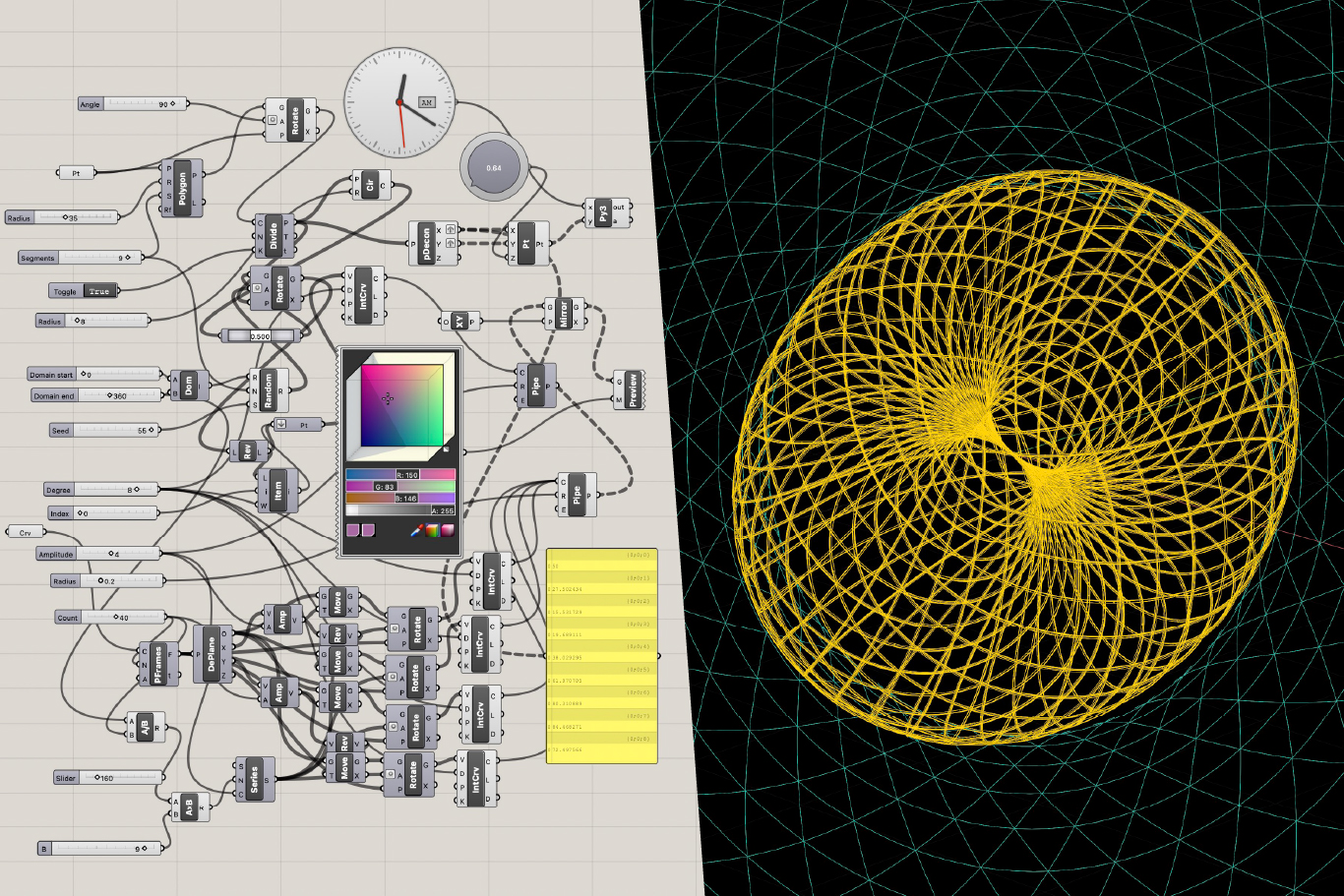
[technology="Parametric Geometric Interfaces"]
Privacy and analytics will be developed together as a coordinated strategy.
The most urgent low-effort task: Sean will port the working cookie consent bar from the floors project into Hollow Movement. The previous solution used Finsweet, which discontinued free support (26:46).
Sean recommended Microsoft Clarity for behavioral analytics (free, privacy-aware) once cookie consent is in place. James wants to avoid Google Analytics and is cautious about Microsoft — the team will co-develop a robust, innovative privacy policy with the Hollow Movement team that makes explicit which data is used where, with the most sensitive data (like message content) walled off most heavily (42:50).
James proposed a forward-looking architecture: sensitive data like messages could be encrypted such that not even James or Sean can read it, then analyzed by a designated agent running on a local machine that strips personal identifiers before generating insights. This would enable powerful aggregate insights (sentiment trends, conversation volumes, emerging themes) without compromising individual privacy (45:57).
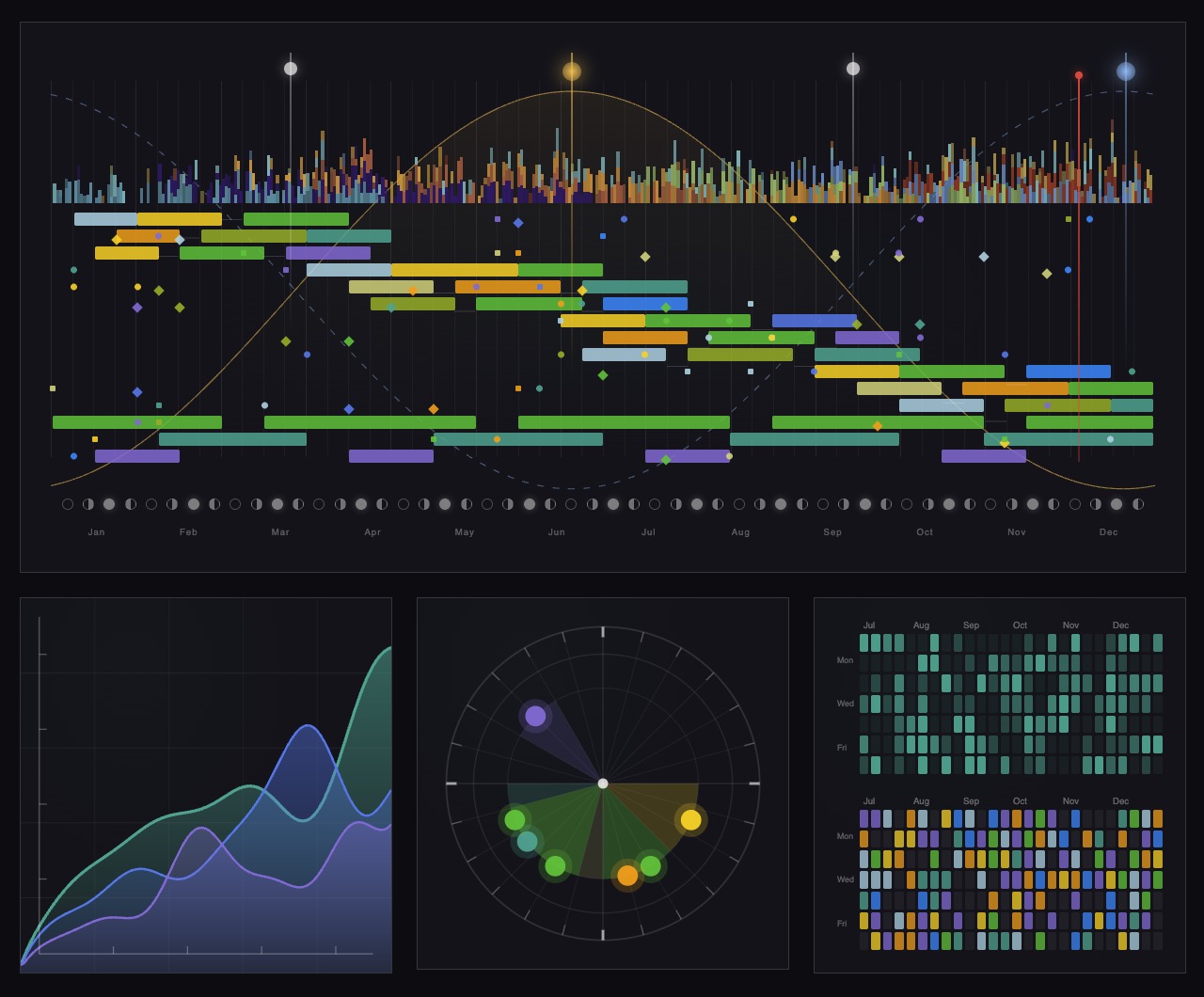
A central long-term vision emerged: Holos as a self-aware being. The platform would have multiple data inputs feeding sub-agents (some local, some cloud), with a general awareness layer connecting them. This agent would have context on:
Users could query Holos with things like "I'm planning a trip to Europe across these five countries — who should I meet up with?" or "I'm thinking about starting this business — who's already doing something similar?" Claude [tag="claude"] is already being used for assessment graph generation, and this would extend dramatically. James sees this as a potential revenue source — users would pay to access deep contextual intelligence over the network (47:06).
Sean noted this vision aligns beautifully with the platform's brand and aesthetic, and reframed his understanding of the project: it's not individual-to-individual networking, it's collectives, businesses, and collaborative initiatives finding each other through intelligent context (53:29).
[technology="Intelligent Matching Algorithms"]
A working list of focused tasks James will convert into ClickUp:
[technology="Custom Membership System"]
The team agreed on a lean coordination approach using ClickUp with priorities and views rather than heavy upfront scoping. Urgent + low-effort items (like the cookie bar) jump the queue. James and Sean will sync at least every other week to review progress and align on milestones (59:57).
James also emphasized following creative excitement: "It's important to follow your excitement" — Sean is encouraged to pursue the navigation design exploration since it aligns with his enterprise UX background (57:13).
The Hollow Movement budget situation remains favorable — the client pays invoices readily, and IRIS bills only team hours (not all of James's time), since much of what's being built will translate across other projects.
James Redenbaugh
Sean Graham
After James returned from his honeymoon in the Azores, the team reconnected to assess project momentum and map out priorities for Hollow Movement's next phase. Sean shared that recent projects wrapped up smoothly during James's absence, including Uncommon Partners and Re Village, with Matt potentially reaching out for additional features. Sean also supported Wendy's project (Mailchimp newsletter setup, content updates) and collaborated with Ashley on ClickUp organization (08:16).
The Webflow [tag="webflow"] marketing sites have required minimal maintenance, leaving capacity for deeper Hollow Movement work as the post-launch wave settles (10:39).
With the launch wave complete, James plans to zoom out and repropose the next phase to the Hollow Movement team. The client relationship is unusually open — they trust IRIS Cocreative [tag="iris"] to drive direction without rigid KPIs or fixed timelines, which has allowed the platform's true value to reveal itself organically: the people, the Holons, and the connections between them (54:41).
James framed the strategic question going forward: "How do we design this to be in service to that? How do we get out of the way of the people finding each other and building?"
James outlined the major domains that will structure upcoming work:
Building an LMS into Hollow Movement is a major undertaking. James has designed a clean LMS interface that can be ported into Webflow [tag="webflow"] components, integrated with the existing Supabase [tag="supabase"] backend (12:36). Some course/lesson/topic infrastructure already exists in Supabase, but a full strategy session is needed to scope what's there versus what needs to be built.
[technology="Online Learning Platforms"]
Several elements are currently fully custom code (the surface on Holons, the Wave page, chat components). The team will progressively rebuild these using Webflow [tag="webflow"] elements so they can evolve alongside the rest of the site's design system. Sean will incrementally transform the design system style guide from a custom code page into proper Webflow components as he updates messaging and other features (35:20).
James wants the resource library to be more than a grid of posts — something node-based and dynamic, inspired by Obsidian, where connections between resources are visible (19:00). It should be searchable, agent-accessible, and viewable in multiple ways. This pattern will likely extend across IRIS projects, potentially connecting resource libraries across sites like Iris and Hollow Movement.
[technology="Community Facilitation Tools"]
This week James will focus on building a robust email notification system using n8n [tag="n8n"] so members get notified about unread messages, Holon updates, and other activity. Currently only Holon email invitations exist. James will handle this himself given his familiarity with the existing infrastructure (21:15).
[technology="Communication Automations"]
The team is exploring how to turn Hollow Movement into a true app — primarily to enable push notifications, which is the missing piece for replacing tools like WhatsApp for groups. The app version would be a simplified subset focused on messaging and course content, while the platform itself remains desktop-first since it's designed for collaboration and meaningful work (23:22).
James loves the current top navigation but suspects users aren't discovering features — analytics will confirm this. The team is considering a sidebar nav in addition to the top bar, possibly with dropdowns or a mega menu (17:46). Sean offered to lead this in Figma, drawing on his enterprise app design experience to consolidate the two navigation sections thoughtfully (56:29).
As user count grows (~300 members), the map needs evolution. Ideas explored:
[technology="Parametric Geometric Interfaces"]
Privacy and analytics will be developed together as a coordinated strategy.
The most urgent low-effort task: Sean will port the working cookie consent bar from the floors project into Hollow Movement. The previous solution used Finsweet, which discontinued free support (26:46).
Sean recommended Microsoft Clarity for behavioral analytics (free, privacy-aware) once cookie consent is in place. James wants to avoid Google Analytics and is cautious about Microsoft — the team will co-develop a robust, innovative privacy policy with the Hollow Movement team that makes explicit which data is used where, with the most sensitive data (like message content) walled off most heavily (42:50).
James proposed a forward-looking architecture: sensitive data like messages could be encrypted such that not even James or Sean can read it, then analyzed by a designated agent running on a local machine that strips personal identifiers before generating insights. This would enable powerful aggregate insights (sentiment trends, conversation volumes, emerging themes) without compromising individual privacy (45:57).
A central long-term vision emerged: Holos as a self-aware being. The platform would have multiple data inputs feeding sub-agents (some local, some cloud), with a general awareness layer connecting them. This agent would have context on:
Users could query Holos with things like "I'm planning a trip to Europe across these five countries — who should I meet up with?" or "I'm thinking about starting this business — who's already doing something similar?" Claude [tag="claude"] is already being used for assessment graph generation, and this would extend dramatically. James sees this as a potential revenue source — users would pay to access deep contextual intelligence over the network (47:06).
Sean noted this vision aligns beautifully with the platform's brand and aesthetic, and reframed his understanding of the project: it's not individual-to-individual networking, it's collectives, businesses, and collaborative initiatives finding each other through intelligent context (53:29).
[technology="Intelligent Matching Algorithms"]
A working list of focused tasks James will convert into ClickUp:
[technology="Custom Membership System"]
The team agreed on a lean coordination approach using ClickUp with priorities and views rather than heavy upfront scoping. Urgent + low-effort items (like the cookie bar) jump the queue. James and Sean will sync at least every other week to review progress and align on milestones (59:57).
James also emphasized following creative excitement: "It's important to follow your excitement" — Sean is encouraged to pursue the navigation design exploration since it aligns with his enterprise UX background (57:13).
The Hollow Movement budget situation remains favorable — the client pays invoices readily, and IRIS bills only team hours (not all of James's time), since much of what's being built will translate across other projects.
James Redenbaugh
Sean Graham
00:00:01
James Redenbaugh: This meeting is being recorded.
00:00:25
Sean Graham: Sa.
00:02:03
James Redenbaugh: Yo, yo, yo, yo, yo.
00:02:08
Sean Graham: What's up?
00:02:09
James Redenbaugh: Hey, Sean. How's it going?
00:02:11
Sean Graham: It's going well. How about you?
00:02:14
James Redenbaugh: Good. It's good to be back. Hard to be back, too. I gotta remember how to do stuff.
00:02:24
Sean Graham: Yeah. I mean, 10 days, a lot of time be out of, you know, off work.
00:02:30
James Redenbaugh: I'm like, wait, how do I. How do I use Claude?
00:02:35
Sean Graham: Yeah.
00:02:37
James Redenbaugh: What do I say?
00:02:41
Sean Graham: How was it? How was the Azure Wars?
00:02:43
James Redenbaugh: It was great. It was really beautiful, really fun to just be in nature. And we did lots of hiking and exploring and rented a motorcycle. Check out the island, one of the islands we were on, and get some sun and good food. It's a really good reset. That's awesome.
00:03:07
Sean Graham: That's great. So you guys got married and then you couldn't take a honeymoon until now?
00:03:15
James Redenbaugh: Yeah, we just got, you know, we were. We got married. We did a little honeymoon for like, three days after. And then we had to help my mom move, and then we got our kittens, and then it was the holidays, and then I got really busy, and it just didn't make sense. And also, Emily was taking all these classes because she's going back to school. Okay. So it didn't make sense to do it until we were going to be in Portugal anyway. So we were like. We always wanted to go to the Azos.
00:03:53
Sean Graham: Oh, so you guys were. You just kind of went elsewhere in Portugal?
00:03:59
James Redenbaugh: Yeah. Yeah.
00:04:00
Sean Graham: Well, that's pretty sweet.
00:04:01
James Redenbaugh: So we flew from Lisbon to the Azores, which are in the middle of the Atlantic. And then we got to fly right from the Azores back to New York and then take the train from there.
00:04:13
Sean Graham: Awesome. That's great. I'm glad you guys could finally, you know, do something like that.
00:04:22
James Redenbaugh: Yeah. Did you do a honeymoon when you got married?
00:04:25
Sean Graham: Yeah, we went. We left, I think the morning after we went down to Orlando. We just did, you know, cheesy little Orlando, Disney sort of stuff. And it's not even like we're, like, big, you know, Disney lovers or anything, but it was like, Florida. Florida is so awesome. And we wanted to go, so we did that. And obviously, I mean, what was that, 2019. And, you know, tickets back then were still ridiculous. Just too much. But we did it anyways. And we did a lot of other stuff, though. It was. It was just awesome being there. We went to this cool Blue Springs. I think it's called Blue Springs. It's like a natural spring, and you can swim in it until I got current, you know, so you. You can swim against it. Or with it and stuff. It's like super, super cold and there's fish everywhere in there and stuff. And, you know, we did a little bit of spontaneous stuff other than, you know, just doing the parks and stuff. I think we did. I think we bought like three or four days of park stuff. And I think we did like two. Did like two days. Because it was just like, this is gonna be the same thing every single time. It's crazy hot. I think we went in end of July. No, no, no. It'd be. I mean, that's actually coming up. So it'll be the end of June. And it was crazy hot. But, you know, it's too much. Couldn't do that the entire time, obviously. It was nice. It was nice. I love Florida.
00:06:02
James Redenbaugh: Awesome. Nice. Yeah. Disney World is. Is it Disney World or Disneyland that's down there?
00:06:12
Sean Graham: I think it's World. I think land is in California.
00:06:15
James Redenbaugh: Yeah, maybe. Yeah. I've only been once when I was like, 16. Yeah. But it's fun.
00:06:25
Sean Graham: It is. I actually really like theme parks and stuff and roller coasters and all that jazz. In Ohio, we have Cedar Point. Yeah. And Cedar Point is actually. Cedar Point is nicer. Like, the rides and stuff are better. Disney. Disney World is obviously like, for a lot of different things, but I really liked it. I think I only went. I think I went when I was like, 12. My family took us. But yeah, it's cool. It's cool there. Cedar Point is cool, though. Cheaper, obviously.
00:07:03
James Redenbaugh: Man.
00:07:04
Sean Graham: I remember the. We got some food at Disney World, obviously. And this is like, back then, this is before, everything was like, crazy expensive like it is now. And I think we got, like. We spent like 60 bucks on like, a sit down, like, Mickey Mouse burger restaurant. Thing was insane. It was crazy crazy going to those places. And they had this weird sketch, like, fingerprint verification for your tickets, which I did not like. I know, but whatever. But yeah, I don't know. I mean, I would love to take the kids at some point, but I mean, at this point, it's like, why bring them when they're gonna be too young to really remember. My son, he's five, right. So he'll be the only one to remember, you know, if we went in the next, like, year or something like that. I don't know. It's just flora. The highlight of it was just Florida, you know, beaches and all that.
00:08:07
James Redenbaugh: Yeah. Nice. How you been the last couple weeks? How's it been going over there?
00:08:16
Sean Graham: Good, good. Yeah. Bouncing between a lot of. A bunch of the different projects. I Can't remember if we wrapped up. I think we did wrap up Uncommon Partners while you were out. So that was taken care of and that was easy. Peter was really easy to work with. Re Village wrapped that up like maybe a day or two ago officially. I think he might. He might have. Matt might have reached out to you to ask for some more features or something like that, but I don't know. He said he was going to, but that's wrapped up. So I took care of that stuff. I just met with Ashley earlier today actually as well. She's awesome and she's been a great help too, just on ClickUp and organizing all that sort of stuff.
00:09:09
James Redenbaugh: Great. She got some great ideas and she said you were helping out on the. On Wendy's project.
00:09:16
Sean Graham: Yep, yep. Yeah, it was just a couple things like setting up mailchimp newsletter for her and then some different content changes and that was pretty much it. It's been pretty smooth sailing. I mean there hasn't been much to do on Hollow Movement. I think Michael, Sean was asking for some UI changes to how you add skills and that sort of stuff and I was going to take a look at that today or tomorrow or something and try and make something that works a little bit better there. I did agree with his comments. I don't know if you saw them. It might be a little bit difficult for people to kind of understand what's happening because we have a different system for adding tags and that sort of stuff. On another part of. Might be. I don't remember actually, but another step. So probably just copy what we're doing there and you know. But yeah, it was pretty. Compared to before launch, you know, is pretty little dry, you know, not, not too, not too, not too bad. Not too bad. Pretty easy stuff, you know, the webflow, you know, webflow sites like, you know, the marketing sites and stuff. It's pretty easy work, you know, it doesn't take too much time.
00:10:39
James Redenbaugh: Yeah.
00:10:39
Sean Graham: But between the three of them, you know, I was, I was keeping busy. Right.
00:10:44
James Redenbaugh: Cool. Great. Yeah, I met with the Hollow Movement team yesterday and got a list of priorities I'm organizing. It's like, okay, so many domains. Let me see if I can just kind of high level it for you. So yeah, there's a number of smaller things, a number of more important things and a number of like domains that we want to kind of prioritize for this next phase. But I think I'm gonna kind of now that the wave is over, I want to zoom out and. I think repropose the next phase for them and see how much they want to spend. It seems like they want to keep spending which is great because there's plenty we can do and but it's. It's a big project. So. Yeah, the, the high level domains are one Getting the online courses online learning set up. I made a nice LMS interface that we can copy but we might want to do the build it in webflow thing.
00:12:36
Sean Graham: Yeah.
00:12:39
James Redenbaugh: And it should be pretty straightforward but we're. Then we're also going to need to make the. Make it work with supabase. So we'll need. I. I'm not sure. I think that we have some of the infrastructure in place in Supabase the for course lesson topic kind of methodology. But getting online courses is going to be a whole, whole project in itself. So I want to strategize on that, lay it out, see what we have to work with, see what we need to do design it and, and build it. The. It seems like the scripts that work with our webflow components are working really well. That's a cool asset to have to be. Have that control over the interface while implementing this custom functionality. So I think that we'll keep doing that and there's a few things that are. Fully custom code right now, namely the walls or the. I call it like the surface that are on Holons and like the wave page and things like that. So these guys. So this is just a chat but this is all custom code. And then on Holons we have these tabs with different resources gallery about and I think this looks pretty good and you know, I don't want to. It shouldn't be our top priority to recreate this in webflow but I'm actually more interested in having this be more integrated with the rest of the site which might mean actually updating the styles around the site where this isn't perfect. I think that it can evolve further and so we probably should use webflow elements for this to, to have that control over it so that we can evolve it. But then other things I think can get tightened up like you know, depending on the background image here this isn't so readable and now the profile image feels a little misaligned and you know, maybe we want to add in a little more structure on these pages.
00:15:46
Sean Graham: Yeah.
00:15:49
James Redenbaugh: And so that's a whole domain of just kind of now that we have some more time and space looking at the design of different elements and is continuing to improve it. But you know, that said, people are loving the design. I've Gotten so much, so many comments on the designer thing including a lot of people at Holos are tech people and they have their own platforms that they're building and they were like, yeah, we're, you know, we've been building this thing for years but we're pretty blown away by the design of Hollows. So that's awesome. That was, that was pretty cool. And, and I love that it's really come out of a, you know, such a collaborative effort between me and you and Munia.
00:16:49
Sean Graham: Yeah.
00:16:50
James Redenbaugh: On the different design elements. So, you know, overall I think it's great and we can just, you know, dial in a few things. Another domain is going to be navigation where I love this thing up here and I definitely want to keep it, but I don't think people, we should, we should probably put analytics on the site to see what people are actually doing. Yeah, I feel like most people don't click this and see the things in here. They just don't think to do it and then maybe they'll see these icons but they don't click them.
00:17:46
Sean Graham: And.
00:17:49
James Redenbaugh: So I think maybe we want to think about a, A sidebar nav in addition to this thing up here. Especially as we add more features to the site and more pages. Either a sidebar and, or dropdowns and, or mega menu type thing. Yeah, I see what you're saying because I want people, I want to make it clear to folks what's, what's there to explore. And people like love creating a profile and, and getting on here and seeing everybody, but I don't think that they really. Know how to use it yet. Yeah, and we need to add more functionality so that there's like more for people to, to, to actually do. So online learning will be key to that because that'll get people on there in their, in their course. Another domain is building out a resource library and I really want to think about how to make that a lot more interesting than a, like a grid of posts or a list of things. So I think it should be. Some, I don't know, some intuitive but novel way to see a field of resources maybe. Inspired by Obsidian or this kind of interface that's a lot more node based. Where people can post resources but then see the connections between things. But I'd love it to be like dynamic like this and also. Able to be viewed in, in other ways and highly searchable and usable by agents. So you know, and this will be something that evolves over time and it'll also be the kind of thing that we'll want to build on other projects and for Iris and, and potentially even like connect to other things where like the resource library on Iris site could be connected to hollow some. So I'll probably be nerding out on that in the back of my mind over time and we'll probably get something simple up initially but these kind of interfaces are a lot easier than they used to be to. To create.
00:21:15
Sean Graham: Okay,.
00:21:19
James Redenbaugh: So that's another domain. And then this week I want to really focus on email notifications in getting a robust email notification system set up using N8N so that members can get notified when they have messages sitting in their inbox that they're not read or updates to their holon things like that. I think the only emails we have right now are. Invitations to a hold on if somebody's invited via email. So I want to build that out. I probably won't ask for your help on that because I'm familiar with what we already have there and, and n. And it's just going to be pretty simple at first. And another domain we're exploring is how to turn this into a. An actual app where you know, right now you can put any web app on your phone as a. Yeah, as an app and this is pretty cool and it, it works pretty well and I can see my messages and stuff and it feels like an app. You know, it doesn't feel like a browser but there's no notifications. That's really the key thing to, for it to become something that can replace like WhatsApp for folks if they can just get a ping on their phone and see like oh, my group is sending something that I want to look at.
00:23:20
Sean Graham: Yeah.
00:23:22
James Redenbaugh: So we're going to be looking into how to create a, an app version which might be a simplified version of the platform mainly for messaging and maybe course content. So it wouldn't have everything but it would have what's. What's required to keep people connected. And I think we want to design it as primarily a desktop experience because it's for like collaboration and, and connection and action and work together. So just keeping that in mind if you have.
00:24:02
Sean Graham: Yeah. Yeah.
00:24:03
James Redenbaugh: Ideas about that and I'll. I'll create some space for these high level domains in ClickUp as well as our. These smaller things.
00:24:26
Sean Graham: So.
00:24:31
James Redenbaugh: Moving on to those we need a way to delete for users to delete their own account and data so that functionality is there but there's no button. I can handle that. And same for deleting a hole on. We need a button for that. We Also need a way to leave a hole on if you're in a holon. We need to add privacy settings so that people can control how they're if they want to show up. Right now, actually, I embedded the whole homepage on the Hollow Movement or the map on the Hola movement homepage. So this whole thing is shown up here and users are shown up here. And if you click on a profile, it asks you to log in or sign up. But we want to make it so that if people don't want to show up on here, then they can control that in their account. And then also we're going to have what notification settings. In there and we need to add a cookie consent bar. Yeah, that's something I wanted to ask you to do because we have one working on the floors project. Okay. And I think you could copy and modify what we have over there to work. I guess it's not showing up for me because I accepted it. But check out what's on that site. See if it can work on holos and just go ahead and pop it in. We need that for gdpr.
00:26:46
Sean Graham: Yeah.
00:26:49
James Redenbaugh: And we actually have one on Hollow Movement site. Why do we have this little bar down here? But why do we have this? Hollow Movement site needs to roll. We have a cookie consent on here, but it's using FIN Suite, which stopped supporting their cookie consent because they wanted you to spend like $500 on it or something. Ridiculous.
00:27:23
Sean Graham: Oh, really?
00:27:24
James Redenbaugh: Okay.
00:27:26
Sean Graham: Damn.
00:27:31
James Redenbaugh: Also, Hollow Movement could use some mobile responsive love. I'm looking at it. It's. These feel kind of big on my wide screen here. And then something's wrong with the about page where it's not. Not responsive. I think it's not using the same clamp system we have on other pages. Maybe you could have a look at that. Okay, I'm just gonna have that. I'll. I'll convert this into click up.
00:28:12
Sean Graham: Okay.
00:28:13
James Redenbaugh: Yeah, yeah. And that's low, lower priority. But you know, when you have time, you could get to that.
00:28:23
Sean Graham: Yeah, yeah, for sure.
00:28:30
James Redenbaugh: Then there's a little bug on the. I just need to bring the footer up because on some haul on pages, the wheel is visible over the footer. Okay, I'll handle that. Okay. This would be a good one for you on Holon editing pages. When editing a whole on. Let's go to Iris here and I click manage these little image indicators, we should add a little tooltip or even just a little label that's always visible in edit mode that indicates that this is how these images are Edited. Some people are having trouble figuring out how to edit those. Yeah.
00:29:40
Sean Graham: Okay. Yeah, yeah.
00:29:44
James Redenbaugh: So that's pretty easy. Oh, image attachments in messages.
00:29:51
Sean Graham: Yeah.
00:29:52
James Redenbaugh: And emojis. That's a good one for you. You can look at what we did on the surface.
00:30:04
Sean Graham: Yeah.
00:30:05
James Redenbaugh: And copy that. Or have Claude copy that.
00:30:10
Sean Graham: Yeah.
00:30:13
James Redenbaugh: But of course, you'll need to modify the webflow structure.
00:30:17
Sean Graham: Definitely. Yeah, yeah.
00:30:20
James Redenbaugh: But it's working pretty well here, which is great. Including the multiple images and. Emoji. Emojis work pretty well. I wonder if we want to add emoji reactions also.
00:30:45
Sean Graham: That's. Oh, yeah, yeah. That's what. I had assumed that that's what you meant.
00:30:52
James Redenbaugh: Let's do that. Also emoji reactions to messages we don't need to do reply. But also just posting emojis, like.
00:31:04
Sean Graham: Yeah.
00:31:04
James Redenbaugh: On the surface.
00:31:06
Sean Graham: Yeah, yeah, for sure. Yeah, that'd be awesome.
00:31:12
James Redenbaugh: Cool. And we'll standardize some of these design elements so that they'll, you know, once we build this out in webflow, it'll match.
00:31:24
Sean Graham: Yeah. I think we could go off of what you have here and I'll tweak the messages to look how you have the, you know, the send the post and the emojis and the images. I feel like that makes the most sense.
00:31:39
James Redenbaugh: Great. Yeah. And then we can use the same elements when we modify the surface to use.
00:31:43
Sean Graham: Exactly. Exactly.
00:31:48
James Redenbaugh: Cool. So that's a good task for you. Cool. Large hole on ui. What did I mean? Oh, yeah. In. That's another good one for you. So in messages, In this one.
00:32:53
Sean Graham: Oh, there's a lot of people.
00:32:56
James Redenbaugh: Yeah. When the. When the holon gets really big, I think we just need a way to.
00:33:14
Sean Graham: Make these get out of max and then say plus X amount.
00:33:20
James Redenbaugh: Yeah.
00:33:21
Sean Graham: And then a menu could pop up that shows you everybody that's in it.
00:33:27
James Redenbaugh: Yep. Yeah, that'd be good. And in general, I think that these can be a little larger.
00:33:34
Sean Graham: Yeah.
00:33:36
James Redenbaugh: And actually, I think it should match the. The viewing now UI over here. I don't think we need the yellow border. And I like the label. Are you logged in? Could you hop on the wave page real quick, see if.
00:34:04
Sean Graham: Yeah.
00:34:05
James Redenbaugh: Show up?
00:34:06
Sean Graham: Well, I'm in here now.
00:34:09
James Redenbaugh: Yeah. So it actually has a. A small border that matches the background and then they overlap a little bit.
00:34:16
Sean Graham: Yeah.
00:34:18
James Redenbaugh: We could just copy that same style.
00:34:22
Sean Graham: Got it. Yeah. Yeah.
00:34:25
James Redenbaugh: Cool. Sweet. This is so cool. About. Oh, yeah, I can do this. We want to make the. About tab on Holons the first tab. Okay. And I think that we can improve this soon. I Don't like how these are. These are a little small.
00:35:20
Sean Graham: Yeah.
00:35:22
James Redenbaugh: And I like the banner images in the background. But I don't know, the UI doesn't match the other. Other cards that we have around the site. But this kind of thing we should have standardized somewhere. And maybe these kind of standards should live on a hidden page in webflow.
00:35:47
Sean Graham: Yeah.
00:35:50
James Redenbaugh: Or they should just be components or something.
00:35:53
Sean Graham: Something like that. Yeah. I mean, you have your design system page that I think is an embed.
00:35:58
James Redenbaugh: Right.
00:35:59
Sean Graham: But we could start transforming that into like prime, I guess, primary. Like, I would imagine it would primarily consist of webflow components and then we would have the embedded elements live there as well.
00:36:16
James Redenbaugh: Yeah, yeah. I think converting the. That design system style guide for holos from a fully custom code page to a webflow.
00:36:32
Sean Graham: Yeah, yeah. And I can do that incrementally as like. Like I'm going through the, you know, the messages. Updates. Right. And I can start changing things and then once they're finalized, drop them into that page. Drop those components in. That would be awesome.
00:36:53
James Redenbaugh: Cool. Great. Awesome. We want to force people to have three admins in a Holon on sign up. That should be pretty easy. I can, I can take care of that.
00:37:15
Sean Graham: Okay.
00:37:18
James Redenbaugh: And this will be further down the line, but we might want to think about. Similar to how we have a checklist for profile creations. You might want to create a checklist for Holons. And in general, you know, if you feel inspired about this and have like some energy for it, there's some improvements we want to make to the map UI now that we have so many people. So the dots are going to need to get smaller as we zoom in. And we might want to play with clustering. Right?
00:38:06
Sean Graham: Yeah.
00:38:08
James Redenbaugh: And. I think it could be. I don't know, there's a lot of potential in this. It could be really cool.
00:38:17
Sean Graham: Yeah, yeah.
00:38:21
James Redenbaugh: Like, maybe at a high scale, the points are actually really small and they're not meant to be engaged with. And then you have to zoom in and relatively, you know, they get relatively bigger when you zoom in and then you zoom in further and they kind of get to a max size. So that I could see. You know, I'm looking at the Northeast here, and I can't see if there's anybody in Philly.
00:38:47
Sean Graham: Yeah.
00:38:48
James Redenbaugh: You know, or Boston. It's like everybody in the northeast is clustered into this.
00:38:56
Sean Graham: Yeah.
00:38:57
James Redenbaugh: This one domain. And then it, you know, it's very cool to see the Holons in here and the connections between them, but maybe they're kind of spread out More or. I don't know. We. We got to think about that because as we get more. More people and more Holons, there's going to be a whole lot of lines.
00:39:22
Sean Graham: Yeah.
00:39:24
James Redenbaugh: On here. And maybe we want to add some more filters so that we can see like just people or just Holons. And.
00:39:33
Sean Graham: Yeah, I was just thinking that. Yeah.
00:39:37
James Redenbaugh: And. And then also we might want to have a component version of the map for the Holon page because it would be really cool on this emerging consciousness hole on if as part of a hero, we see the globe as a sphere and we just see all the members and where they are and the lines connecting them like this. Basically.
00:40:05
Sean Graham: Yeah, yeah, I hear you.
00:40:10
James Redenbaugh: So, you know, that's just a general invitation to be thinking about this with me.
00:40:15
Sean Graham: Yeah, definitely.
00:40:17
James Redenbaugh: I will convert these to tasks and subtasks and click up and assign you to the ones that are clearly you and anything that's unassigned in there, you know, feel free to. To tackle or explore or message me about.
00:40:38
Sean Graham: Definitely. Yeah, for sure.
00:40:40
James Redenbaugh: Yeah.
00:40:42
Sean Graham: Awesome. Yeah, this is awesome. This is great. I'm super excited to keep building this out and there's so many awesome things in here that so many cool ideas we could do, especially for the map, the messaging app. I'm super excited to start working on that because that's what I was thinking, you know, leading up to launch was like, man, there's so many things that we could add to this, you know, continue tweaking it. It would be awesome too, to, you know, start thinking about what you want to use to collect, like user behavior, you know, and I think that that hinges up whatever you, you know, we check out. Like, I use Clarity for a lot of stuff, like Microsoft Clarity because it's free, but that requires like, you know, consent.
00:41:31
James Redenbaugh: Right.
00:41:34
Sean Graham: A consent cookie or whatever it is. So that would, you know, be awesome to get up once we have the consent in there. I've used this a bunch. I use it for, like, my portfolio sites. I've used it for a couple other clients. It's pretty awesome to see. I love using tools like this. I used another one at one of my previous jobs called Hotjar, but they can get pretty pricey. The Clarity is free. You know, obviously it's, you know, there's a trade off there because Microsoft is giving it out for free and they're getting kind of your data. I don't know exactly. Which is scary if you don't, you know, read into exactly what they're collecting. But, you know, that would be awesome to See and help, you know, inform, you know, our design decisions. Right. Because that's such a critical thing once you get so much functionality into a system. Right?
00:42:33
James Redenbaugh: Yeah, yeah, definitely. I'm going to add privacy and analytics as two domains here which are going to be really related.
00:42:50
Sean Graham: Yeah,.
00:42:52
James Redenbaugh: I totally agree. And it'll be an awesome, it'll be awesome for us.
00:42:57
Sean Graham: Yeah.
00:42:58
James Redenbaugh: As a studio to better understand how people are using what we're creating and great movement and I want to create with the Hollow Movement team a essentially a privacy policy that's really robust and innovative where we can protect people's data. Like, I probably don't want to use Microsoft, I definitely don't want to use Google Analytics. And, But even if we do, it's like there's all these different ways that we can use people's data, for example, and then there's really cool things that we can do with the data beyond just analyzing how people are using the site. So we can create agentic automations that look at activity on the site and create a dashboard for everybody to view, to see over time, you know, what are people talking. Talking about? You know, what, what trends is the site noticing in tags that people are using or things that they're searching for or even messaging content. And, and then there's also the, the things that we're already doing with where we're taking people's profiles to create these assessment graphs and we're using CLAUDE for that. And so people's information is going to claw. But I'm, you know, we don't have to send their personal information to the agent. We can just send what they shared and then, you know, CLAUDE wouldn't now connect it with a person or an email address. They just get a prompt with their content. But I want to over time make it really explicit what we're doing with which data and the stuff that's the most sensitive, building the most walls around it. So for example, if we were going to use message data, which could be really cool, it could be really rich if we're using, you know, what Holons are saying to each other, what people are saying to each other, and it's possible to take it, encrypt it so even you or I can't see it, and then designate a single agent that's living on a local machine.
00:45:57
Sean Graham: Yeah.
00:45:59
James Redenbaugh: To analyze it periodically so we could take that encrypted message data, unencrypt it in a secure environment on say my PC, run impersonal analysis on it, and then generate really cool outcomes. You know, depending on how many people are using the platform, it could be really neat to see what are, what are people saying. Like this month people are feeling more optimistic than last month. You know, we have 84 new conversations started today or you know, whatever. And we could even query the data in generative ways once it has all like personal information stripped from it.
00:47:06
Sean Graham: Yeah, yeah, that would be. That would be really neat actually. I'm sure people appreciate that too.
00:47:14
James Redenbaugh: Yeah. Because then holos can become a self aware being eventually I think should be the end goal where it has different data inputs coming in in different ways. There's some agent that's generally aware of it. It's not getting all of the data input because that would be a really high token cost. But we can have smaller sub agents including local agents and other things kind of in pre process layers and then we could have a, even an avatar, you know.
00:47:53
Sean Graham: Yeah.
00:47:53
James Redenbaugh: Of Hollows and you know what's happening on the, on the platform today. Yeah. Tell me about that was so sick.
00:48:03
Sean Graham: That would be so sick. And I think it even. I think that even lines up with the like the brand and even just how everything looks the sort of platform that it is. You know, I. I feel like that that's pretty sweet.
00:48:19
James Redenbaugh: Exactly. And then especially as we have the resource library getting built out and the online learning if the agent has access to all of those things and we could have it scrape people's publicly available website websites and have all that data and we'll have more. I hope Fable comes back online soon. But we'll have more intelligent models. It would be really cool to have access to that being. And I think people would pay money to be able to use it more because it'll have a high cost but it could be a revenue source to be able to, to not just talk to Claude but talk to an agent that has all of that context. So I could say I'm thinking about starting this business. I'm thinking about starting this initiative. I want to create an online course for this like community, be receptive to that. Is somebody already doing a sale, a similar thing? Who should I talk to?
00:49:34
Sean Graham: Yeah, investors on the site in the network. Right?
00:49:38
James Redenbaugh: Yeah, whatever you're looking for.
00:49:40
Sean Graham: Yeah.
00:49:41
James Redenbaugh: I need somebody to confirm because the people.
00:49:43
Sean Graham: This user base is such a resource for the user base. Right. And helping them to get full contextual access to everybody helping people along because like right now it's like it's all. I mean we're giving them suggestions on who to connect with. Right. But like it's all driven by like, you have to find things out about people. You have to do it organically. And that's obviously a slow process. But if you can like prompt the Hollows agent to be like, yeah, I have this business idea or I'm thinking of starting up like. I mean even Matt was talking about like a town hall in, in this region of the country. You know, who would be an awesome resource to go in on this together with. I mean that cuts that sort of process down so much, I feel like, because so much of it is connecting to the right people. Like. Like networking, right?
00:50:38
James Redenbaugh: Yeah, yeah. Or I'm planning a trip to, to Europe and I'm thinking of hitting these five countries. Like who's. Who should I meet up with? Who going to host me? You know, plan my.
00:50:53
Sean Graham: So sick.
00:50:54
James Redenbaugh: Plan my journey and send us all an email about it.
00:50:57
Sean Graham: Oh man. Yeah, that would be really, really dope.
00:51:01
James Redenbaugh: That's the kind of thing I want to plan for because the, the number one asset on the site is going to be the users. Already it's. I mean we have like 300 people on there, but they're 300 really incredible people. I wish you could have been at this conference. It's like.
00:51:17
Sean Graham: Yeah.
00:51:18
James Redenbaugh: Really high caliber of people. A lot of like the biggest tech people in Portugal. Not that Portugal's a huge tech scene, but whoever.
00:51:30
Sean Graham: Somebody's running it, right?
00:51:31
James Redenbaugh: Yeah. So there they have really interesting perspectives and takes. There was like the chief AI business strategist from Google who was there.
00:51:41
Sean Graham: Wow.
00:51:42
James Redenbaugh: There's this guy who helped create the SDGs with the UN and he goes to oh wow, 300 conferences a year talking about regenerative building and yeah. Kind of moving beyond sustainability. And he said the Wave is like one of 10 or 15 of those conferences that are any good.
00:52:08
Sean Graham: That's awesome.
00:52:09
James Redenbaugh: Yeah, he's a really neat guy. He's doing cool stuff. He's out there. It was, it was really neat. And. And everybody wants to collaborate, everybody wants to be resourced and we have, you know, limited time and limited visibility. We don't know who's. Who's there, how to get in touch with them, what are they available for. And I think we can solve both of those problems where people can be resourced asynchronously. I can put out what I'm working on. People can use it without, without me needing to spend any more of my time with them and you know, more people can find me or, or my. Hola. Or you know, Iris.
00:53:06
Sean Graham: Yeah.
00:53:08
James Redenbaugh: If they need design or development or the things that, that we do. Holos should know that and be able to right away tell people, oh, you're building a webflow site. Like, these guys in the system know all about webflow. You should talk to them before doing anything else. Awesome.
00:53:29
Sean Graham: Yeah, that's super. That's actually very exciting. It's really cool. I feel like when I was as I've been working on this, I've been. I haven't had like a super, super clear picture of, I guess, kind of like the goal other than this is like a. It's like in the niche sort of like networking platform and stuff. And then I think as I started working, I was like, yeah, I guess there we are setting things up for, like, more than just individuals connecting with individuals on an individual level. Like as individuals. It's more like, you know, the general term of like, you know, collectives and stuff like that, but they're businesses and then, you know, collaborative initiatives and, you know, so it's great. It's great. It's great to. Great to talk about this more with you. To kind of familiarize myself even further with the platform.
00:54:29
James Redenbaugh: Awesome. Yeah, it's great to talk about it and discover, while I'm talking about it, what it wants to be.
00:54:39
Sean Graham: Yeah, yeah.
00:54:41
James Redenbaugh: It's funny, I was talking with a potential new client yesterday and I was showing them the hollow platform and. And they asked like, what's the. And go with it. And I should have said, what we're talking about. Yeah, yeah. It wasn't as clear to me then. And I think it, like, it's. It's revealing itself. One thing I love about this project is like, they. I've worked with them for a long time. They. They trust us. And they were like, we want this community membership thing. But it wasn't specific. It wasn't like, we have these KPIs and these goals and we need to achieve this. It's like we're doing this stuff. There's a need for some community membership stuff online, learning things. And I'm like, great, ran with it. Let's do assessments. Let's do connection. And then all these other things are emerging and we're able to ride the wave of the technologies that are coming online.
00:55:39
Sean Graham: Yeah.
00:55:41
James Redenbaugh: And then the real value that's there is revealing itself, which is the people and the Holons and the groups. And so now we can be like, okay, how do we design this to be in service to that? How do we get out of the way of the people finding each other and building?
00:55:57
Sean Graham: Yeah, yeah, yeah, yeah, Totally. Totally get you.
00:56:03
James Redenbaugh: Cool. So awesome. Yeah. Stoked to have you as a, as a thought partner in all of this.
00:56:12
Sean Graham: Yeah, man.
00:56:12
James Redenbaugh: I'll. Convert these things to tasks and ClickUp and. And yeah. Oh, I gotta sign your contract and send that invoice. I can do that.
00:56:29
Sean Graham: That. That was one thing I wanted to mention. But also. So for the navigation, did you want me to start trying drawing up some ideas in figma? That's kind of like my jam is like, you know, a lot, A lot of what I've done. Right. Has been like enterprise, big apps, tons of different rooms in them. So I feel like that would be a cool exercise to try and figure out how to. How to. Because we have like two, you know, two sections of navigation. Right. But I like the idea of like a sidebar that would, you know, kind of consolidate these. But some of the idea I wanted to try and explore.
00:57:08
James Redenbaugh: So please. Yeah. Follow your jam.
00:57:13
Sean Graham: Yeah, man.
00:57:14
James Redenbaugh: Yeah. You know, there's so many things to do.
00:57:17
Sean Graham: I know.
00:57:18
James Redenbaugh: And some things are like urgent and important, but other things, it's like important to follow your, your excitement and totally. So go for it. That sounds great.
00:57:31
Sean Graham: Awesome. Cool, man. Yeah. This is me. Great. This is gonna be great. Great. Next number of weeks. Cool stuff to work on. Do you have any sort of like I was just talking to Ashley about like the idea of scoping out tasks and it's more important with like building out features and stuff. Right. But like also anything that's actually time sensitive, you know. So is there anything you want to. I mean, what do you think about scoping out some of these ones that are like, need to get done like, you know, sooner rather than some of the other things we want to try and explore, you know, because I don't want to jump into like the messaging stuff if like, I mean I, I didn't memorize your list but like I don't want to jump into a memory memorizing or the messaging stuff without, you know, tackling some of the other bigger features before that.
00:58:27
James Redenbaugh: Yeah. In ClickUp we'll use priorities and different views to see what, what should be done when. I don't want to over complicate things and.
00:58:43
Sean Graham: Yeah, yeah.
00:58:43
James Redenbaugh: That we need to scope everything before we get started.
00:58:46
Sean Graham: Right.
00:58:49
James Redenbaugh: But you know, we just, we want to be as lean as possible and yeah, like, I think the most, the most urgent thing right now is the cookie bar and it's low effort. So important and urgent things that are low effort should just be prioritized above everything else and then beyond that, you know, we can look at, I think that we'll have some goals and, and milestones and we can look at what supports those milestones. Like the next thing is notification systems and that's mostly on me. But if, you know, another thing requires our design system, then maybe we want to bring some more focus over there so we can, we can draw dependencies and things like that and drag things onto timelines if we need them. But we should, we should try to meet at least, at least every other week.
00:59:57
Sean Graham: Yeah. Yeah. And.
01:00:01
James Redenbaugh: Kind of review what we've done and then if we need to like set goals for the month or the week with hollow movement. So far I've been lucky. They've been happy to pay my invoices and you know, I'm billing. I bill for all team hours. I don't bill for all of my time on this because a lot of what we're doing, I know that we're going to use across projects. So relative to what we're delivering, costs are pretty low. But. The budget, it's a, it's a kind of dream budget situation because they've been happy to pay what I asked and, and we're not trying to, to like get a bunch done on a finite timeline and fixed budget. So yeah, hopefully we can keep that. That system going and because it's. Yeah. It's easy to. To justify your. Your hours on it. And now. Yeah. And then we'll see as other projects continue and get started how to prioritize this with other things and also identify the overlapping domains as well. Of like, how can we build this in a way that serves multiple projects at once? Things like that. Cool.
01:01:50
Sean Graham: Awesome. That's great.
01:01:53
James Redenbaugh: Cool. Great. Well, anything else we should discuss while we're here?
01:02:05
Sean Graham: I don't think so. You take pictures of your. I bet you got loads of pictures. You gotta send me something.
01:02:13
James Redenbaugh: Yeah, I got thousands,.
01:02:16
Sean Graham: Dog. Bet. Send me some cool one.
01:02:51
James Redenbaugh: I jumped in as a photographer because one of the photographers. Oh yeah. So yeah, we'll definitely share. Share photos.
01:03:02
Sean Graham: Awesome.
01:03:04
James Redenbaugh: All right. Sean, good to see you. I'll be here. Thanks for making time.
01:03:10
Sean Graham: For sure. Take it easy. Bye.







.svg%20(1).png)


.png)