

James and Ian met for a wide-ranging connection conversation following James's offline time in the Azores and Ian's extended stay in Portugal. Both shared roots in intentional community living — James having run Montaya, a co-living retreat experience in California and around the world for four years, and Ian currently co-creating a five-bedroom villa as a co-living experiment in Dominical, Costa Rica (02:42). They bonded over shared experiences with eco-villages, the challenges of intentional community ("conflict as opportunity for growth"), and a mutual love of architecture — James having studied architecture before transferring to art after becoming disenchanted with the profession, and Ian's fiancée Daniela being a trained architect from Mexico City focused on regeneration (05:25).
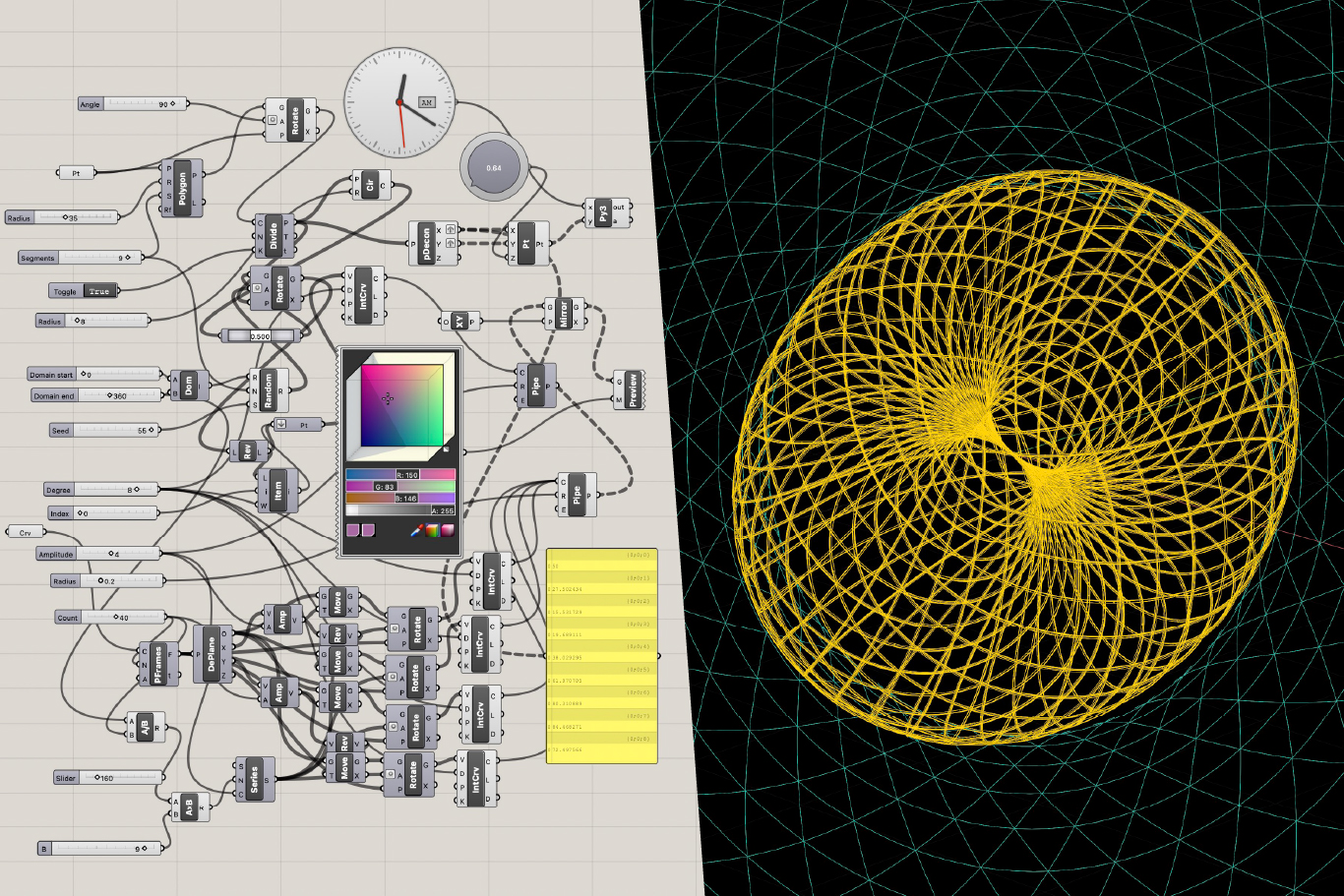
James shared that he still dabbles in architecture projects using Grasshopper [tag="grasshopper"] for parametric design and hopes to eventually return to physical design work, now integrated with AI capabilities.
[technology="Parametric Geometric Interfaces"]
For the past five years, IRIS [tag="iris"] has been primarily building advanced Webflow [tag="webflow"] websites and online learning platforms, leveraging tools like Circle, MemberStack, and similar technologies (15:30). With the advent of LLMs, the studio's capabilities have multiplied — they can now build custom solutions in-house rather than rely on third-party platforms. James emphasized building these as an ecosystem of resources that can be assembled in different configurations to create custom member experiences that also interoperate across clients.
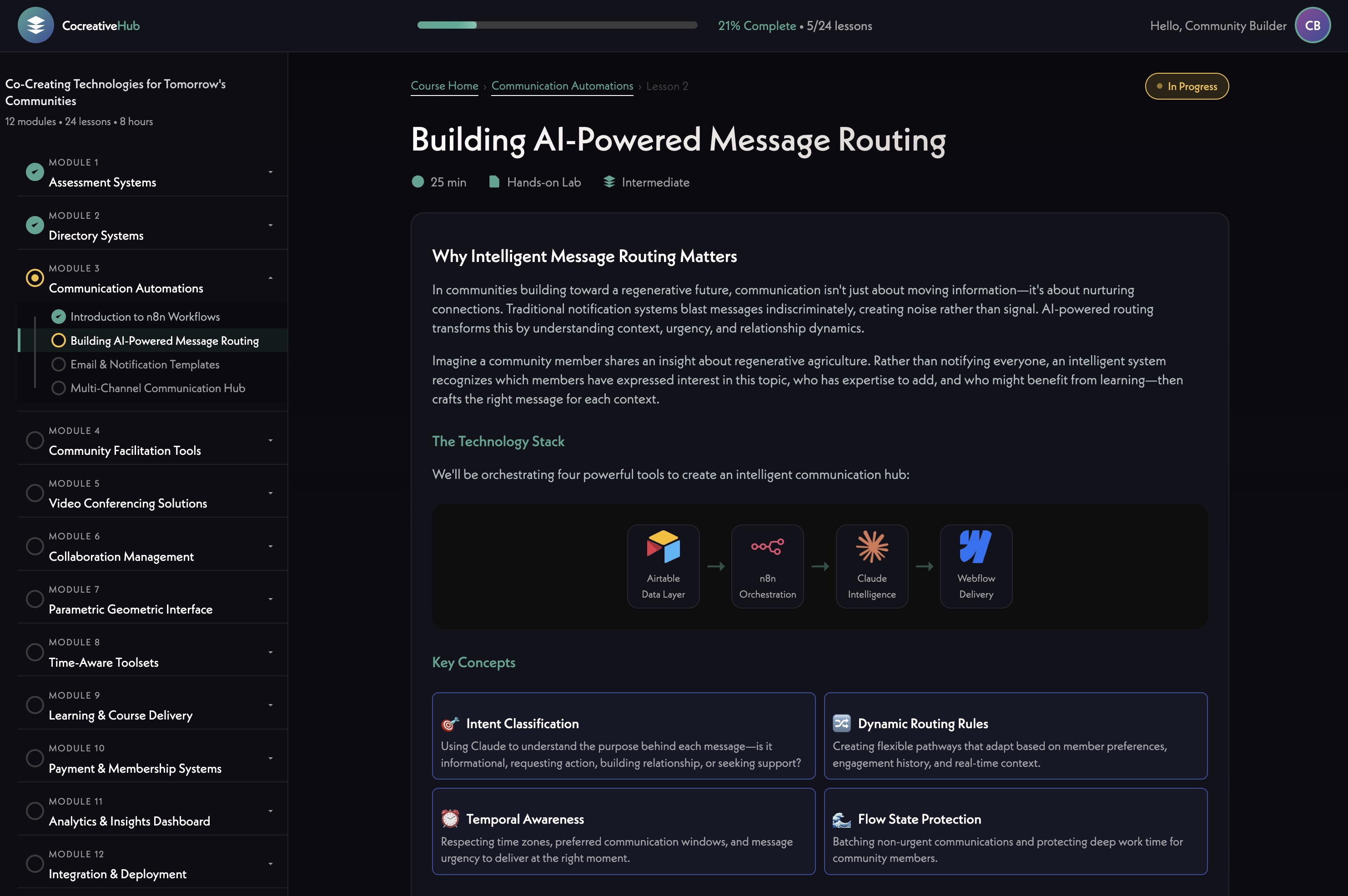
[technology="Online Learning Platforms"]
He mentioned current work with Holos and a Catholic Hermitage in Indiana — a non-denominational Franciscan community needing meditation groups, courses, and resource spaces. The aspiration: build bridges between these spaces so courses can run simultaneously in multiple communities and people can find each other through different doorways rather than being trapped in isolated mega-platforms like Mighty Networks.
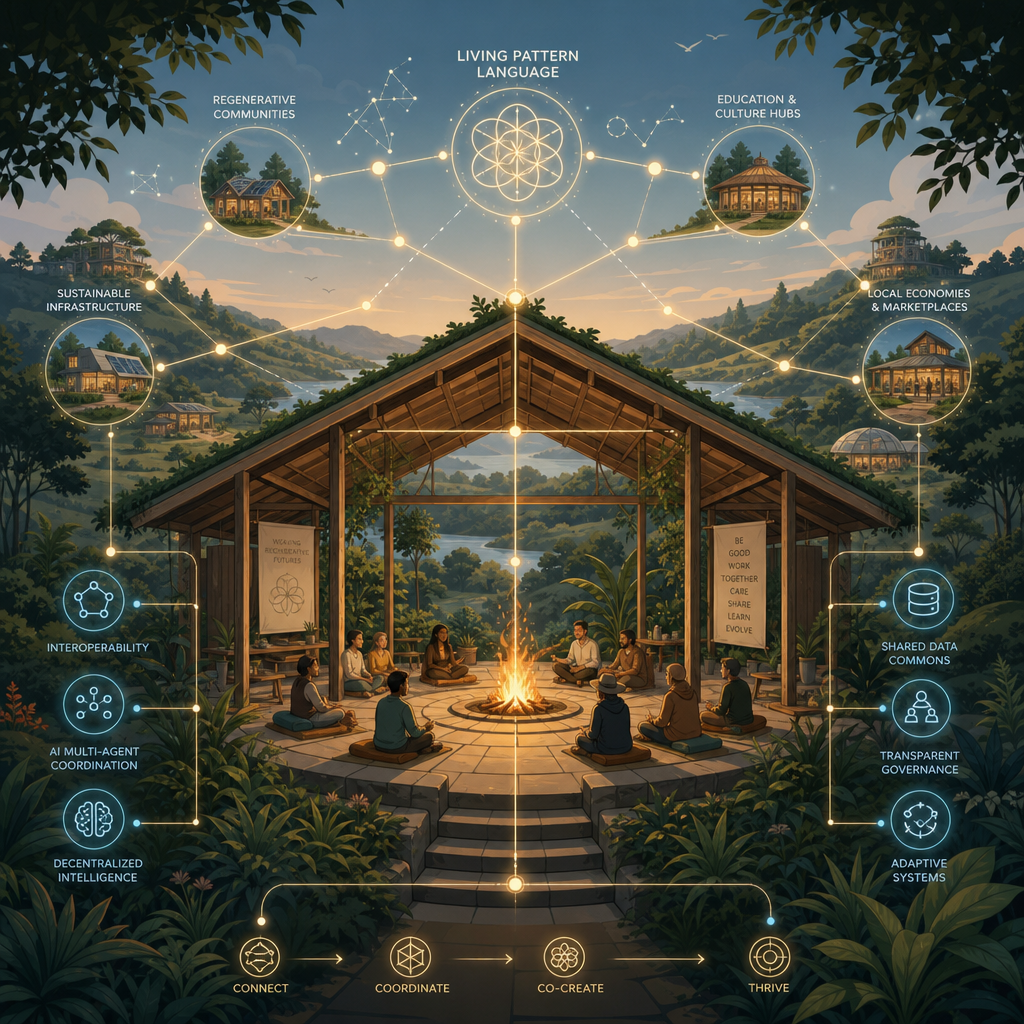
James introduced his vision for a Digital Pattern Language (18:31) — inspired by Christopher Alexander's work on living architecture and village building. The idea: an open-source, collaborative living library of patterns, templates, and recipes for creating ethical, values-aligned digital products, services, and spaces. The goal is to counter the prevalent "anti-patterns" in digital design (false urgency, manipulative CTAs, life-draining sales funnels) with usable, beautiful alternatives organized by scale, system, and context — accessible to both human designers and AI agents.
The vision extends beyond digital design into physical patterns, asking: how do we rethink libraries, learning, and education in an agentic future where we're learning alongside agents? (21:00).
Ian shared his background as a partner engineer at Facebook for six years, working on Facebook Fundraisers and nonprofit integrations (11:00). He's noticed a consistent pattern blocking entrepreneurs in the regenerative space: lead generation that feels spammy or intrusive, leading to repeated stalls right before success.
He's now working with Symbios, alongside Christina Graff — a company turning modern lead generation into a matching problem rather than spray-and-pray outreach (25:46). Symbios currently offers:
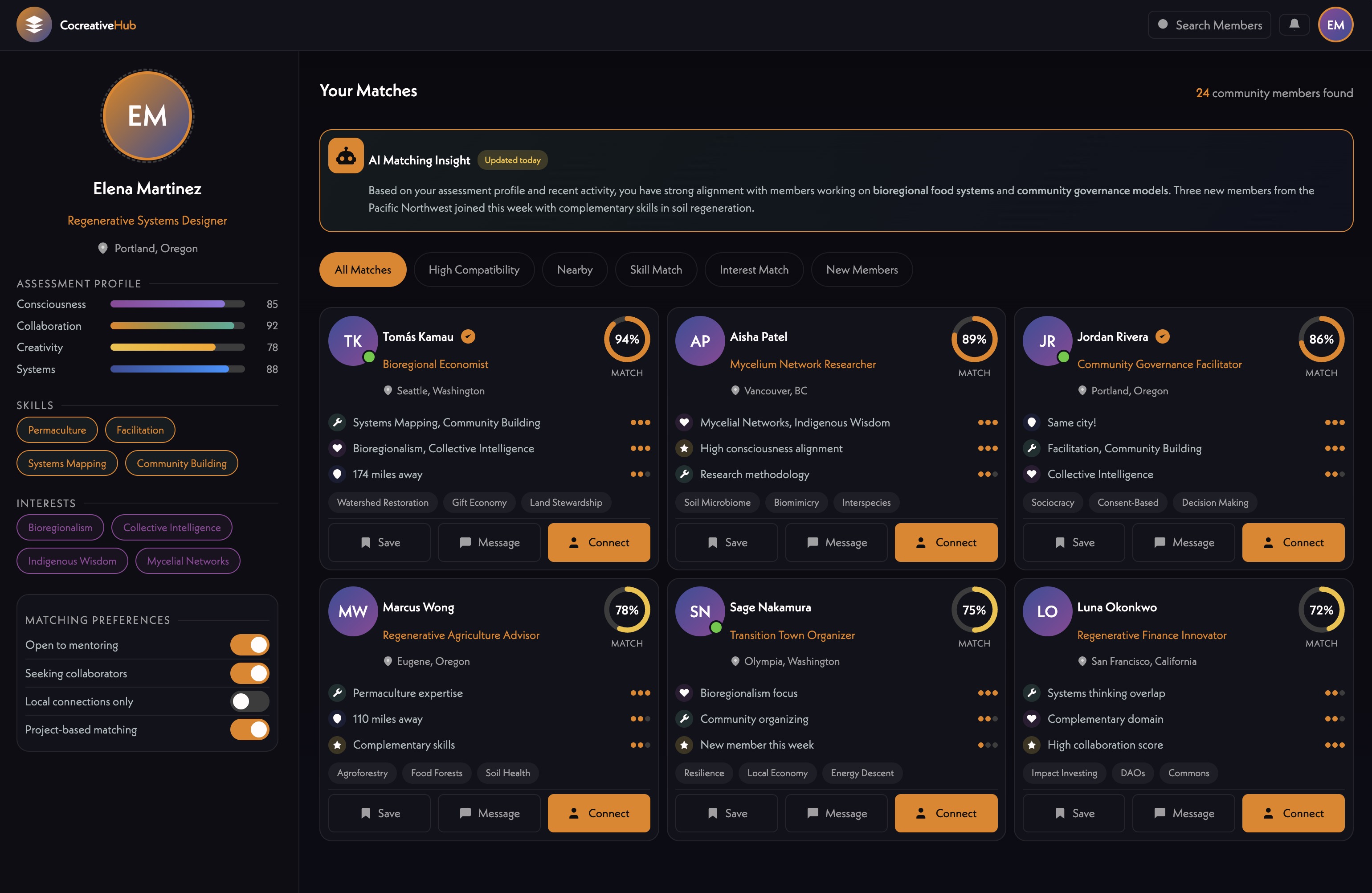
[technology="Intelligent Matching Algorithms"]
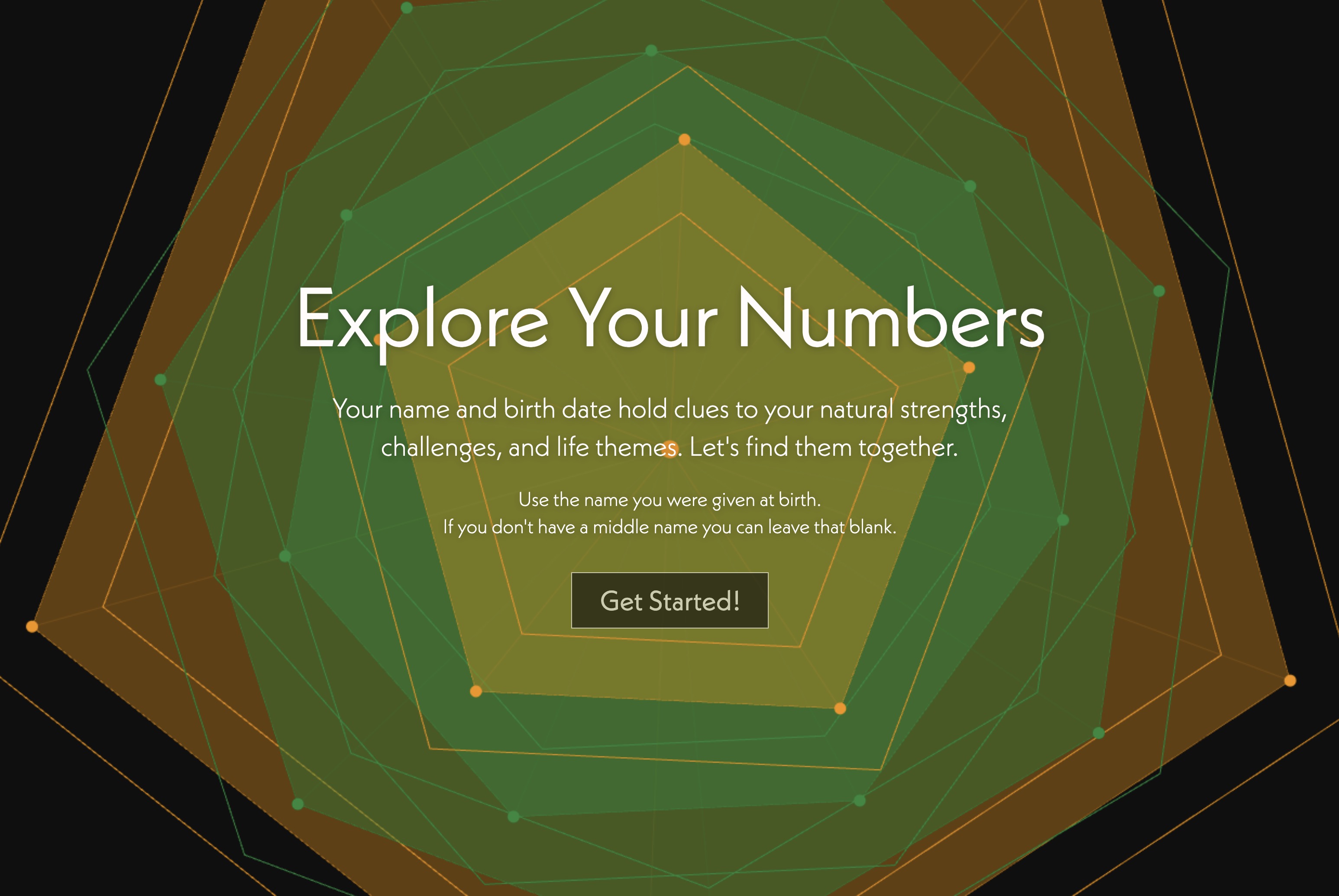
Notably, Symbios is structured around stewardship — no individual can own more than 3% of the company, creating strong appetite to play with others in the ecosystem rather than hoard value (29:00). Ian also described a vision for a Connector Community — people incentivized to surface matchmaking opportunities (CTOs, funding, LPs) across the network — eventually evolving into a DAO.
The conversation deepened around the shared recognition that, despite hyper-connectivity, our world remains profoundly disconnected — the neighbor with a drill you need that you'll never know about (32:00). James referenced his "Connectivity Conference" series and articulated a need for:
He shared a story of his father's early-90s tech company The Coordinator, which competed with email by requiring users to specify the purpose and promise of every message — too complicated for its time, but addressing something email still lacks (34:30).
Ian connected the pattern language vision to Jesper Loughren's work on agentic AI strategy and governance (41:44). Key insight: procedural thinking is dead in an agentic world. Instead of defining procedures for agents, we need to define:
Ian is currently designing his own multi-agent team this way and sees enormous value in collaborating on a shared library of patterns for multi-agentic systems that play well together — imagining friendly MCP agents at the boundary of each person's work.
James shared a backbone process he uses across all projects — naming the stages anything moves through from idea to reality (47:30):
Three are fields where we spend time; three are gateways — finite threshold-crossings. Ian noted that coordination is the stage where he sees most people (himself included) struggle most. James uses color-coded representations of these stages across all project management systems.
James clarified that Holos is built with interoperable aspirations rather than current interoperability (53:38). Built on Supabase [tag="supabase"] starting in January, the architecture allows for:
[technology="Custom Membership System"]
[technology="Communication Automations"]
[technology="Assessment Systems"]
[technology="Video Conferencing Solutions"]
James mentioned an unreleased custom video conference platform built as an alternative to Zoom, designed for circle-based meetings within community spaces.
Ian sketched a compelling vision for how three platforms could partner (01:02:01):
Ian articulated that one company or cluster in the regenerative ecosystem focusing specifically on memory as an organism-level capability could be a major contribution to the movement.
James returned to the fire metaphor that drives Holos — keeping the conversation burning between in-person gatherings, and envisioning a future where post-meeting artifacts live in shared 3D worlds with pavilions for each named topic, persistent and growing (01:07:30). Ian affirmed strong interest in joining the digital pattern language initiative and any rooms exploring API-first/MCP exposure of community tools — noting that "vibe coding" today doesn't yet mean creating things that play well with other tools, and there's a huge opportunity to change that.
James and Ian met for a wide-ranging connection conversation following James's offline time in the Azores and Ian's extended stay in Portugal. Both shared roots in intentional community living — James having run Montaya, a co-living retreat experience in California and around the world for four years, and Ian currently co-creating a five-bedroom villa as a co-living experiment in Dominical, Costa Rica (02:42). They bonded over shared experiences with eco-villages, the challenges of intentional community ("conflict as opportunity for growth"), and a mutual love of architecture — James having studied architecture before transferring to art after becoming disenchanted with the profession, and Ian's fiancée Daniela being a trained architect from Mexico City focused on regeneration (05:25).
James shared that he still dabbles in architecture projects using Grasshopper [tag="grasshopper"] for parametric design and hopes to eventually return to physical design work, now integrated with AI capabilities.
[technology="Parametric Geometric Interfaces"]
For the past five years, IRIS [tag="iris"] has been primarily building advanced Webflow [tag="webflow"] websites and online learning platforms, leveraging tools like Circle, MemberStack, and similar technologies (15:30). With the advent of LLMs, the studio's capabilities have multiplied — they can now build custom solutions in-house rather than rely on third-party platforms. James emphasized building these as an ecosystem of resources that can be assembled in different configurations to create custom member experiences that also interoperate across clients.
[technology="Online Learning Platforms"]
He mentioned current work with Holos and a Catholic Hermitage in Indiana — a non-denominational Franciscan community needing meditation groups, courses, and resource spaces. The aspiration: build bridges between these spaces so courses can run simultaneously in multiple communities and people can find each other through different doorways rather than being trapped in isolated mega-platforms like Mighty Networks.
James introduced his vision for a Digital Pattern Language (18:31) — inspired by Christopher Alexander's work on living architecture and village building. The idea: an open-source, collaborative living library of patterns, templates, and recipes for creating ethical, values-aligned digital products, services, and spaces. The goal is to counter the prevalent "anti-patterns" in digital design (false urgency, manipulative CTAs, life-draining sales funnels) with usable, beautiful alternatives organized by scale, system, and context — accessible to both human designers and AI agents.
The vision extends beyond digital design into physical patterns, asking: how do we rethink libraries, learning, and education in an agentic future where we're learning alongside agents? (21:00).
Ian shared his background as a partner engineer at Facebook for six years, working on Facebook Fundraisers and nonprofit integrations (11:00). He's noticed a consistent pattern blocking entrepreneurs in the regenerative space: lead generation that feels spammy or intrusive, leading to repeated stalls right before success.
He's now working with Symbios, alongside Christina Graff — a company turning modern lead generation into a matching problem rather than spray-and-pray outreach (25:46). Symbios currently offers:
[technology="Intelligent Matching Algorithms"]
Notably, Symbios is structured around stewardship — no individual can own more than 3% of the company, creating strong appetite to play with others in the ecosystem rather than hoard value (29:00). Ian also described a vision for a Connector Community — people incentivized to surface matchmaking opportunities (CTOs, funding, LPs) across the network — eventually evolving into a DAO.
The conversation deepened around the shared recognition that, despite hyper-connectivity, our world remains profoundly disconnected — the neighbor with a drill you need that you'll never know about (32:00). James referenced his "Connectivity Conference" series and articulated a need for:
He shared a story of his father's early-90s tech company The Coordinator, which competed with email by requiring users to specify the purpose and promise of every message — too complicated for its time, but addressing something email still lacks (34:30).
Ian connected the pattern language vision to Jesper Loughren's work on agentic AI strategy and governance (41:44). Key insight: procedural thinking is dead in an agentic world. Instead of defining procedures for agents, we need to define:
Ian is currently designing his own multi-agent team this way and sees enormous value in collaborating on a shared library of patterns for multi-agentic systems that play well together — imagining friendly MCP agents at the boundary of each person's work.
James shared a backbone process he uses across all projects — naming the stages anything moves through from idea to reality (47:30):
Three are fields where we spend time; three are gateways — finite threshold-crossings. Ian noted that coordination is the stage where he sees most people (himself included) struggle most. James uses color-coded representations of these stages across all project management systems.
James clarified that Holos is built with interoperable aspirations rather than current interoperability (53:38). Built on Supabase [tag="supabase"] starting in January, the architecture allows for:
[technology="Custom Membership System"]
[technology="Communication Automations"]
[technology="Assessment Systems"]
[technology="Video Conferencing Solutions"]
James mentioned an unreleased custom video conference platform built as an alternative to Zoom, designed for circle-based meetings within community spaces.
Ian sketched a compelling vision for how three platforms could partner (01:02:01):
Ian articulated that one company or cluster in the regenerative ecosystem focusing specifically on memory as an organism-level capability could be a major contribution to the movement.
James returned to the fire metaphor that drives Holos — keeping the conversation burning between in-person gatherings, and envisioning a future where post-meeting artifacts live in shared 3D worlds with pavilions for each named topic, persistent and growing (01:07:30). Ian affirmed strong interest in joining the digital pattern language initiative and any rooms exploring API-first/MCP exposure of community tools — noting that "vibe coding" today doesn't yet mean creating things that play well with other tools, and there's a huge opportunity to change that.
Share meeting artifact and mini-app automation with Ian Nathan
James to share the post-meeting summary artifact and the mini-app automation that generates rich post-meeting summaries with Ian. Referenced at 01:00:34.
Connect Ian Nathan with Matt Robertson in Dominical
James to introduce Ian to Matt Robertson, who runs a 70-acre retreat property in Dominical and could be a strong local collaborator given Ian's co-living project in Dominical, Costa Rica. Referenced at 01:09:00.
Continue evolving Holos interoperability and open-source modules
Ongoing development of Holos interoperability architecture including open-source modules for membership, communication automations, online learning, and assessments. Referenced at 55:00.
Invite Ian Nathan into digital pattern language working sessions
James to invite Ian into future digital pattern language working sessions, particularly around the library and API/MCP exposure pavilion. Referenced at 01:09:38.
Bring Jesper Loughren's agentic AI governance framework into the digital pattern language conversation
Ian to bring Jesper Loughren's agentic AI governance framework into the digital pattern language conversation as a foundation for multi-agent system patterns, covering boundaries of autonomy, escalation patterns, and goal-oriented agent design. Referenced at 41:44.
Co-design workshops on warm-path lead generation and stewardship business models through Symbios
Ian to co-design workshops on warm-path lead generation and stewardship business models through Symbios as part of the broader ecosystem partnership exploration. Referenced at 29:00.
Engage in API and MCP interoperability conversations for Holos and the pattern language library
Ian to engage in API/MCP interoperability conversations, contributing his engineering background and Symbios perspective to help Holos and the pattern language library expose their tools in ways that play well with other systems. Referenced at 58:30.
Introduce a potential collaborator for the digital pattern language library group
Ian to introduce a potential collaborator for the library project group when it next convenes. Referenced at 01:09:38.
Share WE Field and Peter Opperman work as a possible ecosystem partner for event-based intake
Ian to share details about WE Field and Peter Opperman's work — event-based intake and matchmaking workshops with QR-code-triggered profile creation — as a possible ecosystem partner for the Holos/Symbios/WE Field partnership vision. Referenced at 01:02:09.
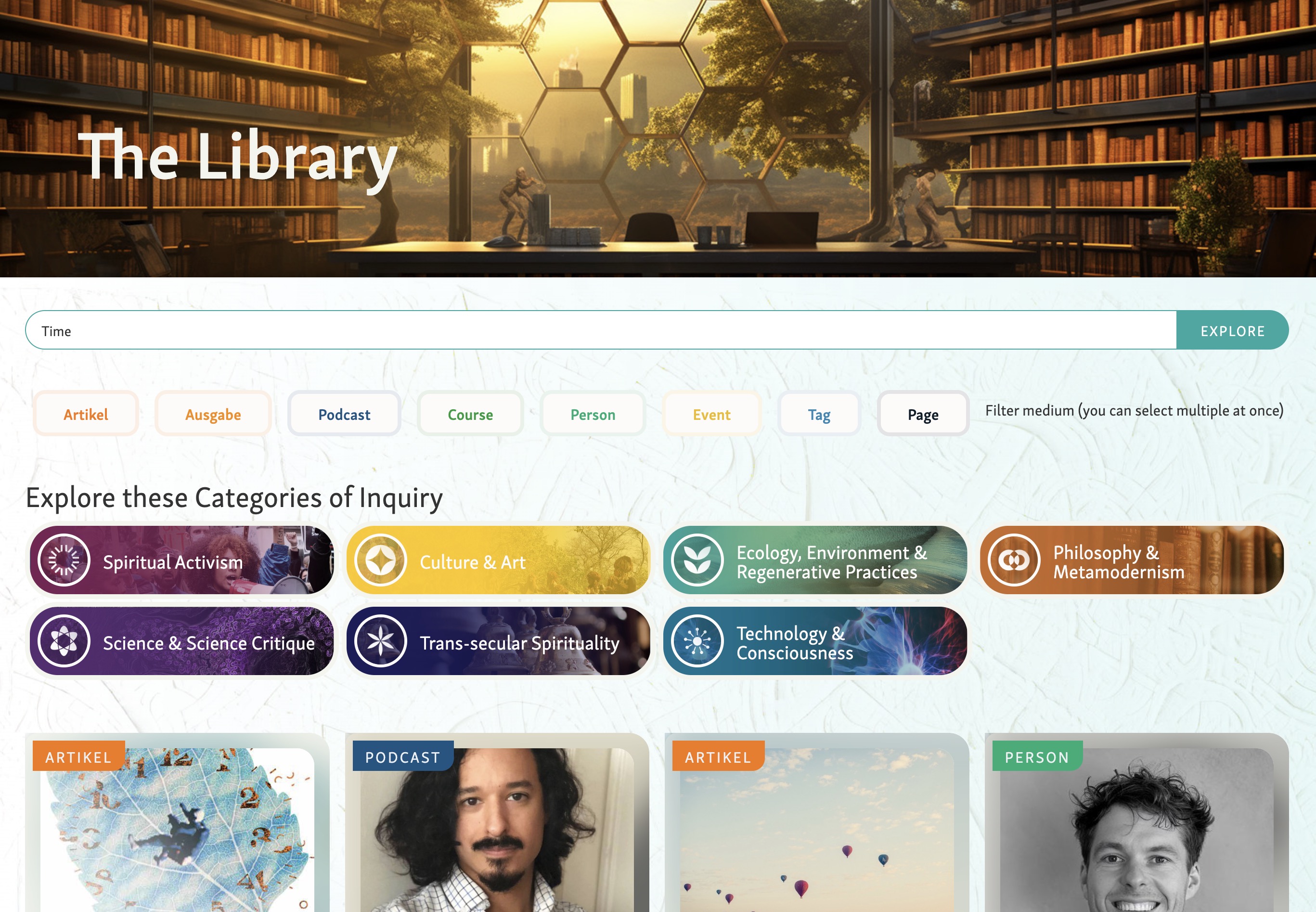
Open-source, collaborative living library of patterns, templates, and recipes for creating ethical, values-aligned digital products, services, and spaces. Inspired by Christopher Alexander's work on living architecture and village building. The library will organize patterns by scale, system, and context - accessible to both human designers and AI agents. Will counter prevalent 'anti-patterns' in digital design (false urgency, manipulative CTAs, life-draining sales funnels) with usable, beautiful alternatives. Extension into physical patterns, rethinking libraries, learning, and education in an agentic future. Includes API/MCP exposure for interoperability across tools and communities.
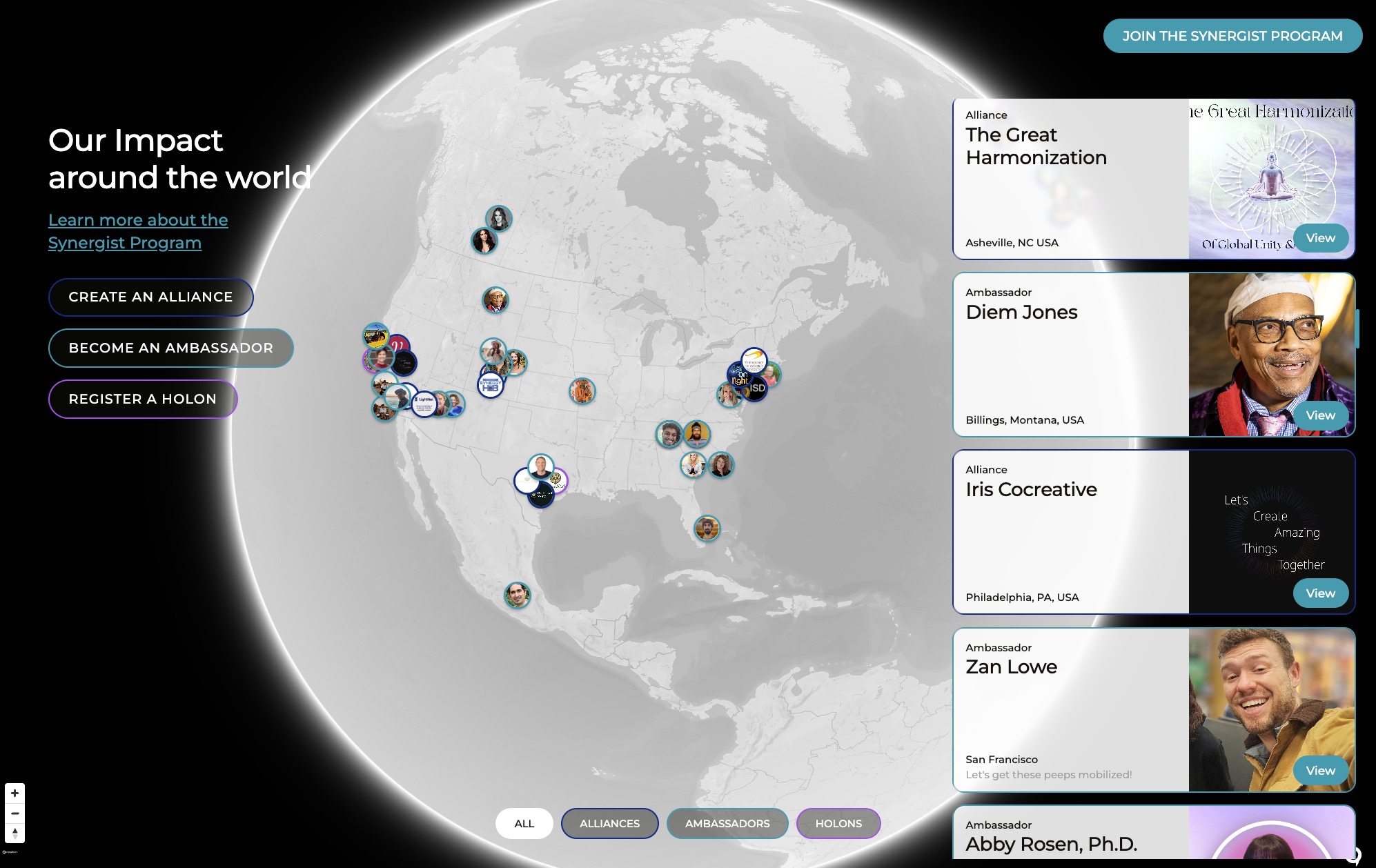
Building Holos with interoperable aspirations - architecture that allows profile tables to sync across parallel platforms, push-button propagation of profile data, courses, and assets between sibling communities. Built on Supabase starting January 2026. Includes plans to open-source modules: online learning platform, membership system, communication automations via n8n, assessment systems, and custom video conferencing. Focus on creating ecosystem of resources that can be assembled in different configurations to create custom member experiences that interoperate across clients.
Backbone process framework used across all IRIS projects to track anything from idea to reality through six stages: Idea (field), Conversation (field), Coordination (gateway), Creation (field), Done (gateway), Integration (field). Three are fields where time is spent; three are gateways - finite threshold-crossings. Color-coded representations used across all project management systems. Framework to be documented and potentially integrated into Digital Pattern Language Library as a foundational pattern for project lifecycle management.
Collaboration with Jesper Loughren's agentic AI governance framework to create shared library of patterns for multi-agentic systems that play well together. Focus on defining boundaries of autonomy, escalation patterns (what triggers stop/escalation/handoff), and goals rather than procedures. Addressing the shift from procedural thinking to agentic thinking. Envisioning friendly MCP agents at the boundary of each person's work. Will be integrated into Digital Pattern Language Library as a foundational pavilion for agentic system design.
Unreleased custom video conference platform built as alternative to Zoom, designed for circle-based meetings within community spaces. Part of the Holos ecosystem and planned for open-sourcing as one of the interoperable modules. Supports community-focused meeting experiences with intentional design for gathering and presence.
Strategic exploration of partnership model between three platforms: WE Field (event-based intake and matchmaking workshops with QR-code-triggered profile creation), Holos (social network layer, visual identity, profiles, education), and Symbios (memory layer, surfacing insights over time, responding to network signals). Vision for how these platforms could interoperate with complementary strengths - WE Field for events, Holos for community presence, Symbios for relationship memory and matchmaking over time.
00:00:02
James Redenbaugh: Hello, Ian.
00:00:05
Ian Nathan: Hey, James. Or should I say Eos Webcam Utility?
00:00:09
James Redenbaugh: This meeting is being recorded. EOS Webcam Utility was my given name.
00:00:15
Ian Nathan: Oh, wow. It's romantic.
00:00:18
James Redenbaugh: Yeah. Changed it. How are you doing? Good to see you.
00:00:25
Ian Nathan: Well, well, likewise. Welcome back from your offline time.
00:00:32
James Redenbaugh: Thank you. Yeah, it was amazing. I haven't had so much offline time ever. It was really good. It was great. Azores are really fun. They're. They're smaller than I imagined. I knew they'd be small, but it's like these tiny islands, the Atlantic. And we just had a blast cruising around on a motorcycle and hanging out and going to restaurants and eating really good local beef, stuff like that.
00:01:12
Ian Nathan: So. So cool. Yeah, Danielle and I have been really enjoying Portugal. It's our first time here.
00:01:19
James Redenbaugh: Oh, you're still there.
00:01:21
Ian Nathan: We're still here. Yeah. We planned for six weeks. We just like. Well, I went to Sweden to meet up with my co founders for a short week and we're. I think we're gonna go to Colibri Spirit Fest in Corfu.
00:01:35
James Redenbaugh: Oh, cool. Great. Yeah, I've always wanted to go to that. They seem like good people.
00:01:41
Ian Nathan: Right.
00:01:43
James Redenbaugh: I'll.
00:01:44
Ian Nathan: I'll report back to the field.
00:01:46
James Redenbaugh: Yeah, let me know.
00:01:48
Ian Nathan: Sounds.
00:01:48
James Redenbaugh: That's. That's great. We would be doing that if we didn't have kittens to come home to. Missing our cats. So.
00:01:57
Ian Nathan: Yo, it's. We're spending time away from our beloved cat right now too. And it's the. That's the worst part by far.
00:02:06
James Redenbaugh: It's so hard. We just got these three cats six months ago, and this was the longest we've ever been away from them. And we were like, trying to watch them on our camera by the window every day and like demanding photo updates from our various cat sitters.
00:02:28
Ian Nathan: Yeah, that's sounds like us. Yeah, that's right. And speaking of which, I need a photo update.
00:02:37
James Redenbaugh: Where's. Where's home for you guys?
00:02:40
Ian Nathan: Costa Rica.
00:02:42
James Redenbaugh: Oh, cool.
00:02:43
Ian Nathan: We've been there for a bit over four years now and we just changed our living situation and we're kind of in a five bedroom villa. With that, we're treating as a co living experience.
00:02:58
James Redenbaugh: Cool.
00:02:59
Ian Nathan: Yeah. Working on systems. Yeah, Systems of harmonious living.
00:03:07
James Redenbaugh: What part of Costa Rica?
00:03:10
Ian Nathan: Dominical.
00:03:12
James Redenbaugh: Okay. Yeah, yeah. Do you know Matt Robertson?
00:03:17
Ian Nathan: Not yet.
00:03:19
James Redenbaugh: Oh, man, I gotta connect you. He's a dear buddy of mine and he's got like 70 acres in Dominical. Beautiful property. He's like slowly building up a retreat center there with his mom. And he's awesome. He's a big heart. He's a friend from California.
00:03:40
Ian Nathan: Oh, nice.
00:03:41
James Redenbaugh: He's been there, like, four years, so I'm surprised you guys haven't crossed paths more.
00:03:49
Ian Nathan: Yeah, more. We've lived in, you know, the Machuca Valley with Alegria Village and, like, go via Stephen Brooks projects over there.
00:03:58
James Redenbaugh: No, I haven't heard of those.
00:03:59
Ian Nathan: So most of the four years has been there. The Dominic hall chapter, though. I've been there a lot. Has. Has been recent.
00:04:05
James Redenbaugh: Yeah. Cool. Awesome. I was also working on a retreat center project in Uvita with some friends there. I was helping them design their temple spaces. I love it down there. It's. Yeah. Nice little. Nice little.
00:04:24
Ian Nathan: You've got a background in design architecture, too, or just. Or visual design?
00:04:32
James Redenbaugh: Yeah, I studied architecture. Studied architecture while I was in architecture school. I got into meditation and integral theory and consciousness, and then I got really disenchanted really fast with the architecture profession. Wait a minute. Why are we. Why are we talking about, like, Corbusier and not Buckminster Fuller and Christopher Alexander? So I. I transferred into art so I could finish a year early and start working for conscious orgs doing digital design, and. And wanted to work for myself and be choosy about my clients. And 15 years later, here. Here we are. Okay.
00:05:25
Ian Nathan: You speak my fiance's language. You speak Daniela's language. She was a trained architect from Mexico City, and during her time there, like, she got into sustainability and through that, like, actually regeneration and was, like, trying to refocus the architecture firm that she was working for, which said that they were, like, you know, progressive and sustainable with. But, you know, when the rubber hit the road, it was like. Oh, actually, like, they're not as embracing of these concepts, at least on a fundamental level as they could be. Right. Like, it's. It's. I mean, you. You went way farther or. Sorry, she went way farther. But, like, y'. All. Y' all speak the same way about it, and I love that.
00:06:12
James Redenbaugh: So I still dream of the villages that our hearts know is possible. And yeah, I still dabble in. In some architecture projects when I can, because I've maintained my. And grown my parametric design skill sets. I use this program called Grasshopper that lets me, like, create 3D forms. Yeah. And I. I want to come back to the profession eventually, but I also want to include the digital and everything that's possible with AI so I'm happy to be where we're at now.
00:06:53
Ian Nathan: Oh, I love it. Yeah. Daniela respects people who know how to use Grasshopper. That's true. That's really cool. Wow. Yeah, I can tell we're going to come full circle on the, on the village. You know, like that's, that's part of what the co living is for us is you know, we lived in an eco village for four years and it, it wasn't enough intentional community. It was too much like community branded neighborhood and not enough intentional community. Right. Value aligned people really like, like, like really, you know, figuring out how to like. Okay, we see the thing, right. Like, like conflict, opportunity for growth. Right. No, conflict is often something to, to be avoided still. It's like okay.
00:07:47
James Redenbaugh: At all costs.
00:07:49
Ian Nathan: Yeah. So just we realize that it's, it's easier to get there through, through shorter containers and just like weaving with, with people and then you know, you know, let's say through four years of, and building a network of these co living experiences, you know, you're, we're going to figure out who we actually want to be villagers with, you know?
00:08:13
James Redenbaugh: Yeah. Yeah, totally. It's so funny where we're talking right now. I, I ran co living retreat experiences for four years around the world and, and then helped build a co living retreat center in the mountains in California. And we were doing just that and learned so much and it was so, so fun. The most fun and fulfilling socially fulfilling period of my life and I uber missed aspects of that and then I, I knew I had to go off and do, do something else. Oh, my camera died. I'm gonna swap cameras because the okay amount of batteries on that one. Okay. But yeah, it was called Montaya. It's still going actually. We have a, a space in the Eastern Sierra and we would bring intentional groups together, groups of like 8 to 24 people. It started in spaces around the world that we would rent out and different themes and sometimes they were part of our startup and we were working on things together and sometimes it was just participants and sometimes it was people that were like, you know, working during the day in the ski town that we lived near. But it was awesome. You know, we learned so much. It was hard because if one thing goes wrong, you get one person that's really not aligned. It can really spoil it for the bunch. But yeah, that's the, that's the future. There's, it's amazing how we've been here for like 310,000 years and we're still learning how to live together. There's still so much to learn about.
00:10:10
Ian Nathan: We're learning how to do. Yeah, yeah, exactly. I guess works or doesn't work well when, when there Wasn't an option. I guess that's when we learned to do it.
00:10:28
James Redenbaugh: Yeah. Yeah. And when everybody is like, related to you.
00:10:33
Ian Nathan: Exactly.
00:10:34
James Redenbaugh: And you've been doing the same thing for thousands of years and you're united by the common enemy of mother Nature, it can be easier.
00:10:48
Ian Nathan: Well, I think it's really interesting that, I mean, you. I love that we, well, been thinking about similar things, had different phases of it. You know what?
00:11:00
James Redenbaugh: My.
00:11:01
Ian Nathan: I guess we didn't share my background. I was 10 years as sort of like a. Call it, like partner engineer. So like integrations kind of. I, I was never like the. The nerdiest engineer in the room. But, you know, I, I wrote code. I wrote. I wrote Android apps as my first job and then moved over to Facebook. I worked there for six years in partner engineering, which was again, all about taking something. Taking something a product team had already built and was maintaining and like laser focused on customer. Sorry, consumer optimizations. Right. So Facebook fundraisers was the. The thing I supported for the most time there. And so essentially you had a product team making Facebook fundraisers the best possible for the user. And then we have. We formed a bunch of partnerships with nonprofits. And with the nonprofits, they have different. They have different capabilities that they needed for the fundraisers, of course. So it was like the partner engineering's role to help build out those use cases and make it viable for the. To sign deals with the biggest nonprofits in the world. So that was a lot of what I got to do. And I'm looking forward to laddering what I learned there into the regenerative movement. More and more I observe this tendency for us all to want to build our own version of everything, which I think is amazing and cute. And I'm so glad that everyone gets to be an engineer the first time almost that hasn't been right. That makes me very happy. Having done a lot of a decent amount of engineering work, it's like how I felt when I got to build my first Android app. I'm like, oh, yeah, that's totally what's happening with people. Like, they. For the first time, like, coding is now accessible without like four years of training. And I love it. And now I'm like, okay, so I want us to play together. And that's kind of what happened in the workshop you led and maybe to keep segueing it into something that I think we could have fun talking about. You know, I love how you facilitate groups and there is something about the way that you facilitated the group that makes me want to like actually play with the people there and like, you know, like be on the team making it happen and like that's, that's a unique skill that you've got there. So just wanted to echo that back to you as I share. Yeah. This, this, this desire to have more of us playing together. Like, I'd rather like if we could think about ourselves as one big company with a bunch of different like orgs or teams or something if that's so fun. Right. And like, anyhow, that's, that's the best,.
00:14:20
James Redenbaugh: That's the best company I want to be a part of.
00:14:23
Ian Nathan: Exactly. Yeah, exactly. So I'm, I'm really curious what, what's on your map? Like what are you, what do you see? What are you, you building towards?
00:14:43
James Redenbaugh: Yeah. In, in different domains. So Iris, my studio, we've been mostly building. For the last five years we've been mostly building advanced webflow websites and online learning platforms that leverage tools like Circle or Member Stack or existing technologies to sell and manage courses and online learning experiences and lots of branding and design work and icons and graphics and kind of everything. Generalist studio, sometimes animation, sometimes book design, sometimes print materials, sometimes architecture. But the last couple years with the advent of these LLMs, it's really multiplied our capabilities. We've been able to build the kinds of things that we used to use like Circle or Mighty Networks or member stack 4. We can build our own solutions now. And I've been trying to do so in a way that makes it an ecosystem of resources that we can assemble in different ways to create custom member experiences online that can also interoperate. So you've seen Holos and I'm very excited about what that's turning into and love supporting them and, and building with them and I hope that that continues to grow. And we have other clients and conversations that have different but parallel needs of their own online community experiences. And we're, we're trying to build those in a way where eventually these systems could interoperate. Where like we have a client for example, who's a, a Catholic Hermitage in Indiana and they have their like meditation communities and they're, they're like a super non denominational open spiritual Franciscan Catholic hermitage, but they have like their meditation groups and courses and resources online. So we're building something for them and their community and then the hope is that we can build things like that for them, but then also create bridges to spaces like Holos, where people and resources can cross pollinate, where courses can run simultaneously in multiple spaces online and People can find each other through different doorways online instead of having everything be so isolated or be on a mega platform like Mighty Networks, which is somehow still isolating. And so that's one big domain of things. And then a parallel initiative I want to mention, because I think you'll want to get in on this, is this desire to like co create. I think it's, it's really important that it becomes collaborative. But have you happened to have heard of Christopher Alexander's work?
00:18:31
Ian Nathan: No.
00:18:31
James Redenbaugh: He was an architect in the 70s and 80s and 90s who would write a lot about really holistic, we'd call it Regenerative now, place making and village building. And he wrote a timeless way of building and a pattern language. And he would write about how to build like living villages. And it was very fractal of like patterns that focus on the details of the house and the house and the neighborhood and the town and these rich philosophies about how we could remember collectively how to build together with like bioregional awareness and awareness that there aren't patterns that can be applied across every context. But we need to like empower each other to create better ways of building so that we can build our own villages and spaces for us and not just have things kind of imposed on us. And I want to use that as kind of a seed impulse to create a digital pattern language essentially like a living resource library of patterns, templates, recipes for creating that could be used by anybody to create living ethical values aligned digital anything, product services, spaces. Because there's, there's so much beauty out there. There's so much, it's so easy to create now. And there's so much crap and like what I'm calling anti patterns that we end up employing like false urgency, for example, like sign up for this webinar now to learn about this thing. You know, it's happening on Thursday. You won't get another chance and click this big red button and it's 79.99. And even if you're selling a cool bright course that you want to take, if you put that in front of it, you're, you're taking the life out of the course. And that's an extreme example, but there's all sorts of ways that we build online to take the life out of things that are really good. And I want to, I want to find a way to open source some really usable library of better ideas, essentially organized by scale and system and context that can be used by human designers and agents as well so that we can plug in them into our, into our agents if we're, if we're building something worth building. So I'm calling that digital pattern language, for lack of a better name for now. But I want it to be one of the initiatives in this company that seems, this anti company that seems to be forming, because I don't want it to just come from my mind. I have a ton of ideas about it and I could put agents to work on it, but I think that's, that's important. And then I also see that eventually turning into not just patterns for digital design, but physical design. Like, how can you, how can we rethink libraries and learning and education in the agentic future where we're learning alongside agents, you know, and how can we build things that, that are not just for us humans, but are for our agents to empower them to create things that are good for everybody? And then in addition to all of that, I also do woodworking and I'm trying to have a baby soon and I have my cats. Yay.
00:22:42
Ian Nathan: We'll join you on the baby train. The trying to have a baby train within the year too.
00:22:46
James Redenbaugh: So that's awesome.
00:22:47
Ian Nathan: Oh, great, man.
00:22:49
James Redenbaugh: Wow.
00:22:49
Ian Nathan: There's, there's definitely a lot going on. Okay,.
00:22:58
James Redenbaugh: How about for you? Can you paint a picture for me of what's, what's, what's alive in your world?
00:23:06
Ian Nathan: Yeah, absolutely.
00:23:09
James Redenbaugh: So.
00:23:12
Ian Nathan: In November, I went to like Atitlan and got to go to the prophetic DAO incubator. Did you, did you hear about William Blakey's event? You know, William Blakey and Starseed Universe, all, all that stuff?
00:23:29
James Redenbaugh: Vaguely, yeah. Okay.
00:23:32
Ian Nathan: Well, I really enjoyed my time there. It was like I've been in, I've been sort of like in the entrepreneurship ever since leaving Facebook about five years ago. And that was one of the first touch points. It's also where I met Rachel and Stephen, who then invited us to the wave and, you know, got us like that. That was kind of the portal, portal in there. And I started getting really unique insights. One, I realized that in all of my entrepreneurial proceeds things, I always got stopped at the same place, which was essentially the lead generation step of marketing. So not wanting to feel spammy, not wanting to bother people, be a nuisance, while thinking I had something really cool each time. Right. But how do I make sure that when I'm sharing this with someone, they actually want to hear about it? Because I, I, I really love people and I don't want to bother them. It's like kind of how it appears in my, in my head. And I realized that this is like a pattern that keeps stopping me on the way to success. And actually it stops a lot of people in the this, in this realm. And so I sort of made a, made a decision to solve this for myself and, and others in the movement. And that has led on a really fun and interesting adventure of so far, like mapping a bunch of pieces going some way down some of the paths. For a while I was. Well, this is still very core to it, I can tell, but basically turning modern lead generation into a matching problem rather than like a spray and pray, shout from the rooftops kind of kind of thing. I think it actually, I think it's eventually, I hope it could be classified as an empty pattern. Right? Blowing up someone's inbox so that they,.
00:25:46
James Redenbaugh: You know, I guess so many AI generated cold emails these days.
00:25:53
Ian Nathan: There's a reason it's a, it's like literally less than a 2% conversion. Well, like, response rate for those kind of approaches.
00:26:01
James Redenbaugh: Right.
00:26:01
Ian Nathan: So versus like 40 to 60 for, for Warren. And that's actually the good segue. So I was exploring this, realizing that we like, like, man, why isn't LinkedIn better? Like, that was like, like, okay, we're connected, but it's like their search is terrible. It's like all like, I don't know, it's just not, not good. And, and so we're like, okay, need better LinkedIn. Need networking. Like, I'm still thinking about this marketing. And that's when Christina Graff and I found Symbios.
00:26:39
James Redenbaugh: Who.
00:26:41
Ian Nathan: Have taken a really cool approach. They're pretty early, but it's like, it's. They think about it the right way and they're building the right things. So essentially they have Symbios right now, has a browser extension and an app which plugs into your LinkedIn and then lets you like, agentically query your network. So, hey, who do I know who. Not only that, anyone else you're friends with on the app, you can search across their networks too, right? And like, it has to be like, it's. It's double up. You know, it's like consensual. It's like friends. And yes, you're sharing network. And then it's like, oh, well, this is super cool. I wish Link didn't let me do that. Like, hey, I want to find people who couldn't be a good CTO for my new startup, do I know anyone? And like, it recommends three people in my network and like three people in, you know, your Network for me and you know, one in Daniela. Right. Like so, so that's kind of like where it already is, which I think is really cool. And in, in the future, you know, the, the agent in there is designed to be a networking agent. So with, with really good memory. So it's meant to be like your memory of like who do you know? When did you meet them, you know, how. When's the last time you talked to them? What do you, what do you typically talk to them about? Eventually it's, it's all of that by you know, ingesting emails or docs or whatnot like that we're not quite there. We can upload docs but it's not like automatic yet. And so that's that realm. Christina and I joined that team. So that's where. That's where my. And most of my energy is right now is helping them, I mean everything helping them operationalize. We're likely going to be putting together like a work, a series of workshops for people who want to get better at like warm path lead generation and closing and all that sort of stuff. And then simultaneously like Christina and myself and everyone on the team, like we, we the team. The, the business is modeled after stewardship. It's. It's structured in a way so that no one can own more than 3% of the company in its like in its and I guess end state but even, even in the midterm. So it's just like how. And how do we. We want to keep welcoming people into Symbios or playing with the ecosystem in ways like there's not much of a sense of like mine in that team. And so there's a lot of appetite to play with others, others in the ecosystem. The other thing that I see there is that there's something called the connector community that I've been receiving downloads of and maybe it's even like this is where Hollows could come in or I'm not sure but it's like this group of people that gets incentivized for outcomes. So let's say I'm looking for a CTO and like this, this community of super connectors but like starts to surface me once or I'm looking for funding and they start to surface me opportunities or I'm a VC looking for LPs to, to match, you know, to match my investments. Like. Right. All of these things are flows that people are willing to pay for essentially. And, and I see like eventually a dao, but a community of people that are, that are helping like Matchmake the ecosystem. Right. Which is why I thought of Hollows is because there's. There's matchmaking in there already. But this would be like the next order human aided at first. And then, you know, like, I want. I want to see what an open network like Holos and all the other, plus a team of like super connectors can do. So these are. These are some of the places I'm looking. Right.
00:31:02
James Redenbaugh: Cool. Awesome. That's really exciting. I'm also looking at your LinkedIn and you went to UVA in 2007-2011. That's when my wife was at UVA. Exactly. Whoa. Yeah.
00:31:24
Ian Nathan: Amazing.
00:31:25
James Redenbaugh: That's funny.
00:31:30
Ian Nathan: I recognize. I knew a Red and Bow in at uva, but it was a guy.
00:31:38
James Redenbaugh: Really. I've never met another Red and Bow. I was. She. She was a balchik about that.
00:31:50
Ian Nathan: What's her name?
00:31:52
James Redenbaugh: Emily Belechek. And now we both changed our name to Bolden or we're in the process of changing. I've gotta. Gotta change it on Zoom. We combined our names is why not. That's so cool though. That's really rich and exciting. When you were speaking about the Connection Connectors network. Yeah. There's so much room for innovation in that space. There's so much more connection that's possible. Years ago, I. I put on a little conference in Bali on three days notice. We got like a hundred people to show up. And we like branded and designed and marketed this. We called it Connectivity Conference. And then that spurred this whole Connectivity Conference idea. For a while we were gonna keep creating these conferences that's all about just connectivity because there's so much. Even though our world is so connected, it's still so disconnected compared to what it can be where like I have a drill that my neighbor across the street needs and he has no idea that I have that drill or that bit or like I need to hire somebody for my garden and there's somebody one block over who. Who can do that. And I'll never know that. And it's so frustrating. And you know, it's even of course more true in. In the digital worlds that we're building. There's so much opportunity and resource and we are able to find just these little bits of it per chance or synchronicity or luck. But there's so much more potential for connecting people to the things that. That they need. And I think we need like better agentic matching and cool platforms. And I think we also need to develop a, like a shared visual language of. Of action and Outcome. And this might take years, but I, I really feel like we don't like English doesn't cut it. And you know, typical design language and iconography doesn't cut it. We need to make tangible action and outcome beyond like financial projections so that we can see what does this working group look like, what does our purpose look like, what does our timeline look like in time beyond a Gantt chart? You know, like, how can we build organisms that exist in time that aren't just like dates on a, on a timeline? And if we have language for like action, for promises, for offers, for opportunities, for contingencies, we can build like, connects different things that can function in new ways that are much more organic and responsive and lightweight than a traditional organization, a traditional giant company, which I think will go extinct pretty soon. So I want to like, just name that in that desire. That's something I've been trying to like, diddling on for my whole life. I grew up, my dad was president of, he's an economist, but somehow he was president of a tech company in Silicon Valley in the early 90s called the coordinator, which was competing with email. They like, it was like free. As email was coming up, they were trying to get their thing in, but their thing was too complicated. But it had things that email lacks. Where email, we have a subject and a text field, you know, and BCC and cc. But they were like, what are you actually asking for? What's the promise by. When you know, what is. What's the purpose of this message? Like, you have to fill out these fields and send them and it would create these action sequences. And it was before its time and people wanted to just, I want to send a message. It's like a letter, but online. I'll do that. But, you know, now we're living in a world where it's still very hard to coordinate and everybody has a different definition for offer and request. And you know, I, I've worked with so many freelancers and they, there's such a spectrum of, you know, of difference between what people think that they can do and then what they are actually able to end up doing. And it's like we're all on this big ocean just trying to like, figure things out. But there could be like a terrain that we can build in, you know, and space to, to, to learn and grow and develop our skill sets and make mistakes, but then, you know, learn from them and achieve stuff together and share in, in ownership of outcomes in different ways and you know, create, of course, crazy, you know, blockchain automations and, and whatever. But more importantly than that, like create real like actionable meshworks of human relationships that can function in ways that we can't as individuals or that we can't as incorporated entities.
00:38:27
Ian Nathan: Yeah, I like, I like how you spun that. Like. Yeah, it. It does need a language. Wow. Yeah. I might be realizing just how, how early this idea even is. I mean, not that it'll take. It'll be long now that it's being talked about it, but, but like the,.
00:38:48
James Redenbaugh: The.
00:38:49
Ian Nathan: The people who think like us to be talking in terms of offers opportunities, contingencies, definitions of dones like letters of intent, you know, I mean it started. They are intense tensions, you know, like it's like aligning on that. That's really interesting. So it's. Yeah, it's here, but it's not right now. I wanted to circle back to, to the. Why did you say that I would be interested in the digital pattern of templates? Like, because I kind of believe you. I also have another guy that came to mind who also talks to me about this, who I, who I collaborate with some projects like the Co Living and such.
00:39:39
James Redenbaugh: And I'm.
00:39:39
Ian Nathan: Yeah, but I was wondering. You called me out for it. Tell me what you see and, and tell me what's actually happening in that realm.
00:39:47
James Redenbaugh: Right.
00:39:47
Ian Nathan: Right now?
00:39:51
James Redenbaugh: Yeah, right. Right now. What's happening is some preliminary work that I've done on it to, to see the conversation about it and then. And that was like right before the wave and then, and then some key conversations with other folks who I felt would be interested in it and everybody who I thought would be interested is. And now I need to, to create a way to, to bring us together and make it collaborative. So I'm envisioning that. So it's very early impulse, but it's building on, you know, what we've done in IRIS for a long time and, and building on the ways that we are. That a lot of us are. Are thinking about these things. And my intuition that you would be interested, even though it was before you shared about symbiosis and, and the, the anti. The marketing pattern and, and anti pattern that I see you already working with. I just know everybody who's. Who's awake in this space can see the, You know, can see the shadow of the design systems that we're given to work with and the opportunity of doing things better and a desire to make it easier for others to do things better as well. So I felt like you would be interested in that for sure.
00:41:44
Ian Nathan: And I just Stumbled upon this, this guy. Thank you. That, that, that tracks. So I just stumbled upon this guy, Jesper Loughren. He's not like that well known or anything, but he talks about agentic AI strategy and governance. I think he's really onto something. He wrote, he's written two little books. I have yet to read them. I just stumbled on onto him. But when you were talking about this, he talks about like how procedural stuff is dead. No, we just haven't really realized it yet. Like people are trying to make AI make AIs follow procedures, which is not how they work. Like that's not, that's not it. The procedure is being replaced by autonomy. And with autonomy, if you want to actually do it in like a useful way, it means actually defining the boundaries of that autonomy in really meaningful ways. Like so it's more about defining escalation patterns, defining stop. Like what, what is, what is a stop? What does an escalate? What, what are the cases that are this and this and this and this. This. Right. And then like not controlling which, not trying to define procedures but goals. Goals is another, another piece of his framework. And so the piece of this library. Yeah, the library that I'm. That right now I'd be most excited to work on is taking, taking that guy, Jesper Logren, everything that I can learn from, from him. And like what that means and yes, I mean basically starting to help each other make multi agentic systems that function well and like in this, in this way where you know, let, let's pretend there's a friendly MCP agent at the, at the boundary of, of what each of us are working on already. Right. Like for that world when they're, when they're all like trying to play together, you know, they have the governance, they have the, they have agency and they, and they have the boundaries necessary to, to play nicely. So I'm, I'm seeing that something like that would be incredibly useful as, as this space becomes really agentic really quick. Like so yeah, I'm, I'm, I'm already going to be designing myself kind of from the ground up. Like how am I. Because I haven't built myself a multi agent team yet. That's what I'm doing. And like as I was exploring that, I'm just realizing the way I want to build it. It's not procedural, it's not. Well, it's hierarchical maybe but like it's not like how a traditional org chart looks like in terms of like hierarchy, but it's, but it is these boundaries and it is like, well, what do I actually want to have happen here? What are those cases? So I'd love to share something. Like, I'd love to work with that and, like, share that. That feels like a common thing.
00:45:09
James Redenbaugh: Awesome. Yeah, the, the pattern language impulse. It's going to be hard to draw a circle around, like, what it is and what it isn't because there's so much in so many domains that's worth patterning and worth being in conversation about how we, how we pattern. And maybe it even wants to be a kind of. I don't know. I keep coming back to a library metaphor. Like, what would a, what would a library work look like a hundred years from now or 10?
00:46:02
Ian Nathan: But instead of books, they're agents that you can check out.
00:46:05
James Redenbaugh: Yeah, yeah. And like, but like, agents that are equipped visually. I'm a super visual person. One of my favorite things to do is give Claude ways to create images with, with imagen and go off and do research and then. And then build infographics in my Obsidian library so that I can understand things, like, really fast. And I think that, like, language is so key, but when we can see things, they become realer. And this is. I'll share this real quick. This is a kind of backbone action process I've been working on for a long time. This is an older version of it. I'm on my PC right now, and it lives on my Mac. But it's essentially naming these different stages that I think we all sense from when something, anything moves from an idea into reality. And just like putting a name and a color to each of those stages, where something begins as an idea, we bring it into conversation, we're talking about it. It's like, it's not real yet, but it's realer than it was before I said it. And when it becomes a plan that we're agreed to, like, yeah, we're going to build this on Sunday, then it's become realer. It's like passed through a membrane and it's like, like a stage in a download. You know, when we download things from the, from the noosphere or from the idea realm, it's not a simple download bar. It's like an embryo that takes different stages. And when we're actually working on it, we say we're going to build a deck on Sunday. And when we have the wood and we're building it, it's. It's realer, but it doesn't exist yet. And I wouldn't say I have a deck. I'd say I'm building the deck, and it's much ruler than when it was just a plan. And then there's a point at which I can say, I have a deck, you know, when it's. When it's done and the, you know, it's in place, the railing is there. We have a deck, but it's not really done until we've cleaned up the mess and put everything away and stained it and thrown a party on it, you know, or whatever makes it feel, like, really integrated into a larger whole and, you know, and then it's really complete. So in all my project management systems, I always have two stages of completion, like, done and then complete, when it's really integrated into a larger whole. And ideally, like, at initiation stage, we have a sense of what complete really looks like. Like, complete isn't just the pages launched, but it's like the page is launched and we've done a retrospective on it or, you know, and analytics is set up or whatever we. We decide. But this simple little axis is something that I've noticed across any idea, large or small. And of course, there's like, micro processes with any. Within any larger project. But I, you know, I tend to always use these colors to represent these different stages. And I find it very helpful to just, like, name when something has crossed that threshold. And I see, like, three of these six stages as more fields, and three of them is more like gateways or points that are finite. Like, an idea comes in and it's a good idea, is often, like, instantaneous in a microsecond, and then we're processing it, you know, but that's a little esoteric. But the coordination point, like when we design on a plan, when a contract is signed, that's like, very finite. We don't need to spend a lot of time in that stage. And then we spend a lot of time in creation. And then there's a point at which it's done, like, oh, we did it. And then integration doesn't really end. You know, we, like, we can. We can say we're over the hump of integration, but ideally, the thing keeps living. You know, I made this cup, but the cup is still cupping until it eventually breaks and I throw it away and I hopefully do something productive with the broken pieces of the cup. Anyway, that's a example of a kind of, like, visual thing that I want to, like, name and bring into the field so we can work with that beyond just words.
00:51:40
Ian Nathan: I love that. Yeah, I mean, I would. I would use that. Maybe I will use that in everything I do. Right. Like, that's a good point. I like it.
00:51:54
James Redenbaugh: Yeah.
00:51:55
Ian Nathan: The coordination step stands out to me on that one, by the way, as the one that I see a lot of people struggle with, myself included.
00:52:05
James Redenbaugh: Me too.
00:52:06
Ian Nathan: Yeah.
00:52:09
James Redenbaugh: Yeah.
00:52:12
Ian Nathan: Well, what's fun. Where should we take this from here?
00:52:15
James Redenbaugh: Like,.
00:52:18
Ian Nathan: More than anything, I just want to maybe reiterate a curiosity to play together to, you know. Yeah. Just to support on small things or be part of small, small teams in the exploration phase.
00:52:45
James Redenbaugh: And.
00:52:49
Ian Nathan: Yeah. Again. Oh, interrupt. Wait, one more, one more thing, one more thing. You said Holos is built in an interoperable way. What does that, what does that mean right now? Is, is that true now or is that like where it's headed? Like if, if. So that would be pretty amazing for an app, as, I mean it's well designed and like it's polished. It looks good.
00:53:16
James Redenbaugh: Right.
00:53:16
Ian Nathan: Like, and, and something that, that feels good like, like Holos does to also be interoperable in a meaningful way. So what did you mean when you said that? Like, is there, are there ways to play with it already as a developer, you know, like, not yet.
00:53:33
James Redenbaugh: It's built with, with interoperable aspirations.
00:53:38
Ian Nathan: That's what I thought.
00:53:40
James Redenbaugh: Yeah. Like we, we started building it in January and you know, for what it is, have a relatively small budget and just kind of went full force. And you know, there's some things on the back end that are like duct taped together. But the. It's built in a way where it, where eventually we can make it interoperable in two ways. One where we can have the data, have the database exist simultaneously in different places and build connections between database. So we're using Supabase and that's been awesome to, to build on and you know, we're using it. We have a million tables in there. But like a profile table, for example, if, if we built a similar thing to Holos or another platform and somebody wanted their profile on Holos to exist over here, we're building Holos and what we're building over here in a way where they can speak together. So you could push a button and have your profile also exist over there and update. And maybe they don't have all of the same fields, but your name and certain things and banner image can, can exist simultaneously and will be similar for like courses and things like that. But you know, that's, that's planning on us building both of those things. We also want to, you know, we'll create documentation for if other people are building similar things, how to Enable that. And then also I want to open source certain modules of the. Of the tools that we built to build Hollows. So this is a quick page I spun up a year ago to kind of just name and identify those different modules and they are interrelated and, you know, the boundaries between them are fuzzy. But you know, basically the whole online learning platform, the way we're handling membership, the communication automations, and in N8N, the way that we do assessments, I don't want to just publish the exact code that we're using on Holos, but I want to open source aspects of these things so that other people can play with them and we can learn together about how to make them better. Like our. We have a video conference platform that we built that I didn't even demo at the. At the conference. We haven't launched this yet, but it, you know, we can use it instead of Zoom and meet in a circle, you know, and meet in a space of our own control and see each other.
00:57:06
Ian Nathan: Similar to circle es. Yeah.
00:57:11
James Redenbaugh: Oh, I haven't seen that.
00:57:13
Ian Nathan: It's cool.
00:57:17
James Redenbaugh: But yeah, we're just using.
00:57:19
Ian Nathan: That's not quite like that. Maybe not a double E. I think you have to take out the Cirque with it. Without circle.
00:57:29
James Redenbaugh: Without the E. Oh, cool. Oh, yeah. It looks like our. Our holon.
00:57:39
Ian Nathan: Yeah. Right. Anyhow, wow. Okay, I get it.
00:57:50
James Redenbaugh: I love putting people in circles. People. Here's our wave impact. I found it.
00:58:03
Ian Nathan: I haven't looked at it since like day two, but yes.
00:58:07
James Redenbaugh: And I got to build an email. That's what I'm doing this week is building an email notification so that people can be reminded to come on the.
00:58:15
Ian Nathan: Yeah, there I am.
00:58:16
James Redenbaugh: There you are. And see what's going on.
00:58:23
Ian Nathan: Yeah, right.
00:58:25
James Redenbaugh: Somehow I'm in here twice.
00:58:26
Ian Nathan: I don't know how it happens when you're developing stuff.
00:58:30
James Redenbaugh: Yeah, Yeah.
00:58:44
Ian Nathan: Whenever you're thinking. And maybe I'll just leave this as like a fun little note. Whenever you're thinking about how to like, API IFY or expose something from Holos or from this library project, that's something I'd be interested in. Like being in the room for that. That's interesting to me. I think that's like the area that's such a ripe area right now. It's like, I think if people. If we knew how to do it better than we would. But that's not. That's not what being. That's not what vibe coding means right now. It's like. It's like vibe coding is like creating a Web app. Mostly what it means is vibe coding means creating a web app that like, maybe like if you're good, you can get it to run somewhere other than local host, you know, and it's like, it's like, okay, cool. Vibe coding right now does not mean being able to create something that plays with bunch of other tools. Well, like exposing something via mcp. Anyhow, like I really would love to like impart. I, I don't know how I'll do this, but I'd love to be in the conversations. And I guess I am in one based on the workshop I was in with you, like where we're actually talking about, hey, how do we create a communication and data layer that we can all talk between? Like that's revolutionary already. Like already. So yeah, any, any rooms like that, any condos like that.
01:00:17
James Redenbaugh: Awesome. Yeah, I am, I built a little mini app automation that takes my meeting recordings and creates these rich artifacts from them. So I'll share that with you after this call.
01:00:34
Ian Nathan: Oh please.
01:00:36
James Redenbaugh: And I want to keep evolving that maybe that just becomes, you know, this pattern language thing that I'm, that I'm talking about. Maybe it's all automated and it just is a series of conversations that then creates itself or something like that. But because this, the API impulse that you named is exactly the kind of pattern I want to live in. This library where somebody can search API, you know, or have it put in front of them. Like think differently about APIs, you know, and here's the avenues to, to explore that and you know, here's how to do it for people that, you know, have never even thought about making an API. Maybe they use some, but they're like, oh, I could API ify my, my project here and, and it, it won't be so alone.
01:01:35
Ian Nathan: Exactly. Oh my God, it almost looks like amplify a P I. If I. The I becomes an L. Right. Like capital I looks like an amplifier.
01:01:48
James Redenbaugh: Interesting. Yeah, it's a good, good startup name too. API. API. You can have, you can have that.
01:01:57
Ian Nathan: Thank you.
01:01:58
James Redenbaugh: We'll share it. Cool.
01:02:01
Ian Nathan: Oh, and the last thing have you heard of we field by any by any chance with Peter Opperman?
01:02:09
James Redenbaugh: Somebody mentioned it. I love anything we. I'm a we. And the weird. Well, what is, what's we feel?
01:02:17
Ian Nathan: Somewhere between what we feel is I, I think one of the things he does well is he has a cool event based intake process. So like your, your intake process was something like, you know, scan this QR code and you know, create a profile and then the cool Things happen. And his is more like workshop based or I mean you can go in there and create a profile now, which is awesome. So you. So he can. But first it was. You'd go and you just fill out the intake and he would do workshops where people were filling out these intakes and then running matching experiences within the workshops, which I thought was really genius. And so. I just think, I guess here's my. I see this future where WE Field and Holos and Symbios are partnering together. And it looks something like we Field would be like intake during events or you know, maybe Holos just does it. But it's like cool distributed people who know how to facilitate cool events where like there's matchmaking around a theme or there's like shared intelligence around a theme. Right? And so these are happening at conferences, these are happening at in person festivals, you know, at least the ones where you can have your phone too or something, right? And you have, so you have an ambassador group that are like hosting these experiences that become meaningful. And then you get to talk to the most relevant people there because you know, now you have a Holos profile and you know who to talk to and what to talk to them about. And then I think then where Holos would fit. So that to me feels like more WE Field or what they've. They've worked on. Holos is like beautiful social network. Like y' all definitely have prettiest.
01:04:27
James Redenbaugh: Surface.
01:04:27
Ian Nathan: Of, of any of us. So it's like, oh, like Holos is like where, where is the social network that I want? You know, like that's actually like whose platform I want to like spend time looking at and like playing on and Planeteer is not bad either, but, but Hollows, you know, yours is pretty so.
01:04:47
James Redenbaugh: Thank you.
01:04:48
Ian Nathan: So it's like, okay, you, you're this. You're like the social network, the vision, the visual layer, the profiles, all that kind of stuff. And I guess the education, I didn't realize that, but the education too. And then Symbios is memory. So our specialty is memory. And it's like surfacing insights over time, right? Not, not in the moment, but like over time responding to signals in the network. When, when someone is looking for something new or someone has a new capability or something like that, you know, in our, in our nomenclature, right? In the, in the offers and whatever opportunities nomenclature. When there's new things of that over time, then how does the organism that would be, you know, these cool companies playing together respond to that? But I'd love for Symbios to be the memory of this organism sooner, sooner or later. I think there's a. There's a huge opportunity for one company or one cluster in the regenerative ecosystem simply to be thinking about that. And our CTO has been in the AI space specifically interested in the memory part of it for a long time. So maybe that's something we can add to the movement, specifically.
01:06:15
James Redenbaugh: Yeah, I love it. I love the biological metaphors. I think metaphors are key for innovation because it's, it can help us grok things. And our whole world is just patterns and fractals and so they, they repeat and, you know, what's yet to be created will be patterns and fractals of what has been created already. So we need these biological and ecosystemic metaphors to, to understand what's. What's possible.
01:07:03
Ian Nathan: Indeed.
01:07:05
James Redenbaugh: Cool. Awesome. Well, let's. Let's continue the conversation another time.
01:07:11
Ian Nathan: Yes.
01:07:12
James Redenbaugh: Yeah. This, this artifact I'll share can serve as a, like a. A space for us to live online together. Because I'm noticing this impulse that I, that I've always had and that's why I've created these artifacts. And I, I recognize like, it's a lot more is possible because I want, after conversations like this, I want it to live around a fire and then grow. Like, ideally it would be 3D. There would be a 3D world that we've just created with our conversation and two little avatars that are sitting around a fire in this landscape with pavilions for each little thing that we've named and that could just persist online. So whenever we want to come back into this space, I just put on my VR headset and it's like, oh yeah, we were building that. And these things have grown in these ways since I've been there. In the meantime, we have, you know, our simple 2D little things that we can put together. But one day we'll have some really cool VR spaces or VR or, you know, or something else. But the, the simple fire metaphor I keep coming back to, which is also why we built Hollows to like, keep the fire of conversation between people burning in between opportunities to be together in person. So let's keep it burning.
01:08:55
Ian Nathan: Sounds great. Thanks for the time. This has been great to connect with you like this, James.
01:09:02
James Redenbaugh: Yeah, you too, Ian. Thanks for initiating. Really appreciate it. Great to get a taste for what you're doing. I hope we can do some soul play in Dominical one day. And I'll connect you with my buddy Matt down there. I think you guys would like each other a lot. He's working on some cool stuff, too.
01:09:25
Ian Nathan: Sounds awesome. And if that. If that group is meeting again on the libraries, let me know. I have a person who would really. Who might be really supportive for that. So.
01:09:38
James Redenbaugh: Yeah, that's one of the pavilions that I'm exactly tracking over there, so.
01:09:44
Ian Nathan: Okay, cool. Well, we'll be in touch. And I look forward to the artifact.
01:09:49
James Redenbaugh: Great. Sounds good. Okay, see you, Ian. I'll see you in the trust flow conversation later today, right?
01:09:57
Ian Nathan: Oh, that's true.
01:09:59
James Redenbaugh: Yeah. See you very soon. Bye. Ciao.







.svg%20(1).png)


.png)