
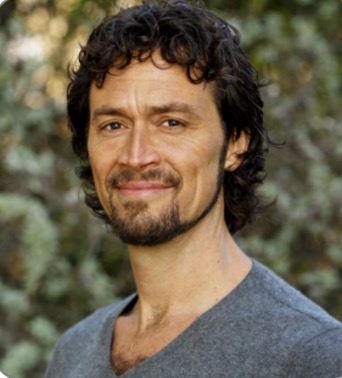
James Redenbaugh and Forest opened with personal introductions, discussing their locations and family situations. James is currently in Philadelphia after living in the Eastern Sierra mountains of California, having relocated to be closer to family as his father requires care and is fully blind (01:21). Forest is based in Bend, Oregon after leaving the Bay Area, with his wife Jenny pregnant and due in May (06:49).
Both discussed their shared interest in village building and intentional community living. Forest expressed strong alignment with the concept of intergenerational, sustainable communities with shared resources and maker spaces (09:37). James emphasized that all his clients work in interconnected domains around personal transformation, community building, collaboration, and regenerative technologies—describing it as figuring out "the ingredients of what a really holistic version" of sustainable living requires (11:00).
Forest and Jenny own property in Montezuma, Costa Rica on the Nicoya Peninsula, a bohemian beach town they've been visiting for over 30 years (05:40). James has connections to retreat centers in Uvita and Dominical, including work on sacred space design for a center called 369 (03:22).
Forest shared the origin story of C-LAB, which emerged five years ago as a transition from his previous nonprofit Wise Up, focused on bringing mindfulness-based wellness programs to underserved populations and reaching over 8,000 kids throughout the United States (15:09). The seed idea for C-LAB came during a yoga class in Costa Rica—initially conceived as psychedelic-assisted leadership training programs aimed at transforming people in leadership positions (16:42).
The vision has evolved beyond just leadership to include a broader audience while maintaining focus on deep transformational work. C-LAB has now conducted four retreats over three years, including three adult retreats and one pilot program for young women (18:40). A fourth adult retreat is scheduled for late January in Costa Rica.
Forest emphasized the spiral model of transformation rather than linear levels, with the current offering representing the "first spiral" in what will eventually be a four-spiral journey of deepening and widening personal growth (20:36). The work is grounded in two foundational maps: the Five Movements of Transformation and Three Centers, Three Circles, Three Times (21:17).
Current feedback from participants—many of whom are licensed psychotherapists and seasoned executive coaches—consistently describes the retreats as "one of the most powerful retreats they've ever been on" (20:20). Forest expressed 100% confidence that the model works.
The current C-LAB model includes multiple service components:
Retreat Structure:
Individual Services:
Both Forest and Jenny provide one-on-one integration work post-retreats, as well as underground medicine work including prep and integration calls (23:48). Forest has a master's degree in counseling psychology plus additional trainings. Sessions are currently conducted via Zoom or phone calls.
Organizational Structure:
C-LAB operates through two nonprofits—one religious nonprofit and one traditional nonprofit—with efforts to move as much money as possible through these entities (25:29). Current payment systems use PayPal and Venmo as friends and family payments.
Legal Developments:
Forest is working with "one of the top psychedelic lawyers in the US" to establish a psychedelic church, which would provide legal protection to have a more visible above-ground presence in the United States (26:13). This is part of the motivation for developing a public website now.
Marketing Approach:
Until now, all marketing has been underground through direct emails, texts, and one-on-one outreach (27:12). Forest recently opened a Brevo account for group email campaigns with help from an assistant.
Backend Systems:
The current retreat registration system uses Tally forms combined with Google tools—a functional but basic solution that Forest wants incorporated into the new website (27:55).
Forest outlined several key website needs:
Core Functionality:
Future Development:
Forest emphasized wanting to work with someone "AI savvy" who can leverage these tools to collapse production and design time considerably (52:47). He's already using AI for session transcription and integration summaries, feeding audio recordings into ChatGPT to generate therapeutic summaries—saving hours of manual work while providing enhanced value to clients (01:00:09).
[technology="Online Learning Platforms"]
[technology="Custom Membership System"]
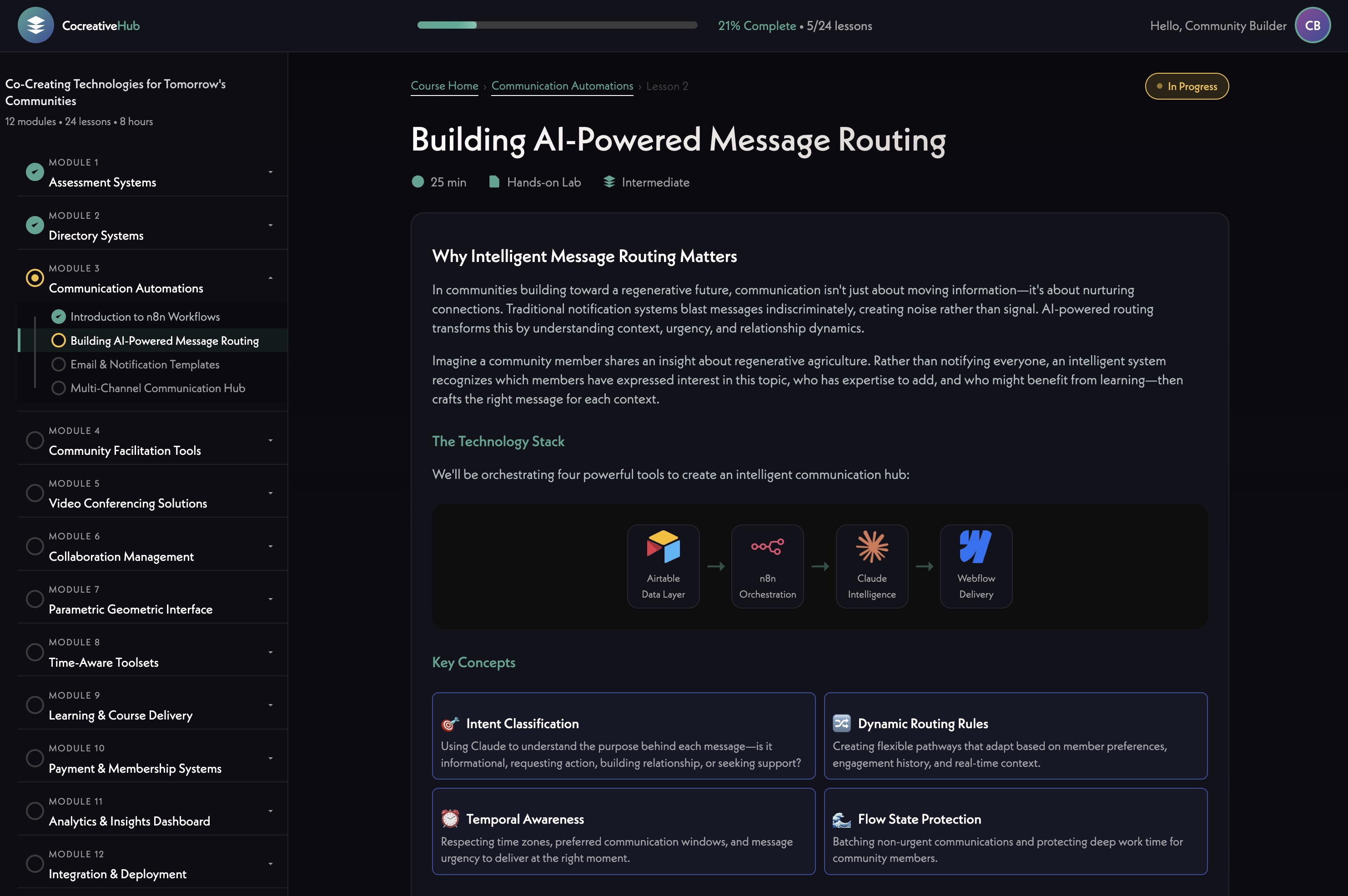
[technology="Communication Automations"]
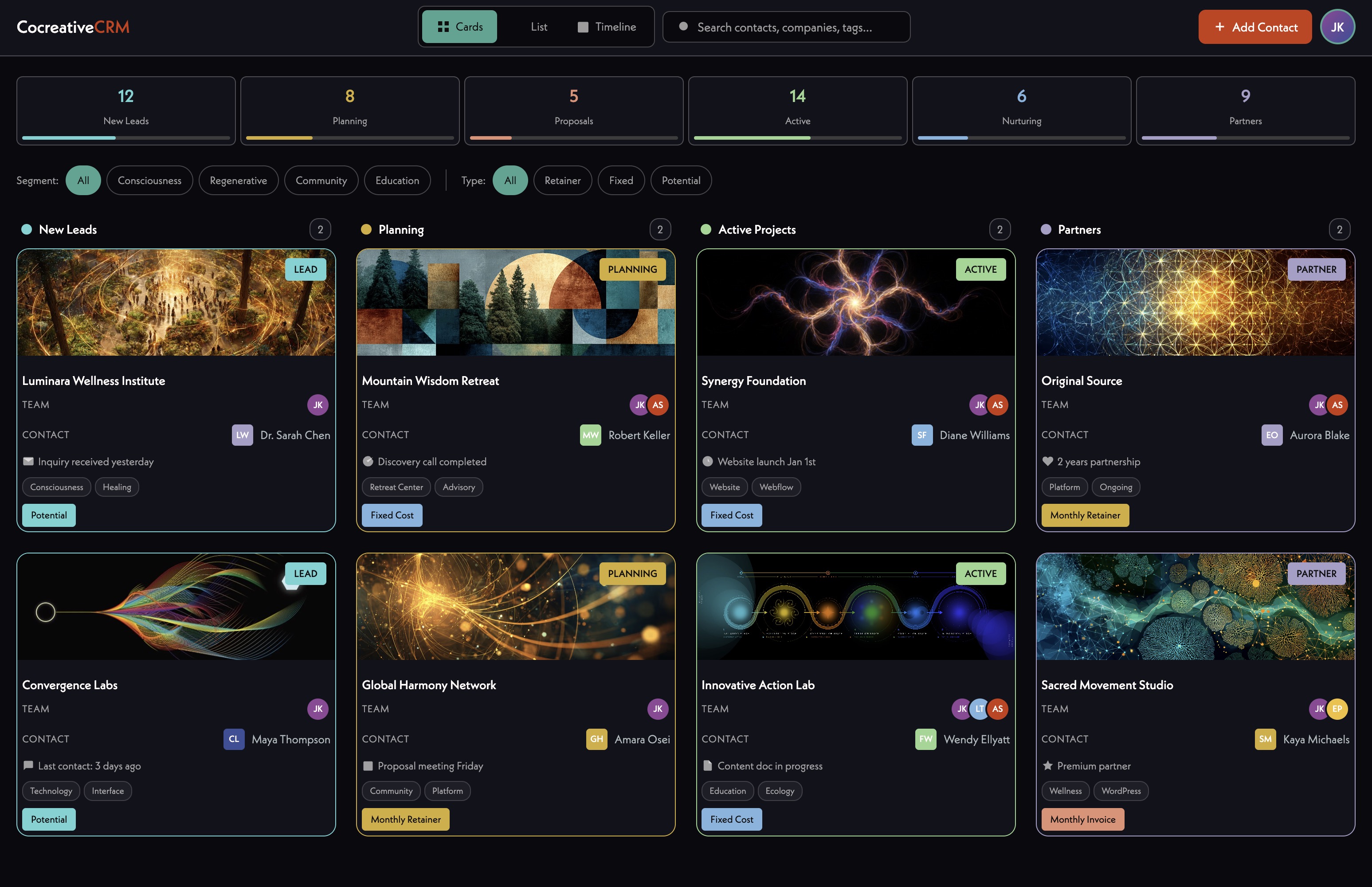
James Redenbaugh explained IRIS CoCreative's 2026 strategic shift toward developing custom modular technologies rather than one-off client solutions (29:43). This approach focuses on building reusable components that can be integrated across multiple client projects while remaining highly customizable.
[tag="iris"]
Design Philosophy:
James described IRIS as standing for intuitive, relational, and intersubjective (58:20). He emphasized not identifying primarily as an individual but rather experiencing intersubjective reality as "realer than subjective experience" (42:40). His approach is to get "on the inside of the energy and intelligence" of a client's business and listen to what it wants rather than following predefined processes (43:00).
James described wanting to be "like a tube" bringing pieces together to help good work happen, emphasizing co-creative emergence over templated solutions (43:00). Forest strongly resonated with this approach, contrasting it with feeling that another agency (Love Pixel, run by Christian who previously worked for James) felt more like "a factory" with systematic processes (45:12).
Technology Capabilities:
IRIS is building several custom modular systems:
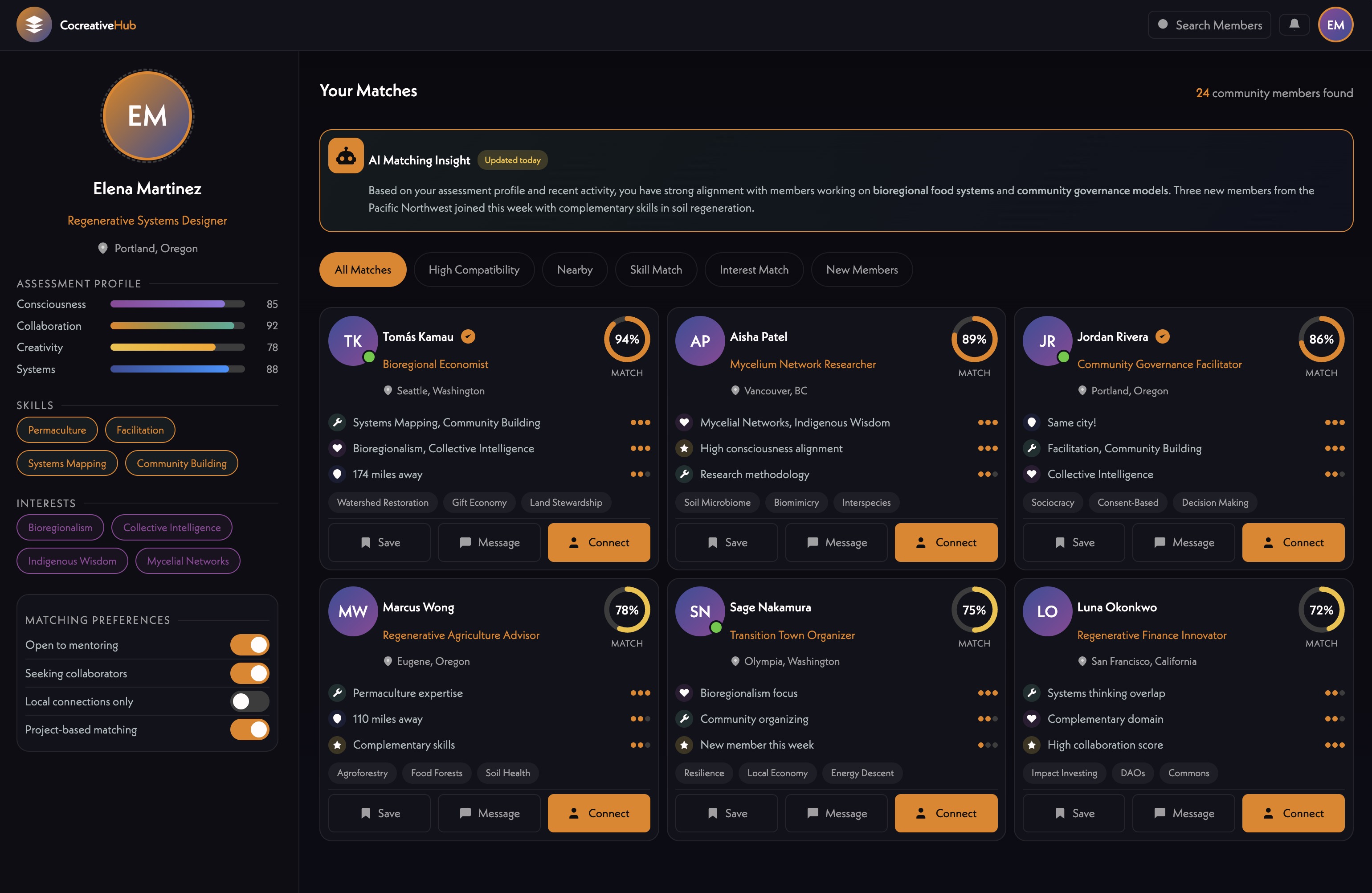
[technology="Intelligent Matching Algorithms"]
[technology="Assessment Systems"]
[technology="Directory Systems"]
[technology="Video Conferencing Solutions"]
[technology="Parametric Geometric Interfaces"]
[technology="Time-Aware Toolsets"]
Long-term Vision:
James explained that the modular approach enables potential cross-client integration—clients using IRIS tools could eventually have profile portability, affiliate marketing opportunities, and recommendation systems across related platforms, since all their clients operate in complementary domains of transformation, community, and collaboration (36:30).
Development Timeline:
James is focusing January development pushes on the learning management system and membership system, prototyping courses for clients in those platforms (36:00). The modular technologies will be centrally supported and continuously evolved, making them ultimately cheaper to implement than custom one-off builds.
Both Forest and James demonstrated sophisticated understanding of AI as an augmentation tool rather than replacement for human creativity and connection.
James's AI Approach:
James uses AI daily across multiple domains and recently started a blog to organize thoughts and resources, beginning with a post on writing with AI (56:00). He emphasized understanding how the technology actually works—that LLMs are fundamentally next-word predictors without feelings, emotions, or true processing capabilities (57:00).
IRIS uses AI for:
James demonstrated building a custom task management app that connects to Google Calendar, allowing conversational interaction with his task list and on-demand feature additions through AI agents (59:00).
He recommends Claude (Anthropic) over ChatGPT due to greater trust in the company's data practices and intentions, plus recent impressive model improvements (01:01:42). All IRIS agent workflows use Claude. [tag="claude"]
Forest's AI Experience:
Forest is already using AI to transform session work—recording couple's journeys, auto-transcribing, then using ChatGPT with prompts like "you're a licensed couples therapist" to generate session summaries and integration suggestions (01:00:09). This five-minute process produces "mind-blowing" outputs that previously required 1-2 hours of manual work, providing significant added value to clients.
Forest expressed wanting to work with someone "AI savvy" specifically because these tools can "collapse production design time and production time considerably" while maintaining soul and humanity in the work (52:47).
Philosophical Alignment:
Both agreed on the importance of maintaining co-creative human involvement rather than outsourcing creativity entirely to AI. James noted that AI tools are inherently backward-looking due to training data limitations—they'll never be truly creative, intuitive, or capable of generating genuinely new ideas (01:03:38). The emphasis is on evolving human capacities for critical thinking and intuition while leveraging AI for processing tasks humans are less equipped for.
[technology="Communication Automations"]
Budget Parameters:
Forest indicated a $5,000-8,000 budget range, acknowledging this is on the lower end but expressing openness to finding workable solutions (46:47). James confirmed $7,000-8,000 as their typical baseline for beautiful, custom work.
Financial Context:
Forest is currently fundraising and optimistic about additional funds coming in, though he's also conscious of transitioning from a two-income to one-income household with Jenny's pregnancy and upcoming maternity leave, plus new child-related expenses (50:51).
Pricing Evolution:
James noted he's becoming more efficient through AI tools and custom-built streamlining systems. He used to exclude animations at this price point but can now incorporate them quickly using AI and After Effects (46:47). Advanced features like online learning platforms, community spaces, and membership systems can get pricey, but IRIS is working to make these more affordable through pre-built modular solutions.
Development Philosophy:
James emphasized focusing on "low hanging fruit" that delivers maximum value for minimum effort initially, then growing functionality over time as needs and resources expand (49:00). He doesn't like to upsell and prefers working within client budgets while being transparent about when ideas expand beyond scope.
Next Steps:
James will prepare a proposal outlining different options and investment possibilities to give Forest clarity on potential scope and phased development approaches (49:47). The proposal will include various pathways to help determine what's financially feasible while ensuring James and his team are adequately compensated.
Forest shared his decision-making context with full transparency. His wife Jenny has decided to work with Love Pixel (Christian's agency), and Forest came very close to joining that project (37:13). Despite consistently positive interactions with Christian and knowing people who had good experiences working with him, Forest couldn't arrive at a clear "yes" (38:40).
Forest described his practice of "deeply listening and trusting the wisdom of my body" beyond just analytical thinking (38:40). Following this intuitive thread led him to the Evolve website (an IRIS project), then to IRIS CoCreative's site, where he felt immediate alignment with both the design aesthetic and client portfolio (39:04).
Forest expressed feeling "more alignment, just more of a clear yes" about working with IRIS (39:38). He specifically noted that James is "speaking my language" around intersubjective, emergent co-creative process, which represents his world—he's had some of his most profound spiritual experiences in intersubjective space (45:12).
Forest also acknowledged appreciating that James has "better design chops" than Christian, emphasizing the importance of "good design, not just good" from his background as a design director at an ad agency in his 20s (45:12). He valued how IRIS's website moved him "somatically" beyond just visually—an embodied design response (45:47).
Forest's Schedule:
James's Schedule:
Relationship Acknowledgment:
James noted that Christian (Love Pixel founder) used to work for him and that he "convinced him to move to Elementor" from Divi (39:47). James doesn't do WordPress anymore, focusing instead on Webflow-based development. He expressed love and respect for Christian's work, particularly around personal brand websites.
[tag="webflow"]
Forest
James Redenbaugh
James Redenbaugh and Forest opened with personal introductions, discussing their locations and family situations. James is currently in Philadelphia after living in the Eastern Sierra mountains of California, having relocated to be closer to family as his father requires care and is fully blind (01:21). Forest is based in Bend, Oregon after leaving the Bay Area, with his wife Jenny pregnant and due in May (06:49).
Both discussed their shared interest in village building and intentional community living. Forest expressed strong alignment with the concept of intergenerational, sustainable communities with shared resources and maker spaces (09:37). James emphasized that all his clients work in interconnected domains around personal transformation, community building, collaboration, and regenerative technologies—describing it as figuring out "the ingredients of what a really holistic version" of sustainable living requires (11:00).
Forest and Jenny own property in Montezuma, Costa Rica on the Nicoya Peninsula, a bohemian beach town they've been visiting for over 30 years (05:40). James has connections to retreat centers in Uvita and Dominical, including work on sacred space design for a center called 369 (03:22).
Forest shared the origin story of C-LAB, which emerged five years ago as a transition from his previous nonprofit Wise Up, focused on bringing mindfulness-based wellness programs to underserved populations and reaching over 8,000 kids throughout the United States (15:09). The seed idea for C-LAB came during a yoga class in Costa Rica—initially conceived as psychedelic-assisted leadership training programs aimed at transforming people in leadership positions (16:42).
The vision has evolved beyond just leadership to include a broader audience while maintaining focus on deep transformational work. C-LAB has now conducted four retreats over three years, including three adult retreats and one pilot program for young women (18:40). A fourth adult retreat is scheduled for late January in Costa Rica.
Forest emphasized the spiral model of transformation rather than linear levels, with the current offering representing the "first spiral" in what will eventually be a four-spiral journey of deepening and widening personal growth (20:36). The work is grounded in two foundational maps: the Five Movements of Transformation and Three Centers, Three Circles, Three Times (21:17).
Current feedback from participants—many of whom are licensed psychotherapists and seasoned executive coaches—consistently describes the retreats as "one of the most powerful retreats they've ever been on" (20:20). Forest expressed 100% confidence that the model works.
The current C-LAB model includes multiple service components:
Retreat Structure:
Individual Services:
Both Forest and Jenny provide one-on-one integration work post-retreats, as well as underground medicine work including prep and integration calls (23:48). Forest has a master's degree in counseling psychology plus additional trainings. Sessions are currently conducted via Zoom or phone calls.
Organizational Structure:
C-LAB operates through two nonprofits—one religious nonprofit and one traditional nonprofit—with efforts to move as much money as possible through these entities (25:29). Current payment systems use PayPal and Venmo as friends and family payments.
Legal Developments:
Forest is working with "one of the top psychedelic lawyers in the US" to establish a psychedelic church, which would provide legal protection to have a more visible above-ground presence in the United States (26:13). This is part of the motivation for developing a public website now.
Marketing Approach:
Until now, all marketing has been underground through direct emails, texts, and one-on-one outreach (27:12). Forest recently opened a Brevo account for group email campaigns with help from an assistant.
Backend Systems:
The current retreat registration system uses Tally forms combined with Google tools—a functional but basic solution that Forest wants incorporated into the new website (27:55).
Forest outlined several key website needs:
Core Functionality:
Future Development:
Forest emphasized wanting to work with someone "AI savvy" who can leverage these tools to collapse production and design time considerably (52:47). He's already using AI for session transcription and integration summaries, feeding audio recordings into ChatGPT to generate therapeutic summaries—saving hours of manual work while providing enhanced value to clients (01:00:09).
[technology="Online Learning Platforms"]
[technology="Custom Membership System"]
[technology="Communication Automations"]
James Redenbaugh explained IRIS CoCreative's 2026 strategic shift toward developing custom modular technologies rather than one-off client solutions (29:43). This approach focuses on building reusable components that can be integrated across multiple client projects while remaining highly customizable.
[tag="iris"]
Design Philosophy:
James described IRIS as standing for intuitive, relational, and intersubjective (58:20). He emphasized not identifying primarily as an individual but rather experiencing intersubjective reality as "realer than subjective experience" (42:40). His approach is to get "on the inside of the energy and intelligence" of a client's business and listen to what it wants rather than following predefined processes (43:00).
James described wanting to be "like a tube" bringing pieces together to help good work happen, emphasizing co-creative emergence over templated solutions (43:00). Forest strongly resonated with this approach, contrasting it with feeling that another agency (Love Pixel, run by Christian who previously worked for James) felt more like "a factory" with systematic processes (45:12).
Technology Capabilities:
IRIS is building several custom modular systems:
[technology="Intelligent Matching Algorithms"]
[technology="Assessment Systems"]
[technology="Directory Systems"]
[technology="Video Conferencing Solutions"]
[technology="Parametric Geometric Interfaces"]
[technology="Time-Aware Toolsets"]
Long-term Vision:
James explained that the modular approach enables potential cross-client integration—clients using IRIS tools could eventually have profile portability, affiliate marketing opportunities, and recommendation systems across related platforms, since all their clients operate in complementary domains of transformation, community, and collaboration (36:30).
Development Timeline:
James is focusing January development pushes on the learning management system and membership system, prototyping courses for clients in those platforms (36:00). The modular technologies will be centrally supported and continuously evolved, making them ultimately cheaper to implement than custom one-off builds.
Both Forest and James demonstrated sophisticated understanding of AI as an augmentation tool rather than replacement for human creativity and connection.
James's AI Approach:
James uses AI daily across multiple domains and recently started a blog to organize thoughts and resources, beginning with a post on writing with AI (56:00). He emphasized understanding how the technology actually works—that LLMs are fundamentally next-word predictors without feelings, emotions, or true processing capabilities (57:00).
IRIS uses AI for:
James demonstrated building a custom task management app that connects to Google Calendar, allowing conversational interaction with his task list and on-demand feature additions through AI agents (59:00).
He recommends Claude (Anthropic) over ChatGPT due to greater trust in the company's data practices and intentions, plus recent impressive model improvements (01:01:42). All IRIS agent workflows use Claude. [tag="claude"]
Forest's AI Experience:
Forest is already using AI to transform session work—recording couple's journeys, auto-transcribing, then using ChatGPT with prompts like "you're a licensed couples therapist" to generate session summaries and integration suggestions (01:00:09). This five-minute process produces "mind-blowing" outputs that previously required 1-2 hours of manual work, providing significant added value to clients.
Forest expressed wanting to work with someone "AI savvy" specifically because these tools can "collapse production design time and production time considerably" while maintaining soul and humanity in the work (52:47).
Philosophical Alignment:
Both agreed on the importance of maintaining co-creative human involvement rather than outsourcing creativity entirely to AI. James noted that AI tools are inherently backward-looking due to training data limitations—they'll never be truly creative, intuitive, or capable of generating genuinely new ideas (01:03:38). The emphasis is on evolving human capacities for critical thinking and intuition while leveraging AI for processing tasks humans are less equipped for.
[technology="Communication Automations"]
Budget Parameters:
Forest indicated a $5,000-8,000 budget range, acknowledging this is on the lower end but expressing openness to finding workable solutions (46:47). James confirmed $7,000-8,000 as their typical baseline for beautiful, custom work.
Financial Context:
Forest is currently fundraising and optimistic about additional funds coming in, though he's also conscious of transitioning from a two-income to one-income household with Jenny's pregnancy and upcoming maternity leave, plus new child-related expenses (50:51).
Pricing Evolution:
James noted he's becoming more efficient through AI tools and custom-built streamlining systems. He used to exclude animations at this price point but can now incorporate them quickly using AI and After Effects (46:47). Advanced features like online learning platforms, community spaces, and membership systems can get pricey, but IRIS is working to make these more affordable through pre-built modular solutions.
Development Philosophy:
James emphasized focusing on "low hanging fruit" that delivers maximum value for minimum effort initially, then growing functionality over time as needs and resources expand (49:00). He doesn't like to upsell and prefers working within client budgets while being transparent about when ideas expand beyond scope.
Next Steps:
James will prepare a proposal outlining different options and investment possibilities to give Forest clarity on potential scope and phased development approaches (49:47). The proposal will include various pathways to help determine what's financially feasible while ensuring James and his team are adequately compensated.
Forest shared his decision-making context with full transparency. His wife Jenny has decided to work with Love Pixel (Christian's agency), and Forest came very close to joining that project (37:13). Despite consistently positive interactions with Christian and knowing people who had good experiences working with him, Forest couldn't arrive at a clear "yes" (38:40).
Forest described his practice of "deeply listening and trusting the wisdom of my body" beyond just analytical thinking (38:40). Following this intuitive thread led him to the Evolve website (an IRIS project), then to IRIS CoCreative's site, where he felt immediate alignment with both the design aesthetic and client portfolio (39:04).
Forest expressed feeling "more alignment, just more of a clear yes" about working with IRIS (39:38). He specifically noted that James is "speaking my language" around intersubjective, emergent co-creative process, which represents his world—he's had some of his most profound spiritual experiences in intersubjective space (45:12).
Forest also acknowledged appreciating that James has "better design chops" than Christian, emphasizing the importance of "good design, not just good" from his background as a design director at an ad agency in his 20s (45:12). He valued how IRIS's website moved him "somatically" beyond just visually—an embodied design response (45:47).
Forest's Schedule:
James's Schedule:
Relationship Acknowledgment:
James noted that Christian (Love Pixel founder) used to work for him and that he "convinced him to move to Elementor" from Divi (39:47). James doesn't do WordPress anymore, focusing instead on Webflow-based development. He expressed love and respect for Christian's work, particularly around personal brand websites.
[tag="webflow"]
Forest
James Redenbaugh
Send meeting summary with helpful links and resources
January 7, 2026
Follow up from discovery call including links to IRIS blog on AI, examples discussed, and any relevant resources mentioned during conversation
Develop formal proposal with phased development options and budget estimates
January 10, 2026
Create proposal outlining different website and platform development options with various phased development pathways to accommodate $5,000-8,000 budget range. Include options for core website features (retreat info, scheduling, payments, Tally integration) and clearly separate future platform development (LMS, community, membership). Emphasize low-hanging fruit approach with maximum value for minimum initial effort.
Review proposal options and determine feasible phased development approach
January 15, 2026
Review James's proposal to understand different development pathways and pricing. Determine what's financially feasible given $5,000-8,000 budget range and upcoming transition to single income household. Consider phased approach starting with core website features and expanding functionality over time.
Provide detailed availability schedule after January 12th for planning conversations
January 13, 2026
After returning to Costa Rica on January 12th, provide James with available times for detailed planning and next steps conversations. Schedule will be more open after completing Portland immigration interview trip and Illinois family visit.
Initial project discovery and planning call to understand C-LAB's vision, requirements, and budget parameters. Covers retreat offerings, future platform needs (LMS, community, membership), AI integration strategy, and phased development approach. Meeting established brand identity, dual entity strategy (C-LAB vs The Church), logo direction with four ingredients approach (mandala, taurus, eye, rainbow), visual identity themes, and six-week delivery timeline before Forest's availability window closes. Confirmed AI-assisted workflow using Claude desktop, Obsidian, GitHub, and Google Workspace integration. Established GitHub + Claude architecture for website development and collaborative content management.
Core website development for C-LAB including retreat program information, one-on-one session scheduling, payment processing integrated with nonprofit structure, and Tally registration system integration. Development approach shifting to GitHub + Claude architecture rather than pure Webflow - design components and style guide in Webflow, export HTML/CSS, host in GitHub repo where Claude acts as content administrator enabling conversational updates and true collaboration. Six-week delivery window before Forest becomes unavailable for three months (first ~3 weeks after baby arrives). Phase 1 priorities: logo design and branding, two foundational C-LAB maps, working website version with lorem ipsum acceptable as placeholder if copy not ready. Focus on beautiful custom design with AI-augmented development and parametric geometric interfaces. Budget range $5,000-8,000 with phased approach. First-draft website to be spun up from content outline document for visual/collaborative review. Design direction confirmed: Typography selection finalized with Montserrat (primary sans serif for headlines and body) and Frances (complementary serif accent) - both Google fonts matching Holo Movement typeface combination. Interactive sections planned: Five Movements map/diagram with rollover breakouts, Three Centers/Circles/Times parallel interactive treatment. Transformation motif established as primary design concept - rainbow mandala as living symbol woven throughout site with animated transitions between contrasting old-world/new-world image pairs (industrial monocropping → permaculture garden, meta-crisis → ecological civilization). Reusable animation widget concept for contrasting image montages throughout site. HTML mockup in GitHub repo accessible to Forest for Claude-assisted iteration. Homepage architecture refined: Hero reframed as bright oasis (fractal of whole site), science section reordered to lead with Watts Connectedness Scale, AI voice patterns removed for natural prose, five movements centered on full 360° mandala (not spiral) with scroll-tied and hover/click interactivity, testimonials section with video + pulled quotes + simple attribution. Offerings section needs clear separation between C-LAB (without psychedelics) and C-LAB + psychedelics via tabs/color coding/grouped sections. Core positioning: curriculum-centric, not psychedelic-centric. Path/journey metaphor throughout site language and graphics.
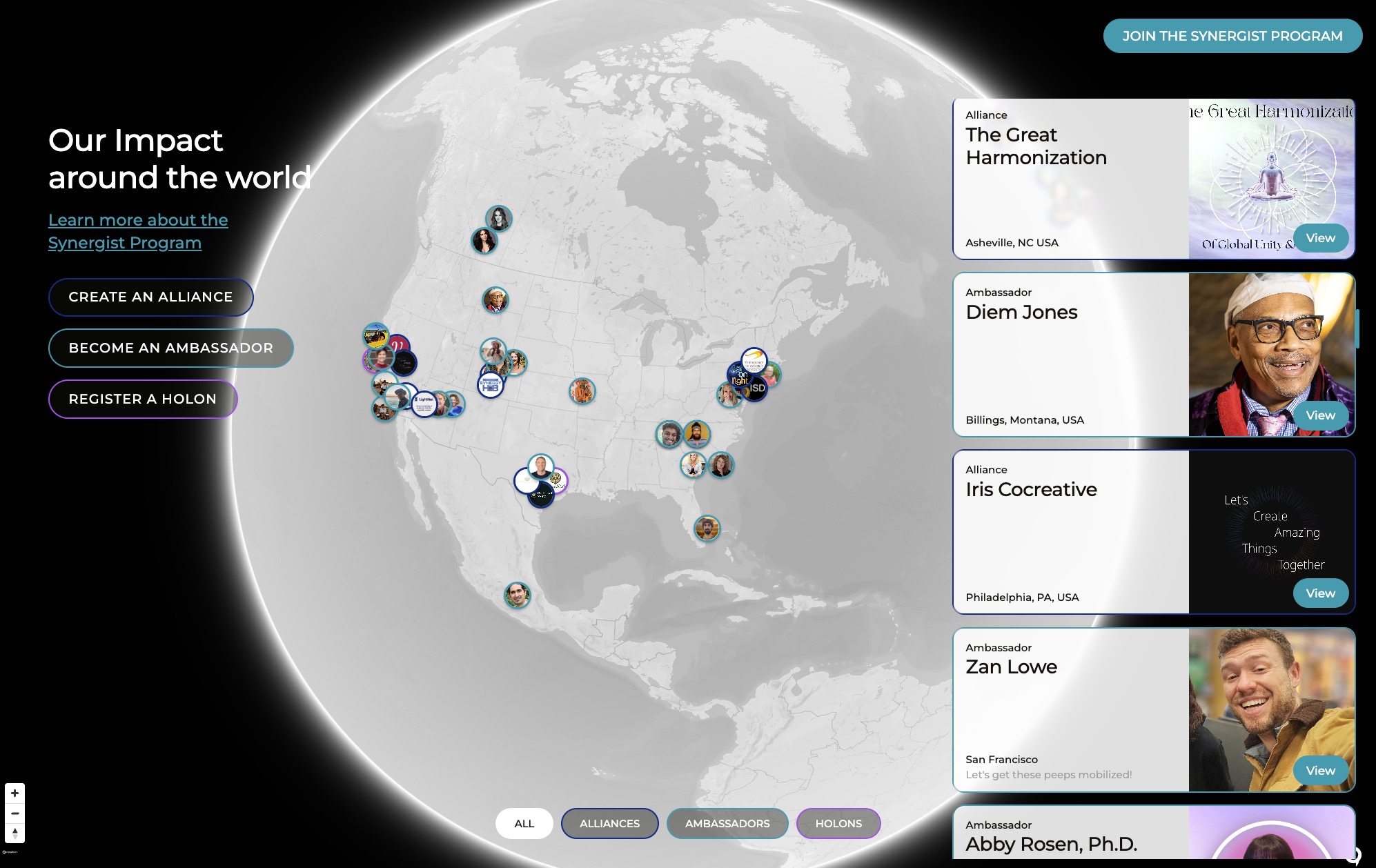
Future development of online courses (free resource library and paid content), community platform for education and community space, custom membership system, facilitator training program support tools (marketing assets, payment processing, registration, design templates, private community spaces), and advanced integrations. Includes C-LAB Local community mapping with toggled layers (members, local groups, certified facilitators) and 3D morphing globe visualization. This represents phase 2+ development beyond initial website, to be scoped and budgeted separately as C-LAB grows and additional funding becomes available. Community page will feature interactive globe map showing members across the world (39:00) with tiered privacy levels (default low-transparency with opt-in for richer profiles), involvement tiers represented via color (retreat alumni, monthly gathering attendees, facilitators), and potential mycelial-style connections between members as visual metaphor (42:16). Case studies and additional testimonial videos live on this page for deeper exploration.
Comprehensive brand identity development including logo redesign with four core ingredients: mandala (Tibetan black-and-white geometric), taurus (head-on toroidal form via Grasshopper), eye (perception/cosmogenesis with stars in pupil), and rainbow (360-degree circular gradient at CAAB saturation level). Visual identity themes emphasize micro/macro philosophy, wonder and gratitude, living universe concept. Logo explorations include fractal rotation system in Illustrator using diamond and circle shapes, taurus geometry with more segments and smaller center hole, Tibetan mandala as mask testing rainbow-through-white and rainbow-through-black versions, eye effect through darker outer circumference shading and dark central circle. Logo must work on white backgrounds, black backgrounds, and grayscale. Animation potential noted for parametric model structure. Includes time-lapse photography exploration, iStock video research (credits expire April 23rd), and establishing visual language that bridges cosmic and professional aesthetics. Dual entity strategy: C-LAB (psychedelics-free) and The Church (medicine ceremonies) with shared visual DNA but distinct identities. Current iteration focus: Evolved from original C-LAB logo geometry with mosaic technique and inner glow effects. Refining C-shape with subtle triangular angle opening (narrowing toward pupil) to evoke light glare on eye while reading as C. Testing hard-edge vs soft-edge variations (preference for hard edges). Adding subtle dark shading around inner pupil and outer Taurus edge for dimensionality. Exploring gradient/drop shadow on inner thorny crown details. Design must translate well to digital screens, printed apparel, and embroidered hats. Figma collaboration space shared with Forest for direct commenting. Logo direction refined: Two variants reviewed - lattice/grid version with visible connecting lines, and minimalist positive/negative space version with geometry implied. Forest leans toward minimalist for organic feel and better scalability at small sizes (01:14:59). Both can coexist as use-case variants - full lattice for large placements, cleaner version for small applications like favicons. Refinements needed: tighten gaps in minimalist version for clearer C reading, keep rounded corners on geometric shapes. Overall geometry solid and ready for full style guide. Rainbow-colored copy direction nixed (01:20:29) - logo already carries rainbow tones, applying to typography risks over-signaling. Gradient fonts (not full spectrum) still open for exploration.
00:00:00
Forest, Bend Oregon: You loud and clear. Yeah, nice to meet you too, James.
00:00:04
James Redenbaugh: Wonderful. How are you today? Happy New Year. This meeting is being recorded.
00:00:10
Forest, Bend Oregon: Happy New Year. One second here.
00:00:13
James Redenbaugh: I've got my, my bot in here if that's okay with you.
00:00:19
Forest, Bend Oregon: Yeah, no, that's fine. Open up this window so I can see a. Okay. Okay. Okay, great. Where are you, James?
00:00:37
James Redenbaugh: I'm in Philadelphia these days.
00:00:40
Forest, Bend Oregon: Okay. Okay.
00:00:42
James Redenbaugh: How about yourself?
00:00:44
Forest, Bend Oregon: I'm in Bend, Oregon.
00:00:46
James Redenbaugh: Oh, cool. I missed the West Coast. Usually a west coaster, but back here for a while to be closer to family.
00:00:59
Forest, Bend Oregon: Okay. Okay. Yeah, I understand that. Yeah, I've got two. I grew up in Illinois and have two pretty rapidly aging parents and so I'm about to fly back and spend some time with them and. Yeah. What I may ask, like what, what motivated you to be closer to family right now?
00:01:21
James Redenbaugh: Well, I, I lived in the mountains in California for a long time in the middle of nowhere in Eastern Sierra and loved it there. Really was paradise, but wasn't very practical. Didn't get to see the family often. And when I was falling in love with my now wife and we were discussing where to locate ourselves for our future family, we realized we don't know where that is yet. And, and at the same time my, my mom was moving out of her house that she's lived in for a long time and my dad was moving into a retirement community and needs a good amount of care. He's. He's fully blind and thought it would be good to base ourselves here for a few years where we, while we figure out where our forever home is going to be. So we're, we're doing that. We. I love Philly. We're in a really cute neighborhood and it works for us for now, but we're definitely on the, on the hunt in our minds at least of thinking about where, where we want to be. I think at some point we're going to have to buy or rent a van and just go spend some time in different places because we've been to a lot of places, but you don't really know until you can, you know, have, have a, a few, have some rhythm in a, in a place. And we're not limiting ourselves to this country either. So that complicates things.
00:03:10
Forest, Bend Oregon: Well, that, that was actually a curiosity that I had because Jenny and I have a home down in Costa Rica and if you're not already considering that it's a place to go check out.
00:03:22
James Redenbaugh: Yeah, wonderful. Yeah, we went and checked it out about a year ago. I'm involved with the Retreat center in Uvita and actually a couple centers. Yeah. One is really small and in progress and it just has a placeholder name. Last time I talked to them called 369. It's like a small center for teams, for like small groups and startup teams to come and do a month together of oh, wow, you know, plant different plant medicines and yoga, meditation, stuff like that. I was actually helping them with architecture and sacred space design. And then a friend of mine is starting a center in Dominical slowly. He's calling it Modern Monastery for now and they just have a couple structures there, but the property is really gorgeous. He and his mom are living down there and he's just finished his own house and over time they're going to build up more and more, but it's, it's a special spot. He's a good friend.
00:04:38
Forest, Bend Oregon: Boy, sounds like two. Two. Sweet. Yeah, sweet connections to Costa Rica.
00:04:45
James Redenbaugh: Yeah. And where, where in Costa Rica are you guys when you're down there?
00:04:50
Forest, Bend Oregon: We're at the very tip of the Nicoya Peninsula and a little beach town called Monuma. And Monuma is about 20 to 30 minutes from Santa Teresa, which is. Got great surfing but has become quite overdeveloped in my opinion. And fortunately Monuma is. I've been going down there for over 30 years and I just recently, a few years ago bought some property there, but it hasn't changed that. I mean, the prices have changed, but the town itself hasn't changed that much. It's just a very cool kind of, you know, hippie, bohemian kind of vibe and people are super friendly. We've got a pretty, pretty, pretty sweet community down there. A lot of friends that have kids and.
00:05:40
James Redenbaugh: Awesome, awesome. Yeah. Costa Rica is definitely on the, on the radar for consideration. Neither of us really like humidity and so I wanted, I want to check out more spots at higher elevation in Costa Rica. We both really loved Guatemala as well. I've got some friends who live there now and I love, love Guatemala and the people and the culture there, but it's a little rough. We think about raising kids there and, you know, getting them in school and stuff like that. So, yeah, who knows, who knows, who knows how things will unfold over the next few years as well.
00:06:33
Forest, Bend Oregon: Plant a seed for. Come and visit Bend, Oregon.
00:06:38
James Redenbaugh: Okay. Yeah, yeah.
00:06:40
Forest, Bend Oregon: My, my wife and I used to live in the Bay Area and my wife is pregnant. We're going to be having a kid in May.
00:06:47
James Redenbaugh: Yeah. Congratulations.
00:06:49
Forest, Bend Oregon: Thank you. Yeah, thanks. Do you have any kids?
00:06:53
James Redenbaugh: Not yet. We've got three kittens.
00:06:56
Forest, Bend Oregon: Three That's a good start. That's a good start. But, yeah, we. We were clear we didn't want to raise a family in the Bay Area, and so that kind of set us off on our own, kind of similar to what you were saying, like, trying to figure out where that place was going to be. And we went and spent. My wife's Canadian. We went and spent some time up in Canada and was considering some of the islands. And then we had a. One of my closest friends moved here. And so we came and checked it out, had a. Just magical experience. A lot of synchronicities were happening. And then we came back again a second time. Also had a really good experience. And so, yeah, we made the decision to move a little over a year ago. And there, you know, for us, you know, there's a lot of alignment here. There's something special about this place. You know, it's not as affordable as I would like for it to be. I mean, it's definitely less in the Bay Area, but it's not as affordable as it used to be, or I had hoped it would be. But, you know, it's. People are super, super friendly and real. And we're 20 minutes away from a great, you know, ski and snowboarding mountain. There's great hiking trails everywhere. There's a river that runs through Bend, so there's lots of water sports during the summer. There's no sales tax, which is nice. Anyways. There's. And there's just. Yeah, and a lot of just really cool, progressive people. A lot of medicine work that's happening here. A lot of people that are just way into kind of outdoor living, and that's worth checking out.
00:08:47
James Redenbaugh: Awesome. Yeah, we. We definitely will. And honestly, our. The biggest factor for us is we want to be engaged in village building with a community. Not necessarily, like, intentional community living, probably not that, you know, I'm more interested in enmeshed, intergenerational, you know, sustainable village building where people are, you know, don't have to show up to a meeting every week, but. But you're looking out for each other, and your kids can run to your neighbor's backyard and, you know, we. We share more things together. I'd love to have, like, a community maker space, you know, where we build.
00:09:37
Forest, Bend Oregon: Things and you are speaking like that.
00:09:41
James Redenbaugh: Yeah, I know there's a lot of. Yeah, go ahead.
00:09:46
Forest, Bend Oregon: No, I was just gonna say it's very aligned with what we're looking for as well. And I'm just very. Just not excited at all about, like, the isolated nuclear Family model, living in a box. And so, you know, we are, I would say of any place I've ever moved, we're meeting like people who are becoming fast friends here more easily than I've ever experienced. Like really just good conscious people.
00:10:18
James Redenbaugh: And.
00:10:20
Forest, Bend Oregon: Then there's my kind of immediate friend circle who, you know, it's, it's six of us all together. One of the couples has a 14 year old and the other one just had a baby. We're about to have a baby, but we're in active discussions around like village building, what that looks like, you know, kind of like finding that balance that's going to work for us around privacy and autonomy, but also, you know, shared space and shared ritual and things like that.
00:10:51
James Redenbaugh: So yeah, awesome, awesome. It's in the, it's in the zeitgeist. I feel more and more people want that in the world and I'm very purpose driven in my work and ultimately my biggest purpose is I want to be in service to that. And I see all the design work that we do, all the clients that we serve are in the domain of figuring out the, the ingredients of what, you know, what a, a really holistic version of that requires, which means like healing yourself, personal transformation, healing relationships, growing in relationships, community building, collaboration, and you know, the practical things of like design and building and regenerative technologies and stuff, stuff like that. So all the clients that we work with, without exception are in this kind of nest of interrelated domains. People that are. Relating in some way or another to interrelated village model because there's lot, there's, there's no problem that can't be solved by, you know, figuring out how to live together better on this planet.
00:12:21
Forest, Bend Oregon: Agreed. Yeah, agreed.
00:12:24
James Redenbaugh: And the, and the biggest problems we face can't be solved from one the individual mind. You know, we have to learn how to work together better as groups. And the best, the best groups that are great at doing that live together, you know, and share more than just a black channel, ultimately. Yeah, that's, that's what we're trying to do. And I'm excited to find out more about C Lab. I love C words myself. We've got a, we've got a lot of them on, on our website. I actually have my, our developmental model up here. Oh, nice. Starts at like gratitude, creation, movement, stillness, you know, simple stuff. And then it builds up to coordination, communication, connection, collaboration, co living, co learning, co creating, co awakening.
00:13:36
Forest, Bend Oregon: Yeah, I feel like I'm in good company.
00:13:39
James Redenbaugh: I don't know what it is about Seeds that, you know, so many good words are in their consciousness. Creativity collective. Yep. So tell me, tell me about C Lab. What's. Is this something that has been underway? Is it a new impulse?
00:14:03
Forest, Bend Oregon: What's.
00:14:04
James Redenbaugh: What's going on there?
00:14:06
Forest, Bend Oregon: Yeah, Sealab, kind of the original seed idea kind of came through about five years ago. And it was very long story short, my first nonprofit is called Wise Up. Greater wisdom and well being for all. And I was doing that for.
00:14:34
James Redenbaugh: I.
00:14:34
Forest, Bend Oregon: Don'T know, almost a decade. And yeah, I was just getting to a place of like. And basically what Wise up is in summary is bringing mindfulness based wellness programs to underserved populations. And I had been doing that for almost a decade. Those programs are still running. We've reached over 8, 000 kids throughout the United States. And we have, you know, no web presence for Wise Up.
00:15:09
James Redenbaugh: And.
00:15:11
Forest, Bend Oregon: At some point I'll get some simple website up for Wise up. But I was just getting to a place where it's like, really good work. Felt like. Felt good about the impact that I had had and also was ready to do, just feeling called to do a different kind of work, something that was deeper. Like, those programs are really helpful. We've got research behind those programs from UCSF Hospital. Like, we know that they work, but it was a lot of introductory level stuff. And I was really feeling called to do deeper work with people. And, you know, Covid hit, a lot of our funding for Wise up dried up. And even before that happened, I was really sitting with this question of like, what's next? And also how do I transition out of Wise Up? And then Covid hit, all of our funding kind of dried up overnight. And I was like, well, you know, that's one way to transition out. I would have liked for something to be a little smoother and more graceful, but, you know, be careful for what you ask for. So that. That also kind of gave me my. Anyways, so this was in Montezuma in Costa Rica, the end of a yoga class. Kind of the seed idea for C Lab dropped in. And it was just, you know, something along the lines of, you know, psychedelic assisted leadership training programs with an aim for transformation, transforming people who are in leadership positions with, you know, accepting the fact that we live in a world that is pretty hierarchical in structure. You know, a lot of these organizations, corporations. And so, you know, the upside to that is, is that if you can impact the people at the top and they can have a kind of an outsized impact of everyone that's working within that organization, and that was the initial idea. I would say it's, it's, it's evolved. And it's not just focused on people in leadership positions, but it definitely includes people in leadership positions. And yeah, I started working on it on the side for two, three years.
00:17:39
James Redenbaugh: And then.
00:17:42
Forest, Bend Oregon: My wife and I ran our first Sealab retreat. It was three years ago in Costa Rica at a retreat center in Costa Rica. And that invitation that I sent you was the invitation I designed for that first Sealab retreat. And all those photographs on that invitation are of. From the retreat center that we run it at. It's a place called Salvatierra. And we have since run, I believe, three retreats for adults. And one this last year, we piloted a program for young women. And the part of the, I would say, future goals is to also run or eventually run a sea level treat for young men. And we have our fourth the lab retreat end of January, so coming up here pretty soon, adult retreat. And. Yeah, I, I would say, you know, just to zoom out a little bit, James, the. What you're looking at and you know, or at least what I'm starting to introduce you to, which is like this adult retreat and the five movements of caab. I think I sent you that little map. We've road tested. If you imagine that as kind of like a level one retreat.
00:19:12
James Redenbaugh: Kind of.
00:19:12
Forest, Bend Oregon: An introductory, like an introduction to the CLAB ecosystem, we've road tested that and, you know, we know that it works. Like, I'm 100% confident that it works. You know, we've had the feedback that we've gotten from the last three retreats. And these are people who, you know, a lot of them that are coming are, you know, licensed psychotherapists, longtime seasoned executive coaches, you know, people that are coming into the space who are. It's not their first rodeo. And the feedback that we're getting consistently is it's one of the most powerful retreats they've ever been on. So I know that it works. And I didn't have confidence in that when we ran the first one. I do have confidence in that now. And it's a part of a larger vision. And, and so, you know, for me, the vision that I'm holding is this is kind of a level one retreat, and there would be four levels in total. And I, I work less with levels and more with spirals. Circles and spirals.
00:20:34
James Redenbaugh: Yeah.
00:20:36
Forest, Bend Oregon: So, you know, this would be like what I call. There's the five movements of transformation, which is a foundational map. There's another foundational map I created, it's called three, three centers, three circles, three times. And then it's all on a spiral. So, you know, I imagine that like there's the first spiral, second spiral, third spiral, fourth spiral. And each one deepens, is deepening and widening, you know, as a person goes, goes through each one. So.
00:21:17
James Redenbaugh: Spiraling. Circular model I was just working on today.
00:21:21
Forest, Bend Oregon: Oh, great.
00:21:22
James Redenbaugh: I love that For a client that's super interactive, in progress.
00:21:34
Forest, Bend Oregon: That's awesome, James. It's inspiring to see that.
00:21:37
James Redenbaugh: Yeah, definitely. You know, the, the web lends itself well to lines and boxes because our screens are all rectangular and pixels are square. But as much as possible, I like to break out of that and it's easier than ever to do so to create interfaces that are less, less linear, more circular, more spiraling. I've actually built my own custom video platform. I should have meetings on there actually, because it's, it, it puts people into a circle. It's nice to be in a group if you're like with 12 people on a call. Everybody has their little window and they're all in a circle and then the background can be whatever you want.
00:22:30
Forest, Bend Oregon: The circles. So the circle, each person is a circle and then those circles are arranged in a circle.
00:22:36
James Redenbaugh: Yeah, yeah, it's great.
00:22:38
Forest, Bend Oregon: It's great.
00:22:38
James Redenbaugh: Exactly. I actually made them kind of ovals because it's nice to have a little more context in the window. Yeah, but it's good to be in the, in the circle.
00:22:50
Forest, Bend Oregon: I love that. That's great. So, yeah, that's, that's kind of C lab in a nutshell.
00:22:57
James Redenbaugh: And.
00:23:01
Forest, Bend Oregon: Yeah, I, I, I, I, I. Well, I'll let you kind of go from here and ask questions that would be helpful before I just keep talking.
00:23:09
James Redenbaugh: Cool. So practically speaking, the website that we're talking about is to sell the different programs, I imagine, you know, focusing first on the Level 1, but also setting the context that there are these additional levels or spirals and give some background to the work. And what else are you imagining it needing to do? Well.
00:23:48
Forest, Bend Oregon: I also, both my wife and I do one on one work with people. So it's a lot of kind of integration work post retreats. We've also been for years doing underground medicine work. So we'll do prep and integration calls. So it's, you know, it's kind of like I have a master's degree in counseling psychology and then a bunch of other trainings and stuff. So I work with people. You know, it's more like a kind of a traditional psychotherapy kind of, you know, so it'd be some kind of scheduling thing where somebody can come and you know, schedule an hourong session. Right now I'm doing this mostly through Zoom or phone calls, the actual session. And then right now my payment Systems are mostly PayPal and Venmo and they're just paying me friend like his friends and family. I will say, you know, we don't have to give them the details now but just like we have two non profits, one is a religious non profit and then one is a traditional non profit. And so we try and run as much, move as much money through the nonprofits as possible. So that would also be kind of part of you know, this payment structure that would somehow tie in with this website. You know, be it probably a donation button somewhere and that kind of thing.
00:25:29
James Redenbaugh: Go. And the, the retreats that you're doing, are they all in person with the online before and after?
00:25:43
Forest, Bend Oregon: Yeah, we're due right now. The models, three prep sessions virtually three integration sessions virtually in person retreat in Costa Rica. We're going to. One of my goals before the kid comes is to start a church like a, a psychedelic church. And so that, that would give us the legal protection that we need to be more visible in the United States. So that's part of the motivation for now feeling comfortable to have an above ground present like website.
00:26:13
James Redenbaugh: Yeah.
00:26:15
Forest, Bend Oregon: I'm trying to figure that piece out. We've got a really good one of the top psychedelic lawyers in the US that we're working with to help us start a church.
00:26:24
James Redenbaugh: Yeah, nice. Then the, the sessions before and after, how are those currently communicated? Is it all via email? People hop on a Zoom link. What does that look like?
00:26:40
Forest, Bend Oregon: Yeah, we're, it's so right now, yeah, we're everything's through email Zoom links. All of our marketing and advertising has all been up until this point just underground. So we're just literally like sending out emails and texts. So it's some group marketing, some one on one marketing, like direct marketing. Just recently I opened up a Brevo account that ring a bell? It's like mailchimp. And so we've, I have a, an assistant who has been helping me with some of the admin stuff and so he helped to set up this Bravo account. We've started to do some group mails through Bravo and then we have, you know, we've created, you know, I mean it works like we have it. We've created a back end retreat registration system through do you know Tally.
00:27:55
James Redenbaugh: Yes. Yeah.
00:27:59
Forest, Bend Oregon: So between like Google, some of the Google tools and Tally, we've got like a. Yeah, I mean it totally works in terms of like a back end retreat registration system. Could probably be. I'd like, I'm definitely want that to somehow be incorporated into the website. I would say the other thing I'm wanting on the website eventually, whether this is phase one or down the road, but is I'd like online courses. So I'd like to be doing both a free library of resources as well as some paid stuff.
00:28:42
James Redenbaugh: Cool, awesome.
00:28:46
Forest, Bend Oregon: So I would say the last element for the website I think is having something like Mighty Networks or Circle or something like that where can be potentially using that as like and like an educational platform. And I'm open to other ideas if you have other suggestions or custom builds or something like that. But you know something where we can do the online courses, paid and free library of resources and then also some kind of community space.
00:29:30
James Redenbaugh: Yeah, wonderful.
00:29:33
Forest, Bend Oregon: Yeah.
00:29:35
James Redenbaugh: You'Ve come to the right place. So good. Yeah, we.
00:29:41
Forest, Bend Oregon: Tell me more about that.
00:29:43
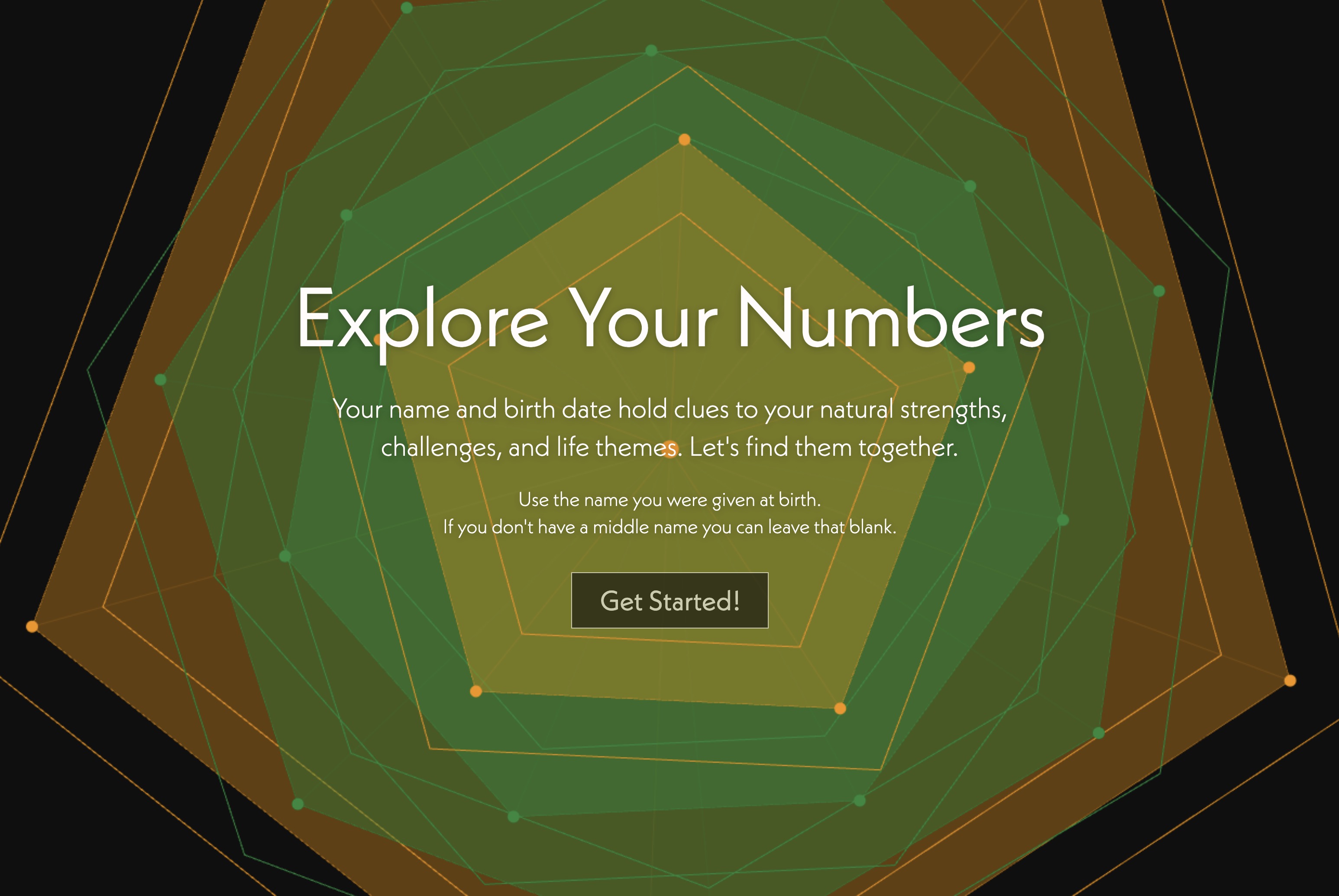
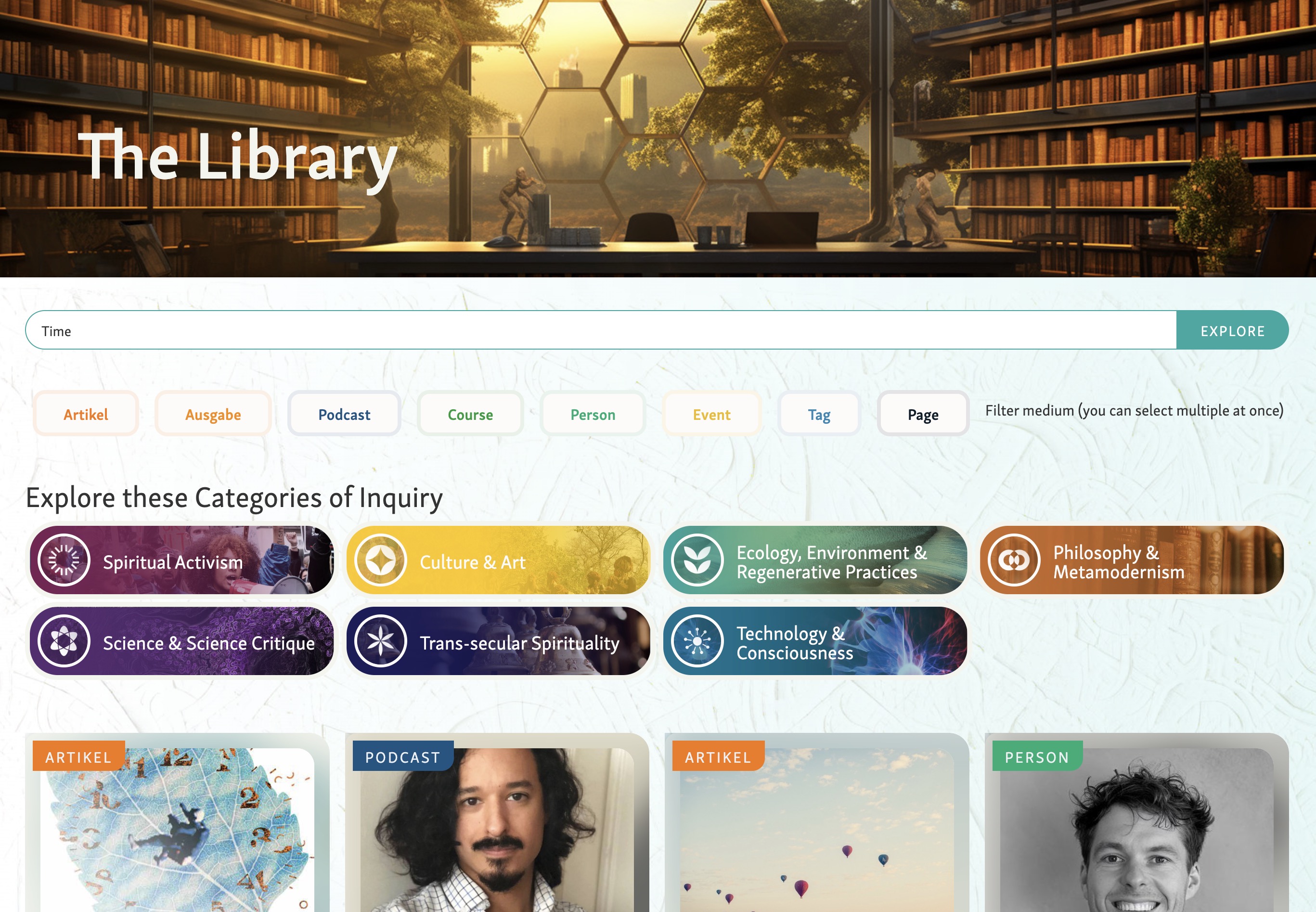
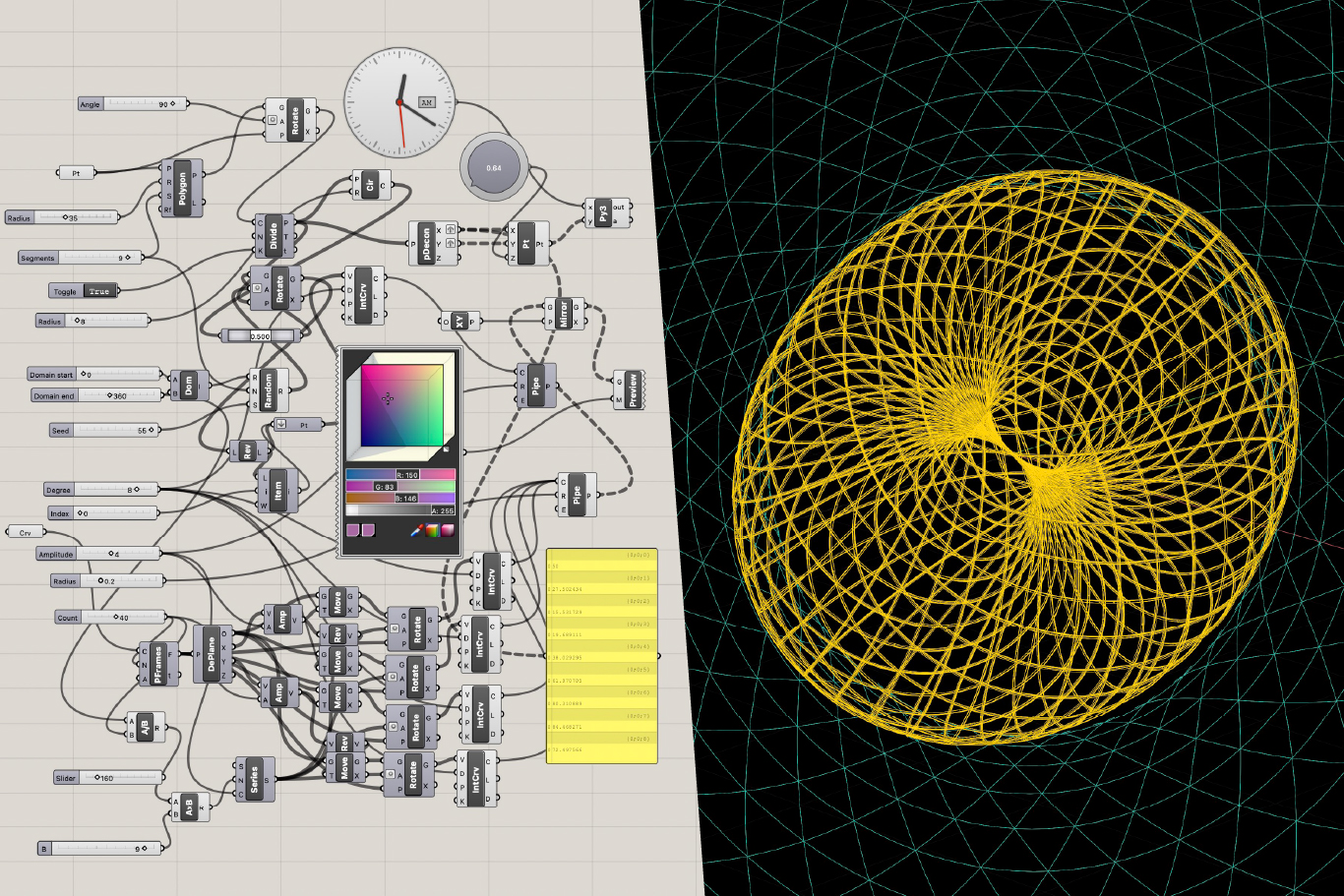
James Redenbaugh: We've built all of these things in the, in the past and I, you know, for years I've specialized in creating online learning platforms and helping people start online communities and I've used every tool for that from the out of the box stuff to the more tailorable things. And now in 2026 I'm making a big shift in IRIS to focus a whole lot more on developing our own custom technologies that we can utilize on any number of client projects and then continue to evolve and support over time. So we've been, we're building our own fully custom LMS now that's going to be super capable and have all sorts of fun features and do all kinds of things that I've always wanted like Kajabi to do or things like that. We're building our own membership system so people can, you know, log in, sign up for things, have a profile. We're building our own directory systems. We've already built a few where you can view a community on a map or a grid or anything and have different profiles and then even have AI intelligent matching algorithms and some really cool assessments that we're building. I built the whole Numerology app using this technology. I mentioned the custom video platform and all of these things are designed to be integratable and it's not one big platform with all of these features. It's more like these are modules that we can build into the kind of websites that we're great at building using webflow and you know, clients can utilize these tools as they need them and then Add on to them over time so we can do really complex communication automations with agents if we want. We're, we're for our own system. I'm creating collaboration management tools to manage projects but we're going to tailor those for other people to use them if they want. I do a ton of parametric design using a tool called Grasshopper. I noticed the Taurus and in your logo. I love a good Taurus but you know, we incorporate that as, as much as possible in, in different ways. Also like time aware tools, there's very little online, I notice in online learning platforms and community platforms and anything really that help us become more aware of time. It's like everything's designed for us to forget time and just keep scrolling and you know, we're trying to build more things to help people be conscious of time. You know, where are we in the moon cycle or are we in the solar cycle? Where are we in the day and where is this retreat in time that's coming up, you know, that we have three weeks to prepare for and how does the page shift as we get closer to it and then as we go away from it, how does, how is that shown? You know, and a year from now, if we're looking back on it, if we have our space online, how do we see that? You know, ideally it's a big spiral, you know, and it's like three dimensional and we're, we're building tools for that focusing and you know, I have a little timeline for where we're doing development pushes on all of these things and I can share this with you if you're curious because I have a lot of details in here but basically I'm, I'm shifting our whole business from kind of building custom things for one off clients to you know, continuing to serve our clients and create really custom solutions for them, but modularizing the technologies so that we can make them really solid, support them centrally and then build these things ultimately for much cheaper than it would have cost people to, to custom build. So we're figuring out exactly what that's going to look like right now. Where I'm focusing January on the learning management system and the membership system and prototyping some courses for clients in that and yeah, so just to kind of give you a heads up about all of that, I would recommend super helpful. Yeah, yeah. And we want it to be as like collaborative as, as possible and open source. And then it's also the long term vision is the more clients we have in this ecosystem using our tools, there's also opportunities for affiliate marketing and sharing of profiles and things like that. So if I have a profile on this one site where I'm learning yoga and then I get involved in C Lab, maybe there's a connection there where my profile is already ready. Or maybe I'm getting recommendations for something that you're doing on another website because you have a relationship and there's connections with all the back ends. Since all the clients we serve are in these complementary domains, there's lots of opportunity for that. So that's another potential there. Not to get ahead of myself. I definitely recommend starting simply with the fundamentals. Getting a good site with clear information and beautiful graphics and, you know, and then we can build on that as. As your needs evolve.
00:36:39
Forest, Bend Oregon: Sounds great. Yeah, that sounds great. I guess one question that I. It's really helpful to. Thanks for showing me all the other kind of big picture stuff you're working on because it just gives me a much fuller understanding of your scope and depth, you know, and what you're capable of. And yeah, just in, in full transparency. My wife has decided to work with a web agency called Love Pixel. I don't know if you've heard of these guys.
00:37:13
James Redenbaugh: Yeah, Christian.
00:37:15
Forest, Bend Oregon: Christian.
00:37:16
James Redenbaugh: Yeah.
00:37:19
Forest, Bend Oregon: And, you know, he, I, I like his work.
00:37:25
James Redenbaugh: She.
00:37:26
Forest, Bend Oregon: She has started to move forward in working with him and I was very close to also, you know, kind of signing on and starting to develop with him. And there was just. I do my best, you know, to. In addition to trying to like, think through things and, you know, kind of bringing the mind in also to just really deeply listen and kind of trust the wisdom of my body. And I don't know what it was. All my interactions with Christian were, you know, super positive. I think that if I did work with him, it would, it would be fine. Like we would end up in a. I know some people that have worked with him and had a really positive experience, but there was just something that was just like. There was like. I don't know what it was. I just could not get to a clear yes around it. And then I followed this thread and this is a whole other strew I don't have to get into right now, but I follow this thread that led me to Evolve, which is a website you guys have done, I believe. And I was on their website and then I saw down at the bottom a link to you guys. And then I followed the link to your website. And it wasn't just the, I mean, part of it was the design of your website that appealed to me and that part, it was just senior clients.
00:39:01
James Redenbaugh: And.
00:39:04
Forest, Bend Oregon: Just feeling a lot of alignment with all of it. That kind of, you know, led me to this conversation that we're having right now.
00:39:19
James Redenbaugh: And.
00:39:23
Forest, Bend Oregon: Yeah, just. Just wanted to share with you, you know, again, in full transparency, like, so far. Feeling more alignment, just more of a clear yes around, doing some work together.
00:39:38
James Redenbaugh: Awesome. Wonderful. So, yeah, yeah, Christian used to work for me, actually.
00:39:46
Forest, Bend Oregon: Oh, no. Okay.
00:39:47
James Redenbaugh: Yeah.
00:39:48
Forest, Bend Oregon: Okay. That's helpful to know, actually.
00:39:51
James Redenbaugh: Yeah. And. And I love Christian and I know what you mean. Like, Chris, Christian's really great. He's really great at personal brand websites. He's really great at WordPress. We don't do WordPress anymore. And I actually convinced him to move to Elementor, which he's now fully in. Elementor used to do divi, but yeah, IRIS stands for intuitive, relational and intersubjective. And people find us, and they find me because I really get those things. Like, I've lived in that world my whole life and. And the team members I bring in, you know, they get it as well. But what. I think, what. What really makes us special, I don't like to take credit for it because it's so like an I. We thing, you know, it's. I don't. I don't really identify as an eye, to be honest. Like, I don't. I don't think. I think that my intersubjective experience or reality is realer than my subjective experience. And the best. The best creative acts make themselves, you know, and we. We make ourselves in service to that. And I. I wouldn't expect that of most designers. It's just how I happen to be dispositioned. I want to be on the inside of your. The energy and intelligence of your business, of your entity with you, and listen to what it wants and be in service to that. Not, you know, guide you through some predefined process that I know has worked for someone else. I have processes and things that might be helpful, but it's like, I want to be on it with you so that it can use me to make itself known, you know, and to reach the people it's meant to reach. Not, not reach everybody. Not convince anyone who happens to find it, but find the right people. It's like a soul thing. Like it has a soul if it wants to come into being it. You found me. Somehow people tend to do that. Even though we don't do any marketing ourselves, we probably should, but we don't. And so I just want to be like a tube, you know, I want to bring, bring the pieces that I found together to help this good work happen. And it, I, it feels like I don't know what it is, but intuitively I already feel like you're doing, you're doing good and you're doing it for the right reasons and you're coming from the right place. And it's. I, it feels very familiar to me what you're doing and it also feels very unique and new and exciting and worth doing in the ways that you're doing that are unique to you.
00:43:45
Forest, Bend Oregon: Right. I appreciate you saying that.
00:43:49
James Redenbaugh: And.
00:43:51
Forest, Bend Oregon: Yeah, I think, you know, you're using, you're speaking my, my language. I mean it was part of what I got just initially from your website and then seeing your portfolio, I was like, oh, this guy is. You're like, you're speaking my language. And especially once we start to get into, you know, an inter. Subjective, emergent co creative process, like that's my world. Like I've had some very, some of the most profound. Spiritual experiences of my life has been in an inner subjective space. And that's a story for another time. But I can feel that potential here with you and with Christian again, seems like a really good guy, appreciate what he's doing, but it felt more of like, more of like a factory. A bit like he's got his systems and he kind of runs you through the systems and not to say that that isn't an effective way to then get to a good outcome, but this feels much more alive and emergent to me, which is more what I'm looking for. Plus, honestly, I think you have better design chops than he does.
00:45:12
James Redenbaugh: And that's.
00:45:12
Forest, Bend Oregon: Something that, you know, like it's been a while, but I, you know, in my 20s I worked for an ad agency and I was a design director and I just really value design. Like good design. It's like, yeah, good, like good, not great. And then I went to your website and it just, there's a way that that's what I'm looking for is not just visually but the way that it moves me somatically. And there was a way that I felt moved and inspired. So yeah, and then the conversation we're having now is very, just very confirming.
00:45:47
James Redenbaugh: So awesome. Yeah, wonderful. Great. A lot of we work with some really great people. I, I'm like a generalist. I love to get my hands dirty in any domain. I'm a developer, I'm a designer, I'm a builder. I bet I studied architecture. I still do a bit of that when I can Correct art making, a ton of AI stuff. Now that was one of the things.
00:46:21
Forest, Bend Oregon: I wanna, I wanna ask you about before we end. So let's just put a pin in the AI piece.
00:46:26
James Redenbaugh: Okay? Yeah. But we also have some really talented artists and, and designers that we bring in depending on what the project needs. Our, our main one, Munia is responsible for a lot of, a lot of the things in our portfolio. She's wonderful. We work really well together. She has a, a more feminine touch and you know, does things with colors that I can't do. And she's awesome. We work with her a ton and. But we also have, you know, UI specialists and animators and you know, depending on what's needed, we can bring them in. I will say, you know, 5 to 8k we can play with that. It's definitely on the lower end. I try to make like 7 or 8k our baseline for what we do because we want to make everything really beautiful and custom. But I have been building things that make the process smoother and so we've been getting more efficient. I used to say at that price range, we can't do animations, for example, because they can be time consuming and tedious. Because I used to do them without after effects, but now I do them with AI and I can like, if, if I want something to move, I can make it move pretty quickly and things like that. You know, I like to, I, I don't like to upsell people. I like to work within budgets that, that we can work within. And I'll just, I'll try to be like, clear about what we can, what we can do and when we expand out of the balance because there's always going to be ideas about, you know, oh, could we do this, could we do that? And the best approach is to focus on what's, you know, what's the low hanging fruit, what's going to deliver the most value for the least amount of effort. Start with that, get that working with you and then grow over time. The more advanced stuff like online learning, community membership, that can get pricey. But we're working hard this year on ways to make that more affordable and attainable by pre building a lot of these solutions. And I can make a proposal for you that outlines different options and possibilities to give you a sense of what a scope could look like and what different investment options might be. But yeah, any questions about scope or budget? Any of that?
00:49:47
Forest, Bend Oregon: Just what you said. I could, you could put something together? I could take a look at it. I think that would help to kind of ground things for me. I mean, I'm feeling a clear yes around wanting to work with you and then just wanting to make sure that the. And also financially, like you're making enough money to feel good about it. And it's something that I can afford. And so yeah, if you could put some, some numbers together and kind of maybe some different options to take a look at. And I have, you know, like, I am fundraising right now, so I think there's a good chance there'll be some more money coming in. And yeah, it's, it's feeling. Feel optimistic about the direction things are moving financially. And there's also, it's a, it's a moment in my life where, you know, my wife is pregnant. She's going to be giving birth in May. Between now and then she's pulling back on work and then she's not going to be working at all. I'm also aware that I'm about to step into, you know, from being a two income household to one income household and the additional expenses of a kid and. Yeah, so all of that is to say would love to work with you and it would probably help me to just look at some numbers and, and then, you know, you know, hopefully we can figure out how to maybe do different phases of development and.
00:51:39
James Redenbaugh: Kind of.
00:51:40
Forest, Bend Oregon: Get the ball rolling and.
00:51:41
James Redenbaugh: Yeah, totally. My camera just died. I'm going to change my battery out, but I'm still here. Sure. What question did you have about AI?
00:51:56
Forest, Bend Oregon: I, you know, I dabble enough with AI and I'm signed up to a couple of newsletters to have a. To. To know enough to be dangerous to not, you know, I think I have a fairly realistic idea of where AI is at and what it's capable of. And I'm, you know, I mean, I think I know the answer to this question, but it's, I'm just really wanting to work with someone who is AI savvy because these tools are so powerful and it can, you know, I can see how it can collapse production design time and production time like, considerably. And wanting to work with someone who's AI savvy and you know that that's just a part of our creative process.
00:52:47
James Redenbaugh: Totally. Yeah. I put in a new battery, but it may, it may die as well. I keep my laptop close. I don't usually use that. So I have an external camera up here. Yeah, I don't know anybody who knows that's not true. I know a handful of people who know more about AI than me, but I don't I don't know anybody who has a wide. As wide a breadth of understanding of AI as I do. Like I said, I like to be a generalist. So I, I study it daily, I use it daily. I'm. I just started a blog primarily to organize different thoughts and resources I have about it. The first post I just wrote is about writing with AI. I used it. I used AI to, To write. I can share that with you. And it's. The word I want is escaping me. But it's indicative of the approach I tend to take with AI, where I. You want to understand what, how the technology is actually working as much as you can. Like, nobody fully understands it. Like, LLMs are next word predictors. So, you know, fundamentally they're, that they don't have feelings, they don't have emotions, they're not even really processing, they're predicting. And it's an important, it's a helpful tool, but it's, you know, it's important to dialog with it and not just outsource to it. But we, I use it all the time. I'll use it for initial mockups. We don't generate whole sites. There's a AI webflow builder, but it doesn't work very well. But after this call, I'll, I'll show you. You know, I have an AI in here that's transcribed the meeting. I run the transcription through an N8N automation that I created and it will create a detailed summary, it'll create action items, it'll create initiatives for a project. And it just, it creates this whole artifact page that you'll see, which is, you know, a result of the development that we know how to do and then the AI agent that we know how to use and integrate into that. It's not like taking, oh, here's a transcript. Can you make a page for this? It's like we've built these specific processes to do specific things in different ways, including image generation. You know, we do video generation now, things like that. Right. But with any of that, you, you don't want to lose the humanity. You know, it, it should augment our humanity, not replace it. So I, I rarely use AI generated images as like a hero graphic or like a, an ad image or something like that, because they lack the soul. But they're great for like background art or textures or, you know, instead of a dumb icon or a stock photo, you know, why not have something cool that Mid Journey makes in there and same for text and copy on the website too. You don't want to generate everything because it'll fall flat. But it can be a great starting place and it can be great for organizing your thoughts around something anyway, that's. I could talk too long about AI tools. A lot of the, you know, AI coders are instrumental in the technologies that we're building right now and they're plugged right into our GitHub so I can dialogue with different things. And I've built apps for, you know, I built an app the other day for managing my task list where I can have a conversation with my task list and it connects with my Google Calendar. So I can say, you know, schedule the rest of my day to make sure I get everything done or you know, move these things around in this way or, you know, how efficient am I this week and what I'm doing? And if I want a new feature, I message another bot and it adds a feature to that app right away and there it is.
00:57:59
Forest, Bend Oregon: Amazing.
00:58:01
James Redenbaugh: And so, you know, it's a big reason why we're making this shift in the business because we, we can build these custom solutions and now's the time to do it because a year from now all these models are going to be even more capable and all the apps we use are going to start to look a lot, a lot different and the landscape is going to get a lot more complicated and we want to be as, as prepared for that as possible and use the cutting edge tools as they come out, not fall behind the times and not kind of settle for what we, you know, what we're given an out of the box solution. Like why would I pay for a therapist if I can talk to chat GPT? That seems kind of ridiculous now, but a year from now it's going to be less ridiculous. Unless the therapist is using the tools and creating tools to add value to what, what they're doing using these technologies.
00:59:20
Forest, Bend Oregon: Yeah, totally agreed. Yeah, I mean I'm already just to give you an example, you know, and I really appreciate how you bring it in, like how do we use these tools in a way, but we're still maintaining the soul and the humanity. So it's more of a co creative process, not something that's replacing the creative process. And yeah, just to give you an example of like one of the shifts that my wife and I have made, we just had a couple that came here a week ago to do a couple's journey. And you know, of course, you know, the prep session was virtual but it was Jenny and I helping them to prepare and then the day long was in person Here in band. But during the day long, like we recorded it, audio recording, it was automatically transcribed. We dumped that into AI, you know, with a prompt like, you know, you're whatever licensed couples therapist, you know. Here's the notes from our recent session with this couple. Summarize the key themes and make suggestions for integration. And it's, you know, that took a total of five minutes and it's. The outputs are mind blowing and so it's a huge added value for them. Doesn't replace us, but it's a huge added value for them. And it saved me, you know, probably an hour or two of transcribing notes and you know, creating that summary manually. So we're so that, that is, you know, that's the kind of relationship I want to have with AI. I mean, and it sounds like, you know, it's also the relationship that you're, that you have with AI and. Yeah, so, yeah, great.
01:01:16
James Redenbaugh: Exactly. What's your. What, what AIs do you use? Chat GPT or.
01:01:26
Forest, Bend Oregon: I've been using primarily Chat GPT, although a friend of mine who's a little bit more savvy has been recommending that I move. I started off with Claude and then I moved to ChatGPT and he's recommending I move back to Claude. But I don't know if you have recommendations.
01:01:42
James Redenbaugh: I, I'd recommend that too. I think it's personal preference. Chat GPT is an incredible technology. I trust them less as a company with, with my data. I trust Anthropic a lot more. They seem well intentioned, as far as I can tell. And they've made some huge leaps lately in, in their models and, and what they can do. I'm really impressed. And they're what we use when we build agents into workflows. I'll send you a numerology app I made and you just put in your, your birth date and your name and it'll create a whole analysis for you. And everybody says it's eerily resonant. It's pretty incredible. And it's all generated by, by Claude based on the input and, and a few things that I've trained it with. So it's pretty neat. I fed it my Vedic astrology chart and it's like, whoa, this is a better astrologer.
01:03:05
Forest, Bend Oregon: I mean, that's the danger of these things, man, is they're just so good, you know. And like, you know, I want to support people locally and I want to support people in their good work, you know, beyond the local scene here and at the Same time, especially when I feel a little strapped for money, like, well, I could do that for free. And the outputs are really good. And so there's just, it's an interesting kind of ongoing dance that I'm in with how to be in right relationship.
01:03:38
James Redenbaugh: With AI and yeah, yeah, no matter what, they're always looking backwards and they're, they're gonna, you know, be really good at. Taking something new and bringing what's relevant from the past forward really fast. But by their nature, because of the way training data works, they're not, they're never going to be good at creating something new or being truly creative or being intuitive. And I think it's important that as humans we continue to evolve our abilities to be, to be great at those things. You know, critical thinking, reasoning and then we have the, the large language models to, to process in ways that we're less equipped for. But you know, we. Now I'm having a brain fart because I didn't sleep enough last night, but.
01:05:09
Forest, Bend Oregon: You get what I'm saying, Brain farts are welcomed. Yes, yes, yes. I just looked at the time and I actually have a client. I need to jump on a call with them.
01:05:21
James Redenbaugh: Great.
01:05:23
Forest, Bend Oregon: But I have so enjoyed this conversation, James, and feel, feeling a clear yes around wanting to work with you and your team and if you could just send me some options and some numbers that I can take a look at and then yeah, if we need to have another call, we can, we can do that. But I just really thorough, thoroughly enjoyed the conversation.
01:05:48
James Redenbaugh: Sounds good. First, I'll send you a summary of this meeting. So have some, also some links to what we talked about and then I'll going away for New Year's but I should be able to make a proposal for you and outline next steps at some point next week.
01:06:09
Forest, Bend Oregon: Sounds great. That sounds great. I will say briefly. So I'm beginning of next week, Jenny and I fly to Portland for her immigration interview. So if all goes well, she'll get her green card, which would be a big step forward. And then from there I'm flying to Illinois to spend some time with my mom and my dad and kind of triage a bit of a difficult situation there. And then from Illinois I'll be flying to Costa Rica and once I get to Costa Rica, which will be on the 12th, things will start to slow down and open up a bit.
01:06:50
James Redenbaugh: Cool.
01:06:50
Forest, Bend Oregon: But yeah, just send the stuff when you can and know that, you know, I'll have some availability between now and the 12th, but definitely from the 12th on, things will start to open up a bit more.
01:07:04
James Redenbaugh: Great. Good to know. Alrighty, Forest, awesome to talk to you. Have a great rest of your day and I'll be in touch, okay?
01:07:15
Forest, Bend Oregon: Such a pleasure, man. Good to talk to you too.
01:07:18
James Redenbaugh: Ciao.
01:07:18
Forest, Bend Oregon: All right, man, bye.







.svg%20(1).png)


.png)