

Juan Carlos Kaiten opened the conversation with an expansive vision for what he calls "the great convergence" — a moment of unification where strategic alliances, financial infrastructure, and community-level projects are accelerating simultaneously. He shared that he's been building partnerships with spiritual and community leaders across Hawaii, Jamaica, and Mexico, and that visitors at his home are actively constructing the financial infrastructure needed to fund an ecosystem of projects under the Planetary Party banner.
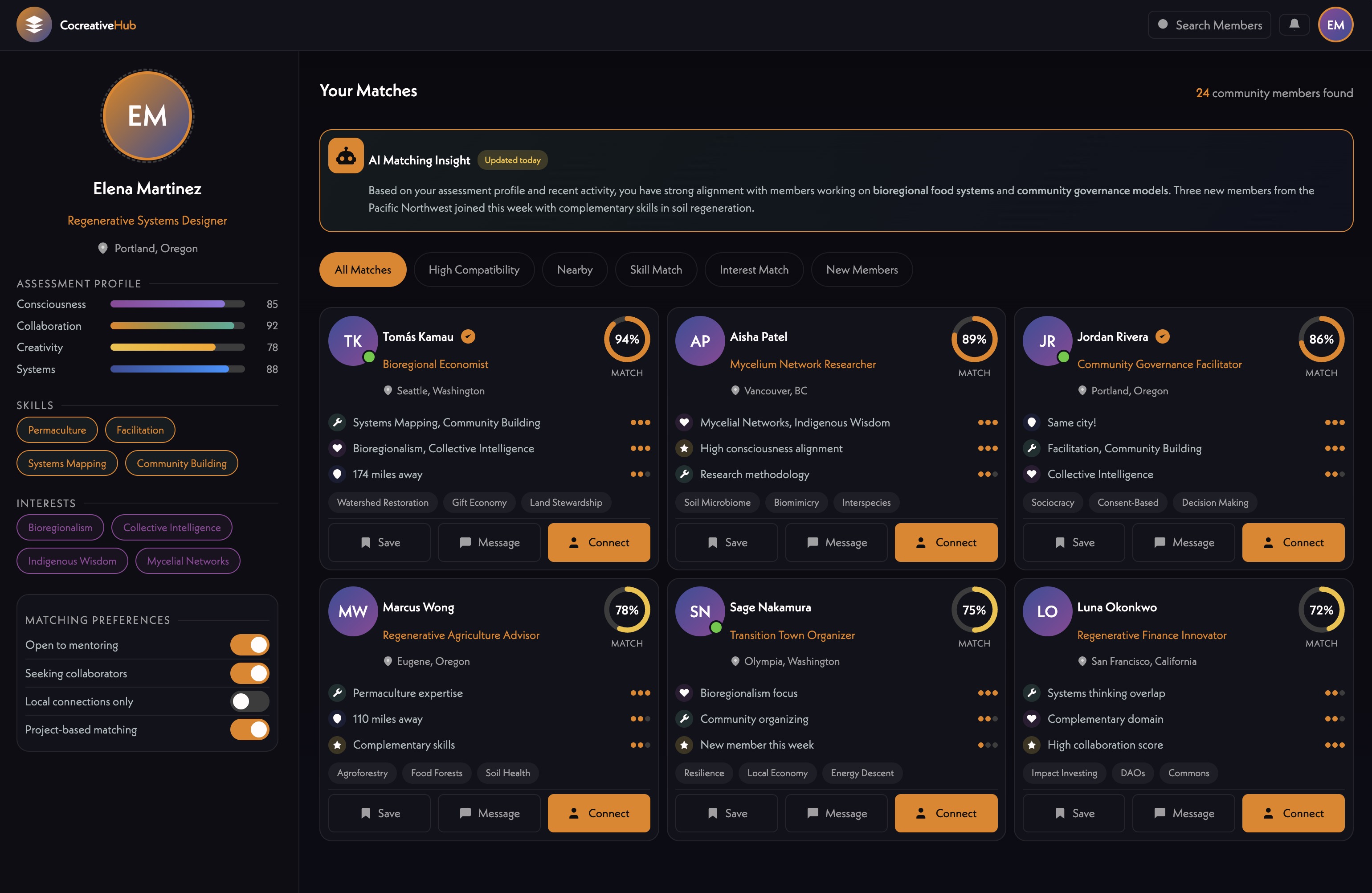
The core philosophy: technology must serve a social architecture rooted in sacred principles, not the other way around. Juan Carlos emphasized that the Planetary Party Protocol is a collection of social functions designed to help communities see themselves, strengthen bonds of trust, and make wise collective decisions — what he's calling the Bioregional Intelligence Dashboard (01:39).
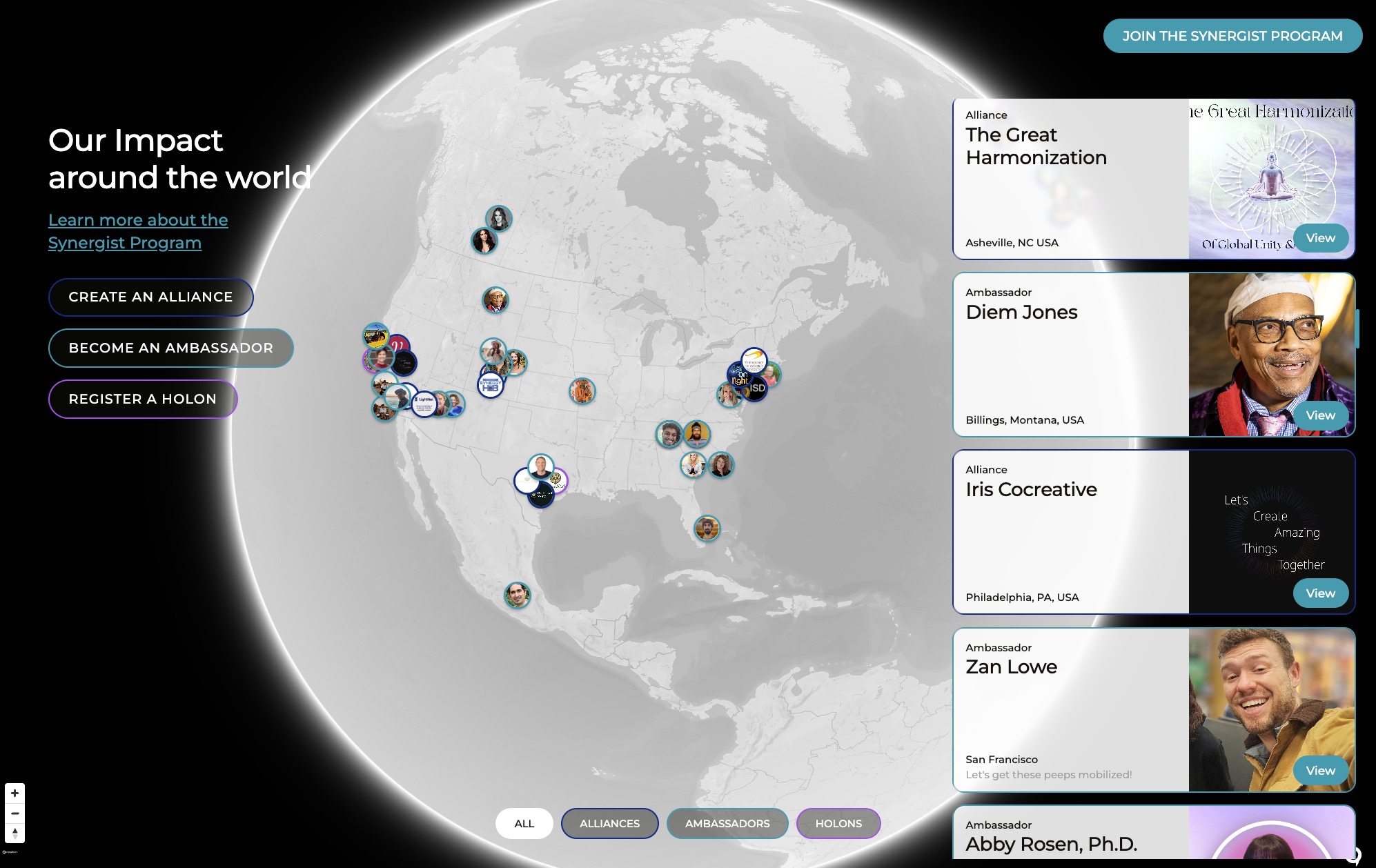
James Redenbaugh demonstrated the app he's building for the Holo Movement, which is already functional with user profiles, a directory, and a highly interactive map where people can explore connections between profiles, view Holons, and switch between map and flat views (11:22). The platform is funded by the Holo Movement and designed so that everything being built contributes to an evolving suite of technologies that can be spun up in different versions and potentially interconnected, allowing people to show up in multiple networks simultaneously (12:36).
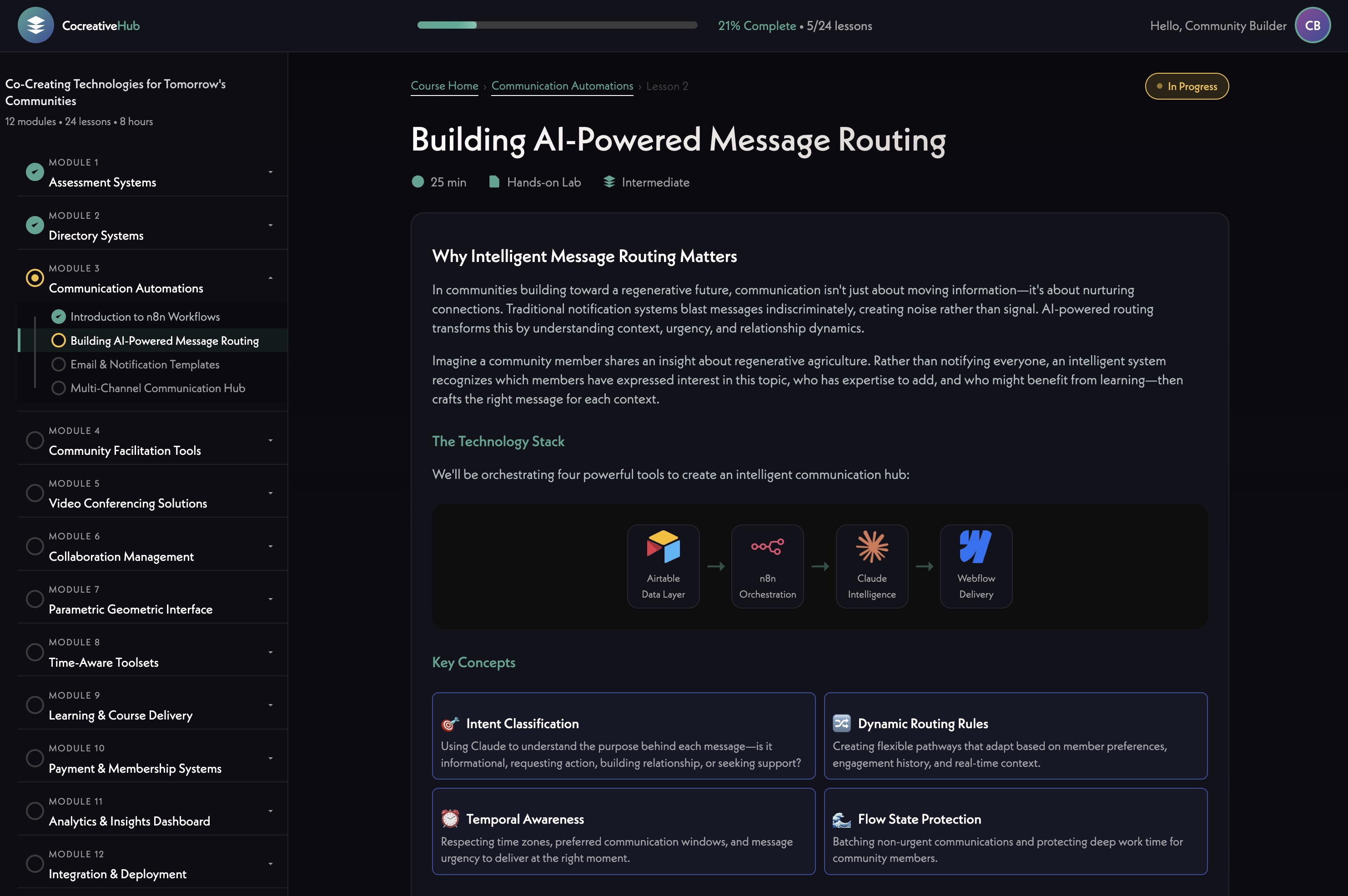
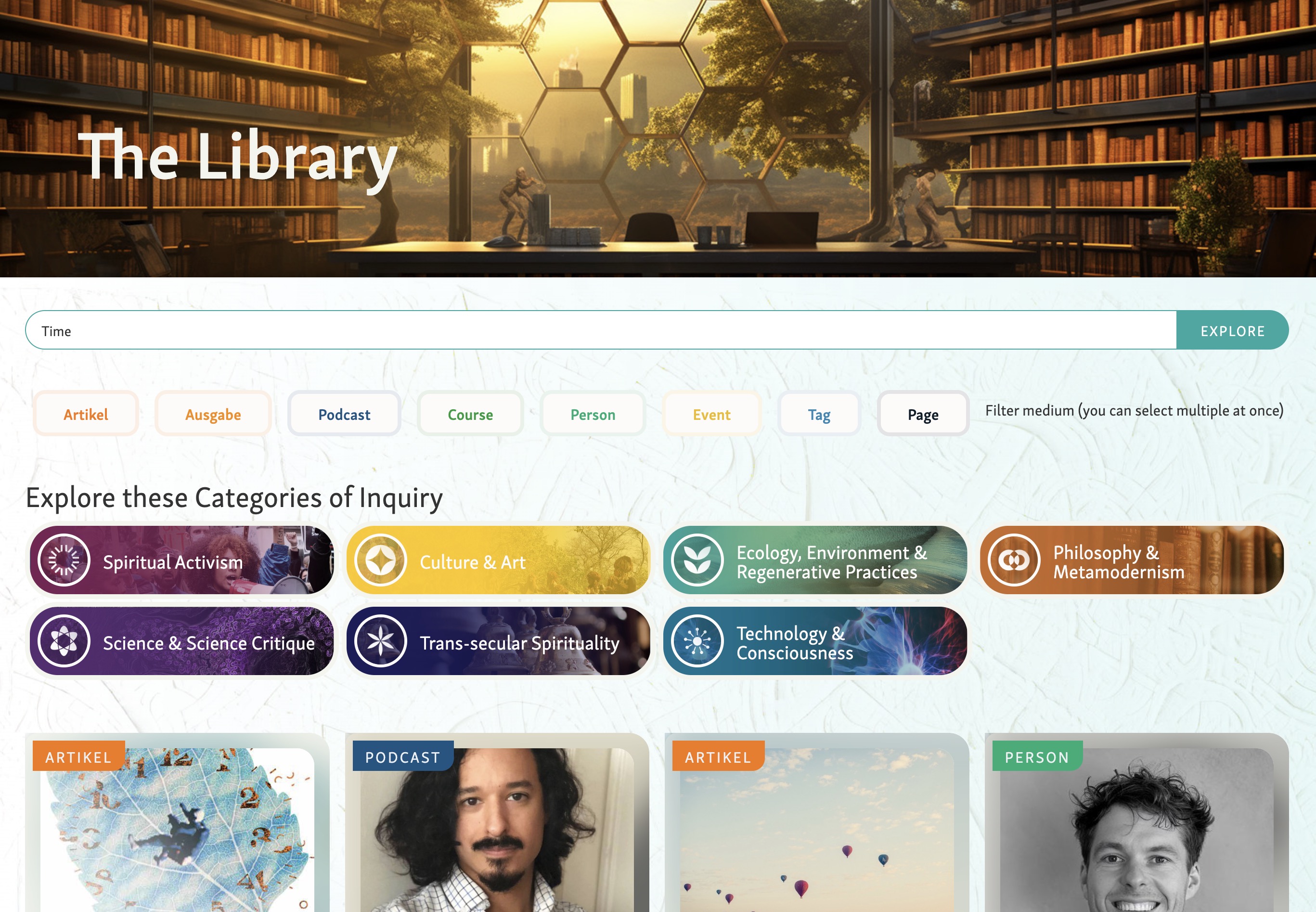
[technology="Directory Systems"]
A key philosophical alignment emerged between both participants. James articulated that technology needs to be in sync with social architecture, not the reverse — "as soon as we think that the app is the thing, then we're lost" (16:18). He emphasized that the best tools should work even for people who never log in directly. If a farmer doesn't want to create a profile, the system should still serve them through WhatsApp conversations, Zoom calls, or community envoys who bridge the analog and digital worlds (17:42).
Juan Carlos reinforced this, explaining that the Planetary Party works at three levels: online tools, on-life social interactions, and what he calls the OM-line — the morphogenetic field of collective consciousness. The ultimate metric isn't engagement or throughput but coherence, joy, and well-being (41:21).
Juan Carlos proposed forming curated Technology Guilds — small groups of 3 to 5 (no more than 12) organizations or developers building complementary social synergy tools. He identified several players in this space: James with his directory and CRM work, Adam Apollo with Cornet Nexus, and France Almayer with Haifa (09:47). The central question he's bringing to the guild is whether these builders can move beyond competition and sit around a table to join genius in service of something greater than any individual creation (24:56).
James strongly agreed, arguing that the era of building monolithic "Goliath apps" to capture market segments is over. AI has fundamentally changed the landscape — big juggernauts will be too easily disrupted by swarms of new tools created by anyone. The future is about modular, open-source ecologies of interconnected relationships between creators who can sense and respond together, assembling "like Power Rangers" into whatever form is needed (26:17). He noted that while Adam Apollo's vision is compelling, it may lean too heavily toward the old paradigm of building one unified replacement for Facebook — something that won't move or adapt fast enough for the diversity of cultures and contexts that need to be served (28:41).
James introduced an important concept: users as functions within the social circuitry. Not everyone needs to be a power user of a CRM or project management system — it's enough if one or two people in a group manage those tools, so long as the tools serve the whole group. The real challenge is empowering real people to make real connections, with the software layer supporting and learning from what's happening on the ground rather than trying to replace it (18:54).
[technology="Collaboration Management Tools"]
Juan Carlos described efforts to build a "mothership fund of funds" — a unified financial mechanism that aggregates funding capacity and channels it toward specific social functions rather than having dozens of overlapping groups competing for the same philanthropic wallets. The idea is that a coherent ecosystem with clear granularity becomes far more attractive to major funders than ten separate groups pitching similar visions (34:00). He floated a scenario of bringing $10 million to the center, then backcasting from the social architecture to determine which tools and functions need funding and how builders can best synergize — whether through cooperation, merging, or maintaining sovereign roles within a shared framework.
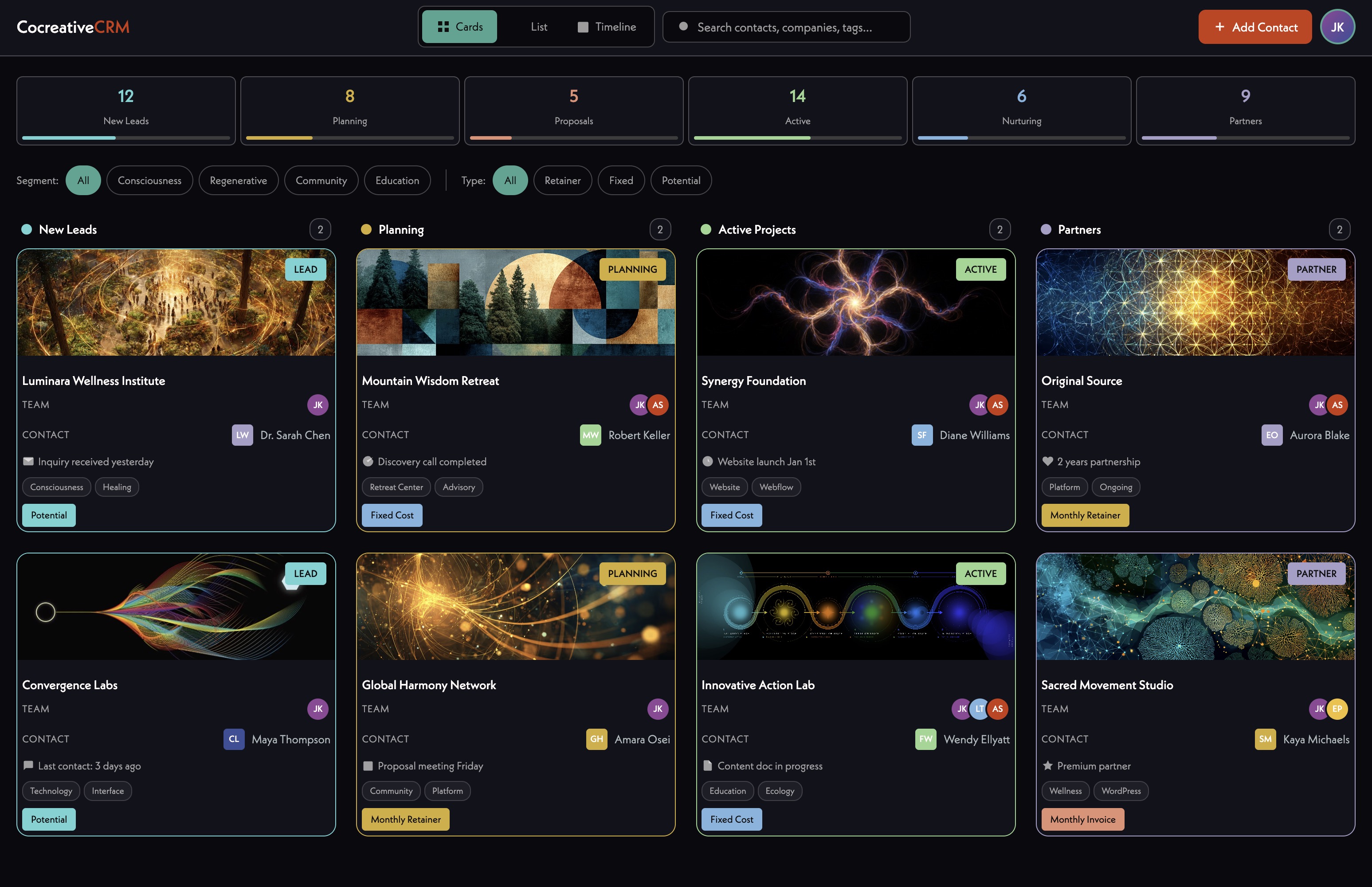
Juan Carlos expressed strong interest in the CRM system James demonstrated in a previous meeting, asking about cost and what would be needed to become an active user. James explained that his CRM is a custom system he's built incrementally over the years, and that the profile and authentication work completed for the Holo Movement app now makes it possible to evolve the CRM so that anyone can log in, add records, and interact with it — not just James as the sole administrator (39:33). He proposed a practical path forward: Juan Carlos provides a summary of needed functions, James responds with what's possible, estimated costs, and what could be set up quickly. In the interim, James offered to get things started with Airtable [tag="airtable"] structures as a backend while the more polished front-end is developed (41:21).
[technology="CRM System Templates"]
James shared that he'll be the featured artist next month in Jeff Carrera's Artist of Possibility magazine, with the theme of collective awakening. He's considering creating a simple website where people worldwide can share what collective awakening means to them — through words or images — and then mapping those contributions onto a globe visualization, similar to the Holo Movement map (43:59). He asked Juan Carlos to help spread the call through his networks.
Juan Carlos offered enthusiastic support but stressed a nuance he wants reflected: "The planetary awakening is a personal experience shared collectively." He cautioned against framing collective awakening as purely an external event, arguing that the compass should be the level of joy and love an individual radiates — "you can determine the level of enlightenment of a person in relation to the level of joy and happiness they spread when they interact with other people" (45:32).
Juan Carlos Kaiten
James Redenbaugh
Juan Carlos Kaiten opened the conversation with an expansive vision for what he calls "the great convergence" — a moment of unification where strategic alliances, financial infrastructure, and community-level projects are accelerating simultaneously. He shared that he's been building partnerships with spiritual and community leaders across Hawaii, Jamaica, and Mexico, and that visitors at his home are actively constructing the financial infrastructure needed to fund an ecosystem of projects under the Planetary Party banner.
The core philosophy: technology must serve a social architecture rooted in sacred principles, not the other way around. Juan Carlos emphasized that the Planetary Party Protocol is a collection of social functions designed to help communities see themselves, strengthen bonds of trust, and make wise collective decisions — what he's calling the Bioregional Intelligence Dashboard (01:39).
James Redenbaugh demonstrated the app he's building for the Holo Movement, which is already functional with user profiles, a directory, and a highly interactive map where people can explore connections between profiles, view Holons, and switch between map and flat views (11:22). The platform is funded by the Holo Movement and designed so that everything being built contributes to an evolving suite of technologies that can be spun up in different versions and potentially interconnected, allowing people to show up in multiple networks simultaneously (12:36).
[technology="Directory Systems"]
A key philosophical alignment emerged between both participants. James articulated that technology needs to be in sync with social architecture, not the reverse — "as soon as we think that the app is the thing, then we're lost" (16:18). He emphasized that the best tools should work even for people who never log in directly. If a farmer doesn't want to create a profile, the system should still serve them through WhatsApp conversations, Zoom calls, or community envoys who bridge the analog and digital worlds (17:42).
Juan Carlos reinforced this, explaining that the Planetary Party works at three levels: online tools, on-life social interactions, and what he calls the OM-line — the morphogenetic field of collective consciousness. The ultimate metric isn't engagement or throughput but coherence, joy, and well-being (41:21).
Juan Carlos proposed forming curated Technology Guilds — small groups of 3 to 5 (no more than 12) organizations or developers building complementary social synergy tools. He identified several players in this space: James with his directory and CRM work, Adam Apollo with Cornet Nexus, and France Almayer with Haifa (09:47). The central question he's bringing to the guild is whether these builders can move beyond competition and sit around a table to join genius in service of something greater than any individual creation (24:56).
James strongly agreed, arguing that the era of building monolithic "Goliath apps" to capture market segments is over. AI has fundamentally changed the landscape — big juggernauts will be too easily disrupted by swarms of new tools created by anyone. The future is about modular, open-source ecologies of interconnected relationships between creators who can sense and respond together, assembling "like Power Rangers" into whatever form is needed (26:17). He noted that while Adam Apollo's vision is compelling, it may lean too heavily toward the old paradigm of building one unified replacement for Facebook — something that won't move or adapt fast enough for the diversity of cultures and contexts that need to be served (28:41).
James introduced an important concept: users as functions within the social circuitry. Not everyone needs to be a power user of a CRM or project management system — it's enough if one or two people in a group manage those tools, so long as the tools serve the whole group. The real challenge is empowering real people to make real connections, with the software layer supporting and learning from what's happening on the ground rather than trying to replace it (18:54).
[technology="Collaboration Management Tools"]
Juan Carlos described efforts to build a "mothership fund of funds" — a unified financial mechanism that aggregates funding capacity and channels it toward specific social functions rather than having dozens of overlapping groups competing for the same philanthropic wallets. The idea is that a coherent ecosystem with clear granularity becomes far more attractive to major funders than ten separate groups pitching similar visions (34:00). He floated a scenario of bringing $10 million to the center, then backcasting from the social architecture to determine which tools and functions need funding and how builders can best synergize — whether through cooperation, merging, or maintaining sovereign roles within a shared framework.
Juan Carlos expressed strong interest in the CRM system James demonstrated in a previous meeting, asking about cost and what would be needed to become an active user. James explained that his CRM is a custom system he's built incrementally over the years, and that the profile and authentication work completed for the Holo Movement app now makes it possible to evolve the CRM so that anyone can log in, add records, and interact with it — not just James as the sole administrator (39:33). He proposed a practical path forward: Juan Carlos provides a summary of needed functions, James responds with what's possible, estimated costs, and what could be set up quickly. In the interim, James offered to get things started with Airtable [tag="airtable"] structures as a backend while the more polished front-end is developed (41:21).
[technology="CRM System Templates"]
James shared that he'll be the featured artist next month in Jeff Carrera's Artist of Possibility magazine, with the theme of collective awakening. He's considering creating a simple website where people worldwide can share what collective awakening means to them — through words or images — and then mapping those contributions onto a globe visualization, similar to the Holo Movement map (43:59). He asked Juan Carlos to help spread the call through his networks.
Juan Carlos offered enthusiastic support but stressed a nuance he wants reflected: "The planetary awakening is a personal experience shared collectively." He cautioned against framing collective awakening as purely an external event, arguing that the compass should be the level of joy and love an individual radiates — "you can determine the level of enlightenment of a person in relation to the level of joy and happiness they spread when they interact with other people" (45:32).
Juan Carlos Kaiten
James Redenbaugh
Follow up on MOU with Holo Movement for partnership formalization
March 1, 2026
Formalize partnership with Holo Movement and include James's technology work within the synergy agreement. This supports the broader Technology Guild formation and unified funding strategy. Discussed at 38:14.
Prepare summary of needed social functions and UX requirements
February 23, 2026
Document the social functions and user experience requirements for the technology guild to guide development priorities. This will inform James's proposal for capabilities, costs, and implementation timeline. Discussed at 39:33.
Continue building fund of funds financial mechanism
April 15, 2026
Continue developing the 'mothership fund of funds' — a unified financial mechanism that aggregates funding capacity and channels it toward specific social functions. Work with current collaborators to create coherent ecosystem with clear granularity that's attractive to major funders. Mentioned at 34:00 in context of bringing $10M to center and backcasting from social architecture.
Follow up on MOU with Holo Movement for partnership formalization
March 1, 2026
Formalize partnership with Holo Movement and include James's technology work within the synergy agreement. This supports the broader Technology Guild formation and unified funding strategy. Discussed at 38:14.
Prepare summary of needed social functions and UX requirements
February 23, 2026
Document the social functions and user experience requirements for the technology guild to guide development priorities. This will inform James's proposal for capabilities, costs, and implementation timeline. Discussed at 39:33.
Continue building fund of funds financial mechanism
April 15, 2026
Continue developing the 'mothership fund of funds' — a unified financial mechanism that aggregates funding capacity and channels it toward specific social functions. Work with current collaborators to create coherent ecosystem with clear granularity that's attractive to major funders. Mentioned at 34:00 in context of bringing $10M to center and backcasting from social architecture.
Curate and onboard technology guild members
April 1, 2026
Continue identifying, vetting, and onboarding guild members — prioritizing trust, compatibility, and complementary capabilities. Focus on organizations like Adam Apollo/Cornet Nexus and France Almayer/Haifa. Keep group size to 3-5 members (max 12). Discussed at 32:00 in context of moving beyond competition to join genius in service of something greater.
Support outreach for collective awakening art project
March 10, 2026
Spread the call for contributions through Planetary Party networks. Help James gather global input on what collective awakening means to people. Emphasize the framing that 'planetary awakening is a personal experience shared collectively' with joy and love as the compass. Discussed at 45:32.
Respond to Juan Carlos with CRM proposal covering capabilities, costs, and quick-start options
February 28, 2026
After receiving Juan Carlos's summary of needed functions, provide detailed response covering: what's possible with existing CRM infrastructure, estimated costs for adaptation and deployment, quick-start options using Airtable backend, and phased implementation plan. Discussed at 39:33.
Set up initial Airtable backend structures for Planetary Party CRM
March 2, 2026
Create Airtable base with tables for contacts, partnerships, projects, and ecosystem relationships. Structure should support tracking across guilds, bioregions, and funding mechanisms. Design for multi-channel user interaction (not just direct platform use). Discussed at 41:21 as interim solution while polished front-end is developed.
Continue evolving Holo Movement app infrastructure
May 1, 2026
Keep developing the Holo Movement app features: interactive profiles, map visualization with holon exploration, multi-network architecture that allows users to show up in multiple networks simultaneously. This infrastructure serves as foundation for other Planetary Party technologies. Demonstrated at 11:22.
Create six art pieces for Artist of Possibility collective awakening feature
March 10, 2026
Produce six art pieces for Jeff Carrera's Artist of Possibility magazine with theme of collective awakening. Consider framing that emphasizes personal experience shared collectively, with joy and radiance as compass. Discussed at 43:59.
Build simple website for gathering collective awakening contributions
March 16, 2026
Create website where people worldwide can share what collective awakening means to them through words or images. Include interactive globe visualization mapping contributions (similar to Holo Movement map). Frame as 'planetary awakening is a personal experience shared collectively.' Discussed at 43:59-45:32.
Form a curated Technology Guild of 3-5 builders creating complementary social synergy tools for the Planetary Party ecosystem. This involves identifying and onboarding guild members (including James/Iris, Adam Apollo/Cornet Nexus, France Almayer/Haifa), establishing trust and compatibility, formalizing the MOU with Holo Movement, and defining shared principles around modular, open-source cooperation over monolithic competition. The guild will coordinate around unified funding strategy and shared social architecture principles.
Adapt and deploy James's custom CRM system for Planetary Party use. This involves setting up initial Airtable backend structures to manage contacts, partnerships, projects, and ecosystem relationships, then evolving the system so Juan Carlos and team can log in and interact with records directly. The CRM needs to support the social architecture of the Planetary Party — tracking relationships across guilds, bioregions, and funding mechanisms while serving users who may interact through multiple channels (not just direct platform use). Will include cost estimation, phased implementation plan, and integration with existing Holo Movement authentication infrastructure.
Design and develop the Bioregional Intelligence Dashboard — a core technology within the Planetary Party Protocol that helps communities see themselves, strengthen trust bonds, and make wise collective decisions. This dashboard will integrate directory functionality, mapping visualization (similar to Holo Movement app), and social architecture metrics focused on coherence, joy, and well-being rather than traditional engagement metrics. The system needs to work across three levels: online tools, on-life social interactions, and the OM-line (morphogenetic field). Will leverage existing Holo Movement directory and map infrastructure as foundation.
Create six art pieces for Jeff Carrera's Artist of Possibility magazine featuring James as artist, with theme of collective awakening. Build a simple website where people worldwide can share what collective awakening means to them through words or images, then visualize these contributions on an interactive globe map (similar to Holo Movement map). The framing should emphasize that 'planetary awakening is a personal experience shared collectively' with focus on joy, love, and individual radiance as the true compass of enlightenment. Juan Carlos will support outreach through Planetary Party networks.
00:00:00
James Redenbaugh: Hola, juan carlos. Hola.
00:00:02
Juan Carlos Kaiten Q: How is it going?
00:00:04
James Redenbaugh: Bien. Bien too.
00:00:16
Juan Carlos Kaiten Q: This new year of the Horse of Fire.
00:00:21
James Redenbaugh: Yeah.
00:00:23
Juan Carlos Kaiten Q: Everything is coming together. The convergence. The like. I am calling this. We are experiencing the great convergence. The moment of unification of humanity. It's happening. Is inevitable. The human cocoon. Humanity's cocoon. Humanity as a cocoon is about to turn into a butterfly.
00:00:51
James Redenbaugh: Wonderful.
00:00:52
Juan Carlos Kaiten Q: You're experiencing that?
00:00:54
James Redenbaugh: Yeah. I'm ready.
00:00:57
Juan Carlos Kaiten Q: Yes. We're gonna awaken into our. Our superhuman capacities. The promise will be fulfilled.
00:01:05
James Redenbaugh: Nice.
00:01:06
Juan Carlos Kaiten Q: Jesus's promise will be fulfilled. You will do as I do and more. So we are entering into that age of supra humans, not transhumans. So salute.
00:01:23
James Redenbaugh: Salute. Love your dolphin mug.
00:01:28
Juan Carlos Kaiten Q: Oh, yeah. This is from my. My family home. Oh, no, this is. This is Veracruz.
00:01:37
James Redenbaugh: How are you doing?
00:01:39
Juan Carlos Kaiten Q: So, yes, I have some friends now visiting and we are building the most amazing synergies in terms of setting the infrastructure, the financial infrastructure that is needed to fund many of the projects we want to do.
00:01:56
James Redenbaugh: Awesome.
00:01:57
Juan Carlos Kaiten Q: Yes. The time of scarcity is over.
00:02:02
James Redenbaugh: Yeah.
00:02:03
Juan Carlos Kaiten Q: Of abundance. And unlimited funding for all of us has arrived.
00:02:10
James Redenbaugh: Great.
00:02:12
Juan Carlos Kaiten Q: And I was. I'm doing great. I was yesterday with a kahuna, a Hawaiian elder that is like one of the most spectacular persons you can meet. He's a spiritual leader. He's a scientist. He's like Tesla scientist. He's like spiritual leader, like Gandhi. And at the same time, he was like a Rambo, like Che Guevara. He. He was hired by. He was forced to enter into the US military, and he was trained as a top level Navy seal. And he has a rock band, Sugar Daddy, his band, because his father had a. A sugar cane plantation. He says. And when I invited him to join the planetary party, he said, yes, of course, let's do a planetary party here in Hawaii. I'm ready to join you. And I told him, well, but you have to bring a gift to the planetary party. Well, everybody has to bring a gift. And then he paused for a second and told me, oh, I am afraid if I bring my gift to the planetary party, I will be arrested. So, yes, things are going great. There is a number of people joining, and the convergence and the strategic alliances are happening in the most beautiful way. And for that, we need the next generation of softwares and social synergy tools that could help us keep up with the rapid convergence and acceleration of events and projects that are popping out from every corner in the world.
00:04:10
James Redenbaugh: So. Cool. Awesome.
00:04:13
Juan Carlos Kaiten Q: I would like to. For our conversation today. But first before that, how are you doing?
00:04:20
James Redenbaugh: I'M doing well. Not getting enough sleep these days. Spending so much time building things, but loving our cats and hanging out.
00:04:35
Juan Carlos Kaiten Q: Where are you based?
00:04:36
James Redenbaugh: Philadelphia.
00:04:37
Juan Carlos Kaiten Q: Philadelphia, yes. Haven't been there yet.
00:04:40
James Redenbaugh: Yeah, yeah, we got. Have come. Come visit whenever you want.
00:04:45
Juan Carlos Kaiten Q: I keep coming back and forth. I have. Yes.
00:04:52
James Redenbaugh: Did you see the super bowl halftime show?
00:04:56
Juan Carlos Kaiten Q: I saw a video of it. Very interesting. Yeah, interesting. There is a lot to distill behind, like reading between the lines. What is happening.
00:05:10
James Redenbaugh: Yeah. So much symbolism and imagery.
00:05:15
Juan Carlos Kaiten Q: Yes.
00:05:16
James Redenbaugh: I thought it was beautiful. I was excited.
00:05:19
Juan Carlos Kaiten Q: It was. Yeah, it was beautiful to see the whole of the Americas. The call to action, the call for the Americas to unite.
00:05:26
James Redenbaugh: Yeah. Yeah, Totally. Big party.
00:05:31
Juan Carlos Kaiten Q: Yeah, yeah, yeah. That's kind of a planetary party, actually. Right. That's why it will look like I. I am. I mean, I am not a fan of Bad Bunny. Hey, his music sucks. The lyrics are like, like. Really? Is that why we are singing? Yeah, like a little bit. Like, okay. My niece singing and dancing. That is like, wow. I kind of like concerned if with all of the music that he's singing and what stands behind him is even more disturbing still. The message was beautiful, but I. I think they were just. They are just showing what people wants to see. But behind that there are many more obscure intentions that we need just to be careful.
00:06:27
James Redenbaugh: Oh, yeah.
00:06:29
Juan Carlos Kaiten Q: Yeah. But I think that's good. I mean, everybody. This is one of the signs that people is just like the message is popping out and people responding to that. So that. That I celebrate.
00:06:47
James Redenbaugh: Cool. Awesome. So, yeah, tell me about what. What's. What's cooking in the party. What do you. What do you guys need? What's. What's needed there.
00:07:02
Juan Carlos Kaiten Q: To pick up from our last conversation, we didn't have enough time to delve into what you are building, the technologies on how things are unfolding within holo movement, what you are developing.
00:07:21
James Redenbaugh: And.
00:07:25
Juan Carlos Kaiten Q: And yes. What are the next steps on. On the. I would like to learn more about this, what you are building. Can you. Can. Can we go back to your technology? Can. I would love to. Let's.
00:07:38
James Redenbaugh: Yeah.
00:07:39
Juan Carlos Kaiten Q: From there, I think you showed me some very interesting elements. We are building the planetary party protocol. It is a collection of social functions. So each social functions, they need to be. We need to enable, empower and implement the different social functions of the social body in a value region. So what. What we are building right now is the ecosystem of social functions that will impact into a community where we need to get a community to see itself and at the same time to connect and to enhance the the bonds of trust, the lines of trust of those connections for the connections to be healthy, harmonious and interconnection of all of the different people doing something to become coherent. So what I've been looking into is what is the new type of governance and synergies and softwares that we need to have in place in order to prototype all of that. As we are building the synergy engine and the vital signs monitor as a social function, we are calling that the biorigional intelligence Dashboard. That is a community intelligence process to make wise decisions. Not smart as decisions that just like smart asses making smart decisions to put more money into their pockets. We want wise decisions, the ones that will bring wealth and greater well being to everybody. So that's the technology we are building and we spoke about that a little bit that it will be interesting to have your, your wisdom and your technology what you are developing into the technology guild. So we are building these softwares and social synergy tools. Are you familiar with Haifa?
00:09:47
James Redenbaugh: Haifa, Yes, I know. Hello.
00:09:57
Juan Carlos Kaiten Q: I'm just. Let me share this with you. I just, I'm just learning about this tool. A person I just met in Switzerland in Davos is developing this. It's on the chat here.
00:10:35
James Redenbaugh: Oh yeah, what's his name?
00:10:41
Juan Carlos Kaiten Q: France.
00:10:42
James Redenbaugh: France, yeah, France. I know France.
00:10:51
Juan Carlos Kaiten Q: Yes. And just bringing back to what you were showing me last time. Is that the way you are kind of orchestrating the work space in order. I think what you were showing me is a more friendly user version of notion or something that you can start seeing what you are doing and then link it to something like what hi Fi is doing here.
00:11:22
James Redenbaugh: Cool. Yeah. I should look into what, what they're up to now. I haven't looked into this in some years. We are, we're building this app for the Hollow movement and it's going well. It's already working. People can create profiles on there and show up on this directory and then I'm really excited about this map, super interactive and you can explore profiles on here and see Holons and love it. See the connections between people or switch to like a flat view. It's. It's very cool and changing fast.
00:12:25
Juan Carlos Kaiten Q: Switch into is funding all of the development for you.
00:12:30
James Redenbaugh: Yeah.
00:12:33
Juan Carlos Kaiten Q: Wonderful.
00:12:36
James Redenbaugh: But everything we're building is kind of contributing to this suite of technologies that we're evolving over time. So we're going to be able to spin up different versions of this and, and then also connect them as well potentially. So people can show up in multiple networks at the same time.
00:13:03
Juan Carlos Kaiten Q: That's. That's what is emerging. So right now the work I'm doing with my friends here is along with France, there is the. I'm just following the patterns, I'm just kind of observing what is emerging. Meta weaving and enabling the next evolutionary step of social functions. You're holding the piece. France is holding the piece. We are the users, as in like we will be going to communities, a map, whole community in Jamaica, in Hawaii, in Mexico. And we need to make sure the softwares that you are developing are community user friendly. Not for techies, but for like the street PhD experts that are keeping like farming, planting trees, doing sustainable agriculture and hospitality, sustainable tourism. And how do we link the day to day people performing crucial activities into the whole ecosystem so we can grow wiser collectively. So this is the type of software that we want to integrate into the Planetary Party protocol. And as we speak we're building a partnership agreement with Holo Movement, Planetary Party and the Holo Movement. We were in Davos and in Flumes Liechtenstein with Rachel Morrison and we've been having conversations also I've been in conversations with Laura and Emmanuel councilman for the past 10 years holding this vision. Yet they hold the vision, but they are not fully holding the how exactly is going to happen. It is more I think like people like you and me that we, I mean you are developing the software that will enable many of these elements, the synergy, the social synergy to happen. Yet I'm holding a piece of that puzzle of okay, this is how it looks at the user experience once you are at the ground level with indigenous communities, with farmers or with tough business leaders that they just care about surviving and making sure that their company is thriving. They're just playing the game that is killing us. But if we can switch the rules of the game where they can still thrive in the system, I believe most of the business leaders will, will be willing to play a better game. Yeah, this is a social architecture that needs to be in sync with the type of software that you and France are developing.
00:16:03
James Redenbaugh: Well, I think it's the other way around. I think this, the, the arc, the social, the technology needs to be in sync with the social architecture, you know, and the social and the relational is the real thing.
00:16:18
Juan Carlos Kaiten Q: That's exactly what I'm saying. Yes. Yeah, it is. I mean technologies are amazing experts developing technologies, yet they are not social architects. No architecture that is connected to sacred architecture. From sacred architecture to social architecture, then we code the social agreements with a higher consciousness, higher order social agreements, which translates into a social architecture. And Then we have a software.
00:16:53
James Redenbaugh: Exactly. As soon as we think that the app is the thing, then we're lost. Yes, it's like the, the, the surface of the water or it's one possible interface where really I think the best app should be something that not even everybody has to use. If the farmer doesn't want to log in and make a profile, you know, and figure it out, even if it's super easy, that should be fine. You know, it should still be in service to the farmer. You know, maybe they're using WhatsApp or they're, you know, getting on a zoom call once in a while or somebody else is in touch with them and bringing them into the conversation. We still want to include them.
00:17:42
Juan Carlos Kaiten Q: Exactly.
00:17:45
James Redenbaugh: And yeah, so I want, I want to make technology tools that are in service to that and remember that. And, and that means that there's going to be, I think groups are really important. You know, there's, there's connections, there's relationships, and there's groups. And within a group, it's important to remember the different, the different roles that we play in the different functions where it's important for a group to have, say, a CRM or a project management system. But, but it's not important that every single person in the group uses the CRM or the project management system. It's okay if one or two people use that, but then the tool is still in service to the whole group, not just to the person who's in charge of the, of the system. So I'm thinking about it that way.
00:18:54
Juan Carlos Kaiten Q: Where.
00:18:56
James Redenbaugh: I want to empower the techie super users who want to nerd out on creating custom tools and things like that, but also include the people that are involved in different ways and in analog ways and then on the ground ways. And then we're going to need to figure out together how to create ways to, to, to bring what's happening, what gets harvested in a group that's doing good work. How can we empower them to share their work and feed it into a system that the whole system can learn from? So one group over here can see what this group over there is doing and learn from that, or share something that it sees that they need or connect them to something that they should be connected to.
00:19:51
Juan Carlos Kaiten Q: Yes, exactly. Exactly. I love it. That's it. So I just wanted to, I mean, last time we didn't have enough time to properly ground like a clear path of what is present here. So just to name some potential areas of synergy to explore on the work you are doing so the first one is I would like as we are building a partnership between the Planetary Party and the Holo movement, I would like to include the work you are doing as a part of the Synergy elements for us to learn more about your tool Synergize co develop suggest we are calling Social Architecture user experience that will guide the functions that what you are building needs to have. So we're going to be like test XR for you in a way.
00:20:56
James Redenbaugh: Awesome Holo movement.
00:20:58
Juan Carlos Kaiten Q: They have a beautiful vision but my personal opinion is still that they are still missing the link to the ground, to real people, to projects. They're funding projects all over here, there, there and they do the wave and they connect to communities. But I still haven't properly seen, I might be mistaken, but I haven't seen like a proper strategy to really nourish a community. Like meaning wherever they make a wave, they should leave a trace of impact to the community with seeds that will help them flourish. I believe that what we're building with the Planetary Party protocol could become those seeds and that synergy framework that will nourish communities for them to move into greater levels of harmony. And there are some tools we want to develop in the Guild of Technology and by original Intelligence Dashboard I see that you are building some of the components that we need. So we want to have like a group of three, five, no more than eight, definitely no more than 12. We see every guild developing a social function and we want to keep them like very well curated guild from 3, possibly 5, 8. No more than 12 people developing or organizations developing the social synergy, the social tools we need. So that's something I would like to put into the mou. That invitation. I've been in conversations with years with people like Adam Apollo developing Cornet Nexus and now with France developing Haifa. And the question is, are we playing the game of who is going to be the one that get it first and conquers and become the build the next Google or forever app that will make you millionaire and conquer the world? Or is there space? I don't know the answer and I might be totally wrong. Is there a space for connecting the dots between three major players? I mean I'm just talking out of the people I know like, like you, Adam Apollo, France Almayer and there are so few others like that I am, I can see that they are developing, wanting to develop the same or similar or different components of a greater whole. I call it an ecosystem of social synergy tools that we are not. I don't see each One of you developing all of the tools that I, I see that are necessary. Some of, some of them are focused on finance, some of others are focusing more like on, on CRM and DAOs. Some others are developing more like the viral content. And so that's a question that I would like to bring to the guilds that we are forming in the planetary party to develop this ecosystem of social synergy tools. And what we are working on right now is in building the funding mechanisms to say okay, what if we bring $10 million to the center and having a conversation of social architecture and social functions, then we back cast what functions we need, what software, what apps we need and what is the best way we could synergize and I call it, this is a very important component which is we need to go together but not scramble like funtos, Peronor, Revoltos. It is very important in terms of governance that we go beyond the green mean where we all want to go together and do everything together. That is the perfect formula for disaster. We need to have an organizational structure where each organization or group, they are holding their peace. And it is either they synergize or they merge or they cooperate. There are different levels and layers of how we could be working together where we could maximize resources and impact rather than being small and competing each one with one another and see who's going to get the bigger piece of funding to develop the function. Yeah, I mean that's the question I'm bringing to the center. Tell me if this is the most stupid idea you have ever heard. Makes sense.
00:26:17
James Redenbaugh: No, it totally makes sense. I think that the old way is the way of building the Goliath app that's going to capture a segment of the market. And the new way is to co create an ecosystem of, of parts that form dynamic and evolving interoperable holes. Because the, the landscape is going to keep changing faster and faster. And if there's one, you know, 20 years ago, 30 years ago, there was space for Google to come in and make the best search engine. And then we have, you know, Google. I don't think that that will work anymore. I think that AI has destroyed that thankfully. Where it's going to be easier and easier for people to create their own software and their own tools and these big like juggernaut apps and solutions. Even if they become successful and get traction, they're going to be too easily taken down and replaced by swarms of new things created by anybody. And so I think that the future is all about creating our own swarms and Creating our own ecologies of interconnected relationships, primarily relationships between creators that can sense and respond together to the shifting landscape and create ecologies of solutions that can interoperate and, and assemble like Power Rangers as needed into, into whatever form. And I think it should be, you know, as, as open source as possible. I, I like Adam a lot. He's an interesting guy. He's super out there and I feel like a lot of his thinking around what he's creating is kind of in this old way of like, let's make the one thing that can replace our Facebook and you know, and everything else that we're using. And like, yeah, in a perfect world that would be really cool to have, but I think it's, it, it's not going to move fast enough and change fast enough to, to, to really make sense as a viable solution. And it's I think too single perspective view of what a future interface, you know, should look like and function. It's like cool futuristic sci fi. Like I can totally get on board with that. But will it work for the farmer in Guatemala, you know, will it work for the indigenous group? Will it work for a million different people and different cultures and perspectives around the world who haven't played, you know, Star Citizen or watch Star wars or, you know, speak that language? I don't know. I want spaces for new interfaces that break out of grids and boxes and are more holonic and spherical and circular and like, yeah, we need all of that, but we also need simple tools and ways to engage and get things done and build on one thing after another and measure real impact and tangible results and like, stuff like that. And so I think what's really needed is not a, an app, but, but a guild, you know, and a conversation and a collaboratory and a way to like contribute into, into this ecology.
00:30:58
Juan Carlos Kaiten Q: That's exactly right. That's what that, that's what I see that is organically emerging and everybody wants to do the same. And I believe the people that are holding that pattern, that the ones that are downloading from the same radio universal station with the capacity to manifest it, we are getting everything that raises, converges. Barbara Marskobar used to say, she said that like 50 times the last time I saw her before she passed. Everything that rises converges. And in this convergence, if we have the right consciousness, we will be smart enough, wise enough not to compete, but rather sit around a table and say, okay, let's join genius. And we will need to go through the Picasso way to respond. The only single question Are you willing to let go of your grand creation in service to build something even greater than what. What you could do alone? And that's the patient to become a member of the guilds. If you are coming with your great idea that this is the best and you're gonna enter into the circle to convince everybody that you got it right and everybody's wrong, it's like, thank you, but no thank you. That's the. No, that's not the. The level of consciousness we want. And I believe like Adam Apollo, for instance, he will totally be. I mean, he's aware. He's not stupid. He's aware that everything he's been proposing has totally changed in the past two years. Every. Yeah, everything is just. The rules are different now. So it's exactly. I fully agree with in the way you are proposing and saying this. So. So that's what is emerging. The conversations I am having now. So I think in terms of just to. To nail in like two or three steps forward is I want to follow up with the mou, with holo movement, explore what you are building, could be part of the guilds. And we are speaking to a number of organizations. I want to have this small. The holochain people are also around in this conversation. So just to have like people that can get along, that there is trust and that it feels easy. Not. It's not like an Indian marriage. You're like, bro, that you need to marry this person that you don't know. And it's kind of ugly with bad breath. So it needs to be like. It needs to feel right. So that's. I think that would be the first step. And, and then to. To formalize the forming the onboarding into a guild to. To build these social functions. And secondly, we are working on building the financial mechanisms on how do we join forces on funding. And right now, the people that I am hosting in my house, my place, they are building that fund of funds, they call it the mothership fund of funds, to funnel greater amounts of funding that they can then can be funneled to the different social functions that are needed to be funded in the ecosystem. So rather than having 10, 20 people trying to reach the same person with the big wallet, we become an ecosystem with a granularity and coherence in terms of what we're building. And then we become more attractive to the person with a big wallet, say, oh, I will not have the same people that I love. 10 people, 10 different groups that I love. Putting me in the difficult decision to see which one of the 10 people I love that they want to do the same. I will fund so they will celebrate and applaud this more mature way of approaching them. Then we can then build the funnel to develop the tools that we need in order to serve the farmers. The farmers might not ever have to deal with the complexity of the technologies we are building, but they will certainly have access to the funding they need to buy fertilizers organic, to have seeds, to have access to proper transport, or optimize the full supply chain and have access to the markets where they need and want to sell their products with a fair price. So that's just an example on how the complexity of the software that we are building could touch the simplicity of what a farmer needs. And we might just have like an envoy, a community gardener being the link to them. Yeah, we'll be pretty much putting into the system all of the KPIs.
00:36:17
James Redenbaugh: Yeah, yeah. There's an understanding of these kind of apps that's growing in my, in my mind and I feel in the space between minds and in conversations with. Where there's. There's functions that exist in the code and then there's functions that exist in the, in the social circuitry where users aren't just users, but there's. We want to build users as functions where those envoys or those ambassadors are critical to the kinds of platforms that we want to build. You know, we can't just make an app that makes it easy for people to sign up and do whatever. We need to empower, like, real people to make real connections to do, you know, real things and have real conversations. And then the software layer can support all of that and learn from that which is happening. But it's even more important to figure out how to, how to get those real people to do those real things.
00:37:36
Juan Carlos Kaiten Q: Yeah, yeah. And this is exactly what we are building. We are in touch. We're building partnerships with the leaders in the ground, with the leader of Rastafari in Jamaica, with the greatest kahuna in Hawaii that they, they understand technology. If they say this way, the whole community will follow them because they are the true moral leaders of a community, not the presidents. So we have access to them and they are like our compass and thermometer to determine how we can properly develop and implement these tools.
00:38:13
James Redenbaugh: Awesome.
00:38:14
Juan Carlos Kaiten Q: So, yeah, there is a beautiful convergence. So if we can, I can elaborate on looking to how this, what you're building could be part of the synergy agreement between the Holland Movement and Planetary Party and even beyond, and invite you not as a provider of services to whole of movement, but like you, as with everything you do and have as a member of the Planetary Party Guild where we want to funnel greater resources and bring other players to develop even greater social synergy tools than the ones you are just developing for the Holo movement. That the Holo movement will have access to whatever extra we create. But you are not tied to the Holo movement. So that's the way I see that. I would love to learn more about. I mean last time we spoke you showed me the most amazing CRM that I was like I want it. What do I need? How much does does that cost? What do we need? What type of exchange or how do we. I would like to be a user. Better user to whatever to all of those tools that you are developing.
00:39:33
James Redenbaugh: Great. Yeah. Well, my CRM is something I've kind of hodgepodged together over the years. And now that we have figured out what we figured out for the Hollow Movement app in terms of, you know, especially empowering users to create profiles and log in and update things, I now want to combine the two things so that my CRM isn't just something that I manage. You know, there's a few ways to, for clients and team members to interact with it, but I now want to make it so that anyone can log in and add things and record things and things like that. And so what would. I think what would be best is if you give me a kind of summary of what of the functions that you would need and that would be most important for you. Then I can respond to that and tell you about what, What we could do, what cost could be, what would be the easiest thing that we could set up real quick to get you testing things on and then you know what, what can we build build towards in the future. But I'd love to help you with that. And there's definitely lots of low hanging fruit and also ways that I can just get you started right away with some airtable structures that can kind of be the back end for the, the front end that that will take some more time to develop.
00:41:21
Juan Carlos Kaiten Q: Okay, I kind of making some notes for us to remember here in our chat. Excellent. Okay, I think I'm good with that for now. And just like planting a seed. The way I've been envisioning all of this to work is that we need to work at three levels. We are developing the online tools that they need to be compatible with the own life tools like what happens in real life, like the social interaction. So there is A an online on life or in life. But eventually all of them are interconnected into the OM line, into the morphogenetic fields, because at the end, we're building collective consciousness, we are building critical mass and we're building global coherence. And that's part of the equation of what we want to measure everything in service to global coherence, to the personal coherence of each one of us and how we are experiencing life. How are the levels of joy and love and ecstasies of experience in life. That's the ultimate goals like economy of happiness. So yeah, just working on those three layers is, is the compass that I'm following. Don't have the answers. I just have the questions at the moment.
00:42:59
James Redenbaugh: Awesome. Great. Oh, I have something else. When you mentioned the quote that everything rises, everything that rises converges. I'm next month the featured artist in a magazine called the Artist of Possibility that Jeff Carrera produces. And the theme of the issue is collective awakening. And so I need to create some art pieces this month about collective awakening. And one idea I had is to spin up a simple website that lets people from around the world share about what collective awakening means to them. And then I could harvest their responses somehow and put them on a globe not unlike this. But I mean, ideally I. I could get like a hundred people from around the world to make a little piece of art about collective awakening. And I could cover the whole planet with that.
00:44:21
Juan Carlos Kaiten Q: Who's doing this? Who's doing this collective awakening?
00:44:26
James Redenbaugh: Me. Well, there's an issue in the Artists of Possibility magazine about collective awakening. And he. Jeff is interviewing Elizabeth the Bold, Diane Hamilton, Patricia Albert, Peter Martin, some other folks. And I'm making the art, the art for it. And I have some things that I could use. We need six different pieces. But yeah, just to plant the seed, I might call on you to share in, in your network because I want to get as many different perspectives as, as possible. I'll try to make it easy for people to contribute some words or an image, and then I want to put them around the sphere because who cares what I think collective awakening is as a individual? It's about, it's about the collective. So I want to find ways to do that.
00:45:32
Juan Carlos Kaiten Q: I would love to support that, but I just want to stress something and this, that will be part of my message. The collective awakening is a personal experience shared collectively. So let's stop thinking that something is going to happen collectively, something that needs to happen inside us. Yes, but it is so much focused on the outside in the collective awakening in detriment to the personal experience. So let's not fall into that trap. Because the planetary Awakening is a personal experience shared collectively. So. So it has to the compass, the thermometer to that is the. Is the level of joy enlightened person. You can determine the level of enlightenment of a person in relation to the level of joy and happiness that they spread when they interact with other people. Otherwise they are too much in their mind. They just get people dizzy with ideas. But when like deep spiritual leaders are like really spiritual leaders, you can identify them by the level of love and joy they bring when they enter a room, when they enter others. And that's not easy to. To get there, to reach that capacity. So that's why we are tagging the planetary party. Because it is a celebration, it's a person, and it's an orgasmistic experience that you need to reach there personally by bringing your gift to the planet. And you share that collectively. So then the sum of all of the personal experiences will create the field for a planetary awakening. I mean, it is physics. We are talking physics around all of this. That's why the planetary party will lead us in the morning. I just have the revelation from the planetary party. We will eventually move to the interplanetary party party. That's what is very, very exciting and amusing.
00:47:42
James Redenbaugh: Yeah, we have to. We have to throw our own good party before we can be invited to the.
00:47:54
Juan Carlos Kaiten Q: I mean, it depends on the quality of the planetary Party. Withdraw that we will gain our access, our ticket to the Interplanetary Party when all of these people come down and to celebrate. Hey guys, you did it. You managed to use your technology for good. You eradicated poverty, illness, war. And you use your technology for peace and for the driving of humanity. Like to enrich the human spirit. Anyhow, wishful thinking. Let's get to work.
00:48:31
James Redenbaugh: Let's do it. Great to be with you, Juan. I'll talk to you soon.
00:48:35
Juan Carlos Kaiten Q: Yes. Excellent.
00:48:37
James Redenbaugh: Take care. Ciao.
00:48:38
Juan Carlos Kaiten Q: Ciao.







.svg%20(1).png)


.png)