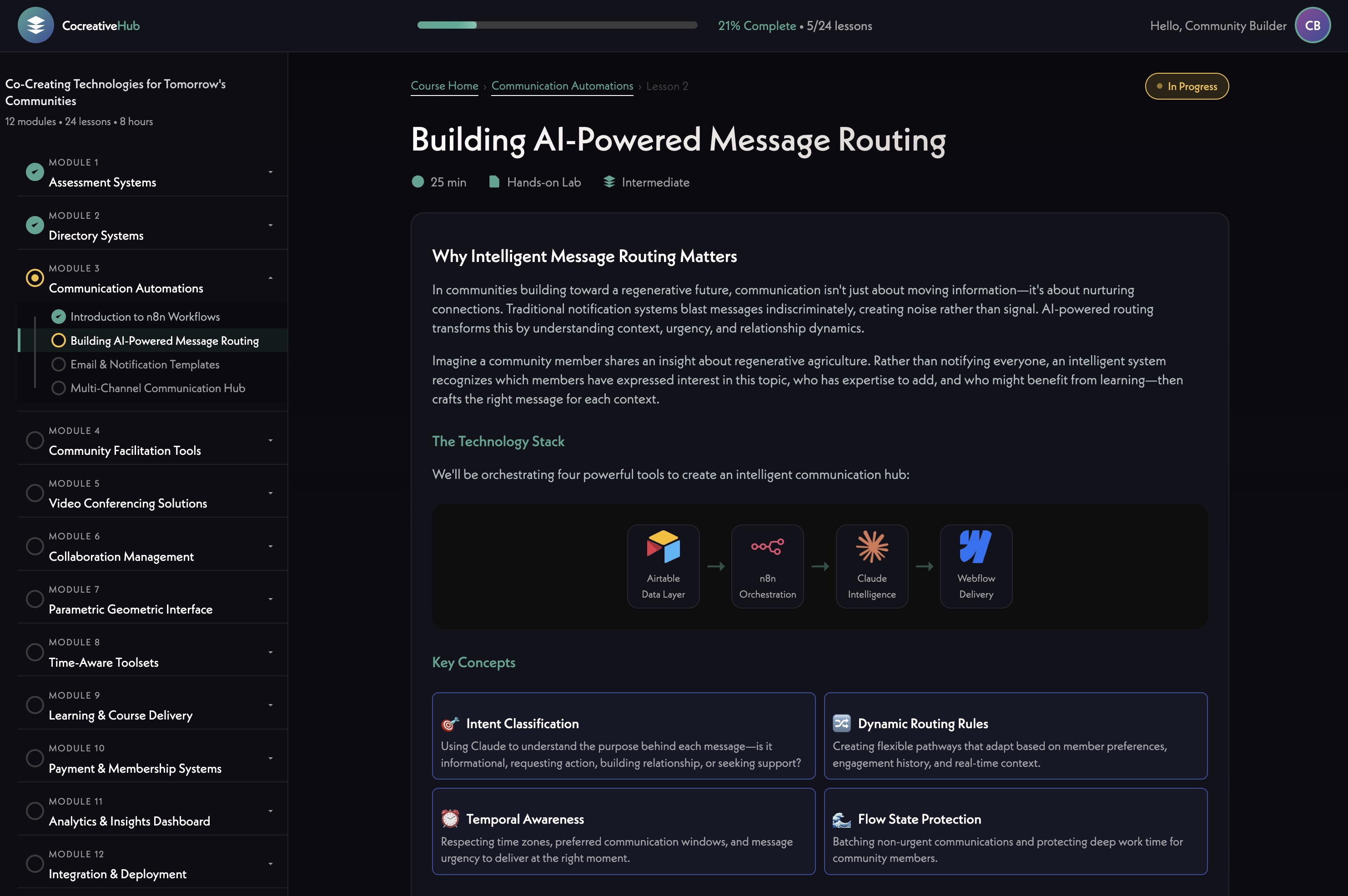


James and Ivan reconnected after a productive stretch — Ivan wrapping up a previous engagement and available to take on more work, James returning from a weekend trip to Tennessee with family. With the Hollow Movement Wave event deadline set for May 29th, the conversation focused on two major development priorities: getting the membership and subscription system fully functional, and designing the matching algorithm architecture.
---
The immediate priority is getting a working pay-what-you-want subscription model implemented via Stripe [tag="stripe"]. PayPal was considered but deprioritized due to integration complexity — Stripe is the clear path forward.
The membership signup flow needs to be embedded directly into the profile creation process. Since users answer domain questions and configure their profile during onboarding, the subscription step should appear inline within that flow. For users who've already subscribed and return to edit their profile, that panel should simply not render — a conditional check against existing subscription state (06:38).
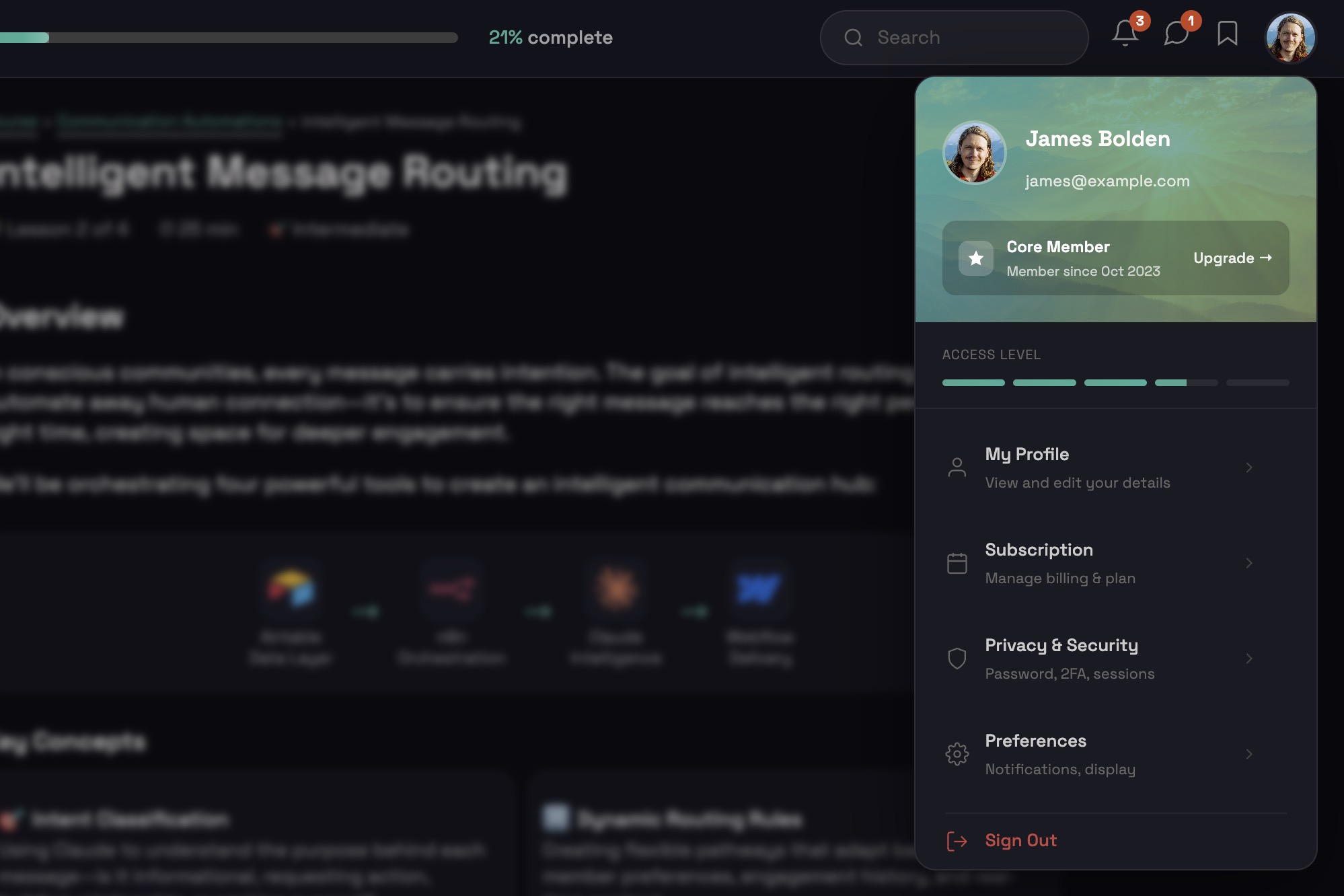
Account page updates are also needed so members can view their current plan, change their tier, and cancel if needed. A free tier option will be present in the signup flow as well, so users can explicitly choose to stay free rather than having it be a default (08:52).
The team still needs to define what's included in free vs. paid. Current thinking:
[technology="Custom Membership System"]
---
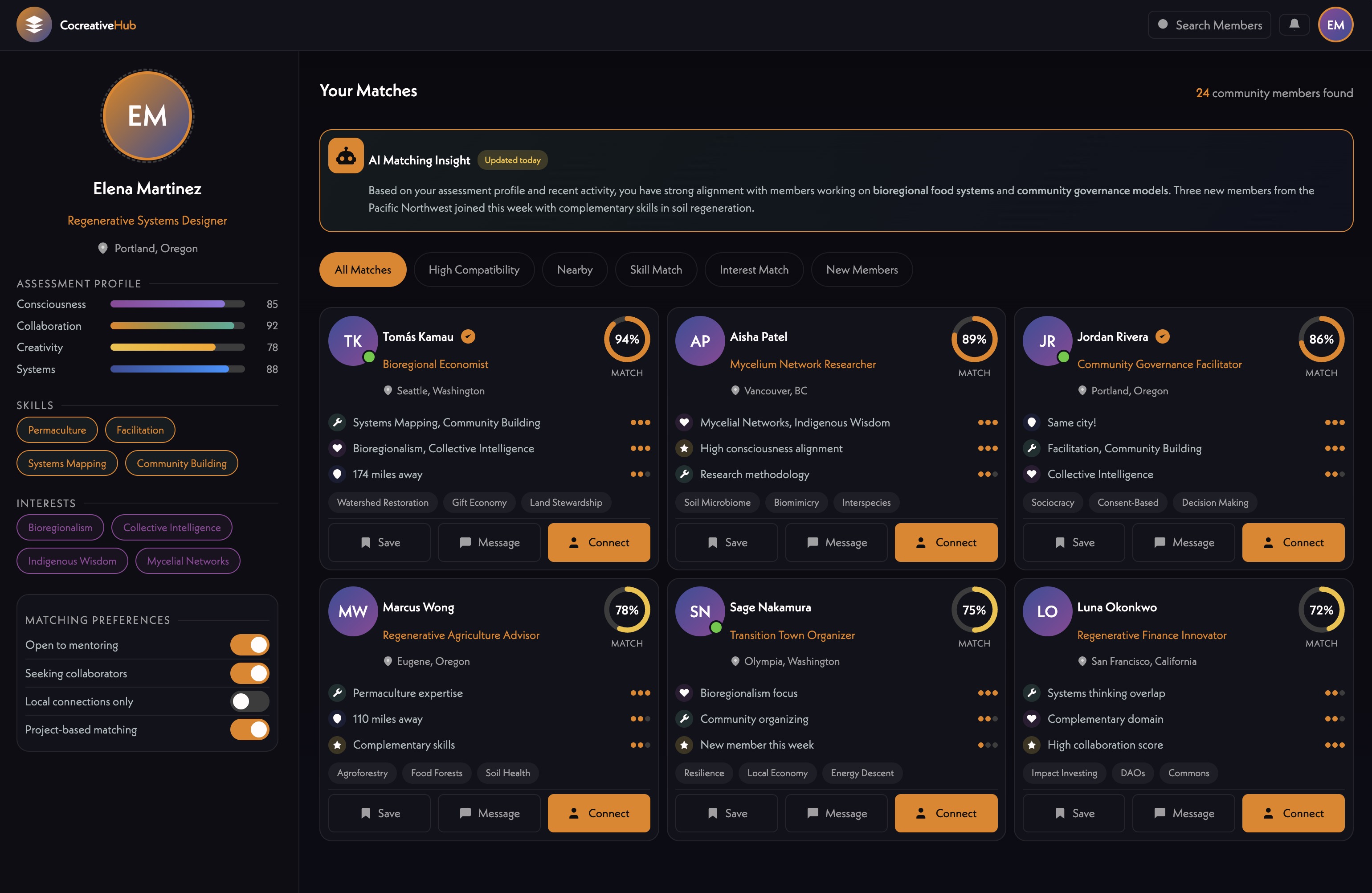
The suggested connection map will be a grid visualization with two axes: proximity (Y-axis, calculated from latitude/longitude in Supabase [tag="supabase"]) and alignment (X-axis). For V1, alignment will be calculated using results from the connection assessment rather than the more complex tag/domain comparison — a deliberate simplification that also incentivizes more users to complete the assessment (13:12).
The connection assessment maps each user across 12 domains, each with three possible archetypal vectors (grounded, visionary, integrative). A first-pass binary/trinary comparison can identify users who share 11 or 12 out of 12 archetypes extremely quickly — practically in nanoseconds per comparison. A second pass then refines those top matches using the actual numeric scores for finer differentiation (32:34). For example, two users might share the same archetypes but one is meaningfully closer in their exact positioning across domains.
Computational strategy discussed: calculating every user against every other user on page load is likely too intensive at scale. The preferred approach is periodic background processing — pre-calculating and storing match scores in Supabase [tag="supabase"], then retrieving them when a user loads the connection page. Ivan suggested starting with a spike using a subset of users to get real performance metrics before committing to an architecture (21:18). Limiting the map to top matches (e.g., top 20–50) also reduces the calculation scope considerably.
Tag and domain-based alignment (V2) was tabled for now. It involves comparing four taxonomies — domains, custom tags, offering tags, and seeking tags — where seeking should be matched against offering for high alignment. The complexity of that cross-comparison is significant, and the connection assessment alone gives a cleaner signal for launch.
[technology="Intelligent Matching Algorithms"]
For deeper one-to-one matching, an AI agent will generate a detailed connection profile analyzing two users' assessments, text responses, tags, seeking/offering, and Holon memberships (37:45). The output — a structured paragraph explaining alignment and where collaboration potential lies — will populate a template on the connection page. Claude [tag="claude"] and N8N [tag="n8n"] automations are the planned implementation path, similar to a prototype James had already built.
Generated connection profiles will be saved as records in Supabase [tag="supabase"] so they don't need to be regenerated on every view. If User A generates a profile with User B, User B sees the same result. Users can trigger a regeneration if they've updated their profiles. This feature is positioned as a premium paid feature, though free users may get one trial run (41:49).
[technology="Communication Automations"]
Users who haven't completed the connection assessment won't see the connection map — instead, they'll see a prompt encouraging them to complete it. This creates a natural incentive loop. A loading state (similar to the existing profile creation loader, which takes ~45 seconds while N8N [tag="n8n"] generates the background image and tagline) will handle the wait time for on-demand agent runs (39:07).
---
James outlined the three-level roadmap for the matching and collaboration engine:
Beyond matching, the platform's longer arc is about facilitating an engine for social good — helping people find grant funding, build project teams, and track and share impact. Gamification of achievements (micro-grants won, projects completed, outcomes reported) is planned as the platform matures over the next 18 months (45:30).
---
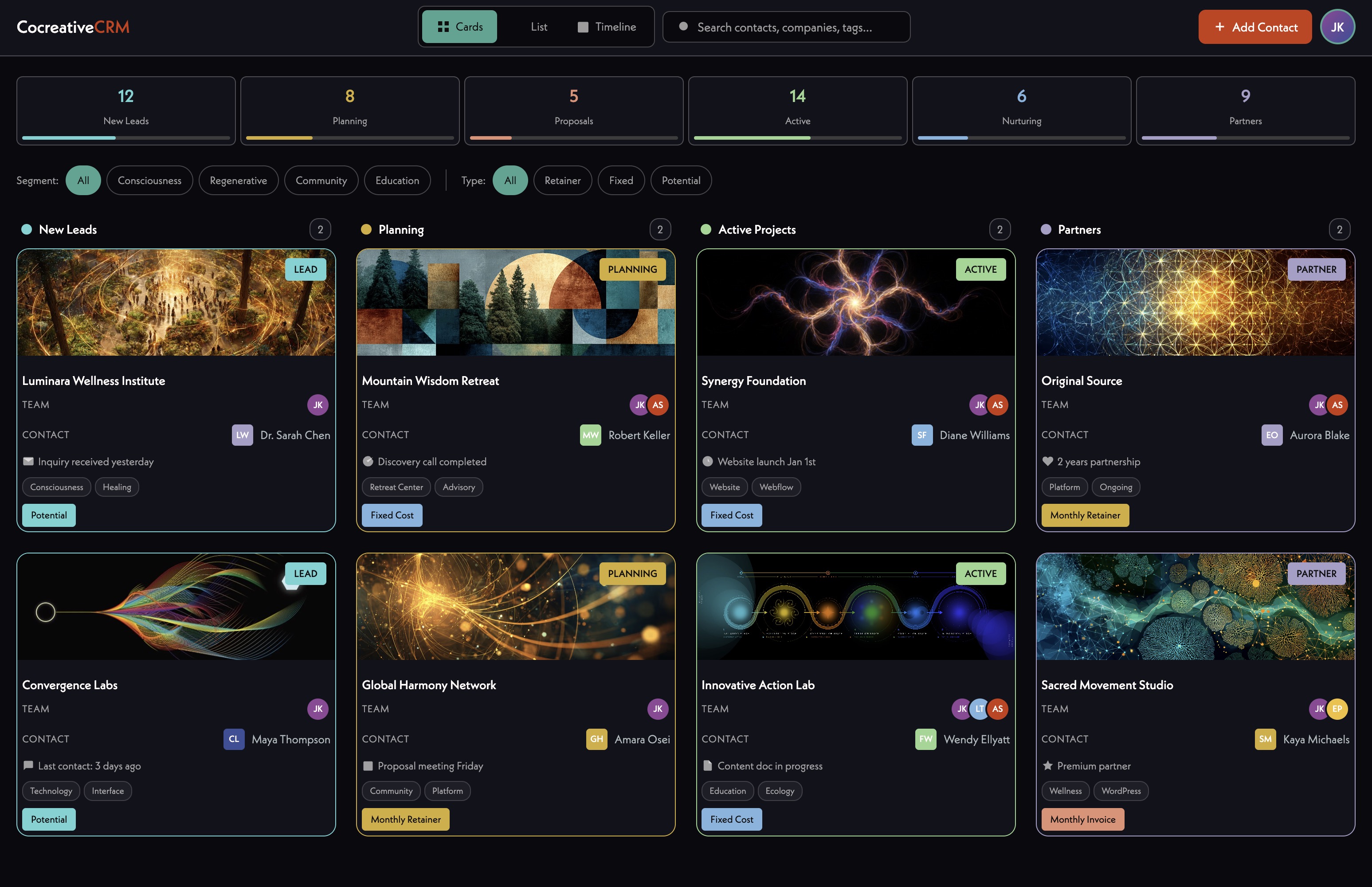
The Join Holon button is currently non-functional and needs to be fixed before the conference. The project board has also fallen behind — James acknowledged that task tracking has become a personal pain point with too much living in his head rather than in a maintained system (47:26).
Ivan shared that he's been running a lightweight AI-chat-based project management approach using Claude [tag="claude"] — markdown files for the roadmap and per-ticket detail, with conversations to surface what's outstanding. He agreed to write up a summary of how his system works and share it with James (51:20).
James also briefly showed a personal site prototype (james.today) designed entirely by Claude [tag="claude"] — a clean, minimal aesthetic for real-time client connection. A separate domain, sensemaking.today, is a seedling idea for a collective AI-assisted sense-making dialogue project, bringing diverse perspectives together to understand rapid global change (55:30).
[technology="Collaboration Management Tools"]
---
James Redenbaugh
Ivan Gonzalez
Both
James and Ivan reconnected after a productive stretch — Ivan wrapping up a previous engagement and available to take on more work, James returning from a weekend trip to Tennessee with family. With the Hollow Movement Wave event deadline set for May 29th, the conversation focused on two major development priorities: getting the membership and subscription system fully functional, and designing the matching algorithm architecture.
---
The immediate priority is getting a working pay-what-you-want subscription model implemented via Stripe [tag="stripe"]. PayPal was considered but deprioritized due to integration complexity — Stripe is the clear path forward.
The membership signup flow needs to be embedded directly into the profile creation process. Since users answer domain questions and configure their profile during onboarding, the subscription step should appear inline within that flow. For users who've already subscribed and return to edit their profile, that panel should simply not render — a conditional check against existing subscription state (06:38).
Account page updates are also needed so members can view their current plan, change their tier, and cancel if needed. A free tier option will be present in the signup flow as well, so users can explicitly choose to stay free rather than having it be a default (08:52).
The team still needs to define what's included in free vs. paid. Current thinking:
[technology="Custom Membership System"]
---
The suggested connection map will be a grid visualization with two axes: proximity (Y-axis, calculated from latitude/longitude in Supabase [tag="supabase"]) and alignment (X-axis). For V1, alignment will be calculated using results from the connection assessment rather than the more complex tag/domain comparison — a deliberate simplification that also incentivizes more users to complete the assessment (13:12).
The connection assessment maps each user across 12 domains, each with three possible archetypal vectors (grounded, visionary, integrative). A first-pass binary/trinary comparison can identify users who share 11 or 12 out of 12 archetypes extremely quickly — practically in nanoseconds per comparison. A second pass then refines those top matches using the actual numeric scores for finer differentiation (32:34). For example, two users might share the same archetypes but one is meaningfully closer in their exact positioning across domains.
Computational strategy discussed: calculating every user against every other user on page load is likely too intensive at scale. The preferred approach is periodic background processing — pre-calculating and storing match scores in Supabase [tag="supabase"], then retrieving them when a user loads the connection page. Ivan suggested starting with a spike using a subset of users to get real performance metrics before committing to an architecture (21:18). Limiting the map to top matches (e.g., top 20–50) also reduces the calculation scope considerably.
Tag and domain-based alignment (V2) was tabled for now. It involves comparing four taxonomies — domains, custom tags, offering tags, and seeking tags — where seeking should be matched against offering for high alignment. The complexity of that cross-comparison is significant, and the connection assessment alone gives a cleaner signal for launch.
[technology="Intelligent Matching Algorithms"]
For deeper one-to-one matching, an AI agent will generate a detailed connection profile analyzing two users' assessments, text responses, tags, seeking/offering, and Holon memberships (37:45). The output — a structured paragraph explaining alignment and where collaboration potential lies — will populate a template on the connection page. Claude [tag="claude"] and N8N [tag="n8n"] automations are the planned implementation path, similar to a prototype James had already built.
Generated connection profiles will be saved as records in Supabase [tag="supabase"] so they don't need to be regenerated on every view. If User A generates a profile with User B, User B sees the same result. Users can trigger a regeneration if they've updated their profiles. This feature is positioned as a premium paid feature, though free users may get one trial run (41:49).
[technology="Communication Automations"]
Users who haven't completed the connection assessment won't see the connection map — instead, they'll see a prompt encouraging them to complete it. This creates a natural incentive loop. A loading state (similar to the existing profile creation loader, which takes ~45 seconds while N8N [tag="n8n"] generates the background image and tagline) will handle the wait time for on-demand agent runs (39:07).
---
James outlined the three-level roadmap for the matching and collaboration engine:
Beyond matching, the platform's longer arc is about facilitating an engine for social good — helping people find grant funding, build project teams, and track and share impact. Gamification of achievements (micro-grants won, projects completed, outcomes reported) is planned as the platform matures over the next 18 months (45:30).
---
The Join Holon button is currently non-functional and needs to be fixed before the conference. The project board has also fallen behind — James acknowledged that task tracking has become a personal pain point with too much living in his head rather than in a maintained system (47:26).
Ivan shared that he's been running a lightweight AI-chat-based project management approach using Claude [tag="claude"] — markdown files for the roadmap and per-ticket detail, with conversations to surface what's outstanding. He agreed to write up a summary of how his system works and share it with James (51:20).
James also briefly showed a personal site prototype (james.today) designed entirely by Claude [tag="claude"] — a clean, minimal aesthetic for real-time client connection. A separate domain, sensemaking.today, is a seedling idea for a collective AI-assisted sense-making dialogue project, bringing diverse perspectives together to understand rapid global change (55:30).
[technology="Collaboration Management Tools"]
---
James Redenbaugh
Ivan Gonzalez
Both
00:00:00
Ivan: Okay, I can't hear you. Maybe that's me, though.
00:00:03
James Redenbaugh: This meeting is being recorded. Can you hear me now?
00:00:07
Ivan: I can hear you.
00:00:09
James Redenbaugh: Hey. Good to see you.
00:00:11
Ivan: You too. How's your tooth?
00:00:17
James Redenbaugh: Much better. Much better. I have to get some work done on another tooth, but I'm putting it off some time to rest.
00:00:30
Ivan: Yeah, I. That sounds like a waste decision.
00:00:34
James Redenbaugh: Yeah. How are you doing?
00:00:38
Ivan: I'm pretty good. I. I've had a bit more spaciousness from work over the last couple of weeks, which has been pretty, pretty nice, actually. March was quite busy, so it's nice to, yeah. Just feel a bit more relaxed and spacious and focus on other things.
00:01:02
James Redenbaugh: Nice. Awesome. I had a couple days of that over the weekend and I've been struggling to get back into things.
00:01:16
Ivan: What did you do on the weekend?
00:01:18
James Redenbaugh: We went to Tennessee, to Knoxville. And if my cousin was in a play and we saw his play and hung out with my aunt and uncle, ate a bunch of southern food.
00:01:33
Ivan: That sounds lovely.
00:01:35
James Redenbaugh: Yeah. Did a little hiking in the Smokies.
00:01:39
Ivan: That sounds very cute. But it's hard to get back into the flow of things.
00:01:48
James Redenbaugh: Yeah, it's hard to have like a three day vacation where you just kind of. Where it takes like three days to get into vacation mode and then you have to be right back.
00:01:58
Ivan: Yeah. Like longer ones on the horizon.
00:02:05
James Redenbaugh: Yeah. After the hollow movement wave, we're gonna have another two weeks in Portugal.
00:02:14
Ivan: Oh, nice.
00:02:15
James Redenbaugh: And we're going to the Azores and so we'll be hanging out there. That'll be nice.
00:02:21
Ivan: That's lovely.
00:02:24
James Redenbaugh: Yeah. How are you doing? What's. What's life like in. In the. In the UK these days?
00:02:38
Ivan: As I said, I've. I've been enjoying the end of this project. So the last two weeks have just included a lot of dancing for me. Actually. I have to take a lot of dance classes. Yeah, I just like, really, really loving it, actually. I. I guess part of my. One of my. I guess goals. Yeah, goals. Maybe said other word for it, but it has been to like, reconnect to my Colombian roots. And I think one form that that has taken has been like salsa dancing and other forms of like Latino dance. Oh, yeah. And I really, really, really enjoyed it and I'm really, like, grateful, like, to be living in a metropolis that allows me to just feed these kind of special interests that I develop every once in a while. Like, you know, I want to learn to salsa dance or I want to learn to reggaeton, and there's a whole subculture of both those things that I could Just tap into cool. So feeling. Feeling. Feeling pretty good about that.
00:04:00
James Redenbaugh: That's awesome.
00:04:02
Ivan: Yeah.
00:04:04
James Redenbaugh: Yeah. I need to figure out how to move my body again.
00:04:08
Ivan: Oh. Because I thought you. I don't know, one time you were like, oh. The way I figured out how to cope with my ADHD has been movement or one of the ways.
00:04:19
James Redenbaugh: Yeah. But it's hard here in Philly. I. I would do a lot of mountain biking and climbing and hiking and stuff when I lived in the mountains. It's hard to motivate to get outside. It's nicer weather now, so I should make more time for it. But yeah, and there's not. I used to like to go to ecstatic dance and other movement stuff, but there's not really a lot of that in Philly going on.
00:05:02
Ivan: Ah, that's a shame.
00:05:04
James Redenbaugh: Yeah. But it's okay.
00:05:09
Ivan: It's also kind of a bit like momentum based, that kind of stuff, isn't it?
00:05:13
James Redenbaugh: Huh? Yeah. Cool. So I've got a few questions and ideas about our app here.
00:05:27
Ivan: Yeah, let me know. Okay. So maybe my context is that, as I said, I finished this other piece of work, so I'm very happy to take more work on if there is more work. Yeah. Like looking to get stuck into something.
00:05:42
James Redenbaugh: Cool. Well, first of all, I have some things that you'll definitely be best for solving. So we want to get the membership stuff actually working. And get this test checkout going on. Is there a way to do the. The pay what you want with a subscription?
00:06:26
Ivan: Have I looked into that? I feel like I had looked into that. Okay. So I haven't implemented it, but from the research, yes. With Stripe. Much harder with PayPal.
00:06:38
James Redenbaugh: Okay, cool. Well, let's get it working with Stripe. It's okay that it won't work with P. PayPal and then we want to. Bring that sign up into the profile creation process. Okay. So when people are creating a. Profile, they answer these different questions. You can select these domains and whatnot. And we want to do the sign up, membership sign up. While that is happening, it's tricky because like I just did, you can go back into the profile creation flow and I think we'll just have that slide, not display in that case.
00:08:04
Ivan: Yeah, I guess you just check whether like that's already a subscription and display the vehicle.
00:08:11
James Redenbaugh: Yeah. But. Yeah, we want to get that, get that working. And then of course we want to have a way for people to manage their membership as well. So on the account page we should see what, you know, what are we paying? Can we cancel it? Can we change. Change it and make sure that's working well.
00:08:52
Ivan: Okay, so integrate being able to change your membership into the account page.
00:08:58
James Redenbaugh: Yep. And in the signup flow, I think we'll want to have a free option as well. Just to say like I'll, I'll stick with free and we still need to decide as a team on what, what's included in free and what's.
00:09:22
Ivan: Yep, that's what I was gonna ask.
00:09:27
James Redenbaugh: What's, what's paid. So that we should decide on that soon.
00:09:43
Ivan: Is that just going to be courses or is there other things that are available or not available based on subscription?
00:09:49
James Redenbaugh: I think. Courses and then. And maybe messaging. And I'm not sure yet. We have to think about it because on one hand the more people we have in the Pro in the directory, the more value there is for everyone. On the other hand we want a, a revenue model. So I think like some basic features will be available to everybody, but maybe the matching. And things like that will. Be premium.
00:10:50
Ivan: Okay, makes sense.
00:10:52
James Redenbaugh: We'll see.
00:10:53
Ivan: By the way, so the wave hollow movement wave is 29th of May, is that right?
00:11:01
James Redenbaugh: Huh.
00:11:03
Ivan: And is this, does this need to be ready for then?
00:11:09
James Redenbaugh: Yes.
00:11:10
Ivan: Okay, so that's not too far away, huh?
00:11:13
James Redenbaugh: It's not. It's coming up fast.
00:11:16
Ivan: Okay, cool. Good to know.
00:11:18
James Redenbaugh: Yeah, Super fast. So, and then the next big part of the platform is going to be matching and that is tricky. And there's. Let me bring this up at Figma.
00:12:15
Ivan: I don't have access to this figment by the way. Do you think it would be useful for.
00:12:21
James Redenbaugh: Yeah, I can give you access.
00:12:24
Ivan: Cool.
00:12:27
James Redenbaugh: So matching is going to take place in two ways. One will be this suggested connection map and for that we're going to need to generate. So here the, the Y axis is just proximity, so that's easy to calculate. And then the X axis is. Alignment and I want to find a way. Let me look at the Supabase with you real quick.
00:13:12
Ivan: You've mentioned that you've done some matching stuff like this before, right?
00:13:17
James Redenbaugh: Yes. So I created N8N automations that would use agents to look at the whole directory and then formulate matches based on that. And we'll do some of that. But we can also do logic based matching. So that before agents are involved we already have those alignment numbers. But the trick is. We need a way for one user to see their alignment with all the other users. And I'm not sure on the best way to go about that. And I feel like you'll be able to think through that with me and implement a solution. So if I look at profiles,.
00:14:24
Ivan: We.
00:14:24
James Redenbaugh: Can see all the profiles here. And so let, let's start with proximity. Everybody has a latitude and a longitude. And so let's say mine is this top one. It's a pretty simple calculation to find the distance between this latitude and the others and then, and then create a value based on that distance that can plot these profiles in the wide dimension. And so we could imagine a script that, that runs through that calculation. When the user loads that page, the connection will be on its own page. And I think that it'll, it should just be calculated every time the lo user loads the page. Otherwise we'll have to store or, you know, or it could be stored information and processes that run periodically. But for every user, we need that value for every other user. So you know, whether that's stored or that's temporary, temporarily stored. I don't know if it's a JSON file or what. Yeah but that's pretty straightforward and I'm sure Claude can help a ton with that. I'm sure it can then similar but I'm sure more complicated is we want to take the tags, let's look at my profile. We can see I have these domains, I have these tags, I have these offering tags that the system now adds automatically when I answer this question about what am I offering. And then we also have these seeking tags that the system adds automatically. And I can customize this and add my own and select other ones.
00:16:59
Ivan: And,.
00:17:01
James Redenbaugh: And so I've been thinking about a script that takes these four data points for each user, reduces the the tags and domains to a simple ID and then compares those values of one user to every other user. So let's say I have domain 13579 and you have domain 13479, then a script without using an agent could look at those, the domains that I've selected, the domains that you've selected, and conclude that we have the most similar domain selection and then give that a value of like I don't know, 10 would be total alignment, 0 would be no alignment. And then you could imagine the same thing for tags. And then seeking should be matched with offering. So if you're offering matches my seeking, then that should be high alignment. If it's not matching, then that's going to lower the alignment. So we need to think that out. We also have if I go into the GitHub. And our membership hub. And if I go to seeking an offerings, I guess there's just an MD File in here. There's more information in here about how that works. Because of the four different taxonomies, this is the most complex and there's already some thinking around how, like, seeking matches to offering. And so basically, we need to think that through and then find a way to efficiently calculate those alignment scores so that when I view, you know, as a user, the connection page, those values are generated for. For all the other users.
00:20:07
Ivan: Yep.
00:20:10
James Redenbaugh: So does that make sense? And do you have any thoughts off the bat about how that could work? And is it. Is it feasible? Because, you know, on one hand, if I think about generating, you know, let's say we have 200 users in the directory or a thousand or more, it could be computationally intensive to create some comparison analysis to compare every user with every other user. But on the other hand, if we simplify it to like, the. The. The process doesn't have to take into account, you know, it can just. We can reduce it to simpler numbers to make it more efficient. But. Yeah, Curious about your thoughts.
00:21:18
Ivan: Yeah, I don't know if I. If I know about how computationally difficult it would be. I think I would have to kind of, like, get my hands dirty to actually, like, figure that out. I'm guessing, like, the first thing would be kind of like a spike, and maybe that would be done with, like, a subset of users and like, kind of getting some metrics about exactly how long that would take. The thing I was thinking is that I'm guessing it's not something we would be able to do on the fly. Like, I. I know you said it's probably something like that runs periodically because, yeah, if it was comparing one user to every single other user, I'm guessing that would take too long to just be done when the page loads. Yeah, I. I am not sure about them. I feel like that's like some computer science degree, which I don't have much.
00:22:22
James Redenbaugh: Thank God Opus has a computer science degree.
00:22:25
Ivan: I know, right? I know, right? Thank God I can make someone else do the computer science. I've actually in my co. Working space at the moment where I learned to code like the coding boot camp. There's other people here, but the coding boot camp is also here, and I see them in the next room and they look like they're doing some very difficult maths on the board.
00:22:47
James Redenbaugh: Nice.
00:22:48
Ivan: And I'm like, oh, I don't know if I have it in me. I used to at one point in my life, but I don't think I do anymore.
00:22:56
James Redenbaugh: Yeah, I. Well, luckily we don't have to. I think we just need to understand how to articulate what we need and then we can.
00:23:04
Ivan: Yeah, exactly. And I'm pretty confident I could give that a good stab, just like a back and forth with Claude code to kind of get a good sense of what we need and how it could work.
00:23:14
James Redenbaugh: Yeah. Cool. So that's one, one challenge and I'm thinking about that too, but it'd be helpful to think about it in. In dialogue and.
00:23:32
Ivan: Yeah, I wonder if like both go away and do some thinking about it and then come back with our shared findings and compare and contrast.
00:23:41
James Redenbaugh: Exactly. So that's the first part of the matching, I'll call it challenge one. Is creating this grid. And so we already have the UI for this. And then, you know, once we can have those numbers, then. Creating the script that will take those numbers and then position and size the profiles accordingly will be pretty easy.
00:24:17
Ivan: Would that be something like, that would zoom in and out and include like every user or would it be like kind of restricted to like the top matches kind of thing?
00:24:26
James Redenbaugh: I think the top matches, especially as we get more users, so we probably don't want to see more than these.
00:24:34
Ivan: Because that might fit in even to the calculations we do beforehand. Right. Somehow like that we might not have to compare it every single user to every other single user.
00:24:43
James Redenbaugh: Yeah, yeah. So. If it's, if we know it's looking for like the top, I don't know, 50 matches, 20 matches, then that could be easier and maybe you don't need to do as granular a calculation for all the matches.
00:25:05
Ivan: Yeah, exactly. There might be even like a distance cut off, I would imagine, like initially, so that we wouldn't do people that are very far away or something like that.
00:25:16
James Redenbaugh: Well, I think that the distance should be.
00:25:25
Ivan: Less important than the alignment.
00:25:27
James Redenbaugh: Well, separate from the alignment, because I think it could be interesting for people to, to see. To be aligned with somebody on the other side of the world.
00:25:35
Ivan: Yeah.
00:25:37
James Redenbaugh: And we have the access just for distance. So. That, That's, that's that. And so if it's not calculated on the fly, I guess we would make a new field for a JSON file that would store alignment values for every other. Every other user along with their id. I regret now having IDs that are so many digits anyway, that's how come. Because if I think they're like 16 digits and if you're storing all those IDs in that JSON file, it's just, it seems like a lot where the alignment value itself could be like two digits or three. Anyway, the second part is. More detailed matching with individual people. So this algorithm will generate maybe five top matches and then the user can go into each of those and then we'll want to create a more detailed analysis profile that looks at not only tags and domains, but also their, their written responses and then even the results of assessments that they've taken. So we now have this assessment, check it out, that works really well. And there it shows up on your profile once you've taken it and gives this detailed analysis in these different connection domains. And the, and the questions are just like, you know, tell us how, how much the statement resonates and then each, Each domain has three possible vectors. Either one that's like more grounded, one that's more visionary, one that's integrative, and it'll plot you on that, on that journey and come up with these scores. And so that's another metric we can use for matching people. I think probably we leave it out of the algorithmic assessment unless. We decide to just use this as the metric to create that alignment value.
00:29:35
Ivan: Because this would be like a more.
00:29:36
James Redenbaugh: In depth metric maybe and I think an easier calculation because everybody has the same. Anybody who's done the assessment will have values for each of these 12 domains. And to calculate similarity is really, it's kind of like calculating proximity in the latitude and longitude.
00:30:08
Ivan: And so then we wouldn't do anything with like tags and domains and the other things.
00:30:13
James Redenbaugh: Yeah, that would be a lot simpler. So.
00:30:25
Ivan: What, and then you could potentially do it on the flight.
00:30:29
James Redenbaugh: Yeah, because. Yeah, it could even be. So each of the 12 domains has three choices. And so if you think about it as a, As a Boolean or like a, a boolean with three options, it would be pretty easy. If it's comparing me to you, It would take a nanosecond to see, okay, we have the same, we have the Same results on 7 out of 12 of these. And, and then that could be one pass where it just analyzes the binary or trinary, whatever you call it, of everybody else who's done the assessment. And in the beginning it's, you know, I think like seven people have done it. So if somebody has exactly the same. Archetypes as me, they're going to be highest. If they have 11 out of 12, you know, there'll be one lower and then the next pass could take the top five or whatever and analyze the actual numbers.
00:32:34
Ivan: So take the top five matches and analyze the stuff we talked about before. Is that what you mean?
00:32:41
James Redenbaugh: Yeah, so it's not so.
00:32:45
Ivan: Intensive.
00:32:46
James Redenbaugh: Intensive and high contrast where, you know, if there's 100 people on here, they'll probably be a dozen that have 11 out of 12. Of the same archetypes. And so then of those dozen, instead of giving them all the same alignment value, the second algorithm would look at. Well, actually Yvonne And I scored 83, you know, exactly. On purpose orientation. And. And so that's going to be higher than like I can look at the chart. Let's say all your points are up here and they're all blue. We would have the same. And we. Except, you know, embeddedness. Maybe you also have one over here. We would have the same archetypes, but I would actually be more similar to somebody whose points are down here and also have embedded. You know what I mean?
00:34:14
Ivan: I'm not sure if I caught that last bit.
00:34:17
James Redenbaugh: I'll draw my screen real quick. So. This plots my points based on my responses. Yeah. And let's say your points are up here and your shape. But then you also have embeddedness. Spirituality. So a simple algorithm would mark these as equal. But let's say somebody else has did the assessment and their points are down here and then they also have embeddedness. Let's say I'm actually more similar to that person than I am to you. So we want to mark that.
00:35:11
Ivan: That makes sense.
00:35:13
James Redenbaugh: So I think also because we call this the connection assessment or the connection profile, it's really built for the connections. I think that we should. Forget about the tags and domains for now.
00:35:36
Ivan: This is like more like V1. And that would be like V2.
00:35:39
James Redenbaugh: Yeah. For V1. And then this will also incentivize more people to do the connection assessment.
00:35:48
Ivan: So like the matching or the people. You wouldn't be able to see who's close to you unless you've done that.
00:35:56
James Redenbaugh: Yes. You won't be able to see that. That chart of faces.
00:36:05
Ivan: Yeah. But then I can imagine there'll be something in this place. It's like if you want to check who's aligned with you, please do the assessment.
00:36:13
James Redenbaugh: Exactly. Yeah. And. And then we could do a deeper analysis using an agent to create these connection profiles. So I could. I could run that with me and you and it would say, you know, it would give us a value like where this aligned. That would look at tags and seeking and offering as well as our text responses and what holons were a part of and our connection assessment. It could look at everything and then the agent would output a response in a format that we could take and then populate A template. So this is pretty simple. It's just kind of giving tags. This is a little more detailed. But the, the prototype I did before was actually pretty, pretty good. It gives like a whole paragraph on why you should connect and where your domains overlap.
00:37:45
Ivan: And yeah, imagine an agent would be really great at doing that.
00:37:49
James Redenbaugh: Yeah. And this is a good paid feature also. That makes sense because it will be computationally intensive. It won't be like super expensive, but it'll, you know, it'll definitely be a few cents to, to run and people will be able to run that with any user. So you see somebody in the directory, you see a map and you're like, oh, they're interesting. I want to connect with them or another person. Let's see how we align. We're going to want to run that, but then we also want to be able to generate like the top five matches. And I think for now we should just use the connection profile and later we can, we can use other factors as well.
00:38:46
Ivan: That sounds good. Yeah. And that makes sense that it's a paid feature, considering it would be a bit. You have to run it each time. And so you think that that would be something you could run on the fly, that agent.
00:39:02
James Redenbaugh: Yes. It will take a minute.
00:39:07
Ivan: So it'd be like a nice loading spinner kind of situation.
00:39:11
James Redenbaugh: Exactly. Similar. When you create your profile, you might have to create a new one. By the way, I'm not sure if I deleted yours or not, but it shows us a loader. It takes about 45 seconds and there's a N8N automation that's creating your background image.
00:39:34
Ivan: Okay, cool.
00:39:35
James Redenbaugh: It's. It's taking responses to your question and also creating simple statements. So like.
00:39:47
Ivan: Yeah, and I guess you can make that make sense, particularly with the matching of just like working out all of the metric. I don't know, just doing something fun in the loading thing.
00:39:57
James Redenbaugh: Yeah, yeah. If you run it again, you'll see it. It says like creating your background, you know, creating your tagline and it, it finds these tags, which is pretty cool. It simplifies your offering. So I mean, my offering was pretty simple, but then it'll, you know, distill that down for people, which I think is helpful because it's hard for people to make simple statements for them to drone on. And then of course they can edit. Edit this as well. And so when those connections are made, are generated, they should be saved as a record, as a row in Supabase, so that the next time they're already there. Yeah. So if I Want to go back to our connection. It's there, but then also you can go to that connection and see it as well. So if I generate it for you, that makes sense. It'll be the same information as if you generated it for me.
00:41:09
Ivan: I mean, that's quite nice as well, that, like, we're kind of doing it like we were saying it like before, but kind of on, just in time in a way that, like, if someone wants to see the other person, it's done there, but then it just lasts after that and stays.
00:41:28
James Redenbaugh: Exactly. And, you know, we can have it regenerate if the users updated their profile and they want to say, like, let's run this back or whatever. But it'll be great to have those stored. And that's an awesome paid feature. Maybe. Maybe a free user could run it one time.
00:41:49
Ivan: Yeah, that. That is the freemium version.
00:41:52
James Redenbaugh: Always. Yeah. And so this is. This is a real key feature of this platform, and I think it's something that will. Will set us apart from other things over time. Because there's not really anything that does this that I can think of besides like, dating websites, which are, you know, geared for something totally different.
00:42:28
Ivan: Yeah, I remember. This is the feature you've been talking about since the beginning.
00:42:32
James Redenbaugh: Really? Yeah. And we'll use this on other projects as well. You know, this will be really, really special, and I think it'll be helpful for not only finding connections, like who should I connect with in this network, but also for facilitating deeper connections and collaboration between existing teams. And so once we get this one to one connection interface figured out, then we'll get into Holon analysis as well, where I could run something for the entire Holon. And let's say there's 12 people in a group. It can show the alignment of those 12 people and create statements about where. Where their skills align. And also what. What blind spots might this group have? Like, everybody's very, you know, visionary and skilled, but there's nobody here that's super good at admin. So there might be these pitfalls. And then level three is like, it can do that and look at the whole system and say, you've got this working group for this project and here's your people, but you actually need someone like Yvonne who's not in your group, but who's in the network to who has these skills or these offerings.
00:44:03
Ivan: It's Holonic.
00:44:04
James Redenbaugh: It's Holonic.
00:44:07
Ivan: Love that.
00:44:09
James Redenbaugh: And you can do Holon to Holon.
00:44:12
Ivan: Yeah, that's what it. It just keeps going.
00:44:19
James Redenbaugh: So. Yeah, Then it gets very cool and then there's lots of agent automations and, and big API bills. But you know, hopefully people will want to. Want to pay for that.
00:44:34
Ivan: Yep.
00:44:38
James Redenbaugh: And I think that they will because it's. The underlying purpose of the platform isn't just, you know, membership and connection and community. It's facilitating this engine for good, which has a whole grant funding aspect as well. So one of the major draws to the platform is it's a place to find funding and build your team around projects that do good in the world. So over time we'll build in smarter tools for people to find that funding and then also to report what's working well, well for them and what they achieve and then making that visible so that other groups can benefit from that as well and we can, you know, gamify it over time as well and make it fun and say like, yeah, you know, we built this group and got this $5,000 micro grant to, to make this mini app for, for new mothers in the Houston metropolitan area or whatever, you know, and, and these three people did it and, and here's what we did. And, and it was a, you know, it was a great success. And so we get these points and then, then it's easier for us to get the next grant or whatever. Those are the things that will evolve over the next 18 months.
00:46:35
Ivan: That sounds cool.
00:46:36
James Redenbaugh: Yeah. But leading up to the conference it's about like getting people on the platform. Get, getting people able to join Holons. If you haven't checked these out, these look really good. That is cool. Yeah, we got to get you on here. Great. I'll.
00:46:55
Ivan: I'll do my profile again.
00:46:57
James Redenbaugh: Cool. And how do you.
00:47:00
Ivan: And is there. Do we have the. Can you join a. Hold on,.
00:47:08
James Redenbaugh: I gotta actually make that work again. There is a join Holon button, but right now it doesn't work. That's on my list. But.
00:47:19
Ivan: Oh yeah, that was one thing I was wondering about. Are you maintaining the project board?
00:47:26
James Redenbaugh: Good question. Short answer. No. I need to, I need to update it. I. My own project management is just like such a mess right now. I need, I need a project manager really. Because it's like there's so much in my head. I built this little app for tracking my own to do's simply and like planning my day where I can just like drag this stuff into my day and move it around and. But I need to like actually use it and I don't know, I just.
00:48:18
Ivan: Need a bit of friction.
00:48:21
James Redenbaugh: There's. There's friction.
00:48:23
Ivan: I want the Way I've been doing it is without an app, but still using AI so that it's just like a conversation. Like I'm doing everything else. Basically. It's just like what's next on. On my plate? And I guess it's just stored it in an MD file or something. All. All my outstanding tickets.
00:48:43
James Redenbaugh: Yeah, I've. I've just like overthunk it too much. Let me show you.
00:48:52
Ivan: I'm sure you've been having a lot of fun with that.
00:48:54
James Redenbaugh: Dude, I've been having so much fun. But I'll show you in here real quick.
00:49:00
Ivan: Oh, I go Obsidian. By the way, thanks for the.
00:49:04
James Redenbaugh: Oh. Do you like it?
00:49:06
Ivan: Yep, yep.
00:49:08
James Redenbaugh: Crazy.
00:49:09
Ivan: I do like it. And especially because everything is Claude code now anyway. So it's just working very nicely with that.
00:49:16
James Redenbaugh: Yes, exactly. So I have. Okay, yeah. So this is the markdown file where I've put every. Different project management tool I've built or prototyped. So this is kind of theory. And then. Yeah, these existing components and linking to these different things. So like all the different versions of different stuff. Stuff that I've built, including like analog systems that I print out.
00:50:00
Ivan: And so you have been thinking about this.
00:50:04
James Redenbaugh: Yeah. And the app architecture map and you know, and then also like our contracts and proposal system and the PM by. And this airtable chat assistant and all the different tools and then philosophical summary. And I like that. And it's just like way like in. In the. I don't know at what stage of the theory you. I'm in, but it's not. It's not coming. It's not coming into synthesis. It's just like staying in chaos because I'm like, oh, wait, I just need to get this work done and.
00:50:50
Ivan: But yeah, maybe just. It's not the time for it right now.
00:50:54
James Redenbaugh: Yeah. So this little dashboard I made is like my. My simple triage thing for me right now to just have my list.
00:51:02
Ivan: I mean, individual is so much easier than collective.
00:51:07
James Redenbaugh: Yeah. Yeah. I'd love it though if you could get your. Your Claude to create a summary of how your system works and share that with me because I'm super.
00:51:20
Ivan: Yeah, yeah, I would happily share that with you.
00:51:22
James Redenbaugh: Definitely curious.
00:51:24
Ivan: But it's quite. I have enjoyed it a lot. It's basically just like the inputs are our transcripts. I mean, I'm sure that's kind of what is similar for you with all the stuff that you've built. And then I have a big roadmap, but then individual MD files for each item in the roadmap. That goes into more detail about what specifically needs to be done for that item. And then essentially I just jump into Claude and I'm like, what's, what's, what's outstanding on this project and take it from there. And it has been. I've been kind of quite surprised about how much I have been able to just do away with an interface and just do this chat based nowadays.
00:52:10
James Redenbaugh: Nice. Awesome.
00:52:13
Ivan: But yeah, I'll send you a summary of what that looks like.
00:52:20
James Redenbaugh: Cool, Great.
00:52:22
Ivan: This is nice. James, today.
00:52:25
James Redenbaugh: Yeah I started to draft. Well, I had cloud draft, a personal brand site and I happen to own the domain. James, today.
00:52:42
Ivan: I know you have a lot of good domains.
00:52:46
James Redenbaugh: I'm thinking about it as a way to create connection in the present moment and create. I want to build something that'll show what am I working on today, what's the energy of the day and have some pathways for people to book a time with me that's like today. Like if you want to meet with me, I have these windows open. You could do it today and there's no time available tomorrow.
00:53:16
Ivan: Is this interfacing with your other. Like the one you showed me, your individual. How will it know what time is available today?
00:53:24
James Redenbaugh: It will. It doesn't work yet. It's just a prototype, but it more, more appropriate for like new clients. Like if you want to have a conversation like let's talk now, like no time like the present for other people, obviously it's better to schedule things out.
00:53:45
Ivan: And what was the quick. Oh, how did you do the design?
00:53:51
James Redenbaugh: Claude did it Totally.
00:53:53
Ivan: Like totally. Wow. And no frameworks or anything like it just this pure. That's very cool.
00:54:01
James Redenbaugh: It's definitely trained on stuff that we've done in the past, but it's, it is very Claudesque. I see a lot of websites these days that are pretty similar to this. We got the, the small, you know, the monochromatic.
00:54:16
Ivan: I created a CV with someone and it looks quite similar to this.
00:54:20
James Redenbaugh: Yeah, Headlines, you know, simple serif, body highlighting, phrases, you know, thin lines, no border, radius. Classic. And then here's another one that I'm working on that I think if I, if I get this off the ground at some point I think you'd be interested in it because I'm recognizing like the idea came out of realizing that these models are incredible for not only doing detailed, you know, solving technical problems, but also for understanding the world. You know, these models that are trained on huge amounts of information can answer questions in ways that humans can't and things like, you know, what is the best political system? You know, how do Republicans affect these things compared to Democrats? How can we start to think about that? And many other things. But even Opus, which is incredible, its training data goes up until April 2024 and of course it can go and do research to get caught up on what's happened since then. But then it's a different kind of knowledge that it has on the last two years and so much is happening in that time and it, you know, and more is going to happen faster. So how do we understand this collectively? None of us can do it alone, we can't do it without AI. And so I bought this sense making today domain because I want to start some kind of group or dialogue or conversation or ongoing something that's not just separate minds, but it's like different people looking at this stuff together, developing a shared language around what's happening in the world, what's evolving in technology, what does the present look like so that we can sense together what, what's in store for the future and prepare for it.
00:56:48
Ivan: That's cool.
00:56:51
James Redenbaugh: So if ever I have some free time, I want to put this, put this together and I'd love to invite you to it because I know that you're these things as well.
00:57:08
Ivan: And so using AI for this kind of collective sense making, that like how, and that question, how do we use AI for this collective sense making?
00:57:17
James Redenbaugh: Exactly. And that being like a question that we sit, that we stay with. Yeah. Because a lot more sense making is possible than we currently have. And our old ways of making sense through like traditional media or individual authors kind of sitting back and reflecting on the world and taking their time to write their books. That's not going to cut it. And also new ways of just like prompting ChatGPT and saying, you know, getting its response. That's not going to cut it. Yeah. And I think the only, the, the best solution is going to come from the space between people where we can have diverse perspectives, different generations, different people, different places in the world, different backgrounds, some using AI tools a lot every day like you and me and some people not using it at all. You know, getting some indigenous elders in there and, and non indigenous elders and, and like Gen Z and stuff like that. You know, I talk to my, my niece and, and I hear this sentiment that they're like pretty prepared for the world to just end.
00:58:42
Ivan: That's kind of the zeitgeist, isn't it?
00:58:46
James Redenbaugh: It's pretty bizarre. Like they're just like, yeah, I have no faith in adults, just not Completely fucking things up.
00:58:57
Ivan: So wait, you find that bizarre? Because I mean, I guess they, they kind of. I can see why they would think that way.
00:59:04
James Redenbaugh: I get it. No, like I totally get it. And I, I have had my own journey with that perspective and. You know, hold it myself oftentimes, but I was not when I was a teenager, you know.
00:59:23
Ivan: Yeah. That's quite different, isn't it? From such a young age.
00:59:27
James Redenbaugh: Yeah, yeah. And it can be nihilist, it can be nihilistic.
00:59:35
Ivan: Yeah. And it can be like self fulfilling as well.
00:59:38
James Redenbaugh: Yeah, yeah.
00:59:41
Ivan: It's not like even if those problems are. Well, I mean those problems are here is that doesn't seem like the skilled response to them.
00:59:50
James Redenbaugh: Huh? Exactly. But it's a valid perspective to hold and we need ways to hold many perspectives at once and not think that the world is just one way where things are going to happen automatically. Yeah.
01:00:10
Ivan: And I mean as with the holonic kind of view, I don't know, the, the, the amount of transformation on an individual level that I've experienced now, it's just like, oh, okay. I'm pretty sure this could happen at a collective level as well. I, I don't know how, but I know that what I've experienced was way beyond my imagination and I think that's what always gives me hope, I guess.
01:00:39
James Redenbaugh: Yeah, me too. And then, and then I get frustrated that it doesn't happen fast enough. I thought the world was going to change in 2012 with the Mayan apocalypse.
01:00:57
Ivan: Maybe, maybe it did.
01:00:59
James Redenbaugh: I think it did. I think it in a lot of ways. But I was prepared for this global awakening. I was like when we get to the 2000 and 20s, like things are going to be so chill. Like you know, we're not going to, we're not going to elect corrupt leaders anymore. You know, young people are wising up.
01:01:22
Ivan: And well, maybe this is why this other view is needed, the more pessimistic one, because I'm the same as you and so I think it's good to have, have a balance as well. And then now like in the program that I'm in the meditation program, he's like, okay, so this could happen, but it's going to be like a three to 400 year project. I'm like, okay, three to 400 year project. But we're laying the seeds right now. We're laying the seeds of. And also time isn't real. So it's already here.
01:01:54
James Redenbaugh: Yes. Yeah, yeah. No, the, the. I think the world we're here to build, we probably won't see in our life as a planet.
01:02:05
Ivan: And again, you're good.
01:02:07
James Redenbaugh: Like, I do. I want to see it for my children, you know, and our.
01:02:13
Ivan: And also, well, the view that they're bringing in with my program is past lives, like, reincarnation.
01:02:22
James Redenbaugh: Yeah.
01:02:23
Ivan: And he's always just like, hey, aside from, like, if. If that triggers you in terms of, like, objective truth or whatever. But, like, what beliefs are psychoactive? So what happens when you hold that belief? And it's like, oh, yeah, for my children and for the future, but actually, oh, for me. Oh, I'm just. I'm gonna be coming back. And so, yeah, that's been a nice frame to be holding.
01:02:48
James Redenbaugh: Yeah. And in so many ways, we can. We can live there now. You know, like, I know heaven on Earth is really possible for this planet, and there's probably centuries to. To get there as a planet. And I know that I could be. I could be living it a lot more every day. And I know that I want to, in my lifetime, make a pocket of it in a village where people come and visit, and they're like. Like, yeah, this is it. This is what I want.
01:03:22
Ivan: That's the seed.
01:03:24
James Redenbaugh: Yeah.
01:03:24
Ivan: Yeah.
01:03:28
James Redenbaugh: And. And that will help it come on the planet faster. And I can also, like, time is not linear, and I can do more to remember the future lifetimes where it's already here and be in it.
01:03:51
Ivan: Yeah, that's why. That's what I'm saying. I'm really loving this meditation program. I'm at the moment because basically, the. They're all guided at the first, like, five minutes is essentially tuning into that. But, like, it's. It's already here. You're seeing it. This is a planetary Dharma. I. I. I have nothing but good things to say. You. You will get tired if you start asking me about it, because I won't be able to stop talking about it.
01:04:20
James Redenbaugh: Oh, John Churchill.
01:04:22
Ivan: Yep.
01:04:23
James Redenbaugh: Okay. All right. Yeah, it's. Yeah, it's time. I don't know why I've never gotten into his stuff. I'm always, like, one degree away of separation from John and. Have heard so many wonderful things. And he bridges, like, so much that I. That I deeply care about.
01:05:03
Ivan: Yep. And it's very just, like, integral, I guess. What am I trying to say? Holistic, you know, this stuff that we were just talking about, he's like, yeah, so that we can visualize it and plant the seeds, but part of it is like, like, motivational fuel. He talks about, like, we were bringing peak performance to meditation. And what aspect of Peak performance is motivation. And so what does it do to you when you are visualizing this, this world that's already here? What does that do to your motivation? Yeah, and it's just like definitely, definitely feeling that impact of it.
01:05:40
James Redenbaugh: Yeah. Awesome. Very cool. Do you know Dustin Diperna?
01:05:48
Ivan: I don't. Who's, who's that?
01:05:53
James Redenbaugh: So John's. Do you know Dan Brown? Daniel P. Brown?
01:05:57
Ivan: Yeah. So I've just been on the kind of like attachment meditation intersection for, for a while, even before John. That's, that's what got me into, into John's stuff.
01:06:08
James Redenbaugh: Awesome. So Dustin, since Dan died, Dustin has taken over his lineage. Dustin's an old friend of mine. We go back to like 2010. We're on a 23 day meditation retreat.
01:06:27
Ivan: Very cool.
01:06:29
James Redenbaugh: And I got to study with Dan before he passed. And I've, I've done. Oh wow with Dustin and I have a deep. It's the, you know, doing this work that I do. I've gotten to work with like dozens and dozens of meditation teachers around the world. And Tibetan Bond Buddhist traditions in the pointing out way that Dan pioneered has been the most like, clear and powerful and direct meditation that I've gotten to experience. And Dustin does an incredible job holding the lineage now and brings like a millennial energy to it. But it's very, it's very Buddhist. It's very much this, you know, this liberation path. And I've been finding it hard to motivate myself to, to do it because it feels almost too empty. Even though it's like there's this fullness and the emptiness and it, it is liberating and it is a beautiful path. But the sense that I get is that John is also bringing the psychedelic perspective and more cultural perspective and more.
01:07:58
Ivan: So I would recommend fourth turning any talk that he has on the fourth turning of Buddhism because, yeah, it's like four quadrants. It's like the Bodhisattva path, which means collective liberation. He's like, if your path like bottoms out at individual liberation, then it is not what the world is asking for right now. And then what you were saying about the earth is like saying like the earth is a being on a holonic level that is trying to wake up. And so, yeah, it is very like Buddhism and beyond, I would say. And a lot of these things that I'm telling you about right now is just like, oh, it's so motivating because it's such a much larger vision than just, you know, being in a cave and being enlightened kind of thing.
01:08:55
James Redenbaugh: Yeah. Awesome. Amazing. What a. What a gift of a reminder. It's just like. I mean, so. You have no idea. So perfect today. It's like I needed to remember to get into John's stuff today.
01:09:16
Ivan: Oh, I'm very happy about that.
01:09:19
James Redenbaugh: Yeah. I was just talking to Emily, my wife, about how I'm feeling living here back on the east coast, disconnected from spiritual community in the west coast, not drawn to continue practicing in any of the lineages I've been a part of, feeling like I've stepped into this next chapter of my life, of now being a husband, like, not being a single guy working towards much bigger goals. Not only, like, planetary awakening, but being a father, having a family, needing to afford a house and. And things like that. And I feel like this, like, larva caterpillar, little thing, not, you know, where the context and motivations that used to inspire me no longer suffice. And I haven't figured out the. The way to plug into something bigger other than Iris. And it's left me, like, adrift.
01:10:32
Ivan: No, honestly, it's so much beautiful imagery. It's like the Dharma army. It's one thing he keeps coming back to, and I'm just like, wow. And it's like, how I see that. It's like, oh, you're. You're the Dharma army, and my yoga teacher is the Dharma army. And, you know, just, I feel, like, surrounded by it now in a way that I just didn't before. So even just, like, these concepts being introduced to me, and suddenly I'm like, oh, it's not just me doing this. We're all doing it. We're all doing it. You know, it's like the next Buddha is the Sangha kind of situation. And I really feel that very tangibly now. It's really lovely.
01:11:12
James Redenbaugh: Yeah. Awesome. Awesome. Totally. It totally is. I gotta share one other thing with you for you to check out later.
01:11:25
Ivan: Do it. Yeah, I better. I better run as well, because I. Speaking of yoga classes.
01:11:37
James Redenbaugh: You got a yoga class?
01:11:39
Ivan: I got a. I got my. My guy Shimon waiting for me.
01:11:43
James Redenbaugh: Awesome. Well, great to talk to you. Let's stay in conversation about the matching and see if we can make quick wins on that.
01:11:54
Ivan: That sounds good. And. Yeah, please share with me what you were going to share.
01:11:58
James Redenbaugh: Yeah, just a little statement about what we're talking about in the collective.
01:12:07
Ivan: And then. Yeah, it's like, I don't know so much to say. Even just, like, what you're doing, right? With, like. Just, like, the. The kind of hollow movement and this matching and like matching across the planet. And it's just like I really feel that my Celia network coming alive, you know?
01:12:24
James Redenbaugh: Yes. Awesome. We'll have a great yoga class. I'm gonna do a little yoga myself and enjoy. Get back to work on this stuff. I'll talk to you soon.
01:12:36
Ivan: Speak to you soon. Bye.
01:12:38
James Redenbaugh: Bye.







.svg%20(1).png)


.png)