
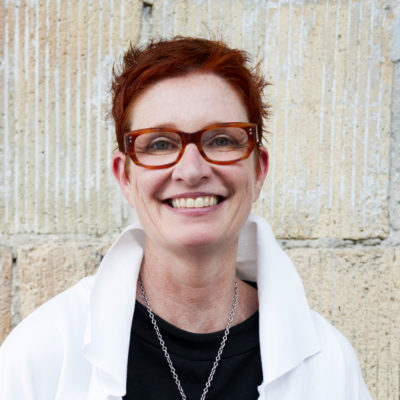
Rosanne Haggerty and Lori Girvan of Community Solutions connected with James Redenbaugh of IRIS Cocreative [tag="iris"]. Initial introductions revealed shared Philadelphia roots — James grew up in Society Hill and now lives in Mount Airy, while Rosanne maintains a foot in Philadelphia alongside her Quebec home and has been working on a project in East Germantown (06:32).
The connection to IRIS was made through David Sloan Wilson at ProSocial World, whose work has been a longtime inspiration to Community Solutions and whose website was identified as a model they admired.
Rosanne framed the broader ambition driving this exploration (09:30): Community Solutions is entering a next phase focused on redefining the field away from a presumption that "homelessness will be ever thus" and toward housing systems that prevent and end homelessness. This requires:
Lori emphasized her mantra — "form follows function" — and clarified that Community Solutions sees itself as a field-building organization (11:32). While they offer synchronous training and cohort-based learning around tested practices, the deeper aim is connecting the full ecosystem at a place-based level: business leaders, municipal leaders, the Continuum of Care homeless response sector, day shelters, downtown BIDs, and more, all working toward shared aims and outcomes.
The "holy grail," as Lori described it, is moving beyond a standard LMS to something that strengthens peer exchange and helps a community recognize they're working toward a shared set of outcomes. The platform must balance asynchronous resources with driving people into meaningful in-person and synchronous interaction.
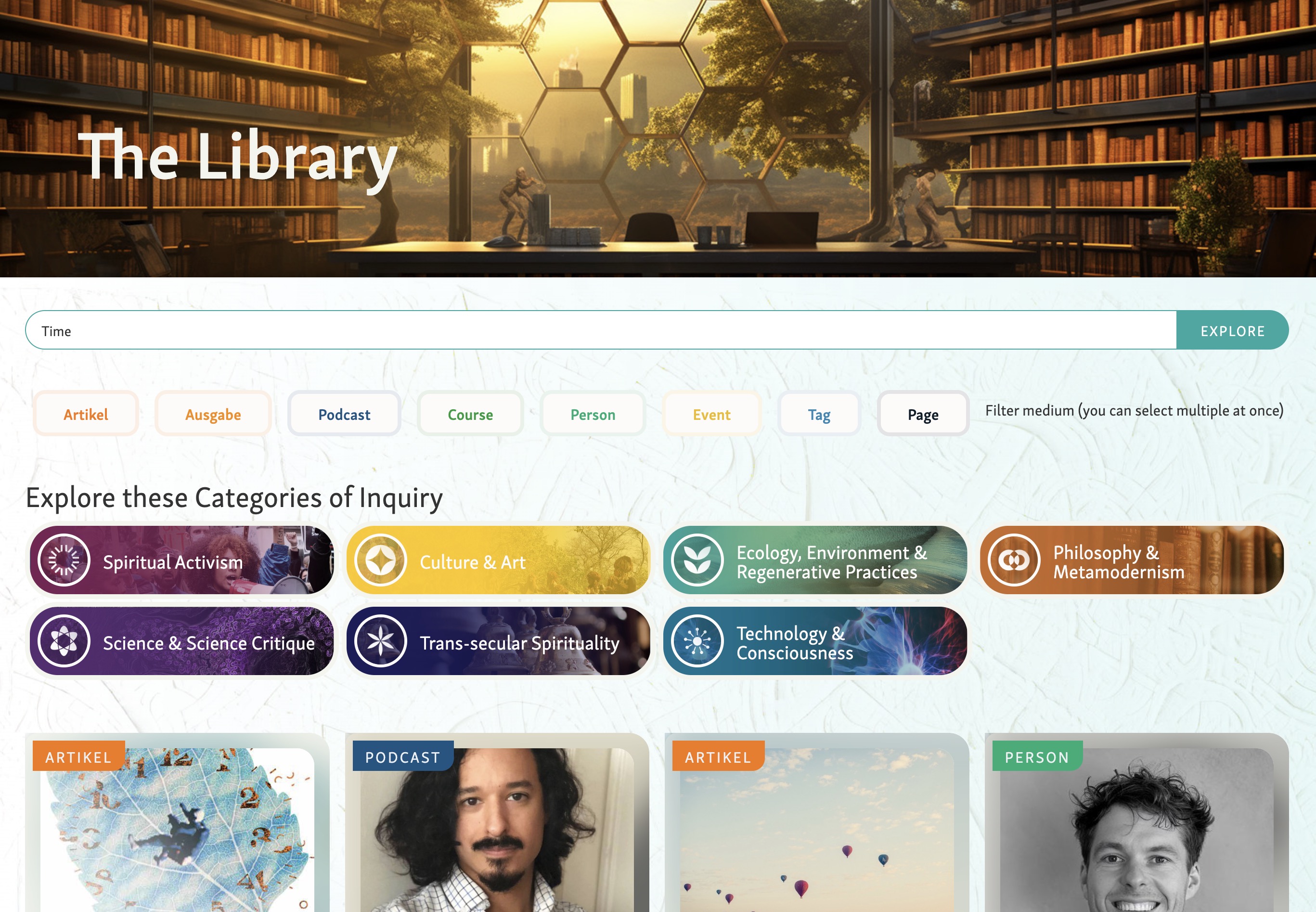
[technology="Online Learning Platforms"]
James shared his trajectory from architecture school (where modern housing class was "the final straw" of disenchantment) into digital design 15 years ago, working with organizations like Integral, Noetic Sciences, and Bioneers (14:41). IRIS stands for Intuitive, Relational, and Intersubjective — the "we" dimension.
Drawing on Christopher Alexander's work and Buckminster Fuller, James described a parallel initiative to co-steward a digital pattern language library with other creators in the space (17:57). The goal is identifying patterns and templates that create aliveness in digital spaces — countering the extractive default patterns (artificial urgency, manipulative sales mechanics) that dominate the online world.
Rosanne connected this directly to her experience running buildings: her KPI was that people would stay "for no other reason than that they felt welcome or they felt the juju" (19:50). She had never made that connection to virtual space before and found the framing powerful.
Rosanne raised a key question: how meaningful is adult learning theory here, versus the experience of community, frameworks, models, and stories (22:07)?
James's response: all of the above. The most powerful learning is social, participatory, and engaged. Even asynchronous content needs pathways for people to feel connected and ideally meet others. Standard async course completion rates are notoriously low — people sign up, get excited, and never return. IRIS has built solutions including a custom video platform with always-open rooms where participants can meet off-Zoom on a web page, seeing each other in a circle instead of a grid to presence each other differently.
[technology="Video Conferencing Solutions"]
Lori reinforced the stakes: Community Solutions has a deep library of toolkits and best practices, but doesn't want it to feel like a "create your own adventure" library. The work must add up to outcomes — both community on one side and reducing homelessness on the other (25:10).
James walked through IRIS's latest custom-built app, launched at a recent conference where David Sloan Wilson was also speaking (27:02):
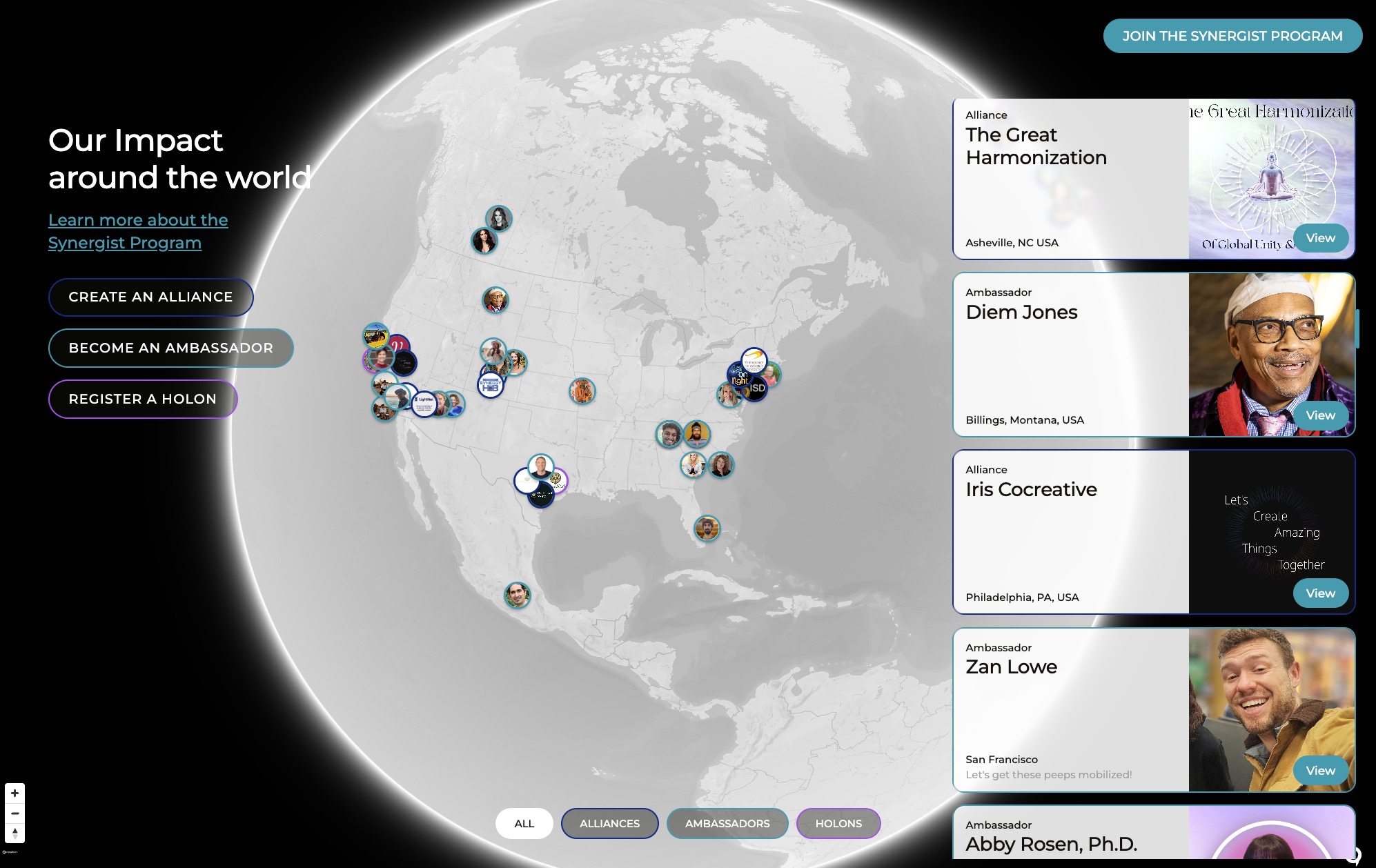
[technology="Directory Systems"]
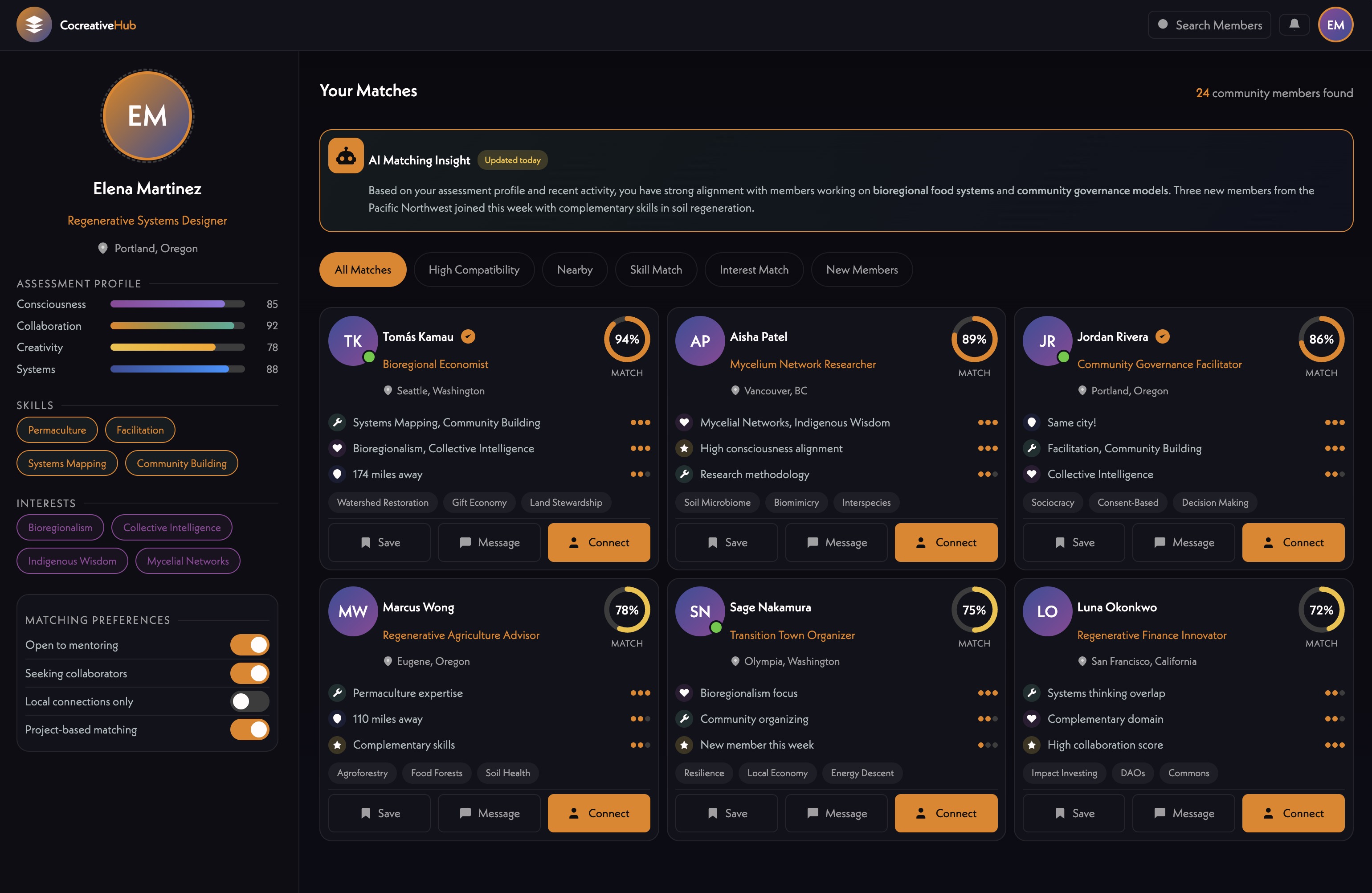
[technology="Intelligent Matching Algorithms"]
The stack: Webflow [tag="webflow"], Supabase [tag="supabase"], custom code, and automation tools — capabilities that weren't possible a year ago. James noted: "The sky's kind of the limit these days."
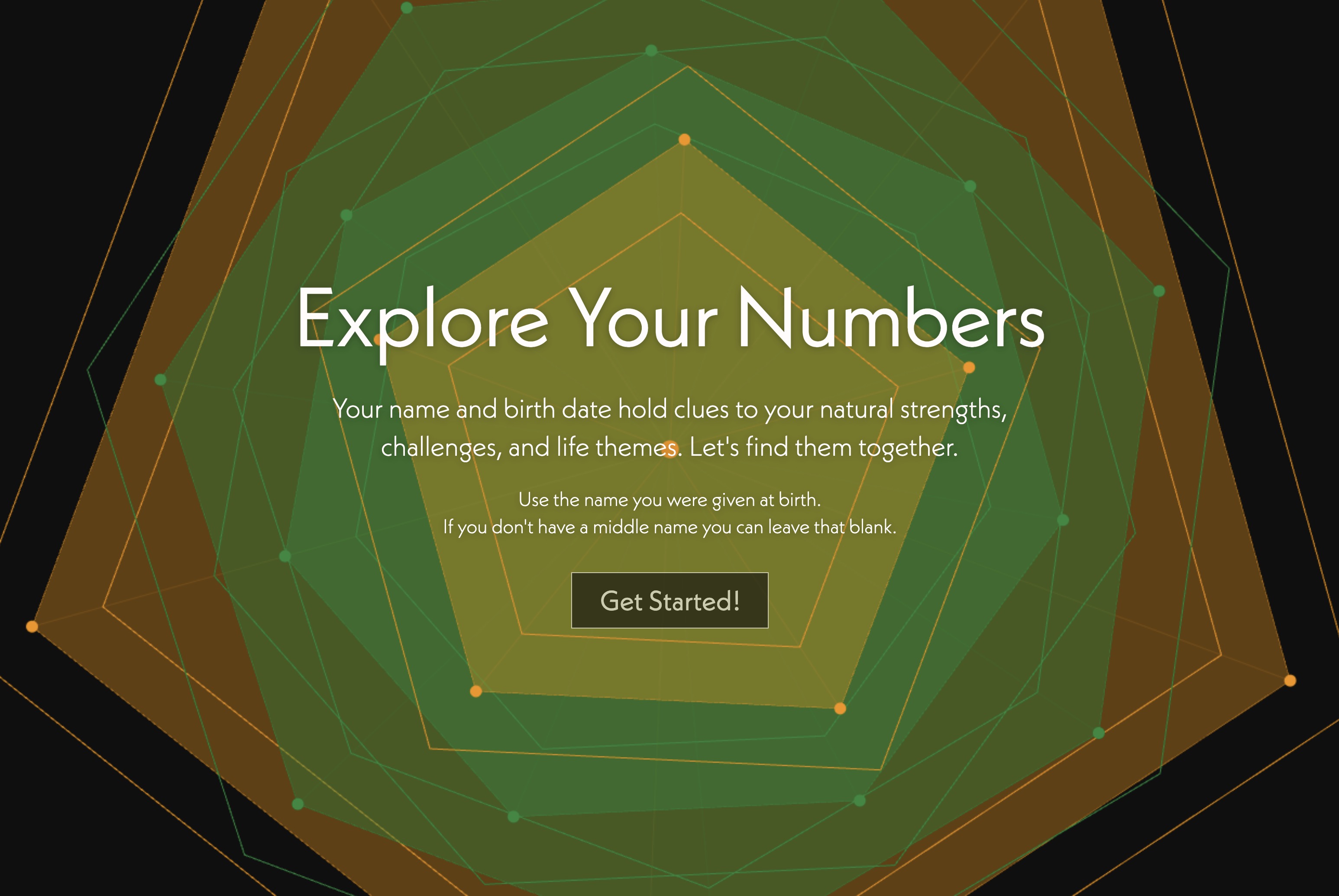
[technology="Custom Membership System"]
Rosanne asked who is doing this kind of platform-enabled, in-person-sensitive community work well (32:48). James noted Community Solutions's aspirations are not typical — in a good way. Reference points he offered:
The conversation ended with strong mutual interest. James noted that everything IRIS builds is fully custom, but composed of reusable building blocks that can be assembled in different ways — meaning Community Solutions doesn't need to start from scratch, and "anything is possible."
Rosanne Haggerty and Lori Girvan of Community Solutions connected with James Redenbaugh of IRIS Cocreative [tag="iris"]. Initial introductions revealed shared Philadelphia roots — James grew up in Society Hill and now lives in Mount Airy, while Rosanne maintains a foot in Philadelphia alongside her Quebec home and has been working on a project in East Germantown (06:32).
The connection to IRIS was made through David Sloan Wilson at ProSocial World, whose work has been a longtime inspiration to Community Solutions and whose website was identified as a model they admired.
Rosanne framed the broader ambition driving this exploration (09:30): Community Solutions is entering a next phase focused on redefining the field away from a presumption that "homelessness will be ever thus" and toward housing systems that prevent and end homelessness. This requires:
Lori emphasized her mantra — "form follows function" — and clarified that Community Solutions sees itself as a field-building organization (11:32). While they offer synchronous training and cohort-based learning around tested practices, the deeper aim is connecting the full ecosystem at a place-based level: business leaders, municipal leaders, the Continuum of Care homeless response sector, day shelters, downtown BIDs, and more, all working toward shared aims and outcomes.
The "holy grail," as Lori described it, is moving beyond a standard LMS to something that strengthens peer exchange and helps a community recognize they're working toward a shared set of outcomes. The platform must balance asynchronous resources with driving people into meaningful in-person and synchronous interaction.
[technology="Online Learning Platforms"]
James shared his trajectory from architecture school (where modern housing class was "the final straw" of disenchantment) into digital design 15 years ago, working with organizations like Integral, Noetic Sciences, and Bioneers (14:41). IRIS stands for Intuitive, Relational, and Intersubjective — the "we" dimension.
Drawing on Christopher Alexander's work and Buckminster Fuller, James described a parallel initiative to co-steward a digital pattern language library with other creators in the space (17:57). The goal is identifying patterns and templates that create aliveness in digital spaces — countering the extractive default patterns (artificial urgency, manipulative sales mechanics) that dominate the online world.
Rosanne connected this directly to her experience running buildings: her KPI was that people would stay "for no other reason than that they felt welcome or they felt the juju" (19:50). She had never made that connection to virtual space before and found the framing powerful.
Rosanne raised a key question: how meaningful is adult learning theory here, versus the experience of community, frameworks, models, and stories (22:07)?
James's response: all of the above. The most powerful learning is social, participatory, and engaged. Even asynchronous content needs pathways for people to feel connected and ideally meet others. Standard async course completion rates are notoriously low — people sign up, get excited, and never return. IRIS has built solutions including a custom video platform with always-open rooms where participants can meet off-Zoom on a web page, seeing each other in a circle instead of a grid to presence each other differently.
[technology="Video Conferencing Solutions"]
Lori reinforced the stakes: Community Solutions has a deep library of toolkits and best practices, but doesn't want it to feel like a "create your own adventure" library. The work must add up to outcomes — both community on one side and reducing homelessness on the other (25:10).
James walked through IRIS's latest custom-built app, launched at a recent conference where David Sloan Wilson was also speaking (27:02):
[technology="Directory Systems"]
[technology="Intelligent Matching Algorithms"]
The stack: Webflow [tag="webflow"], Supabase [tag="supabase"], custom code, and automation tools — capabilities that weren't possible a year ago. James noted: "The sky's kind of the limit these days."
[technology="Custom Membership System"]
Rosanne asked who is doing this kind of platform-enabled, in-person-sensitive community work well (32:48). James noted Community Solutions's aspirations are not typical — in a good way. Reference points he offered:
The conversation ended with strong mutual interest. James noted that everything IRIS builds is fully custom, but composed of reusable building blocks that can be assembled in different ways — meaning Community Solutions doesn't need to start from scratch, and "anything is possible."
Send scheduling link for deeper visioning call to Rosanne and Lori
James to follow up via email with a scheduling link for a deeper visioning call. Referenced at 36:12.
Check in with Ashle at Pro Social for website usage metrics and feedback to inform platform design
Share Lancaster regenerative project digital twin website as design inspiration with Rosanne and Lori
James offered to share a regenerative project in Lancaster — a digital twin website exploring a site through scales and layers (social, wind, air, water, earth). Referenced at 35:38.
Share Serve Community and Cool Blocks references as relevant platform precedents with Rosanne and Lori
James to share Serve Community and Cool Blocks as reference points for platform-enabled, in-person-sensitive community work. Discussed at approximately 32:48 during comparable work conversation.
Schedule follow-up visioning call with James using his scheduling link
Rosanne and Lori to schedule follow-up call using James's link to deepen exploration of platform needs and community engagement strategies. Referenced at 36:12. Lori Girvan is listed in the Artifact people but not the Engagement people, so assigning to Rosanne as the primary engagement contact.
Articulate must-accomplish goals for the Collaborative Plus online and in-person experience
Rosanne and Lori to continue articulating the must-accomplish goals for the Collaborative Plus online and in-person experience ahead of the deeper visioning call.
Strategic discovery and scoping phase for Community Solutions' field-building platform. Focus on redefining homelessness response field through digital ecosystem that balances asynchronous learning resources with synchronous peer exchange and place-based collaboration. Must connect diverse stakeholders (business leaders, municipal leaders, Continuum of Care, shelters, BIDs) around shared outcomes while avoiding standard LMS limitations. Includes visioning sessions, requirements gathering, and platform architecture planning informed by Christopher Alexander's pattern language principles and aliveness-centered design philosophy.
Custom online learning platform that moves beyond standard LMS to integrate synchronous training, cohort-based learning, and deep library of toolkits/best practices. Must support self-paced asynchronous content while driving meaningful peer exchange and recognizing shared work toward outcomes. Core challenge: avoid 'create your own adventure' feeling while maintaining engagement and completion rates. Platform should incorporate social learning principles, participatory engagement pathways, and connection mechanisms between async content consumers. Integration with broader community platform ecosystem required.
Searchable directory system integrated with map-based visualization for Community Solutions network. Must support place-based ecosystem view connecting diverse stakeholder types (business leaders, municipal leaders, homeless response sector, BIDs, etc.) around shared aims and outcomes. User profiles should be searchable geographically and by other relevant dimensions. System demonstrated in IRIS platform demo showed profiles on map with robust filtering. Integration with learning platform and broader community engagement tools required.
Intelligent matching system analyzing network for values alignment, generating deeper connection profiles between individuals, and surfacing skill alignment or blind spots across teams. Supports Community Solutions' goal of strengthening peer exchange and helping communities recognize shared work toward outcomes. System would use AI (Claude) to analyze member profiles, contributions, stated interests, and potentially assessment data to suggest meaningful connections. Integration with directory system and learning platform for contextual recommendations.
Custom video conferencing solution supporting synchronous training and cohort-based learning. James demonstrated always-open rooms where participants meet off-Zoom with circle-based (not grid) interface to presence each other differently. Integration with learning platform for cohort sessions and with community platform for ongoing peer connection. Should support both structured training events and informal drop-in connection opportunities. Custom branding and experience design to align with Community Solutions' field-building mission.
00:00:04
Lori Girvan: This meeting is being recorded.
00:06:32
James Redenbaugh: Hi, Lori.
00:06:33
Rosanne Haggerty: Oh, how are you?
00:06:36
James Redenbaugh: I'm good. How are you doing?
00:06:38
Rosanne Haggerty: I'm okay.
00:06:41
James Redenbaugh: Here's Roseanne as well.
00:06:42
Rosanne Haggerty: Yeah, yeah. We ran over. We were doing a call. Whoops. I realized I'm off. I'm on.
00:06:49
Lori Girvan: We.
00:06:50
Rosanne Haggerty: We're finishing the call up with the city of Detroit, so thanks for your patience.
00:06:56
James Redenbaugh: No problem. Sounds important. Very cool.
00:06:59
Rosanne Haggerty: Where are you based?
00:07:01
James Redenbaugh: I'm in Philadelphia.
00:07:04
Rosanne Haggerty: I just left there yesterday. Well, I only could have met in person, so I am a dual. But my sec. I have a foot in the US In Canada. My foot in. In the US Is in Philadelphia, so.
00:07:17
James Redenbaugh: Oh, wonderful. Yeah. This is where I'm from, and my wife and I moved back here a couple of years ago to be closer to family for a while.
00:07:27
Rosanne Haggerty: Nice. Which part of town are you in?
00:07:30
James Redenbaugh: We're in Mount Airy right now. Yeah.
00:07:35
Rosanne Haggerty: Is that the part of the city you came from, James?
00:07:39
James Redenbaugh: I grew up in Society Hill. I'm sorry. Six and Pine.
00:07:43
Rosanne Haggerty: Okay.
00:07:44
James Redenbaugh: In the. In the city, in the grid.
00:07:49
Rosanne Haggerty: Yep. That was fun. And yesterday it was a sea of yellow for Ecuador.
00:07:56
James Redenbaugh: Oh, yeah, yeah. Very exciting. Yeah. We just flew back two days ago from the Azores. We were on our honeymoon.
00:08:09
Rosanne Haggerty: That's right. Congratulations. Yes. Wow.
00:08:11
James Redenbaugh: Thank you. Thanks so much. And so great to meet you both. Are you both in. In Canada? Toronto?
00:08:20
Rosanne Haggerty: No, no, just. I'm in Quebec, actually, and I'm in New Hampshire, so.
00:08:26
James Redenbaugh: Okay.
00:08:27
Rosanne Haggerty: But. But I've been working on a project in East Germantown, so I was just there recently, so.
00:08:33
James Redenbaugh: Oh, wonderful.
00:08:34
Rosanne Haggerty: Yeah.
00:08:35
James Redenbaugh: We got married in East German town.
00:08:37
Rosanne Haggerty: Really? Whereabouts?
00:08:39
James Redenbaugh: At the Aubrey Arboretum.
00:08:41
Rosanne Haggerty: Oh, okay. Yeah. This not for profit board I'm on just had an event for our tenants there yesterday. I wasn't able to go back down, but.
00:08:51
James Redenbaugh: Awesome. Yeah. My brother lives in Germantown. I went to Germantown Friends School. We. We love it over there. And I was just doing a bit of research on your amazing organization, and I looked into a bit about your. Your backgrounds while I was at it, and I'm very excited to be on this call. I think it's awesome what you guys are doing and where you're coming from and very curious why you reached out and how we can be of service to you.
00:09:30
Rosanne Haggerty: Well, the connection, I think, went through David Sloan Wilson at Pro Social. And David has been a friend and inspiration, frankly. And, you know, we've learned a lot from his work over the years for some time. And as we think about the next phase that we're heading toward with respect to building a much broader collaborative and actually trying to sort of redefine the field we're in to be much more about housing systems that prevent and end homelessness rather than presume homelessness will be ever thus and continue to kind of reinforce its existence. We are broadening the, our strategies for sustaining, connecting, growing both our network and the, you know, its influence and the services it provides for folks who are actively interacting with us on a regular basis and make more of our material and, you know, information and experiences open to folks beyond our kind of, kind of core network. And so we've been looking at online communities and online learning systems that we like and are easy to use and sort of kind of very user, you know, appreciative, I guess. And so that's how we identified the pro social world. Website is one that we liked a lot and here we are. But I'll let Lori describe some of like where, where we are, you know, it which is kind of basic with respect to online tools. You know, we have some, we have, we're not short on material, we just have been, we have not prioritized building the online resources that deeply. But we also are mindful that we want to be driving folks to interact with each other in person so somehow getting that balance right. So Lori, what, what would you say are like the things that we, we must accomplish in designing, you know, our collaborative plus experience online and in person? Yeah. So, you know, again, this is a bit new and I like to share that I have a mantra, form follows function. So you was sort of like, you know, let's find the perfect platform. And I think we, you know, we have some key goals. We do see ourselves as a, you know, an organization centered on field building. And so, you know, yes, we want people to, you know, access through, you know, synchronous training or we do a lot of cohort based learning, our, you know, tested practices. But we really also are, you know, kind of building a field. We, our field includes communities and within those communities we touch with, you know, business leaders, municipal leaders, the homeless. They're called the Continuum Care Homeless response sector. And what this work with the Collaborative plus represents is two things really. One is historically we've mostly worked with the homeless response sector and there's, you know, new and existing communities who are just continuing to want to use our practices. But increasingly we're actually doing much more in bringing together, you know, all those different parts of the system at a place based level. So you know, take, you know, place like Detroit where we just spoke. You know, we're connecting the Downtown bid with a, you know, a day shelter that runs housing with, you know, the municipal office and saying, hey, you know, let's have a shared aim and work together around, you know, getting, getting results. So I mention that because a lot of times there's sort of this sense of, well, here's the lms, just figure out the pricing or figure out the features. But that more nuanced piece of linking going beyond, I guess, an LMS to something that actually is sort of strengthening peer exchange and kind of driving a community to recognize they're all working towards kind of a set of outcomes that feels the holy grail. That makes sense.
00:14:41
James Redenbaugh: Definitely. Yeah. And it's spot on with what my team and I are endeavoring to do with our clients right now. I want to give you guys a bit of background on my work that's relevant. I. I studied architecture in. In school. I was in school in Syracuse and I was very mod. I was so my whole life really excited about architecture. And then I got so disenchanted in school, especially with my modern housing class in third year was the final straw. It was so dry and boring and limited and conventional. I was like, there has to be something. I knew so much more is possible. And so I didn't want to pay for a fifth year. I transferred into art so I could finish in four. They let me study what I want, and then I got a lot more into digital design because I wanted to be really choosy about who I worked with. And at the same time, I was discovering like Integral and Noetic sciences and Bioneers and all kinds of exciting fields that really lit me up and they needed websites and brands and things like that. So that was 15 years ago, and it's been 15 years of getting to work with really awesome people that I also get to learn from and grow my team and develop new skill sets and build not just websites and brands, but a lot of online learning experiences using a lot of existing platforms. And now we have our own platform and we're able to create pretty much anything these days with the. With the help of AI and building AI intelligently into what we're building, all with the goal of bringing people together, facilitating innovation and collaboration, and, you know, connecting people and places to ideas and systems and resources that they wouldn't otherwise connect to. So Iris, the company, stands for intuitive, relational and intersubjective. Intersubjective meaning like our we dimension. And I'm very, I feel very privileged that everybody we work with, like Pro Social, is innovating. In this space in one way or another. And my team and I get to help them find and create tools to better serve that. And at the same time, I want to mention a kind of parallel initiative. I'm wanting to collaboratively steward. I'm sure you guys are familiar with Christopher Alexander's work and language.
00:17:57
Rosanne Haggerty: What an inspiration he has been, for sure.
00:18:00
James Redenbaugh: Yeah, I grew up with his books and also people like Buckminster Fuller. And that's why I was so disappointed in architecture school when we have to learn like Blake Corbusier a thousand times. But I'm, I'm wanting to co steward, like a collaborative effort to create a digital pattern language library with other digital creators in the space to find and identify patterns, templates, resources, means ways of building online that creates aliveness and facilitates that quality without a name in a digital space. Because so much of the online world is built on really destructive patterns and extractive patterns. And you know, I've been guilty of just like, of using them without realizing it. Like, I, I think I've been pretty good. But it's easy to like induce artificial urgency. Sign up for this course now to get this, to get this deal that's going to end and it's 9999 or whatever. It might be a really great course, but when we build it with patterns that don't create aliveness, it takes away from the product. And the goal shouldn't be to sell as much as possible. It should be to help people find the pathways into experiences that are going to change them and into things that they haven't experienced before.
00:19:50
Rosanne Haggerty: That framing James, in the building context, I call it the intangible of when you go into a building and you feel good. Juju. Yeah. And then, you know, I used to joke that because I ran buildings, that my KPI was that people would come and stay for no other reason than that they felt welcome or they felt the juju. And so I just, as you know, I never actually made that connection to virtual community or space before, but it is, I really appreciate that. Naming and opportunity.
00:20:25
James Redenbaugh: Yeah. So like with the built environment, it's the sum of all the parts that creates that experience online. The colors, the textures, the images, the language, the user experience, the interactions. And that doesn't mean that all those things have to be fancy and overly designed. But we try to bring intentionality into each of those things. And we've managed to customize online learning platforms like Circle. And I've made a thousand WordPress sites and learndash sites and things like that to meet our needs. But these days it's, it's easier than ever to build and the tools that we have to build our own custom experiences have really opened up a ton of possibilities. So I, I'd be excited to share with you the kinds of things that we're building now. Fully custom.
00:21:31
Rosanne Haggerty: Cool. I have to switch to my phone, but that sounds great. That's me. Like who's.
00:21:38
James Redenbaugh: Sure.
00:21:39
Rosanne Haggerty: Okay.
00:21:40
James Redenbaugh: Admitting you in there. Yeah.
00:21:41
Rosanne Haggerty: All right, thanks. And I, I should have mentioned at the top of the call that I have to jump off it at 4:30. I have, I have a roof. Speaking of buildings, I have a roofer showing up. Nice.
00:21:59
James Redenbaugh: No problem.
00:22:00
Rosanne Haggerty: Yeah.
00:22:01
James Redenbaugh: Well, what would be the most efficient use of our, our eight minutes here?
00:22:07
Rosanne Haggerty: Yeah. Well, one thing I'm curious about, James, this might seem like a completely banal question, but adult learning, I mean some of the things that we have in mind for our site is, you know, asynchronous courses are like that may be the least significant part of what we are about. But it has been raised to us that we should be giving some thought to how people learn and how people learn online. I'm just curious, do you think that that's meaningful here or it's the experience of community and frameworks and models and stories that are most important to capture and communicate as opposed to like you know, being attentive to, you know, theories of adult learning.
00:23:05
James Redenbaugh: I think all of the above. I think the most powerful learning is social and participatory and engaged and having a learning context makes community more alive. I see it as like a, a critical function in any online community, even one that's geared more towards action and creation. But the learning can't just be, you know, here's the six part course. You get it in your email and watch this video and like maybe answer some quiz questions. Even if it's asynchronous, you got to find ways for it to be. For people to feel connected and, and ideally you know, meet with other people, talk with them. We've even built our own video platform solution where we can create always open rooms where you can meet off a zoom on a, on a web page and see each other and see each other in a circle instead of a grid to, to presence each other in different ways or just do audio calls. You know, audio can be a great way to, to connect as well. But when you have those non ordinary ways and reasons to kind of actually do creates more participation and more transformation because the, the completion rate on a standard asynchronous courses is usually pretty low. People sign up, they get excited. Even if they paid for it, they're like, oh, it's asynchronous, I'll get around to it. And then they never get to it. I know that's a long, a big answer to your question, but.
00:25:10
Rosanne Haggerty: Complex area. So. And that's, I think what's. What we, we're trying to take time for because, for example, we have a lot of toolkits and things that we've developed over the years. You know, we, we have just, you know, the, the best practices, you know, chest. And you know, we don't want it to just be again, like a library, you know, pick, you know, create your own adventure. We want to actually to stick to some outcomes, you know, sort of add up to again a community on one side. But also, you know, we exist to reduce homelessness. Right. So, you know, we, we just, whether both in the design and the use and the mix of, you know, virtual, online, real life, convening touch points with our team, you know, that, that sort of, I guess, you know, I don't know what I don't know around how people, how people learn and how people kind of connect in a way that can stick for the work we're trying to do. And that's why we were intrigued with Pro Social and David, because it is sort of centered on social change and action and ways of working together.
00:27:02
James Redenbaugh: Yeah, I'd love to show you guys our latest app build. We just launched this at a conference that I saw David at a couple weeks ago. He was speaking there. And we've built this really robust directory system into a robust online learning platform. The online learning we haven't launched yet, but users can create profiles, search, everybody show up on this map they can create. We call them holons, which are, you know, action groups designed around a specific purpose. We fully built this interface from scratch, so we have complete control over it. Holons can see each other. I love seeing people in circles. I'm a big circle guy. But, you know, folks can share to this space. They can share resources, they can create topics, images, define a purpose for the hole. On things like that, there's different categories and tags and things like that. And. And then there's this whole connection engine as well, which gets into the. Some of the AI features that weren't possible a year ago, but now are. So we can analyze the whole network and see where do our values align. And I can look at any one person and see different metrics based on what we've shared and I can generate a deeper connection profile with Jeff here to see how might we collaborate or where should we start a conversation or you know, what do we have in common or where are our skills different? And similarly we could do something like this but for a whole group of people or for a team, you know, what's, where are the skills alignment or what blind spots might this group have or things like that. And there's all kinds of things we've built in like a whole project management system into the app for building the app and all. All kinds of things that I've only dreamt of, you know, that I dream dreamt of being able to do on WordPress for a long time is now possible with our, our stack of webflow, Supabase, a lot of custom code and, and some a great team and some cool automation tools. And so like this the sky's kind of the limit these days and I'd love to just continue the conversation with you guys and see what might be possible and what you're dreaming up and I think a lot of it might be easier than you think.
00:30:06
Rosanne Haggerty: Interesting because everyone keeps. It's. It's more complicated than we think. But and, and just so like for, for, for the one you just showed holos and like just so sorry to ask a banal question but like what, what what what what what did what like what's the. What's success of that?
00:30:31
James Redenbaugh: Success of like what's our, our goal with the platform?
00:30:34
Rosanne Haggerty: Yeah yeah,.
00:30:38
James Redenbaugh: I guess to have, I mean we already have a few hundred users on the platform. We just launched it on the wave. It's really built around these in person events. So what we're doing on it now is building up to the in person event next year and there'll be other wave pages or other live events but the goal is to facilitate collaboration of these holon groups and there's a whole funding system built into it with these micro grants or groups around specific purposes can seek funding, find each other, find support, share resources, learn and then keep the cycle going. So we, we're just starting this, it's very beta right now. We started building this in January and it's like moving very fast.
00:31:35
Rosanne Haggerty: James, as far as some of the other work that you've done even like focusing on pro social, what as you've tracked how that site has been used, like what are their goals as you began working with them similar to ours and how what interesting things have come out of the design of their system and the way it's designed.
00:32:10
James Redenbaugh: Great question. And honestly I should ask Ashle, who's their director of operations and now also works with us because she's had the pulse on that a lot more than I, I, I've just noticed that they've been happy with what we've created, but I don't actually have their, their metrics and their reports. I just see, you know, new things going up on there and I fix bugs for them once in a while. But they've been very happy since we launched it. So I'll ask Ashle to see what she says about that.
00:32:48
Rosanne Haggerty: Yeah, I'm just curious if you're even noticing that the requests for these kinds of almost these platform enabled communities that are sensitive to getting people together in person and in relationship rather than simply providing attractive access to content. Who do you think is doing that well that we could learn from? And is that what other folks you work with are requesting or are we pretty typical in the aspirations we're bringing here?
00:33:36
James Redenbaugh: Definitely not typical. And nothing is typical in this, in this space. But it sounds like a, an exciting challenge to bring more focus to that. And I do think of a friend of mine's project called Serve Community. I want to check in with him on the current state of his project, but he's been building that for a few years, which is an, an app very much designed to, to motivate local action, get people reporting what are they doing to be on the ground, usable on the phone by, you know, diverse communities around the world and to organize, you know, action action groups and neighborhood based actions. And he's also worked with this, this other app called I think Cool Blocks is what it's called where they, he helped build that, where they've done similar things. I'm, I'm personally very interested in the urban landscape as I have, you know, maintained my passion for architecture. But many of our clients are very, you know, theoretical. They're, they're global and they're learning and they're doing cool cultural innovation, but it's, it's less tangible. But I, I'll love to share a website we built for a regenerative project in Lancaster that's kind of a digital twin in theory of this project that hasn't been built yet. But it's really cool because you can see that the, the site from different scales and then also different layers of like social wind, air, water, earth. And there's different ways to explore it. Anyway, you'll have to see it. I know you guys have limited time here.
00:35:44
Rosanne Haggerty: I, I unfortunately do have to go, but thank you. I'd love to, to see that. And my brain is sort of turning. I really have appreciated this conversation. Yeah, well, let's, let's definitely follow up if there are some things that you know that you might share forward. But then maybe you can schedule a follow up call soon. James.
00:36:12
James Redenbaugh: Yeah, I'll follow up with an email and you can schedule a call with the same link. And I'd love to just find out more about what you're envisioning and see what's possible. Everything we're building, like for Hollow Movement and other clients, it is fully custom, but there's also these building blocks that we can assemble in different ways. So it's. Yeah, there's a lot we don't need to start from scratch, but kind of anything is possible.
00:36:49
Rosanne Haggerty: Great. Well, this has been terrific. Thank you. So delighted to meet you. And I'm intrigued at your trajectory from architecture school onto this work.
00:37:02
James Redenbaugh: Thank you so much. Well, great to meet you both and I'll hope to speak again soon.
00:37:09
Rosanne Haggerty: All right, thank you, James. Have a good rest of your day.
00:37:12
James Redenbaugh: Thank you. Take care.






.svg%20(1).png)


.png)